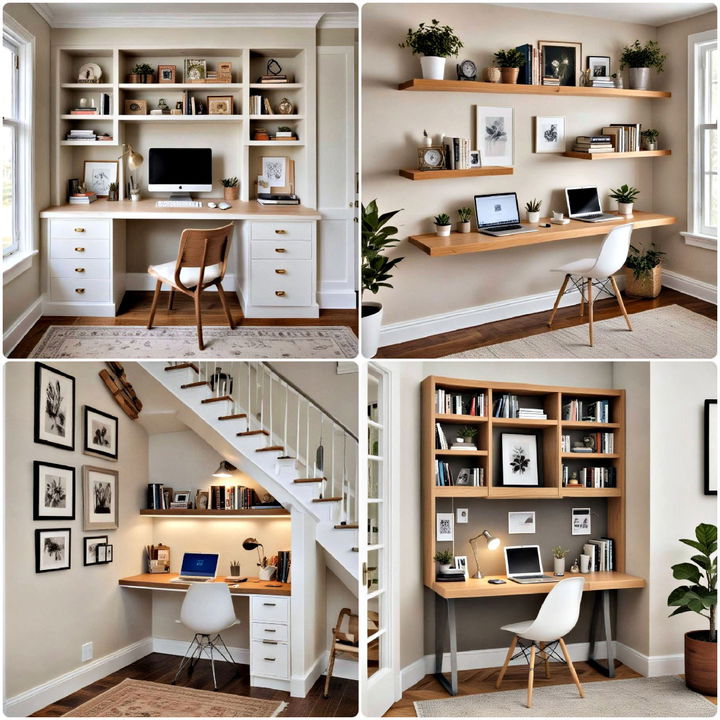
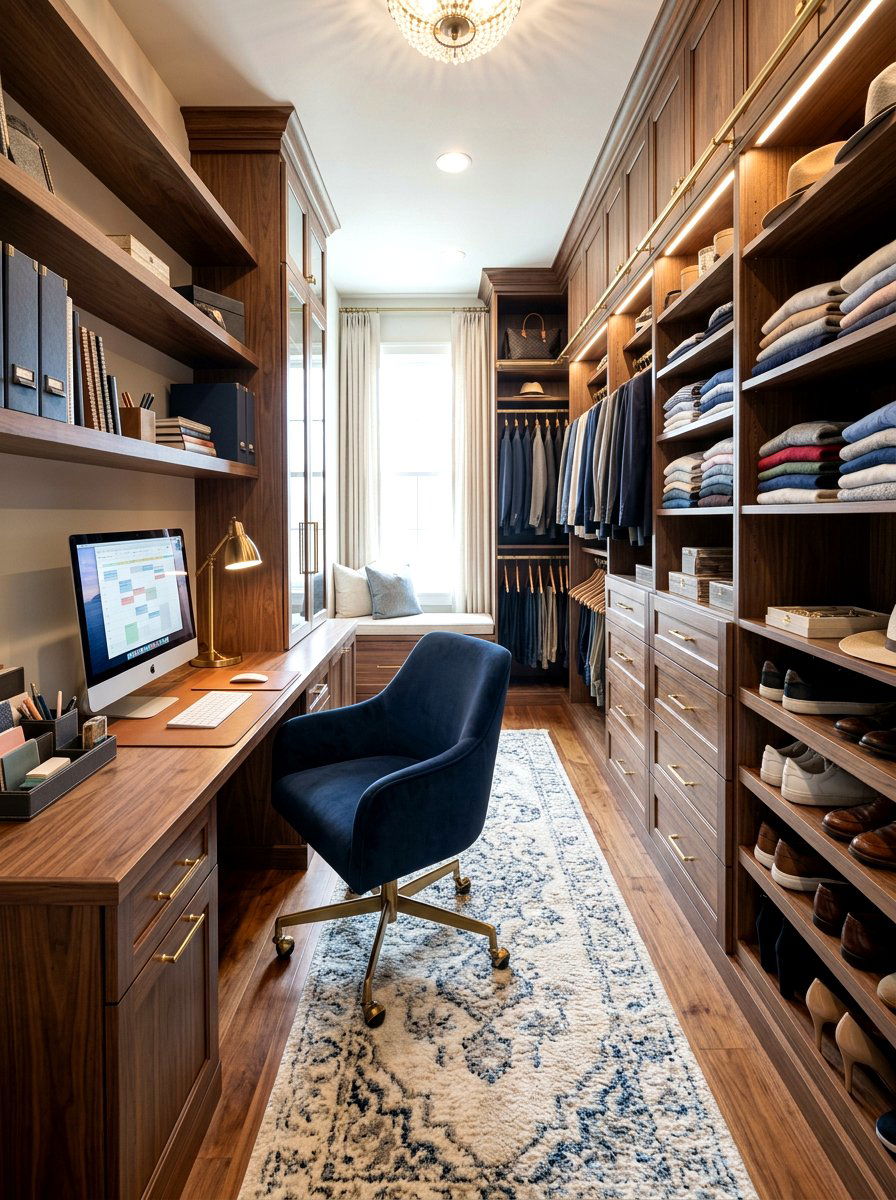
Creating a functional home office often involves a constant battle against the visual clutter of essential tech equipment like printers. These bulky machines are necessary for productivity but frequently disrupt the curated aesthetic of a modern workspace or living area. By designing a dedicated printer nook, you can seamlessly integrate this technology into your home without sacrificing style or accessibility. Whether you prefer a hidden solution tucked behind cabinet doors or a stylish open-concept station that complements your decor, there are countless creative ways to organize your printing essentials. These thoughtful layouts not only improve your workflow by keeping paper and ink nearby but also enhance the overall ambiance of your room.
1. Built In Printer Cabinet
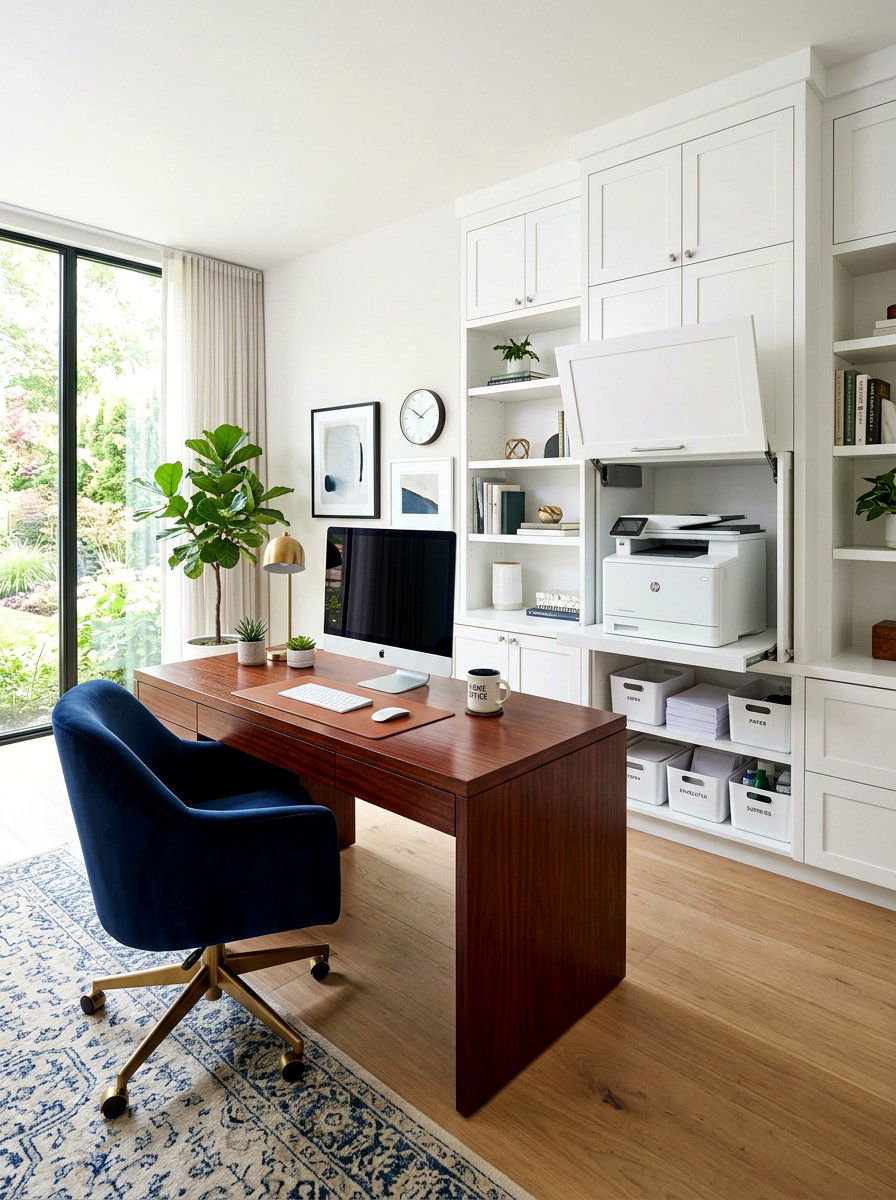
Custom cabinetry can transform a cluttered home office into a streamlined sanctuary by providing a dedicated home for bulky peripherals. Imagine a wall of floor-to-ceiling white cabinets where one specific lower unit is tailored specifically for your printing needs. This setup usually features a reinforced shelf to handle the weight and vibration of the machine during high-volume jobs. By integrating the device into the overall architecture of the room, you eliminate visual noise and reclaim valuable desk real estate for actual work. High-quality hardware like soft-close hinges ensures the space remains quiet and professional. It is the ultimate solution for those who want a permanent, sophisticated tech station.
2. Pull Out Printer Drawer
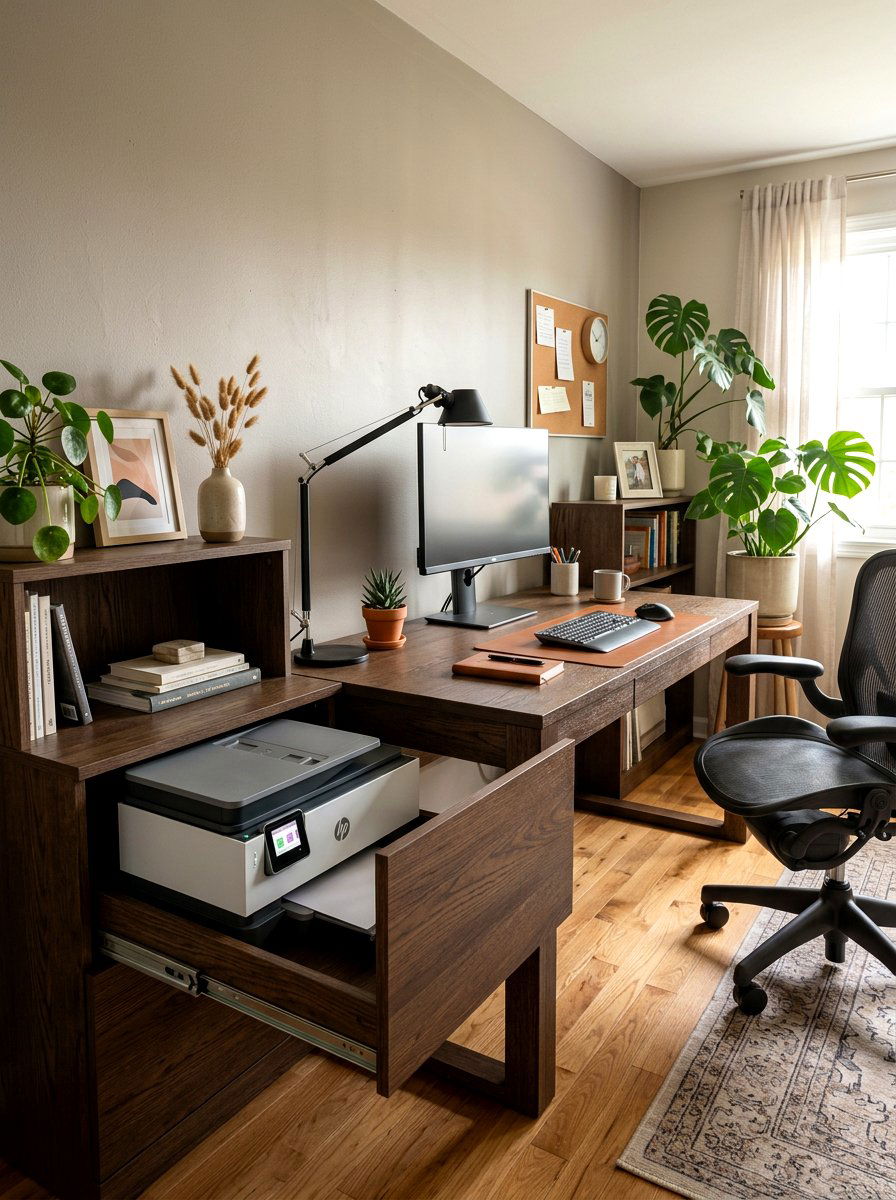
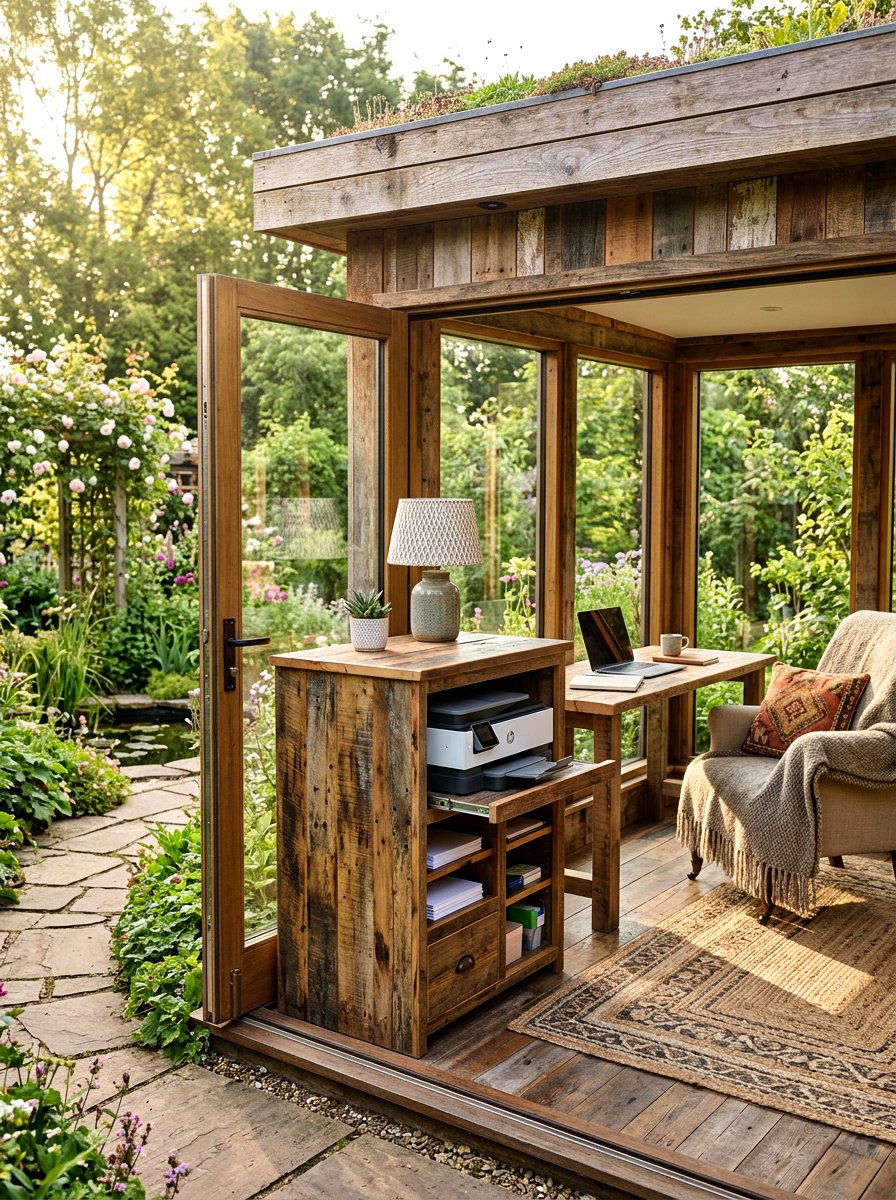
Installing a heavy-duty pull-out drawer is one of the most efficient ways to access your equipment while keeping it completely out of sight. These drawers are typically built into a standard desk or a side cabinet, featuring a sliding mechanism that brings the machine forward for easy loading. This design is particularly helpful for top-loading models or scanners that require vertical clearance. When the task is finished, the entire unit slides back into the cabinetry, leaving a clean and unobstructed workspace. It effectively masks messy cables and keeps the machine dust-free. This approach is ideal for minimalist lovers who crave a sleek, hidden office environment.
3. Small Closet Office
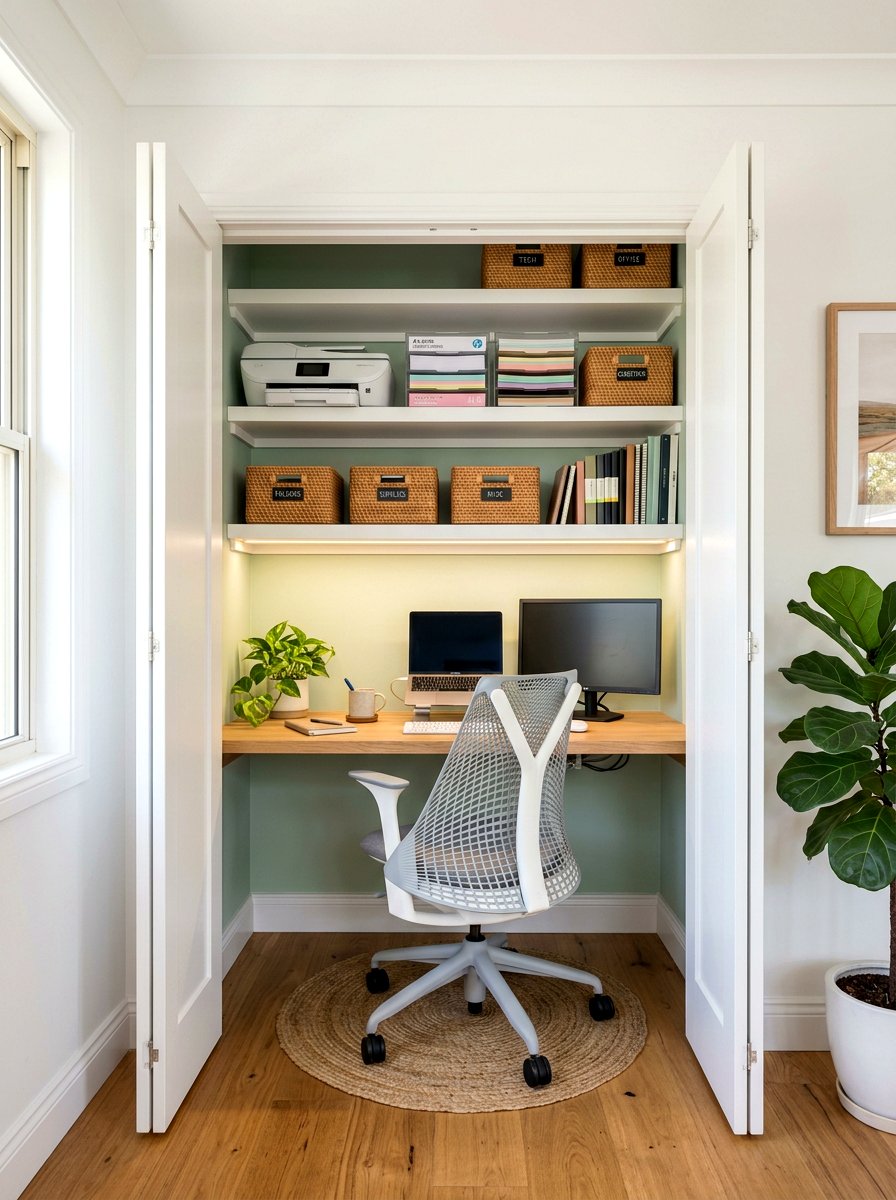
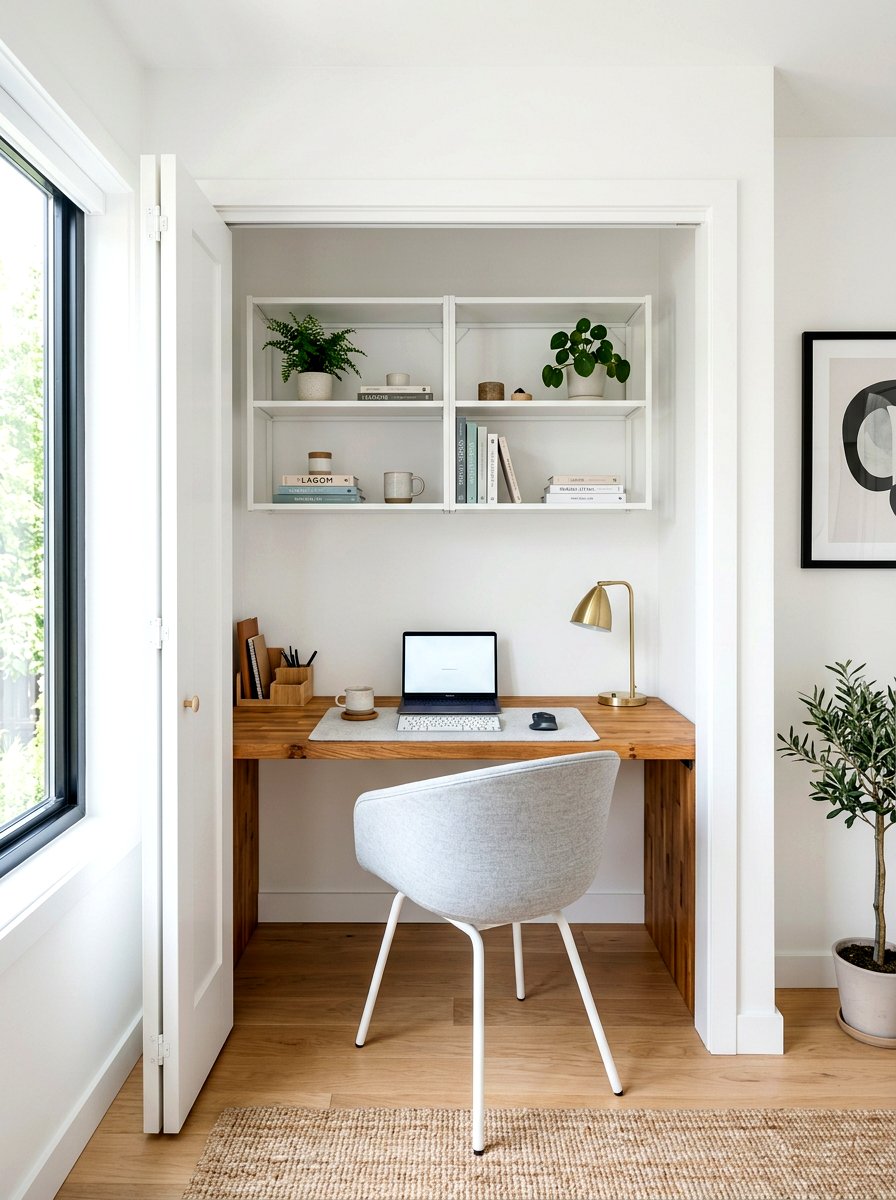
Converting a small reach-in closet into a functional office nook allows you to tuck away all your office gear, including the printer. This "cloffice" concept utilizes vertical space with shelving above the desk area specifically for the printing unit and paper supplies. By keeping the printer on a sturdy middle shelf, it remains at a comfortable height for frequent use without occupying the main desk surface. When you are done working for the day, you can simply close the closet doors to hide the entire office from view. It is a brilliant space-saving strategy for apartments or multipurpose rooms where a dedicated office is impossible.
4. Under Desk Printer Stand
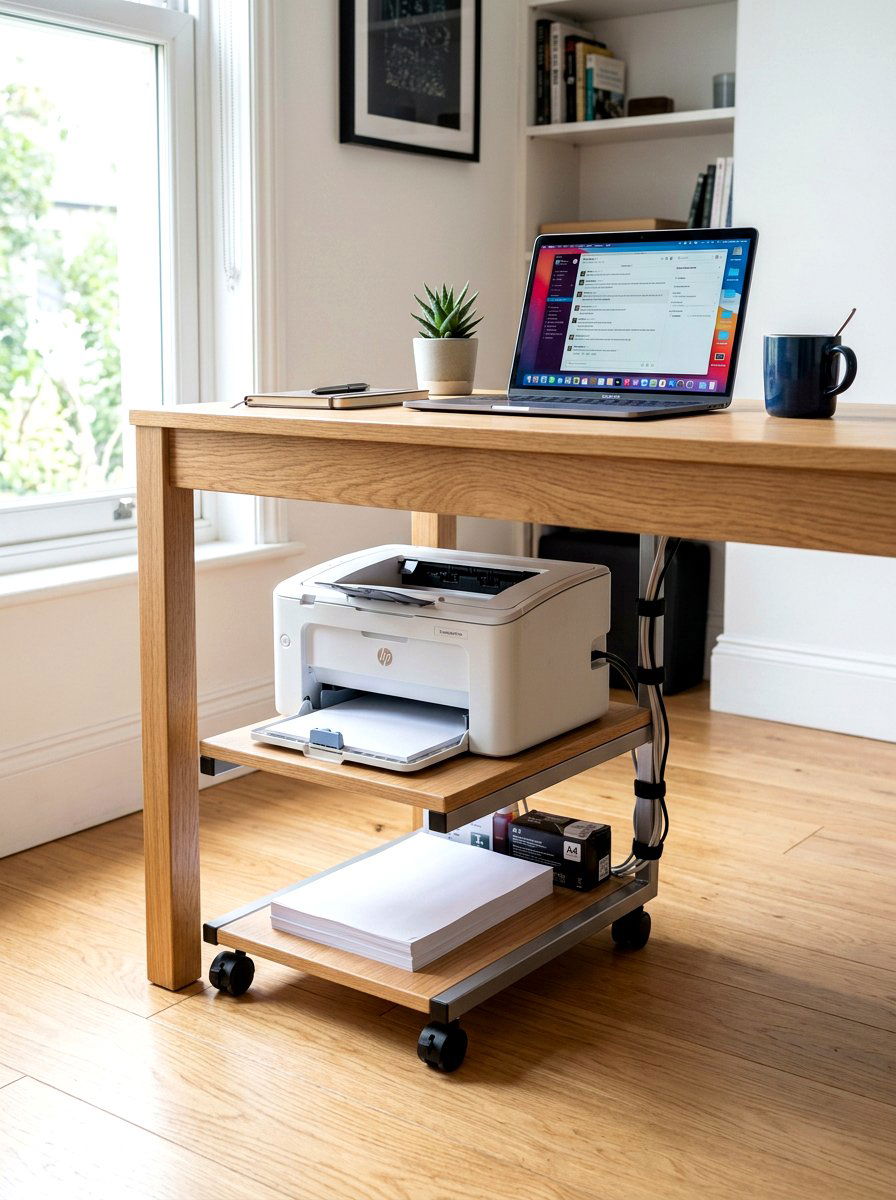
Utilizing the often-ignored space beneath your primary workspace can provide a discreet yet accessible spot for your printing equipment. A low-profile stand or a small platform on casters fits perfectly under a standard-height desk, keeping the machine close to your feet but away from your hands. This configuration is excellent for smaller offices where every inch of surface area is precious. You can choose a stand that matches your desk material for a cohesive look. Cable management clips can be used to route the power cords along the desk legs, ensuring that the floor remains tidy and free of any dangerous tripping hazards.
5. Floating Printer Shelf
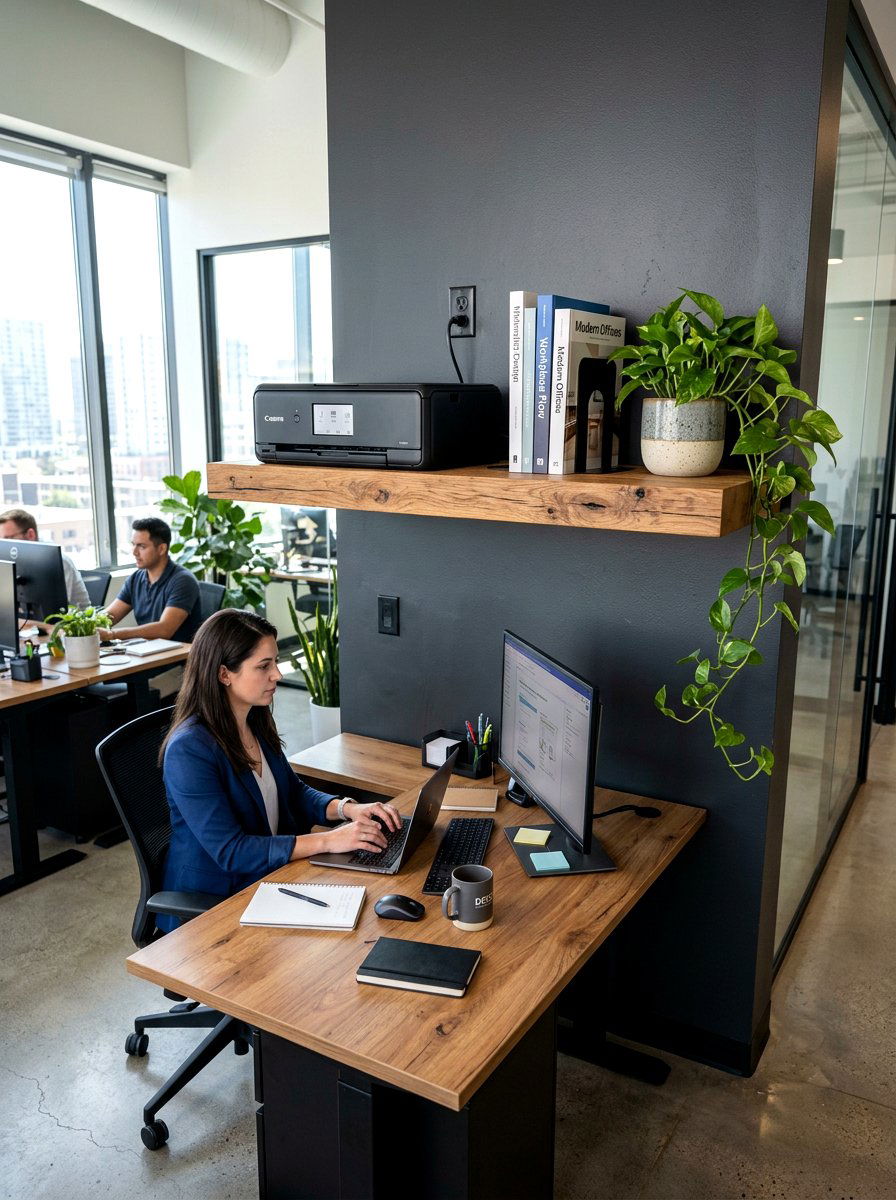
Mounting a heavy-duty floating shelf on the wall next to your desk offers a modern and airy solution for printer placement. This design approach keeps the floor clear and maintains a light visual feel in the room, which is perfect for contemporary interiors. Ensure the shelf is anchored into wall studs to safely support the weight of the printer and paper reams. By positioning it at eye level, you can easily check the print progress without leaning over. Adding a small decorative plant or a set of colorful bookends alongside the printer helps the tech blend in naturally with the rest of your home decor.
6. Hidden Printer Storage
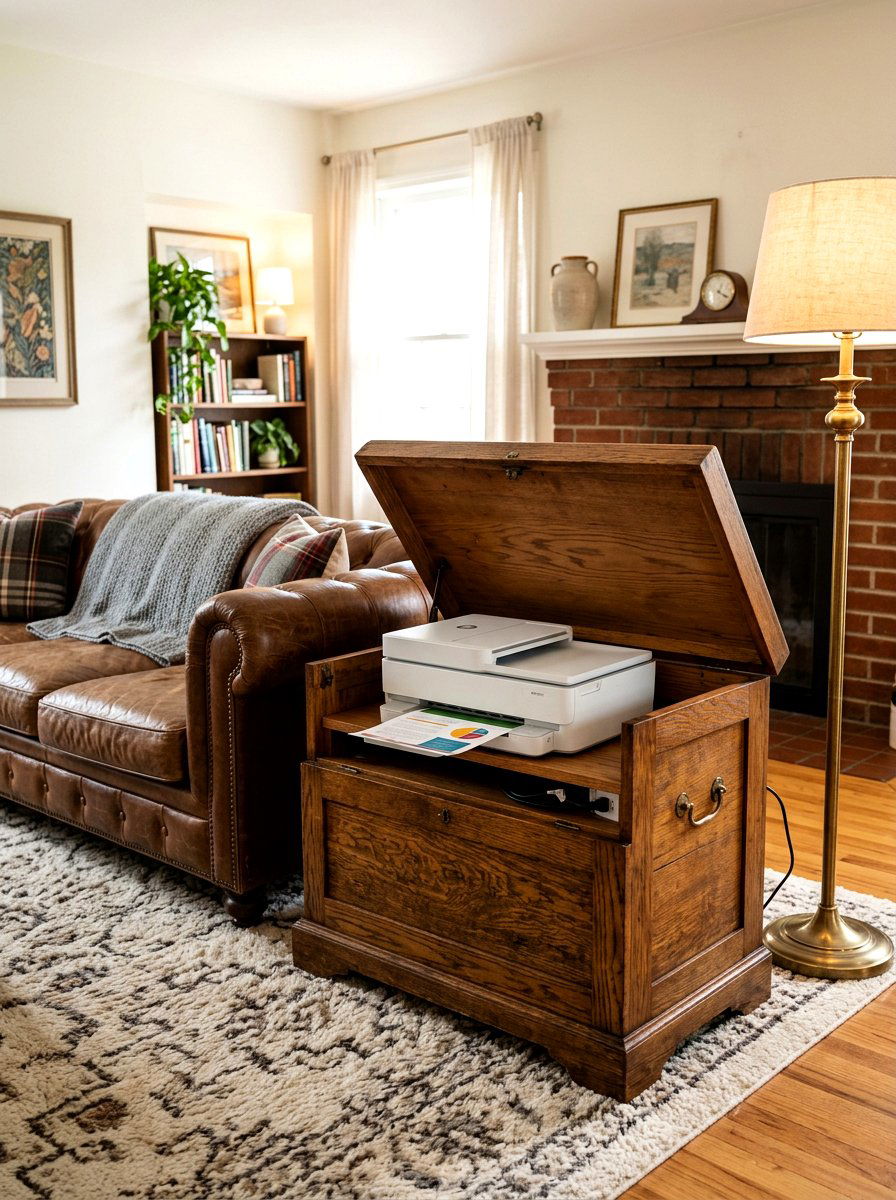
Hiding your printer inside a repurposed piece of furniture like a vintage chest or a custom ottoman is a clever way to mask technology. This method works well in living rooms or bedrooms where you want to maintain a residential feel rather than a corporate one. You can drill a small hole in the back of the furniture piece for cord access and ensure there is enough ventilation to prevent overheating. When you need to print, simply lift the lid or open the front panel. It creates a surprising and delightful solution that keeps your home looking polished while still being fully functional for work.
7. Rolling Printer Cart
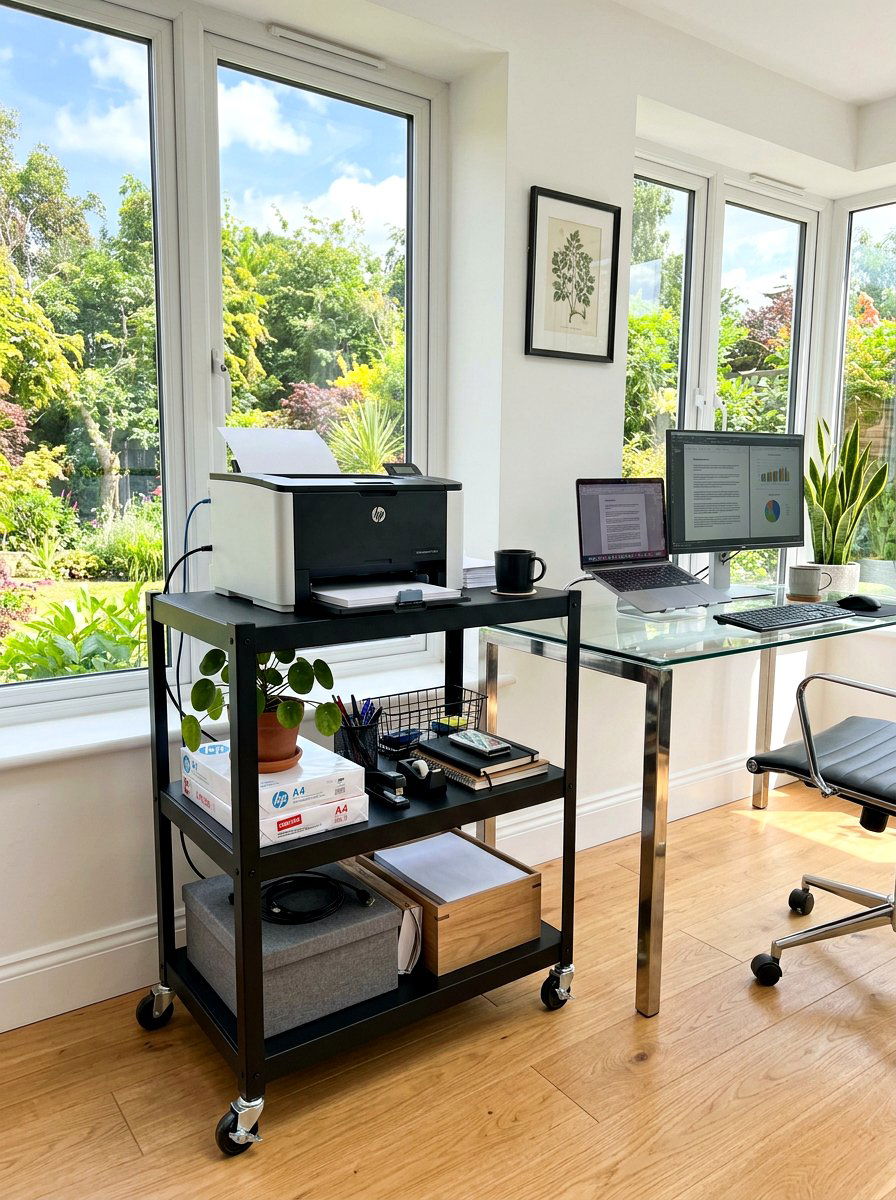
A mobile printer cart offers incredible flexibility for those who move their workspace around or share a printer with multiple family members. These carts often feature multiple tiers, providing extra storage for toner, extra paper, and even a secondary scanner or laptop. Look for a cart with locking wheels to ensure stability when the machine is in operation. Because the cart is portable, you can easily roll it into a corner or a pantry when it is not in use. Choosing a cart with a stylish metal or wood finish allows it to serve as a functional accent piece in any room.
8. Bookshelf Printer Storage
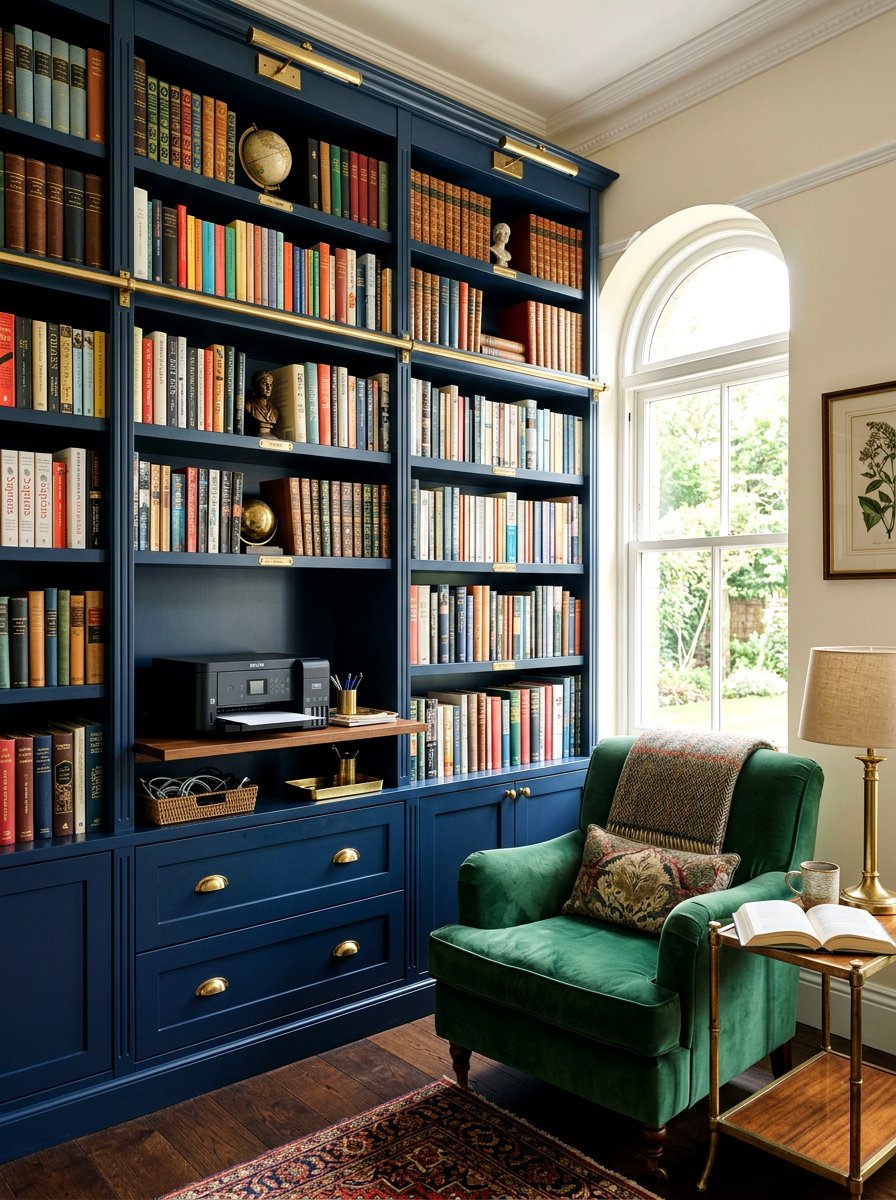
Integrating a printer directly into a large bookshelf unit allows it to blend seamlessly with your collection of books and decor. By removing one shelf or choosing a unit with adjustable heights, you can create a perfectly sized cubby for the machine. This setup is visually appealing because the surrounding books help to distract the eye from the plastic appearance of the printer. You can even use decorative boxes on the same shelf to store spare ink cartridges and paper reams. It is a budget-friendly way to organize your office without needing to purchase specialized or custom-made furniture pieces.
9. Corner Printer Station
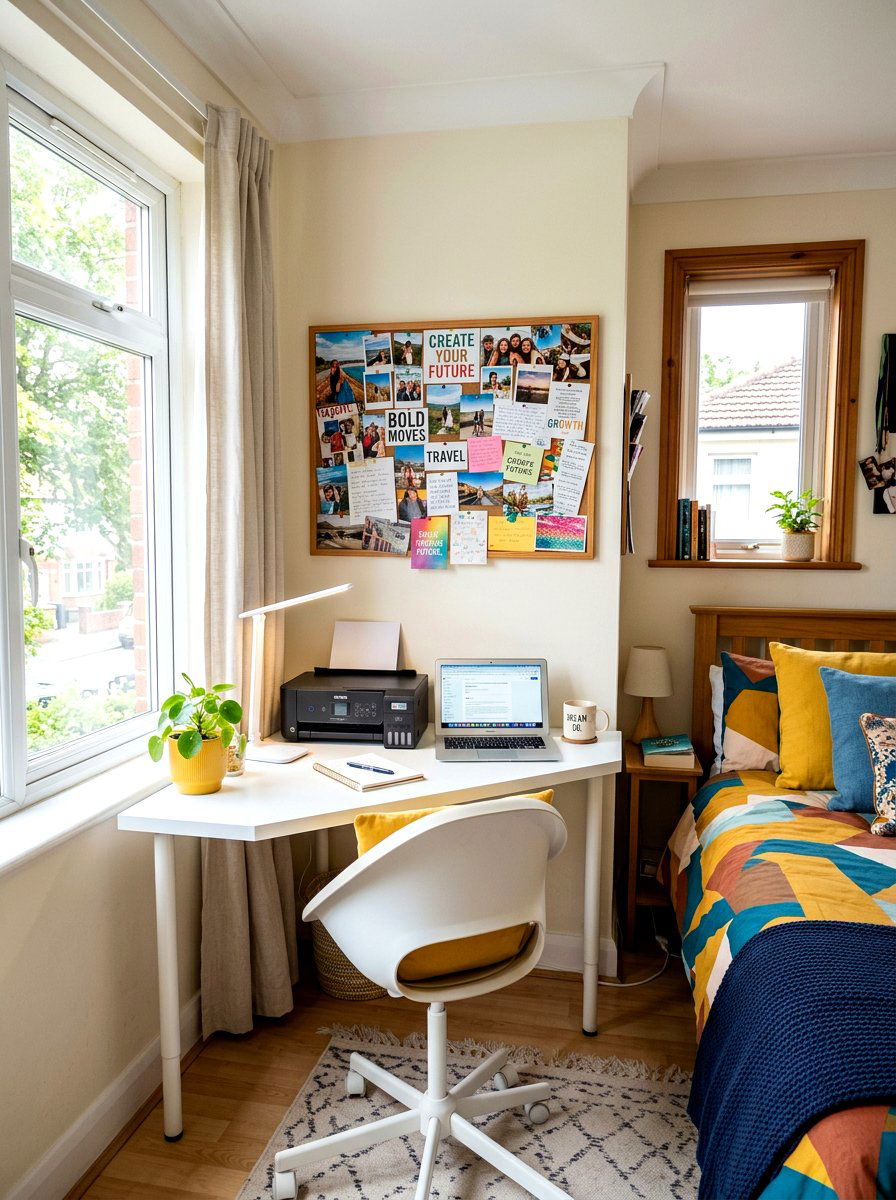
Corners are frequently underutilized in home design, making them the perfect location for a dedicated triangular printer station. A specialized corner desk or a set of custom corner shelves can house your printer, paper, and miscellaneous office supplies without intruding into the center of the room. This layout creates a focused work zone that feels separate from the rest of the living space. By painting the corner a slightly different shade or adding a dedicated task light, you can define the nook as a purposeful architectural feature. It is an efficient way to maximize square footage in tight or awkward room layouts.
10. Craft Room Printer Table
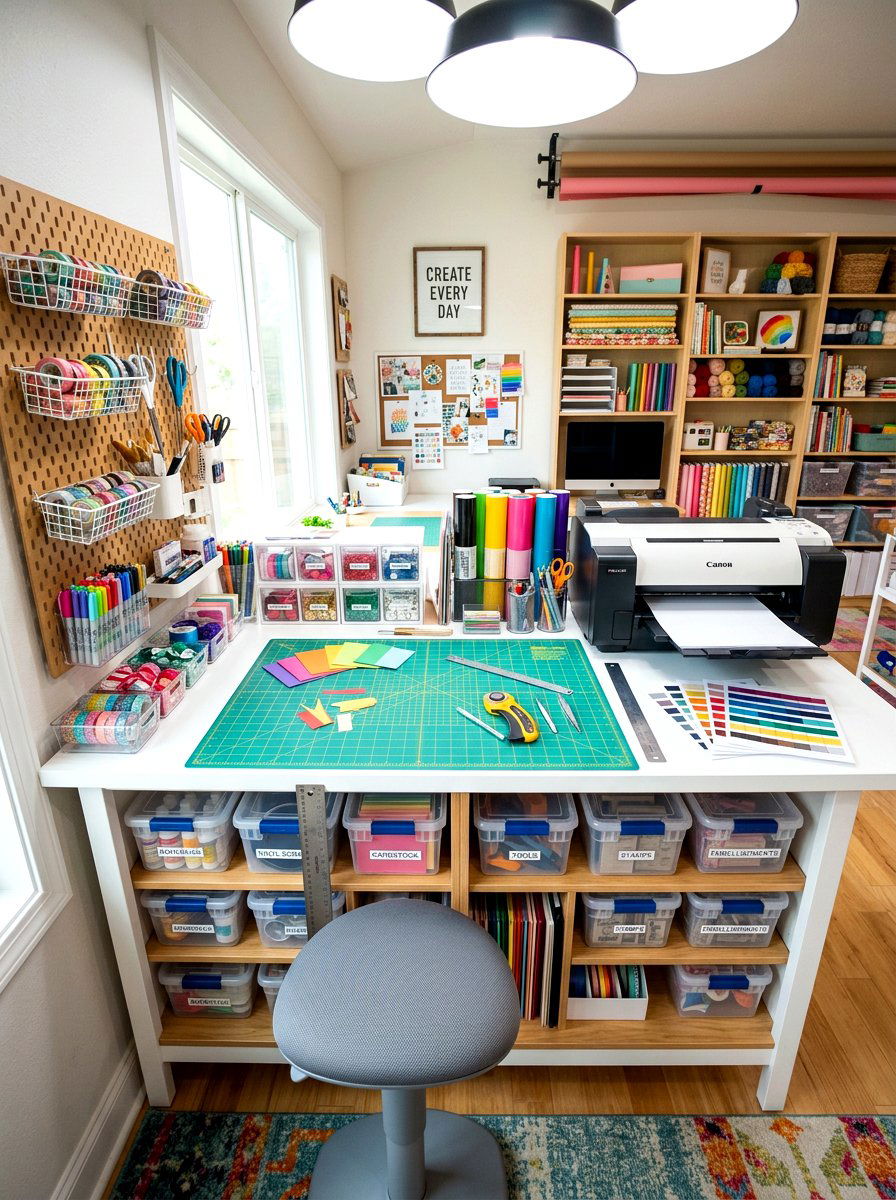
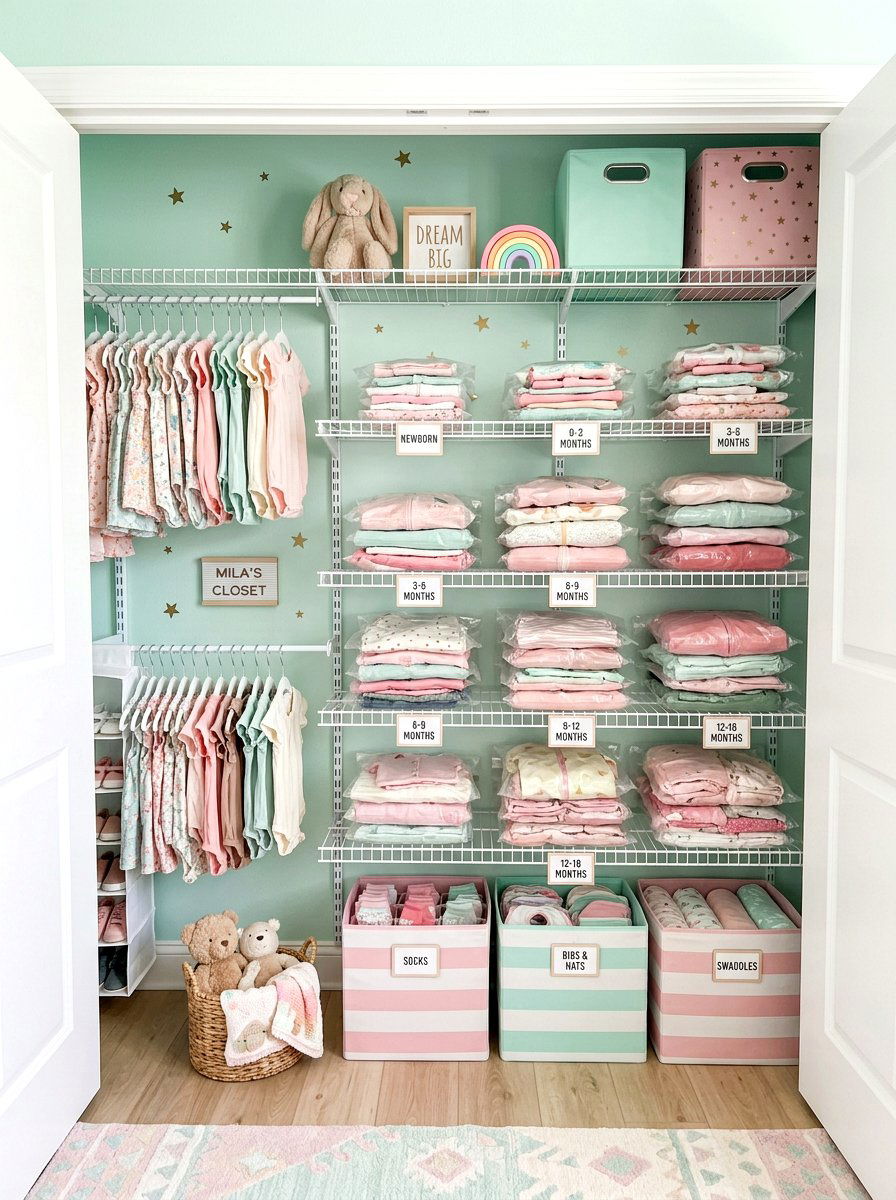
In a dedicated craft room, the printer often serves multiple purposes, from printing labels to creating intricate patterns for DIY projects. A sturdy, counter-height table provides the ideal surface for a large format printer or a sublimation machine used for crafting. Having a wide workspace around the printer allows you to spread out your materials and handle large paper sizes with ease. You can organize the space below the table with clear bins for different types of specialty paper and vinyl. This setup ensures that your printing tools are always ready for your next creative endeavor in an organized environment.
11. Wireless Printer Bench
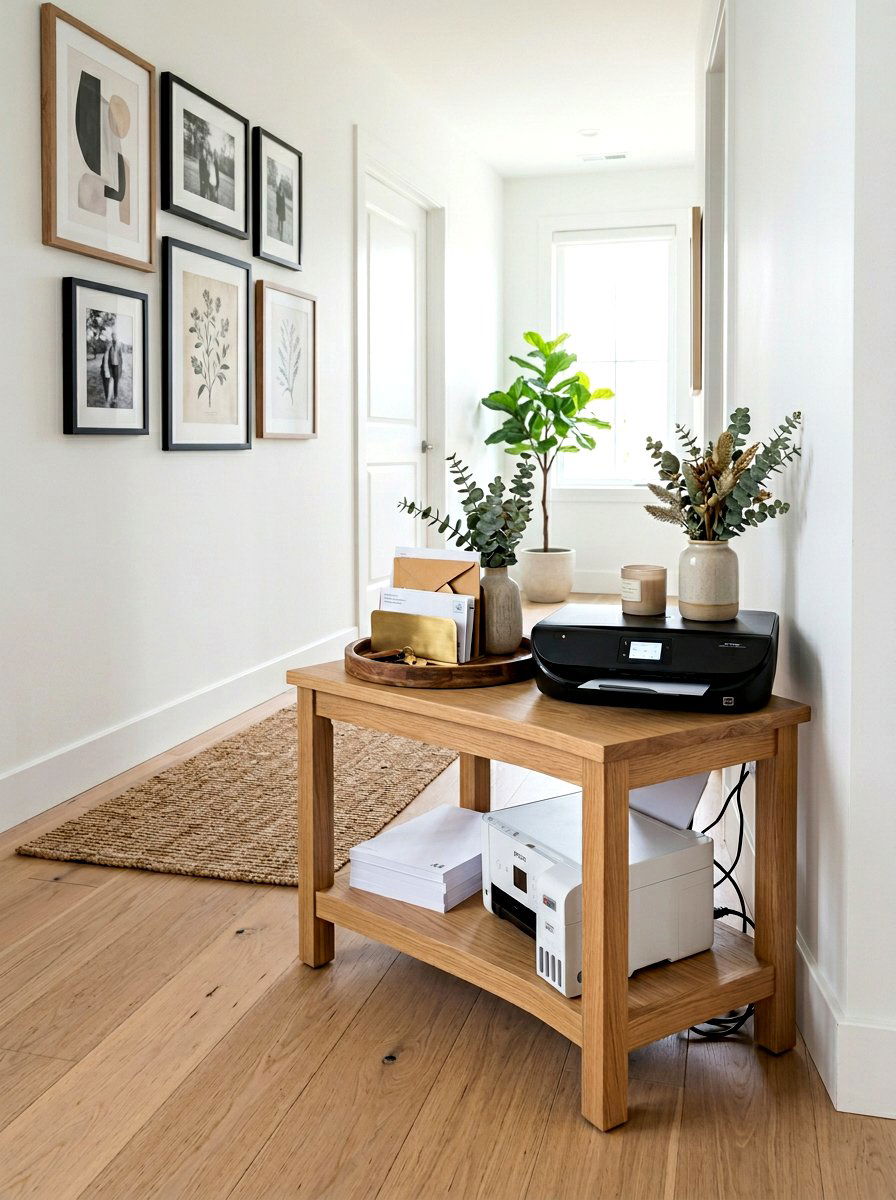
If you use a wireless printer, you are not tethered to your desk, allowing you to place the machine on a stylish bench in a hallway or entryway. A wooden bench with a lower shelf provides a stable surface for the printer while keeping it at a convenient height for grabbing documents on your way out the door. This placement removes the bulk of the machine from your primary workspace, helping to reduce stress and clutter. You can style the top of the bench with a tray for mail and a small lamp, making the printer nook feel like a thoughtful part of your home entry.
12. Kitchen Command Center Printer
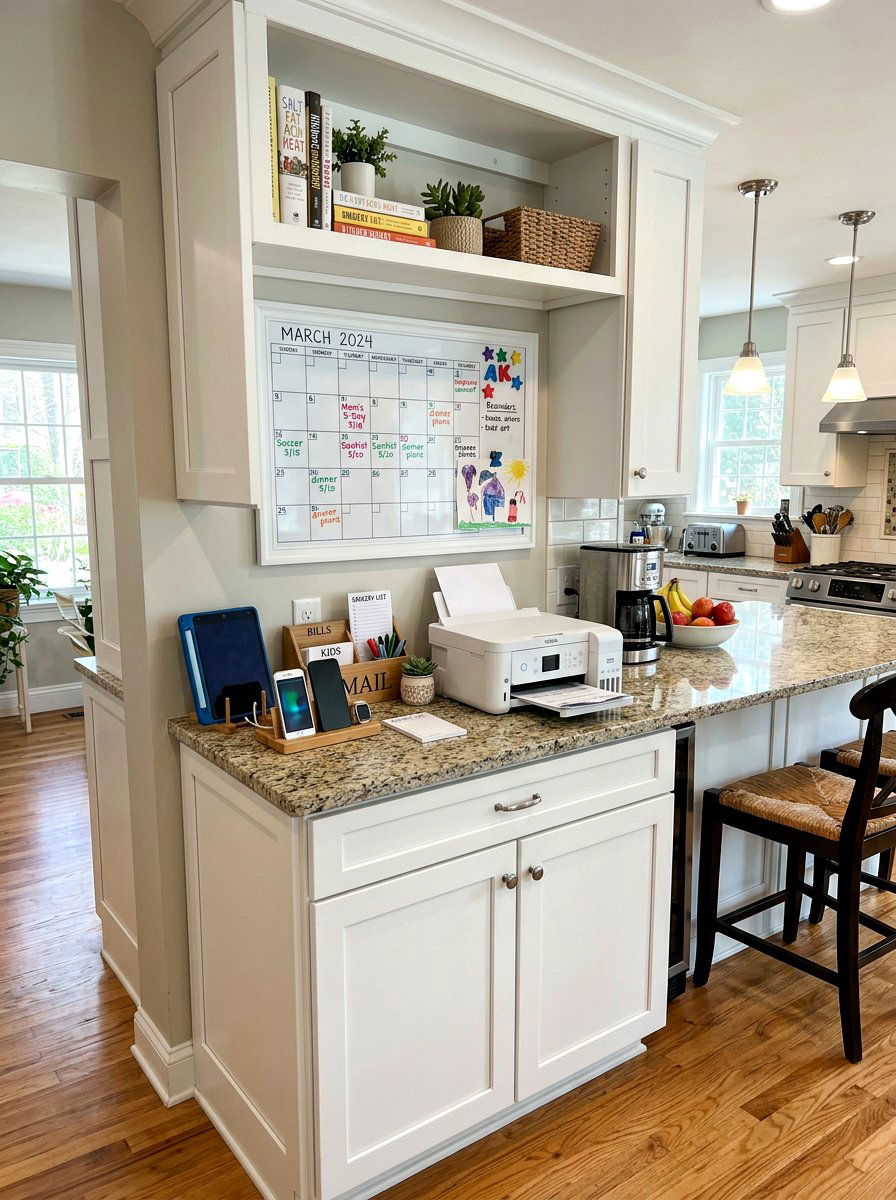
The kitchen is the heart of the home, and adding a printer to a dedicated command center can help manage busy family schedules. Many modern kitchens include a small desk area or a dedicated pantry shelf where a printer can live alongside charging stations for phones and tablets. This allows parents to print school forms or recipes quickly without leaving the main living area. By choosing a compact printer model that matches the kitchen's color palette, the device becomes an unobtrusive part of the cabinetry. It promotes organization and ensures that important documents are always within easy reach for the whole family.
13. Minimalist Printer Stand
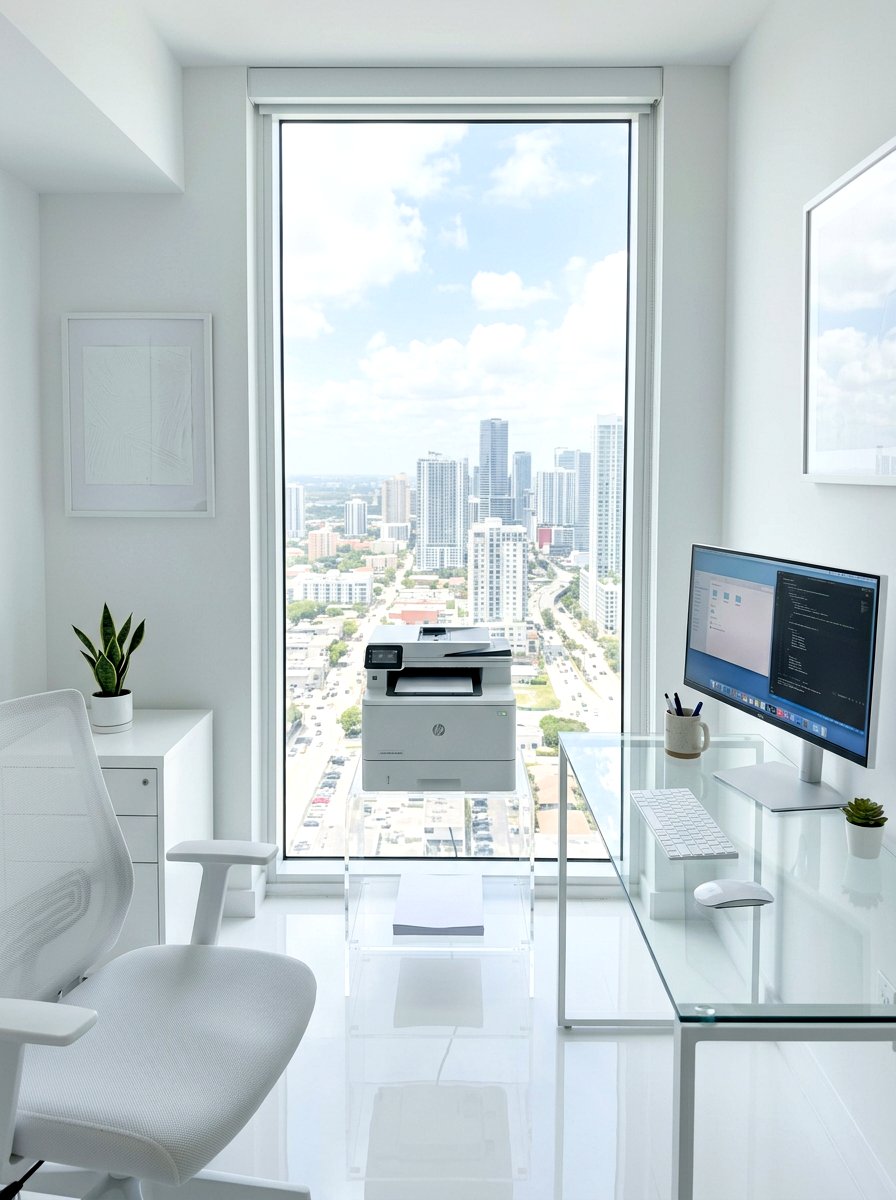
For those who appreciate clean lines and simple aesthetics, a minimalist printer stand made of glass or light-colored wood is the perfect choice. This type of stand usually features a very basic frame with just enough room for the machine and one small shelf for paper. The goal is to keep the setup as unobtrusive as possible, allowing the printer to almost disappear against a neutral wall. By using a white printer on a white stand, you create a monochromatic look that feels calm and orderly. This approach is highly effective in modern apartments where visual simplicity helps a small space feel much larger.
14. Industrial Printer Rack
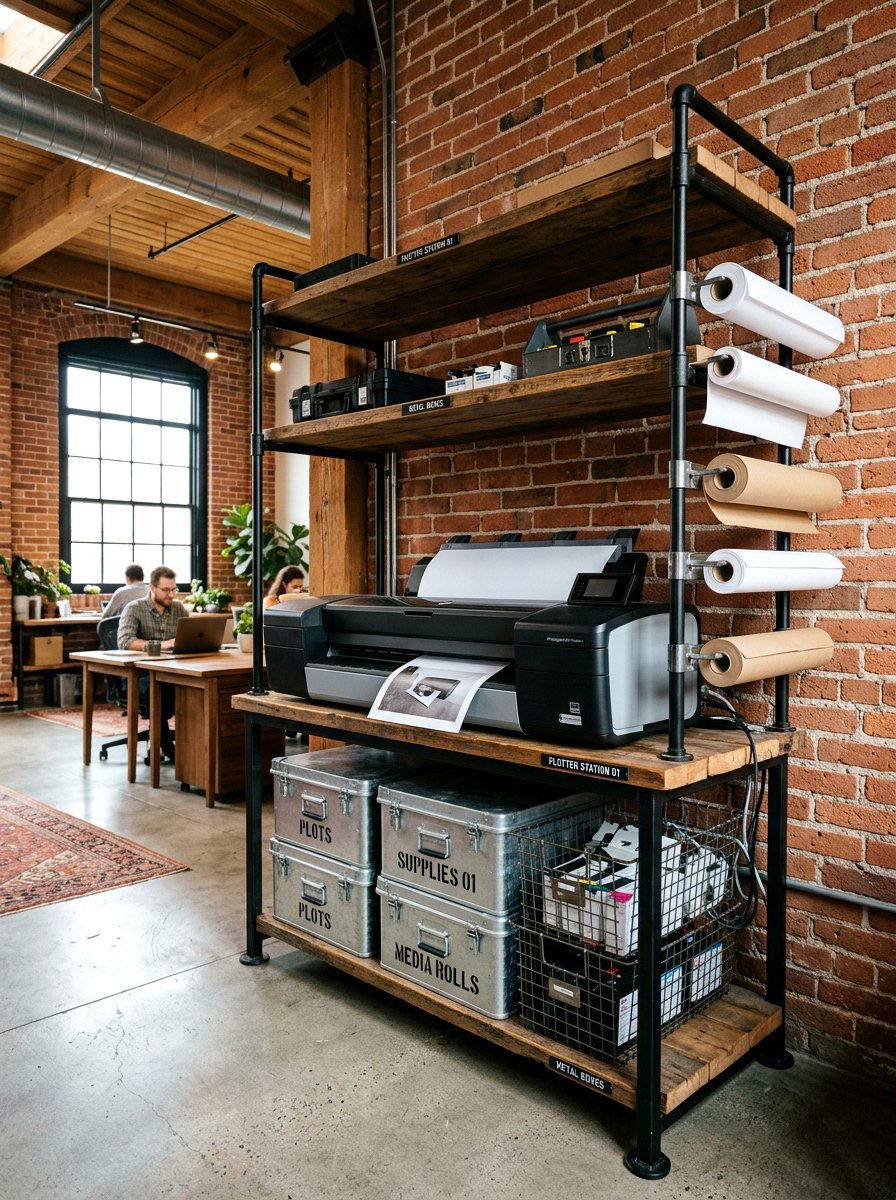
An industrial-style rack made of black iron pipes and reclaimed wood adds a rugged, masculine touch to any home office or workshop. These sturdy racks are built to last and can easily support heavy-duty office equipment and multiple reams of paper. The open shelving design makes it easy to access cords and troubleshoot any technical issues without moving the entire unit. You can pair this rack with other industrial elements like metal filing cabinets and vintage lighting to create a cohesive theme. It is a durable and stylish option for those who want their printer nook to have a strong, architectural presence.
15. Farmhouse Printer Hutch
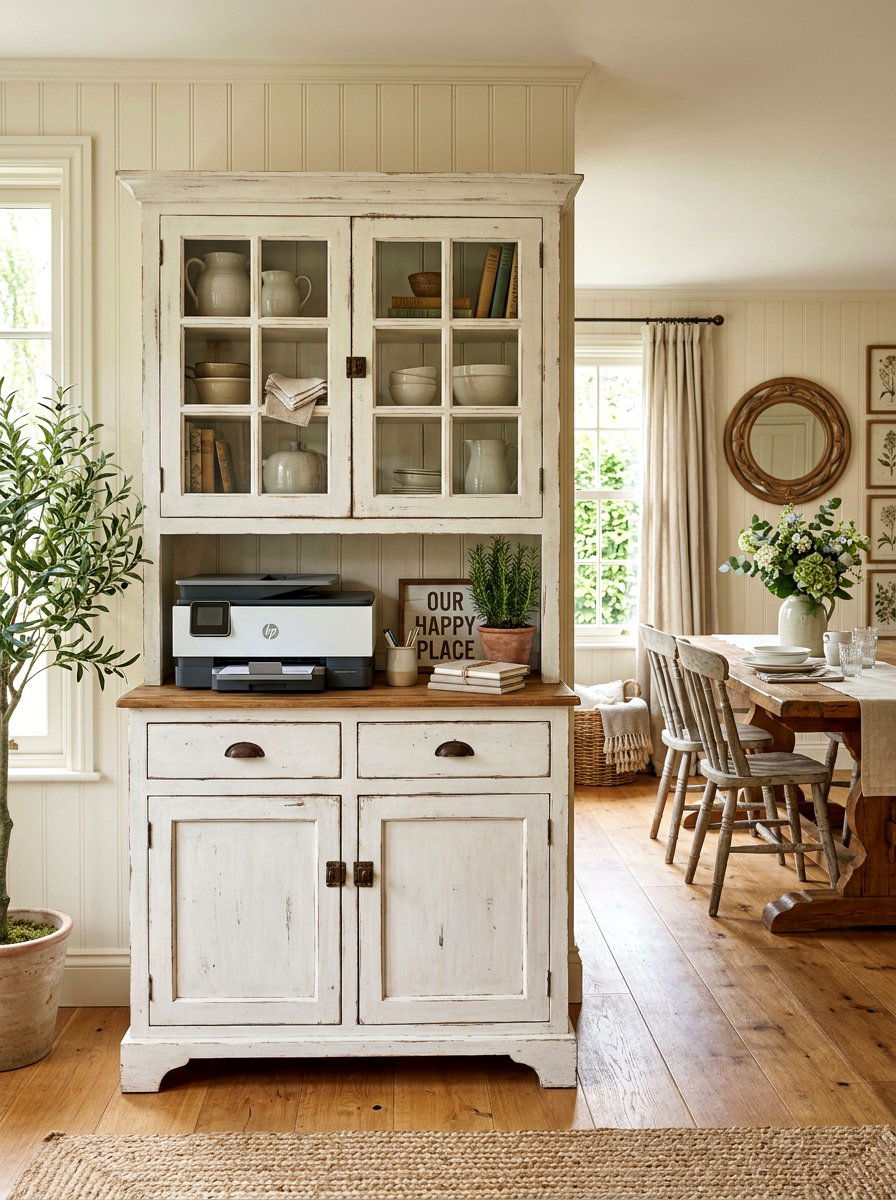
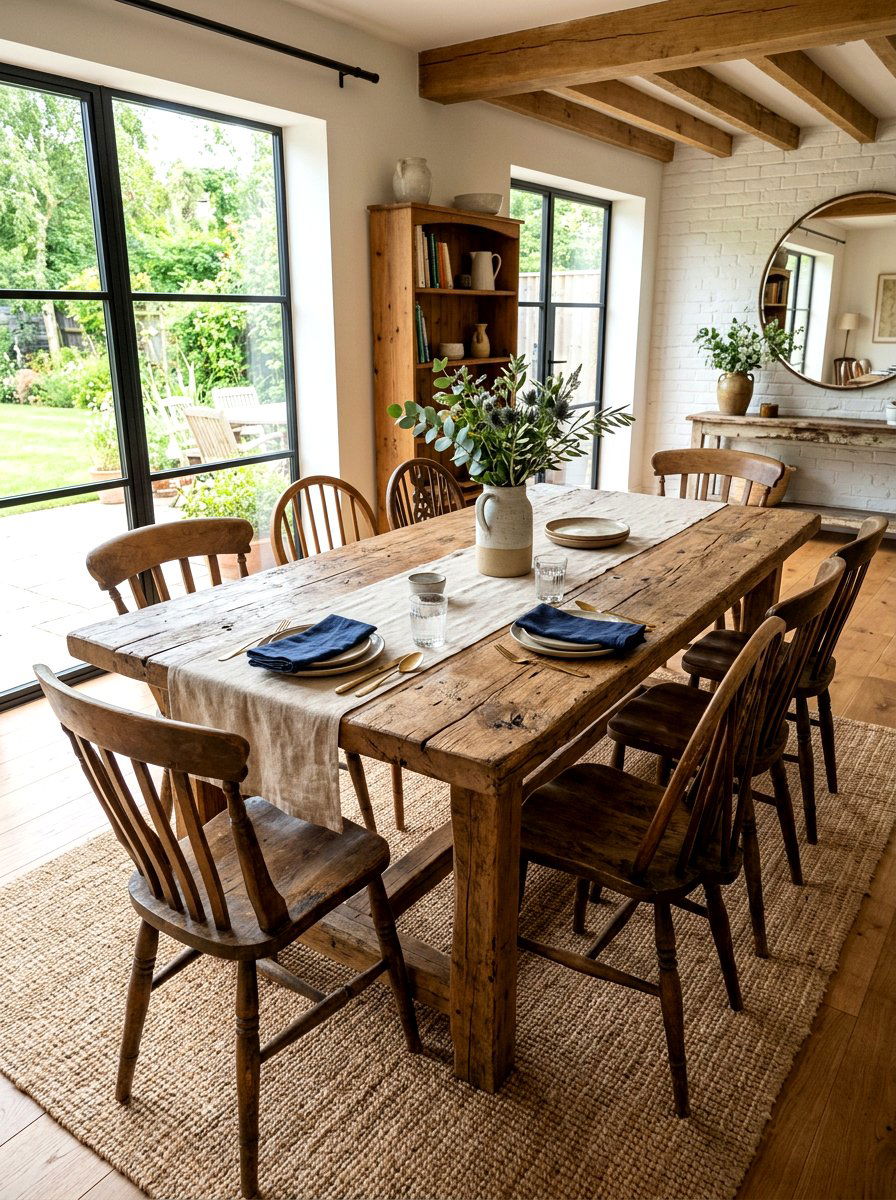
A classic farmhouse hutch with glass doors and a rustic finish provides a charming and traditional way to store office supplies. By placing the printer on the main counter area of the hutch, you keep it accessible while the surrounding cabinetry hides the more unsightly items. You can use the upper glass cabinets to display beautiful jars of pens or vintage office decor, while the lower wooden doors hide the printer cables and extra toner. This setup brings a sense of warmth and history to a home office, making the workspace feel more like a cozy library than a sterile corporate environment.
16. Sideboard Printer Cabinet
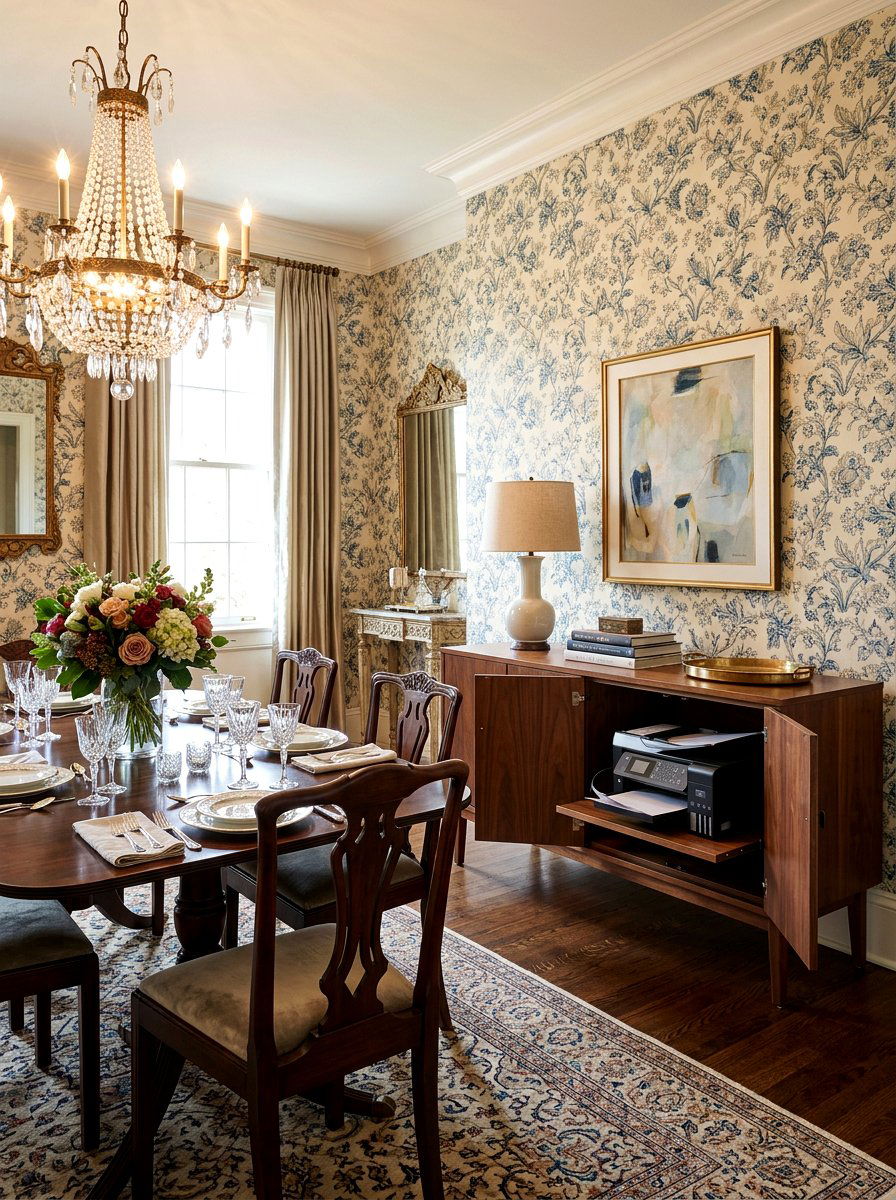
A stylish sideboard or buffet in a dining room can double as a secret printer station for those who work from home occasionally. These long furniture pieces offer plenty of interior space to house a printer and a laptop when they are not in use. You can drill a discrete hole in the back for power cords and keep the top surface clear for serving during dinner parties. This is the ultimate "hide in plain sight" strategy, allowing you to maintain a formal dining aesthetic while still having a functional office nearby. It is a smart solution for open-concept homes where rooms serve multiple purposes.
17. Desk Return Printer Space
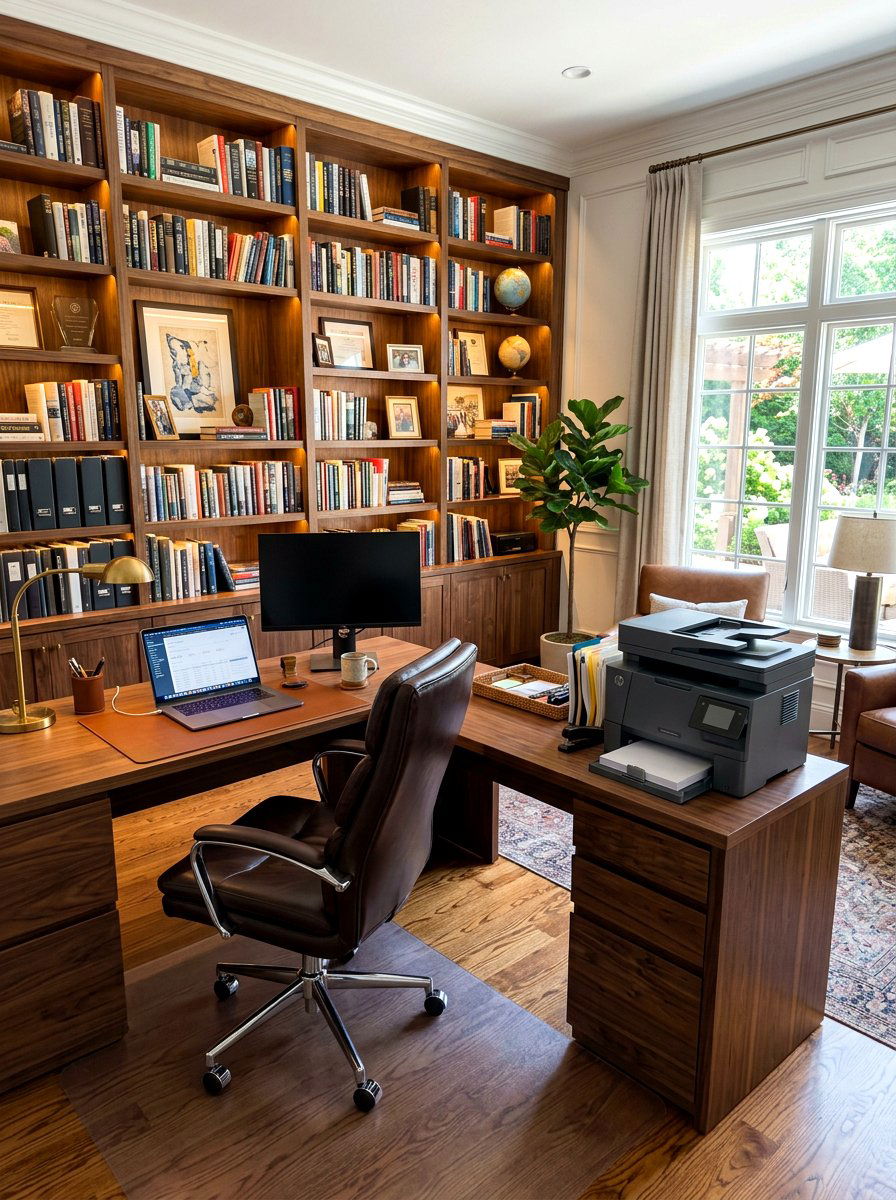
Adding a desk return, or an "L" shaped extension, to your primary desk creates a natural nook for your printing equipment. This layout keeps the printer within arm 's reach but off to the side, so it doesn' t interfere with your primary computer monitor or keyboard space. The return can also serve as a landing zone for printed documents, keeping them organized and off the floor. This configuration is favored by professionals who handle large volumes of paperwork and need a dedicated zone for document processing. It creates an efficient workflow that mimics a high-end corporate office in the comfort of your own home.
18. Vertical Printer Cubby
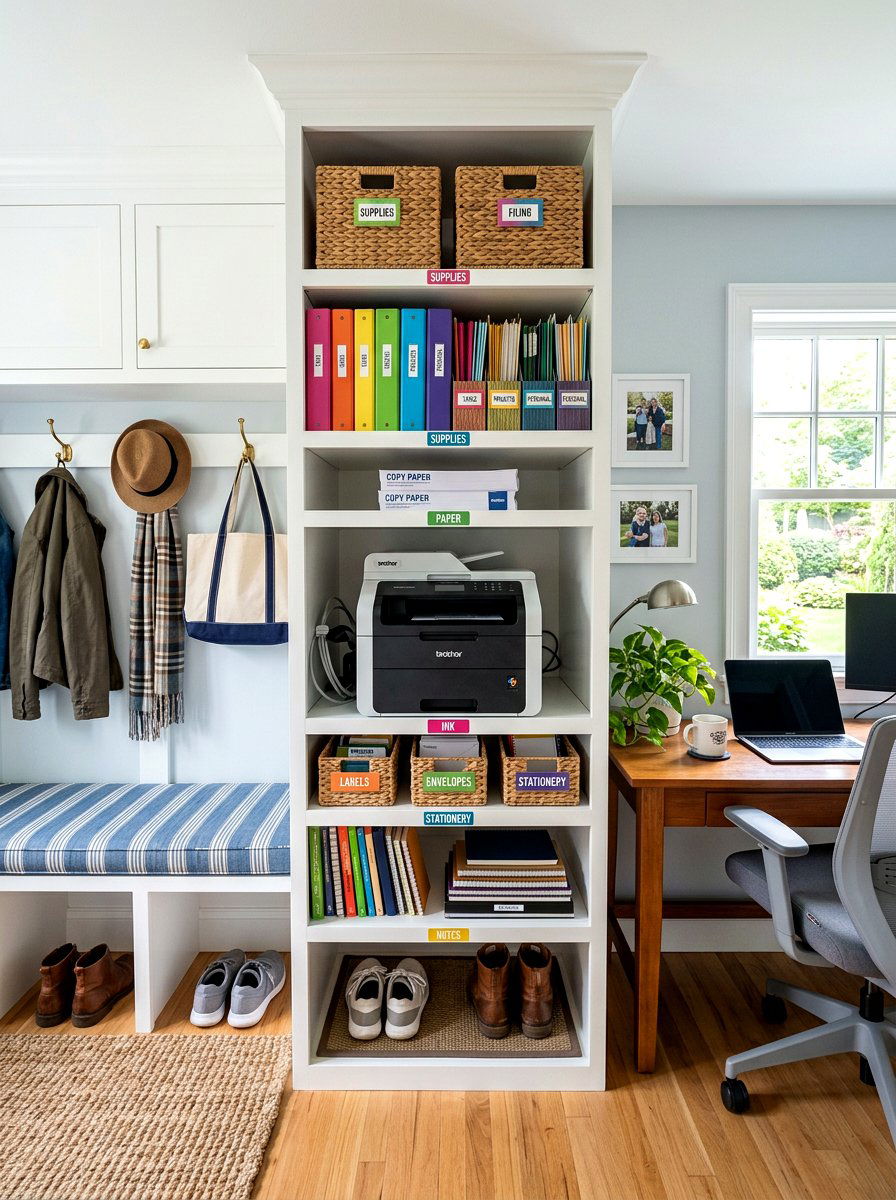
When floor space is limited, going vertical is the best way to organize your office gear. A custom-built vertical cubby unit can be mounted on the wall or integrated into a tall bookshelf to house the printer and its accessories. Each cubby can be sized specifically for the printer, paper trays, and ink storage, creating a tidy grid of functionality. This design uses the full height of the room, drawing the eye upward and making the space feel more organized. Using labels on each cubby helps keep the system organized and ensures that every item has its own dedicated place in the nook.
19. Murphy Desk Printer Station
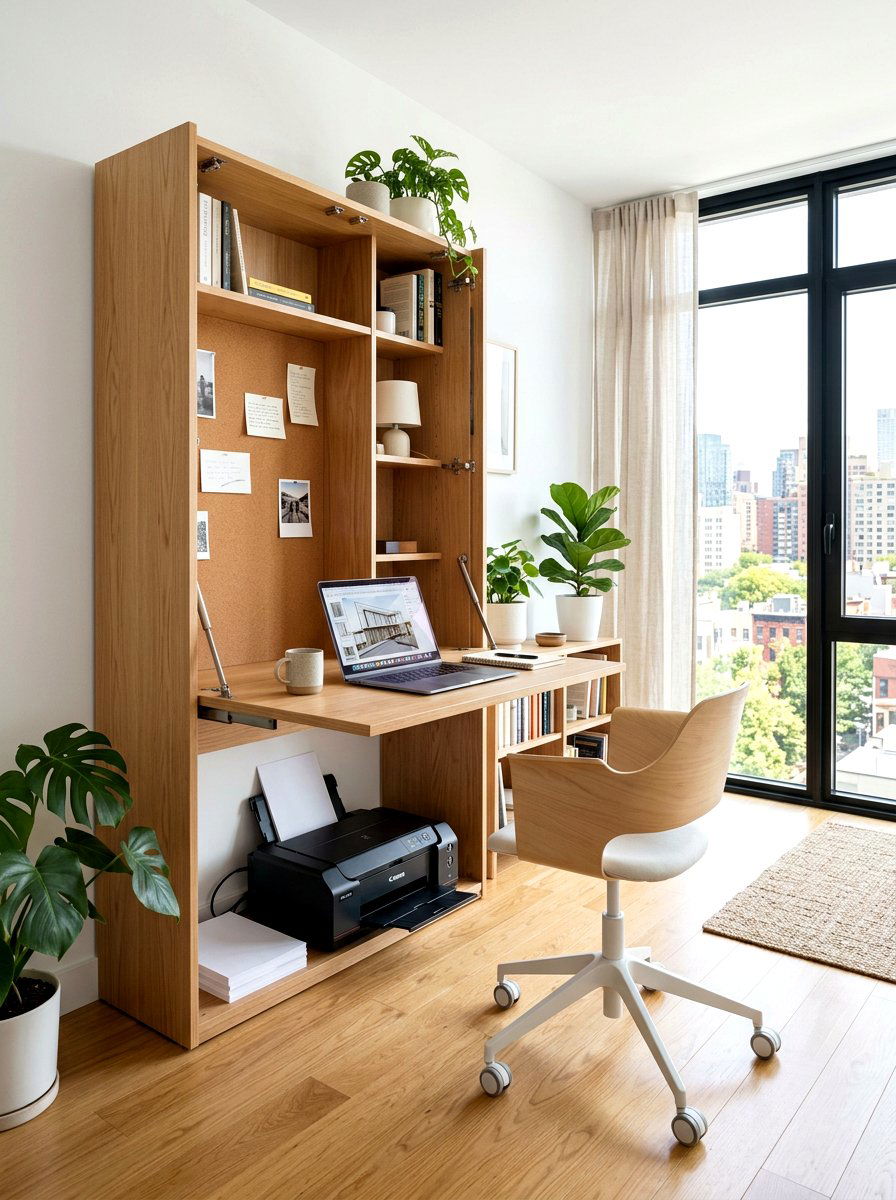
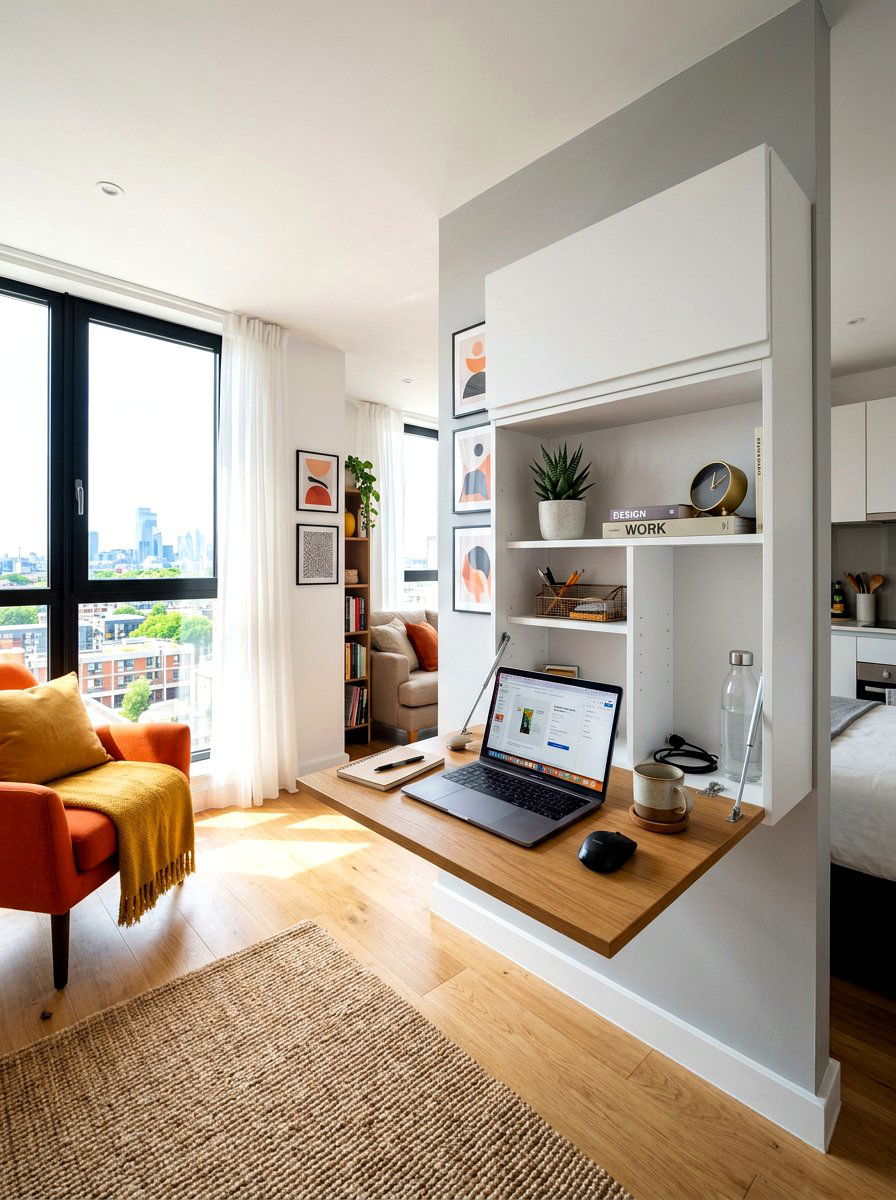
A Murphy desk is a fold-down workspace that disappears into the wall when not in use, and it can be designed to include a printer nook. The lower portion of the wall unit can remain fixed to house the printer, while the desk surface folds down above it. This setup is a game-changer for tiny apartments or guest rooms that need to serve as a part-time office. When the desk is folded up, the room looks like a clean, empty space. It provides a complete office solution that occupies virtually zero floor space when stored, making it the ultimate choice for small-space living.
20. Armoire Printer Storage
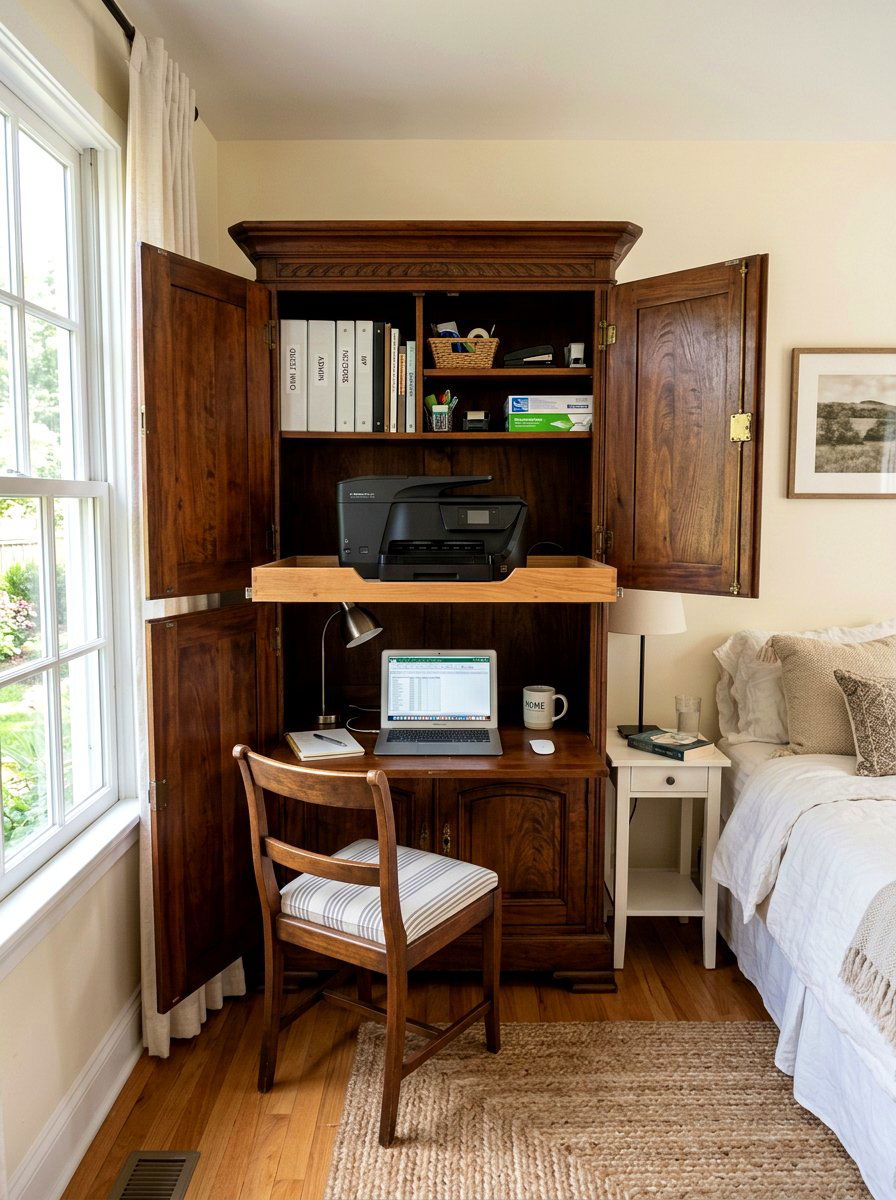
An oversized armoire can serve as a complete, self-contained office that you can close up and forget about at the end of the day. These large pieces of furniture typically feature a pull-out desk surface, a dedicated printer shelf, and plenty of room for files and books. By lining the interior with a fun wallpaper or a pop of color, you can create a personalized workspace that makes you happy every time you open it. The heavy doors provide excellent sound dampening, which can be a bonus if the printer is located in a bedroom or a shared living area.
21. Mudroom Printer Nook
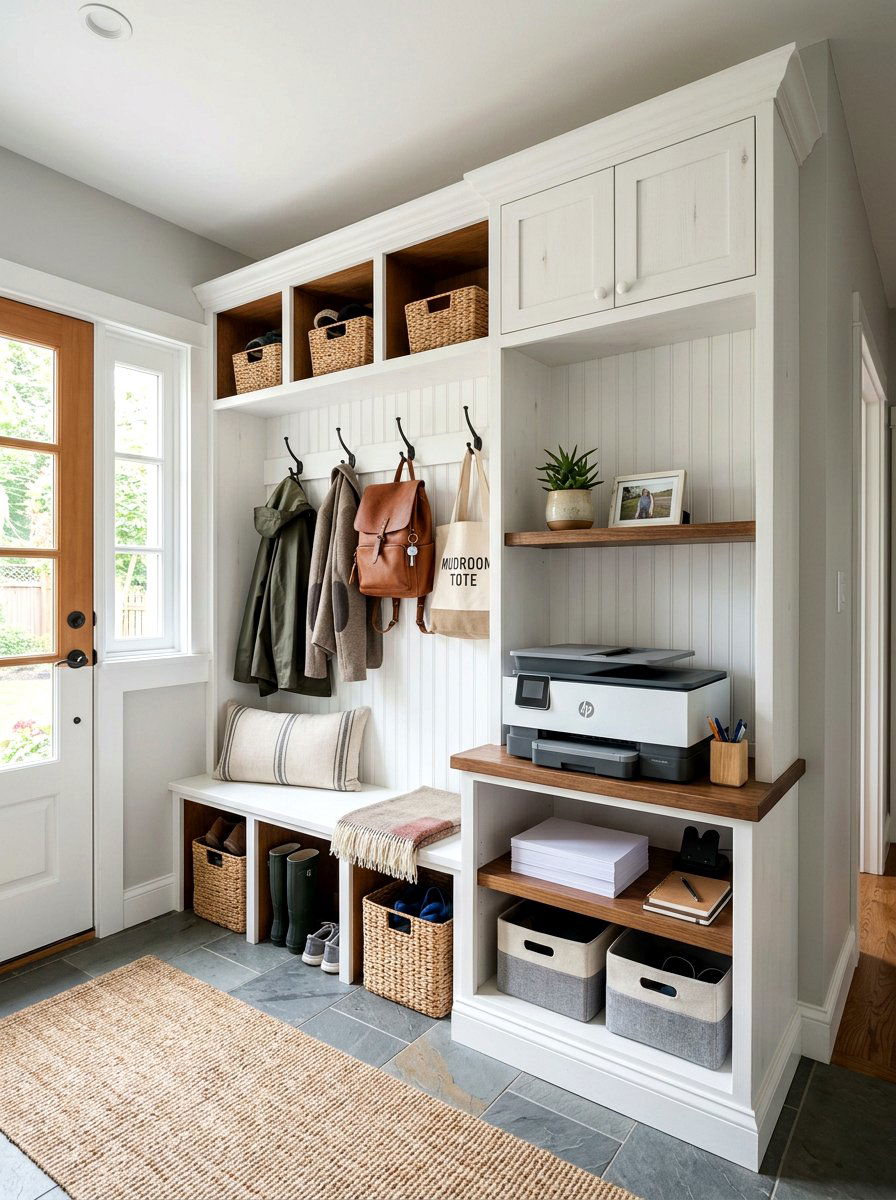
A mudroom is an unexpected but highly practical location for a family printer nook. Since the mudroom often serves as a transition zone between the home and the outside world, it is a convenient place to print out maps, tickets, or school permissions. You can integrate a small printer shelf into the mudroom cubbies alongside the coats and shoes. This keeps the tech out of the main living spaces and ensures it is accessible to everyone in the household. Using a wireless printer in this location makes it easy for anyone to send a document from their phone as they are walking through the door.
22. Bookshelf Printer Slot
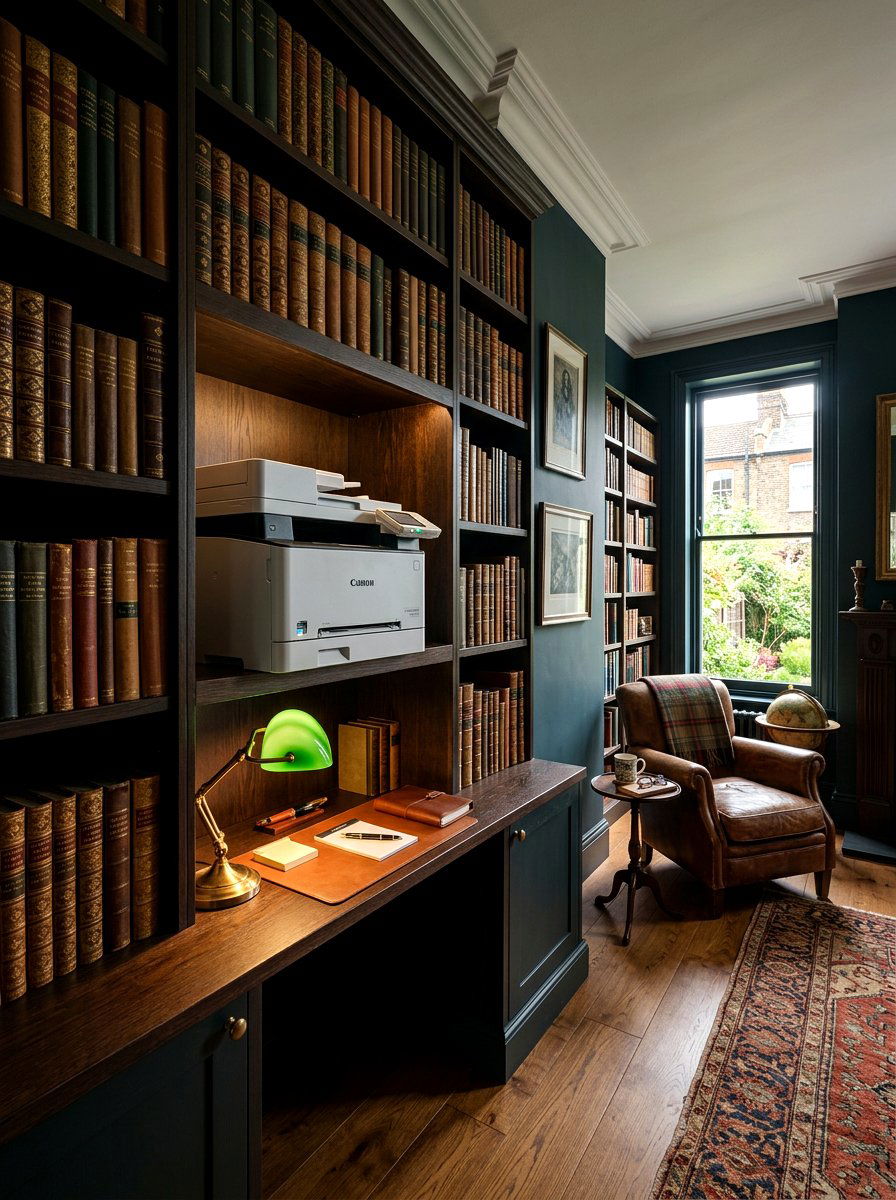
If you have a large library of books, you can create a custom "slot" within the shelving specifically for a slim printer model. This involves measuring the printer carefully and adjusting the shelf height to provide just enough clearance for the paper to exit. This integrated look is very sophisticated and makes the printer feel like a deliberate part of the room's architecture. To hide the cords, you can route them behind the books or use a cord cover that matches the color of the shelving. This approach is perfect for a study or home library where maintaining a classic look is a high priority.
23. Desktop Printer Riser
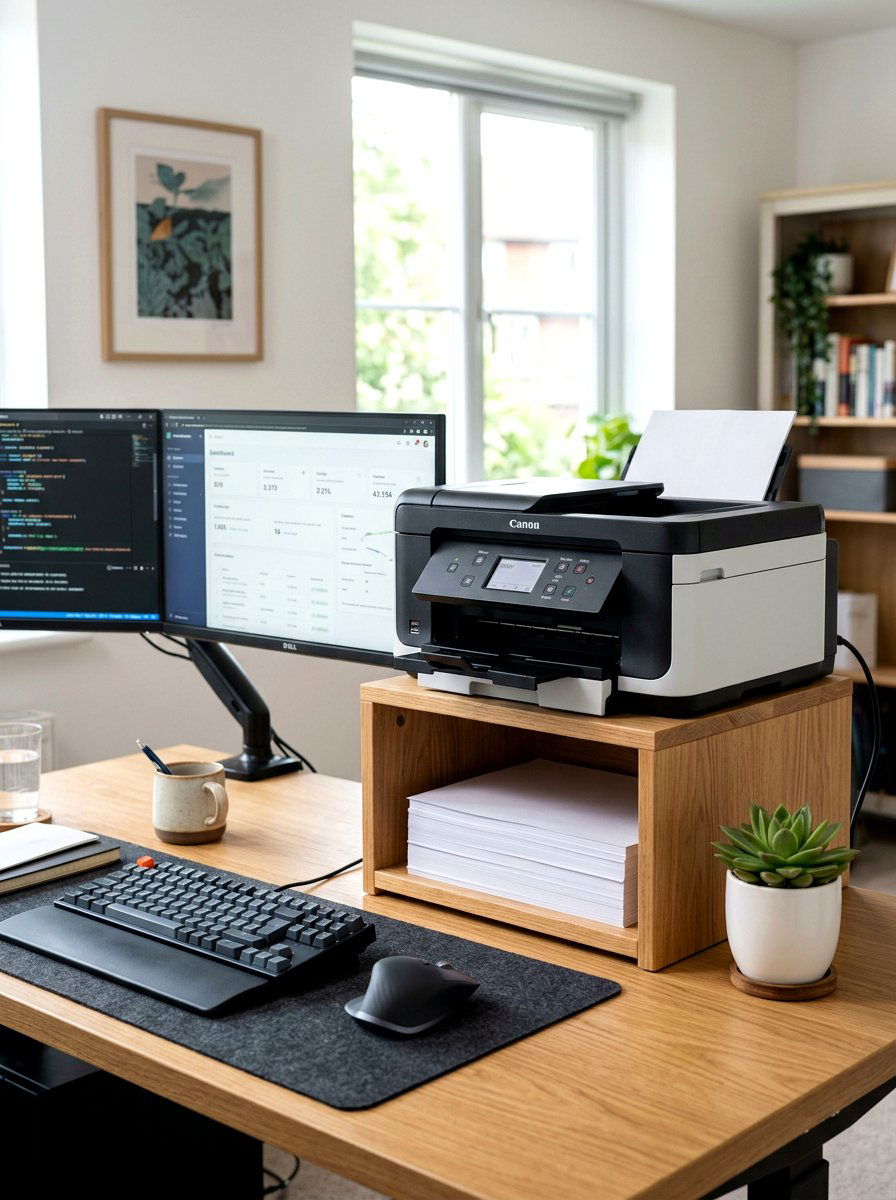
A desktop riser is a simple accessory that sits on top of your existing desk to provide a dedicated platform for your printer. The space underneath the riser can be used to store paper, notebooks, or even a keyboard when it is not in use. This elevates the printer to a more ergonomic height, making it easier to load paper and clear jams. Risers come in various materials, from sleek acrylic to warm wood, allowing you to match your current office style. It is an affordable and non-permanent way to organize your printer nook without the need for any major renovations or new furniture.
24. Scandi Printer Table
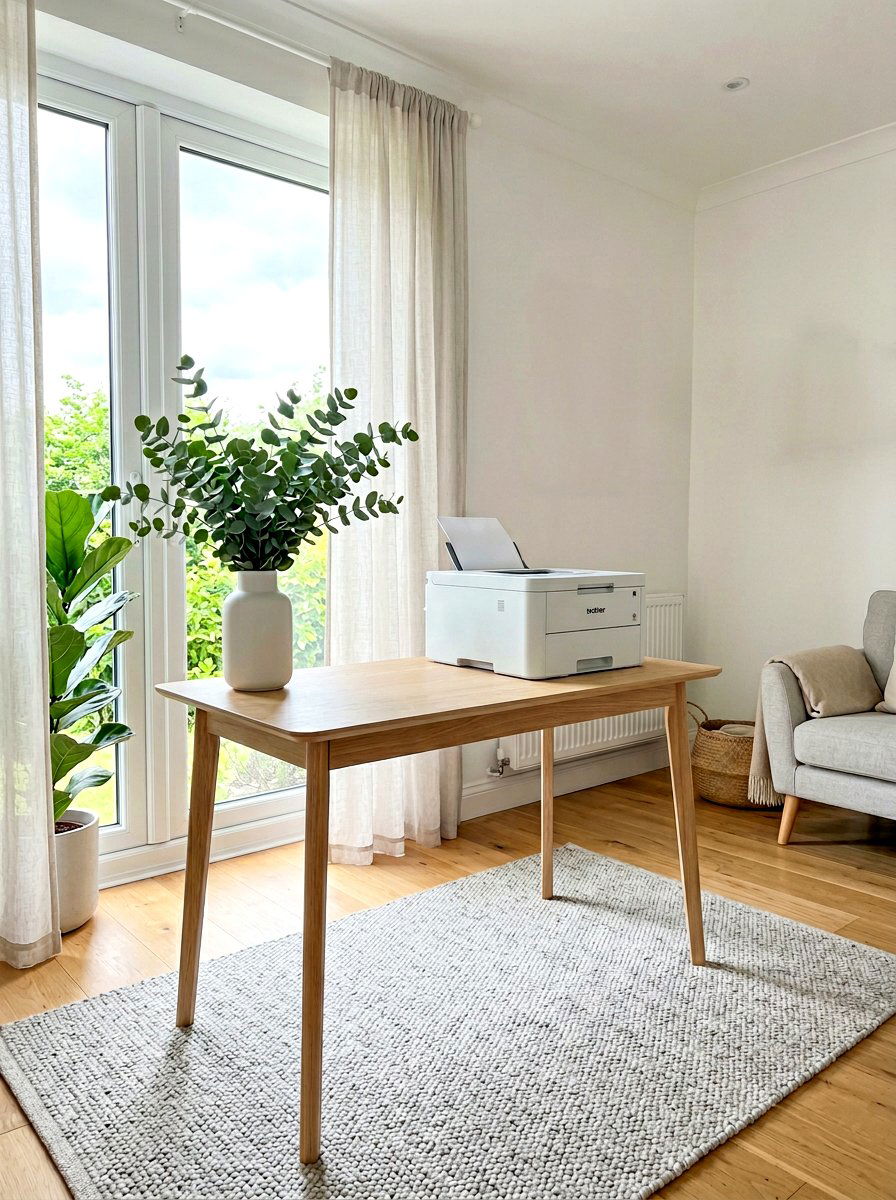
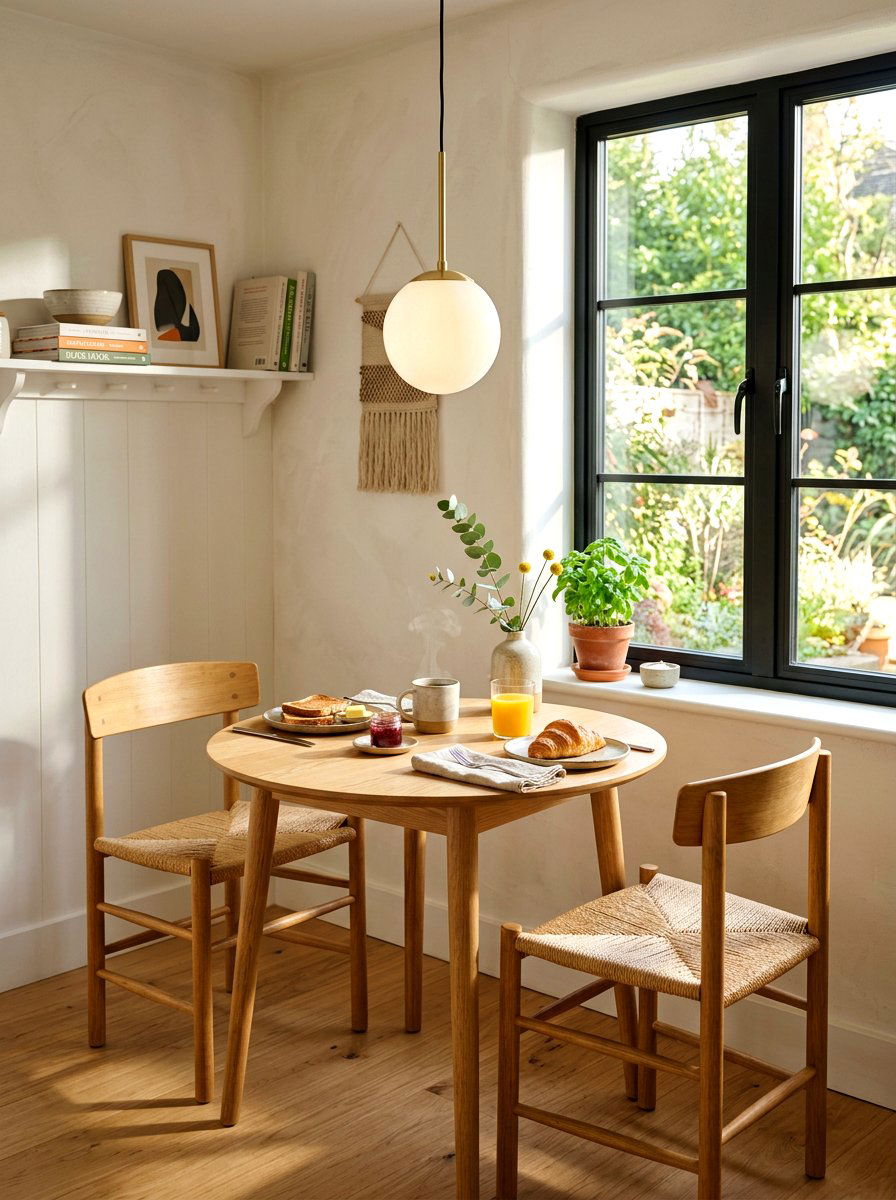
The Scandinavian design style is famous for its functionality and use of light woods, making it an excellent theme for a printer nook. A simple Scandi-style side table with tapered legs and a clean finish provides a beautiful home for a modern white printer. The simplicity of the design ensures that the nook doesn't feel cluttered or heavy in the room. You can style the table with a single candle or a small ceramic vase to give it a homier feel. This look is perfect for bright, airy rooms with plenty of natural light, where a heavy black printer might otherwise feel too dominant.
25. Mid Century Modern Printer Cabinet
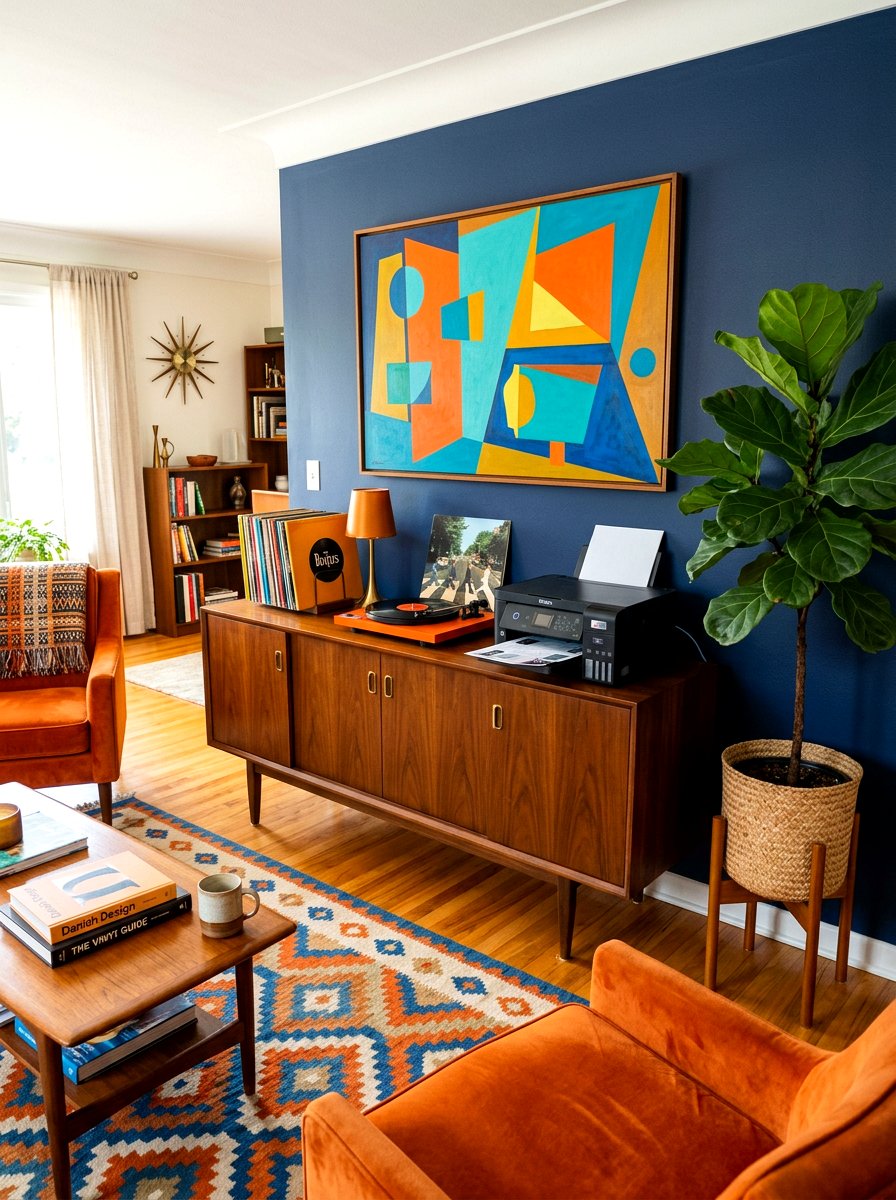
Mid-century modern furniture, with its characteristic wood grains and iconic silhouettes, can be used to create a very stylish printer station. A vintage record cabinet or a small credenza can be easily adapted to house a printer and office supplies. The warm wood tones and interesting hardware make the printer nook feel like a curated part of your interior design rather than a necessary chore. By placing a piece of MCM-inspired art above the cabinet, you can ground the space and make it a focal point of the room. It is a great way to blend modern technology with a timeless and popular vintage aesthetic.
26. Library Printer Nook
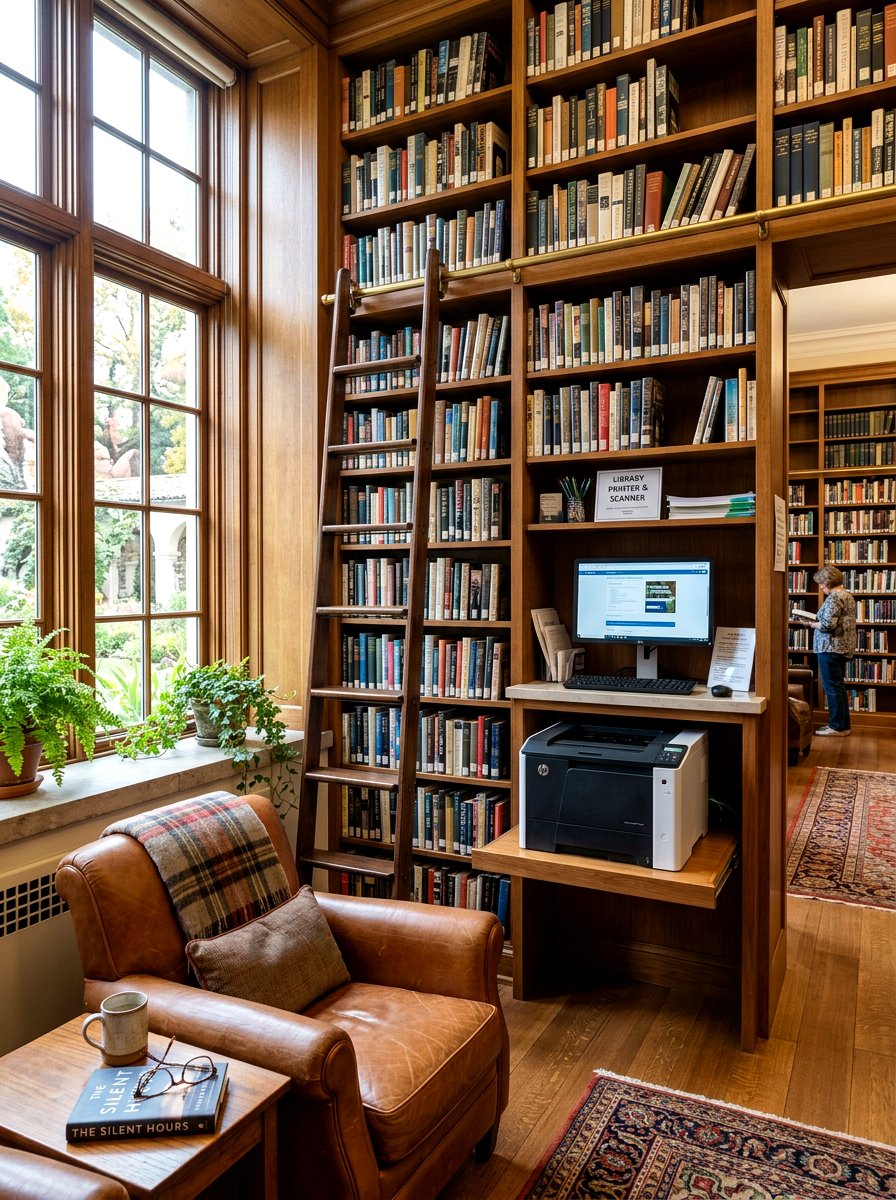
For those who have a dedicated home library, a printer nook can be tucked into a corner using a small library-style ladder and high-reach shelves. This setup emphasizes the "quiet study" vibe and keeps the technology away from the main reading chairs. You can use a dark wood finish to match the traditional library look and add a classic brass lamp for task lighting. The printer can sit on a sliding shelf that pulls out from the bookcases, allowing you to hide it completely when you are lost in a book. It is a refined approach that respects the sanctity of a reading space.
27. Under Stairs Printer Station
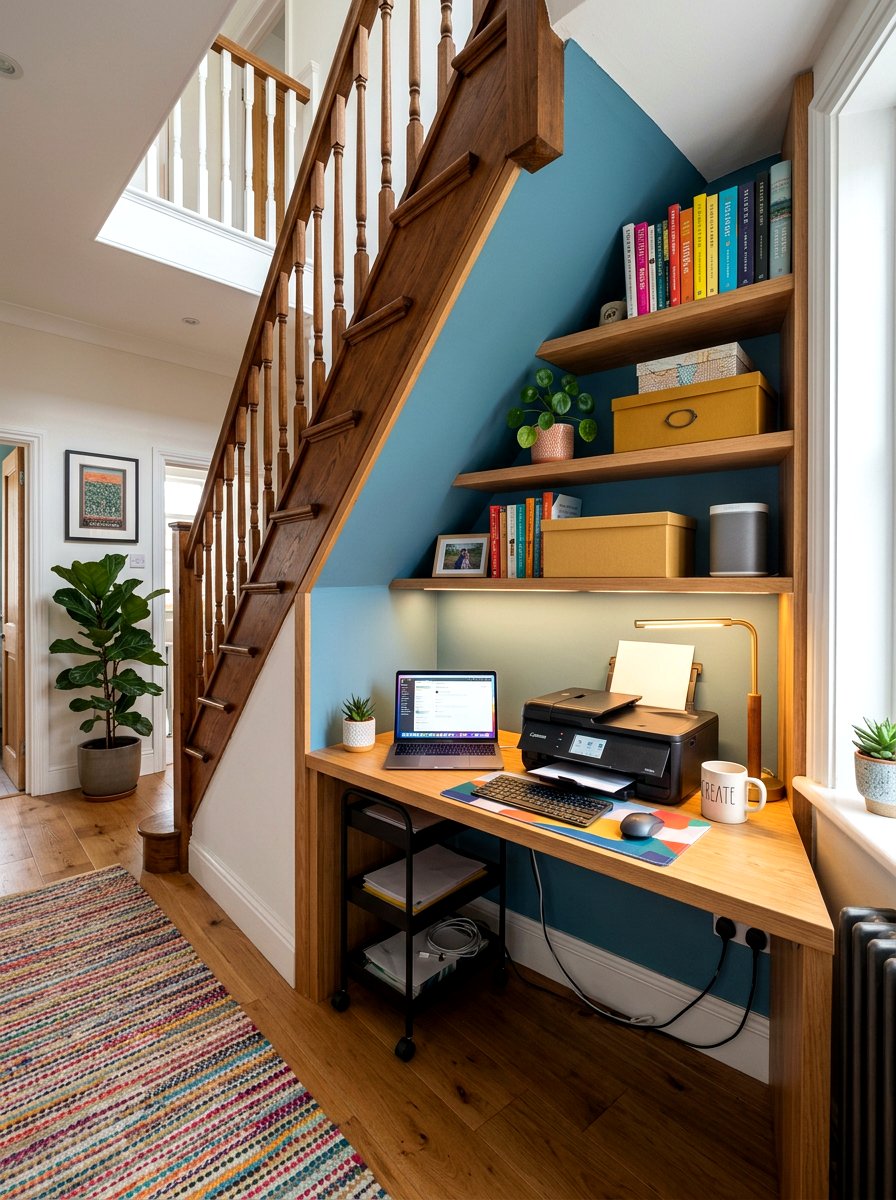
The awkward triangular space under a staircase is a goldmine for home office organization and printer storage. By installing a custom desk and shelving unit into this niche, you can create a fully functional printer nook that was previously wasted space. This location is often centrally located in the house, making it a convenient hub for family printing needs. You can use bright paint or fun wallpaper to make the space under the stairs feel intentional and cheerful. It is a clever architectural solution that adds value to your home by making the most of every square inch of the available floor plan.
28. Hallway Printer Nook
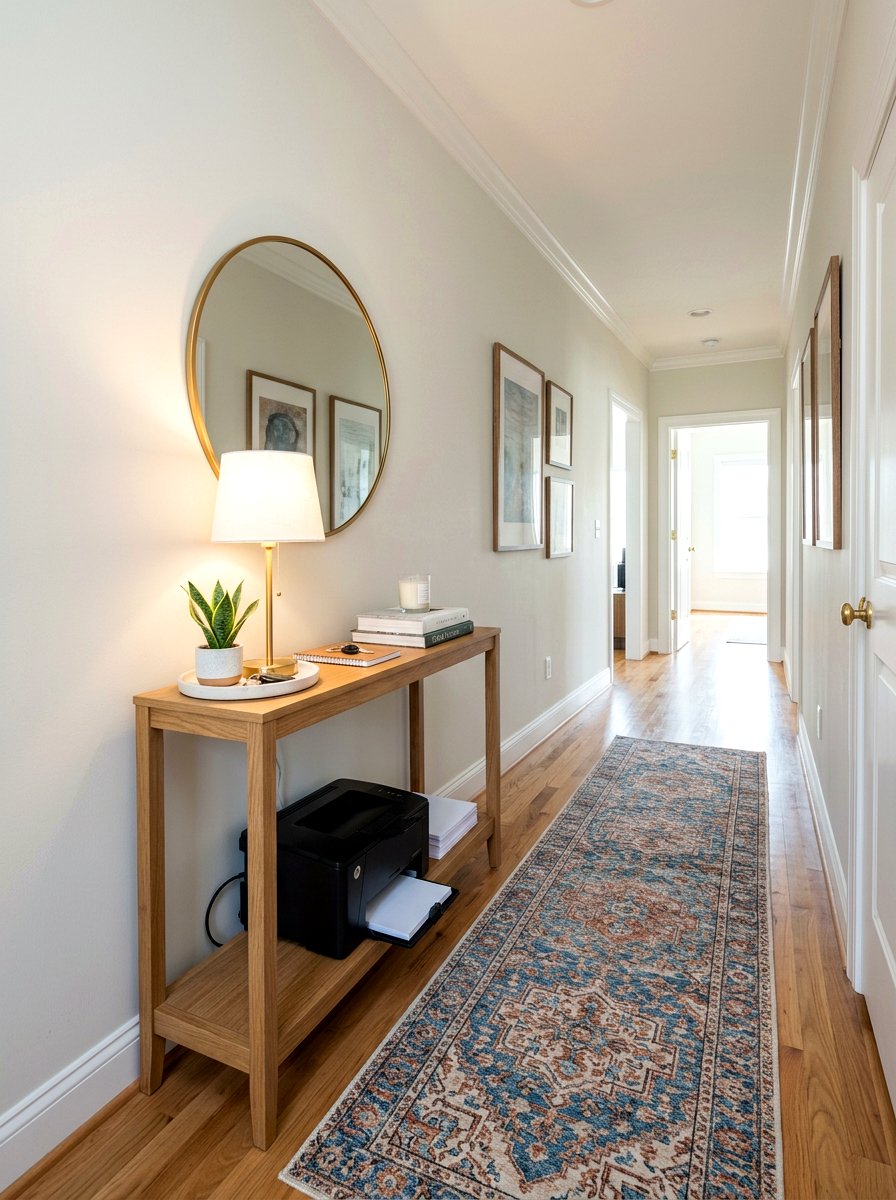
A wide hallway can easily accommodate a shallow console table that serves as a secondary printer station. This is particularly useful in two-story homes where you might want a printer on the upper floor to avoid trips up and down the stairs. Choose a slim table that doesn 't obstruct the walkway and keep the printer on the lower shelf to maintain a clean top surface. By adding a mirror or a piece of art above the table, the printer nook becomes a stylish part of the home' s transition spaces. It is a practical way to distribute technology throughout a large house for maximum convenience.
29. Attic Office Printer Corner
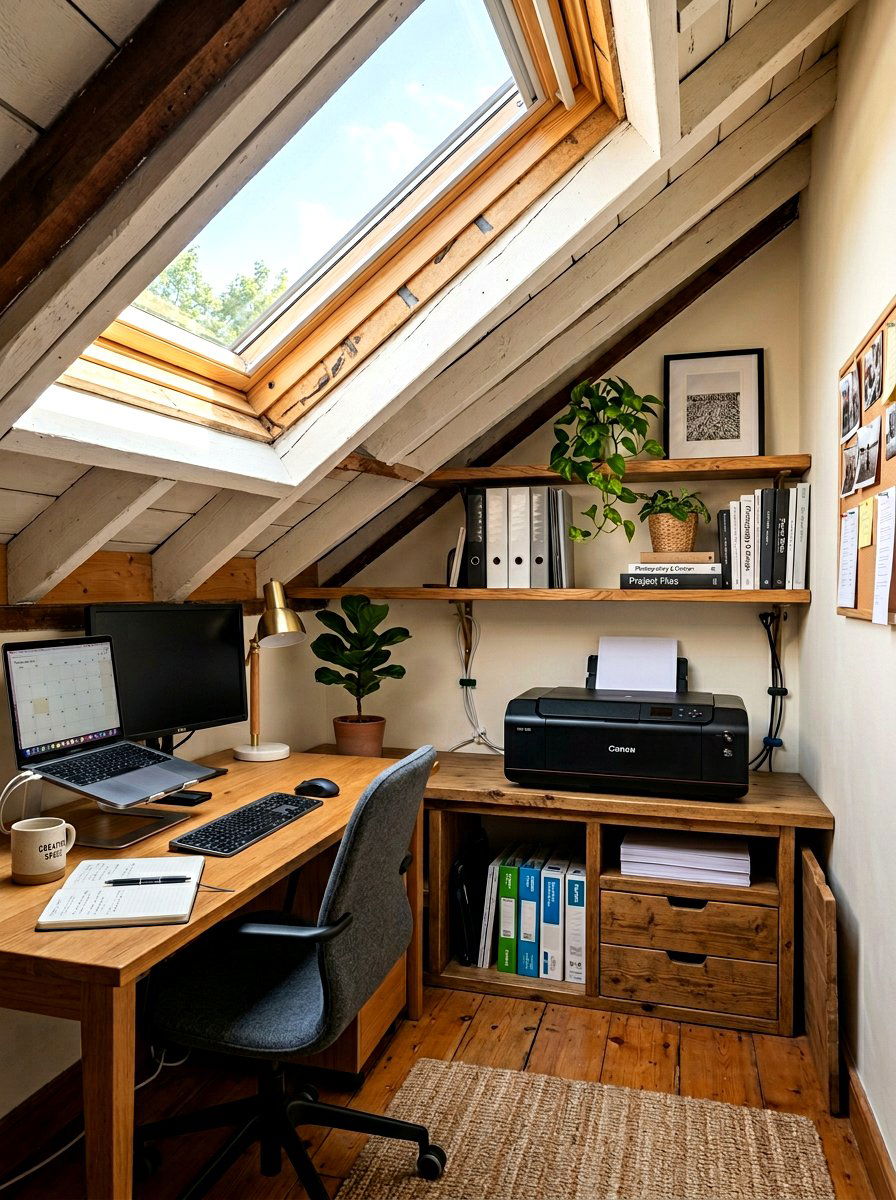
Converting an attic into an office provides a quiet retreat, and the sloped ceilings create unique opportunities for low-profile printer nooks. You can tuck the printer into the "short" part of the room where the ceiling meets the floor, utilizing space that is too low for standing. Custom-built low cabinets or simple floor-level shelves work perfectly in these cozy eaves. The unique angles of an attic office give the printer nook a tucked-away, secret feel that is very charming. Adding a skylight nearby ensures the space is well-lit and comfortable for working on detailed projects or checking high-quality photo prints.
30. Bedroom Office Printer Setup
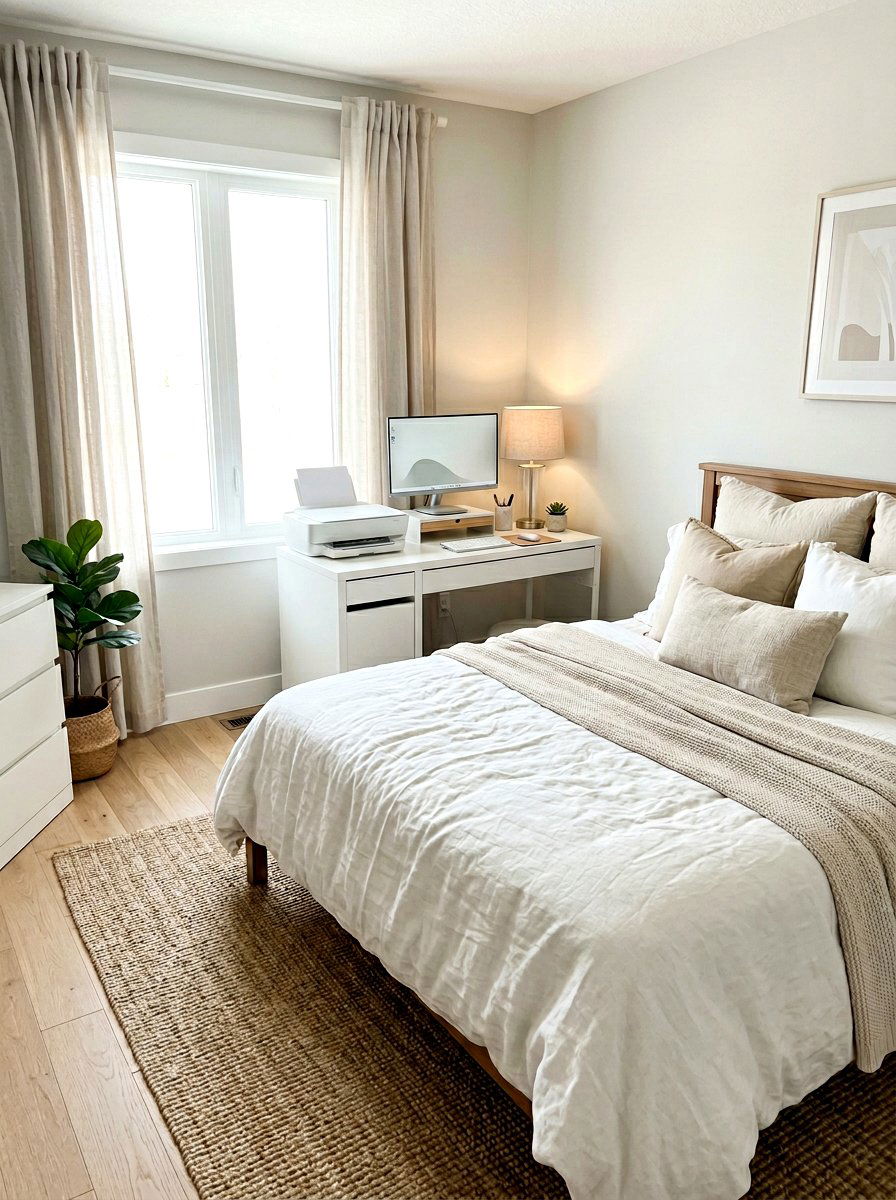
When your bedroom has to double as an office, keeping the tech discreet is essential for a good night's sleep. A small vanity or a dedicated nightstand with a lower shelf can house a compact printer, keeping it close at hand but visually separate from the bed. Choosing a printer with a "quiet mode" is a must for this location to avoid disturbing anyone else in the room. By using a stylish fabric cover or a decorative box, you can hide the printer entirely when the workday is over. It allows you to maintain a peaceful, tech-free atmosphere in your sanctuary while still being productive.
Conclusion:
Finding the perfect printer nook is about balancing daily functionality with your home's unique aesthetic. Whether you choose to hide your machine inside a vintage armoire or display it on a minimalist floating shelf, the key is intentionality and organization. A well-placed printer nook not only clears up your desk but also creates a more enjoyable and efficient environment for your work or creative projects. By considering the various options for built-in cabinets, rolling carts, and repurposed furniture, you can find a solution that fits your budget and your style. Ultimately, a thoughtful design turns a bulky eye-sore into a seamless and professional part of your living space.

Related posts: