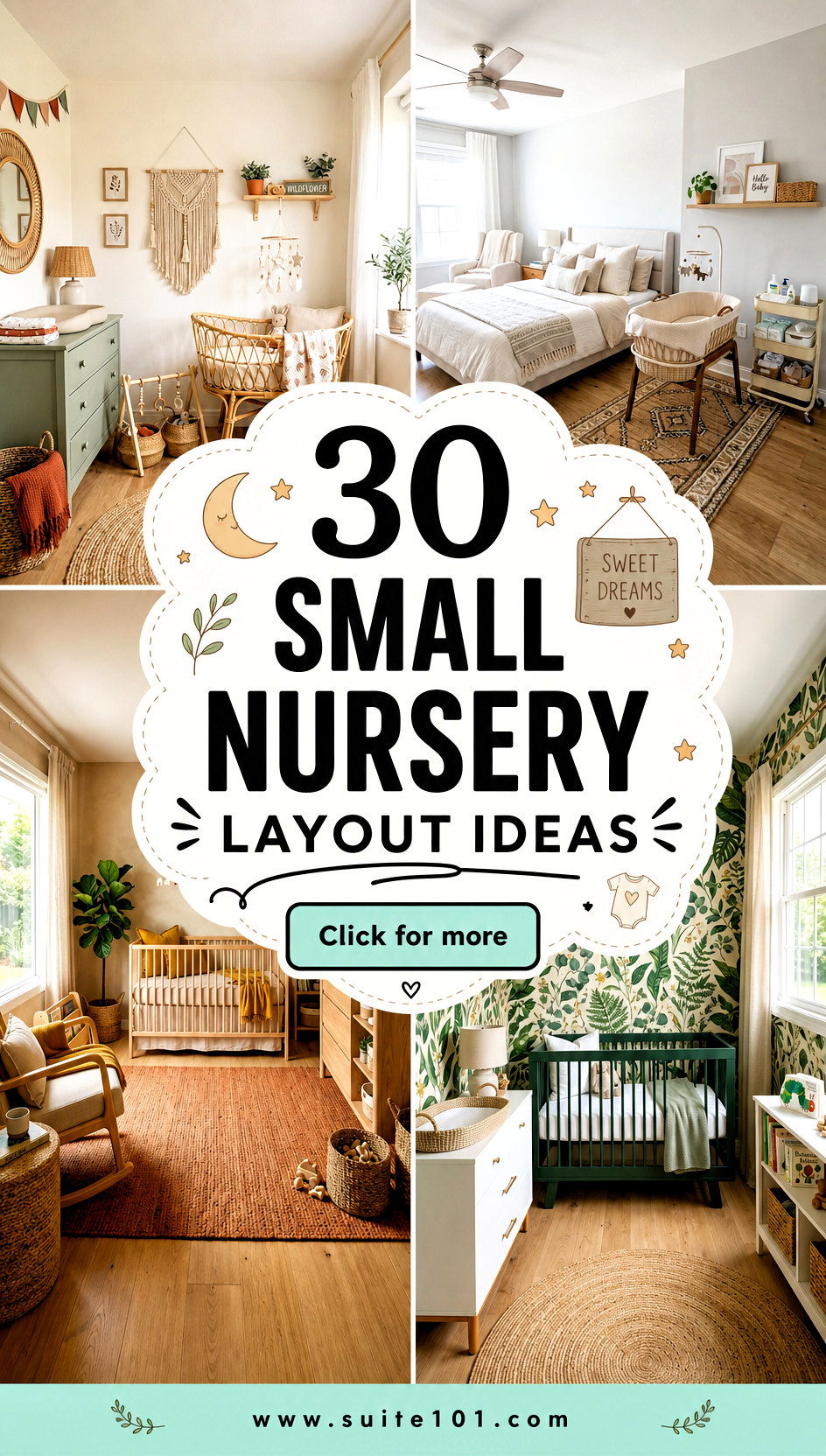
Designing a nursery in a small space often feels like a giant puzzle, but it is actually one of the most rewarding home projects you can undertake. You do not need a massive room to create a sanctuary that is both functional for you and soothing for your new baby. By focusing on smart furniture choices, light-enhancing colors, and vertical storage, even the tiniest nook can become a beautiful, organized nursery. The key is to prioritize the essentials while finding creative ways to incorporate style and personality. This guide explores thirty clever ways to arrange your nursery so that every square inch serves a clear and helpful purpose for your growing family.
1. Corner Crib Layout
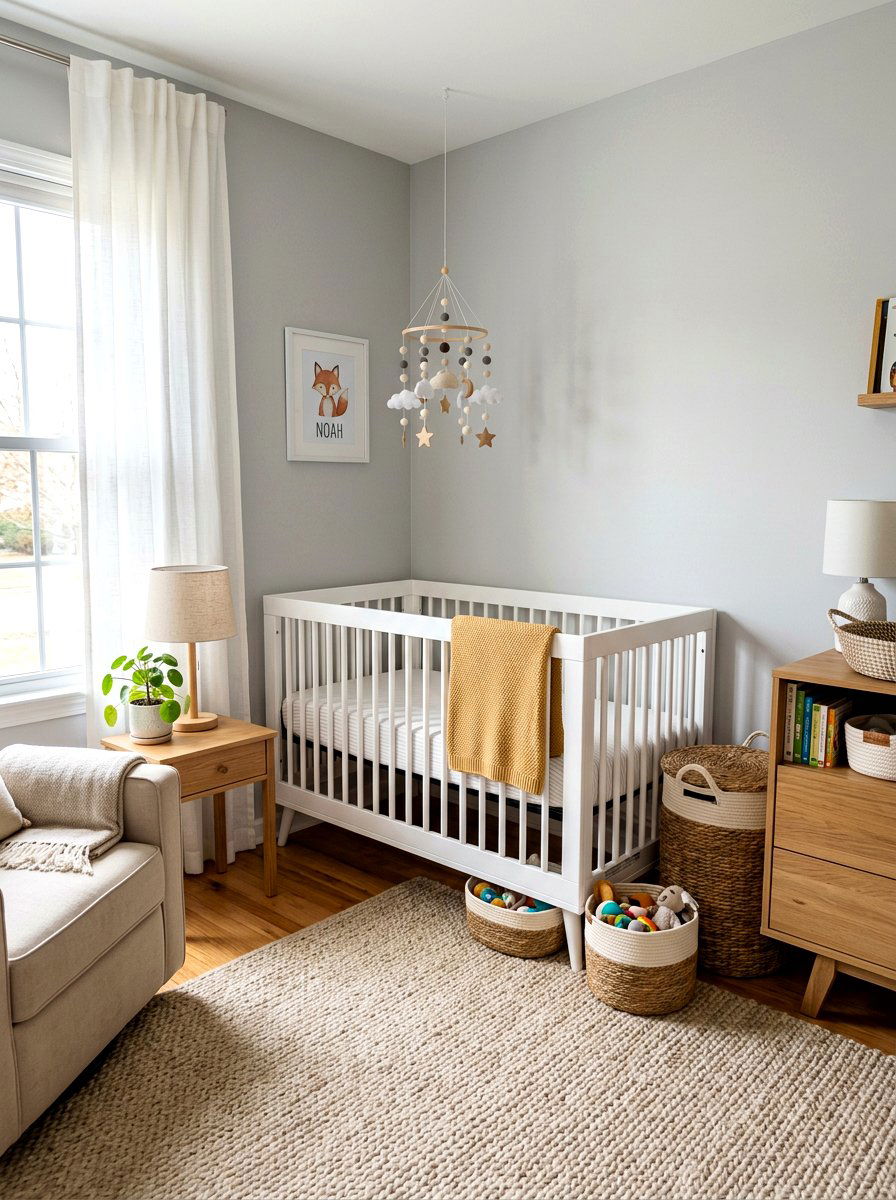
Placing the crib in a corner is a classic way to open up the center of a small room. This layout provides a sense of security for the baby while maximizing the remaining floor space for other furniture like a rocking chair or a dresser. By tucking the crib into the intersection of two walls, you create a dedicated sleeping zone that feels separate from the rest of the nursery. You can enhance this area with soft wall decals or a framed piece of art hung safely away from the baby's reach. This simple arrangement makes the room feel much larger and more balanced for daily use.
2. Closet Nursery Setup
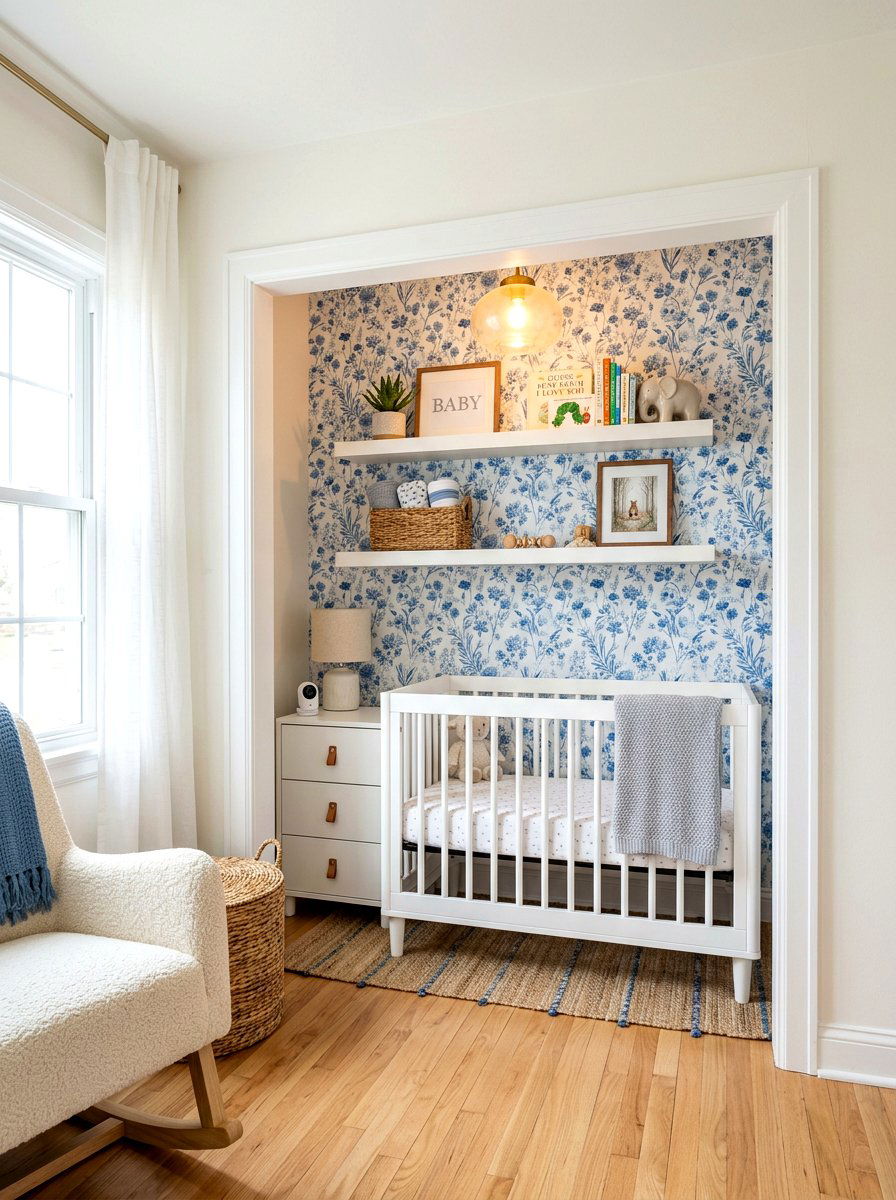
Converting a closet into a nursery nook, often called a clursery, is a genius solution for apartments or homes without extra rooms. You can remove the closet doors to create an open alcove that fits a standard mini-crib or a changing station perfectly. Adding floating shelves above the crib allows you to store diapers and clothes without taking up any floor area. Lighting is important here, so consider a small battery-operated sconce to brighten the space. This layout keeps the baby close while keeping the main living areas free from bulky furniture, making it a favorite for modern urban living.
3. Minimalist Nursery Decor
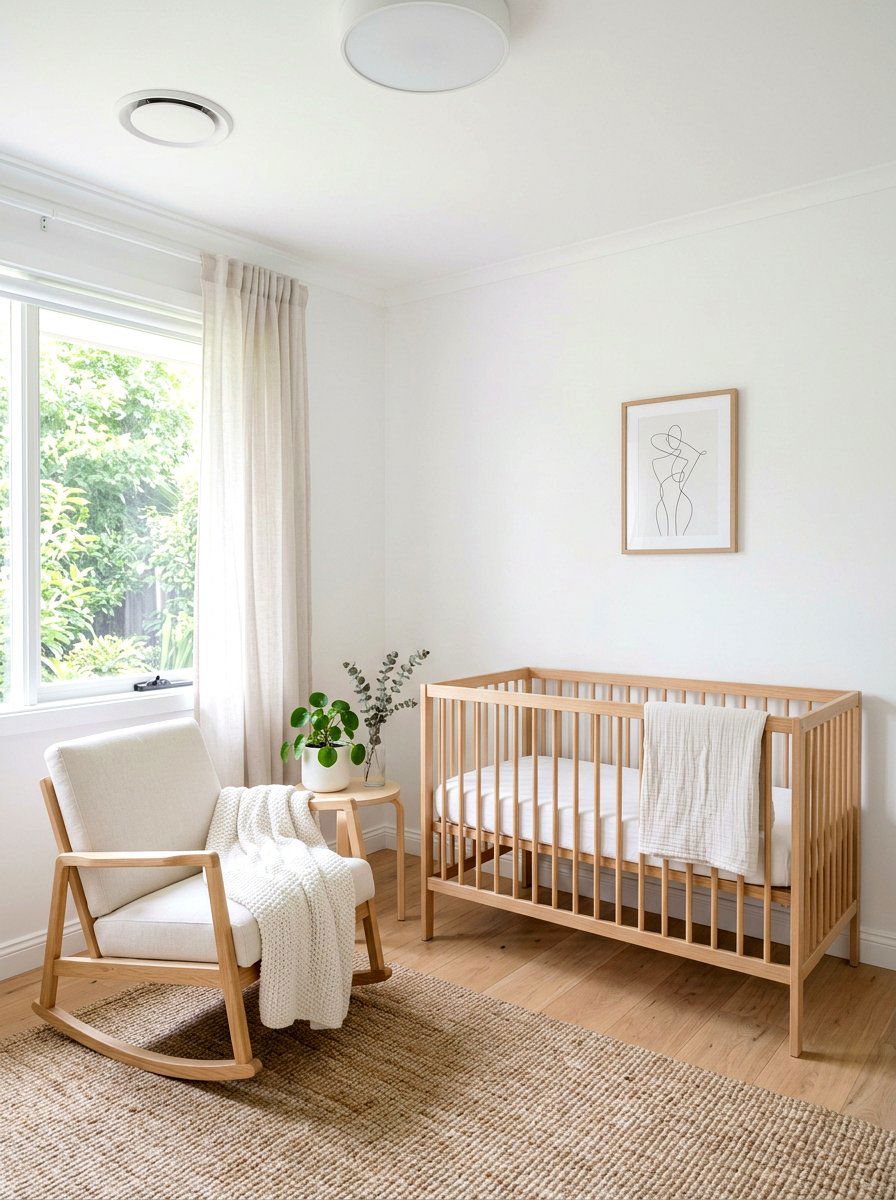
Embracing a minimalist approach helps prevent a small nursery from feeling cluttered and overwhelming. By choosing only the most essential pieces of furniture, you leave more breathing room and create a peaceful environment for sleep. Stick to a simple color palette of whites and soft grays to make the walls recede and the room appear brighter. Instead of large toy boxes, use a few high-quality baskets that can be tucked under the crib. A minimalist layout encourages a calm atmosphere where every item has a specific home. This style is not only trendy but also very practical for maintaining a tidy space.
4. Scandinavian Nursery Furniture
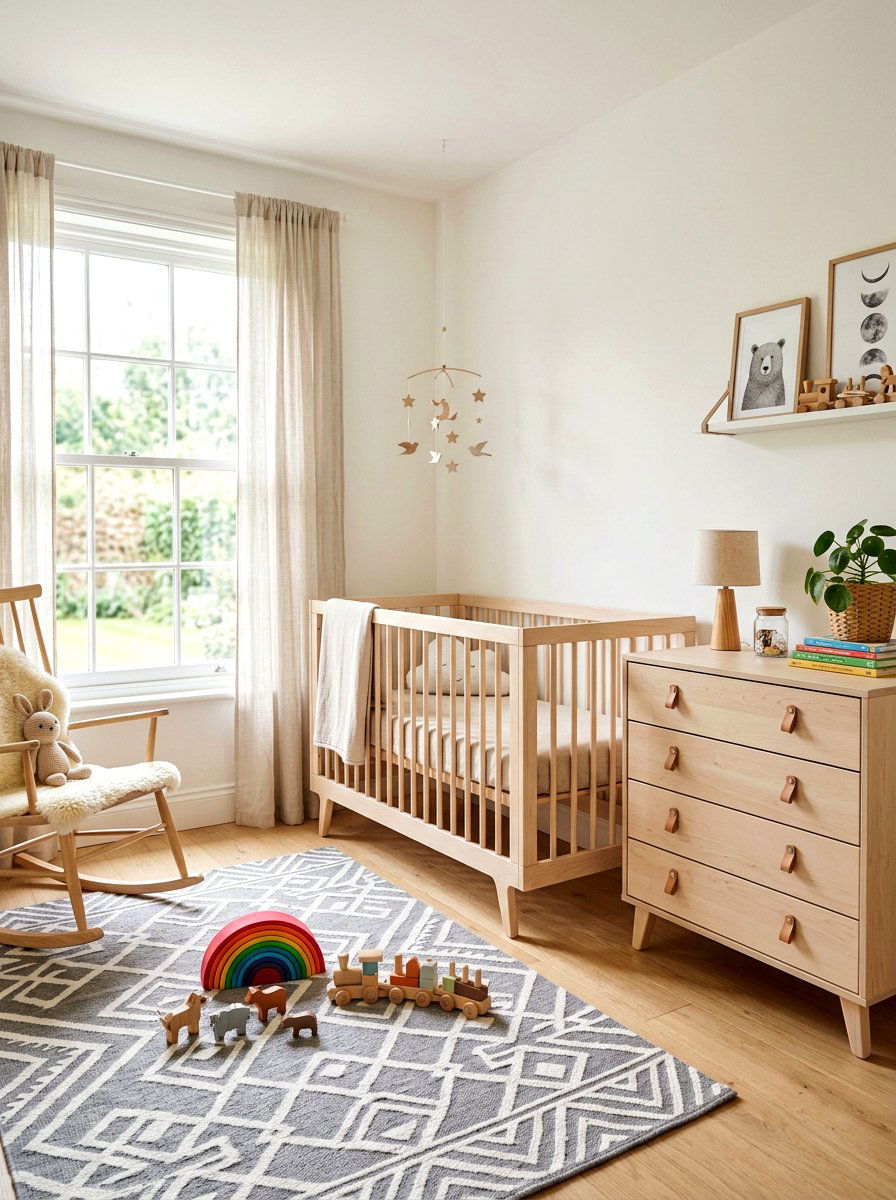
Scandinavian design is perfect for small nurseries because it emphasizes functionality, light woods, and clean lines. Using furniture with tapered legs allows you to see more of the floor, which trickily makes the room feel much more expansive than it is. Light-toned woods like birch or pine bring a natural warmth to the space without feeling heavy or dark. You can pair these pieces with neutral textiles and simple geometric patterns for a cohesive look. A Scandinavian layout often includes multi-functional pieces that serve several purposes, ensuring that your nursery remains efficient and stylish as your child grows through the early years.
5. Boho Small Nursery
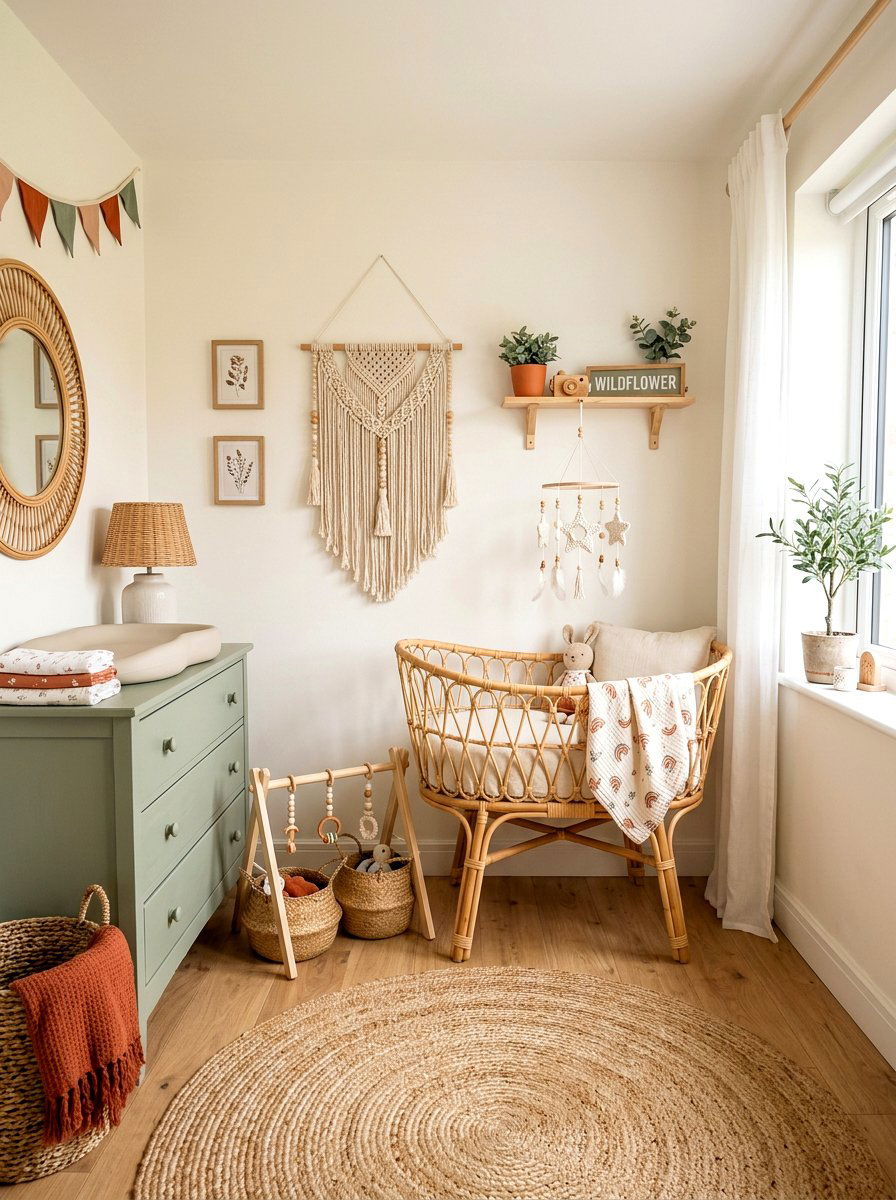
A boho-style nursery uses textures and natural materials to create a cozy, lived-in feel in a compact space. Think about incorporating a rattan bassinet or a woven macramé wall hanging to add visual interest without the bulk of heavy furniture. Layering a soft jute rug over the carpet provides a tactile surface for tummy time while grounding the room's design. Use earthy tones like terracotta and sage green to keep the space feeling warm yet airy. This layout thrives on "less is more" by focusing on a few statement pieces that bring character and a sense of adventure to the tiny room.
6. Modern Small Nursery
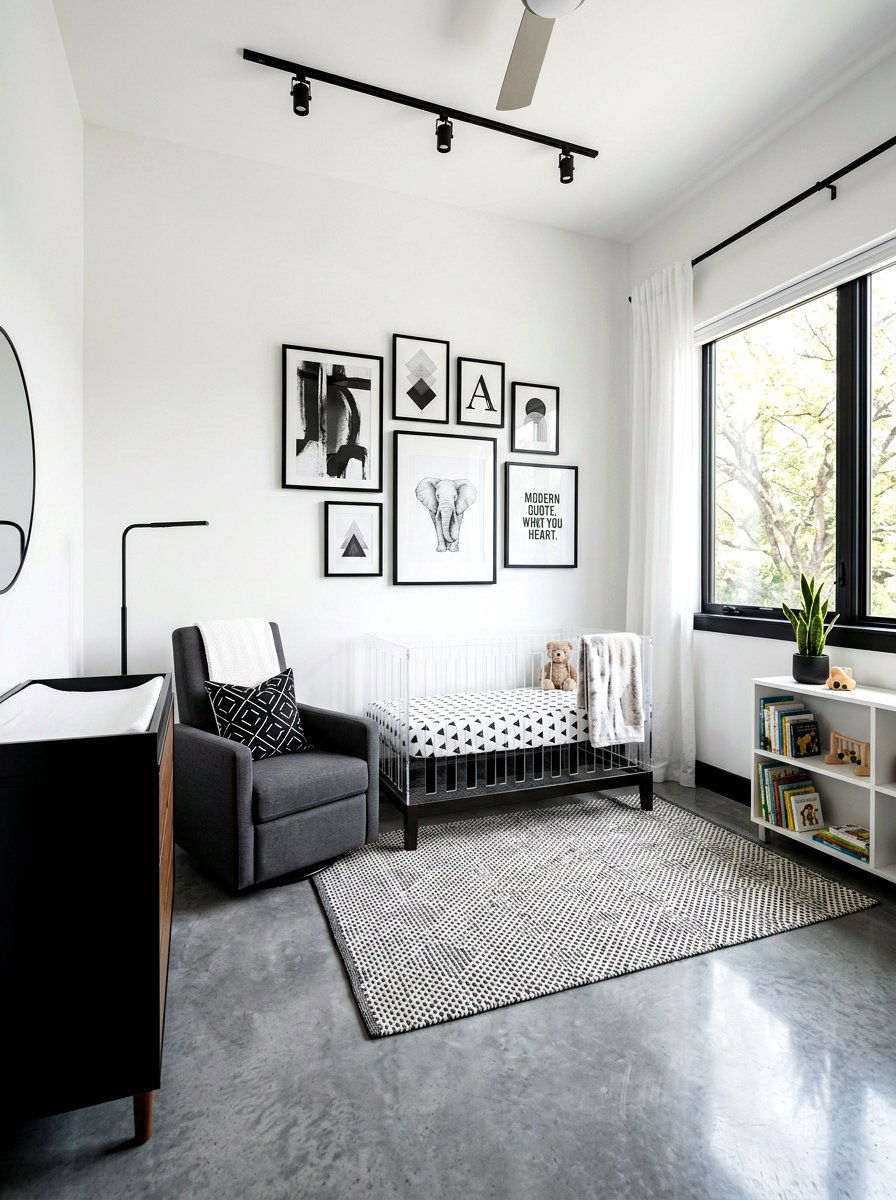
Modern nursery layouts focus on sleek silhouettes and a polished aesthetic that works wonders in tight quarters. Choosing a crib with slim spindles or a clear acrylic frame can make a massive difference in how open the room feels visually. Keep the furniture layout symmetrical to create a sense of order and calm, which is essential when the square footage is limited. Use bold, high-contrast accents like black-and-white art to draw the eye to specific focal points. This approach ensures that the nursery feels like a sophisticated extension of your home rather than just a cluttered baby room with too many things.
7. Gender Neutral Small Nursery
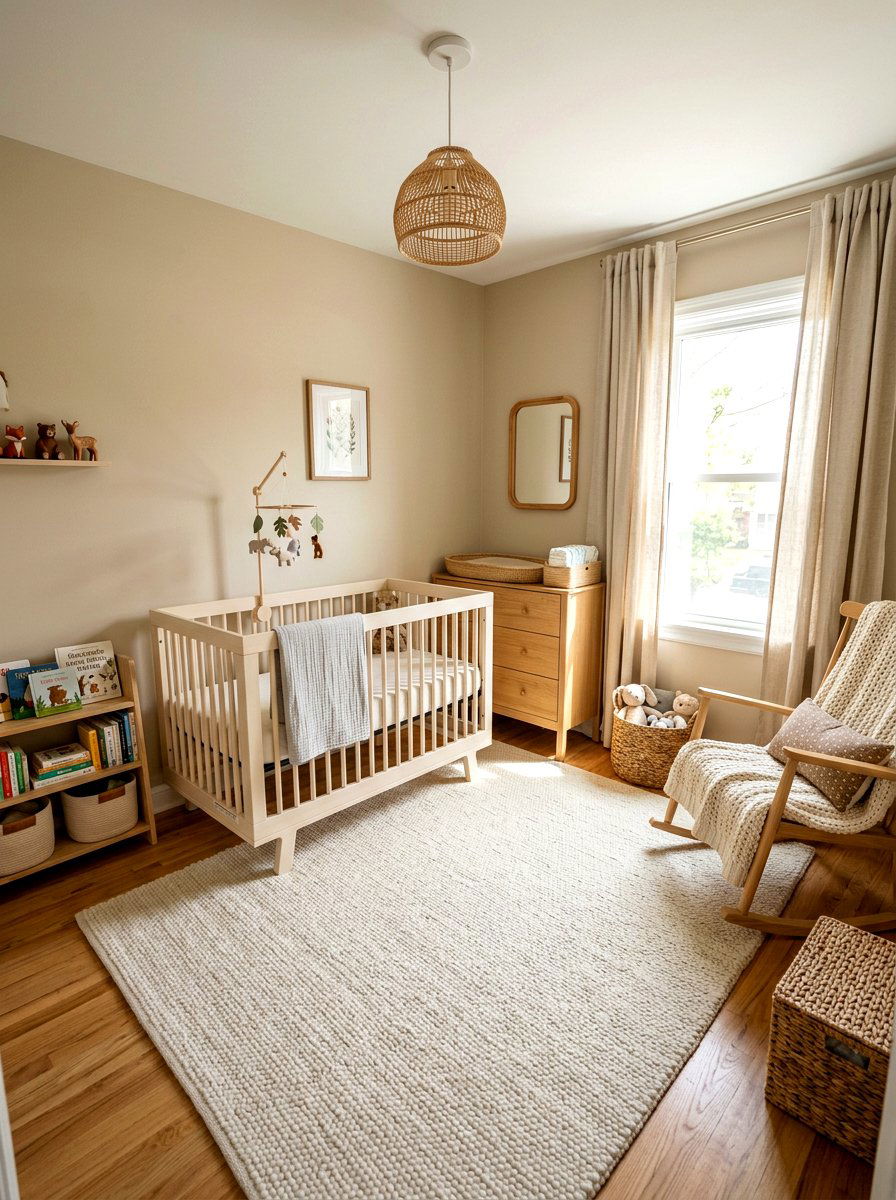
Creating a gender-neutral nursery in a small space is a smart move for longevity and versatility. Using a palette of creams, tans, and soft greens creates a serene backdrop that feels light and spacious. This layout avoids the "heavy" feeling that traditional gender-specific themes can sometimes bring to a small room. Focus on natural textures like linen and cotton to keep the atmosphere soft and inviting. By keeping the design neutral, you can easily update the space with colorful toys or books as the baby grows. It is an adaptable choice that makes the room feel timeless and very easy to organize.
8. Vertical Storage Nursery
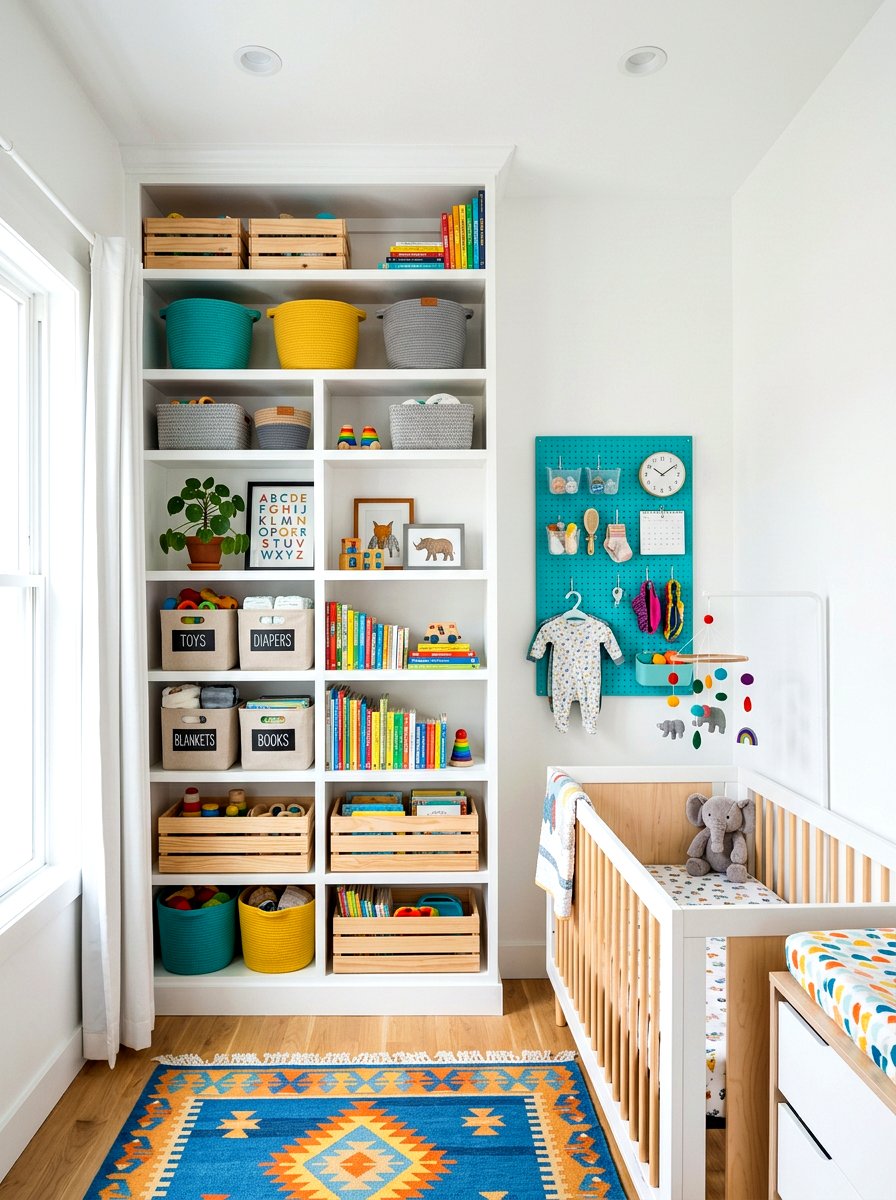
When floor space is at a premium, you must look up and utilize your walls for storage. Installing tall, narrow bookshelves or floating ledges allows you to display books and store essentials without occupying valuable walking paths. Pegboards are another fantastic option for hanging diaper bags, hats, and small toys within easy reach. By keeping items off the floor, you create a clear path for moving around the room during late-night feedings. This layout strategy draws the eye upward, making the ceilings feel higher and the room feel less cramped. It is the most effective way to stay organized in a tiny nursery.
9. Small Nursery Under Window
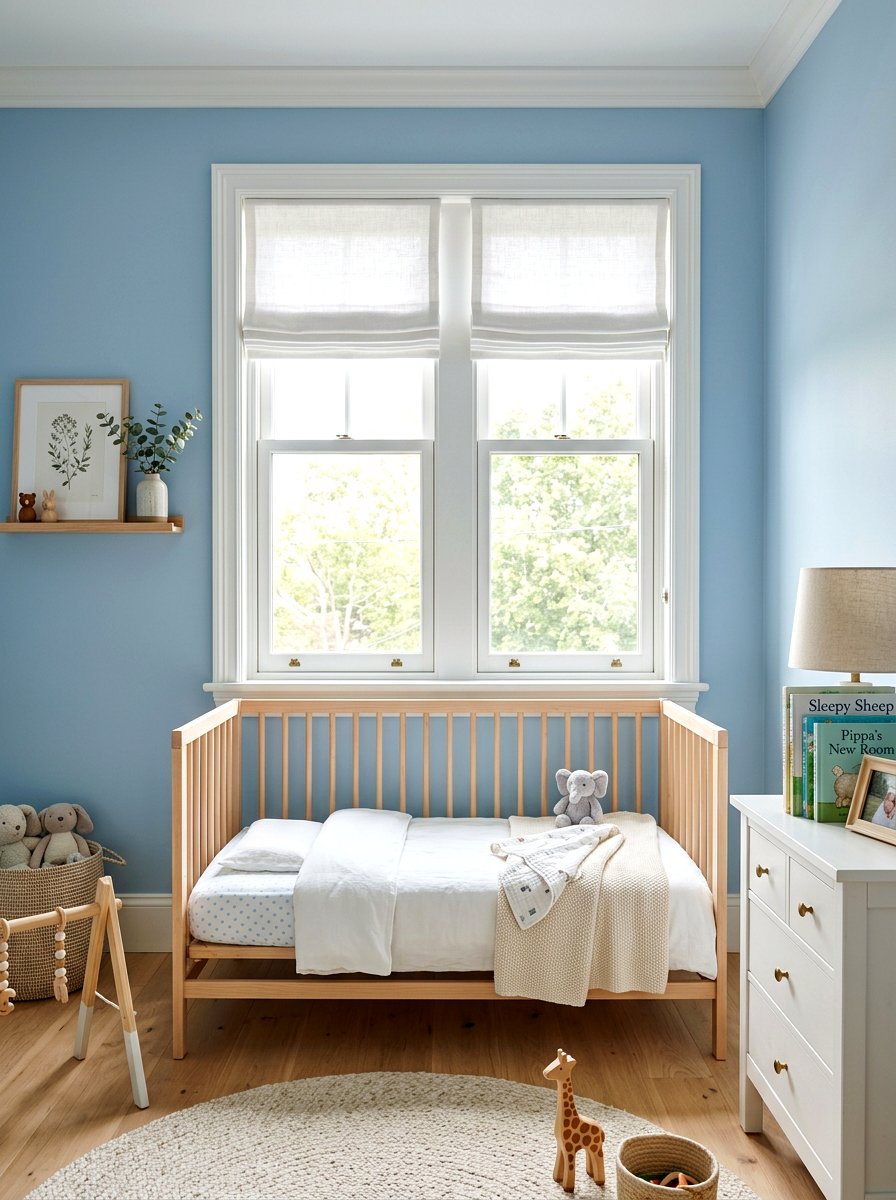
Positioning the crib or a low dresser under a window can be a beautiful way to utilize natural light in a small room. This layout makes the window a natural focal point, framing the furniture and creating a bright, cheery spot for the baby. Just be sure to use safe window treatments like cordless blackout shades to ensure a dark, safe sleeping environment. Avoid placing heavy curtains that might overwhelm the small space; instead, opt for simple blinds or light-filtering fabrics. This arrangement keeps the center of the room open, allowing for a more flexible flow and making the entire nursery feel more connected to the outdoors.
10. Small Twin Nursery Layout
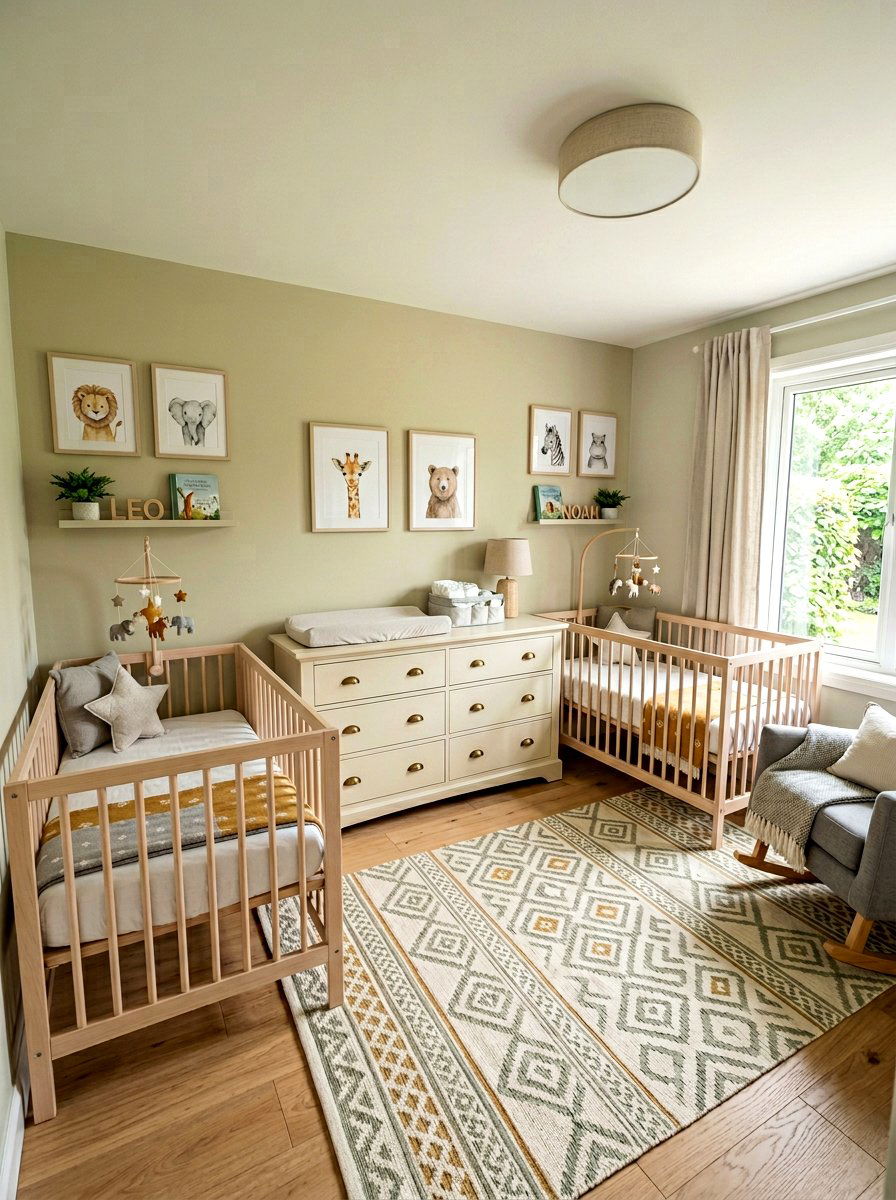
Arranging a nursery for twins in a small room requires precise planning and a bit of creativity. Placing two cribs end-to-end along one long wall is often the best way to save space and maintain a clear walkway. Alternatively, placing cribs in opposite corners can provide each baby with their own little zone. Using a single, large dresser that doubles as a changing table for both babies helps reduce the furniture count. Choose slim-profile cribs to ensure they do not dominate the room entirely. This layout focuses on efficiency and symmetry, making the room feel organized even with double the gear and furniture.
11. Master Bedroom Nursery Nook
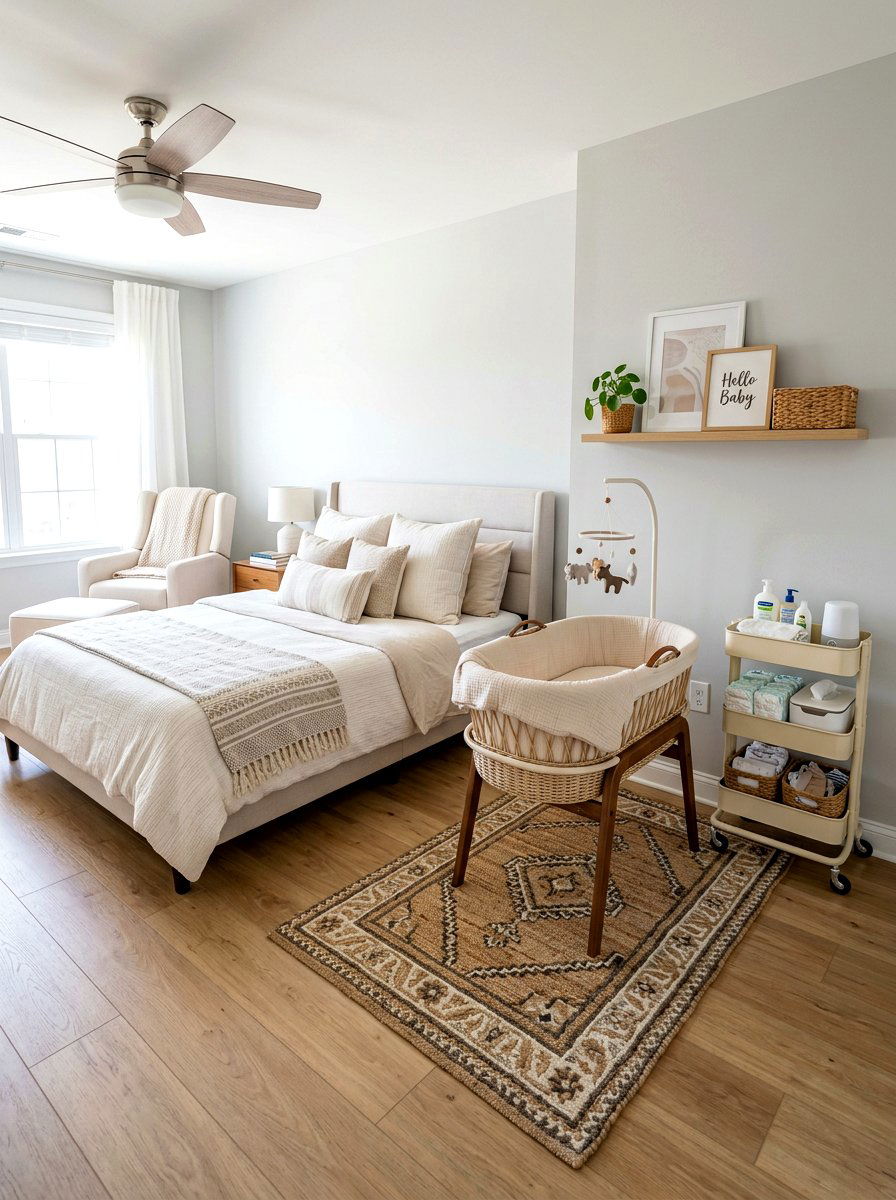
Many parents choose to share their bedroom with the baby for the first few months, creating a nursery nook within the master suite. You can define this area with a small area rug or a different paint color to make it feel like its own dedicated space. A mini-crib or a stylish bassinet fits perfectly into a corner or alongside the bed without disrupting the room 's flow. Use a rolling cart for diapering supplies so you can easily move it out of the way when it is not needed. This layout is practical, intimate, and keeps all the baby' s nighttime essentials right at your fingertips.
12. Mid Century Modern Nursery
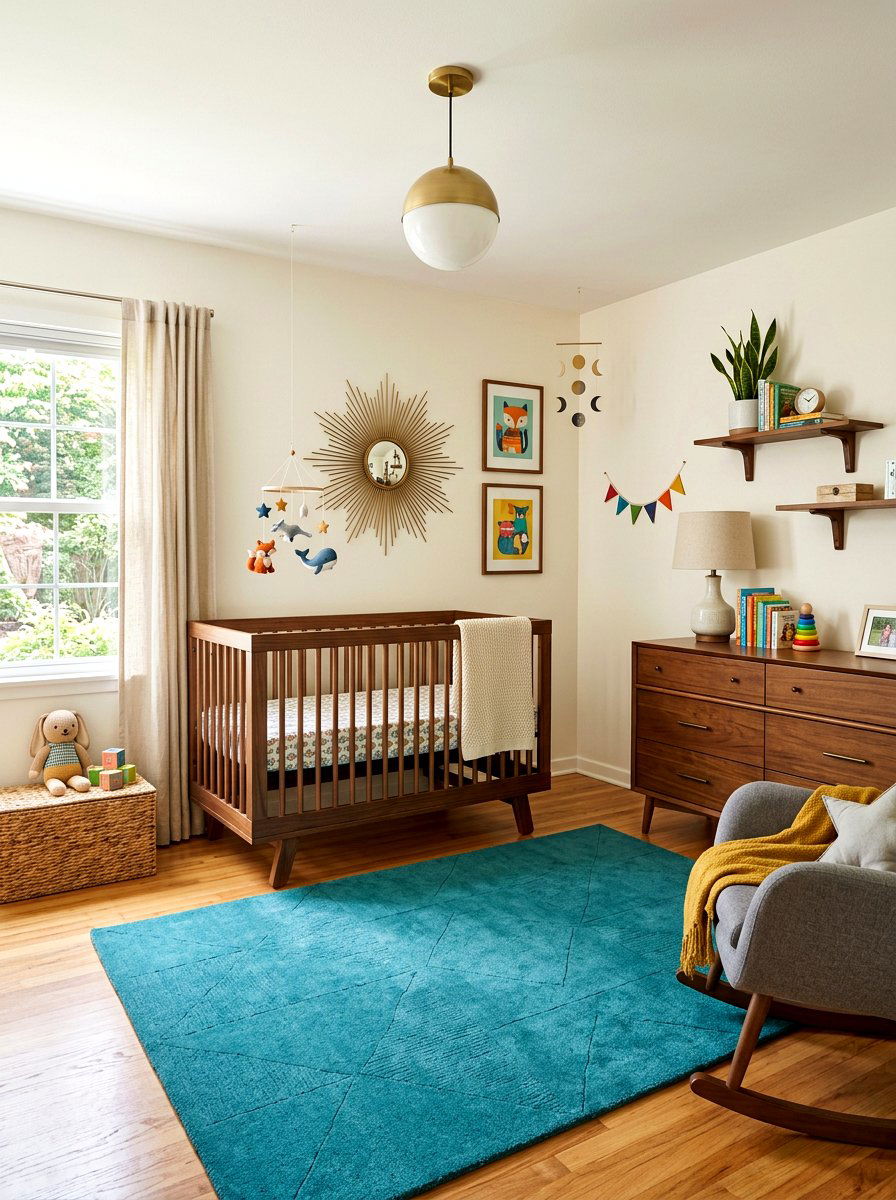
The mid-century modern style is famous for its functional furniture and iconic shapes, making it a great choice for small rooms. A crib with angled legs and a warm wood finish provides a vintage charm that feels light and airy. This layout often includes a compact dresser with clean lines that can serve as a changing station, saving you from needing two separate pieces. Use a sunburst mirror or a geometric rug to add a touch of personality without cluttering the walls. The simplicity of this design style ensures that the nursery feels curated and stylish while remaining perfectly functional for your needs.
13. Earth Tone Small Nursery
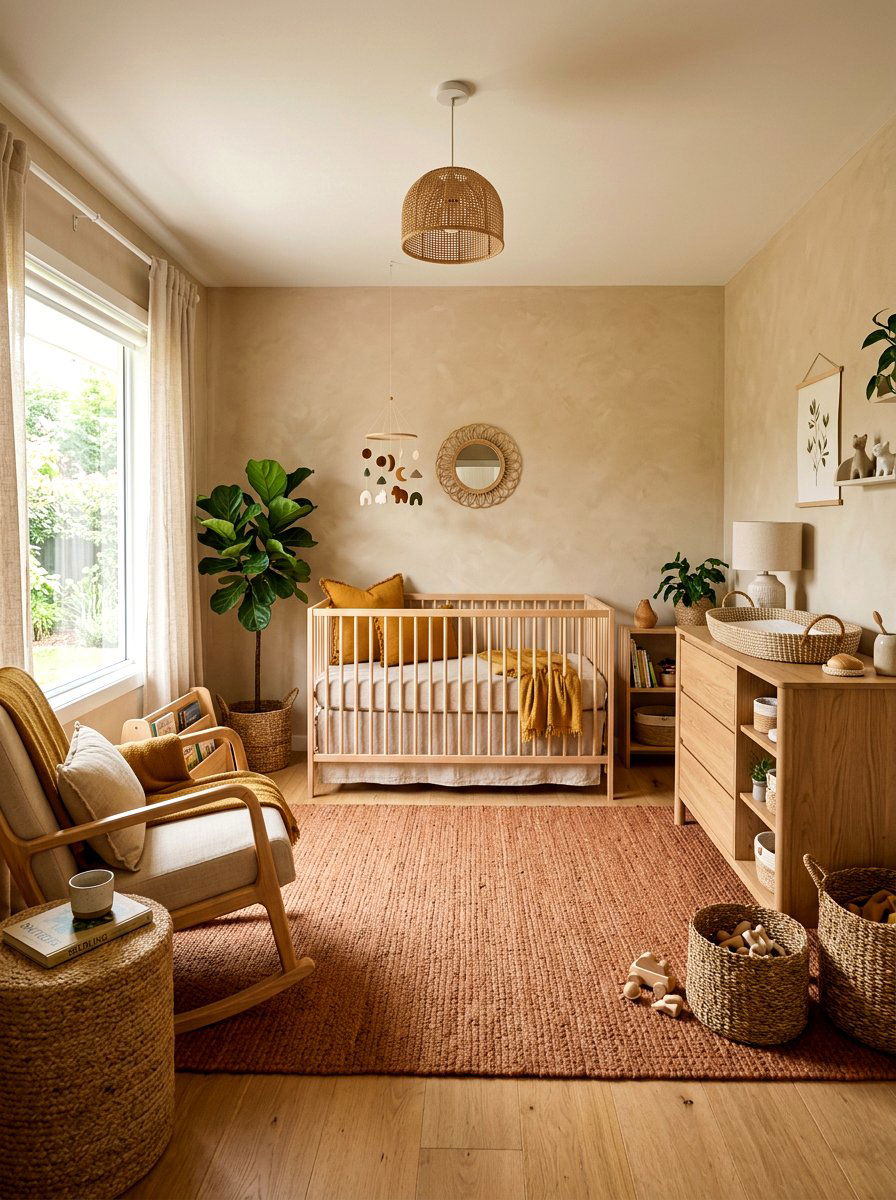
Decorating with earth tones like warm beige, soft mustard, and muted clay creates a grounded and cozy nursery environment. These colors are naturally receding, which helps a small room feel less restrictive and more like a peaceful retreat. You can layer different shades of the same color family to add depth and interest without needing a lot of extra decor. This layout works well with natural materials like wooden toys and woven baskets. The result is a nursery that feels warm, inviting, and surprisingly spacious despite its small size. It is a very soothing palette for both the baby and the parents.
14. Pastel Small Nursery
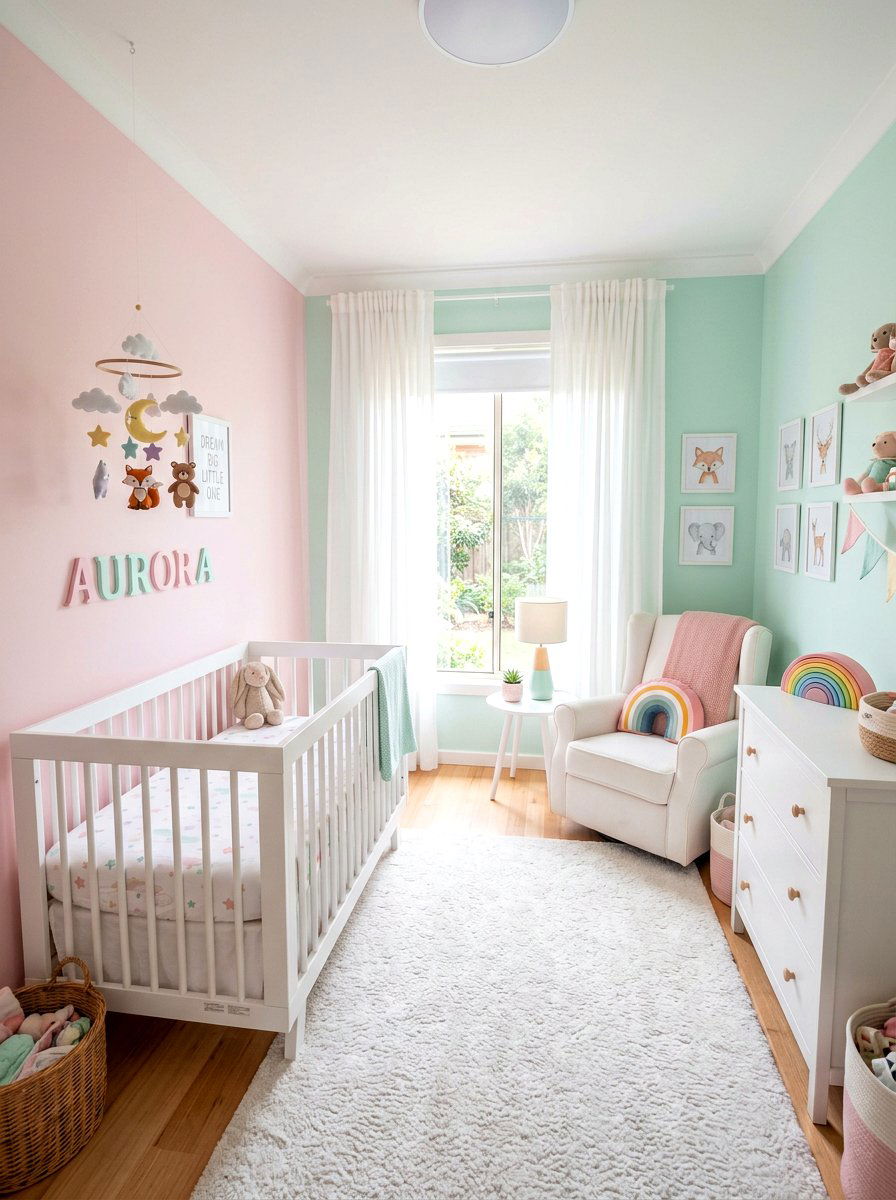
Pastel colors are a traditional favorite for nurseries because they reflect light beautifully, making any small space feel much brighter. Instead of a single color, try mixing soft blues, pinks, and yellows to create a whimsical and airy atmosphere. Keep the furniture white to maintain a clean and crisp look that does not compete with the wall colors. A pastel-themed layout often feels very "sweet" and open, which is perfect for a tiny room that needs a little extra cheer. Use light-colored textiles and sheer curtains to enhance the soft glow of the room during the daylight hours.
15. Small Nursery Daybed Layout
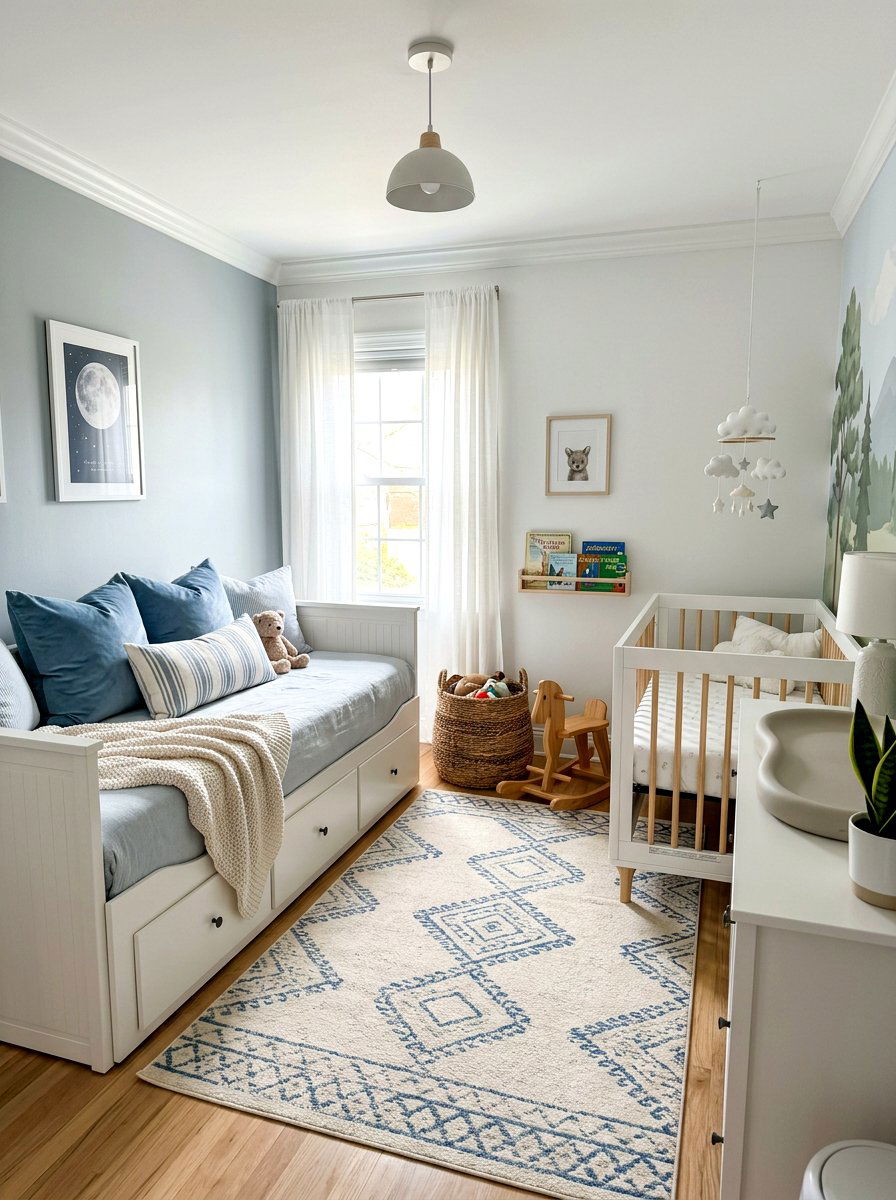
If you have just enough room, adding a daybed to a small nursery provides a comfortable place for parents to rest during long nights. A daybed with built-in drawers underneath offers extra storage for blankets and out-of-season clothes, serving two purposes at once. This layout makes the nursery feel more like a multi-functional room that can transition into a toddler room later on. Choose a slim daybed with a simple frame to avoid making the space feel crowded. It is a luxury that adds immense value to the room’s functionality, giving you a cozy spot to snuggle with your baby comfortably.
16. Wall Mounted Nursery Storage
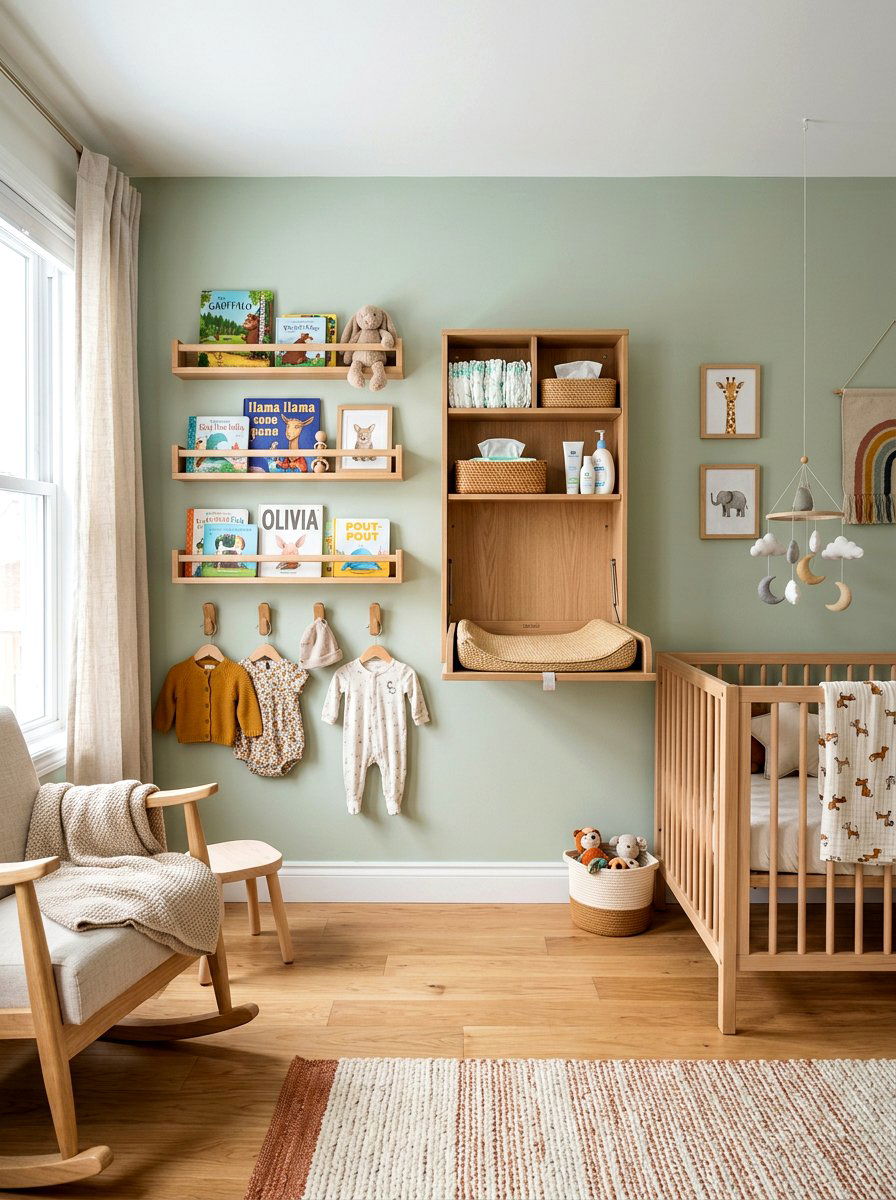
Wall-mounted storage is a lifesaver in a room where every inch of floor space counts. By installing shelves, hooks, and hanging baskets directly onto the walls, you can keep all your baby's essentials organized and accessible. This layout allows you to display cute shoes or small toys as part of the decor, adding a personal touch without cluttering surfaces. Use a pegboard system above the changing table to keep diapers, wipes, and creams organized and within reach during changes. This strategy keeps the room looking neat and tidy while ensuring that you have everything you need right where you want it.
17. Small Nursery Mirror Decor
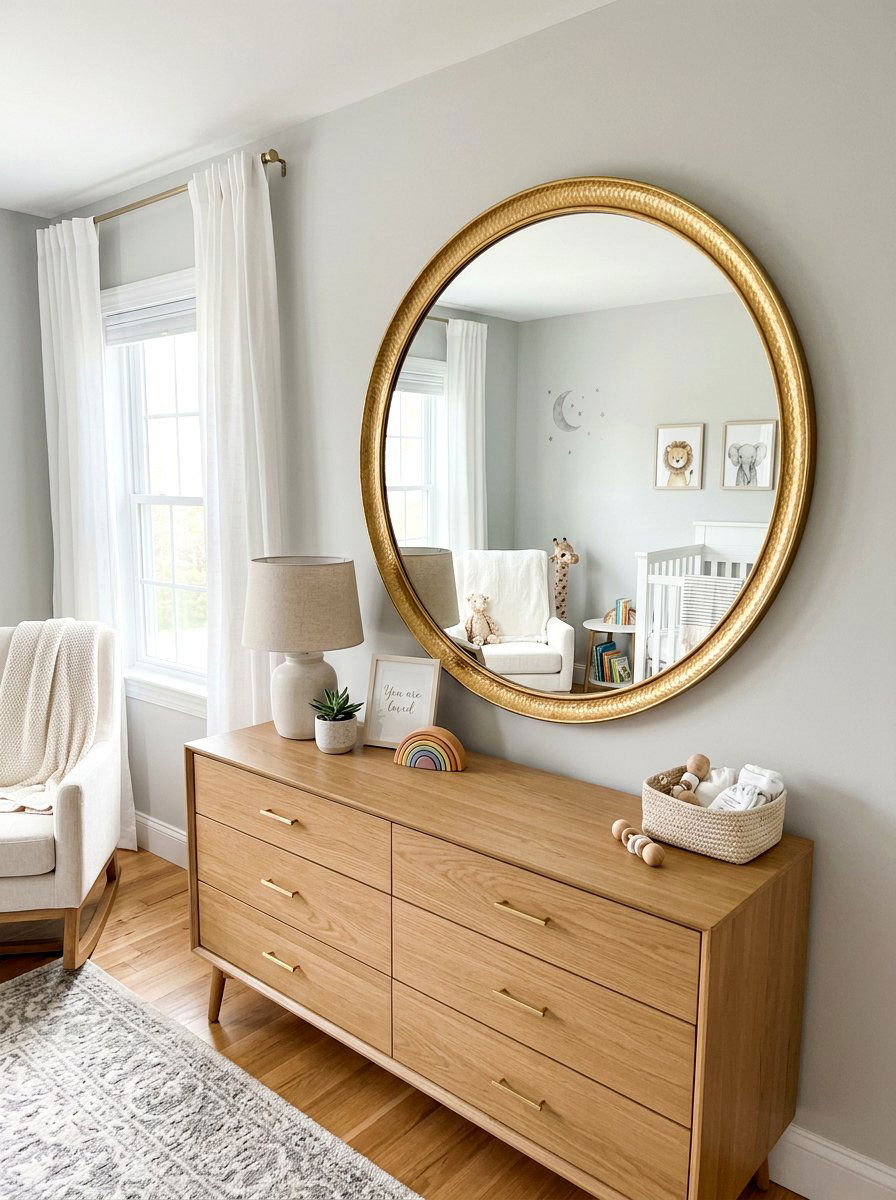
Adding a large mirror to a small nursery is one of the oldest design tricks for making a space feel twice as big. A mirror reflects both natural and artificial light, brightening up dark corners and creating the illusion of depth. You can hang a round mirror above the dresser or a full-length one on the back of the door to save wall space. This layout choice not only serves a practical purpose for checking your outfit but also adds a touch of elegance to the room. It is a simple addition that has a massive impact on the overall feel of the nursery.
18. Monochromatic Small Nursery
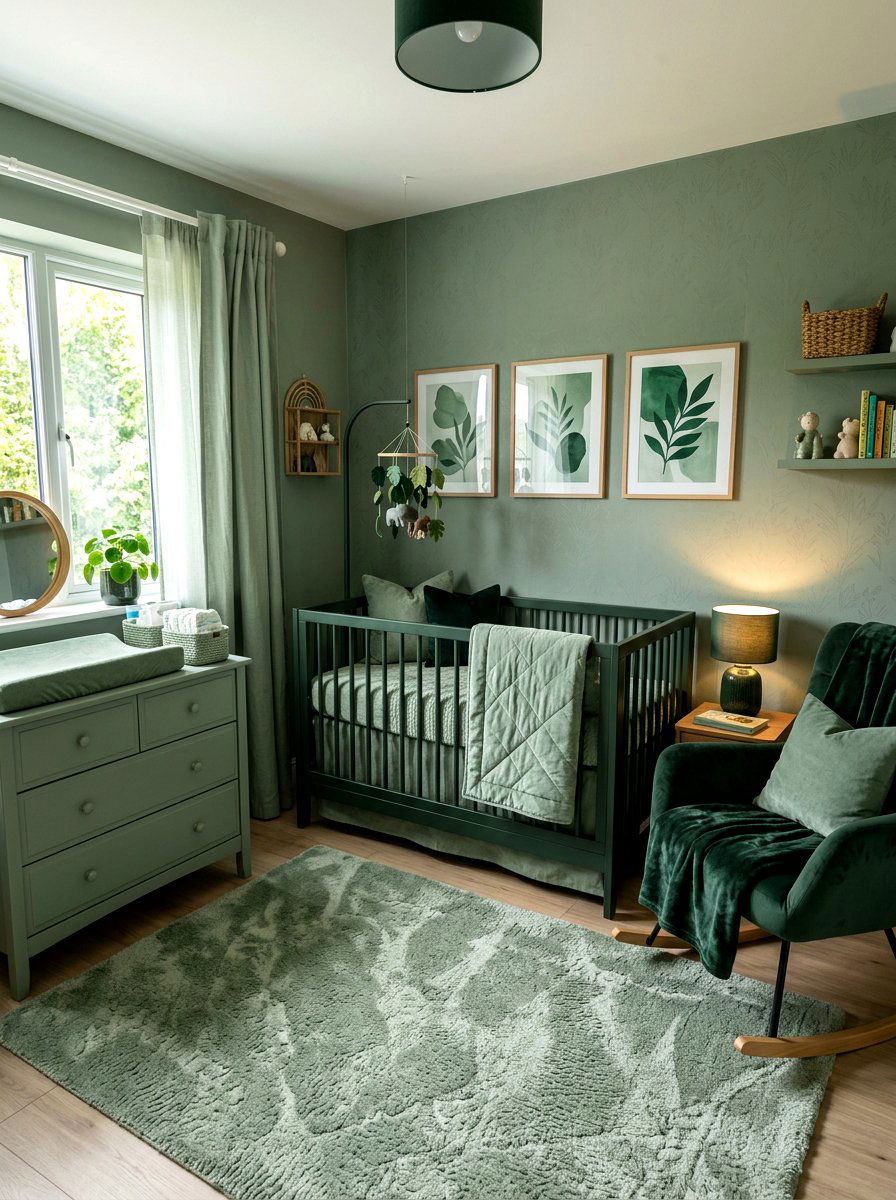
A monochromatic color scheme uses different shades of a single color to create a cohesive and sophisticated look. This approach is particularly effective in small nurseries because it minimizes visual distractions and makes the room feel more unified. For example, using various shades of gray from the walls to the rug creates a seamless flow that expands the space. You can add texture through different fabrics like wool, cotton, and velvet to keep the room from feeling flat. This layout is modern, clean, and very easy to execute, resulting in a nursery that feels intentionally designed and very tranquil.
19. Compact Nursery Furniture
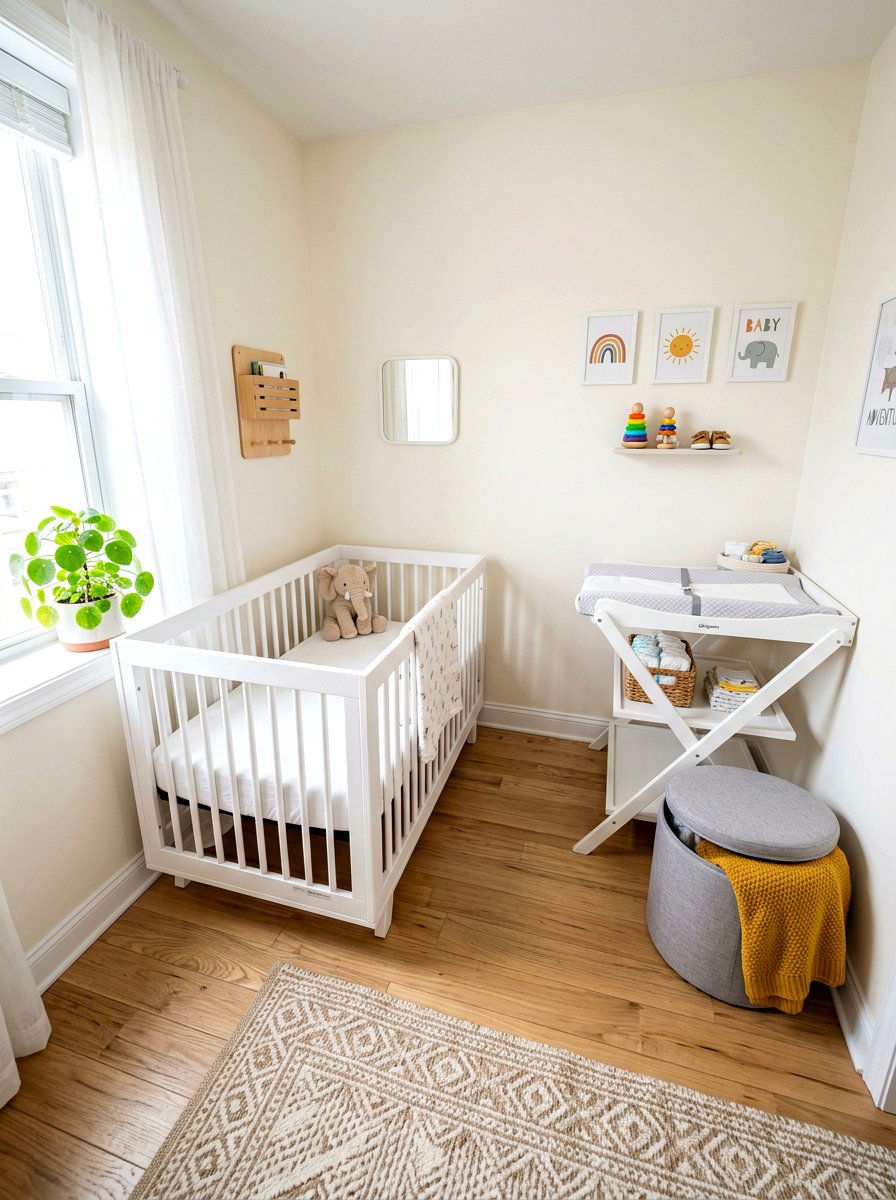
Choosing furniture specifically designed for small spaces is the most direct way to solve a layout challenge. Mini-cribs and folding changing tables provide all the functionality of full-sized pieces but with a much smaller footprint. This layout allows you to fit more into the room without it feeling stuffed or impossible to move through. Look for pieces that are lightweight and easy to rearrange as your baby's needs change over time. By prioritizing compact furniture, you can still have all the nursery essentials you want while maintaining a clear and comfortable floor area for playing and bonding with your child.
20. Open Shelf Nursery
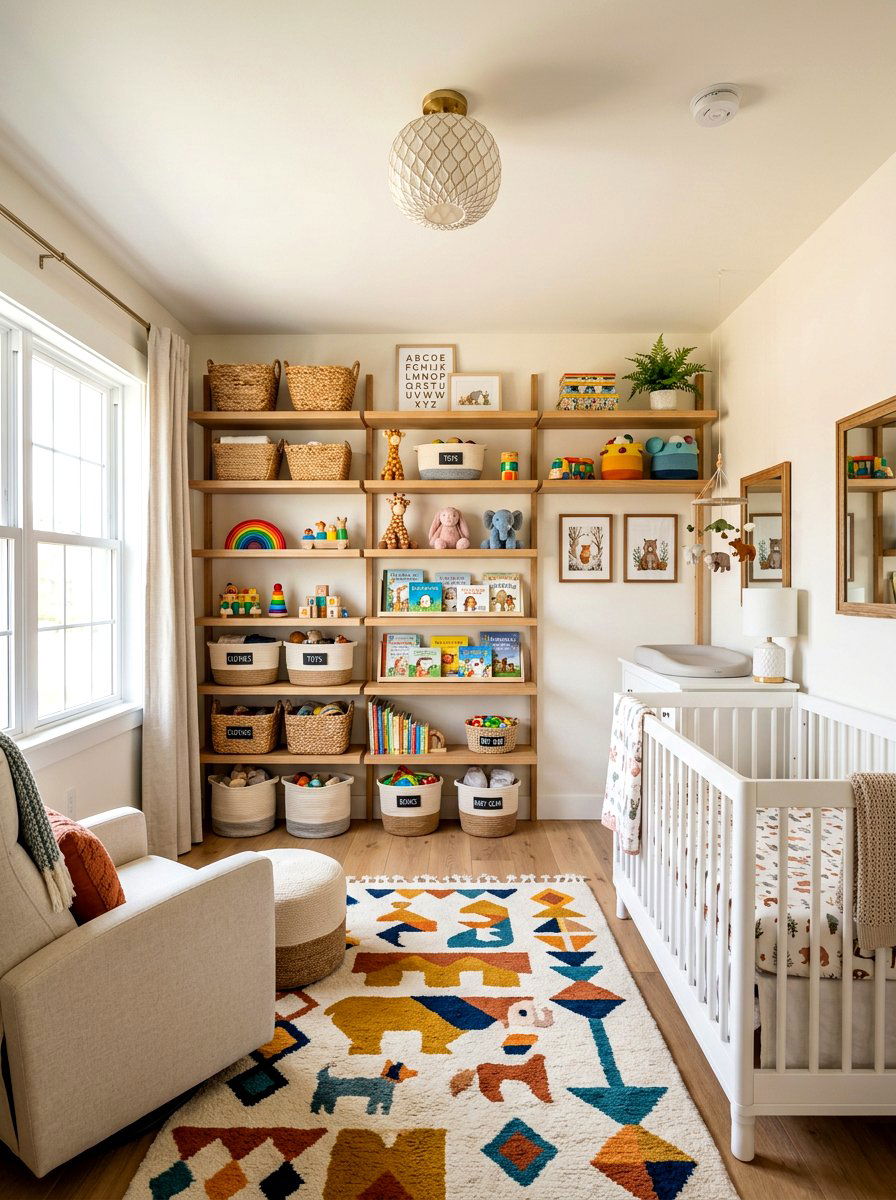
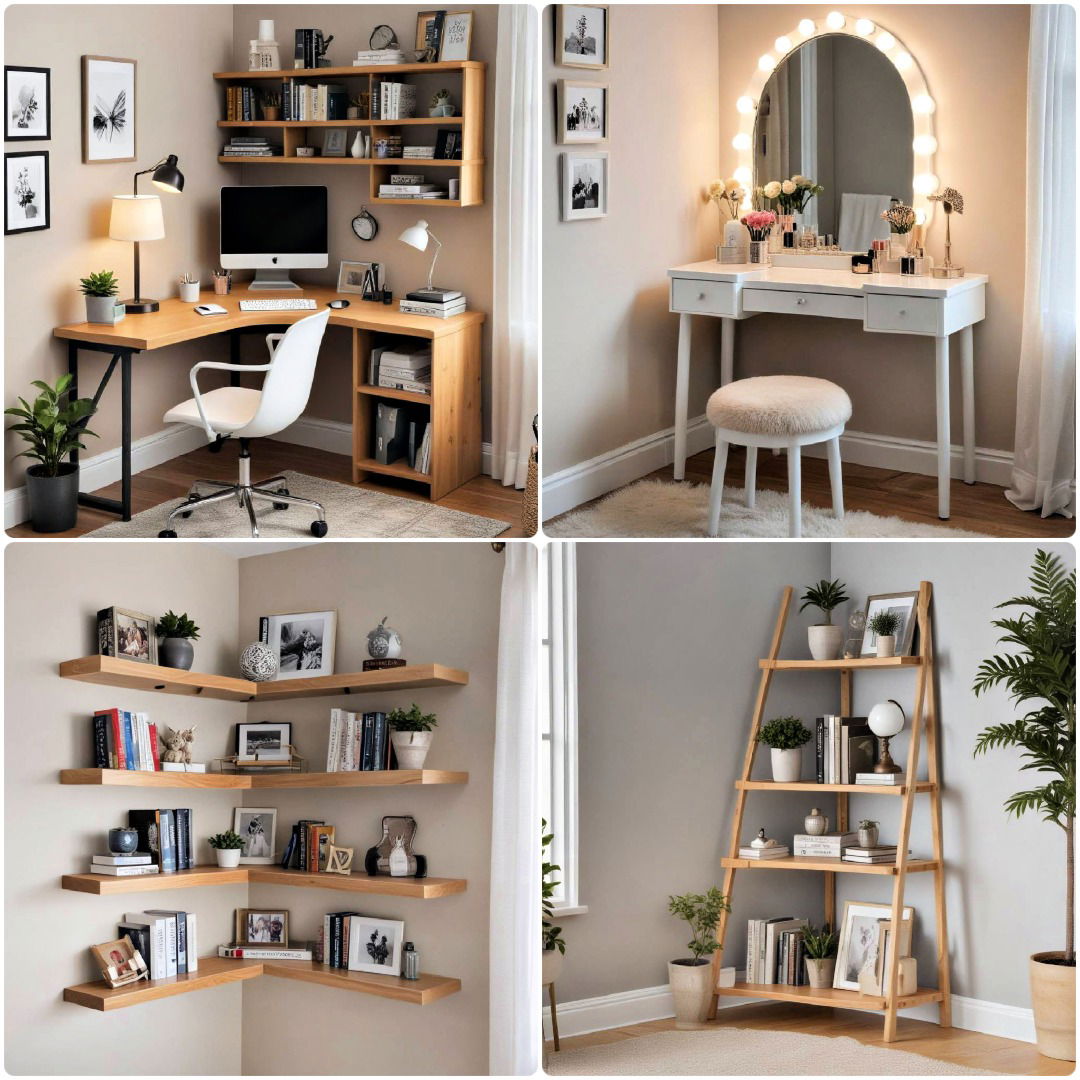
Open shelving is a great way to keep a small nursery feeling light and accessible. Unlike bulky cabinets with heavy doors, open shelves allow you to see everything at a glance, which can be very helpful during busy mornings. You can use bins and baskets to hide smaller items while keeping the overall look clean and organized. This layout encourages you to curate the items on display, focusing on beautiful books and sentimental keepsakes. It is a flexible storage solution that can grow with your child, transitioning from diaper supplies to toys and eventually to schoolbooks and hobby items.
21. Small Attic Nursery
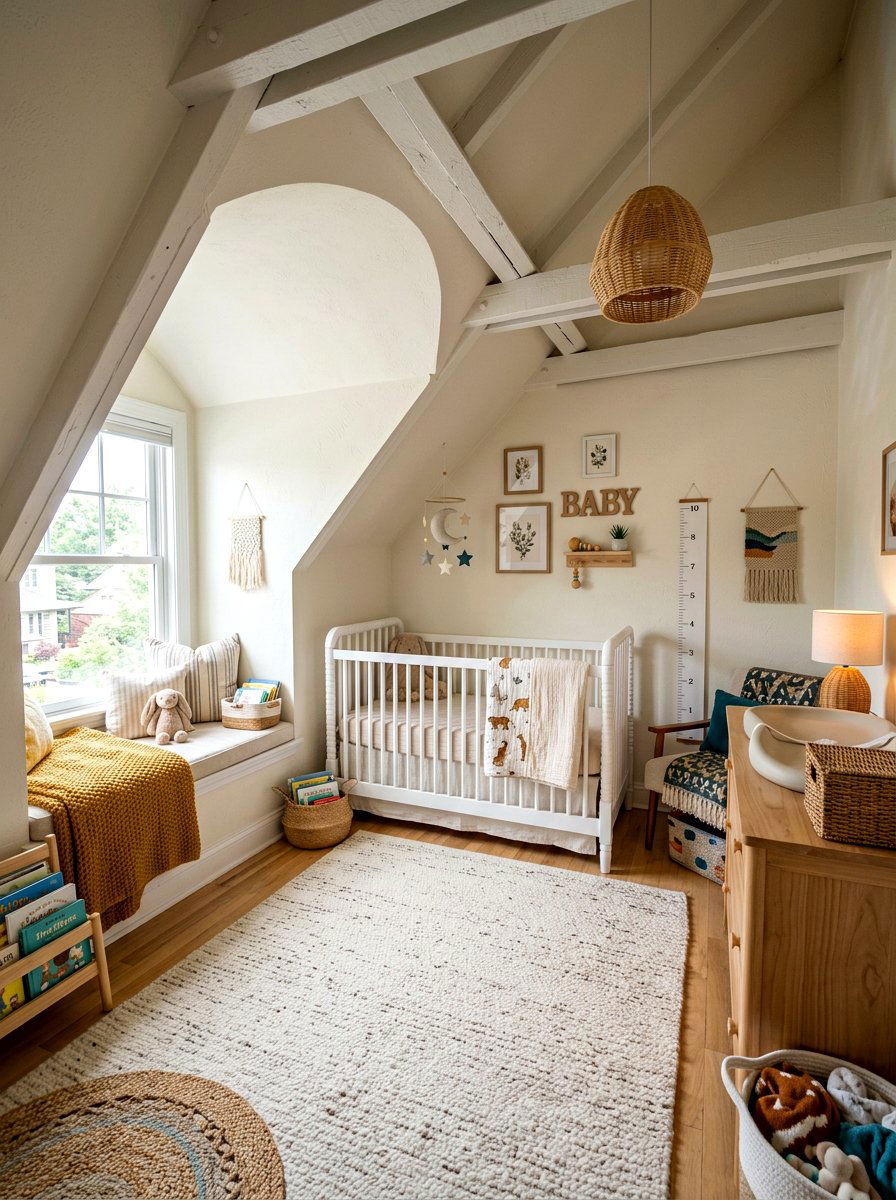
An attic space with sloped ceilings can be transformed into a charming and cozy nursery with the right layout. Use the lower parts of the walls for low-profile storage or a small crib to maximize the usable height in the center of the room. This arrangement creates a "nest-like" feel that is incredibly soothing for a baby. Light colors are essential here to prevent the sloped ceilings from feeling too heavy or claustrophobic. You can even use the unique architectural features to your advantage by adding a small window seat or a cozy reading nook in a dormer window.
22. Small Nursery Lighting
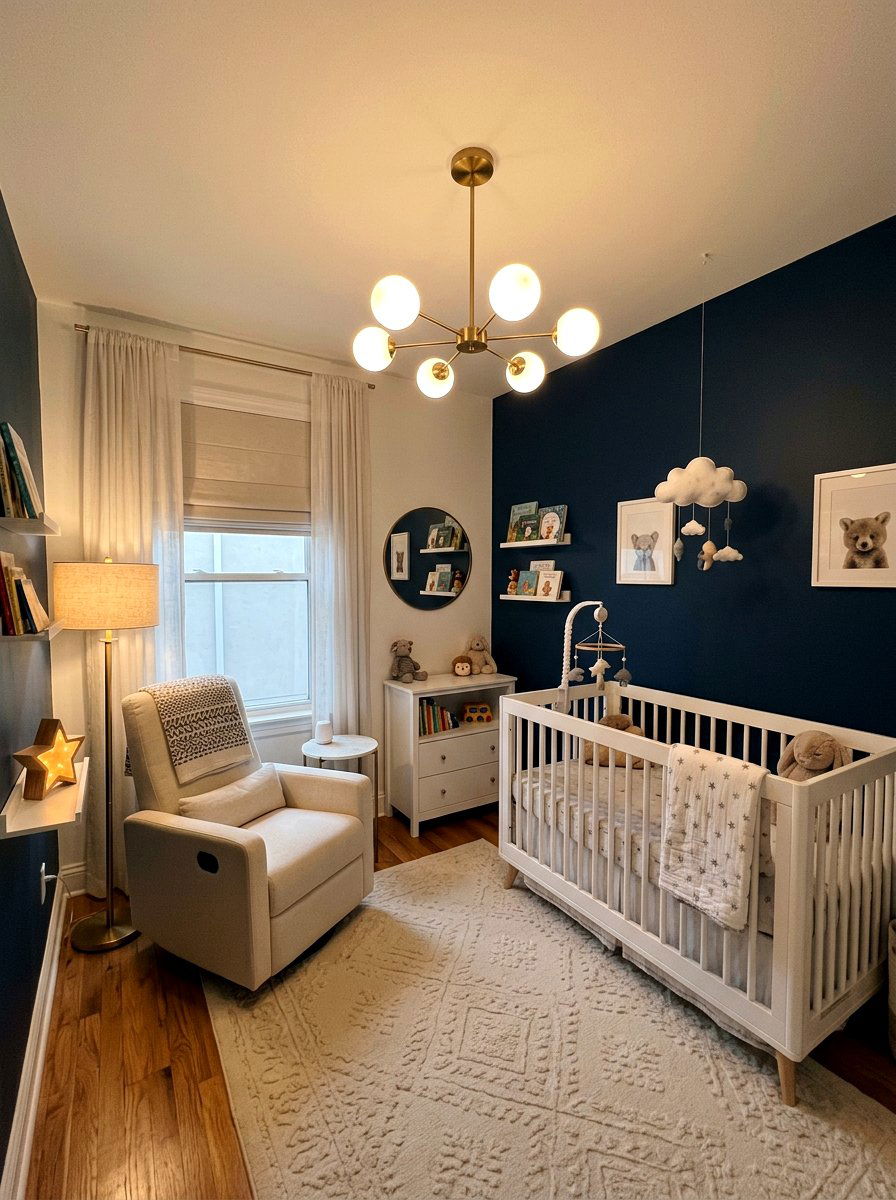
Lighting plays a crucial role in how a small nursery feels, and a layered approach is always best. Use a combination of a dimmable overhead fixture, a soft floor lamp, and a small nightlight to create the perfect ambiance for any time of day. Avoid harsh, bright lights that can make a small room feel stark and uninviting. This layout allows you to adjust the brightness based on whether you are playing, feeding, or putting the baby down for a nap. Soft, warm lighting makes the space feel bigger and much more comfortable, turning even the tiniest room into a serene and magical sanctuary.
23. Small Alcove Nursery
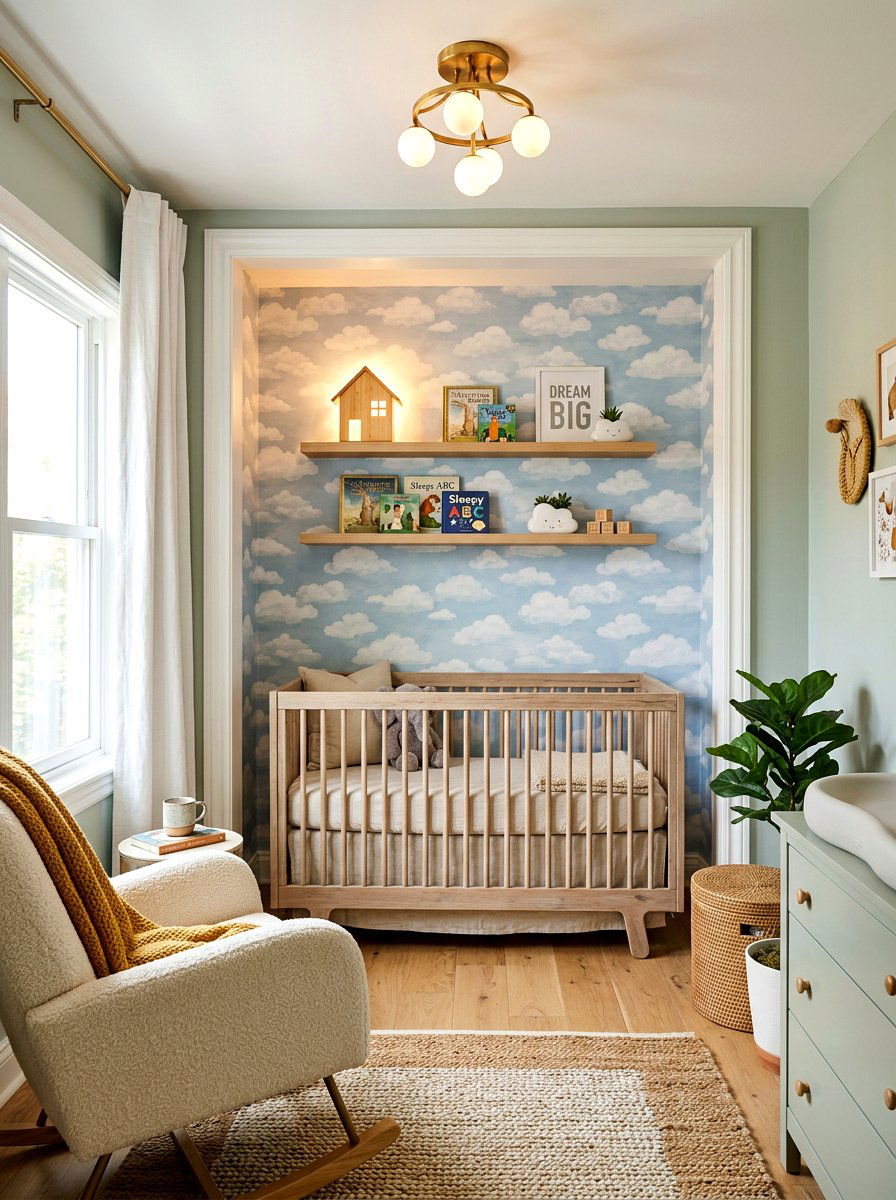
If your home has a small alcove or an unused nook, it can be the perfect spot for a tiny nursery. This layout uses the existing architecture to create a built-in feel for the crib or changing station. You can define the alcove with a bold paint color or a beautiful wallpaper to make it stand out as a special feature. Adding a few floating shelves above the crib allows you to utilize the vertical space within the nook perfectly. This approach is an excellent way to turn a "dead space" into a functional and stylish part of your home without needing a room.
24. Rug For Small Nursery
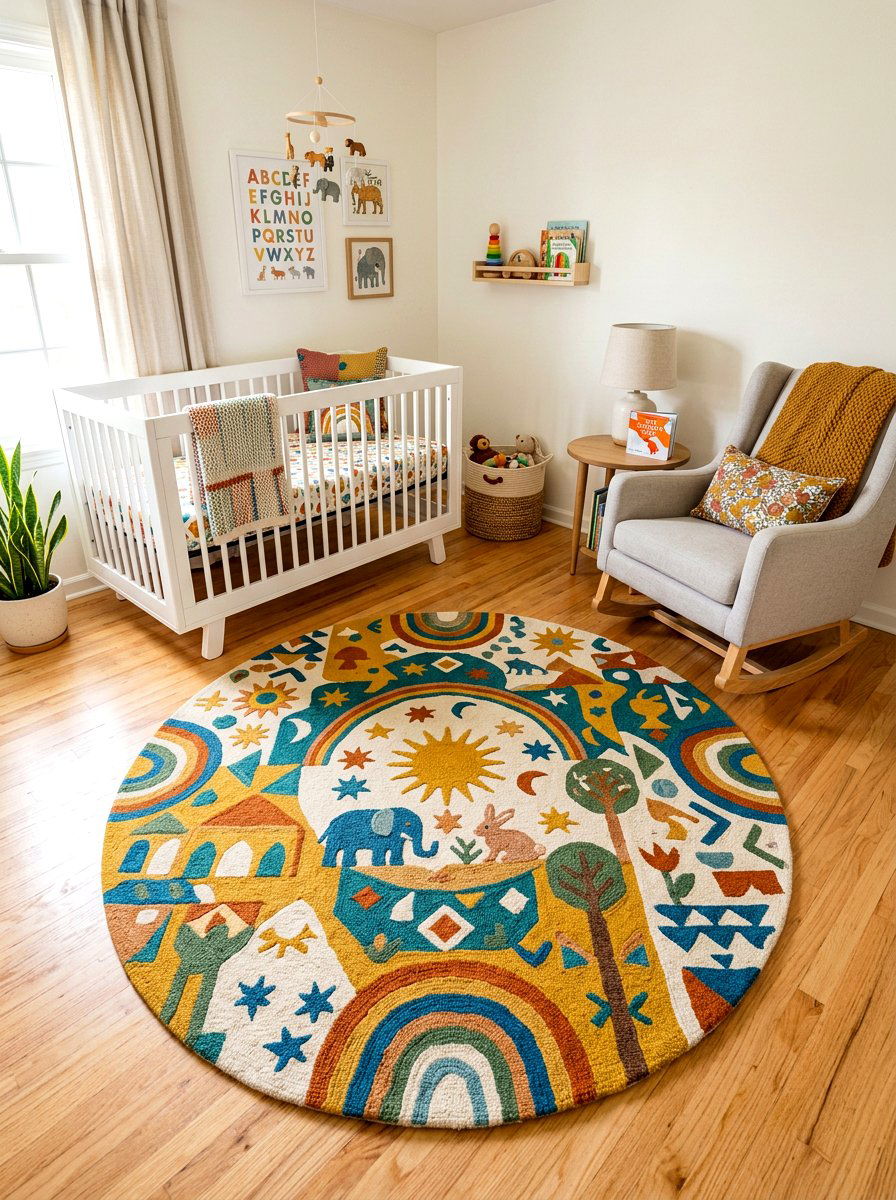
Choosing the right rug can completely transform the layout of a small nursery. A large rug that tucks under all the furniture pieces helps to ground the room and make it feel more expansive. Alternatively, using a round rug can soften the sharp lines of a small square room, creating a cozy and inviting center point. Look for low-pile rugs that are easy to clean and provide a soft surface for the baby to crawl on. The right rug adds warmth, color, and texture, tying all the different elements of the nursery together into one cohesive and very beautiful design.
25. Small Nursery Wallpaper
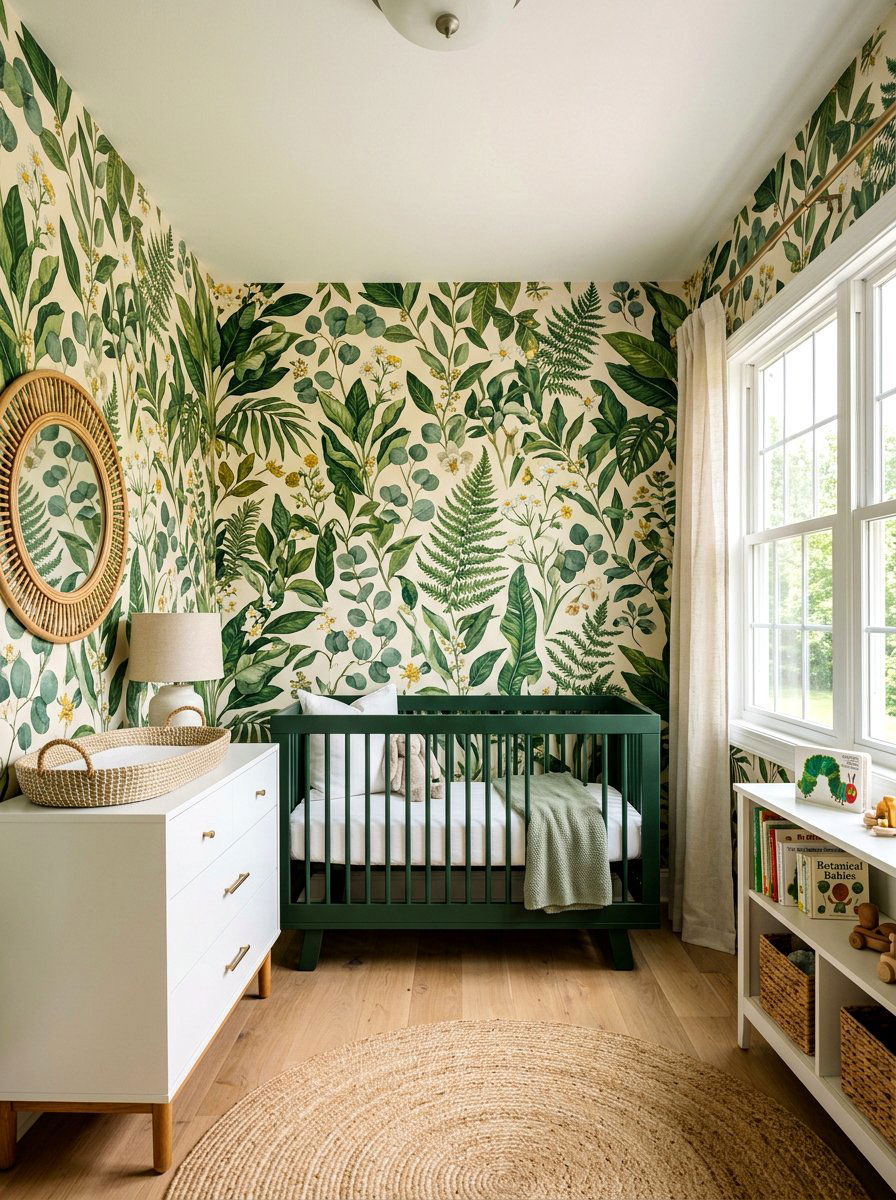
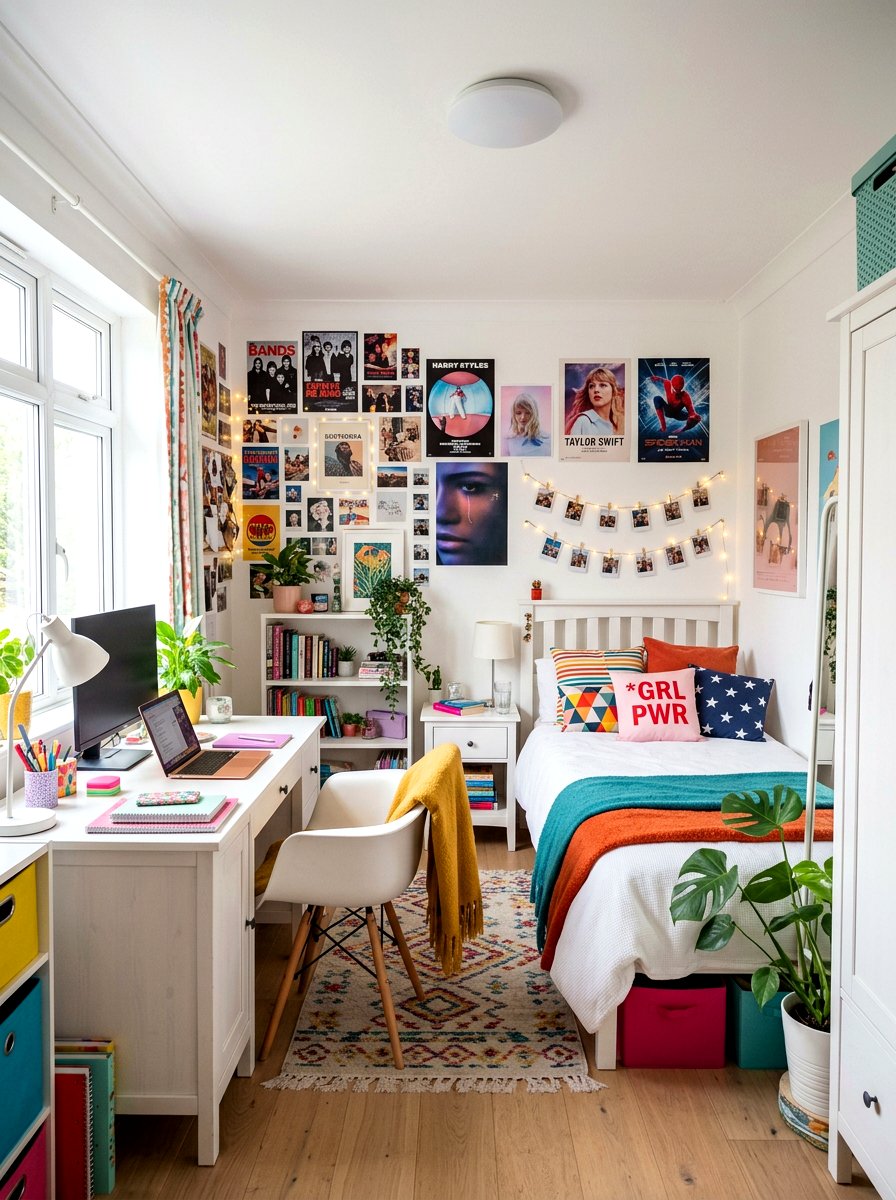
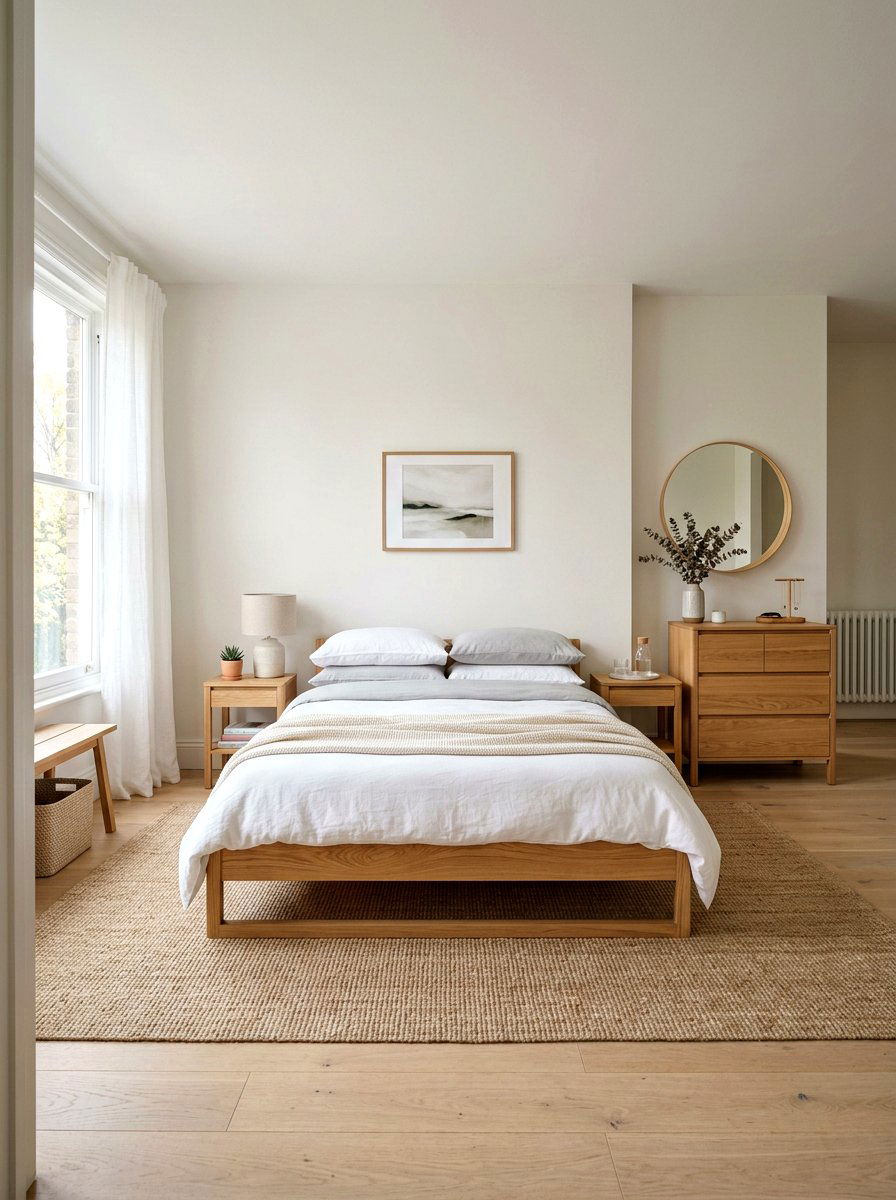
Wallpaper is a fantastic way to add personality and depth to a small nursery without taking up any physical space. A subtle, large-scale pattern can actually make the walls feel like they are further away, expanding the room visually. You can choose to do a single accent wall behind the crib or cover the entire room for a more immersive and whimsical feel. This layout choice allows you to introduce color and theme in a very clean and organized way. Pair the wallpaper with simple, neutral furniture to let the pattern shine and keep the room from feeling too busy or cluttered.
26. Multi Functional Nursery Furniture
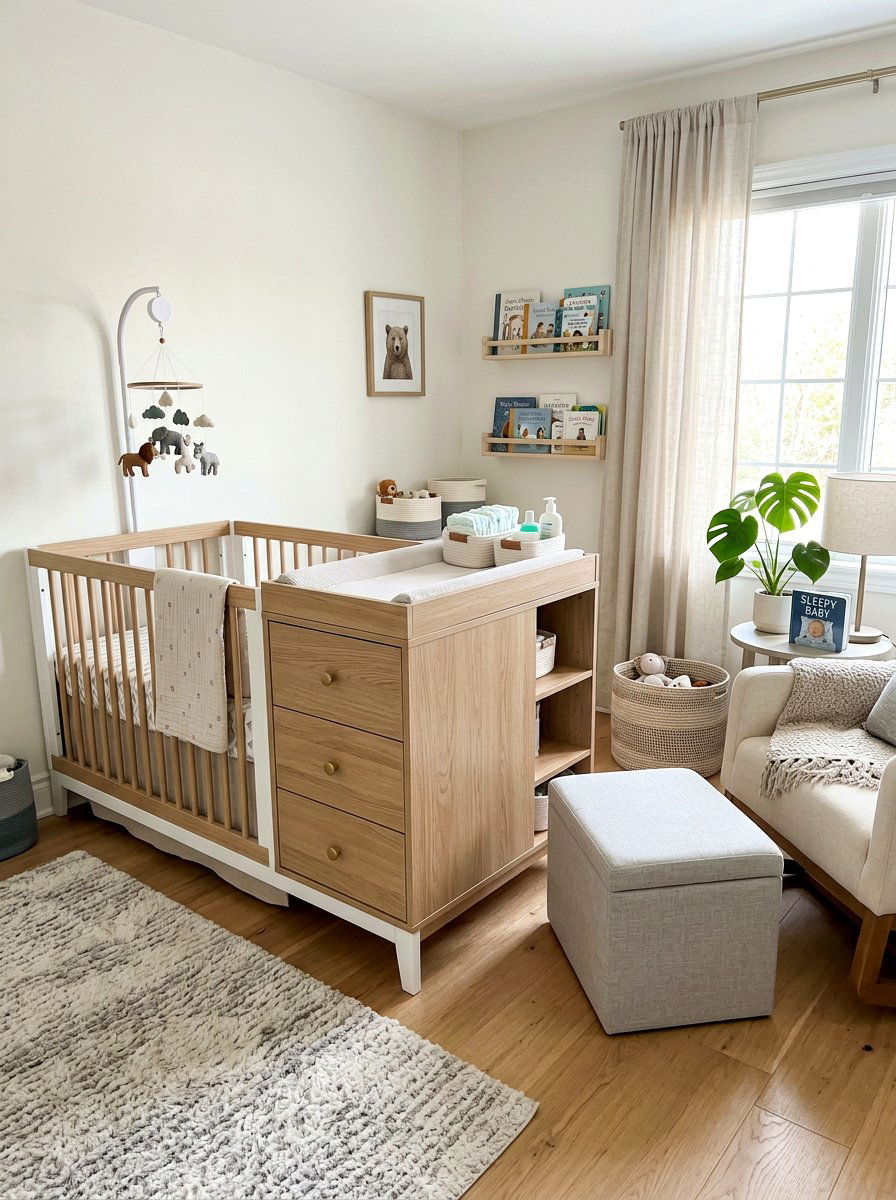
In a small nursery, every piece of furniture should ideally do more than one job. A crib with built-in drawers underneath or a dresser that features a removable changing topper is an excellent space-saving investment. This layout reduces the number of individual items you need to fit into the room, leaving more open space for movement. Look for ottomans that offer hidden storage for toys or blankets while also serving as a footrest for your rocking chair. Multi-functional pieces are the secret to a successful small nursery, ensuring that you have everything you need within a very compact and efficient footprint.
27. High Ceiling Small Nursery
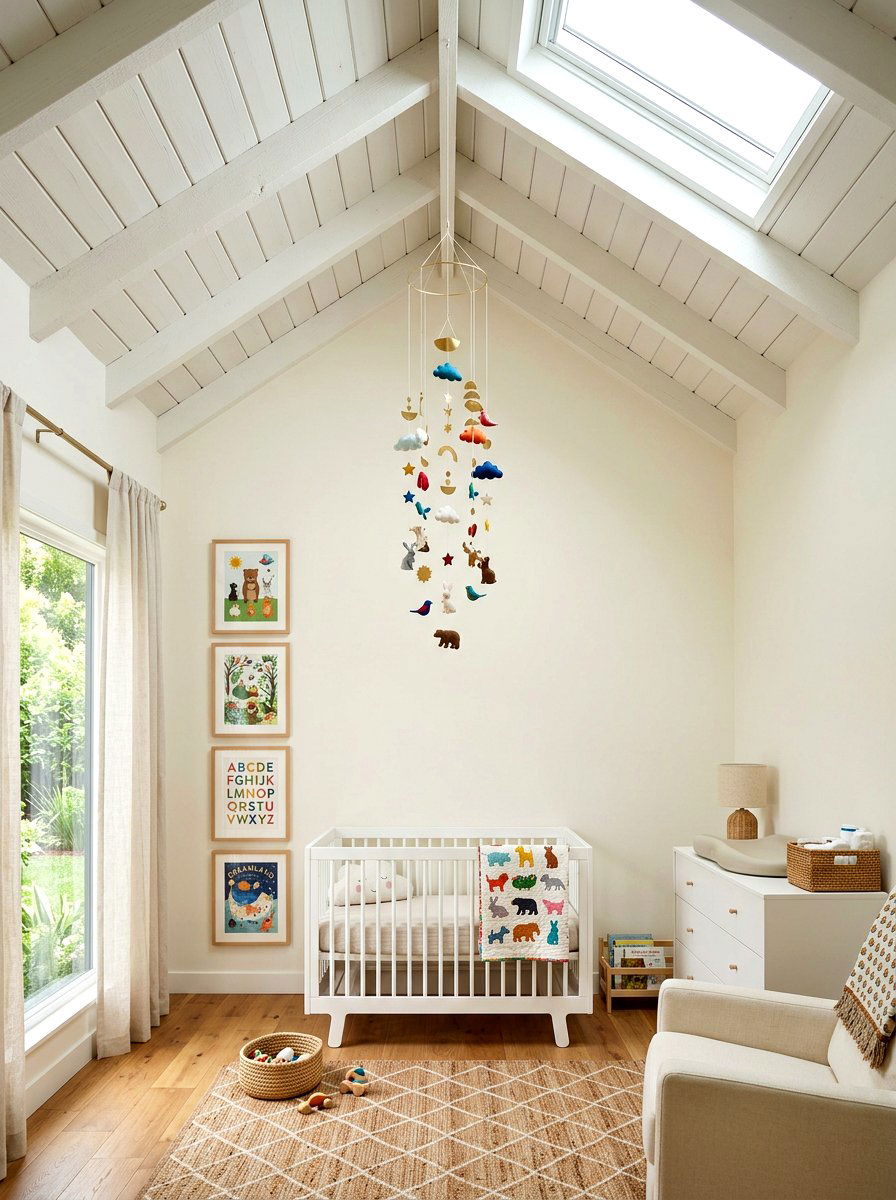
If you are lucky enough to have high ceilings in a small room, you should definitely use them to your advantage. Hanging a tall mobile or a series of framed art prints vertically draws the eye upward, making the room feel much larger than its floor dimensions suggest. You can also install shelves that go all the way up to the ceiling to store items you do not need every day. This layout strategy emphasizes the verticality of the space, creating a sense of grandeur and openness. It is a smart way to add visual interest and storage without crowding the lower part of the room.
28. Small Nursery Built In Cabinet
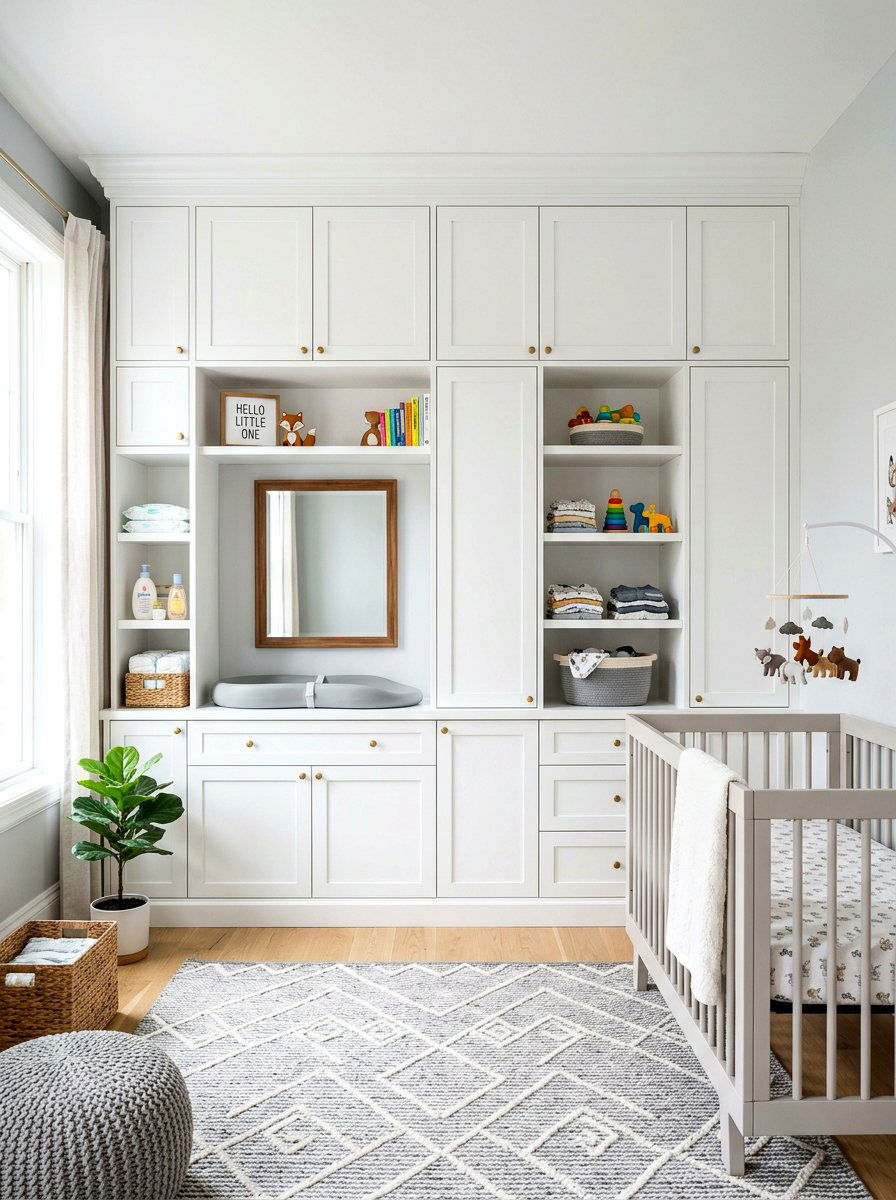
Built-in cabinetry is the ultimate luxury for a small nursery because it is designed to fit the space perfectly. Custom shelves or a built-in wardrobe can replace several freestanding pieces of furniture, creating a much cleaner and more streamlined look. This layout allows you to hide all the baby's gear behind closed doors, keeping the room looking tidy at all times. You can even incorporate a small desk or a changing area into the built-in design. While it requires a bit more investment upfront, the result is a highly functional and beautiful space that adds long-term value to your home.
29. Small Nursery With Gallery Wall
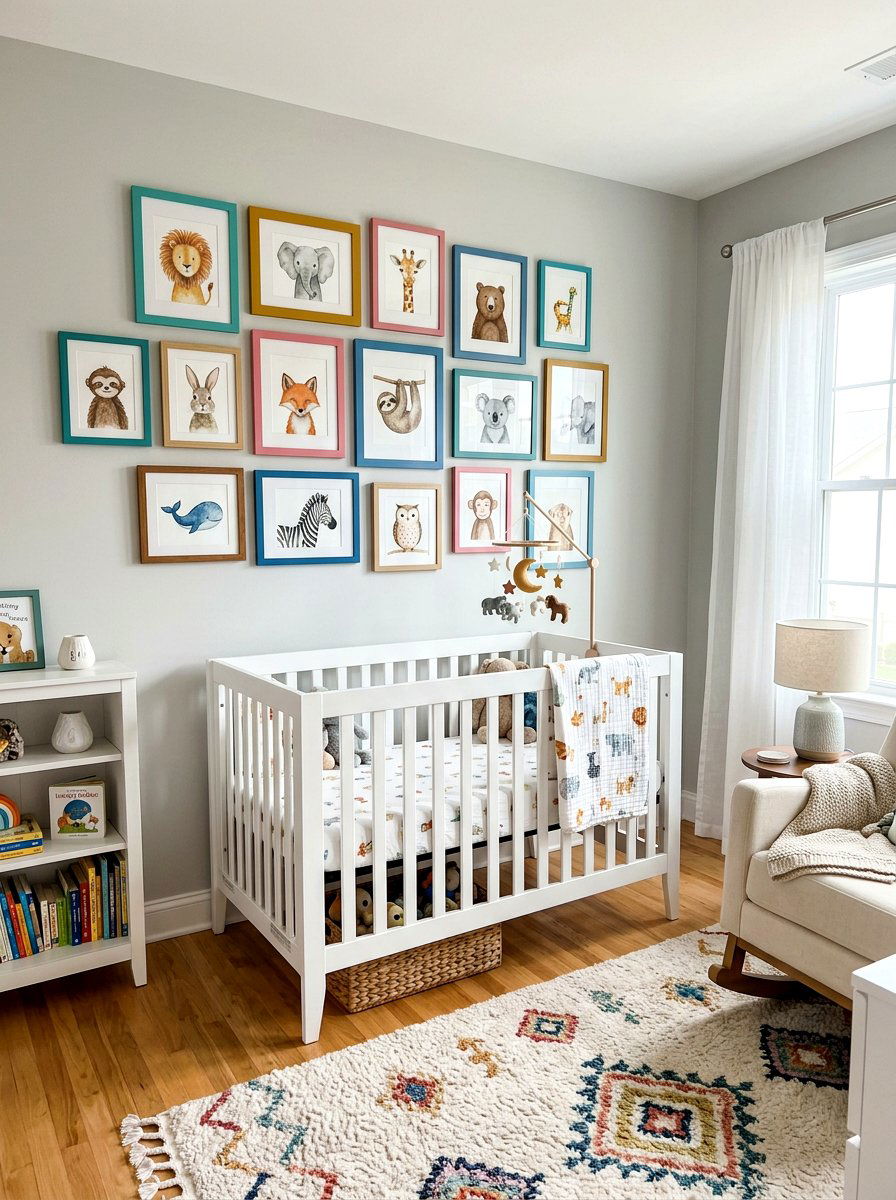
A gallery wall is a wonderful way to add a personal and creative touch to a small nursery. By grouping several small pieces of art, photos, and mementos together, you create a vibrant focal point that does not overwhelm the room. This layout allows you to tell a story and change the pieces as your baby grows and develops new interests. Use lightweight frames and varying sizes to keep the arrangement feeling dynamic and interesting. A gallery wall adds a lot of character and warmth, making the tiny nursery feel like a truly special and well-loved part of your family's home.
30. Small Nursery With Rocking Chair
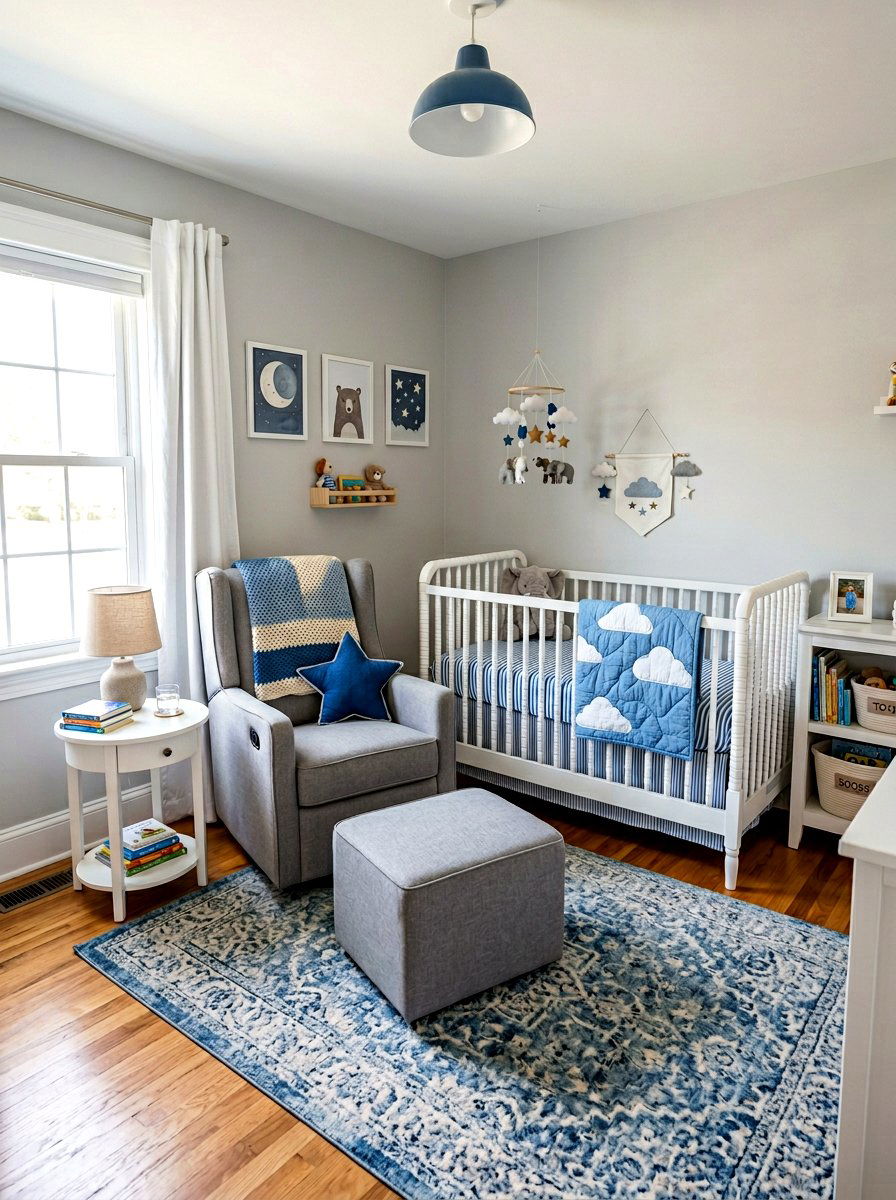
Even in the smallest nursery, a comfortable place for the parent to sit is usually an essential requirement. Choosing a slim-profile glider or a compact rocking chair ensures that you have a cozy spot for feeding and soothing without blocking the doorway. Place the chair in a corner or next to the crib to create a dedicated bonding zone. A small side table or a wall-mounted shelf nearby can hold a bottle, a book, or your phone during long sessions. This layout focuses on comfort and functionality, making sure that the nursery is a welcoming place for both you and your baby.
Conclusion:
Designing a small nursery is all about embracing creativity and focusing on what truly matters for your baby's comfort. While limited space can feel like a challenge, it actually encourages you to make more thoughtful choices about furniture, organization, and style. By utilizing vertical storage, choosing multi-functional pieces, and sticking to a light color palette, you can create a room that feels both spacious and cozy. Every one of these thirty layout ideas shows that with a little planning, any small space can become a beautiful sanctuary. Your baby will surely love the intimate and organized home you have built for them to grow in.

Related posts: