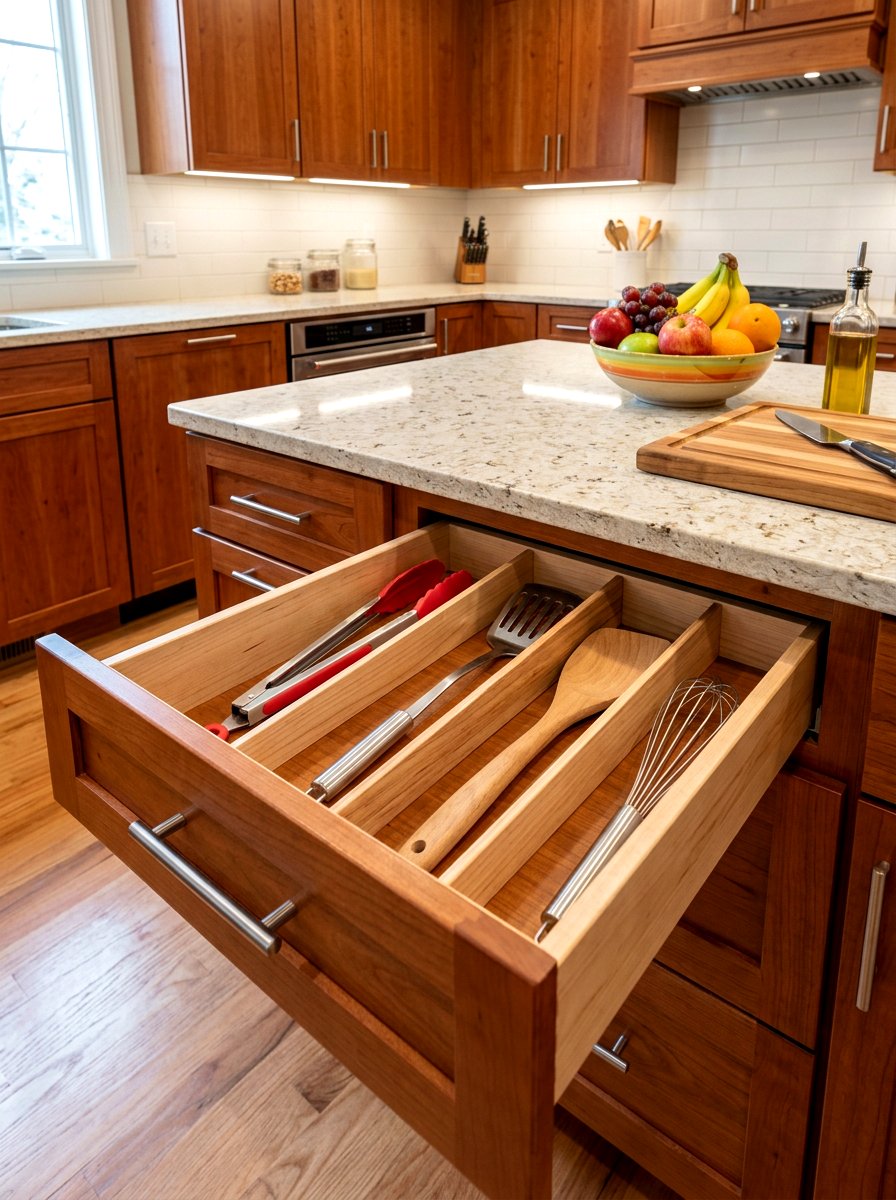
Creating a functional utility room in a limited space can feel like a daunting puzzle, but it is one of the most rewarding home improvement projects you can undertake. These hard-working zones often house our loudest appliances and messiest chores, making organization and smart layout choices absolutely essential for a peaceful home. Whether you are dealing with a tiny closet or a narrow mudroom transition, maximizing every square inch helps streamline your daily routines. From clever vertical storage solutions to integrated drying racks, a well-planned utility area can transform a chaotic chore into a seamless experience. These designs blend high-performance utility with beautiful aesthetics, proving that even the smallest spaces can be both stylish and highly efficient.
1. Stacked Washer and Dryer
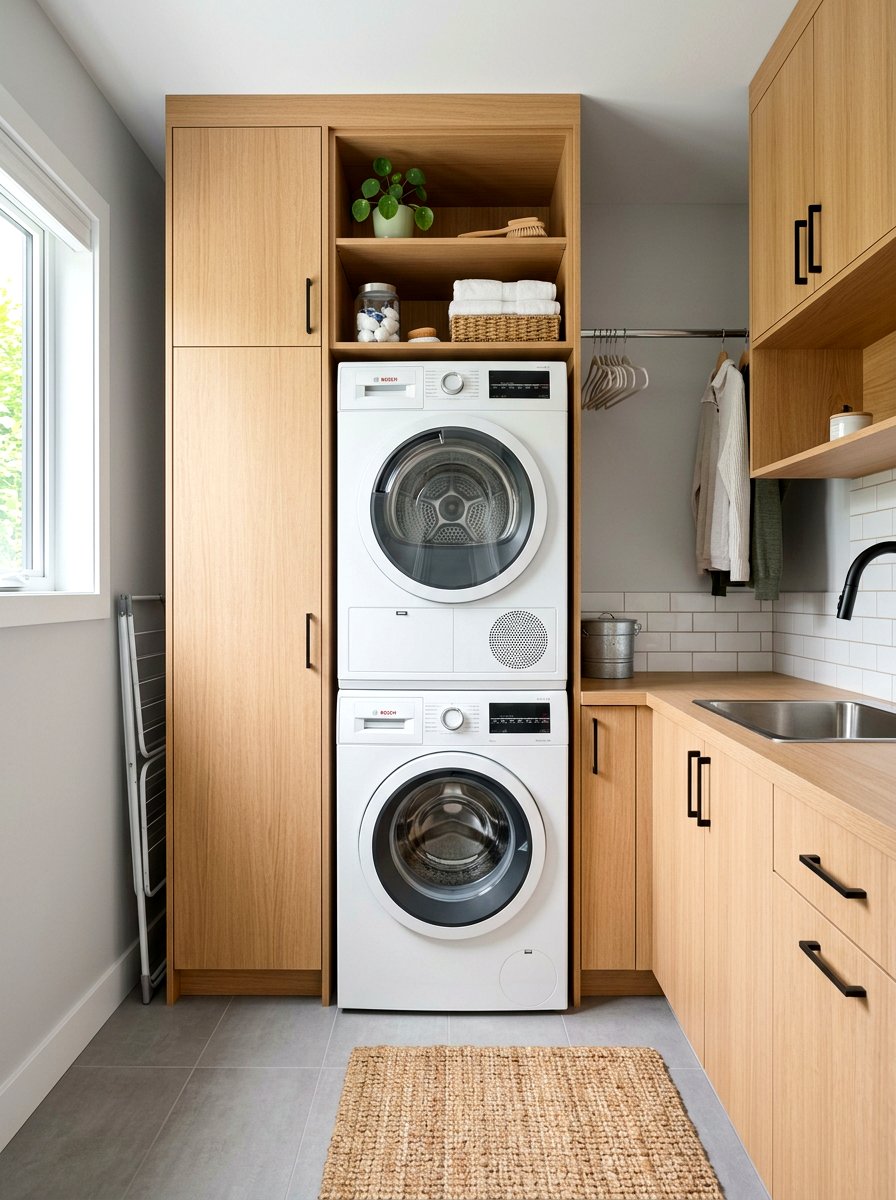
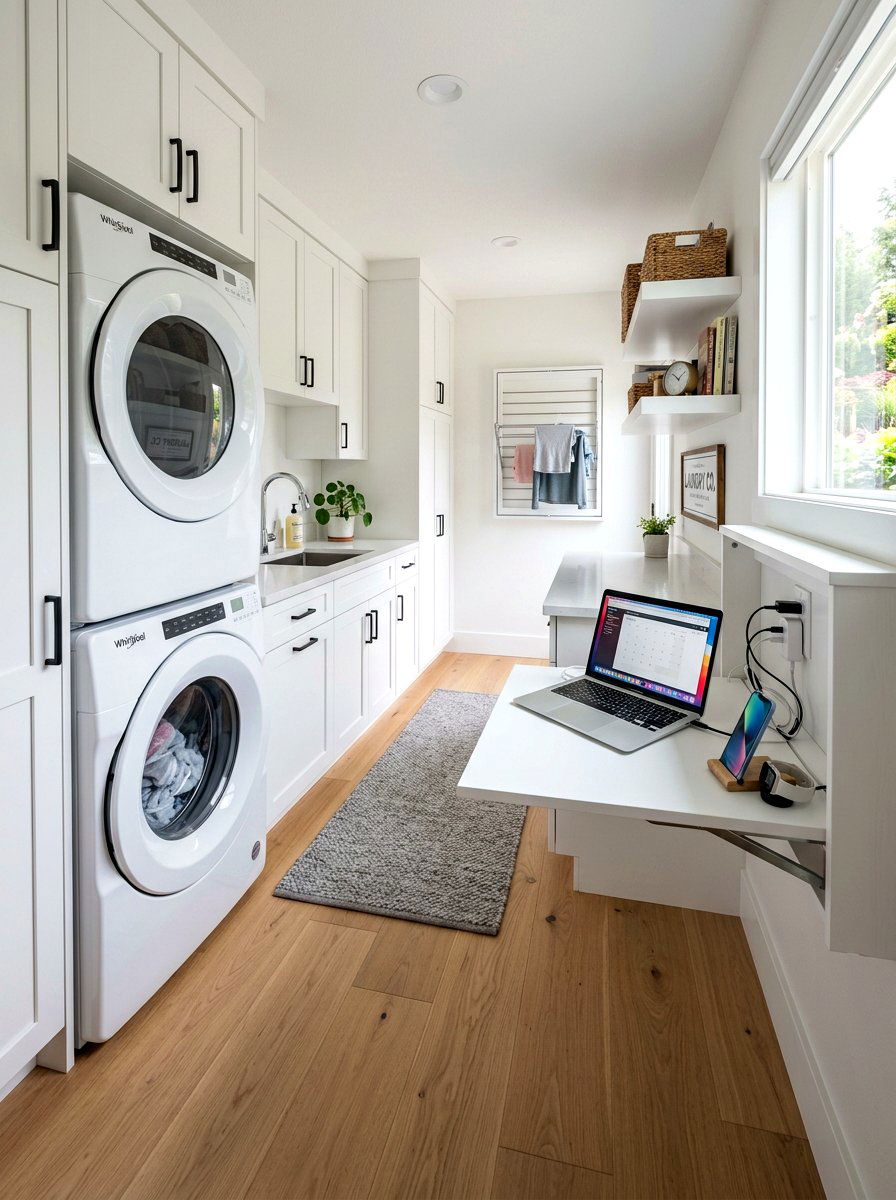
When floor space is at a premium, looking upward is the most effective strategy for small utility rooms. Stacking your washer and dryer vertically allows you to reclaim valuable square footage that would otherwise be lost to side-by-side units. This layout creates room for a tall storage cabinet or a small sink right next to the machines. You can easily build a custom surround or use a stacking kit to ensure stability and a polished look. By elevating the dryer, you also make it easier to reach without constant bending. This vertical arrangement is a classic choice for apartment dwellers and homeowners who need to fit laundry needs into tight closets or narrow hallways.
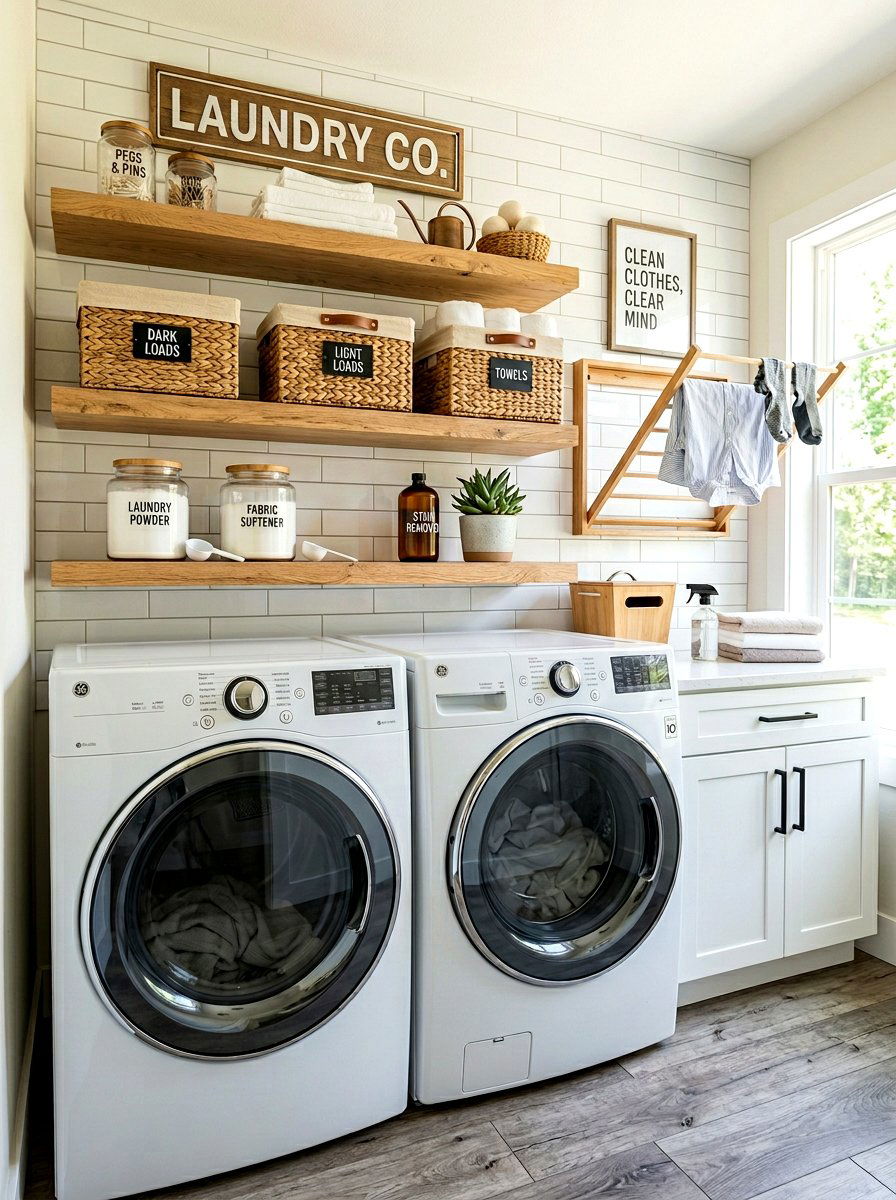
2. Floating Wall Shelves
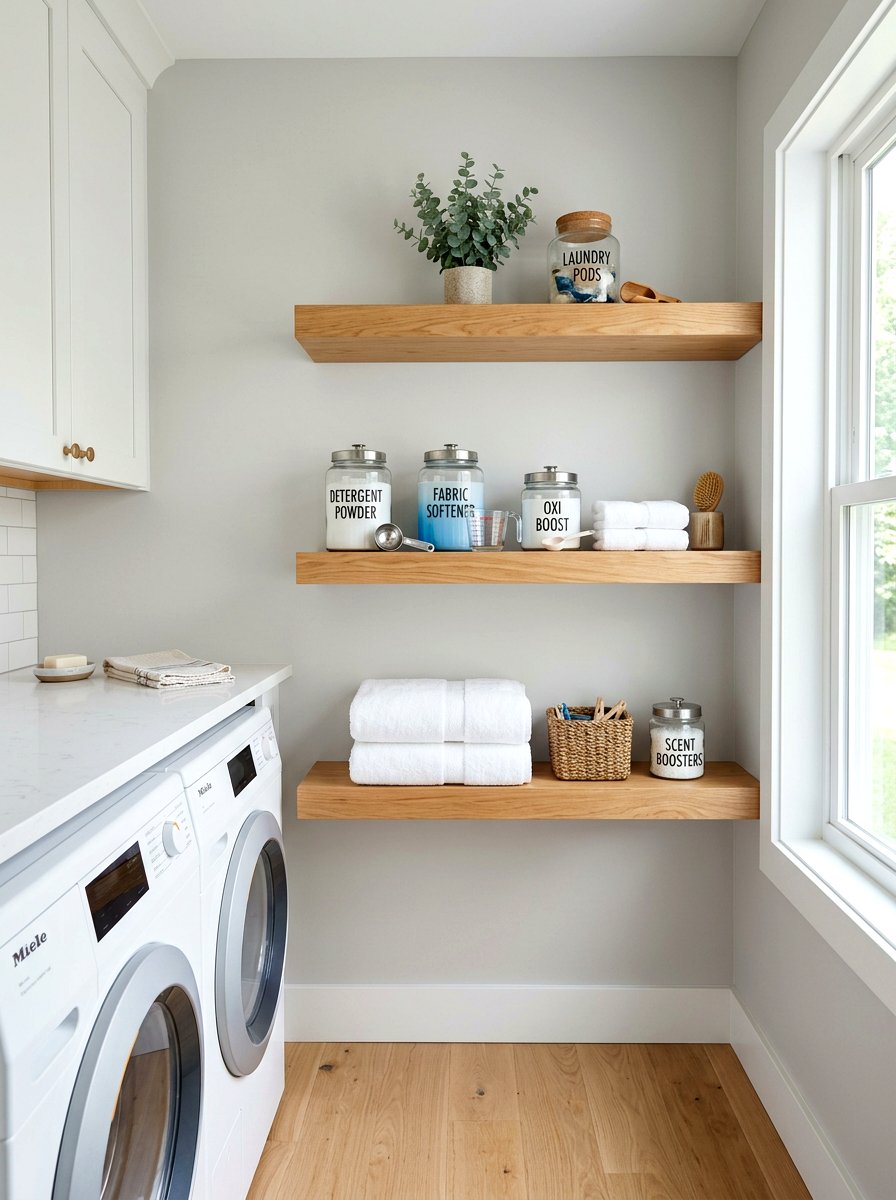
Installing floating wall shelves is a brilliant way to add storage without making a small room feel cramped or heavy. Unlike bulky upper cabinets, open shelving maintains a sense of airiness while providing a convenient spot for glass jars of detergent and folded towels. You can position these shelves at different heights to accommodate taller bottles or decorative baskets. Using natural wood finishes can add warmth to the space, while white shelves blend seamlessly into the walls for a minimalist look. This approach keeps your most-used items within reach, turning everyday supplies into part of the decor. It is an affordable and flexible solution for any compact utility zone.
3. Built In Drying Rack
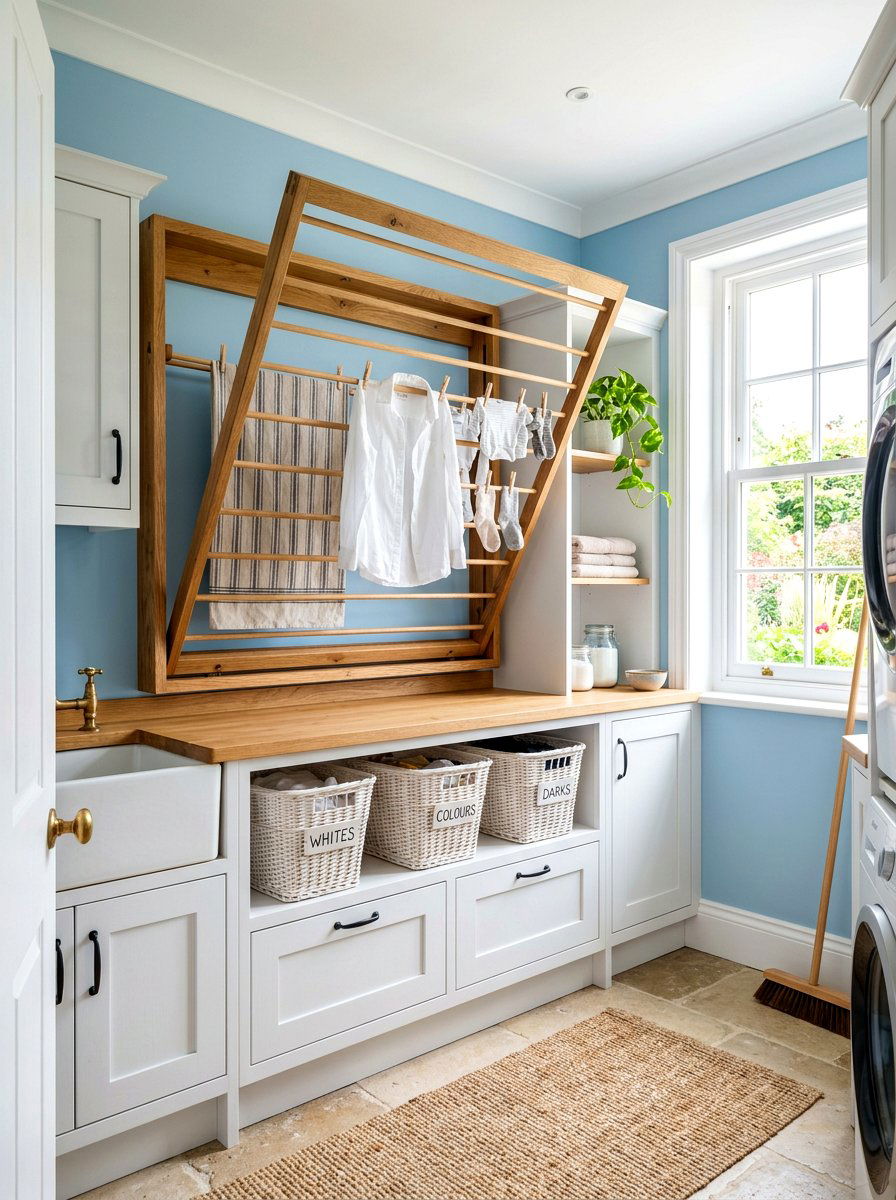
A wall-mounted drying rack that folds away when not in use is a game-changer for small utility rooms. Traditional freestanding airers often block walkways and create clutter, but a built-in version stays flush against the wall. You can find sleek accordion styles or custom wooden frames that match your cabinetry. This feature is perfect for hanging delicate items or damp towels without taking up any floor space at all. When laundry day is over, simply fold the rack back to maintain a clean and streamlined appearance. It is a highly practical addition that maximizes the vertical potential of the room while keeping your laundry routine organized.
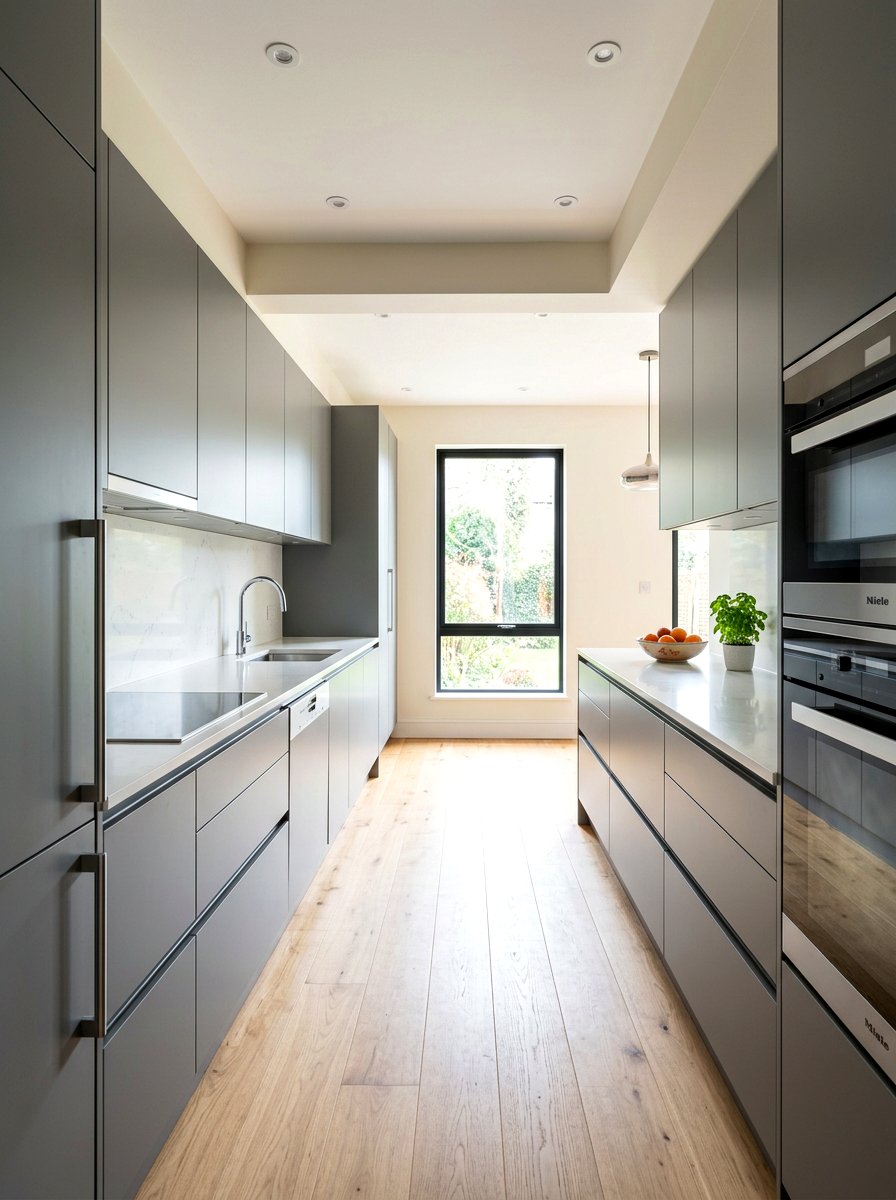
4. Floor To Ceiling Cabinetry
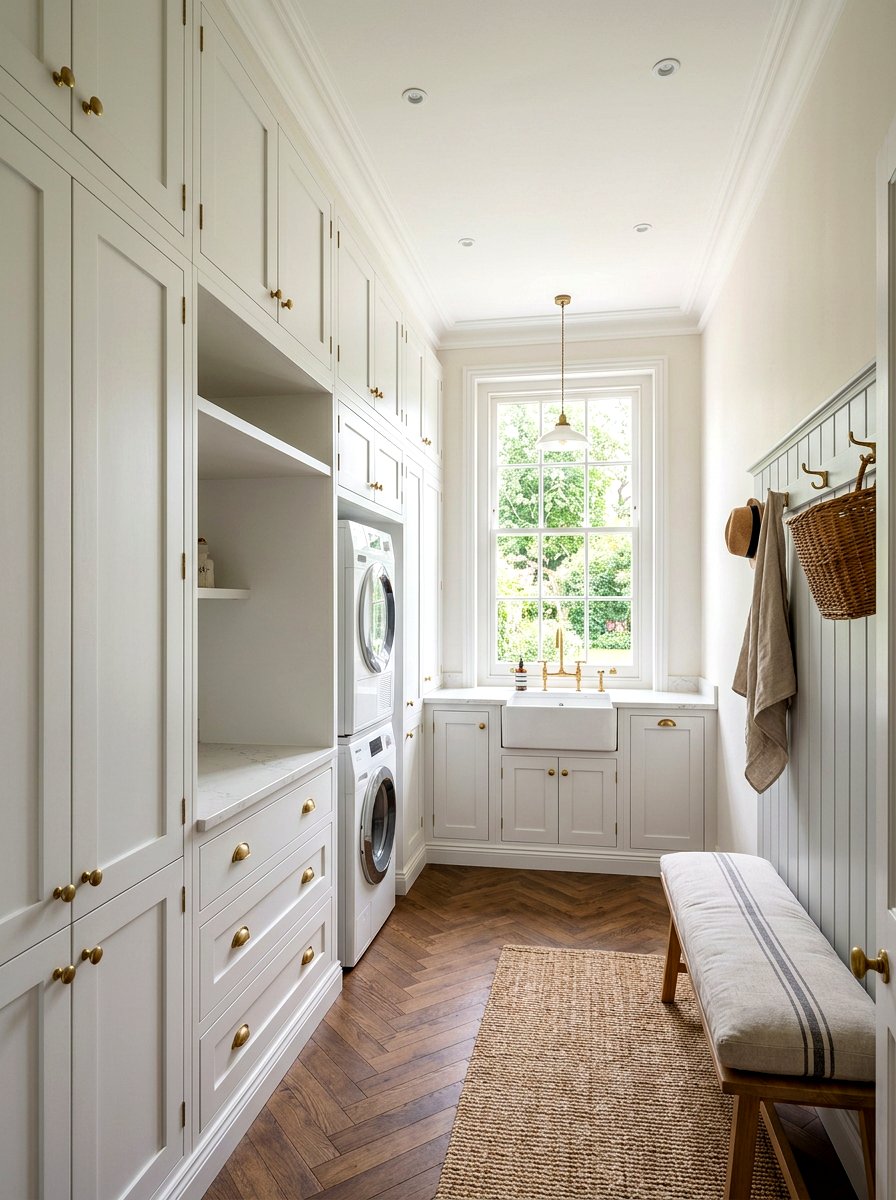
Utilizing the full height of your walls with floor-to-ceiling cabinetry ensures that every inch of space is used for storage. Tall units are ideal for stashing away long items like ironing boards, mops, and vacuum cleaners that are otherwise difficult to hide. By enclosing these items behind sleek doors, you eliminate visual clutter and create a more serene environment. This design approach works particularly well in narrow galley-style utility rooms where floor space is limited but wall height is abundant. You can customize the interior with adjustable shelves to fit everything from bulk paper towels to cleaning chemicals. It provides a clean, integrated look that hides house-wide messes.
5. Small Utility Room Sink
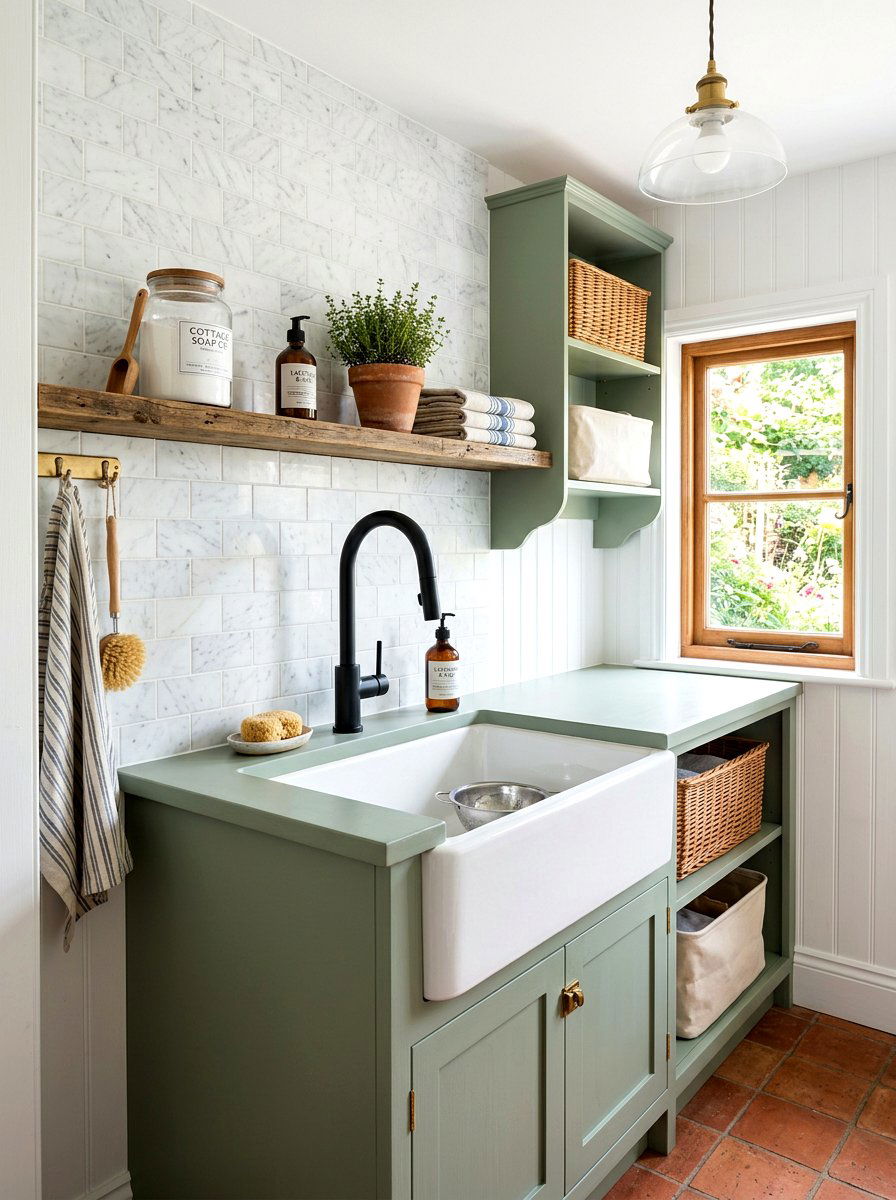
Incorporating a compact yet deep sink is essential for a truly functional utility space, even when square footage is tight. A small undermount or apron-front sink provides a dedicated spot for hand-washing delicates, rinsing muddy shoes, or filling buckets. Choosing a deep basin prevents water from splashing onto the surrounding surfaces, which is vital in a cramped layout. Pair the sink with a high-arch faucet to make it easier to maneuver large items beneath the water stream. By placing the sink next to the washing machine, you create an efficient workflow for pre-treating stains. This addition transforms a basic laundry closet into a multi-purpose cleaning station for the entire home.
6. Butcher Block Countertop
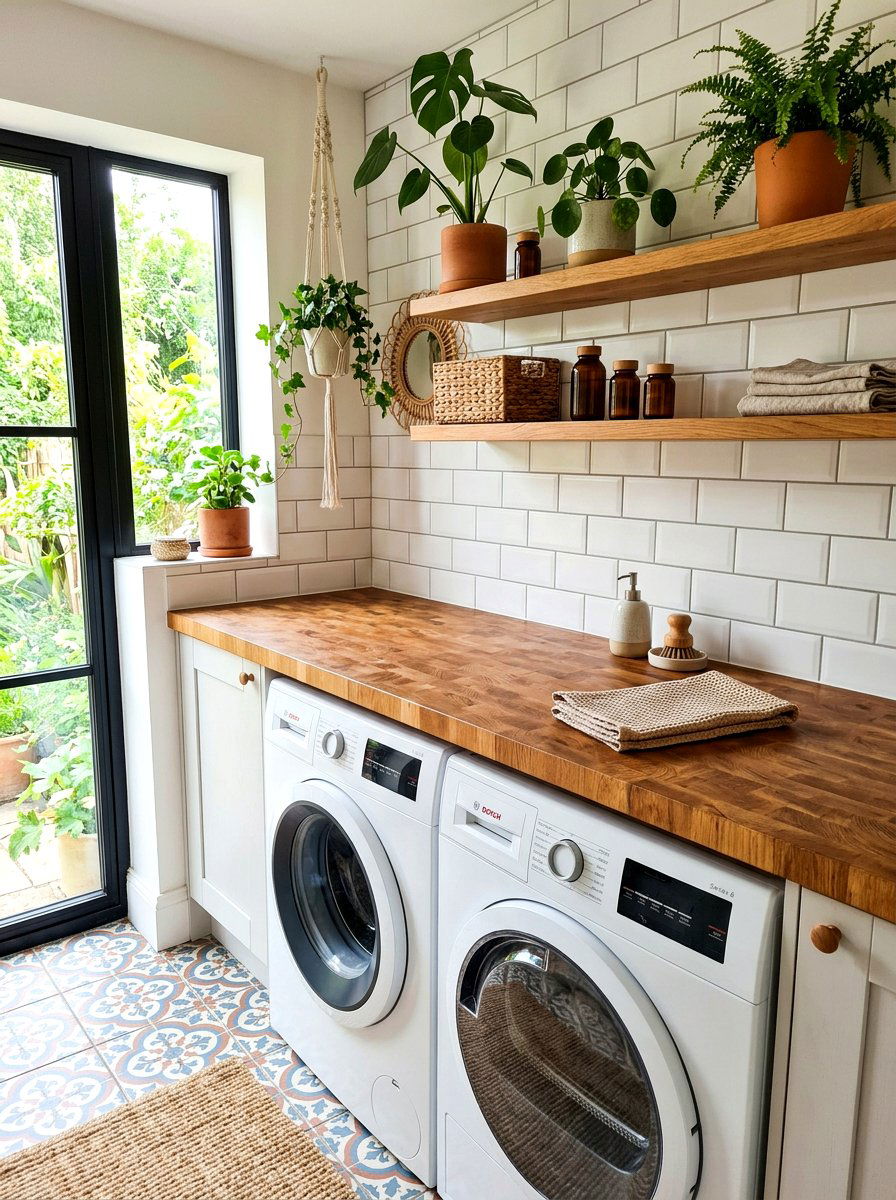
A butcher block countertop installed over side-by-side front-loading machines creates a large, continuous surface for folding clothes and sorting laundry. The natural wood grain adds a touch of organic warmth to the room, balancing the cold metal of the appliances. This sturdy surface is also practical for various household tasks, from potting plants to basic DIY repairs. Unlike stone or laminate, wood can be sanded and refinished over time, making it a durable long-term investment. By using the space directly above your appliances, you gain a massive amount of workspace without adding any extra furniture. It is a smart way to merge functionality with a high-end design aesthetic.
7. Sliding Pocket Door
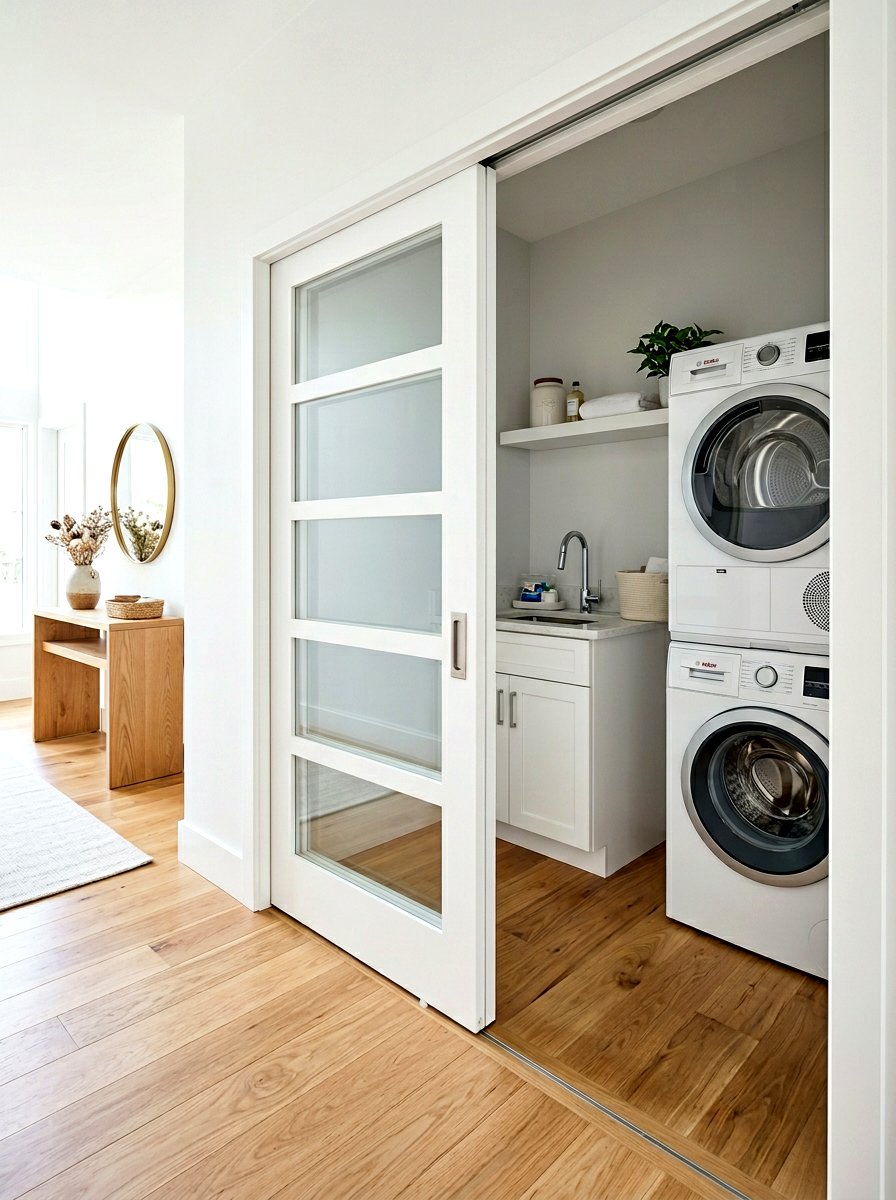
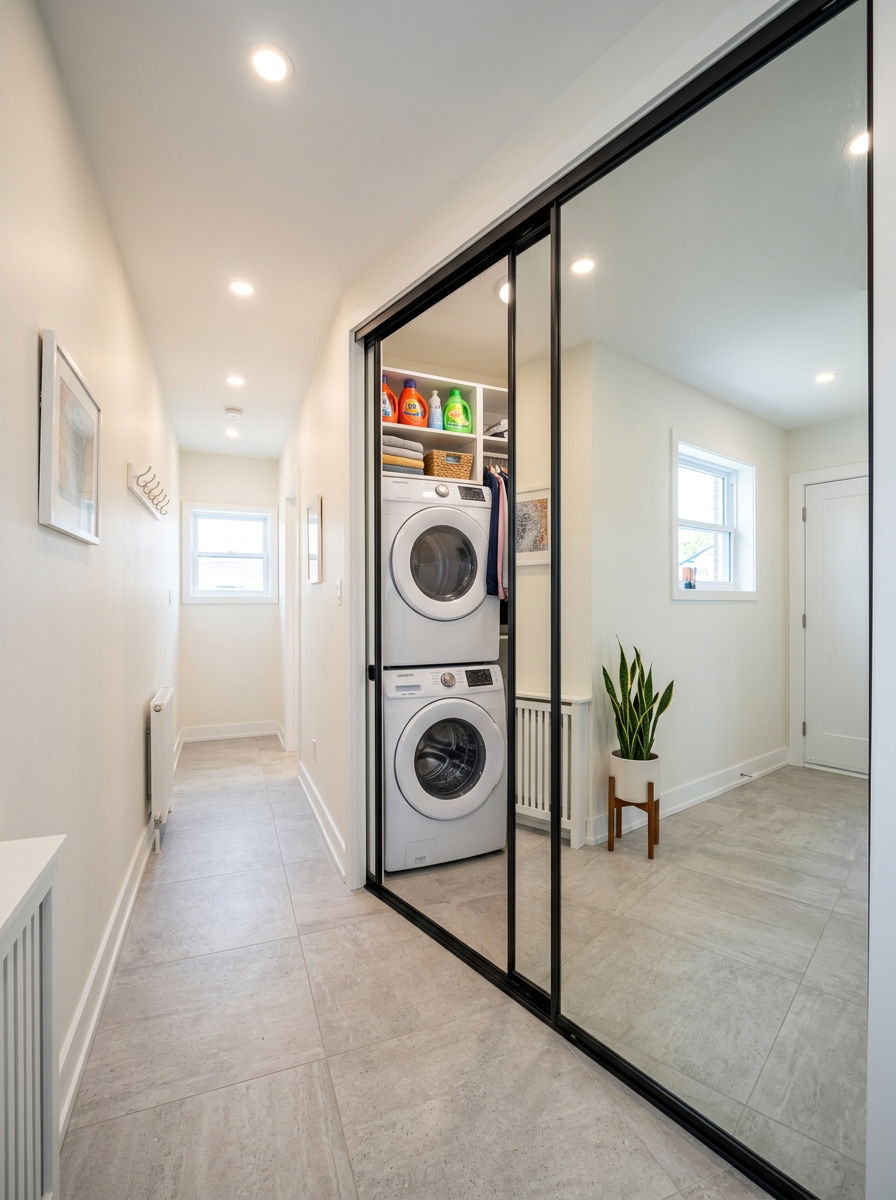
When every inch of floor space matters, a traditional swinging door can be a major hindrance in a small utility room. A sliding pocket door disappears into the wall when opened, allowing for a completely unobstructed entryway and more flexible furniture placement. This is particularly useful in tight hallways or kitchens where a door swing would block traffic. Pocket doors provide a seamless transition between rooms and allow you to hide the laundry noise when the machines are running. They are also a great architectural feature that adds a modern touch to the home. This simple change can make a cramped utility area feel much larger and more accessible.
8. Integrated Laundry Hamper
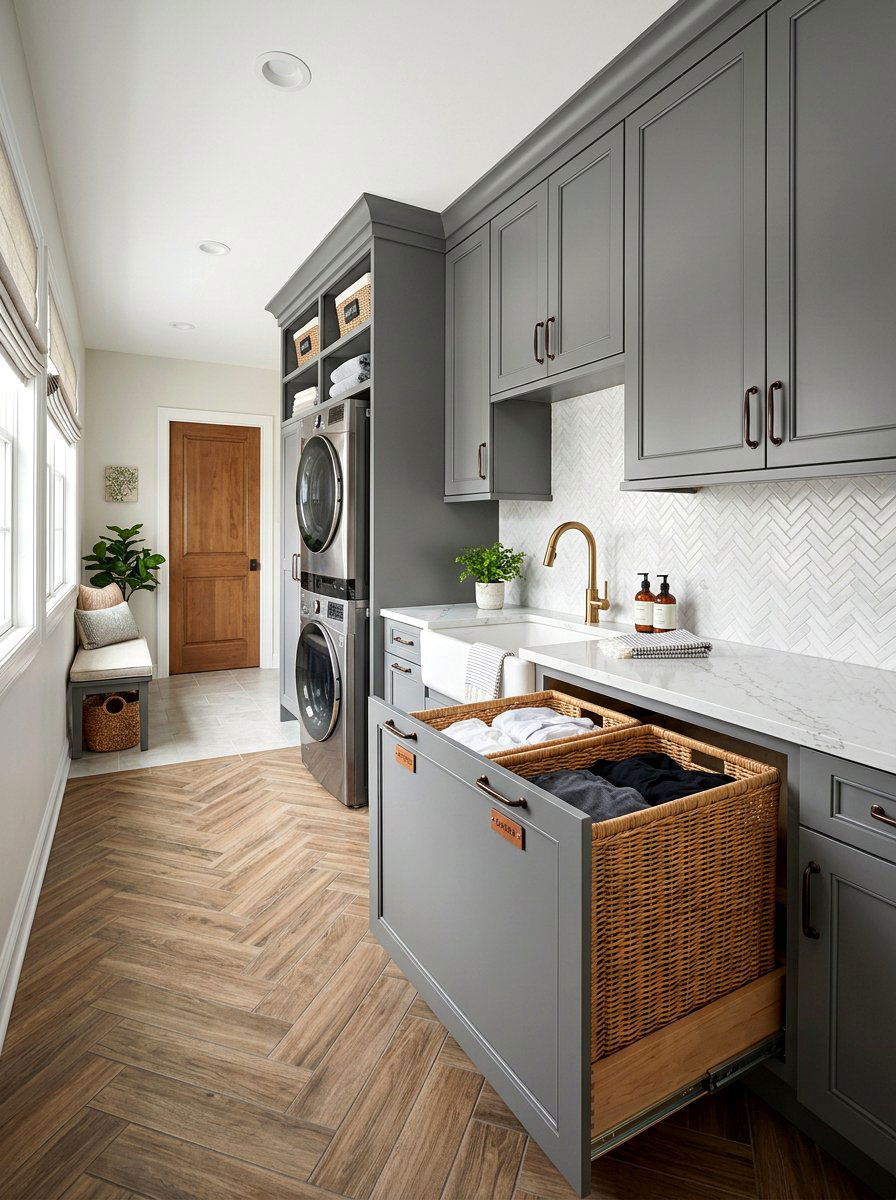
Hidden pull-out hampers are a fantastic way to keep dirty laundry out of sight and off the floor. By integrating these hampers directly into your lower cabinetry, you maintain a tidy appearance even on the busiest days. You can install multiple bins to sort whites, darks, and delicates as you go, which streamlines the washing process later. These pull-out units usually operate on smooth sliders, making them easy to access with one hand. This design choice prevents unsightly piles of clothes from accumulating in the middle of the room. It is a small detail that significantly improves the daily flow and cleanliness of a compact utility space.
9. Under Stair Utility Room
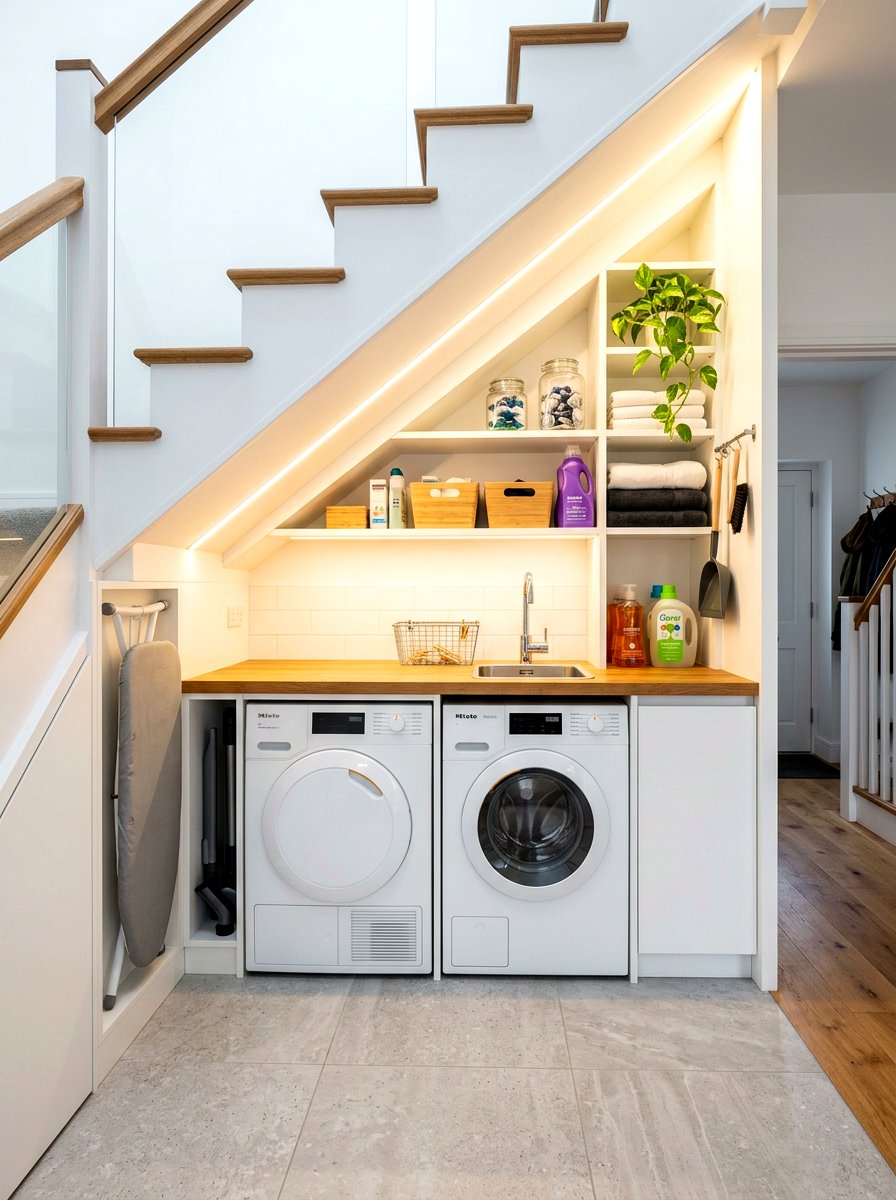
The awkward space beneath a staircase is often underutilized, but it is the perfect location for a clever utility nook. With custom cabinetry and careful plumbing, you can fit a washer, dryer, and even some shelving into this sloped area. Using light colors and bright lighting helps prevent the space from feeling like a dark cave. You can install a set of bi-fold doors to hide the appliances when they are not in use, keeping your hallway looking neat. This approach is an excellent way to add functionality to a home without needing a dedicated room. It maximizes architectural potential and turns "dead space" into a hardworking zone.
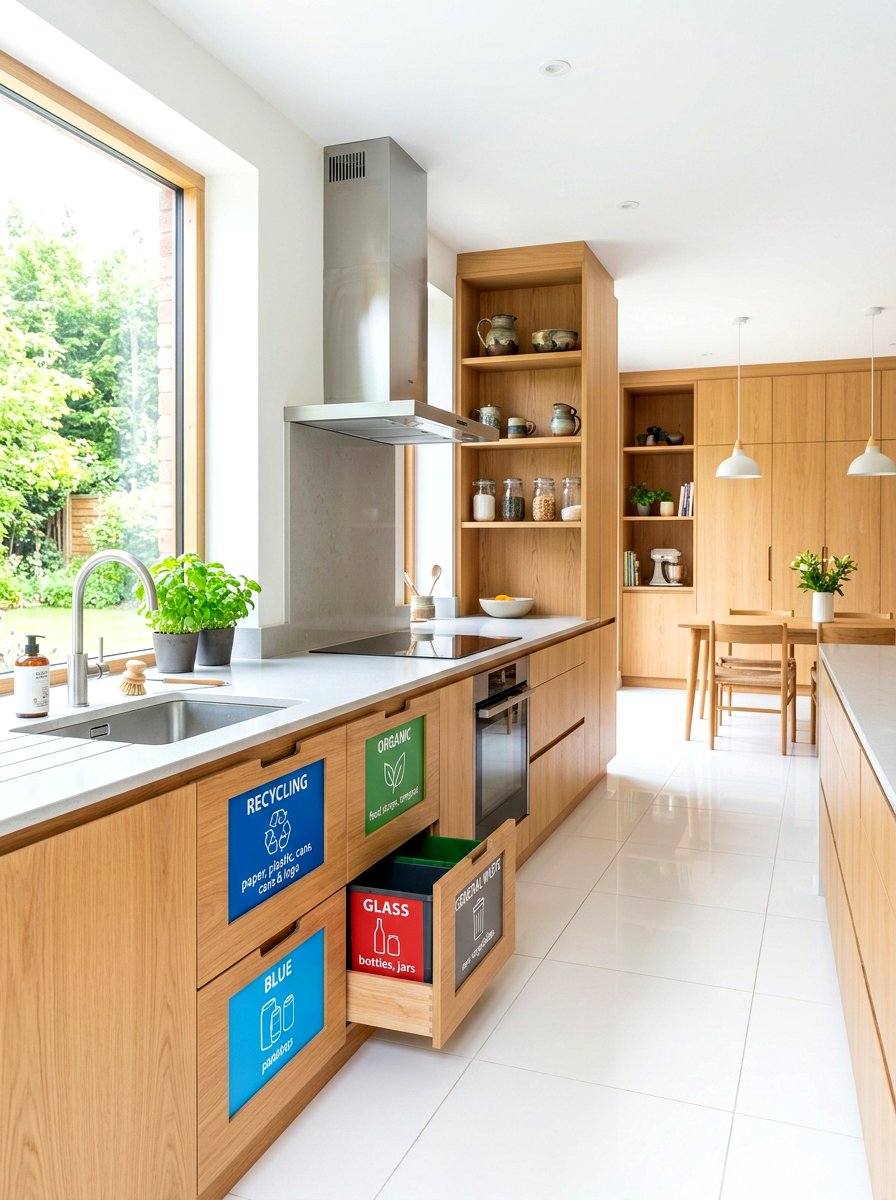
10. Pegboard Wall Organizer
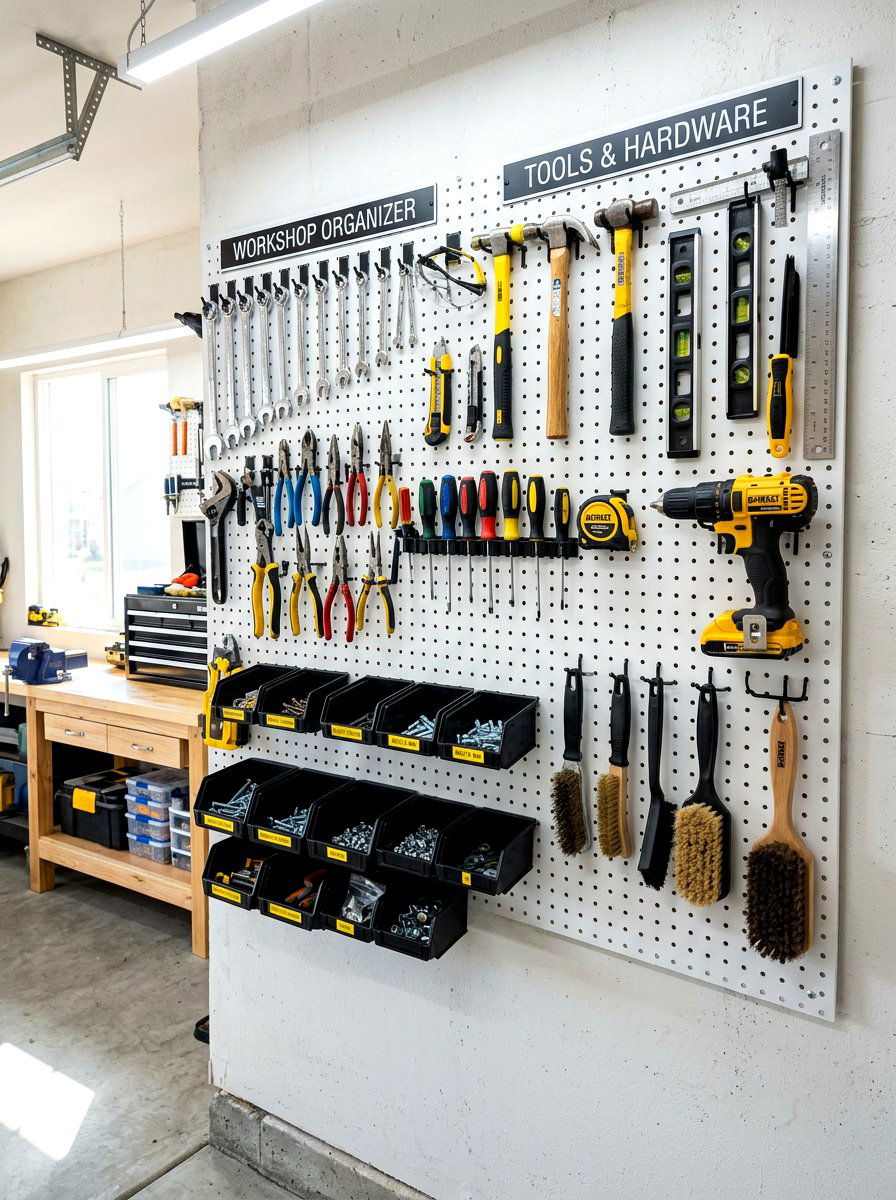
A pegboard wall is one of the most versatile and affordable storage solutions for a small utility room. You can easily customize the layout with various hooks, bins, and shelves to hold everything from scissors and tape to spray bottles and brushes. This vertical organizer keeps small tools visible and easy to grab, reducing the time spent digging through cluttered drawers. Because it is modular, you can change the configuration as your storage needs evolve over time. It is a great way to use empty wall space for active storage. The industrial look of a pegboard also adds a trendy, organized vibe to a practical workspace.
11. Corner Utility Room Storage
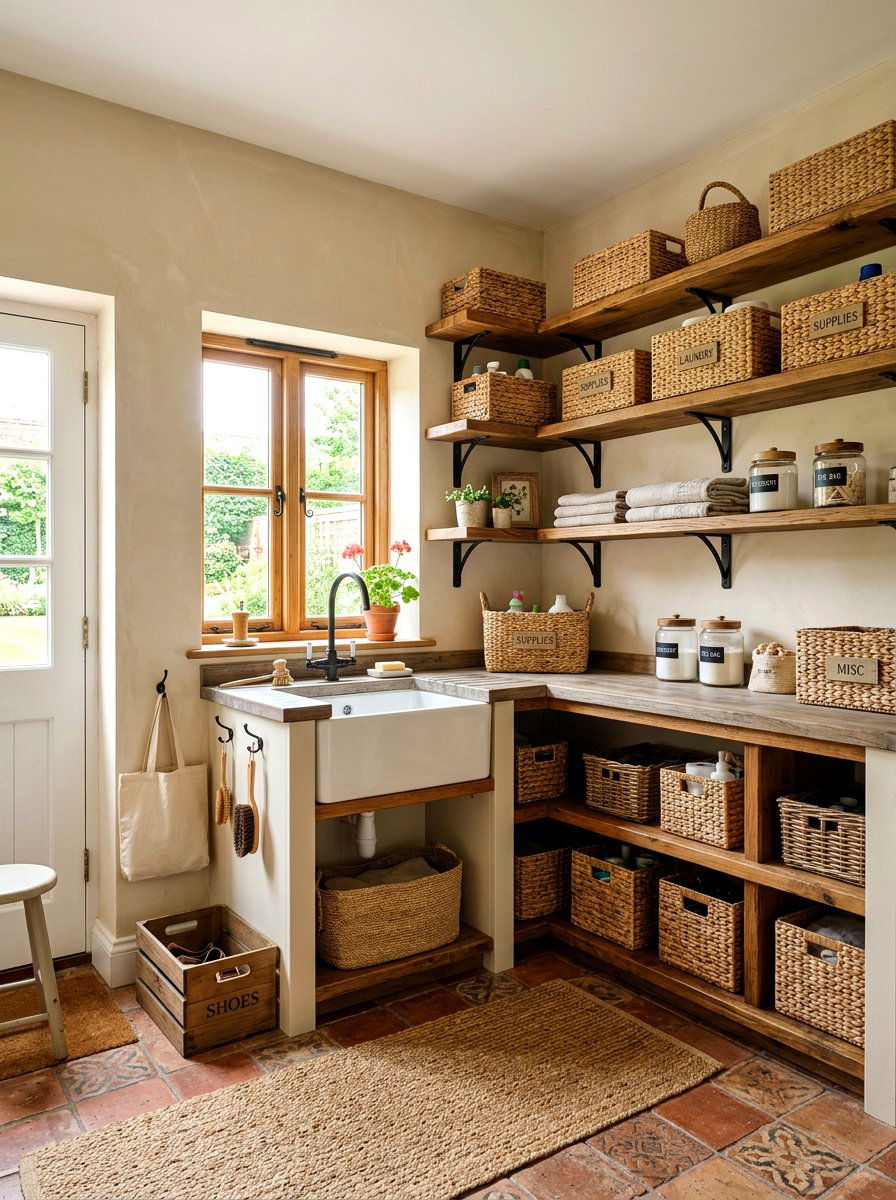
Corners are often wasted in small rooms, but a bespoke corner cabinet or L-shaped shelving can unlock hidden storage potential. A rotating lazy Susan inside a corner unit makes it easy to access cleaning supplies that would otherwise get lost in the back. Alternatively, open corner shelves can hold decorative jars or folded linens, turning an awkward angle into a visual focal point. By wrapping your storage around the room, you maximize the usable area without encroaching too far into the central floor space. This design strategy is particularly effective in square utility rooms where you need to fit multiple functions into a very compact footprint.
12. Pull Out Ironing Board
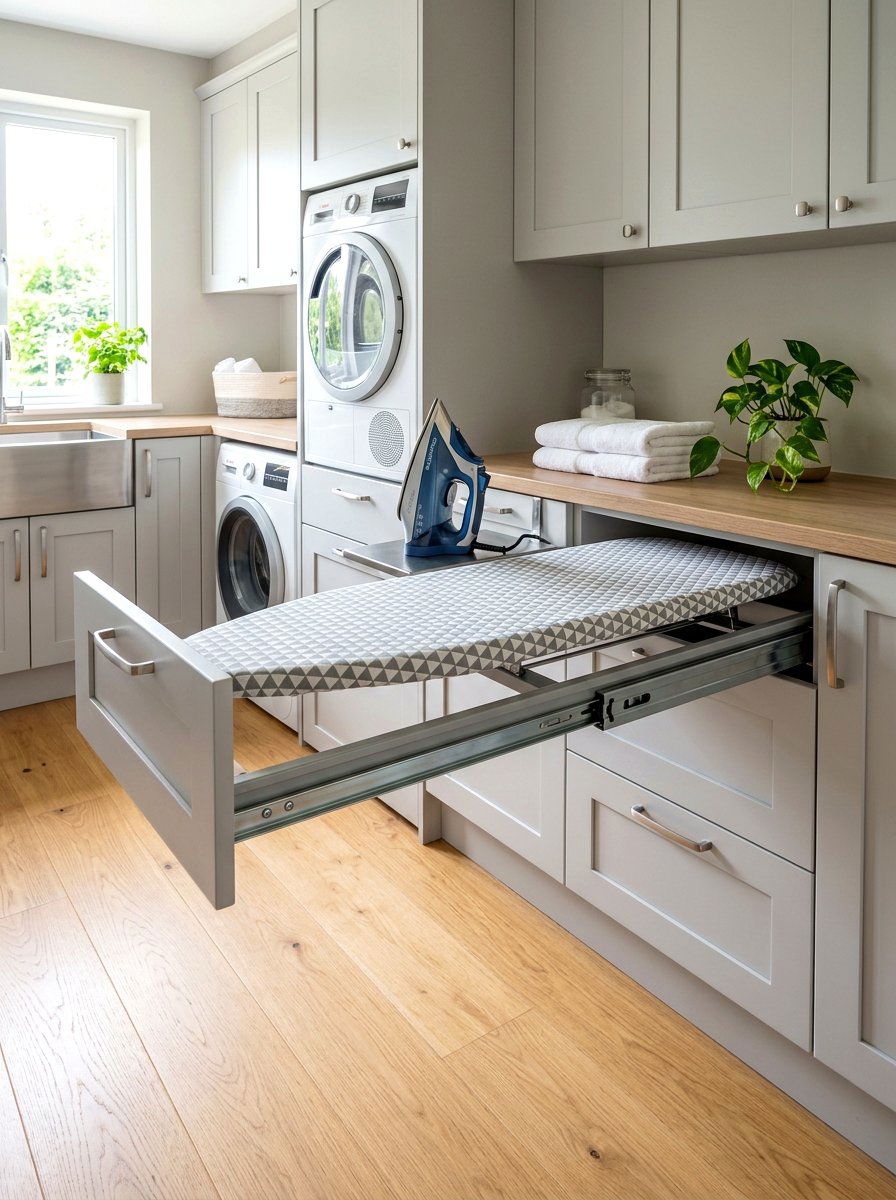
Traditional ironing boards are notoriously difficult to store in small spaces, but a pull-out version built into a drawer is the perfect solution. This compact board folds out quickly when needed and slides back out of sight when the task is finished. It eliminates the need to lug a heavy board from a closet and find a clear spot to set it up. Most integrated boards come with heat-resistant covers and are sturdy enough for daily use. This feature is a great example of how smart hardware can simplify household chores. It keeps your utility room looking organized while ensuring you always have a dedicated space for pressing clothes.
13. Open Wire Basket Shelving
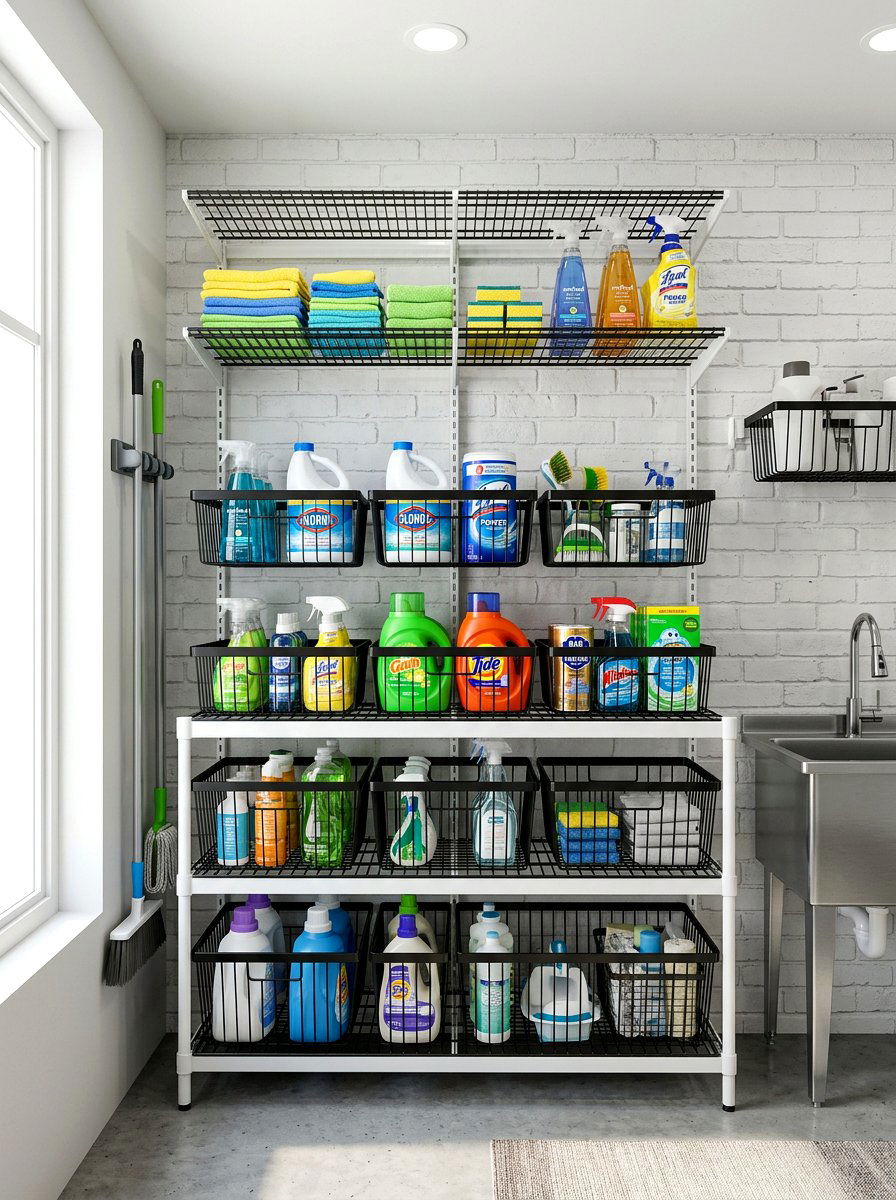
Using open wire baskets on shelves is an excellent way to organize a small utility room while maintaining a light and airy feel. Unlike solid bins, wire baskets allow you to see exactly what is inside, making it easier to find specific cleaning products or supplies. They also promote airflow, which is helpful if you are storing damp cloths or sponges. You can choose from various finishes, such as matte black or chrome, to match the rest of your hardware. These baskets add a touch of texture and industrial charm to the space. They are a practical and stylish way to keep shelves tidy and items contained.
14. Vertical Cleaning Supply Closet
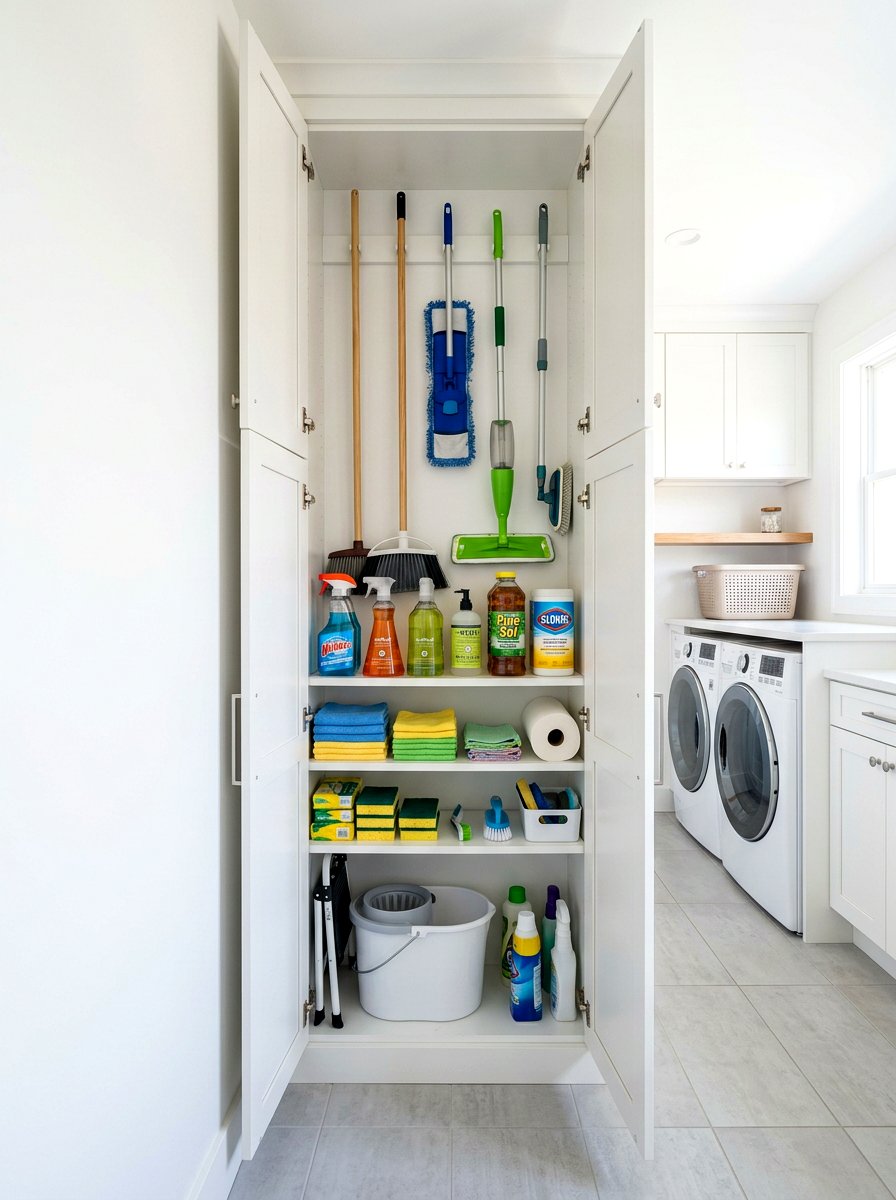
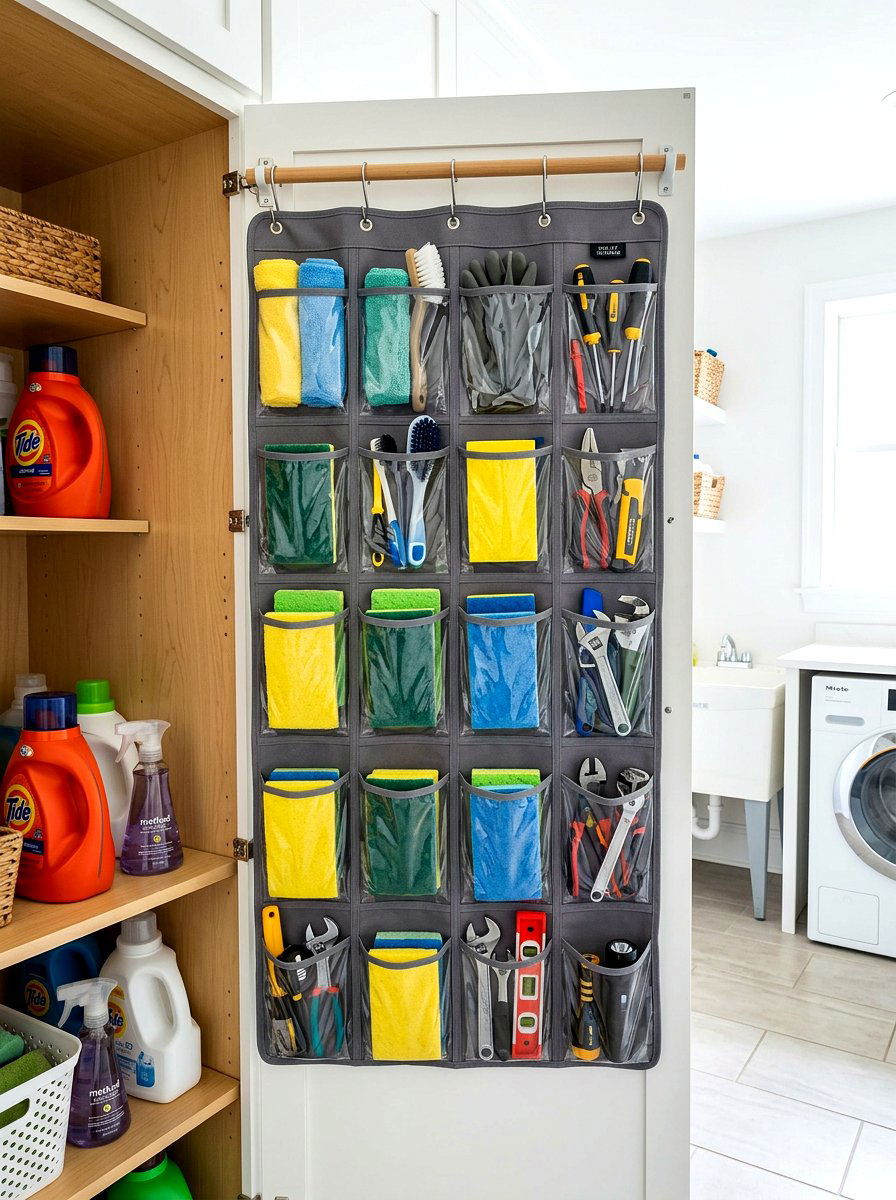
A very narrow, tall cabinet specifically designed for cleaning supplies can fit into even the smallest gaps in a utility room. This vertical closet is perfect for storing long brooms, vacuum wands, and steam mops alongside shelves for spray bottles and sponges. By grouping all your cleaning tools in one dedicated spot, you make household maintenance much more efficient. You can even install a power outlet inside the cabinet to charge cordless vacuums while they are stored out of sight. This design keeps the main utility area clear of tall, leaning items. It is a highly focused storage solution that solves a common organization problem.
15. Hidden Appliance Cabinet
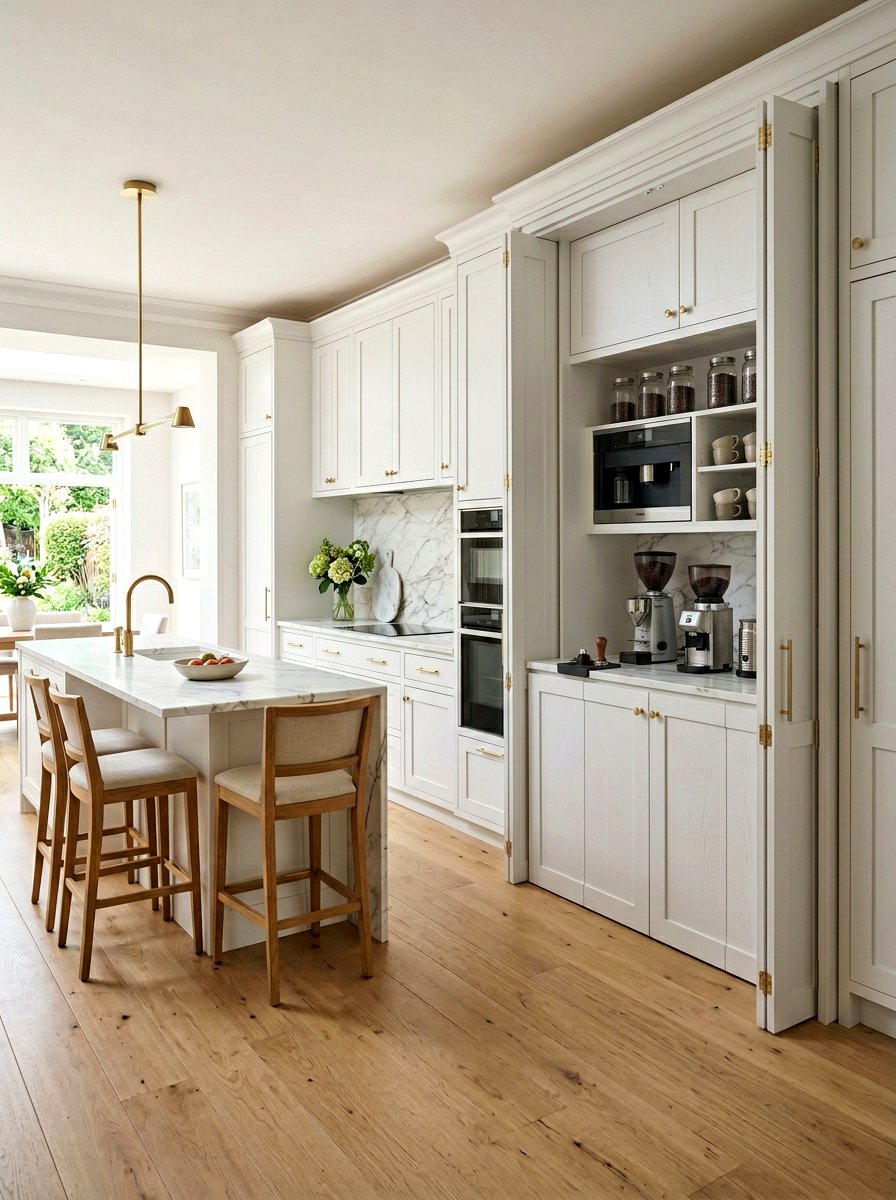
If your utility room is part of a kitchen or a multi-purpose area, hiding your appliances behind cabinet doors is a great design choice. This creates a cohesive, high-end look that masks the utilitarian nature of the machines. Large pocket doors or bi-fold doors are ideal because they do not take up much room when they are open. This allows you to maintain the aesthetics of your home while still having all the functional benefits of a laundry station nearby. It also helps dampen the noise of the washing machine while it is running. This approach is perfect for creating a streamlined, clutter-free environment in an open-plan living space.
16. Mudroom Utility Combination
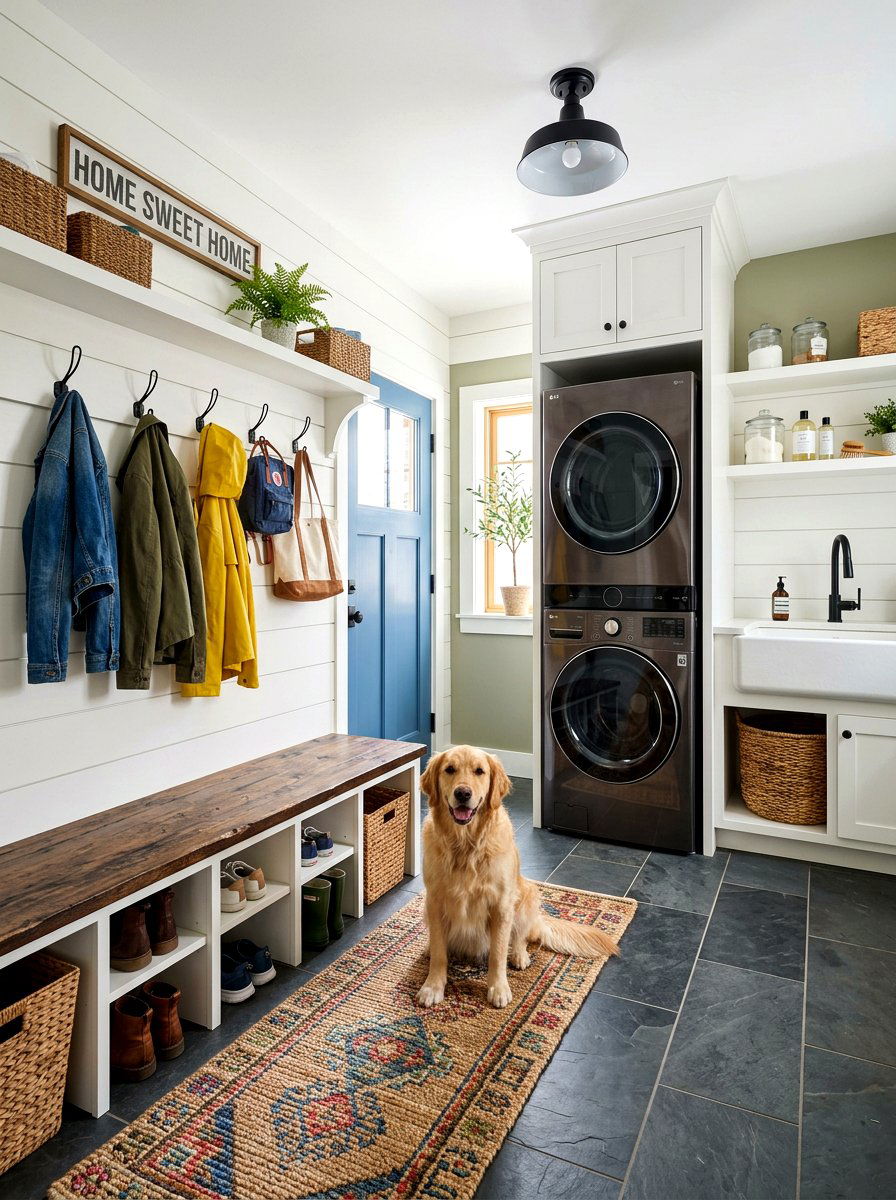
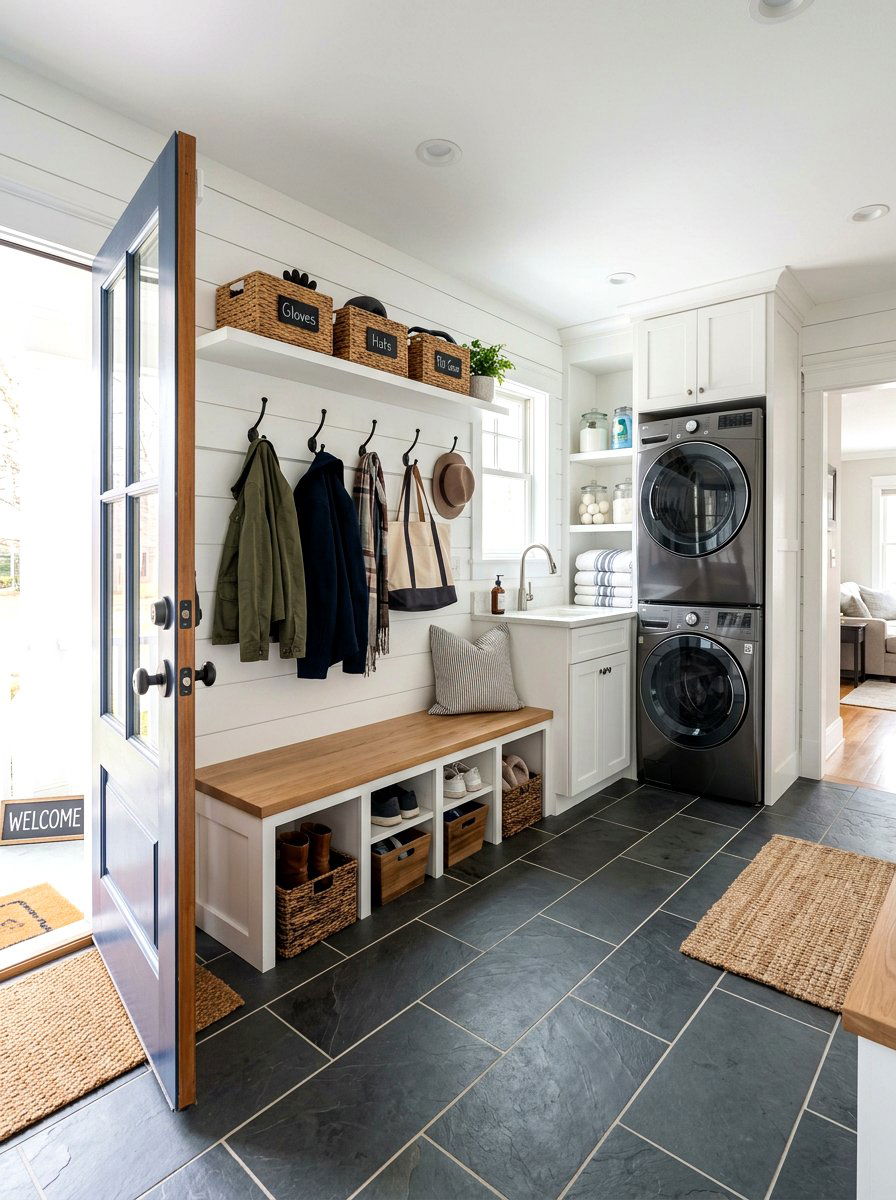
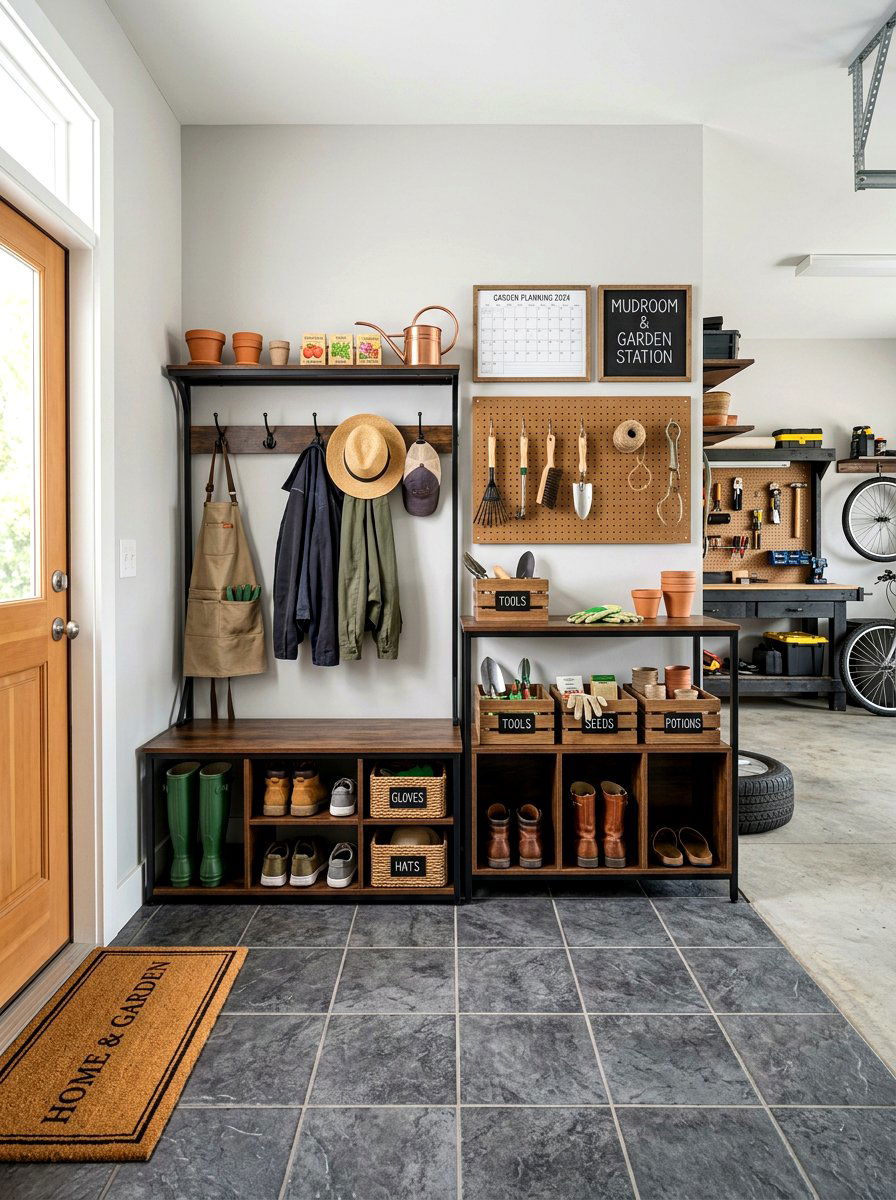
Combining a small utility room with a mudroom is a highly efficient way to manage a home's entryway and laundry needs simultaneously. You can install a bench with shoe storage underneath and hooks for coats directly across from your washer and dryer. Using durable, waterproof flooring like tile or vinyl ensures the space can handle muddy boots and wet laundry with ease. This dual-purpose room acts as a transition zone that catches dirt before it enters the main living areas. It is a practical layout for busy families who need a central hub for chores and coming-and-going. This integration makes the most of every square inch.
17. Tall Slim Storage Unit
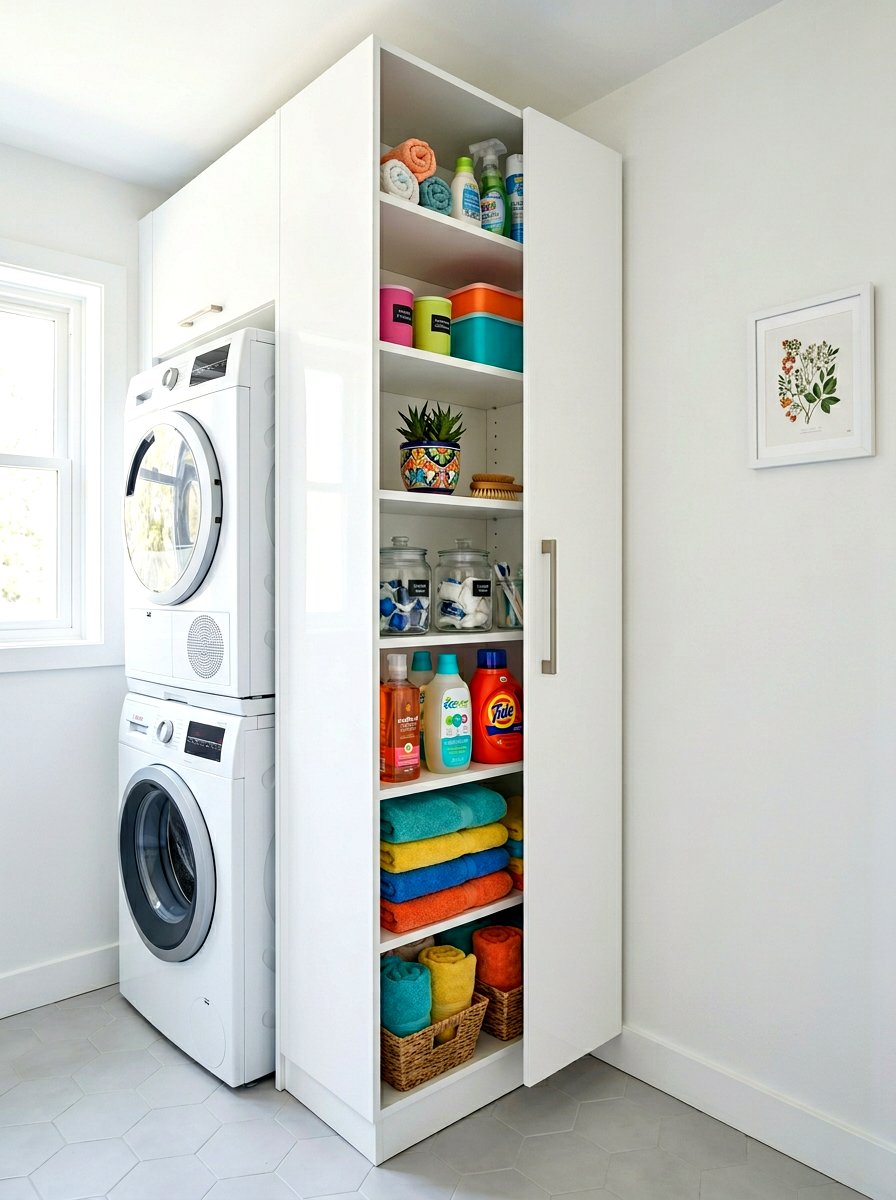
A tall, slim storage unit is the ultimate space-saver for utility rooms that have very little floor area. These units are often only a few inches wide but can reach all the way to the ceiling, providing multiple levels of shelving. They are perfect for storing detergents, fabric softeners, and smaller cleaning tools in a vertical stack. You can often find these as pull-out units that slide into the narrow gap between a washing machine and a wall. This ingenious use of space ensures that no gap goes to waste. It is a simple and effective way to boost your storage capacity without a major renovation.
18. Utility Room Bench Seating
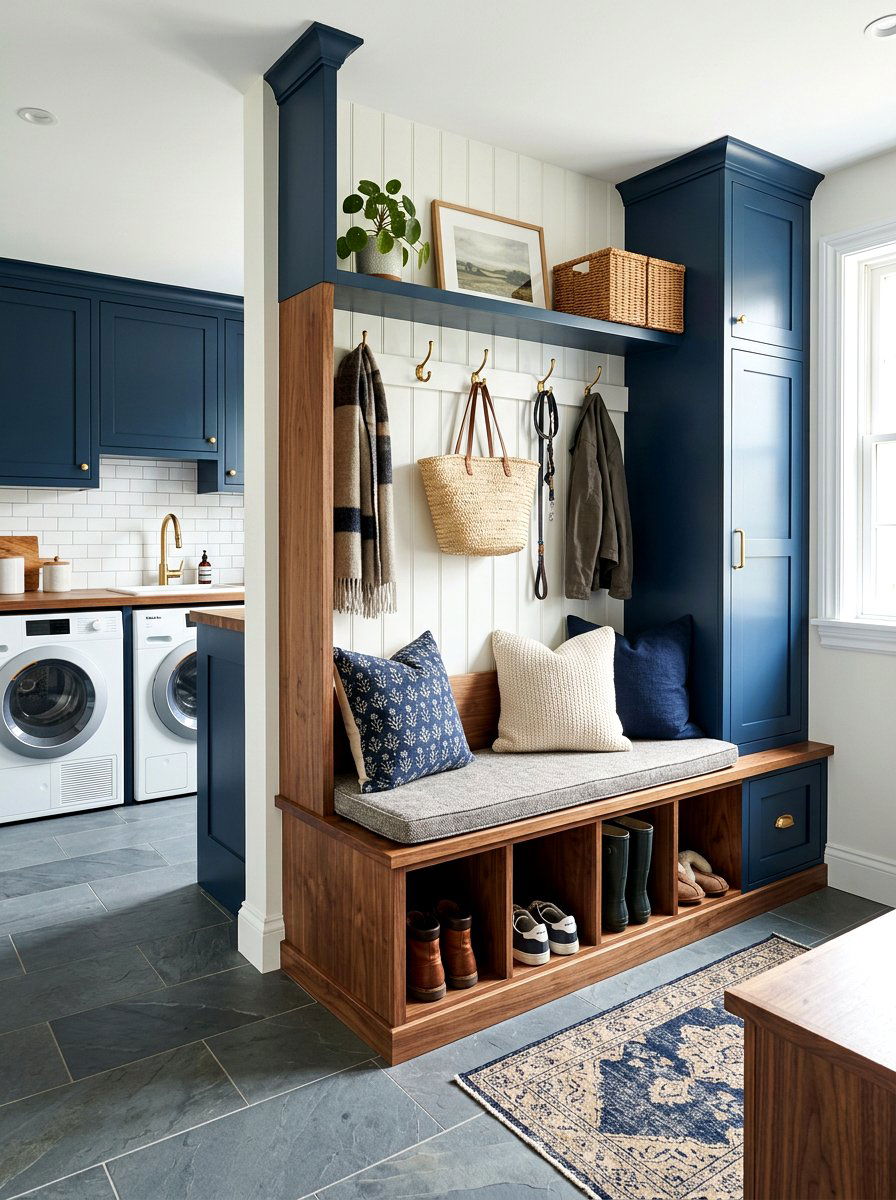
Adding a small bench to your utility room provides a comfortable spot to sit while putting on shoes or waiting for a load of laundry to finish. To maximize its usefulness, choose a bench with built-in storage underneath, such as cubbies for baskets or a lift-up lid. This turns a simple seating area into a multi-functional piece of furniture. A bench can also serve as an extra surface for setting down heavy laundry baskets or bags of groceries. By selecting a design that matches your cabinetry, you can create a built-in look that feels intentional and high-end. It adds a touch of comfort to a hardworking room.
19. Patterned Floor Tile
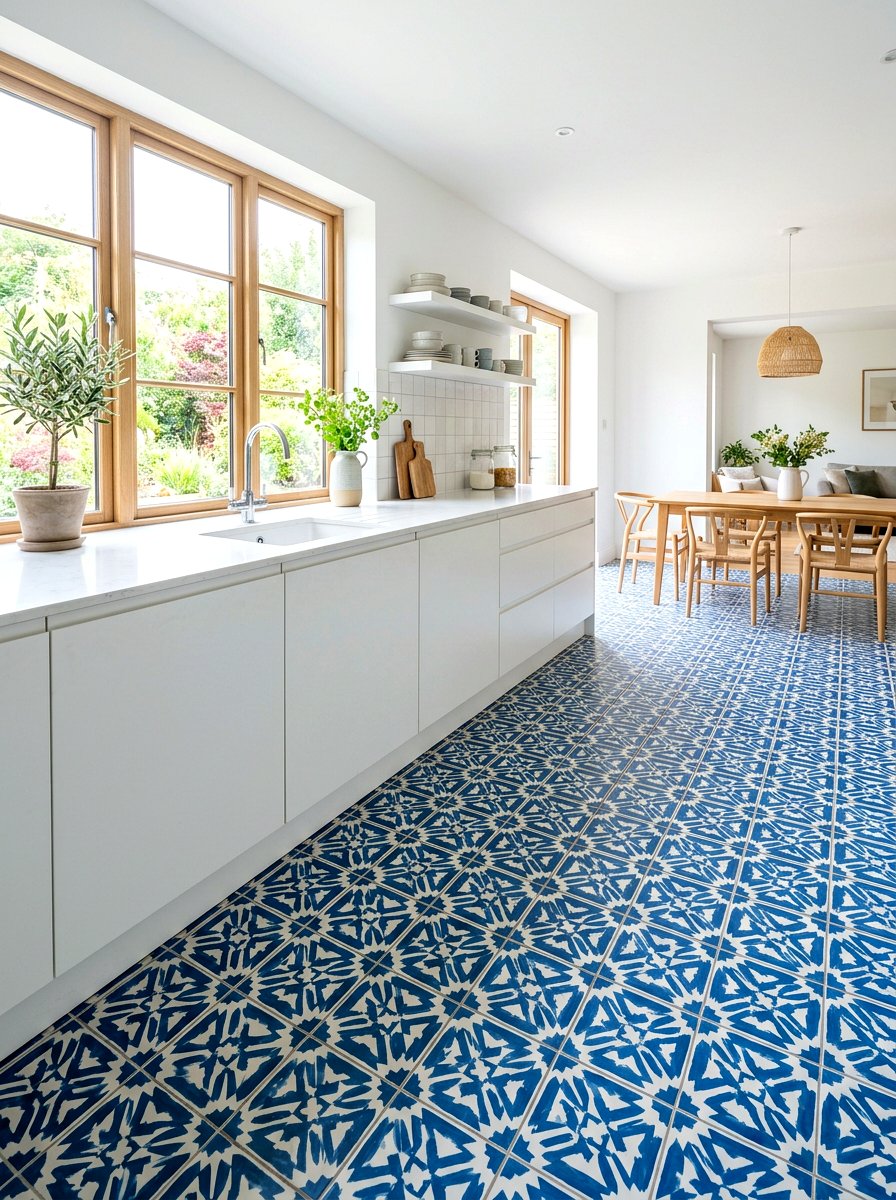
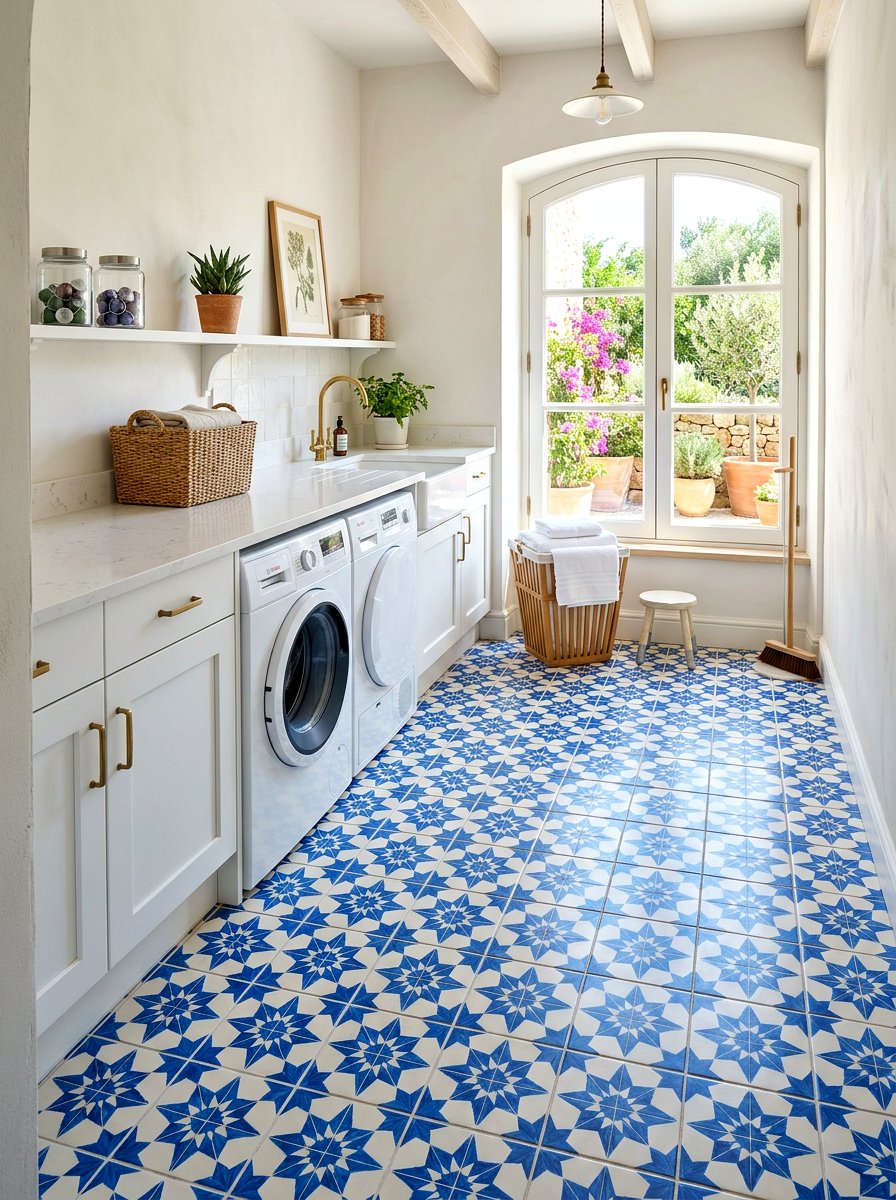
Small rooms are the perfect place to experiment with bold design choices like patterned floor tiles. Since the floor area is limited, you can afford high-quality tiles that might be too expensive for a larger space. A vibrant pattern adds personality and visual interest, making the utility room feel like a designed part of the home rather than just a closet. Durable materials like porcelain or encaustic tiles are easy to clean and can withstand the moisture often found in laundry areas. Choosing a dark pattern can also help hide small bits of lint or dirt between cleanings. It is a great way to inject style into a functional zone.
20. Natural Wood Accents
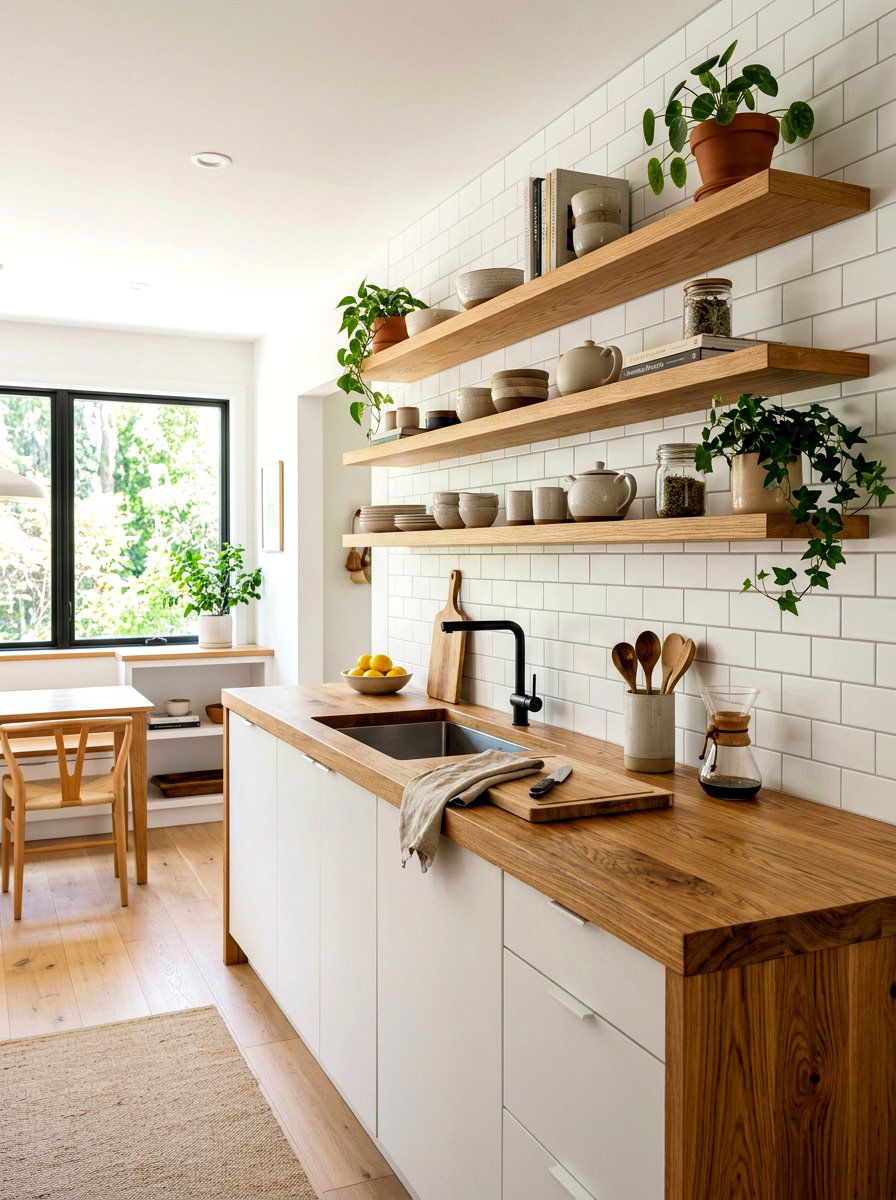
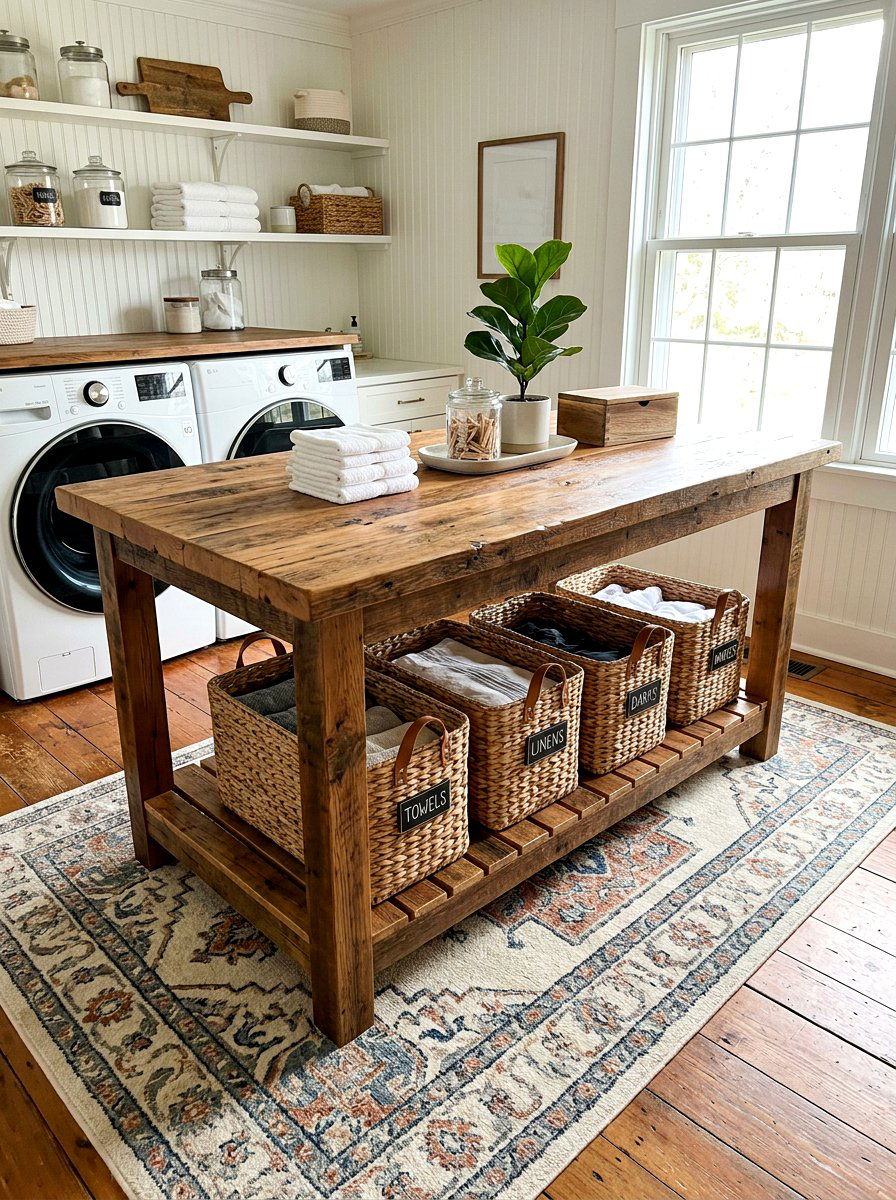
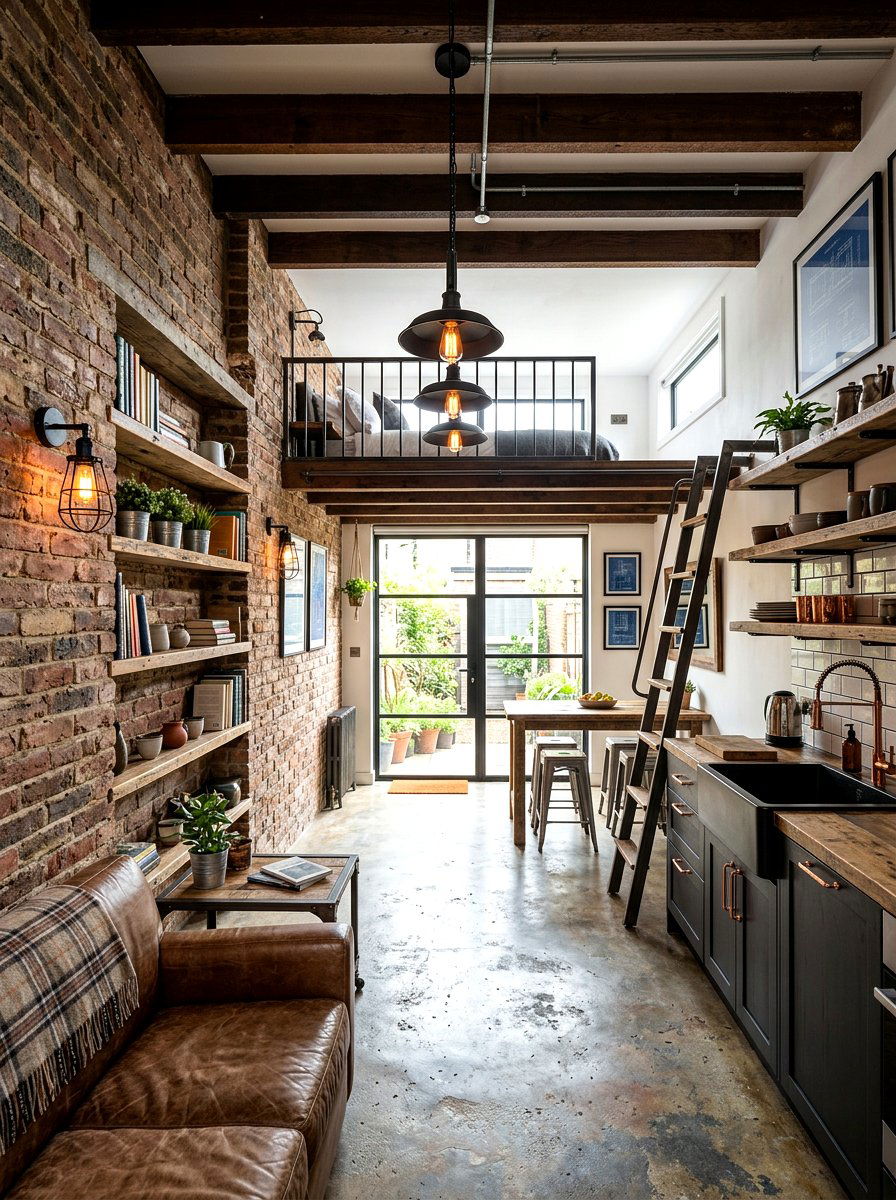
Incorporating natural wood accents, such as floating shelves or a wooden countertop, brings a sense of warmth and texture to a small utility room. Many utility areas can feel cold or clinical due to the white appliances and tile surfaces, but wood helps soften the overall look. You can use reclaimed wood for a rustic, farmhouse vibe or sleek oak for a more contemporary feel. The organic patterns in the wood grain add visual depth without cluttering the small space. Wood is also a tactile material that makes the room feel more inviting and pleasant to spend time in. It is a simple way to elevate the entire design.
21. Overhead Ceiling Storage
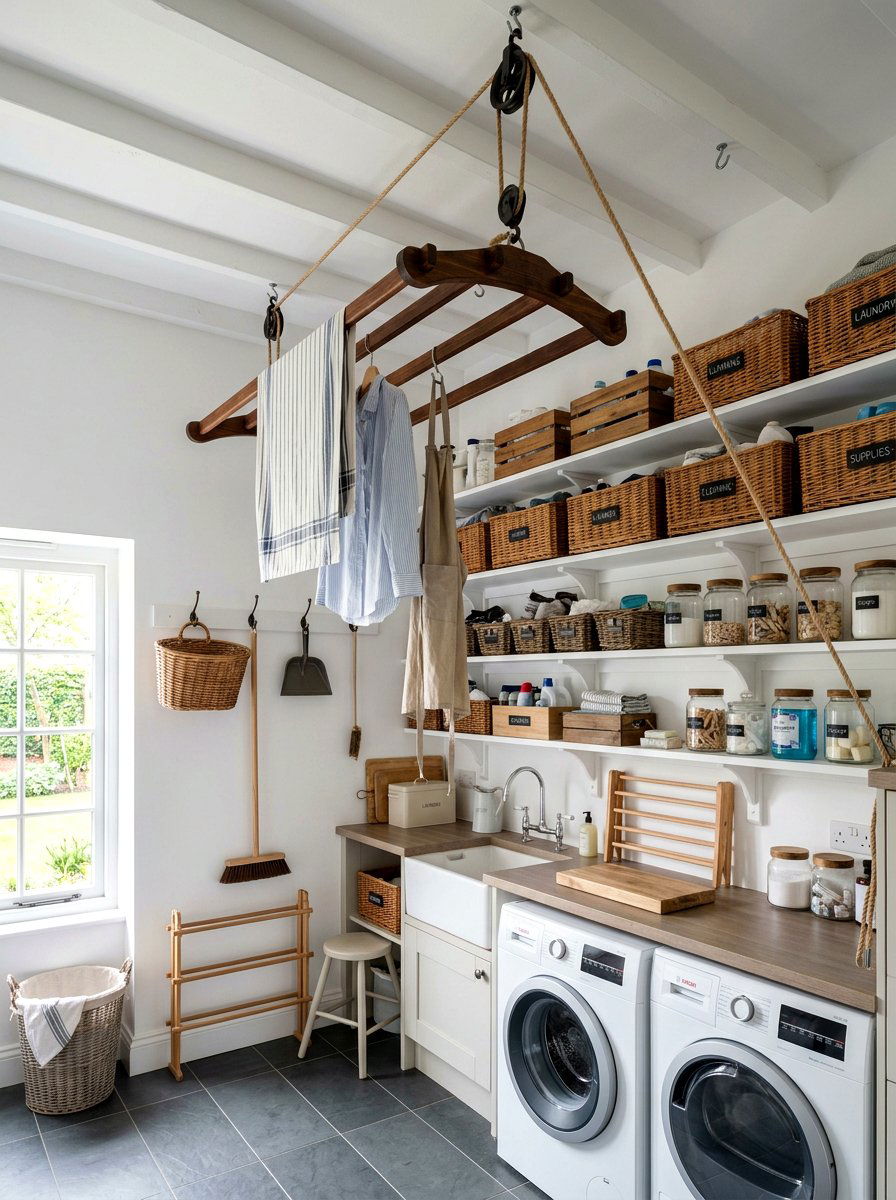
When wall and floor space are completely occupied, the ceiling offers a final frontier for storage in a small utility room. A ceiling-mounted drying rack on a pulley system is a classic and highly effective solution for air-drying clothes. By raising the damp laundry up toward the warmer air near the ceiling, you speed up the drying process and keep the floor clear. You can also install high-mounted shelves for items that you only need occasionally, such as seasonal decorations or extra light bulbs. Using the overhead space ensures that the room remains functional and easy to navigate. It is a smart move for ultra-compact laundry zones.
22. Minimalist White Utility Room
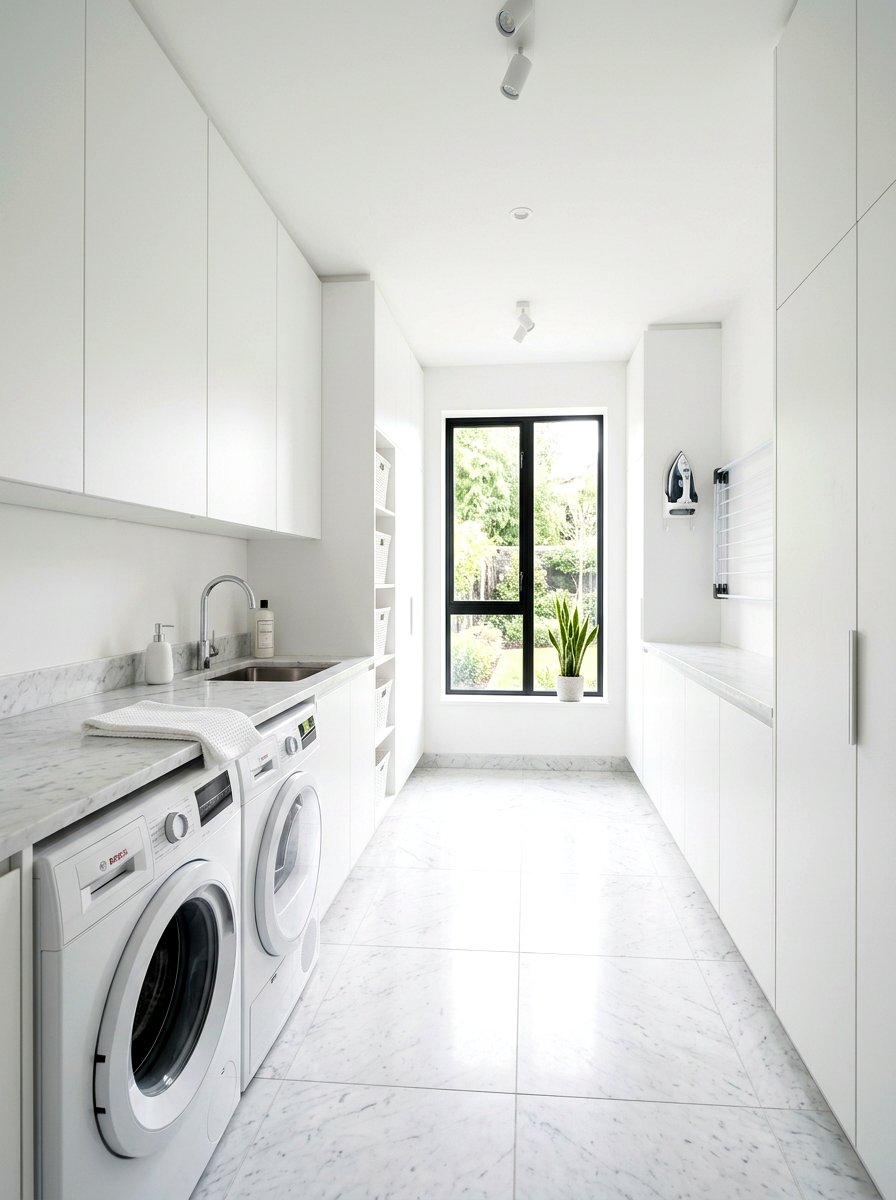
A minimalist white color palette is a timeless choice for small utility rooms because it makes the space feel brighter and more expansive. White cabinetry, walls, and countertops reflect light, which is especially helpful if the room lacks windows. To prevent the space from looking too sterile, you can add texture through a subway tile backsplash or brushed metal hardware. Keeping the design simple and clean reduces visual noise, making it easier to maintain an organized environment. This aesthetic also blends perfectly with standard white appliances, creating a cohesive and polished look. A bright, white room feels fresh and clean, which is exactly how a utility space should feel.
23. Dark Cabinetry Contrast
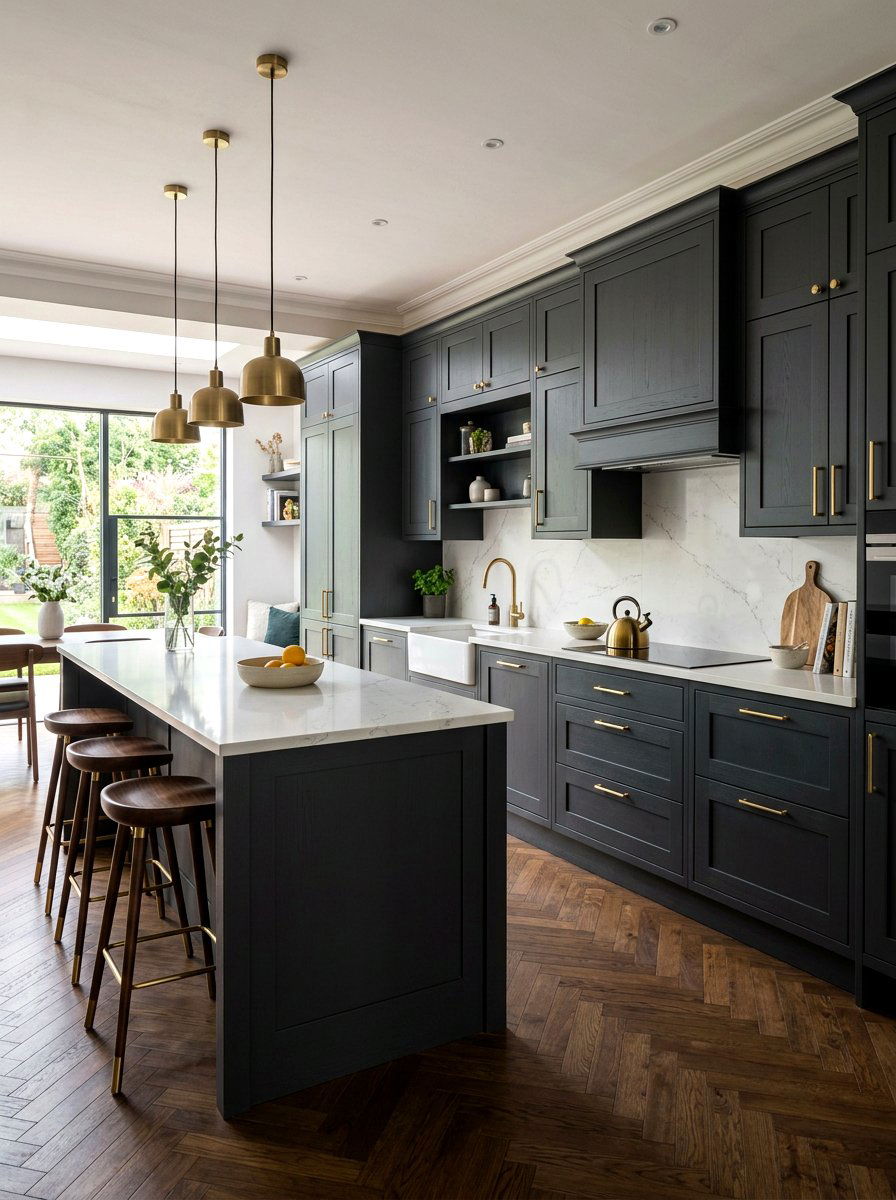
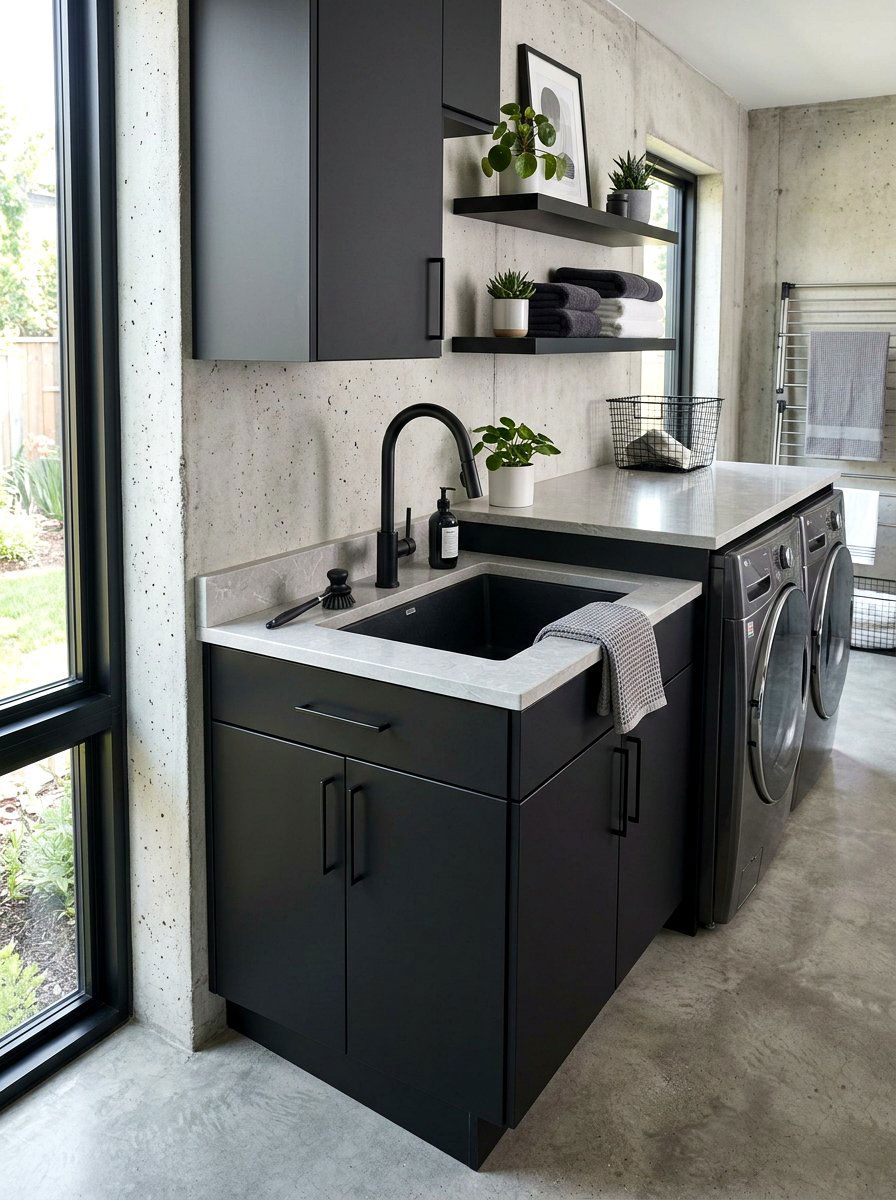
For those who want a more sophisticated and moody look, dark cabinetry can create a stunning contrast in a small utility room. Deep navy, charcoal grey, or forest green cabinets paired with light walls and countertops add a sense of luxury to a practical space. This design choice makes the room feel like a high-end extension of your home's interior style. Darker colors are also excellent at hiding minor scuffs or stains that might occur in a high-traffic work area. When combined with warm brass or gold hardware, dark cabinets can turn a tiny laundry closet into a beautiful and impactful design statement. It is a bold move that pays off visually.
24. Countertop Over Front Loaders
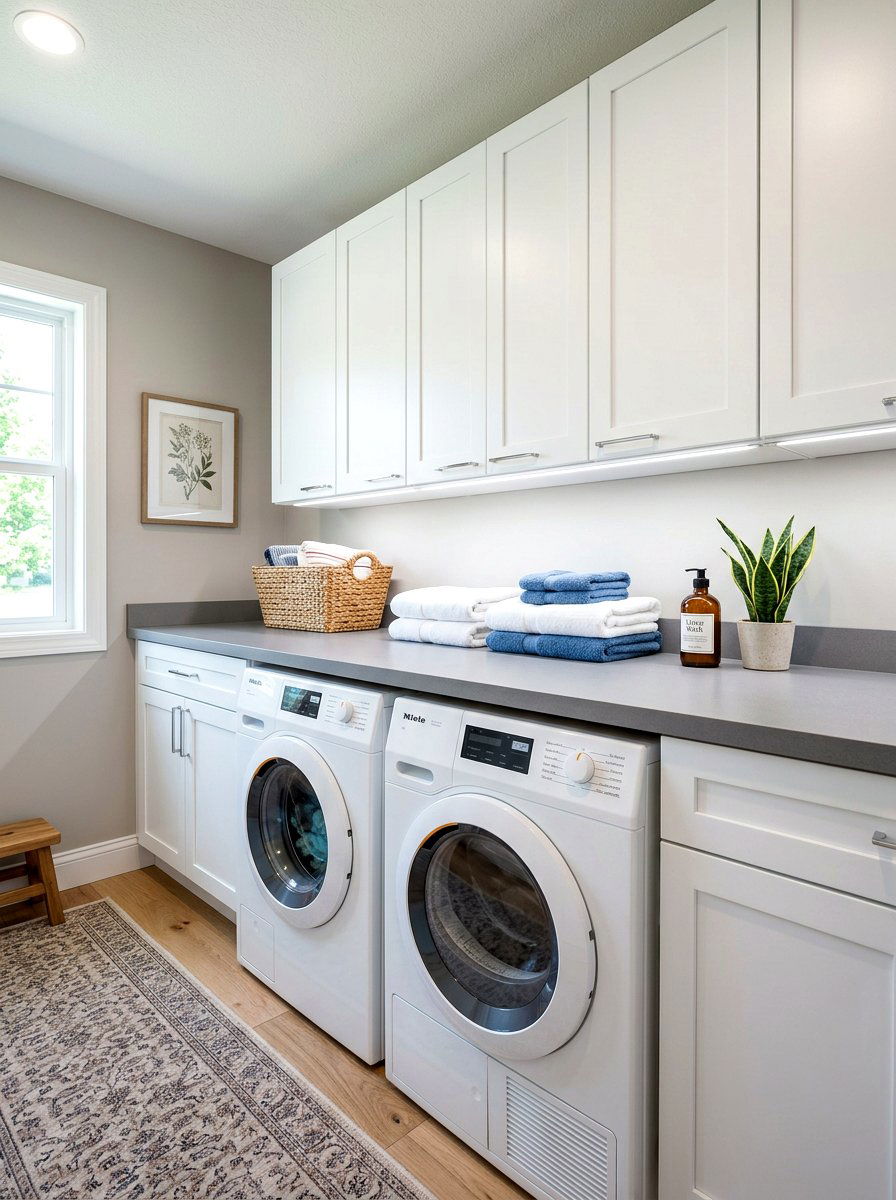
Installing a single, continuous countertop over front-loading washers and dryers is one of the most effective ways to maximize workspace in a small room. This creates a flat surface for folding, sorting, and treating stains that would otherwise be lost. You can use materials like quartz, laminate, or wood to match the rest of your home’s decor. This built-in look makes the appliances feel integrated into the cabinetry rather than just sitting in the room. It also prevents small items like socks or detergent caps from falling between or behind the machines. This simple addition significantly enhances the functionality and flow of your laundry day routine.
25. Glass Panel Door
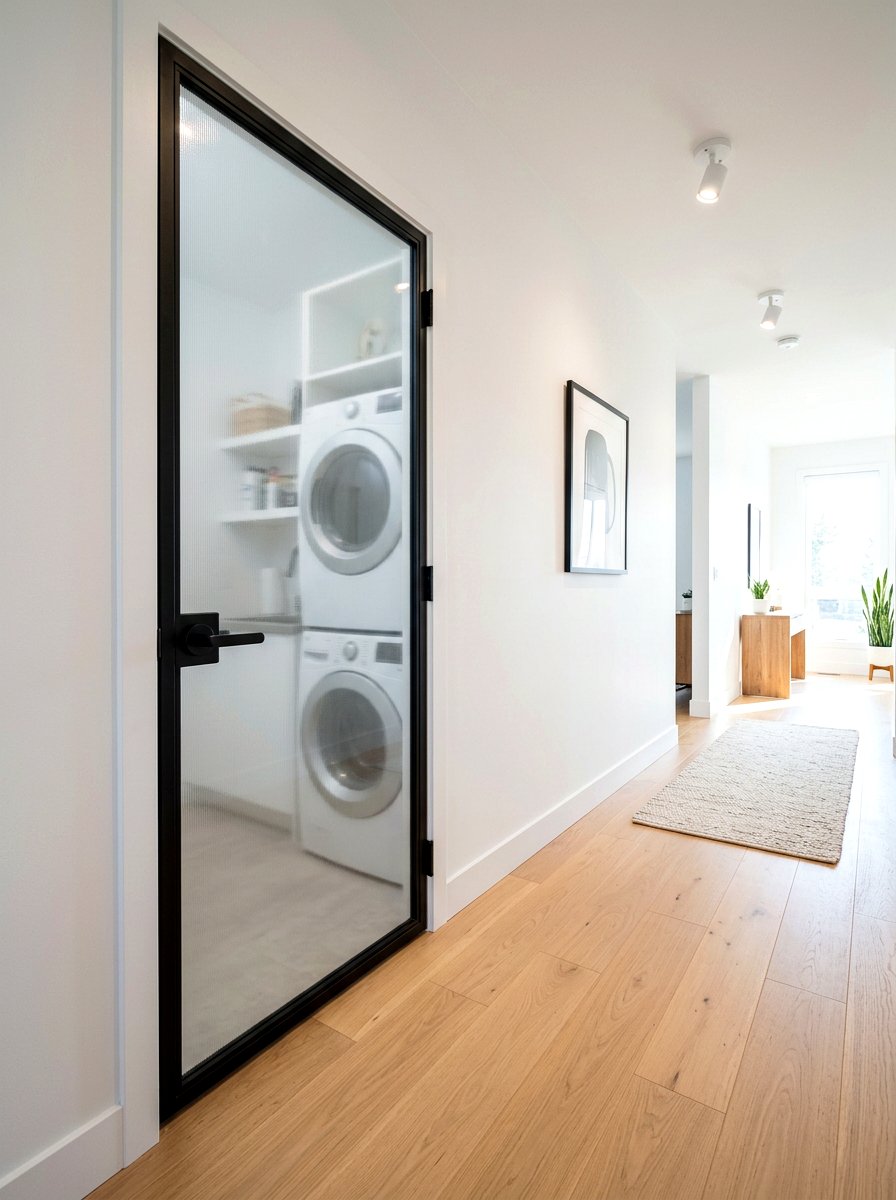
Replacing a solid door with a glass panel door can help a small utility room feel less isolated and much more open. The glass allows light to flow between rooms, which can brighten up both the utility area and the adjacent hallway or kitchen. If you are worried about seeing the laundry clutter, you can opt for frosted or reeded glass, which obscures the view while still letting light through. This architectural detail adds a touch of elegance and makes the room feel like a more significant part of the house. It is a great way to improve the visual connection between different zones in a small home.
26. Window Sill Plant Decor
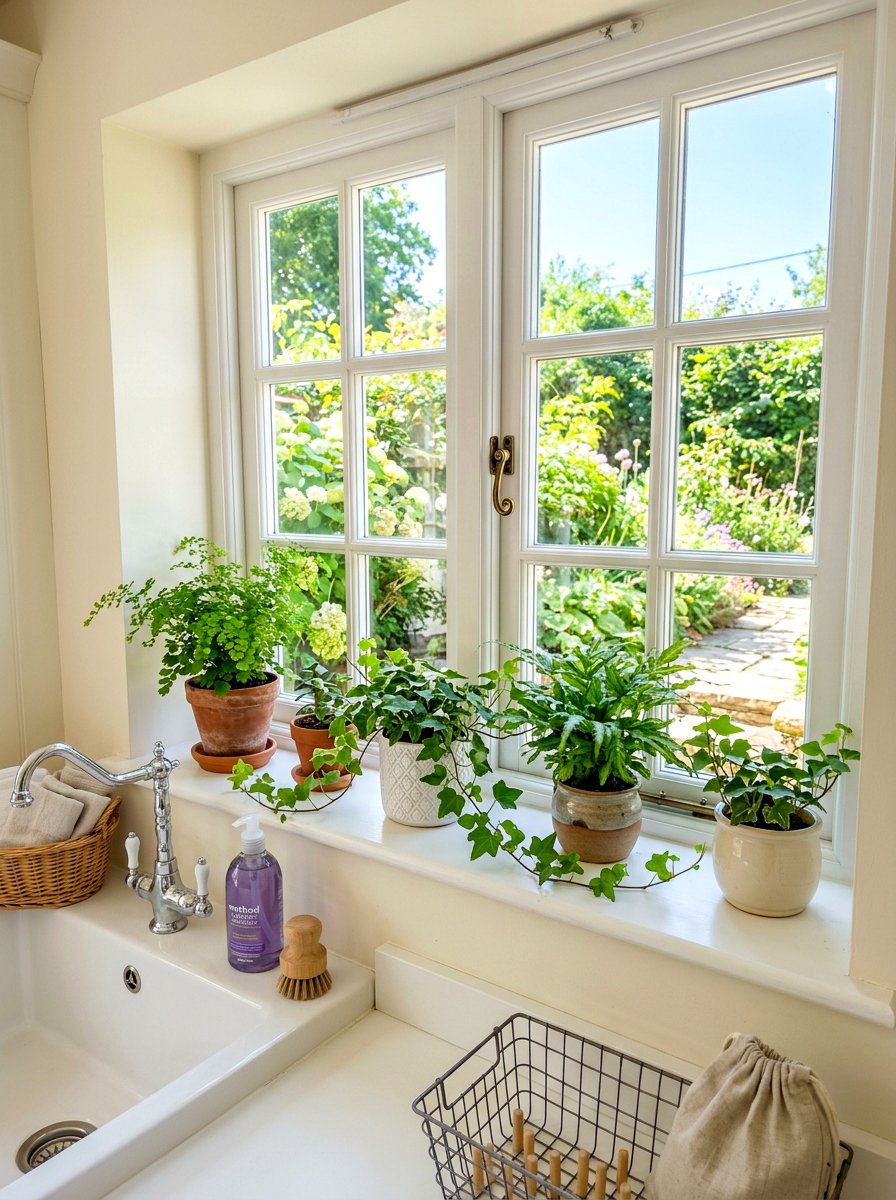
If your small utility room has a window, using the sill for a few hardy houseplants is an easy way to freshen up the space. Plants like snake plants, spider plants, or pothos thrive in the humid environment often created by laundry machines. The greenery adds a pop of color and a touch of life to a room that can sometimes feel overly utilitarian. Beyond their beauty, some plants can also help improve indoor air quality. If you don't have a window, you can achieve a similar effect with a small hanging plant from a high shelf. It is a simple, low-cost way to make the room more inviting.
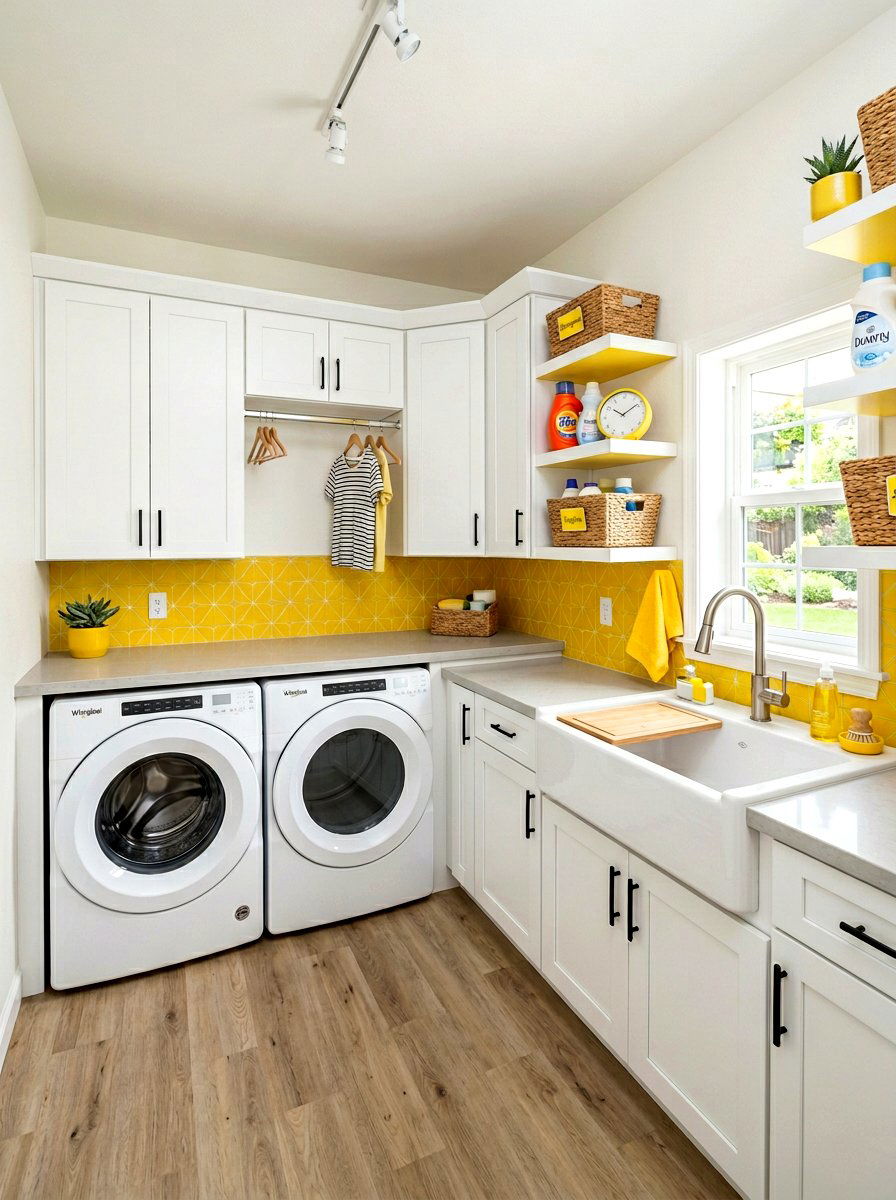
27. Hanging Clothes Rail
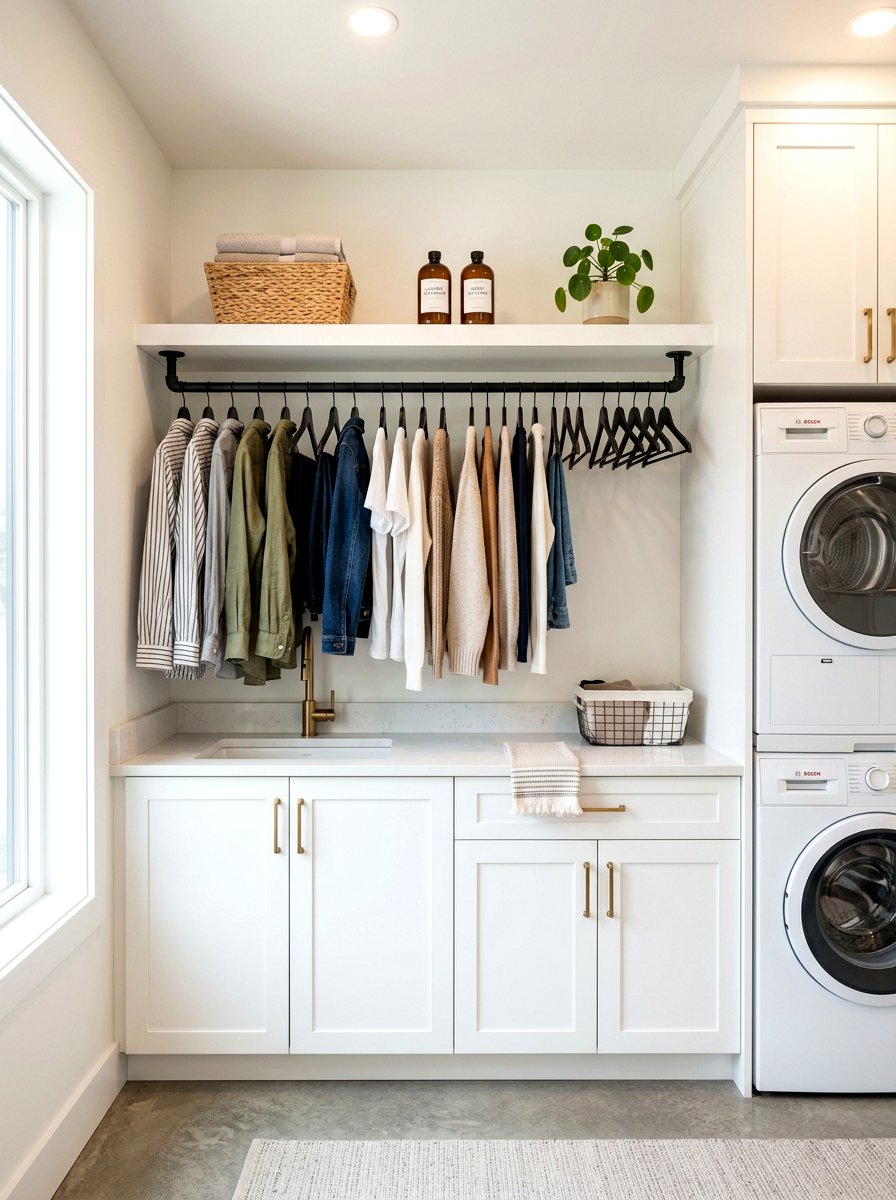
A simple hanging rail installed under a shelf or between two cabinets is an invaluable addition to any small utility room. This provides a dedicated spot to hang clothes directly out of the dryer, which helps prevent wrinkles and reduces the need for ironing. It is also perfect for hanging freshly pressed shirts or air-drying delicate items on hangers. By using a rail instead of a bulky drying rack, you keep the floor area completely clear and open. You can find rails in various finishes like chrome, black, or brass to match your other fixtures. It is a small but highly effective functional upgrade for any laundry space.
28. Pet Washing Station
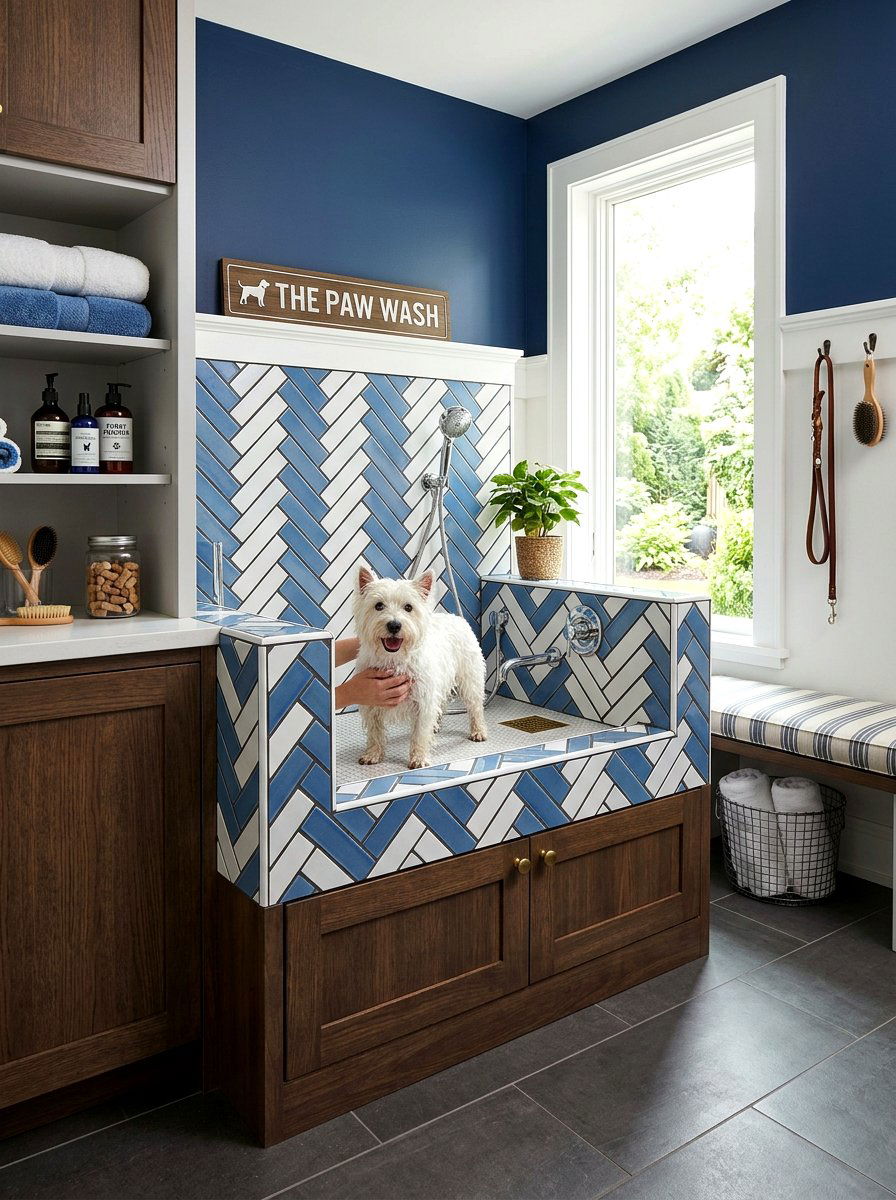
For homeowners with small dogs, a raised pet washing station integrated into the utility room is a luxury that saves a lot of mess elsewhere. This typically involves a small, tiled basin with a handheld shower attachment, making it easy to wash muddy paws after a walk. By placing this in the utility room, you keep the mess contained in a space that is already designed for cleaning tasks. The area under the basin can be used for storing pet shampoos and towels. This feature turns your utility room into a true multi-functional hub for all kinds of household maintenance. It is a practical and high-end addition.
29. Cafe Curtain Storage
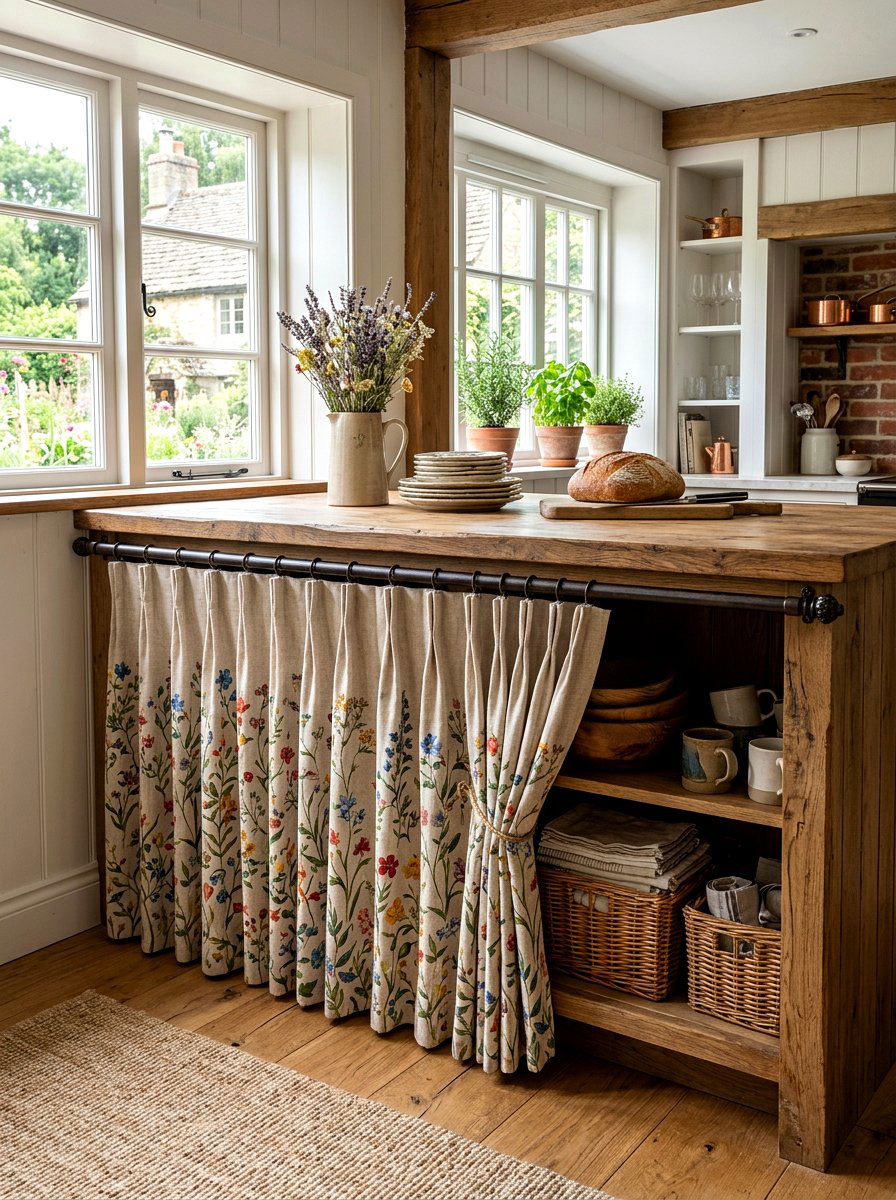
Using a cafe curtain instead of a cabinet door is a charming and budget-friendly way to hide storage in a small utility room. This soft fabric addition adds a touch of farmhouse or vintage style and introduces texture and pattern to the space. Curtains are especially useful in very tight layouts where a swinging cabinet door might hit an appliance or block a narrow walkway. You can easily slide the curtain aside to access detergents or hampers stored on lower shelves. It is also a great way to hide mismatched appliances or messy plumbing under a sink. This simple DIY project can instantly soften and personalize your utility room.
30. Color Drenched Utility Room
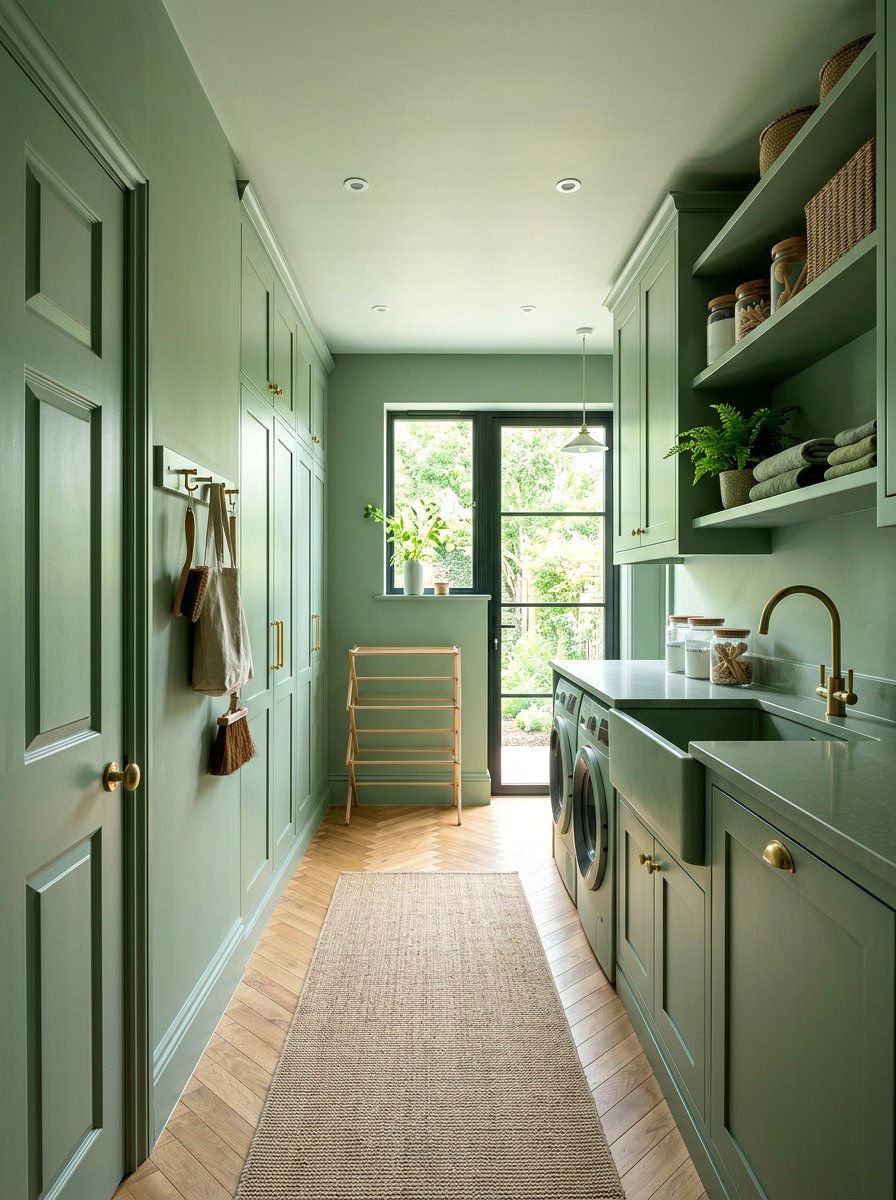
Color drenching involves painting the walls, cabinets, and even the ceiling in the same shade to create a bold and cohesive look. In a small utility room, this technique can actually make the space feel larger by blurring the boundaries and corners of the room. Choosing a serene color like sage green or a soft blue can create a calming atmosphere for doing chores. This all-encompassing color approach makes the room feel intentional and stylishly curated. It is a modern design trend that works exceptionally well in compact areas where you want to make a big impact without adding unnecessary clutter or complex decor.
Conclusion:
Designing a small utility room requires a thoughtful balance between practical needs and visual appeal. By focusing on smart storage solutions like vertical shelving, multi-functional furniture, and clever layout hacks, you can turn a cramped area into a highly efficient workspace. Remember that even the smallest details, such as bright lighting or durable countertops, contribute significantly to how the room feels and functions. These thirty concepts demonstrate that size does not have to limit your ability to create a beautiful and organized home. With a bit of creativity and planning, your utility space will become a seamless and helpful part of your daily household management routine.

Related posts: