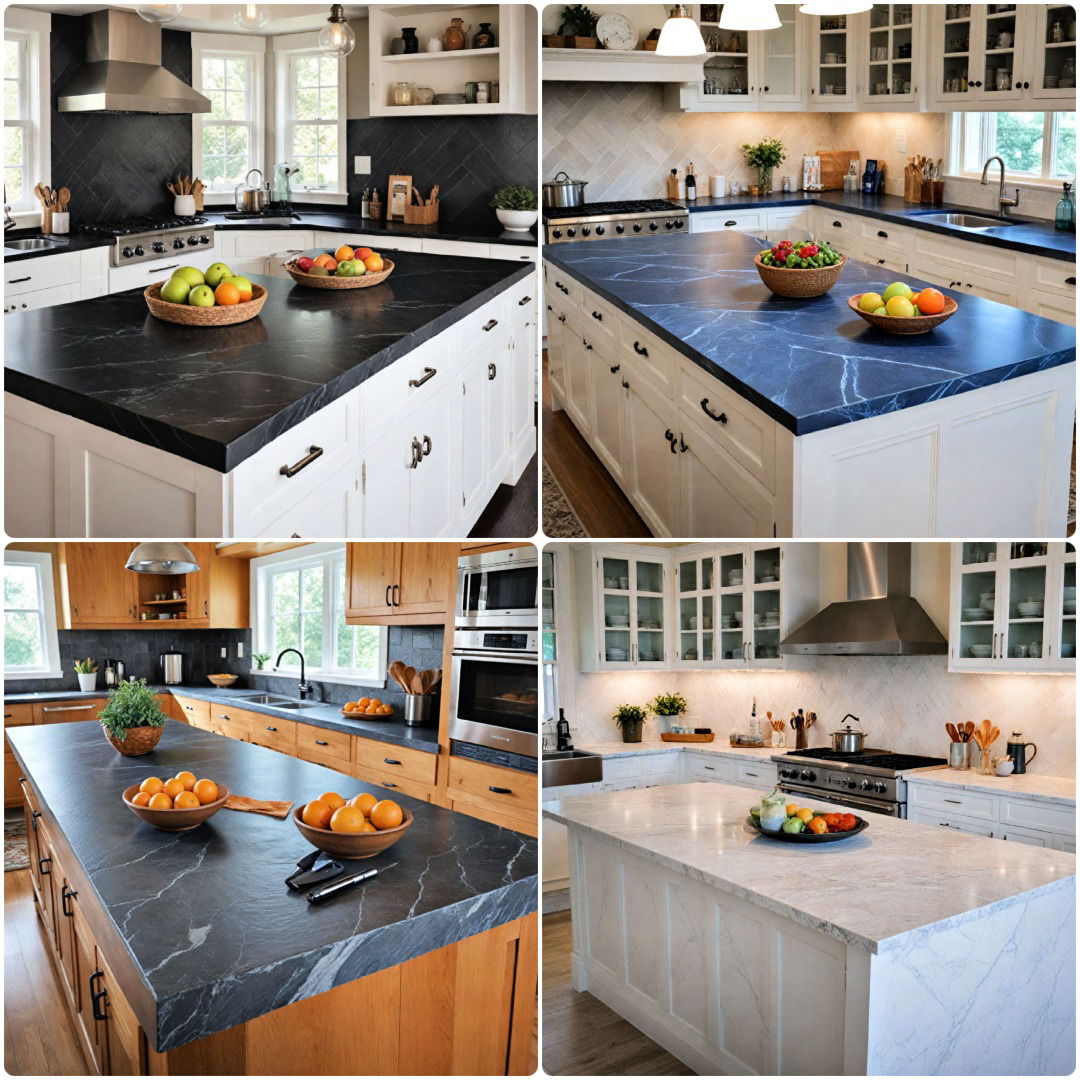
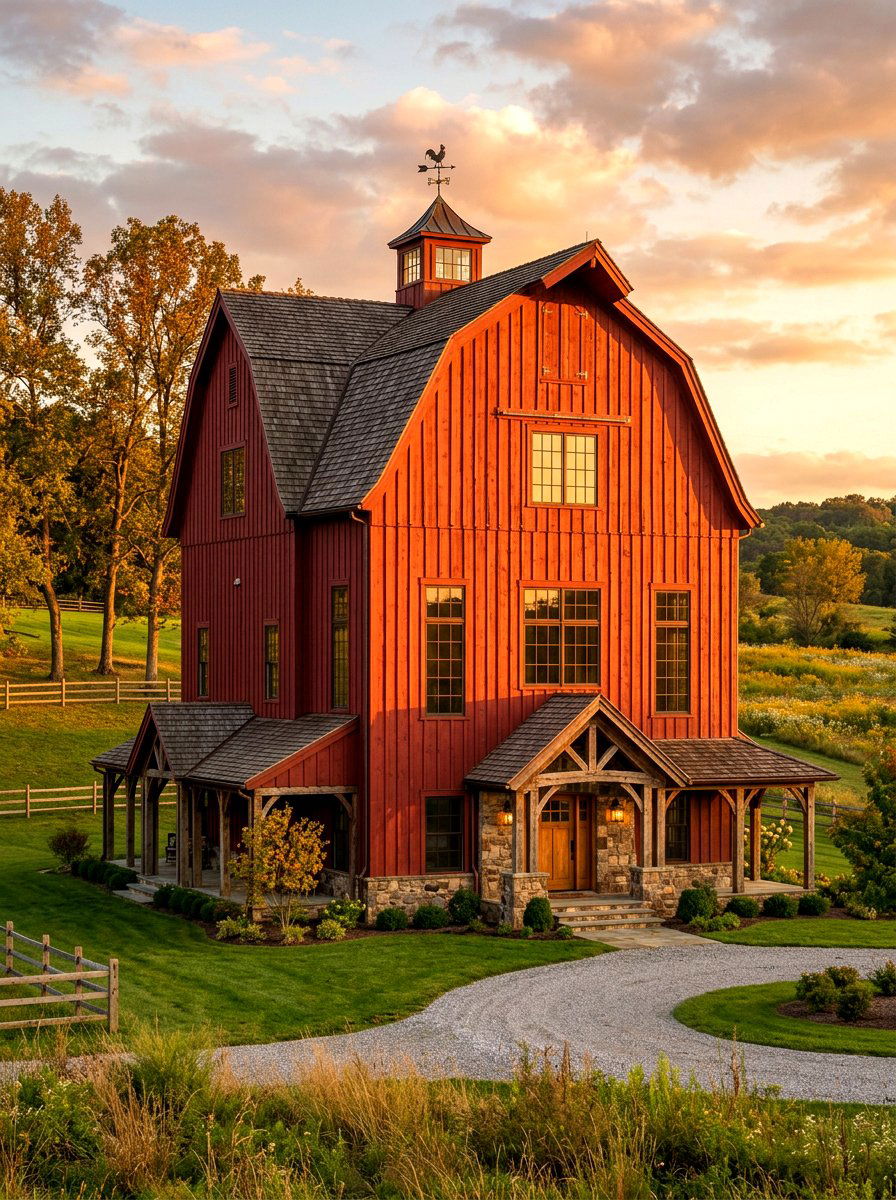
Soapstone is more than just a surface; it is a living material that tells a story through its changing patina and silky texture. Many homeowners choose this natural stone for its incredible heat resistance and non-porous nature, making it a practical yet stunning centerpiece for any culinary space. Whether you are aiming for a moody, modern aesthetic or a warm, traditional farmhouse feel, soapstone adapts beautifully to various environments. Its deep grays, subtle greens, and rich blacks provide a grounded foundation that pairs effortlessly with different wood tones and metal finishes. Exploring these diverse design possibilities will help you create a kitchen that feels both luxurious and incredibly functional for years.
1. Dark Soapstone White Cabinets
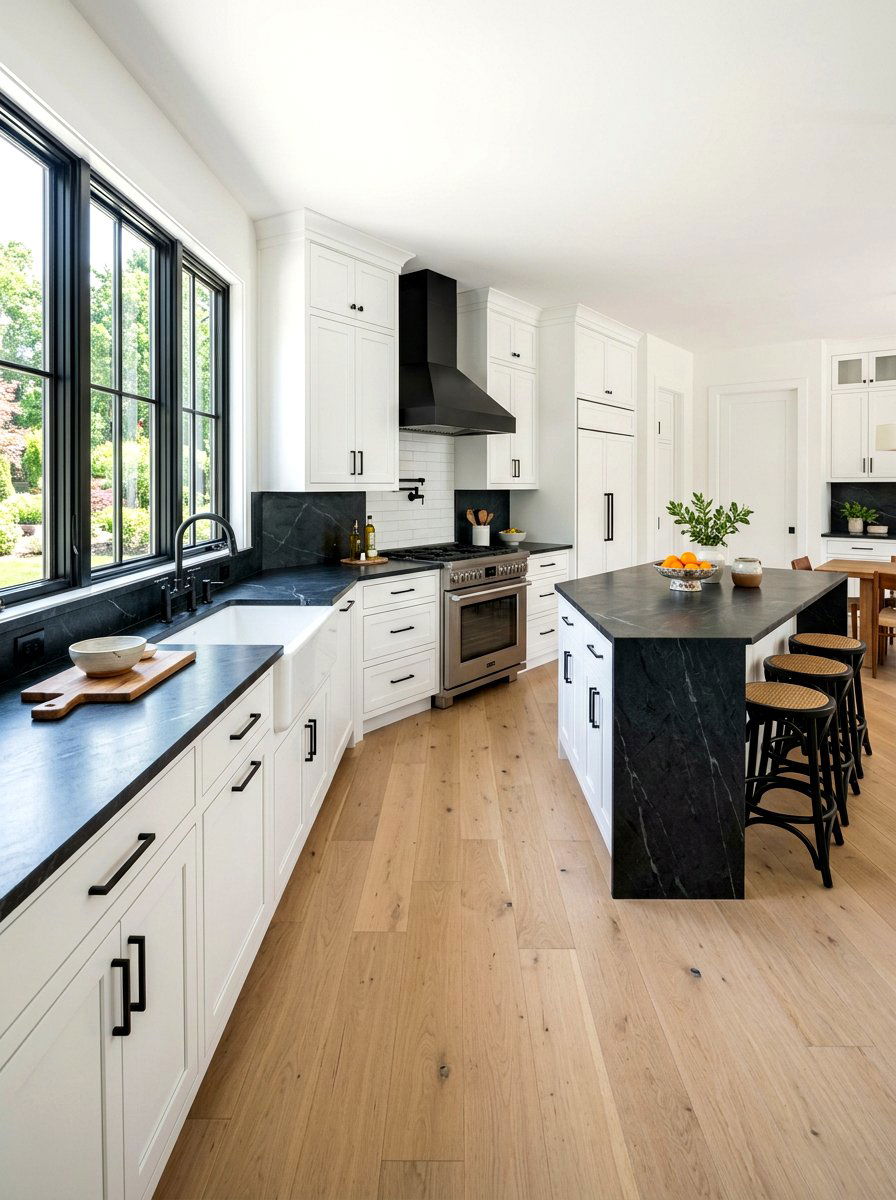
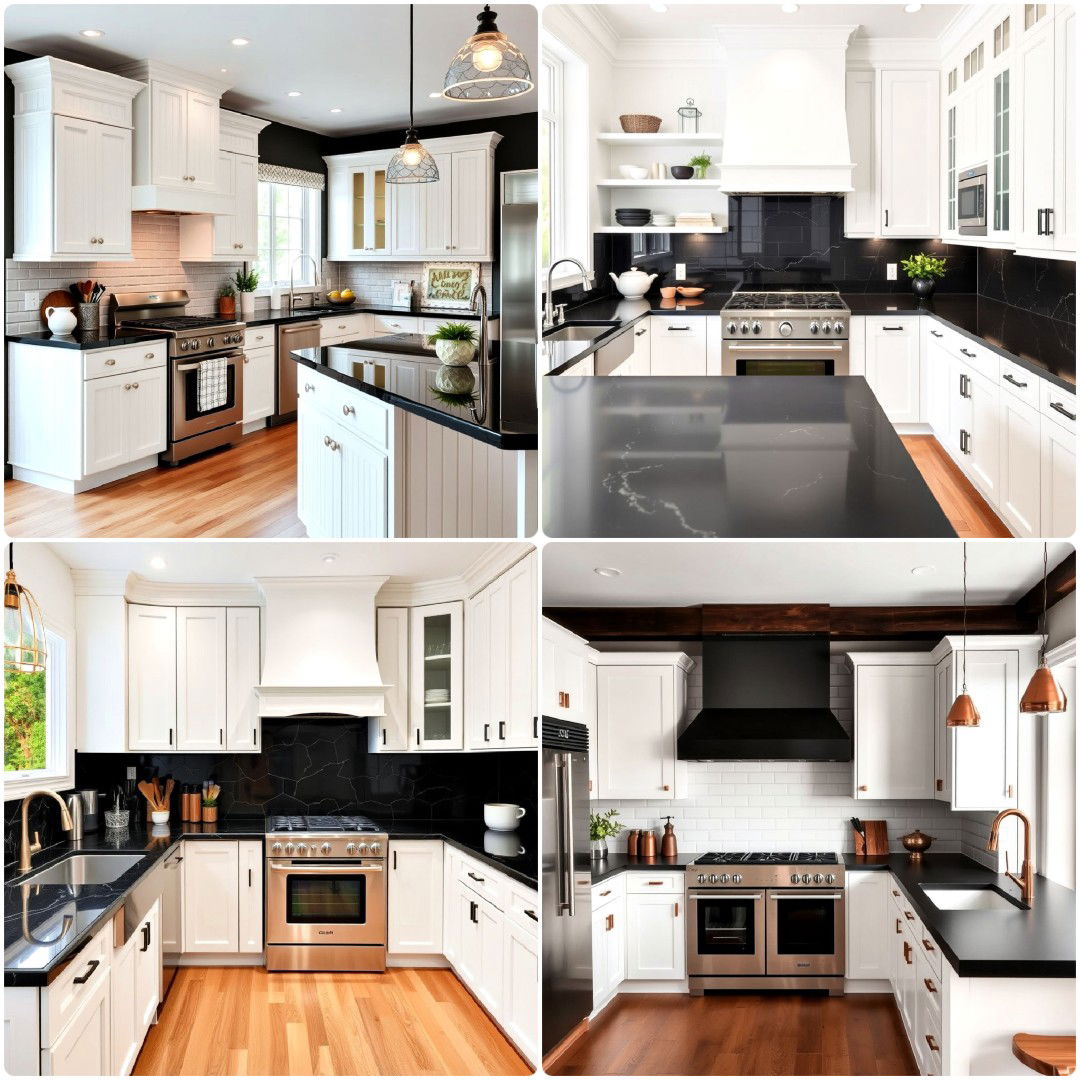
Have you ever considered how a stark contrast can make a kitchen feel both fresh and grounded at the exact same time? Pairing dark soapstone countertops with bright white cabinetry creates a classic look that never goes out of style. This combination allows the natural veining of the stone to take center stage, while the white cabinets reflect light to keep the room feeling airy. To complete this design, consider adding matte black hardware and light oak flooring to bridge the gap between the dark and light elements. The result is a balanced, high-contrast environment that feels sophisticated yet welcoming for family gatherings and daily meal preparation.
2. Green Soapstone Kitchen Counters
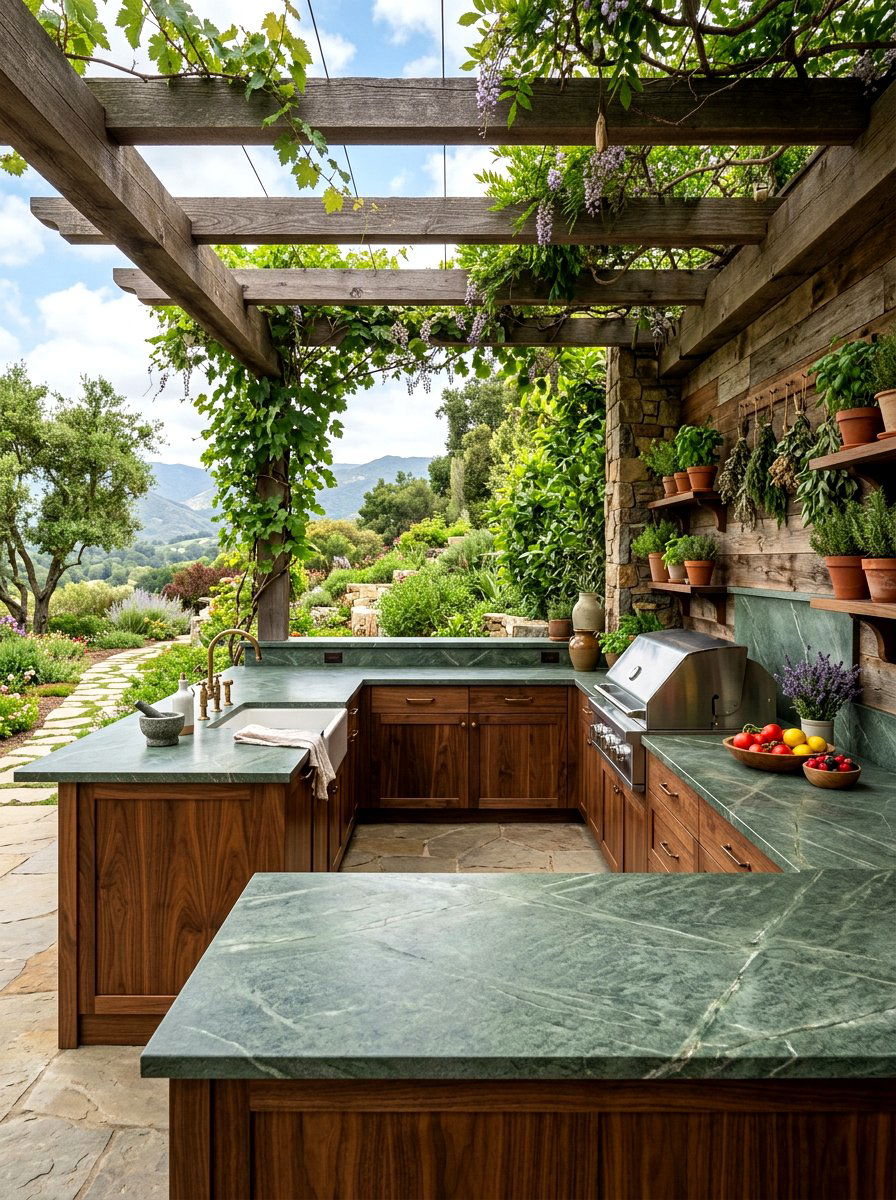
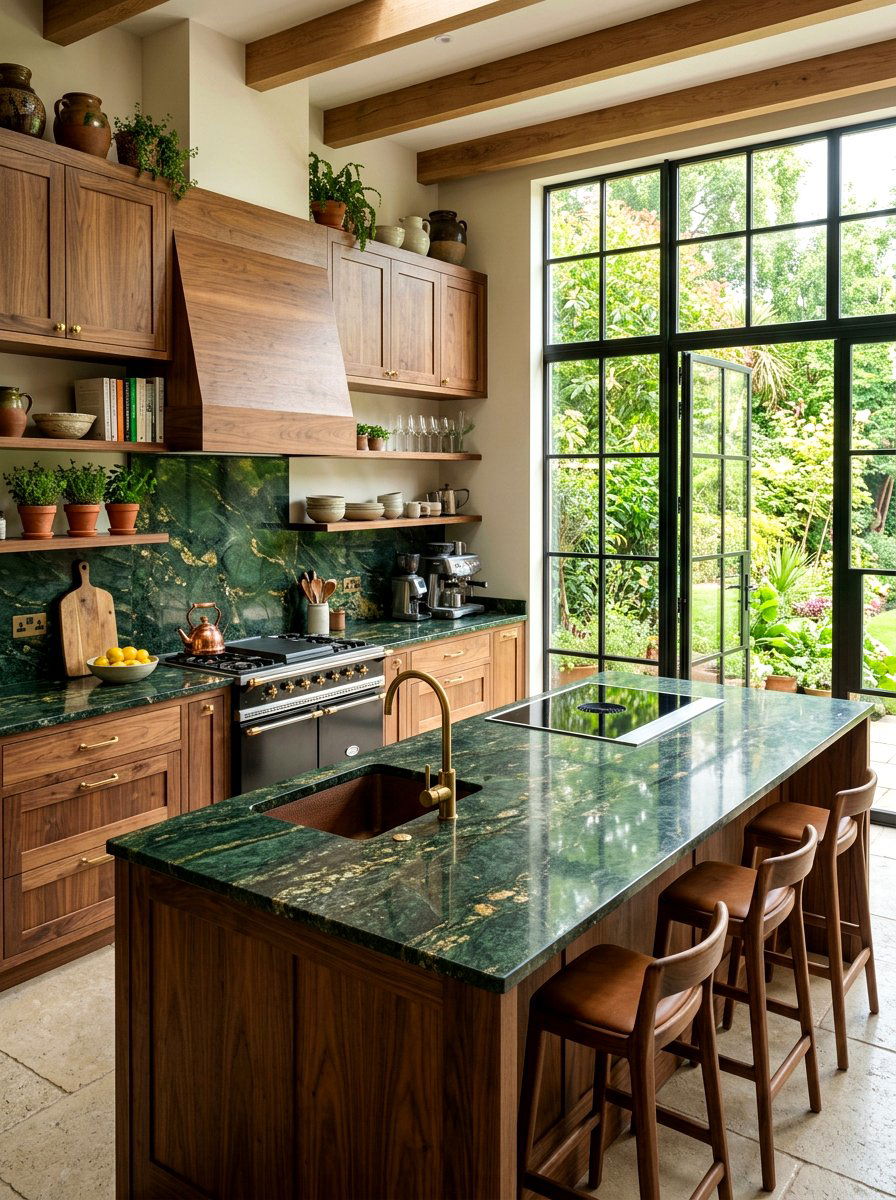
Imagine a kitchen that feels like an extension of the natural world outside your window. Selecting a variety of soapstone with deep green undertones can transform a standard kitchen into an organic sanctuary. This unique stone often features emerald or forest green hues that deepen significantly when treated with mineral oil. To enhance this look, pair the counters with warm wood cabinetry, such as walnut or cherry, which complements the earthy tones of the stone. Adding botanical accents and soft, layered lighting will further emphasize the tranquil, nature-inspired atmosphere of the space. This design is perfect for those who want a distinctive, high-end kitchen.
3. Black Soapstone Waterfall Island
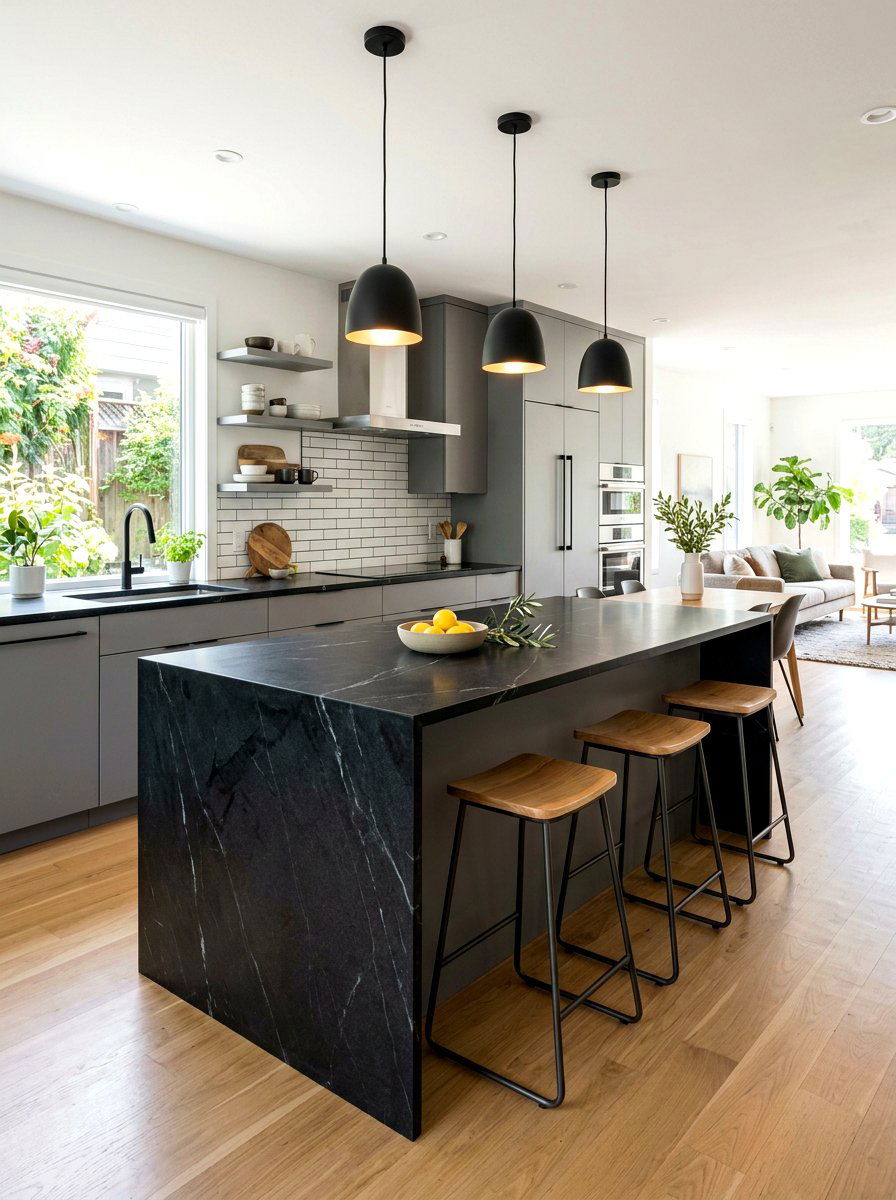
Does your kitchen need a bold architectural statement to tie the entire floor plan together? A soapstone waterfall island, where the stone continues down the sides to the floor, creates a sleek and continuous visual line. This modern design choice works exceptionally well in open-concept homes where the kitchen is a central design feature. The deep black finish of the soapstone provides a sense of luxury and weight, while its matte surface prevents the island from feeling too harsh or clinical. Surrounding the island with minimalist bar stools and pendant lighting will highlight the stone’s craftsmanship and make it the primary focal point.
4. Soapstone Farmhouse Sink Kitchen
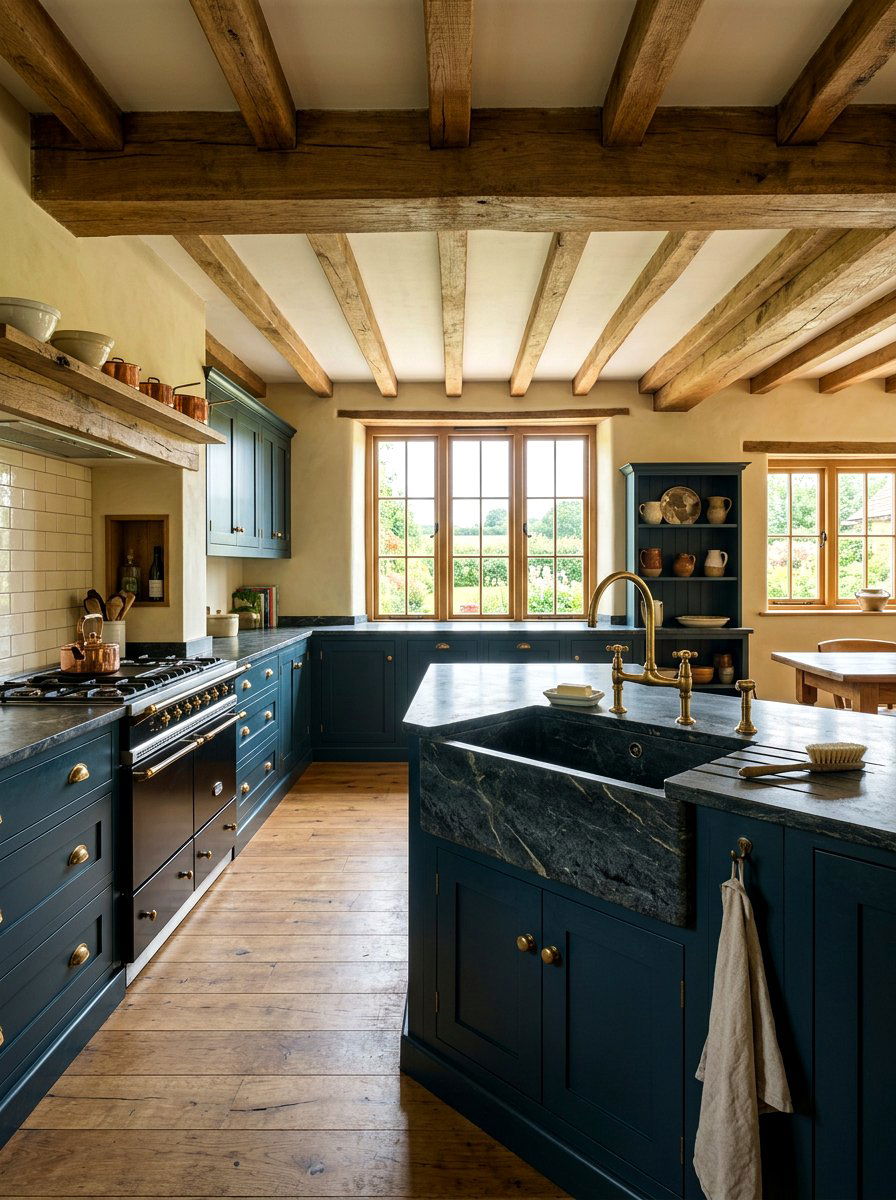
For those who dream of a kitchen with historical charm, an integrated soapstone farmhouse sink is a must-have feature. Unlike standard drop-in sinks, a soapstone sink is often custom-carved from a single block or assembled with matching slabs for a seamless look. This design pairs beautifully with shaker-style cabinets and bridge faucets in a polished nickel or unlacquered brass finish. The apron-front sink serves as a tactile focal point that ages gracefully, developing a unique character over time. Surrounding the sink with reclaimed wood beams and open shelving will complete the cozy, authentic farmhouse aesthetic that feels both nostalgic and very functional.
5. Modern Minimalist Soapstone Kitchen
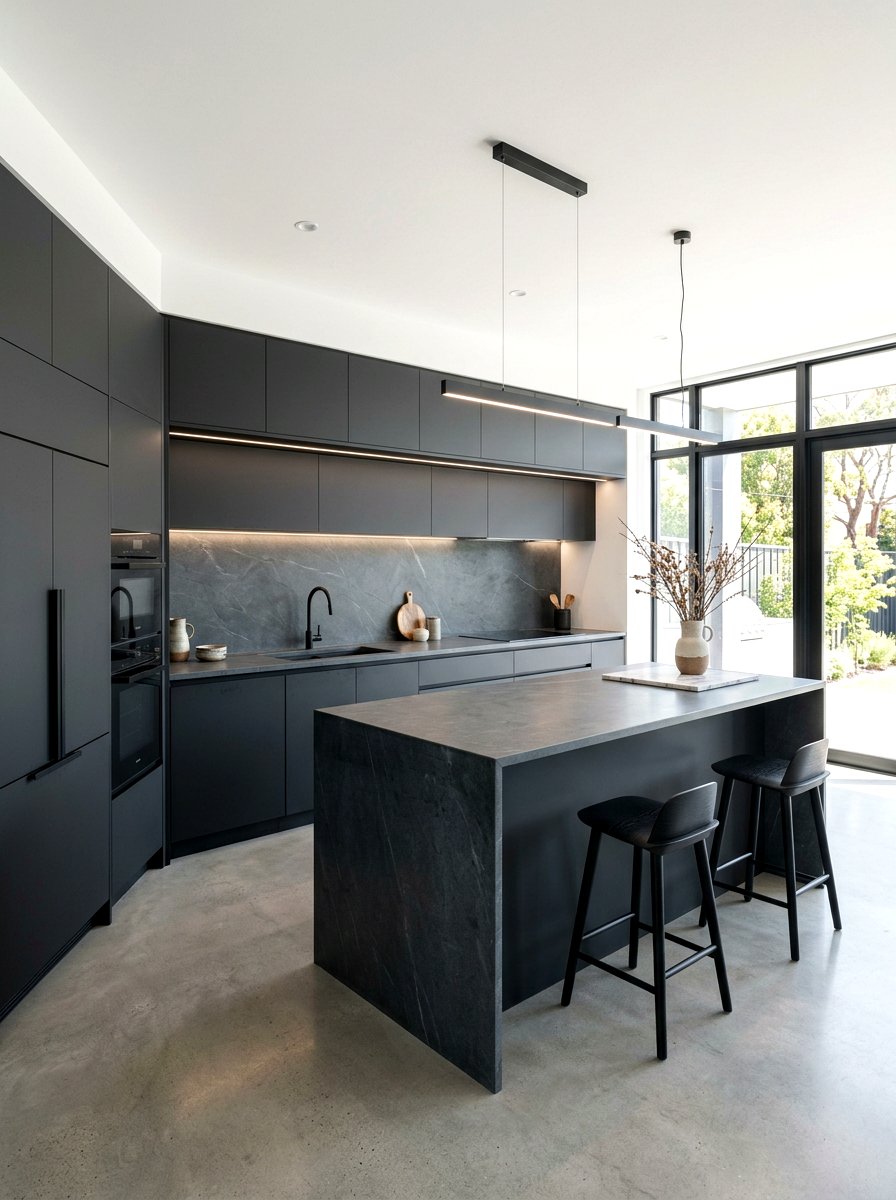
Can a material as traditional as soapstone work in a ultra-modern, minimalist environment? The answer is a resounding yes, especially when the stone is cut with thin profiles and sharp, clean edges. In a minimalist kitchen, the goal is to reduce visual clutter, so using soapstone for both the countertops and the backsplash creates a unified, monochromatic look. Choose flat-panel cabinets in a soft gray or charcoal to match the stone’s natural color palette. This approach emphasizes texture over ornamentation, relying on the stone's velvety feel and subtle veining to provide visual interest without overwhelming the senses with too much detail.
6. Rustic Wood Soapstone Kitchen
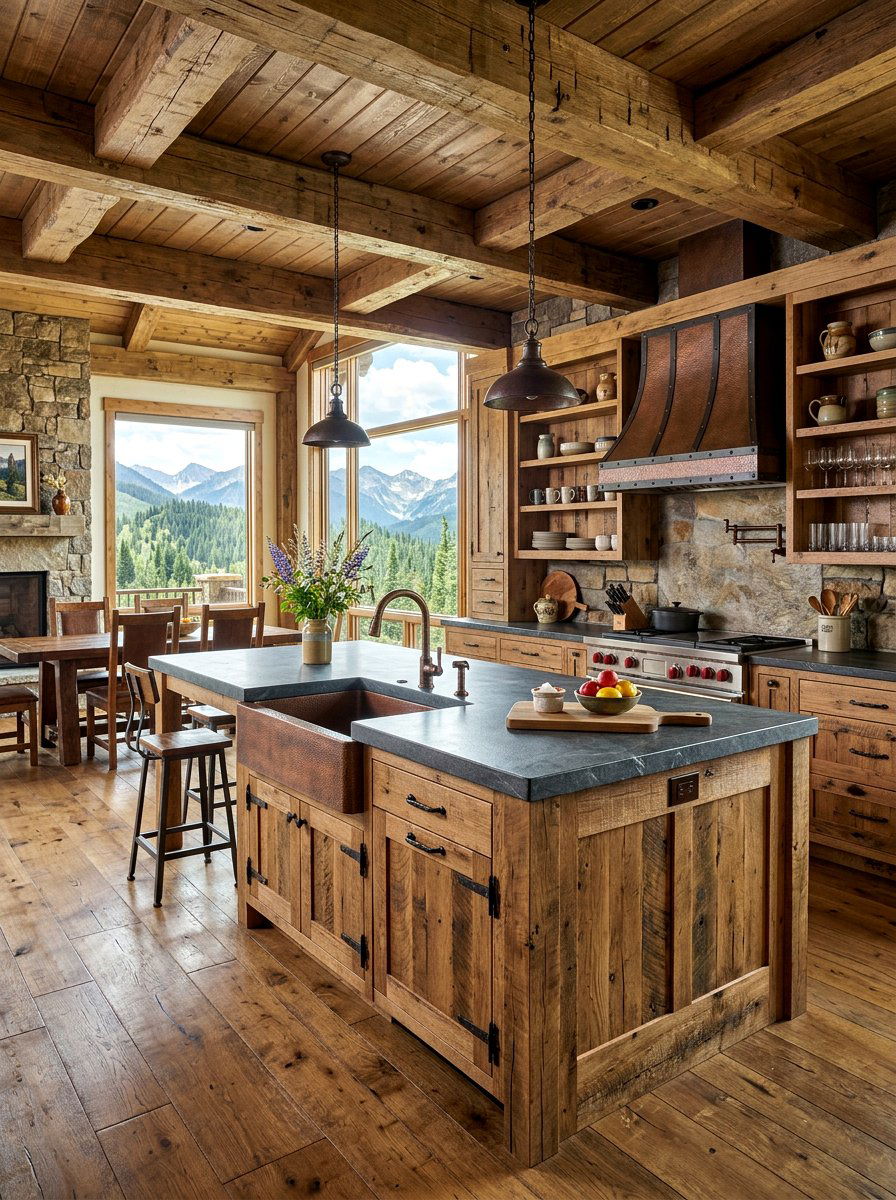
There is something inherently comforting about the combination of raw wood and natural stone in a residential setting. A rustic kitchen design often features heavy timber shelving, exposed ceiling beams, and a large soapstone-topped island that serves as the room's heart. The matte finish of the stone perfectly complements the varied textures of distressed or reclaimed wood cabinetry. To lean into this aesthetic, use iron hardware and copper cookware displayed on open racks. This design direction is about celebrating imperfections and the beauty of natural aging, making it an ideal choice for a mountain cabin or a cozy suburban home.
7. Soapstone Counters Brass Hardware
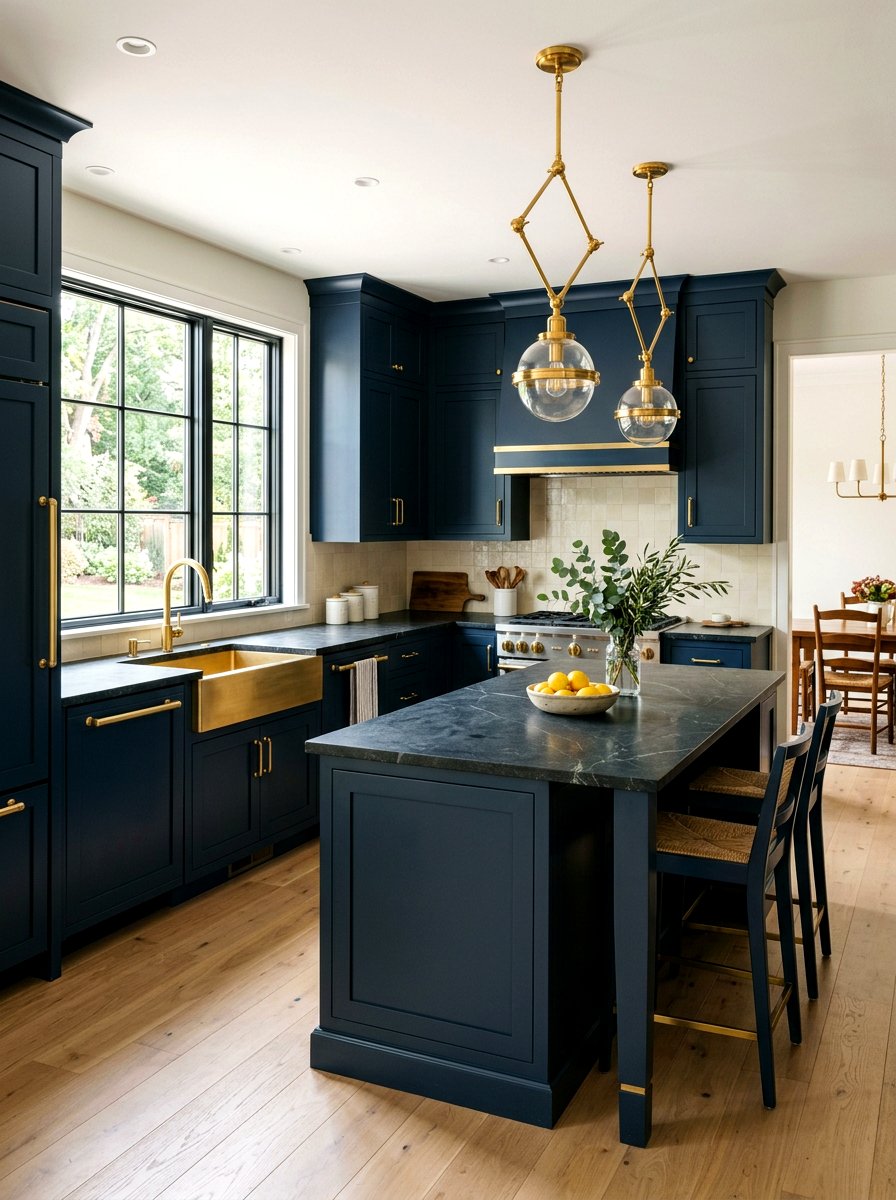
Have you noticed how the right hardware can act like jewelry for your kitchen cabinets and countertops? Pairing the deep, charcoal tones of soapstone with warm brass or gold hardware creates a luxurious and high-contrast look that feels very contemporary. The metallic glow of the brass stands out beautifully against the dark, matte surface of the stone, adding a touch of elegance to a functional workspace. For a cohesive design, carry the brass finish into the kitchen faucet, light fixtures, and even the legs of your island seating. This combination is particularly effective in kitchens with navy or forest green cabinetry.
8. Light Gray Soapstone Island
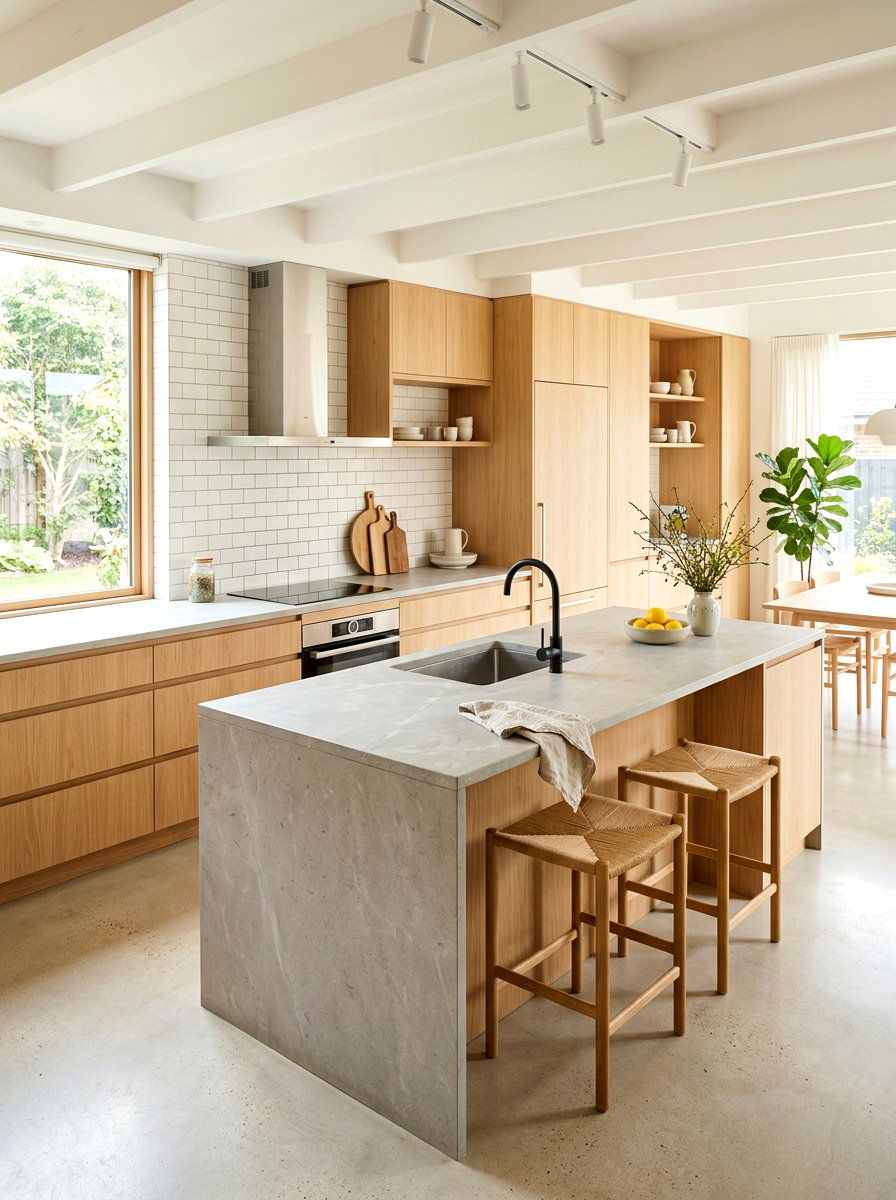
While many people associate soapstone with dark, oiled finishes, leaving the stone untreated reveals a soft, ethereal light gray tone. A light gray soapstone island can serve as a gentle centerpiece in a bright, sun-drenched kitchen with white walls and light-colored floors. This look is perfect for homeowners who prefer a more Scandinavian or coastal aesthetic where softness and light are prioritized. The natural white veining in the gray stone adds just enough movement to keep the island from looking flat. Pair this with light-toned wood accents and woven textures to create a space that feels calm, serene, and incredibly inviting.
9. Soapstone Backsplash Countertop Combo
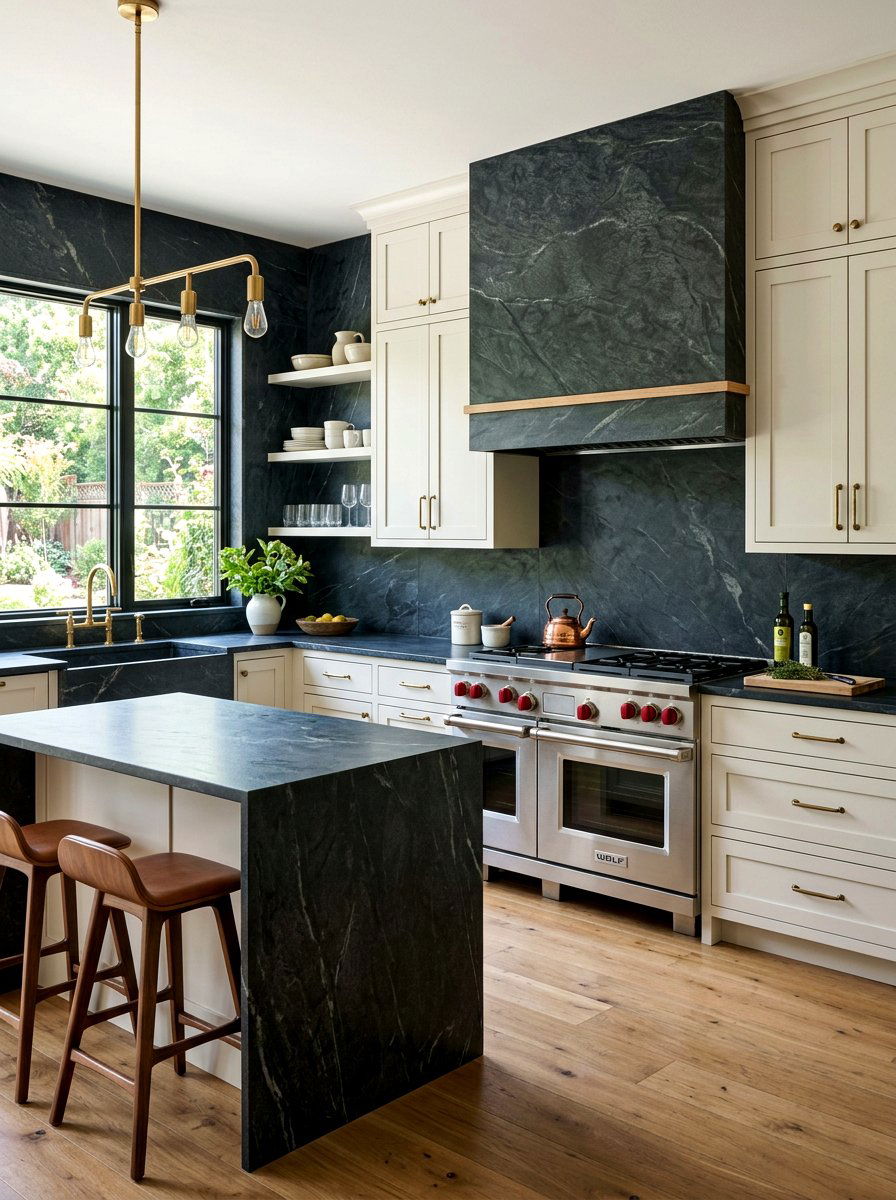
Using the same material for both your countertops and your backsplash is a design trick that creates a high-end, custom look. A soapstone backsplash that extends all the way to the ceiling provides a dramatic backdrop for a professional-grade range or a display of artisanal pottery. Because soapstone is heat-resistant, it is an excellent choice for the area behind the stove. This continuous application of stone simplifies the color palette and allows you to focus on the movement and veining within the slab. It is a powerful way to add architectural depth and a sense of permanence to a modern or transitional kitchen.
10. Industrial Soapstone Kitchen Style
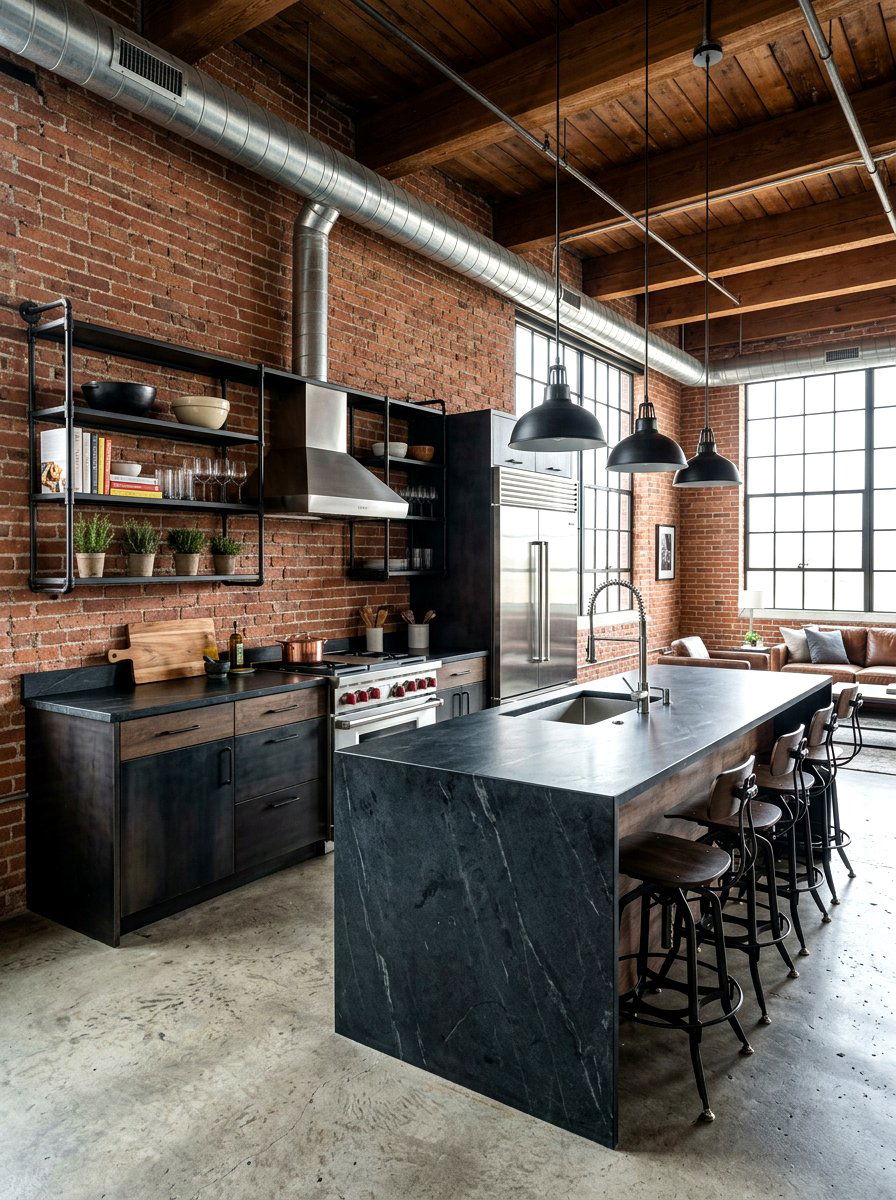
Does your style lean toward the raw and edgy aesthetics of a converted warehouse or urban loft? An industrial kitchen benefits greatly from the addition of soapstone, which mimics the look of honed concrete but offers more warmth and durability. Pair the stone countertops with stainless steel appliances, exposed brick walls, and black metal shelving units. The matte finish of the soapstone absorbs light, contributing to the moody and masculine atmosphere often found in industrial designs. Large-scale pendant lights with Edison bulbs and concrete flooring will round out this look, creating a space that feels both rugged and sophisticated for modern living.
11. Navy Blue Cabinets Soapstone
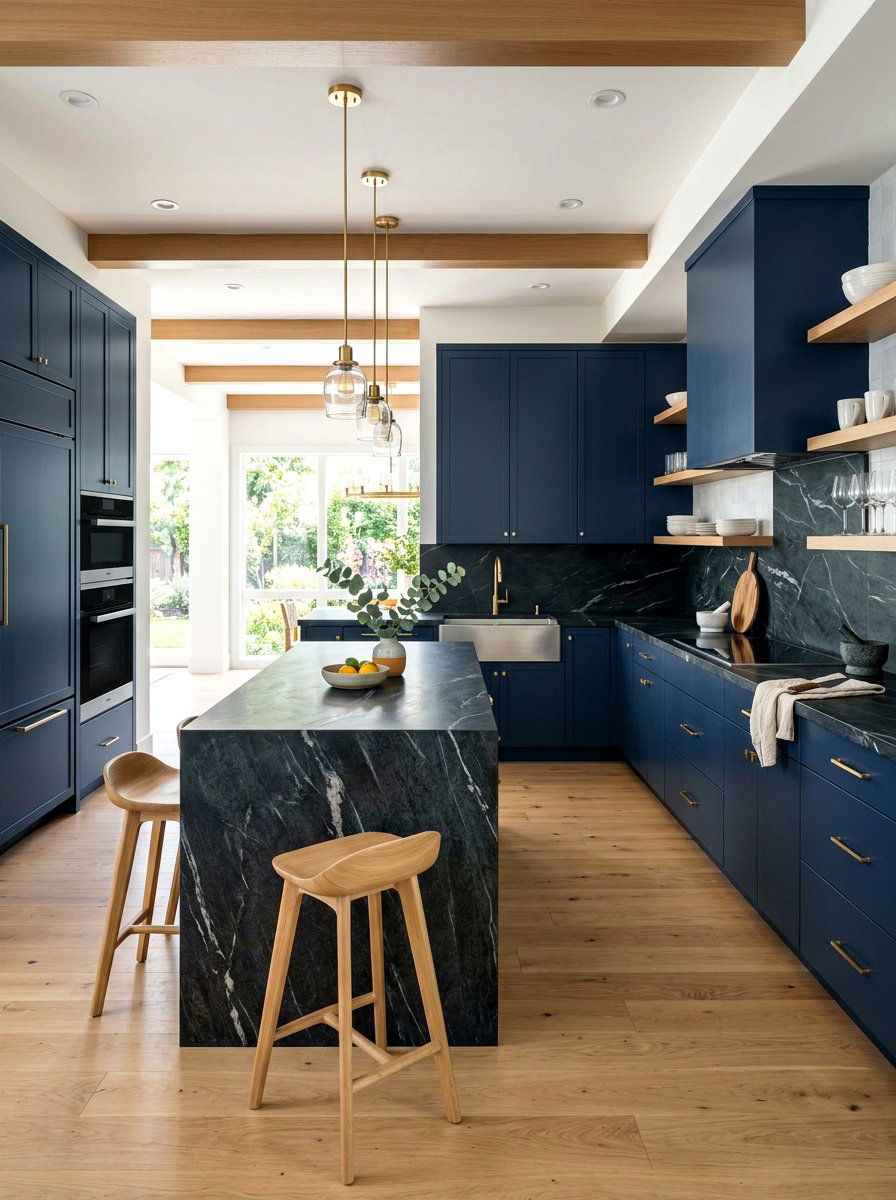
Navy blue is a sophisticated cabinet color that pairs exceptionally well with the dark, moody tones of natural soapstone. This combination creates a rich, saturated palette that feels both nautical and high-fashion depending on how you style the surrounding elements. The blue undertones of the cabinets draw out the subtle cool tones in the stone, especially if the soapstone has white or light gray veining. To keep the kitchen from feeling too dark, incorporate a light-colored floor and plenty of natural light. Brushed gold or champagne bronze hardware adds a final touch of warmth and luxury to this popular and timeless color scheme.
12. Sage Green Kitchen Soapstone
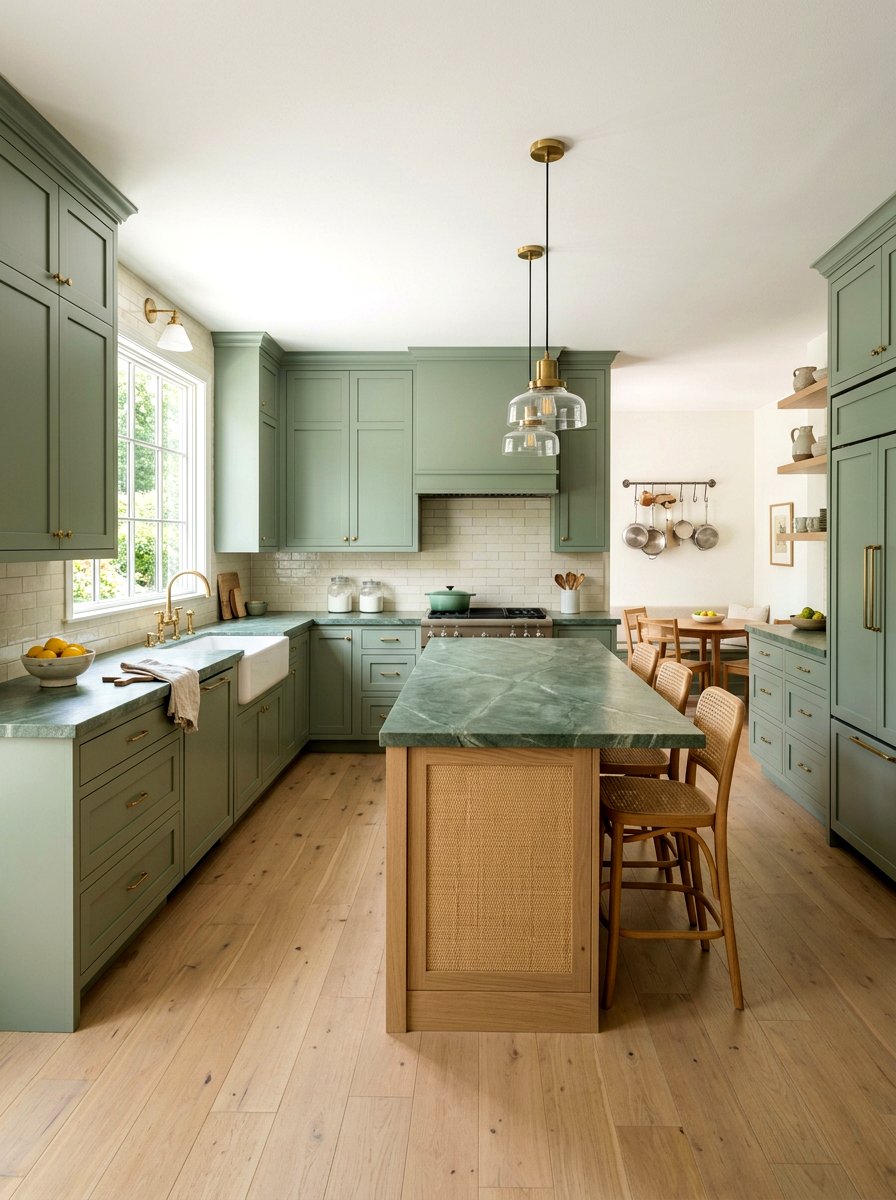
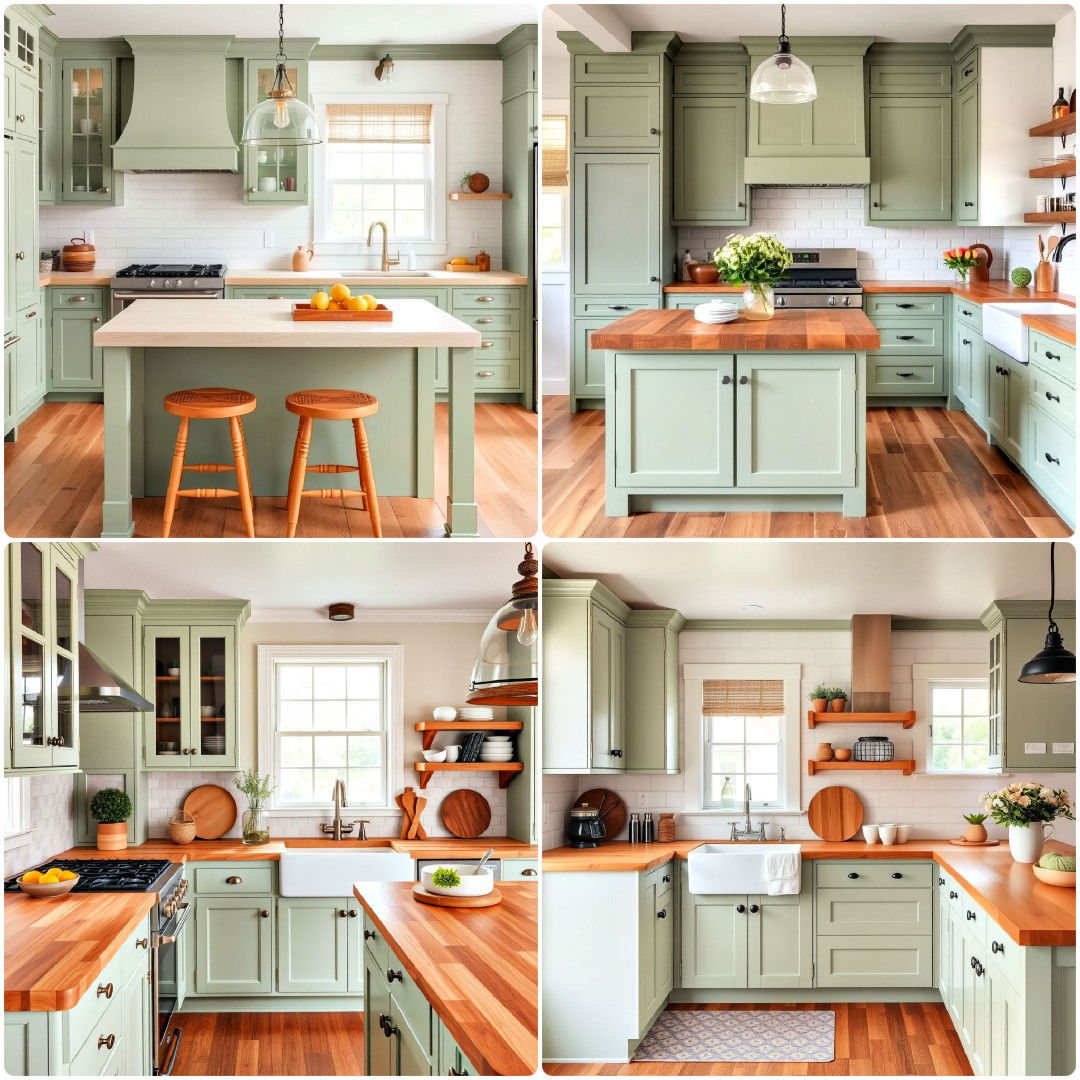
If you want to create a kitchen that feels peaceful and restorative, consider pairing sage green cabinetry with soapstone surfaces. Sage green is a muted, earthy neutral that bridges the gap between traditional and modern styles. When used alongside the natural charcoal or green-hued varieties of soapstone, it creates a monochromatic, organic look that is very on-trend. This design works well with cream-colored tiled backsplashes and light wood floors to maintain a bright and airy feeling. The soft, matte textures of both the paint and the stone contribute to a tactile experience that makes the kitchen feel like a cozy, lived-in space.
13. Soapstone Counters Marble Backsplash
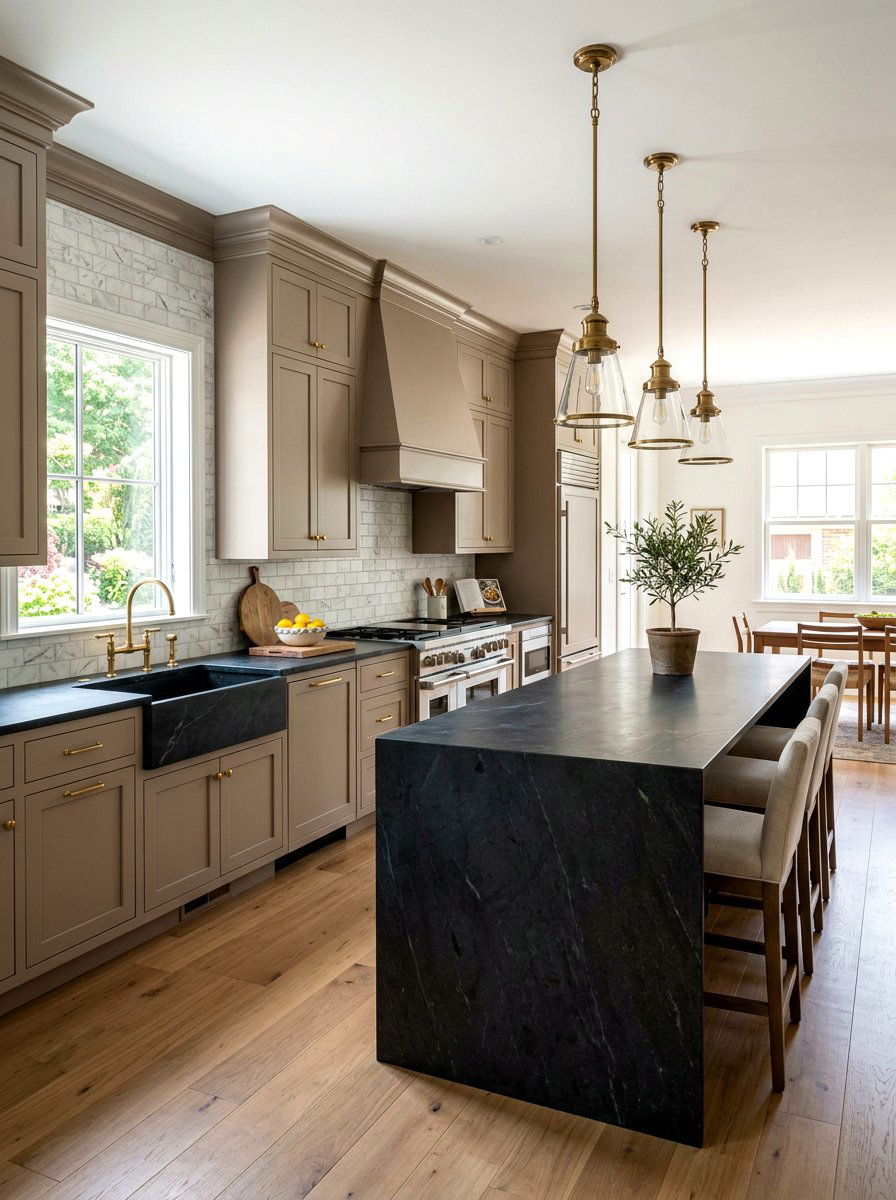
Can you mix two different types of natural stone in one kitchen without it looking chaotic? Pairing soapstone countertops with a white marble backsplash is a classic design move that balances dark and light elements perfectly. The dark, grounded nature of the soapstone provides a sturdy work surface, while the bright, veined marble adds a touch of classic elegance and light to the vertical surfaces. To make this work, ensure the veining in both stones has a similar color temperature, such as cool grays. This pairing is ideal for transitional kitchens that aim to be both practical for heavy cooking and stylish for entertaining guests.
14. Transitional Kitchen Soapstone Tops
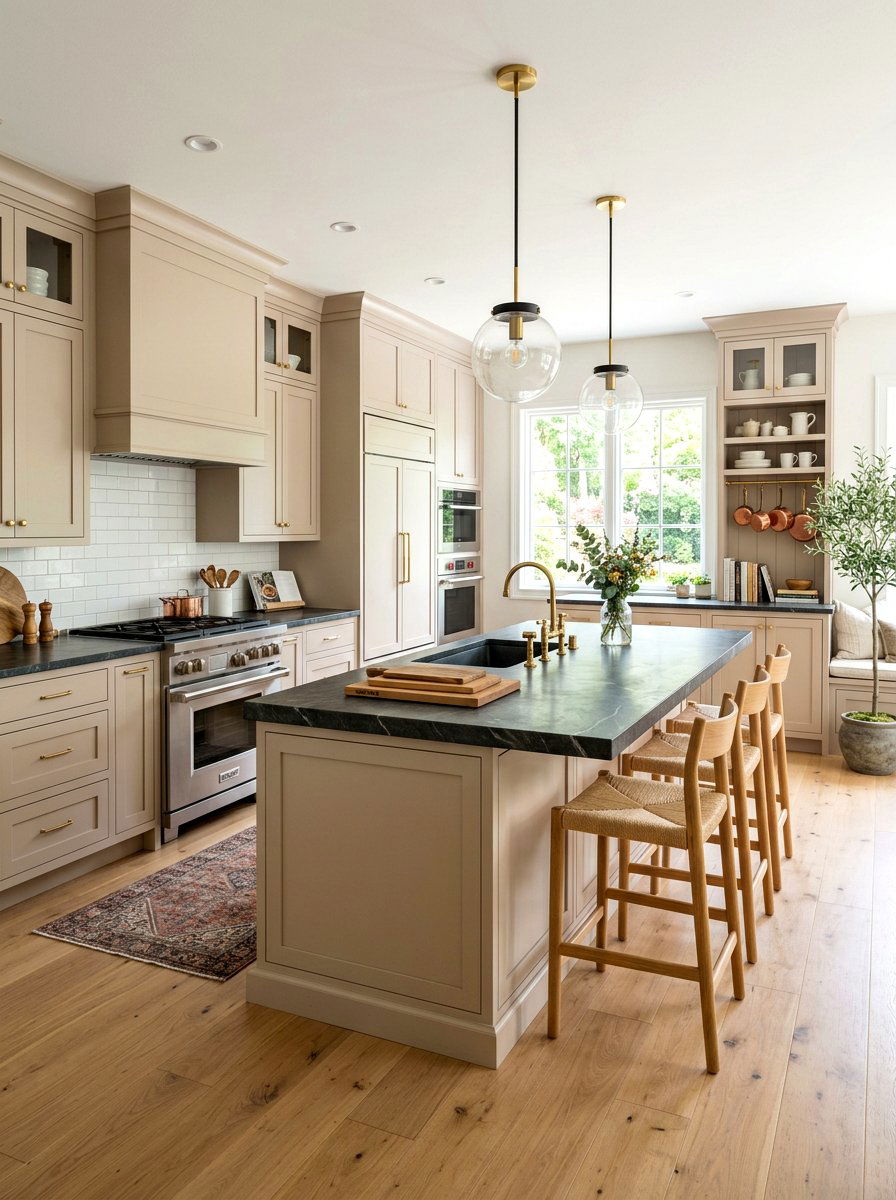
A transitional kitchen is all about finding the perfect middle ground between traditional warmth and modern simplicity. Soapstone is the ideal material for this style because it has been used for centuries but still looks fresh in a modern context. Use shaker cabinets in a neutral tone like mushroom or taupe, then top them with thick slabs of honed soapstone. Incorporate modern lighting fixtures and a simple subway tile backsplash to keep the look from feeling too dated. This approach creates a versatile space that feels timeless, comfortable, and sophisticated, making it a great investment for long-term home value and daily enjoyment.
15. Scandi Style Soapstone Kitchen
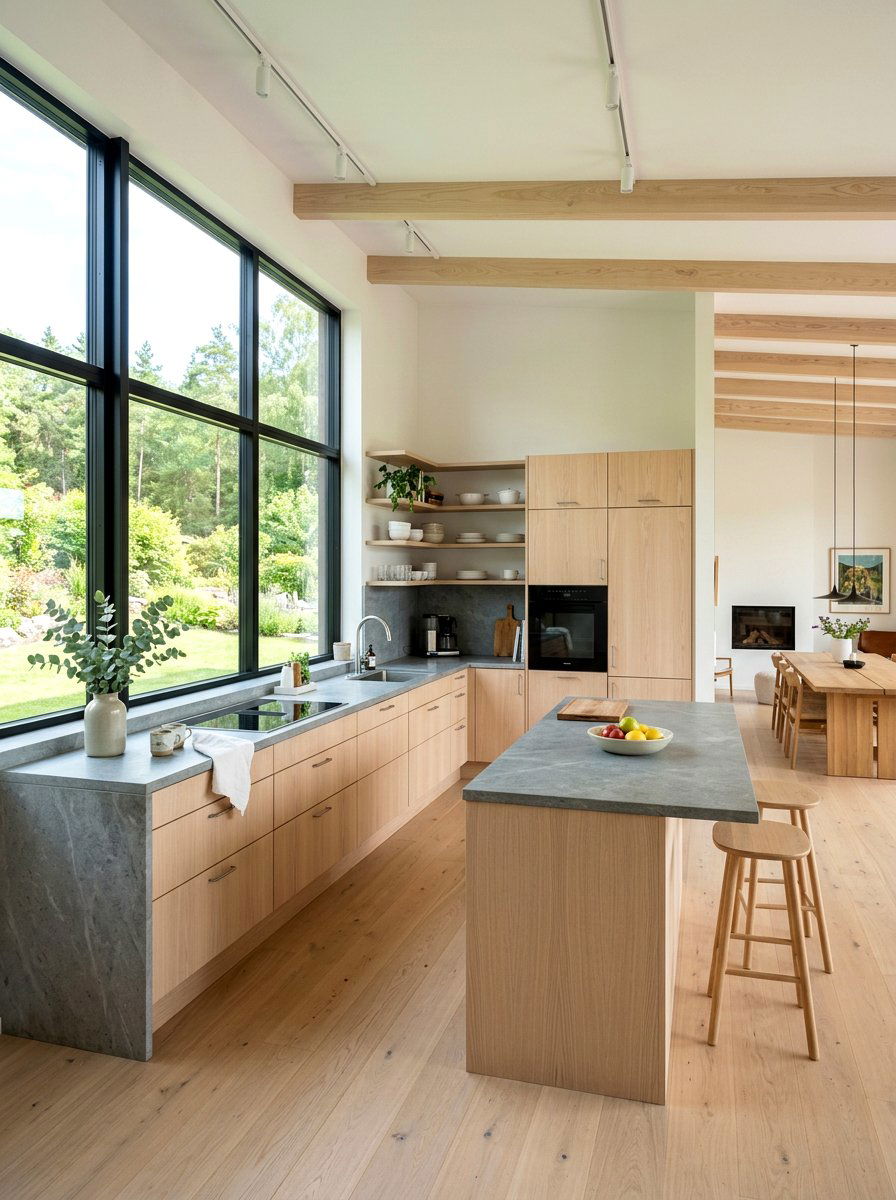
Scandinavian design is known for its focus on light, natural materials, and functional simplicity. To achieve this look with soapstone, leave the stone untreated so it maintains its natural, soft gray appearance. Pair these gray countertops with light ash or blonde oak cabinetry and a clean, white-tiled backsplash. The goal is to create a space that feels bright and uncluttered, with the soapstone providing a subtle, organic texture. Keep the decor minimal, focusing on high-quality kitchen tools and plenty of indoor greenery. This design is perfect for creating a calm environment that prioritizes light and the beauty of raw, natural materials.
16. Butcher Block Soapstone Kitchen
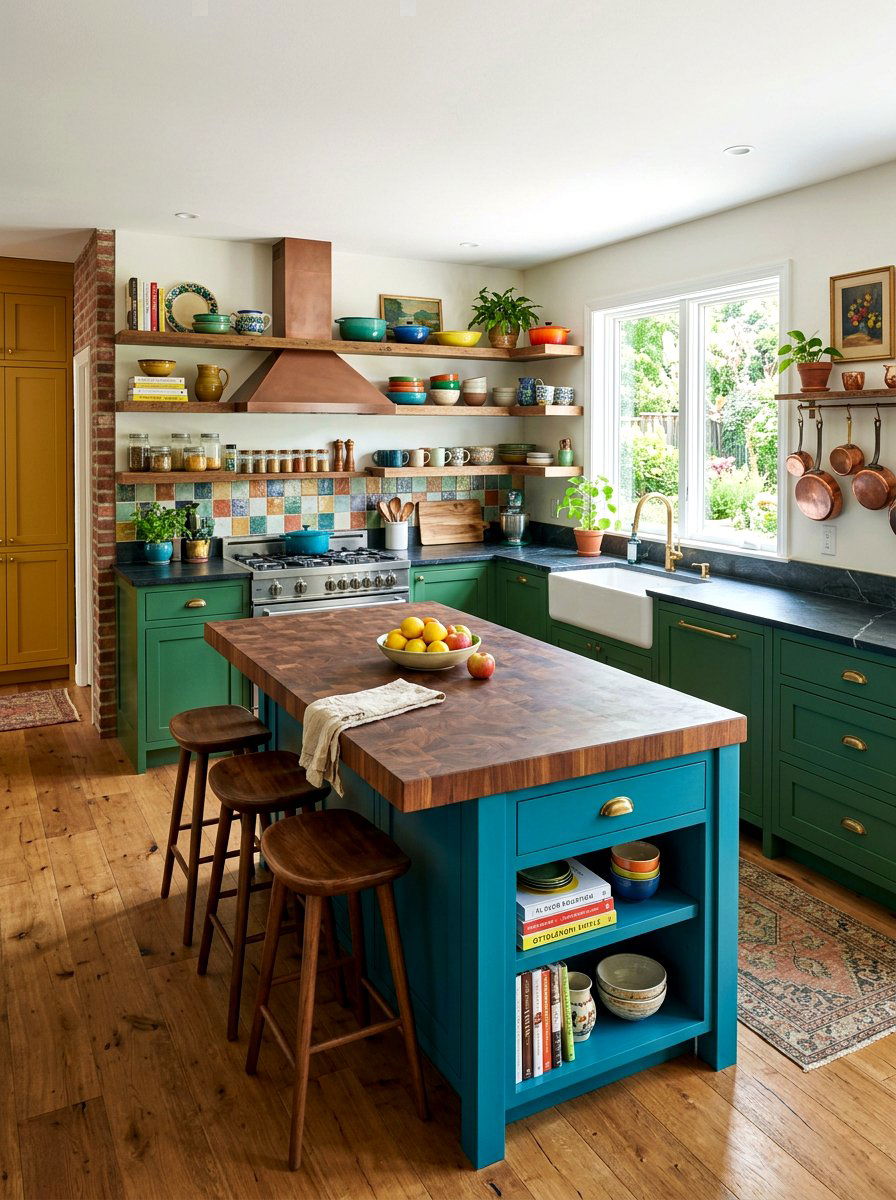
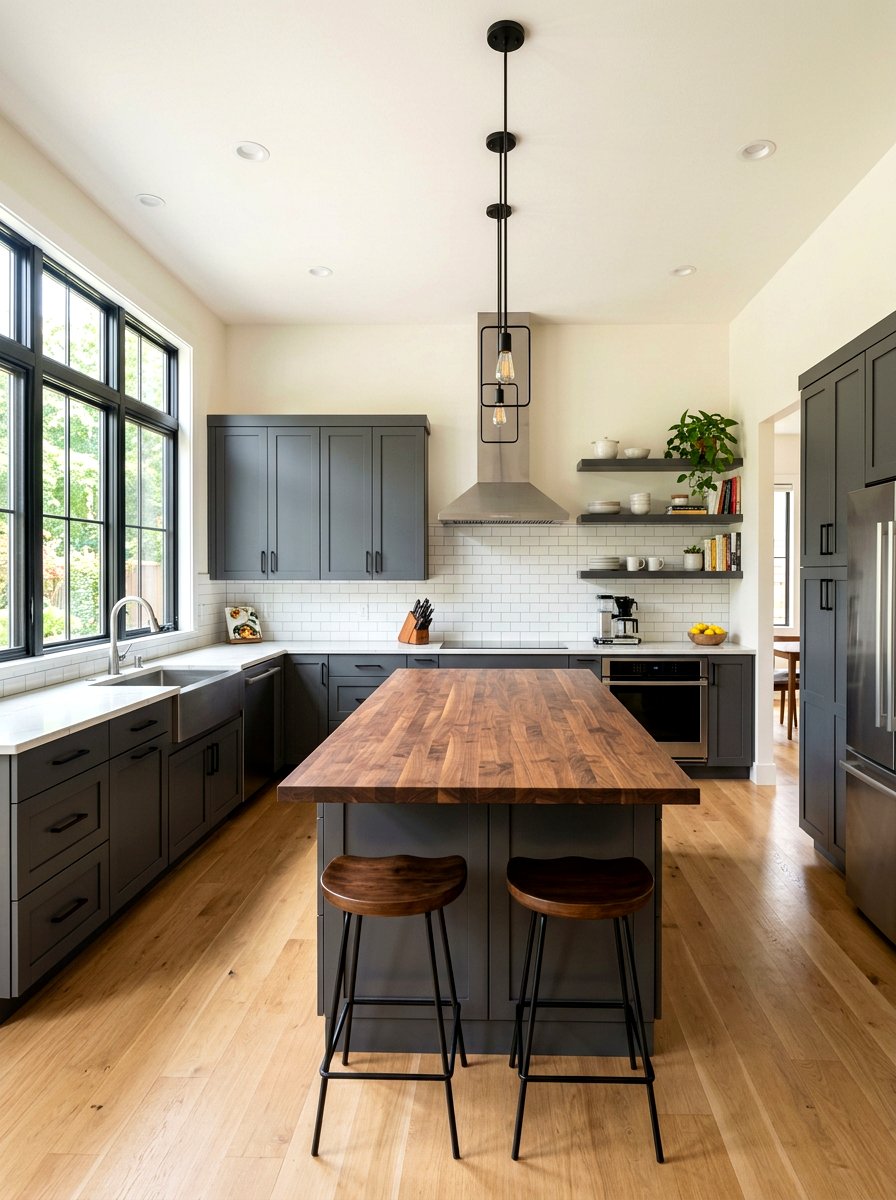
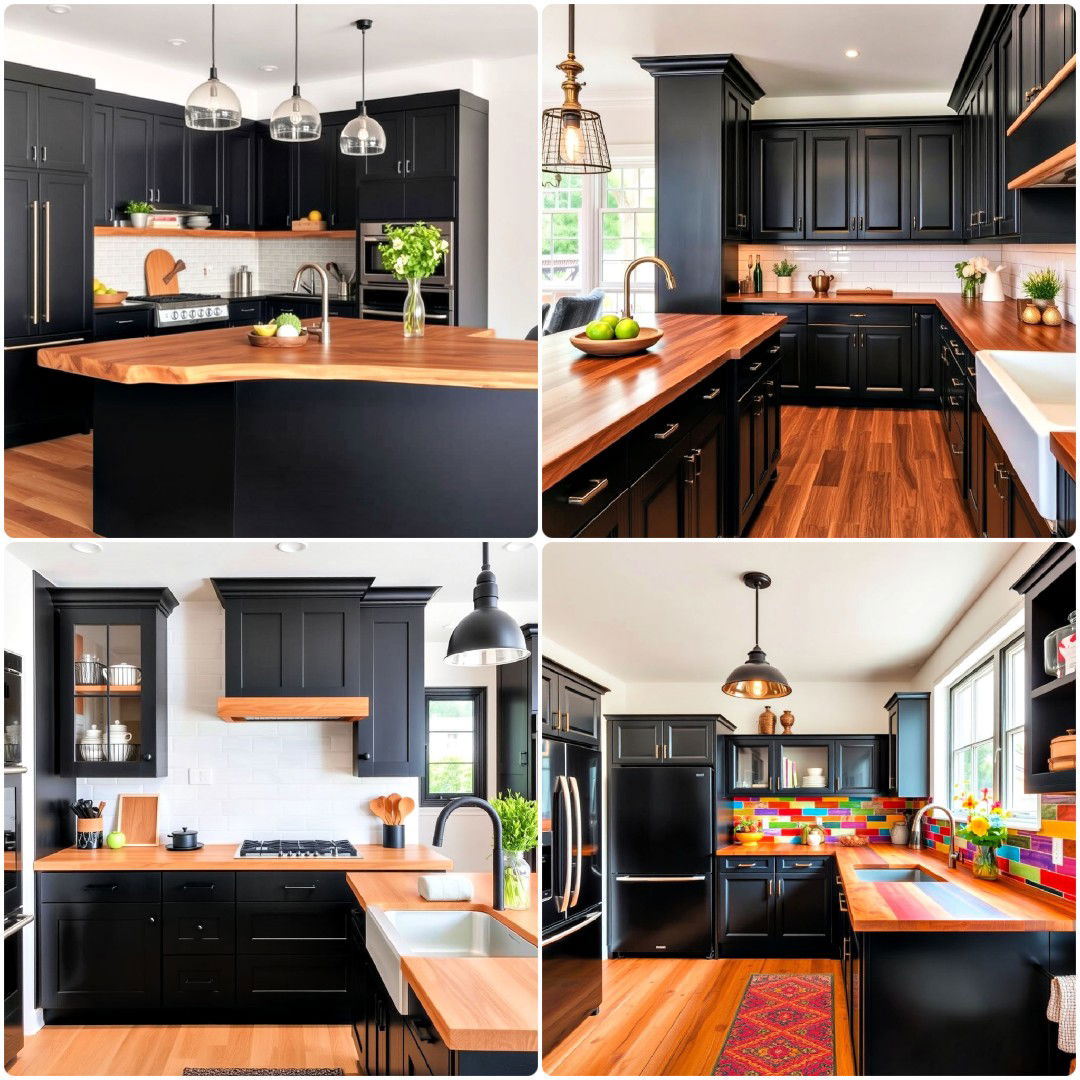
Mixing different countertop materials is a practical and stylish way to define various zones within your kitchen. Consider using soapstone for the heavy-duty prep areas around the sink and stove, while choosing a warm butcher block for the island or a dedicated baking station. The contrast between the cool, dark stone and the warm, golden wood adds visual layers and a professional feel to the space. This combination is a favorite in farmhouse and eclectic kitchens where the focus is on utility and a curated, collected look. It also makes the kitchen feel more dynamic and specifically tailored to your unique cooking habits.
17. Matte Black Soapstone Kitchen
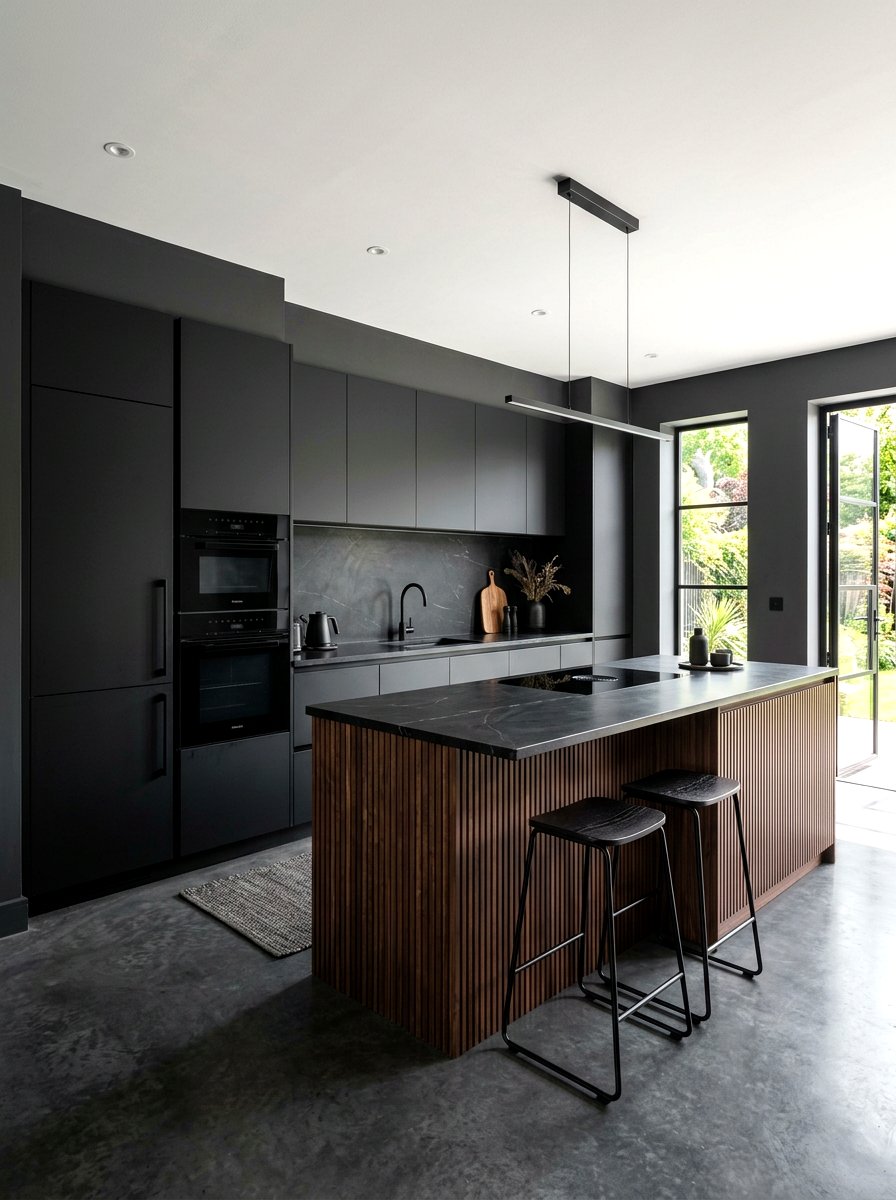
For a look that is undeniably modern and high-impact, consider a monochromatic matte black kitchen theme. Start with soapstone countertops that have been oiled to a deep, inky black, and pair them with matte black cabinetry and hardware. This creates a seamless, sculptural look that is both dramatic and incredibly sophisticated. To prevent the room from feeling like a black hole, use varied textures like a ribbed wood island base or a glossy black tile backsplash to reflect small amounts of light. This daring design choice works best in large kitchens with ample natural light or high ceilings where the darkness feels intentional.
18. Veined Soapstone Kitchen Island
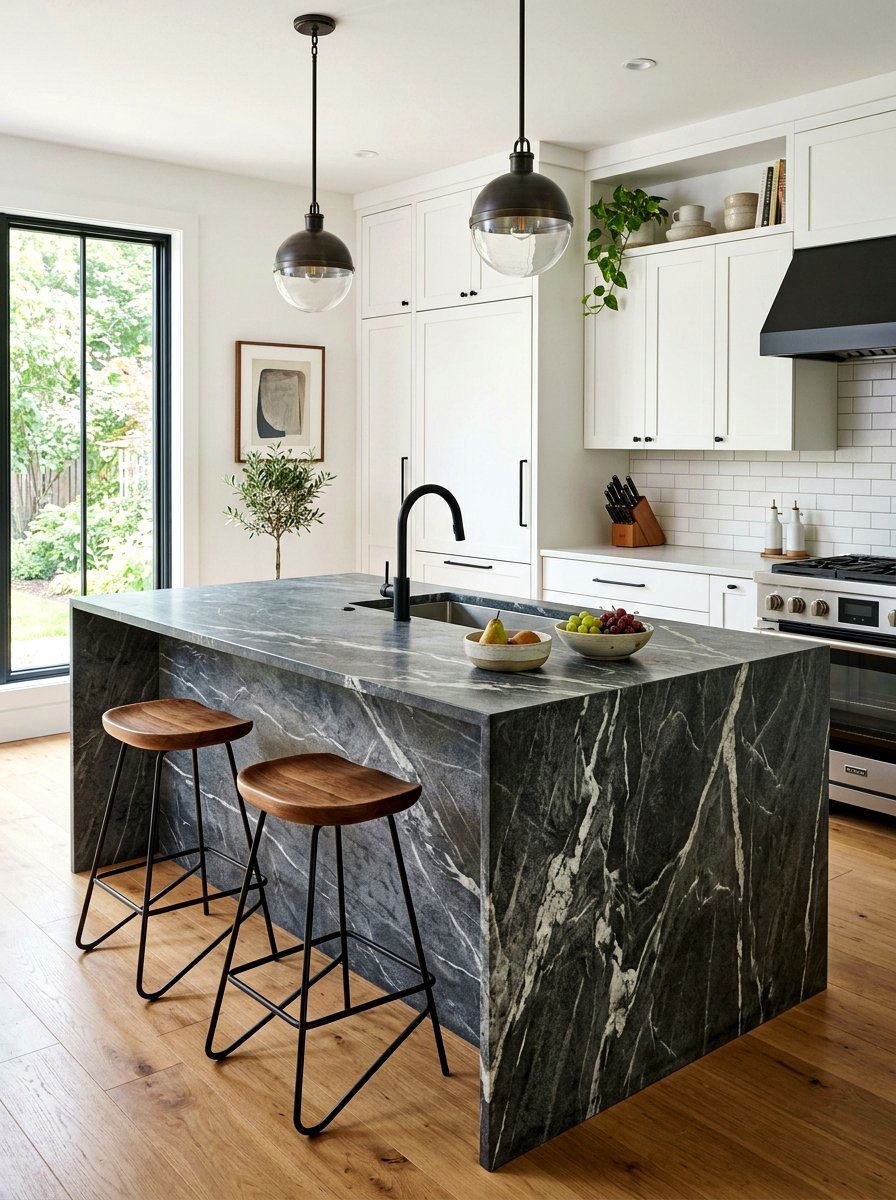
Every natural stone slab is unique, but some soapstone varieties feature dramatic, lightning-bolt veining that deserves to be the focal point. Using a heavily veined slab for a large kitchen island creates a piece of functional art in the center of your home. To make the island pop, keep the perimeter countertops and cabinetry relatively simple and understated. This allows the movement and patterns within the stone to draw the eye without competition from other design elements. This approach is perfect for homeowners who want their kitchen to have a "wow" factor that is rooted in nature rather than trendy decorative accessories.
19. Mid Century Modern Soapstone
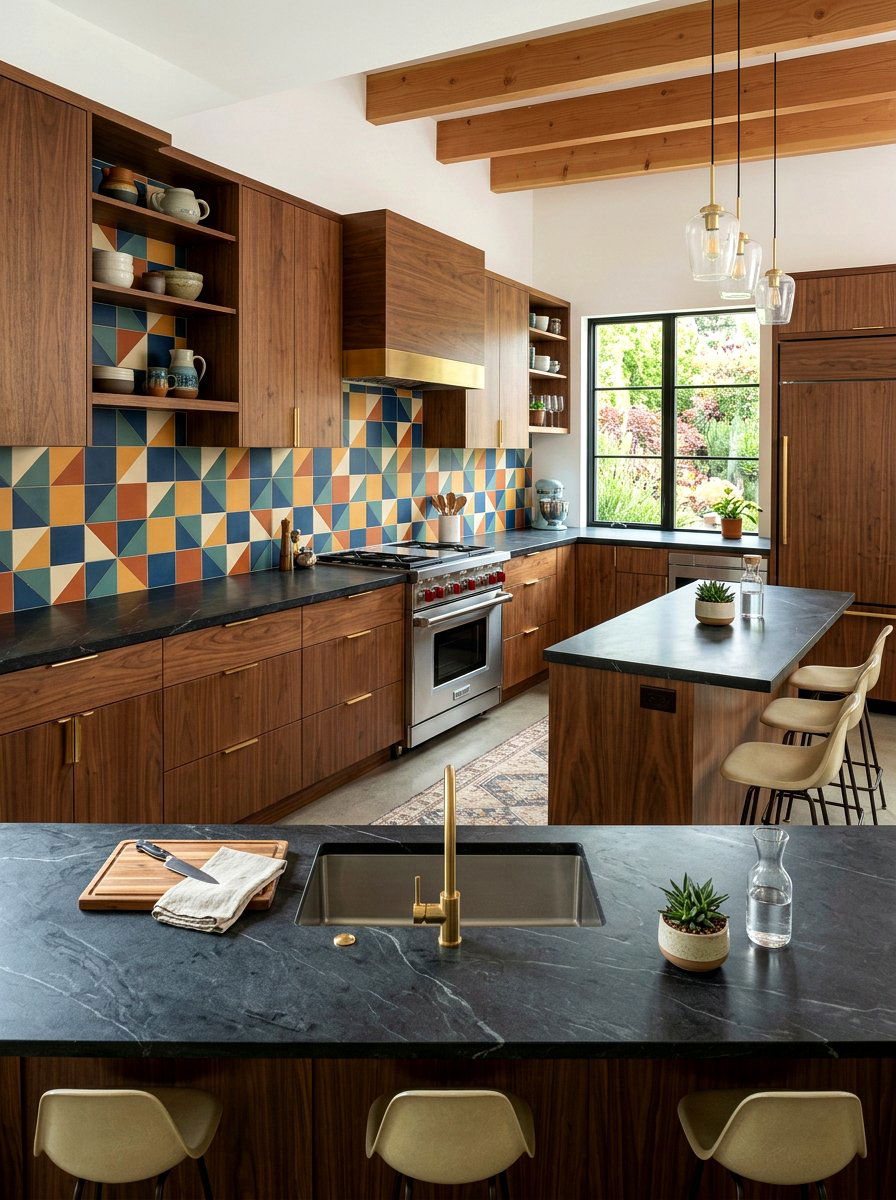
Mid-century modern design often features clean lines, organic shapes, and a mix of natural and man-made materials. Soapstone fits into this aesthetic beautifully when paired with walnut cabinetry that features the iconic tapered legs and flat-front doors. The matte, charcoal surface of the stone provides a grounded contrast to the warm, orange-toned wood. Consider adding a pop of color with a geometric tile backsplash in shades of mustard yellow or teal. This combination creates a kitchen that feels nostalgic yet perfectly suited for contemporary living, celebrating the era's focus on functional beauty and the honest use of high-quality, natural materials.

20. Outdoor Soapstone Kitchen Area
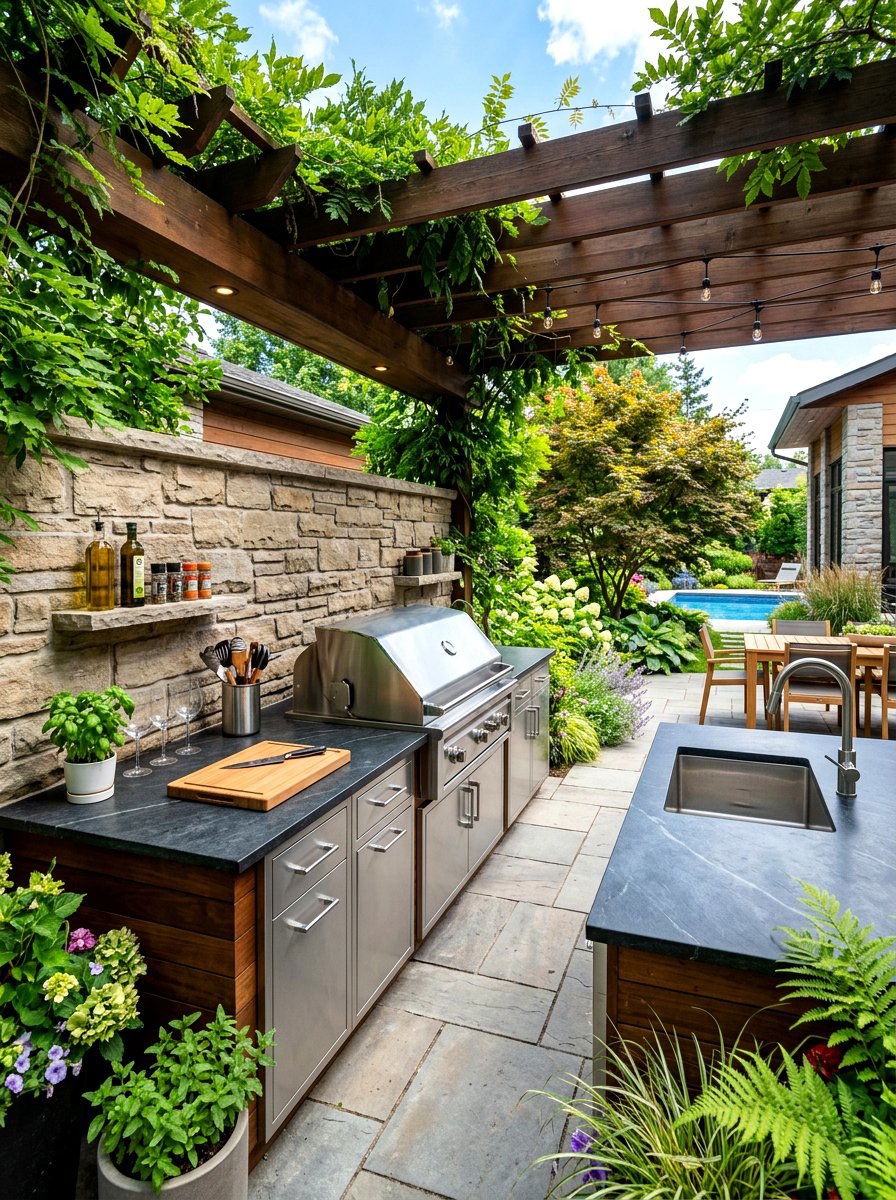
Did you know that soapstone is one of the few natural stones that can withstand extreme temperature changes without cracking? This makes it the ultimate choice for an outdoor kitchen or grilling station where durability is a top priority. A soapstone counter in an outdoor setting will naturally age and patina when exposed to the elements, blending in perfectly with a garden or patio environment. Pair it with stainless steel outdoor appliances and stone or wood accents for a professional-grade alfresco dining space. Its non-porous nature also means it won't harbor bacteria from raw meats, making it as safe as it is beautiful.
21. Soapstone Island With Seating
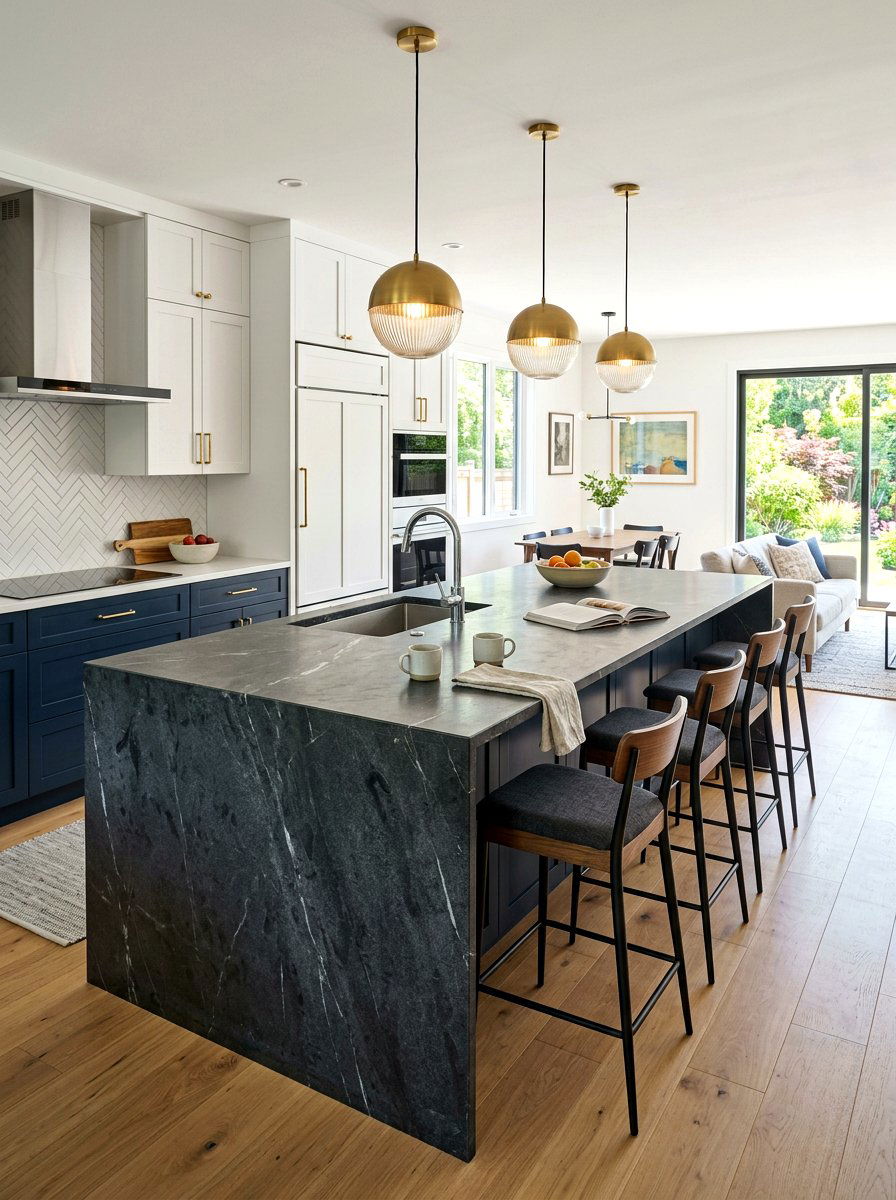
A kitchen island is often the social hub of the home, so designing it with a soapstone top and integrated seating is a smart move. Because soapstone is warm to the touch compared to marble or granite, it provides a more comfortable surface for leaning and conversation. Create a large overhang on one side of the island to accommodate stylish bar stools, allowing guests to gather while you cook. The dark stone surface is also incredibly forgiving of spills and heat, making it a stress-free choice for casual dining and entertaining. This design encourages a social atmosphere while providing a durable, high-traffic work surface.
22. Traditional English Soapstone Kitchen
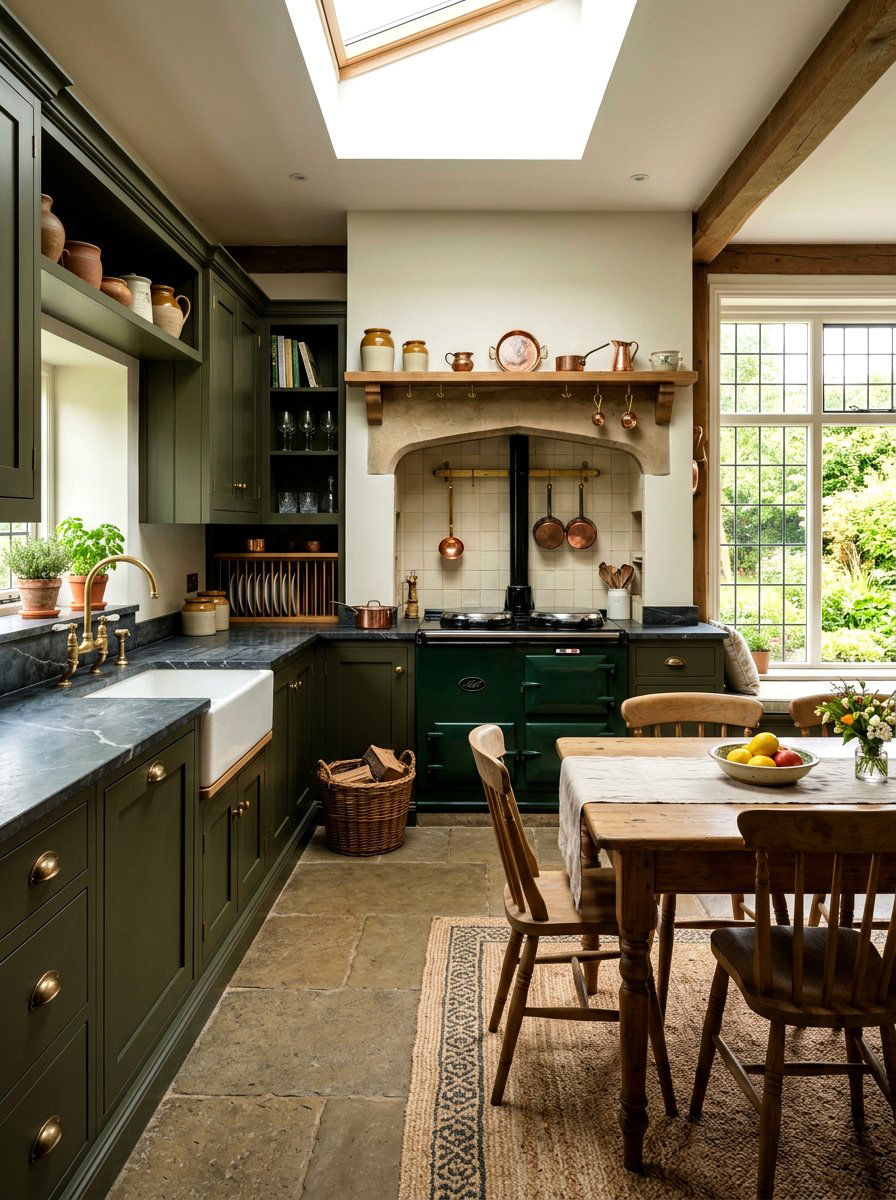
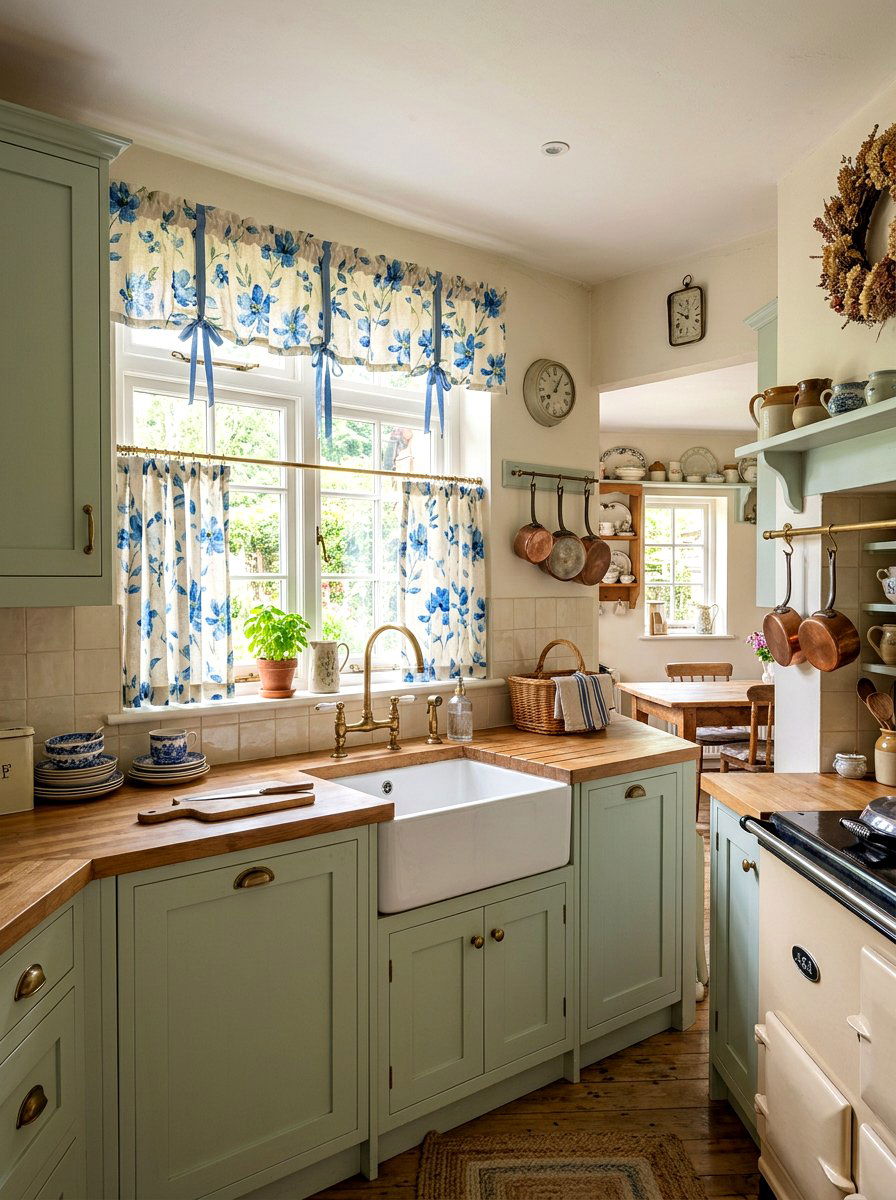
Inspired by the timeless beauty of historic English estates, a traditional English-style kitchen uses soapstone to create a sense of heritage. This design often includes inset cabinetry in "deVOL" style colors like charcoal, olive, or cream. Thick soapstone counters with a simple eased edge add a layer of understated luxury that feels like it has been there for a century. Incorporate a large Aga or Lacanche range and a classic bridge faucet to complete the look. This aesthetic is all about quality over flashiness, resulting in a kitchen that is incredibly sturdy, functional, and rich with quiet, old-world character and charm.
23. Cottagecore Soapstone Kitchen Look
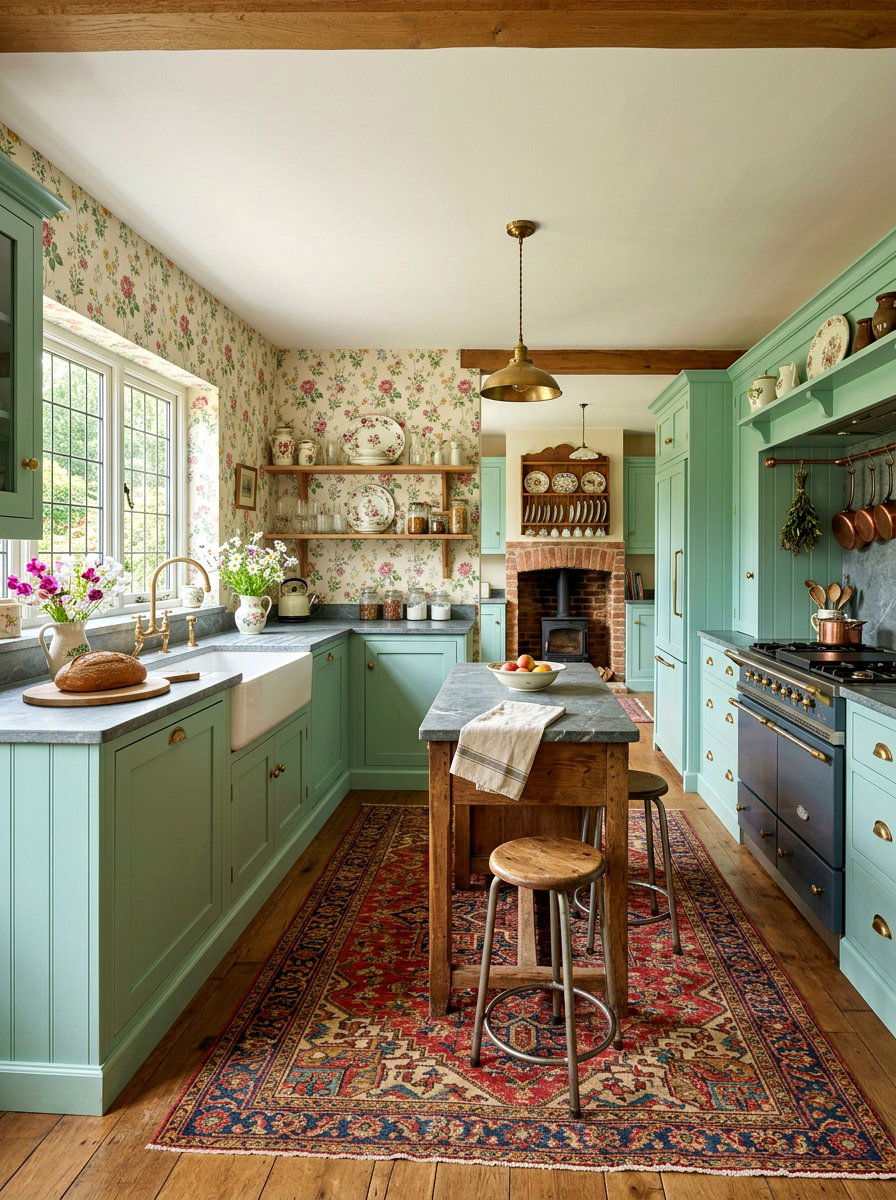
The cottagecore aesthetic celebrates a simple, romanticized version of rural life, and soapstone is the perfect material to anchor this style. Think of a kitchen with soft, pastel-colored cabinets in mint or buttery yellow, topped with natural, gray soapstone. Add floral wallpaper, vintage-inspired rugs, and plenty of jars filled with dried herbs and flowers. The soft, velvety texture of the stone adds a tactile element that feels warm and comforting rather than cold or industrial. This design is all about creating a whimsical, cozy retreat where baking and slow living are the main focus, making every daily task feel a bit more magical.
24. Small Space Soapstone Kitchen
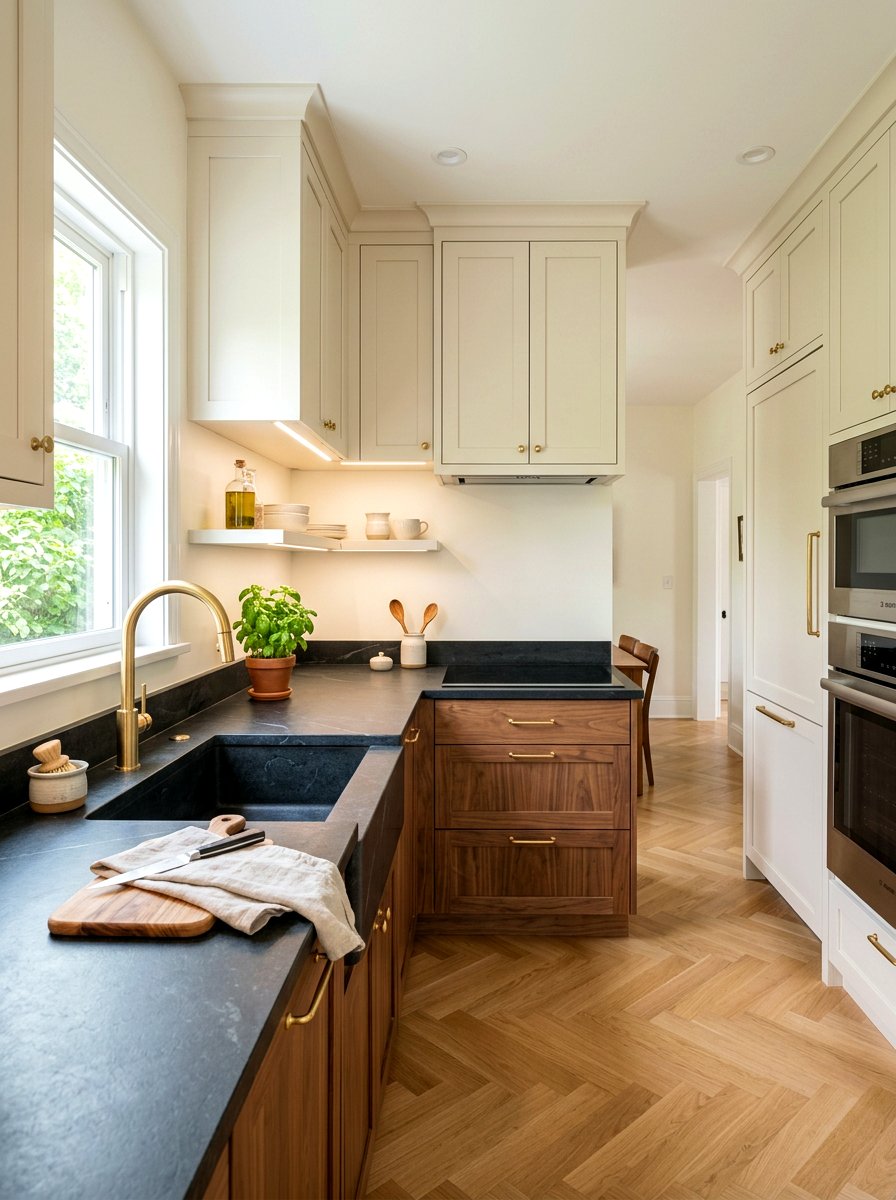
In a small kitchen, every material choice needs to work hard to provide both style and function. Soapstone is a great option for compact spaces because its dark color can actually add depth and make the walls feel like they are receding. To prevent the space from feeling cramped, use light-colored upper cabinets or open shelving and ensure the lighting is bright and layered. A single slab of soapstone can cover a small run of counters and even be used for a matching integrated sink, creating a clean and continuous look that minimizes visual breaks. This results in a small kitchen that feels incredibly high-end.
25. Soapstone Counters Open Shelving
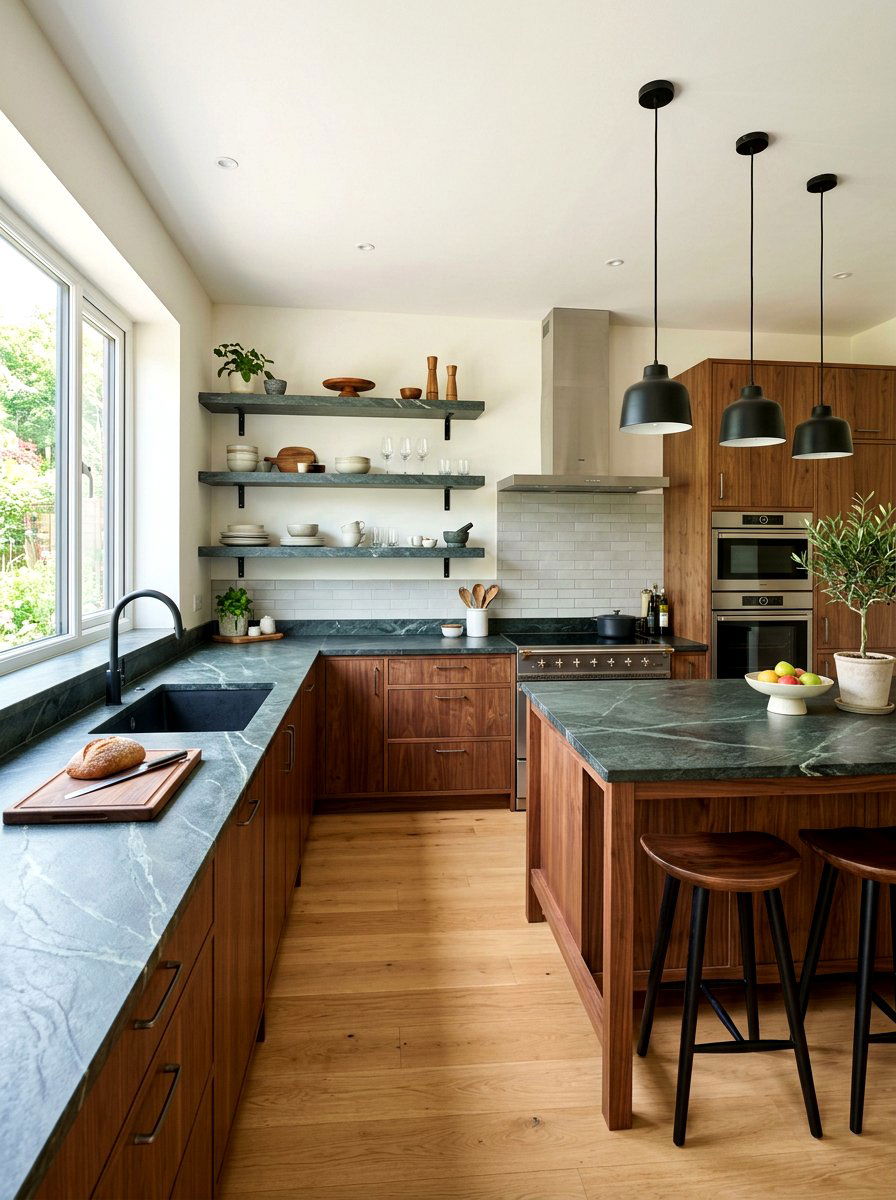
Are you looking for a way to make your kitchen feel more open and accessible while still maintaining a sophisticated look? Pairing soapstone countertops with thick wood or stone open shelves is a great way to display your favorite dishes and glassware. The dark, solid base of the soapstone counters provides a visual weight that allows the upper half of the walls to remain light and airy. Use matching soapstone brackets for the shelves to create a cohesive, custom-built appearance. This design choice encourages a more casual and organized lifestyle, as everything you need is within arm's reach while still looking professionally styled.
26. Two Tone Cabinets Soapstone
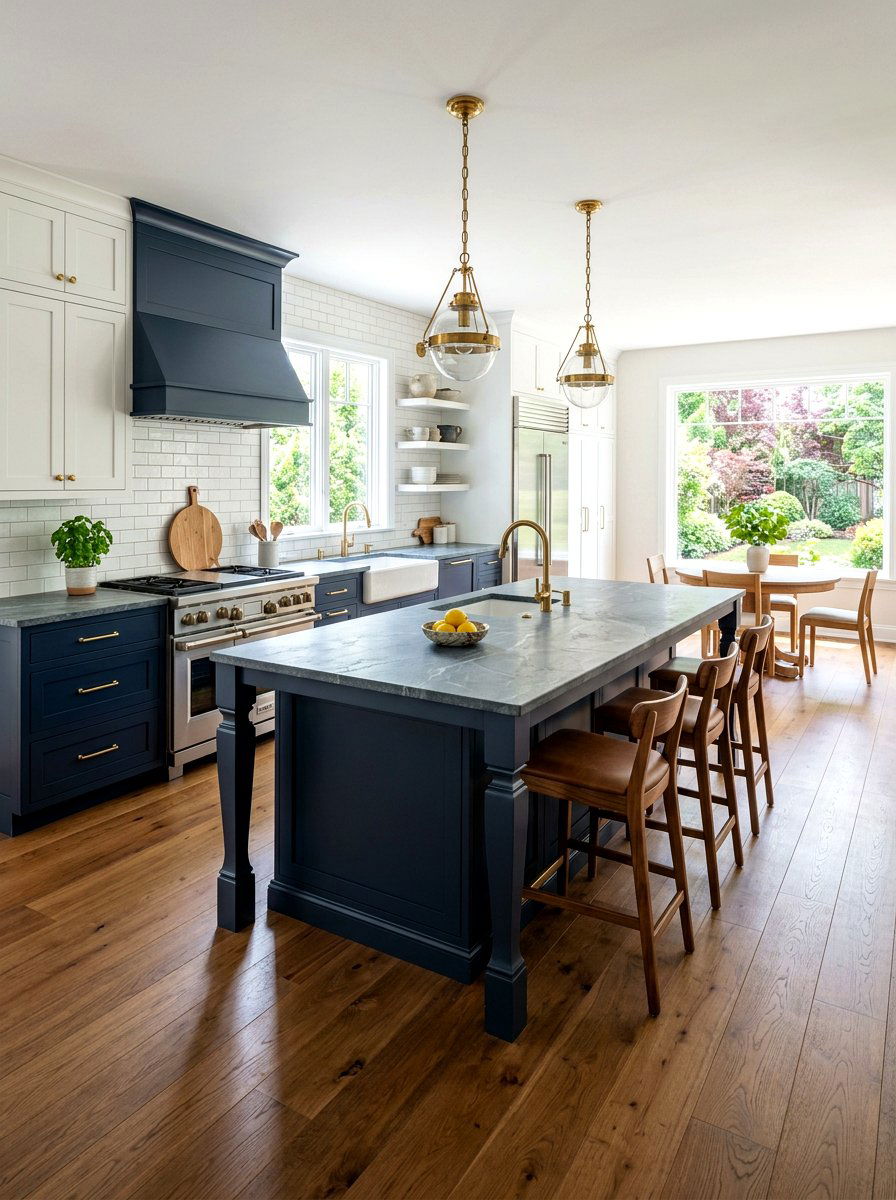
Two-tone cabinetry is a popular design technique that adds visual interest and can help ground a large kitchen. Try using a dark color, like charcoal or navy, for the base cabinets and the island, then top them with soapstone for a seamless and solid look. For the upper cabinets, choose a lighter color or a natural wood finish to keep the room feeling balanced and bright. The soapstone acts as a bridge between the two tones, especially if it features veining that picks up both the light and dark colors used in the cabinetry. This approach creates a dynamic and modern space that feels carefully curated.
27. Soapstone Copper Kitchen Accents
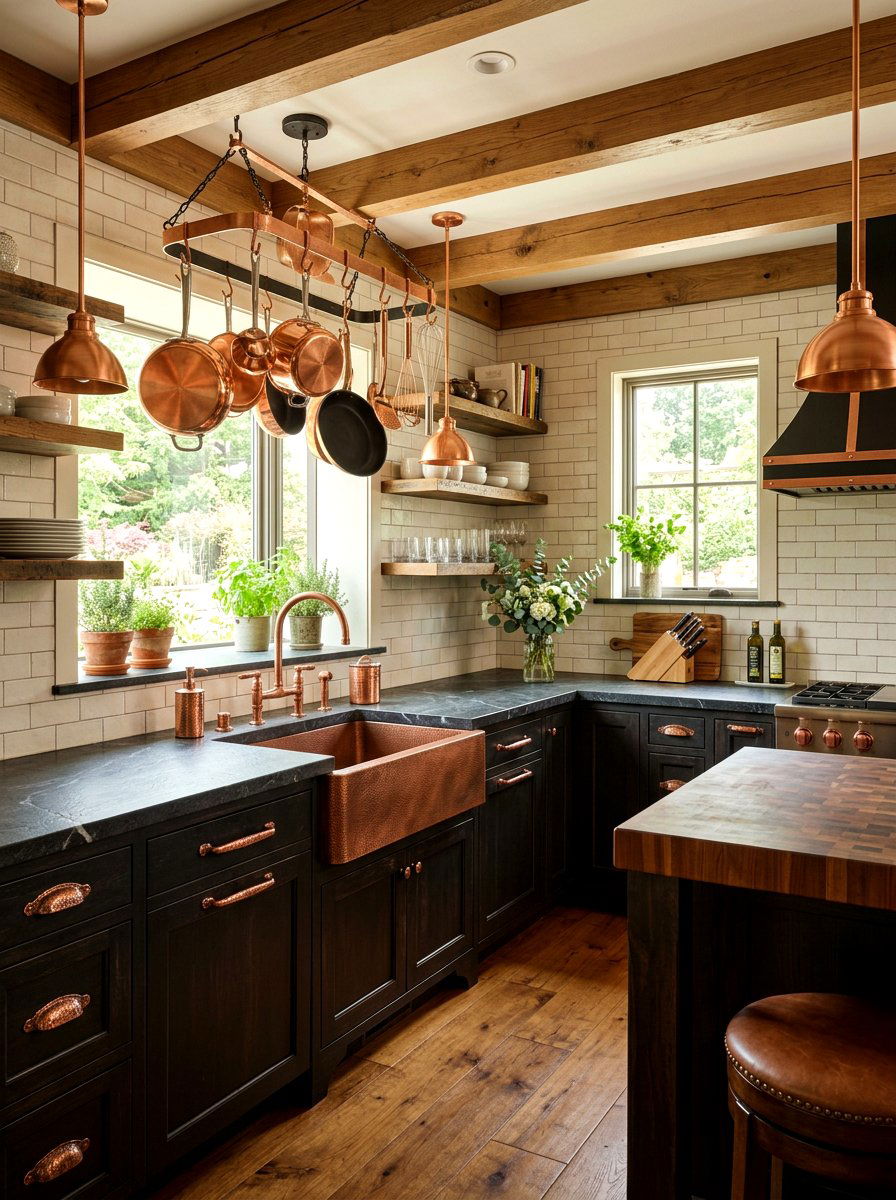
There is something uniquely beautiful about the combination of charcoal soapstone and the warm, glowing tones of natural copper. Copper pots hanging from a rack, a copper farmhouse sink, or even simple copper cabinet pulls can bring a soapstone-heavy kitchen to life. The reddish-orange hue of the metal provides a stunning contrast to the cool grays and greens of the stone. Over time, both the copper and the soapstone will develop their own unique patinas, meaning the kitchen will only get more beautiful and full of character as the years go by. This pairing is ideal for those who love a warm, artisanal feel.
28. Monochromatic Dark Soapstone Kitchen
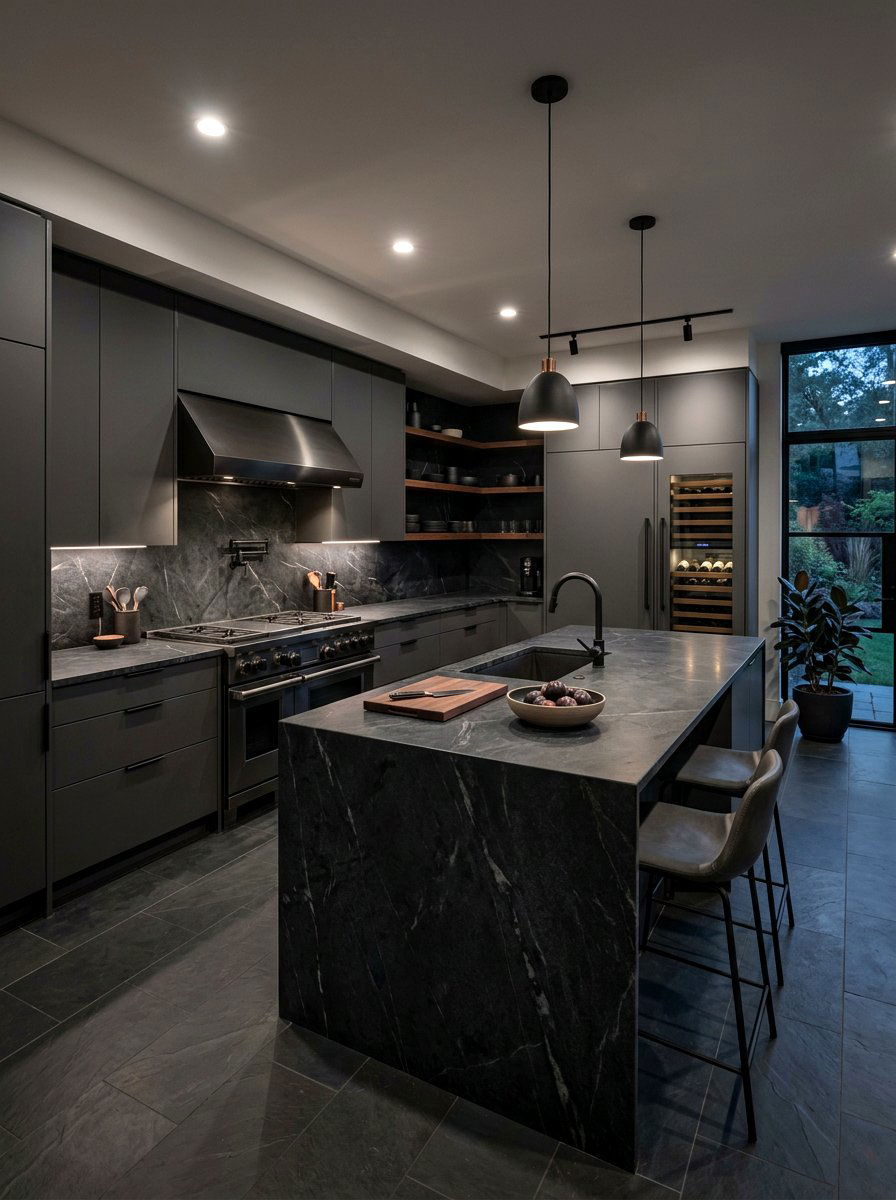
If you love a moody, dramatic aesthetic, a monochromatic dark kitchen is a bold and sophisticated choice. Using dark soapstone for the counters, backsplash, and even the sink creates a powerful, unified statement. When paired with dark gray or black cabinetry, the focus shifts entirely to the texture and natural patterns of the stone. To make this work, you must incorporate different finishes — such as matte cabinets against the slightly lustrous surface of oiled soapstone — to create subtle layers of depth. High-quality task lighting and warm wood flooring are essential to ensure the space remains functional and inviting despite its dark and moody color palette.
29. Luxury Soapstone Gold Finishes
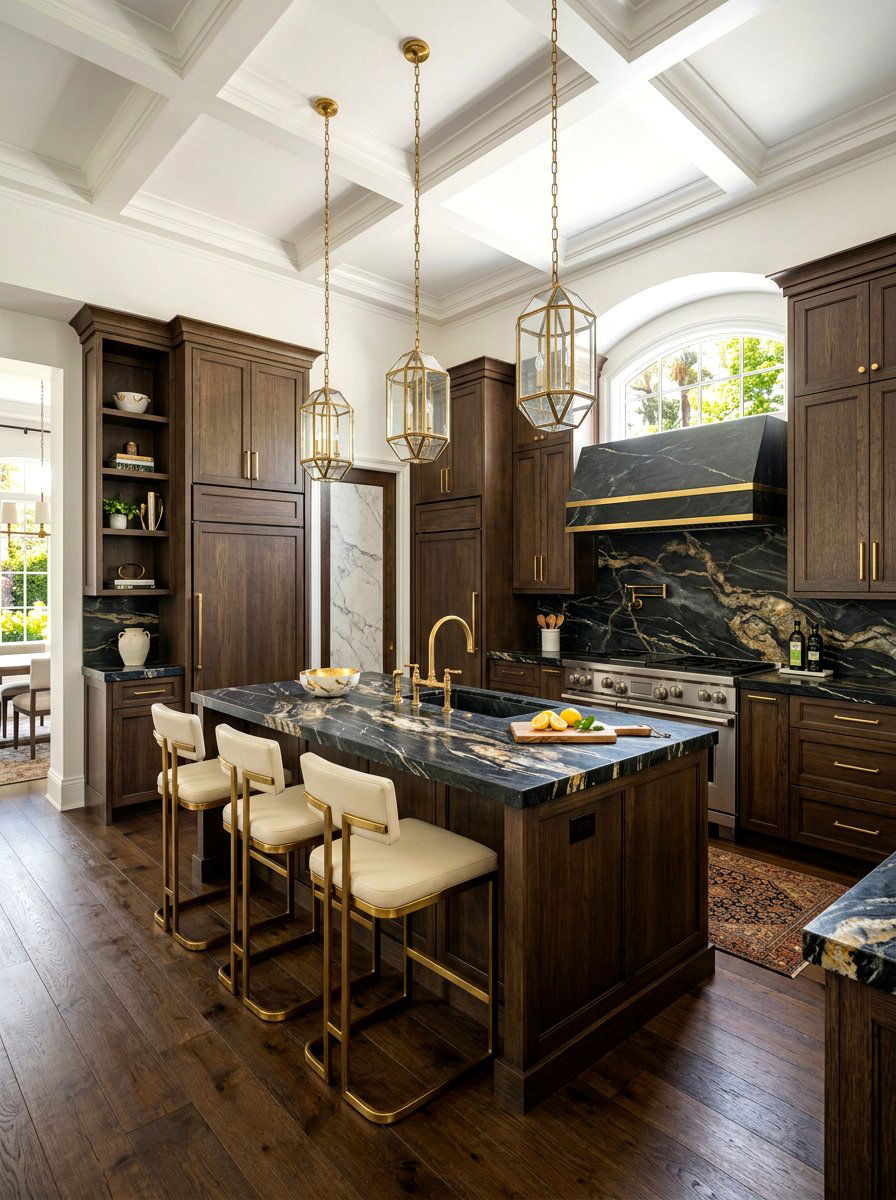
Soapstone doesn't always have to look rustic or farmhouse; it can be incredibly luxurious when paired with the right high-end finishes. Imagine a kitchen with tall, custom-stained oak cabinets, polished soapstone countertops, and striking gold-leaf lighting fixtures. The addition of gold or high-polish brass elements elevates the humble stone to something that feels fit for a luxury penthouse. Use a large-format soapstone backsplash and integrated appliances to create a sleek, uninterrupted aesthetic. This design is all about the details, focusing on precise craftsmanship and the interplay between the organic textures of the stone and the refined, glittering accents of the gold metal.
30. Vintage Soapstone Kitchen Remodel
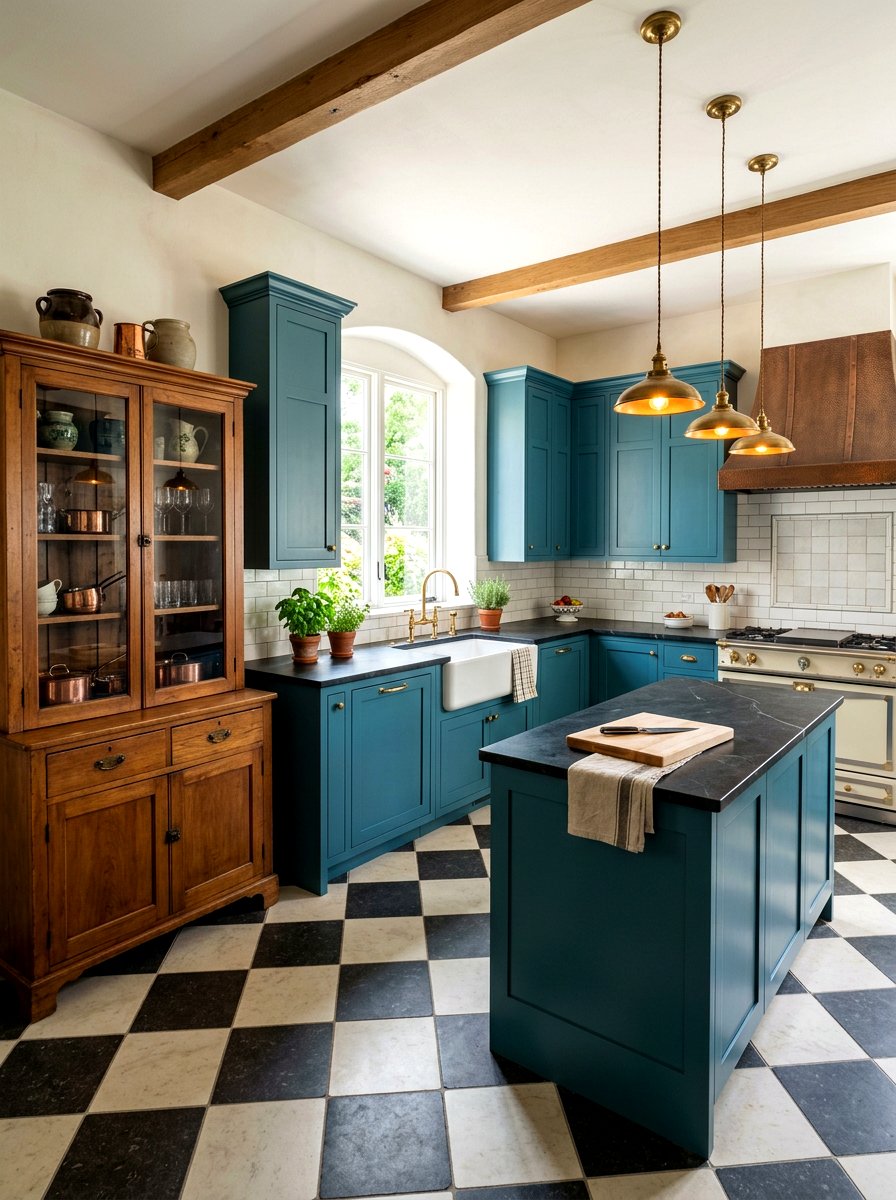
When remodeling a historic home, preserving the original character while updating the function is a delicate balance. Soapstone is often the perfect choice for vintage-style remodels because it has been a staple in American and European kitchens for centuries. Pair the stone with inset cabinetry, bin pulls, and a classic black-and-white checkered floor for a timeless, "always-been-there" look. Incorporating a salvaged vintage hutch or a traditional larder will further enhance the authentic feel of the space. This design approach respects the home's architectural history while providing a durable and high-performing kitchen that meets the needs of a modern family without losing its soul.
Conclusion:
Choosing soapstone for your kitchen project is a decision that balances long-term durability with an incredibly unique aesthetic that evolves beautifully over time. This versatile natural stone offers a tactile experience that few other materials can match, providing a soft, matte finish that feels warm to the touch. Whether you prefer the dark, oiled look or the natural gray patina, soapstone serves as a reliable and stunning foundation for any interior style. By carefully considering your cabinetry colors, hardware finishes, and lighting, you can create a cohesive space that highlights the raw beauty of this magnificent stone for many decades.

Related posts: