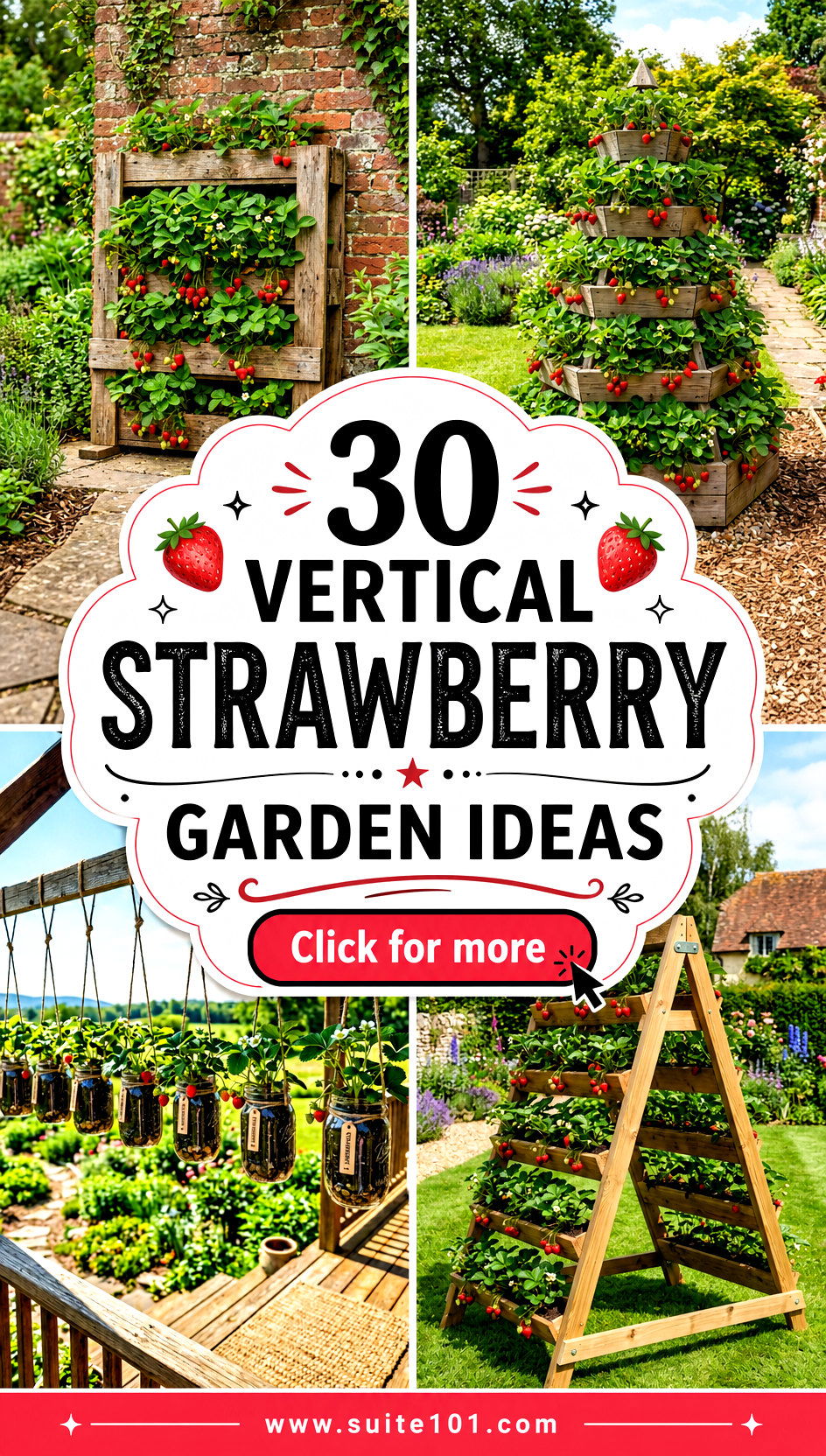
Vertical strawberry gardening is the ultimate game changer for homeowners with limited outdoor space or those who simply want to maximize their annual harvest. Instead of letting fruit sit on the damp soil where pests and rot can easily take over, going vertical keeps your berries clean, accessible, and beautiful. It transforms a simple backyard or balcony into a lush, edible landscape that looks just as good as it tastes. Whether you are using recycled materials like old pallets or investing in high-tech hydroponic towers, the benefits are endless. You will find that vertical systems allow for better air circulation and sunlight exposure, leading to healthier plants and sweeter fruit throughout the growing season. Let us dive into these creative and functional ways to elevate your strawberry patch today.
1. PVC Strawberry Tower
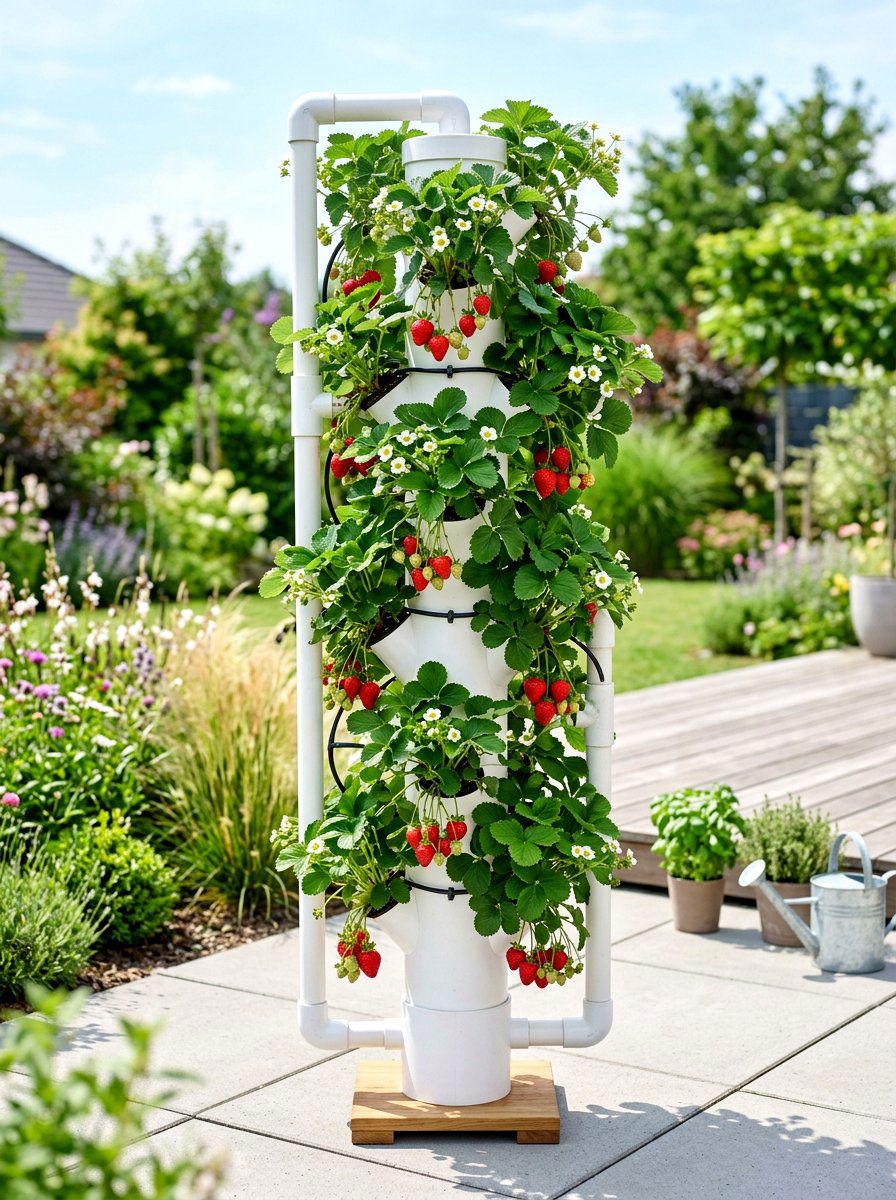
A PVC strawberry tower is one of the most efficient ways to grow a massive amount of fruit in a very small footprint. You start with a wide PVC pipe and drill staggered holes along the sides to create planting pockets for the strawberry runners. Inside the main pipe, a smaller perforated tube is often inserted to ensure that water reaches the roots at every level evenly. This vertical setup is perfect for sunny corners of a patio or deck where ground space is at a premium. The white plastic reflects heat, but you can also paint it to match your outdoor decor. It provides a clean, organized look that keeps berries off the ground and away from hungry slugs.
2. Hanging Gutter Garden
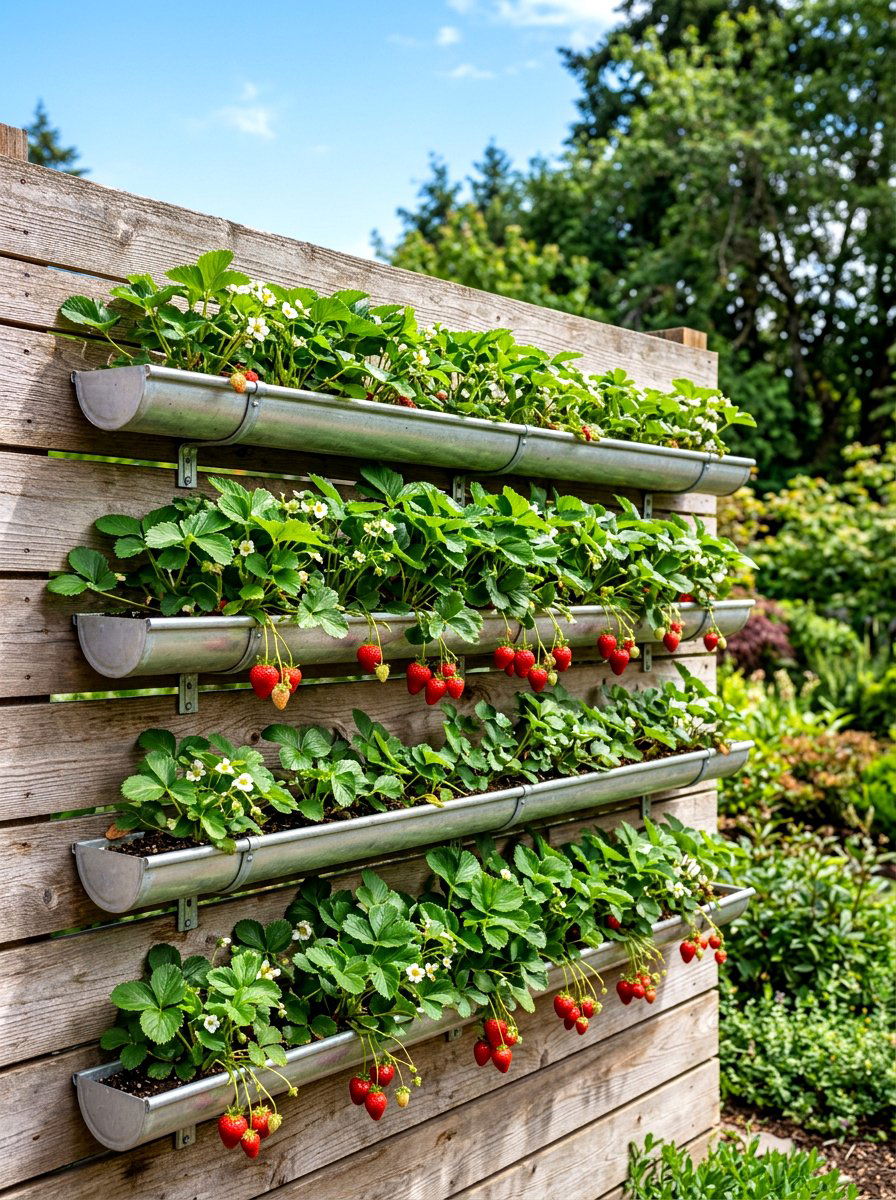
Repurposing rain gutters into a hanging garden is a brilliant way to utilize vertical wall space or fence lines. You can mount several rows of aluminum or plastic gutters one above the other to create a cascading green wall of strawberry plants. Make sure to drill plenty of drainage holes in the bottom to prevent waterlogging, which strawberries absolutely hate. This system makes harvesting incredibly easy because the berries hang over the edges, keeping them clean and easy to spot. It is a cost-effective solution that looks professional and modern when finished. You can even use wire cables to hang them from a porch ceiling for a floating garden effect that saves valuable ground area.
3. Wooden Pallet Planter
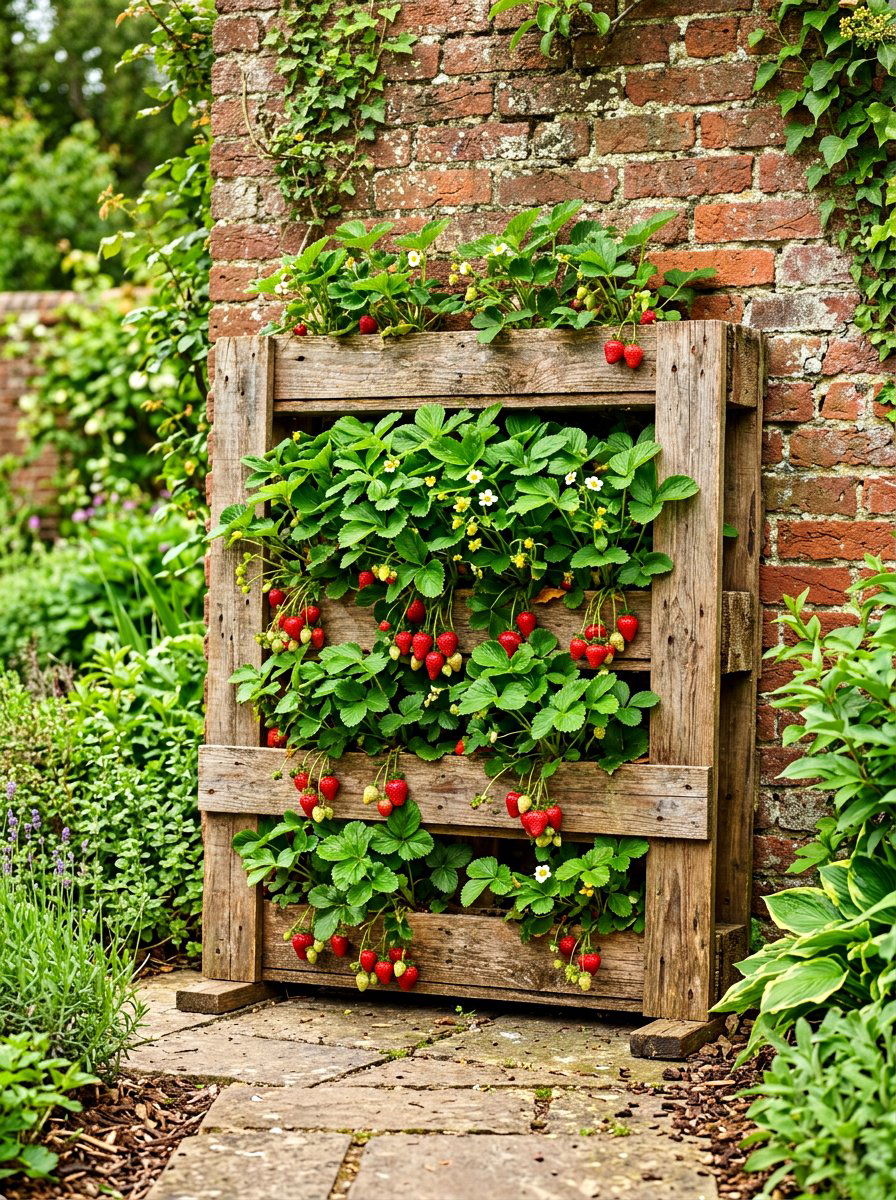
The wooden pallet planter is a classic DIY project that offers an eco-friendly way to display your strawberry crop. By adding landscape fabric to the back and bottom of a recycled pallet, you create a sturdy vertical container. Fill the internal space with high-quality potting soil and tuck your strawberry plants into the slats. This design provides a rustic, farmhouse aesthetic that fits perfectly against a garden shed or a wooden fence. Because the plants are densely packed, they create a lush wall of foliage and red berries. It is important to water frequently, as the wood and fabric can cause the soil to dry out faster than traditional ground beds.
4. Tiered Pyramid Planter
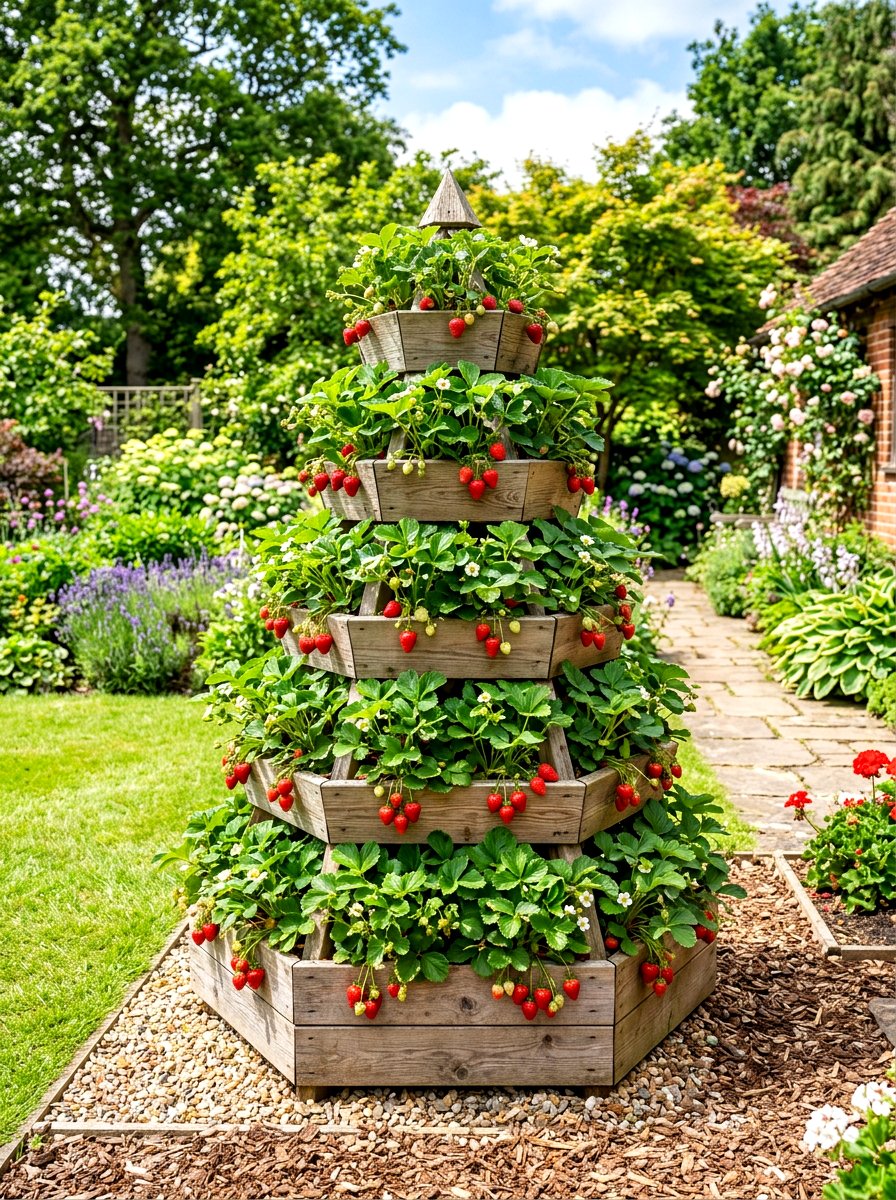
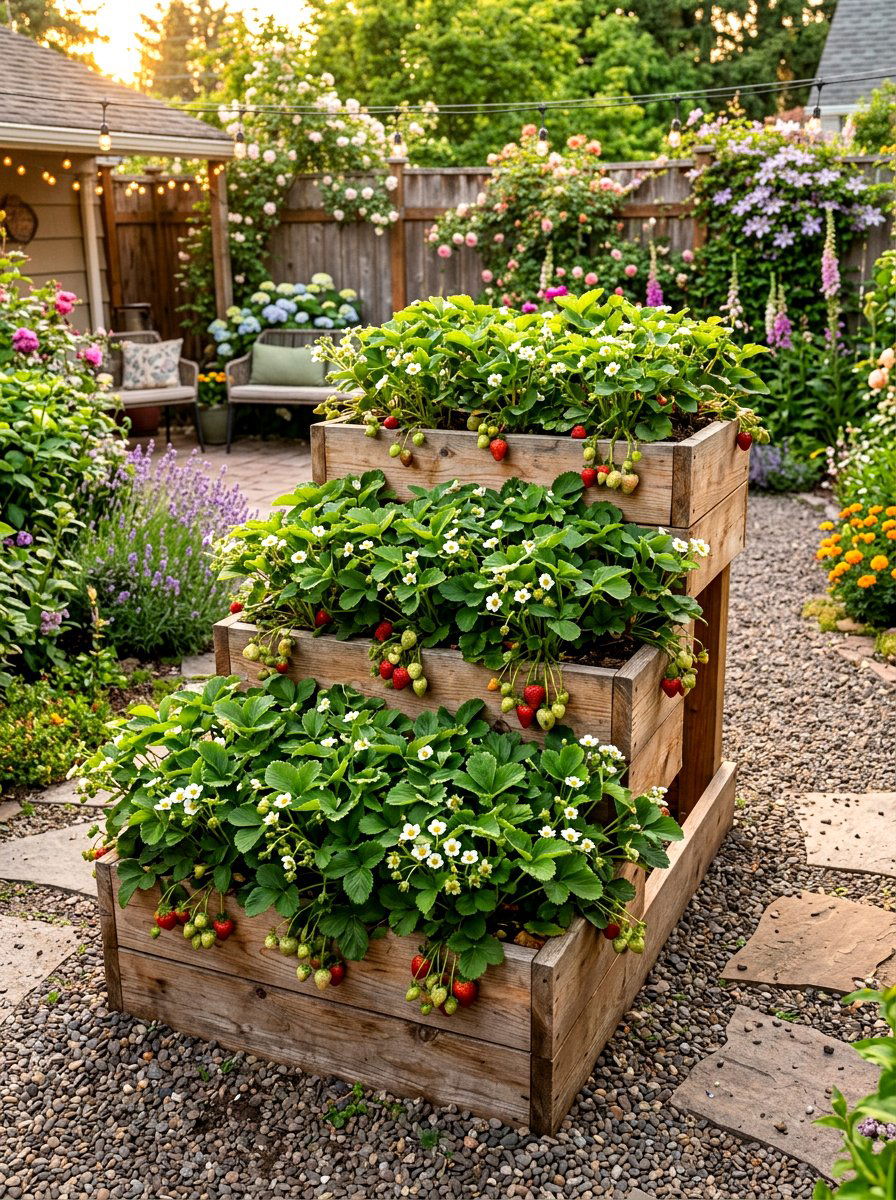
A tiered pyramid planter is a striking architectural feature that allows you to grow strawberries in multiple levels. This design usually consists of several square wooden frames of decreasing sizes stacked on top of each other. The result is a mountain-like structure where strawberries can spill over the edges of each level. This setup maximizes sunlight for every plant since no level is directly shaded by the one above it. It is an excellent choice for a centerpiece in a traditional garden or on a large patio. The pyramid shape makes it very easy to install a central irrigation system that drips down through each layer, ensuring consistent moisture for all.
5. Wall Mounted Pockets
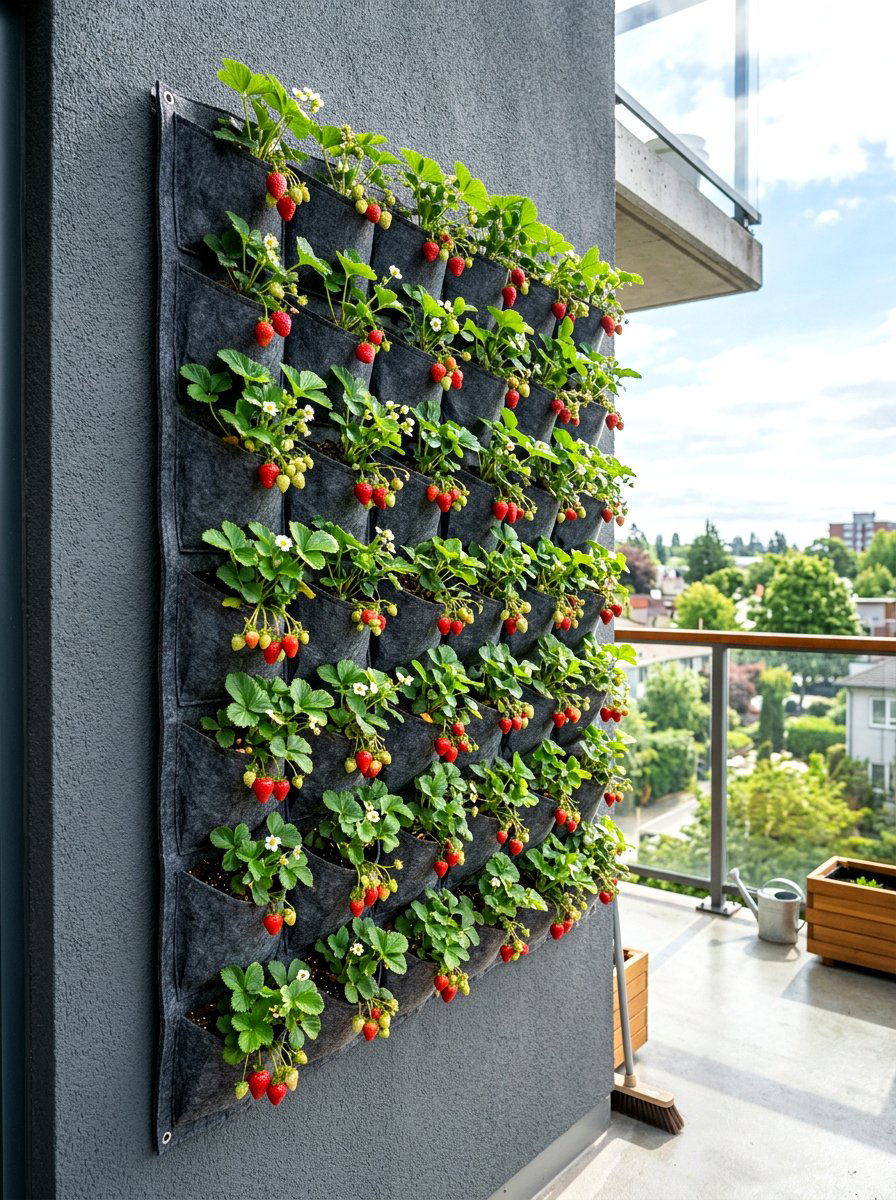
Wall mounted pockets made from felt or heavy-duty fabric are perfect for turning a bare wall into a living edible tapestry. These pockets are breathable, which prevents root rot and allows for excellent air circulation around the strawberry plants. They are incredibly lightweight and easy to install with just a few screws or hooks. As the plants grow, the foliage and trailing berries will eventually cover the fabric, creating a seamless green surface. This is a fantastic option for balcony gardeners who want to keep their floor space clear for furniture. Just ensure the wall behind the pockets is protected from moisture to prevent any long-term water damage.
6. Stacked Terra Cotta Pots
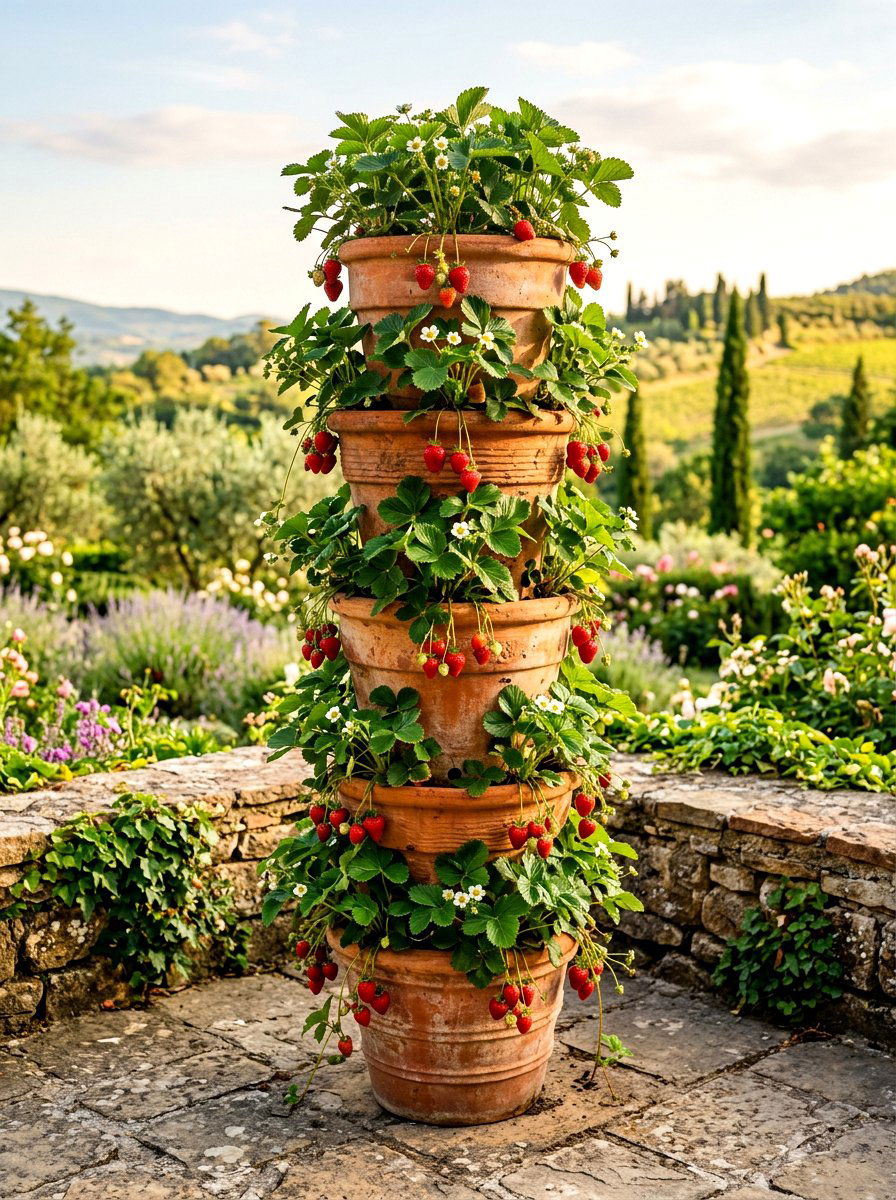
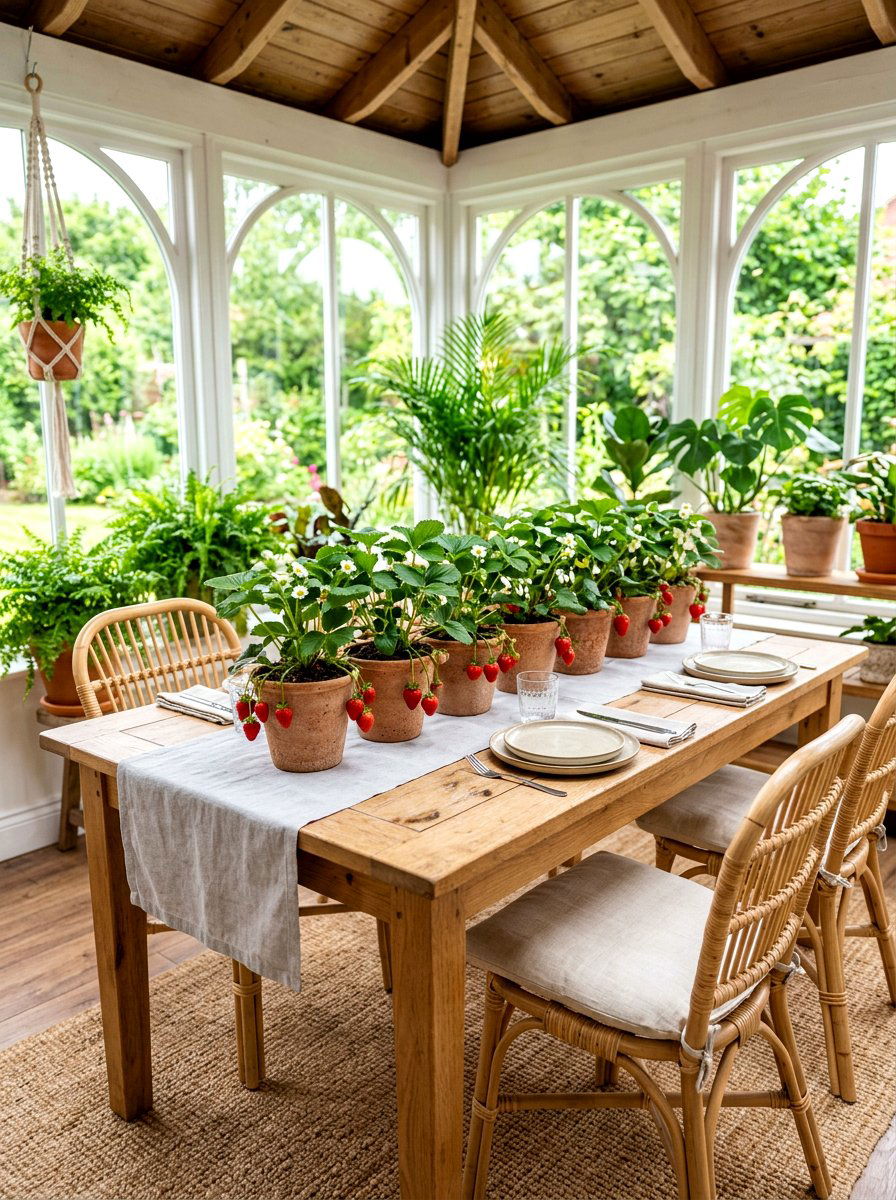
Stacked terra cotta pots offer a timeless and charming look for any vertical garden enthusiast. You can create this by placing a large pot at the base and stacking smaller ones on top, often using a central wooden or metal stake for stability. This creates a tower of individual planting zones that are easy to manage. Terra cotta is a porous material, which helps the soil breathe, but it does require more frequent watering in hot climates. The warm, earthy tones of the clay provide a beautiful contrast to the bright green leaves and red berries. This setup is highly portable, allowing you to move it to find the best sun.
7. Hydroponic Growing Tower
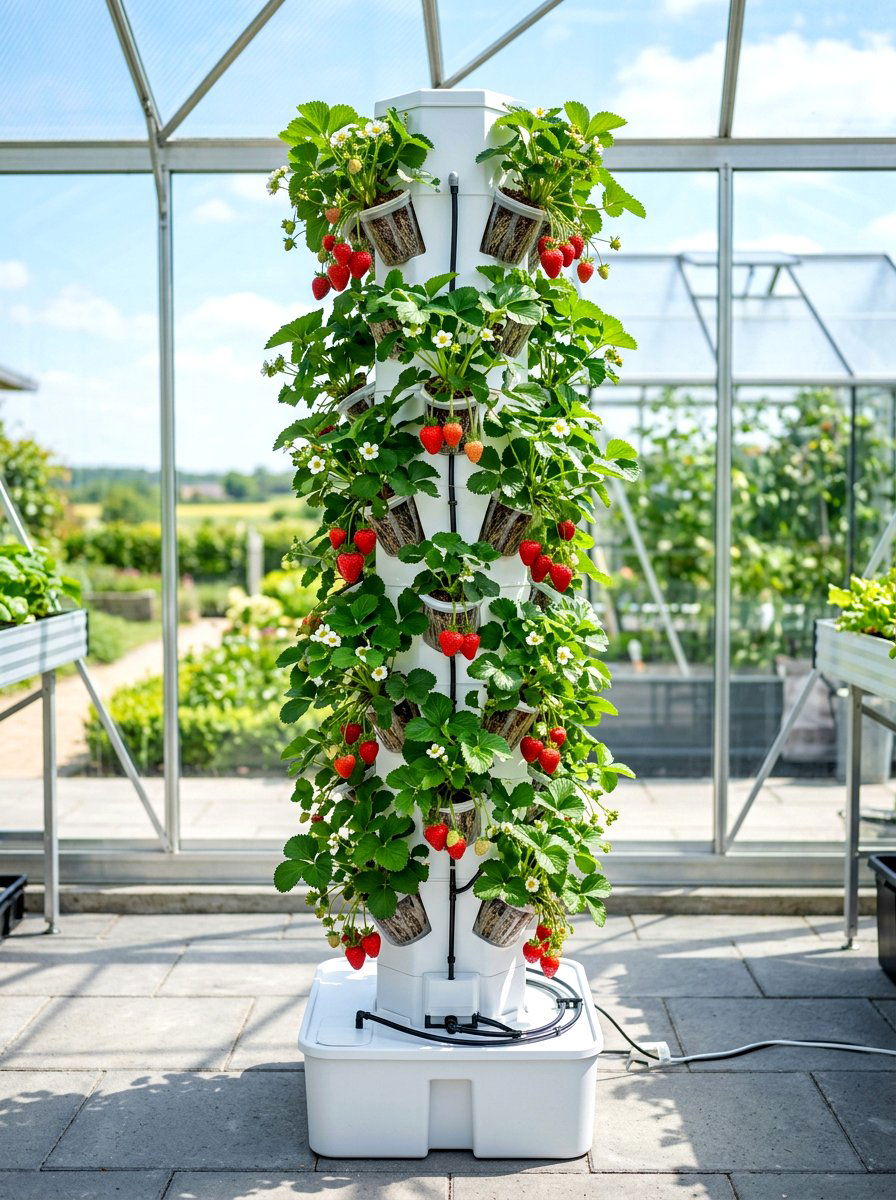
A hydroponic growing tower is the peak of modern vertical gardening, using nutrient-rich water instead of traditional soil. These towers often feature a motorized pump that circulates the water from a base reservoir to the top, where it then trickles down over the roots. This method can result in much faster growth rates and larger yields compared to soil-based gardening. It is a very clean system, making it suitable for both outdoor patios and indoor sunrooms. While the initial investment might be higher, the savings in water and the lack of soil-borne pests make it a very attractive option. It provides a sleek, futuristic look to your garden.
8. Vertical Wire Mesh Cylinder
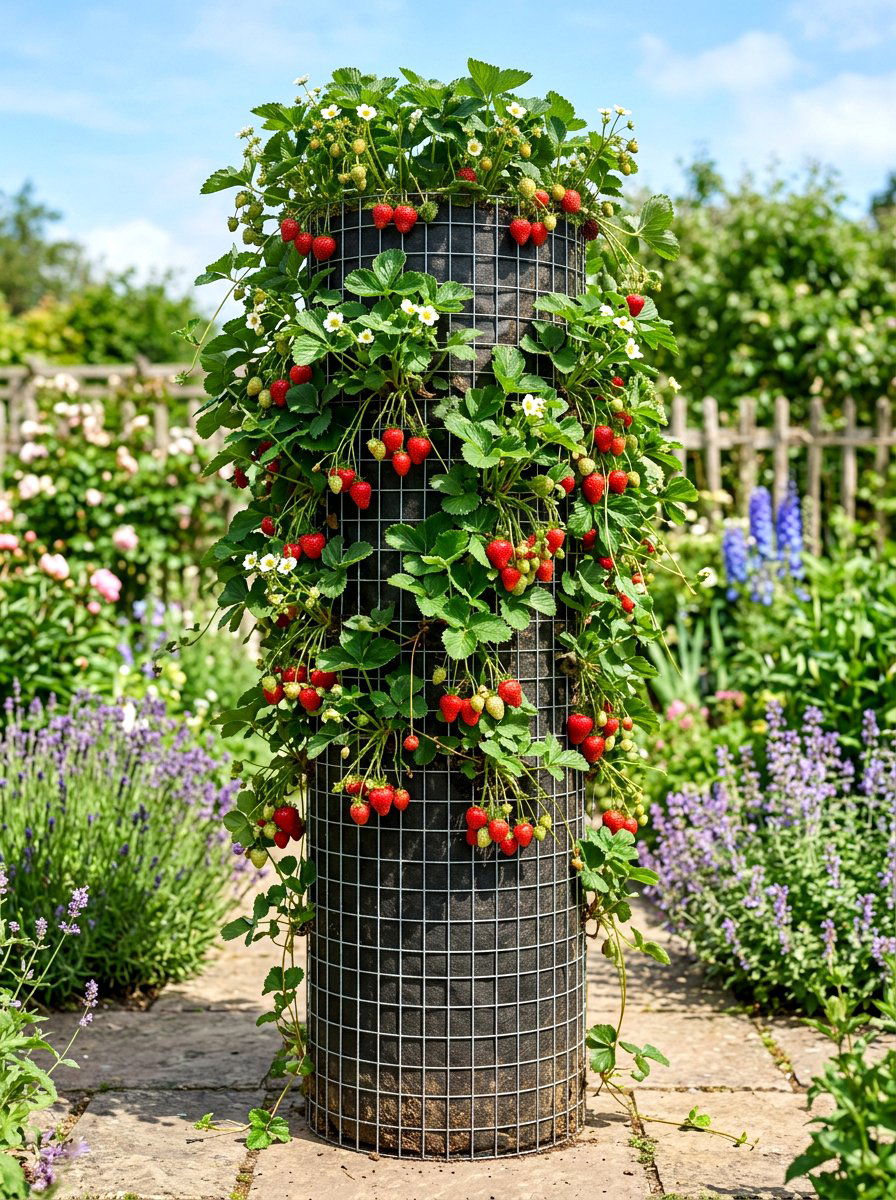
The vertical wire mesh cylinder is a rugged and effective way to grow strawberries in a pillar format. You create a cylinder using sturdy hardware cloth or wire fencing and line the interior with thick plastic or landscape fabric. After filling the center with a mix of soil and compost, you cut small slits in the liner to insert the strawberry starts. This design allows for 360-degree sunlight exposure and makes it easy for the berries to hang freely. It is a very stable structure that can withstand wind better than some lighter plastic alternatives. The industrial look can be softened by the overflowing vines as the season progresses.
9. Hanging Basket Column
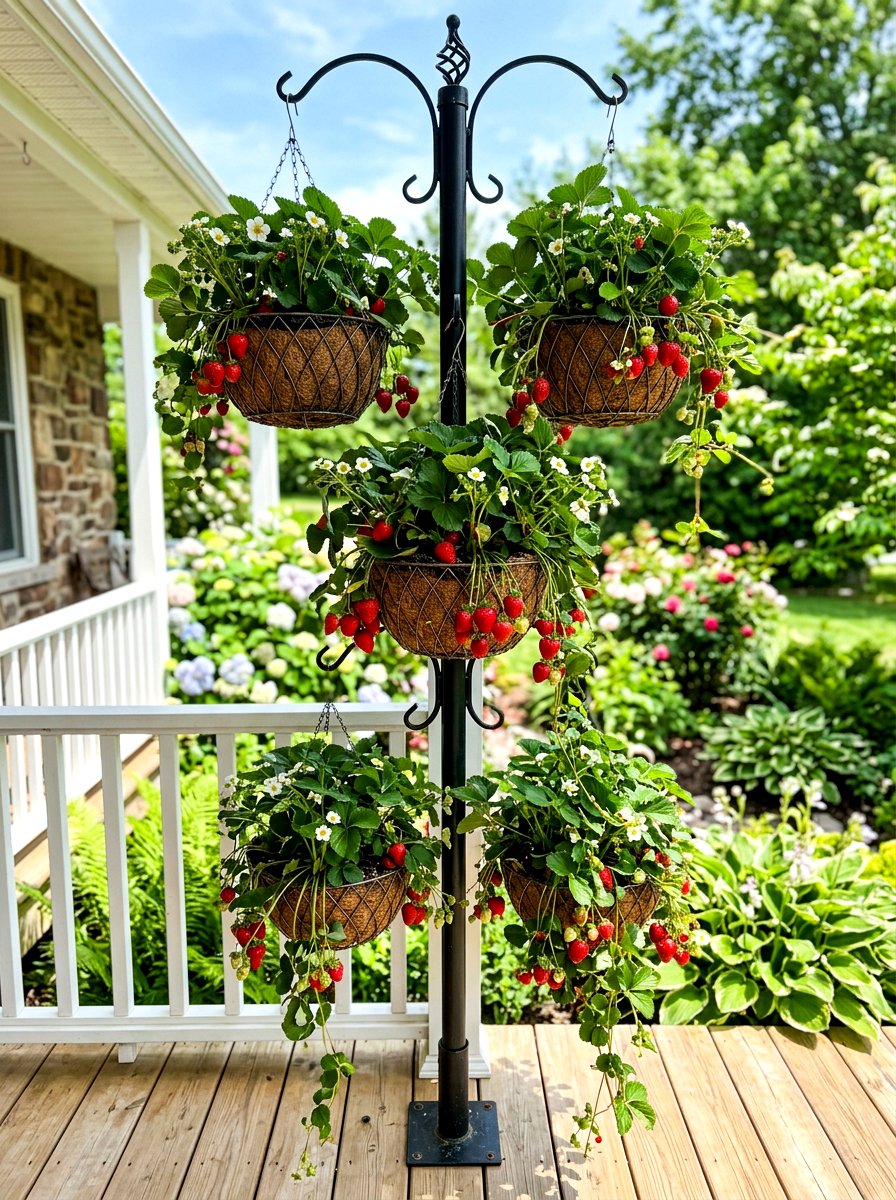
Creating a hanging basket column involves verticality through suspension, using multiple baskets attached to a single sturdy pole or overhead beam. By hanging baskets at varying heights, you create a vertical column of fruit that is completely out of reach from most ground-dwelling pests. This setup is particularly effective for trailing strawberry varieties that naturally drape downwards. The visual impact of several overflowing baskets creates a lush, floral atmosphere in any outdoor space. It is essential to ensure that the support structure is strong enough to handle the weight of wet soil. Regular liquid feeding will help keep these high-producing baskets healthy throughout the entire summer season.
10. Pocket Organizer Planter
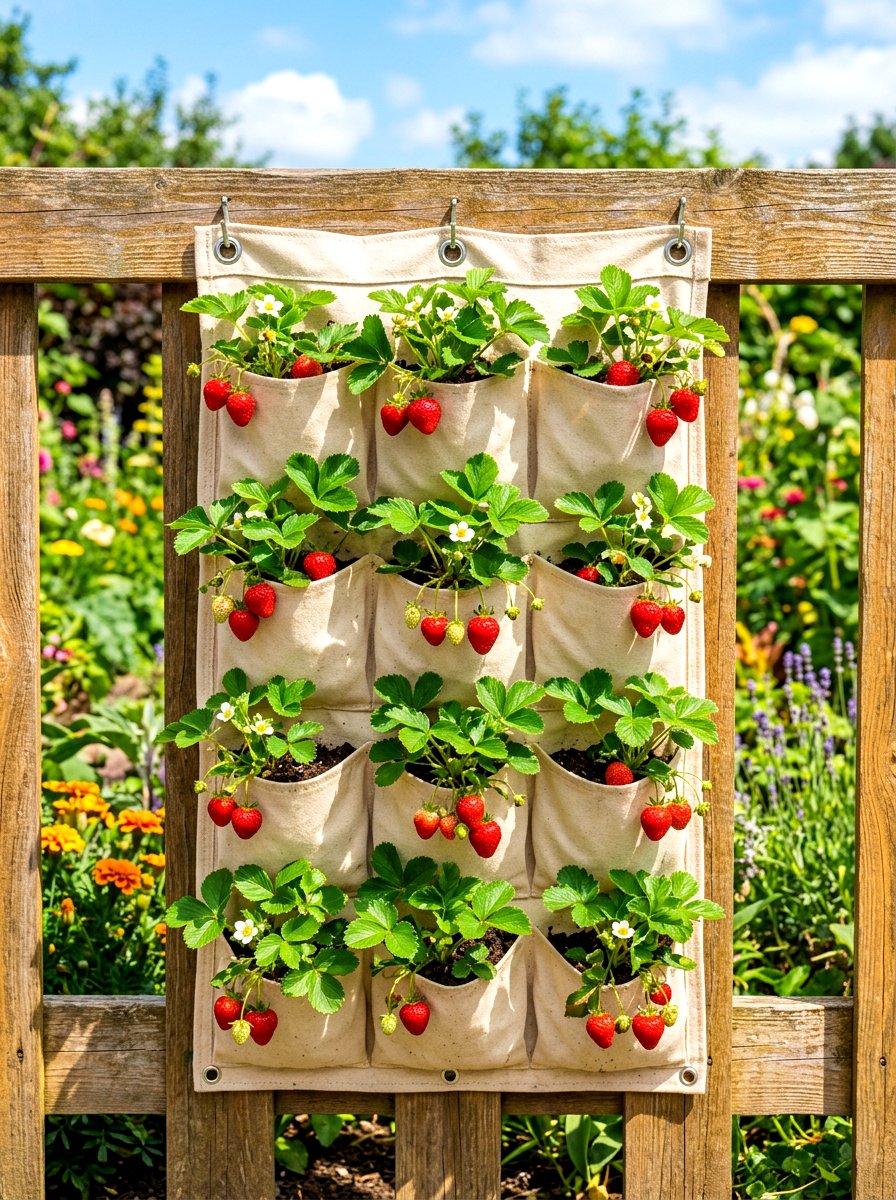
Using a repurposed over-the-door pocket organizer is one of the most affordable and creative ways to start a vertical strawberry garden. These organizers, typically made of canvas or clear plastic, provide many individual cells that are just the right size for a single strawberry plant. You can hang the organizer on a sunny fence or a balcony railing to create an instant garden. It is a great project for beginners or children because it is easy to set up and maintain. Ensure you choose a breathable fabric or poke drainage holes in plastic versions to keep the roots healthy. It is a fun, quirky way to recycle household items.
11. Ladder Shelf Garden
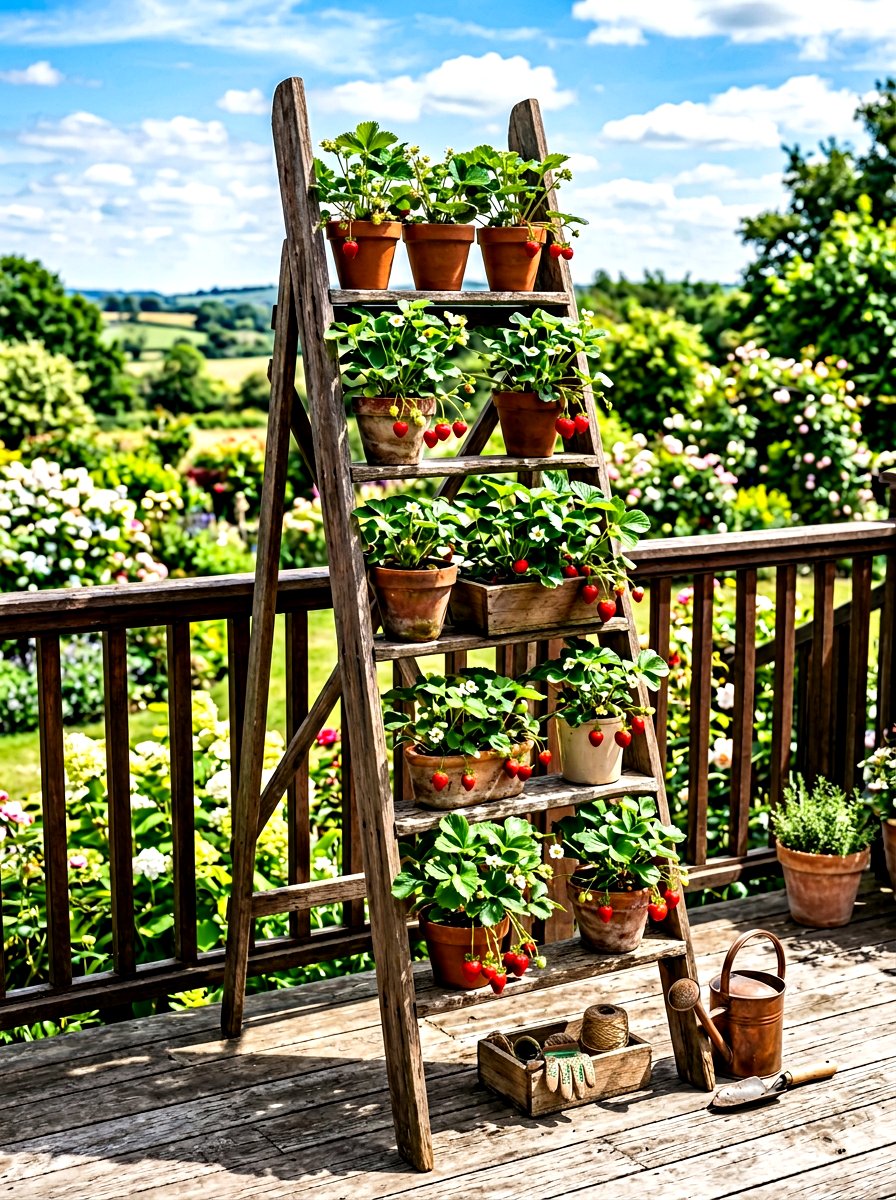
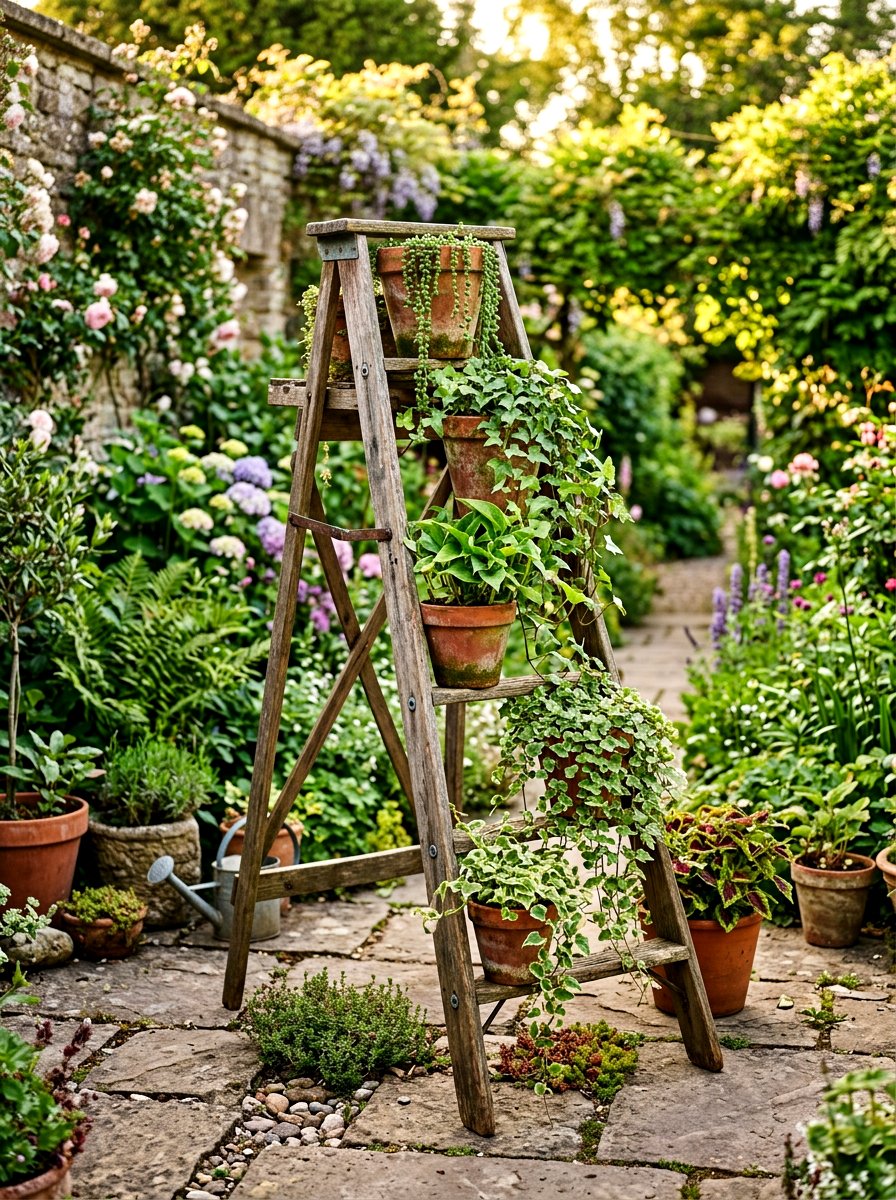
A ladder shelf garden provides a stylish and tiered platform for displaying your strawberry pots. You can use an old wooden ladder or a purpose-built shelving unit to hold containers at different heights. This arrangement allows you to treat each level as a separate mini-garden, making it easy to swap out plants or adjust their position for better sunlight. The open design ensures that every plant gets plenty of fresh air, which is vital for preventing fungal diseases. This setup looks particularly beautiful when placed against a brick wall or nestled among other garden features. It adds a sense of height and structure to even the smallest outdoor patios.
12. Cedar Vertical Planter Box
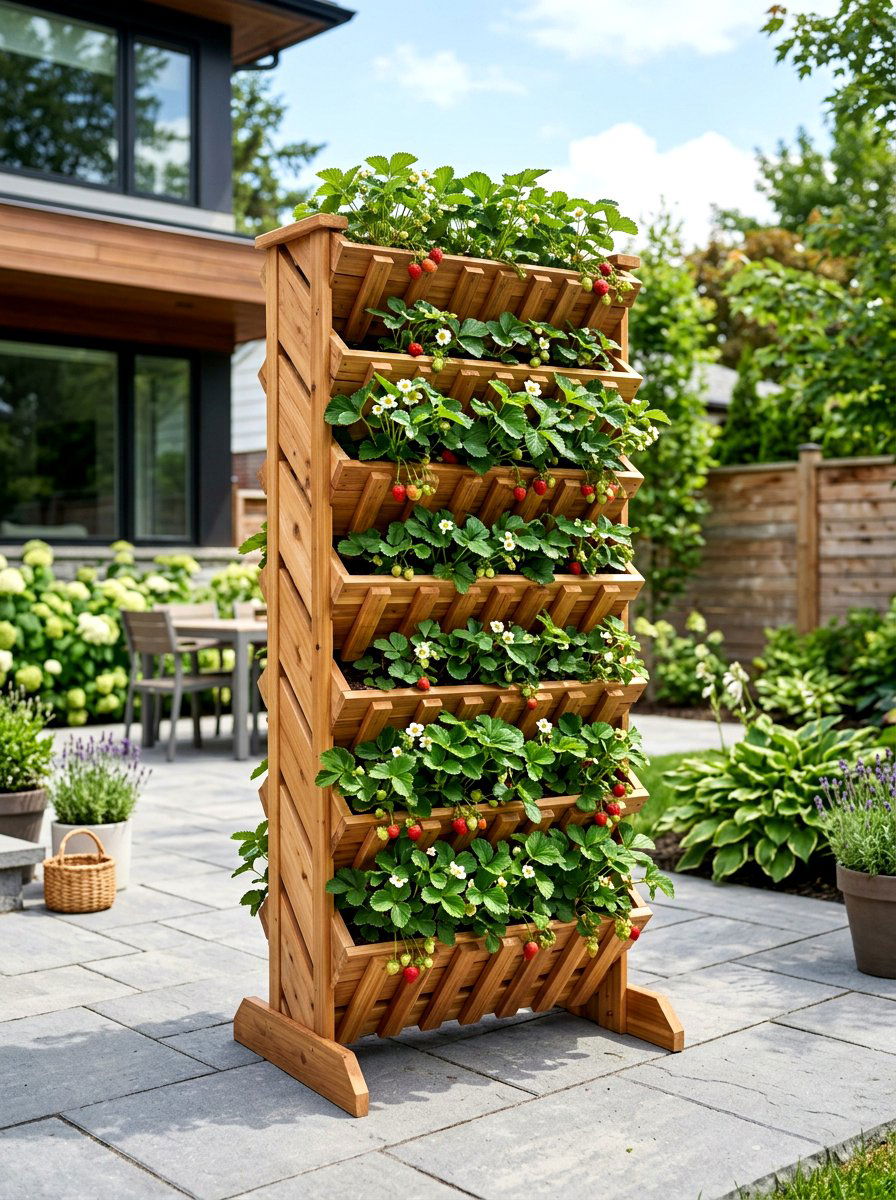
A cedar vertical planter box is a premium choice for those looking for both durability and natural beauty. Cedar is naturally resistant to rot and insects, making it the perfect material for a long-lasting garden structure. These boxes are often designed with slanted slats that allow the strawberries to grow outward and downward. The rich grain of the wood provides a high-end look that matures into a beautiful silver patina over time if left untreated. This type of planter is very sturdy and can hold a significant amount of soil, which helps regulate moisture levels more effectively. It is a solid investment for a permanent vertical garden feature.
13. Rain Barrel Strawberry System
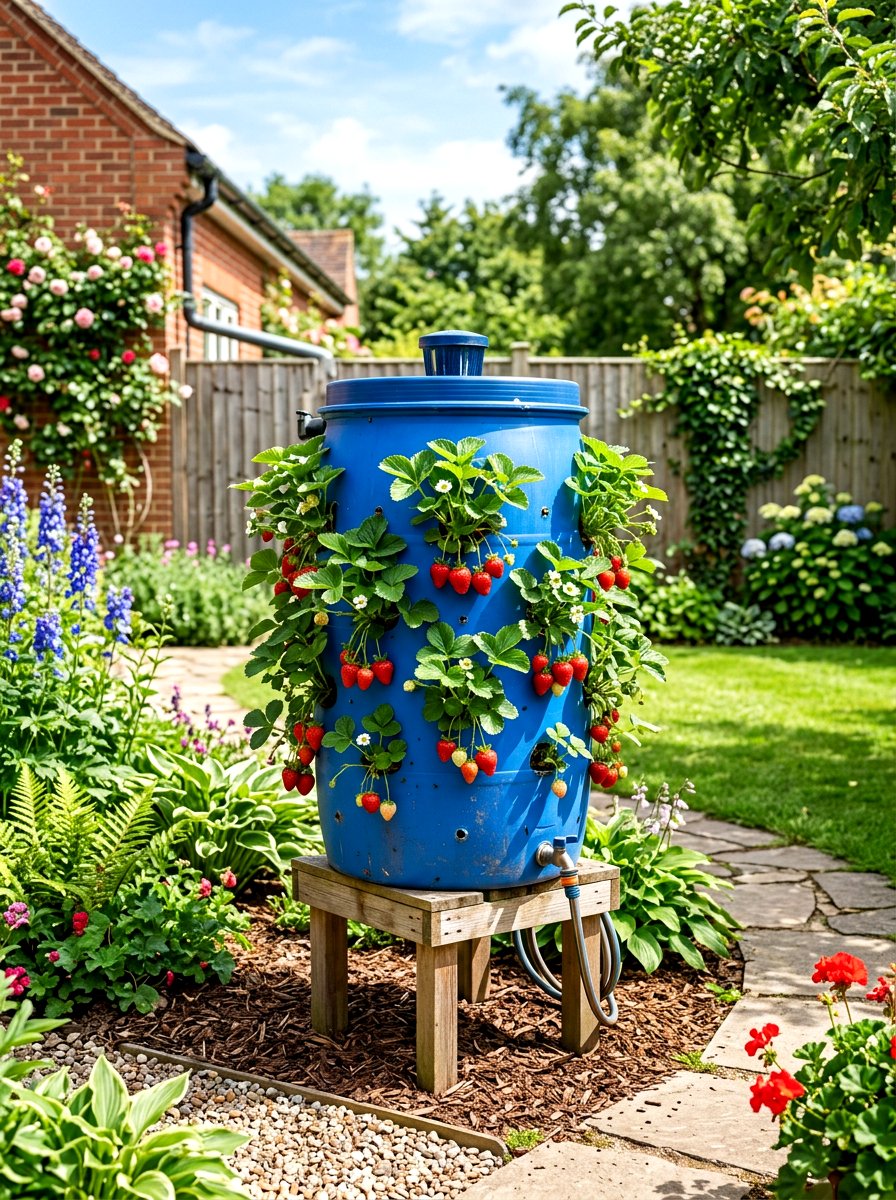
A rain barrel strawberry system combines water storage with food production in a clever and sustainable way. You can modify a plastic rain barrel by cutting holes into the sides and inserting planting pockets. The center of the barrel can still hold water, or you can fill the entire thing with soil to create a massive planting tower. This setup is excellent for harvesting large quantities of berries in a small circular area. If used for water collection, the barrel can even include a built-in irrigation system for the plants. It is a heavy-duty option that stays cool and provides a stable environment for the roots to thrive.
14. Trellis Support Planter
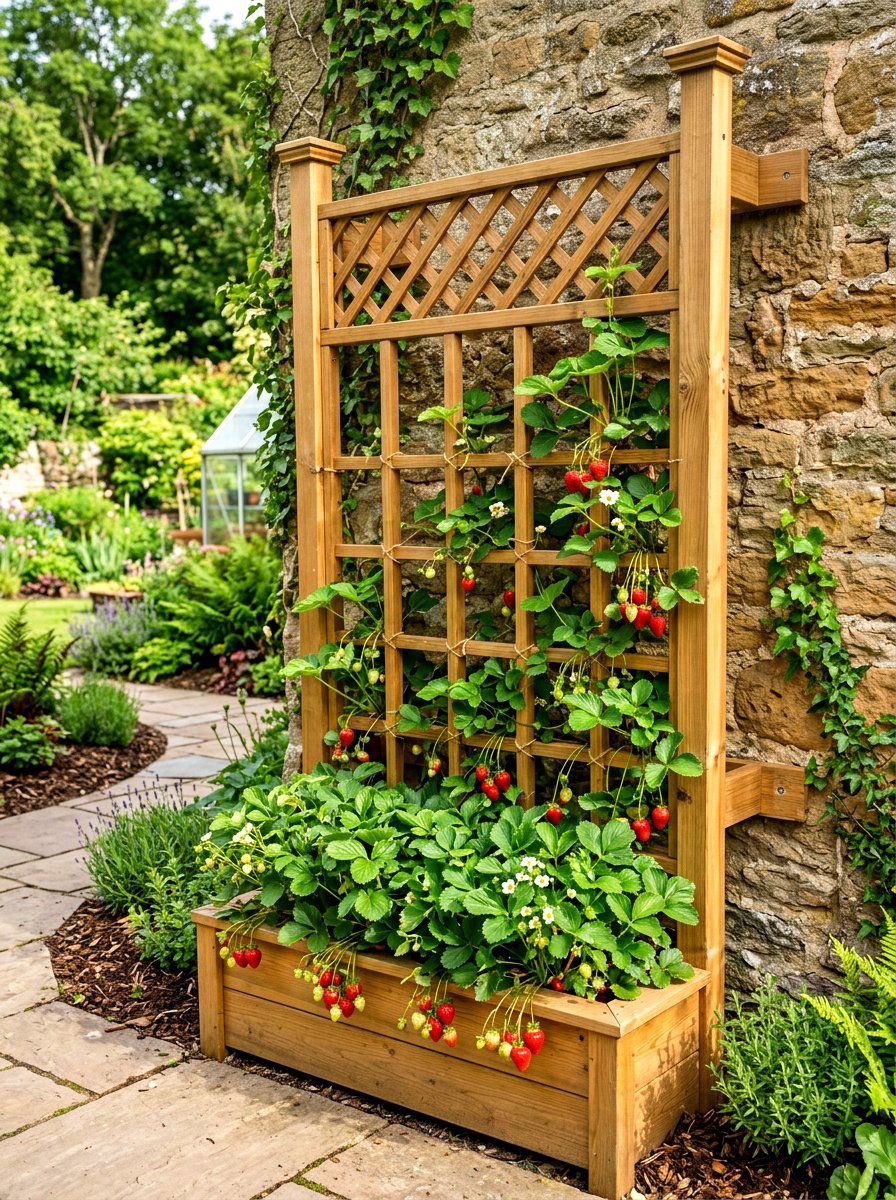
The trellis support planter uses a vertical frame to encourage strawberry runners to climb and fill a vertical space. While strawberries are not natural climbers, you can gently train the runners upwards onto the trellis to create a wall of greenery. This method works best when combined with a long planter box at the base. It creates a beautiful screen that can provide privacy for a porch or balcony while producing delicious fruit. The trellis can be made of wood, metal, or even decorative plastic to match your personal style. It is a great way to add a vertical dimension to traditional garden beds or container setups.
15. Stackable Plastic Planter
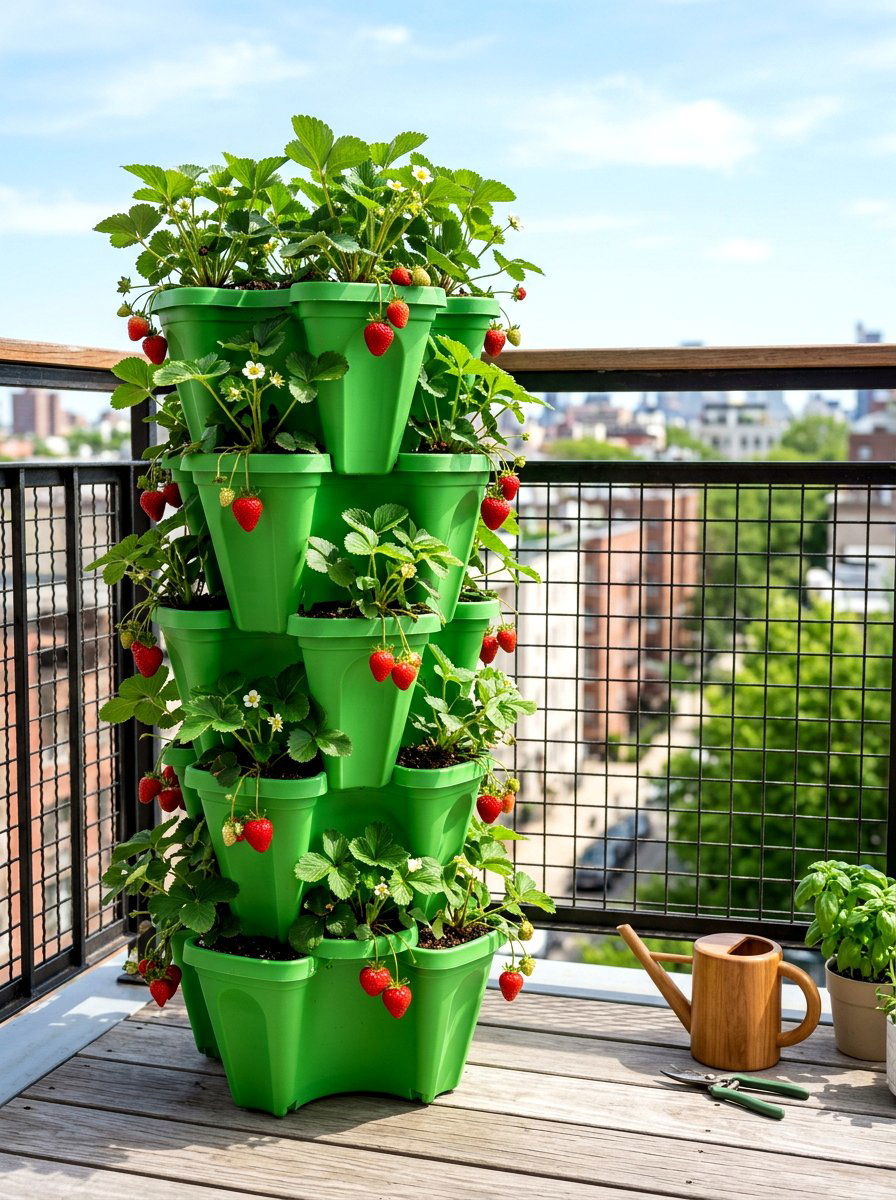
Stackable plastic planters are specifically designed for vertical gardening and are widely available in garden centers. These units consist of clover-shaped tiers that nest into one another, creating a stable tower with multiple planting pockets. Most models feature an internal watering system where you pour water into the top tier and it trickles down to every plant. This is one of the most user-friendly options for people who want a vertical garden without any DIY construction. They are lightweight, easy to clean, and can be disassembled for storage during the winter months. They come in various colors to complement any outdoor or indoor decor theme.
16. Repurposed Boot Wall
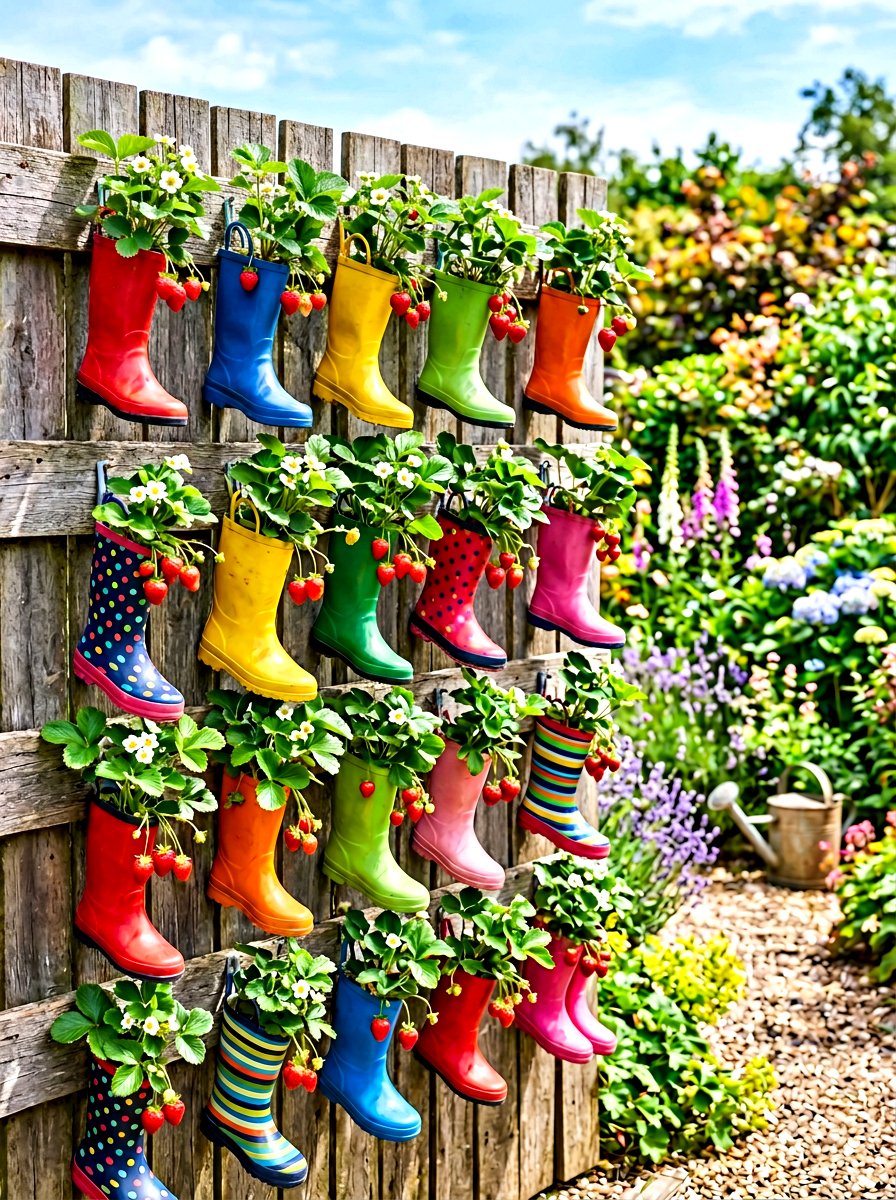
A repurposed boot wall is a whimsical and artistic way to grow strawberries vertically. You can take old colorful rain boots, drill drainage holes in the soles, and hang them in rows on a fence or wall. Each boot acts as an individual container for a strawberry plant, with the foliage spilling over the top of the boot. This idea is a fantastic conversation starter and adds a pop of personality to your garden space. It is also a wonderful way to recycle footwear that your children have outgrown. The rubber material is durable and holds moisture well, though you should monitor it closely during very hot summer days.
17. Concrete Block Vertical Garden
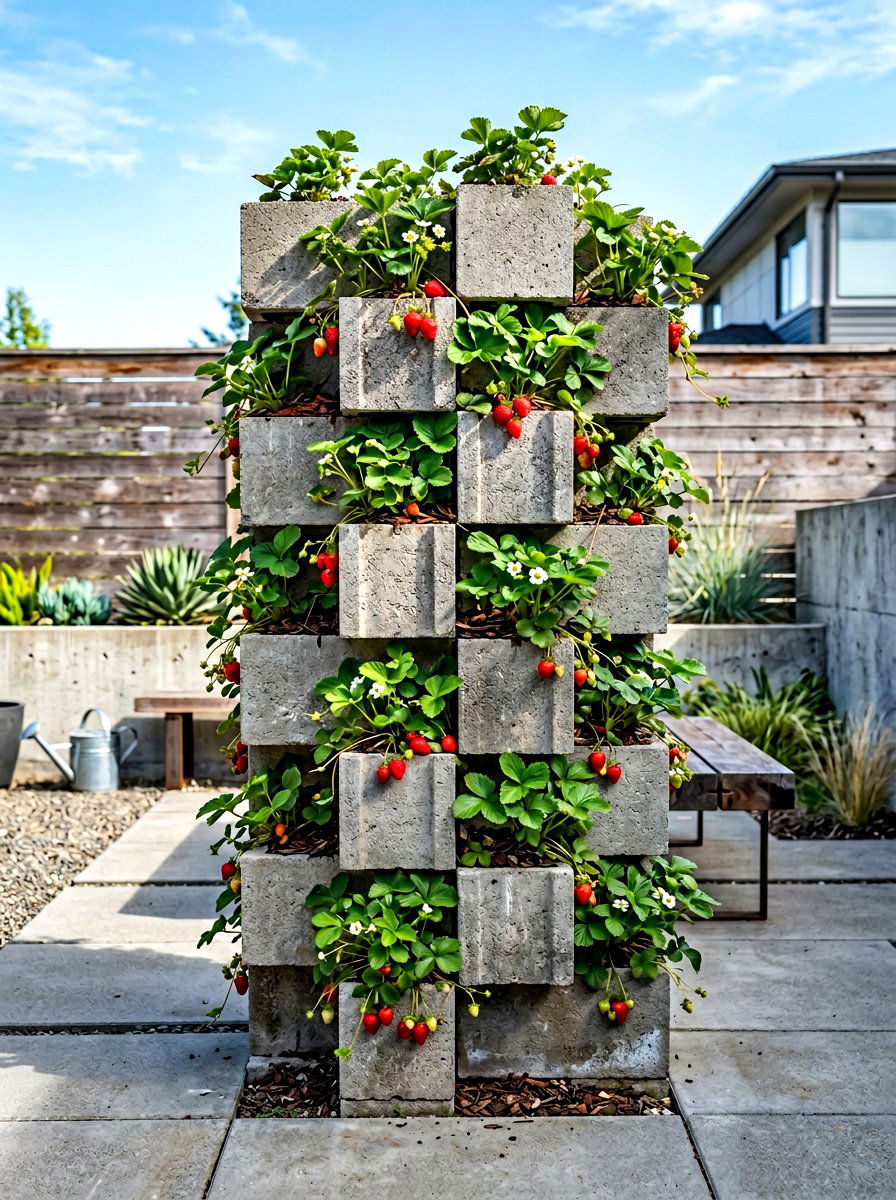
The concrete block vertical garden is an industrial-chic solution that is both incredibly sturdy and very inexpensive. By stacking cinder blocks in a staggered pattern, you create natural planting pockets in the hollow centers of the blocks. This structure is heavy and won't blow over in the wind, making it ideal for exposed rooftop gardens or windy balconies. The grey concrete provides a neutral backdrop that makes the vibrant red strawberries and green leaves really stand out. You can even paint the blocks to add a splash of color to your patio. It is a permanent and low-maintenance way to build a custom-sized vertical growing area.
18. Hanging Jar Strawberry Setup
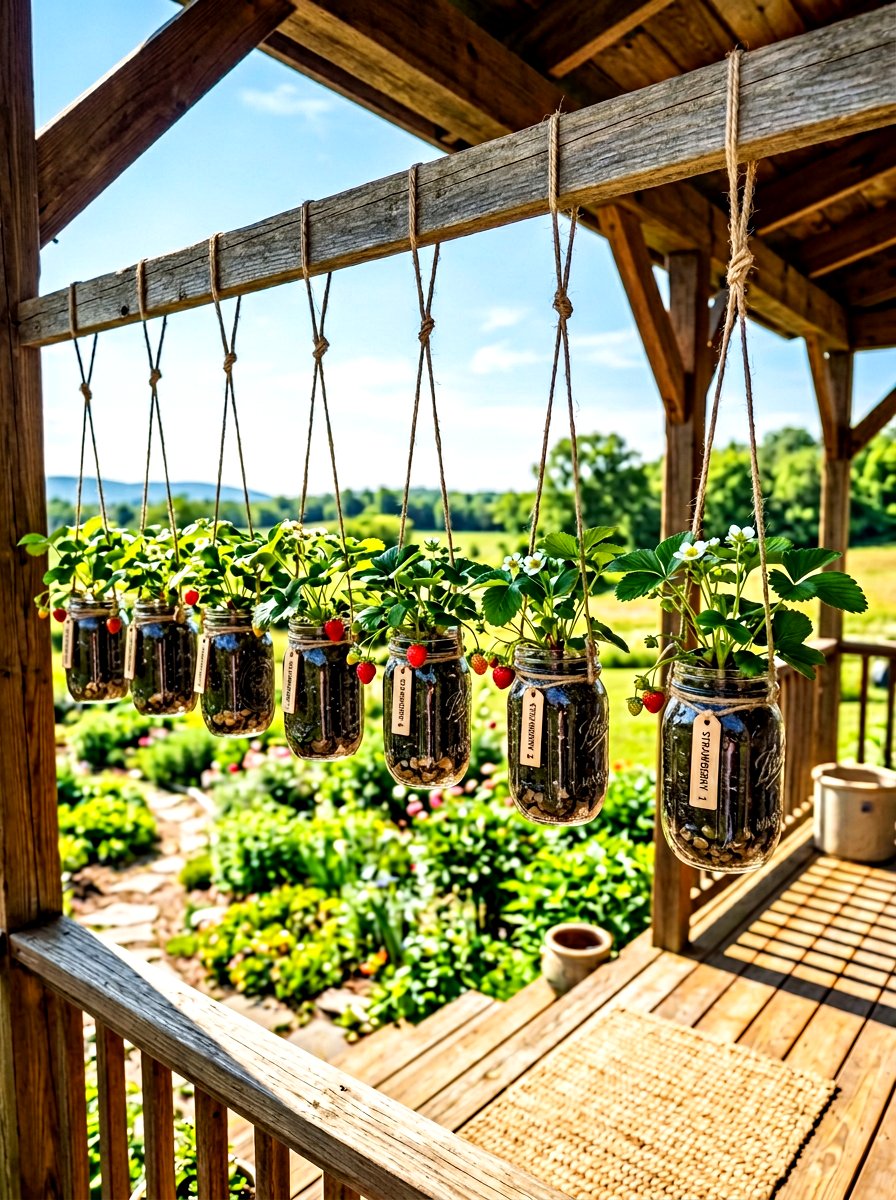
A hanging jar strawberry setup uses glass or plastic jars suspended from a frame to create a floating garden effect. You can secure the jars with wire or macrame hangers and mount them at various heights. This method is perfect for small-scale strawberry growing, such as for a kitchen herb garden or a small sunny window. Ensure that the jars have some form of drainage, or use a layer of pebbles at the bottom to prevent the roots from sitting in water. The clear containers allow you to see the root growth, which can be an interesting educational feature. It is a delicate and beautiful way to display your fruit.
19. Vertical Felt Planting Bag
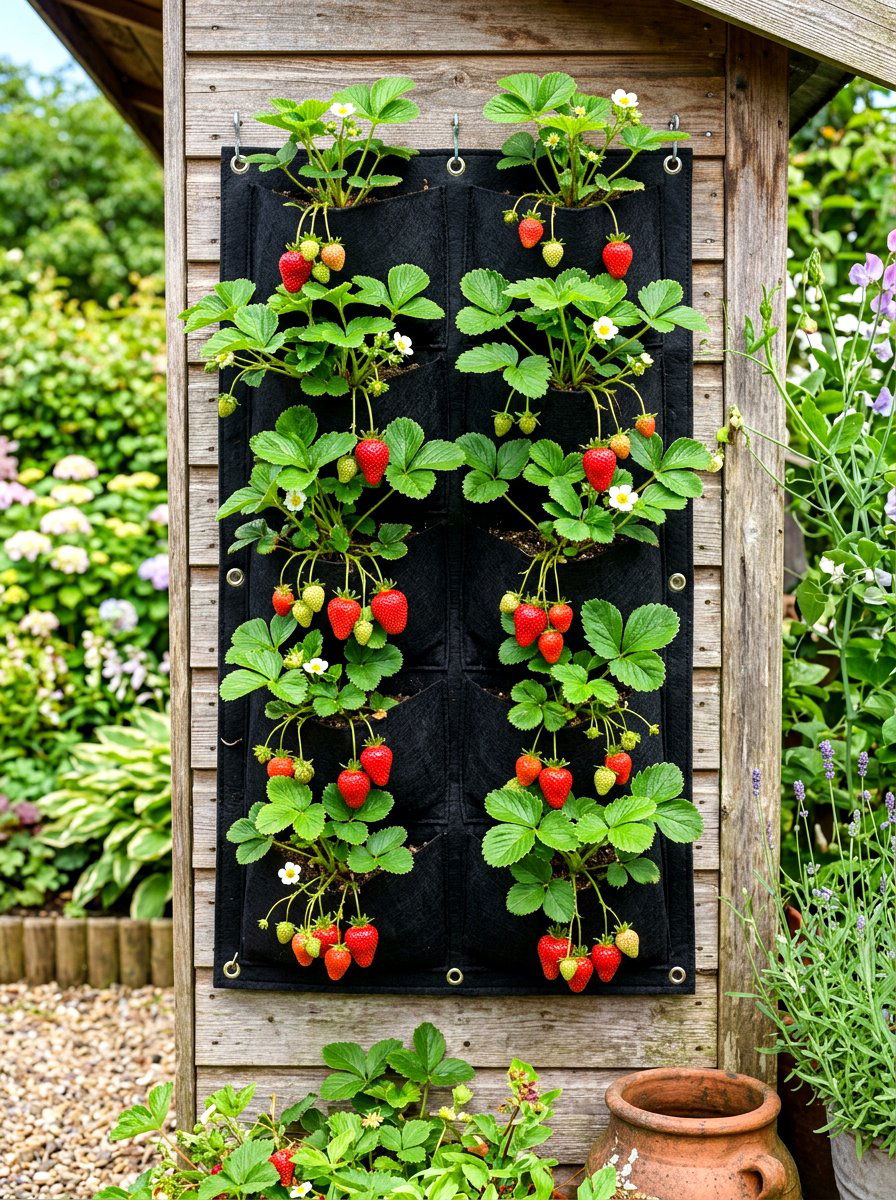
Vertical felt planting bags are modern, lightweight, and highly efficient for urban strawberry farming. The felt material is breathable, which allows for natural air-pruning of the roots and prevents the soil from becoming compacted. These bags often come with multiple rows of pockets and can be easily hung from hooks on a wall or fence. Because they are soft, they can conform to slightly curved surfaces or tight corners. The dark color of the felt helps absorb heat from the sun, which strawberries love for ripening their fruit. When the season is over, you can simply empty them, wash them, and fold them away for easy storage.
20. Bamboo Pipe Garden
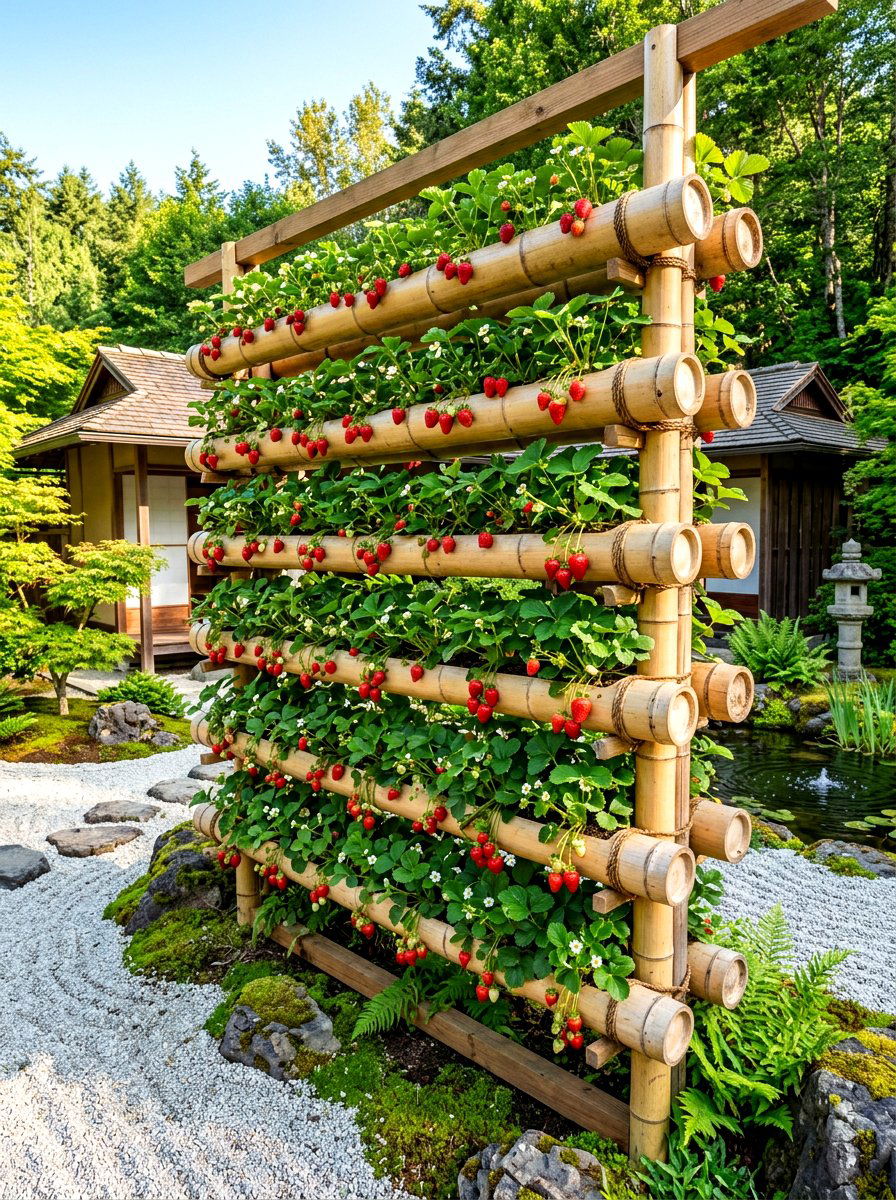
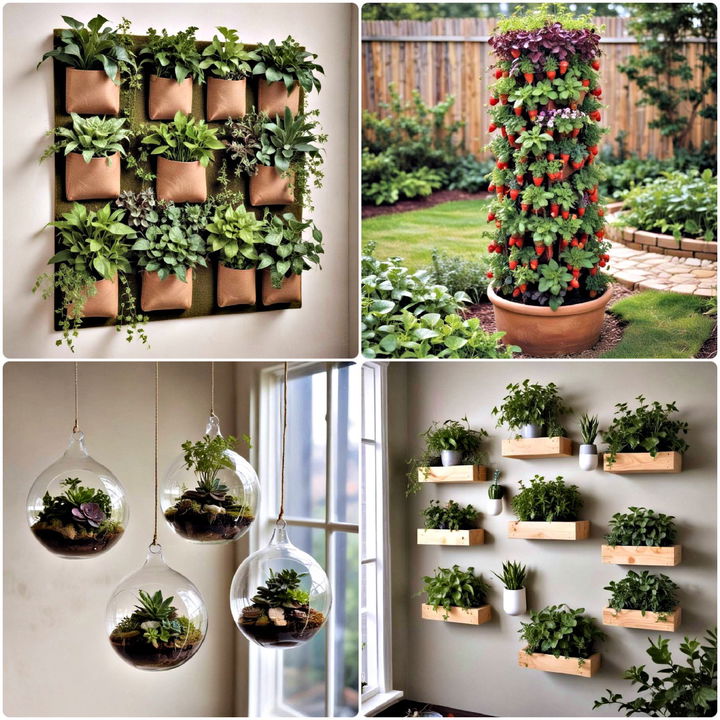
A bamboo pipe garden offers a natural and zen-like aesthetic for your vertical strawberry display. Large bamboo poles are hollowed out and cut with openings for the plants, then mounted horizontally in a vertical stack. This setup works beautifully in a garden that emphasizes natural materials and organic shapes. The bamboo is surprisingly durable and provides a unique texture that contrasts well with the soft strawberry leaves. You can connect the pipes with a simple gravity-fed watering system to make maintenance a breeze. This design is perfect for creating a tranquil and productive focal point in a backyard or on a serene garden terrace.
21. Upcycled Tin Can Rack
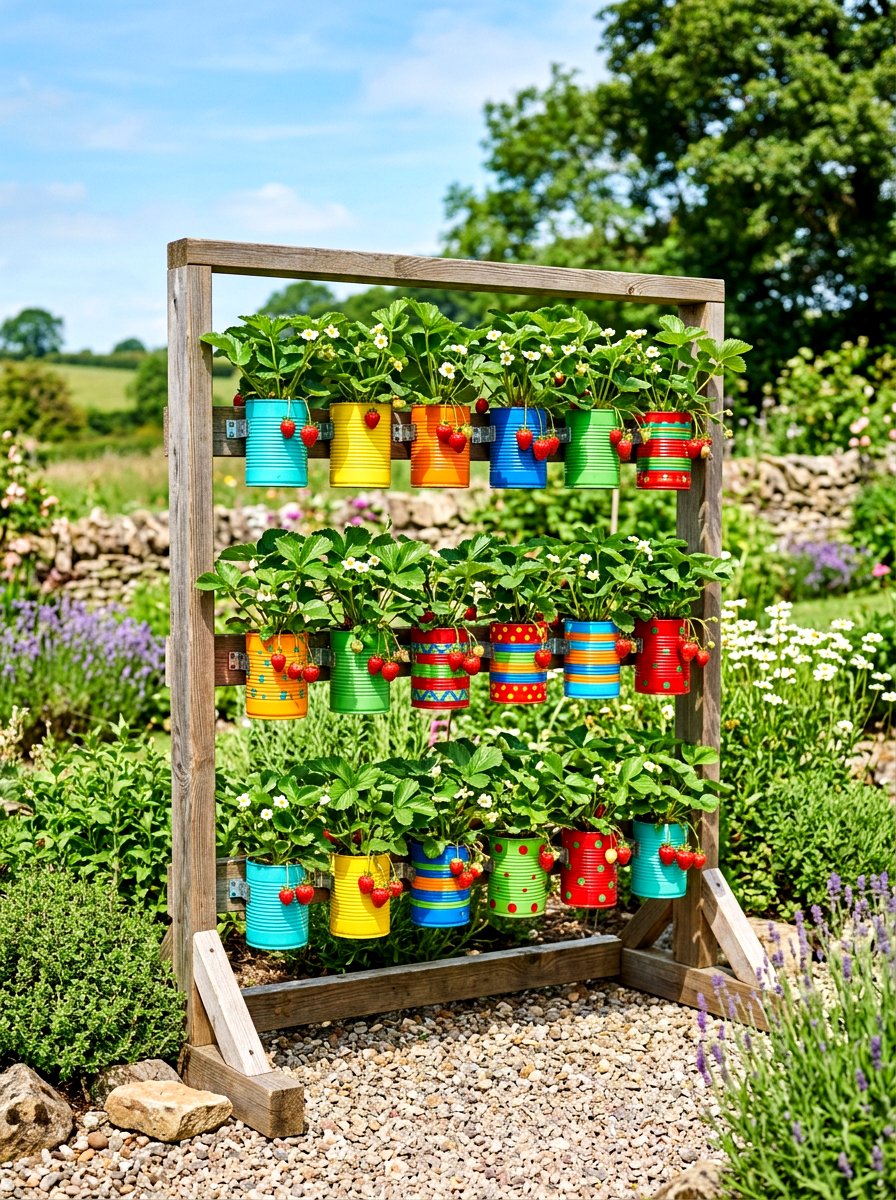
An upcycled tin can rack is a budget-friendly and creative project for vertical strawberry cultivation. You can collect large tin cans, paint them in bright colors or metallic finishes, and mount them onto a wooden frame or a wire rack. This allows you to create a customized vertical grid of plants that fits your specific space. Each can provides a separate environment for a single strawberry plant, which helps prevent the spread of diseases. This method is very easy to scale up as you collect more cans throughout the year. It is a great way to combine recycling with a love for gardening and fresh, homegrown produce.
22. A Frame Strawberry Planter
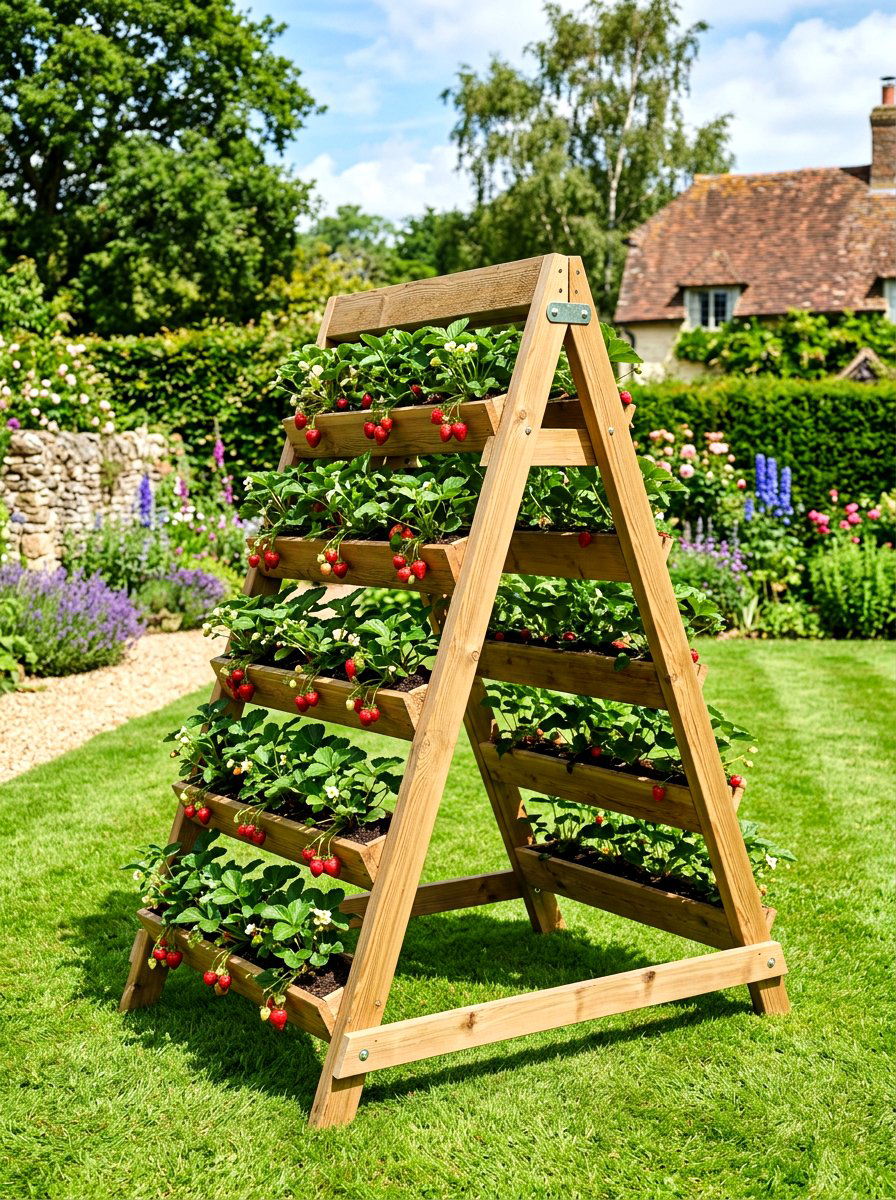
The A-frame strawberry planter is a sturdy, free-standing structure that provides two sides of vertical growing space. It resembles a wooden ladder or a sawhorse with shelves or troughs mounted on both sides. This design is perfect for the middle of a garden because it can be accessed from all sides for easy harvesting and maintenance. The angled sides ensure that all levels receive plenty of sunlight throughout the day as the sun moves across the sky. You can build it to any height or length to suit your needs. It is an excellent choice for a productive and attractive edible landscape feature on a lawn or patio.
23. Copper Pipe Vertical Stand
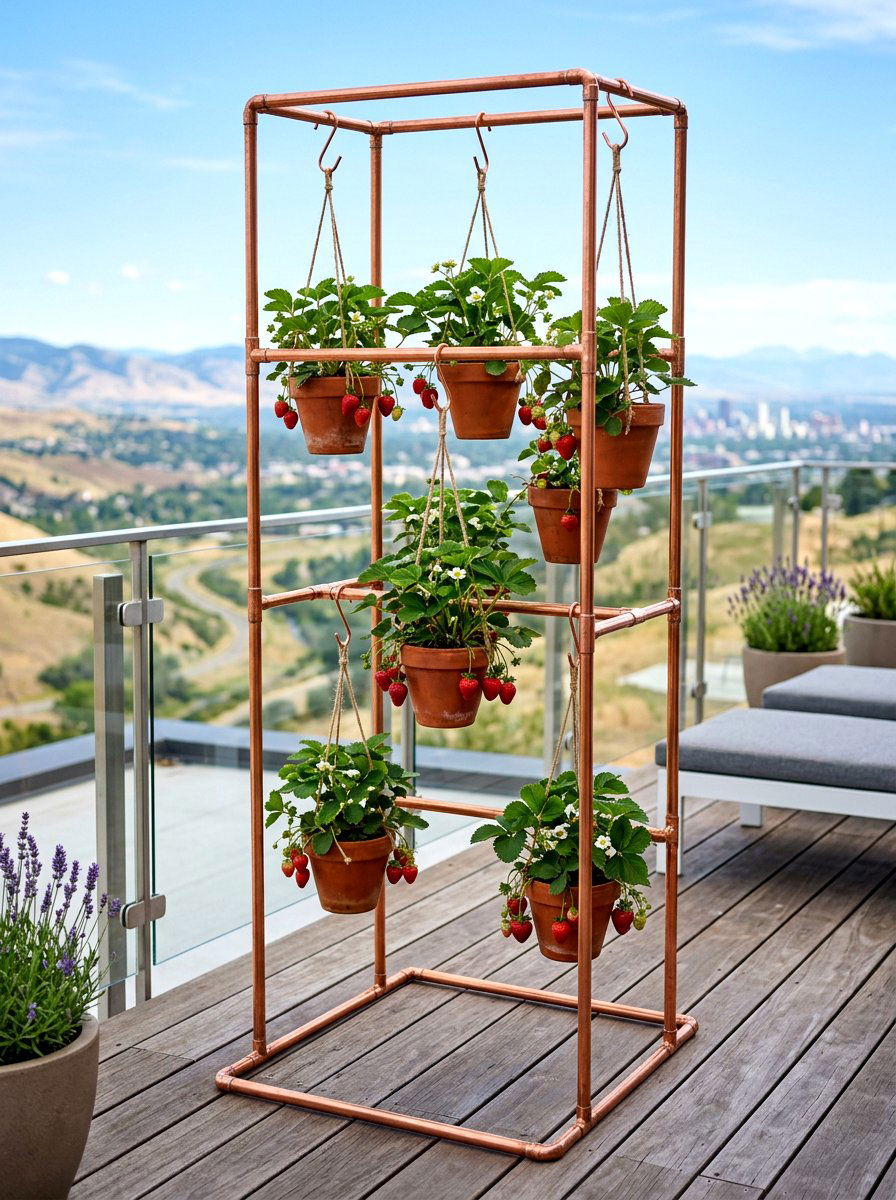
A copper pipe vertical stand adds a touch of industrial elegance and sophistication to your strawberry garden. You can construct a sleek frame using copper plumbing pipes and fittings, then hang pots or troughs from the horizontal bars. Over time, the copper will develop a beautiful green patina that looks stunning in a garden setting. This material is very durable and provides a modern, high-end feel compared to plastic or plain wood. It is a great option for a contemporary balcony or a stylish urban courtyard. The thin profile of the pipes keeps the focus on the plants while providing a strong and reliable support system.
24. Plastic Bottle Vertical String
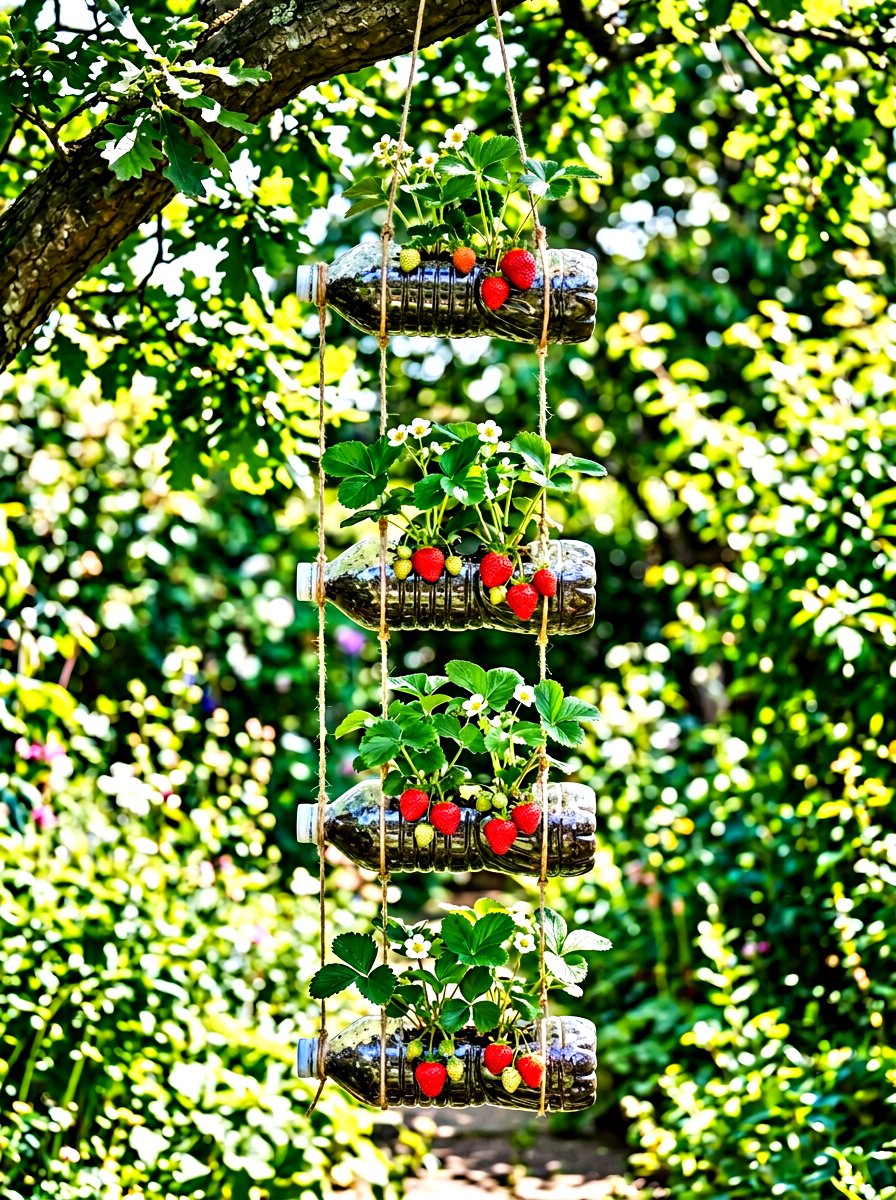
A plastic bottle vertical string is an ingenious way to upcycle waste into a productive garden. By cutting openings in the sides of clear plastic bottles and stringing them together vertically, you create a hanging chain of planters. Water poured into the top bottle trickles down through the entire string, watering each plant in succession. This is a very lightweight and flexible system that can be hung from trees, porch eaves, or balcony railings. It is an extremely low-cost method that is perfect for schools or community garden projects. The clear plastic allows you to monitor soil moisture levels easily and watch the roots grow in real-time.
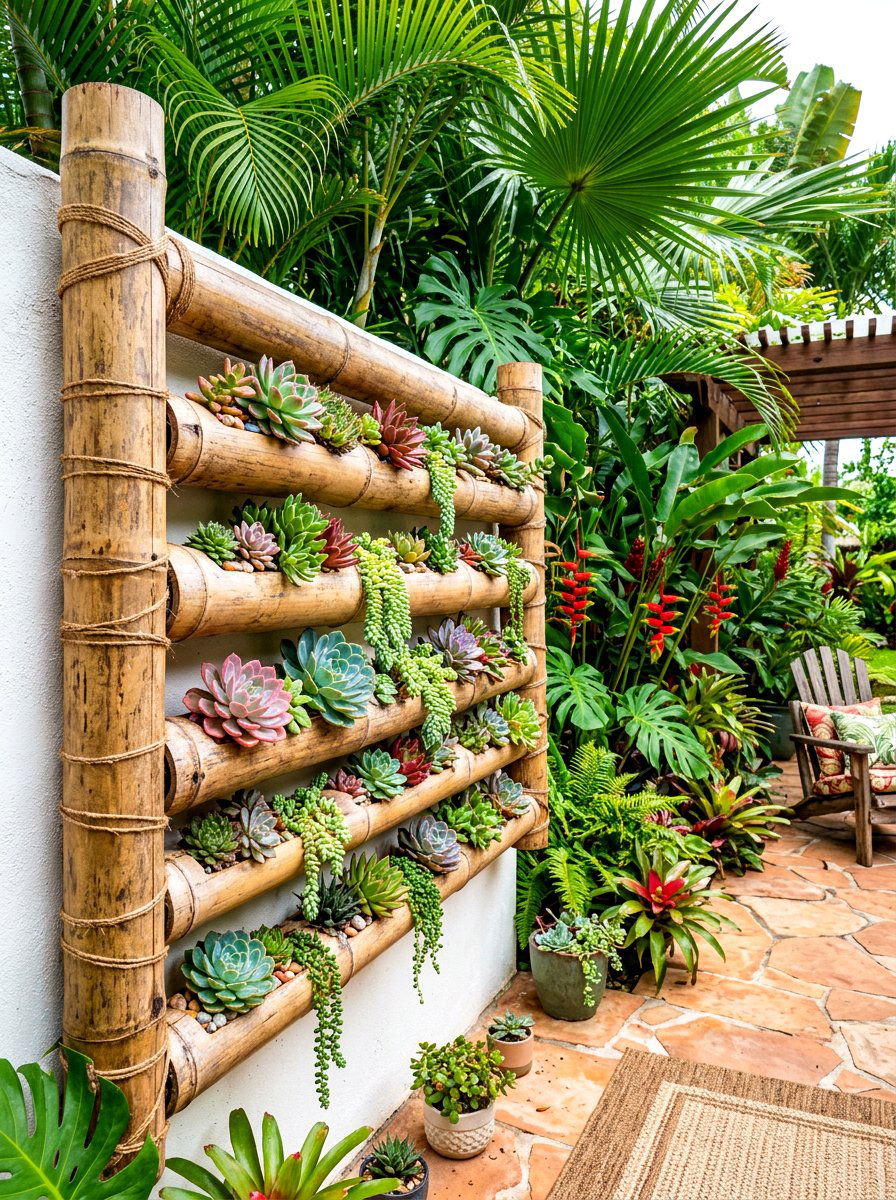
25. Industrial Pipe Shelving Garden
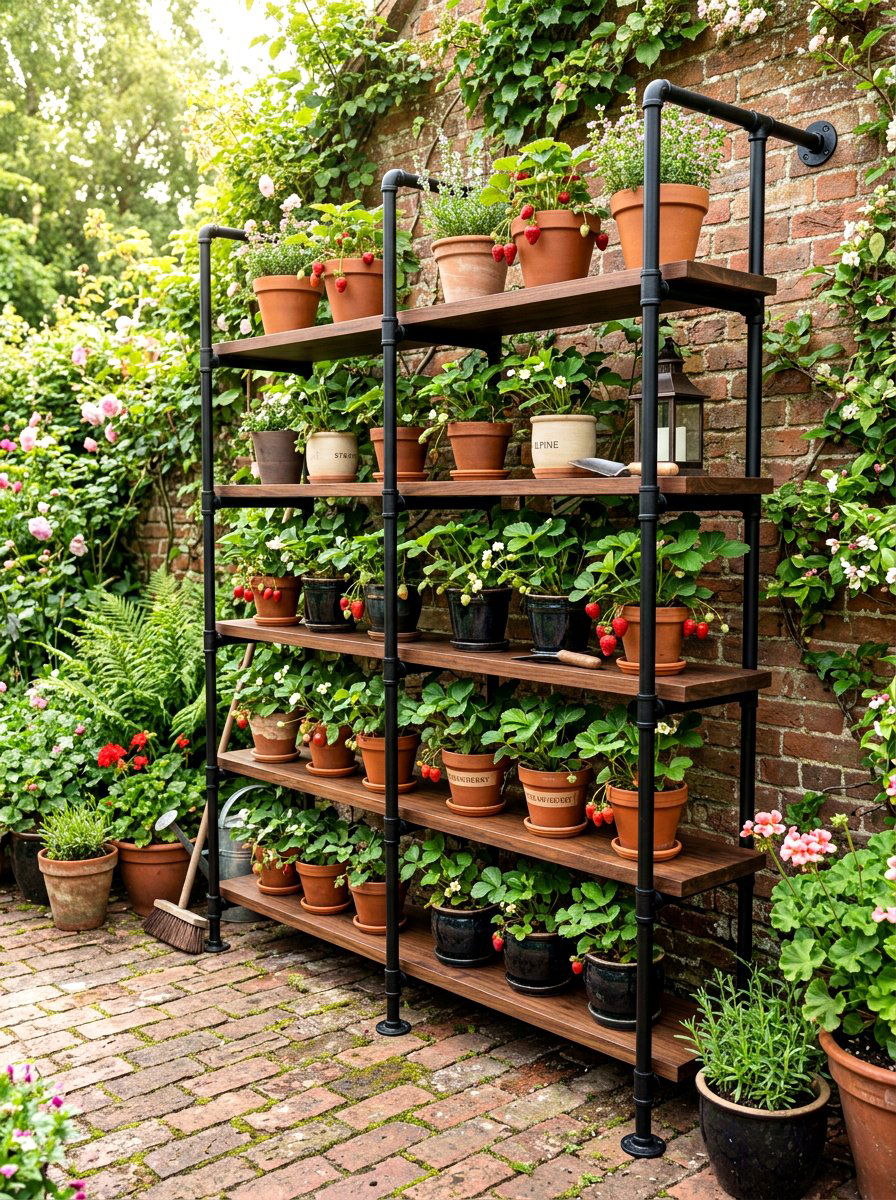
The industrial pipe shelving garden uses heavy-duty metal pipes and wooden planks to create a rugged and stylish vertical planter. This setup is incredibly strong and can support large, heavy pots filled with soil and mature strawberry plants. It provides a very urban and modern look that works well against concrete or brick walls. You can customize the height and width of the shelves to perfectly fit your outdoor living area. The open structure ensures excellent light penetration and air flow, which are key for a successful harvest. It is a permanent piece of garden furniture that combines functionality with a very bold and trendy design.
26. Spiral Strawberry Planter
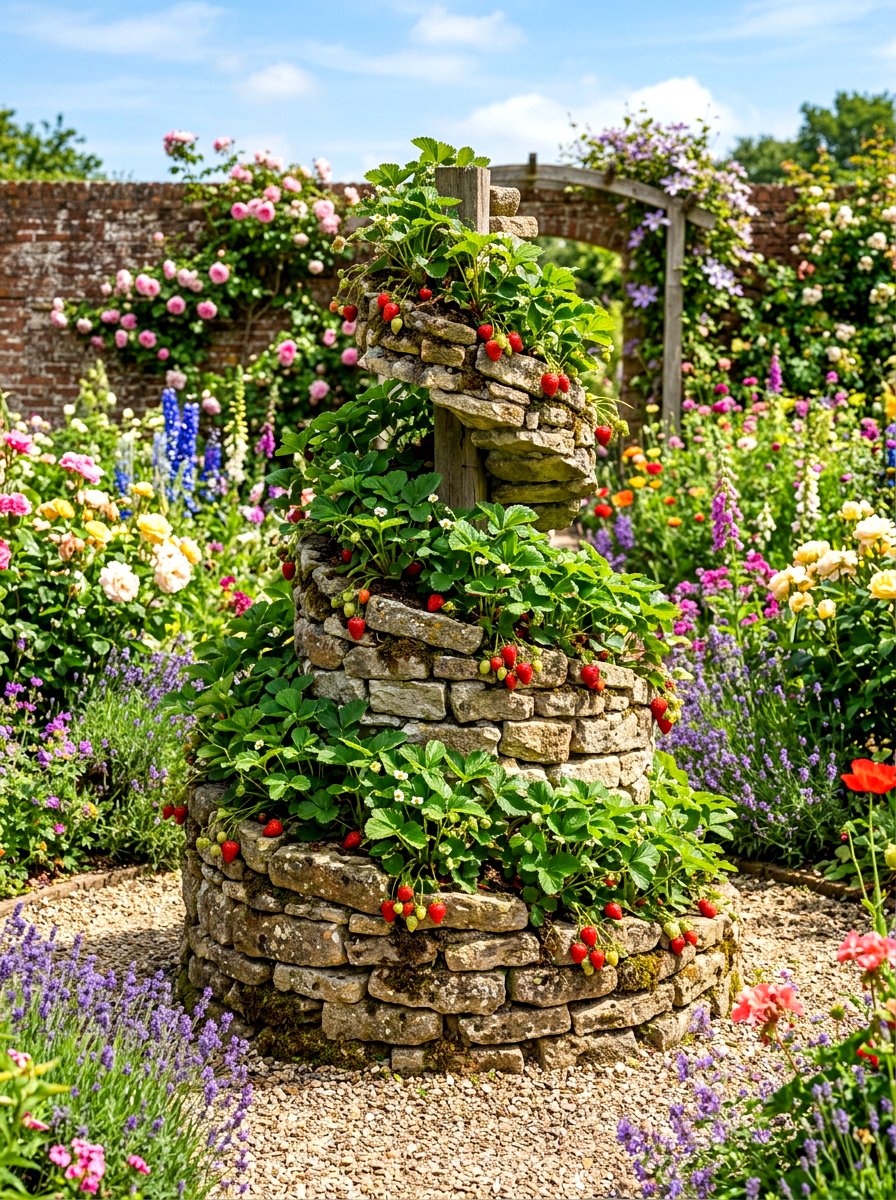
A spiral strawberry planter is a unique and space-saving design that creates a winding vertical path for your plants. You can build this using stones, bricks, or specialized plastic forms to create a mound that spirals upwards. As you plant along the spiral, the strawberries have room to trail down over the edges of the structure. This design provides different microclimates, with the top being drier and the bottom holding more moisture, allowing you to place plants accordingly. It is a beautiful and artistic way to add a vertical element to a traditional flower bed or a rock garden. It looks like a living sculpture.
27. Window Box Vertical Grid
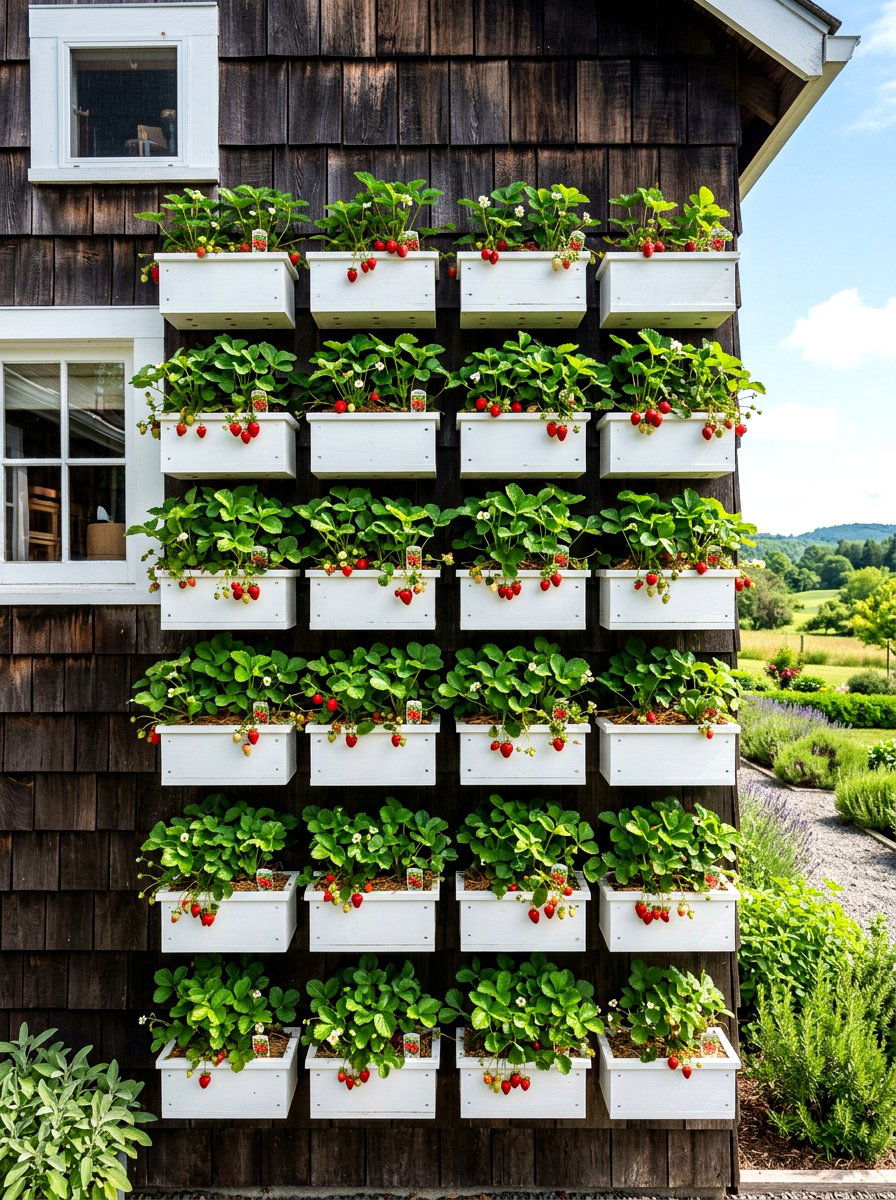
A window box vertical grid involves mounting several traditional window boxes in a grid pattern on a wall or fence. This creates a series of horizontal rows that give the appearance of a massive green wall. Window boxes are designed to hold a good volume of soil, which is great for the root systems of everbearing strawberry varieties. This arrangement is very organized and easy to maintain, as you can walk along the wall to water and pick fruit. It is a fantastic way to hide an ugly fence or transform a boring garage wall into a productive and lush vertical farm for your family.
28. Lattice Wall Strawberry Box
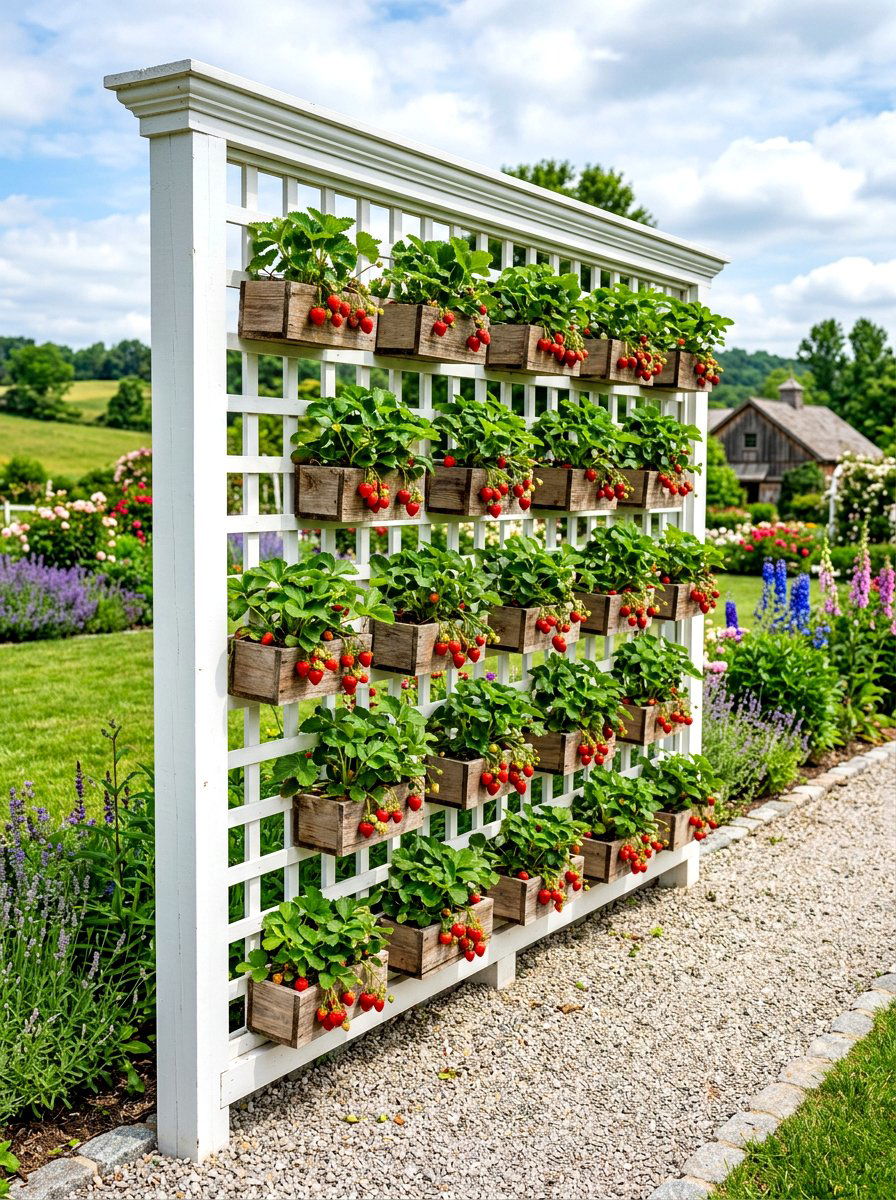
The lattice wall strawberry box utilizes a standard garden lattice as the support for small, individual planter boxes. You can hook the boxes onto the lattice at various intervals to create a customized and breathable garden wall. This setup allows for maximum air circulation, which helps keep the foliage dry and prevents common strawberry diseases. The lattice itself can also support the runners as they grow, creating a dense and beautiful screen. This is an ideal solution for a patio privacy screen that also happens to provide a fresh snack throughout the summer. It is a very versatile and easy-to-install vertical gardening option.
29. Galvanized Bucket Vertical Tree
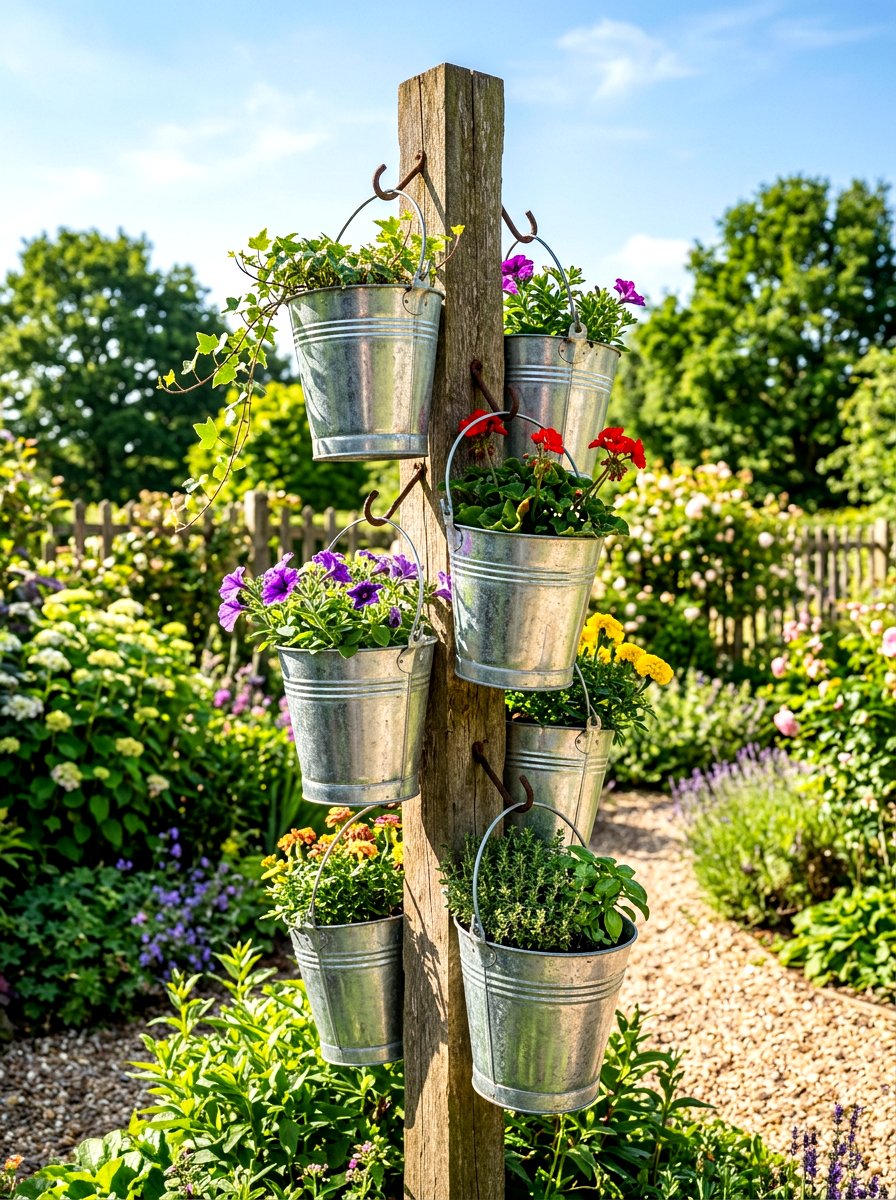
A galvanized bucket vertical tree is a rustic and charming project that uses a central post with several metal buckets attached to it. You can mount the buckets at different heights and angles around the post to create a tree-like appearance. The galvanized metal is very durable and provides a classic farmhouse look that fits perfectly in many garden styles. Each bucket acts as an individual planter, making it easy to manage soil and nutrients for each plant. This design is very stable and can be a great focal point for a backyard garden. The reflective surface of the metal also helps bring more light to the plants.
30. Pergola Hanging Strawberry Pot
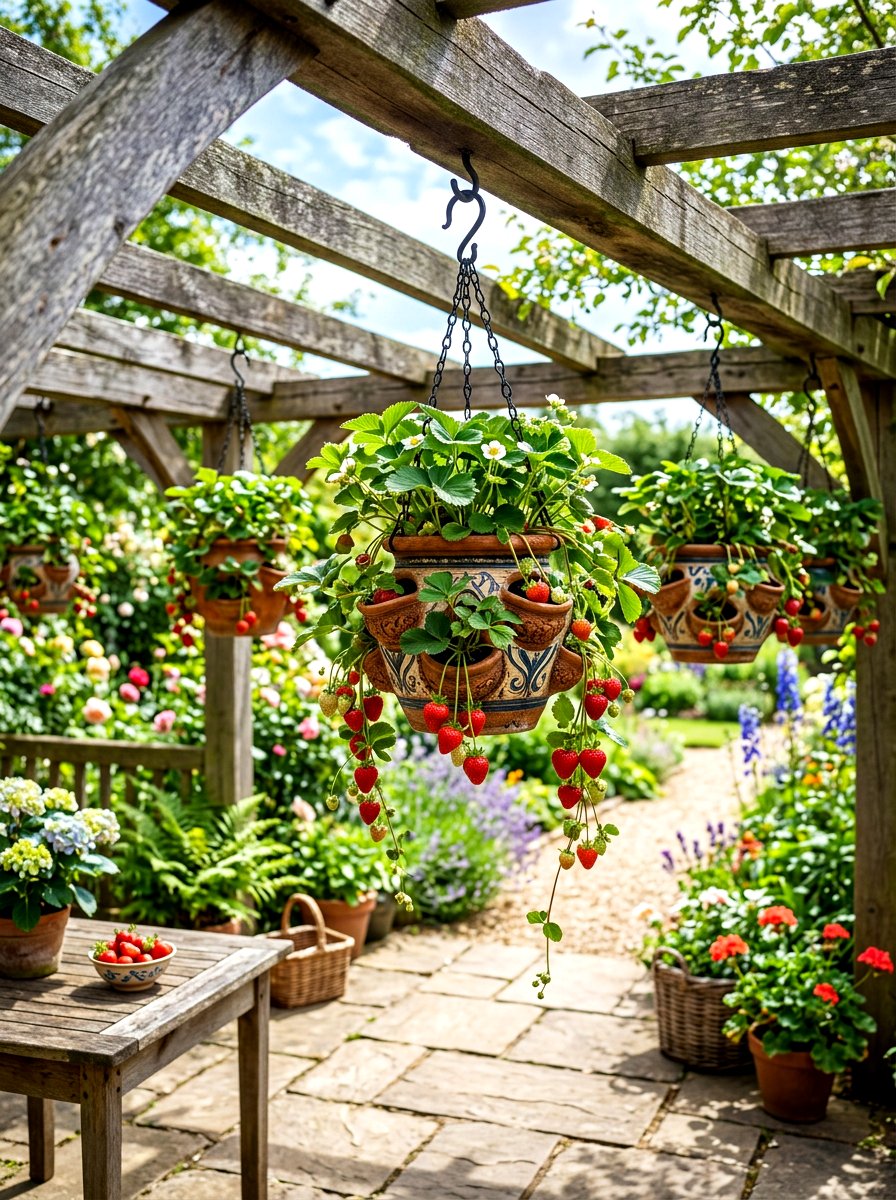
Using a pergola to hang strawberry pots is a wonderful way to utilize overhead space for food production. You can hang pots at various heights from the crossbeams of the pergola, creating a ceiling of dangling berries. This keeps the fruit at eye level for easy picking and ensures they are completely away from ground pests. The dappled shade provided by the pergola can also help protect the plants from the most intense afternoon sun in very hot climates. This setup adds a lush, tropical feel to your outdoor dining or lounging area. It is a sophisticated way to integrate vertical gardening into your existing architectural features.
Conclusion:
Vertical strawberry gardening is an innovative and rewarding way to bring the joy of homegrown fruit to any living space, regardless of size. By lifting your plants off the ground, you solve many of the traditional challenges of strawberry cultivation, such as rot, pests, and limited square footage. These thirty ideas demonstrate that with a little creativity and some simple materials, you can create a productive and beautiful garden wall or tower. Whether you prefer a modern hydroponic system or a rustic upcycled pallet, the result is the same: sweet, clean, and delicious berries right at your fingertips. Start your vertical journey today and enjoy the bountiful harvest.

Related posts: