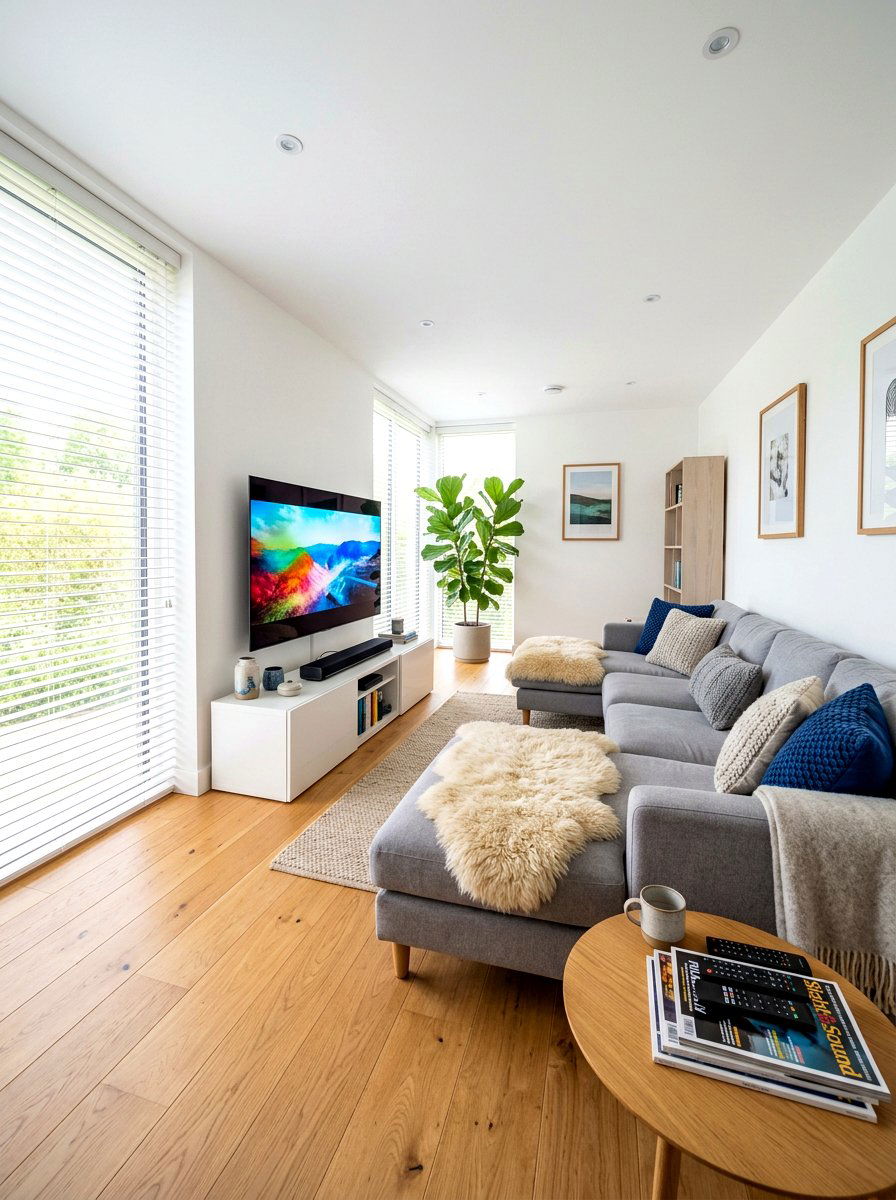
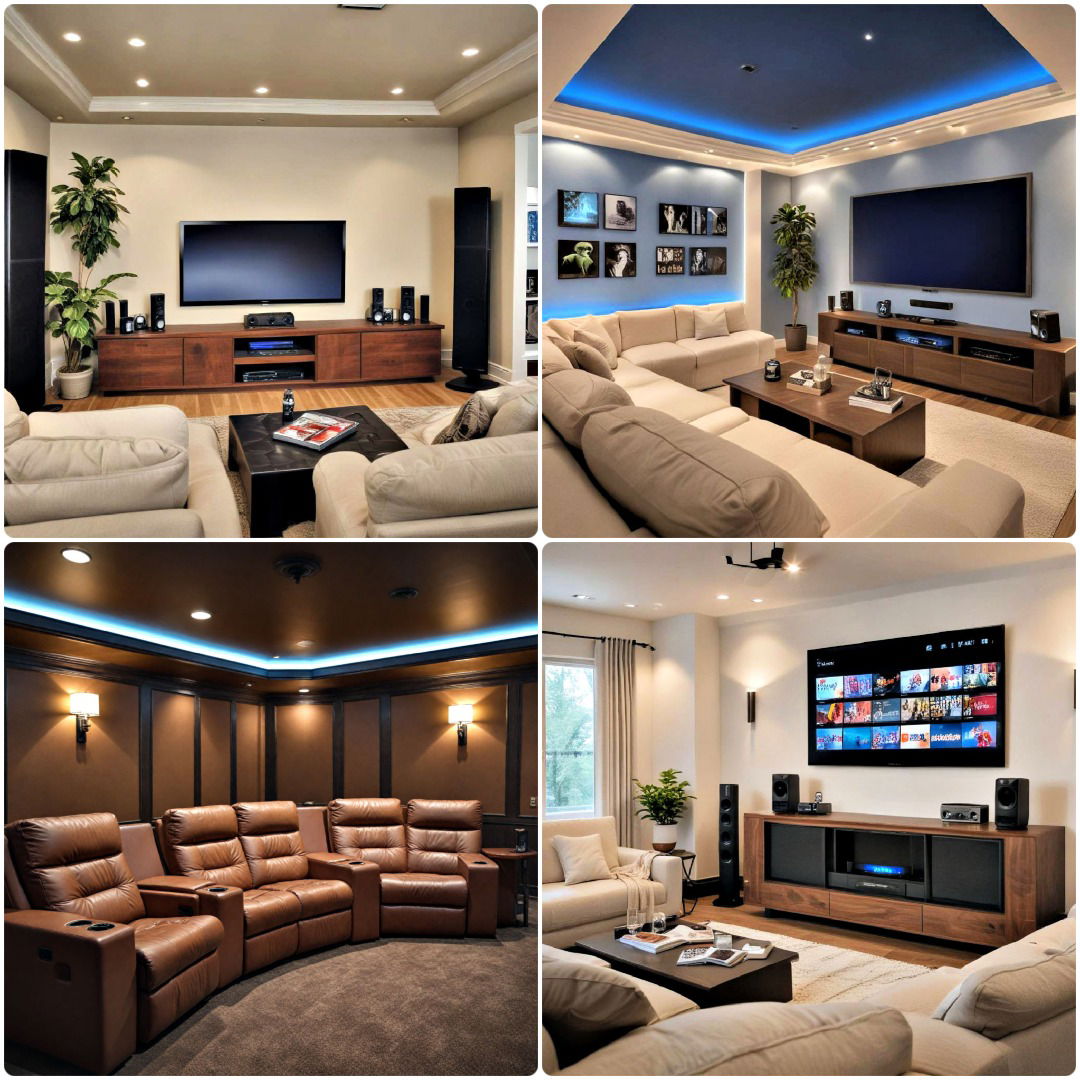
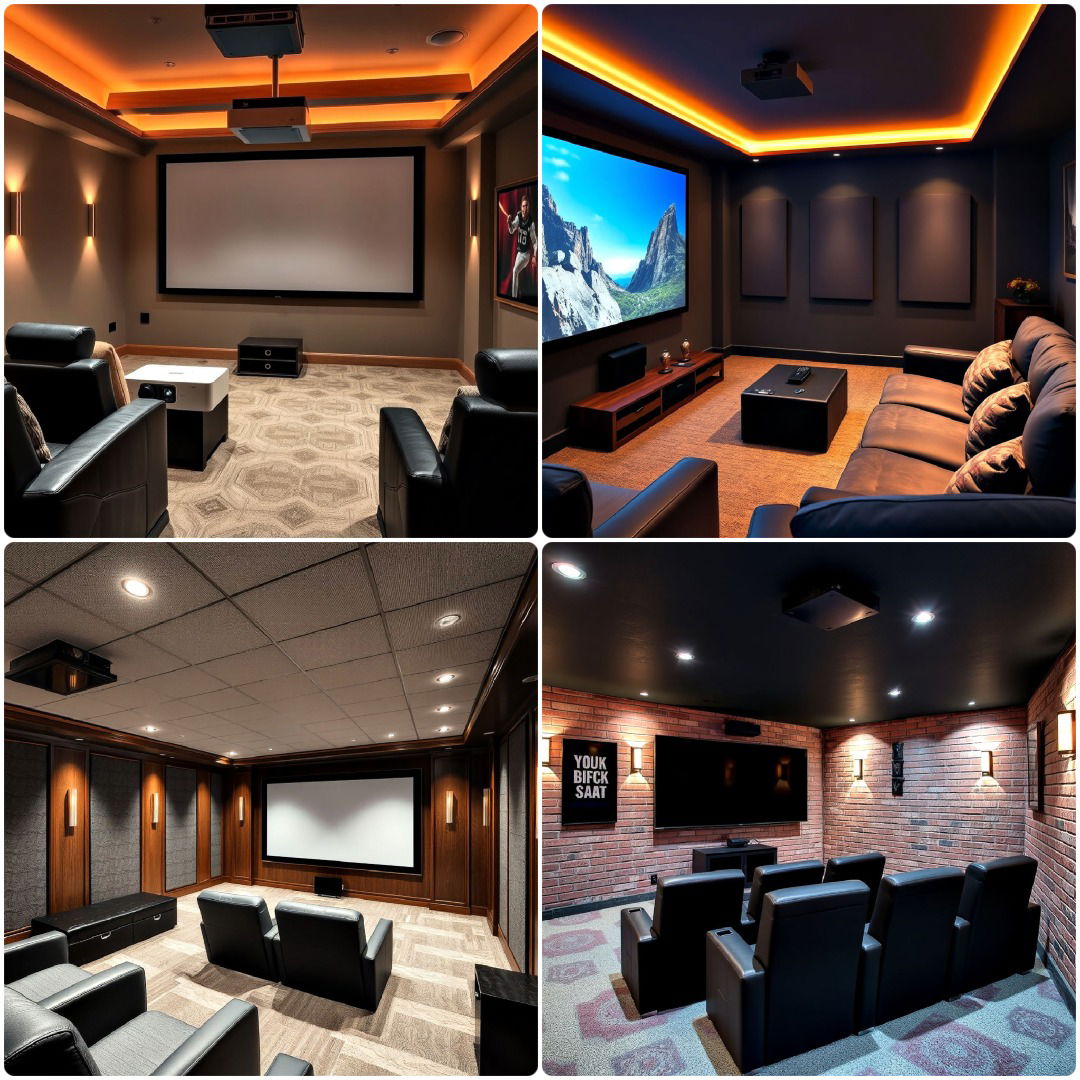
Transforming your basement into a dedicated home theater is one of the most rewarding home improvement projects you can undertake. This subterranean space offers a unique environment that is naturally isolated from the rest of the house, providing the perfect canvas for a cinematic escape. Because basements typically have few windows, you can achieve total light control, which is essential for high-quality projection and immersive viewing. Whether you are a dedicated film buff or a casual viewer who enjoys hosting family movie nights, the basement allows for creative layouts that wouldn't fit elsewhere. From tiered seating to advanced soundproofing, these spaces can be customized to provide a professional-grade experience that adds significant value and enjoyment to your home.
1. Modern Basement Home Cinema
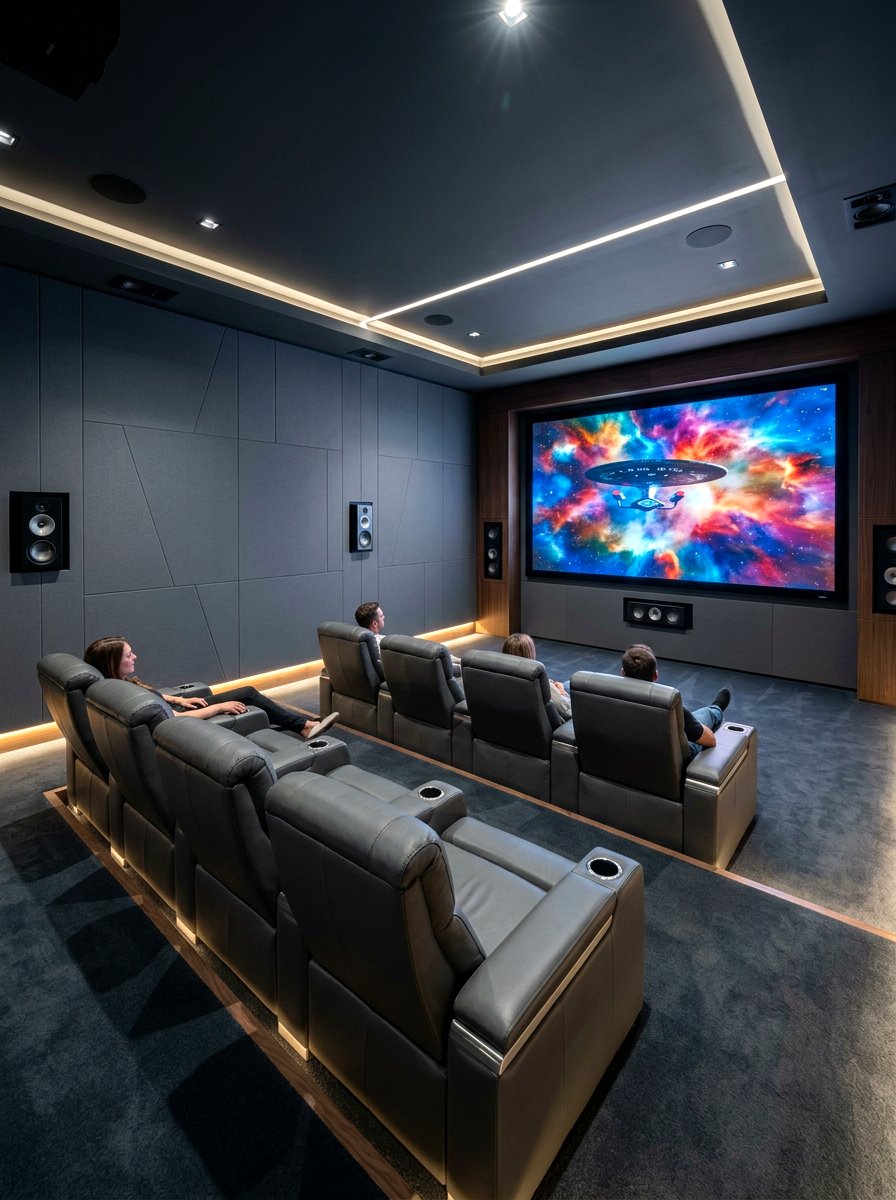
A modern basement home cinema often focuses on sleek lines and a sophisticated neutral color palette to create a high-end feel. By using deep grays or charcoals on the walls, you can reduce light reflection while maintaining a contemporary aesthetic that looks professional. Integrating high-performance technology into a minimalist design ensures that the equipment does not overwhelm the room's visual appeal. Consider using recessed ceiling lights and hidden LED strips to provide a clean glow that enhances the architecture without causing glare on the screen. Comfortable, low-profile furniture helps maintain an open feel, making the space inviting for long movie marathons while keeping the focus entirely on the high-definition visuals.
2. Basement Tiered Seating
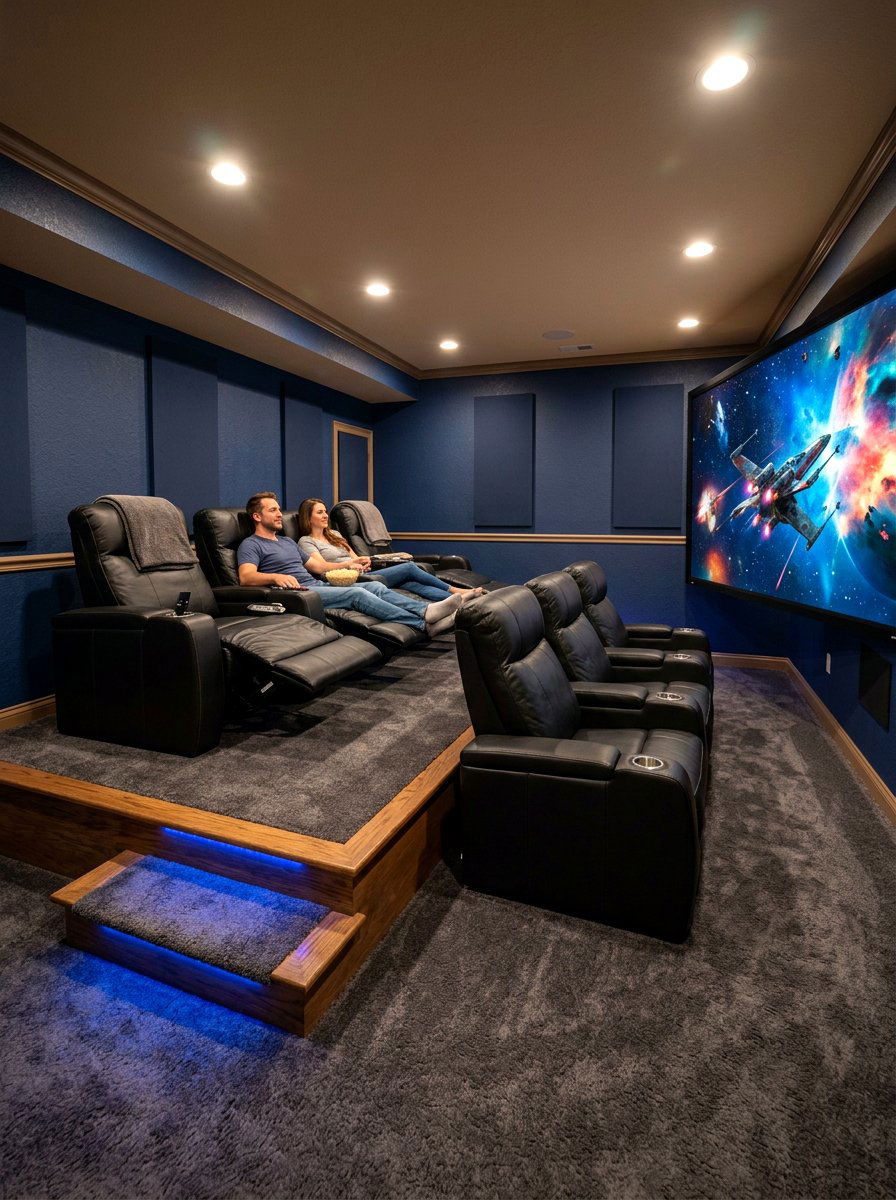
Have you ever struggled to see over someone's head while watching a movie at home? Basement tiered seating solves this common problem by utilizing raised platforms or risers to elevate each successive row of chairs. This layout mimics the architecture of a commercial cinema, ensuring that every person has an unobstructed line of sight to the screen. Building these platforms is a popular DIY project that can be customized with carpet and safety lighting along the steps. Not only does this improve the viewing experience, but it also allows you to maximize the number of guests you can accommodate in a single room, creating a truly authentic and social theater environment.
3. Small Basement Projector Setup
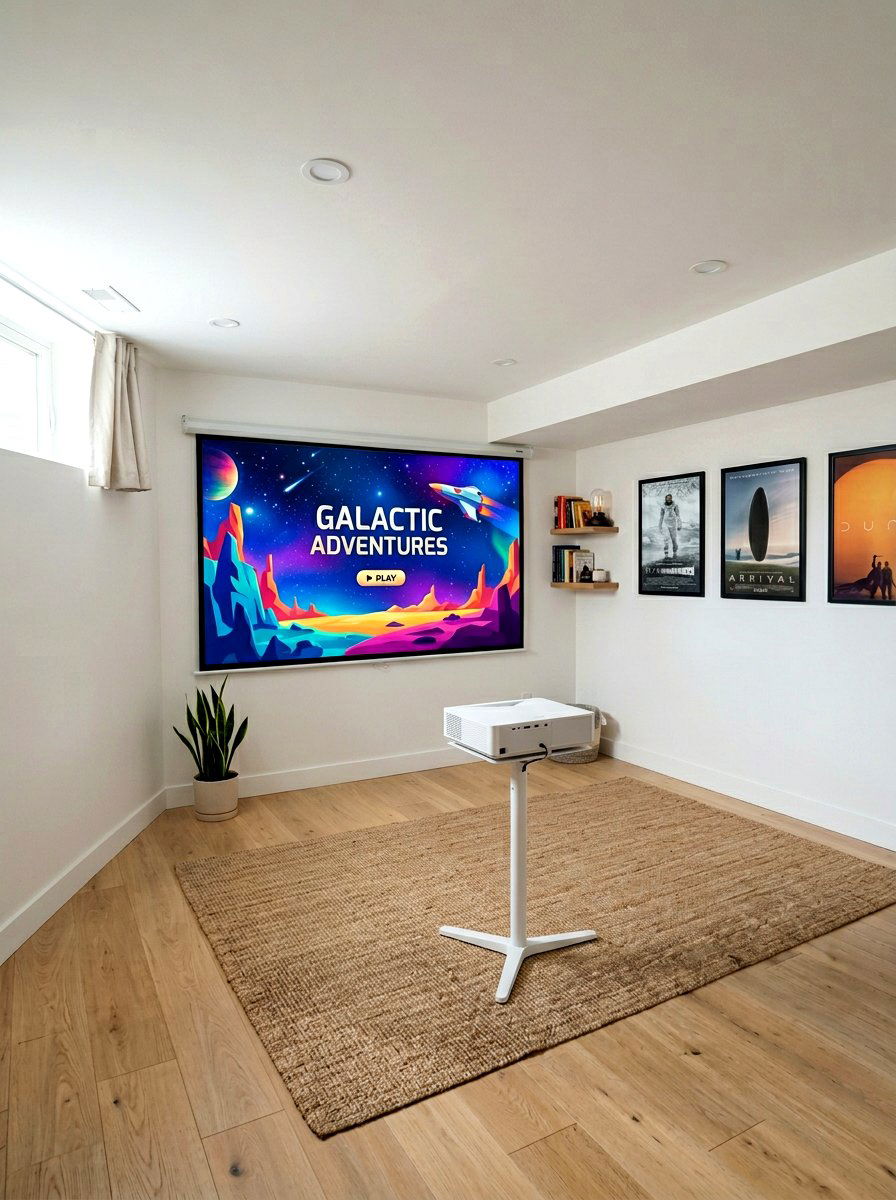
Do you think your basement is too small for a theater? A small basement projector setup uses short-throw technology to create a massive image even in tight quarters. These specialized projectors can be placed just inches from the wall, eliminating the need for long cables or ceiling mounts in rooms with low clearance. By pairing the projector with a fixed-frame screen or even a specially painted white wall, you can transform a tiny corner into a full-blown cinema. Using light-colored furniture and clever storage solutions can keep the room from feeling cramped. This approach proves that you do not need a massive floor plan to enjoy a big-screen experience.
4. Luxury Home Theater Acoustics
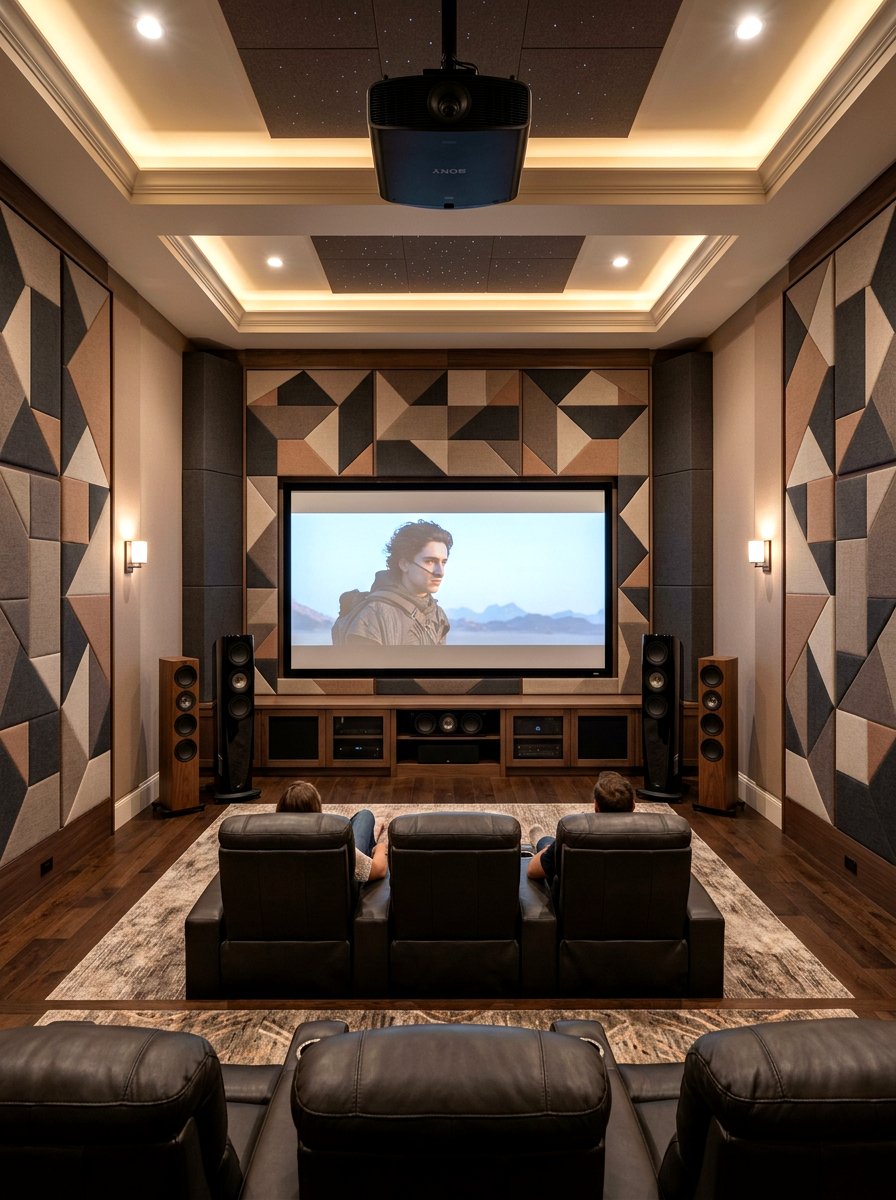
Luxury home theater acoustics are essential for anyone who wants to hear every whisper and explosion with perfect clarity. This involves more than just buying expensive speakers; it requires strategic placement of acoustic panels, bass traps, and diffusers. These elements work together to absorb unwanted echoes and prevent sound from bouncing harshly off concrete basement walls. High-end setups often hide these treatments behind beautiful fabric walls to maintain a polished look. By focusing on the way sound moves through the space, you create an immersive 3D audio environment. This attention to detail ensures that your audio quality matches the high-definition visuals, providing a truly professional-grade cinematic experience at home.
5. Basement Snack Bar
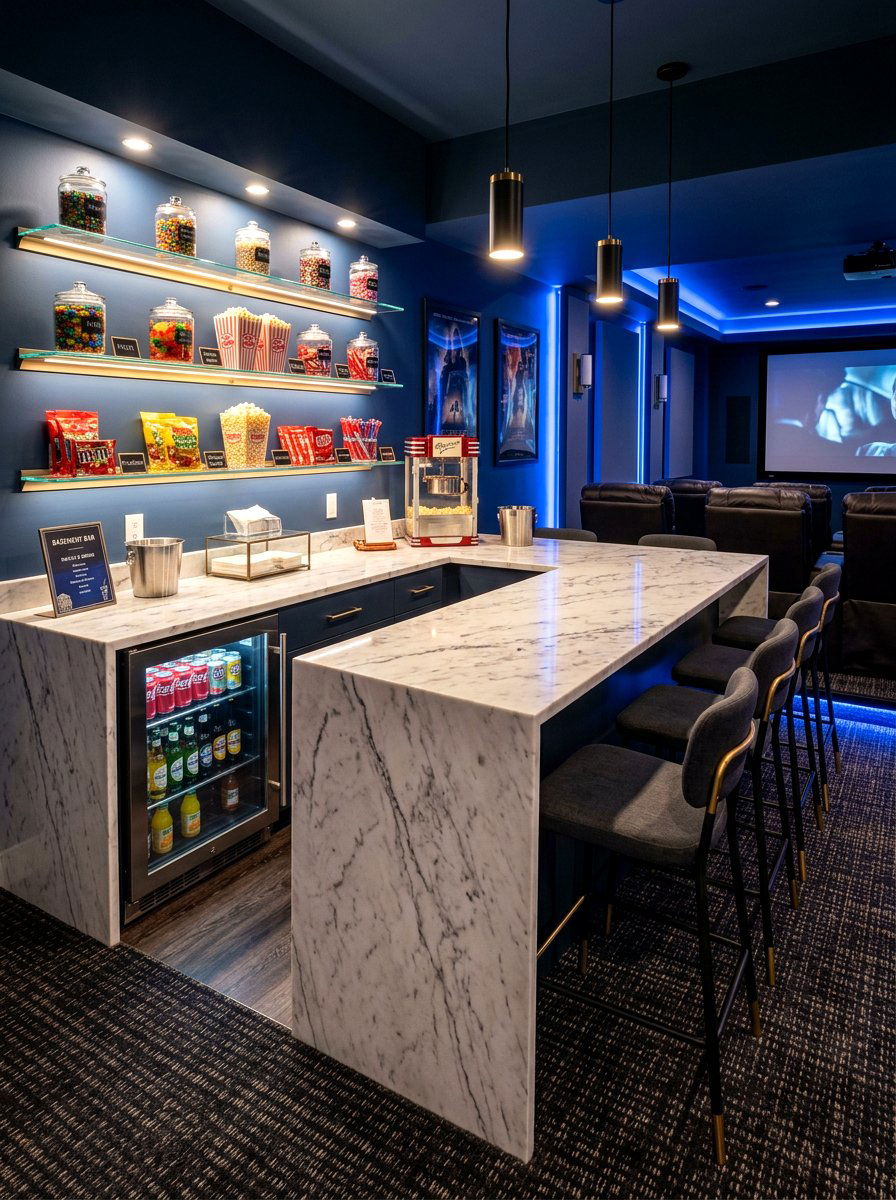
A basement snack bar adds a layer of convenience and fun that makes every movie night feel like a special event. Instead of running upstairs for refreshments, you can have a dedicated counter space for candy, sodas, and various treats right in the theater room. Many homeowners include a small countertop with a built-in sink and a mini-fridge to keep drinks perfectly chilled. Adding floating shelves above the counter allows you to display colorful movie candy boxes or popcorn buckets. This setup keeps the area organized and reduces distractions during the film. It serves as a central hub where guests can gather and grab snacks before the opening credits start.
6. Starlight Ceiling Theater
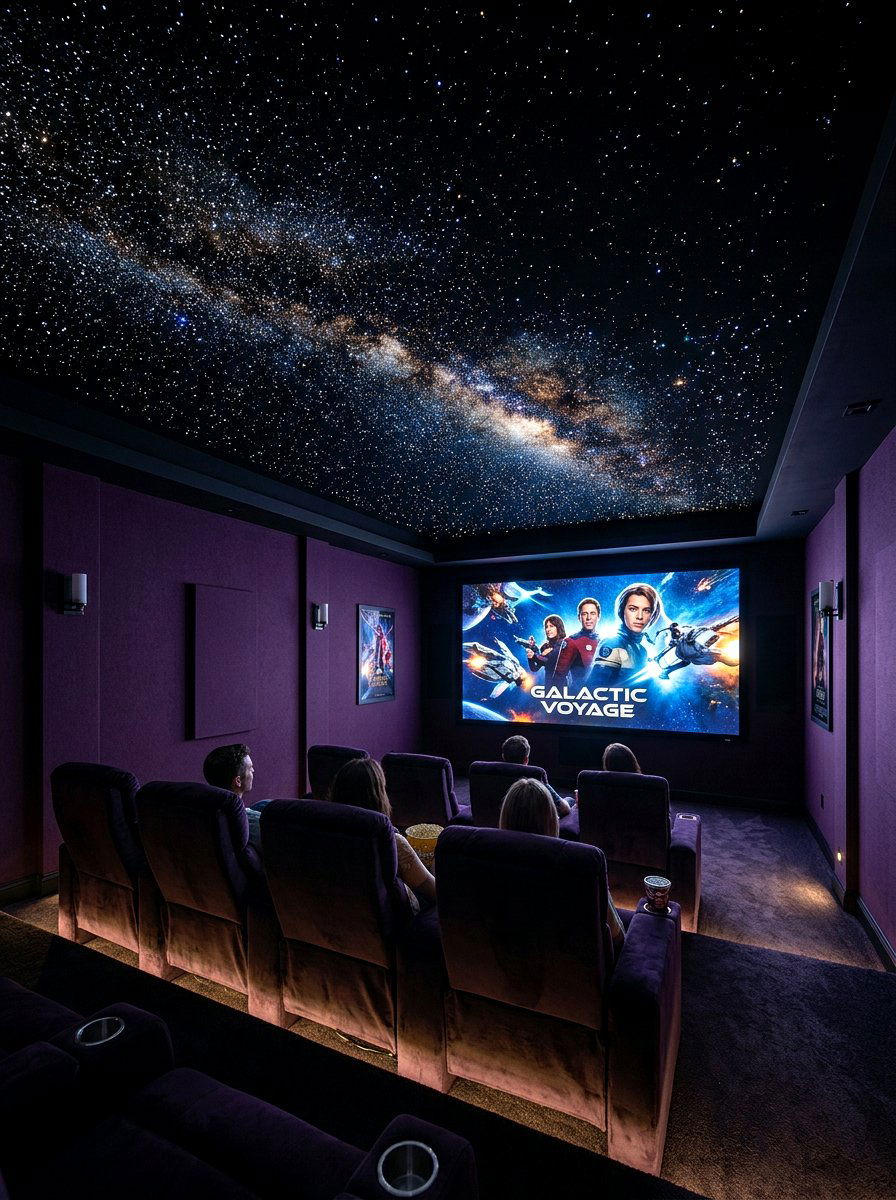
A starlight ceiling theater creates a magical atmosphere by using tiny fiber-optic lights to mimic a clear night sky. This design element is often installed in the ceiling panels of a dedicated media room to add a touch of whimsy and wonder. The lights can be programmed to twinkle or change colors, providing a soft ambient glow that does not interfere with the projector's picture quality. It is a fantastic way to hide ugly basement pipes or ductwork while adding a high-end, custom feel to the architecture. Every time you dim the main lights, the ceiling comes alive, making the viewer feel like they are watching a movie under the open stars.
7. Basement Movie Room Lighting
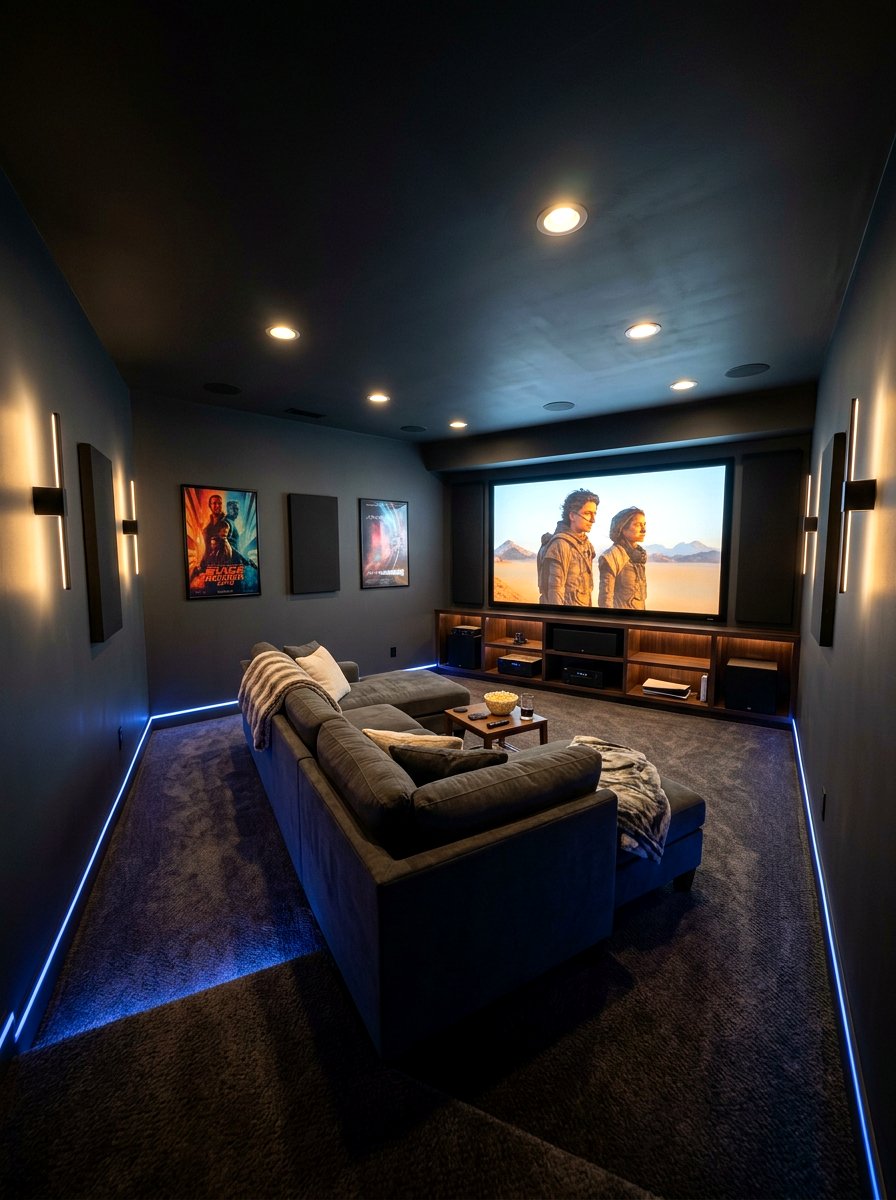
Basement movie room lighting is a critical component for both safety and ambiance during a screening. The most effective designs use a combination of recessed cans, wall sconces, and floor-level LED strips to create layers of light. Dimmable switches are a must, allowing you to transition slowly from a bright room to a dark cinema environment. Motion-activated pathway lights along the floor can help guests find their way to the exit without needing to turn on overhead lights and ruin the movie. Smart bulbs also allow you to change the color of the room to match the mood of the film, which enhances the overall sensory experience for everyone.
8. Industrial Style Theater Room
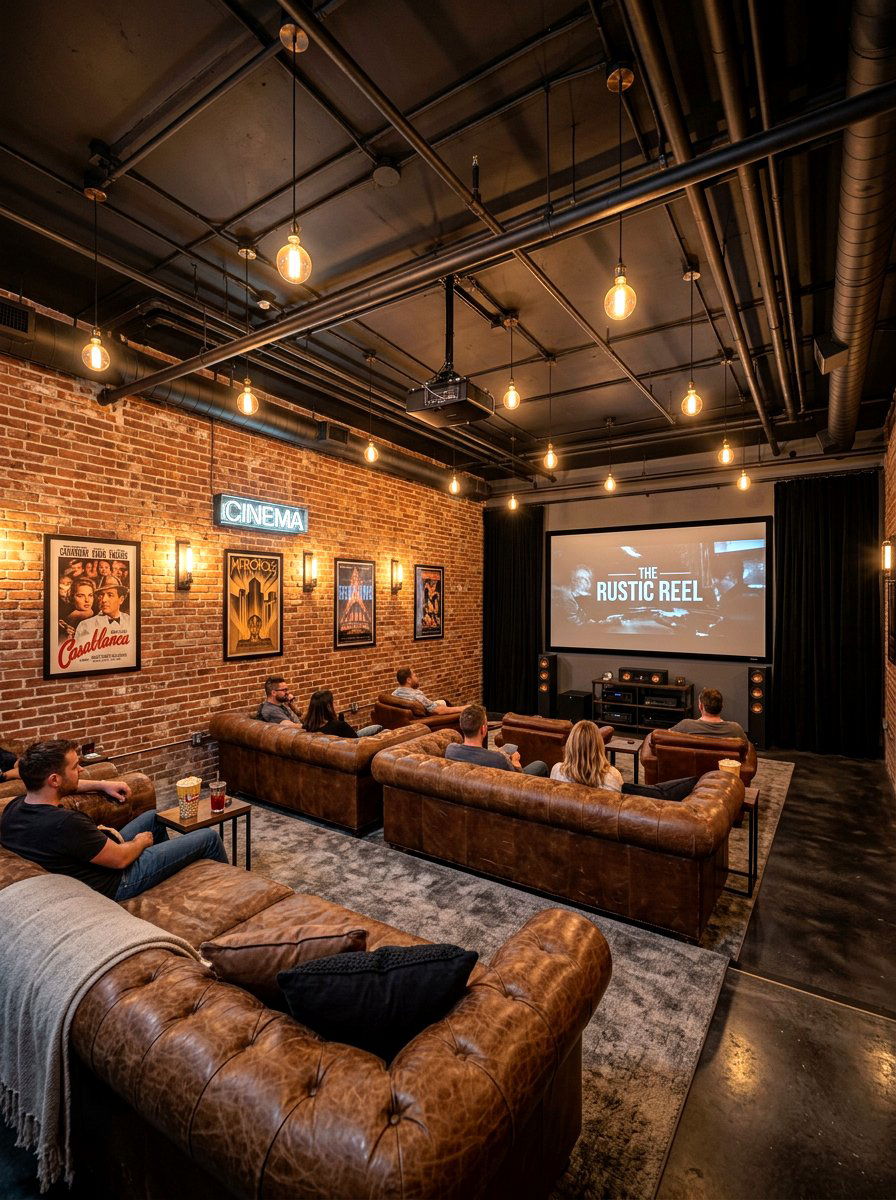
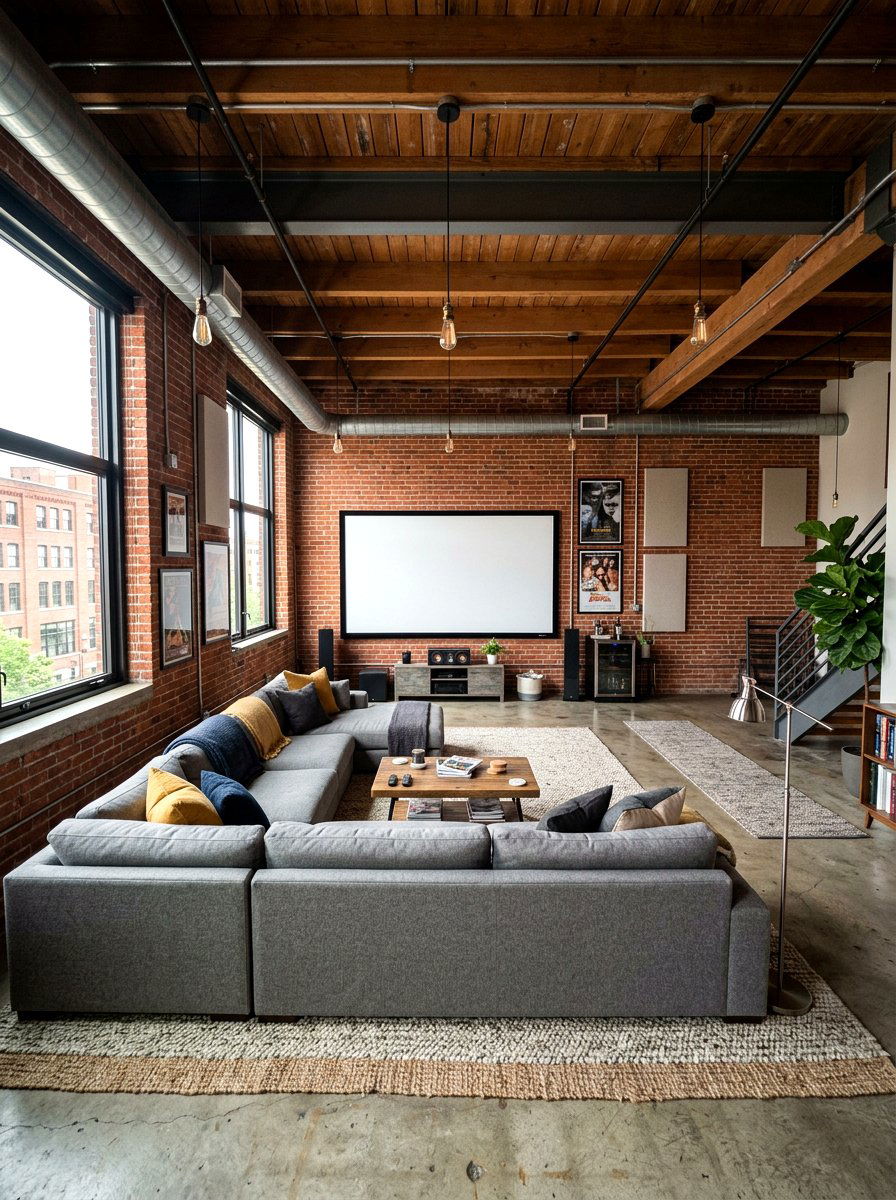
An industrial style theater room embraces the raw, unfinished nature of many basements by highlighting elements like exposed brick and metal piping. This aesthetic often features dark metal accents, reclaimed wood panels, and Edison-style light fixtures to create a rugged yet cozy atmosphere. Instead of hiding the ceiling beams, you can paint them black to add height and character to the space. Deep leather seating and heavy rugs help soften the hard surfaces, ensuring that the room remains comfortable and acoustically balanced. This design choice is perfect for those who want a unique, modern look that feels intentional and stylish rather than just another finished basement room.
9. Basement Sectional Seating
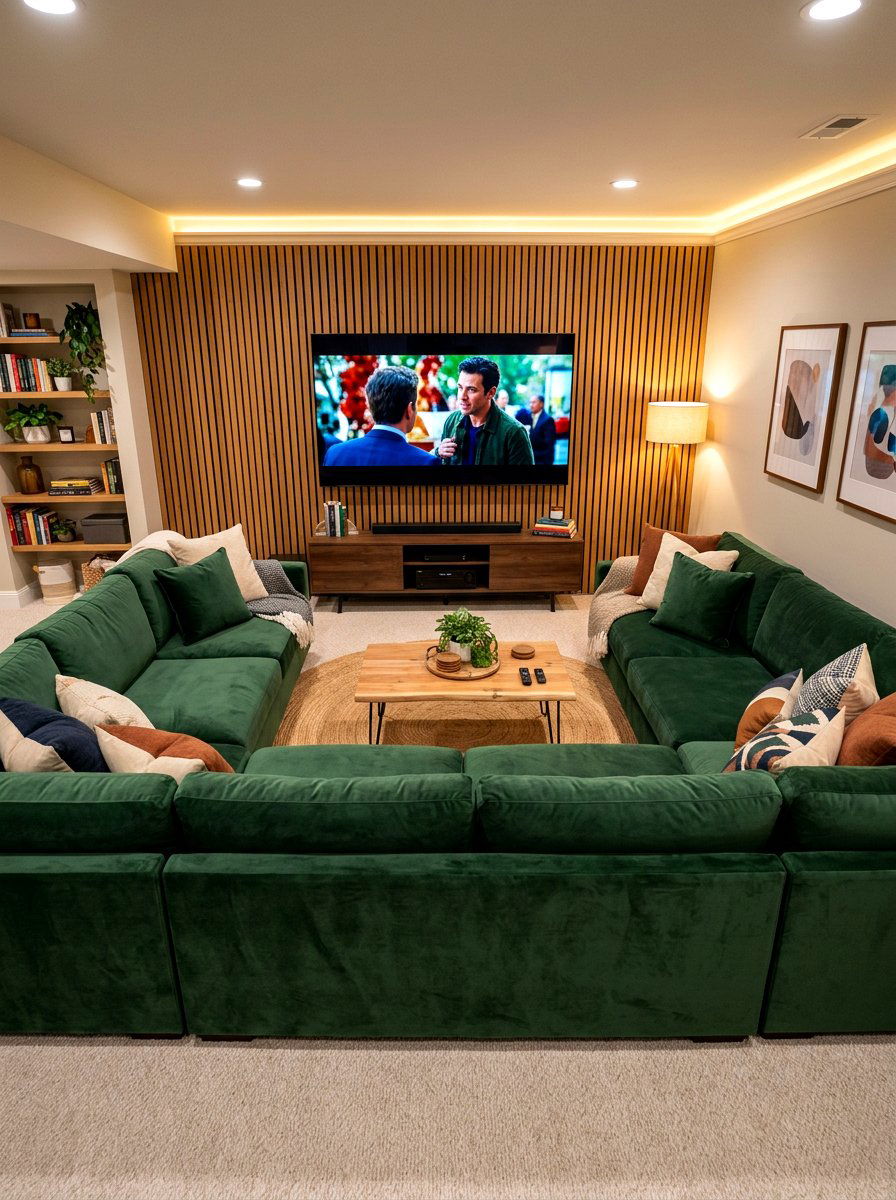
Basement sectional seating is the perfect choice for families who want a cozy and flexible viewing area. Unlike traditional theater rows, a large L-shaped or U-shaped sectional allows everyone to pile in together and get comfortable with pillows and blankets. This arrangement is ideal for multipurpose basements where the room might also be used for lounging or playing games. You can choose a modular design that allows you to rearrange the pieces depending on how many guests you have. Soft, durable fabrics like velvet or microfiber are popular choices because they provide a luxurious feel while standing up to the wear and tear of a busy household.
10. Hidden Home Theater Equipment
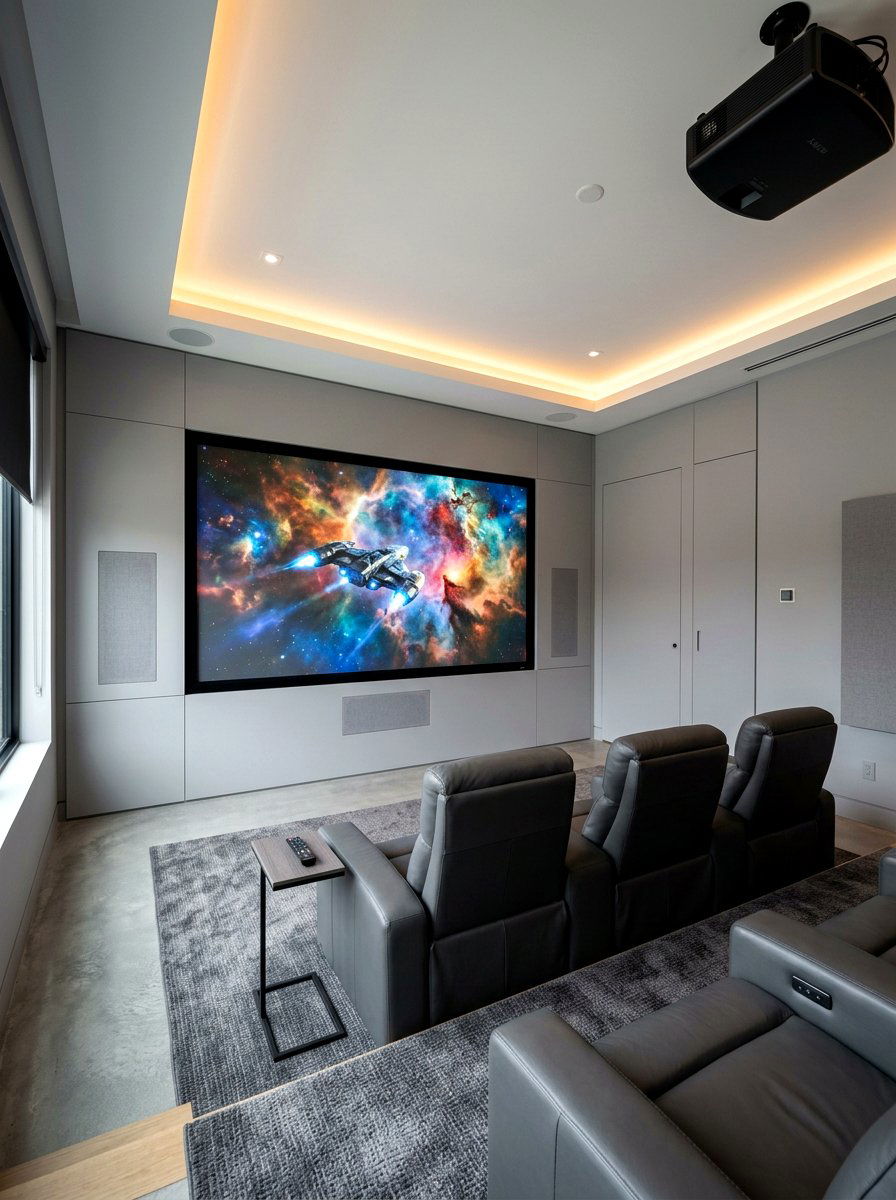
Hidden home theater equipment is a great way to maintain a clean and uncluttered look in your basement. This involves using specialized cabinets or a dedicated AV rack tucked away in a closet to house your receivers, players, and gaming consoles. Infrared repeaters allow you to control all your devices even when they are behind closed doors. You can also opt for in-wall or in-ceiling speakers that disappear into the decor, leaving only the screen as the focal point. This approach is particularly effective for minimalist designs where you want the technology to be felt but not necessarily seen. It creates a sleek, professional environment that focuses on the experience.
11. Soundproof Basement Theater
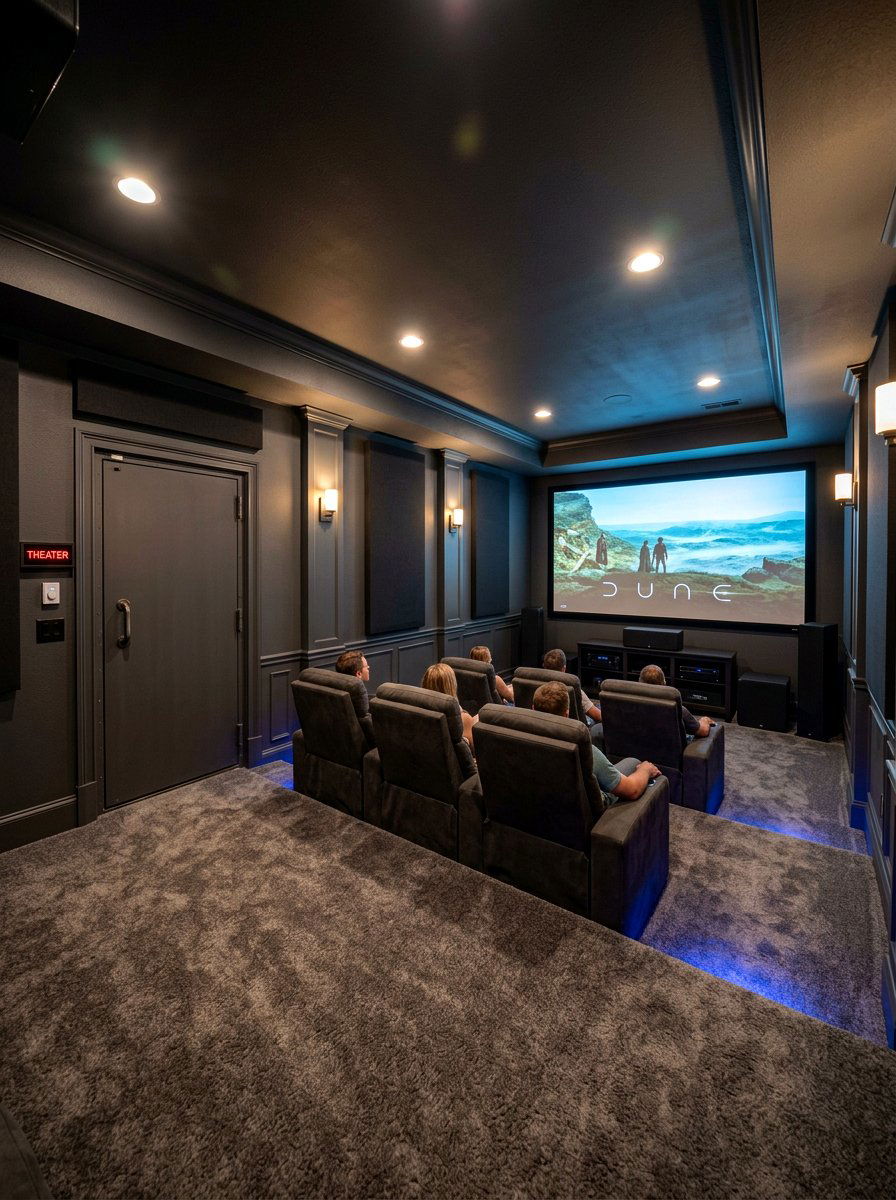
A soundproof basement theater is a necessity if you enjoy watching movies at high volumes late at night. Effective soundproofing requires installing specialized materials like mass-loaded vinyl or double layers of drywall with acoustic glue in between. You should also consider using solid-core doors with weather stripping to prevent sound from escaping into the upper floors. By isolating the room, you can enjoy the full impact of a powerful subwoofer without waking up the rest of the family. This creates a private sanctuary where the audio stays contained, allowing for a loud and immersive experience that truly replicates the feeling of sitting in a professional commercial movie house.
12. Basement Wall Sconce Lighting
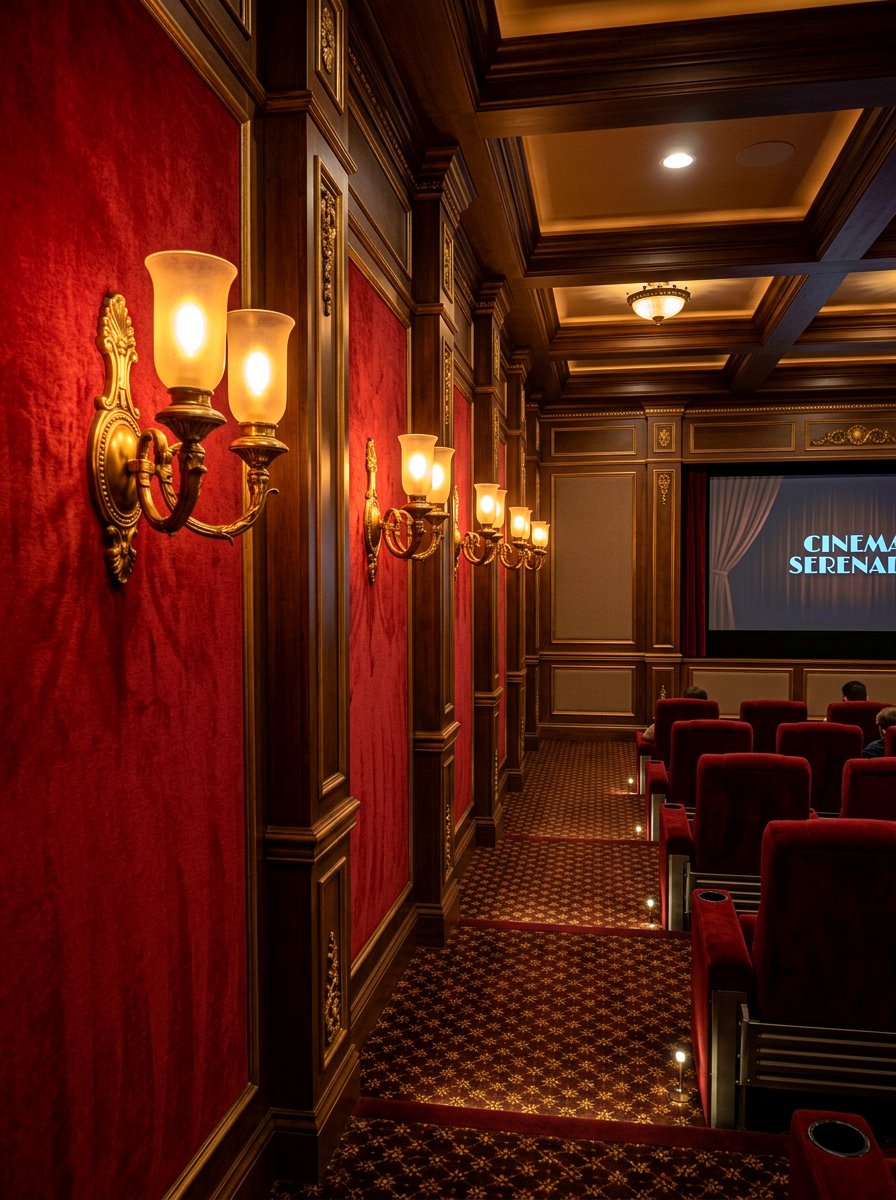
Basement wall sconce lighting provides a classic, upscale look that instantly signals you are in a theater. These fixtures are usually mounted at eye level along the side walls and cast a soft, upward or downward glow. Sconces are excellent for providing just enough light to see while the movie is playing without creating glare on the projector screen. Many homeowners choose designs that match their theater's theme, whether it is modern, Art Deco, or rustic. By placing them between acoustic panels or decorative pillars, you add visual rhythm to the walls. This creates a sophisticated atmosphere that makes your home cinema feel like a grand, old-fashioned movie palace.
13. Large Screen Basement Theater
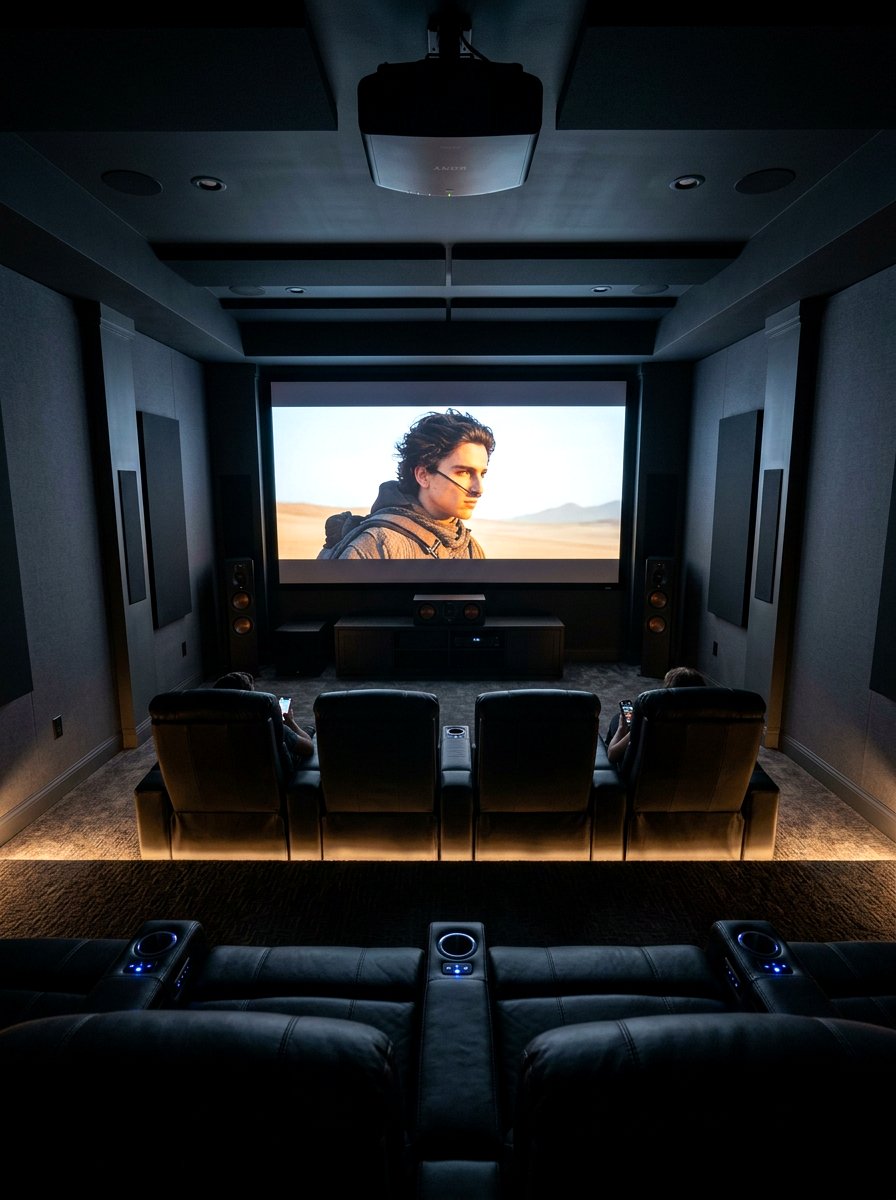
A large screen basement theater is all about achieving the maximum possible visual impact for every viewer. When you have a wide, open basement wall, you can install a fixed-frame screen that spans 120 inches or more. This massive scale makes you feel completely absorbed in the action, whether you are watching a blockbuster film or a live sports game. It is important to calculate the proper viewing distance to ensure that the image is crisp and not overwhelming. Using a high-quality screen material with ambient light rejection can help maintain vibrant colors even if you have some small basement windows. This setup provides the ultimate destination for home entertainment.
14. Basement Theater Popcorn Station
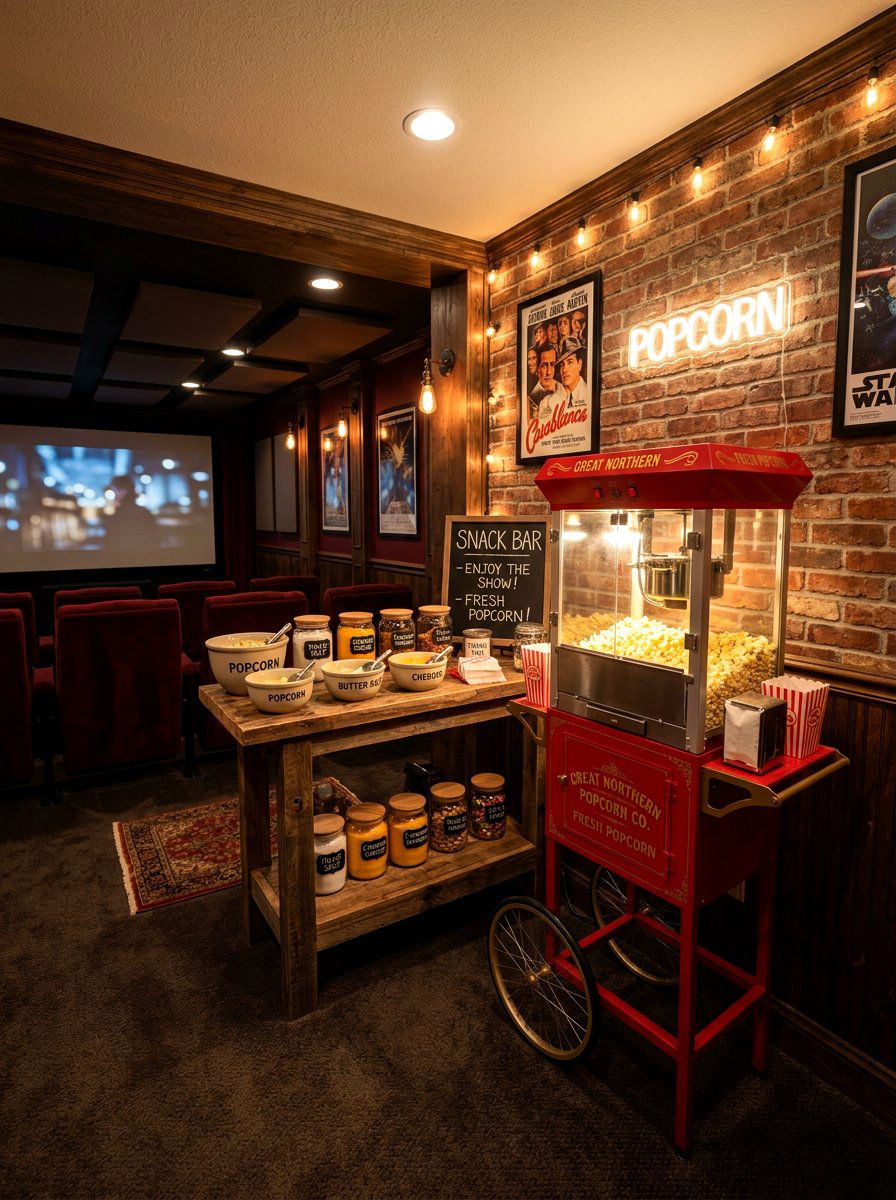
A basement theater popcorn station is a delightful addition that brings the nostalgia of the cinema right into your home. You can set up a professional-style kettle popcorn machine on a dedicated cart or as part of a built-in counter. This station becomes a popular gathering spot where guests can customize their snacks with different seasonings and oils. Having the smell of fresh popcorn wafting through the basement instantly sets the mood for a movie marathon. To keep things organized, you can include bins for napkins and bowls nearby. This small touch of theme-park fun makes your theater feel more like an attraction than just a simple television room.

15. Modern Theater Carpeting
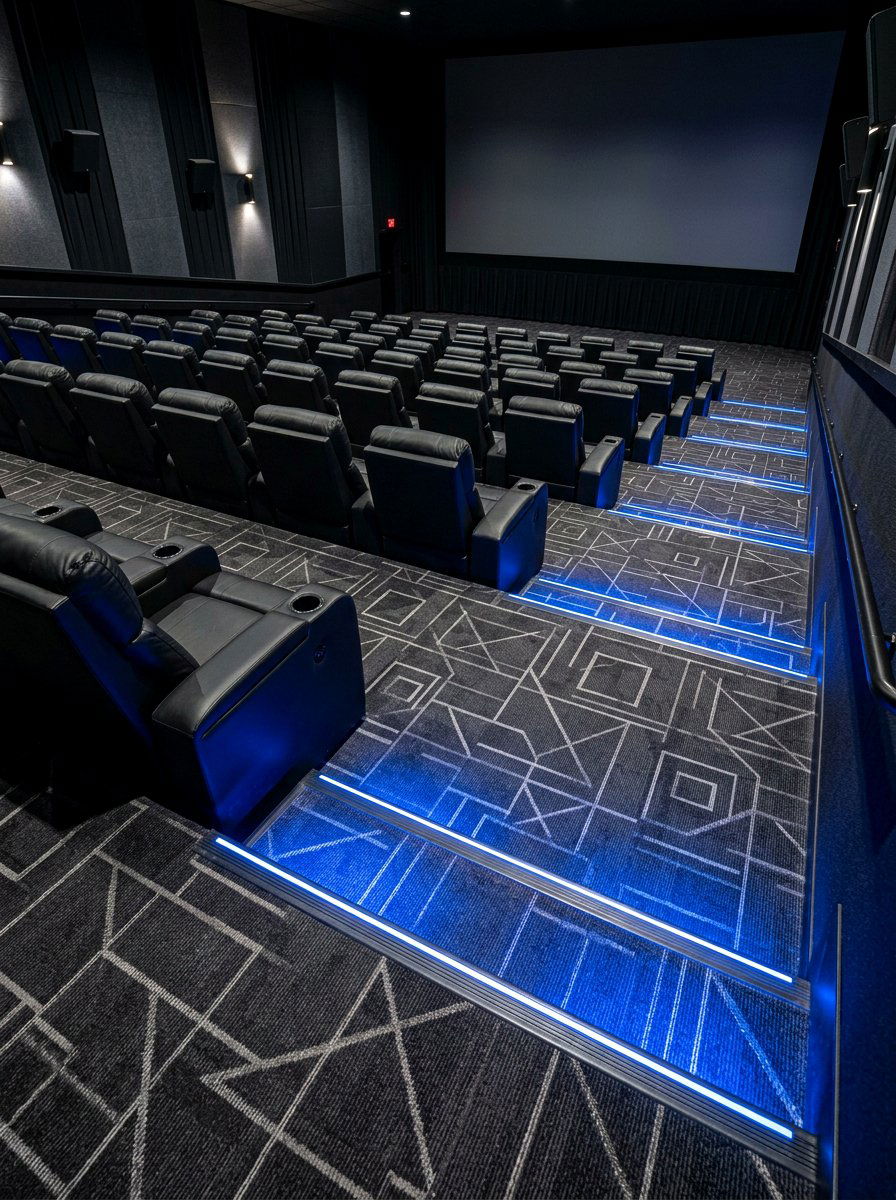
Modern theater carpeting plays a double role by enhancing both the visual style and the acoustic performance of your basement. Unlike hard flooring, thick carpet absorbs sound waves, preventing them from bouncing around and causing echoes. Many homeowners opt for dark, patterned carpets that hide spills and footprints while adding a sense of luxury to the floor. Geometric designs or classic cinema-inspired stars can give the room a specific theme. Using a high-quality pad underneath the carpet adds extra comfort for those who like to sit on the floor during family movie nights. This foundation ties the whole room together while improving the overall quality of the sound.
16. Rustic Basement Media Room
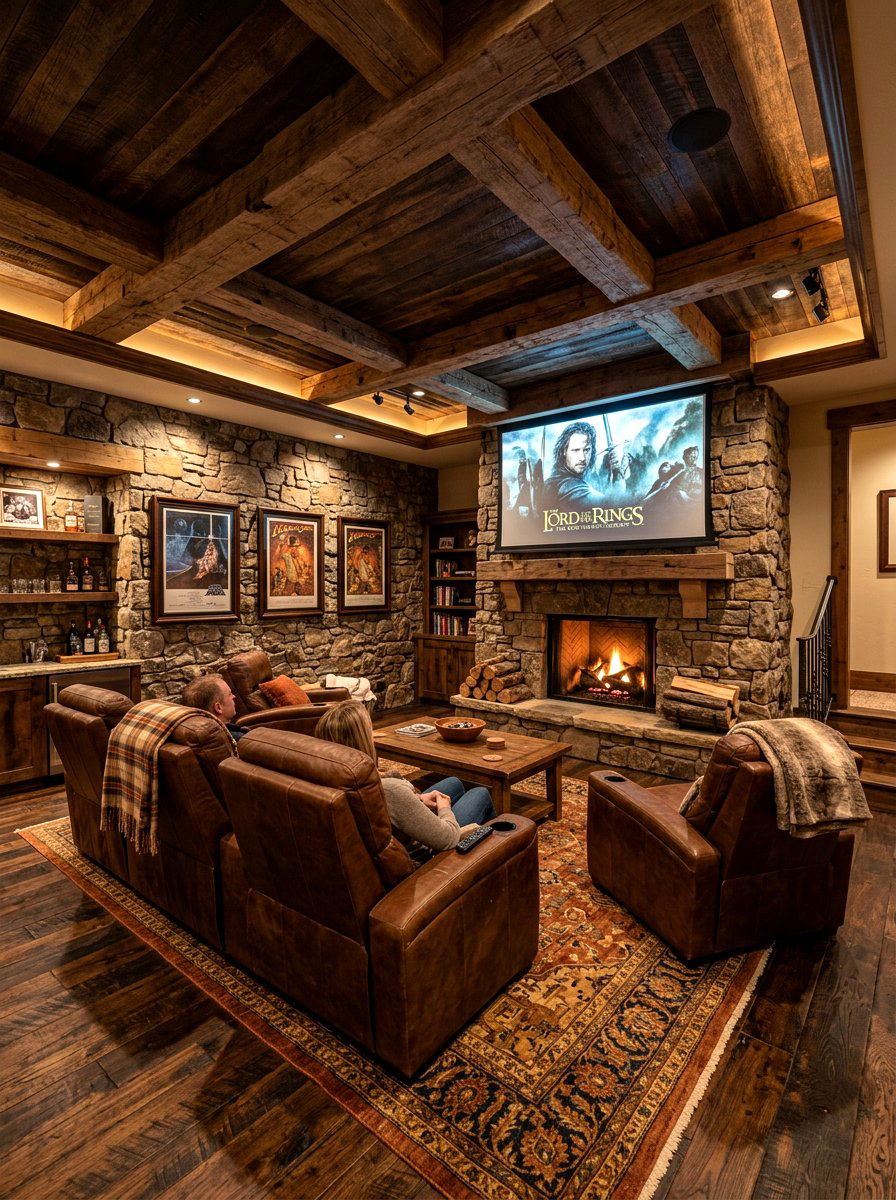
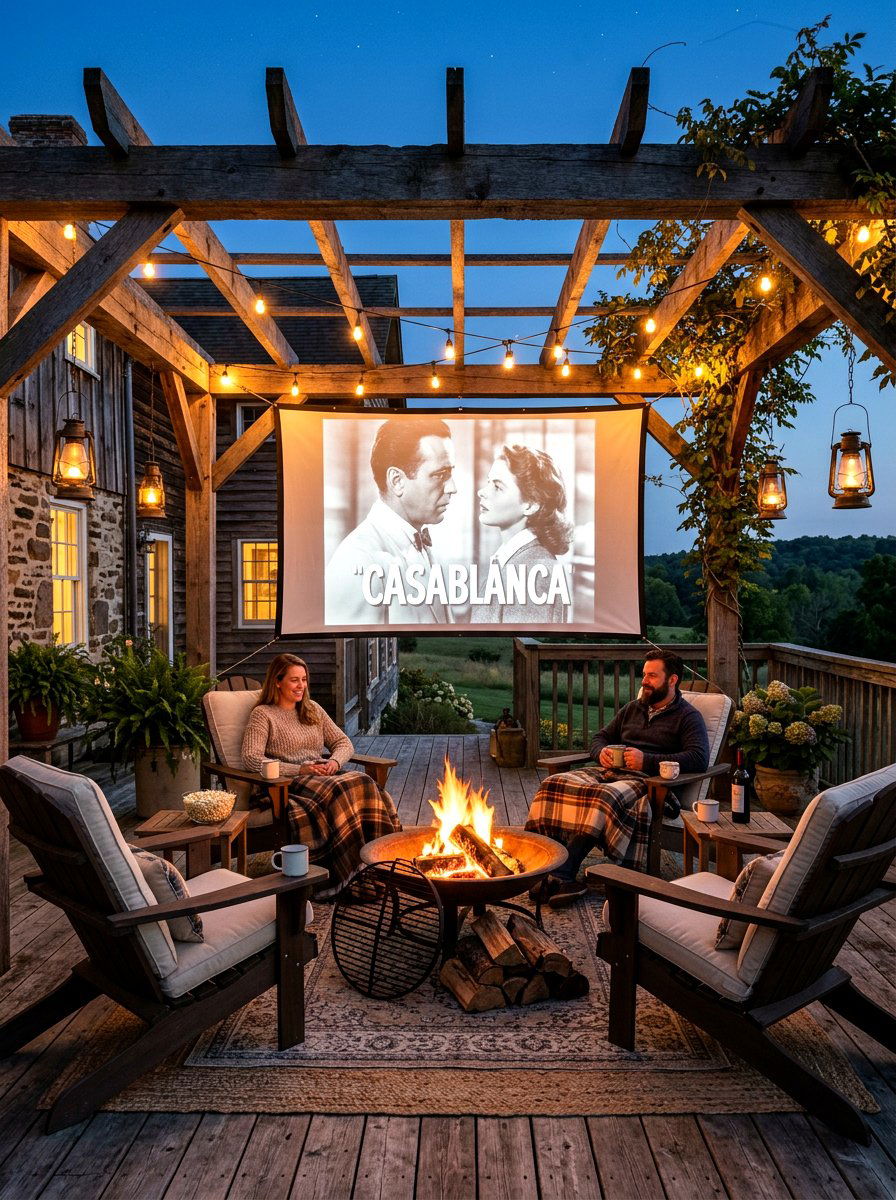
A rustic basement media room uses natural materials like stone and wood to create a warm, cabin-like feel. You might feature a stone accent wall behind the screen or use reclaimed wood planks for the ceiling and trim. This style is incredibly cozy and makes the basement feel like an extension of a comfortable lodge or country home. Oversized leather recliners and heavy wool blankets add to the rustic charm, making it the perfect spot to curl up on a cold night. By mixing high-tech equipment with traditional textures, you create a space that feels grounded and timeless, providing a unique alternative to the typical high-gloss modern theater design.
17. Smart Home Theater Control
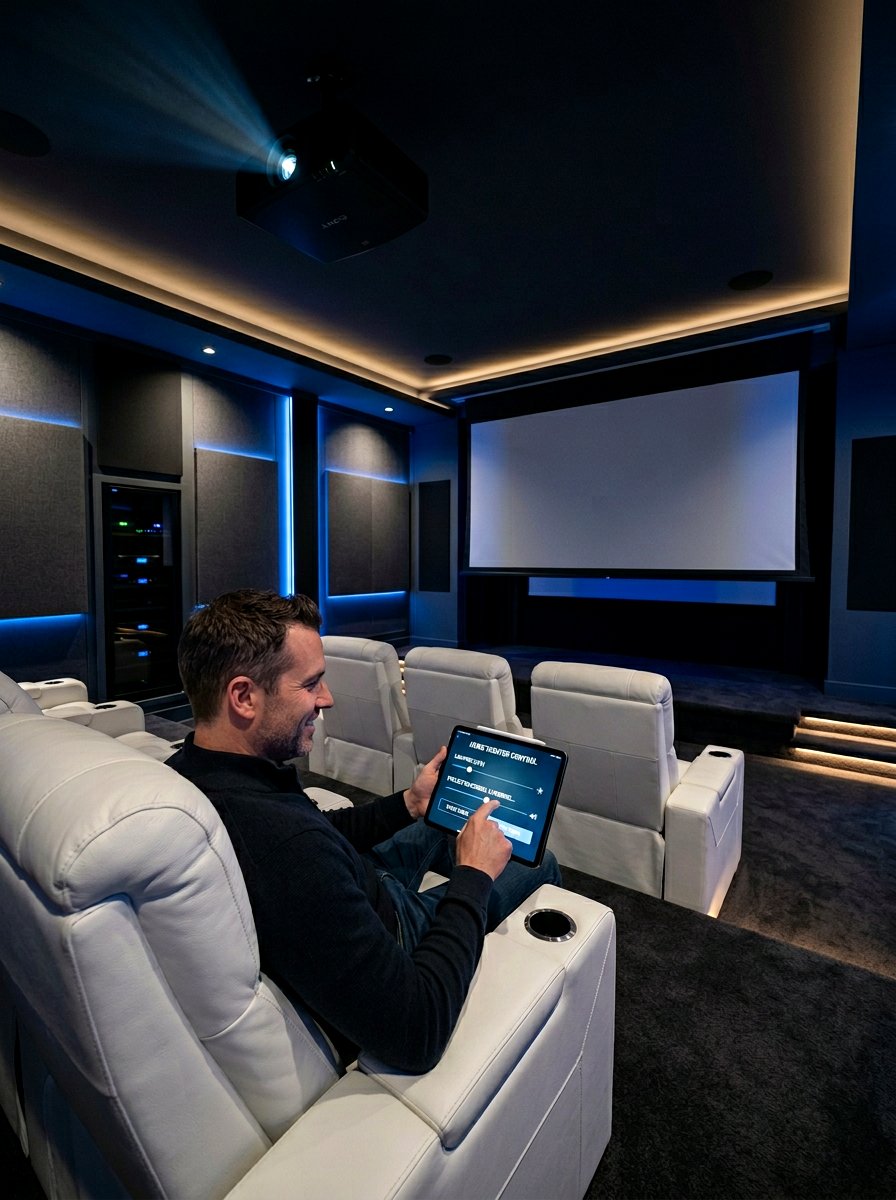
Smart home theater control simplifies the way you interact with your entertainment system by putting everything into one device. With a single touch on a tablet or a voice command, you can dim the lights, lower the projector screen, and start the movie simultaneously. This level of automation removes the need for multiple remotes and makes the setup process effortless for guests and family members. You can even program specific scenes, such as a "Gaming" mode that turns on the console and adjusts the audio settings. This modern convenience ensures that you spend less time fussing with cables and more time actually enjoying your favorite cinematic content.
18. Basement Theater Recliner Chairs
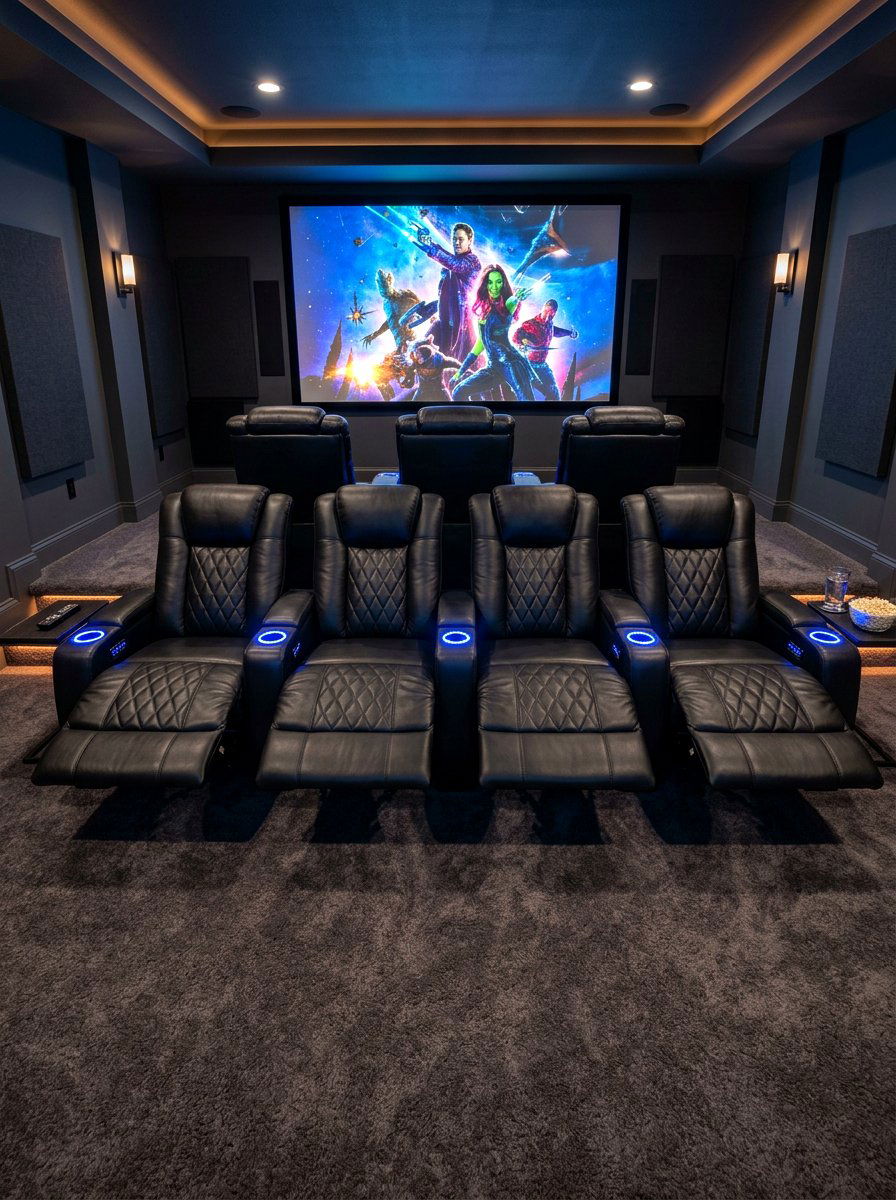
Basement theater recliner chairs are the gold standard for comfort when it comes to long-form viewing. These specialized seats often feature motorized reclining mechanisms, built-in cup holders, and even USB charging ports for your devices. Many high-end models also include "butt-kicker" transducers that vibrate in sync with the movie's bass, allowing you to feel the action in your seat. By choosing chairs with adjustable headrests, you can maintain the perfect viewing angle even when fully reclined. Arranging these chairs in rows with plenty of legroom ensures that everyone has a first-class seat. This investment in high-quality furniture transforms a simple room into a truly luxurious private cinema.
19. Minimalist Basement Cinema
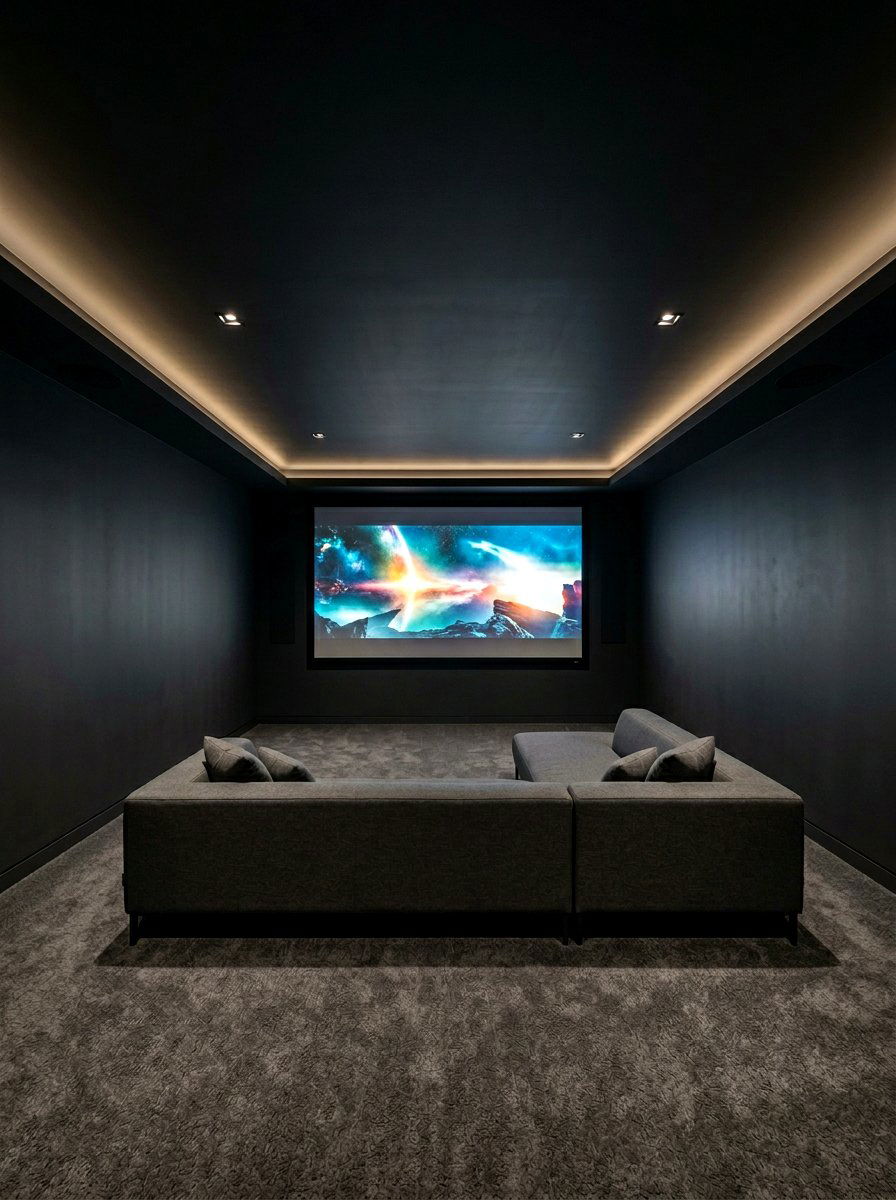
A minimalist basement cinema is perfect for homeowners who prefer a clean, distraction-free environment. This design focuses on the essentials: a high-quality screen, great sound, and comfortable seating, all without any unnecessary clutter. Walls are usually painted in a single, matte dark tone, and all wiring is hidden behind the surface for a seamless look. Built-in speakers can be covered with acoustically transparent fabric that matches the wall color. This approach allows the technology to disappear when not in use, making the room feel like a serene lounge. It is a sophisticated way to integrate a high-performance theater into a modern home without sacrificing your clean and simple aesthetic.
20. Basement Theater Dark Paint
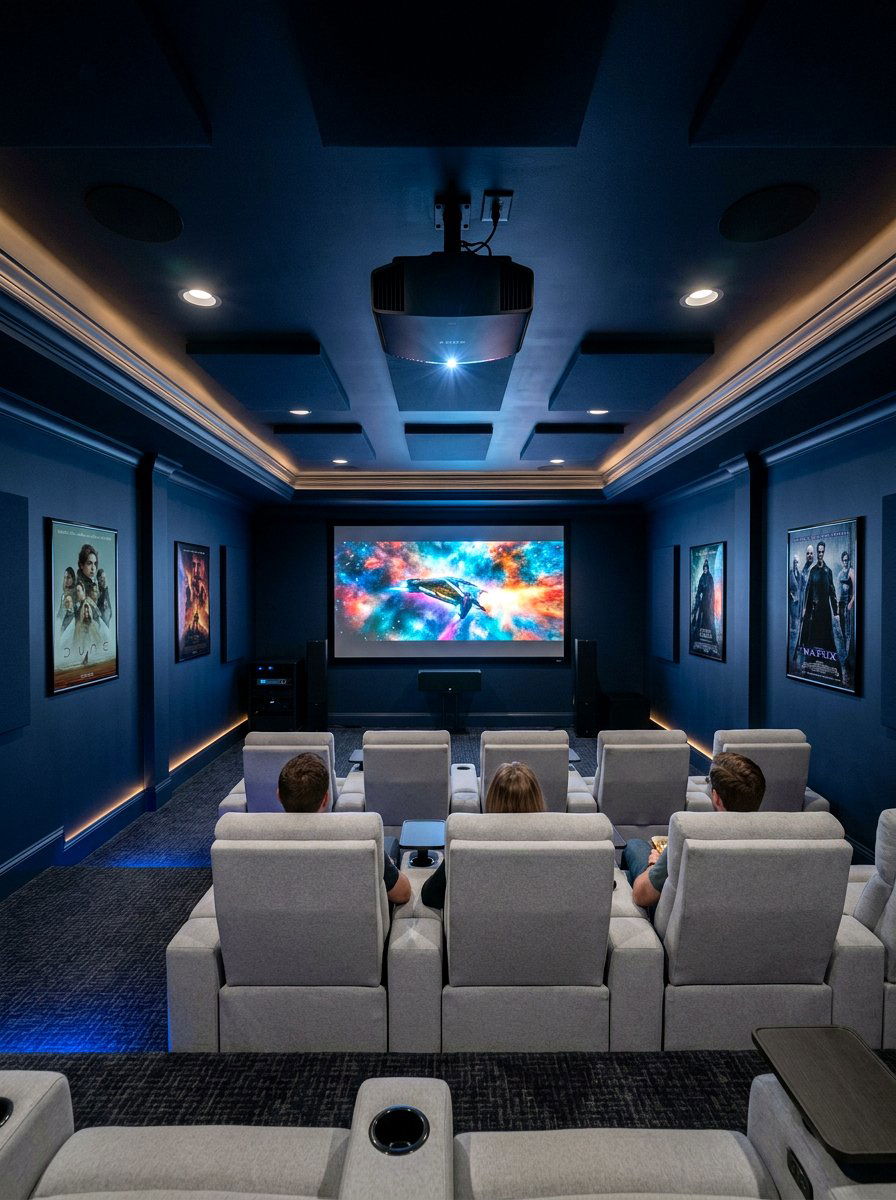
Choosing the right basement theater dark paint is the easiest way to significantly improve your viewing experience. When you use colors like deep navy, forest green, or matte charcoal, you prevent light from the screen from reflecting off the walls and washing out the image. This increases the perceived contrast and makes the colors on the screen appear more vibrant and lifelike. It is important to use a matte or eggshell finish rather than a glossy one to avoid distracting hot spots of light. Painting the ceiling the same dark color as the walls creates a "black box" effect that makes the boundaries of the room disappear, leaving only the movie.
21. Gaming and Movie Room
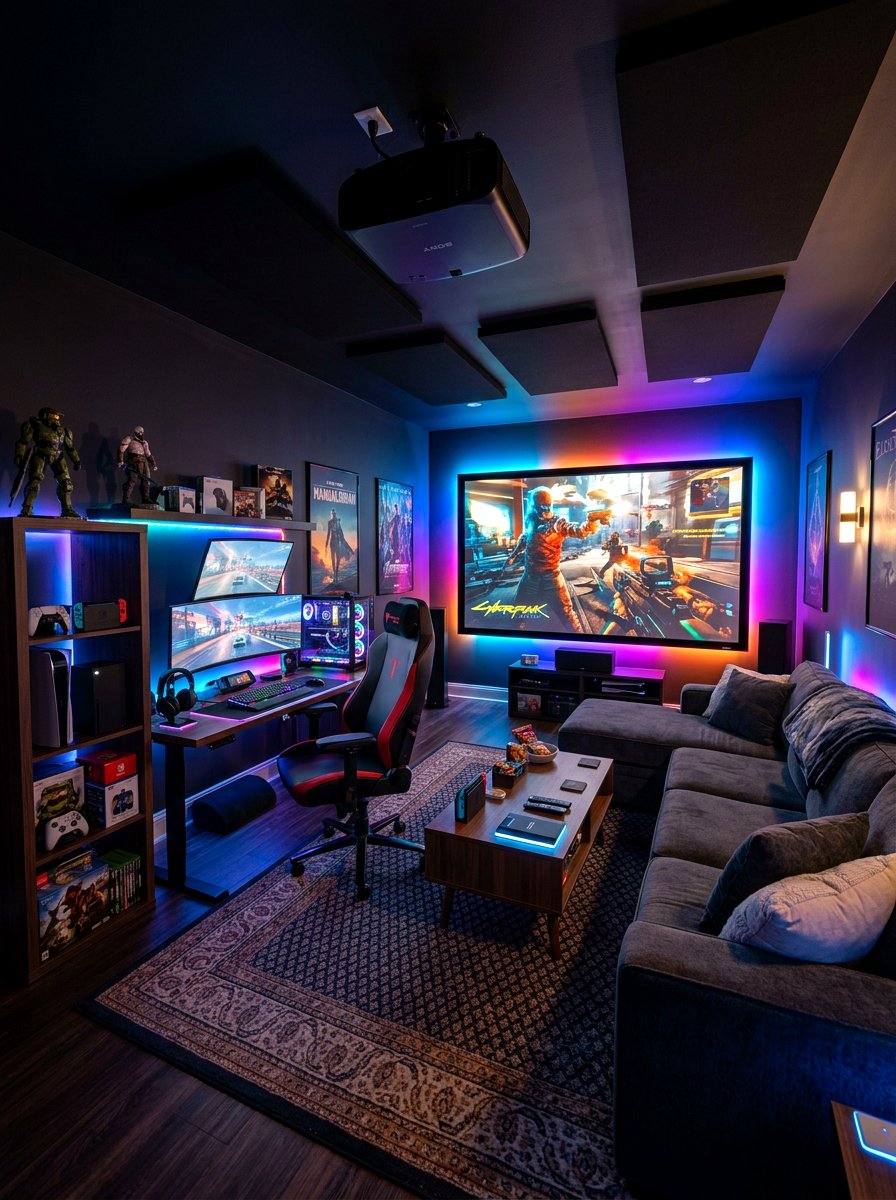
A gaming and movie room is a versatile basement space that caters to multiple types of entertainment. This setup often includes a large screen that works just as well for immersive RPGs as it does for Hollywood blockbusters. You might include a dedicated gaming desk in the back or a secondary monitor for streaming while others watch a film. High-speed internet ports and plenty of power outlets are essential for a smooth gaming experience without lag. Using comfortable seating that allows for both lounging and an upright posture is a smart move. This multipurpose approach maximizes the utility of your basement, making it the ultimate destination for every family member.
22. Basement Theater Fabric Panels
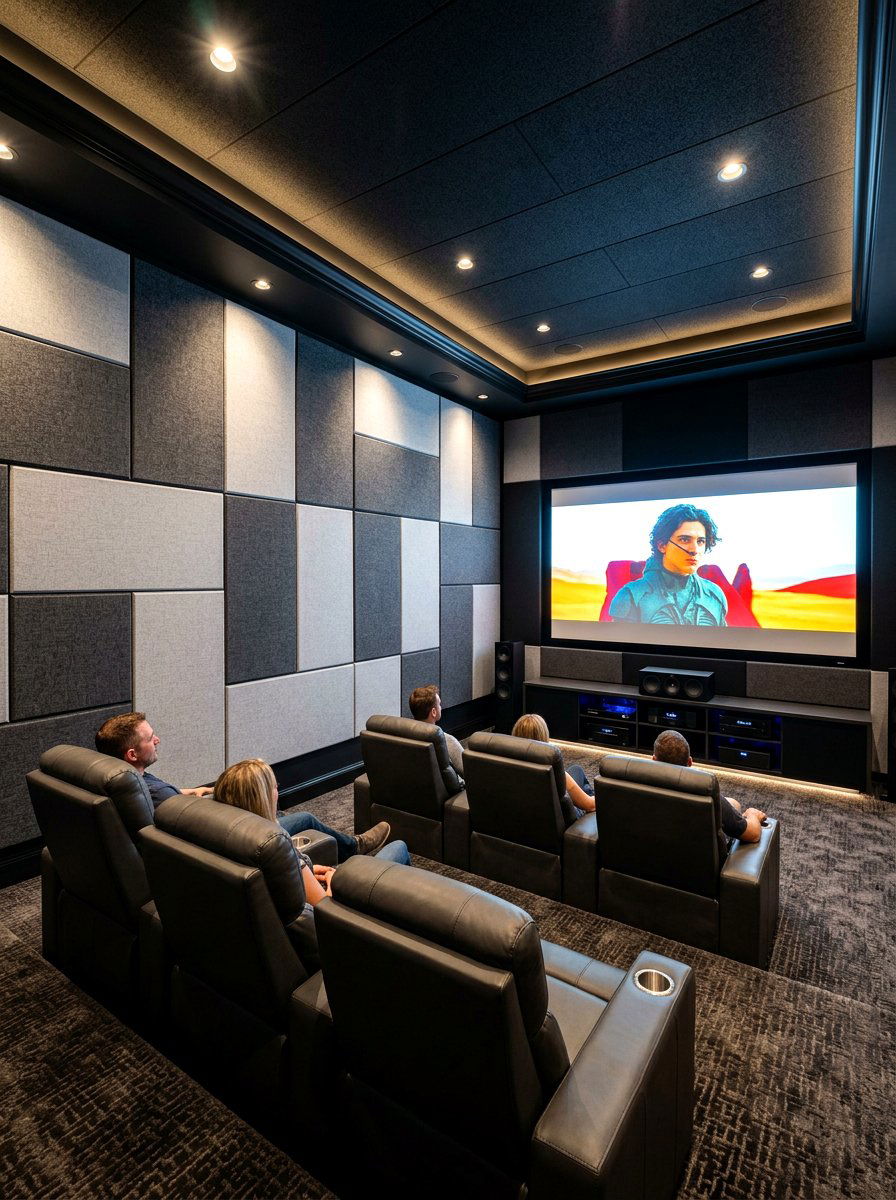
Basement theater fabric panels are a stylish way to improve the acoustics of your room while adding texture to the walls. These panels are often filled with sound-absorbing foam and wrapped in high-quality fabric that complements your color scheme. You can arrange them in creative patterns or even use them to create a full accent wall. Beyond their acoustic benefits, they provide a soft, high-end look that mimics professional recording studios and cinemas. Some panels are even customizable with printed artwork, allowing you to display movie posters in a way that also helps the room sound better. They are a functional and decorative essential for any serious theater.
23. Built In Basement Entertainment Center
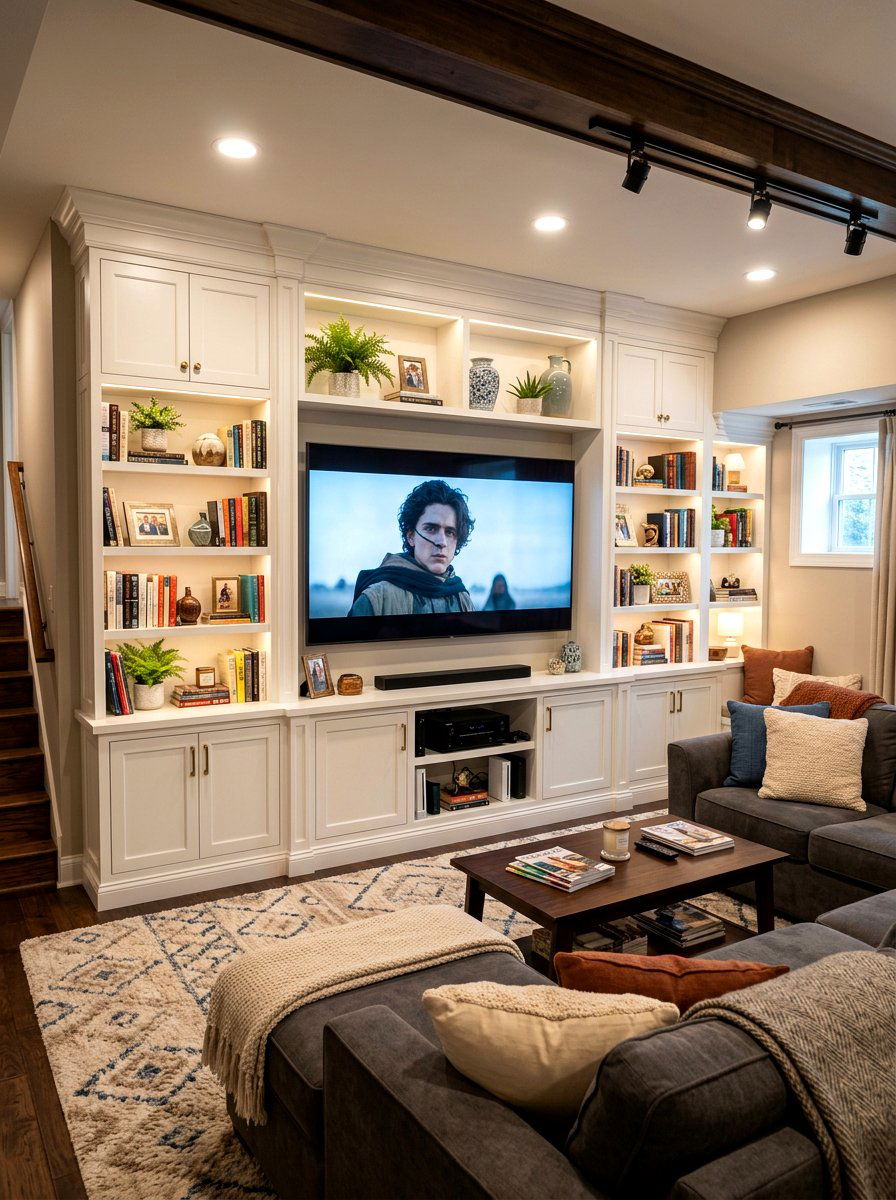
A built in basement entertainment center provides a permanent and organized home for your screen and speakers. By custom-building cabinetry around your television or projector screen, you can create a seamless look that integrates storage for movies and games. This design allows you to hide all cables and peripheral devices within the cabinets, keeping the room tidy. You can also include recessed lighting within the shelves to highlight decor or provide a soft ambient glow. A well-designed built-in unit acts as the focal point of the room, grounding the entire theater design and providing a polished, high-end feel that looks like it was part of the original house architecture.
24. Basement Theater Tray Ceiling
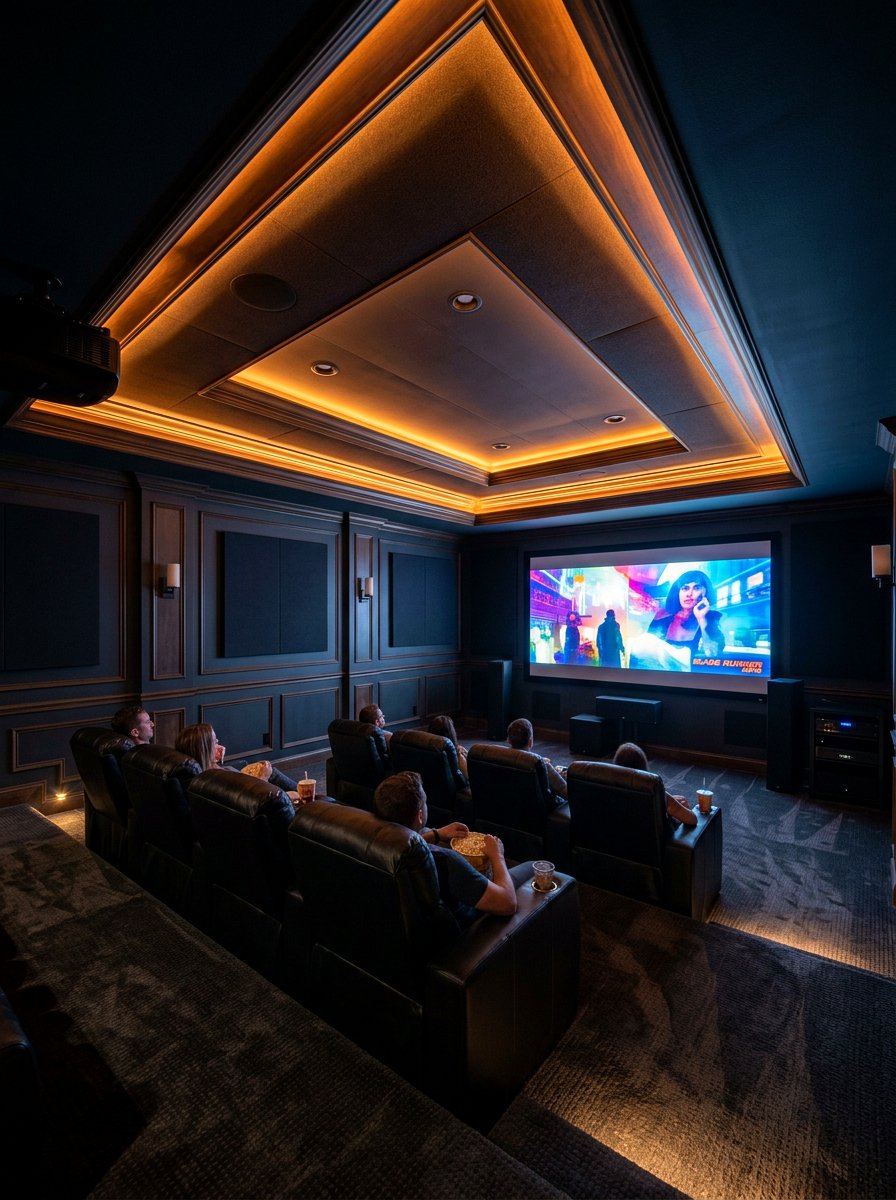
A basement theater tray ceiling adds architectural interest and can be a clever way to hide electrical wiring and HVAC ducts. This multi-level ceiling design allows you to install hidden LED rope lighting around the perimeter, which casts a soft glow upward. This indirect lighting creates a sense of height in a basement that might otherwise feel a bit low or enclosed. You can paint the inner section of the tray a different color or even add a starry sky effect for extra drama. It is a sophisticated design choice that elevates the entire look of the room, making it feel like a custom-designed luxury space rather than just a finished basement.
25. Contemporary Home Cinema Decor
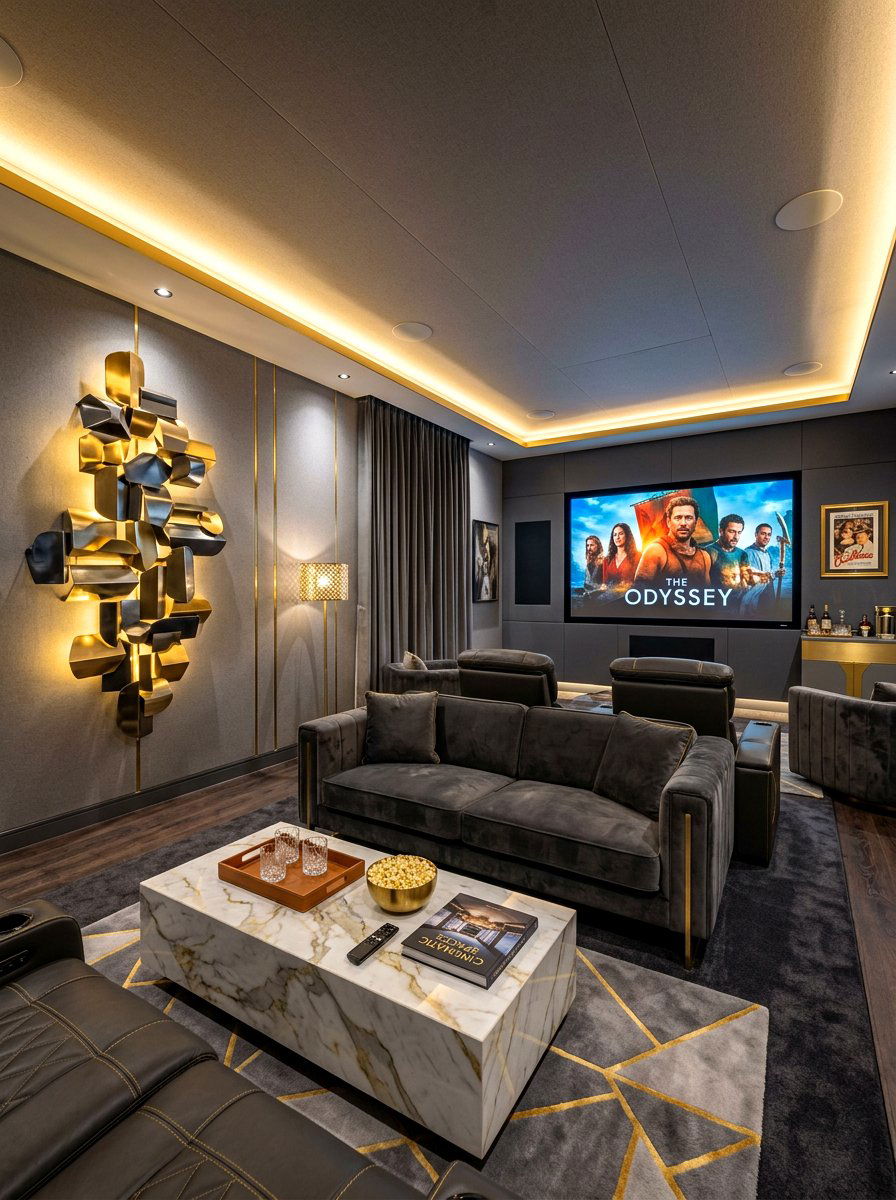
Contemporary home cinema decor focuses on using modern art and sleek accessories to personalize your theater. Instead of traditional movie posters, you might use abstract paintings or minimalist graphic prints that represent your favorite films. Metallic accents in gold or silver can add a touch of glamour to the space when used on light fixtures or furniture legs. Using a mix of textures, such as a plush rug and smooth leather chairs, keeps the room feeling dynamic and interesting. This style avoids the "cluttered" look of some traditional theaters, favoring a curated selection of items that reflect your personal taste while maintaining a clean and very high-end aesthetic.
26. Basement Theater Storage Cabinet
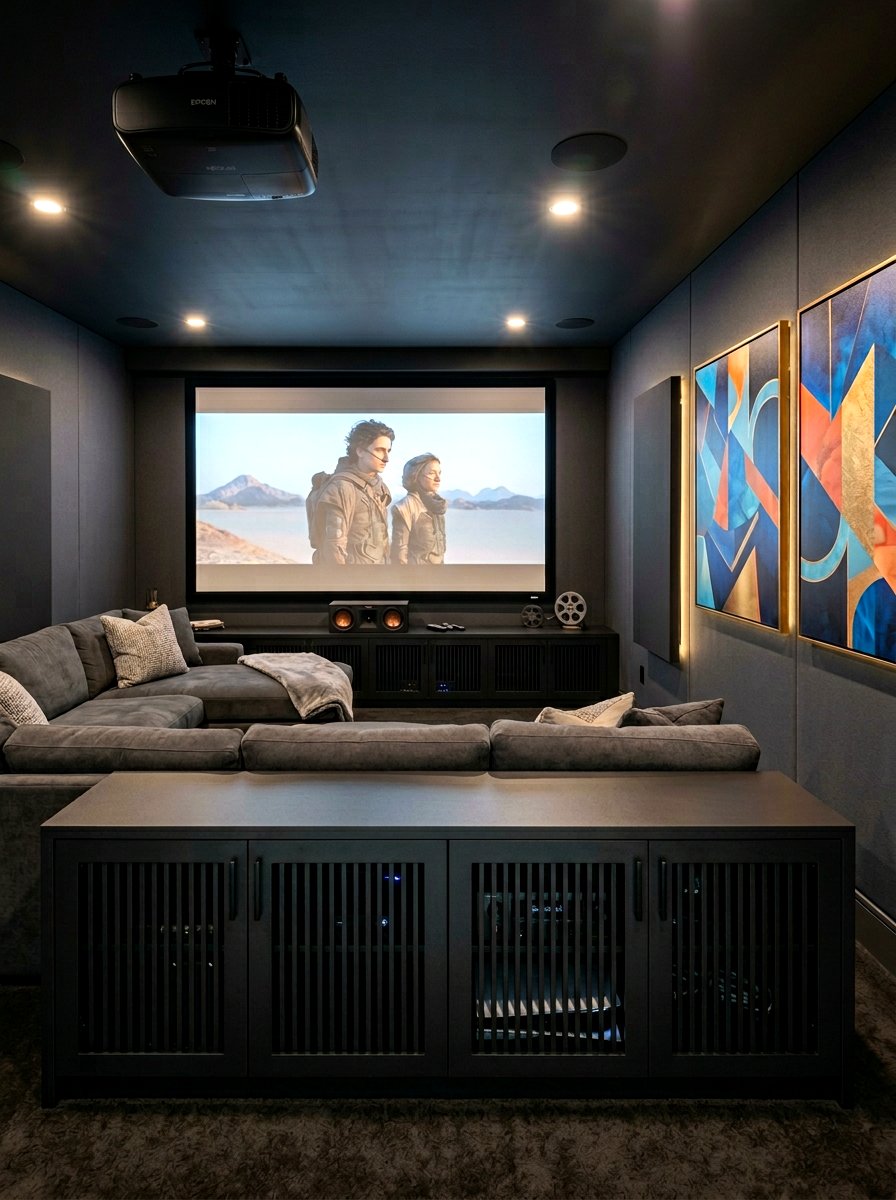
A basement theater storage cabinet is essential for keeping your media collection and equipment organized and protected. You can choose a sleek, low-profile sideboard that sits under the screen or a full-height pantry-style cabinet for maximum capacity. These units are perfect for storing physical discs, gaming controllers, and extra blankets for guests. By choosing a cabinet with ventilated doors, you can ensure that your electronic components stay cool while they are tucked away. Having a designated spot for everything prevents clutter from piling up on coffee tables or the floor. This organization ensures that your theater remains a relaxing and inviting place to spend your Friday nights.
27. Multi Row Basement Seating
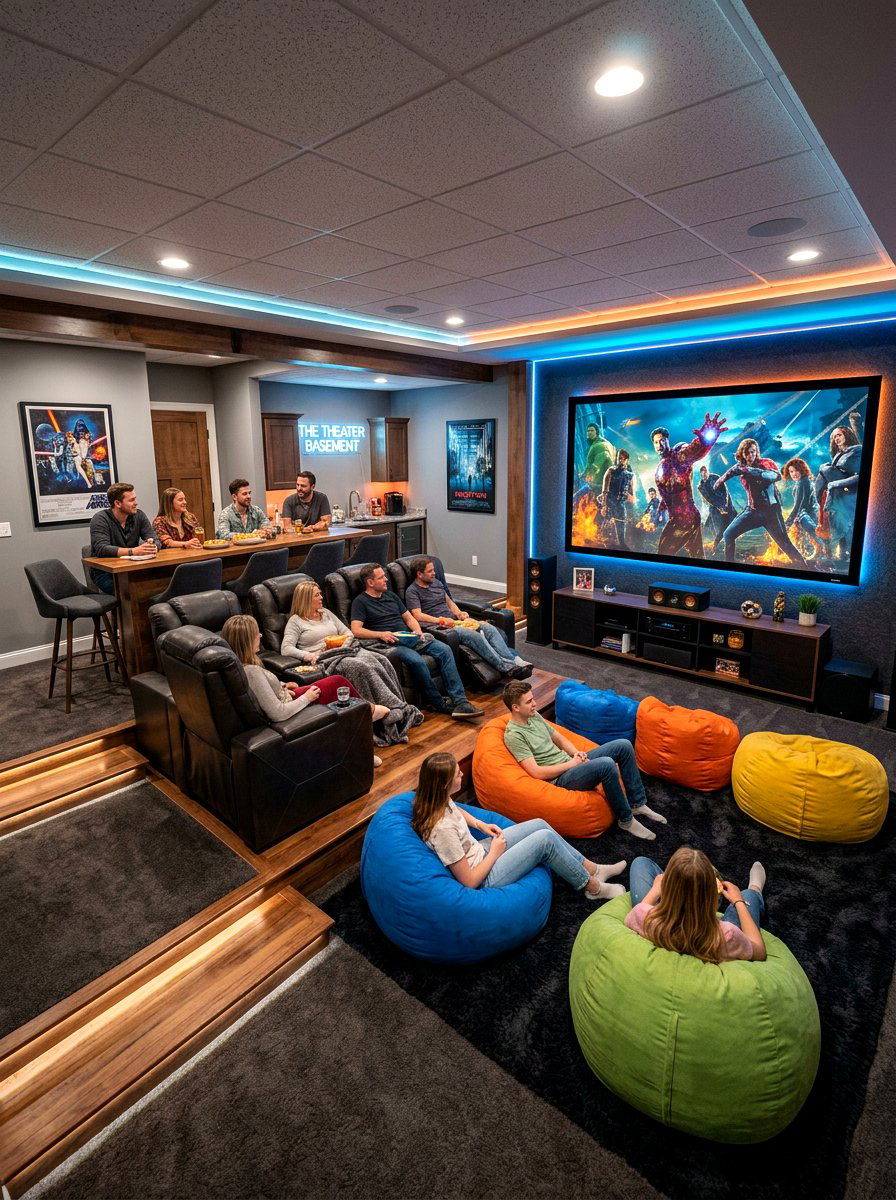
Multi row basement seating is the best way to accommodate a large group of friends for a movie night or a big game. To make this work, you typically need to build a riser for the back row to ensure everyone has a clear view of the screen. You can mix and match seating types, perhaps putting traditional recliners in the front and a comfortable couch or bar seating in the back. This arrangement creates a social environment where guests can choose their preferred level of comfort. By planning the layout carefully, you can turn your basement into the primary entertainment hub for your entire social circle, providing plenty of space for everyone.
28. Basement Theater Velvet Curtains
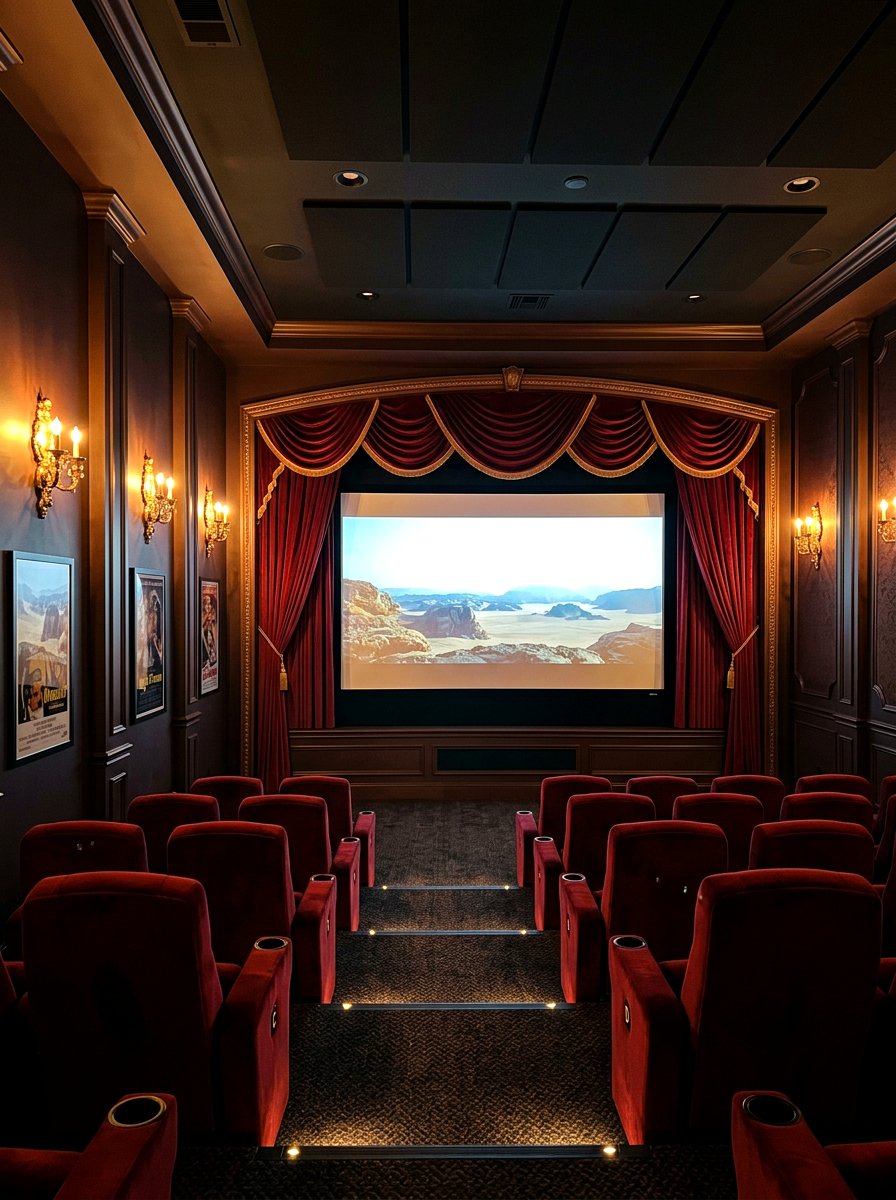
Basement theater velvet curtains add a layer of classic Hollywood glamour while serving several practical purposes. These heavy drapes can be used to cover windows to achieve total darkness or to hide the screen when it is not in use. Beyond their visual appeal, thick velvet is an excellent sound absorber, helping to dampen echoes and improve the overall audio quality of the room. You can choose a deep red for a traditional look or a modern black or navy for something more contemporary. Installing them on a motorized track allows you to open the "curtain" at the start of the movie, which adds a dramatic and professional touch.
29. Open Concept Basement Theater
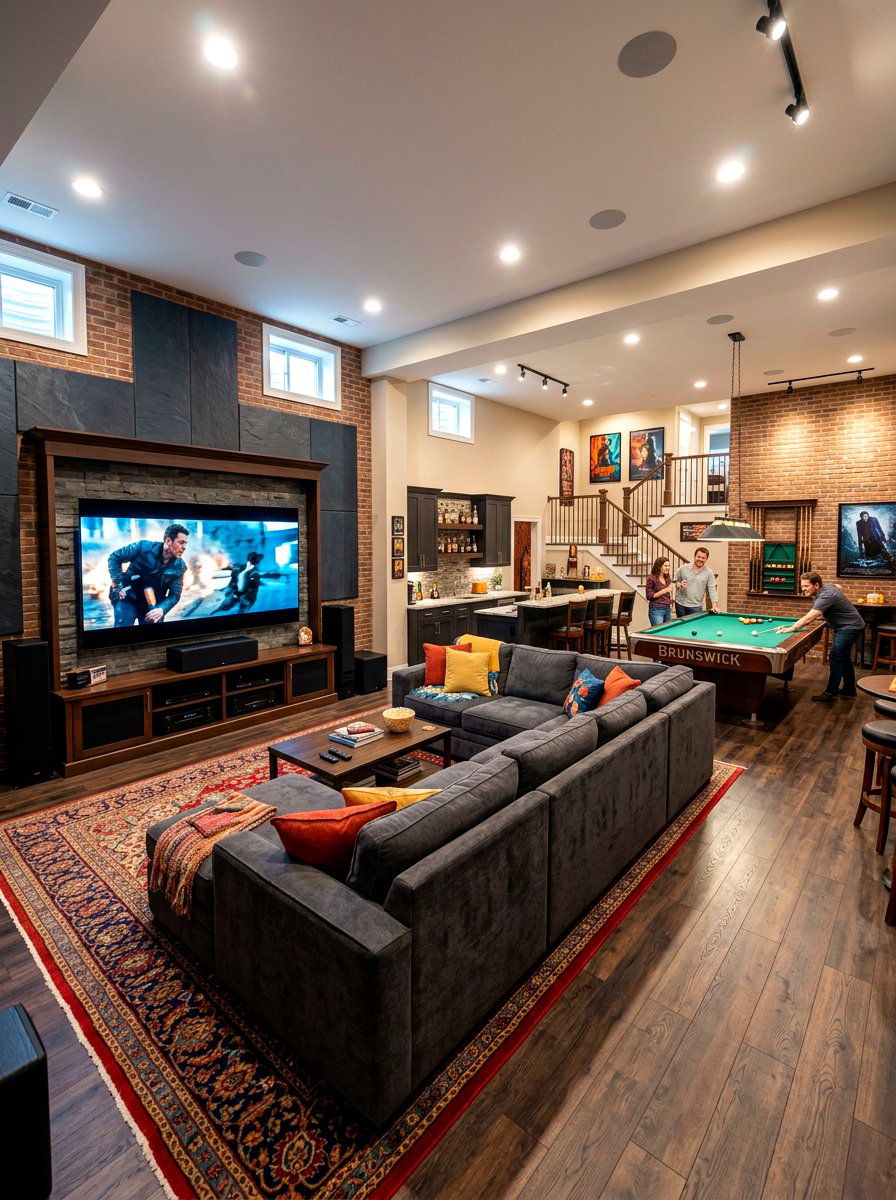
An open concept basement theater is ideal for homeowners who want their entertainment area to feel integrated with the rest of the lower level. Instead of building walls to close off the room, you can define the theater area with a large area rug or a change in ceiling height. This layout is great for entertaining because it allows people at a nearby bar or pool table to still see the screen. You can use a retractable projector screen that disappears into the ceiling when you want to use the space for other activities. This flexibility makes the basement feel larger and more inviting, catering to many different types of gatherings.
30. High End Theater Projector
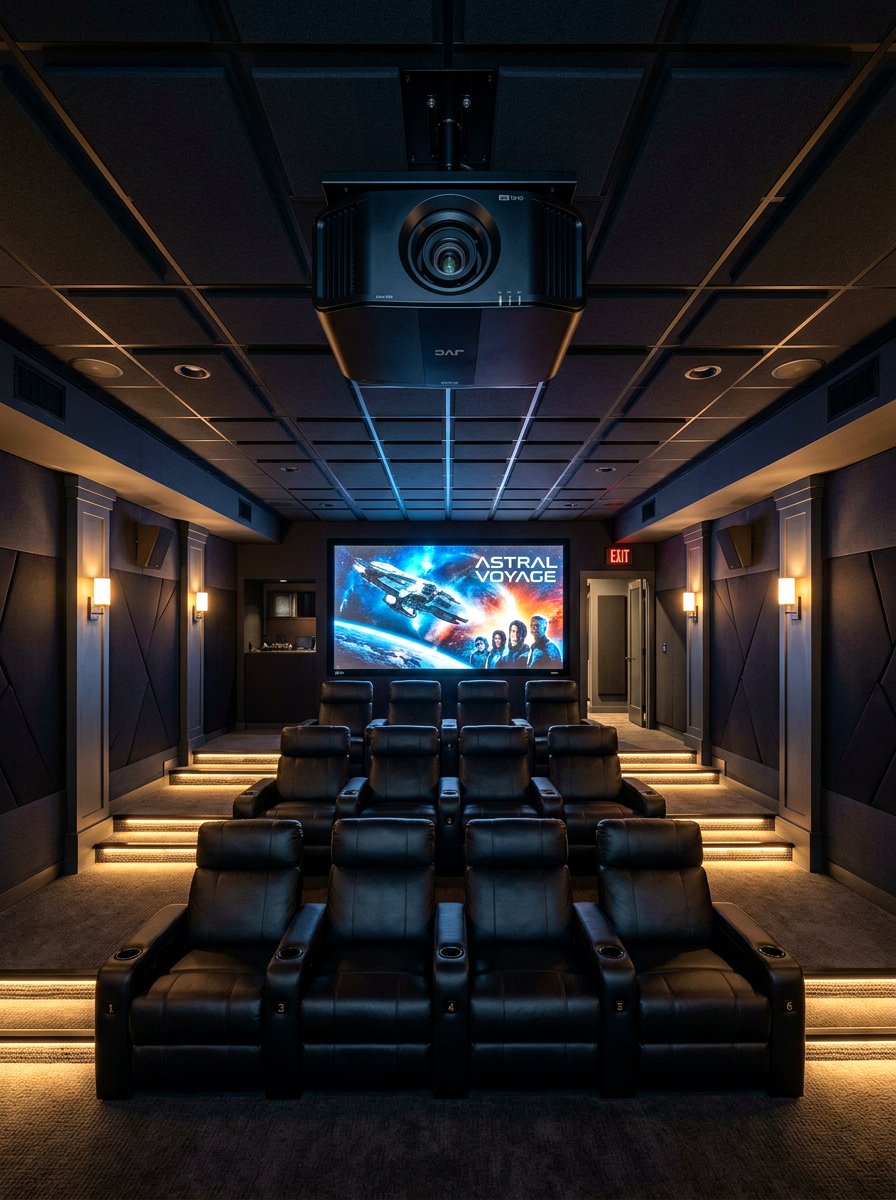
A high end theater projector is the heart of any top-tier basement cinema, providing the brightness and color accuracy needed for a true 4K experience. Modern laser projectors offer incredible longevity and can produce deep blacks that rival high-end televisions. When selecting a projector, you should consider the "lumen" count to ensure it is bright enough for your specific room conditions. Many premium models feature motorized lens shifts, making it easy to adjust the image perfectly to your screen. Investing in a high-quality unit ensures that you get a sharp, cinematic picture that makes every movie feel like a premiere. This technology is what truly separates a home theater from a standard living room.
Conclusion:
Building a theater in your basement is a fantastic way to maximize your home's footprint while creating a space for relaxation and connection. By carefully considering elements like lighting, seating, and acoustics, you can design a room that rivals the experience of a commercial cinema. Whether you prefer a modern, minimalist look or a classic movie palace aesthetic, the basement provides the privacy and control needed to bring your vision to life. This investment not only enhances your daily life but also serves as a standout feature for guests. With the right planning and creativity, your basement will undoubtedly become the most popular room in your entire house.

Related posts: