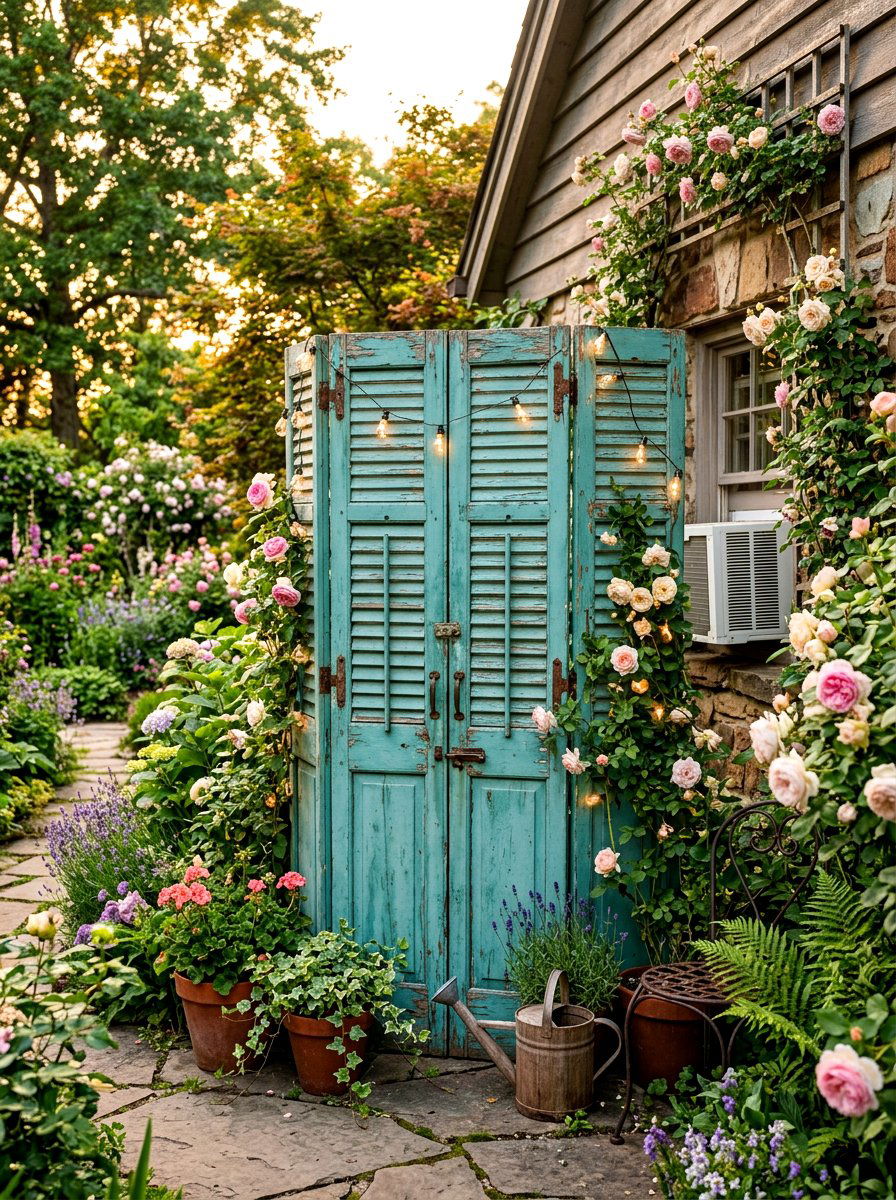
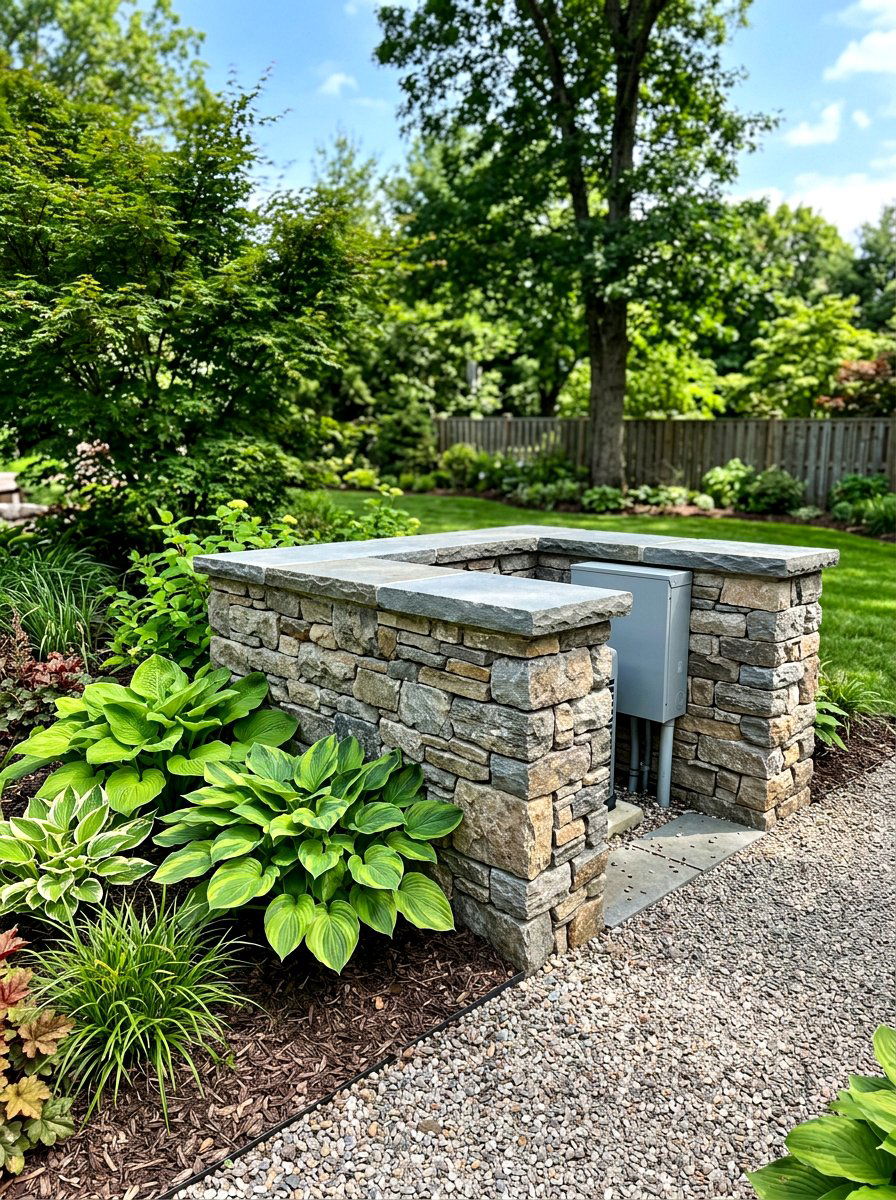
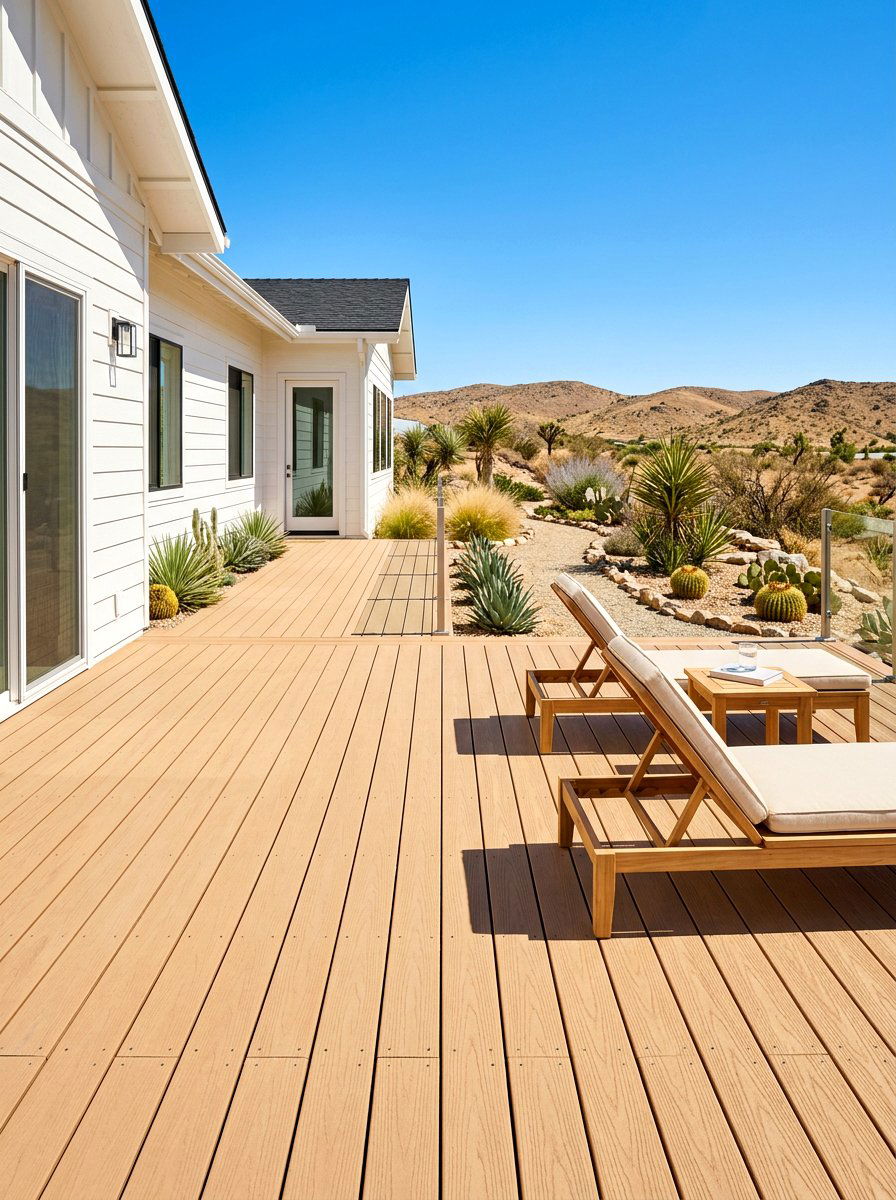
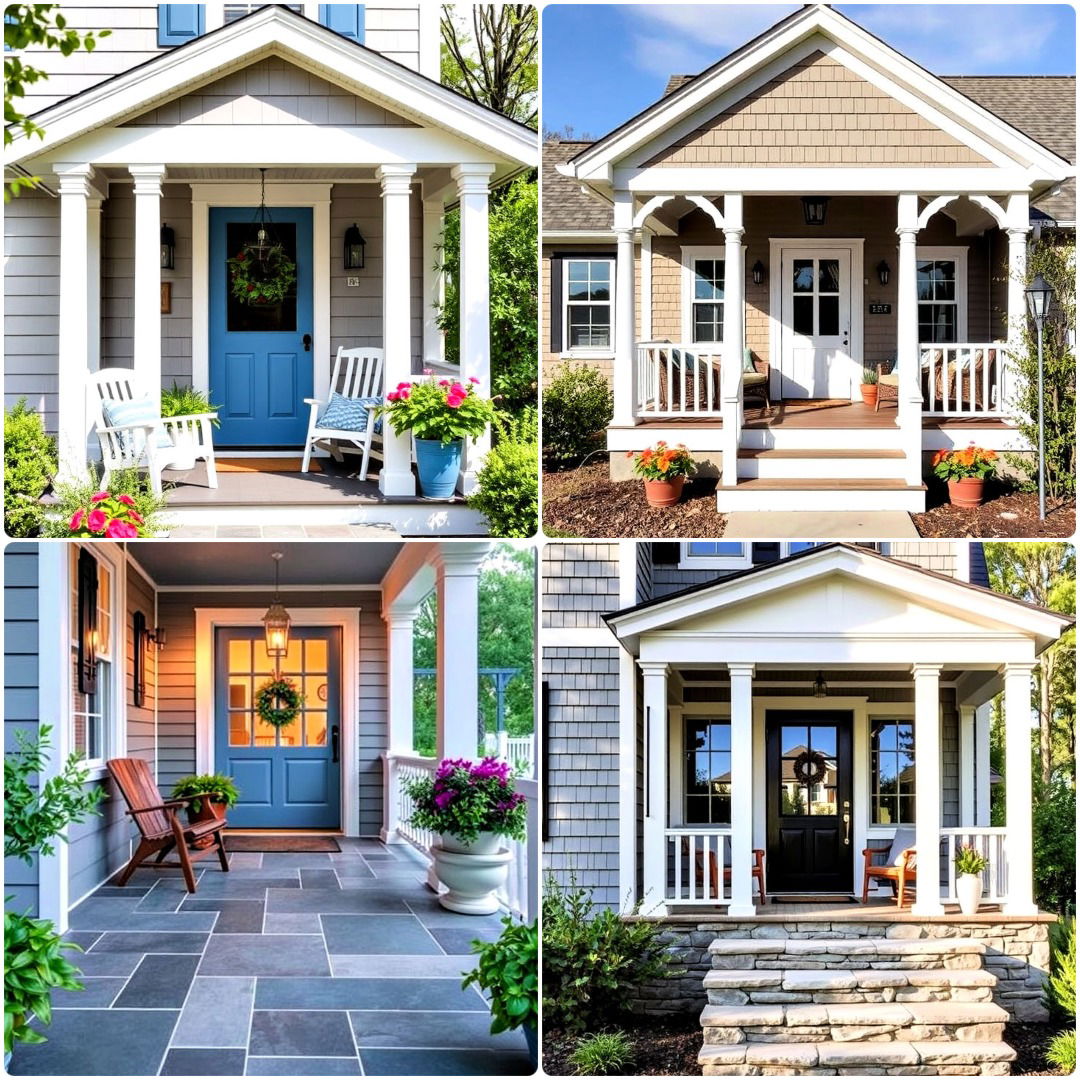
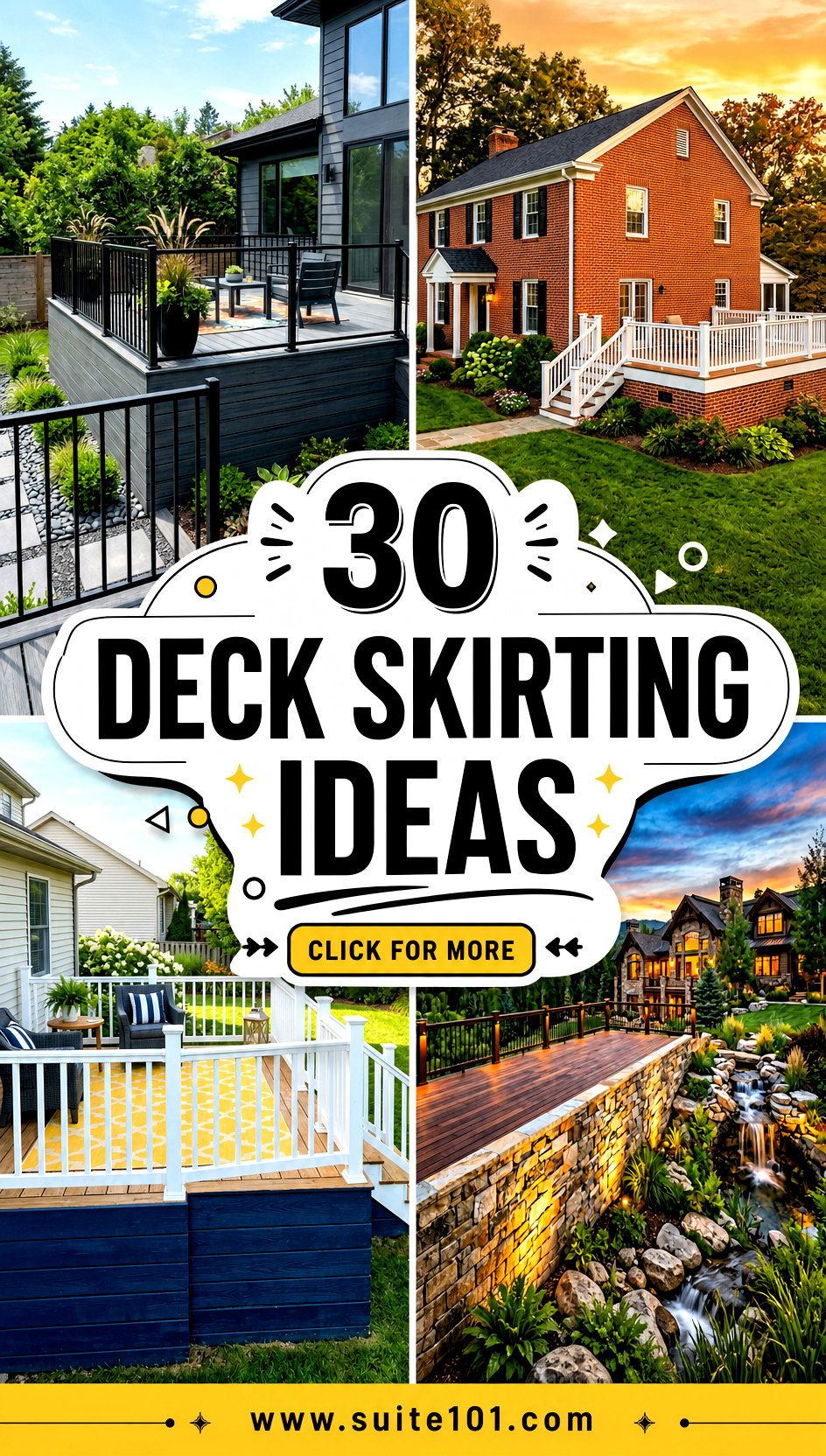
Choosing the right deck skirting is a transformative step that takes an outdoor space from looking unfinished to feeling like a professional, cohesive part of your home. Beyond the immediate aesthetic boost, skirting serves several vital functions that protect your investment over time. It effectively conceals the structural footings and messy under-deck storage while preventing pests from nesting in the dark, sheltered areas beneath your boards. Furthermore, a well-chosen skirting material provides essential ventilation, ensuring that moisture doesn't build up and cause premature rot or mildew issues. By selecting a style that complements your home’s architecture, you can significantly enhance your curb appeal and create a more polished, inviting atmosphere for entertaining and relaxing throughout the seasons.
1. Horizontal Wood Slat
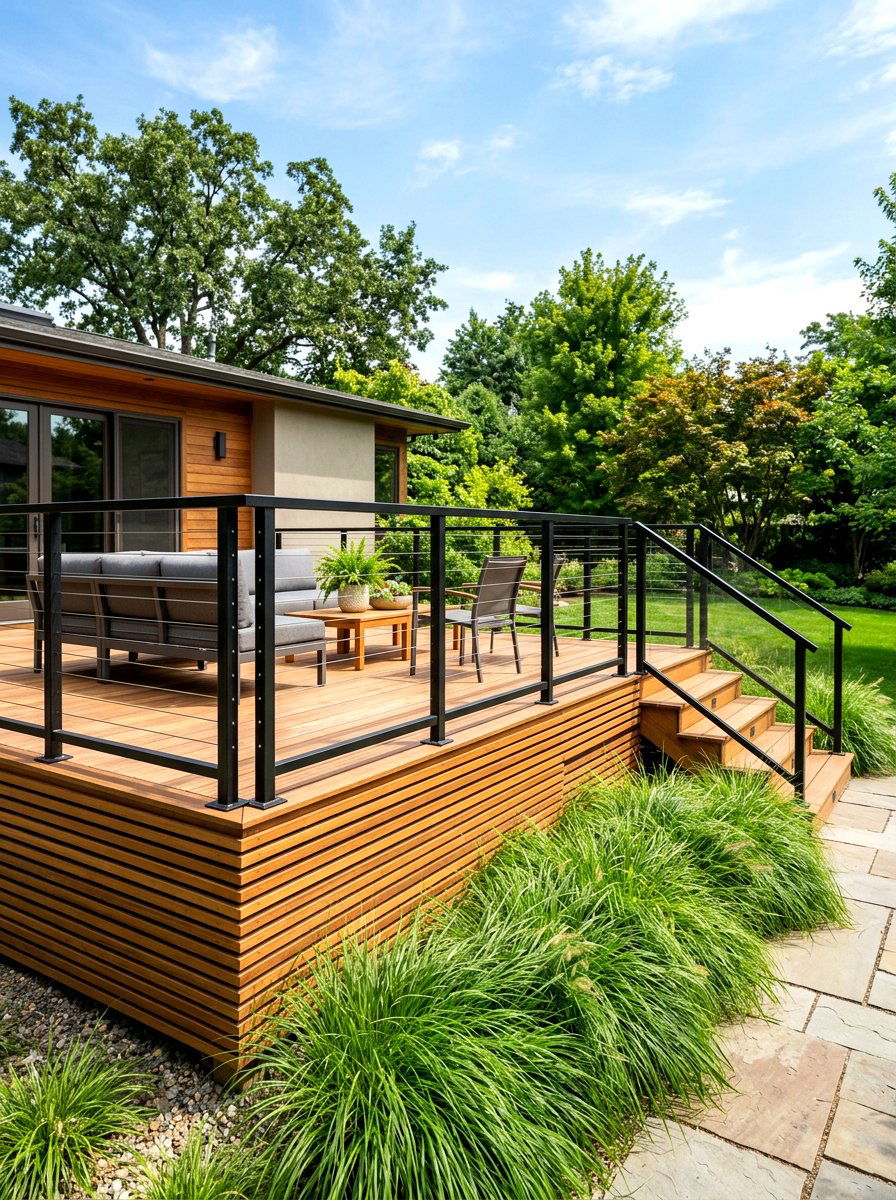
Creating a clean and modern look for your outdoor space often starts with the right foundation. Horizontal wood slats provide a sleek aesthetic that complements contemporary homes while offering practical benefits. You can choose different wood species like cedar or redwood to match your deck’s surface for a seamless transition. The gaps between the slats allow for essential airflow underneath the structure to prevent moisture buildup and rot. This style also helps hide unsightly structural beams and storage items tucked away below. Installing these slats with uniform spacing creates a high-end architectural feel that significantly boosts your home's curb appeal and overall market value. It is a timeless choice that feels both organic and structured.
2. Vinyl Lattice Panel
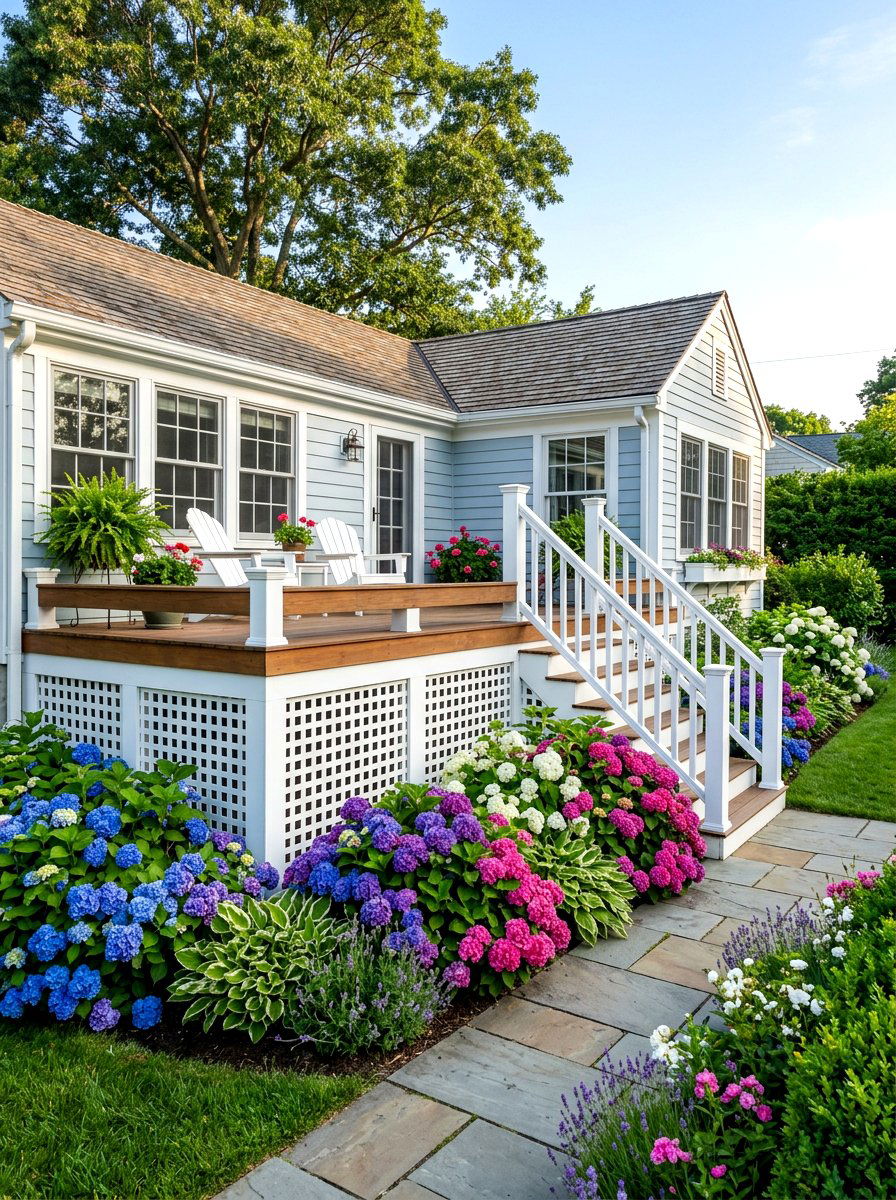
Lattice panels are a classic choice for homeowners seeking a balance between affordability and traditional charm. Vinyl options are particularly popular because they resist rot, insects, and the harsh effects of weather without requiring constant painting or staining. The crisscross diamond or square pattern creates a semi-private barrier that hides the underside of the deck while ensuring maximum ventilation for the joists. Available in various colors like white, clay, or black, vinyl lattice can easily match your existing trim or siding. It is lightweight and easy to cut, making it a favorite for DIY enthusiasts. This choice provides a clean, finished look that works beautifully with cottage-style homes and lush backyard gardens.
3. Stone Veneer Skirting
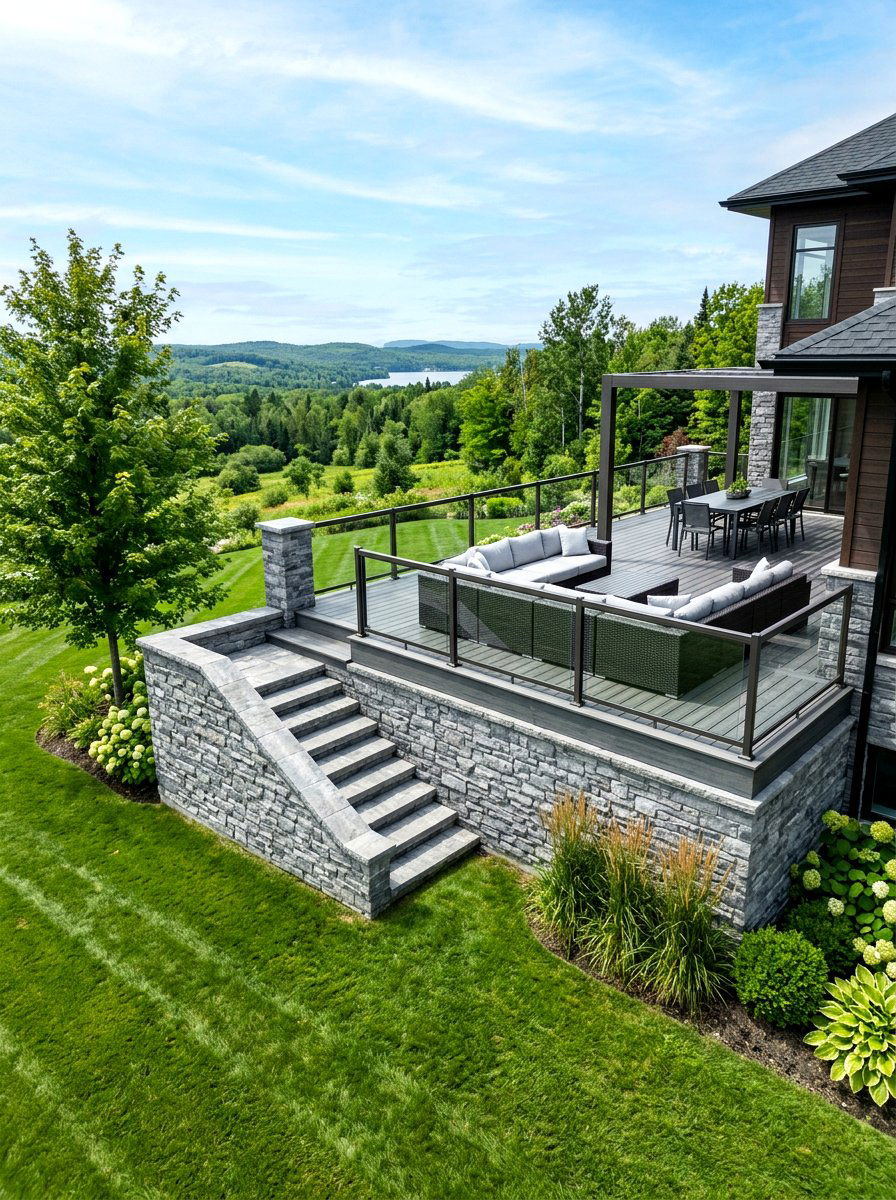
For a high-end and permanent aesthetic, stone veneer skirting offers a sophisticated solution that mimics the appearance of a solid masonry foundation. This design involves applying thin layers of natural or manufactured stone to a backer board around the perimeter of the deck. It creates a heavy, grounded appearance that makes the deck feel like an architectural extension of the house rather than a temporary attachment. The variety of textures and colors available — from rustic fieldstone to sleek stacked slate — allows for perfect coordination with your home's exterior palette. While it requires a bit more labor to install, the result is a durable, low-maintenance finish that adds significant elegance and value to your outdoor living area.
4. Faux Stone Panel
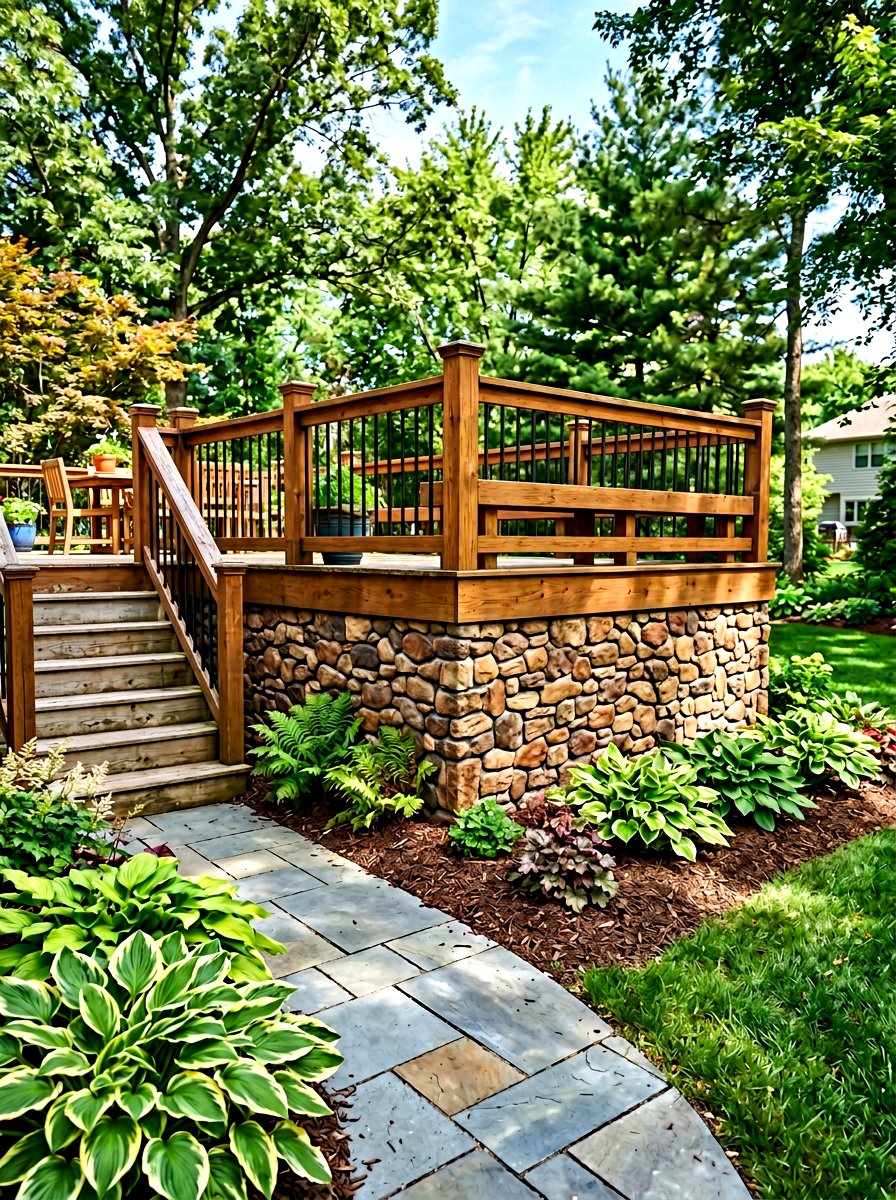
Faux stone panels provide the luxurious look of real masonry without the weight or the expensive price tag associated with traditional stone. These panels are typically made from high-density polyurethane and are designed to lock together for a seamless, professional appearance. They are incredibly resistant to moisture and pests, making them a long-lasting choice for the damp environment often found beneath a deck. Because they are lightweight, they can be installed quickly by homeowners using standard tools and fasteners. This style is excellent for creating a rugged, earth-toned base that grounds the deck and bridges the gap between the wooden structure and the surrounding landscape or stone patio.
5. Vertical Wood Board
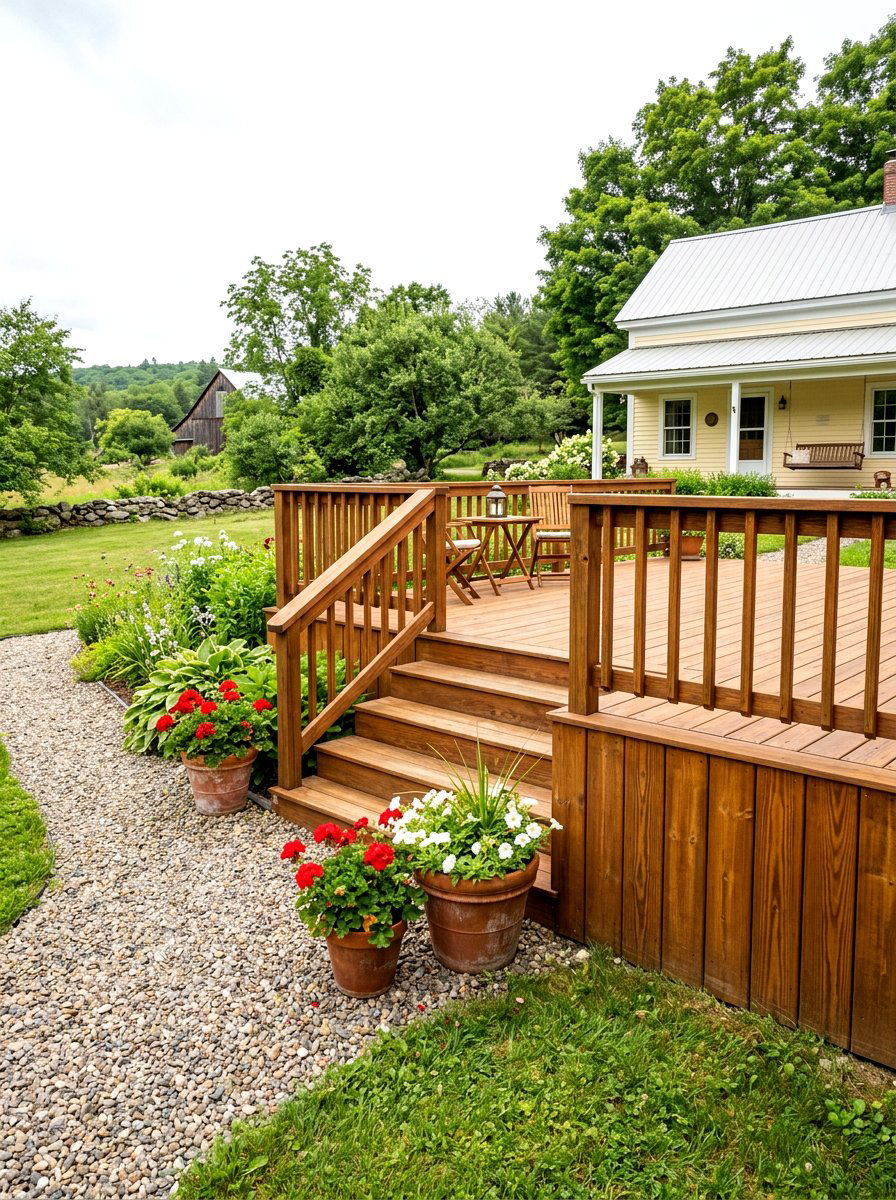
Vertical wood boards offer a distinct visual shift that can make a low-profile deck appear taller and more substantial. By installing planks vertically, you create a fence-like appearance that provides excellent coverage and a sense of privacy. This design is highly customizable, as you can adjust the spacing between boards to control the level of ventilation and visibility. Using pressure-treated lumber or naturally rot-resistant wood ensures the skirting remains durable against ground contact. When stained to match the deck’s railing or the house’s siding, vertical boards create a unified and intentional design. It is a practical and sturdy option that works well for traditional, farmhouse, or rustic-style homes and backyards.
6. Composite Deck Skirting
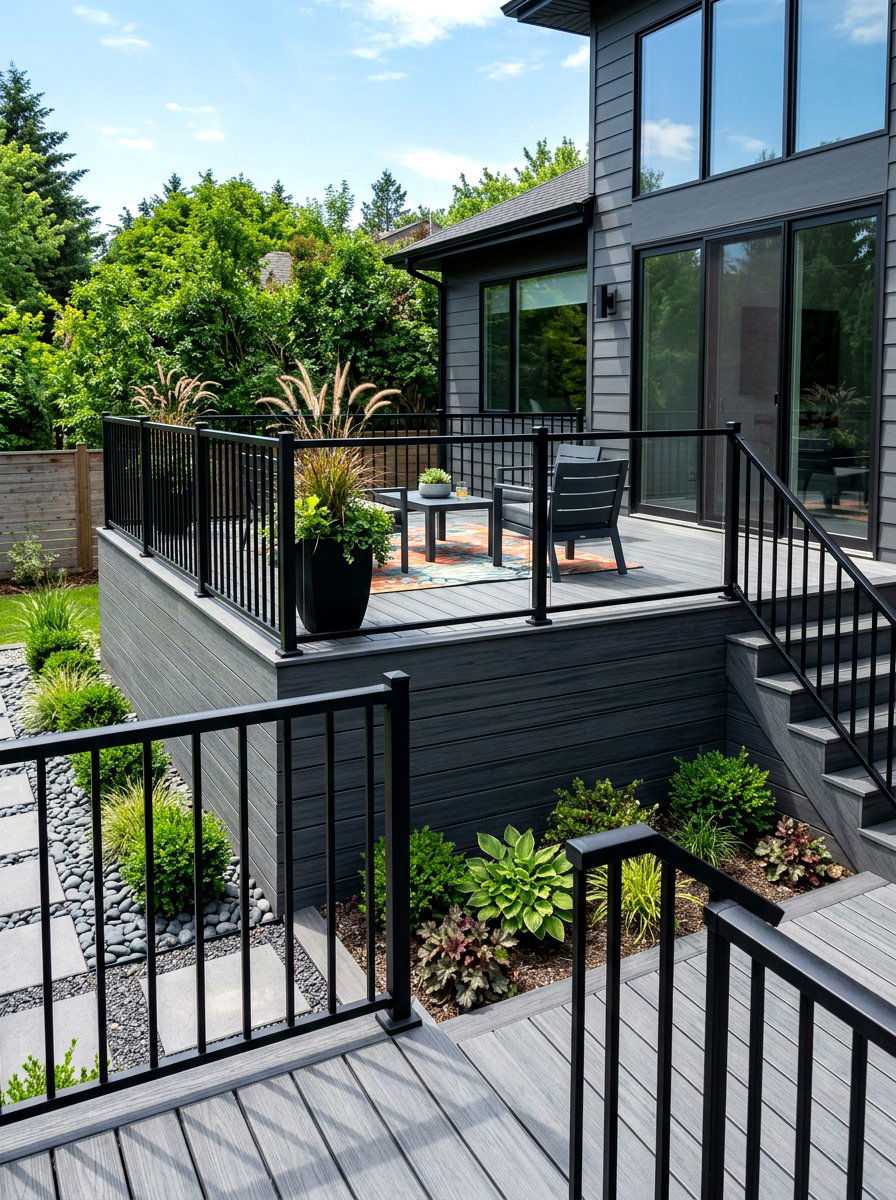
If you want a low-maintenance solution that perfectly matches your deck's floor, composite skirting is the ultimate choice. Many major decking brands offer matching fascia and skirting boards made from the same durable blend of wood fibers and recycled plastics. This material is completely resistant to rot, warping, and insect damage, meaning you will never have to sand, seal, or paint it. The uniform color and texture create a sleek, professional finish that hides the substructure entirely. It is designed to withstand the elements for decades while maintaining its original beauty. Choosing composite skirting ensures your entire outdoor space looks cohesive and modern, providing a worry-free foundation for your backyard entertaining.
7. Corrugated Metal Panel
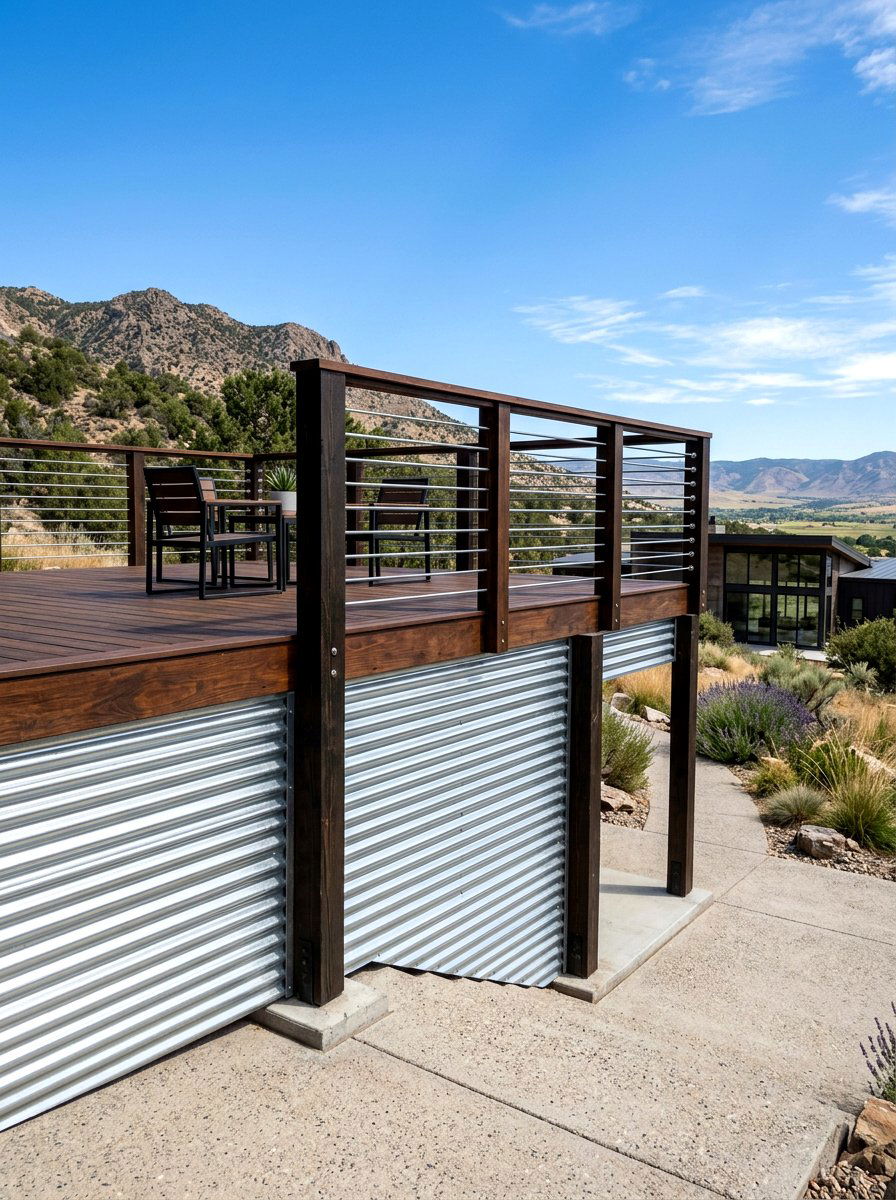
For those who appreciate an industrial or modern farmhouse aesthetic, corrugated metal panels offer a unique and highly durable skirting option. The ridges in the metal add interesting texture and a sense of movement to the base of the deck. You can choose from galvanized steel for a silver, industrial look, or opt for pre-painted panels in colors like matte black or deep bronze for a more contemporary feel. Metal is naturally fire-resistant and effectively blocks pests from entering the space beneath your home. When paired with warm wood decking, the contrast between the cold metal and the natural wood creates a stunning visual balance that is sure to stand out in any neighborhood.
8. Brick Skirting Wall
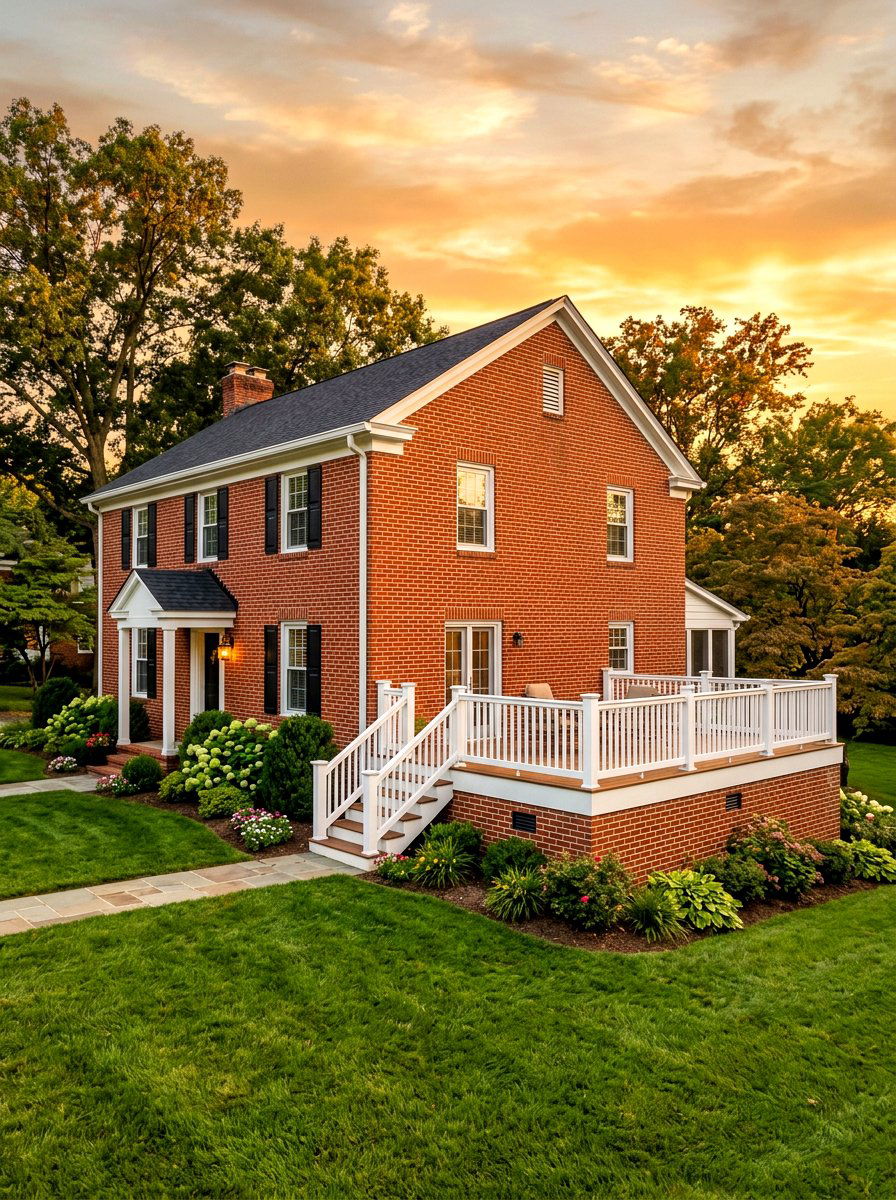
A brick skirting wall provides a timeless, traditional look that coordinates perfectly with classic architecture and established landscaping. This method involves building a low wall of actual brick or thin brick slips around the deck's perimeter. It offers the most substantial protection against rodents and weather, acting as a solid barrier. To ensure proper health for the deck’s wood structure, small ventilation grates should be integrated into the brickwork. The red or brown tones of the brick add warmth and a sense of permanence to the outdoor space. This is a premium option that requires more skill to install but offers a level of durability and classic appeal that is hard to match.
9. Solid Wood Board
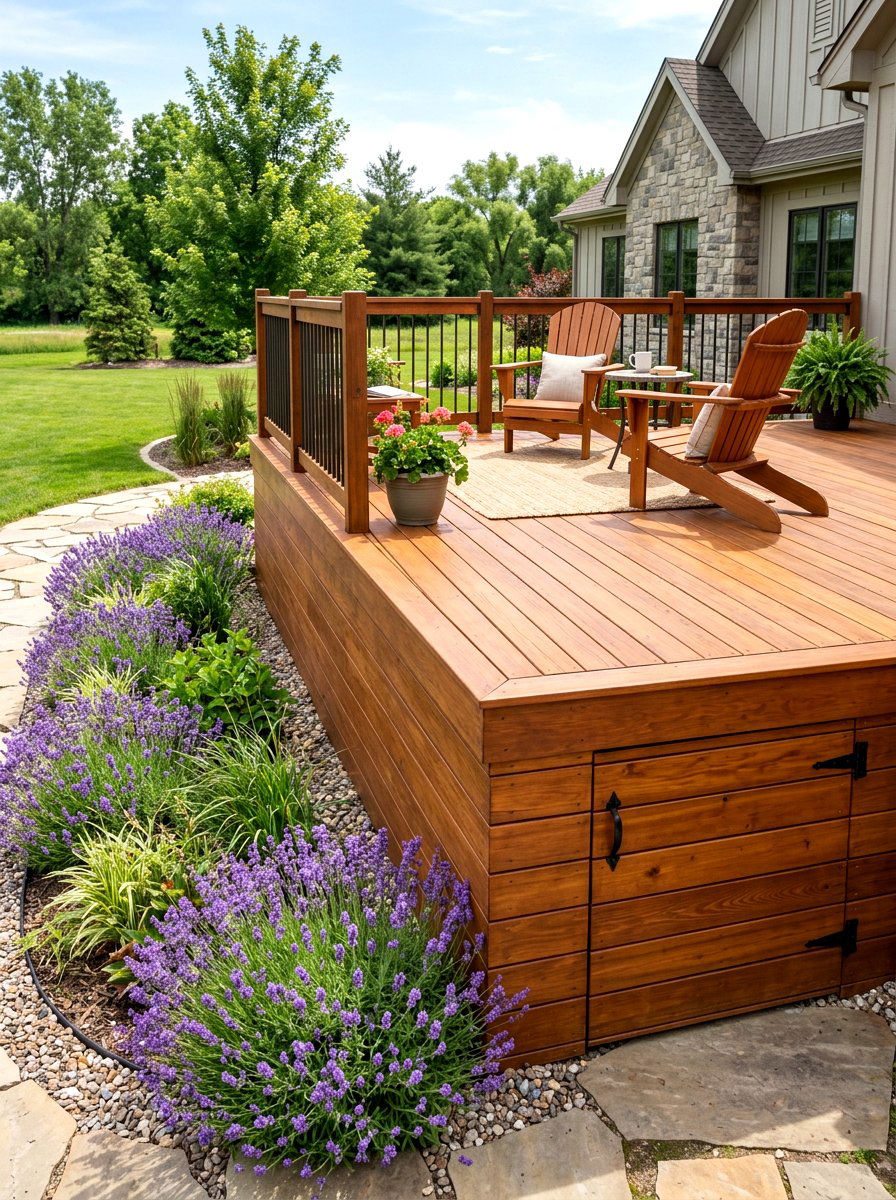
Solid wood boards installed in a close-fitting manner provide a clean, opaque barrier that completely hides the dark space beneath your deck. This style is often used when homeowners want to create hidden storage areas for lawn equipment or seasonal furniture. By using solid planks, you can build integrated doors or removable panels that blend in perfectly with the rest of the skirting. While it offers a very finished look, it is crucial to leave small gaps or include vents to ensure air can circulate and prevent wood rot. This choice works beautifully when painted to match the house or stained to highlight the natural grain of the wood, creating a solid architectural base.
10. Lattice Wood Panel
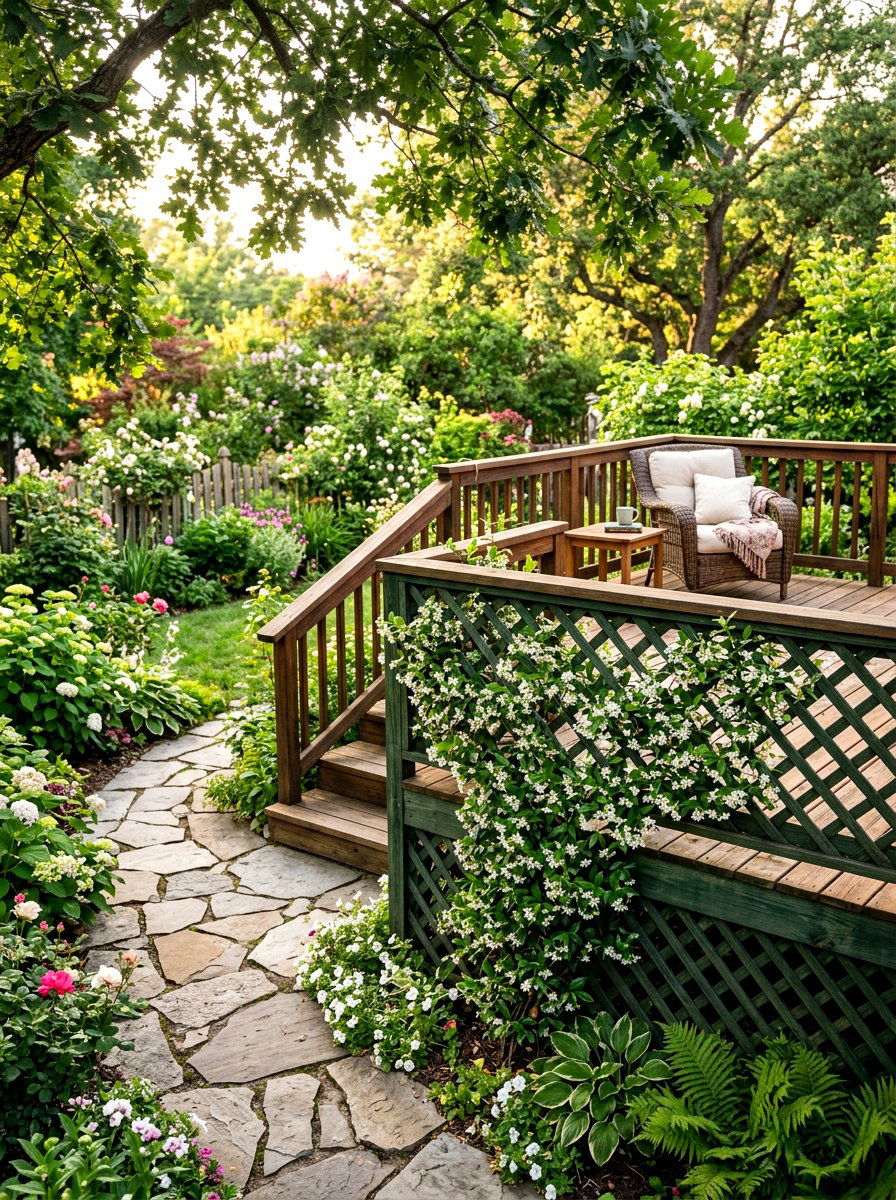
Traditional wood lattice panels remain a top choice for their versatility and natural charm. Unlike vinyl, real wood lattice can be stained or painted in any custom color to perfectly suit your design vision. The classic crisscross pattern adds a touch of cottage-inspired elegance to any backyard, making it a favorite for traditional garden settings. It provides a lightweight and airy feel while still effectively masking the structural elements of the deck. Wood lattice is also an excellent support for climbing plants like ivy or jasmine, allowing you to create a "living" skirt over time. With regular maintenance and sealing, wood lattice can remain a beautiful and functional part of your deck for many years.
11. Wire Mesh Screen
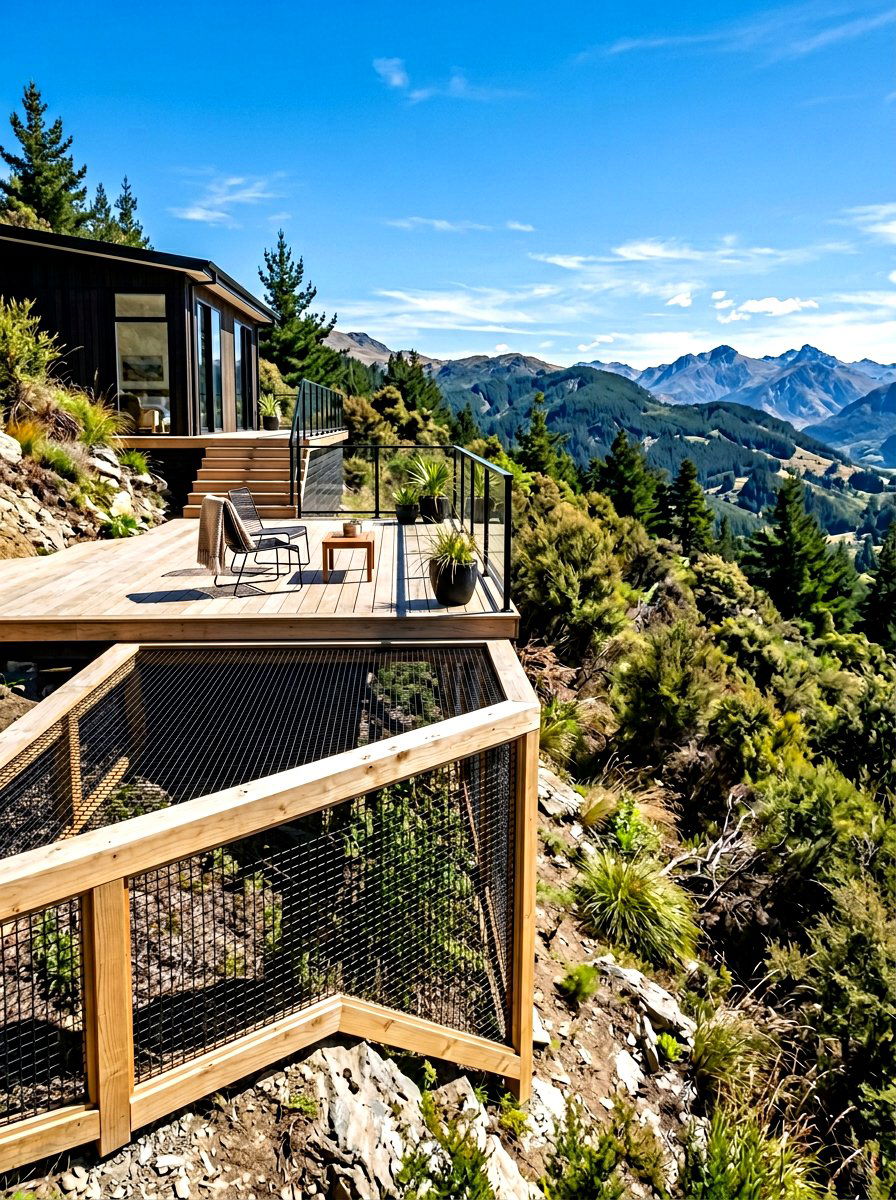
A wire mesh screen offers a minimalist and highly functional approach to deck skirting, especially for those who want to keep pests out without blocking the view. This style involves attaching heavy-duty hardware cloth or decorative metal mesh to a wooden frame. It provides the best possible ventilation, which is vital for decks in humid or rainy climates. For a more sophisticated look, you can use black-coated mesh which virtually disappears when viewed from a distance, giving the deck a floating appearance. This industrial-chic option is very cost-effective and easy to install. It works exceptionally well in modern or contemporary landscapes where clean lines and transparent elements are prioritized over heavy, solid structures.
12. Gabion Stone Wall
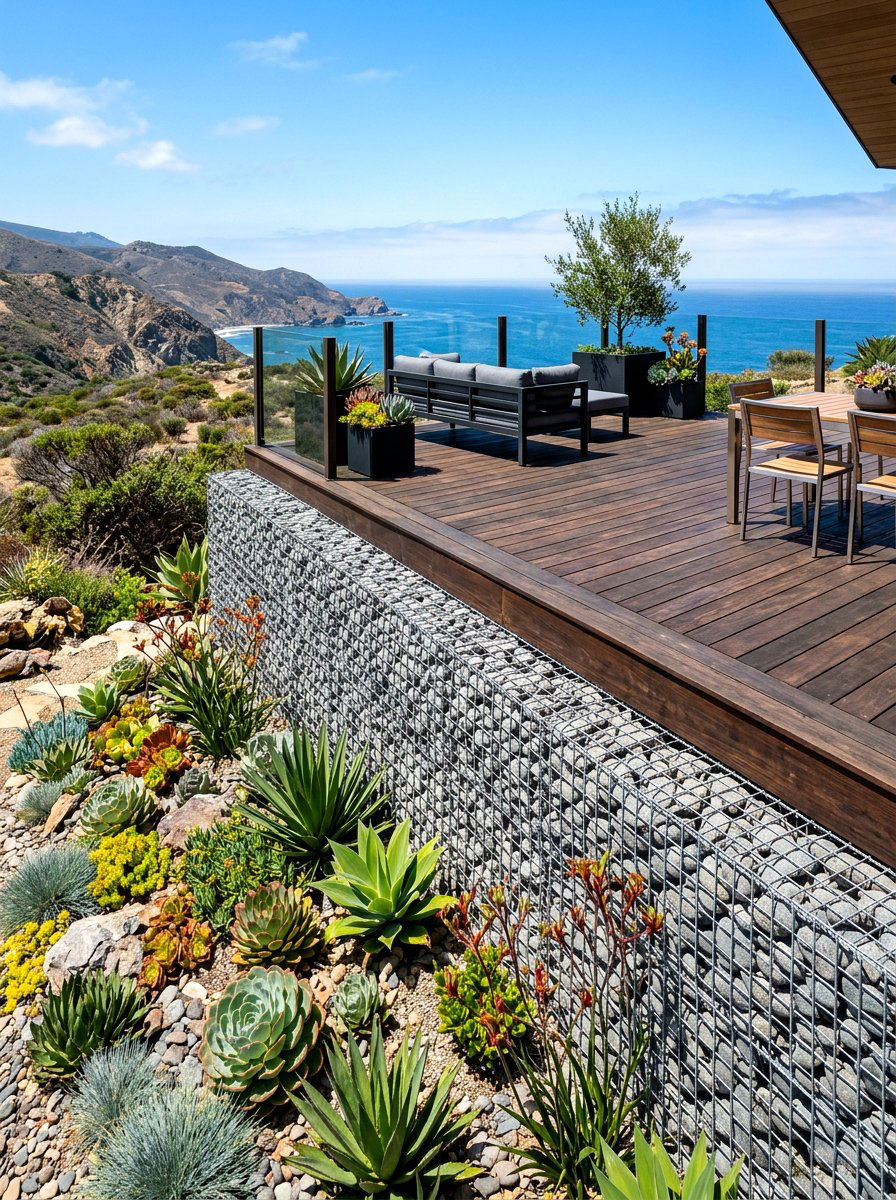
Gabion walls are a striking and creative way to finish the area beneath a deck, using wire cages filled with loose stones. This design adds a massive amount of texture and a modern, architectural edge to the outdoor space. The stones provide a completely natural look that blends seamlessly with gravel paths or rock gardens. Because the stones are loose within the cage, air can flow freely through the gaps, ensuring the underside of the deck stays dry and well-ventilated. Gabion skirting is incredibly durable and requires zero maintenance once the stones are in place. It is a bold choice that serves as both a functional barrier and a unique landscape feature for contemporary homes.
13. Decorative Screen Panel
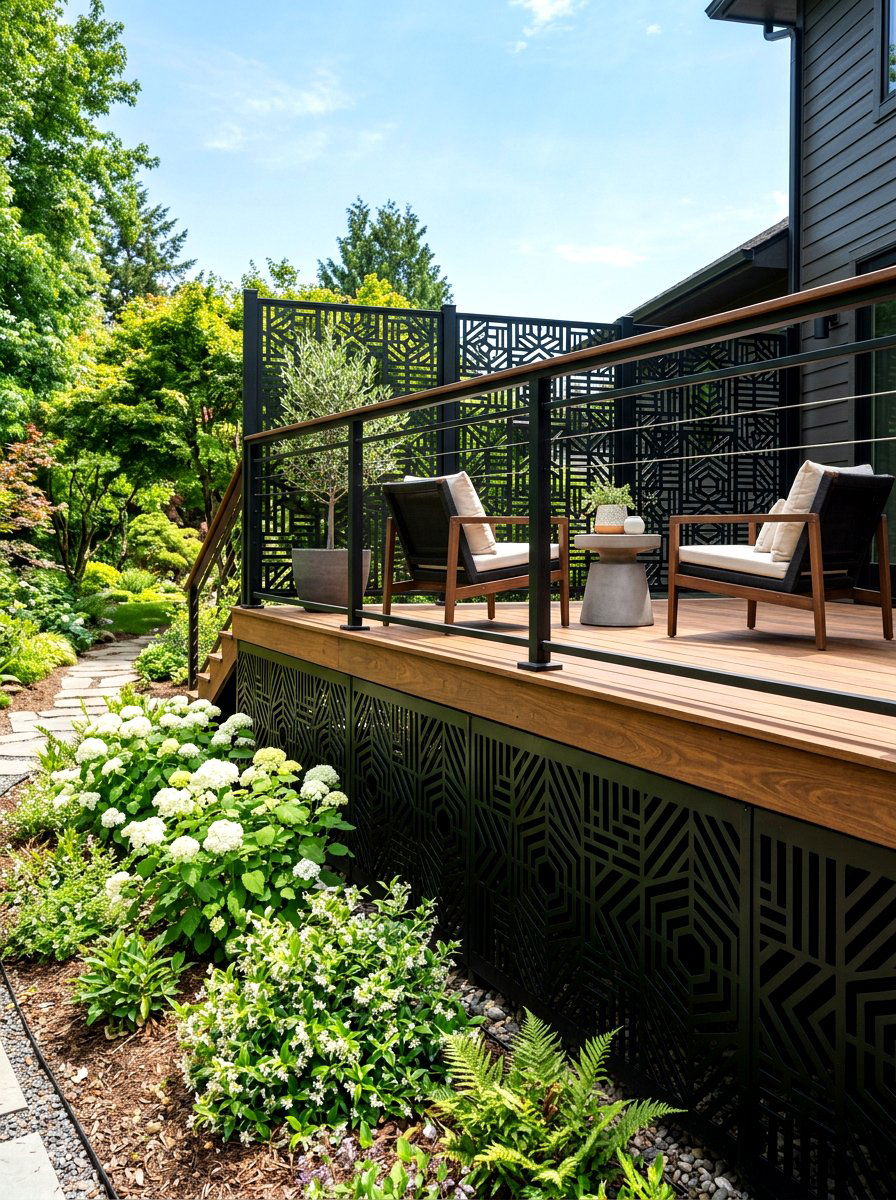
Decorative screen panels have become a popular alternative to traditional lattice, offering intricate, laser-cut designs that act as outdoor art. These panels are typically made from durable materials like polypropylene or metal and come in a wide variety of patterns, from geometric shapes to organic floral motifs. They provide a high level of privacy and concealment while still allowing light and air to pass through the decorative cutouts. Because they are often used as privacy screens, using them as skirting creates a consistent design theme throughout the entire outdoor area. These panels are easy to install and add a sophisticated, custom-built feel to the deck that immediately catches the eye of any guest.
14. Stucco Finish Skirting
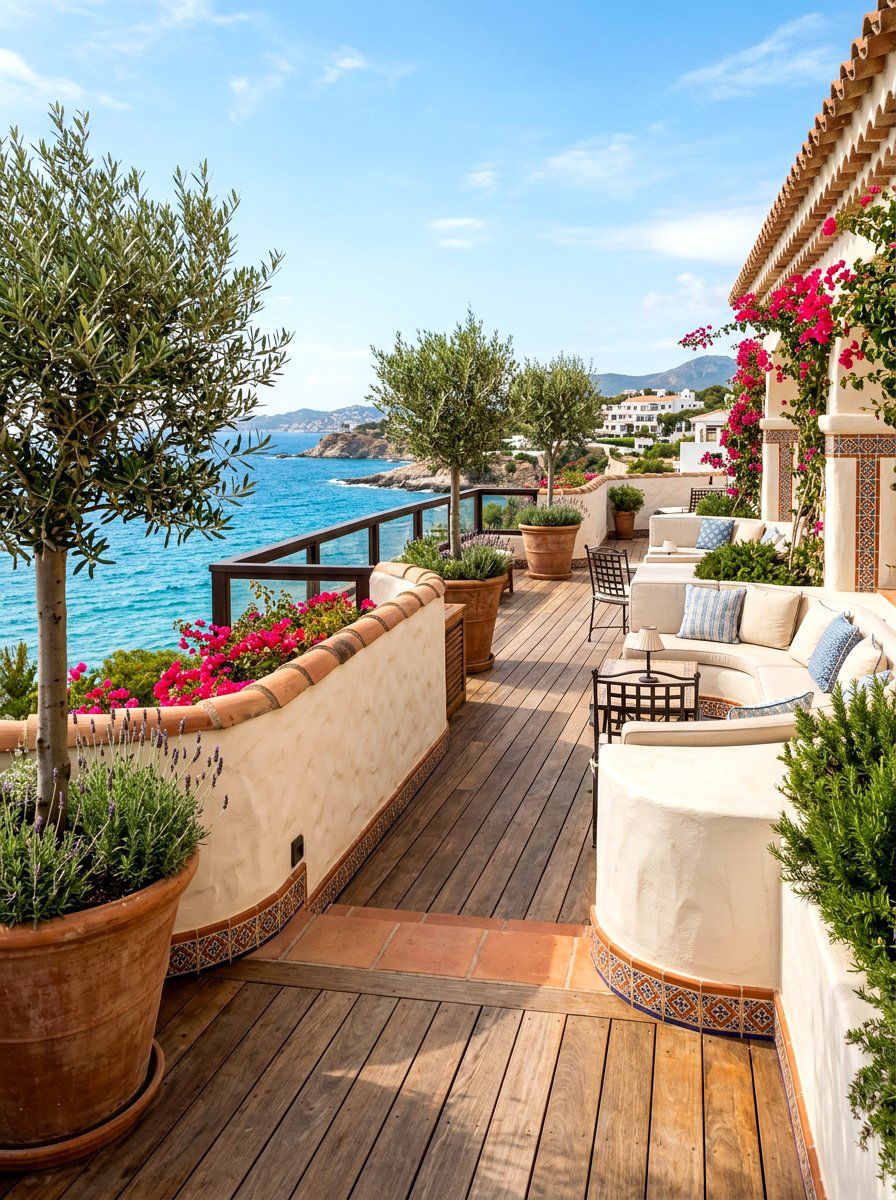
Stucco skirting is an ideal choice for homes with Mediterranean, Southwest, or modern architectural styles. This involves applying a stucco finish over a durable substrate around the base of the deck to match the texture and color of the house’s exterior walls. The result is a seamless look that makes the deck appear as if it were built as a solid part of the home 's foundation. It is a very clean and minimalist approach that eliminates the "gaps" often seen in wood or lattice skirting. Stucco is highly durable and can be easily repainted if you decide to change your home' s color scheme. This choice provides a polished, upscale appearance that emphasizes clean lines and solid forms.
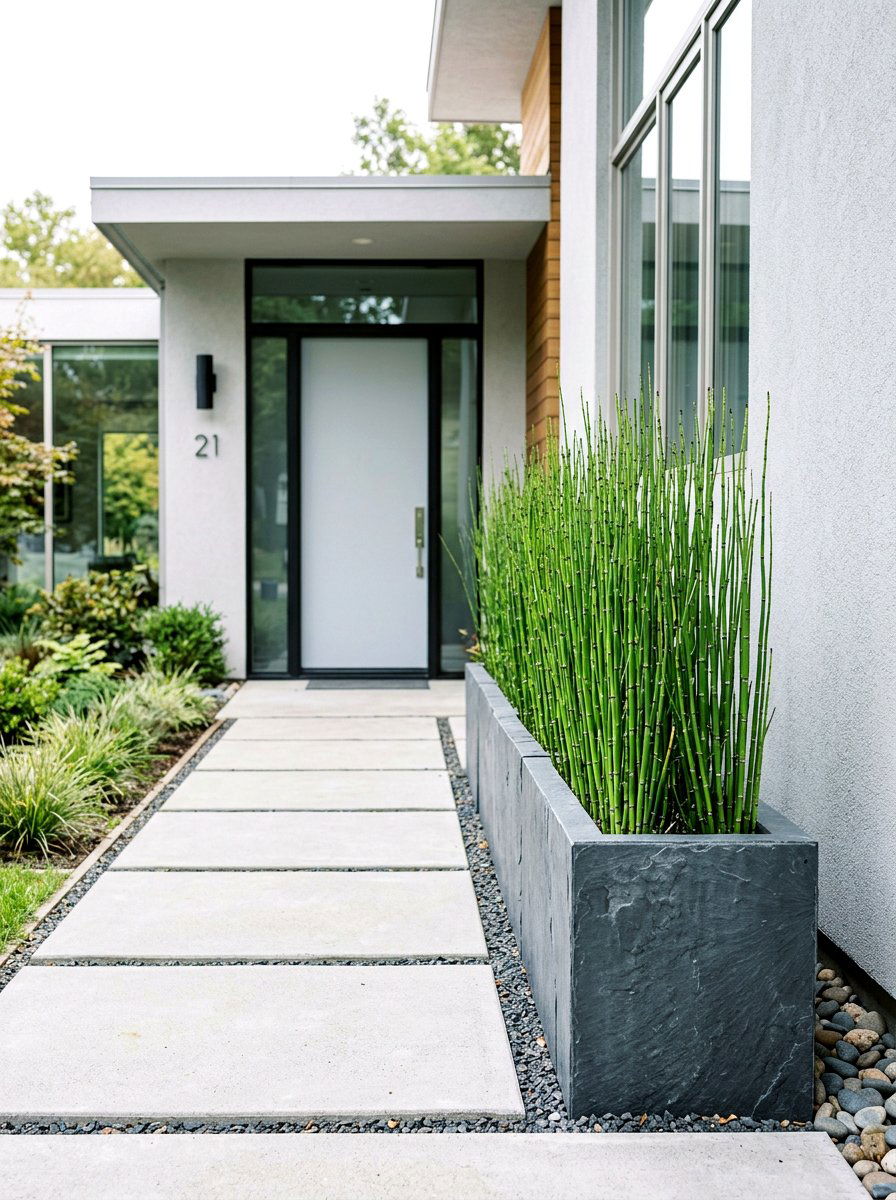
15. Cedar Shake Siding
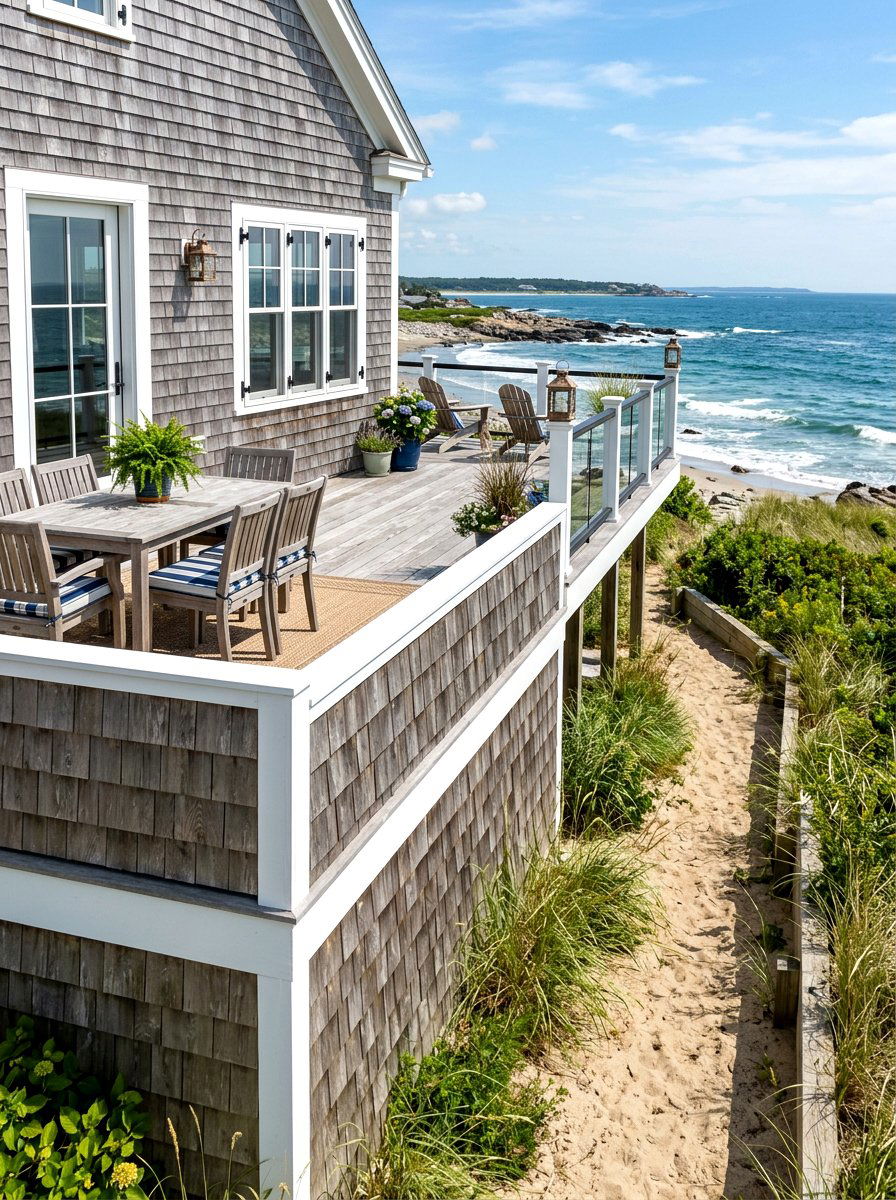
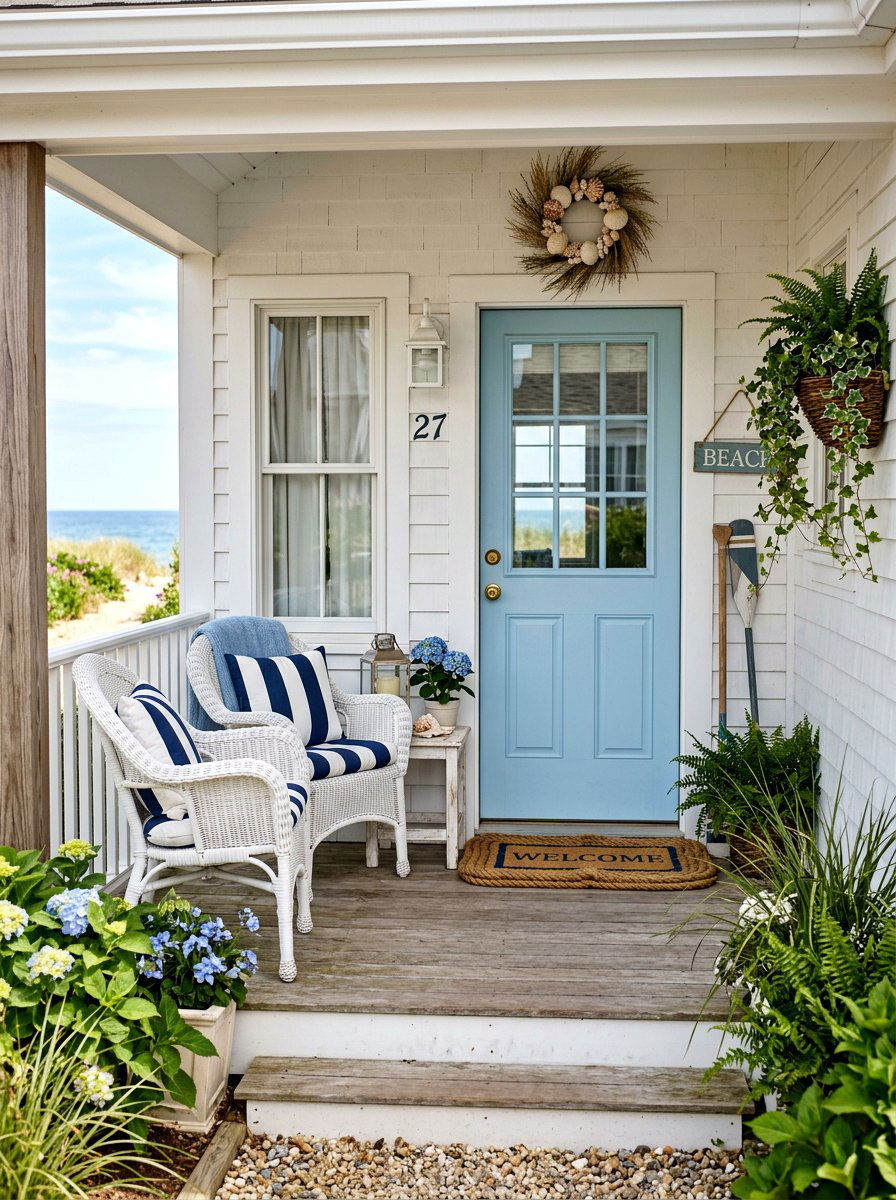
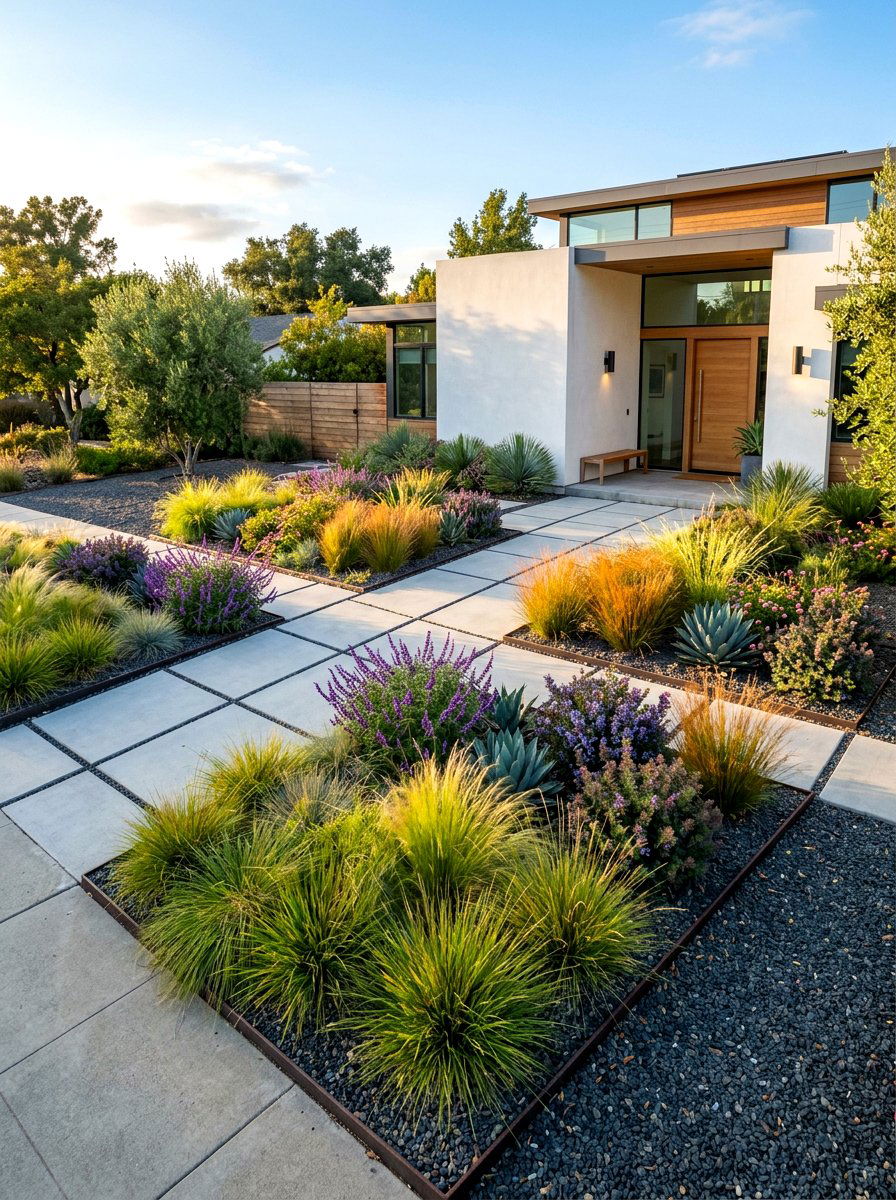
Cedar shake shingles bring a rustic, coastal, or craftsman charm to the base of your deck. By using shingles as skirting, you can create a beautiful texture that ages gracefully into a soft silver-grey or can be stained to maintain a warm, woody glow. This style is particularly effective for homes that already feature shake or shingle siding, as it extends the architectural language all the way to the ground. Each shingle is installed individually, allowing for a custom fit around stairs and uneven terrain. Cedar is naturally resistant to decay and insects, making it a practical choice for skirting. This option provides a cozy, high-textured finish that feels both traditional and high-end.
16. Bamboo Fence Skirting

Bamboo fencing rolls offer an eco-friendly and exotic look that is perfect for creating a tropical or Zen-inspired backyard retreat. This material is incredibly easy to install, as the bamboo poles are typically pre-wired into flexible rolls that can be quickly attached to a wooden frame. The natural variation in color and thickness of the bamboo adds an organic, relaxed feel to the deck's perimeter. It provides a good balance of privacy and ventilation, as small gaps naturally occur between the poles. Bamboo is a sustainable resource that grows quickly, making it a great choice for environmentally conscious homeowners. This style pairs beautifully with lush greenery, outdoor palms, and water features.
17. Picket Fence Skirting
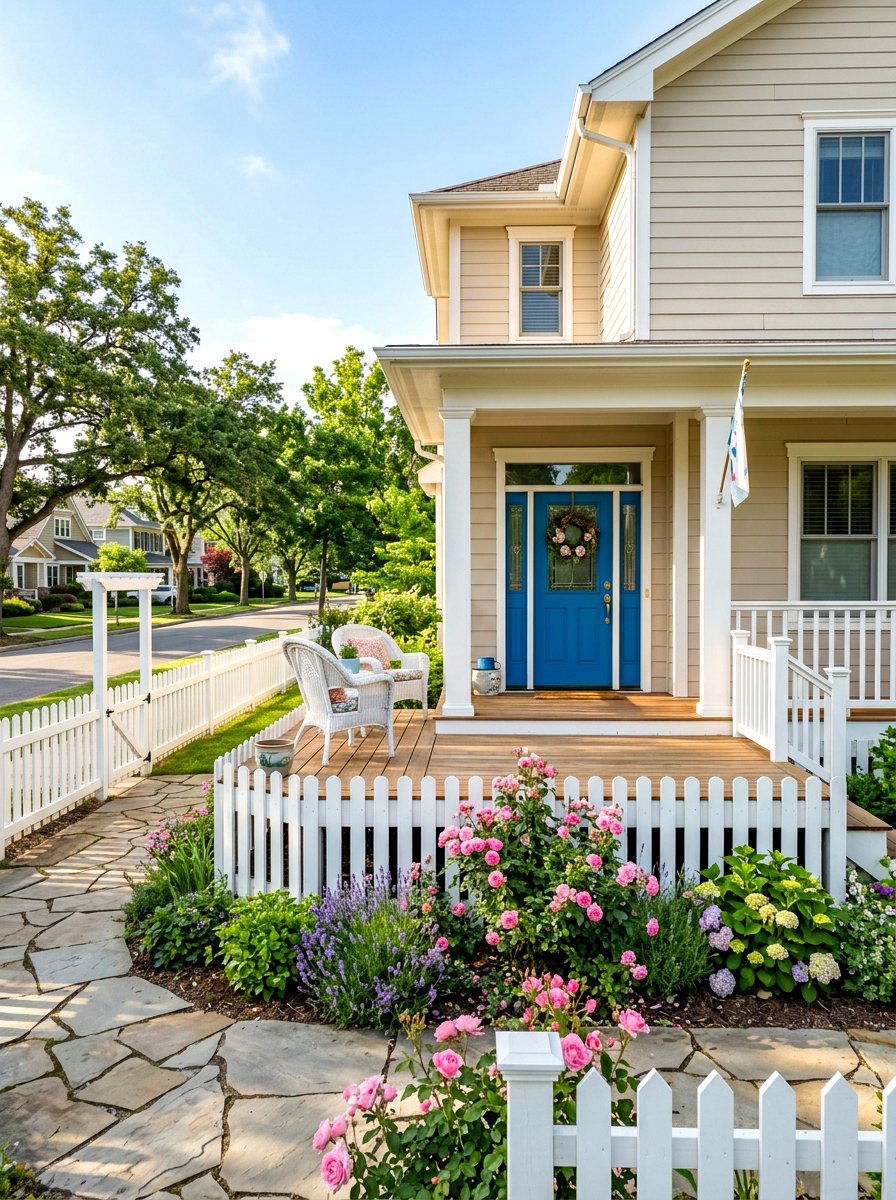
Picket fence skirting is a charming and nostalgic option that works beautifully for front porches or traditional backyard decks. By using miniature picket sections, you can create a classic Americana look that feels welcoming and bright. This style is typically painted white to provide a crisp contrast against the green lawn and the natural wood of the deck boards. The spacing between the pickets allows for excellent airflow while effectively keeping larger pets and debris from going under the structure. It is a very approachable DIY project that adds a touch of whimsical personality to the home. This choice is perfect for those who want their outdoor space to feel friendly and well-integrated.
18. Privacy Slat Skirting
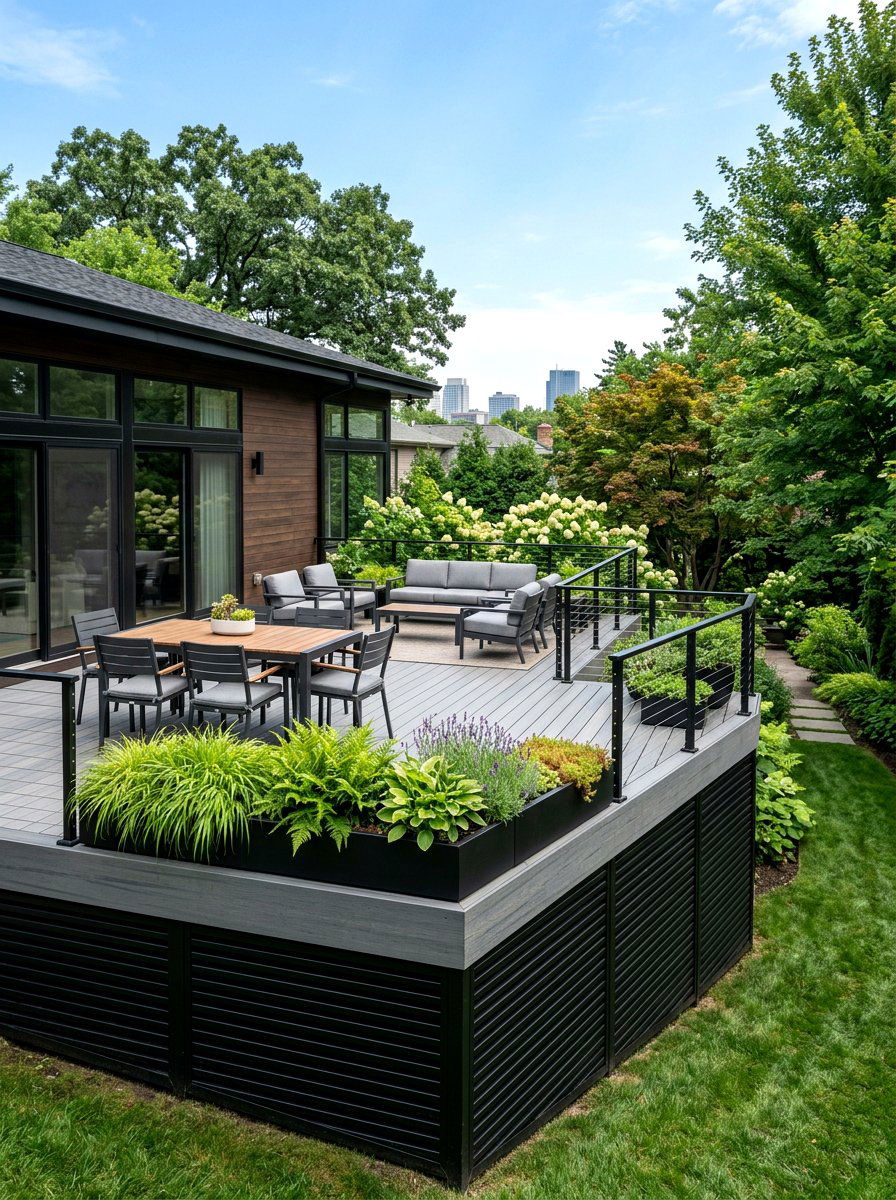
Privacy slat skirting uses closely spaced horizontal or vertical boards to create a screen that is nearly opaque from certain angles. This design is perfect for homeowners who want to hide storage items or structural beams completely without using a solid wall. By angling the slats slightly or keeping the gaps very narrow, you can maintain a high level of privacy while still permitting the necessary air circulation. This style often uses high-quality woods like cedar or stained pressure-treated lumber for a premium finish. It creates a modern, linear aesthetic that feels very intentional and sophisticated. This is an excellent way to ground a modern deck while adding a layer of architectural depth.
19. Louvered Wood Panel
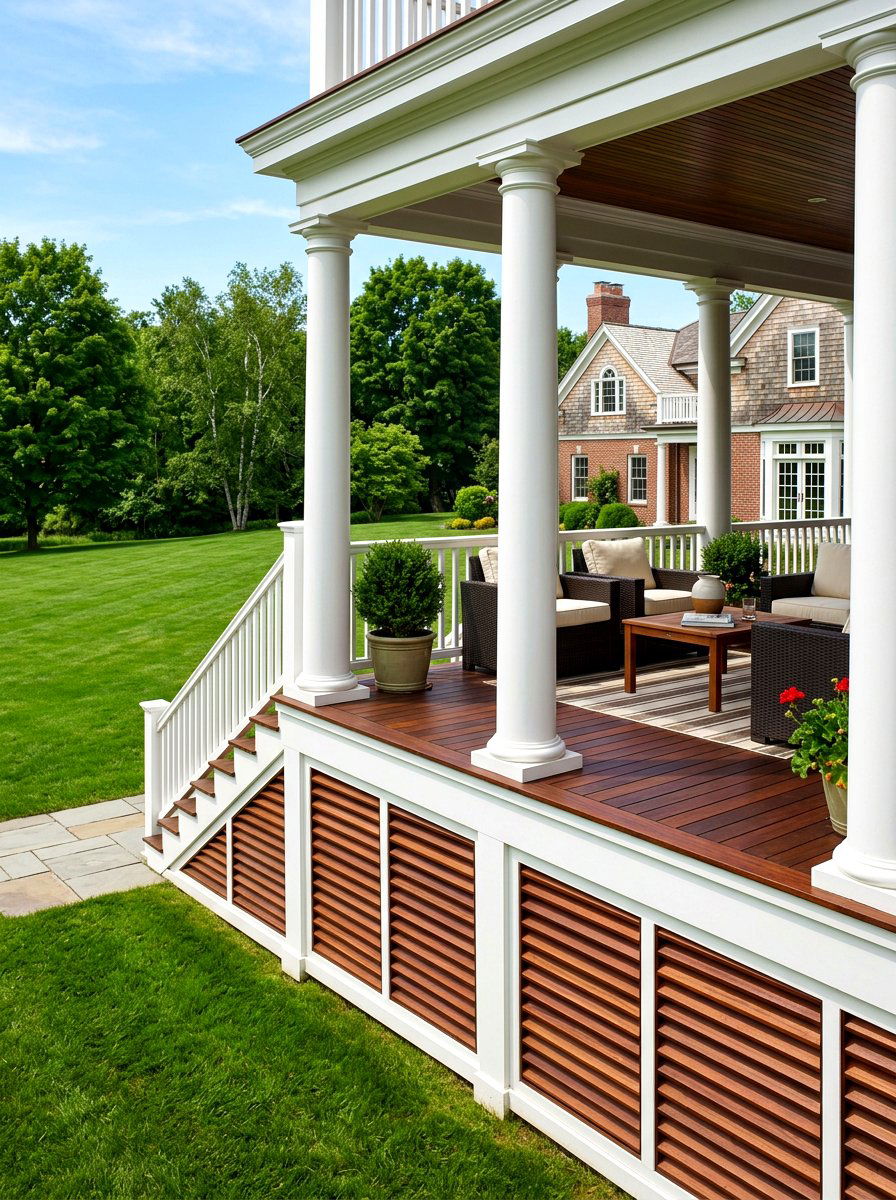
Louvered wood panels provide a sophisticated, high-end look that is both functional and visually interesting. Much like indoor shutters, the angled slats allow for excellent ventilation and some light penetration while completely blocking the view into the dark area beneath the deck. This design is particularly useful for decks that are built over sloping ground, as the louvers create a sense of movement and texture that distracts from uneven terrain. Louvered skirting can be custom-built or purchased in pre-made sections. When stained a deep, rich color, these panels add a luxurious, furniture-like quality to the exterior of the home, making the outdoor space feel more like an extension of the interior.
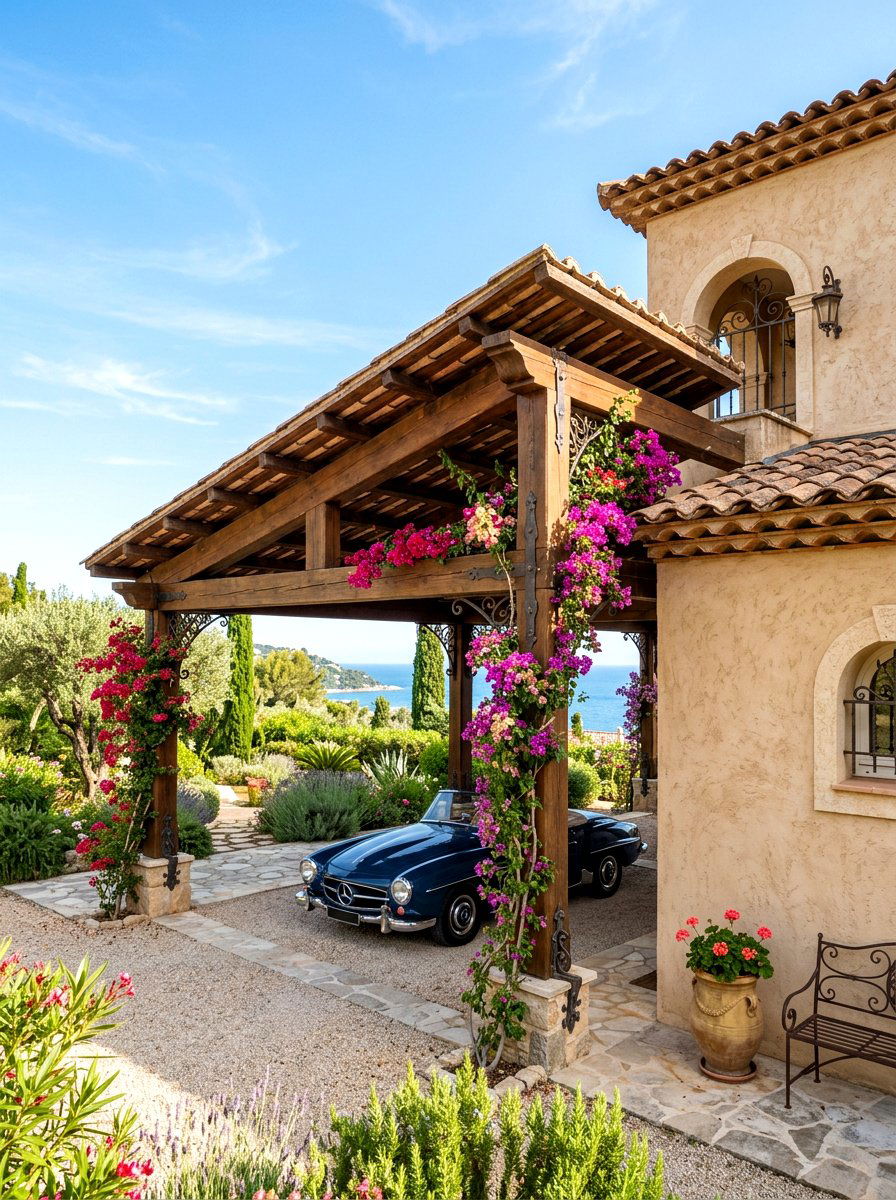
20. Precast Concrete Panel
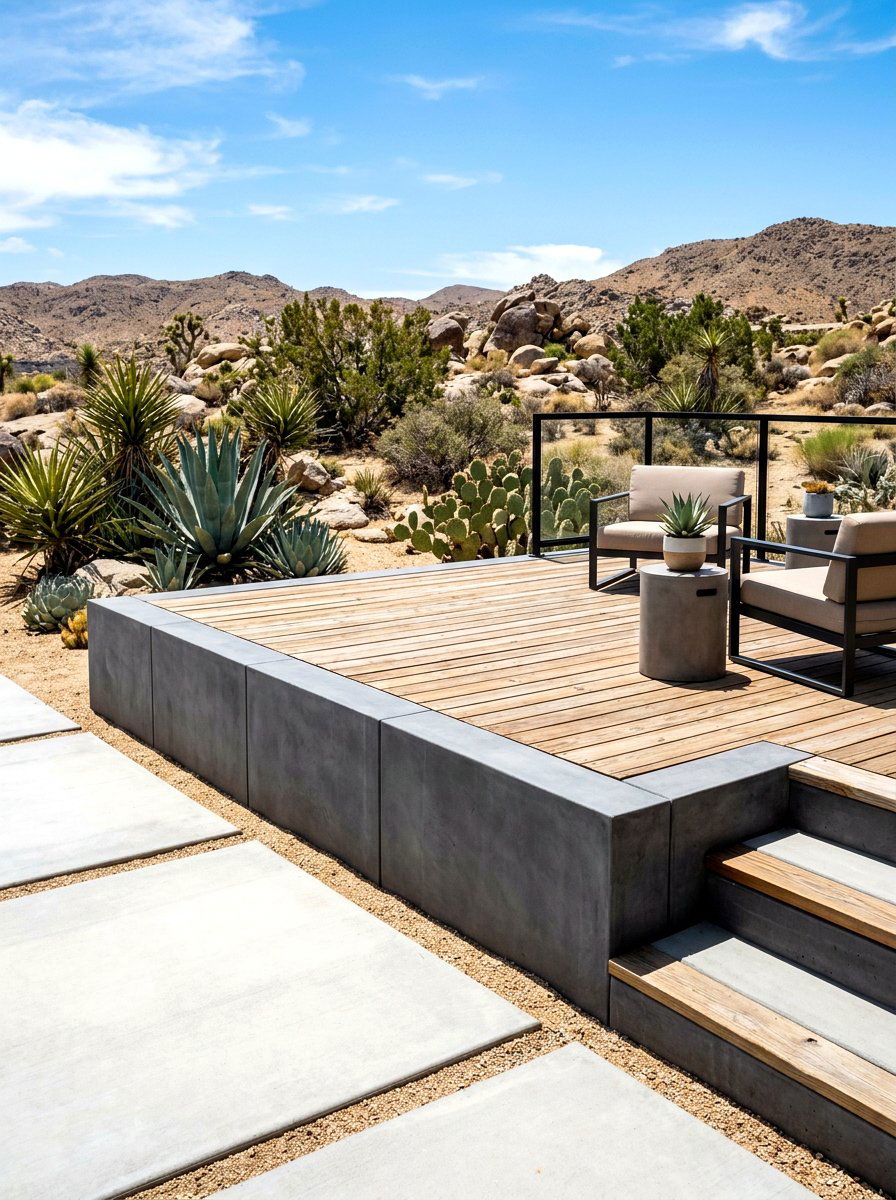
For a truly modern and industrial feel, precast concrete panels offer a solid and incredibly durable skirting solution. These panels come in various textures, from smooth and polished to those that mimic wood grain or stone. They provide a heavy, grounded look that is perfect for contemporary homes with minimalist landscaping. Concrete is completely impervious to rot, fire, and pests, making it one of the longest-lasting materials you can choose for the base of your deck. Because the panels are pre-manufactured, they offer a very consistent and professional finish. This style works best when paired with metal railings and sleek, modern deck boards for a cohesive and high-end architectural appearance.
21. Metal Grating Screen
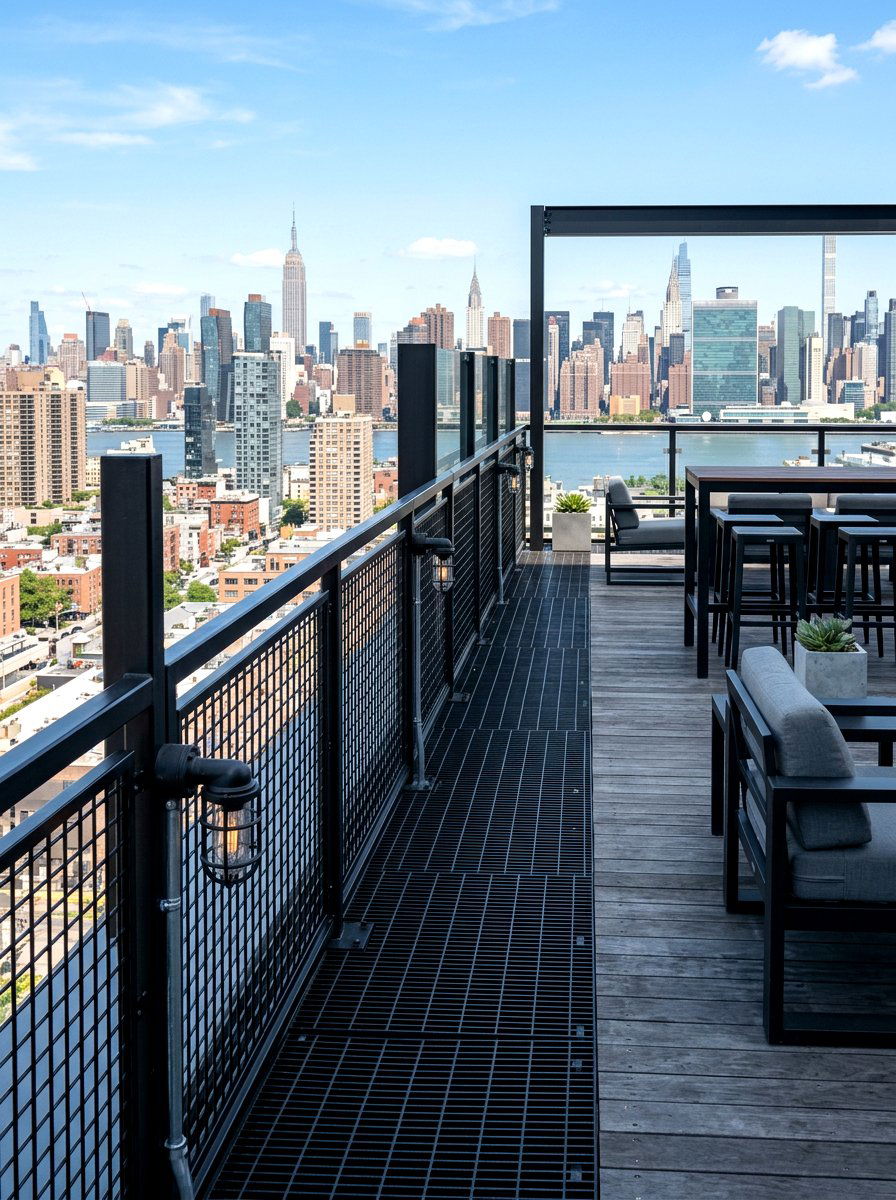
Metal grating is a bold and functional choice for those who want a truly industrial or ultra-modern look. Typically made from steel or aluminum, this material is incredibly strong and offers virtually 100% ventilation, making it ideal for decks in very wet environments. The grid-like pattern creates a transparent yet structured barrier that can be powder-coated in various colors, such as charcoal or black, to match the home's trim. This style of skirting is often used in urban settings or on modern hillside homes where a "floating" deck effect is desired. It is a low-maintenance, fire-resistant option that adds a unique, edgy character to the outdoor living area and will last for decades.
22. Board and Batten
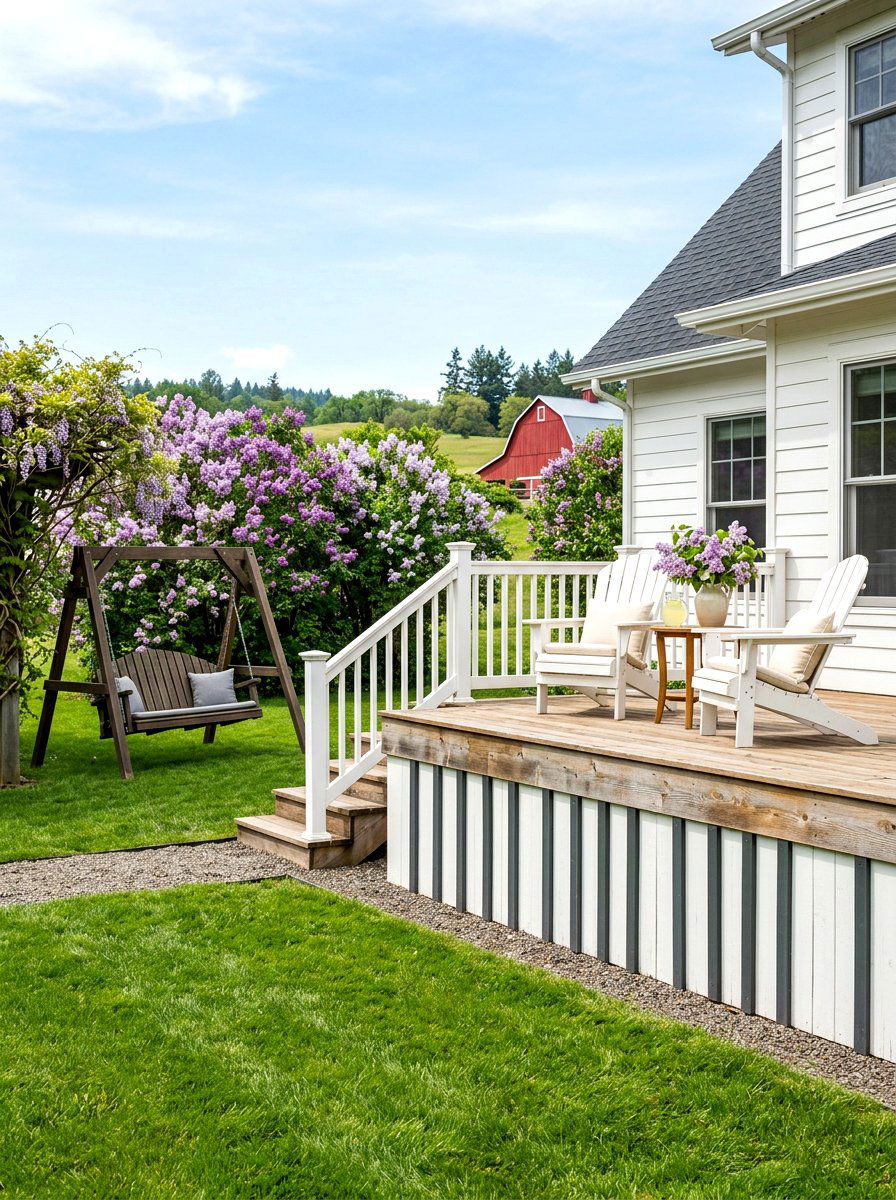
Board and batten skirting brings a classic, farmhouse aesthetic to the perimeter of your deck. This style involves wide vertical boards with narrower strips, called battens, covering the seams between them. It creates a strong vertical rhythm and deep shadows that add a wonderful architectural texture to the base of the structure. This choice is perfect for homes that already feature board and batten siding, as it creates a seamless transition from the house walls to the deck. It provides complete coverage and a very sturdy appearance. When painted in a crisp white or a modern dark grey, this skirting style gives the deck a polished, custom-built look that feels both historic and trendy.
23. Painted Wood Plank
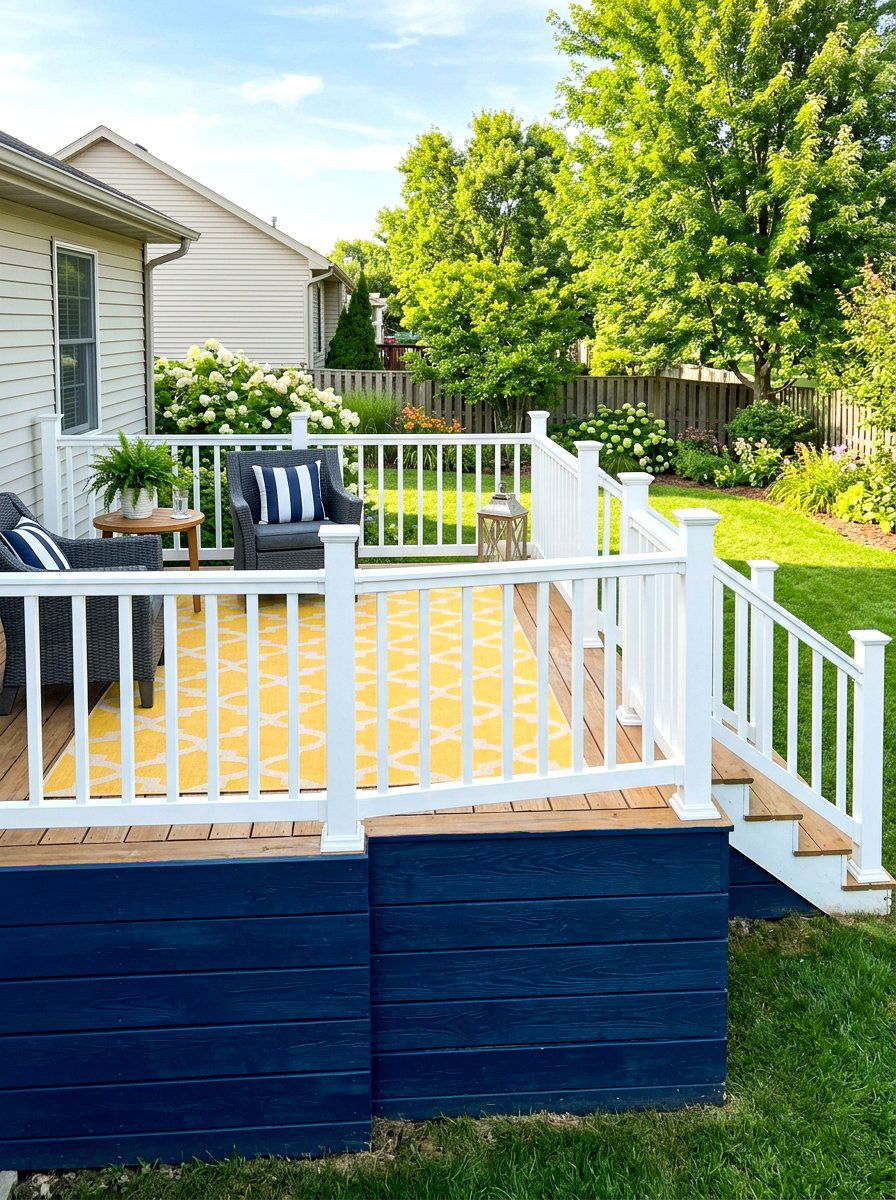
Painted wood planks offer a simple and cost-effective way to customize the look of your deck base to match any color scheme. By using standard pressure-treated lumber and a high-quality exterior paint, you can create a clean, solid skirting that ties the deck into the house's overall design. This method allows you to be creative with color — using a bold accent tone to make the deck pop or a subtle neutral to help it blend into the background. Solid painted planks are excellent for hiding under-deck clutter and creating a very finished, professional appearance. With a fresh coat of paint every few years, this skirting can look brand new for a long time.
24. Shiplap Wood Siding
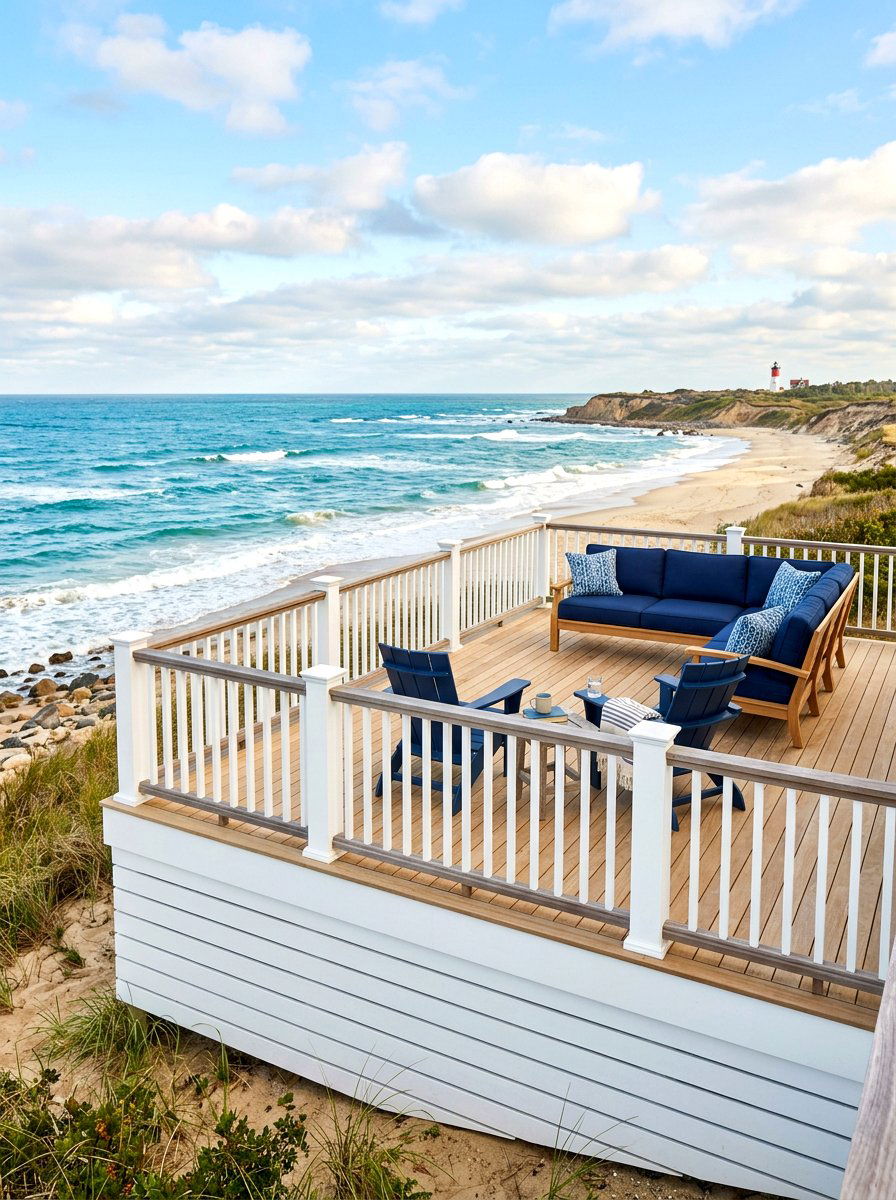
Shiplap wood siding has moved from the interior of the home to the exterior, providing a trendy and clean look for deck skirting. The horizontal boards feature a distinct groove that allows them to overlap slightly, creating a tight seal with subtle shadow lines. This style offers a very smooth and finished surface that works well with modern, coastal, or farmhouse designs. While shiplap provides an opaque barrier, it is important to include hidden vents or small gaps to maintain proper airflow. When finished in a natural wood stain or a soft white paint, shiplap skirting makes the deck look like a high-end, professionally designed extension of the home’s living space.
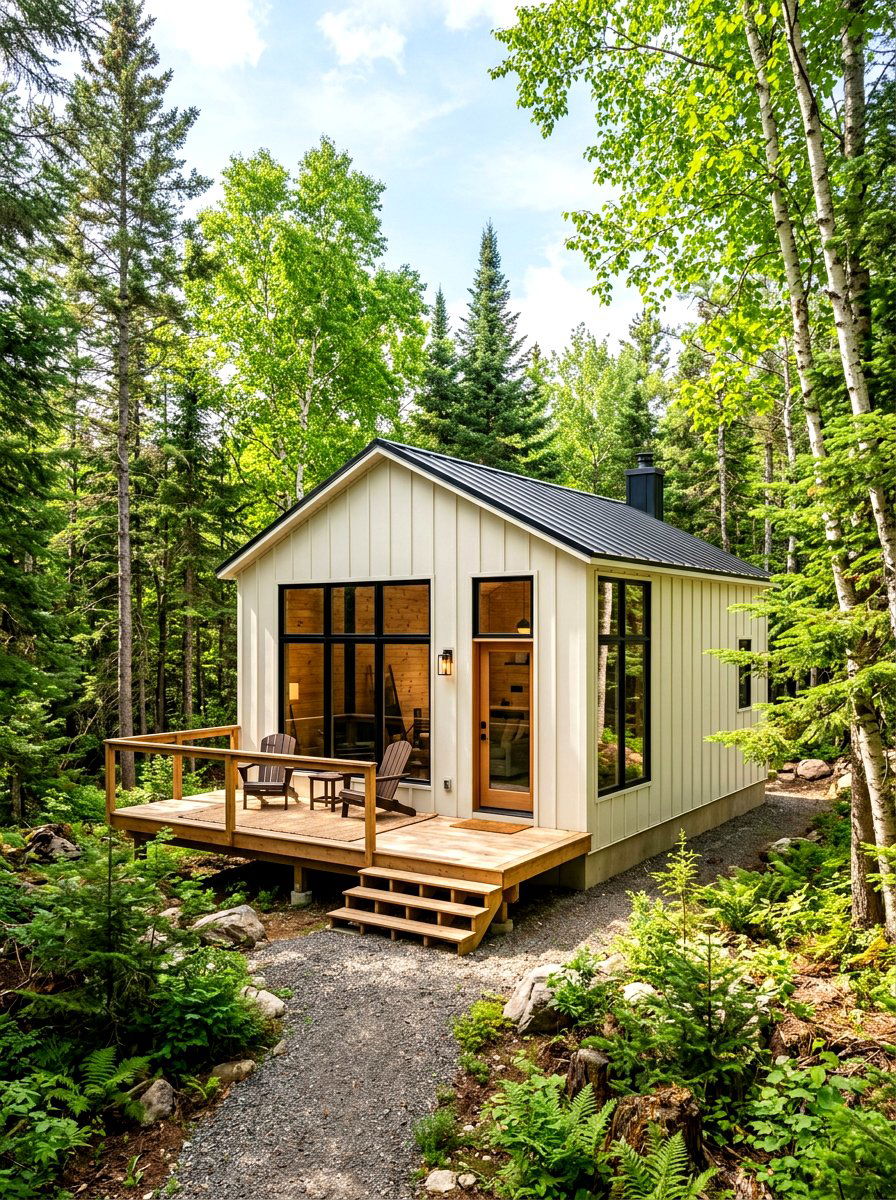
25. PVC Trim Board
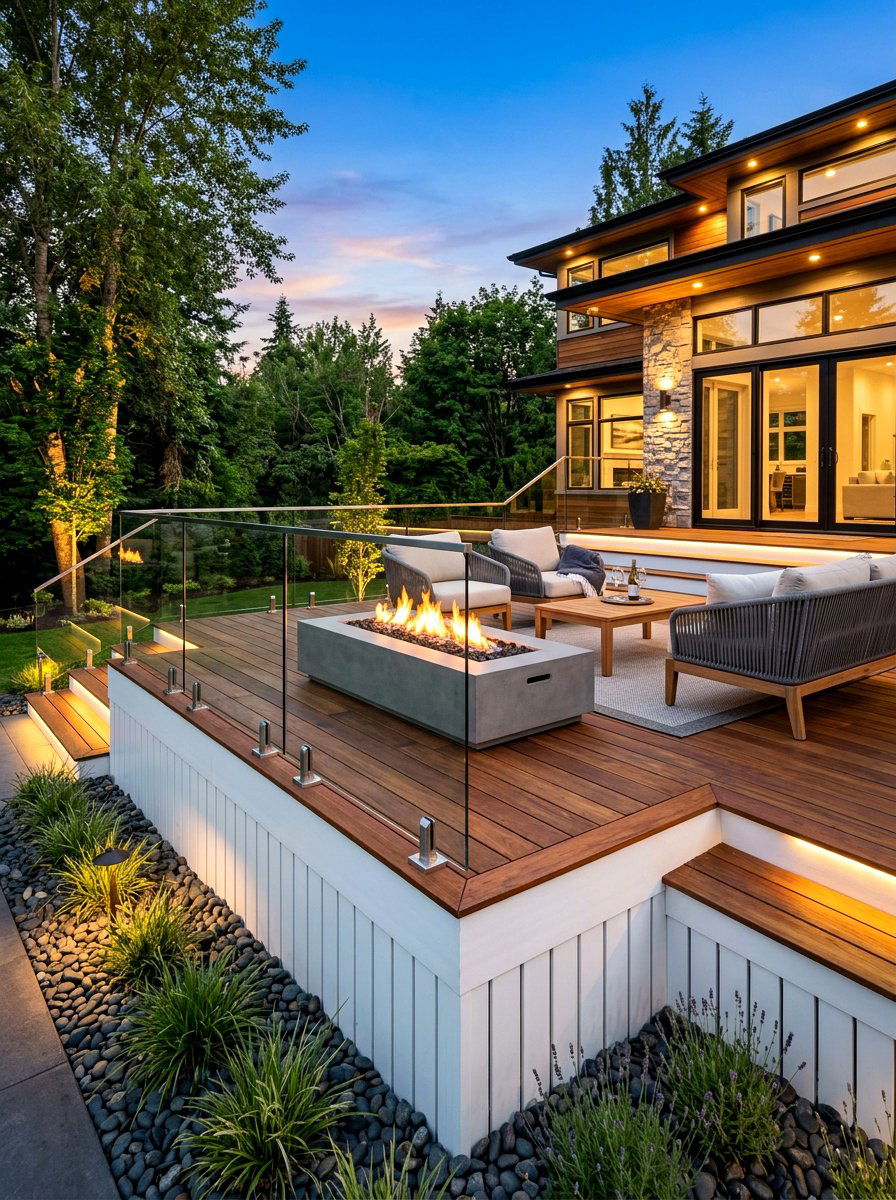
PVC trim boards are an excellent choice for homeowners who want the look of clean, painted wood without any of the maintenance headaches. These boards are completely waterproof and will never rot, peel, or be eaten by insects, making them ideal for areas with direct ground contact. They can be installed horizontally or vertically and are often used to create a simple, minimalist frame around the base of the deck. Because PVC is so stable, it holds its shape and color for years without needing to be repainted. This material provides a very crisp and modern finish that looks particularly good on upscale, contemporary decks where durability and clean lines are the top priorities.
26. Reclaimed Wood Slat
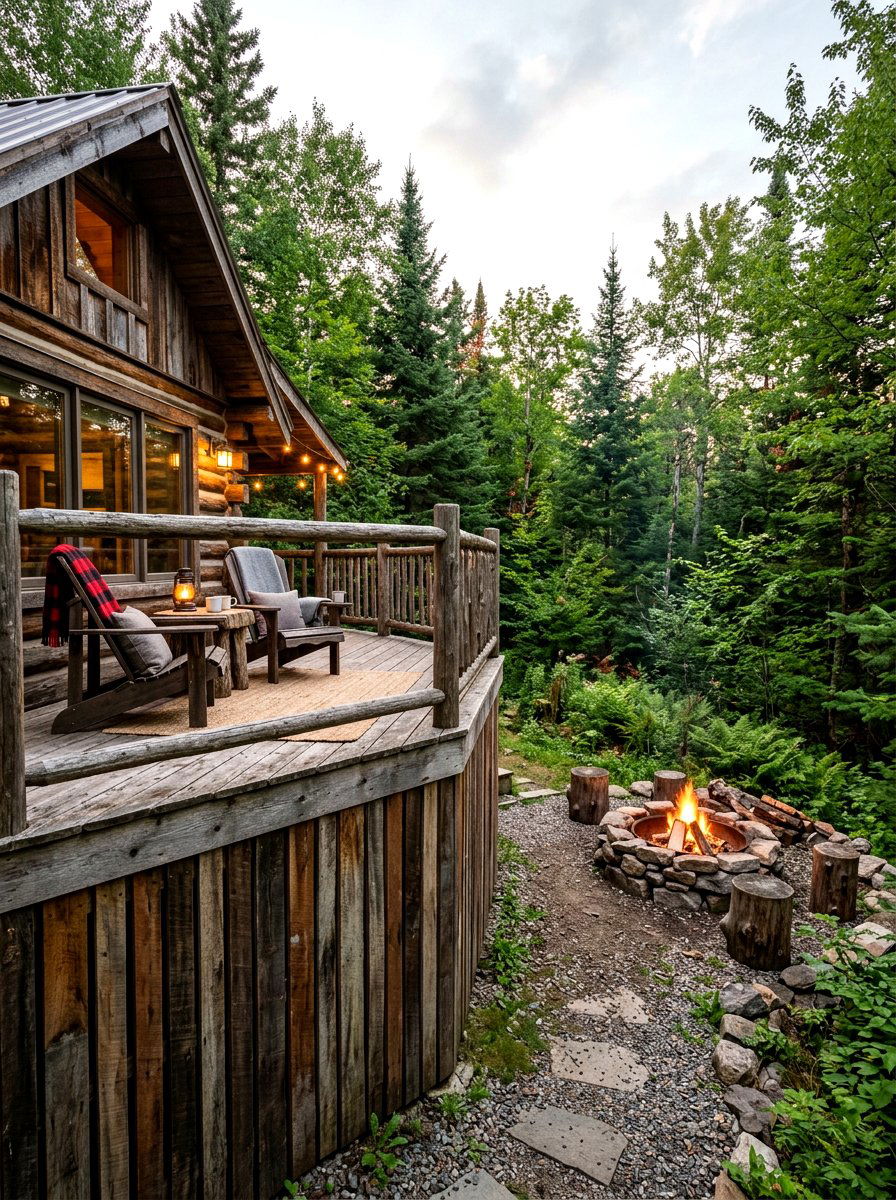
Using reclaimed wood slats as deck skirting adds a sense of history, warmth, and eco-friendly character to your outdoor space. These slats can come from old barns, fences, or pallets, offering a unique patina and varied textures that new lumber simply cannot replicate. The natural weathering and knots in the wood create a rustic, organic look that blends perfectly with a naturalistic garden or a forest-inspired backyard. By installing these reclaimed pieces with small gaps, you ensure the necessary ventilation while creating a visually interesting "layered" effect. This is a budget-friendly and creative way to give your deck a one-of-a-kind personality that tells a story while grounding the entire structure.
27. Stacked Stone Wall
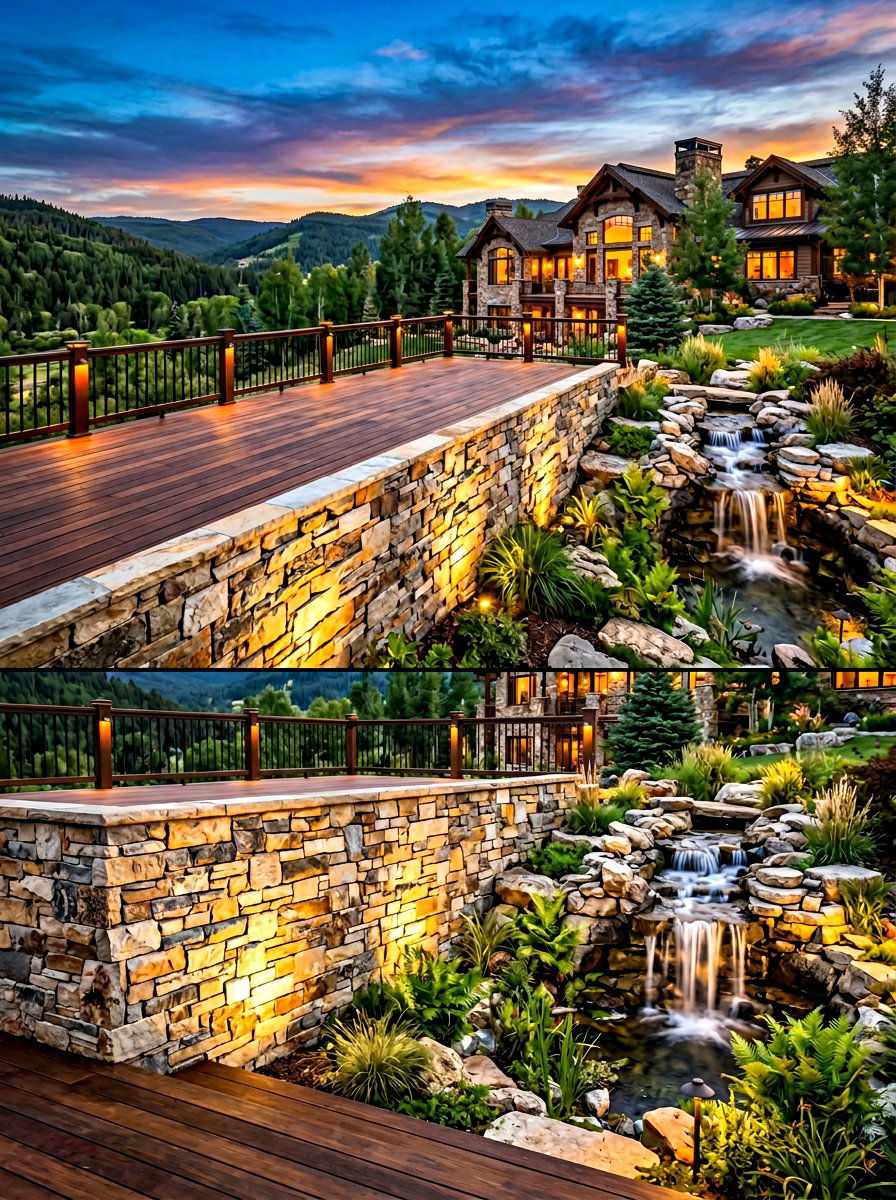
A stacked stone wall provides a rugged and luxurious foundation for a deck that feels deeply integrated into the landscape. This style involves carefully layering stones of various sizes to create a textured, masonry-style base. It creates a beautiful transition between the wooden deck and the surrounding earth, especially when paired with a matching stone patio or walkway. The varied colors and natural shapes of the stone add a high level of visual interest and a sense of permanence. While it is a more labor-intensive and expensive option, the result is a breathtaking, high-end look that requires almost zero maintenance and significantly elevates the overall aesthetic and value of the entire property.
28. Perforated Metal Sheet
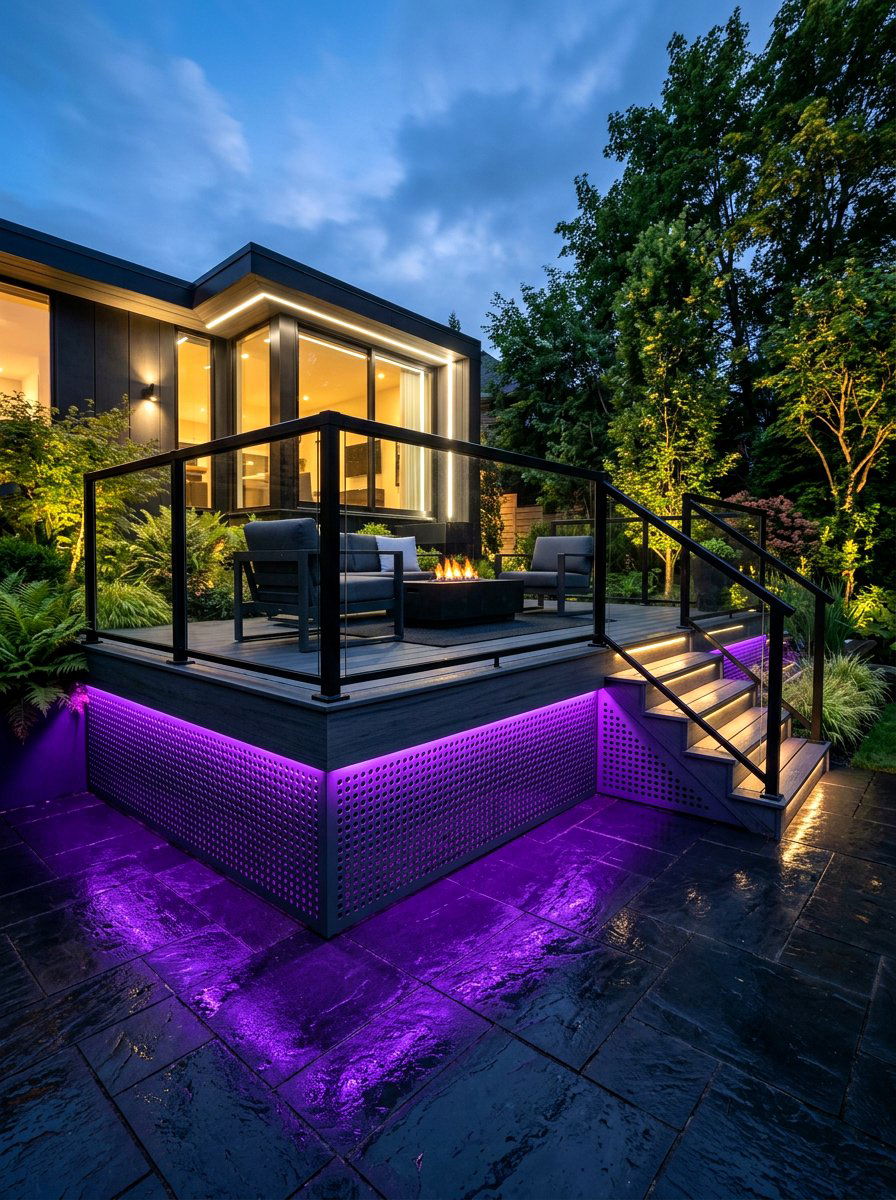
Perforated metal sheets offer a cutting-edge, contemporary look for modern deck designs. These panels feature thousands of tiny, precision-cut holes that allow for incredible airflow and a unique semi-transparent quality. From a distance, the metal looks solid and sleek, but up close, it reveals a delicate texture that filters light in interesting ways. This material is typically made from aluminum or stainless steel, ensuring it remains rust-free and durable in any climate. Perforated metal can be used to create a "glow" effect if you install LED lighting behind it, making the base of your deck a stunning focal point at night. It is a bold, artistic choice for the modern homeowner.
29. Framed Wire Grid
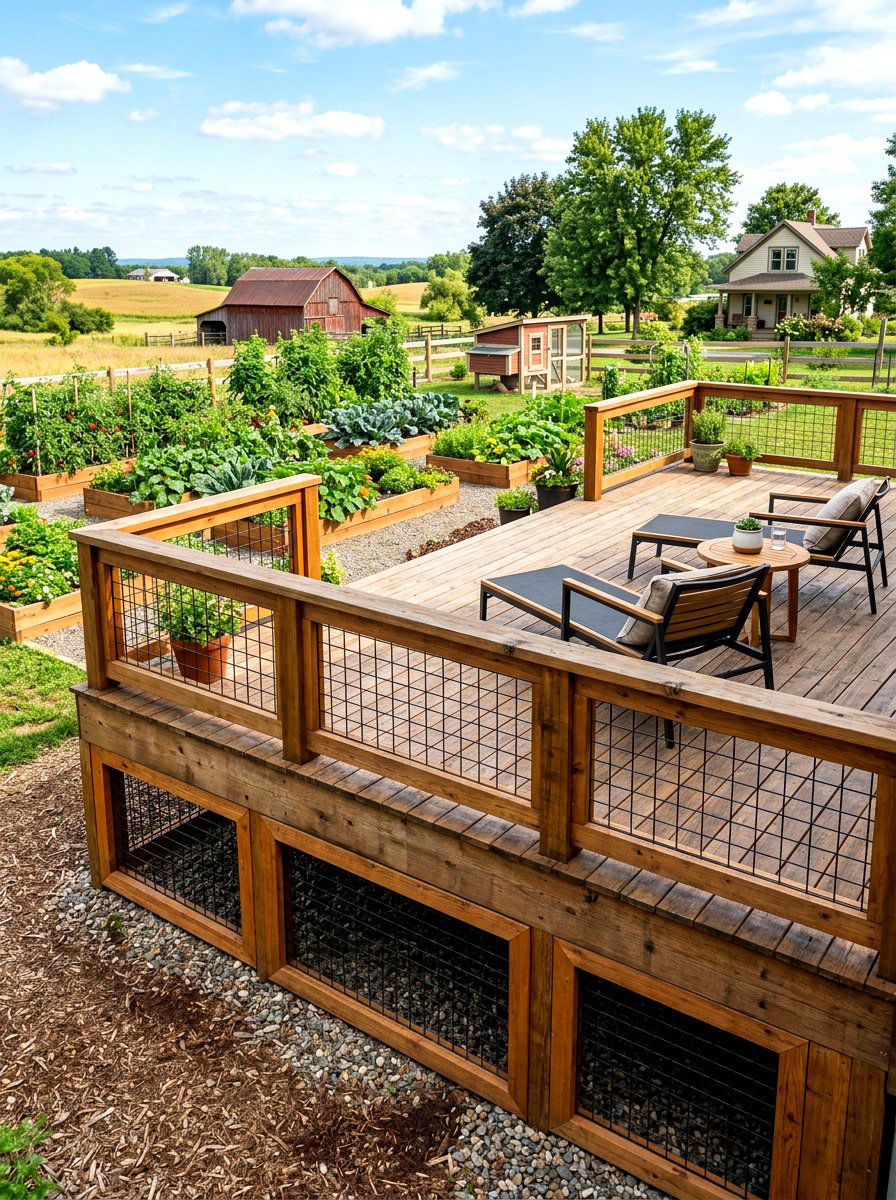
A framed wire grid, often using cattle panels or heavy-duty hog wire, provides a popular "modern rustic" look that is both sturdy and transparent. The wire is typically set into a thick wooden frame made of cedar or stained pressure-treated lumber, creating a strong visual border. This style is excellent for maintaining an open and airy feel under a raised deck, as it provides maximum visibility and ventilation. It is a favorite for homes with a farmhouse or industrial aesthetic. For a more sophisticated finish, the wire can be painted black, which helps it recede into the shadows and gives the deck a more elegant, high-contrast look that highlights the wooden framework.
30. Solid Vinyl Siding
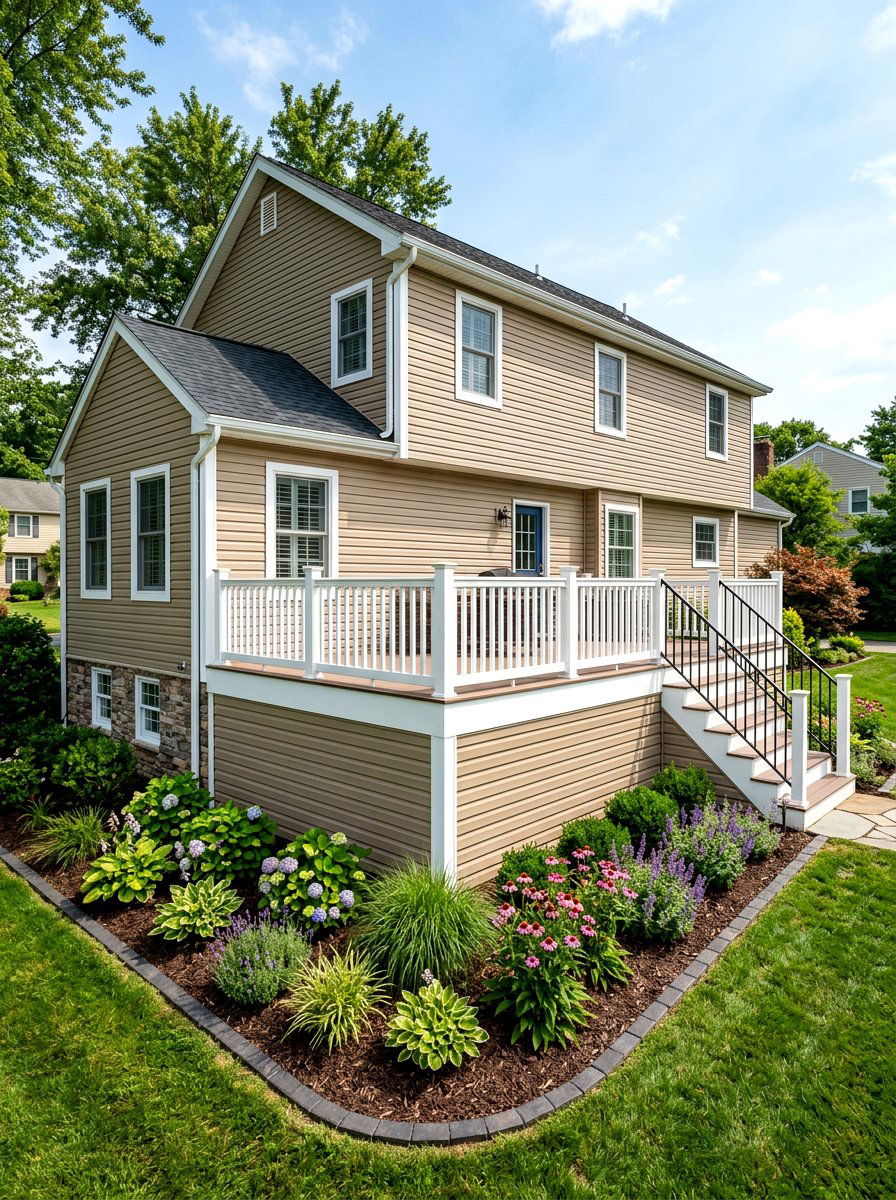
Using solid vinyl siding as deck skirting is a practical way to achieve a perfect match with the rest of your home. By using the same siding panels found on your house walls, you create a seamless and integrated appearance that makes the deck feel like a structural part of the original building. Vinyl siding is incredibly durable, easy to clean, and resistant to moisture and pests. It typically includes built-in ventilation channels or can be paired with matching vented panels to ensure the area beneath the deck stays dry. This is a very popular choice for traditional suburban homes where a clean, uniform, and low-maintenance exterior is the primary design goal.
Conclusion:
Selecting the right deck skirting is a vital part of completing your outdoor living project, as it balances essential functionality with undeniable style. Whether you choose the modern appeal of horizontal wood slats, the timeless charm of traditional lattice, or the rugged elegance of stone veneer, each option provides a unique way to ground your structure and protect its integrity. By carefully considering factors such as ventilation, maintenance, and architectural harmony, you can transform the area beneath your deck into a beautiful design feature rather than an eyesore. This final touch not only boosts your home’s curb appeal but also creates a more organized and welcoming environment for your family to enjoy for many years to come.

Related posts: