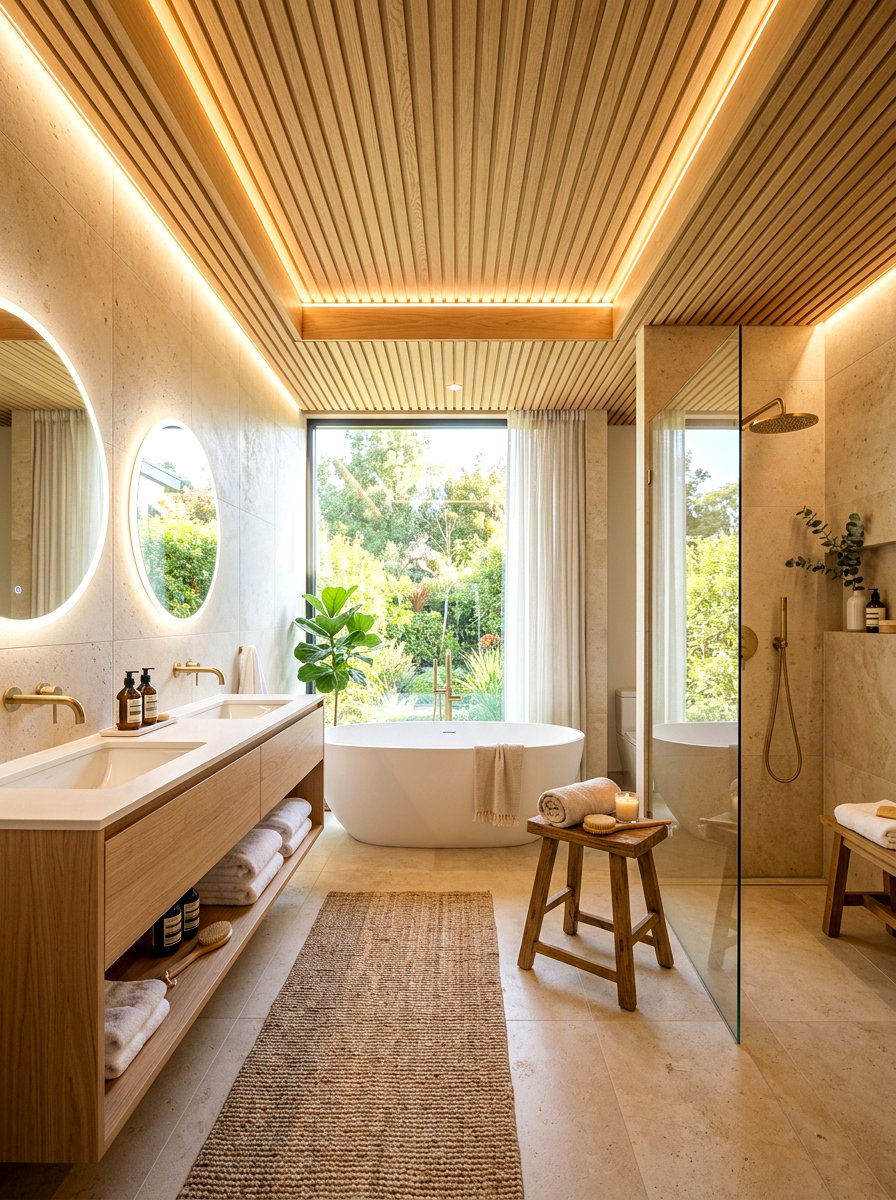
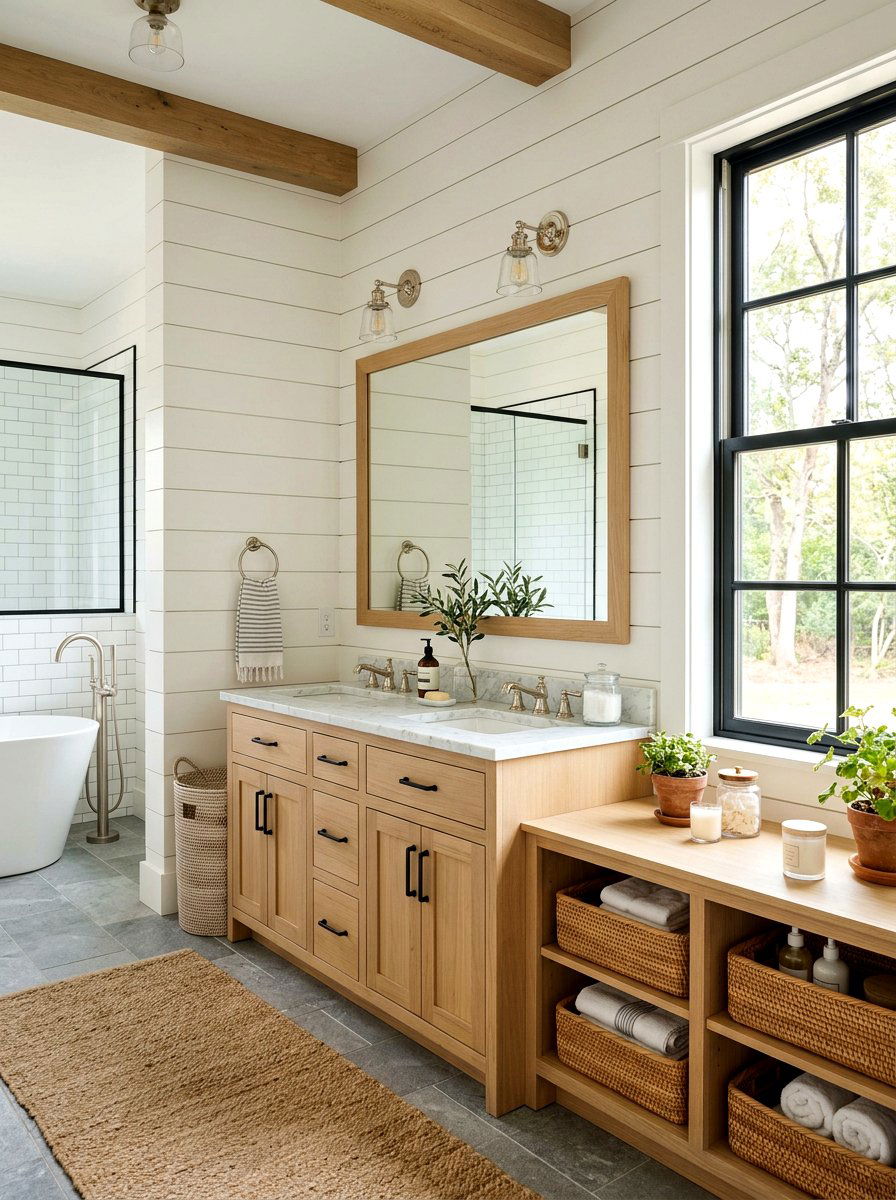
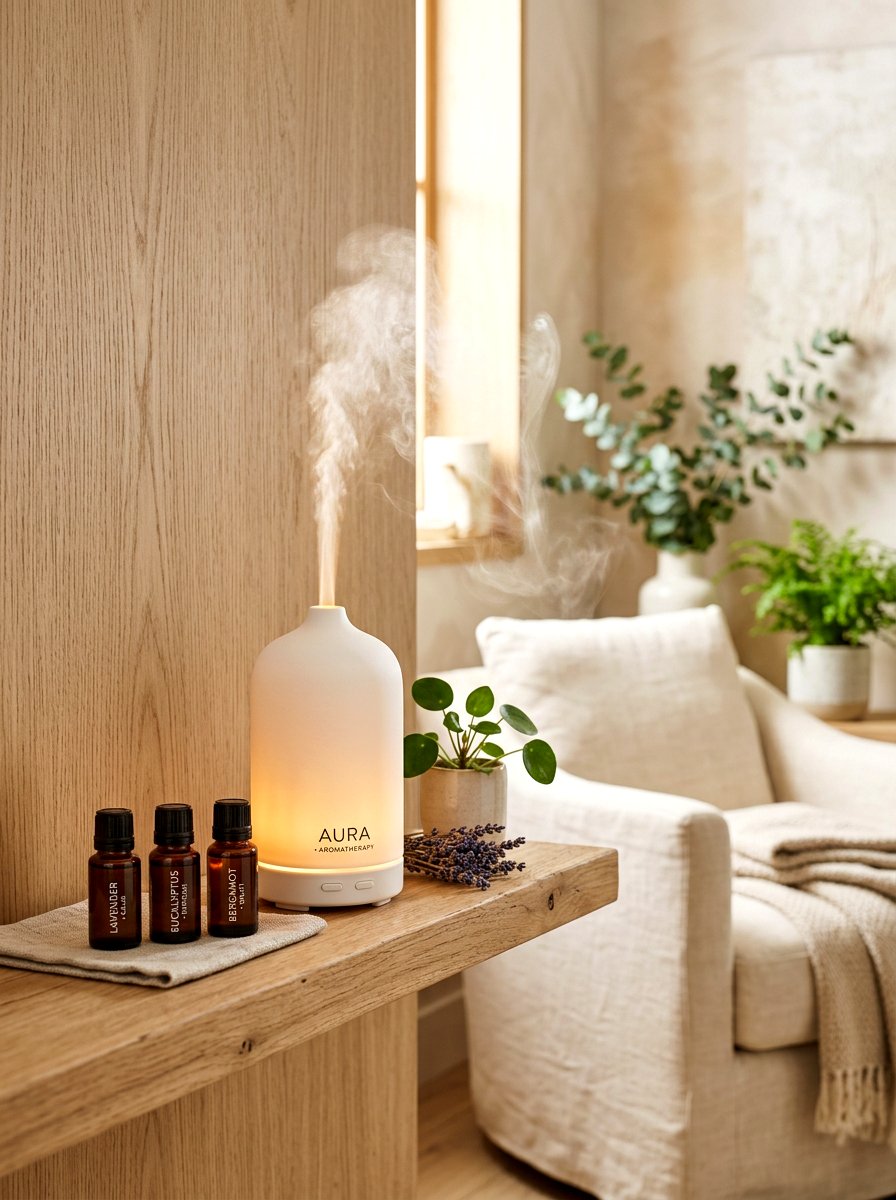
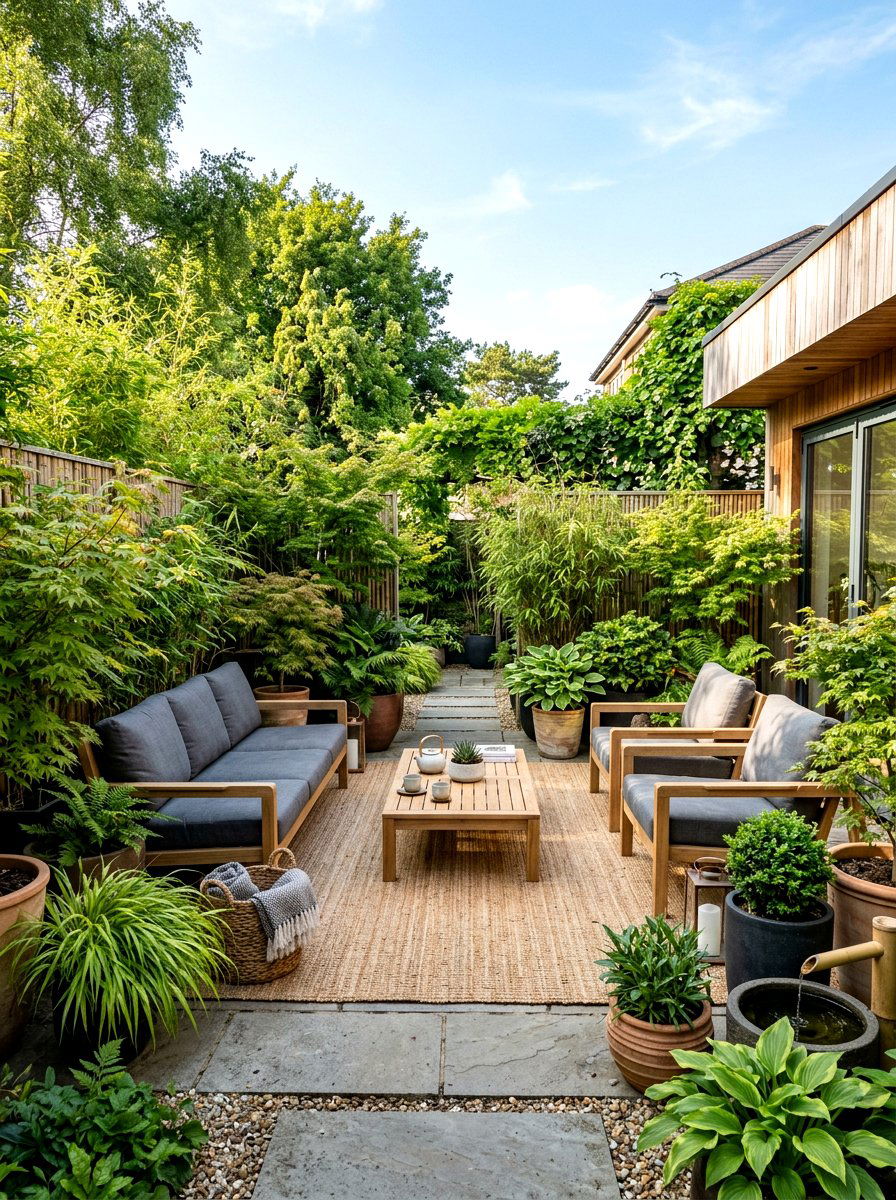
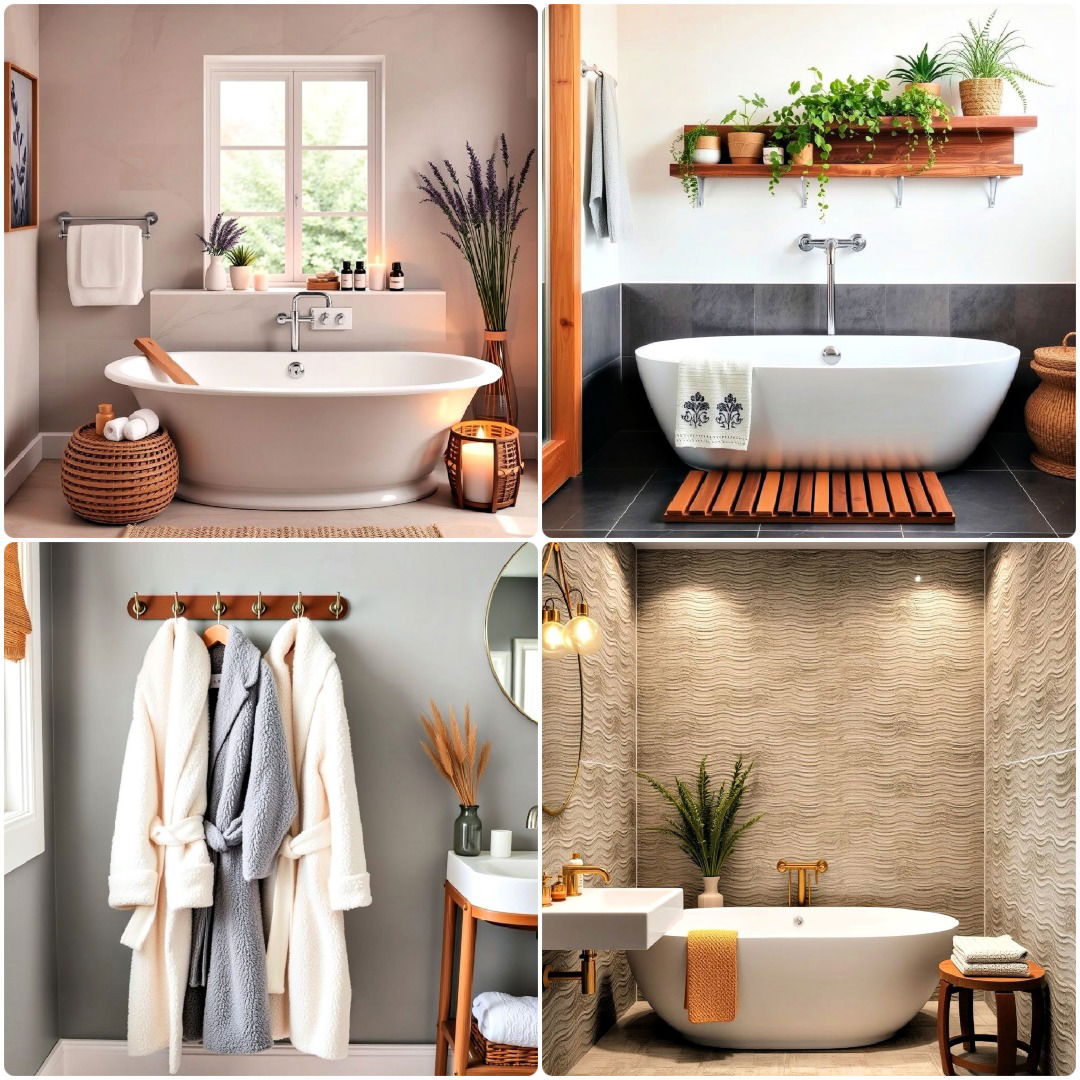
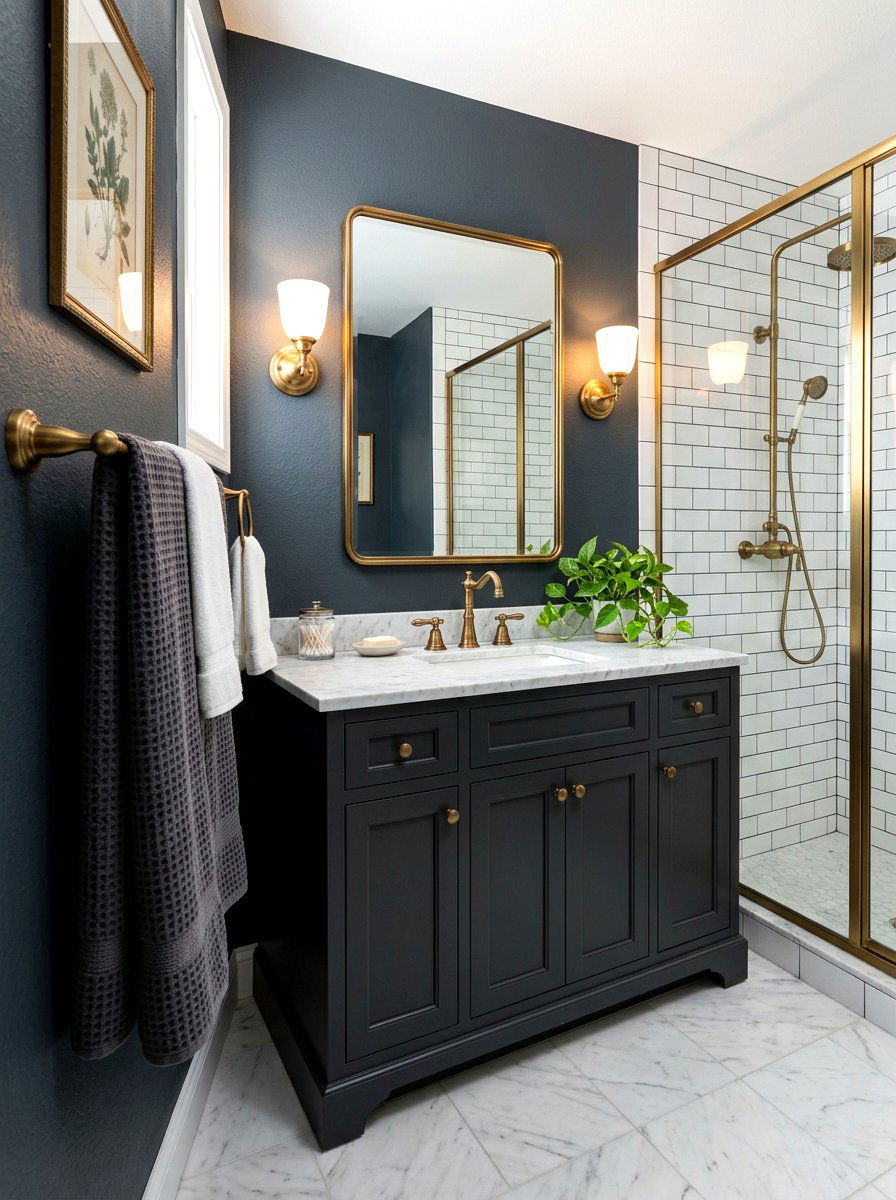
Creating a serene sanctuary in your home often begins with the perfect blend of two world-class design philosophies. Japandi style is a beautiful fusion of Japanese minimalism and Scandinavian functionality, offering a peaceful retreat from the busy outside world. This aesthetic focuses on clean lines, natural materials, and a neutral color palette that promotes deep relaxation. By stripping away the unnecessary clutter, you can transform your bathroom into a spa-like environment that feels both warm and modern. Whether you are planning a full renovation or small updates, these ideas will help you achieve a balanced space. Let us explore how to master this calming and timeless look today.
1. Neutral Japandi Bathroom Color Palette
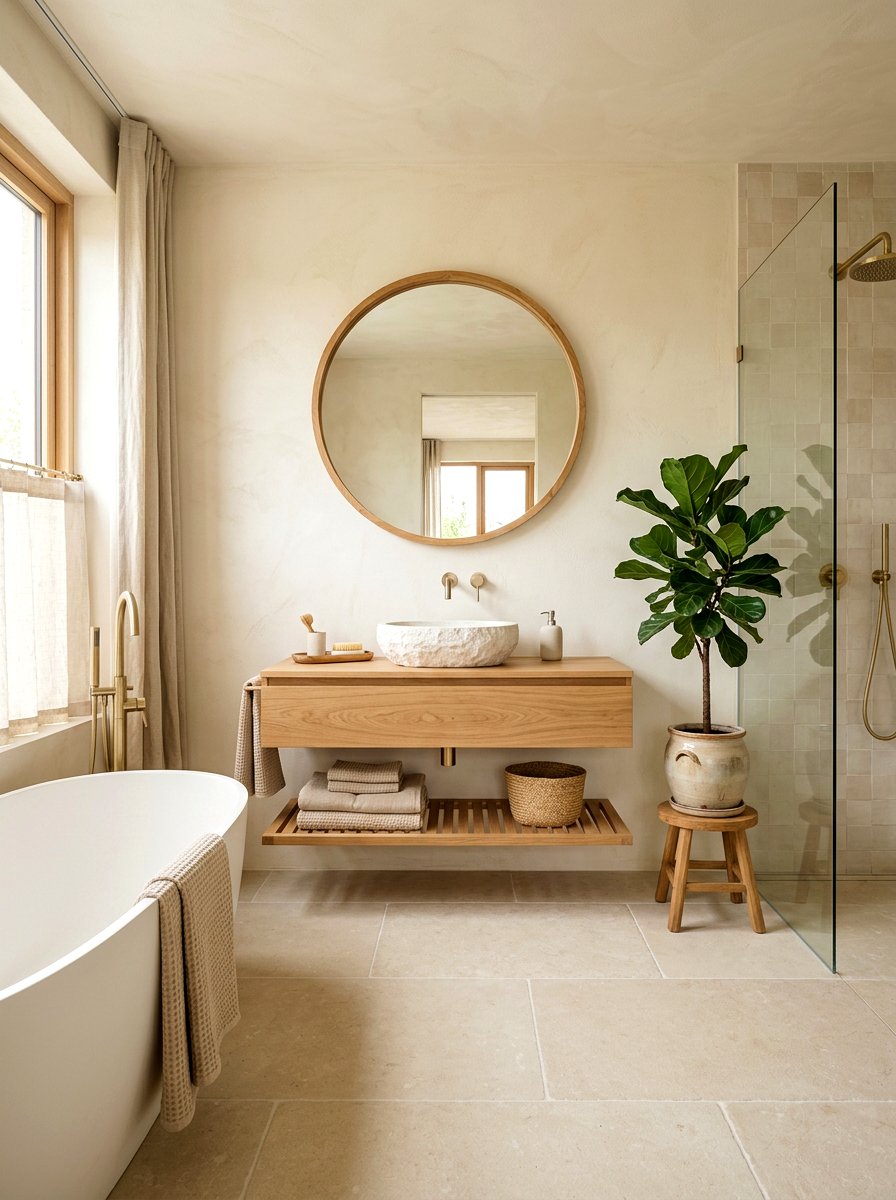
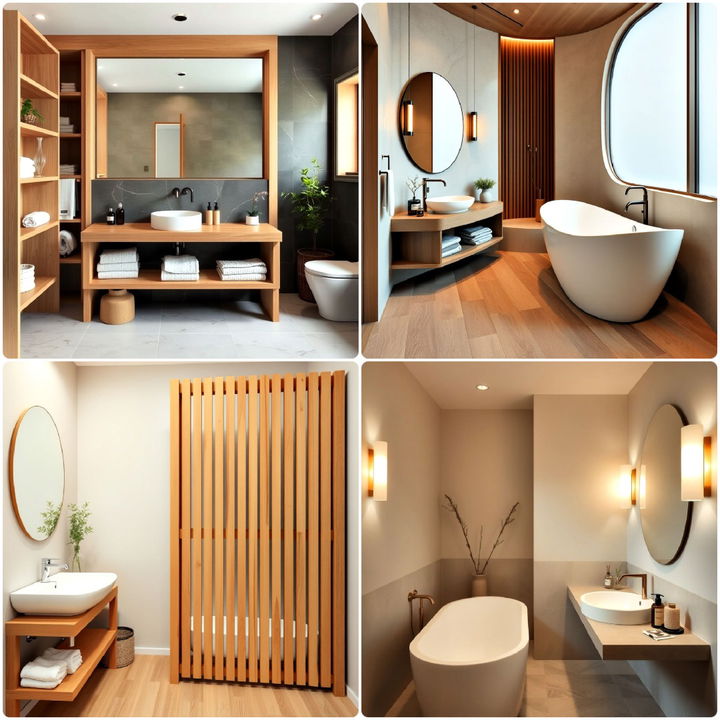
Creating a peaceful atmosphere starts with a carefully curated color scheme that balances warmth and light. You should focus on earthy tones like soft cream, warm beige, and muted sand to ground the space. These colors help make a small bathroom feel much larger and more inviting to the eyes. Avoid using bright, clinical whites that can feel too cold or stark for a relaxing home environment. Instead, look for off-white shades that have a hint of yellow or pink for a cozy touch. When you use these neutral colors on the walls, it creates a gentle backdrop that allows your natural wood and stone elements to shine.
2. Japandi Bathroom Oak Vanity
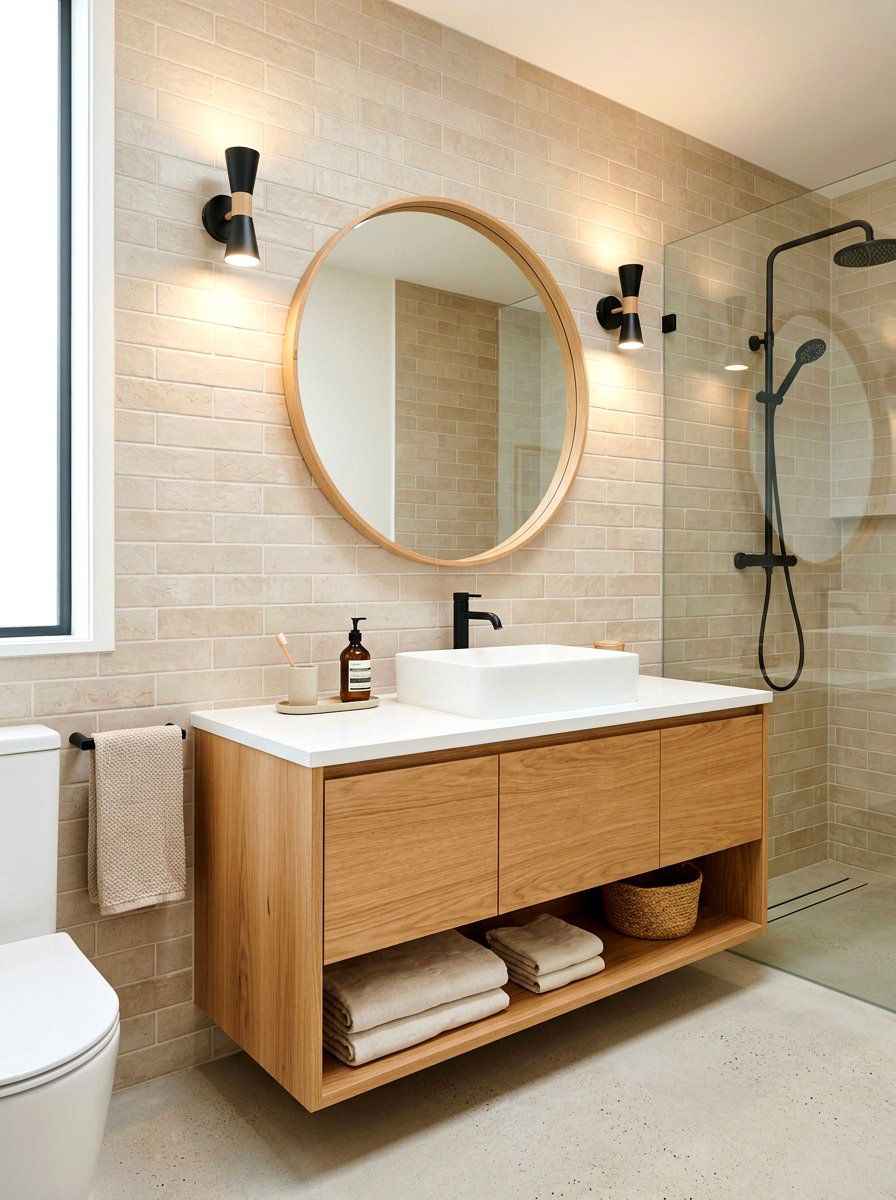
The vanity is often the centerpiece of the room, so choosing a light oak finish is essential for the look. Light wood provides a Scandinavian touch that feels fresh and airy while maintaining a strong connection to nature. You can pair this wooden base with a thick white quartz or marble countertop for a clean finish. Ensure the design features simple hardware-free drawers to keep the visual lines as smooth as possible. This choice not only adds storage but also introduces a tactile warmth that balances the cold surfaces of tiles. It is a functional piece that brings an organic soul into your modern bathroom design.
3. Japandi Bathroom Soaking Tub
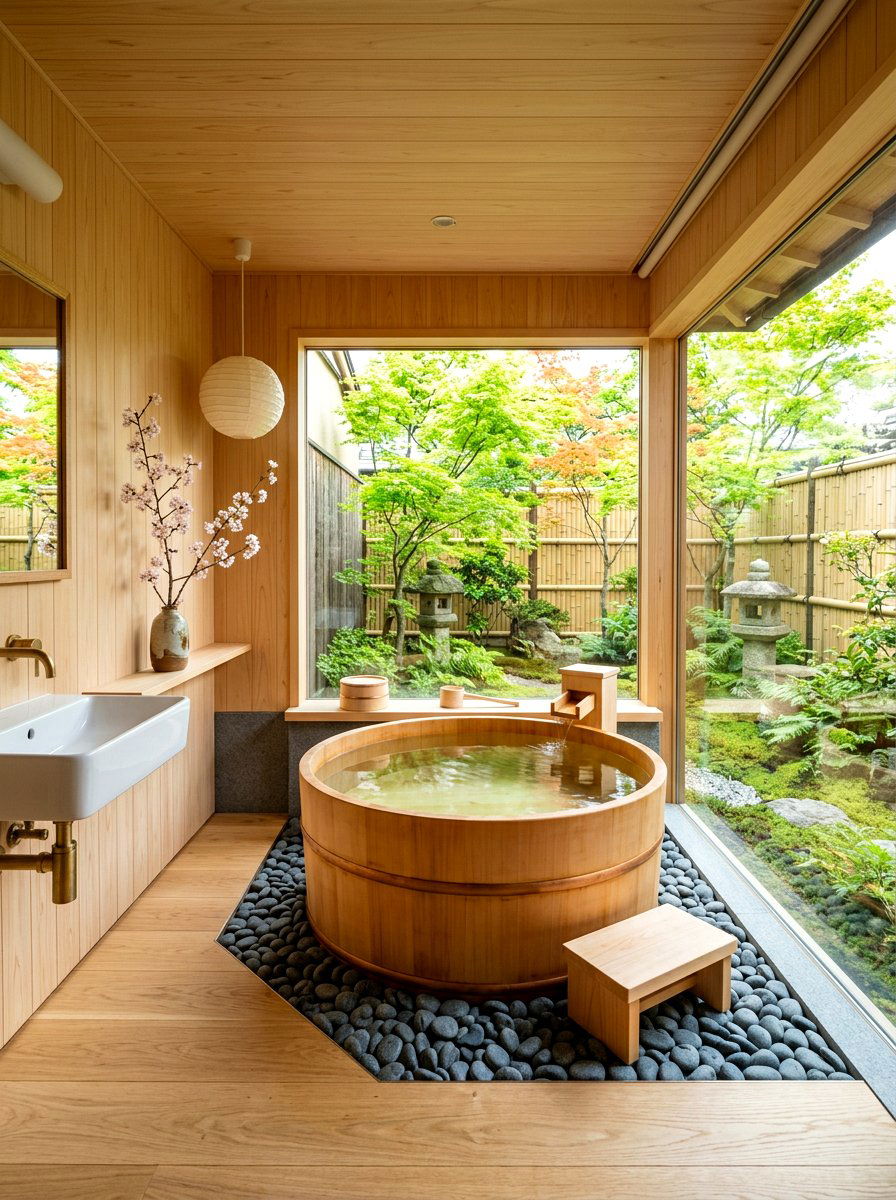
A deep Japanese soaking tub, also known as an ofuro, is the ultimate luxury for a minimalist home. These tubs are designed for sitting upright in hot water, encouraging a slower and more mindful bathing ritual. You can choose a freestanding model made from high-quality acrylic or traditional wood like cedar for an authentic scent. Positioning the tub near a window allows you to enjoy natural light while you soak and decompress. Surround the base with smooth river stones or a wooden deck to enhance the spa-like feeling. It turns a standard hygiene routine into a deeply therapeutic and quiet experience every single day.
4. Japandi Bathroom Wood Slats
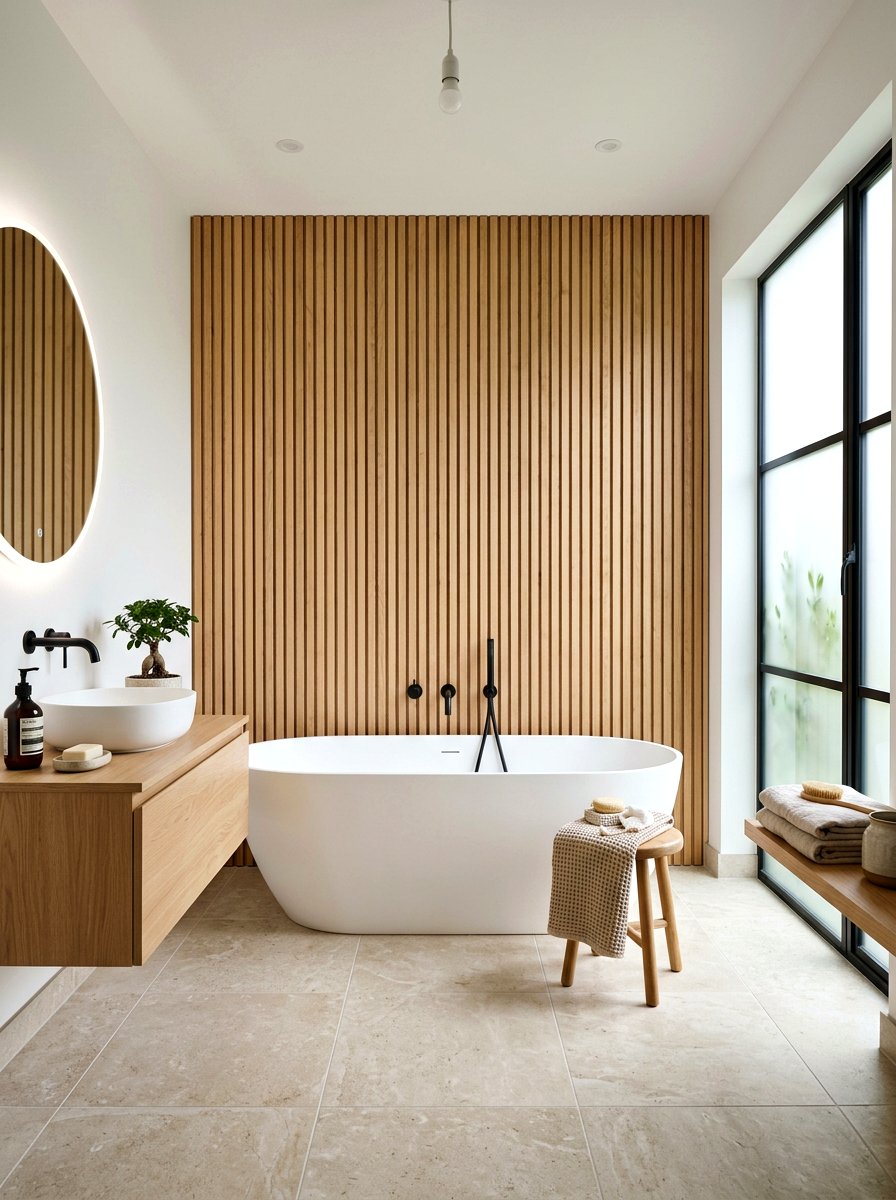
Adding a vertical slatted wood wall is a fantastic way to introduce texture and rhythm into a plain space. These narrow timber strips create a sense of height and draw the eye upward toward the ceiling. You can install them behind the vanity or as a feature wall in a dry area of the bathroom. The gaps between the slats add depth and a subtle play of light and shadow that is very Japanese. Using moisture-resistant wood like teak ensures that the feature stays beautiful even in a humid environment. It is a stylish way to break up flat surfaces without using busy or colorful patterns.
5. Japandi Bathroom Black Fixtures
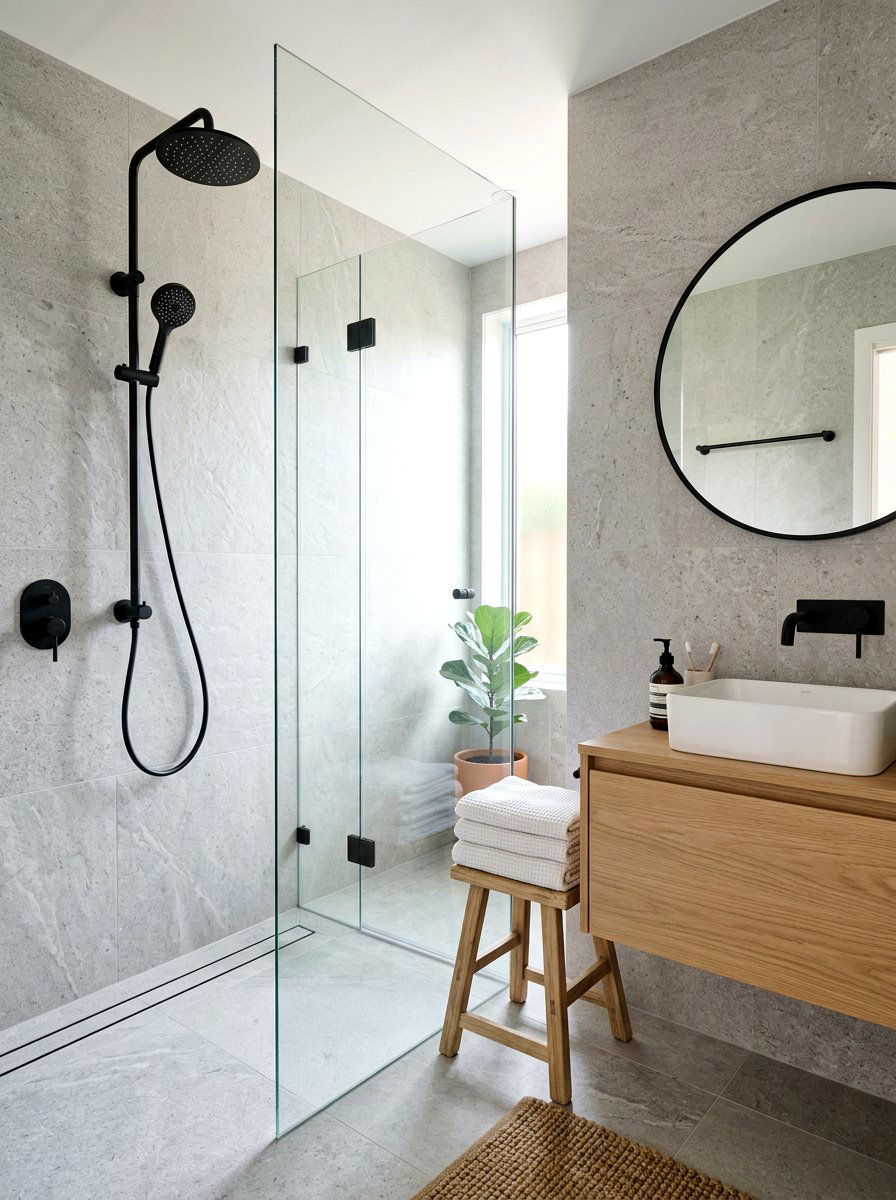
Contrast is a key element in Japandi design, and matte black fixtures provide a sharp, modern edge. Replacing chrome faucets and showerheads with black versions creates a focal point against light-colored tiles. This dark accent mimics the look of traditional Japanese ink wash paintings and adds a sense of sophistication. You should keep the shapes of the fixtures simple and geometric to maintain the minimalist theme of the room. From the towel bar to the flush plate, consistent black finishes tie the entire design together. It is a small change that makes a huge impact on the overall visual balance and style.
6. Japandi Bathroom Floating Vanity
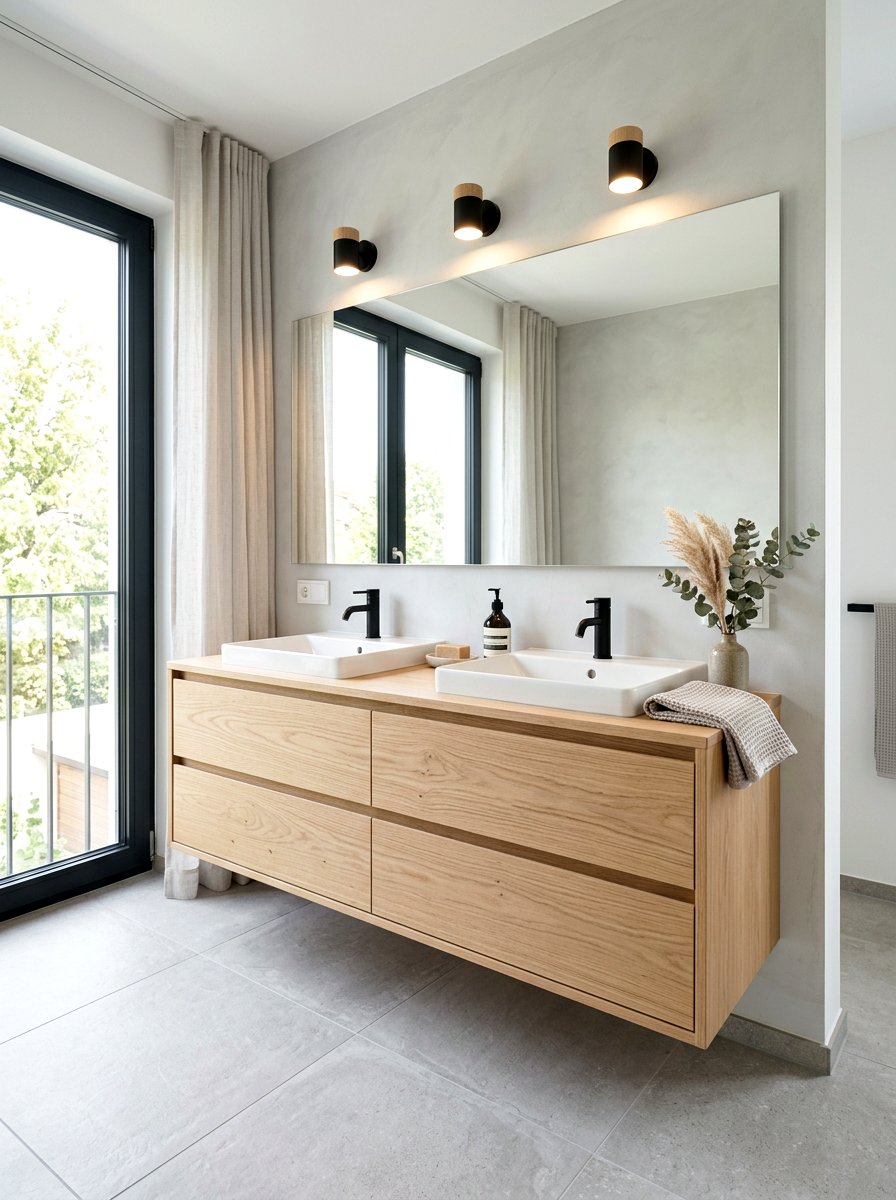
A wall-mounted floating vanity is a smart choice for maintaining an open and airy feel on the floor. By keeping the area beneath the cabinets clear, you create a sense of uninterrupted space that is essential for minimalism. This layout makes cleaning much easier and allows for a more streamlined appearance in the room. You can choose a vanity with a wood-grain finish to add warmth to the elevated design. The floating look works particularly well in smaller bathrooms where saving floor space is a priority for the homeowner. It combines Scandinavian practicality with a sleek, modern aesthetic that never goes out of popular style.
7. Japandi Bathroom Stone Sink
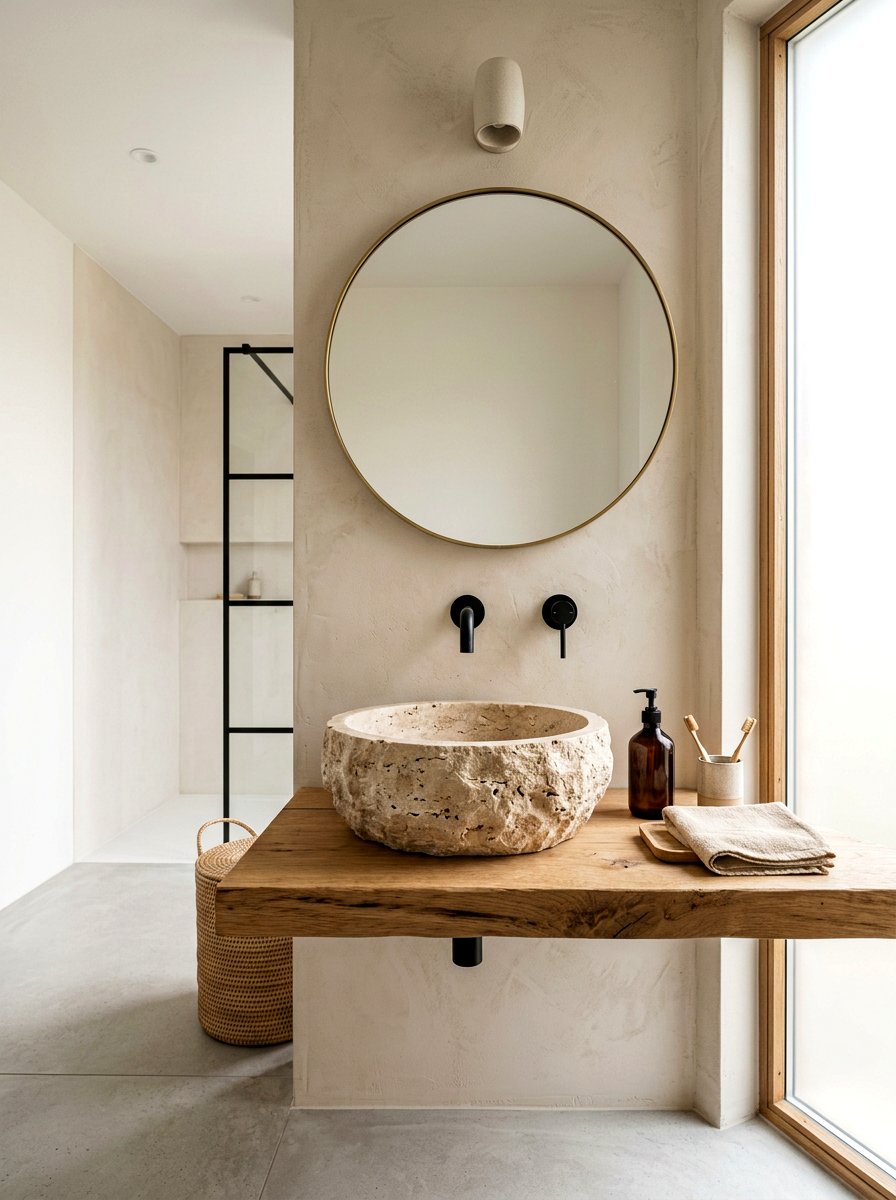
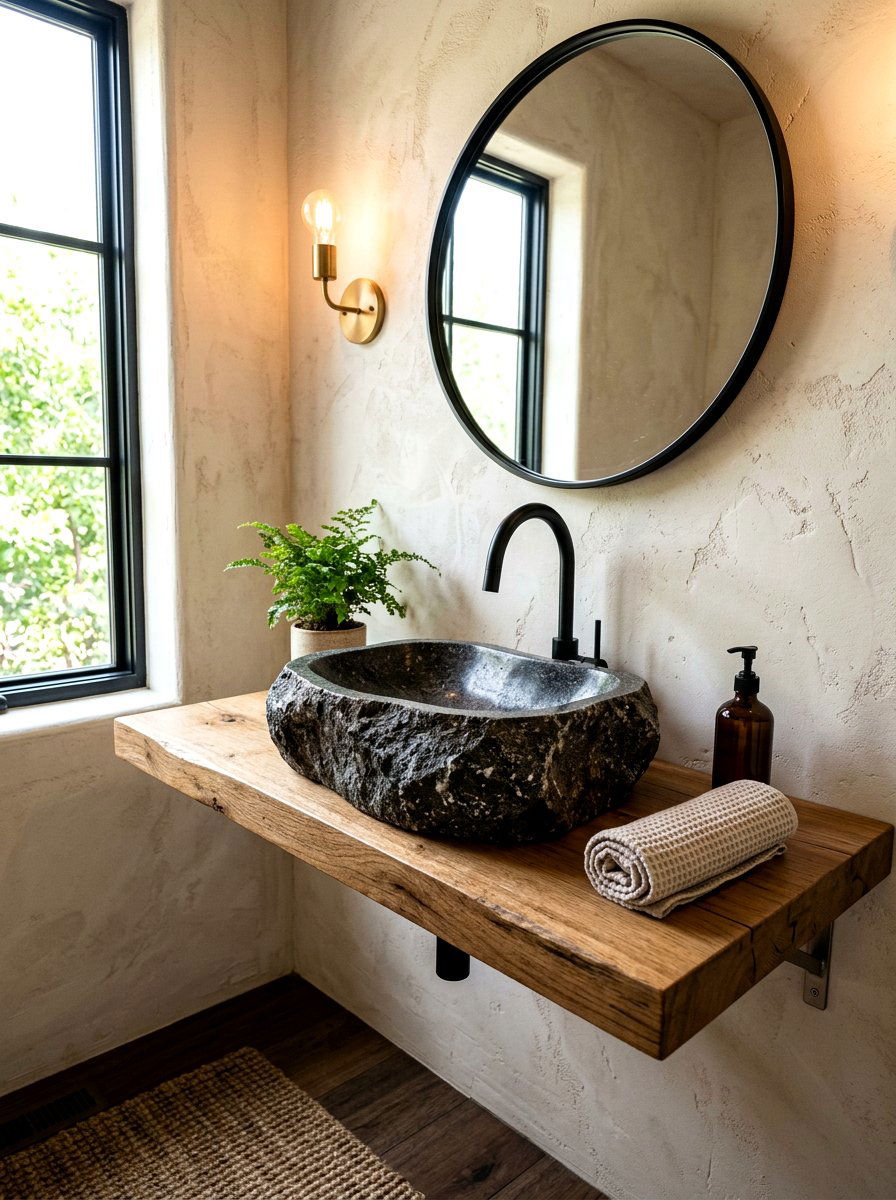
A vessel sink made from natural stone like travertine or basalt adds a raw and organic element to the room. Unlike standard ceramic basins, a stone sink has a unique texture and color variation that celebrates natural imperfection. You should opt for a matte finish rather than a polished one to keep the look grounded and soft. Placing a heavy stone bowl on a light wooden vanity creates a beautiful material contrast that is very Japandi. It serves as a functional piece of art that invites you to touch and feel the earth. This element brings a rugged beauty into your clean and polished indoor sanctuary.
8. Japandi Bathroom Large Tiles
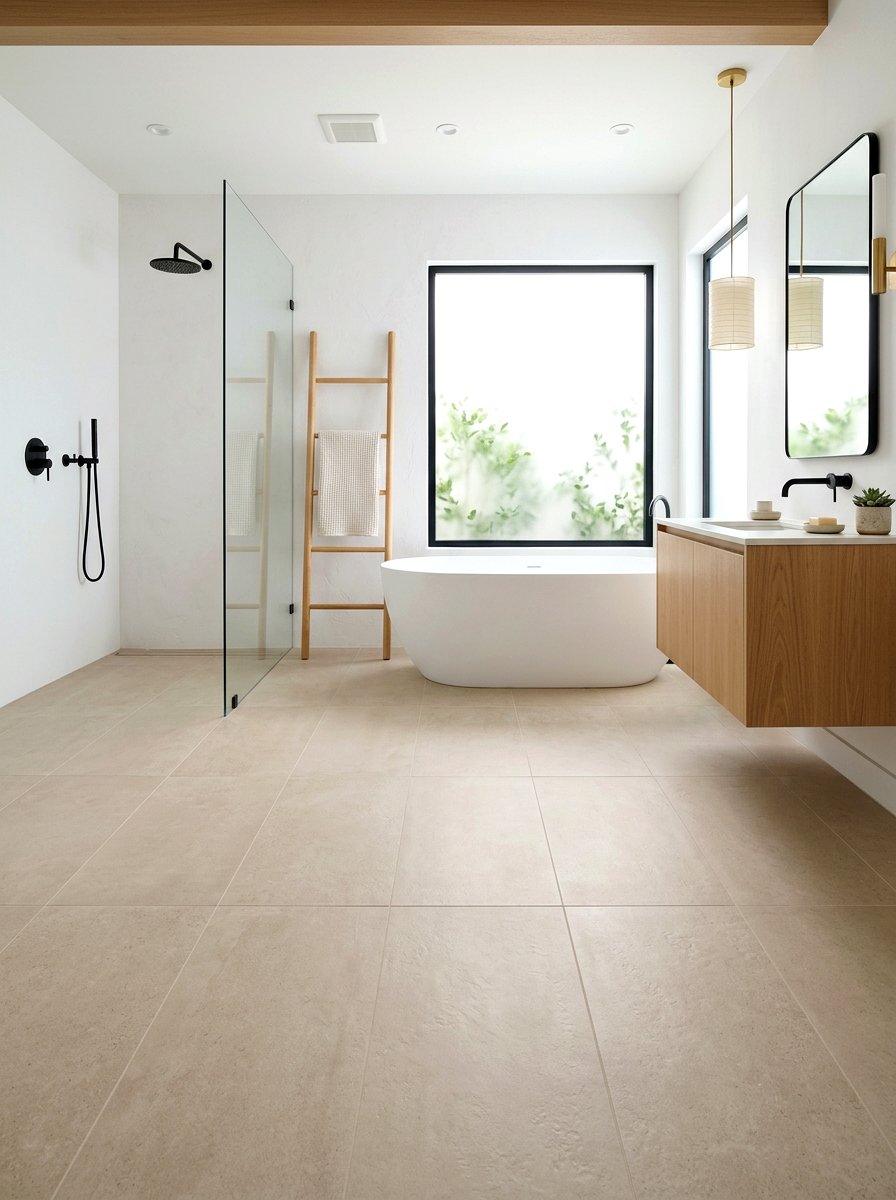
Using large-format floor tiles in a soft grey or beige shade helps to minimize distracting grout lines. When you have fewer seams on the floor, the entire room feels more cohesive and much more spacious. You should choose tiles with a subtle limestone or concrete texture to provide a tactile experience under your feet. This clean foundation allows the furniture and fixtures to take center stage without visual clutter from the ground. Matte finishes are preferred over glossy ones because they feel more natural and are less slippery when wet. It is a practical and stylish choice for a modern, high-quality Japandi-themed bathroom.
9. Japandi Bathroom Glass Shower
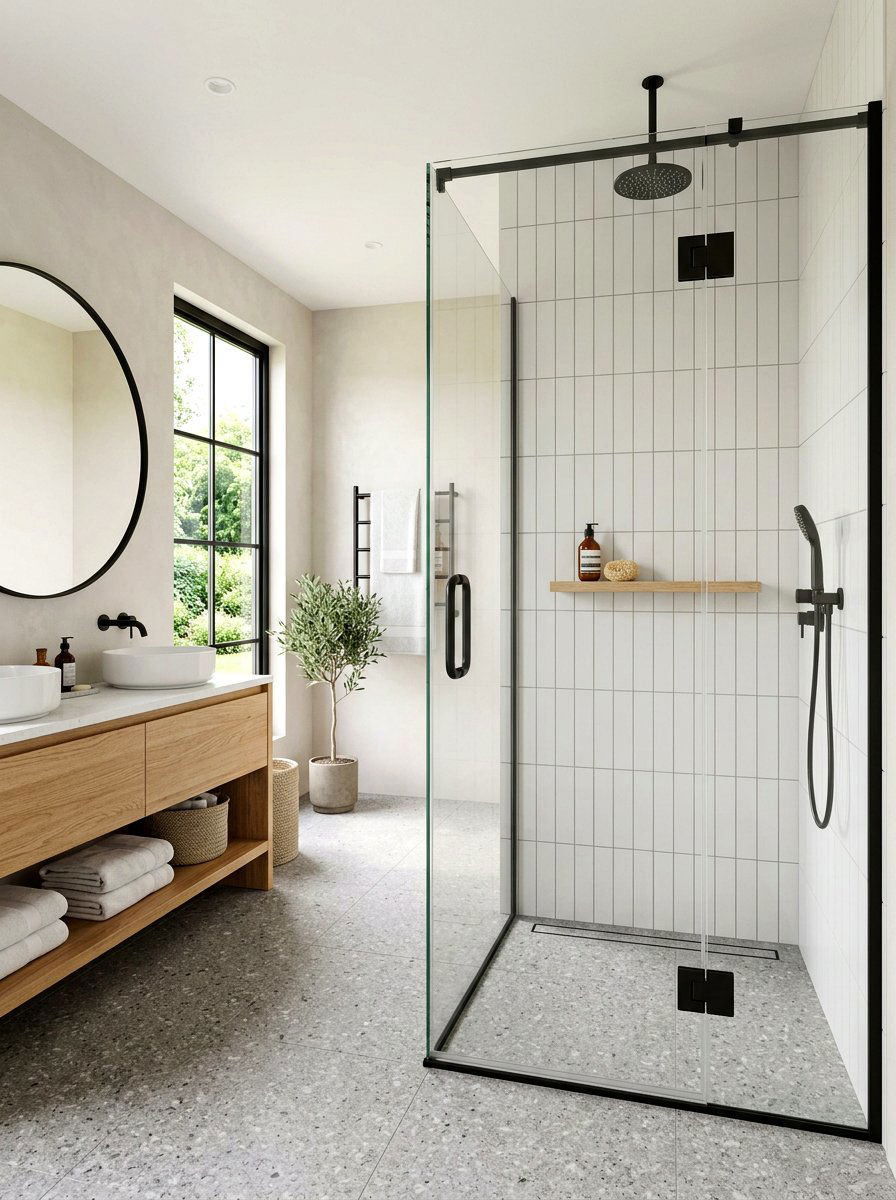
A frameless glass shower enclosure is perfect for keeping the sightlines clear and the light flowing throughout the space. By removing heavy metal frames, you allow the beautiful wall tiles and wooden elements to be seen from every angle. This transparency helps the bathroom feel like one large, open room rather than a series of cramped compartments. You can use a walk-in design with a simple glass panel to create a seamless transition into the wet zone. This setup promotes a minimalist lifestyle where every part of the room feels connected and serene. It is a sophisticated way to achieve a clean and modern look.
10. Japandi Bathroom Woven Baskets
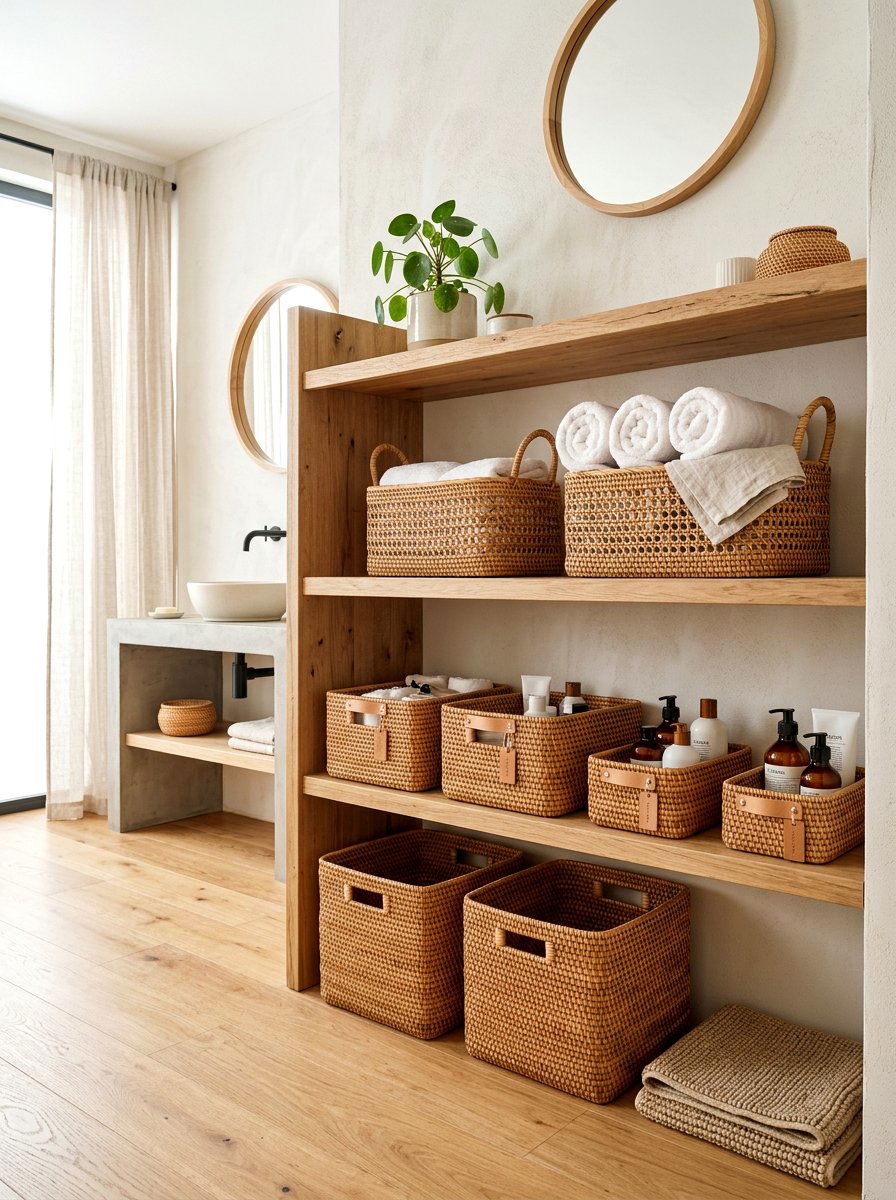
Storage should be functional and beautiful, which is why woven rattan or seagrass baskets are a must-have accessory. You can use these natural containers to hide away colorful plastic bottles, hair dryers, and extra toilet paper rolls. Tucking them under a floating vanity or on open wooden shelves keeps the room looking tidy and organized. The woven texture adds a rustic, handmade feel that complements the sleek lines of Scandinavian furniture. Choosing baskets in different sizes allows you to categorize your items while maintaining a consistent and natural look. It is an affordable way to bring warmth and order to your private daily retreat.
11. Japandi Bathroom Wall Toilet
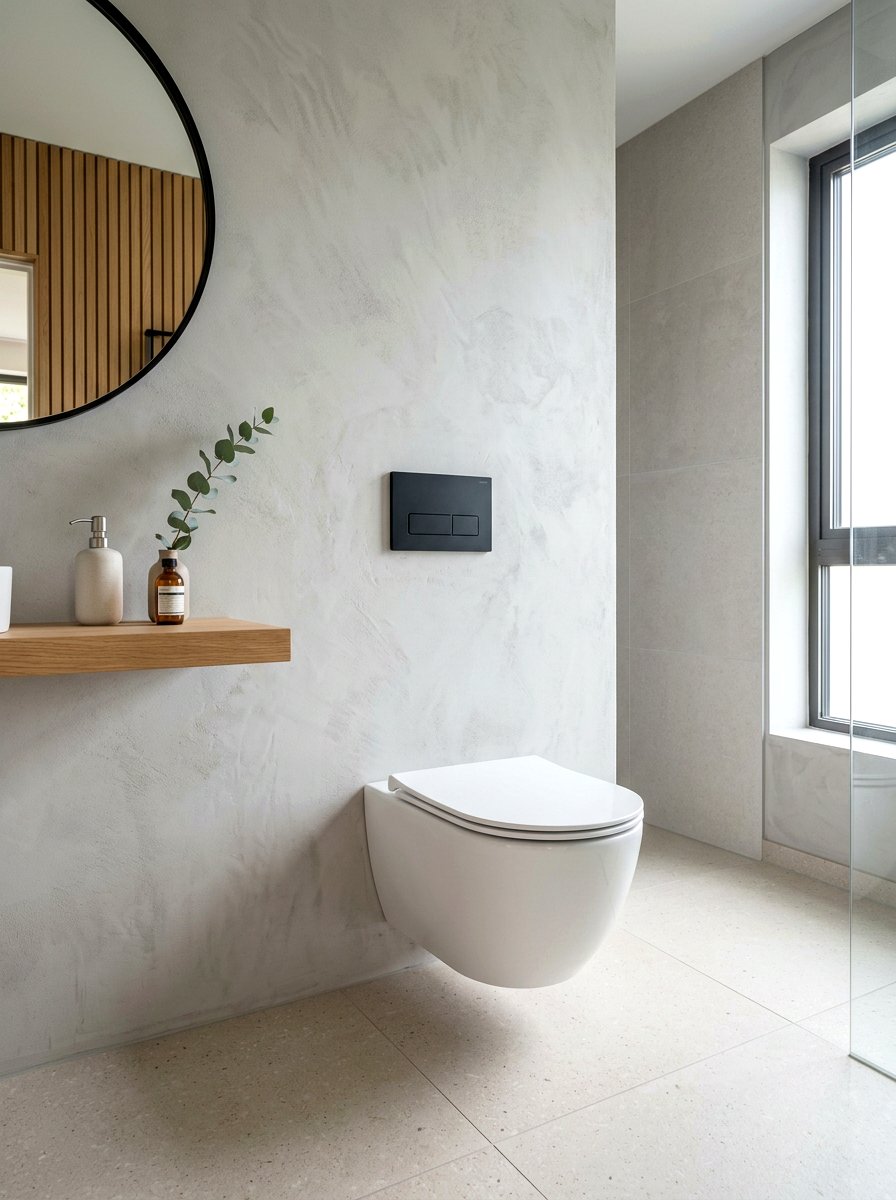
A wall-hung toilet is a hallmark of modern minimalist design because it hides the bulky water tank inside the wall. This sleek installation keeps the floor area completely clear, which enhances the feeling of space and cleanliness. You should pair it with a simple matte black or brushed metal flush plate for a coordinated look. The absence of a base on the floor means there are no awkward corners where dust and grime can collect. This functional choice reflects the Scandinavian love for efficient design that makes daily life easier and more organized. It is a sophisticated addition that elevates the overall luxury of your bathroom.
12. Japandi Bathroom Backlit Mirror
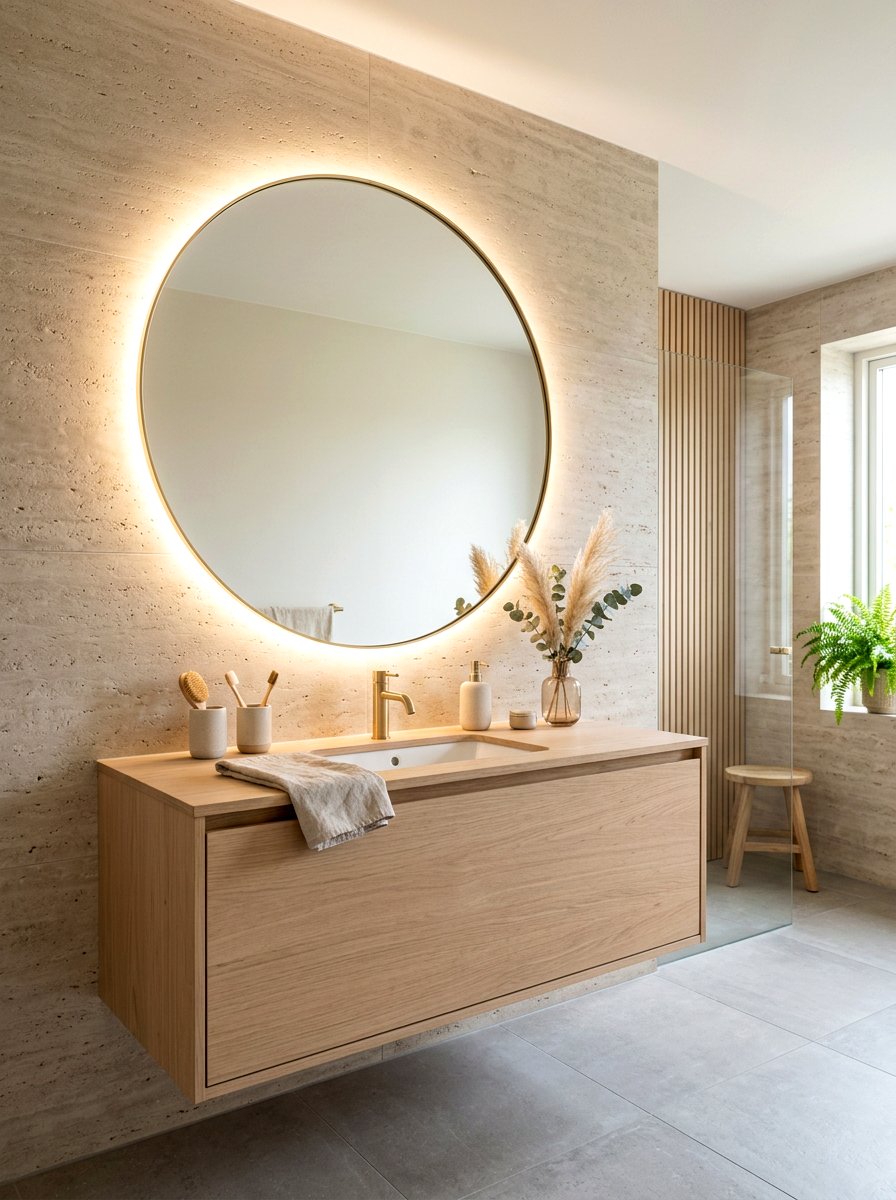
Lighting plays a huge role in setting the mood, and a round backlit mirror provides a soft, ethereal glow. The halo of light behind the glass eliminates harsh shadows on your face, making it perfect for morning routines. You should choose a mirror with a thin frame or no frame at all to keep the look simple. This type of ambient lighting creates a calming atmosphere that feels like a high-end spa or hotel. It adds a layer of depth to the wall without the need for bulky and decorative light fixtures. The circular shape also helps to soften the straight lines of the vanity.
13. Japandi Bathroom Indoor Plants
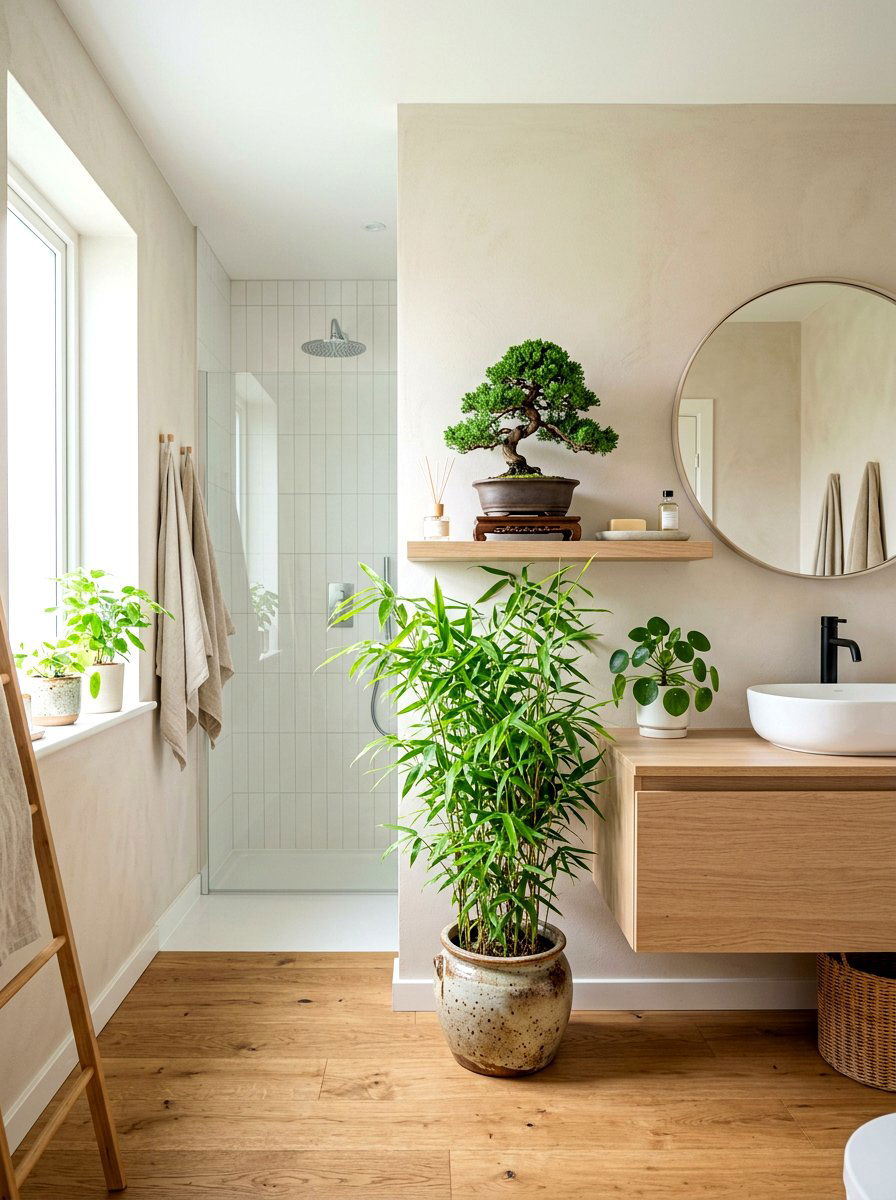
Bringing nature indoors is a core principle of Japandi design, so adding greenery is an essential styling step. You can place a small bonsai tree on the vanity or a tall potted bamboo plant in an empty corner. These living elements add a pop of vibrant color that feels refreshing against a neutral and muted backdrop. Plants like eucalyptus or ferns thrive in the humid conditions of a bathroom and help to purify the air naturally. Using ceramic or stone pots in earthy tones ensures that the greenery blends seamlessly with the rest of your decor. It is a simple way to create a biophilic sanctuary.
14. Japandi Bathroom Bamboo Mat
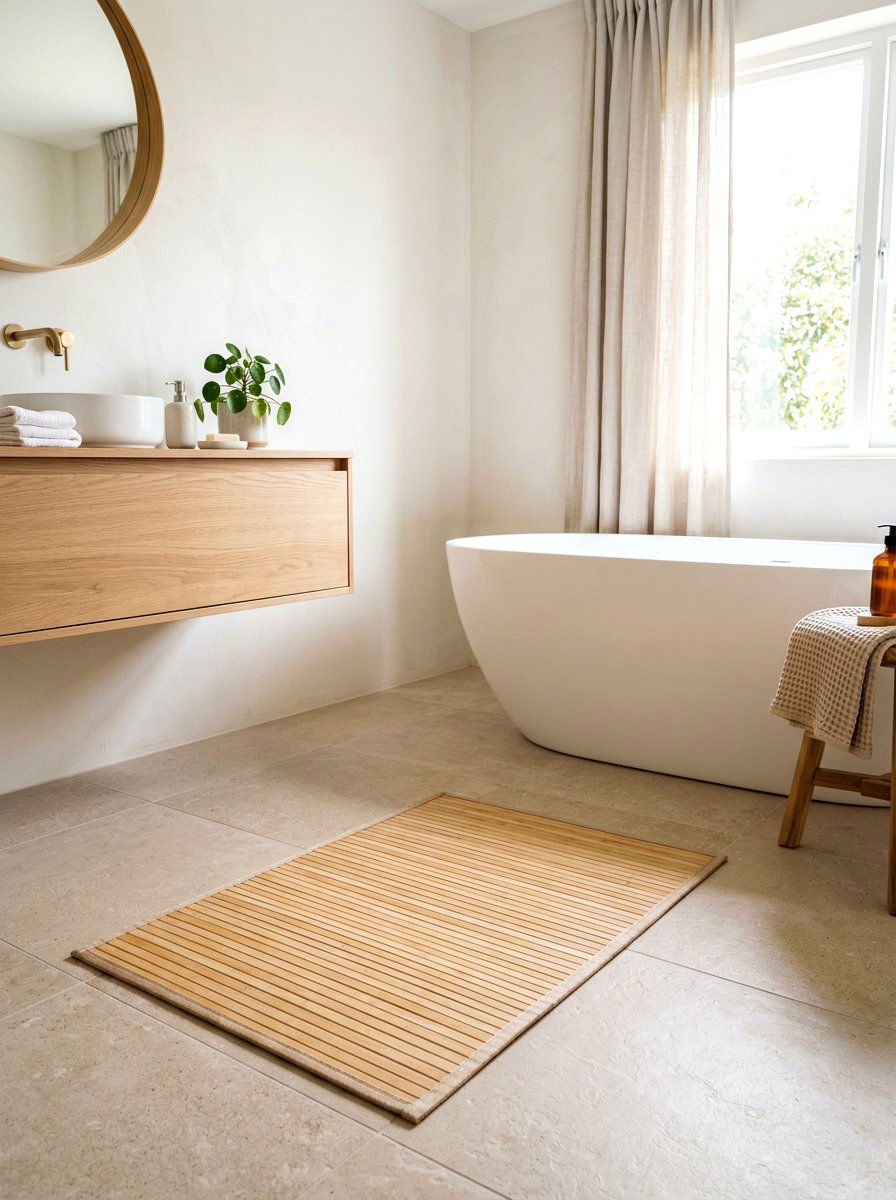
Replacing a traditional fabric bath mat with one made from sustainable bamboo adds an instant Japanese touch to your floor. Bamboo is naturally water-resistant and provides a firm, textured surface that feels great under your bare feet after a shower. The warm wood tones of the mat coordinate perfectly with other timber elements like the vanity or shelving. This choice is also more hygienic than fabric mats because it dries quickly and does not trap moisture or odors. It is a durable and eco-friendly accessory that fits the functional and natural aesthetic of a Japandi home. The slat design also allows for better airflow and drainage.
15. Japandi Bathroom Fluted Glass
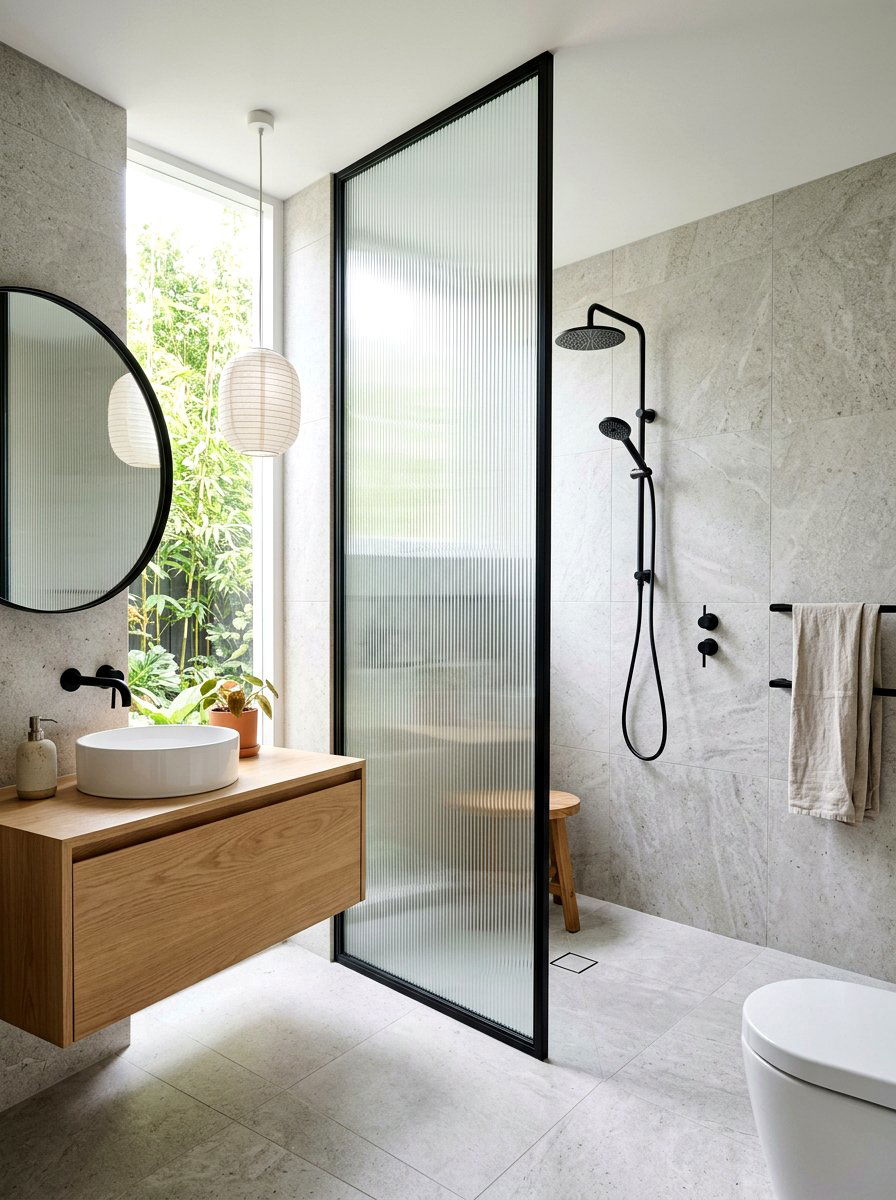
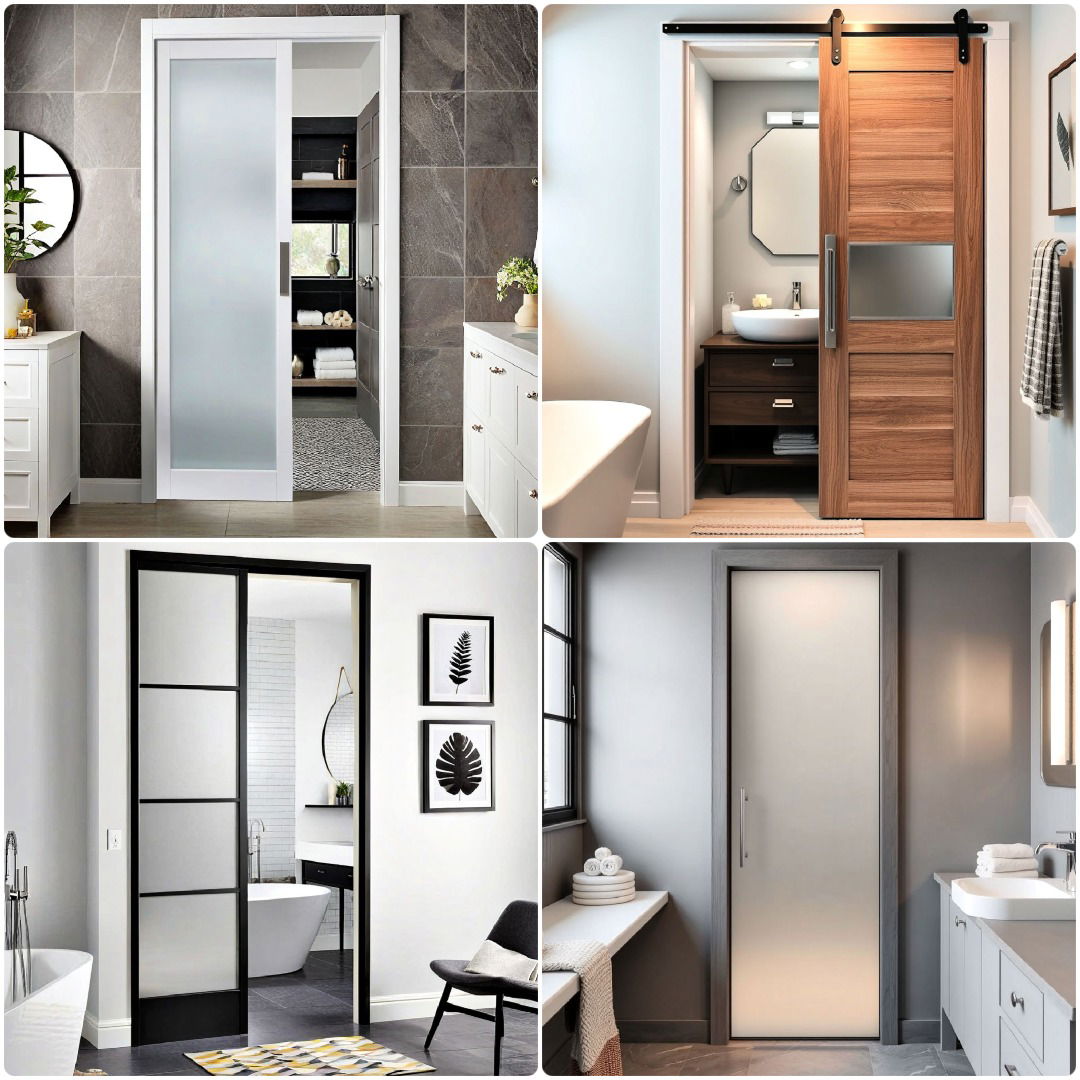
Fluted or ribbed glass is a trendy way to add privacy to your shower while still letting natural light pass through. The vertical texture of the glass mimics the look of traditional Japanese shoji screens but in a modern material. You can use this glass for the shower door or even for cabinet fronts to hide cluttered toiletries inside. The soft blurring effect keeps the bathroom looking tidy by obscuring the view of various bottles and accessories. It adds a sophisticated architectural detail that feels both timeless and very current in high-end interior design. This material provides a tactile quality that enhances the sensory experience of the space.
16. Japandi Bathroom Pebble Floor
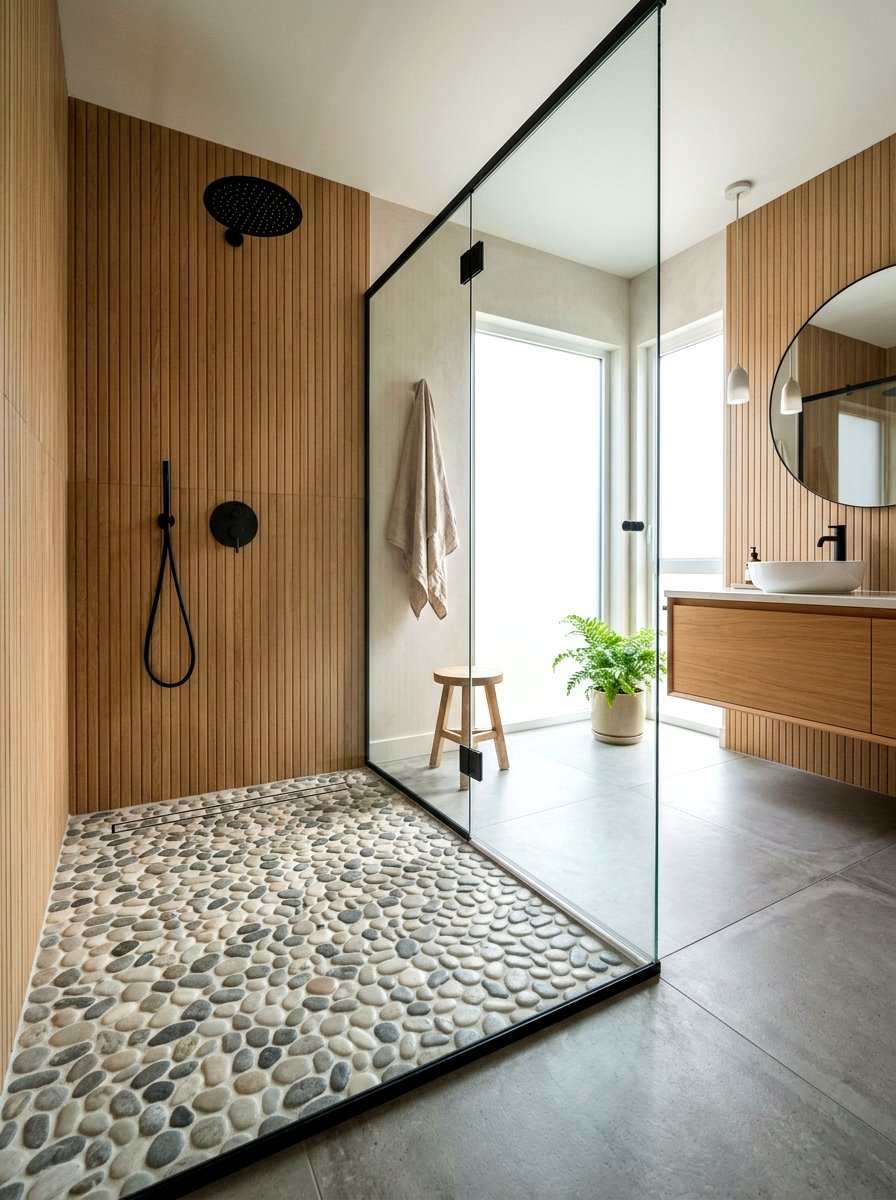
Installing a pebble tile floor in the shower area creates a grounding and massage-like sensation for your feet. These small, smooth stones bring a rugged outdoor element into your indoor space, making you feel more connected to nature. You should choose a mix of grey, tan, and white stones to match your overall neutral color palette perfectly. The uneven surface of the pebbles provides excellent natural slip resistance, which is a great safety feature for any wet zone. When paired with a wooden stool and a rainfall showerhead, it completes the feeling of a private tropical spa. It is a beautiful way to introduce organic patterns.
17. Japandi Bathroom Plaster Walls
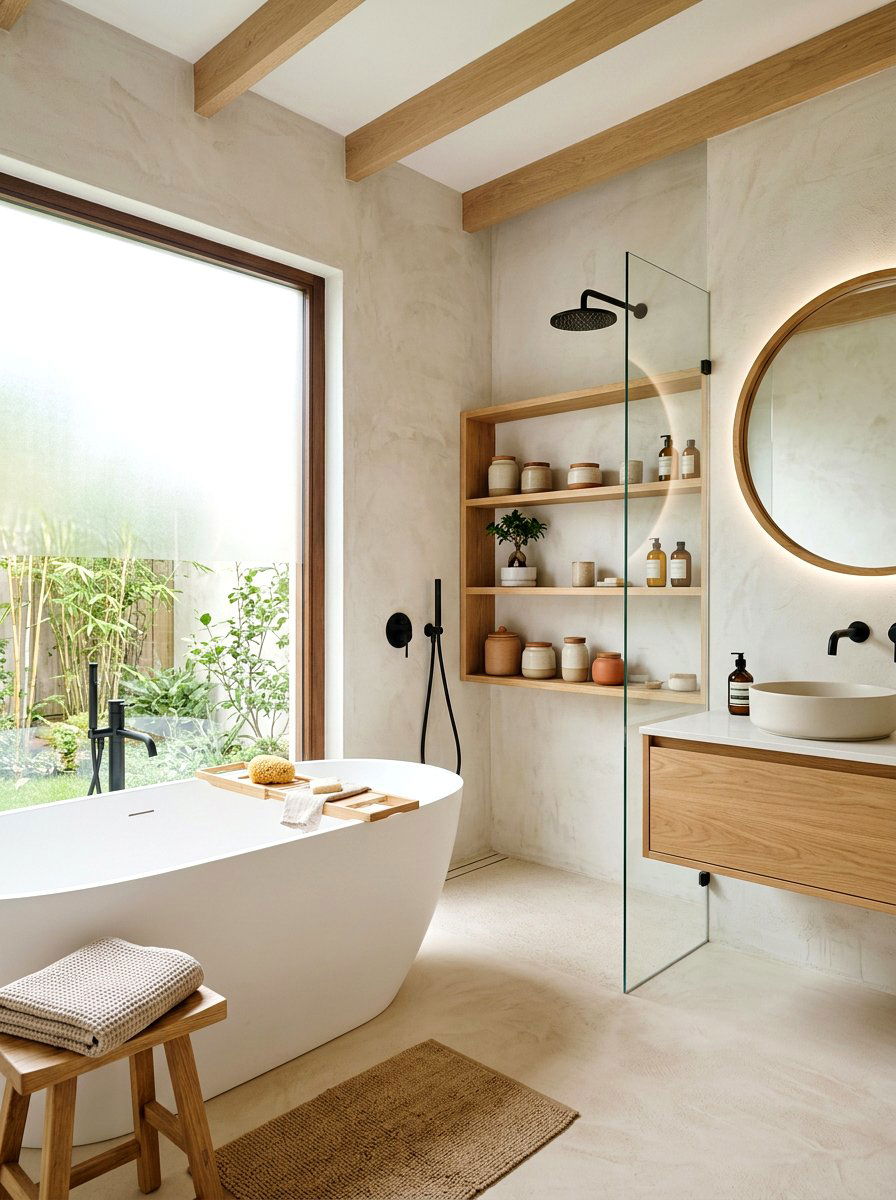
For a truly minimalist and textured look, consider using lime plaster or microcement on your bathroom walls instead of tiles. This finish creates a seamless, matte surface that has a beautiful depth and movement to it when hit by light. The soft, hand-applied texture feels very artisan and echoes the Japanese philosophy of wabi-sabi, which finds beauty in imperfection. You can choose a light sand or concrete grey shade to keep the room feeling calm and grounded at all times. This material is waterproof and very easy to maintain, making it a practical choice for a high-traffic bathroom. It offers a quiet, understated elegance that is very chic.
18. Japandi Bathroom Wall Niches
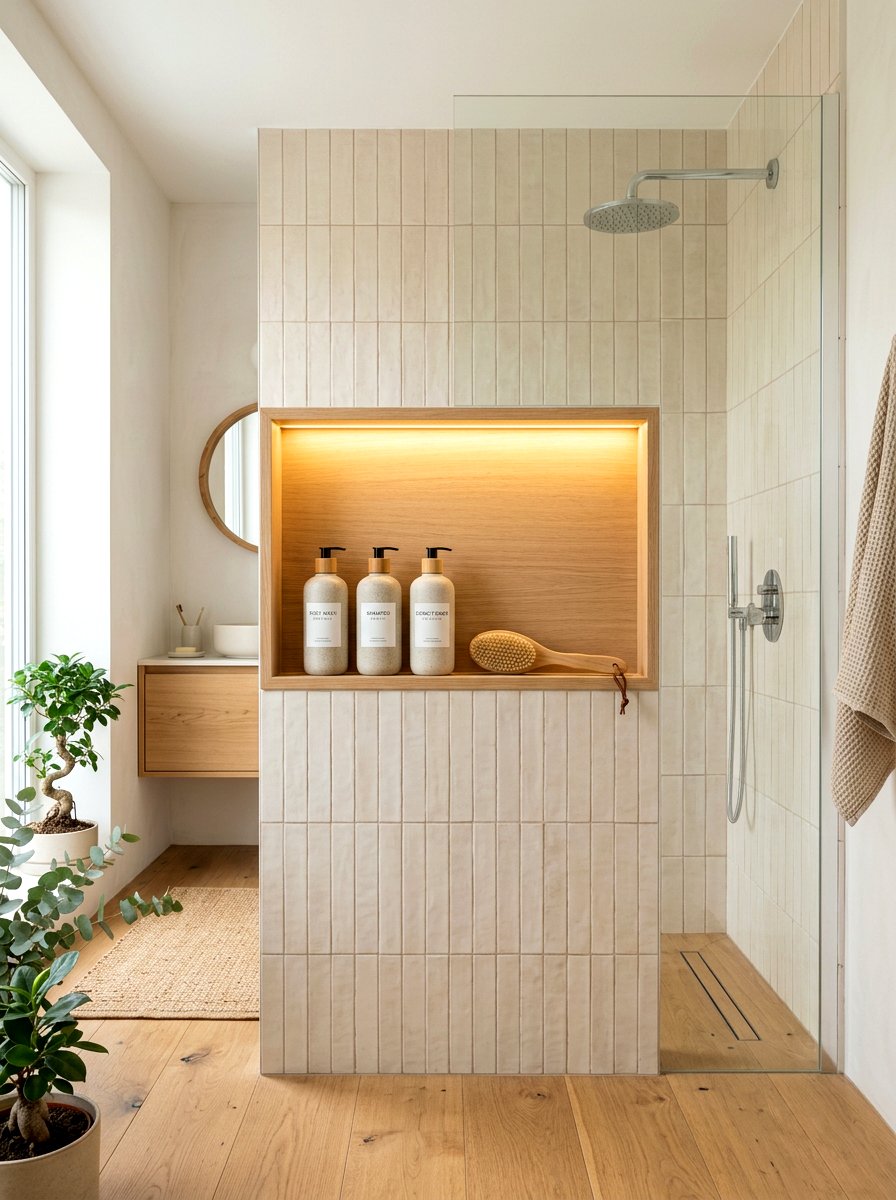
Built-in wall niches are a great way to provide storage without the need for bulky racks or plastic hanging baskets. You can carve these small alcoves directly into the shower wall or next to the bathtub for easy access. Lining the niche with the same tile or stone as the wall creates a hidden and integrated storage solution. This keeps your soap and shampoo bottles tucked away and maintains the clean, flat lines of the room. By limiting what you put in the niche to only the essentials, you can avoid visual clutter. It is a thoughtful design detail that combines both beauty and everyday functionality.
19. Japandi Bathroom Led Lighting
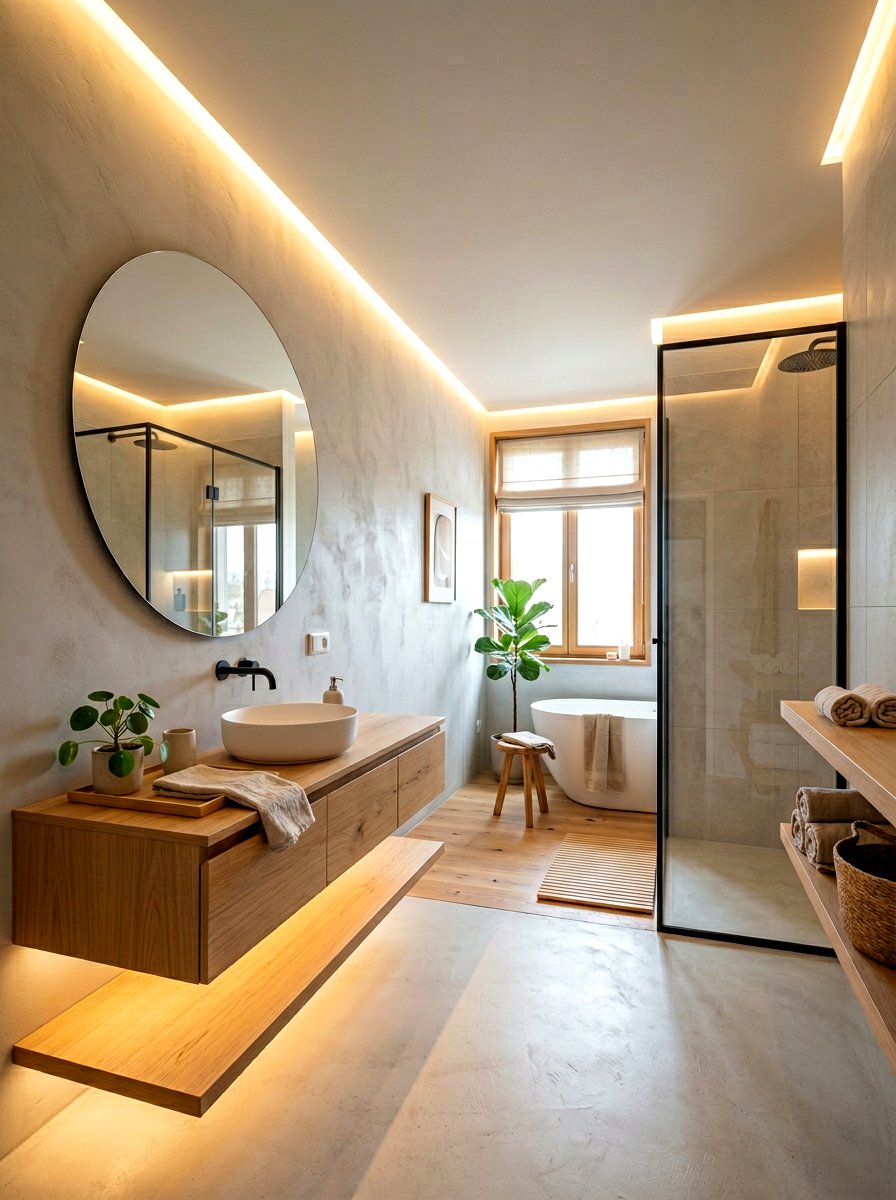
Using recessed LED strip lighting under the vanity or along the ceiling creates a warm and inviting glow throughout the room. This type of indirect light is much softer on the eyes than traditional overhead bulbs or bright spotlights. You should opt for a warm color temperature to enhance the natural tones of the wood and stone materials. Hidden lighting can also be used to highlight architectural features like a slatted wall or a stone sink. It creates a sense of luxury and calm that is perfect for a relaxing evening soak in the tub. Good lighting design is the secret to a high-end look.
20. Japandi Bathroom Linen Shower Curtain
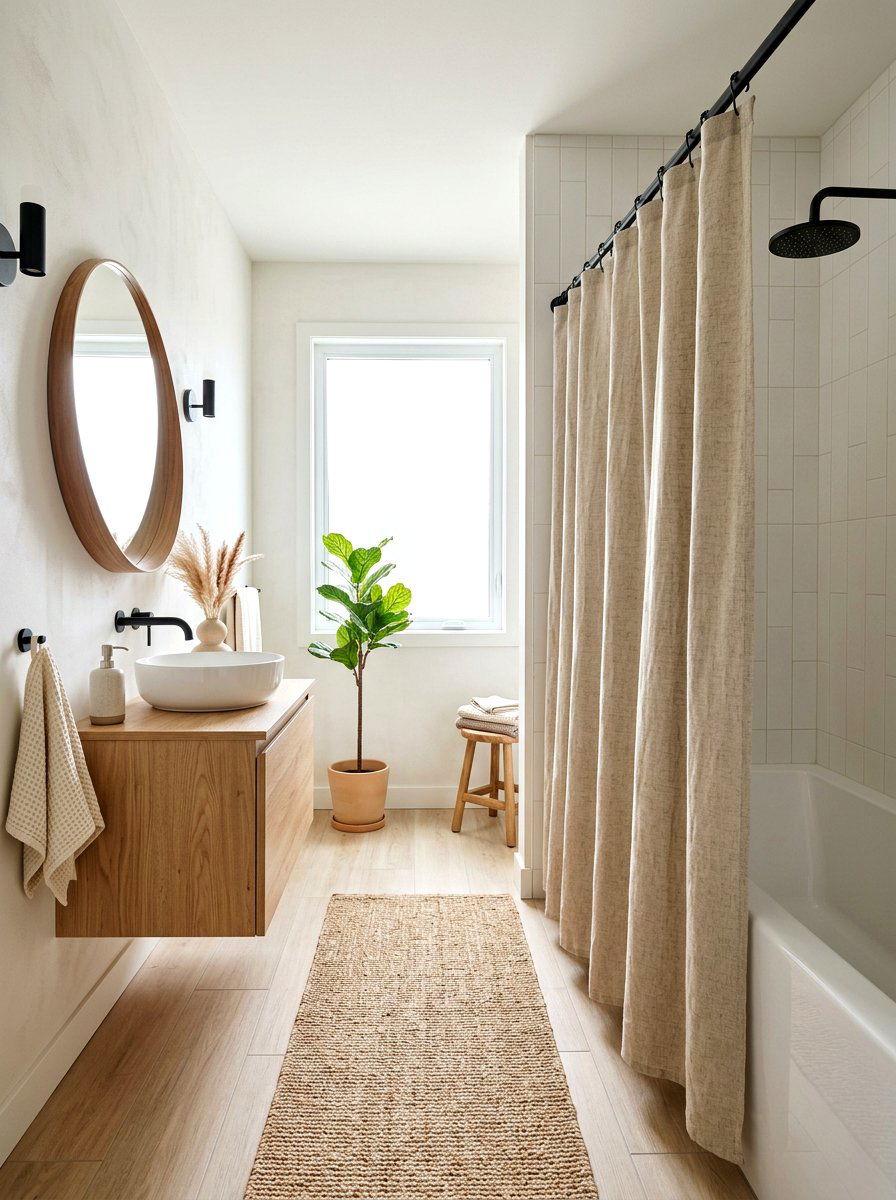
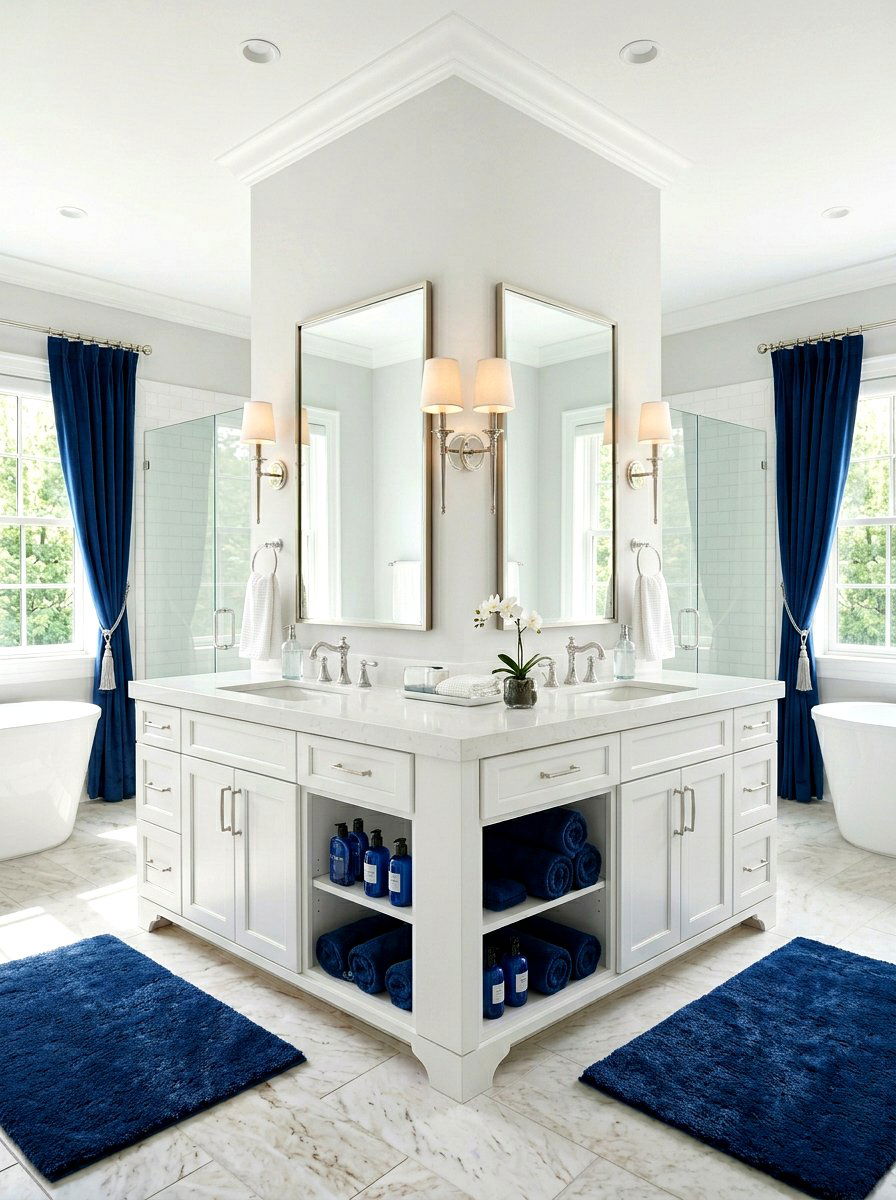
If you prefer a shower curtain over glass, choosing one made from heavy, natural linen is the best option for Japandi. The raw and slightly wrinkled texture of linen adds a soft, Scandinavian touch that feels very cozy and lived-in. You should stick to neutral colors like oatmeal, cream, or light charcoal to keep the visual palette very consistent. Linen is a breathable fabric that dries quickly and adds a layer of tactile warmth to a room filled with hard surfaces. Hanging it from a simple matte black rod keeps the look modern and grounded. It is an easy way to soften the overall aesthetic.
21. Japandi Bathroom Freestanding Oval Tub
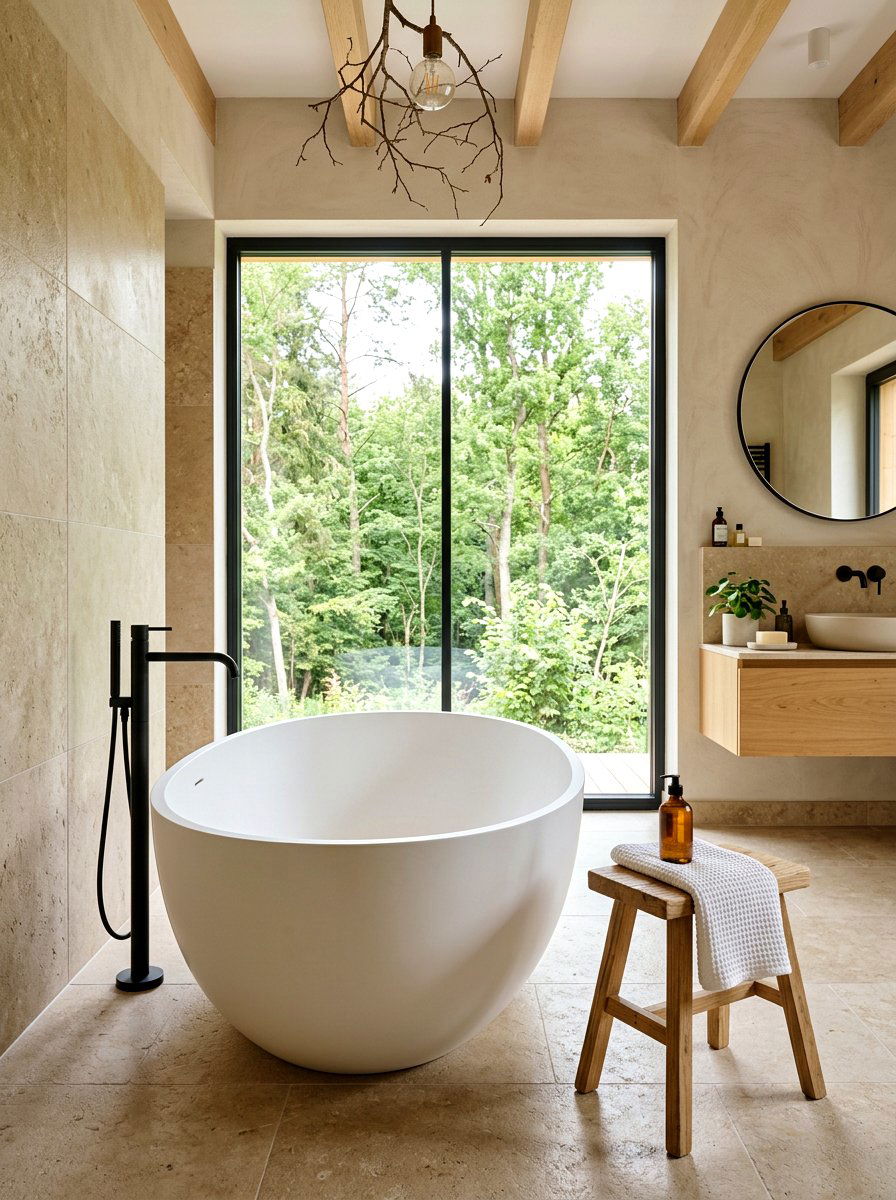
A freestanding white oval bathtub serves as a stunning sculptural focal point in a larger minimalist bathroom. The soft, curved lines of the tub provide a welcome contrast to the straight edges of the vanity and floor tiles. You should place the tub in the center of the room or under a window to give it plenty of breathing space. This layout emphasizes the idea of the bathroom as a place for rest rather than just a quick routine. Pair it with a floor-mounted faucet in a matte black or brushed gold finish for a high-end, luxurious appearance. It is a timeless piece that defines the modern spa experience.
22. Japandi Bathroom Terrazzo Floor
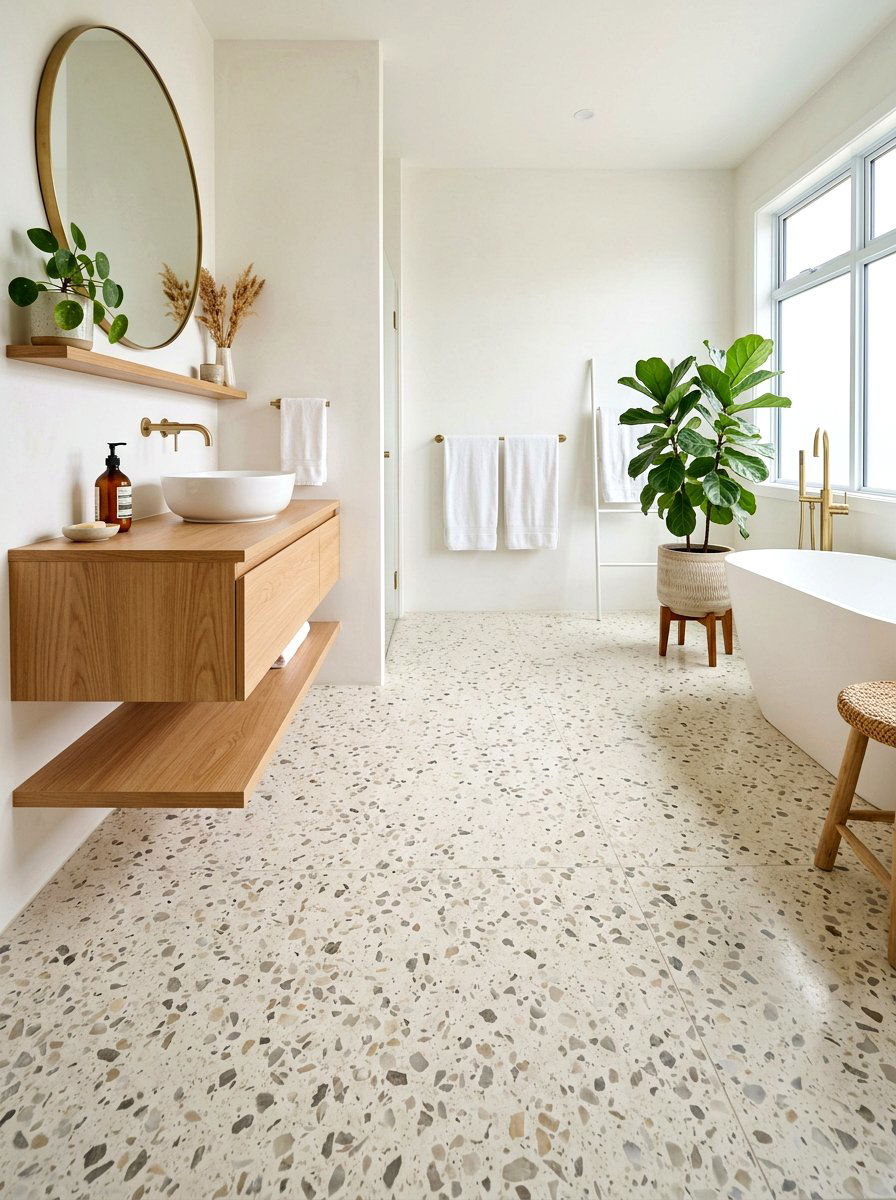
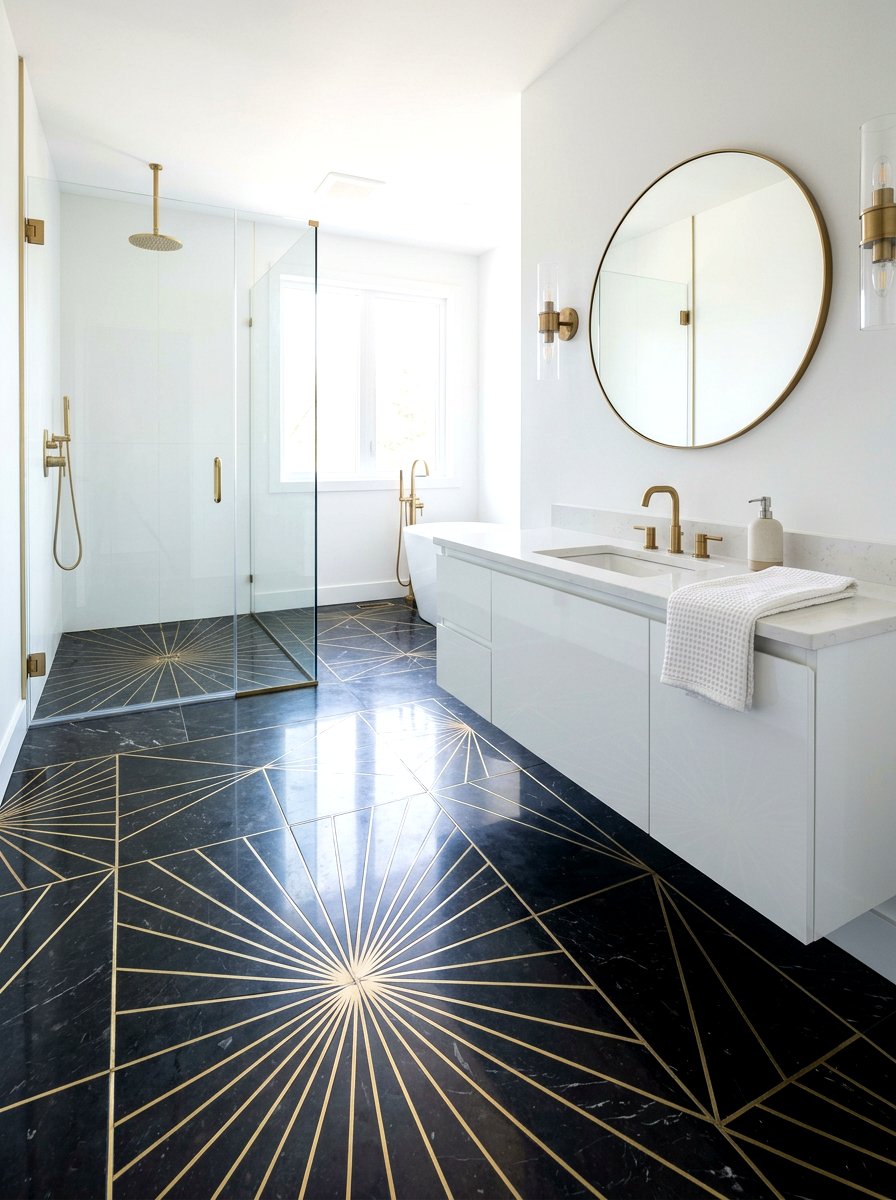
Terrazzo flooring is a great way to add a subtle and sophisticated pattern without overwhelming the neutral design of the room. This material features small chips of marble, quartz, and glass set in cement, creating a unique and speckled look. You should choose a terrazzo with a light base color and earthy-toned chips to stay within the Japandi style. It provides a durable and easy-to-clean surface that feels very modern and high-quality for any home. The varied texture of the floor adds visual interest that complements plain white walls or wooden furniture perfectly. It is a stylish choice that brings a touch of personality to your space.
23. Japandi Bathroom Subway Tile
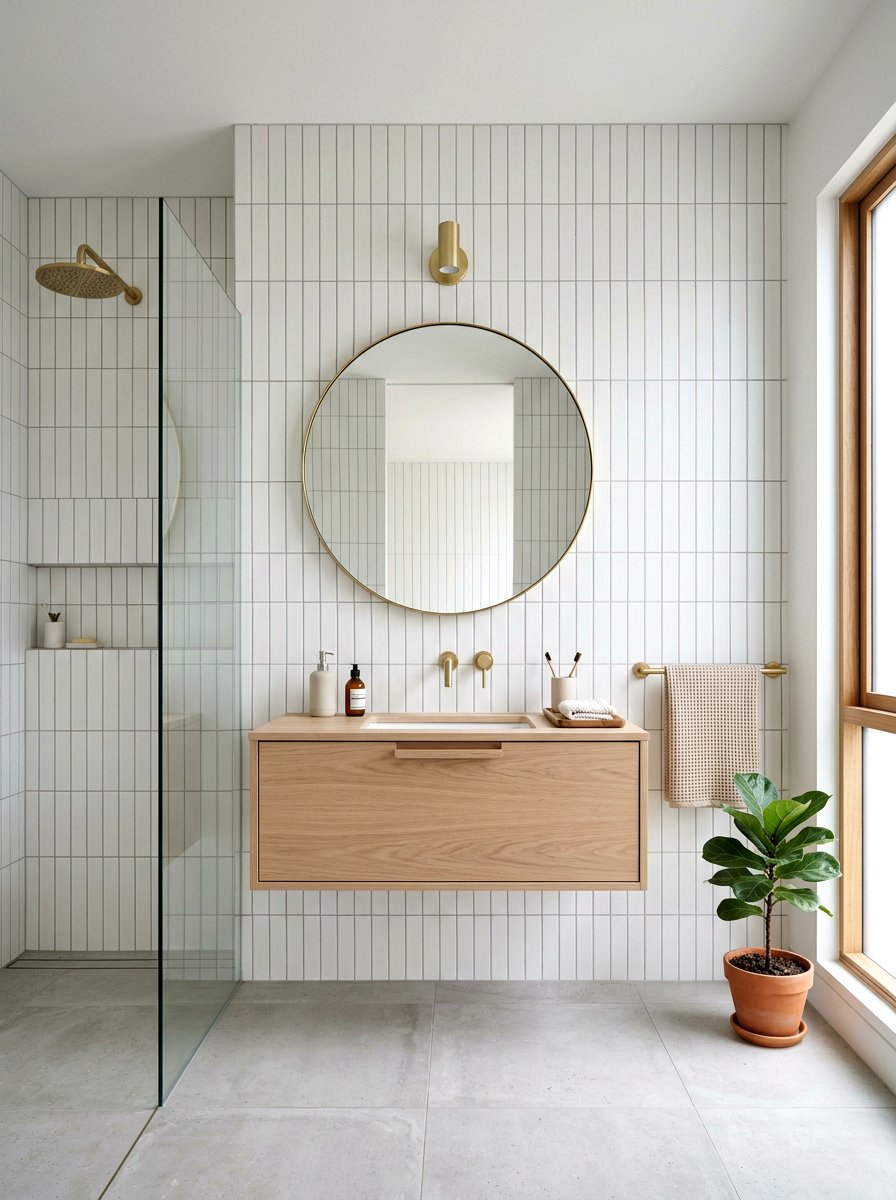
For a clean and classic look, you can use vertical stacked subway tiles on the walls of your shower or vanity area. Instead of the traditional staggered pattern, stacking them vertically creates a modern feel that makes the ceiling appear much higher. You should choose tiles with a matte or handmade finish to avoid a look that is too shiny or plastic. Using a matching grout color keeps the surface looking seamless and calm for the eyes to rest on. This simple geometric pattern provides a structured backdrop that balances the more organic shapes of wooden stools or stone basins. It is a versatile and affordable design.
24. Japandi Bathroom Ceiling Beams
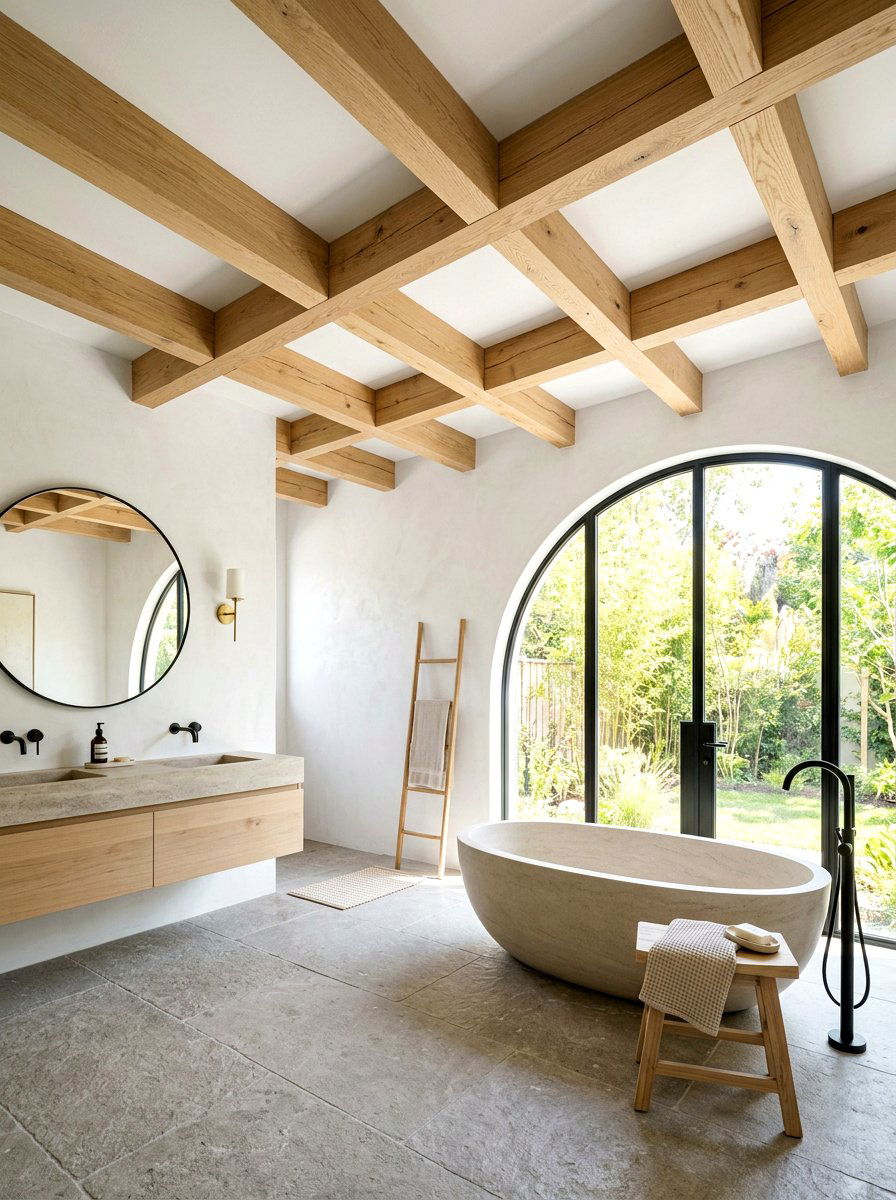
Exposing or adding wooden beams to the ceiling brings a sense of history and architectural warmth to a modern bathroom. Light-toned wood beams echo the Scandinavian influence of the home and provide a beautiful contrast to a plain white ceiling. This feature adds a layer of coziness that makes a large bathroom feel more intimate and grounded. It also draws the eyes upward, making the entire space feel more grand and thoughtfully designed by the owner. You should ensure the wood is treated to withstand moisture so it stays beautiful for many years. It is a rustic touch that feels incredibly sophisticated in a minimalist setting.
25. Japandi Bathroom Wooden Stool
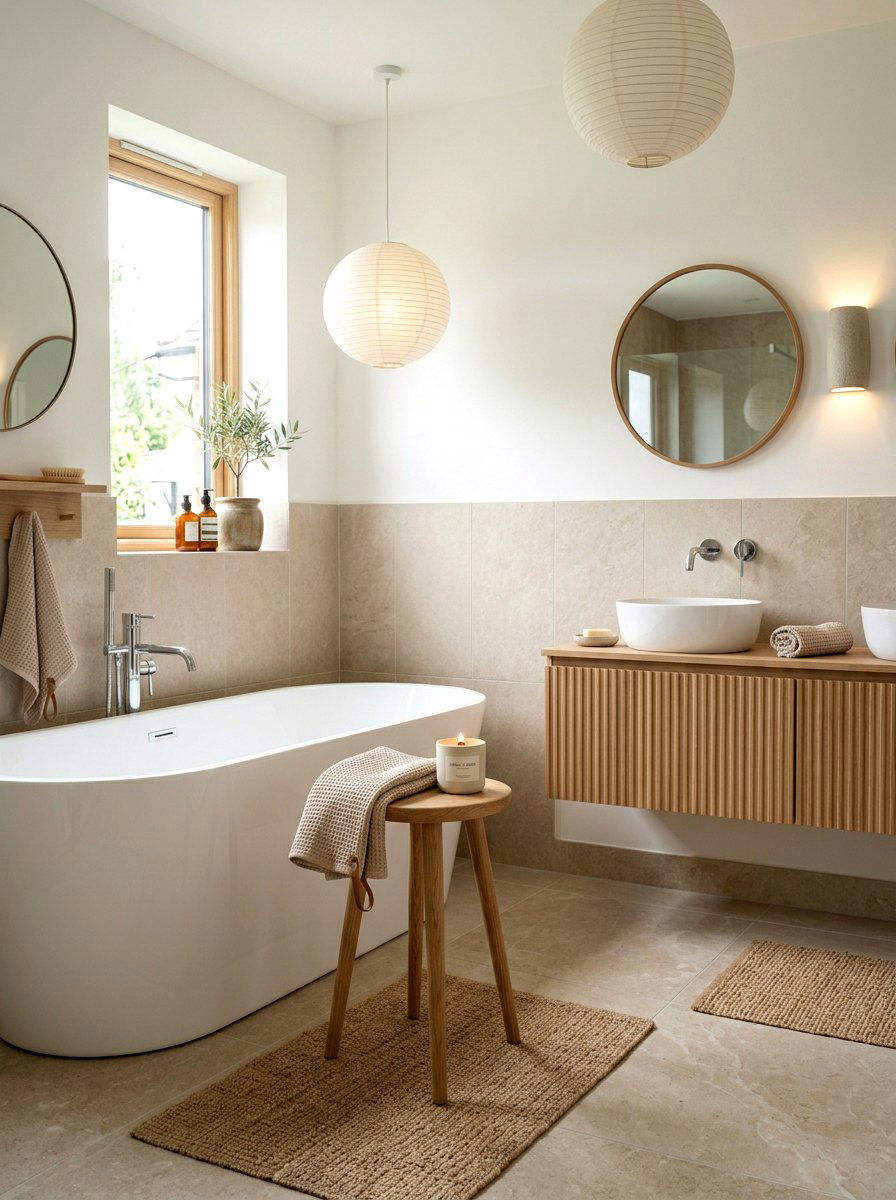
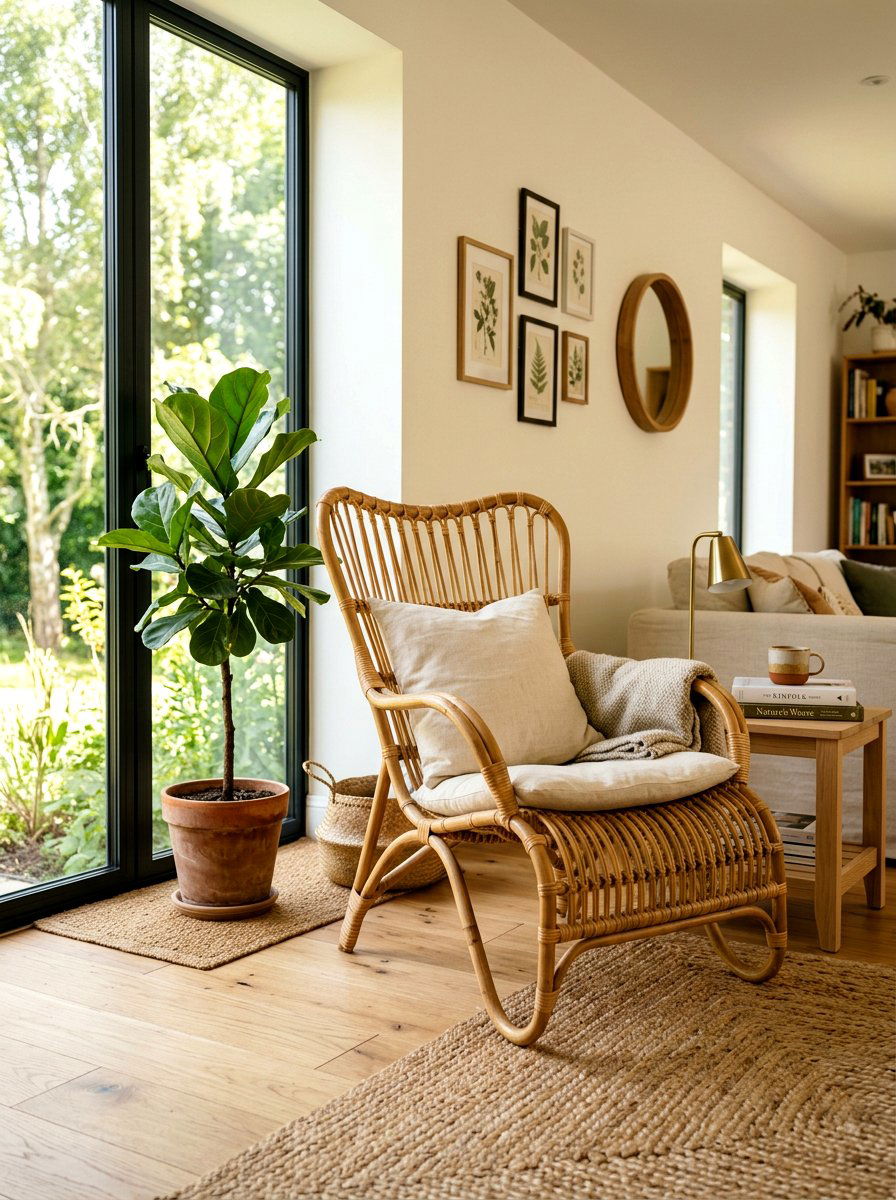
A simple tripod or four-legged wooden stool is a classic accessory that provides both style and a handy place to sit. You can use it next to the bathtub to hold your towel, a book, or a cup of warm tea while you soak. The natural wood grain adds a warm and tactile element that balances out the cold stone or tile surfaces. Choosing a stool with a clean and functional design reflects the Japanese love for craftsmanship and simple utility. It is a small and portable piece of furniture that can easily be moved around as needed. This accessory is a perfect example of functional minimalist beauty.
26. Japandi Bathroom Towel Ladder Rack
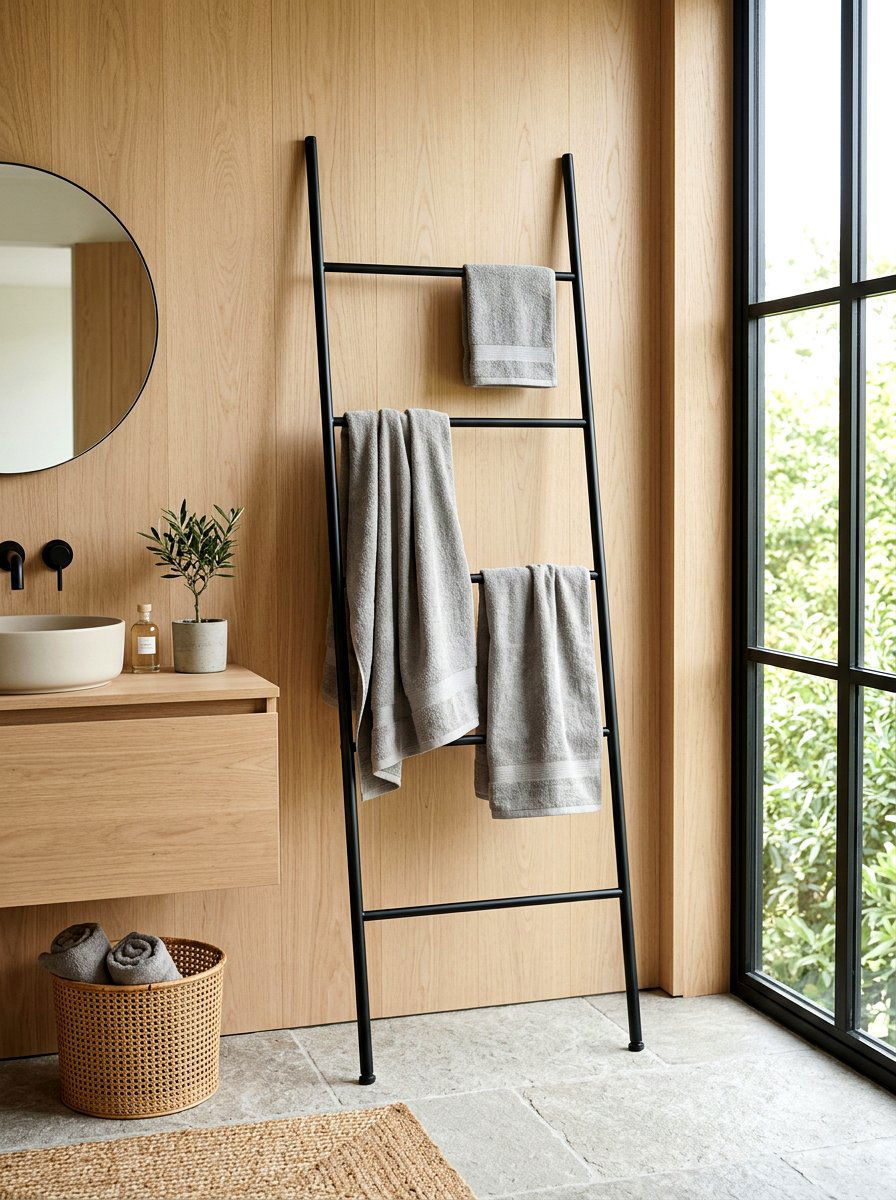
A lean-to towel ladder made from light wood or black metal is a stylish alternative to traditional wall-mounted bars. It provides a casual and relaxed way to display your high-quality waffle or linen towels in the room. The vertical lines of the ladder save horizontal wall space and add an interesting architectural element to a blank wall. You should place it near the shower or bathtub for easy access whenever you are finished with your bath. This open storage solution keeps the room feeling airy and prevents towels from looking cluttered or damp. It is a practical piece that fits perfectly with the Scandi-Japanese fusion.
27. Japandi Bathroom Pendant Light
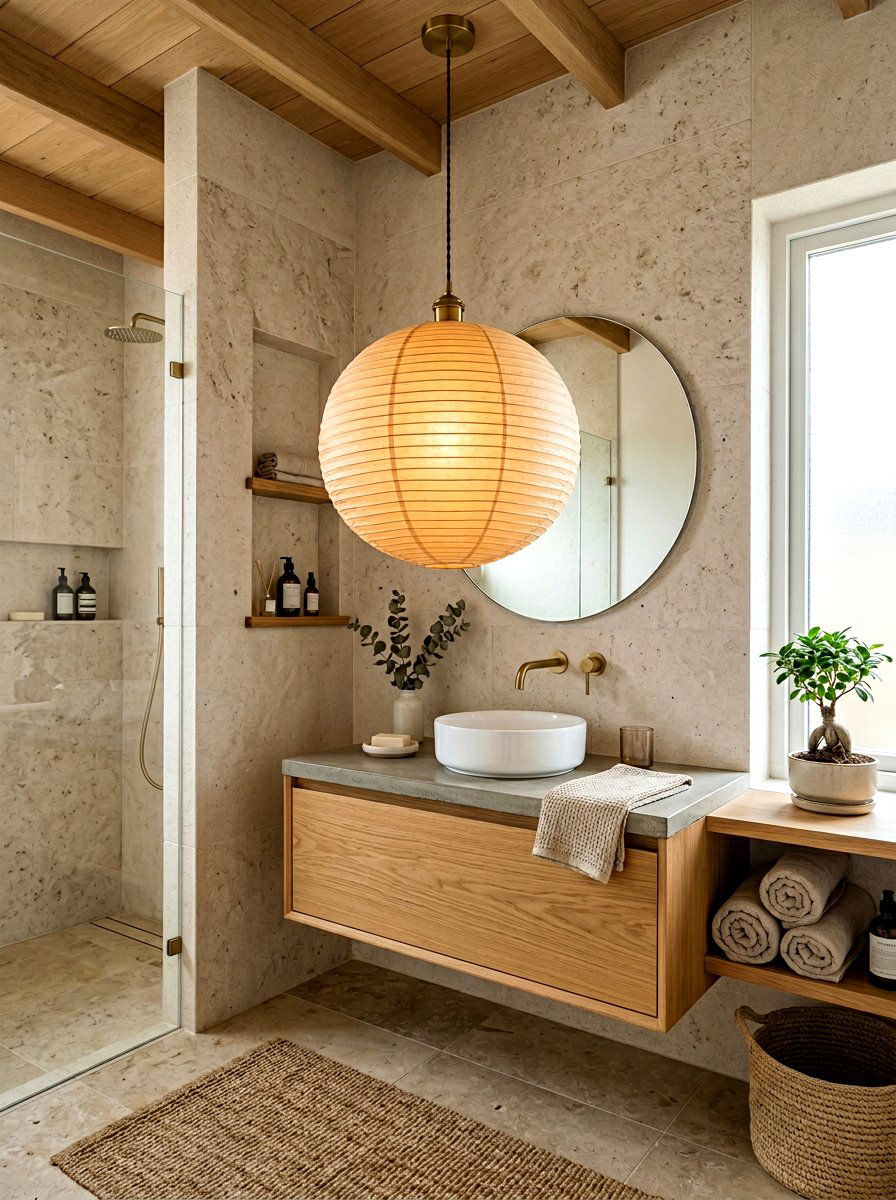
Hanging a single pendant light with a paper or woven shade adds a soft and artistic touch to the room. Position it over the vanity or in a corner to create a warm pool of light that feels very cozy. The natural materials of the shade, like rice paper or rattan, diffuse the light beautifully and cast gentle shadows on the walls. This type of fixture feels more like a piece of furniture than a utility light, which is key for a spa vibe. Choosing a simple and organic shape ensures that the light fixture does not compete with other design elements. It is a great way to add character.
28. Japandi Bathroom Hidden Storage
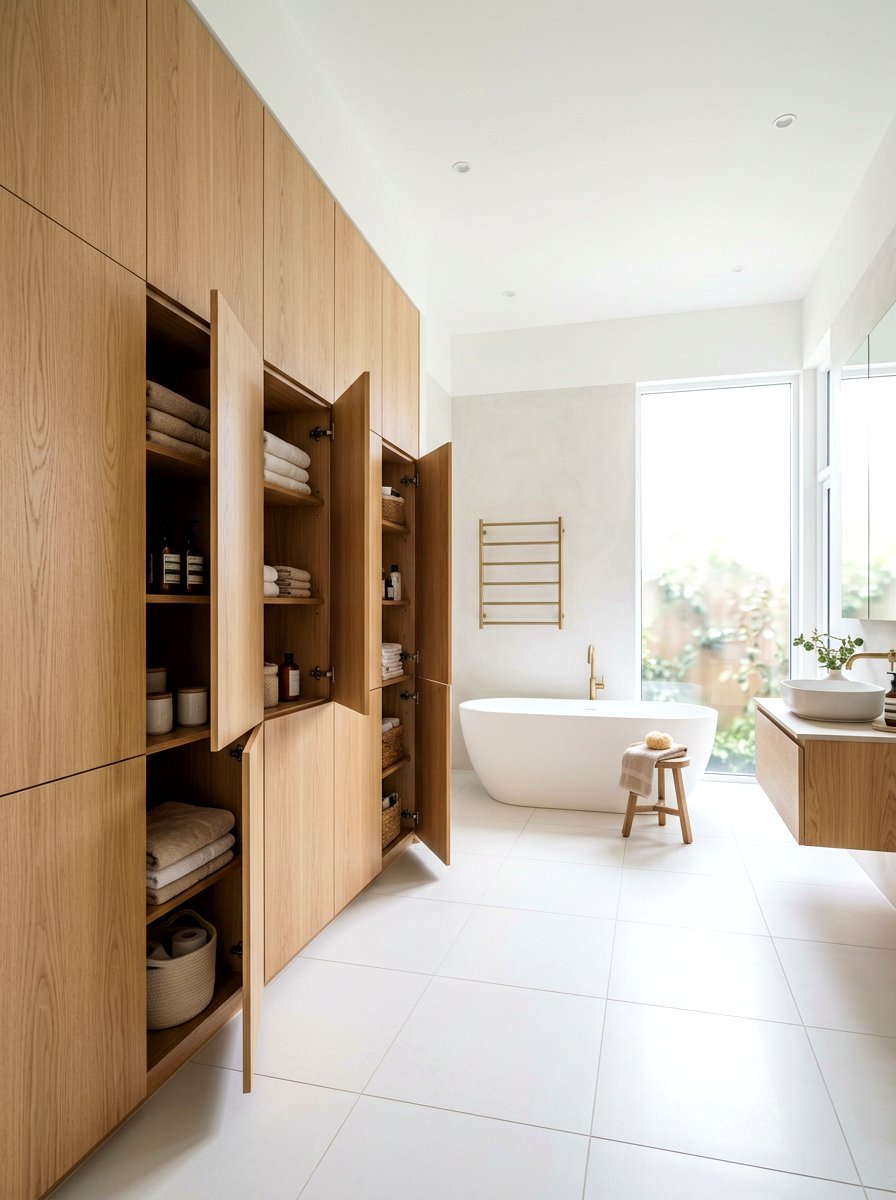
To maintain a truly minimalist and clutter-free look, you should invest in concealed storage solutions for your everyday items. This can include handle-less cabinets that blend into the walls or drawers hidden behind the main vanity panels. When you hide away your toothbrushes, lotions, and cleaning supplies, the bathroom feels much more peaceful and organized for the mind. Recessed medicine cabinets with mirror fronts are also a great way to save space while keeping things within reach. This focus on hidden functionality is a core part of the Japandi philosophy where everything has a place. It allows the beauty of the materials to stand out.
29. Japandi Bathroom Ceramic Jars
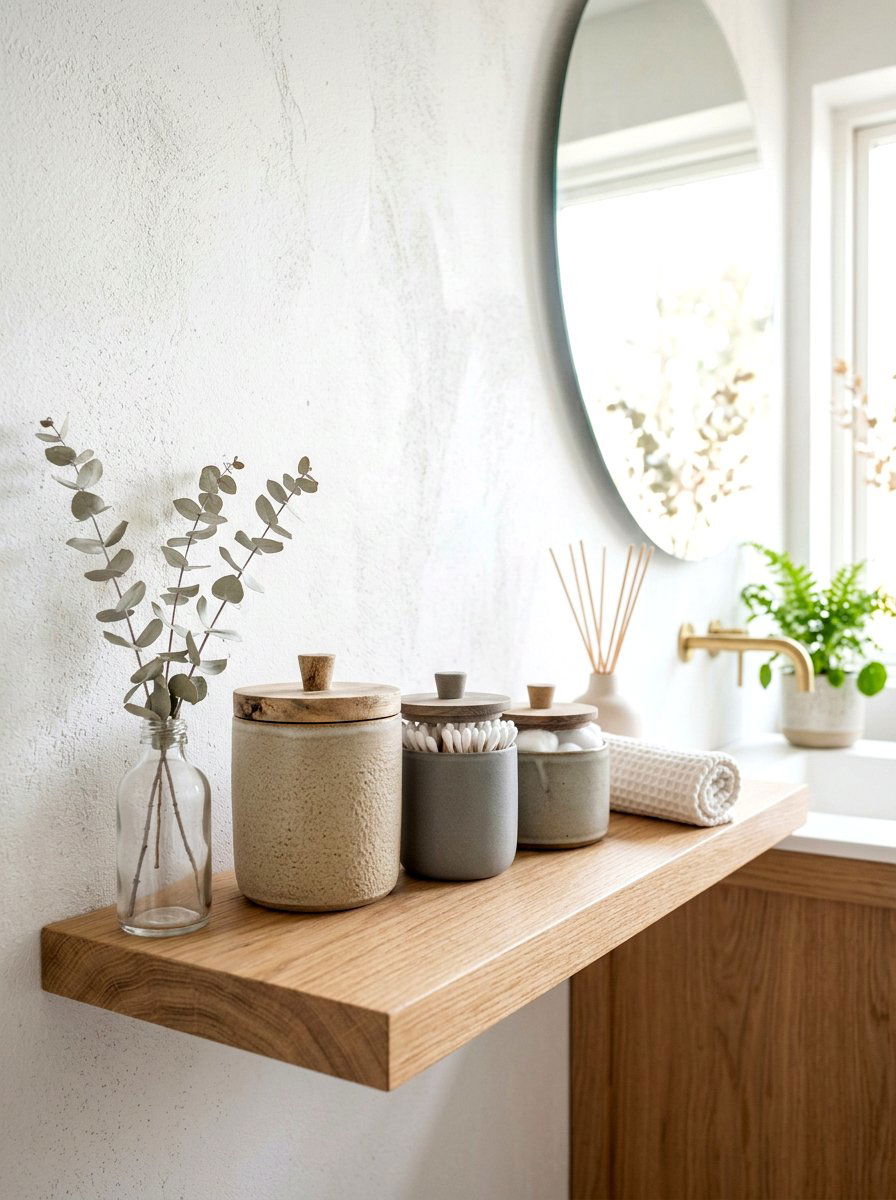
Styling your shelves with a few handcrafted ceramic jars in earthy tones adds a refined and artisanal feel to the space. You can use these jars to hold cotton balls, bath salts, or small jewelry items while you wash your face. The matte and slightly textured finish of the pottery provides a tactile quality that is very pleasing to the touch. You should keep the number of decorative items low to avoid cluttering the surfaces of your bathroom. Choosing pieces with organic and slightly irregular shapes celebrates the beauty of handmade items and natural materials. It is a subtle way to add soul and personality.
30. Japandi Bathroom Frosted Window
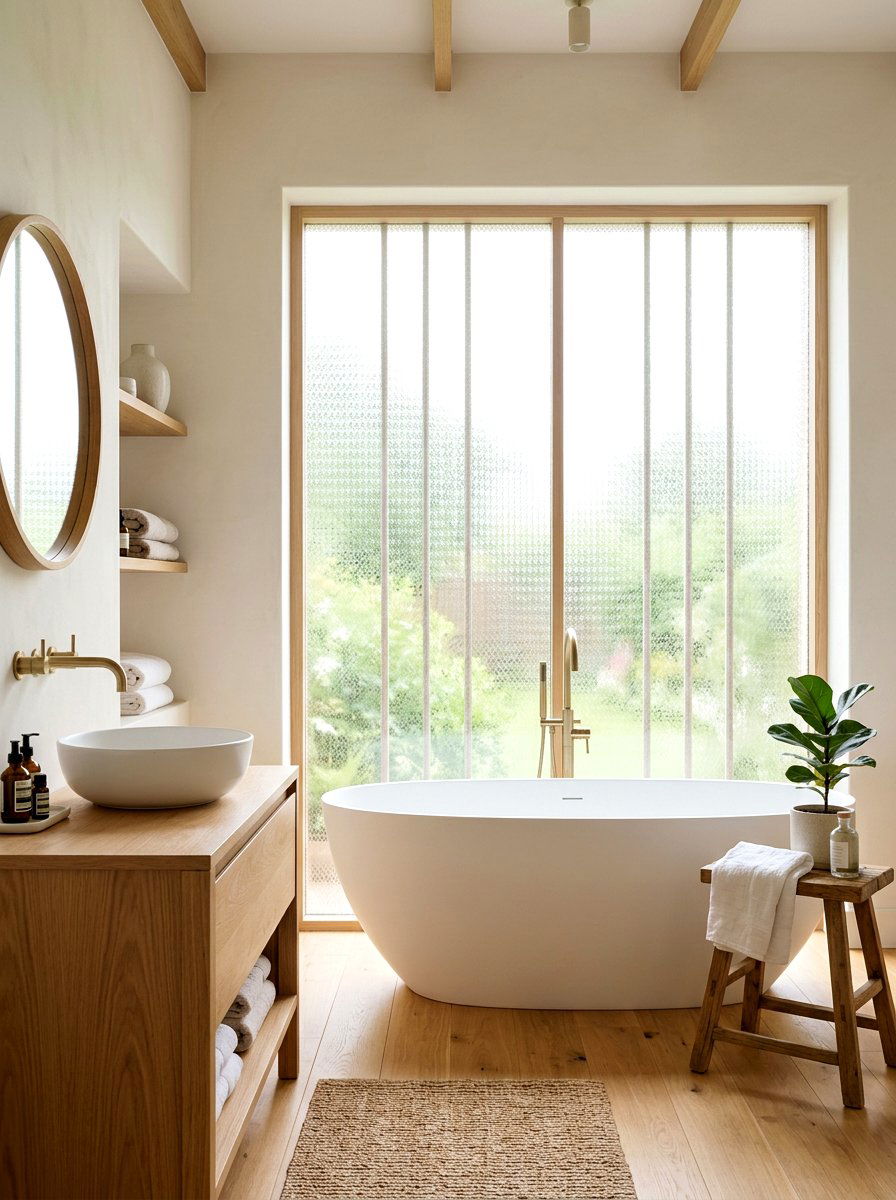
A large window with frosted or fluted glass allows plenty of natural light to enter while protecting your privacy from the outside. Natural light is essential for a Japandi space as it makes the colors look true and the room feel more alive. You can skip heavy curtains or blinds and let the glass itself be the beautiful and functional design feature. If you have a private view, leaving a small section of clear glass at the top can connect you with the sky and trees. This connection to the outdoors is vital for creating a biophilic and healing environment in your home. It completes the serene bathroom look.
Conclusion:
Designing a Japandi bathroom is all about finding the perfect harmony between simplicity, warmth, and high-quality functionality. By focusing on natural materials like light wood and raw stone, you create a space that feels deeply connected to the earth. The neutral color palette and minimalist layout allow your mind to rest and recover after a long and stressful day. Every element you choose should serve a clear purpose while contributing to the overall sense of peace and quiet in the room. We hope these thirty ideas inspire you to create a beautiful sanctuary that you will enjoy for many years to come. Your home deserves a space this calm.

Related posts: