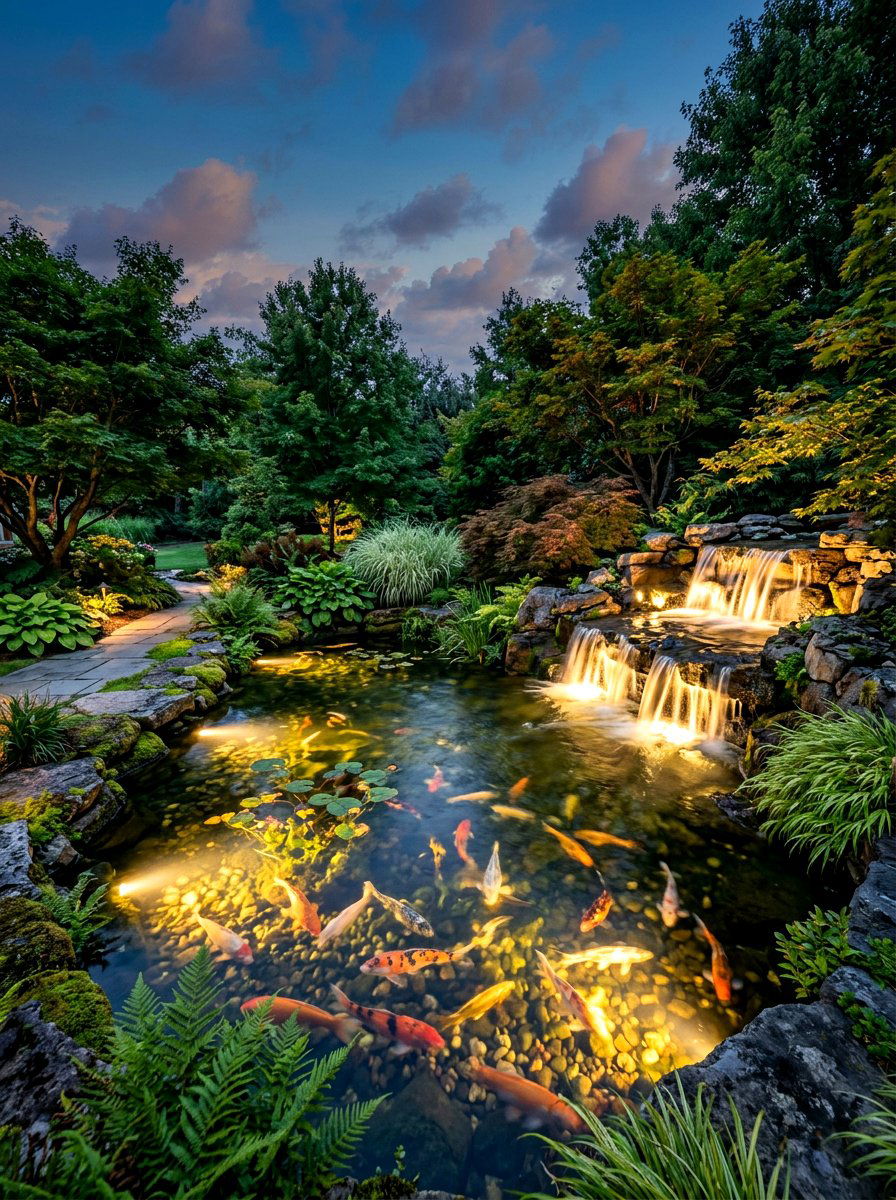
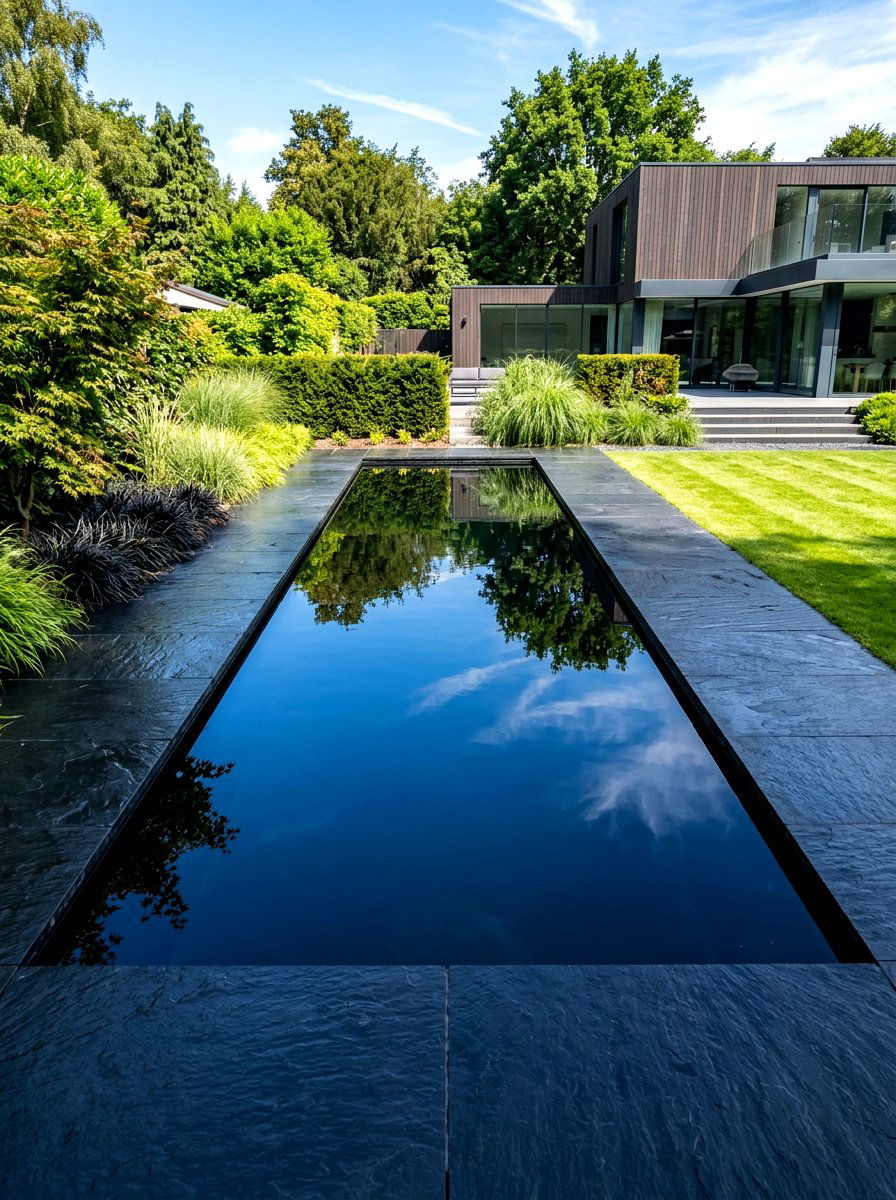
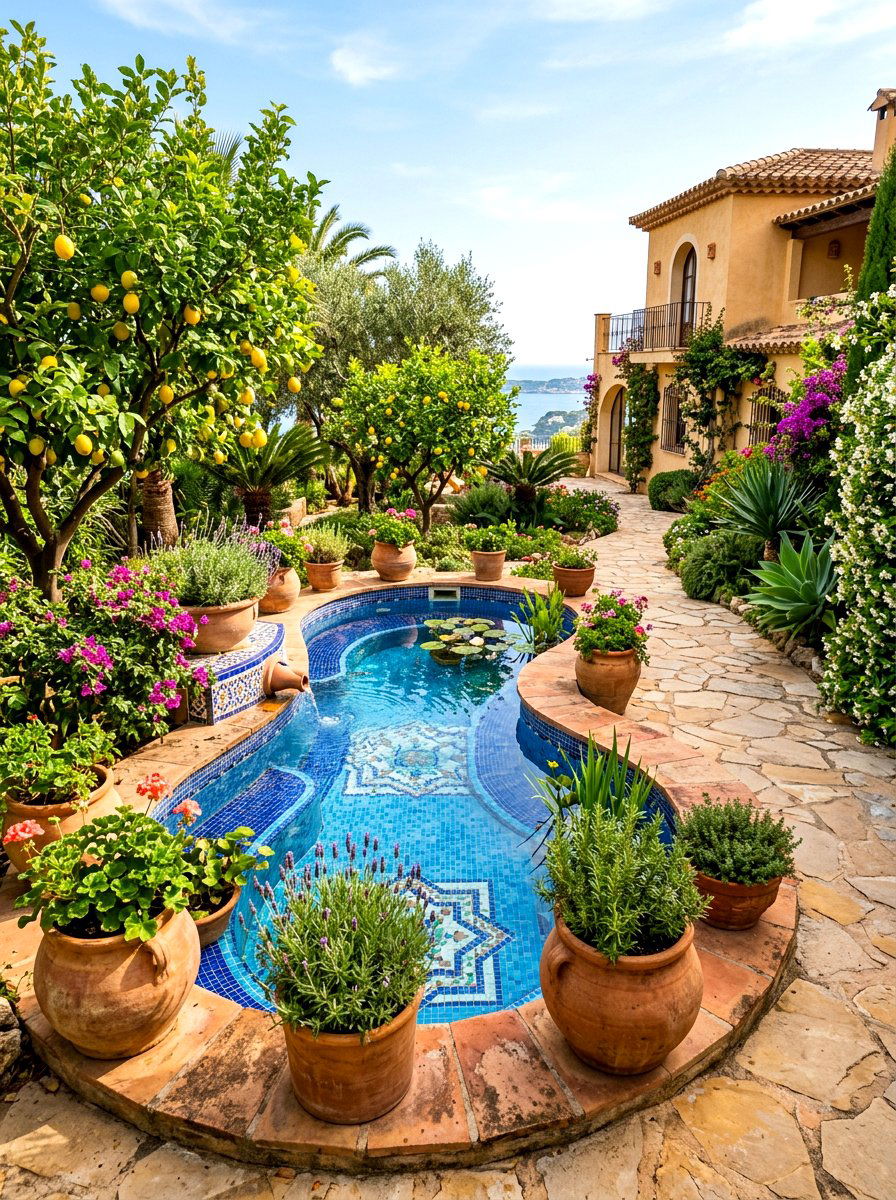
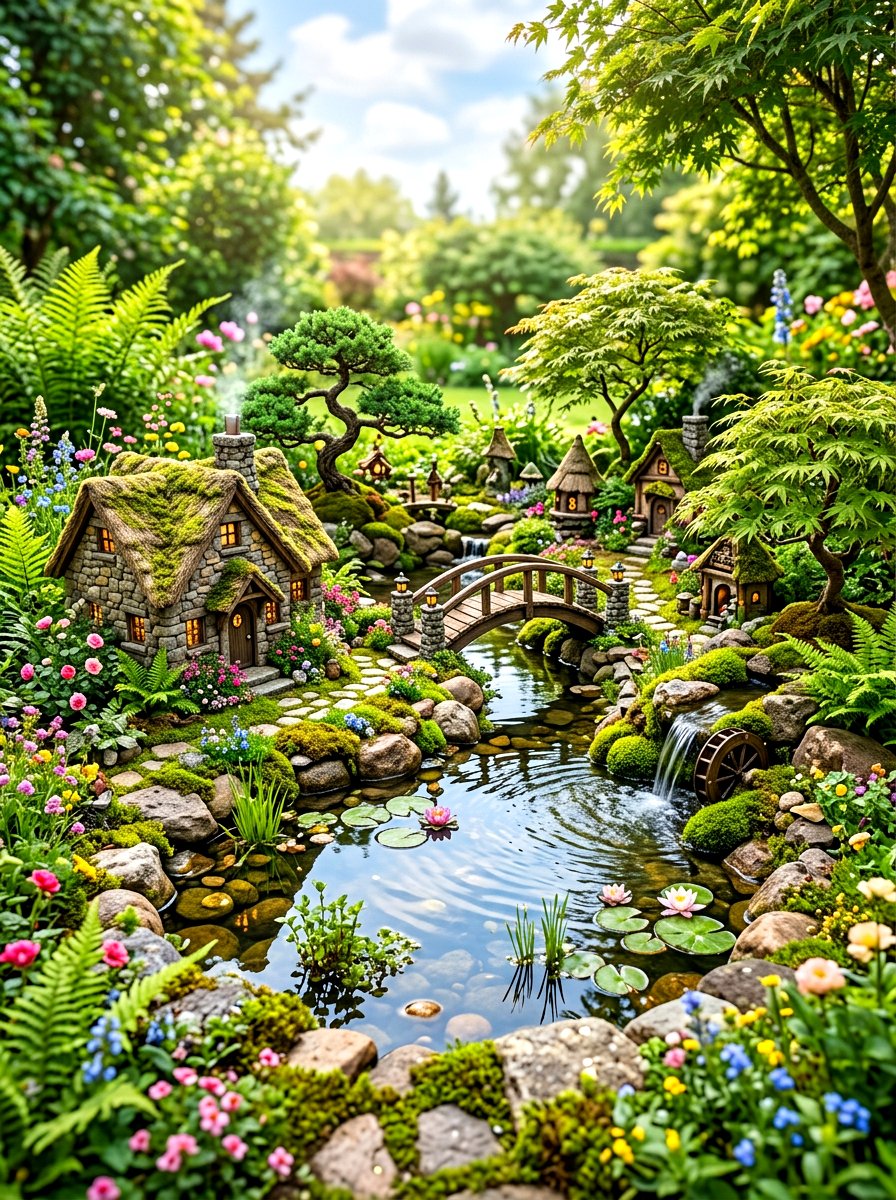
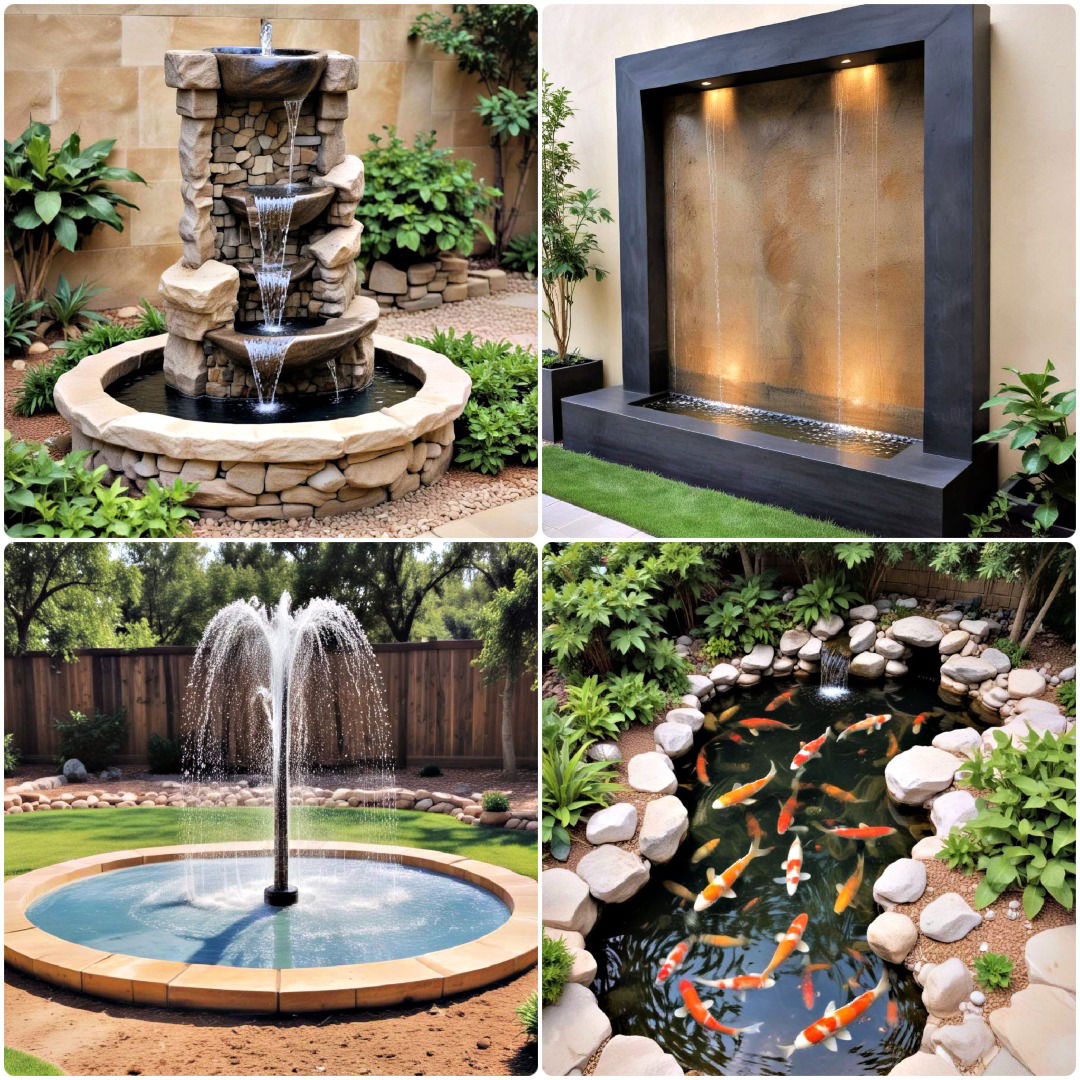
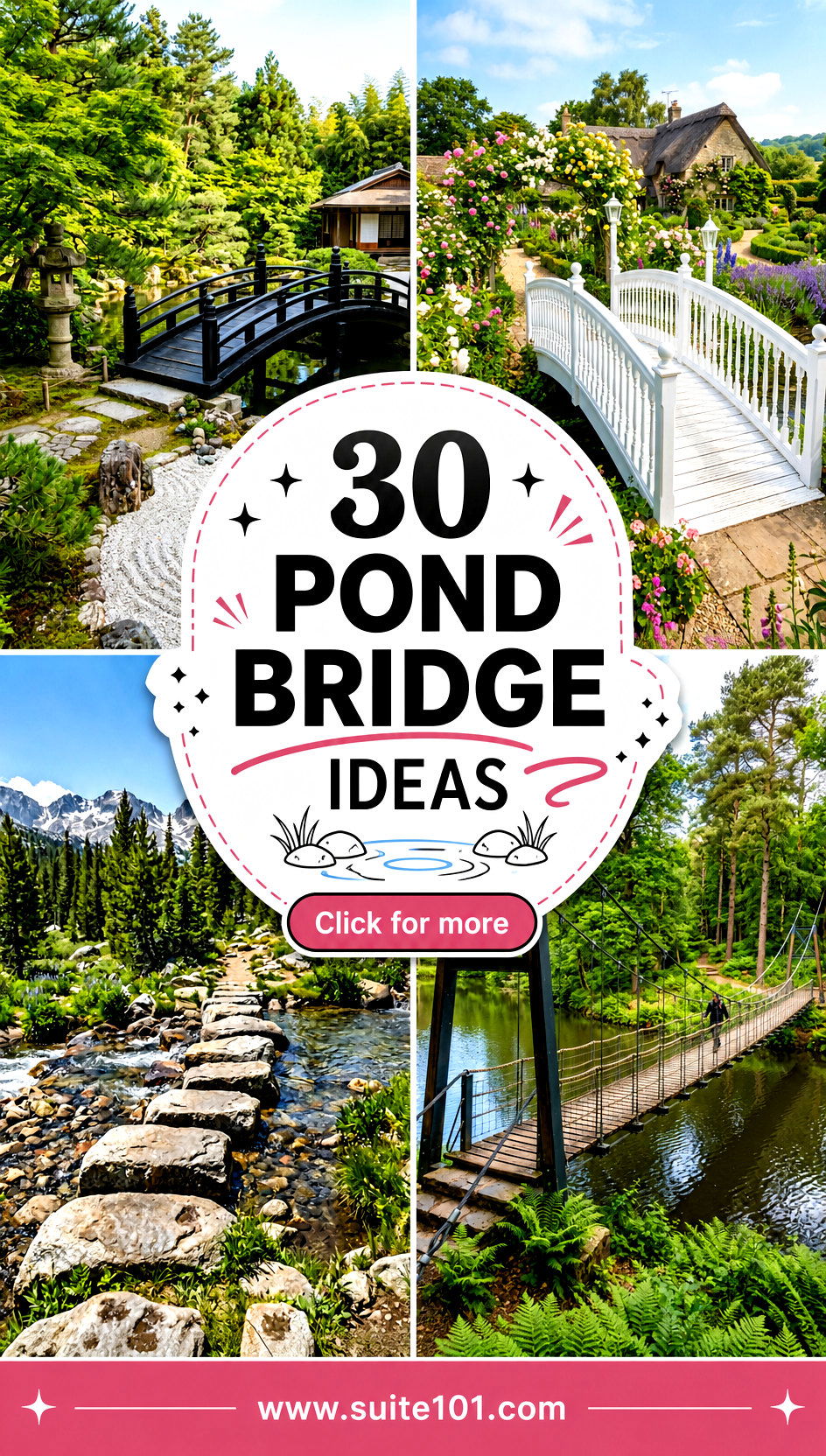
Creating a serene backyard oasis often starts with a beautiful water feature, but adding a bridge truly elevates the entire landscape. Pond bridges serve as both functional pathways and stunning focal points that draw the eye across the water. Whether you have a small koi pond or a sprawling natural water garden, the right bridge adds a sense of adventure and tranquility. This guide explores thirty unique ways to cross your water feature with style and elegance. From rustic wooden arches to sleek modern stone slabs, these concepts help you connect different parts of your garden seamlessly. Let's dive into these inspiring ways to enhance your outdoor living space with beautiful pond bridges. These designs offer perfect inspiration for any home.
1. Arched Wooden Footbridge
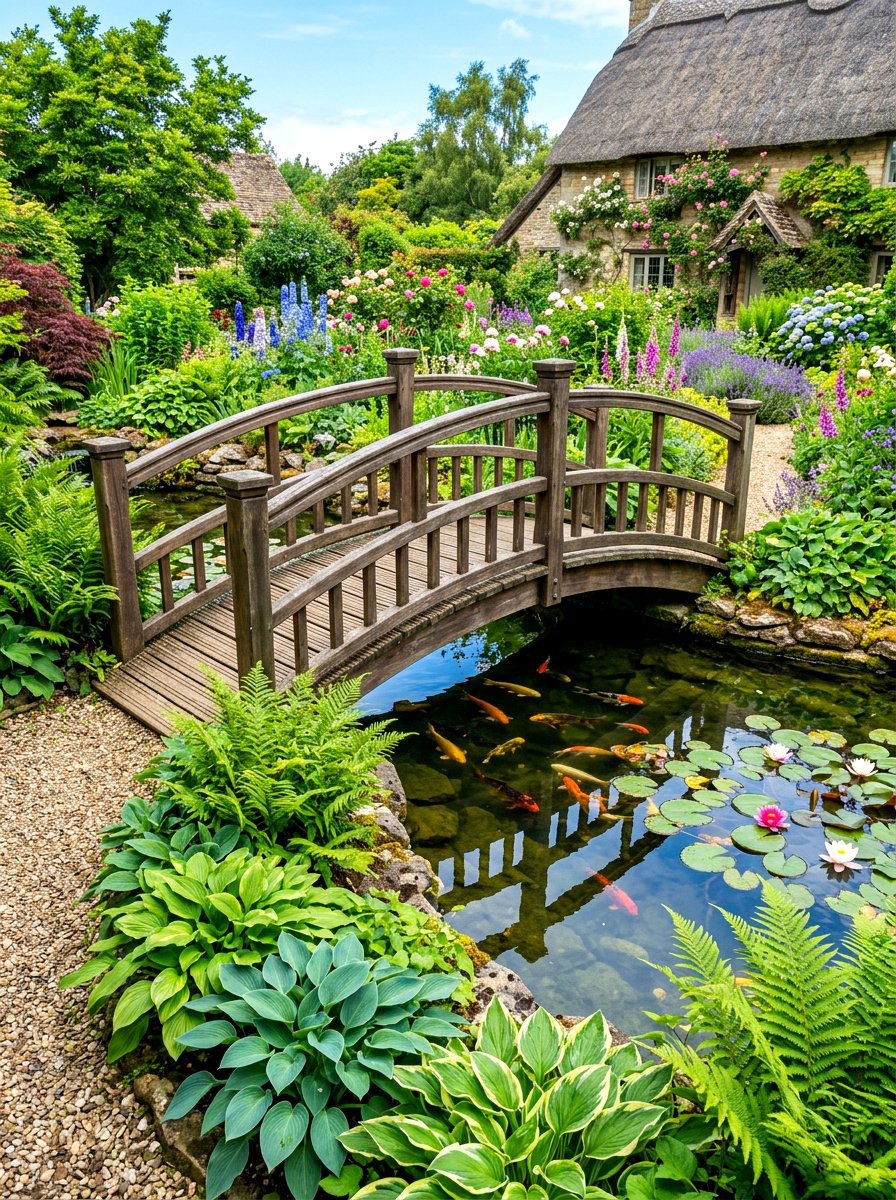
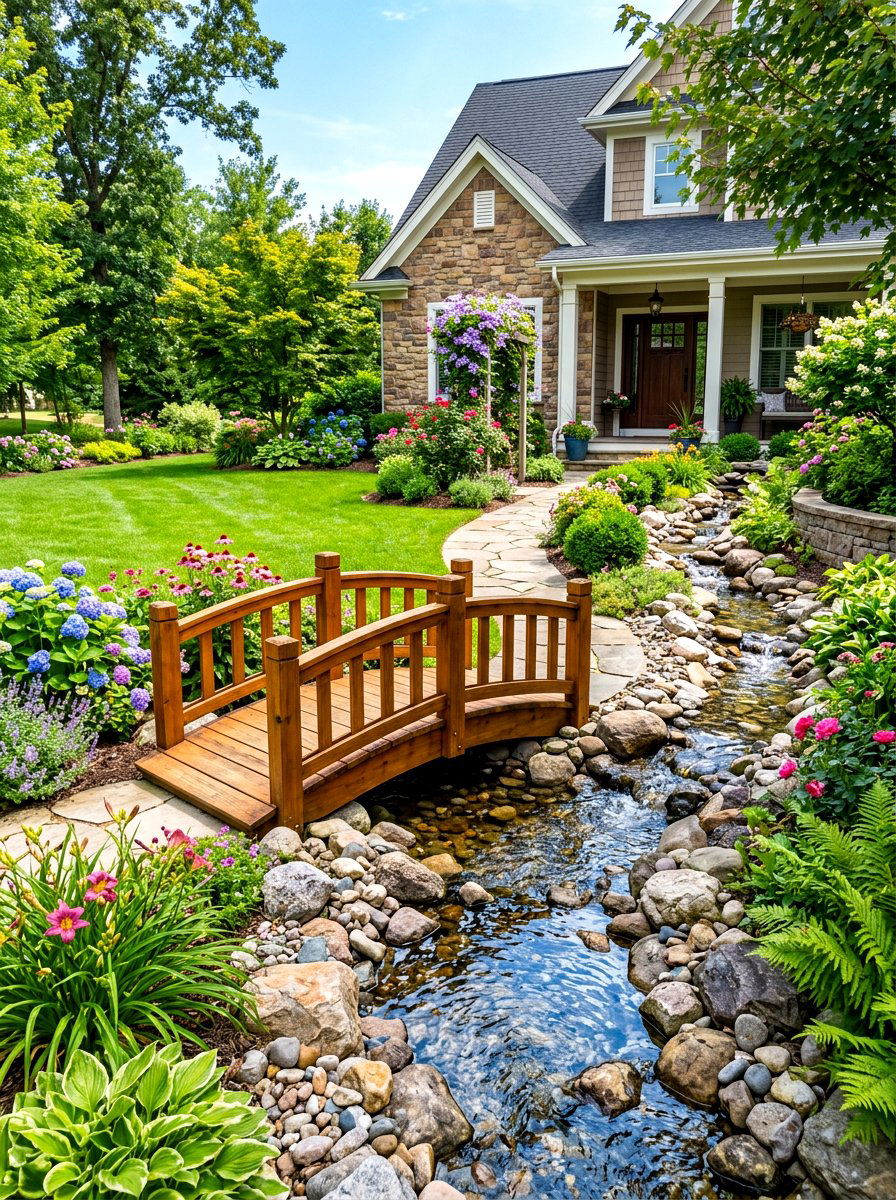
An arched wooden footbridge remains a classic choice for many traditional gardens because of its timeless aesthetic. The gentle curve provides a sense of height and perspective that flat bridges often lack. Using cedar or redwood ensures the structure withstands moisture while developing a beautiful natural patina over time. You can leave the wood natural for a rustic look or stain it to match your existing deck or fence. Adding simple handrails makes the crossing safer for guests and children. This design works exceptionally well in lush, green environments filled with ferns and hostas. It creates a picturesque focal point that feels both welcoming and sturdy for years to come. Your garden gains architectural interest easily.
2. Flat Stone Slab
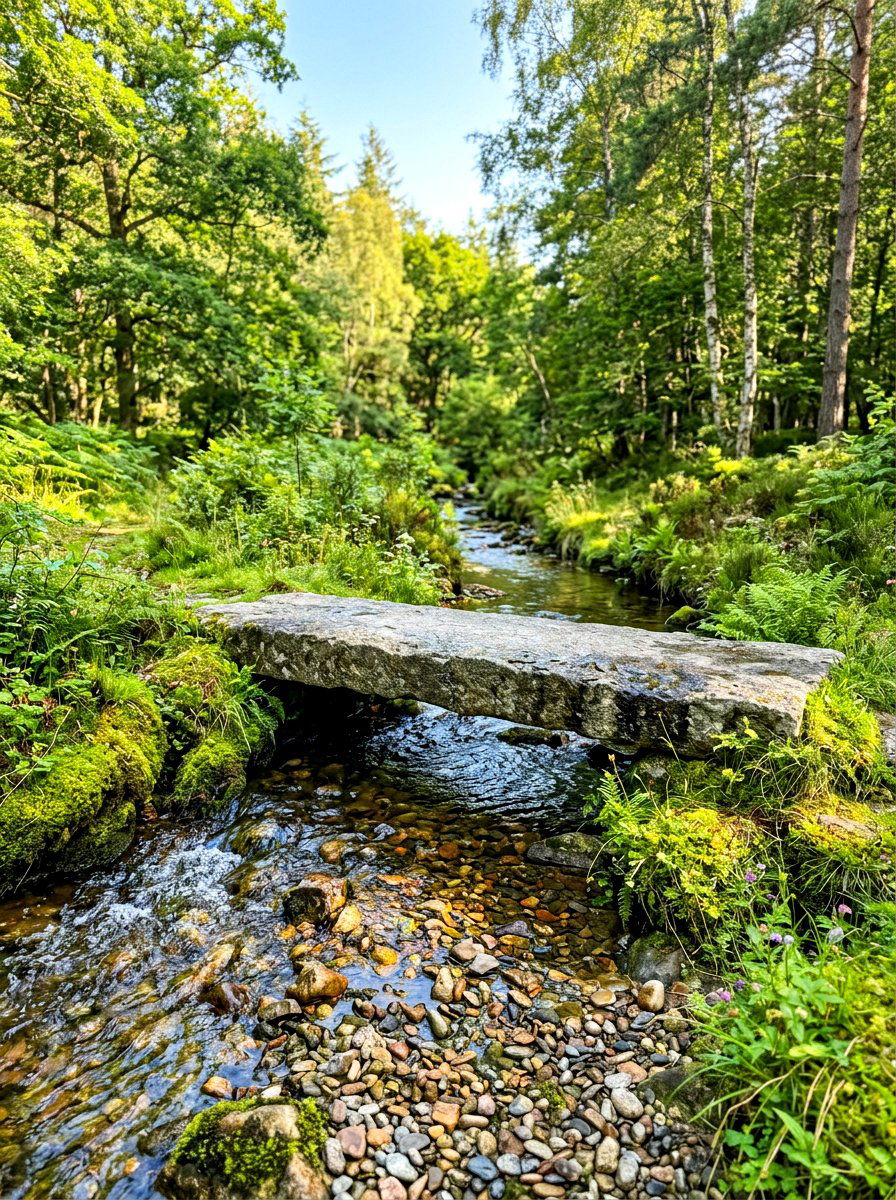
Choosing a flat stone slab for your pond crossing offers a minimalist and organic feel that blends perfectly with naturalistic landscapes. This design uses a single, large piece of slate, granite, or limestone to bridge the gap between two banks. It is an ideal choice for smaller ponds or trickling streams where you want the water to remain the primary focus. Because there are no railings or ornate details, the stone bridge feels like a permanent part of the earth. You can surround the entry points with moss or low-growing groundcovers to soften the edges. This approach is low-maintenance and incredibly durable, providing a solid path that lasts a lifetime.
3. Japanese Zen Bridge
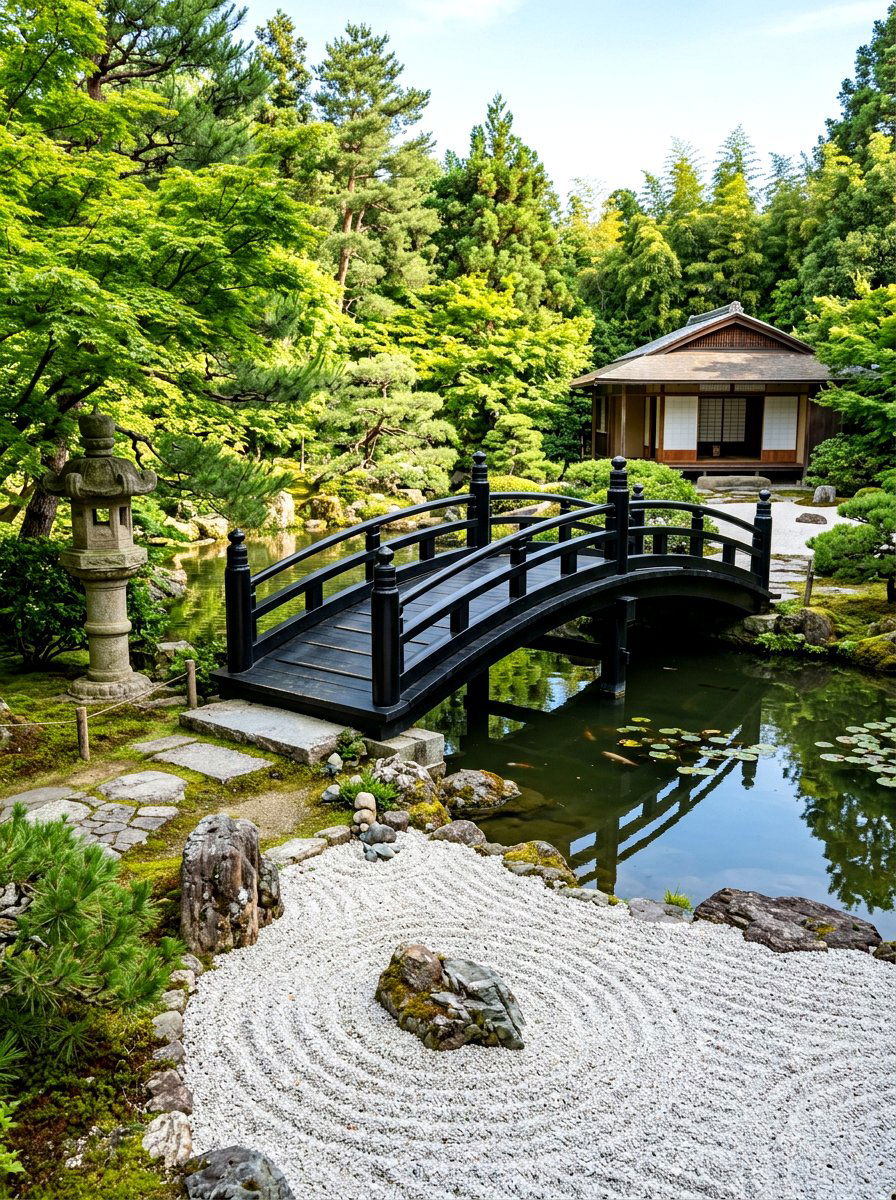
A Japanese Zen bridge is designed to create a sense of harmony and balance within a carefully curated landscape. Often featuring clean lines and a low profile, these bridges encourage visitors to slow down and appreciate the surrounding beauty. You might see them painted in traditional black or left in a natural wood finish to complement stone lanterns and raked gravel. The simplicity of the structure allows the vibrant colors of koi fish and lotus flowers to shine. This style is perfect for those seeking a meditative space where every element has a purpose. By placing the bridge near a focal point like a waterfall, you enhance the overall sensory experience.
4. Floating Step Stone
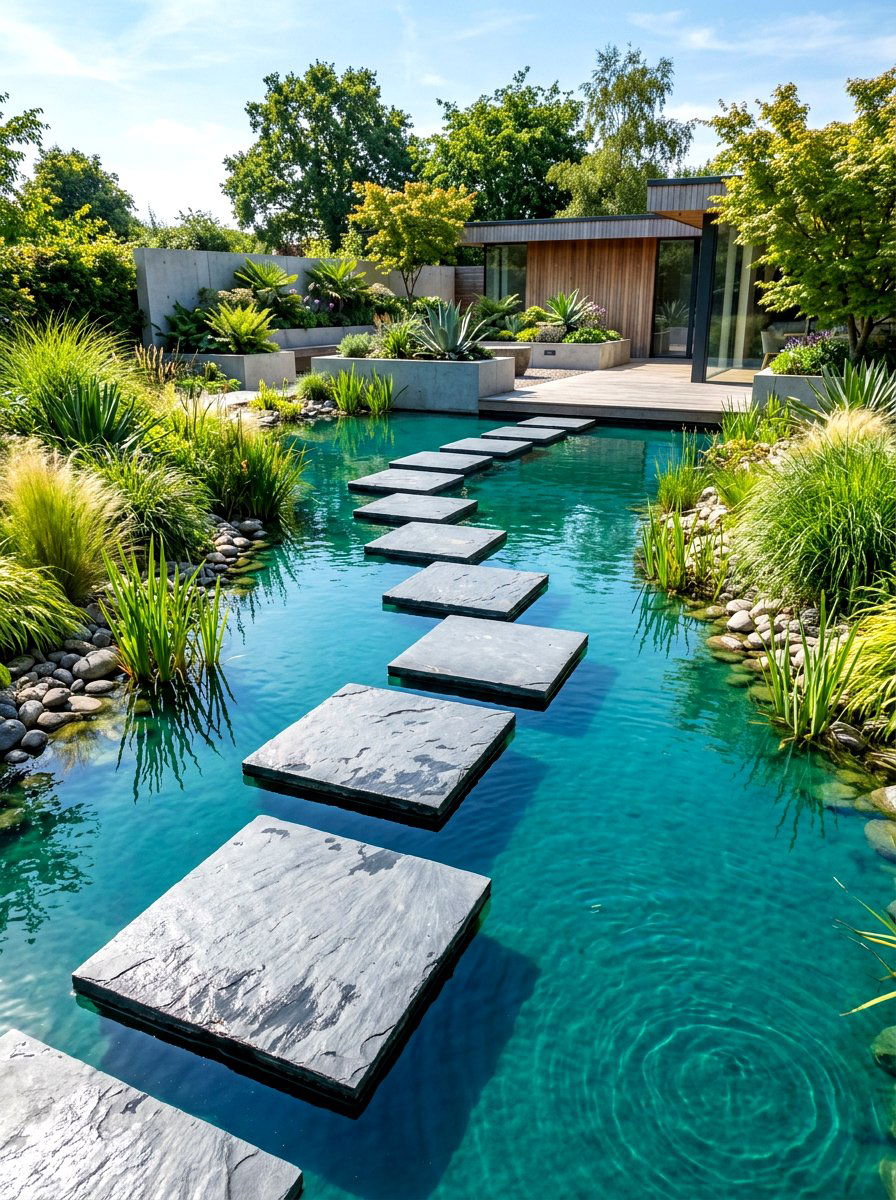
Floating step stones provide a magical and interactive way to cross a pond without a traditional elevated structure. These large, flat stones are set on submerged pillars, making it appear as though you are walking directly on the water's surface. This design is highly effective in modern or contemporary gardens that prioritize clean geometry and open views. You should space the stones carefully to ensure a comfortable walking stride for everyone. Surrounding the stones with clear water or dark liners makes them pop visually against the pond floor. This idea is fantastic for large, shallow ponds where you want to feel intimately connected to the aquatic environment.
5. Modern Metal Railing
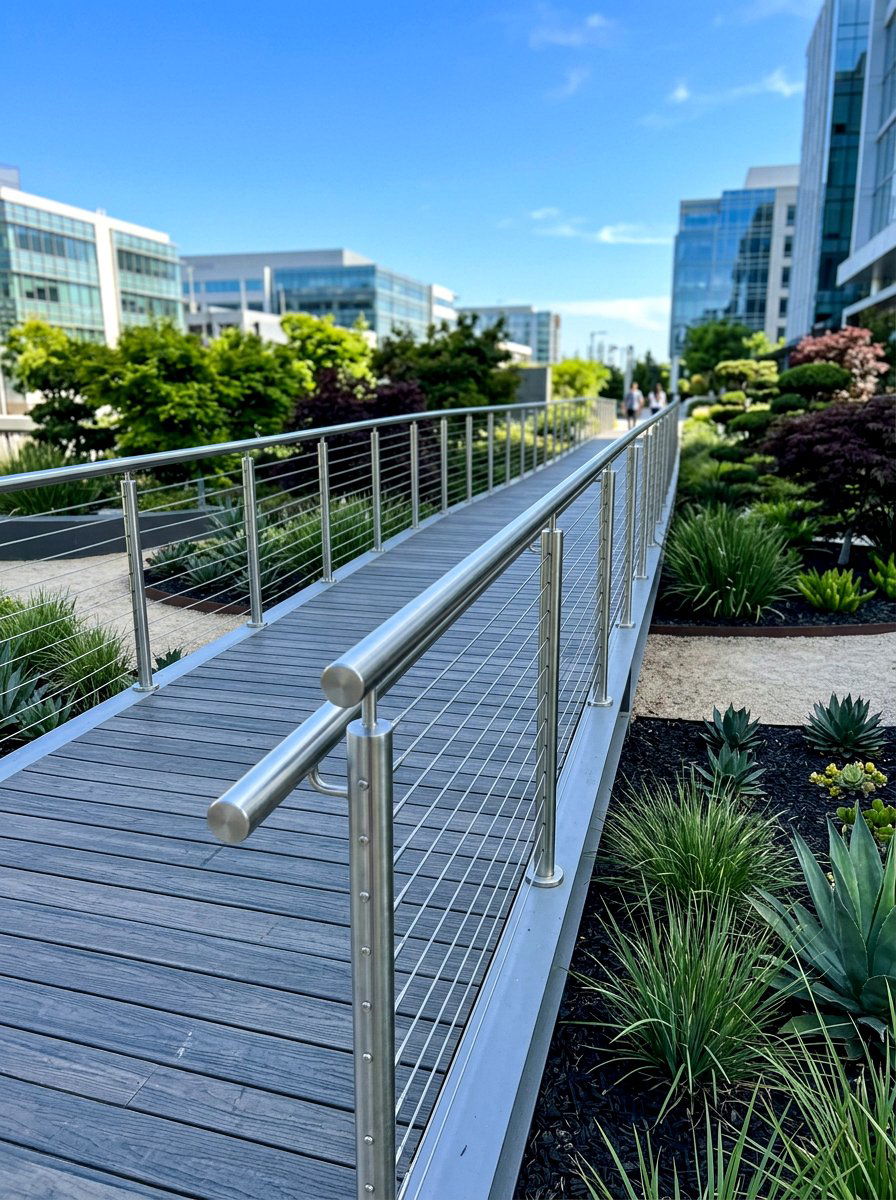
Integrating a bridge with a modern metal railing brings a sophisticated and industrial edge to your outdoor space. Using materials like stainless steel or powder-coated aluminum creates a durable structure that requires very little maintenance. The thin profiles of metal railings allow for unobstructed views of the water and surrounding plants. You can pair the metal frame with a wooden or composite deck to blend different textures beautifully. This design is particularly well-suited for urban gardens or minimalist homes where clean lines are essential. The reflective surface of the metal adds a subtle shimmer that complements the movement of the water below. It is truly elegant.
6. Rustic Log Bridge
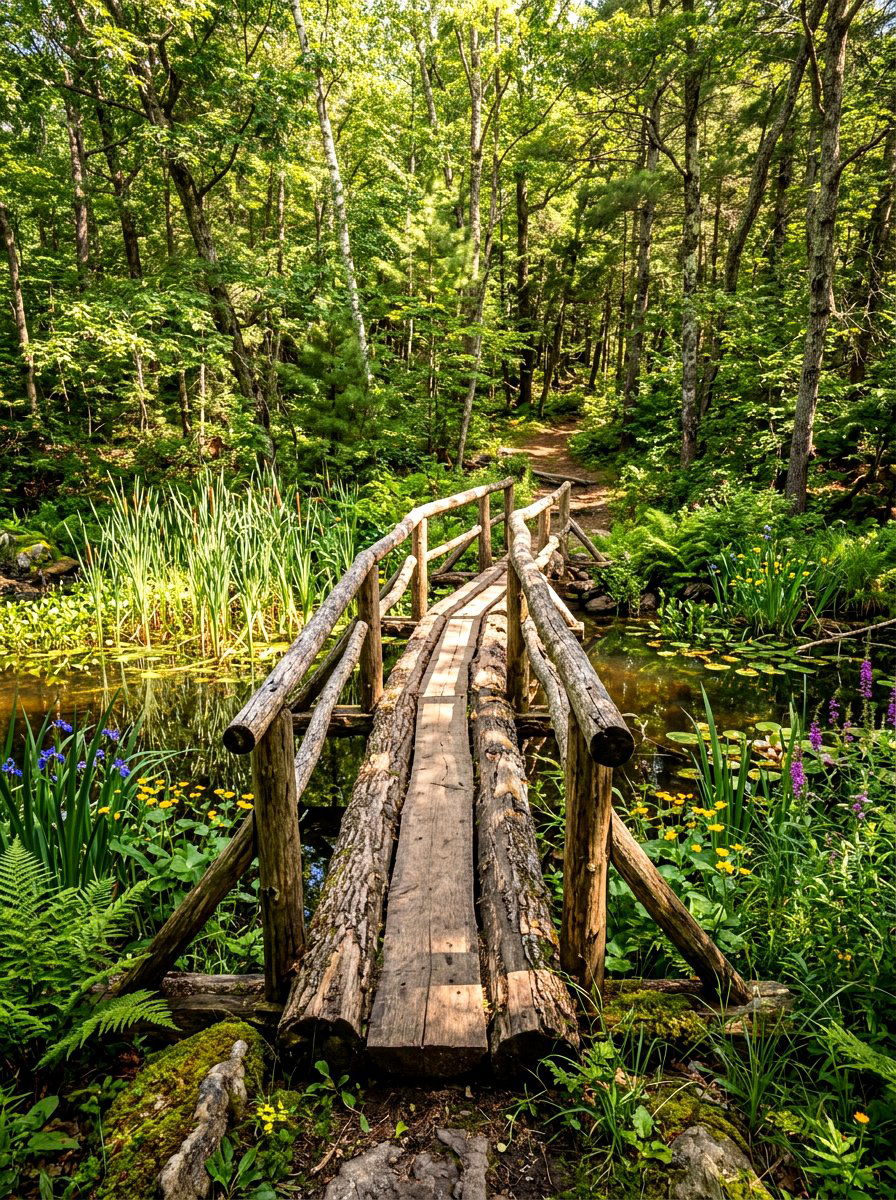
A rustic log bridge is the perfect addition for woodland-themed gardens or naturalistic ponds that mimic the wild. This design uses reclaimed timber or fallen logs to create a sturdy, unrefined crossing that feels authentic. You can choose to leave the bark on for a rugged texture or peel it back for a smoother, aged look. This type of bridge looks best when surrounded by native grasses, wildflowers, and weathered boulders. It offers a sense of nostalgia and adventure, reminiscent of a forest trail. Because it uses natural materials, it blends seamlessly into the environment without feeling like a manufactured addition to your yard.
7. Bamboo Garden Walkway
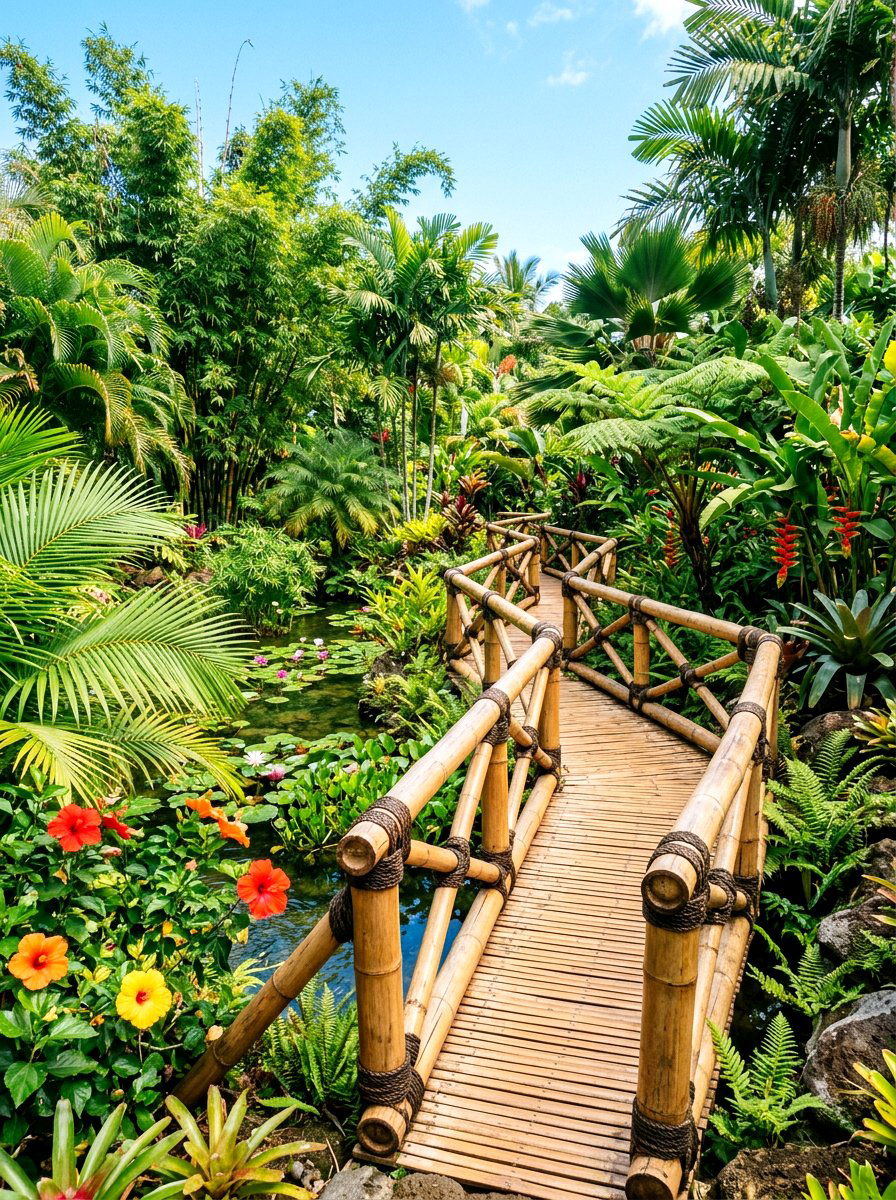
A bamboo garden walkway provides a light, airy, and tropical feel to any water feature. Bamboo is a sustainable material that is surprisingly strong and naturally resistant to the elements when treated correctly. This bridge style often features multiple bamboo poles lashed together with sturdy cord, creating a unique texture underfoot. It is an excellent choice for smaller ponds or bog gardens where a heavy stone or timber structure might feel too overwhelming. The natural golden tones of the bamboo contrast beautifully with deep green aquatic plants and colorful fish. This design brings an exotic and peaceful atmosphere to your backyard retreat with very minimal effort.
8. Wrought Iron Bridge
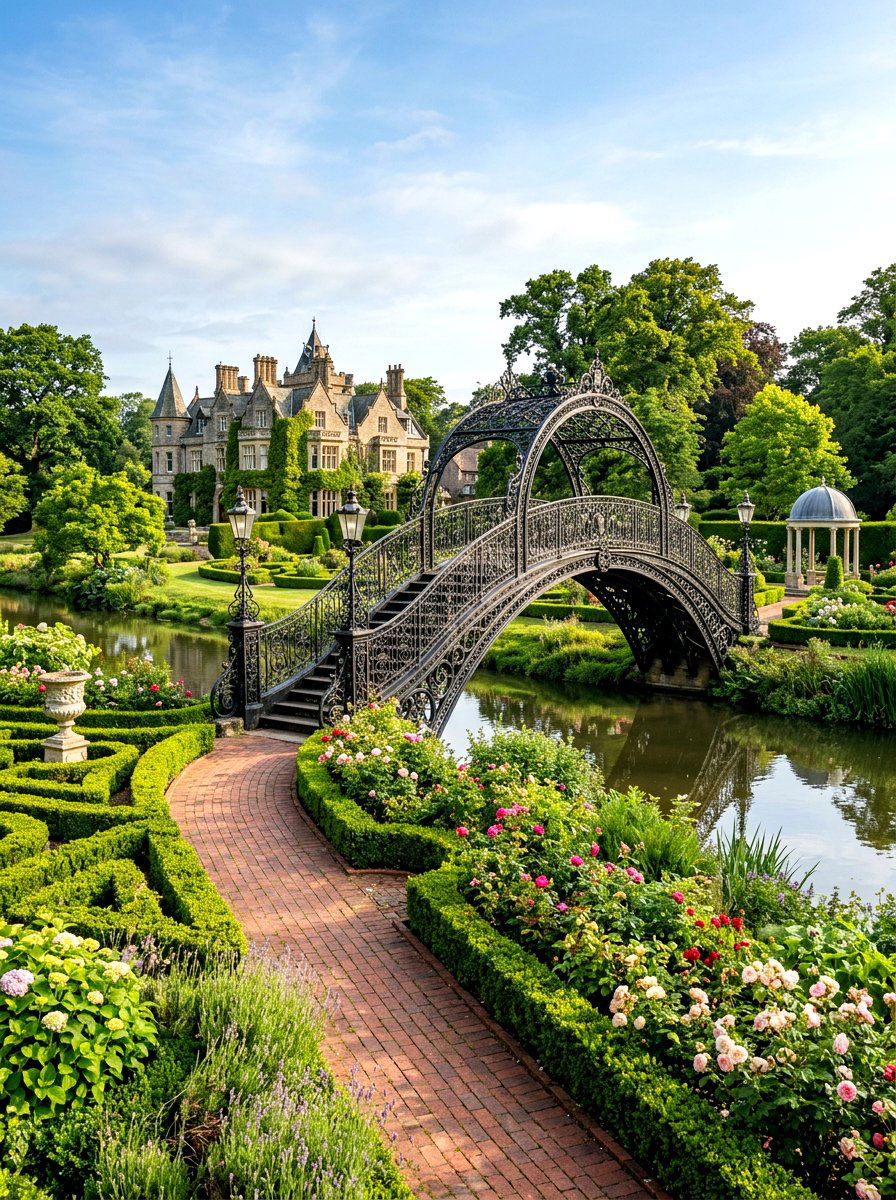
An elegant wrought iron bridge adds a touch of Victorian charm and intricate detail to a formal garden pond. The ornate scrolls and patterns of the ironwork create a stunning silhouette against the water, especially during sunrise or sunset. Wrought iron is incredibly strong and can be painted in various colors, though classic black or dark bronze remains most popular. This bridge style often features a graceful arch that makes it a true centerpiece of the landscape. Pairing it with a brick or stone path at either end enhances the formal aesthetic. It is a durable choice that provides safety and beauty for many decades.
9. Red Asian Bridge
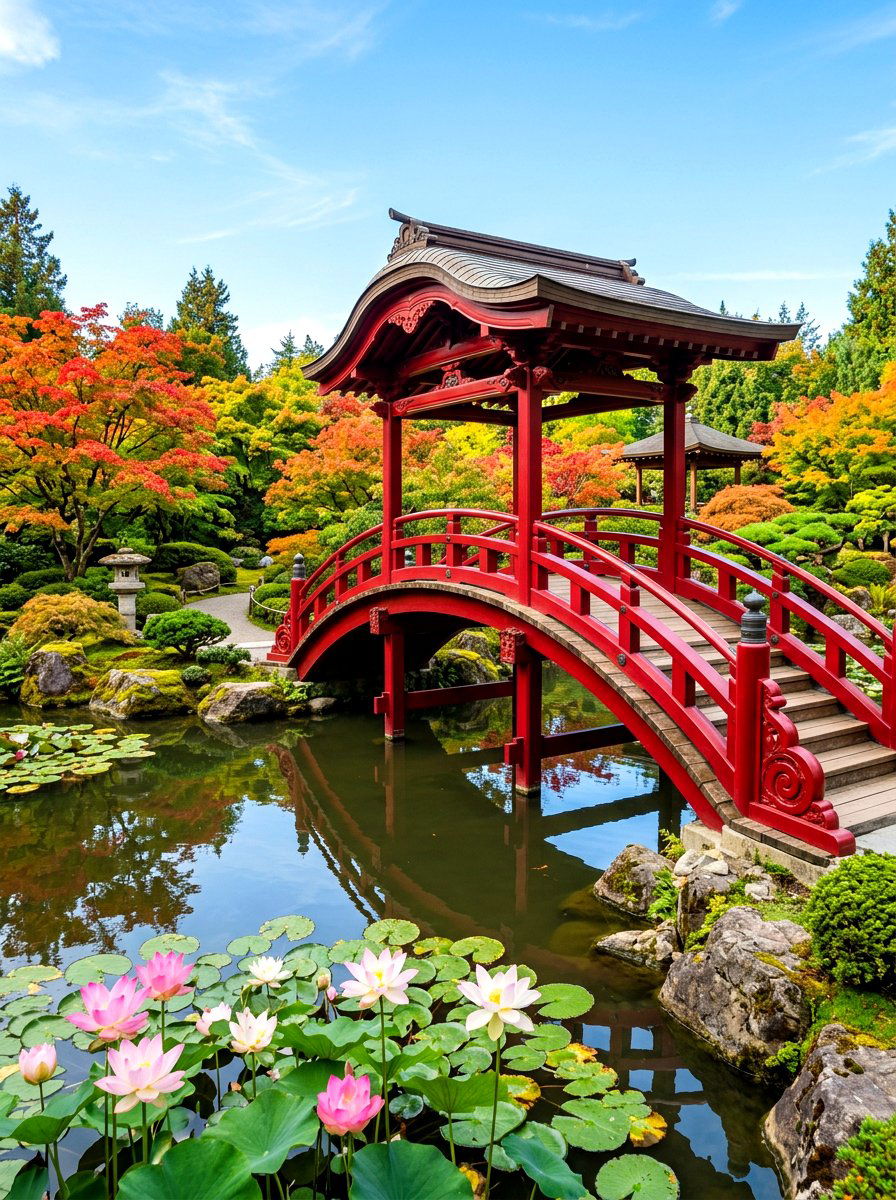
The vibrant red Asian bridge is a bold and iconic choice that instantly draws the eye in any landscape. Inspired by traditional Chinese and Japanese gardens, the bright lacquer finish symbolizes joy and good fortune. The high contrast between the red structure and the green foliage of the garden creates a stunning visual impact. This bridge often features a steep arch and decorative railings with traditional geometric patterns. It works best in gardens with maples, azaleas, and carefully placed stones. Adding this feature provides a cultural touchstone that makes your pond feel like a destination. It is a spectacular way to express your style.
10. Minimalist Concrete Path
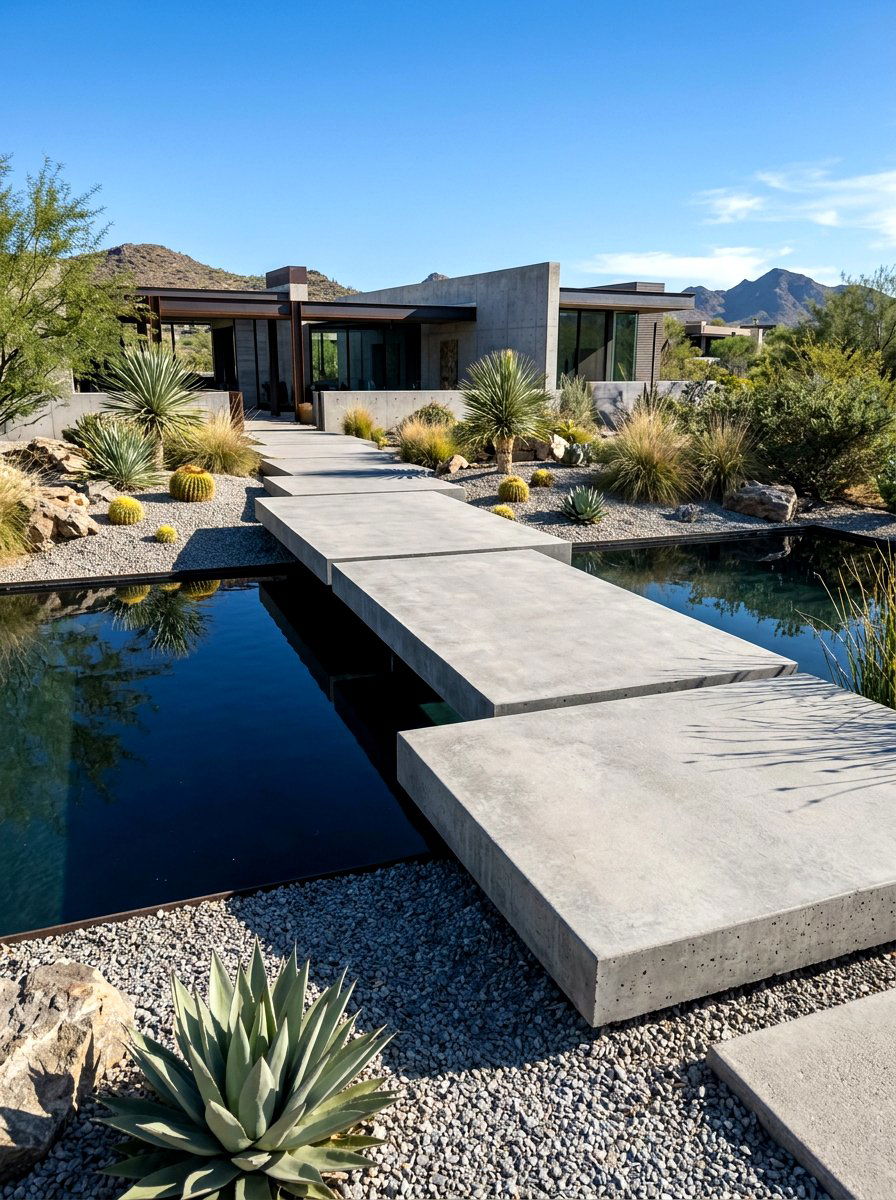
A minimalist concrete path offers a sleek, architectural way to cross a pond in a contemporary home setting. This design uses smooth, cast-concrete slabs that appear to hover just above the water level. The neutral gray tones of the concrete provide a calm and steady backdrop for the movement of the pond. You can create a continuous path or use staggered blocks for a more dynamic look. Concrete is exceptionally durable and can be finished with a non-slip texture for added safety. This style is perfect for those who appreciate industrial design and want a bridge that is both functional and artfully understated.
11. Recycled Wood Bridge
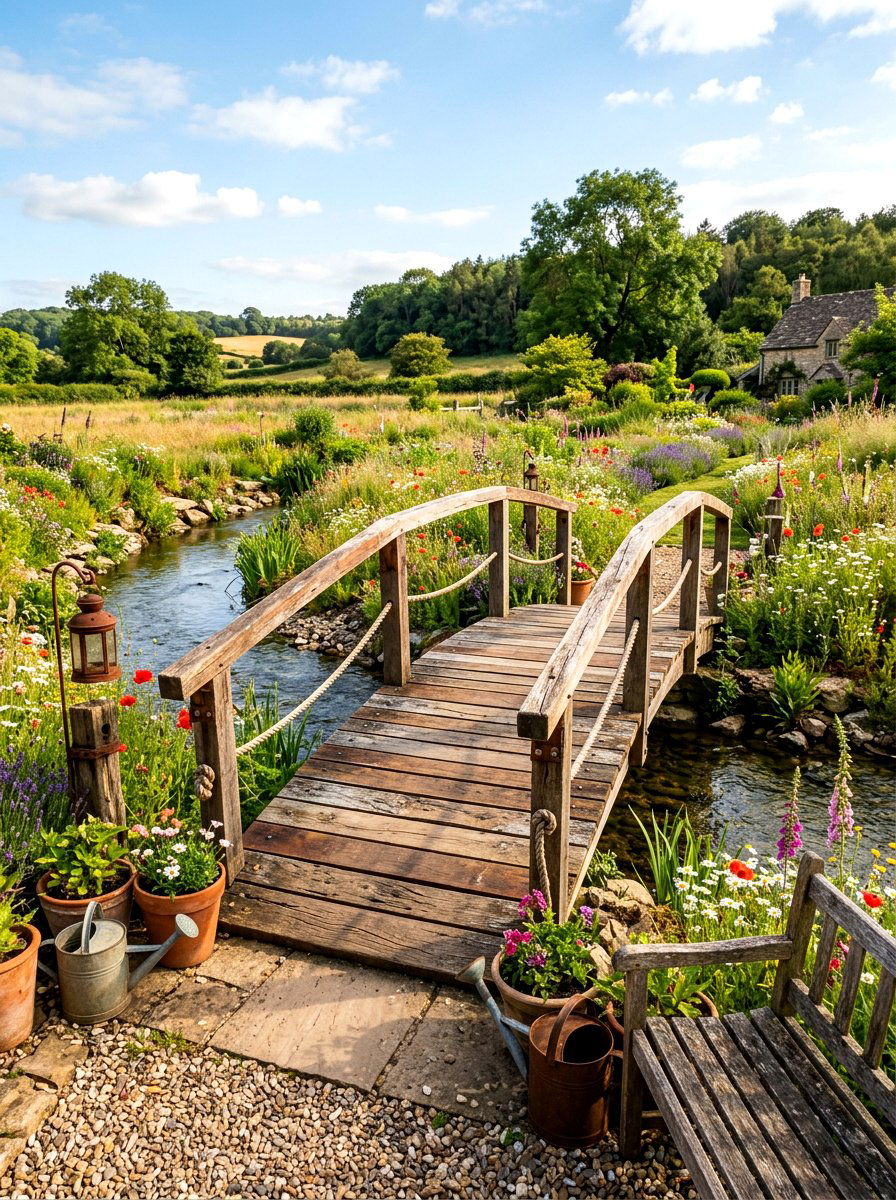
Using a recycled wood bridge is a wonderful way to incorporate sustainability and character into your pond design. Reclaimed timber from old barns, piers, or shipping pallets offers unique textures and colors that new wood simply cannot replicate. Each plank tells a story through its knots, grain patterns, and weathered appearance. This bridge style works beautifully in cottage gardens or eclectic landscapes where a "lived-in" feel is desired. You can mix and match different wood types for a patchwork effect or keep it uniform for a more cohesive look. It is an eco-friendly choice that adds warmth and a rustic soul to your garden.
12. Stone Arch Bridge
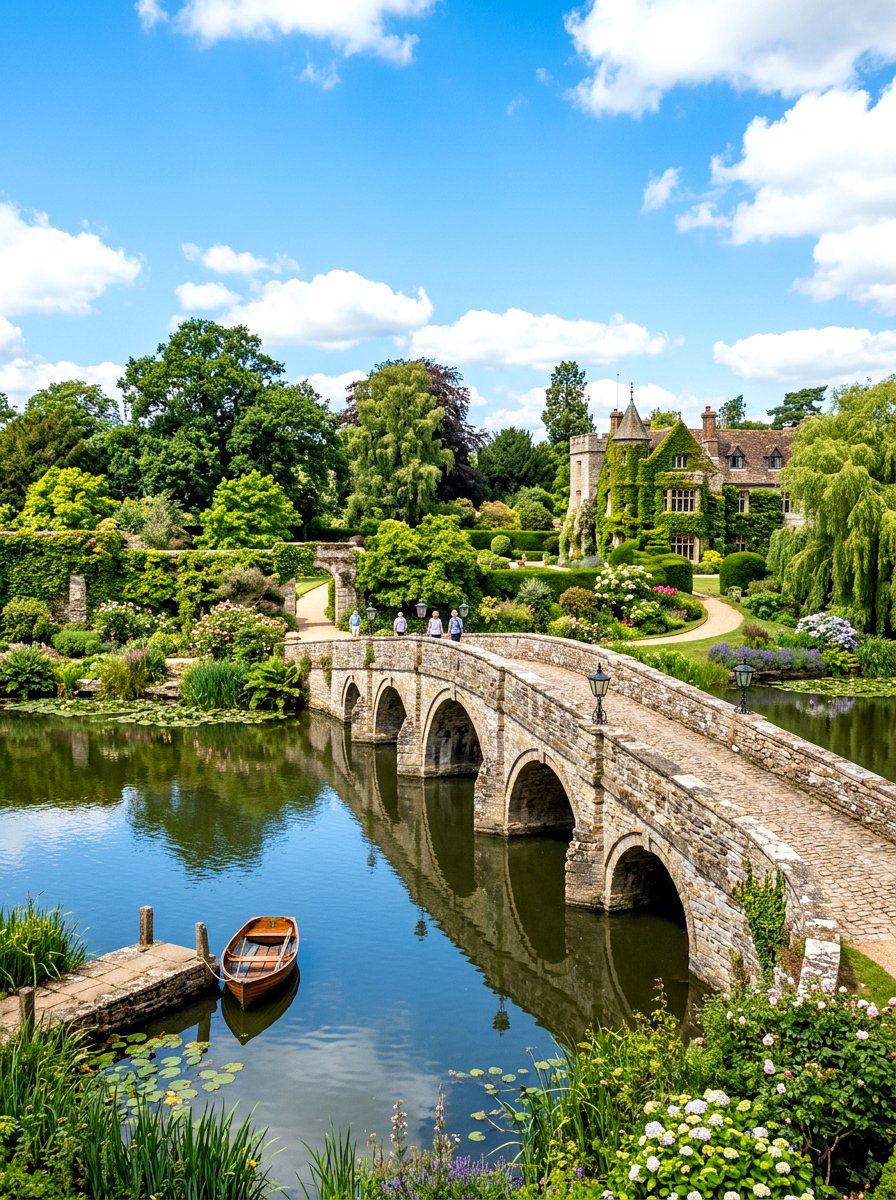
A stone arch bridge evokes a sense of old-world masonry and timelessness that few other designs can match. Built with stacked fieldstone, river rock, or precisely cut blocks, this structure feels like it has been part of the landscape for centuries. The strength of the arch allows for a sturdy crossing that can handle significant weight without wobbling. This design is ideal for larger ponds or streams where you want a substantial architectural feature. You can encourage moss or ivy to grow over the stones to further integrate the bridge into the natural environment. It creates a fairy-tale atmosphere that is both enchanting and permanent.
13. Glass Floor Bridge
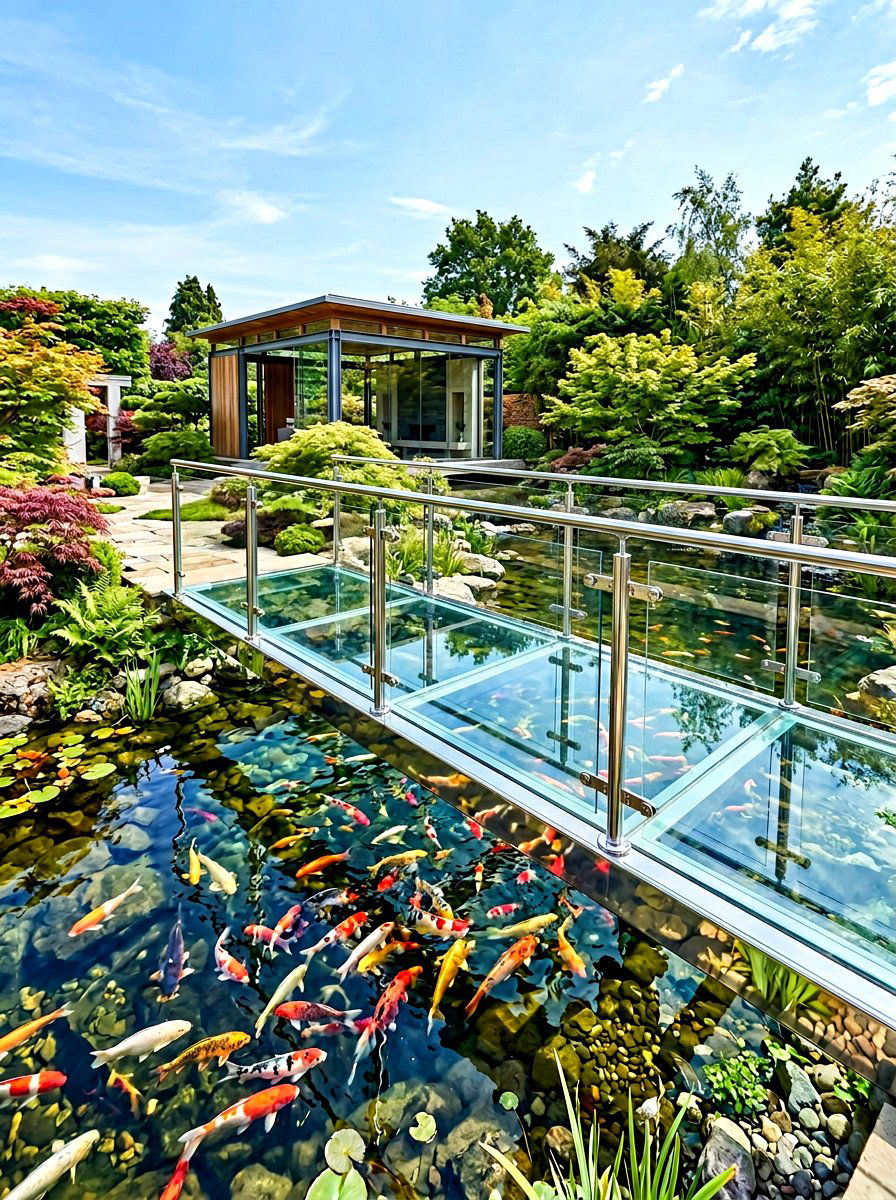
For a truly modern and high-tech look, a glass floor bridge offers an unparalleled view of the life beneath the water. Constructed with thick, reinforced safety glass and a sturdy metal frame, this bridge allows you to watch koi fish swim directly under your feet. It creates a sense of lightness and transparency that keeps the pond area feeling open and spacious. This design is a guaranteed conversation starter and works best in clean, contemporary landscapes. Using frosted or textured glass can provide extra grip while still allowing light to filter through. It is a daring and beautiful way to experience your backyard pond.
14. Rope Railing Bridge
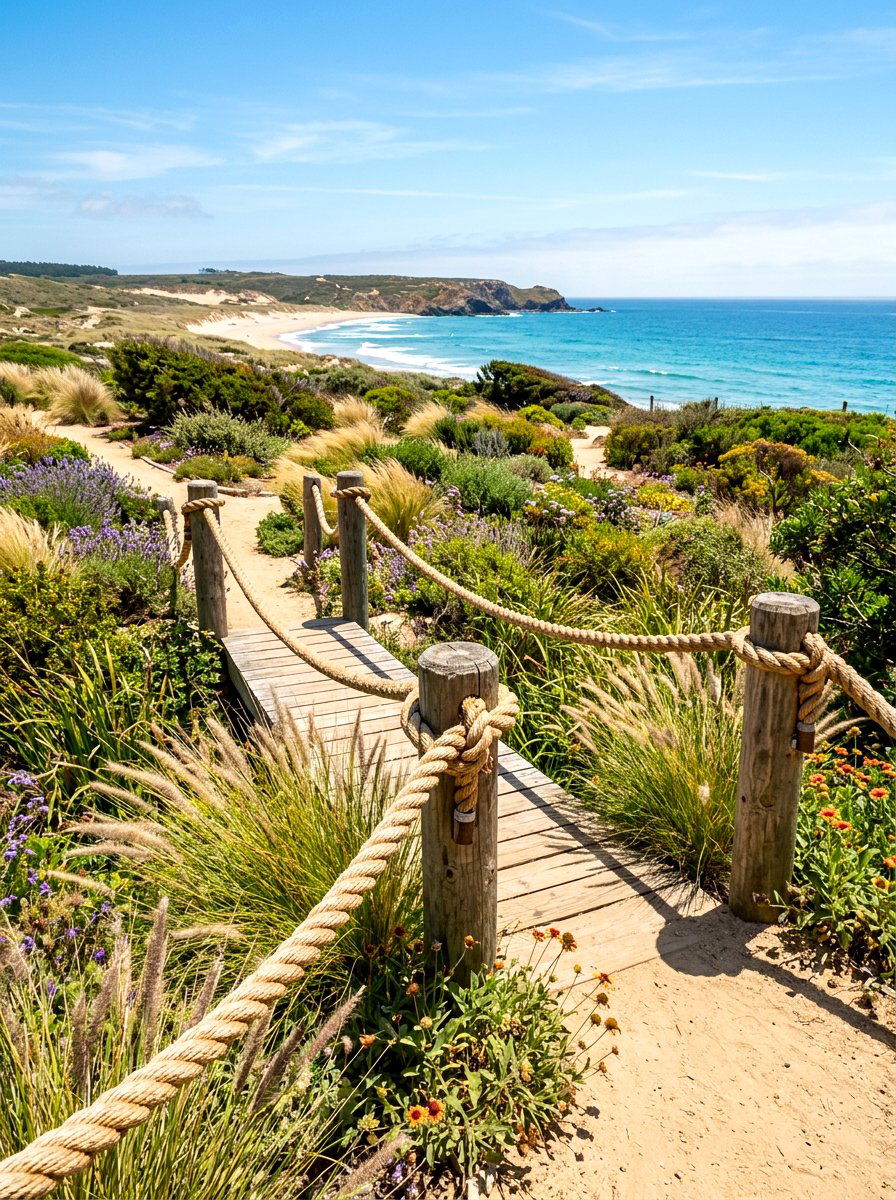
A rope railing bridge brings a coastal or nautical vibe to your garden pond, making it feel like a mini escape. This design typically features a wooden deck supported by thick, weather-resistant ropes and sturdy wooden posts. The flexibility of the rope adds a soft, organic line to the structure that complements the fluid nature of the water. It is a fantastic choice for family gardens as it provides a safe barrier without feeling too rigid or formal. You can use manila or synthetic ropes depending on the look you want to achieve. This style feels relaxed, inviting, and perfect for a summer afternoon outdoors.
15. White Garden Bridge
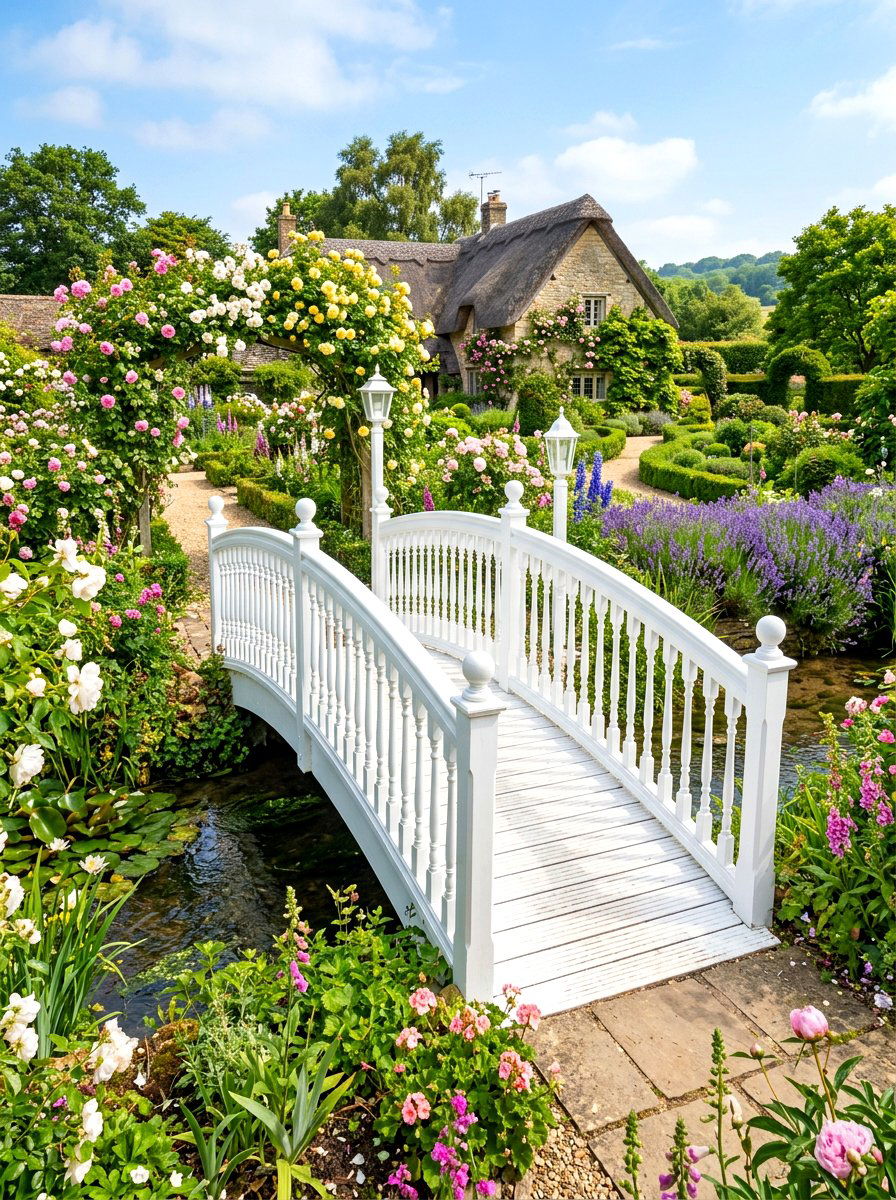
A white garden bridge offers a crisp, clean, and romantic look that stands out beautifully against lush greenery and colorful flowers. This style is a staple of English cottage gardens and provides a bright focal point that lightens the overall mood of the landscape. The white paint reflects sunlight, making the bridge appear even more prominent during the day. You can choose a simple straight design or a more elaborate arched version with decorative spindle railings. Pairing the bridge with white climbing roses or lilies creates a cohesive and elegant theme. It is a classic choice for those who want a traditional garden feel.
16. Double Arch Bridge
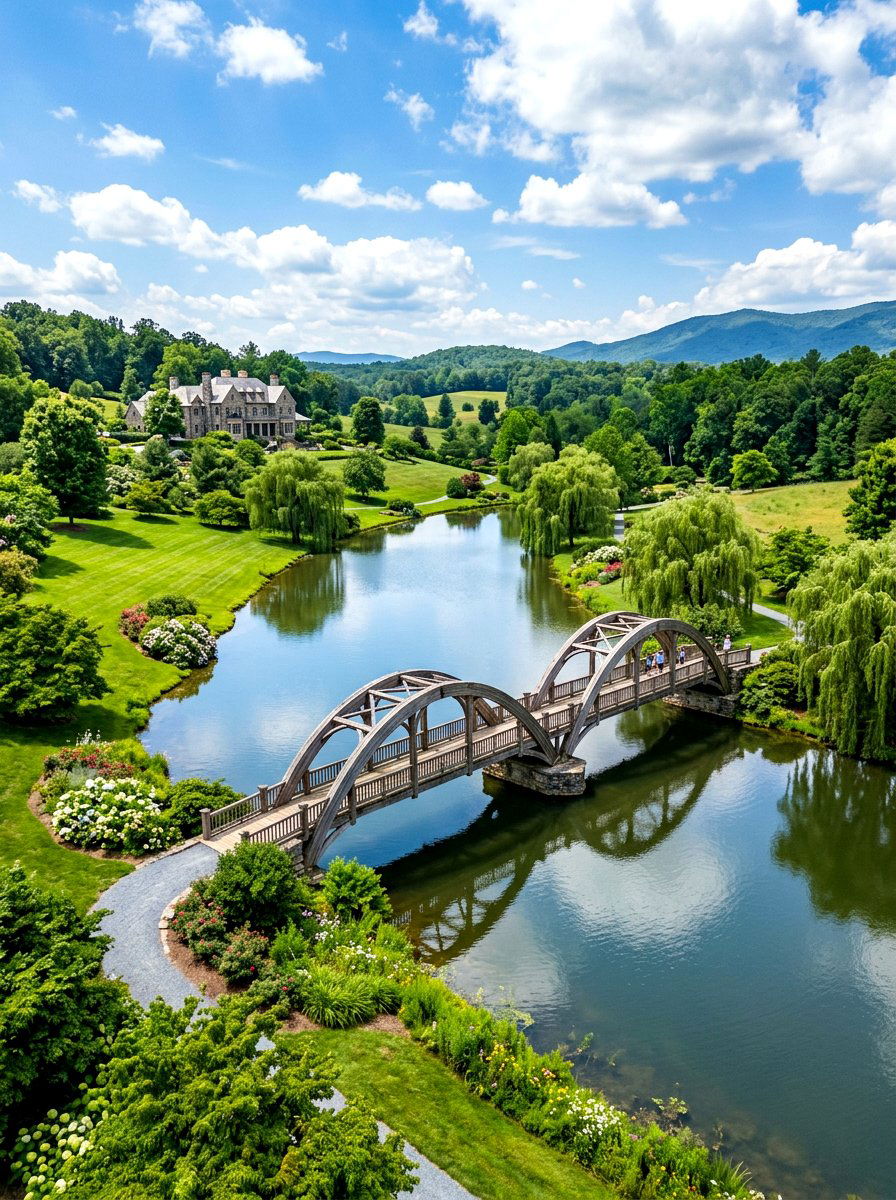
The double arch bridge is a sophisticated variation that adds complexity and visual rhythm to a larger water feature. By incorporating two gentle curves instead of one, the bridge creates a more dynamic silhouette that follows the natural flow of the water. This design is often seen in larger estate gardens or public parks where the pond spans a wider distance. Using wood or metal for the framework allows for a lightweight but strong structure. The middle support can be anchored to a small island or a submerged pillar, creating a unique landing spot halfway across. It is an impressive feat of garden engineering.
17. Natural Boulder Crossing

A natural boulder crossing is the ultimate choice for a wild, rugged, and completely organic garden pond. Instead of a constructed bridge, large flat-topped boulders are strategically placed across the narrowest part of the water. This design encourages a more active and mindful way of moving through the garden, as you step from one rock to the next. It works perfectly with waterfall features and rocky stream beds, making the entire area look like a natural formation. Surrounding the boulders with aquatic grasses and pebbles completes the look. This is a low-impact design that celebrates the raw beauty of natural stone.
18. Brick Paver Bridge
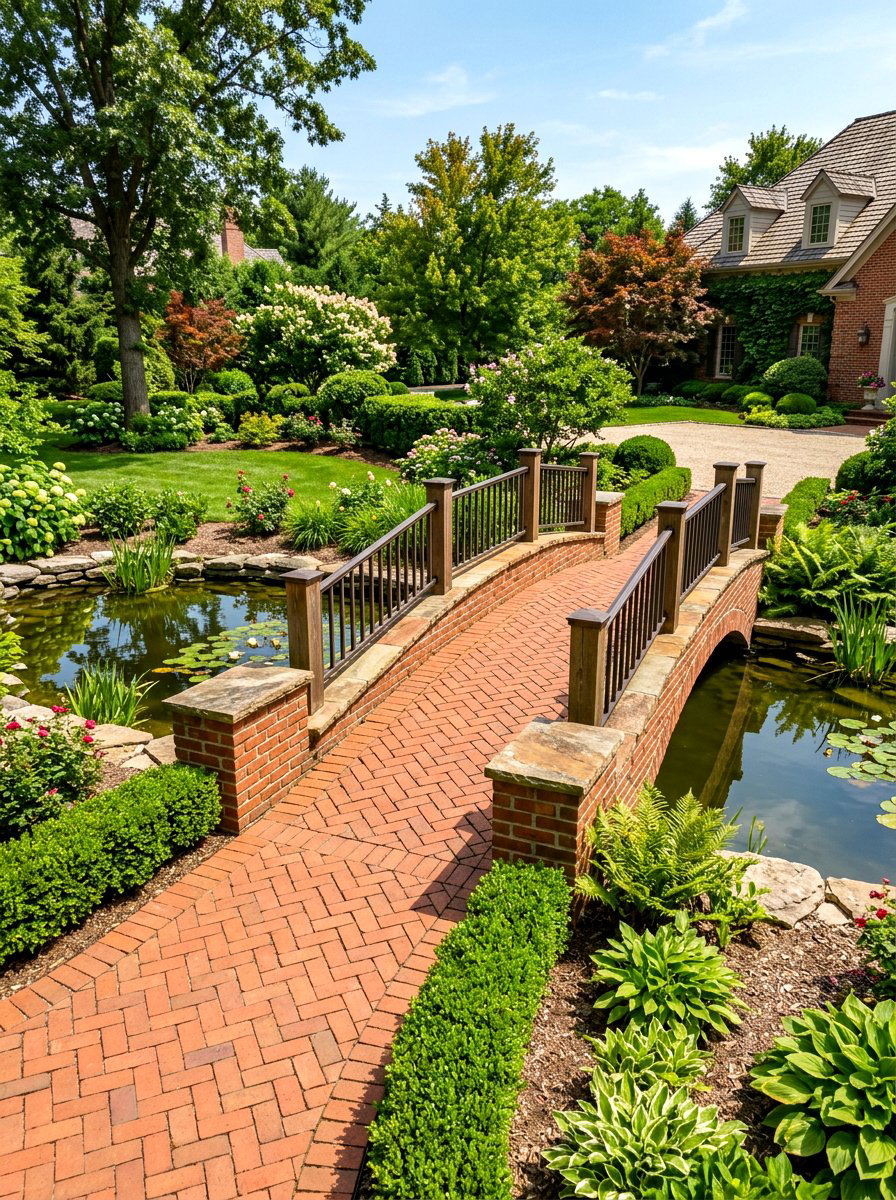
A brick paver bridge offers a sturdy and traditional look that coordinates perfectly with brick patios or garden paths. This design uses a metal or concrete base topped with classic red or reclaimed bricks laid in intricate patterns like herringbone or basketweave. The warm tones of the brick provide a beautiful contrast to the cool blues and greens of the pond. Because bricks are small, you can easily create a curved path that feels comfortable and safe to walk on. This style is highly durable and resists slipping when wet, making it a practical choice for all-weather use in your backyard garden.
19. Teak Footbridge
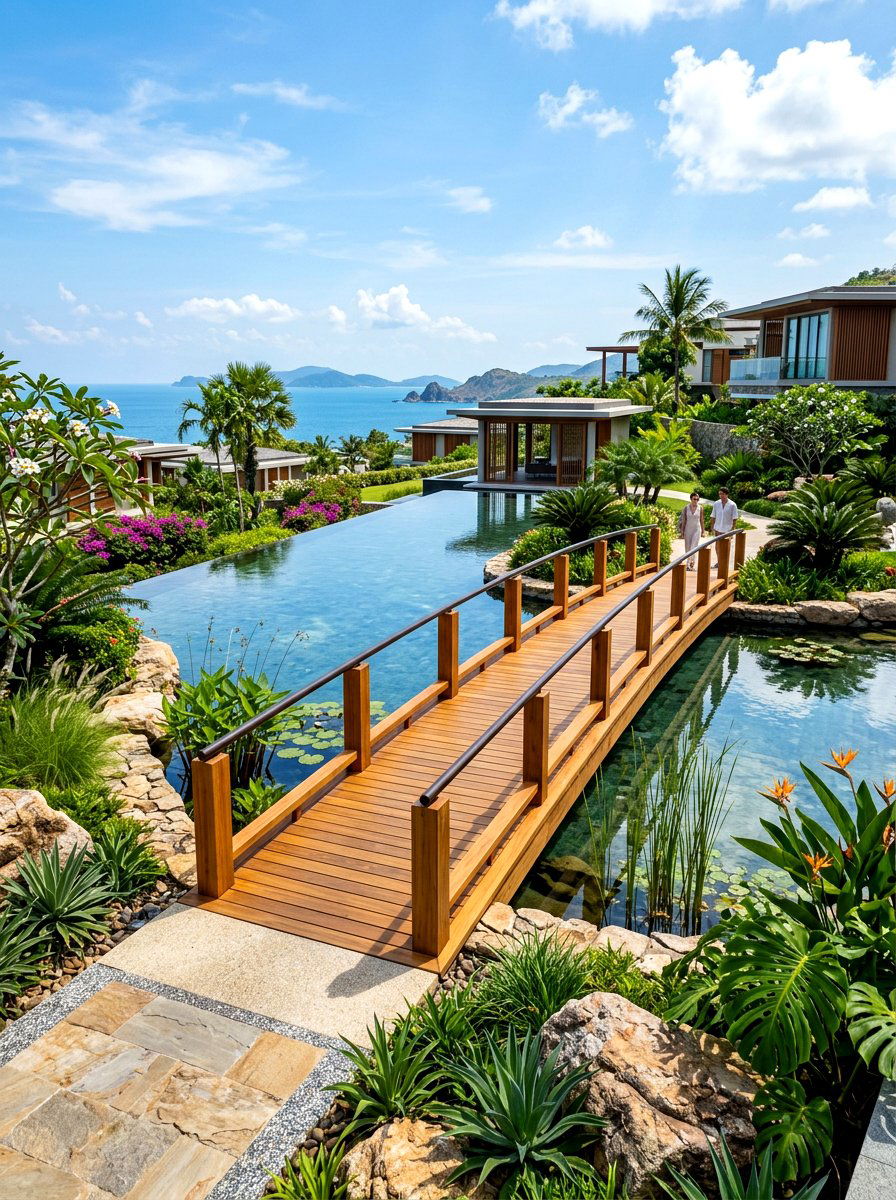
Choosing a teak footbridge is an investment in quality and luxury for your outdoor living space. Teak is renowned for its high oil content, which makes it naturally resistant to rot, insects, and harsh weather conditions. Over time, the wood will fade to a stunning silvery-gray color that looks incredibly sophisticated near the water. The dense grain of teak provides a smooth and splinter-free surface that is comfortable for bare feet. This bridge style usually features a clean, simple design that emphasizes the natural beauty of the timber. It is the perfect choice for high-end landscapes that require low-maintenance but high-impact features.
20. Industrial Steel Bridge

An industrial steel bridge uses I-beams or heavy-duty metal plates to create a bold and unconventional garden feature. This design is perfect for modern homes with an edgy, urban aesthetic. You can leave the steel to develop a rusted corten patina, which provides a beautiful orange-brown color that mimics natural earth tones. Alternatively, painting it a matte black or gray keeps it looking sharp and contemporary. This bridge is incredibly strong and can span long distances without the need for middle supports. It provides a striking contrast when placed in a garden filled with soft, delicate plants and flowing water features.
21. Waterfall Bridge
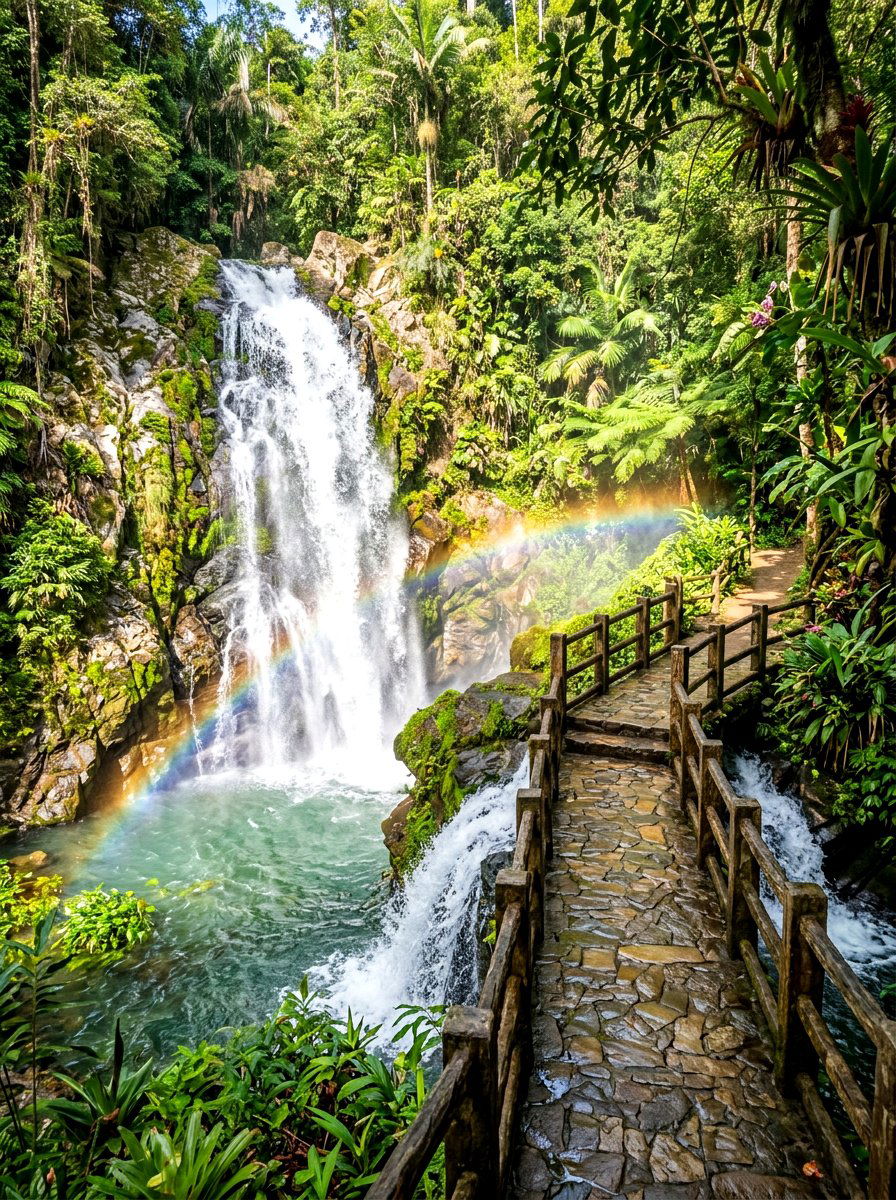
A waterfall bridge is specifically positioned to cross directly over or in front of a falling water feature, providing an immersive sensory experience. Walking across this bridge allows you to hear the soothing sound of rushing water and feel the cool mist on your skin. The design must be carefully engineered to withstand constant moisture, often using stone or treated timber. This setup creates a dramatic focal point that anchors the entire pond area. You can add lighting under the bridge to illuminate the waterfall at night, creating a magical glow. It is a breathtaking way to enjoy the movement of water.
22. Pebble Inlay Bridge
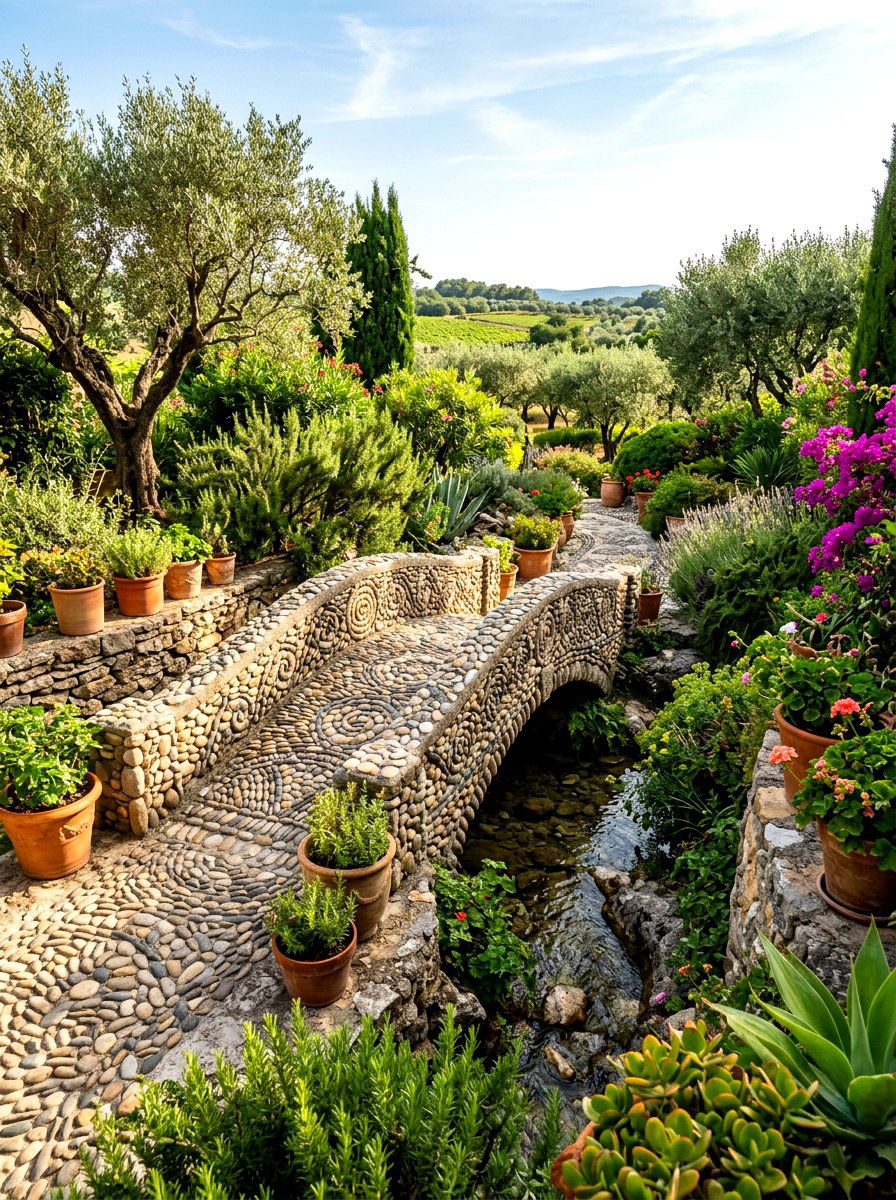
A pebble inlay bridge features a wooden or concrete base decorated with thousands of small, smooth river stones. The stones are set into a mortar bed to create beautiful patterns, mosaics, or a simple textured surface. This design provides excellent slip resistance and feels wonderful to walk on, almost like a natural foot massage. You can use different colors of pebbles to create swirls that mimic the flow of the water below. This style is often found in Mediterranean or Asian-inspired gardens where texture and detail are highly valued. It adds a handmade, artistic touch to your pond area that feels very personal.
23. Covered Bridge
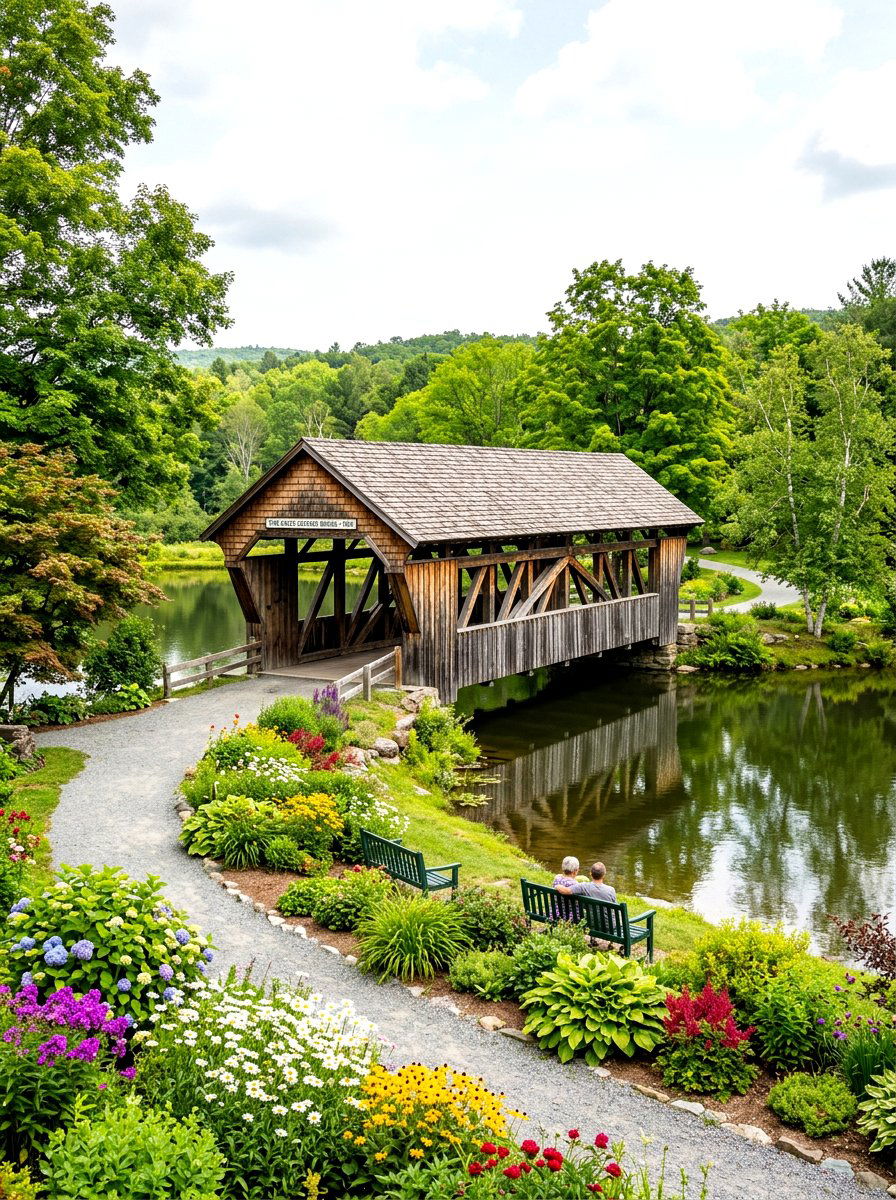
The covered bridge is a charming and nostalgic design that provides a roofed walkway over your garden pond. Inspired by historic rural structures, this bridge offers protection from the sun and rain while you enjoy the view of your water feature. The roof can be made from shingles, cedar shakes, or even a living green roof with succulents and moss. This design adds a sense of enclosure and privacy, making it a perfect spot for a small bench or viewing area. It is a substantial structure that acts as a garden building and a bridge all in one beautiful, cozy package.
24. Zig Zag Walkway
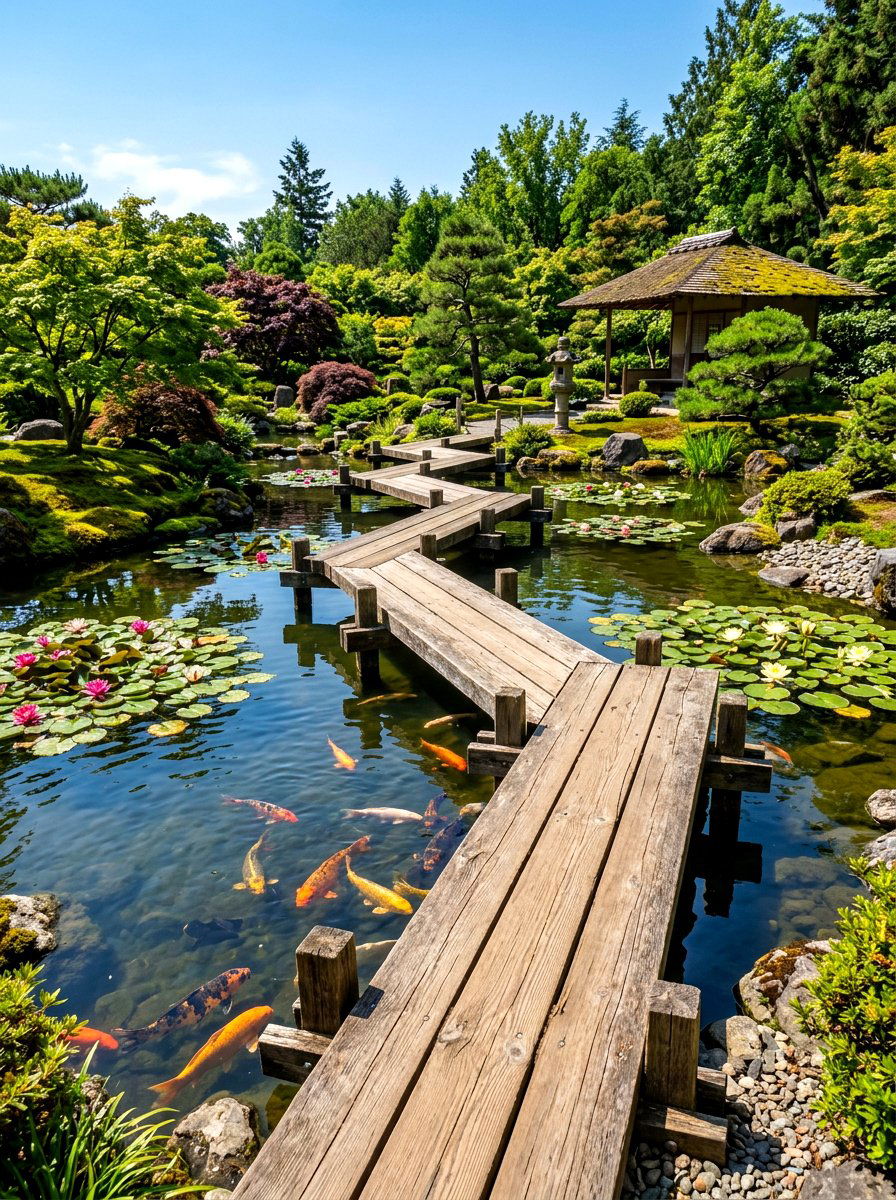
A zig zag walkway, often seen in traditional Japanese gardens, is designed to trick evil spirits who can only move in straight lines. Beyond the folklore, the sharp turns of the bridge force you to slow down and view the pond from different angles as you cross. This design is usually made from simple wooden planks and lacks railings, giving it a very clean and open feel. It is a great way to add interest to a long, narrow pond or a bog garden. Each turn provides a new perspective on the plants and fish, making the journey across the water more engaging.

25. Solar Light Bridge
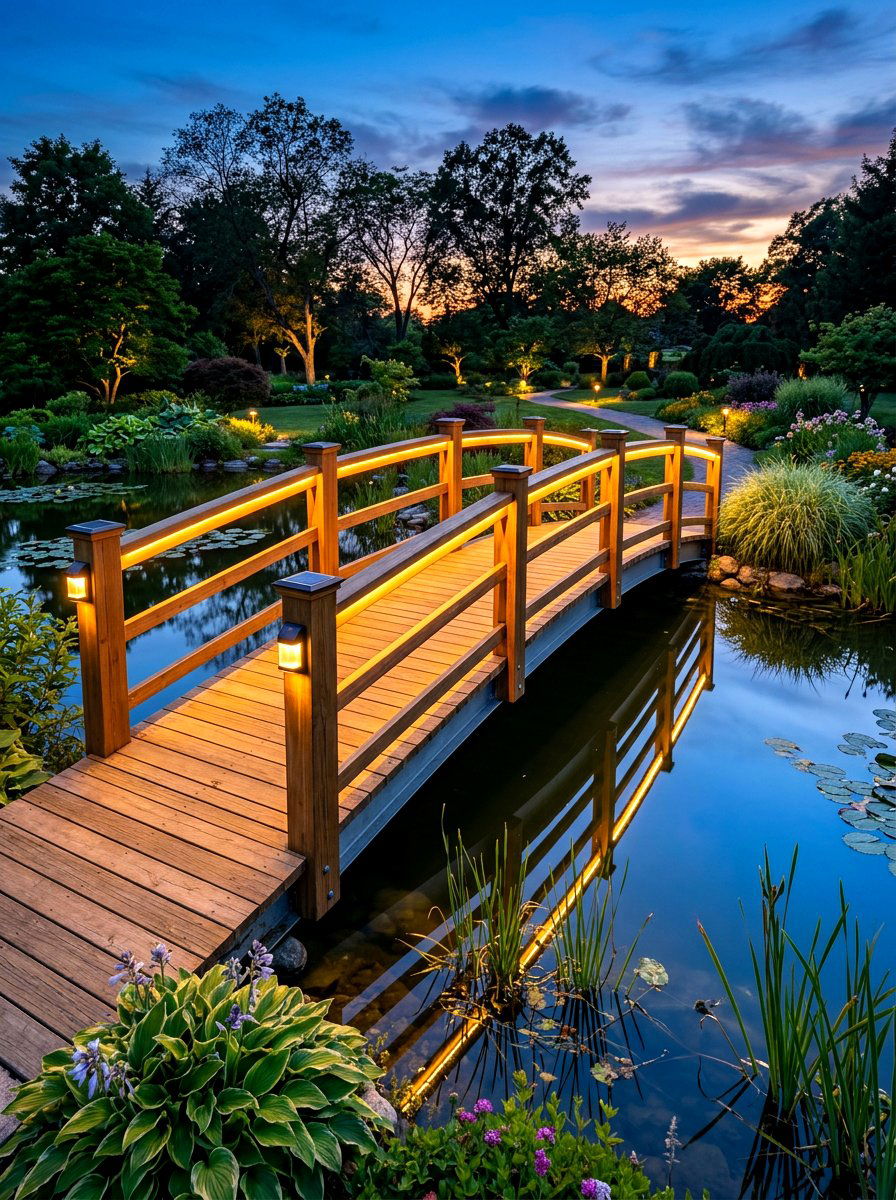
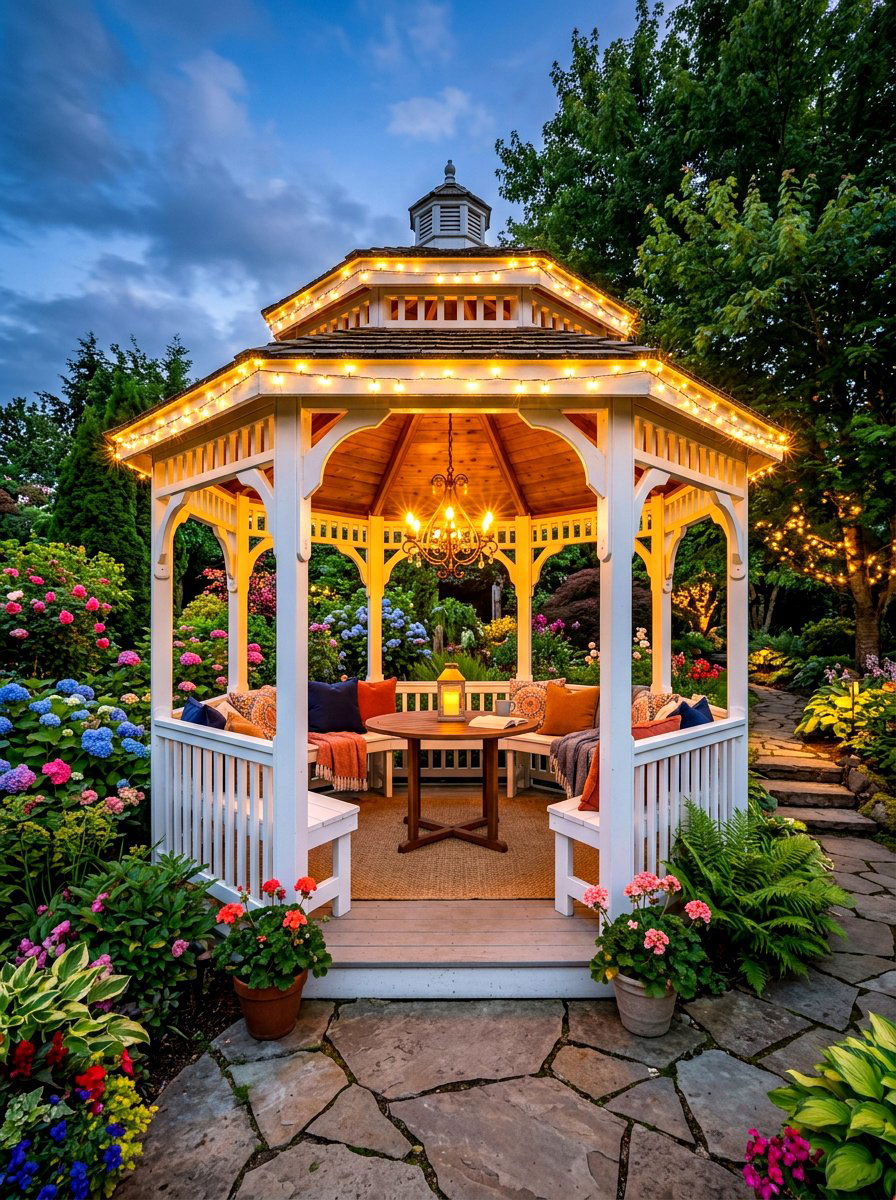
A solar light bridge integrates modern technology directly into the structure to ensure safety and beauty after the sun goes down. Small LED lights are built into the handrails or the decking planks, charging during the day and glowing softly at night. This design eliminates the need for complicated outdoor wiring and keeps your garden looking tidy. The lights highlight the shape of the bridge and reflect off the surface of the pond, creating a stunning evening ambiance. This is a practical and energy-efficient choice for homeowners who love to entertain or relax in their gardens during the late evening hours.
26. Lattice Side Bridge
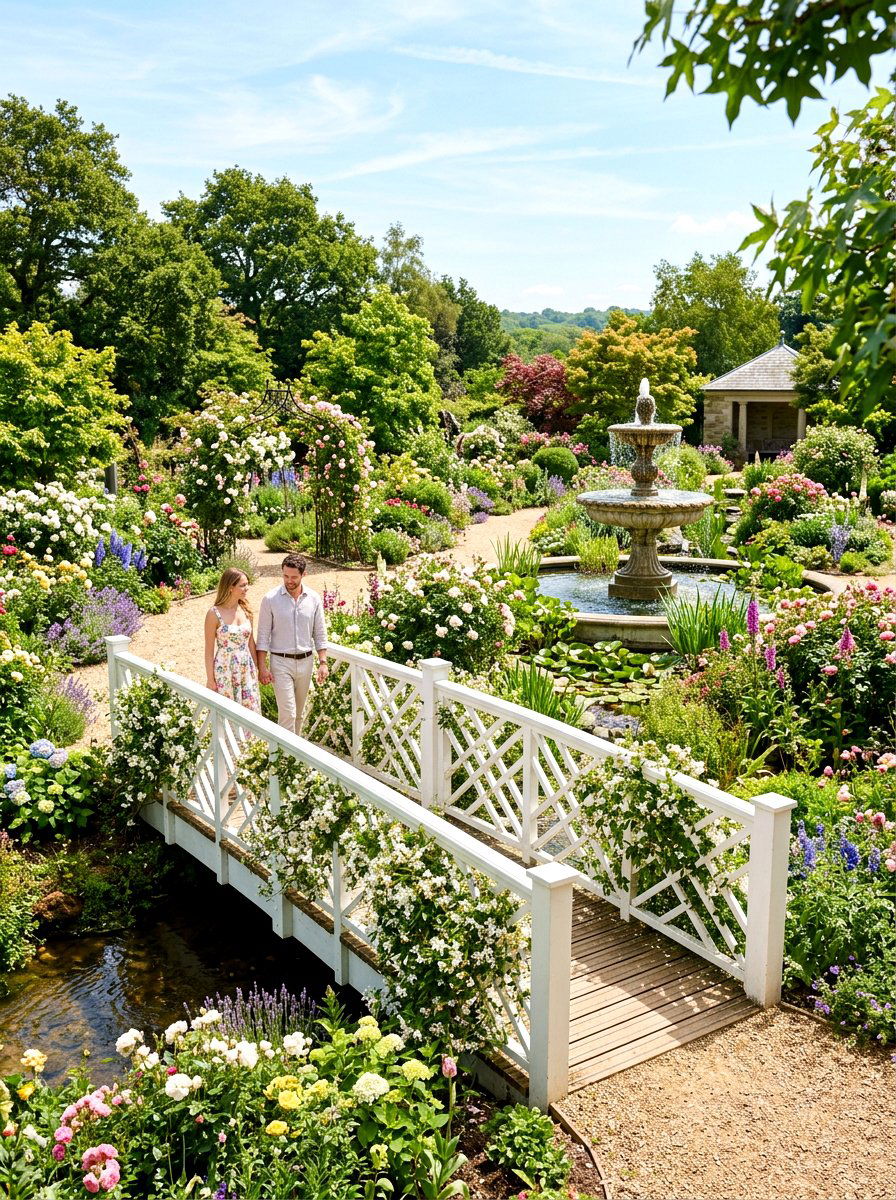
A lattice side bridge features delicate crisscross patterns on the railings, providing a light and airy look with plenty of visual interest. The lattice work offers a perfect support for climbing plants like clematis or jasmine, which can eventually cover the bridge in fragrant blooms. This design is very popular in traditional and romantic gardens where a soft, feminine touch is desired. The open pattern allows you to see through the railings to the water while still providing a sense of security and boundary. Using a high-quality wood or composite ensures the intricate lattice remains strong and beautiful for many years.
27. Suspension Bridge
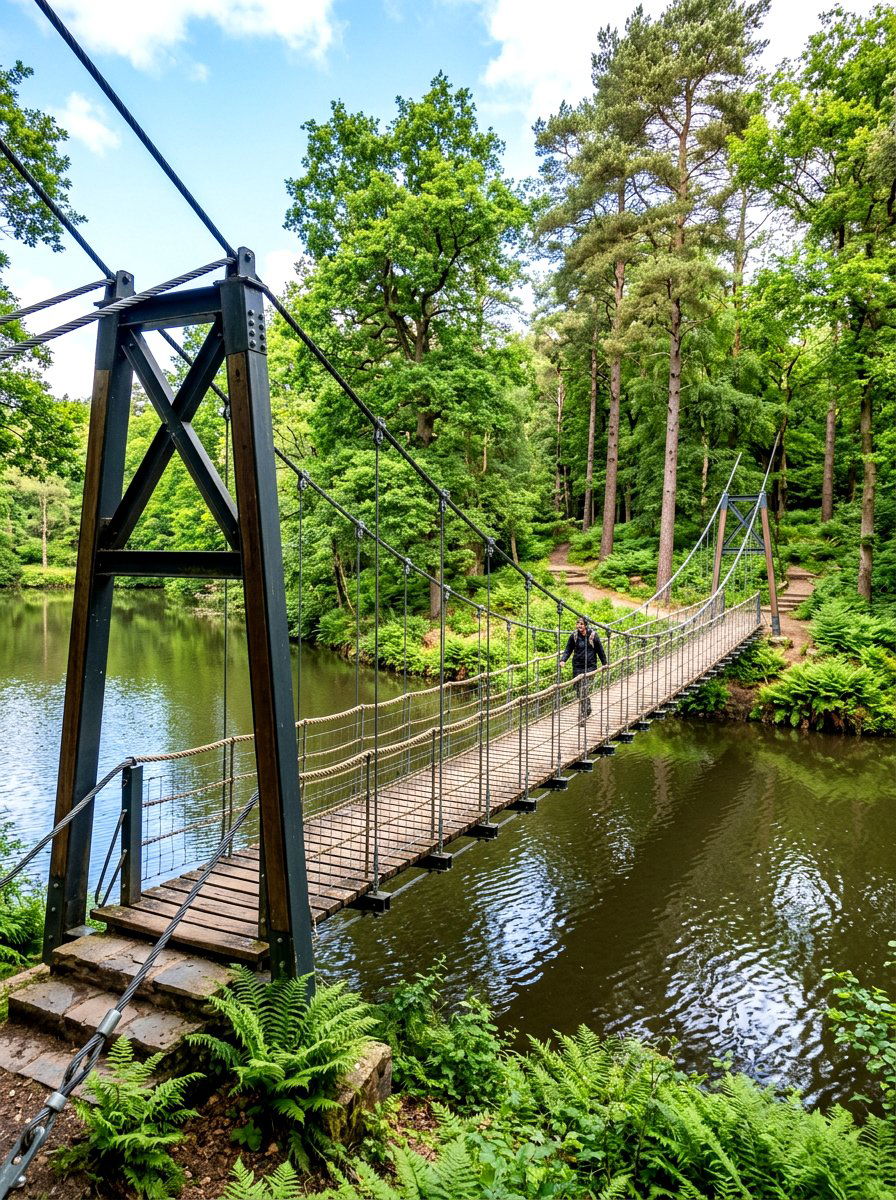
A suspension bridge brings a sense of adventure and movement to a large backyard pond or a deep ravine. Using strong steel cables and a flexible wooden deck, this bridge can gently sway as you walk across it. It is an exciting feature for kids and adults alike, offering a unique way to traverse your outdoor space. This design is particularly effective in wilder, more overgrown landscapes where you want to minimize the impact on the ground below. The dramatic lines of the cables create a modern, structural look that stands out as a true piece of engineering art in your garden.
28. Mosaic Tile Bridge
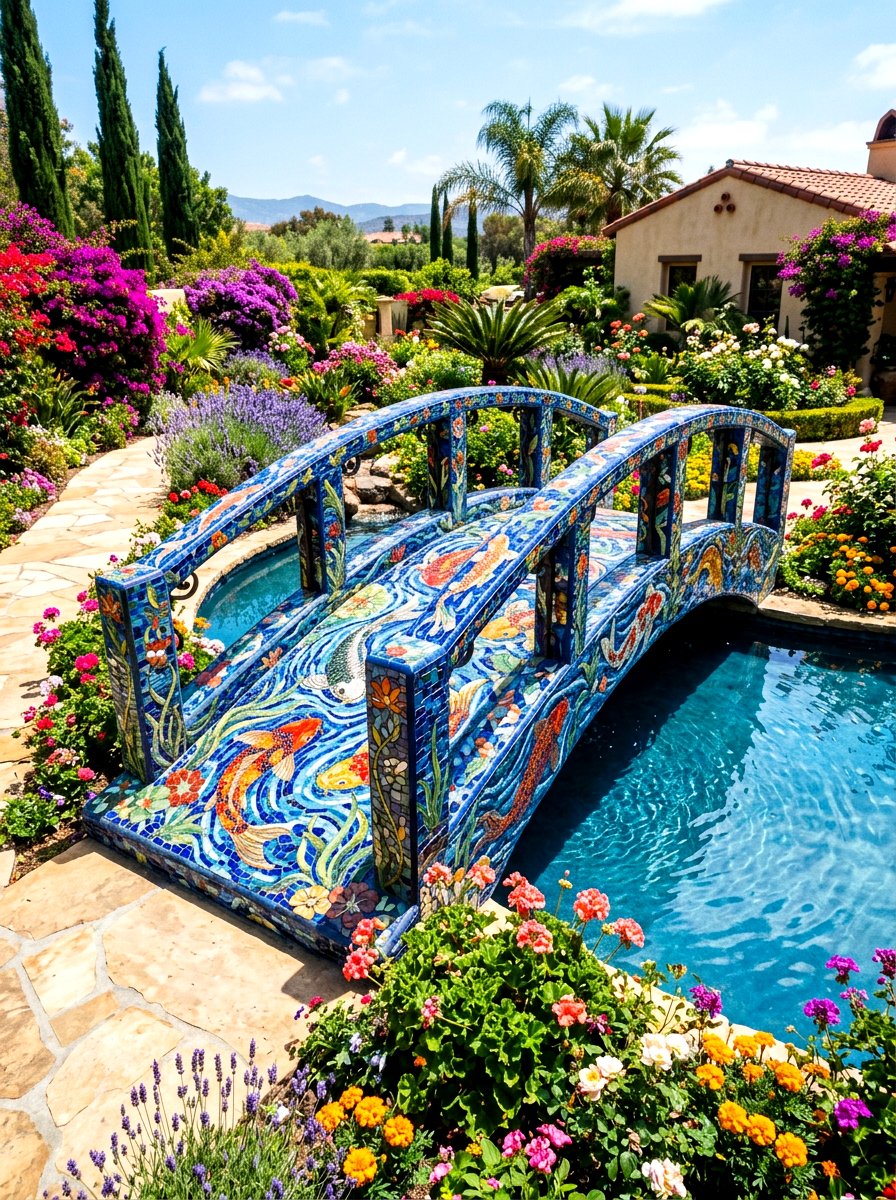
A mosaic tile bridge is a colorful and artistic way to express your personality in your garden design. The surface of the bridge is covered in intricate patterns made from ceramic, glass, or stone tiles. You can create a scene that matches the aquatic life in your pond, such as koi fish, dragonflies, or water lilies. This style works best in Mediterranean or eclectic gardens where bold colors are welcomed. Mosaic tiles are easy to clean and provide a durable, waterproof surface that will stay vibrant for years. It turns a simple crossing into a beautiful, permanent work of art for your home.
29. Redwood Bridge
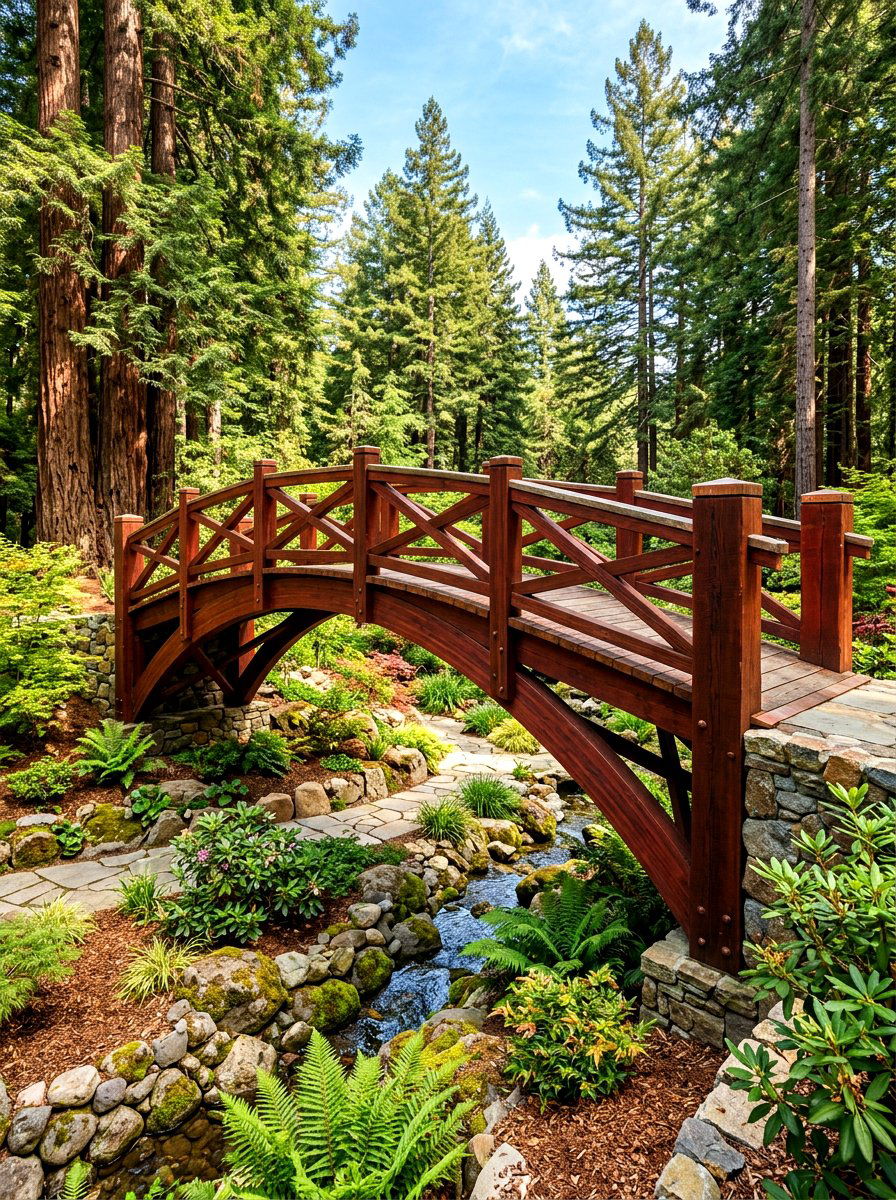
A redwood bridge is a premium choice known for its natural resistance to decay and its stunning, deep reddish-brown hue. This wood is incredibly stable and less likely to warp or split compared to other varieties, making it ideal for wet environments. The rich color of redwood complements the natural tones of stone and soil, helping the bridge blend into the landscape effortlessly. You can finish it with a clear sealer to maintain the vibrant red or let it age to a soft silver-gray. Its durability and beauty make it one of the most sought-after materials for high-quality garden structures and long-lasting pond bridges.
30. Cobblestone Bridge
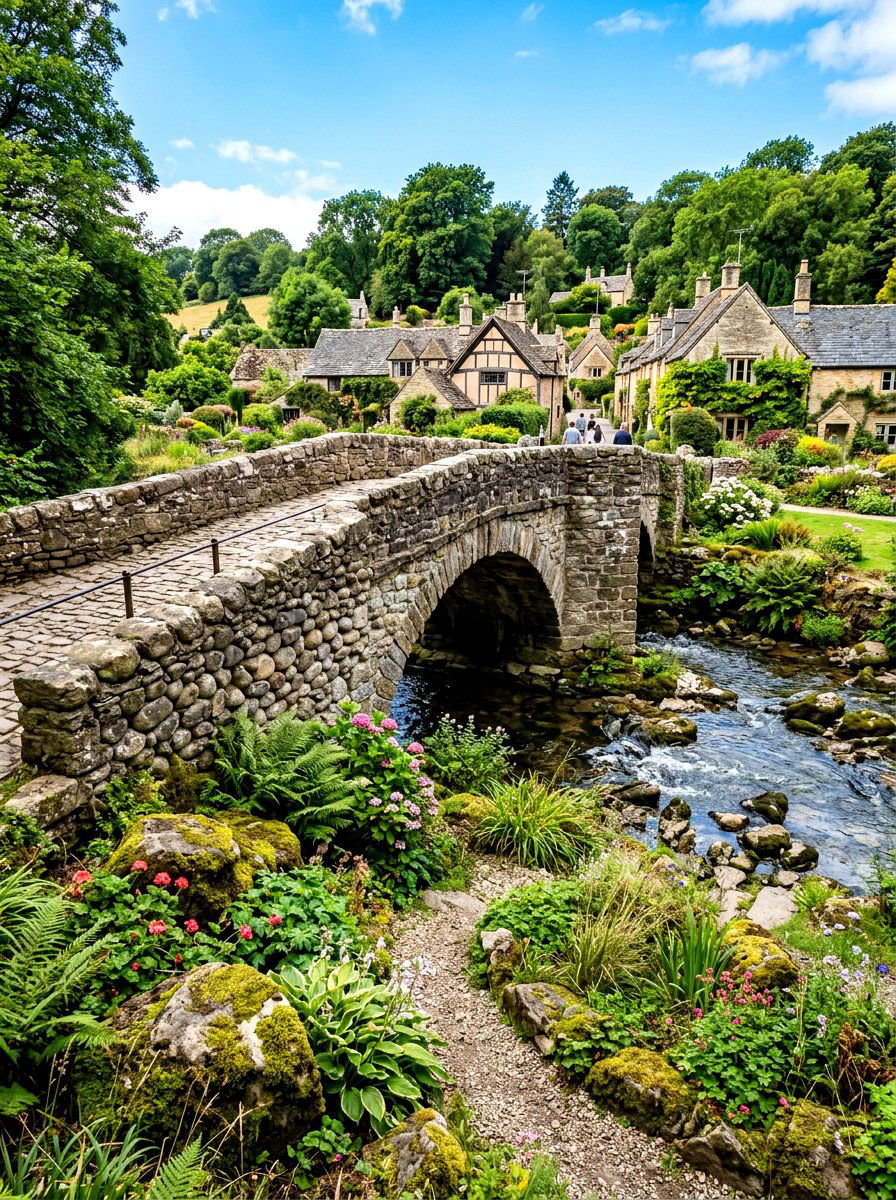
A cobblestone bridge offers a heavy, historic, and highly textured look that brings a sense of permanence to your backyard. Using rounded river stones or square granite cobbles creates a rugged surface that feels like an ancient village crossing. This design is exceptionally sturdy and can withstand any weather conditions without showing signs of wear. It looks particularly stunning when paired with a pond that features rocky edges and waterfalls. The gaps between the stones can be filled with moss to create a soft, aged appearance. This bridge style is a true landmark in any garden, providing a solid and beautiful path for generations.
Conclusion:
Adding a bridge to your garden pond is one of the most effective ways to transform a simple water feature into a captivating destination. Throughout this guide, we have explored a wide range of styles, from the minimalist elegance of stone slabs to the intricate beauty of wrought iron. The right bridge not only improves the accessibility of your yard but also provides a unique vantage point to enjoy your aquatic life and plants. By carefully selecting materials and designs that complement your home's architecture, you create a cohesive and inviting outdoor space. We hope these thirty ideas inspire you to build a bridge that brings peace, joy, and lasting beauty to your landscape.

Related posts: