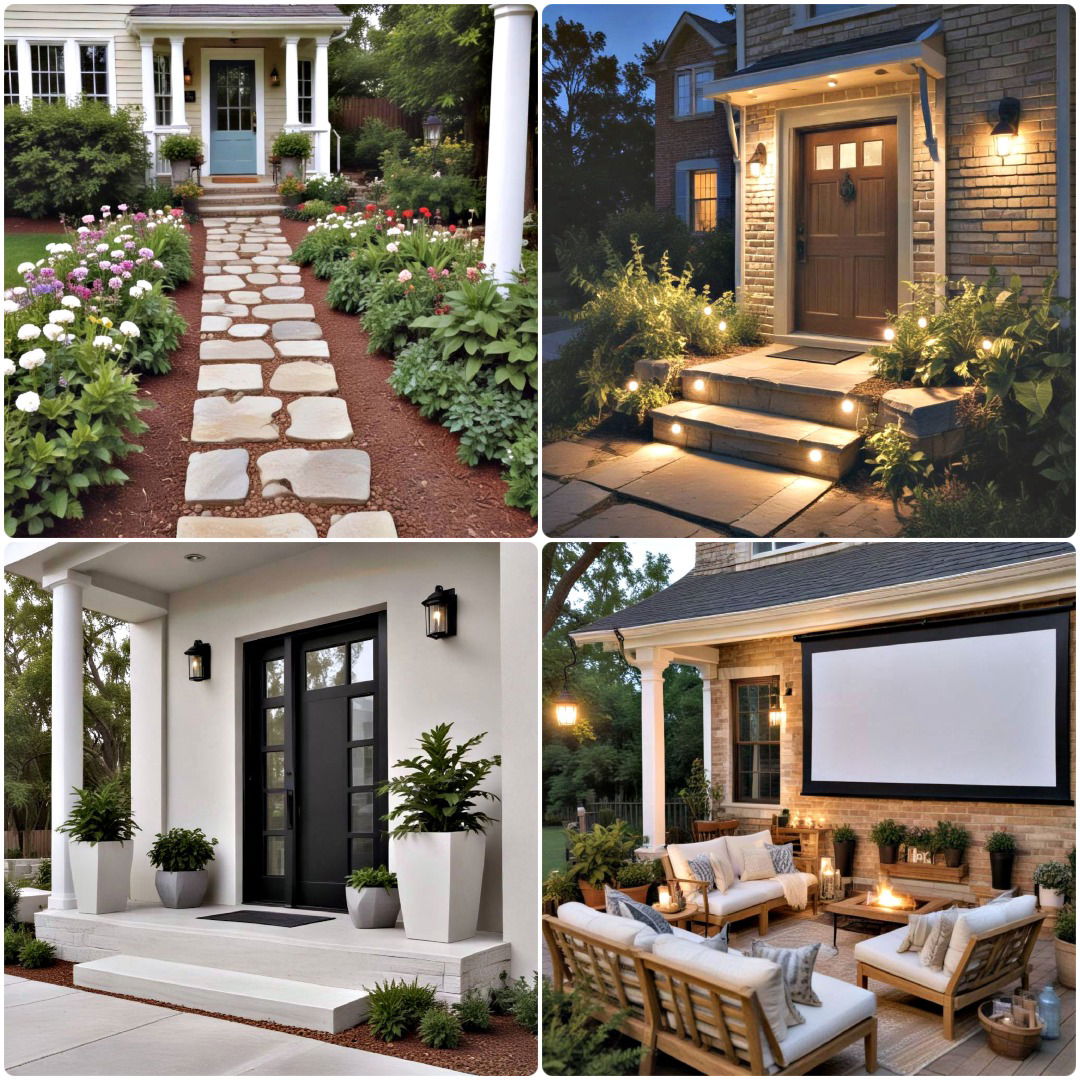
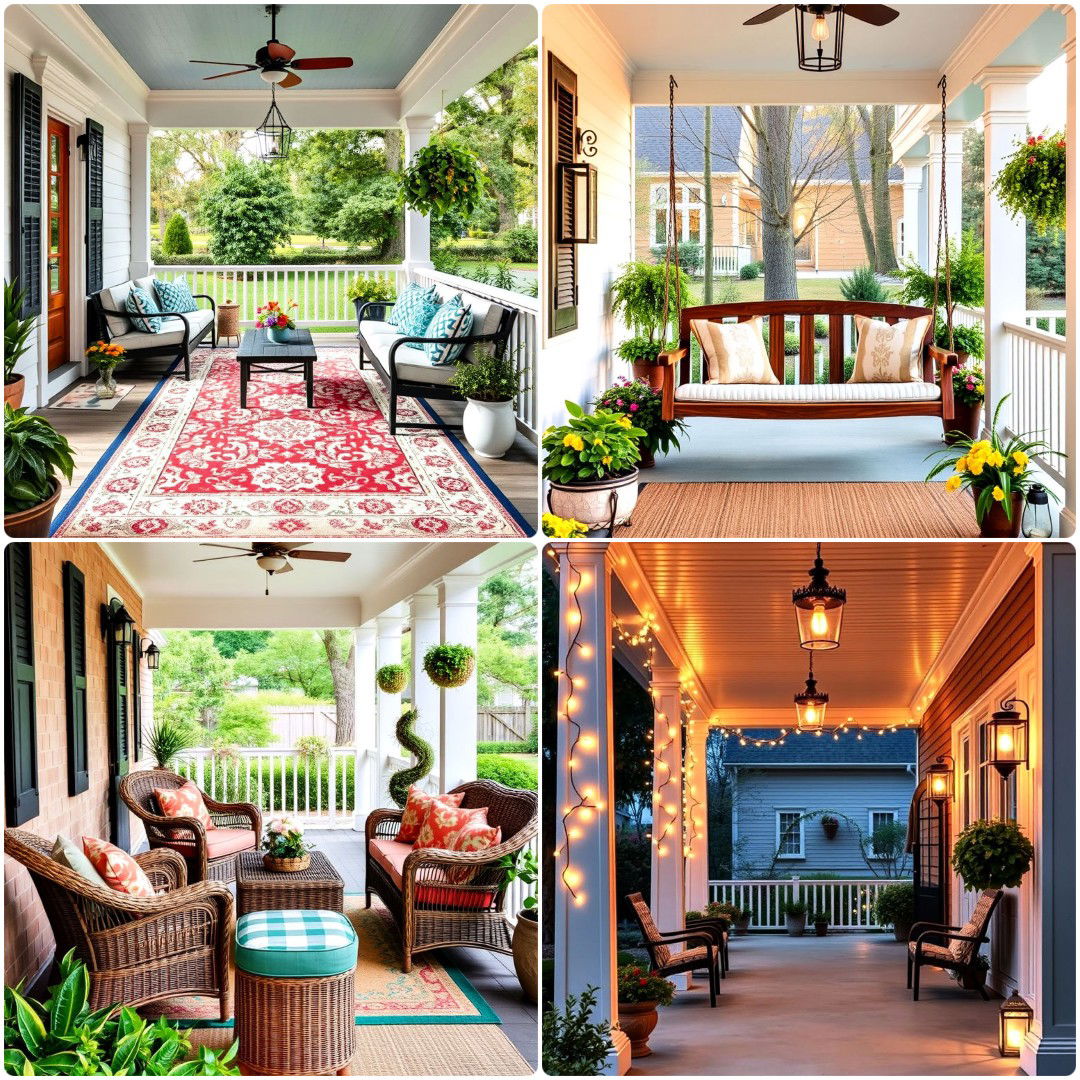
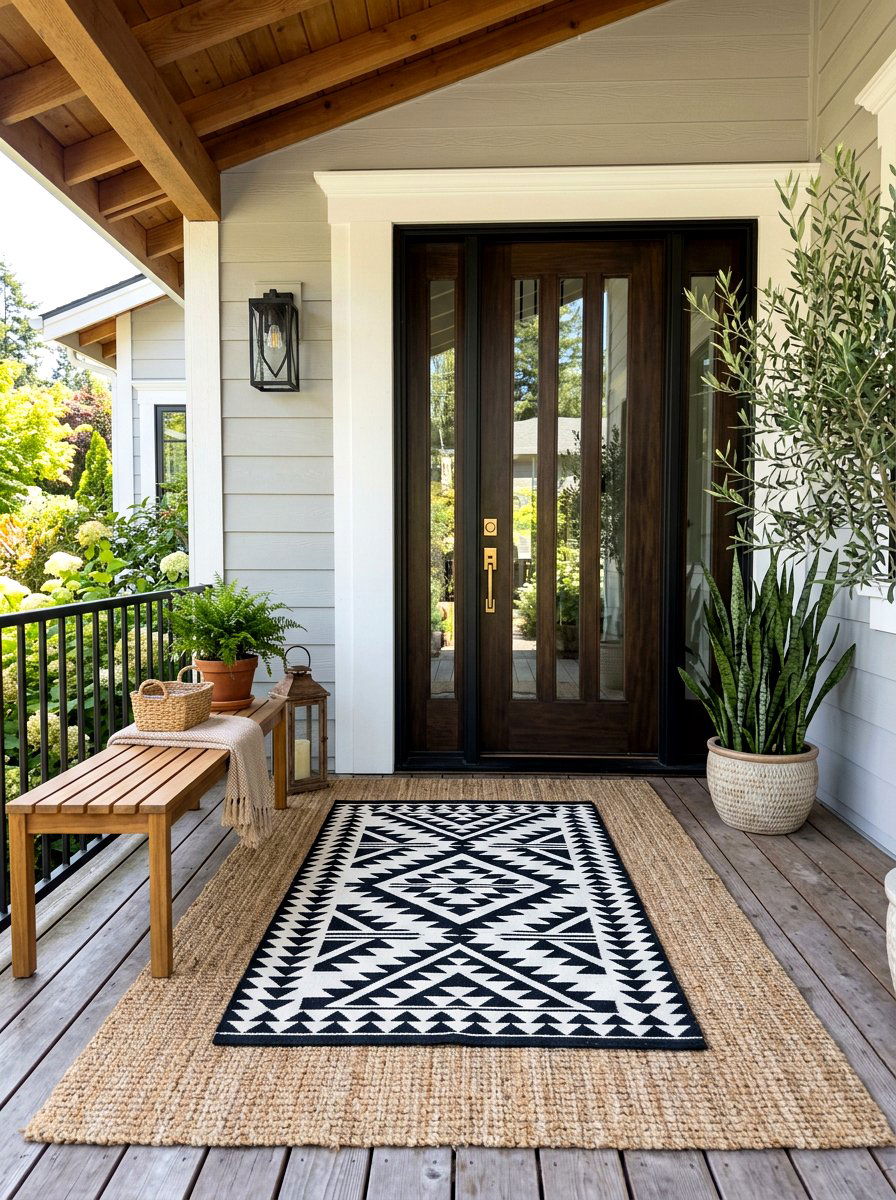
Transforming your front porch with topiary arrangements is one of the most effective ways to boost your home’s curb appeal and create a welcoming atmosphere. These living sculptures offer a sense of structure, elegance, and timeless beauty that resonates perfectly with the curated Pinterest aesthetic. Whether you prefer the classic look of symmetrical boxwoods or the whimsical charm of spiral cedars, topiaries provide a versatile solution for any entryway. By choosing the right shapes and planters, you can define your style, from modern minimalist to rustic farmhouse. This guide explores a wide variety of topiary options that will help you craft a sophisticated and polished look for your home's exterior.
1. Double Ball Boxwood Topiary Entry
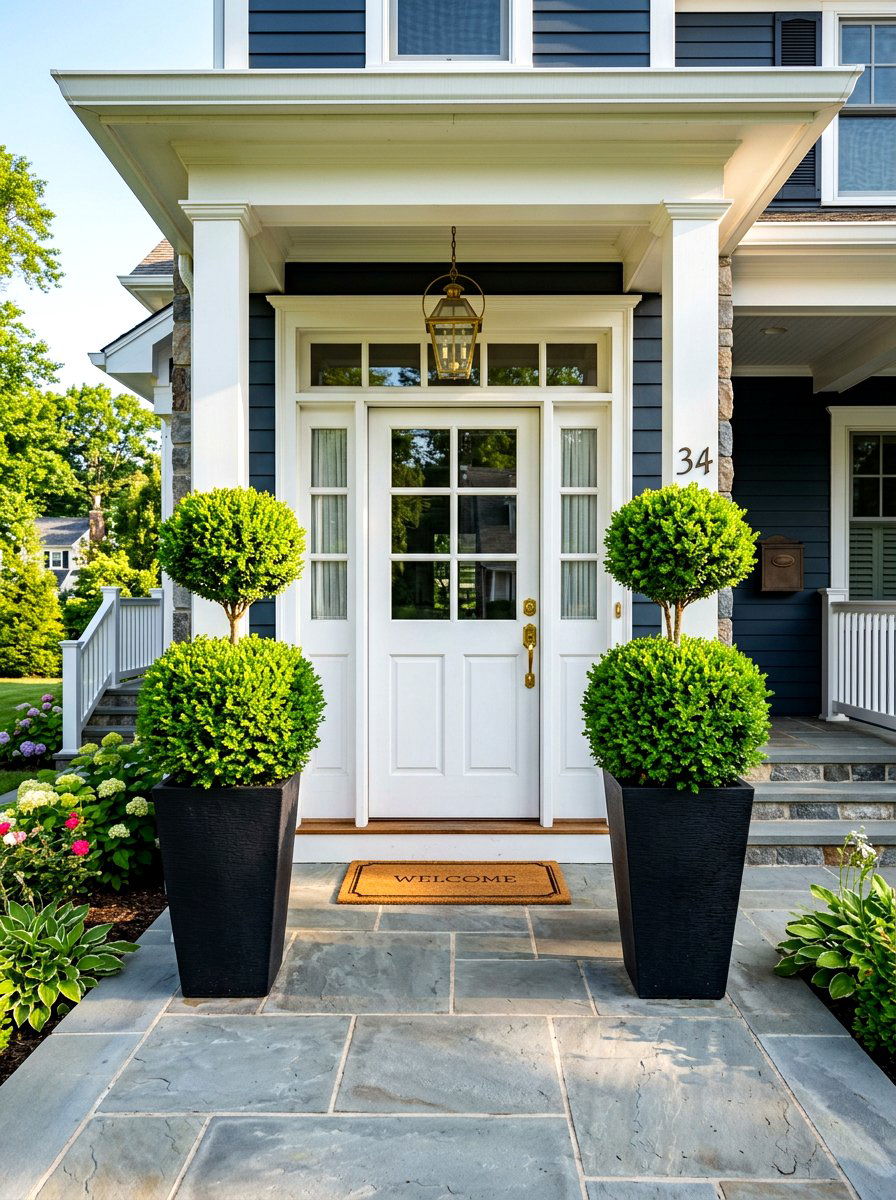
A double ball boxwood topiary offers a classic and structured look that fits perfectly on either side of a traditional front door. This specific style features two distinct spheres of dense greenery stacked on a single woody stem. It provides a sense of height and elegance without overwhelming a smaller entryway. To achieve a high-end Pinterest aesthetic, place these topiaries in tall, tapered planters made of resin or stone. The dark green leaves of the boxwood contrast beautifully against white or light-colored house siding. This look remains timeless and works across various architectural styles, from colonial to contemporary homes. It is a low-maintenance way to add instant sophistication.
2. Spiral Cedar Front Porch
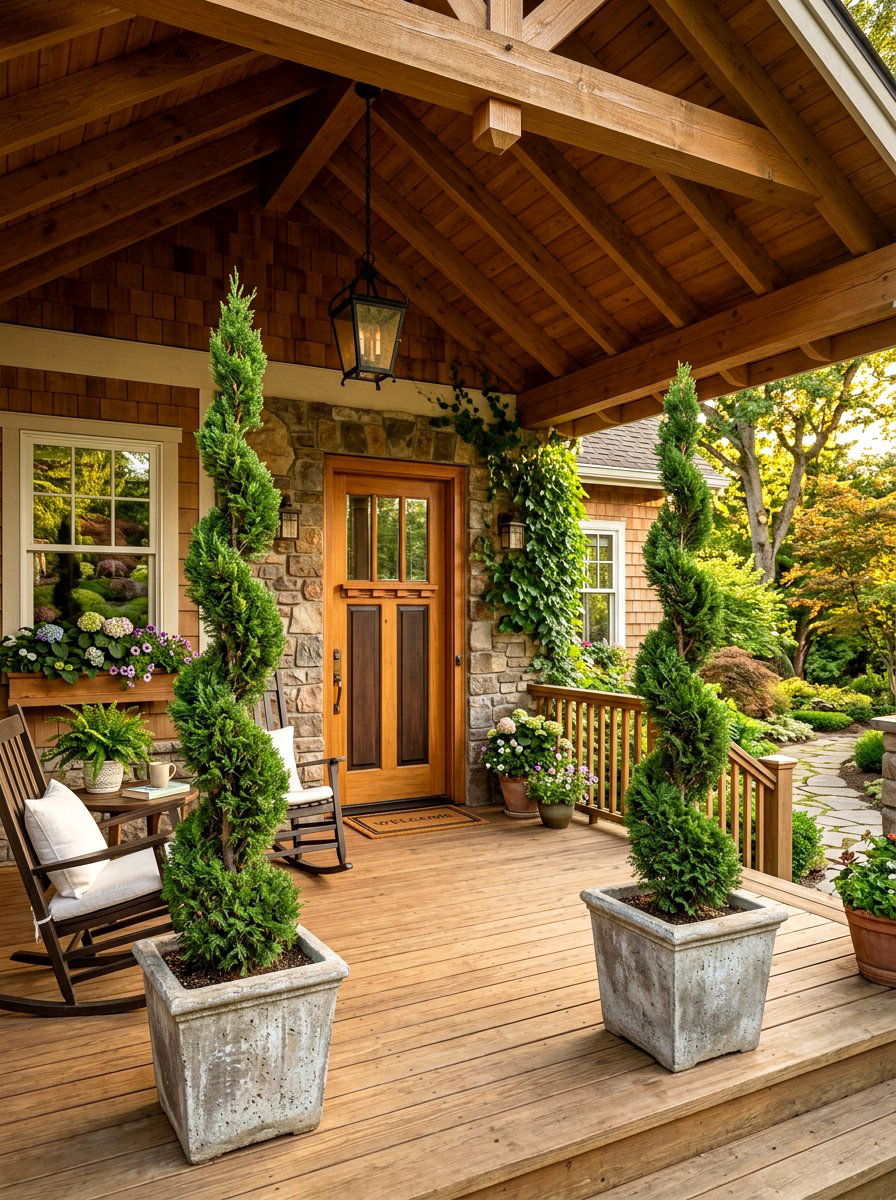
A spiral cedar front porch provides a dynamic and eye-catching look that immediately draws the eye toward your home’s entrance. These topiaries are skillfully pruned into a twisting, corkscrew shape that adds a sense of movement and architectural interest to the space. They work exceptionally well on porches with high ceilings or grand entryways, as their verticality complements the height of the architecture. For a polished aesthetic, pair these spiral trees with heavy concrete or stone planters to anchor the design. The textured foliage of the cedar offers a more organic feel compared to the smooth leaves of other common topiary plants. This style is perfect for those wanting a dramatic and upscale look.
3. Tall Cone Topiary Entrance
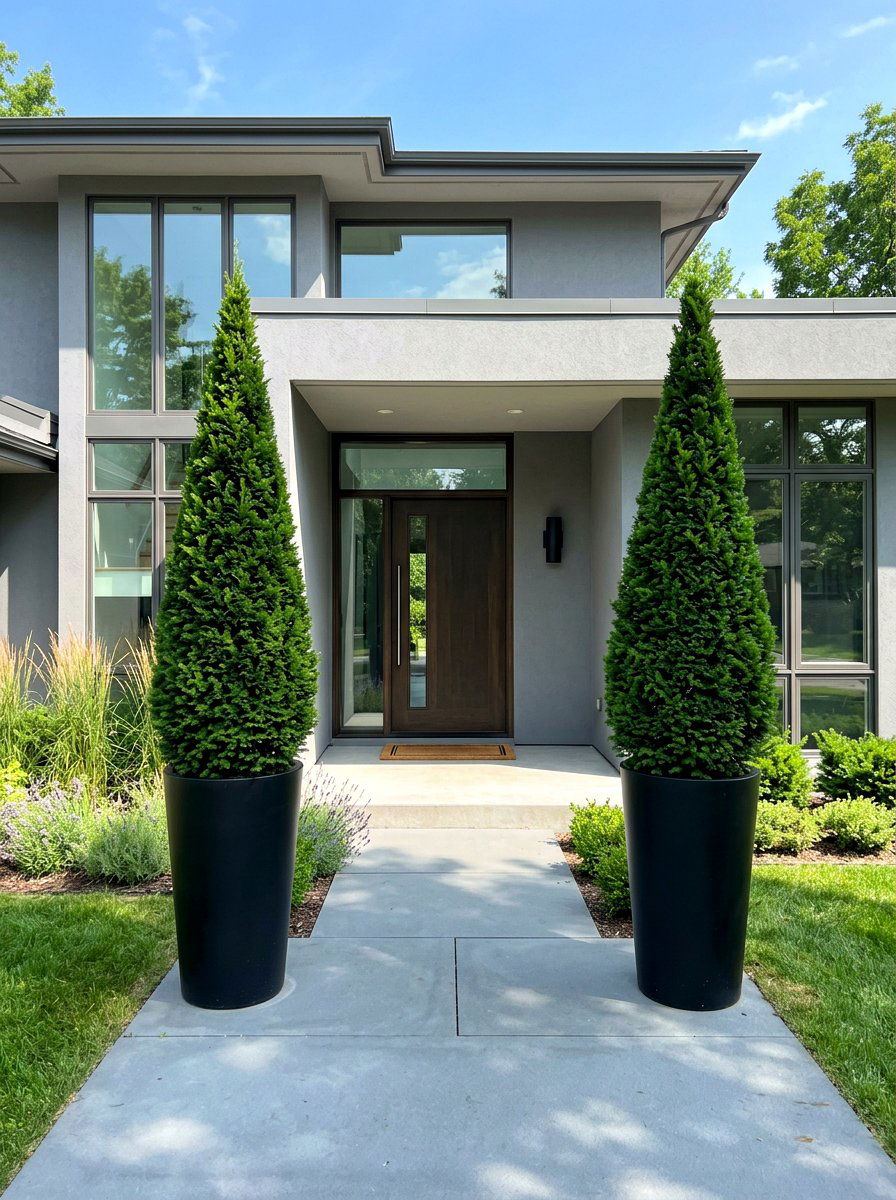
A tall cone topiary entrance creates a formal and stately vibe that is reminiscent of grand European gardens. These pointed, pyramid-shaped greens offer a sharp, clean silhouette that frames a front door with absolute precision. Using yew or juniper for this shape ensures the foliage stays dense and dark throughout the year. For a modern twist, place these conical trees in sleek black urns or minimalist square pots. This arrangement works beautifully for narrow porches where you want to add height without taking up too much floor space. The sharp lines of the cone provide a wonderful contrast to the soft textures of nearby flowering shrubs or wreaths.
4. Triple Ball Boxwood Entryway
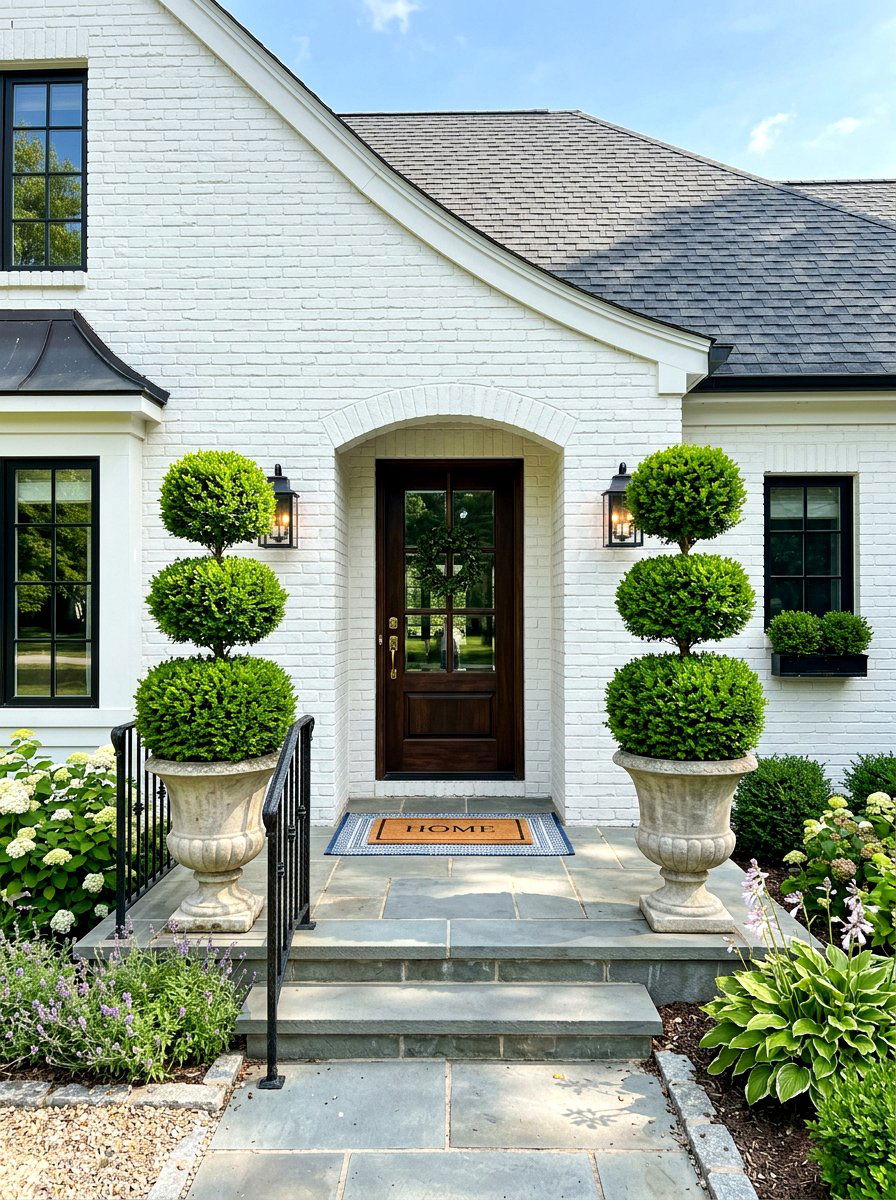
The triple ball boxwood entryway is a sophisticated choice for homeowners who want to make a bold architectural statement. This design features three perfectly pruned spheres that decrease slightly in size as they reach the top, creating a graceful, tiered effect. It adds a level of whimsy and artistic flair to a standard porch layout. To keep the look cohesive, choose large, heavy-duty planters that can support the height and weight of these substantial plants. Placing them on a clean, neutral rug can help ground the display and tie the whole porch design together. This style is particularly effective for houses with tall, narrow entryways that need vertical balance.
5. Faux Boxwood Ball Porch
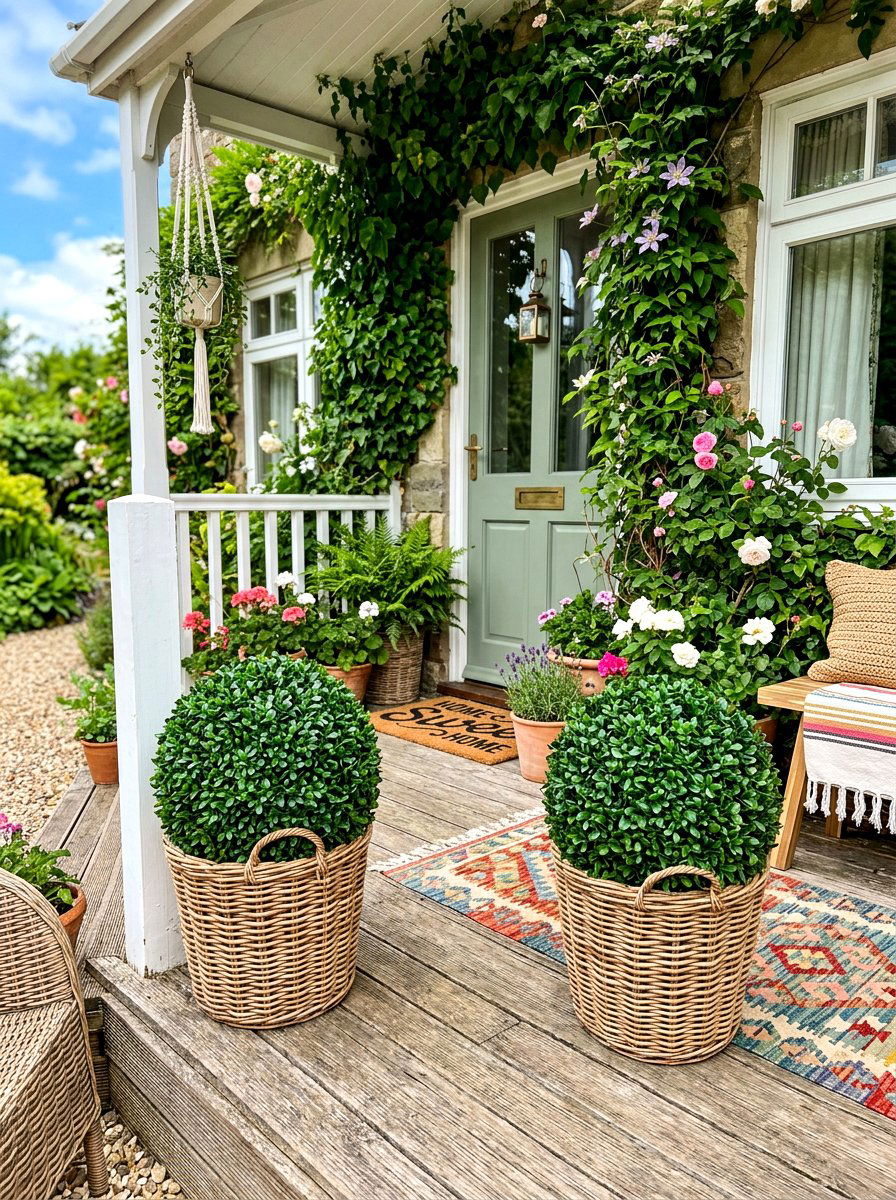
A faux boxwood ball porch is the ultimate solution for those who want the high-end look of topiaries without the constant maintenance. High-quality artificial boxwood balls are now designed to look incredibly realistic, featuring varied shades of green and natural-looking textures. You can place these spheres directly into decorative pots or even let them sit loosely in a large basket for a more relaxed, boho-chic aesthetic. They are UV-resistant and weather-proof, making them ideal for porches that receive harsh afternoon sun or freezing winter temperatures. Using faux plants allows you to maintain a perfectly manicured look year-round, regardless of your gardening skills or the local climate.
6. Round Potted Boxwood Display
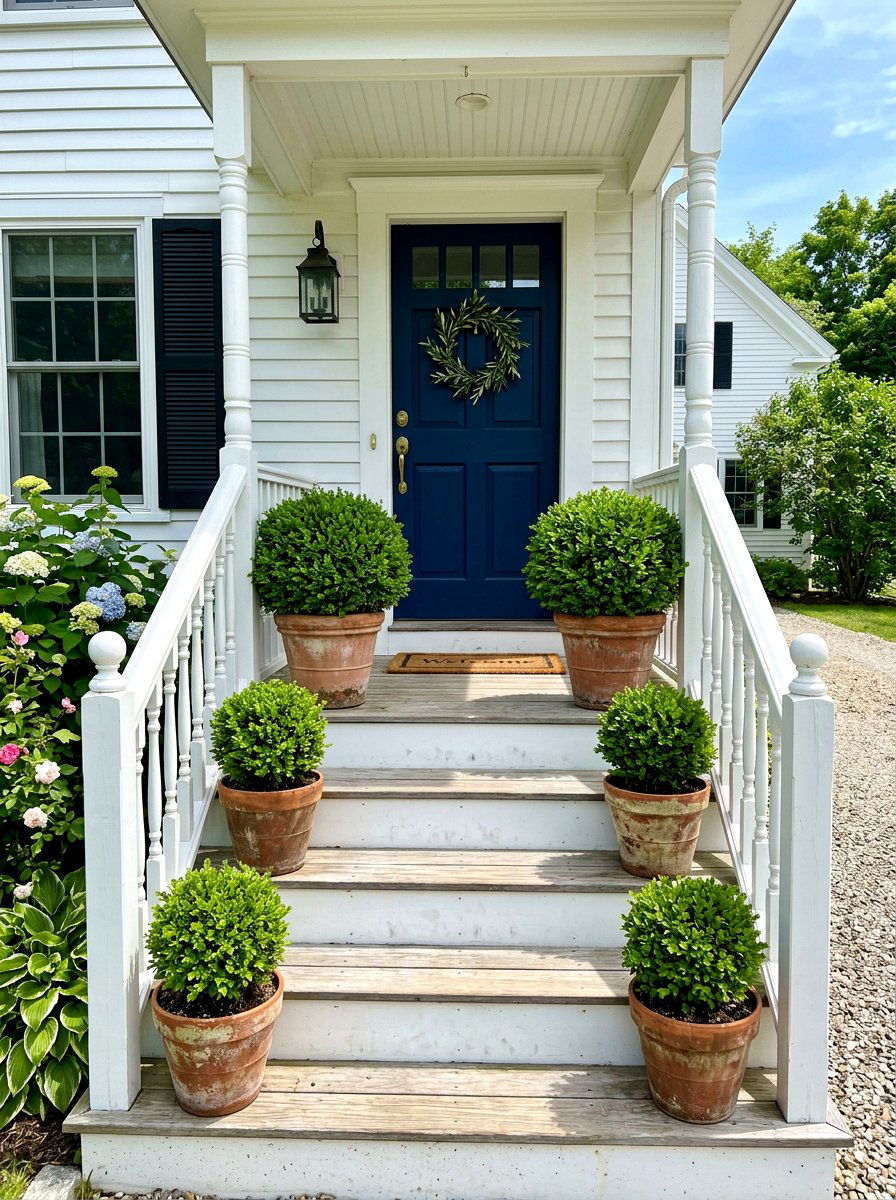
The round potted boxwood display is a versatile and approachable design that brings a touch of greenery to any porch corner. Instead of tall stems, these topiaries consist of low, dense spheres sitting directly on the soil of the planter. This low-profile look is excellent for layering with taller elements or for placing on porch steps to guide guests toward the door. For a farmhouse aesthetic, use aged terracotta pots or galvanized metal buckets. The simple, circular shape of the boxwood provides a calming symmetry that feels both organized and natural. It is a great way to soften the hard lines of porch railings and wooden floorboards.
7. Large Potted Topiary Entrance
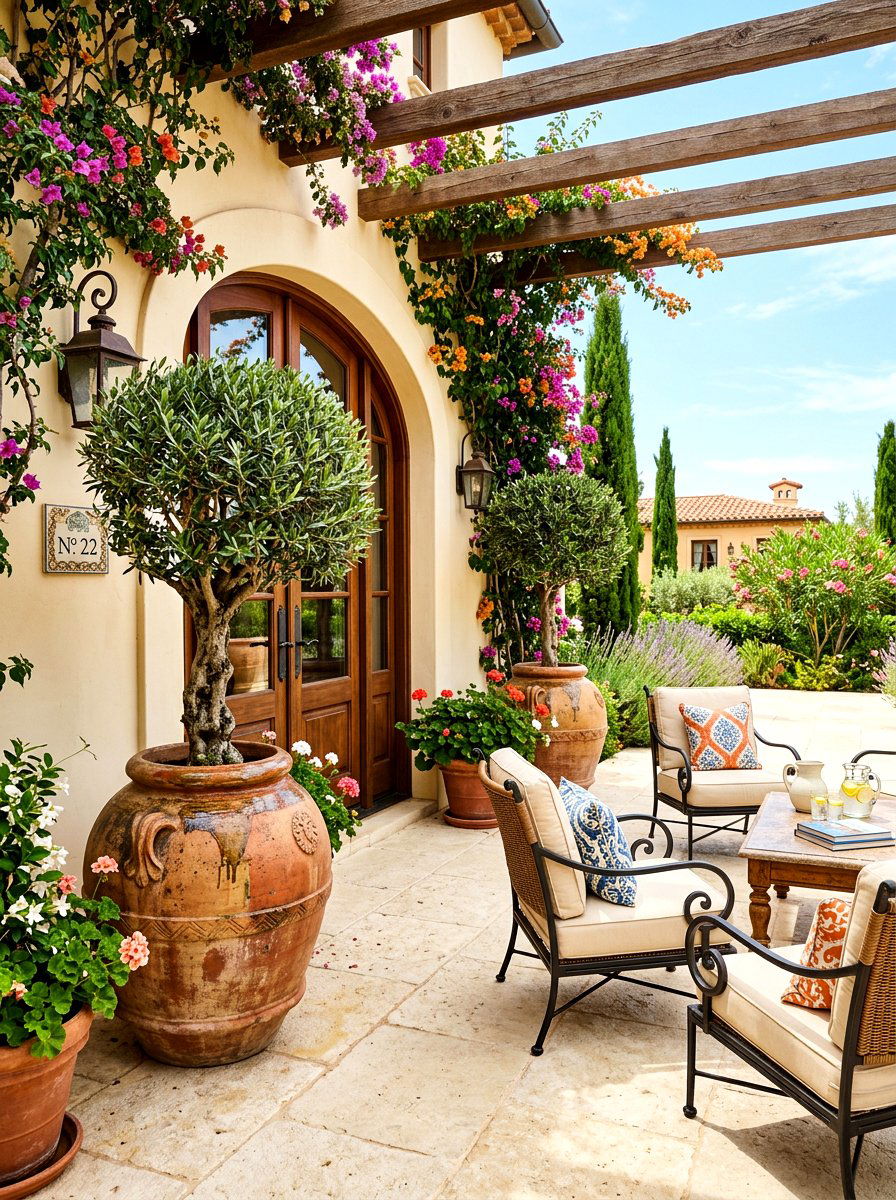
A large potted topiary entrance serves as a commanding focal point that instantly elevates the perceived value of your home. Choosing oversized plants — such as a mature olive tree or a massive cedar — allows you to fill large empty spaces on a wide porch or veranda. The scale of the plant should match the scale of your front door to ensure visual harmony. Use substantial, high-quality planters like oversized ceramic urns or heavy wooden boxes to complement the grandeur of the greenery. This design approach creates a lush, established feeling that makes your home feel more private and secluded from the street while maintaining a very high-end look.
8. Symmetrical Front Door Topiary
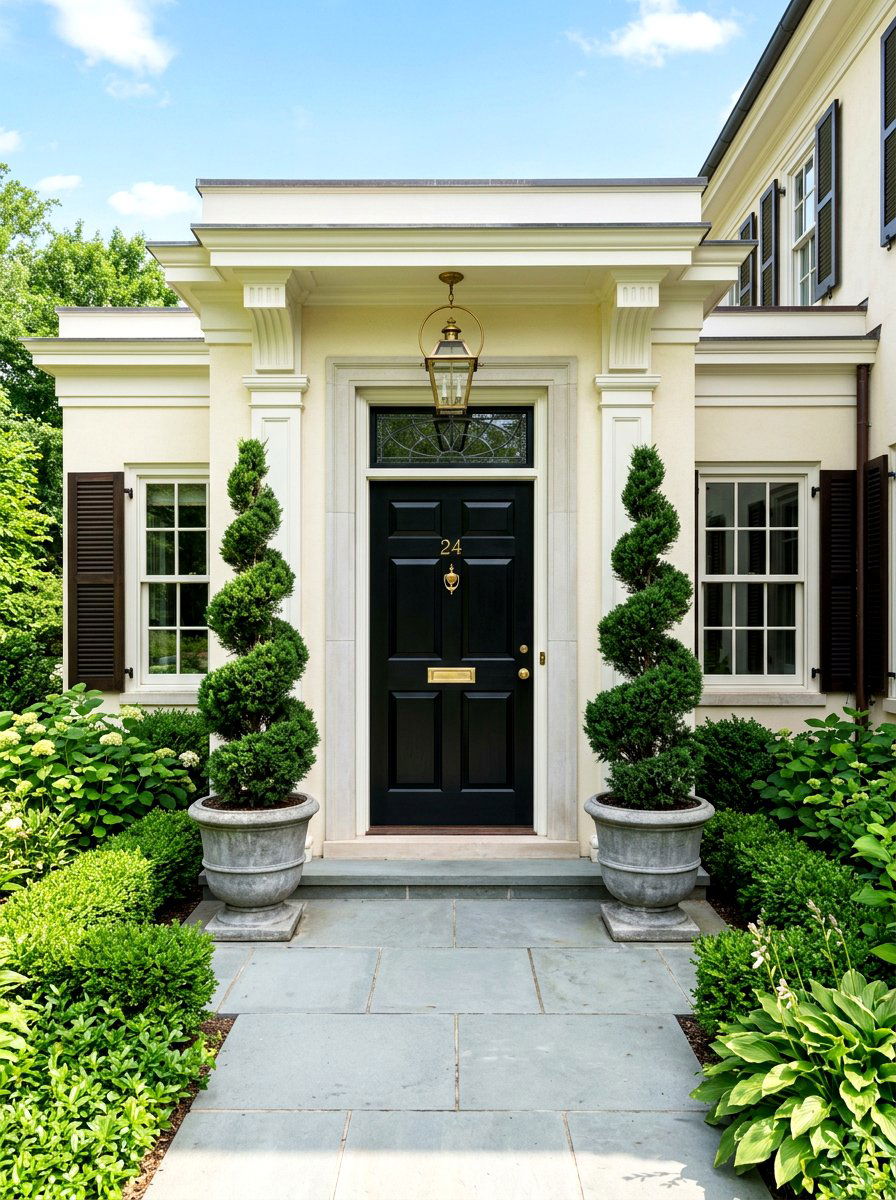
Symmetrical front door topiary arrangements are the gold standard for creating a balanced and harmonious entryway. Placing identical topiaries on both sides of the door creates a sense of order and formal beauty that never goes out of style. This classic technique guides the visitor’s eye directly to the entrance, making it feel more prominent and welcoming. You can use any shape — balls, cones, or spirals — as long as they are matched perfectly in height and volume. Consistency in the choice of planters is also key to achieving this look. It is an easy yet powerful way to make a small cottage or a large suburban home look more expensive.
9. Modern Square Topiary Setup
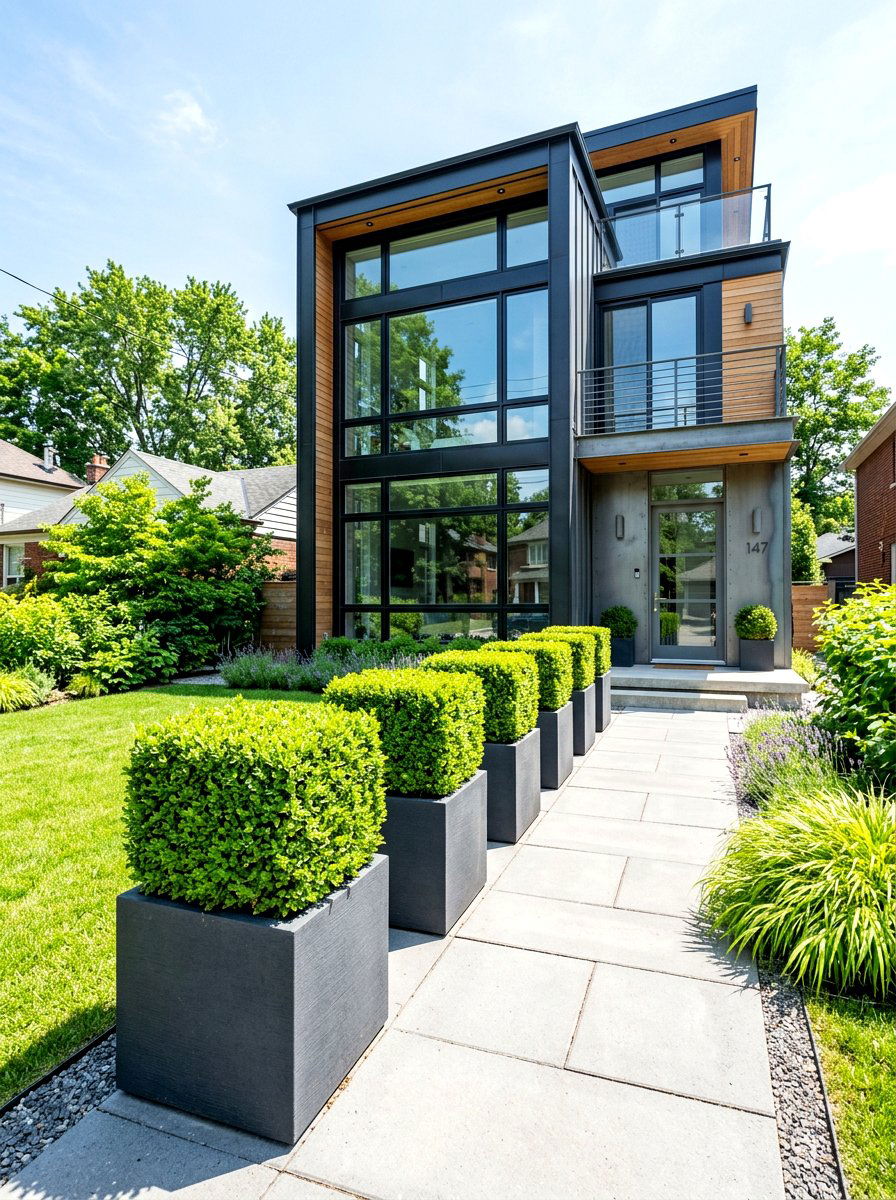
The modern square topiary setup is perfect for homes with contemporary architecture and clean lines. This design utilizes square or rectangular planters filled with neatly trimmed boxwood hedges or cubic topiary forms. The sharp 90-degree angles of the greenery echo the geometry of modern windows and doors, creating a cohesive and intentional aesthetic. To keep the look minimalist, stick to a monochrome palette with black or charcoal gray pots. This arrangement looks stunning when paired with industrial materials like concrete, steel, or glass. It offers a very tidy and controlled appearance that is ideal for homeowners who prefer a sleek, clutter-free outdoor environment.
10. Artificial Topiary Porch Arrangement
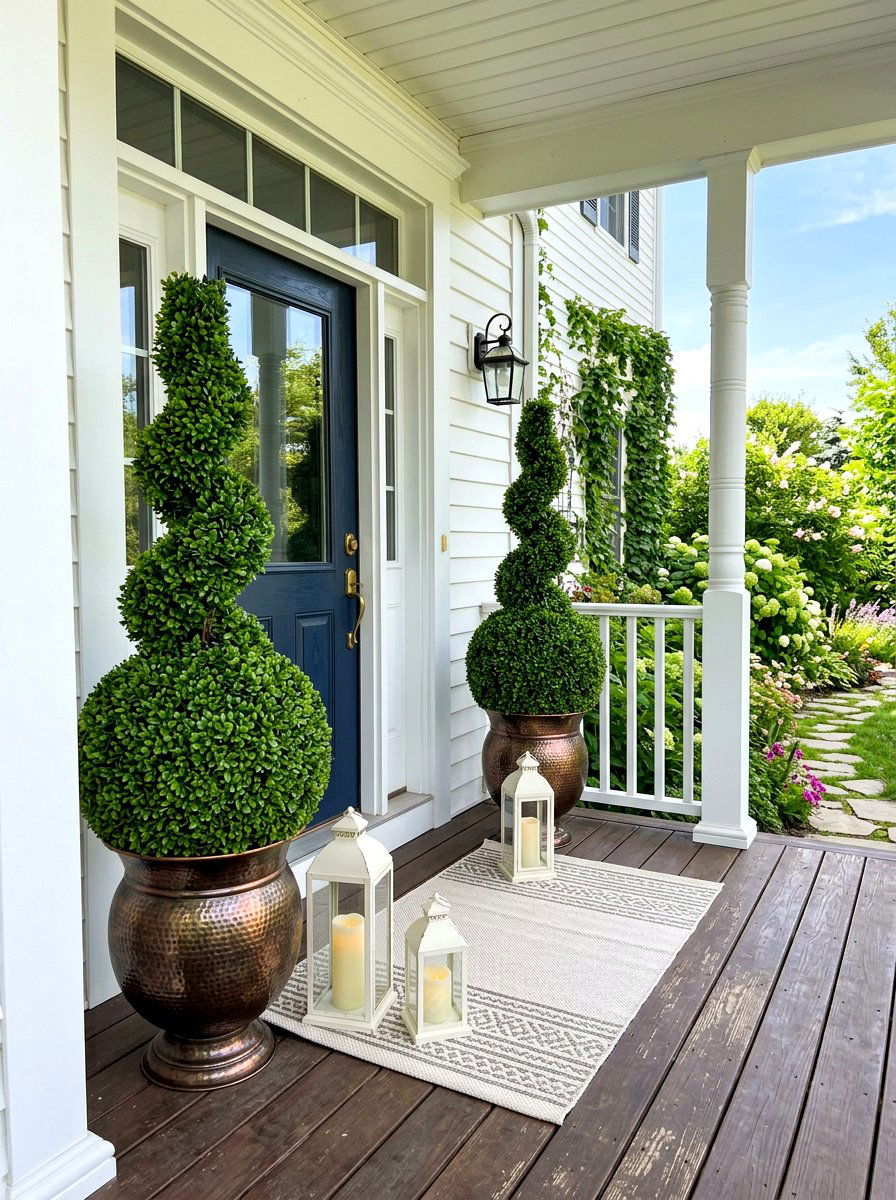
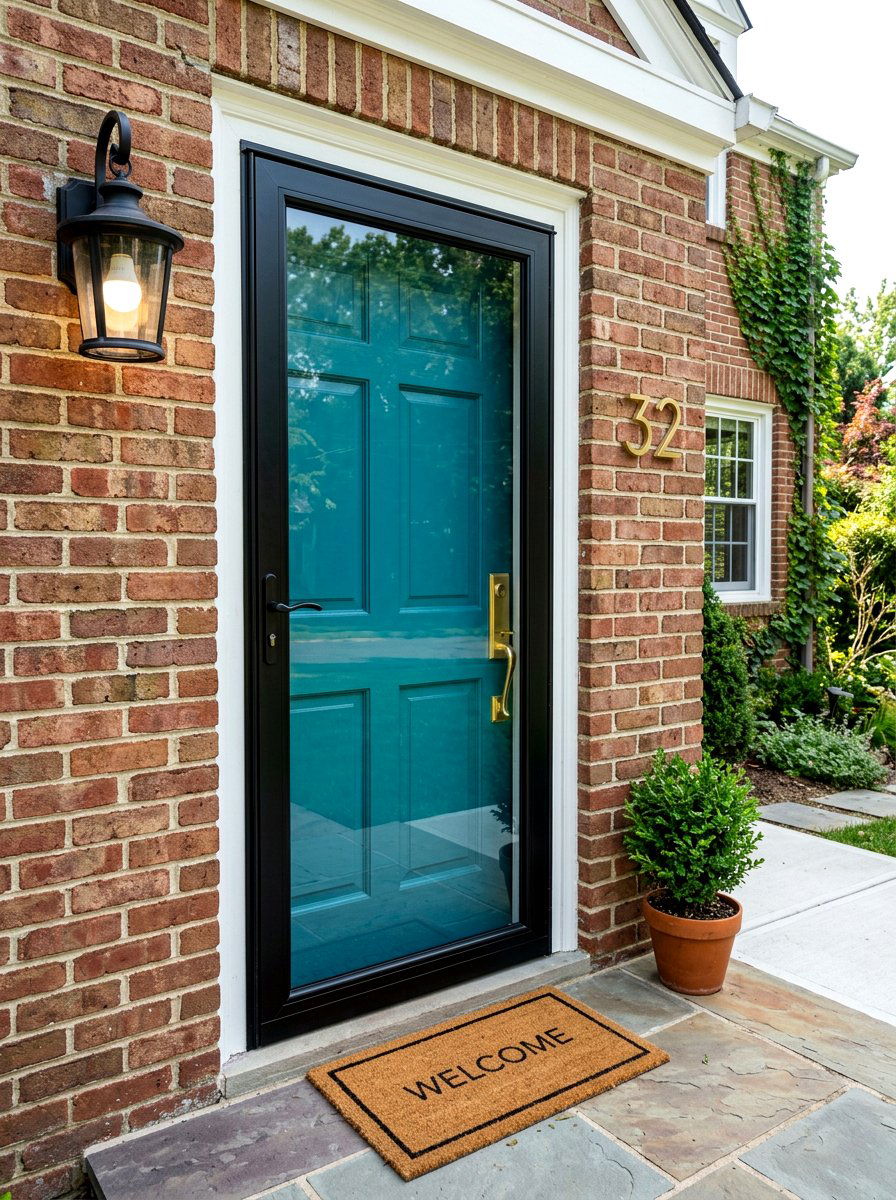
An artificial topiary porch arrangement provides a consistent, evergreen look that withstands the test of time and weather. Modern faux topiaries are crafted with such detail that they often fool the eye, even from a close distance. This design idea allows you to experiment with shapes that might be difficult to grow or maintain in your specific hardiness zone. You can mix and match different heights and styles to create a layered, "botanical" look without the worry of watering or pruning. Placing them in heavy pots filled with real soil or stones adds to the illusion of reality while ensuring they stay upright during windy days.
11. Cedar Pine Spiral Decor
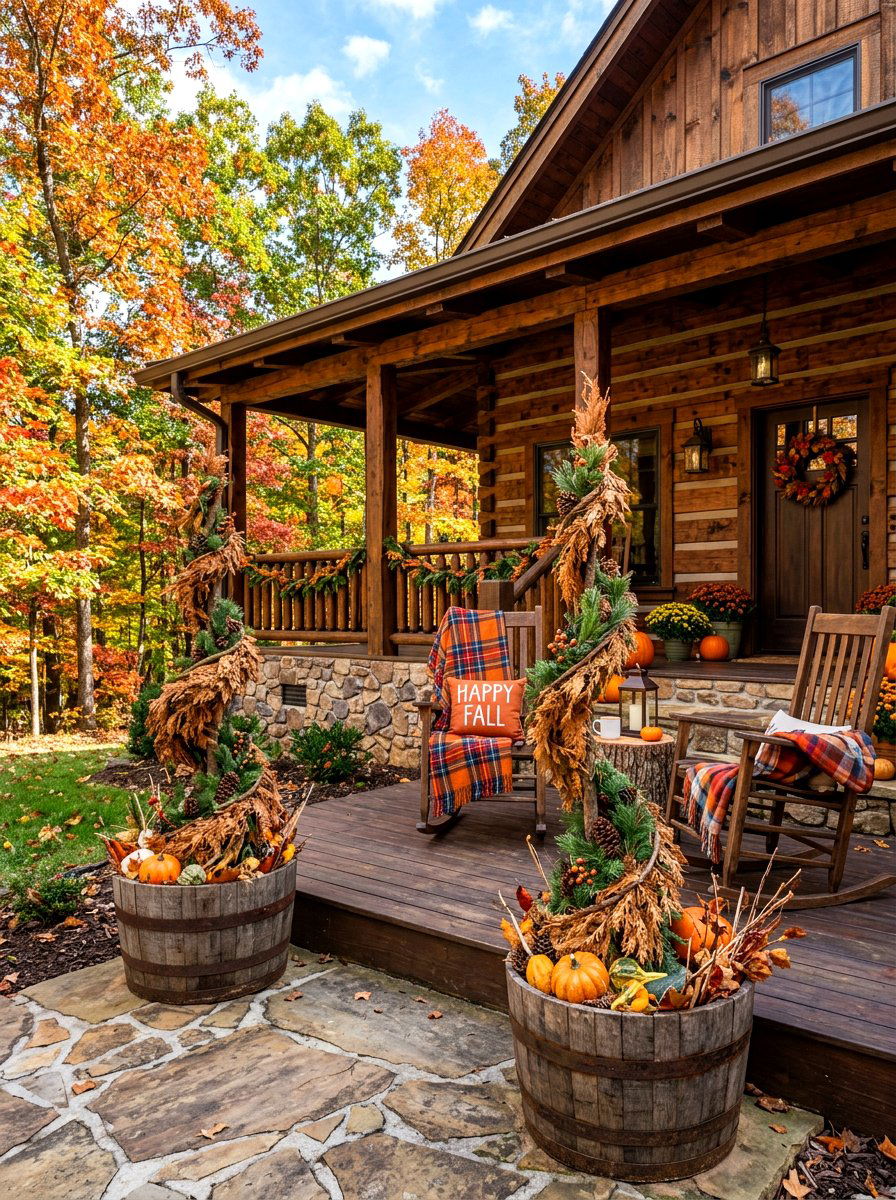
Cedar pine spiral decor brings a rustic and woodsy charm to your front porch while maintaining a formal silhouette. The feathery texture of cedar or pine branches offers a softer look than the tight foliage of boxwood, making it feel more integrated with natural surroundings. These spiral trees are particularly popular during the cooler months but look fantastic year-round when paired with the right decor. For a cozy, mountain-inspired aesthetic, place them in wooden barrels or woven baskets. The natural scent of the pine also adds a sensory layer to your entryway, greeting guests with a fresh, forest-like aroma every time they approach your front door.
12. Miniature Potted Topiary Cluster
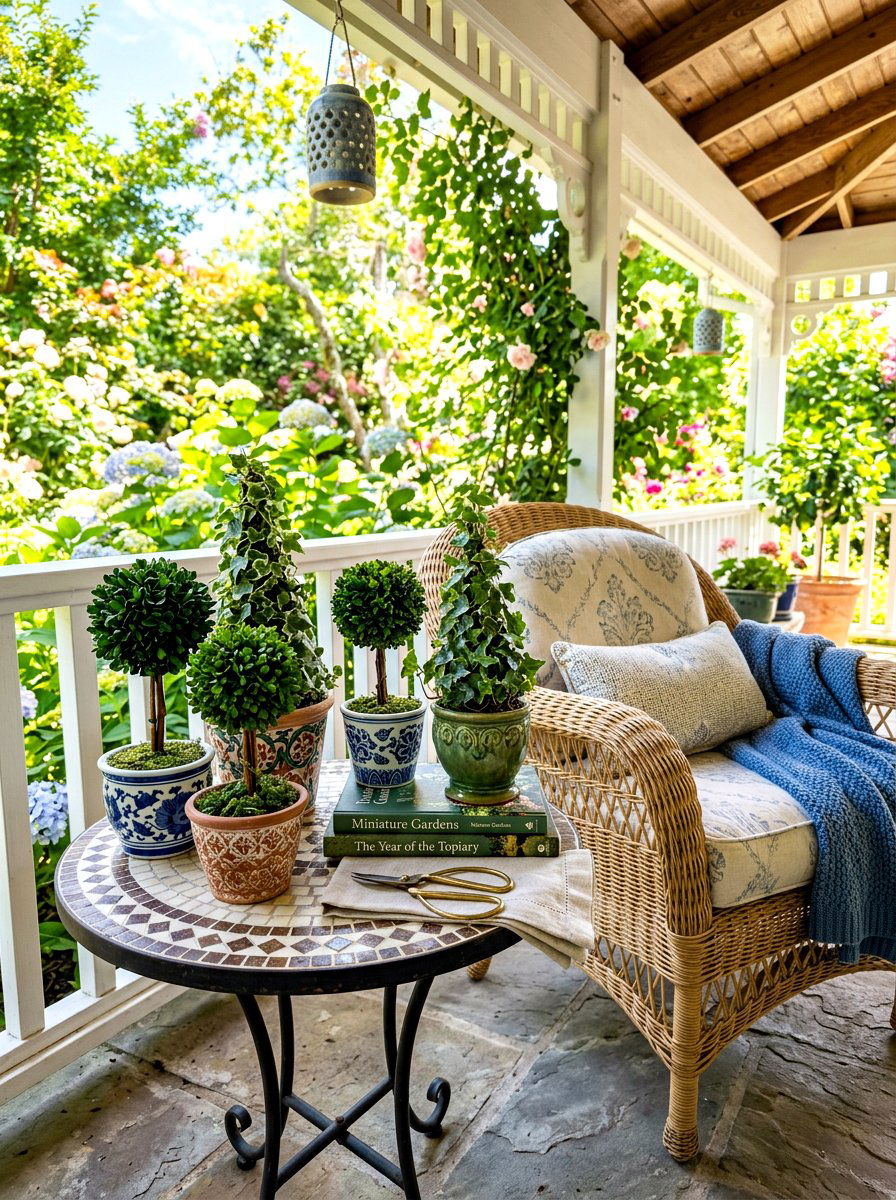
A miniature potted topiary cluster is a charming way to add detail to a small porch or an outdoor side table. Instead of one large plant, this design uses a grouping of three or five small topiaries in varying heights and shapes. This creates a curated, "collected" look that feels personal and intimate. Use a variety of small, ornate pots to add texture and visual interest to the arrangement. This setup is ideal for porch spaces that double as seating areas, as the small scale of the plants doesn't obstruct views. It allows you to showcase different plant species like ivy, rosemary, or miniature boxwood in a single cohesive display.
13. Poodle Cut Topiary Porch
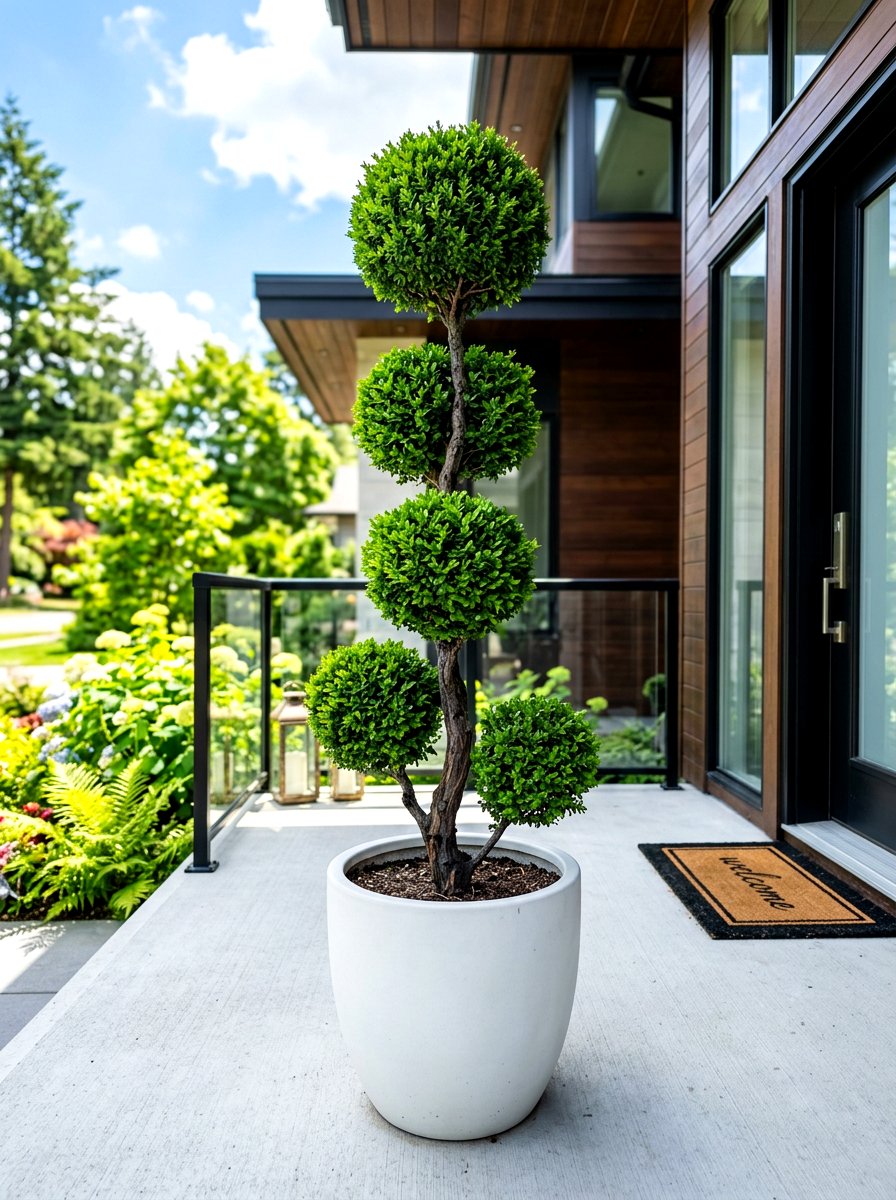
The poodle cut topiary porch design is a whimsical and artistic choice that adds a unique character to your home. This style, also known as a pom-pom topiary, features multiple spheres of greenery floating at different heights on various branches of a single tree. It creates a sculptural look that feels almost like a piece of living art. Because this shape is so distinct, it works best as a standalone statement piece rather than in a crowded arrangement. Pair it with a simple, understated planter to let the complex shape of the plant take center stage. It is a fantastic conversation starter for any visitor.
14. Columnar Topiary For Small Porches
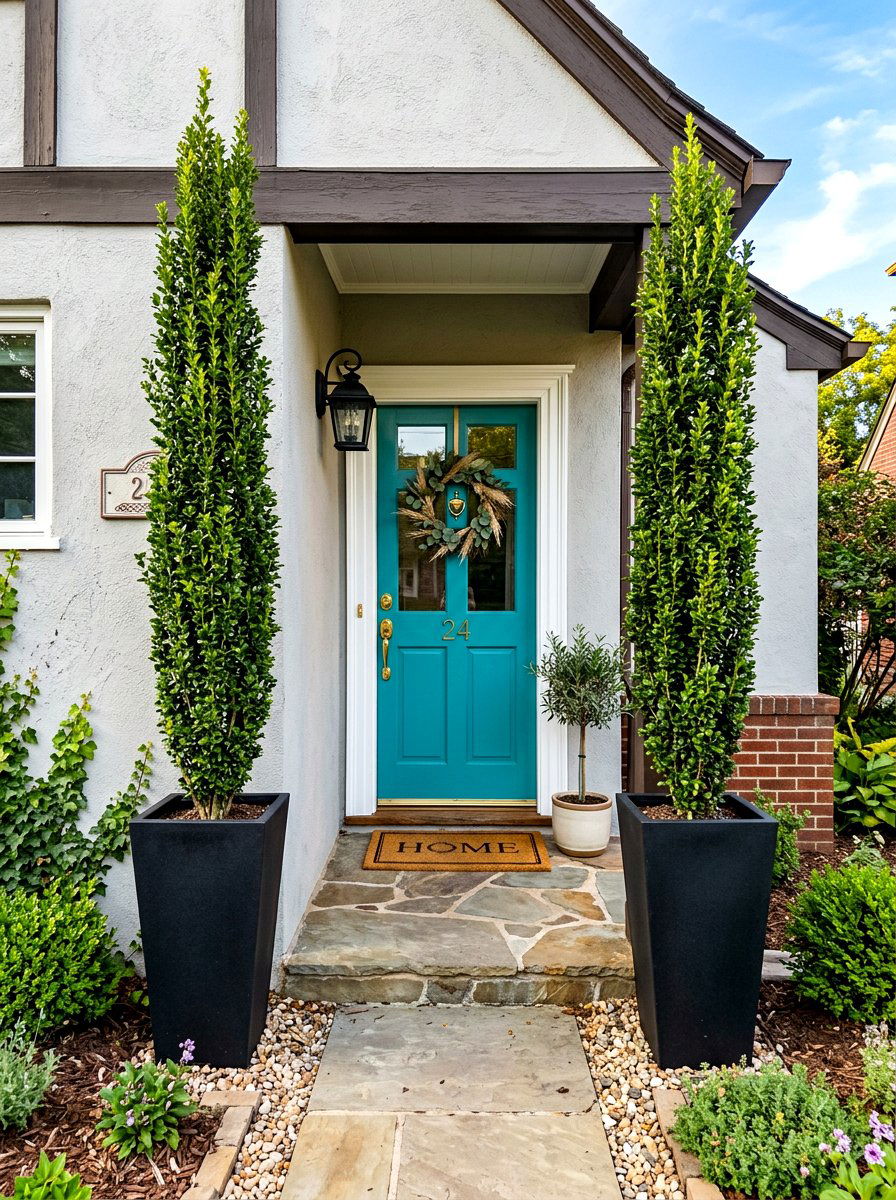
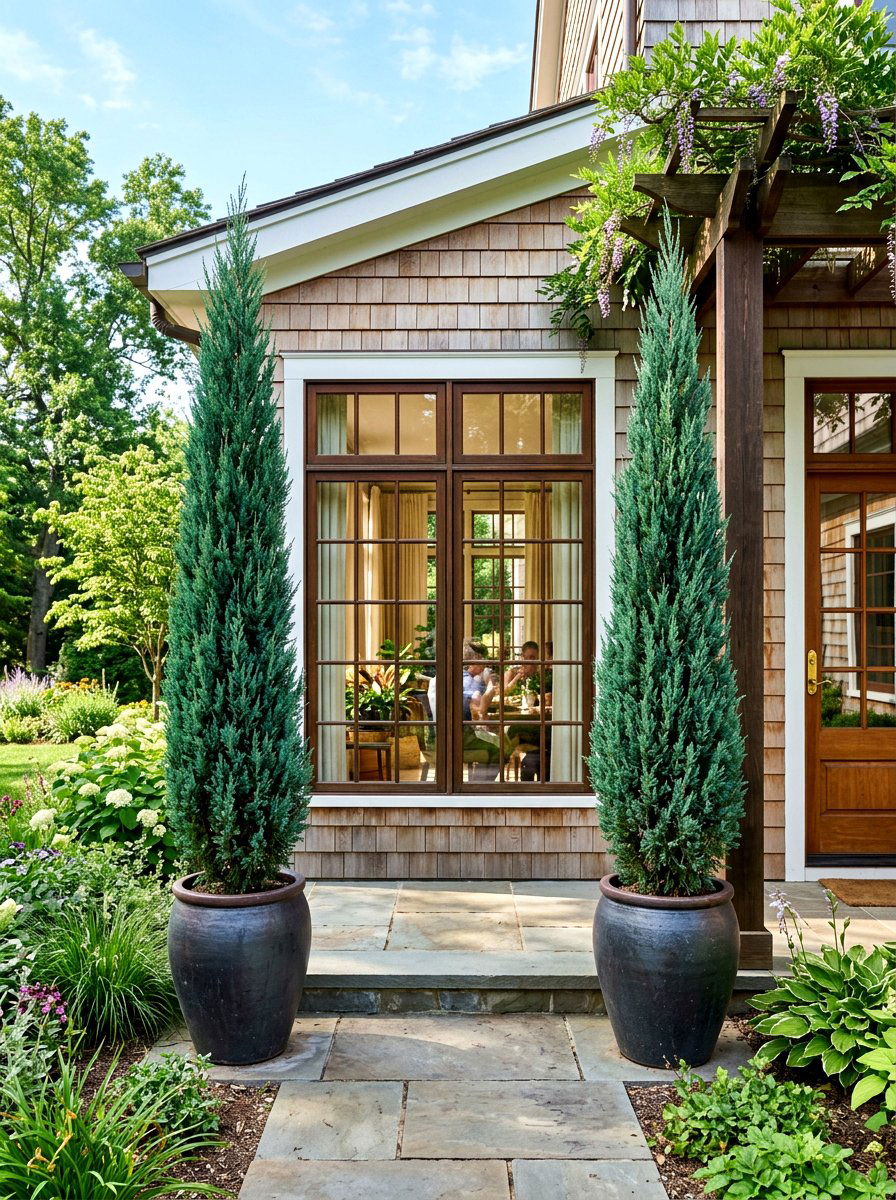
Columnar topiary for small porches is the perfect solution for homeowners who have limited floor space but want to add a vertical green element. Plants like the "Sky Pencil" holly or columnar juniper grow tall and narrow, resembling a green pillar. This shape takes up very little horizontal room while providing a significant visual impact. Placing these on either side of a narrow door can make the entrance feel taller and more grand. Use slender, tall planters to emphasize the vertical lines. This design is highly efficient and provides a clean, modern look that doesn't feel cluttered or crowded in tight quarters.
15. Tiered Boxwood Topiary Display
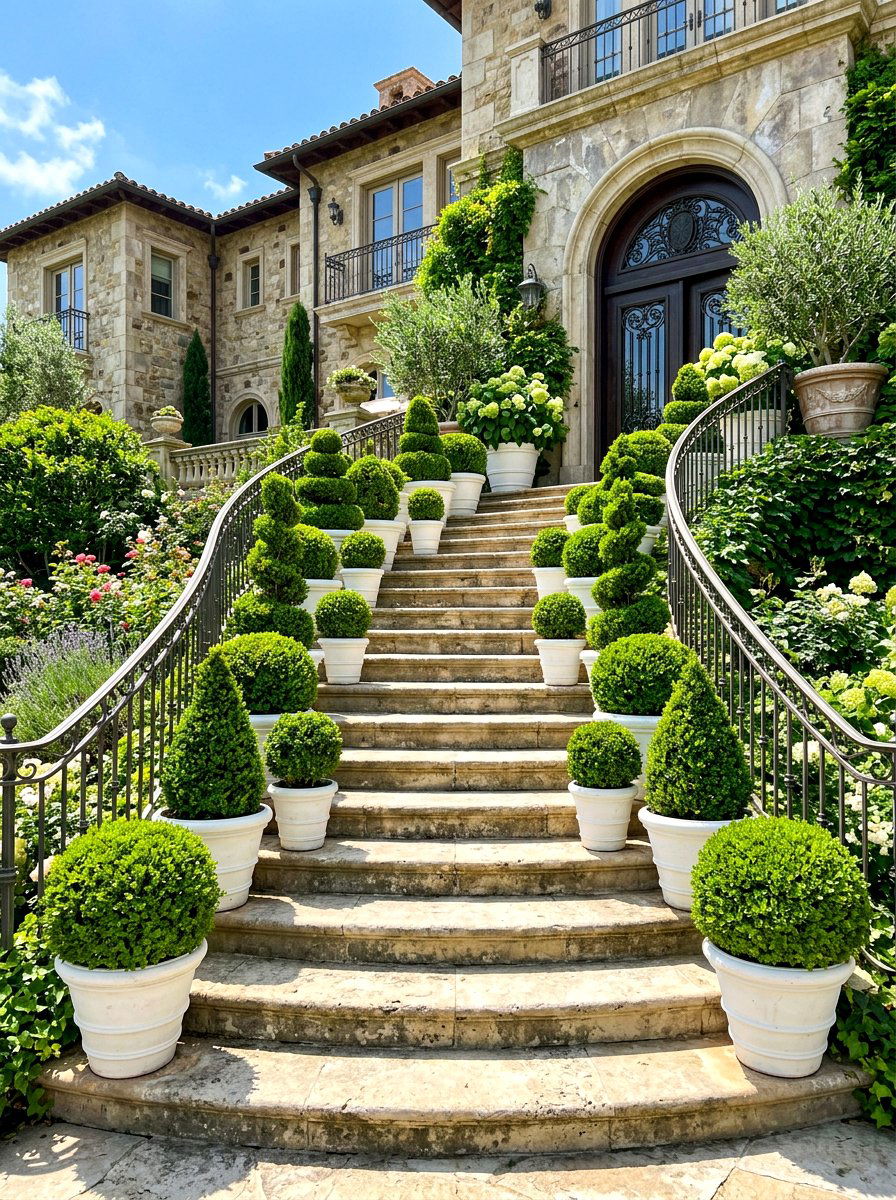
A tiered boxwood topiary display creates a sense of depth and abundance on your front porch. This design involves placing topiaries of different heights on different levels, such as on the porch floor, a set of steps, and perhaps a small pedestal. This multi-level approach makes the greenery feel more integrated into the overall architecture of the house. By varying the height, you create a more natural and less rigid landscape that still feels organized. Using a consistent color for the pots helps to unify the different levels. This is an excellent way to fill a large, empty corner of a porch with lush, green life.
16. Farmhouse Style Topiary Urns
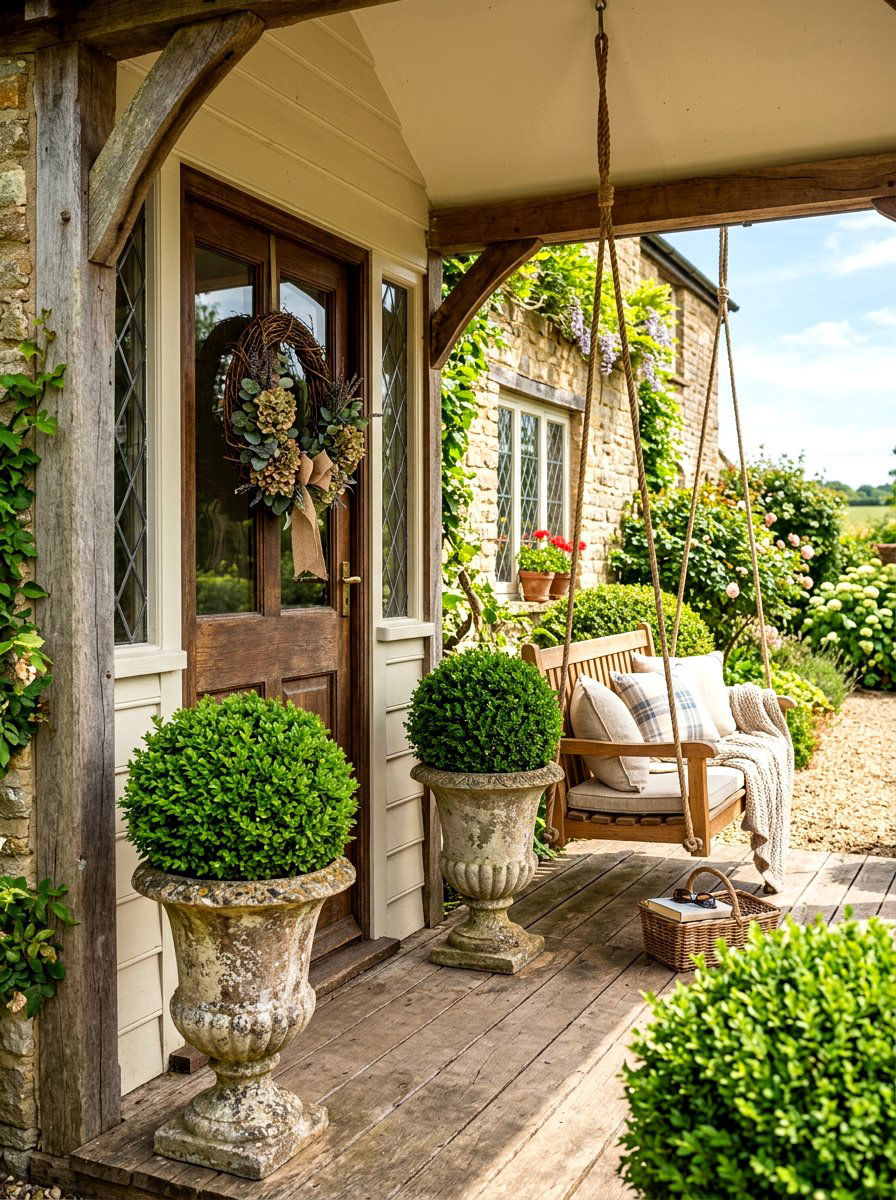
Farmhouse style topiary urns blend the elegance of formal gardening with the relaxed, lived-in feel of a country home. To achieve this look, use weathered or distressed urns made of stone, clay, or metal that show signs of age. Fill them with classic boxwood or juniper topiaries to create a sophisticated focal point. The contrast between the formal shape of the plant and the rustic texture of the pot creates a balanced and welcoming aesthetic. You can further enhance this look by adding a simple burlap bow or surrounding the base of the urn with small pumpkins or seasonal flowers. It’s a timeless and cozy design.
17. Classic English Ivy Topiary
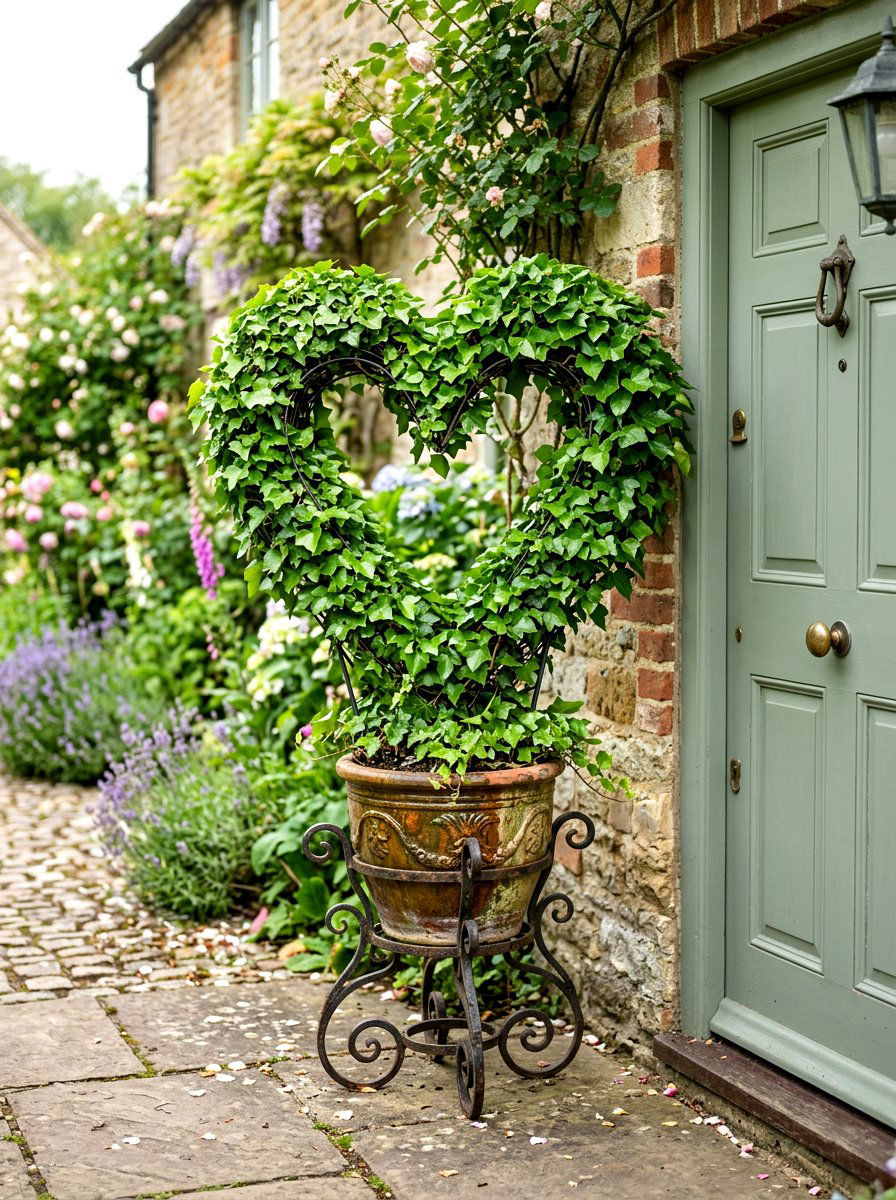
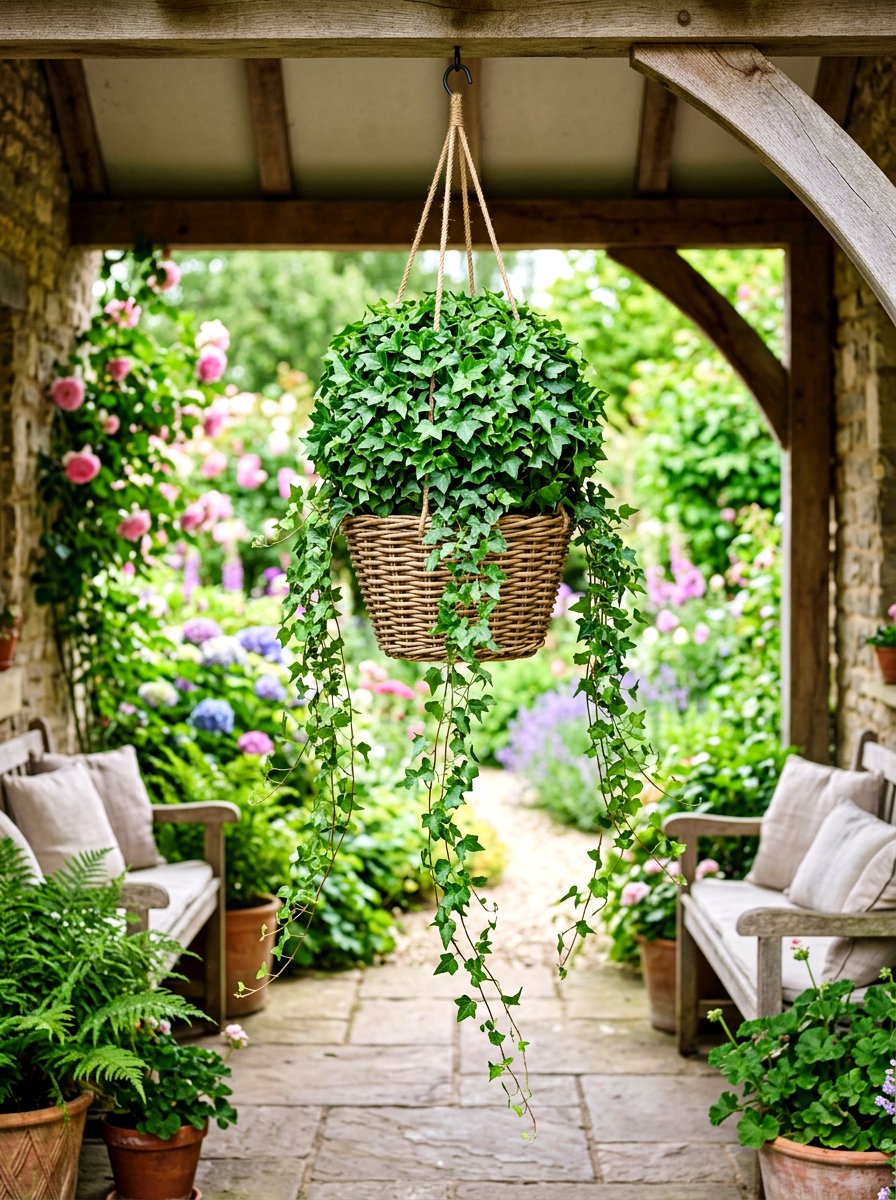
A classic English ivy topiary brings a romantic and old-world charm to your front entrance. Unlike woody shrubs, ivy is a vine that can be trained over wire frames in various shapes, such as spheres, hearts, or even bird forms. This creates a delicate and intricate look that feels very traditional and European. Ivy topiaries are often lighter and airier than boxwood, making them a good choice for porches that need a softer touch. They look particularly beautiful when placed in antique-style ceramic pots or wire baskets. Because ivy grows relatively quickly, these topiaries allow for a bit more DIY creativity in shaping and pruning.
18. Pyramid Shaped Topiary Trees
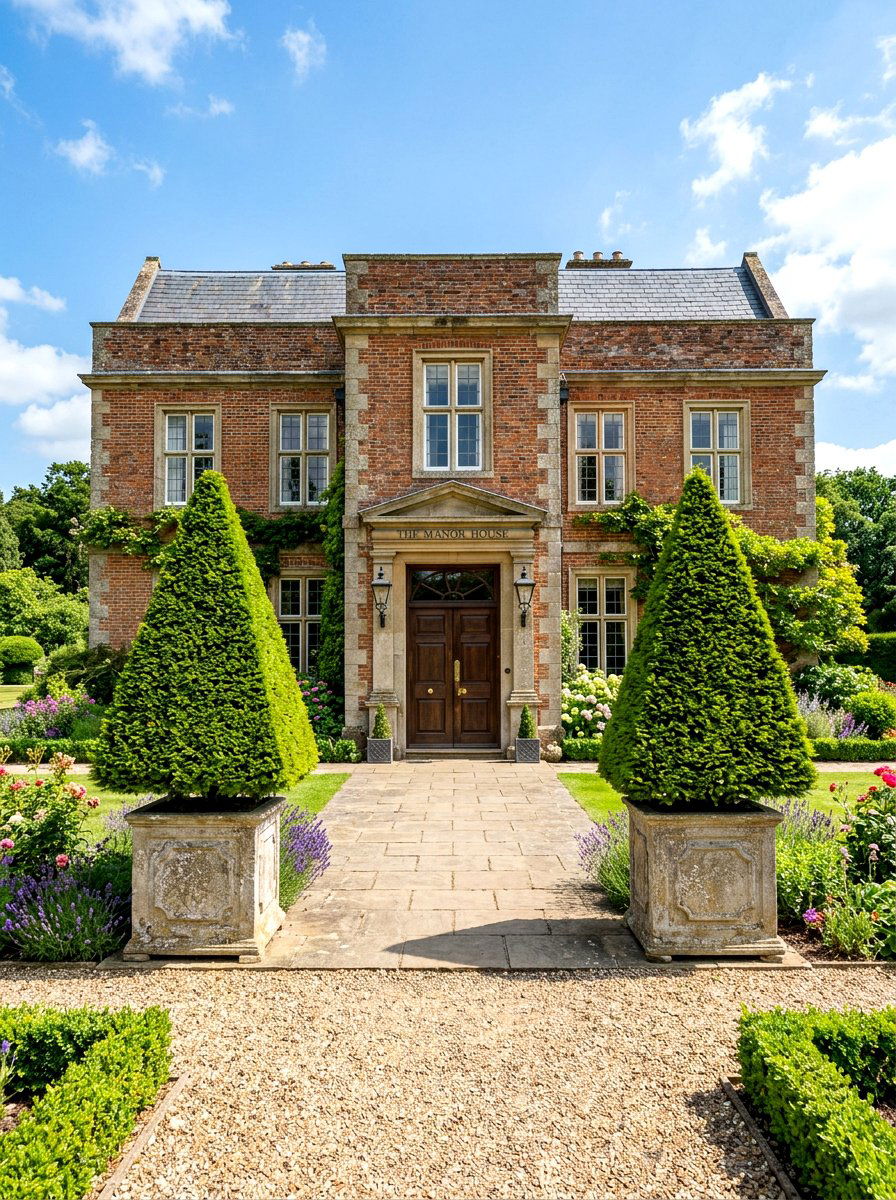
Pyramid shaped topiary trees offer a strong geometric presence that provides a sense of stability and permanence to a porch design. The broad base and pointed top create a visual weight that anchors the entrance effectively. This shape is often achieved using evergreen shrubs like yew or holly, which hold their form exceptionally well. For a high-end look, use large, square stone planters that match the width of the pyramid's base. This creates a seamless transition from the pot to the plant. These topiaries are ideal for framing a large set of stairs or a wide, double-front door, adding a touch of formal architectural grandeur.
19. Two Tier Ball Topiary
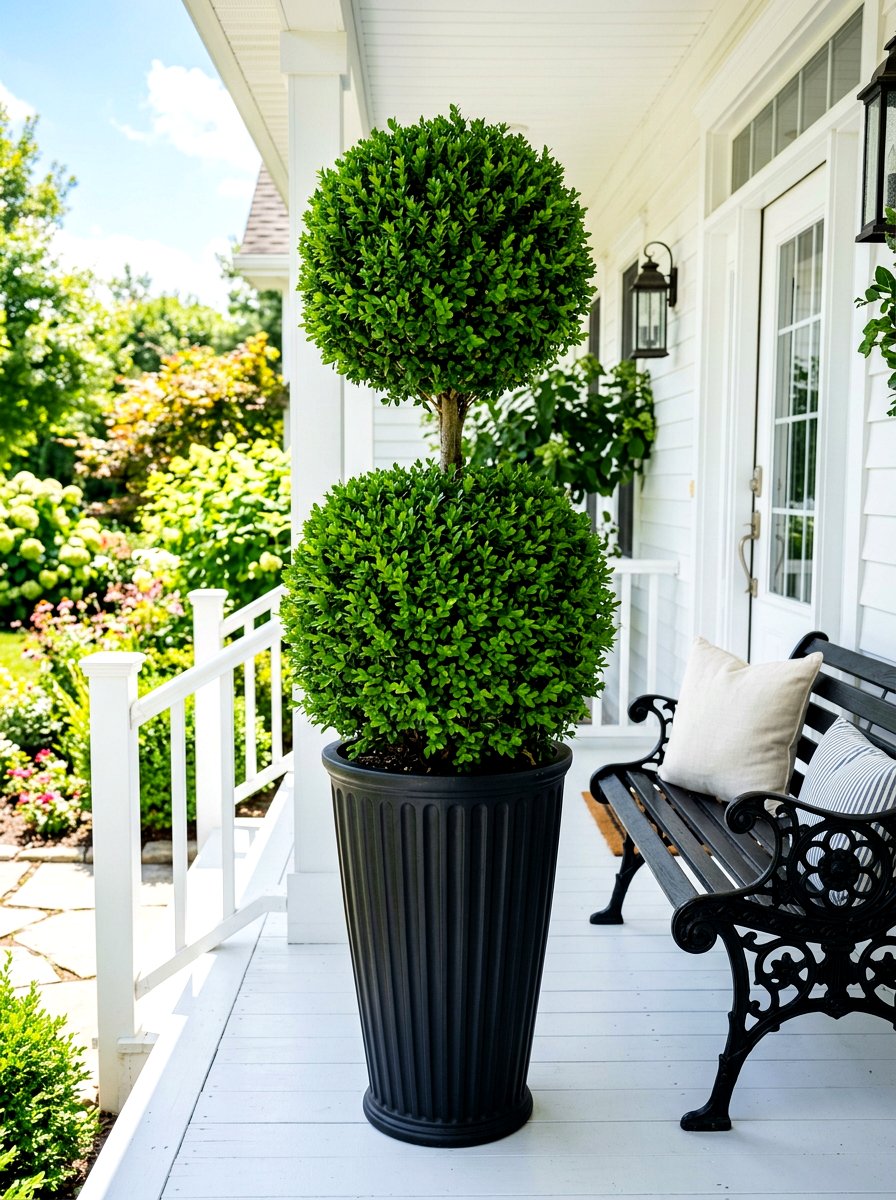
A two tier ball topiary is a more elaborate version of the standard ball tree, featuring two spheres of greenery separated by a section of clear stem. This double-decker look provides extra vertical interest and a more complex silhouette. It is a popular choice for those who want something more decorative than a single ball but less busy than a triple ball or poodle cut. These topiaries look best in classic, tall planters that provide enough height for the two tiers to be fully appreciated. They offer a refined and polished aesthetic that works beautifully in both traditional and transitional home designs, providing a neat, tidy appearance.
20. Herb Topiary Porch Garden
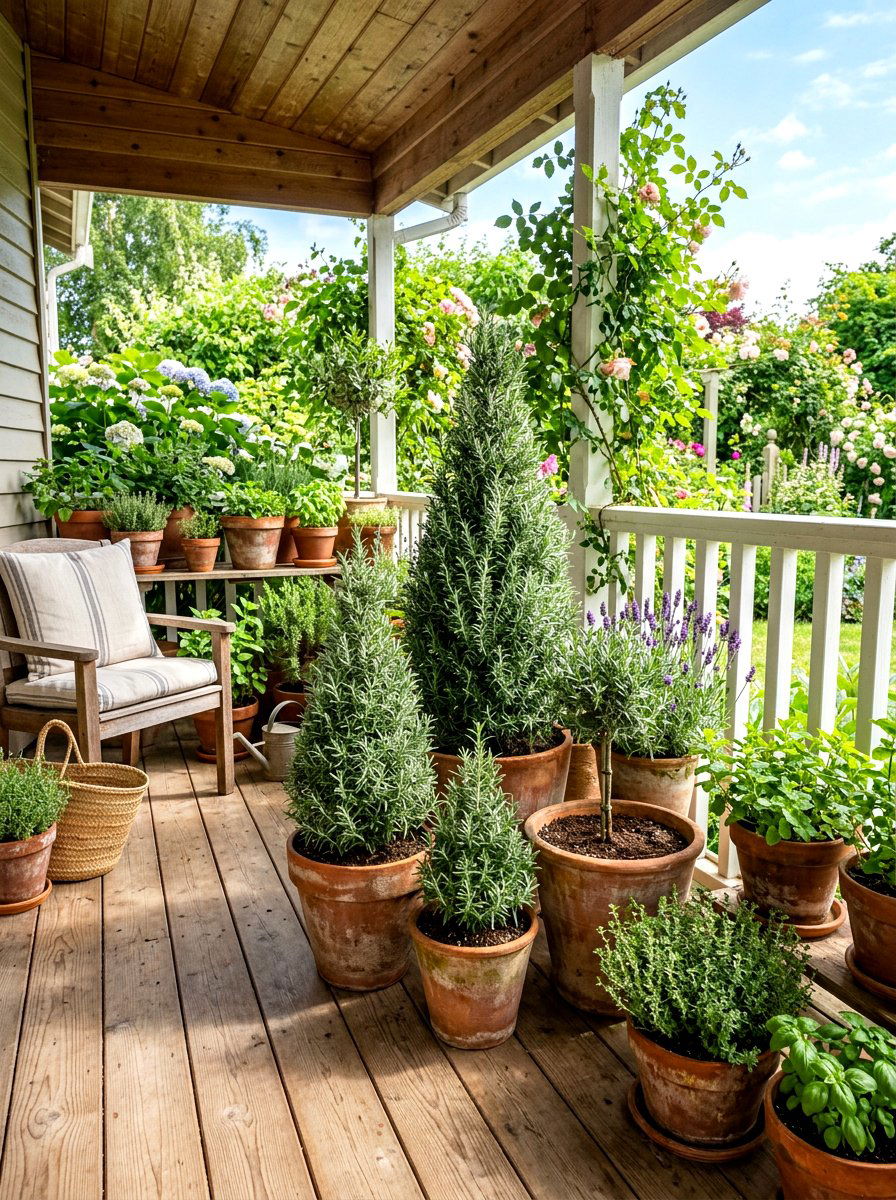
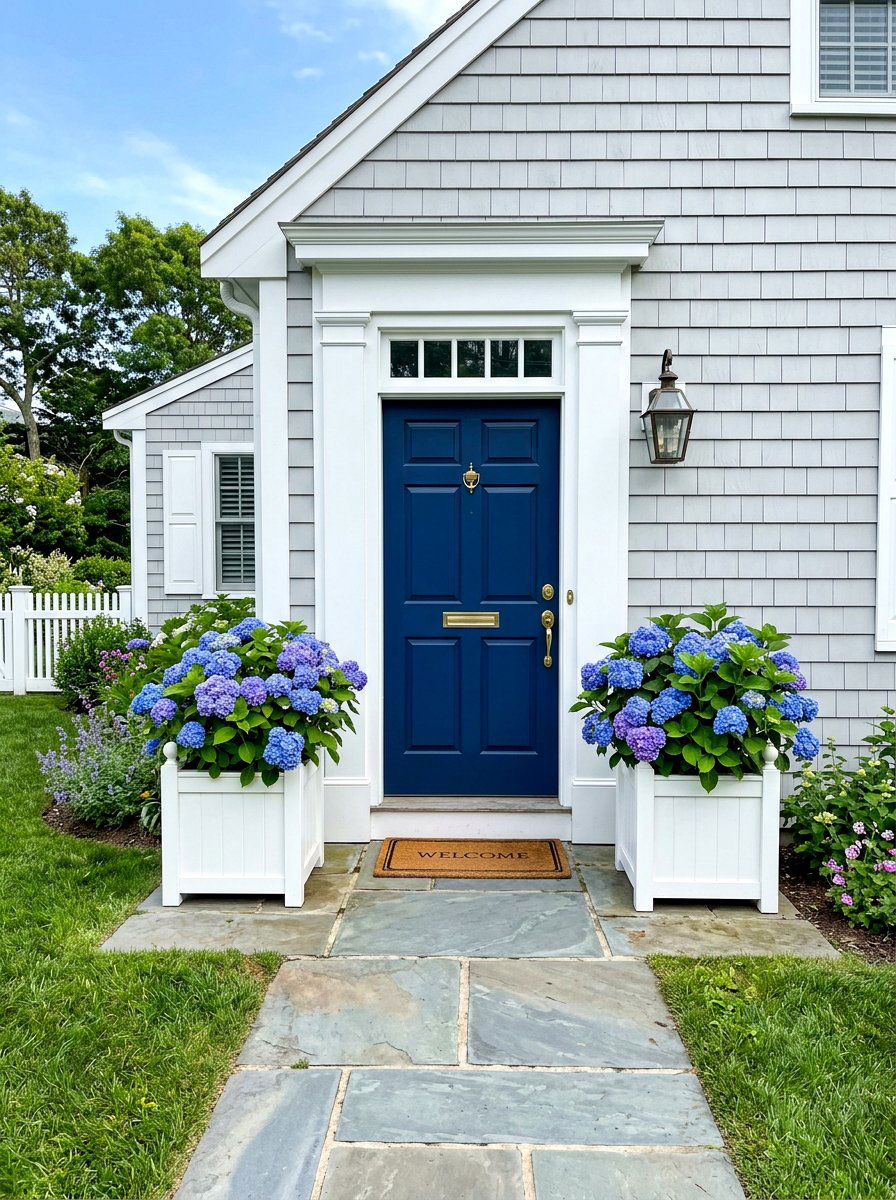
An herb topiary porch garden combines functional gardening with high-end aesthetics by using edible plants like rosemary or lavender. Rosemary, in particular, has a woody stem and dense foliage that can be easily pruned into spheres or cones. This design not only looks beautiful but also provides a wonderful fragrance every time you walk by. It’s a perfect idea for a small porch where you want your plants to serve a dual purpose. Place these fragrant topiaries in simple terracotta or clay pots to maintain a natural, Mediterranean vibe. The silver-green foliage of many herbs adds a unique color palette to your front door decor.
21. Mixed Height Topiary Arrangement
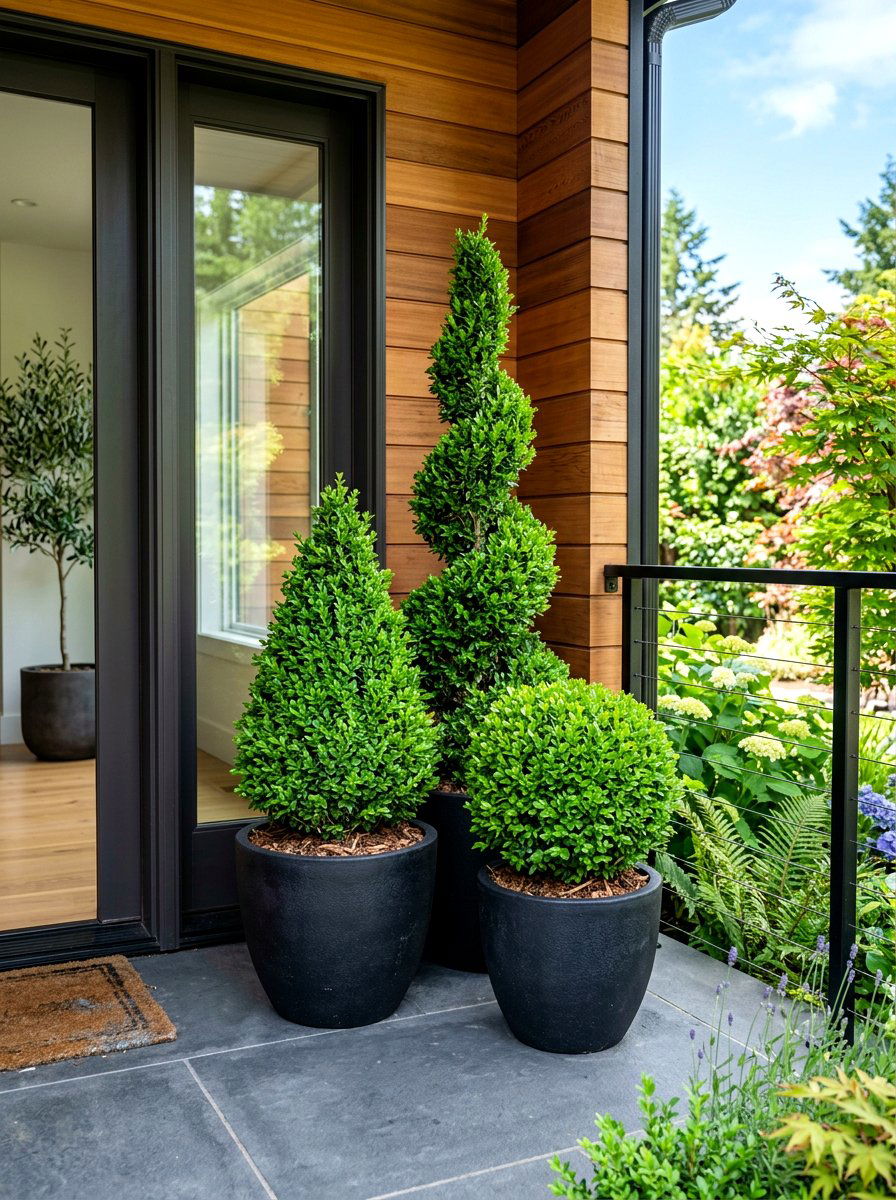
A mixed height topiary arrangement creates a dynamic and interesting visual landscape on your front porch. Instead of perfectly matched pairs, this design uses a variety of topiary shapes and sizes clustered together. You might place a tall spiral tree in the back, a medium double-ball in the middle, and a small round sphere in the front. This layering technique adds depth and makes the arrangement feel like a curated garden. To keep the look from becoming chaotic, stick to a single type of greenery, such as boxwood, and use planters in the same color family. This approach is very popular for creating a lush, Pinterest-worthy entrance.
22. Bay Leaf Tree Topiary
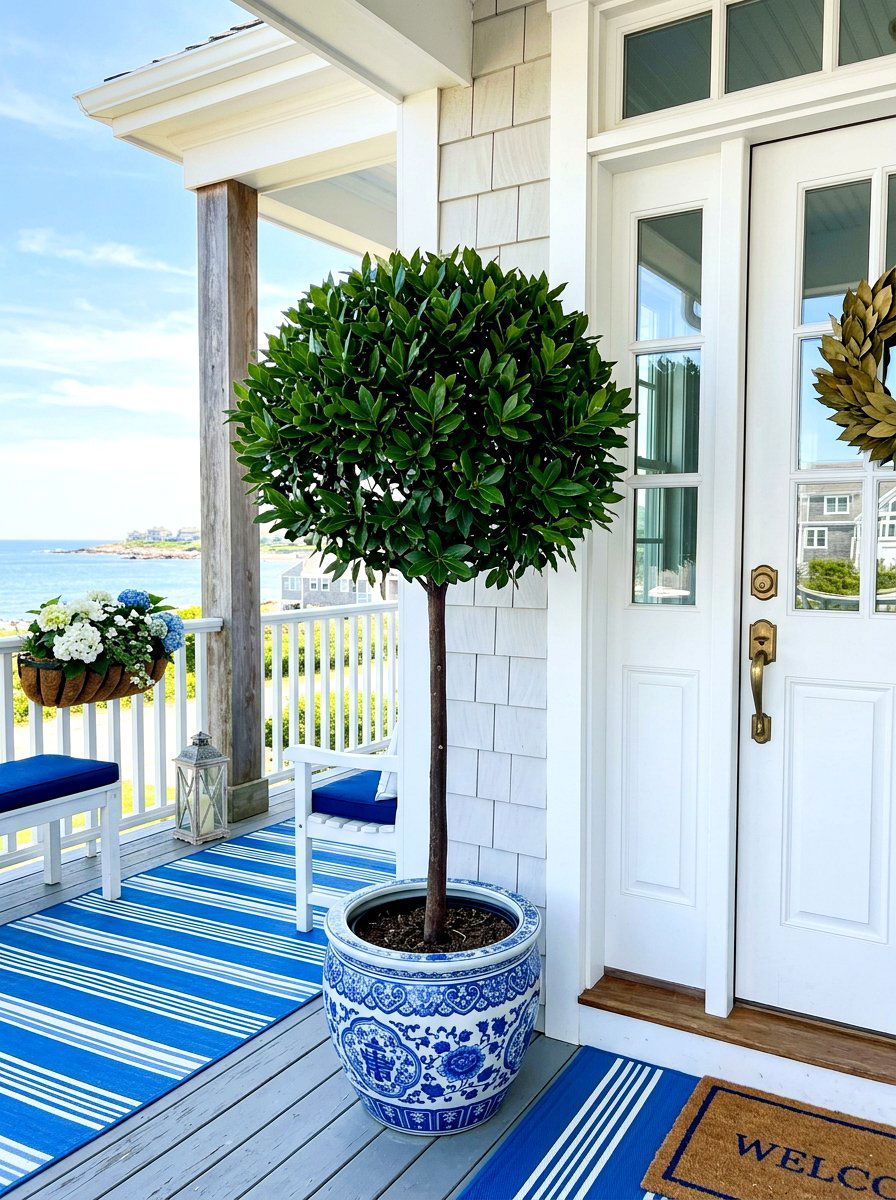
A bay leaf tree topiary offers a lush and leafy alternative to the typical needle-leaf evergreens. The large, glossy, dark green leaves of the bay tree provide a rich texture that looks incredibly high-end and sophisticated. Often grown as a "standard" (a single ball on a tall stem) , bay trees are a staple of formal European entryways. They are perfect for covered porches where they are protected from extreme weather. The leaves can also be harvested for cooking, adding a practical element to your front door greenery. Placing them in classic white or blue-and-white ceramic pots creates a timeless, coastal, or continental aesthetic that feels very upscale.
23. Olive Tree Topiary Porch
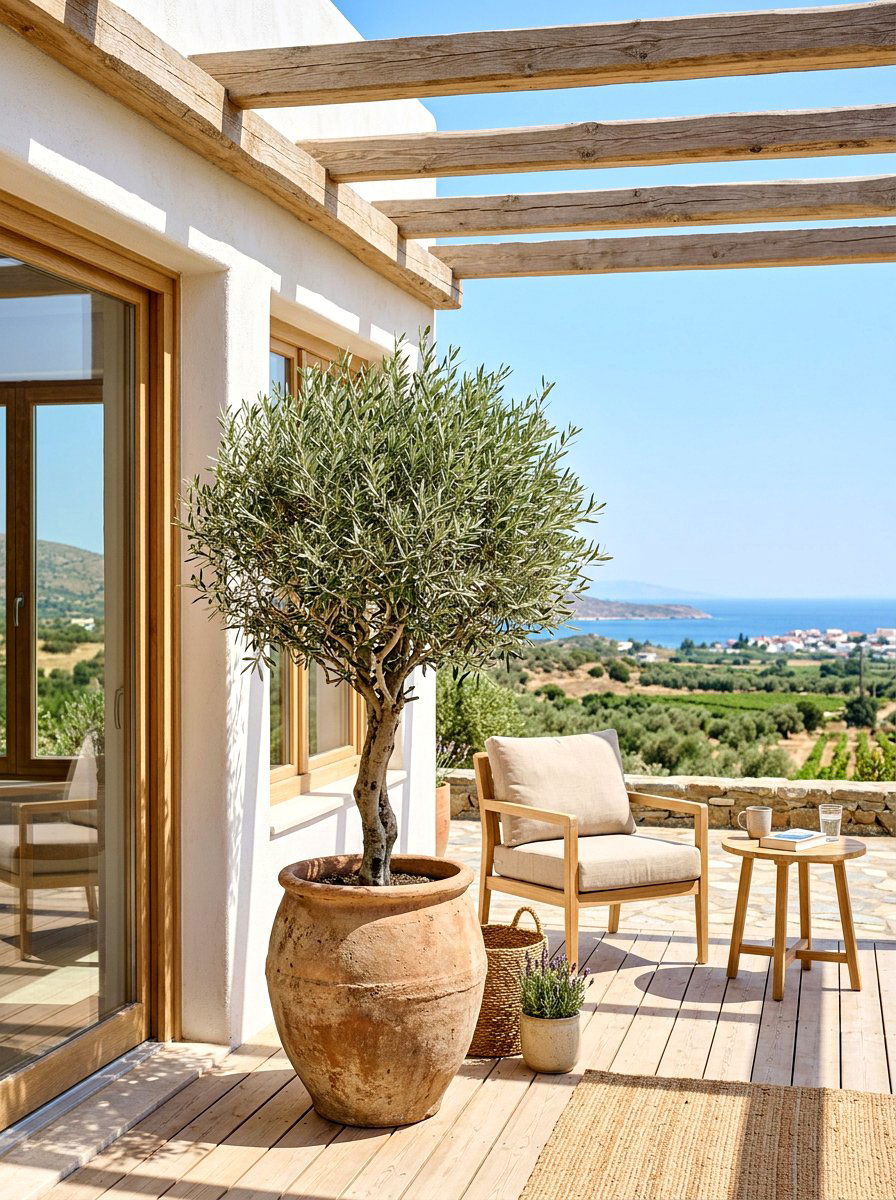
The olive tree topiary porch design has become a major trend for those seeking a Mediterranean or "California cool" aesthetic. Olive trees have beautiful, silvery-green leaves and a naturally elegant, slightly wispy growth habit. While they can be pruned into structured spheres, many people prefer a slightly looser, more organic topiary shape for a relaxed vibe. These trees look stunning in large, unglazed terracotta pots or modern concrete planters. Because they thrive in sunny spots, they are ideal for south-facing porches. The subtle color and delicate texture of the olive tree provide a sophisticated contrast to darker house colors or natural wood siding.
24. Lavender Topiary Front Door
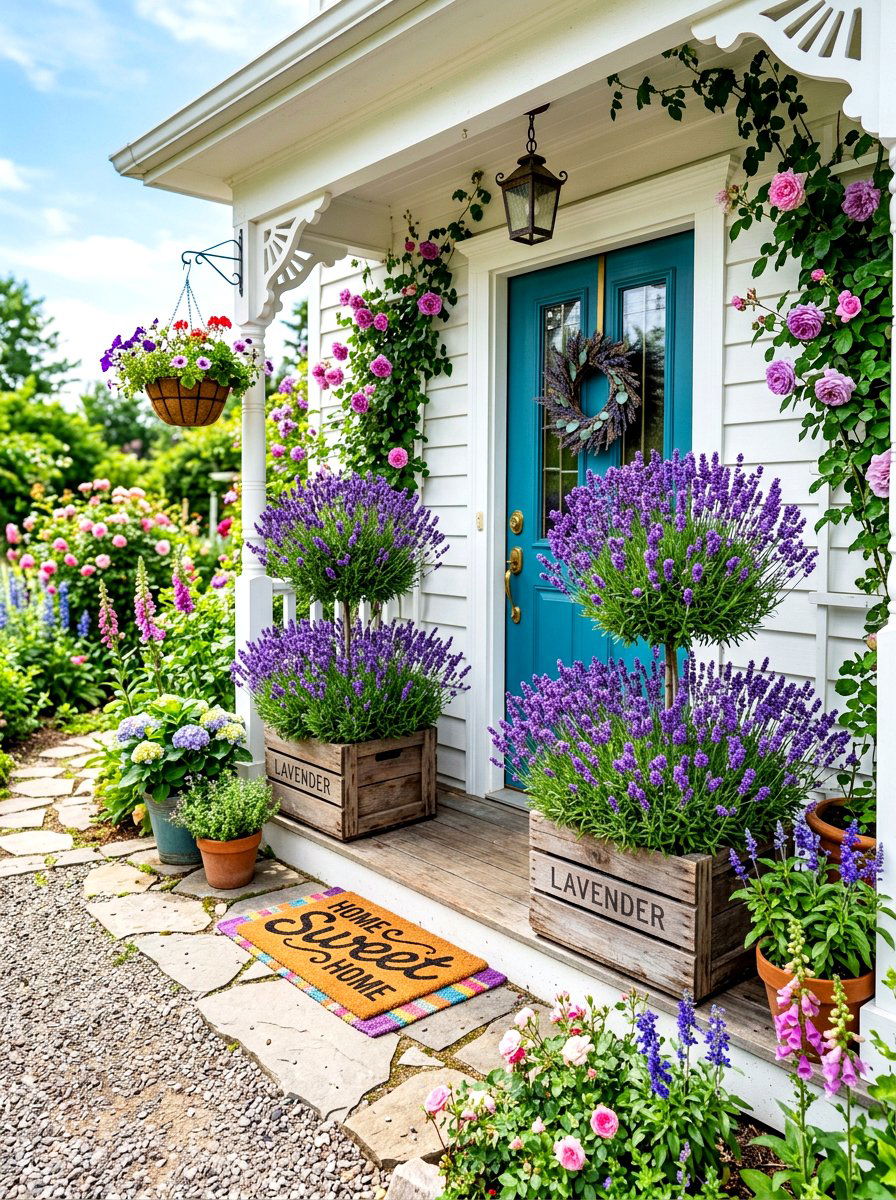
A lavender topiary front door arrangement is a delightful way to add both color and scent to your home’s entrance. Lavender can be trained into a "lollipop" shape with a rounded head of fragrant purple blooms sitting atop a slender stem. This look is incredibly charming and fits perfectly with a cottagecore or farmhouse style. During the blooming season, the purple flowers provide a stunning pop of color against the green foliage. Even when not in bloom, the silver-toned leaves offer a beautiful contrast to traditional green plants. These topiaries are best suited for sunny porches and look wonderful in rustic wooden crates or simple clay pots.
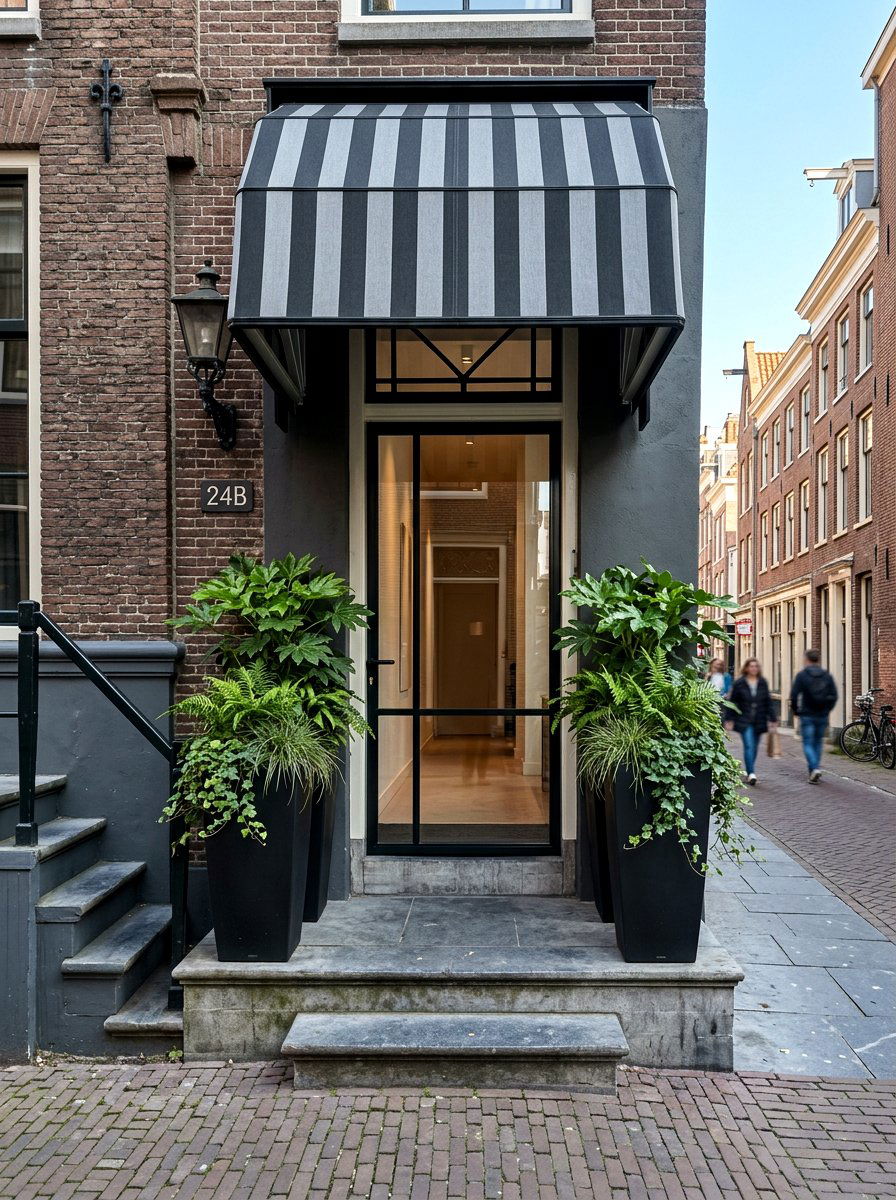
25. Rosemary Topiary Potted Plant
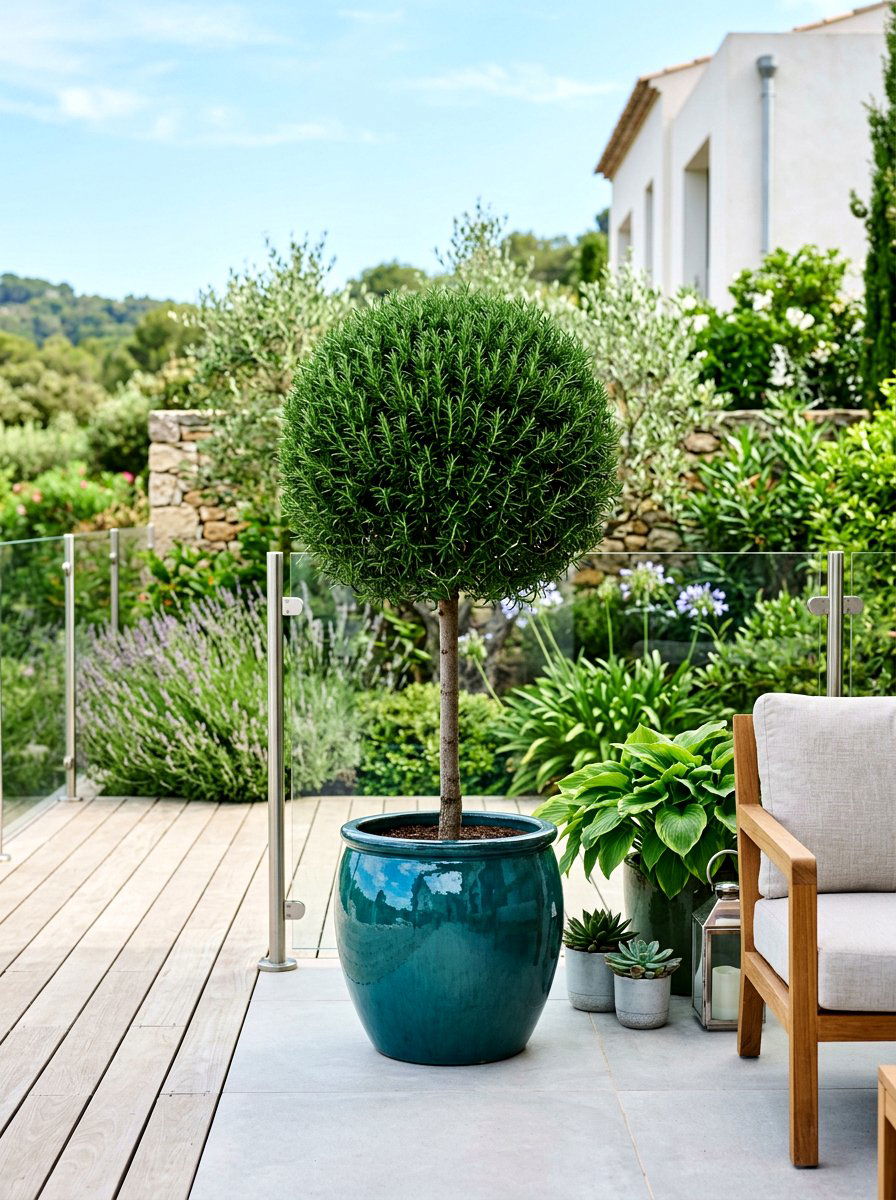
A rosemary topiary potted plant is a hardy and fragrant choice that brings a touch of the herb garden to your front porch. Rosemary is known for its needle-like leaves and sturdy, woody stems, making it very easy to prune into precise shapes like cones or balls. It is a very resilient plant that can handle wind and sun, making it ideal for more exposed porch areas. The deep green color and unique texture of rosemary provide a more rugged, natural look compared to the smooth boxwood. For a polished finish, place them in high-quality ceramic pots that complement your home’s trim color for a cohesive look.
26. Oversized Round Topiary Ball
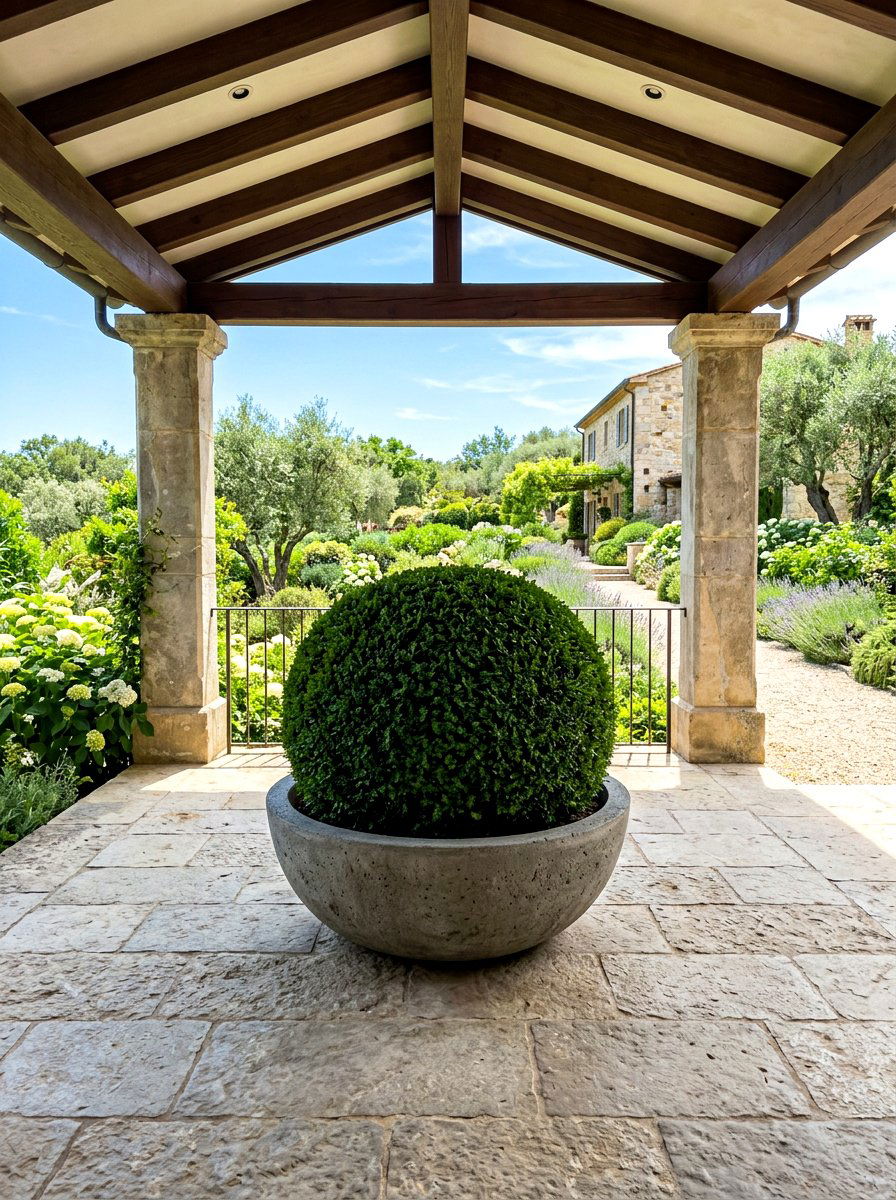
An oversized round topiary ball makes a bold and modern statement by focusing on scale and simplicity. Instead of a plant on a stem, this design features a massive sphere of greenery sitting directly in a large, low-profile bowl or planter. This "ball-in-a-bowl" look is very popular in contemporary landscape design and offers a clean, sculptural feel. It works best on wide porches or at the base of a grand staircase where there is plenty of room for the plant to shine. Using a high-gloss black or metallic planter can add an extra layer of luxury to this already sophisticated and minimalist topiary arrangement.
27. Topiary With Flowering Plants
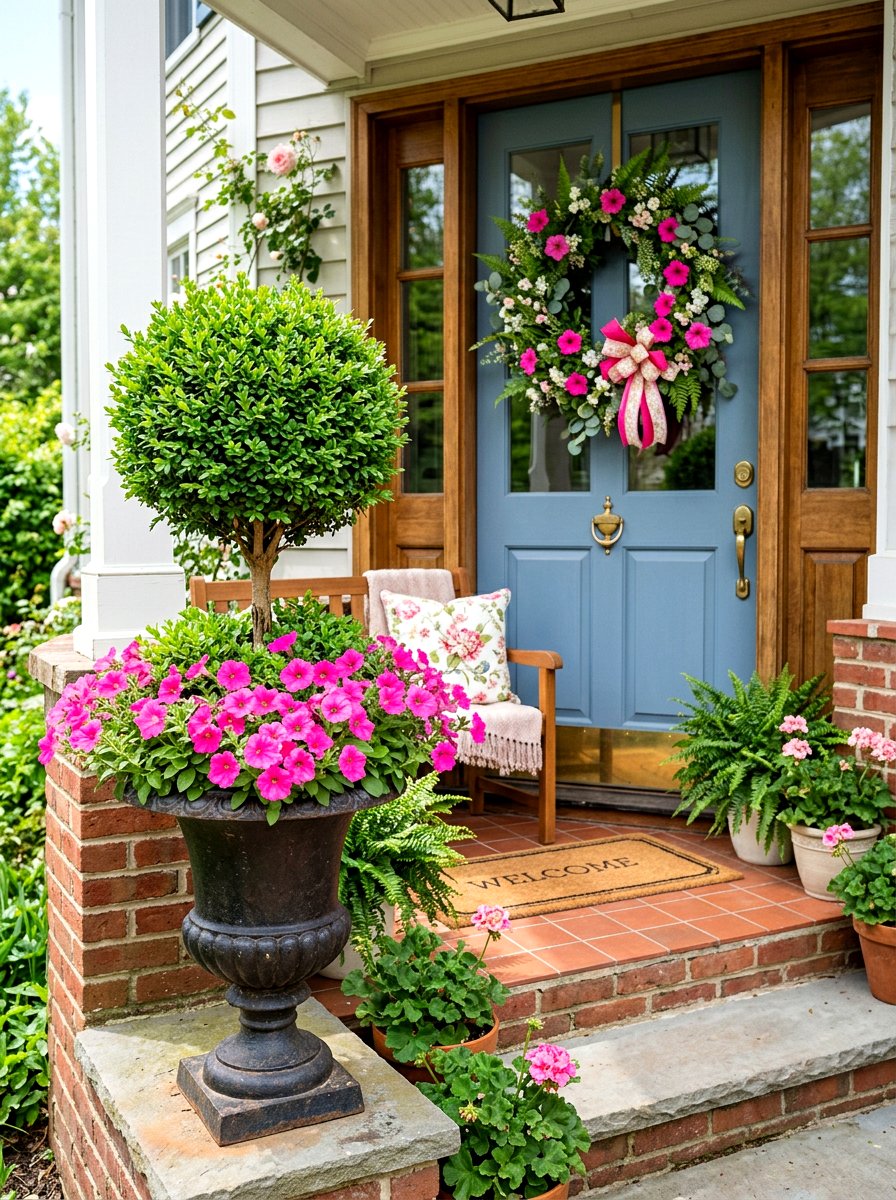
Topiary with flowering plants is a beautiful way to combine structure with seasonal color. This design involves underplanting a standard topiary tree — like a boxwood ball — with vibrant annuals like petunias, pansies, or begonias at the base of the same pot. The green topiary provides year-round structure, while the flowers offer a rotating display of color that you can change with the seasons. This layered look is very effective for adding a "designer" touch to your front porch. Choose flowers that contrast with the green of the topiary, such as white or bright pink, to make the arrangement really stand out from the street view.
28. Wire Frame Ivy Topiary
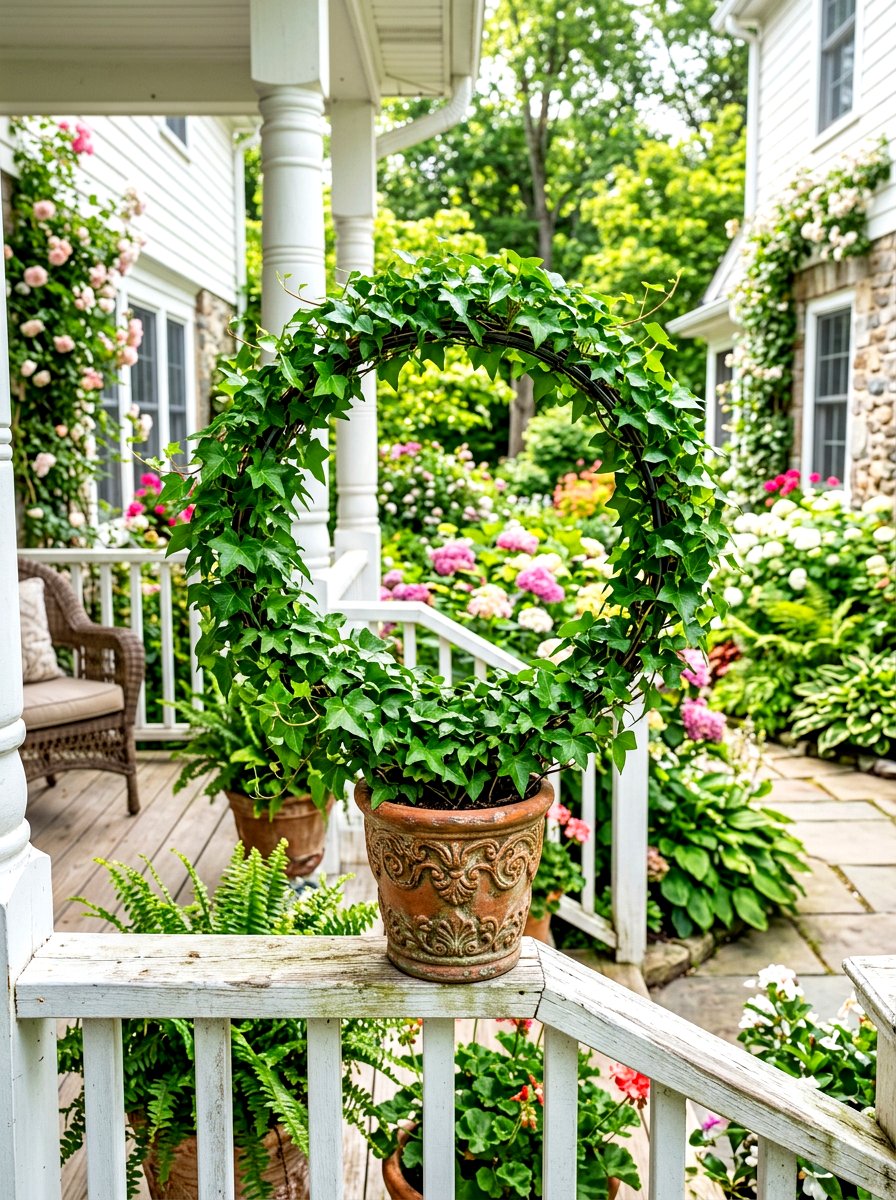
A wire frame ivy topiary allows for incredible creativity and a touch of whimsy at your front door. By growing ivy over a pre-made wire frame, you can create intricate shapes that would be impossible with traditional shrubs. Popular shapes include hoops, double rings, or even animal forms like rabbits or birds. This style is much lighter and more delicate than solid boxwood topiaries, making it a great choice for smaller porches or for hanging in baskets. The flowing, trailing nature of the ivy adds a sense of movement and romance to the space. It’s a wonderful way to express your personal style through living art.
29. Sculpted Privet Topiary Tree
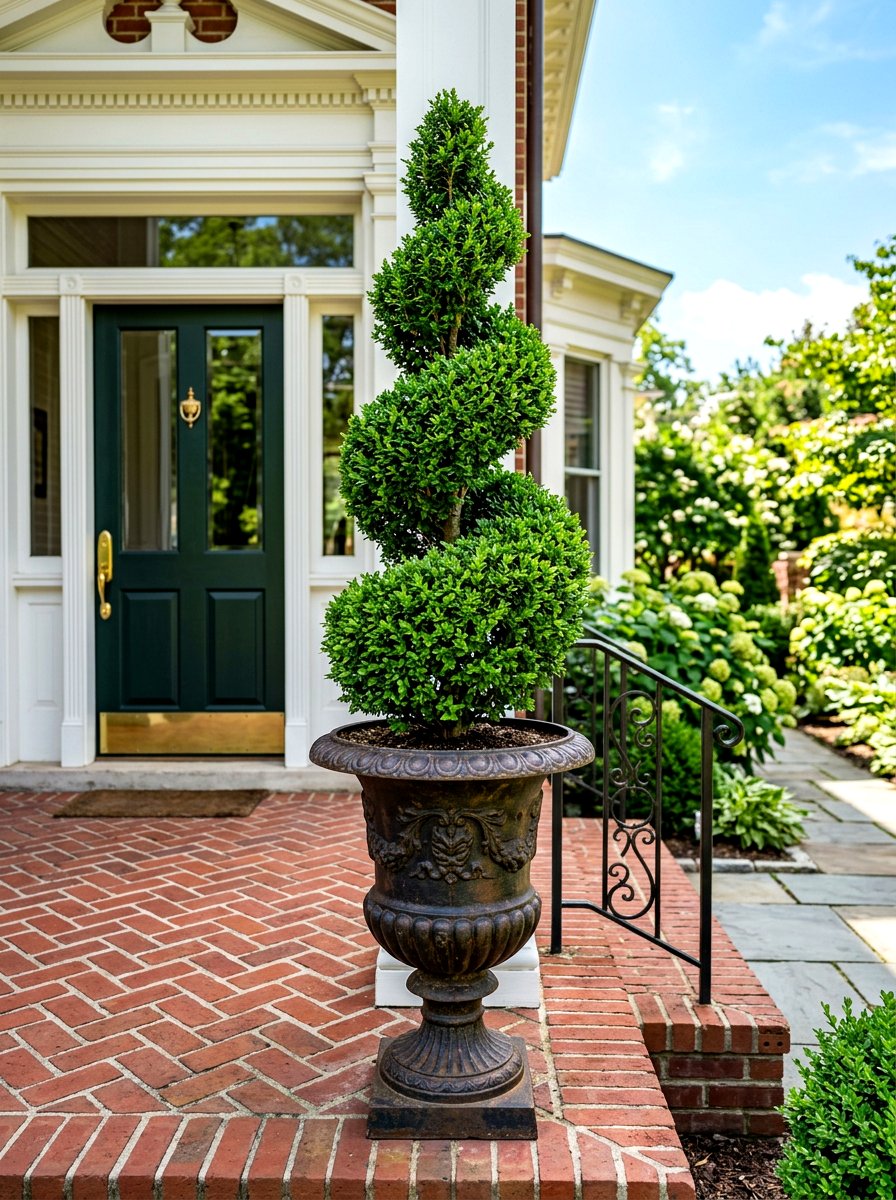
A sculpted privet topiary tree is a fast-growing and versatile option for those who enjoy pruning and shaping their own plants. Privet has small, dense leaves that create a very smooth and uniform surface when trimmed, making it ideal for complex shapes like spirals or tiered balls. It is a very hardy shrub that can adapt to many different light conditions. Because it grows quickly, it allows you to see the results of your topiary training much faster than with slower-growing species like boxwood. Placing these in large, traditional urns creates a stately and established look that gives your home a sense of history and charm.
30. Formal Garden Topiary Style
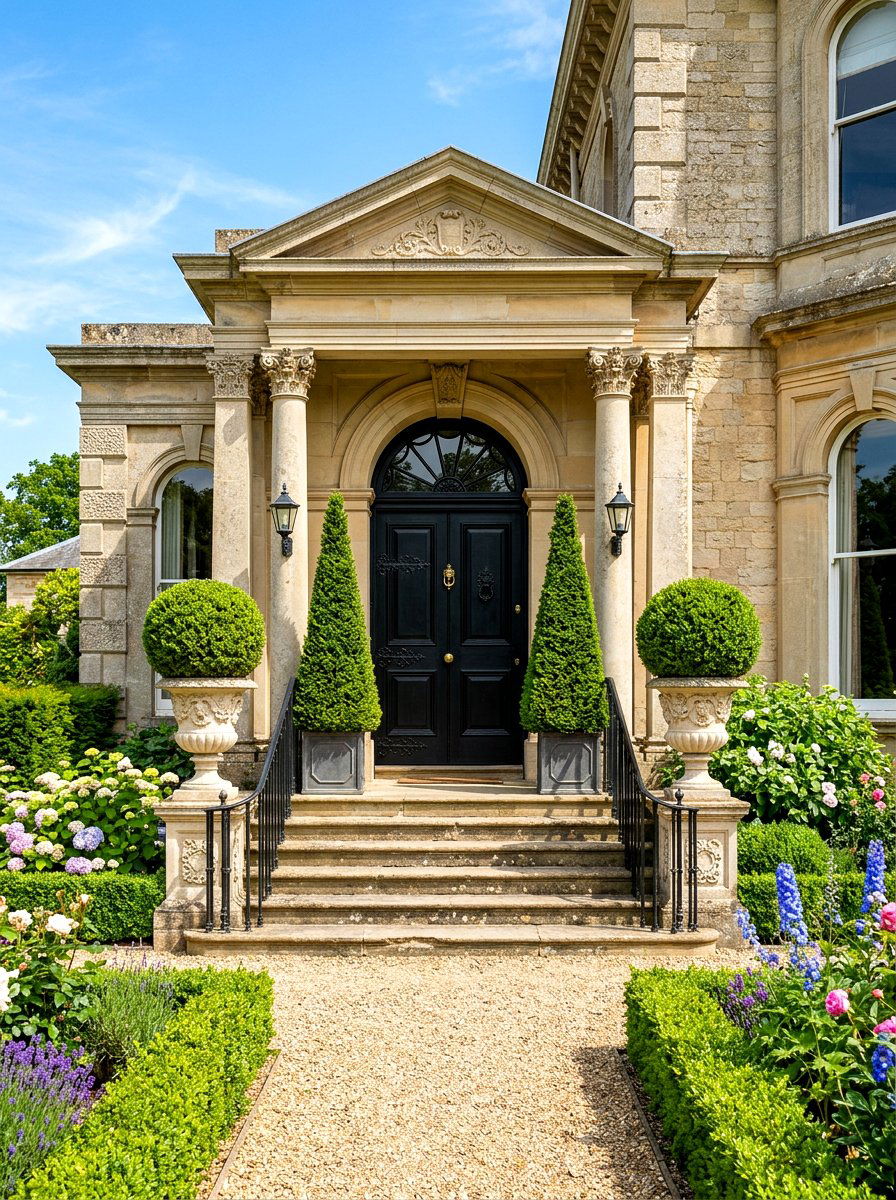
The formal garden topiary style is all about absolute precision, symmetry, and classical beauty. This design often involves a combination of different topiary shapes — such as cones and balls — arranged in a strictly symmetrical layout on the porch. It creates the look of a miniature estate garden right at your front door. To pull off this aesthetic, everything must be perfectly maintained, from the crisp edges of the plants to the clean surfaces of the high-end stone or cast-iron planters. This style communicates luxury and attention to detail, making it a perfect choice for historic homes or anyone who appreciates a truly disciplined and polished outdoor space.
Conclusion:
Incorporating topiaries into your front porch design is a surefire way to create a sophisticated and welcoming entrance that stands out in the neighborhood. From the classic elegance of symmetrical boxwoods to the modern flair of oversized spheres and fragrant herb trees, there is a topiary style for every home aesthetic. These living sculptures provide year-round greenery and architectural interest, serving as the perfect backdrop for seasonal decor. By selecting the right plant, shape, and planter, you can easily transform a plain porch into a high-end, Pinterest-worthy sanctuary. We hope these thirty ideas have inspired you to elevate your home's curb appeal with the timeless art of topiary.

Related posts: