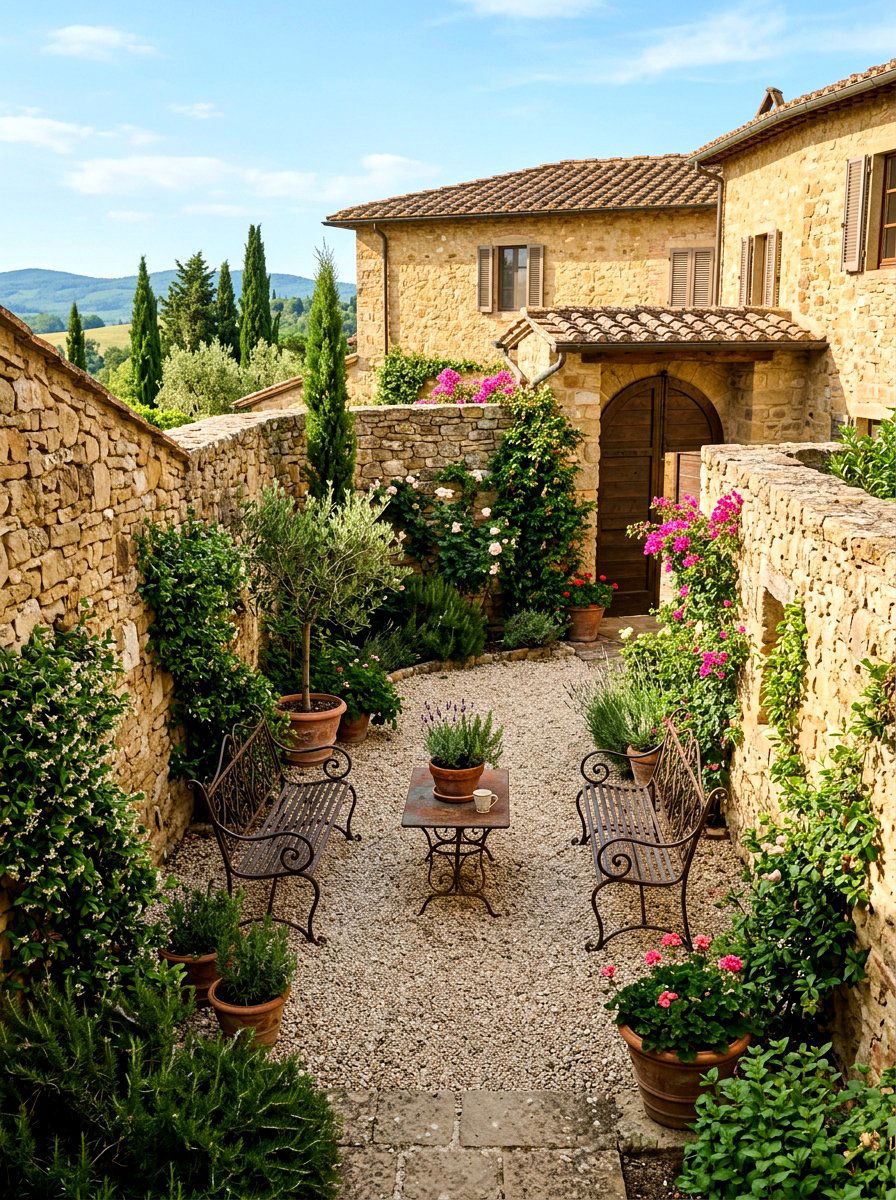
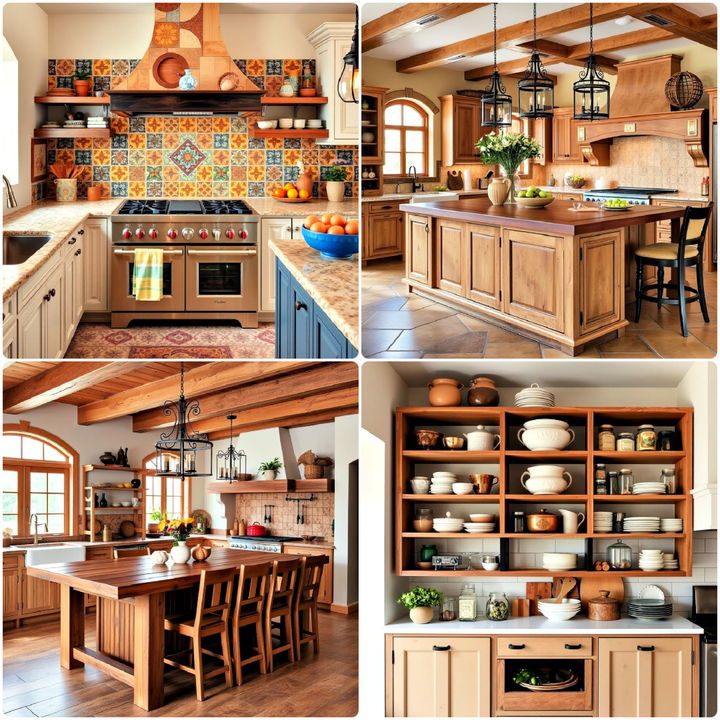
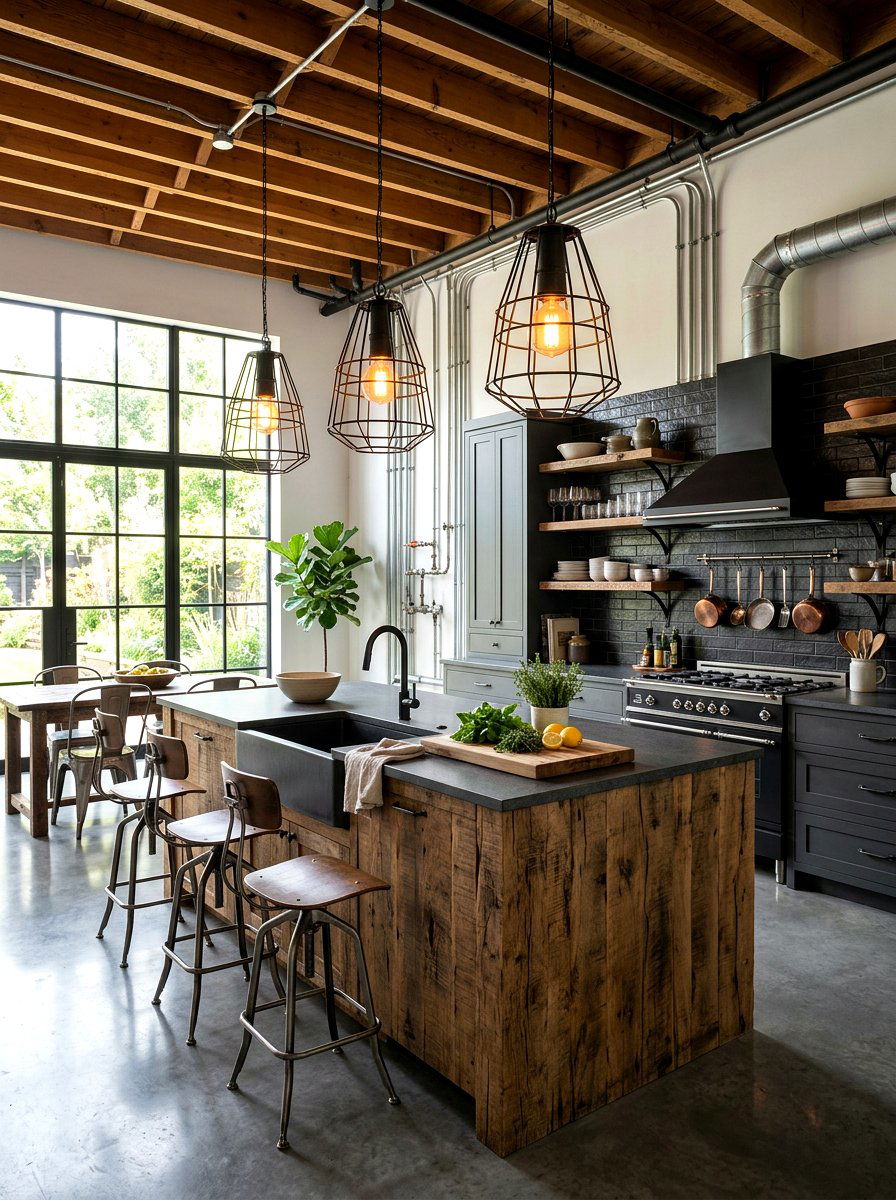
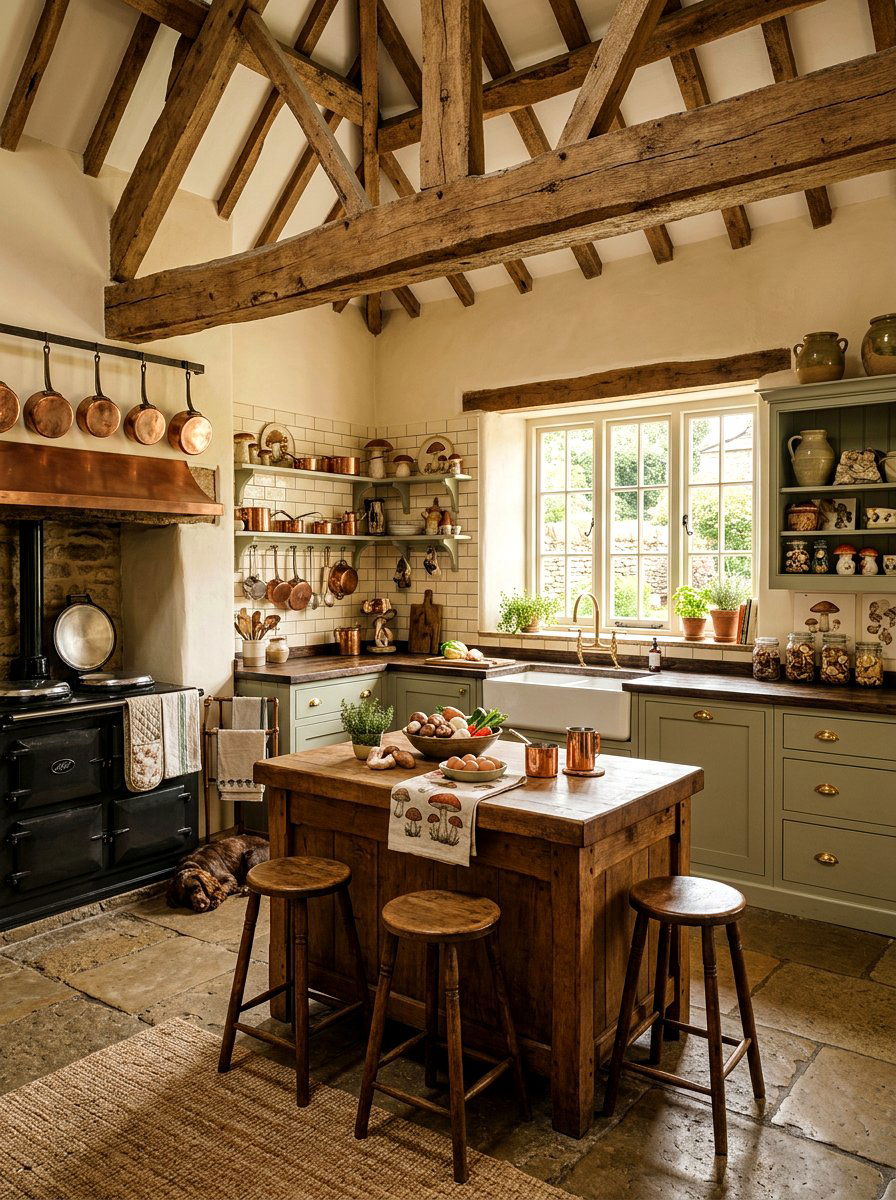
Stepping into a Tuscan kitchen feels like walking into the heart of an Italian villa where the sun always shines through large windows. This design style is famous for its warm colors, natural materials, and a sense of history that makes any home feel instantly more welcoming and lived-in. Whether you prefer the heavy, ornate looks of the early 2000s or the modern, airy updates trending today, the core of this aesthetic remains centered on family and food. These spaces celebrate the beauty of imperfection through textured stone, weathered wood, and handcrafted details that tell a story of tradition. You can easily bring this timeless Mediterranean charm into your own home by focusing on elements that balance rustic elegance with functional comfort.
1. Tuscan Kitchen Exposed Beams
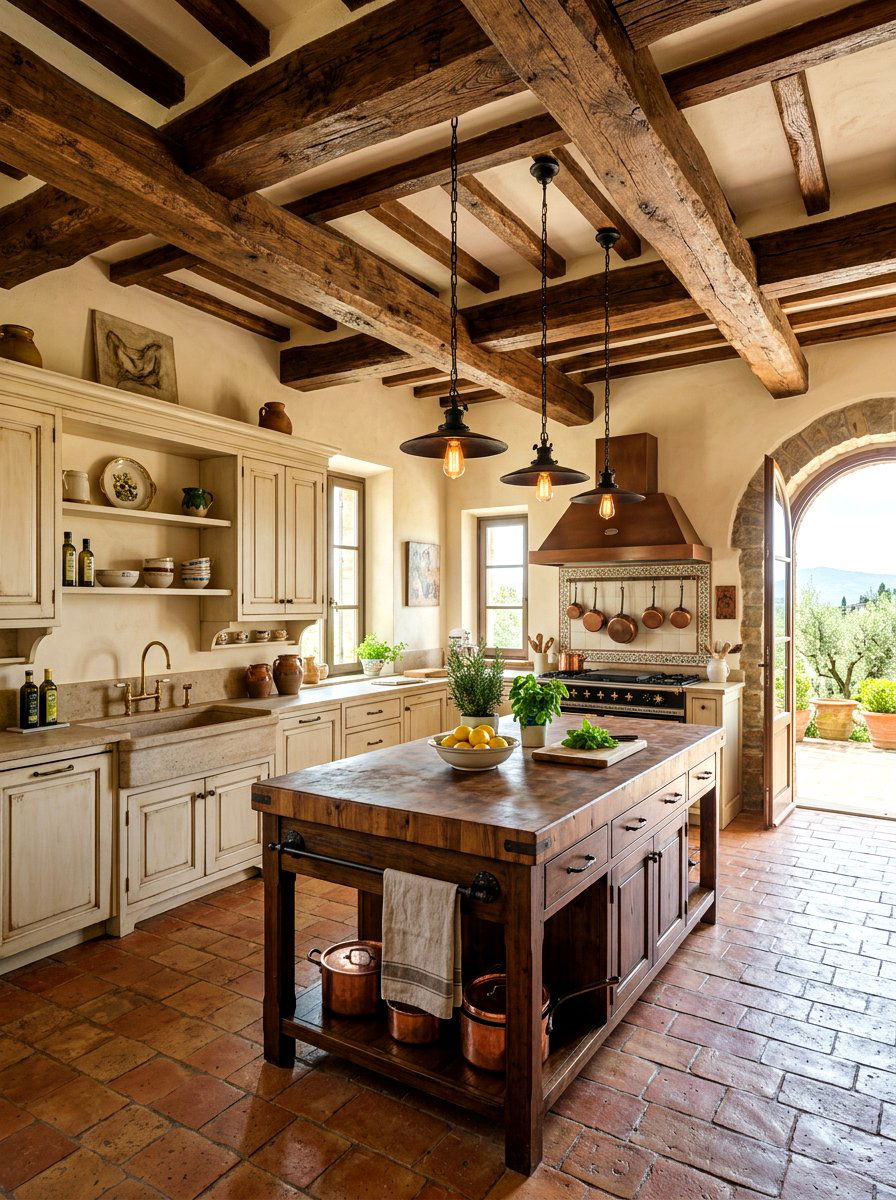
Installing thick wood beams across the ceiling is a classic way to ground your space in the rustic traditions of central Italy. These structural elements provide a sense of architectural history, making a new home feel like it has stood for centuries among rolling vineyards. You should look for reclaimed timber or distressed wood that shows natural knots and a slightly uneven grain to maximize the authentic aesthetic. These beams draw the eye upward and add a cozy, enclosed feeling to large rooms with high ceilings. They pair beautifully with light-colored plaster and wrought iron chandeliers, creating a perfect visual balance between heavy natural materials and bright, airy wall finishes.
2. Tuscan Kitchen Terracotta Floors
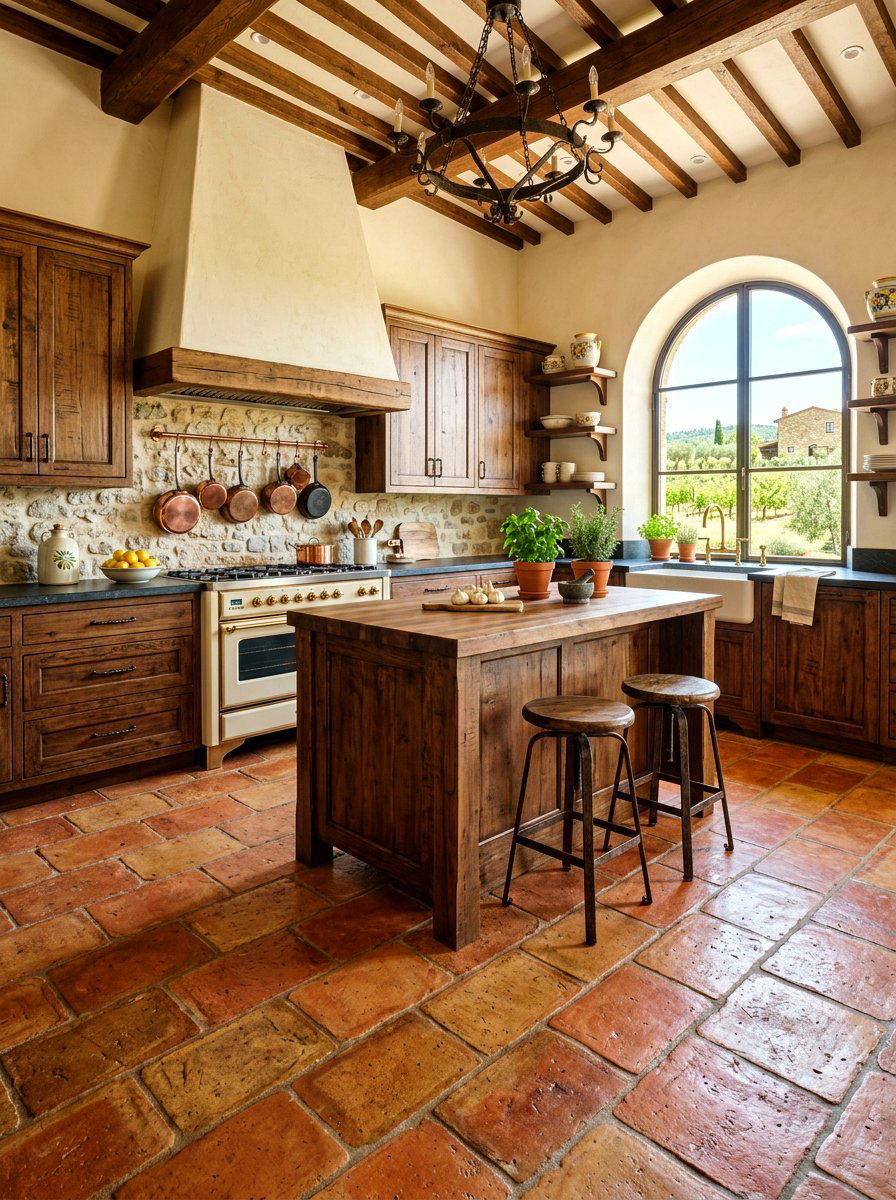
Choosing terracotta tiles for your flooring immediately infuses the room with the signature warmth and earthy soul of the Mediterranean landscape. These clay-based tiles offer a beautiful range of natural colors, from deep burnt oranges to soft, sandy reds that feel incredibly soft underfoot. Their matte finish and slightly porous texture hide dust well, which makes them a practical choice for high-traffic family areas where cooking and socializing happen daily. You can arrange them in a traditional herringbone pattern or large squares to emphasize the scale of your room. When paired with off-white walls, these floors provide a grounding foundation that anchors the entire design.
3. Tuscan Kitchen Stone Walls
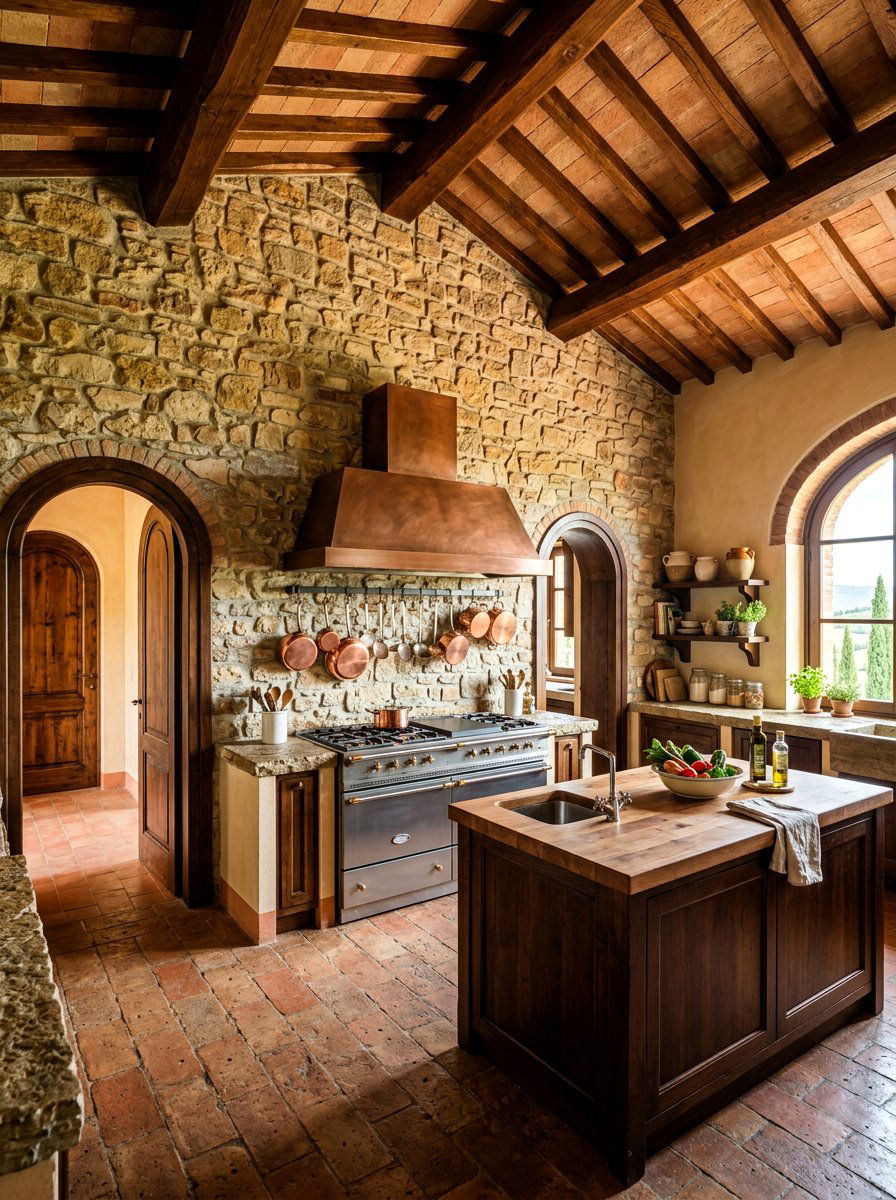
Adding a natural stone accent wall brings a rugged, old-world texture into your home that mimics the exterior of ancient Italian farmhouses. Fieldstone or limestone in varied shapes and sizes creates a stunning focal point, especially when used behind a large professional range or around an arched doorway. The cool gray and warm beige tones of the stone provide a neutral but visually rich backdrop for your cabinetry and decor. You don't have to cover every wall; even a single feature section can transform the mood of the space. This material is incredibly durable and adds a layer of timeless sophistication that never goes out of style.
4. Tuscan Kitchen Wrought Iron Lighting
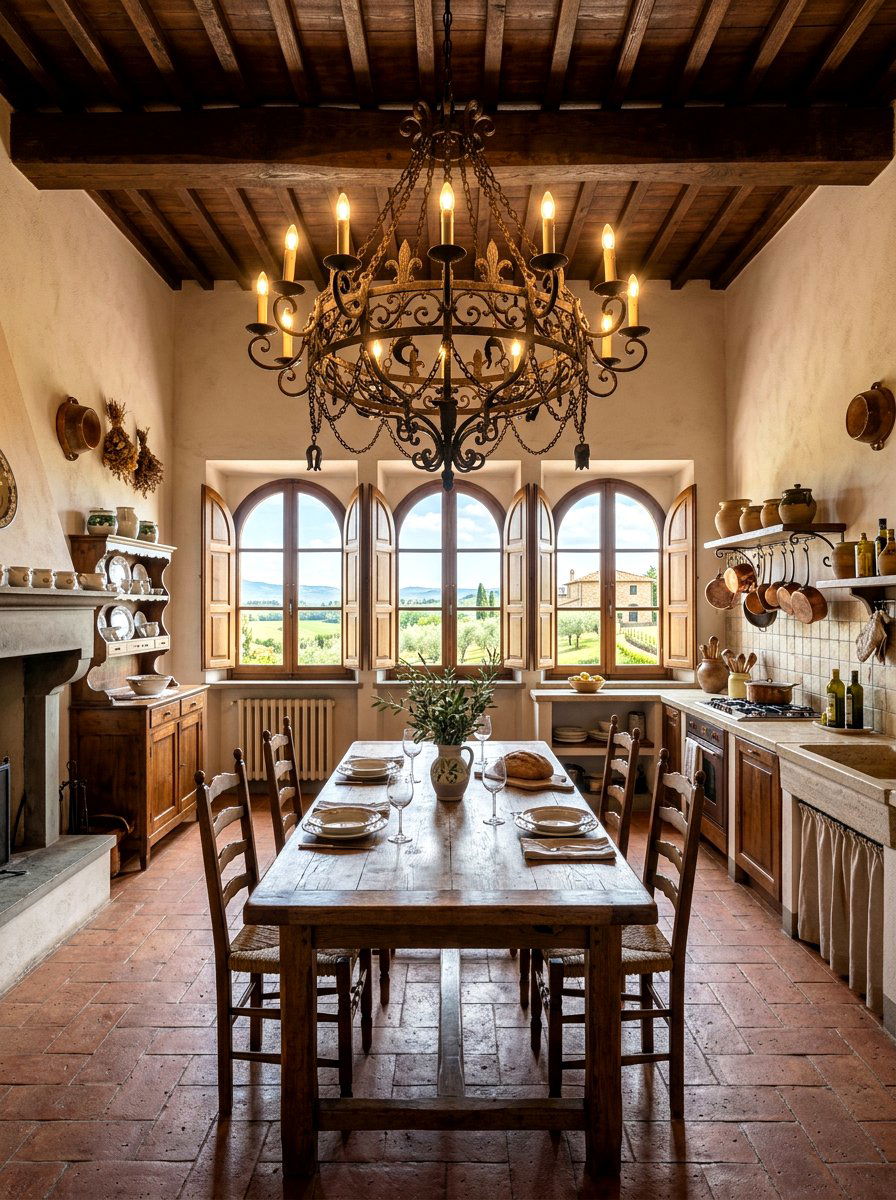
Incorporating wrought iron light fixtures adds a necessary touch of industrial elegance and historical weight to your ceiling and island areas. Dark metal chandeliers with candle-style bulbs or large lantern pendants provide a striking contrast against lighter wall colors and wooden furniture. The intricate scrolls and heavy chains used in these designs reflect the artisanal craftsmanship found in traditional European villas. You should choose oversized pieces to make a bold statement over your dining table or central workspace. These fixtures cast a soft, inviting glow that enhances the warm tones of your wood and stone, making the environment feel intimate and very cozy for guests.
5. Tuscan Kitchen Distressed Cabinets
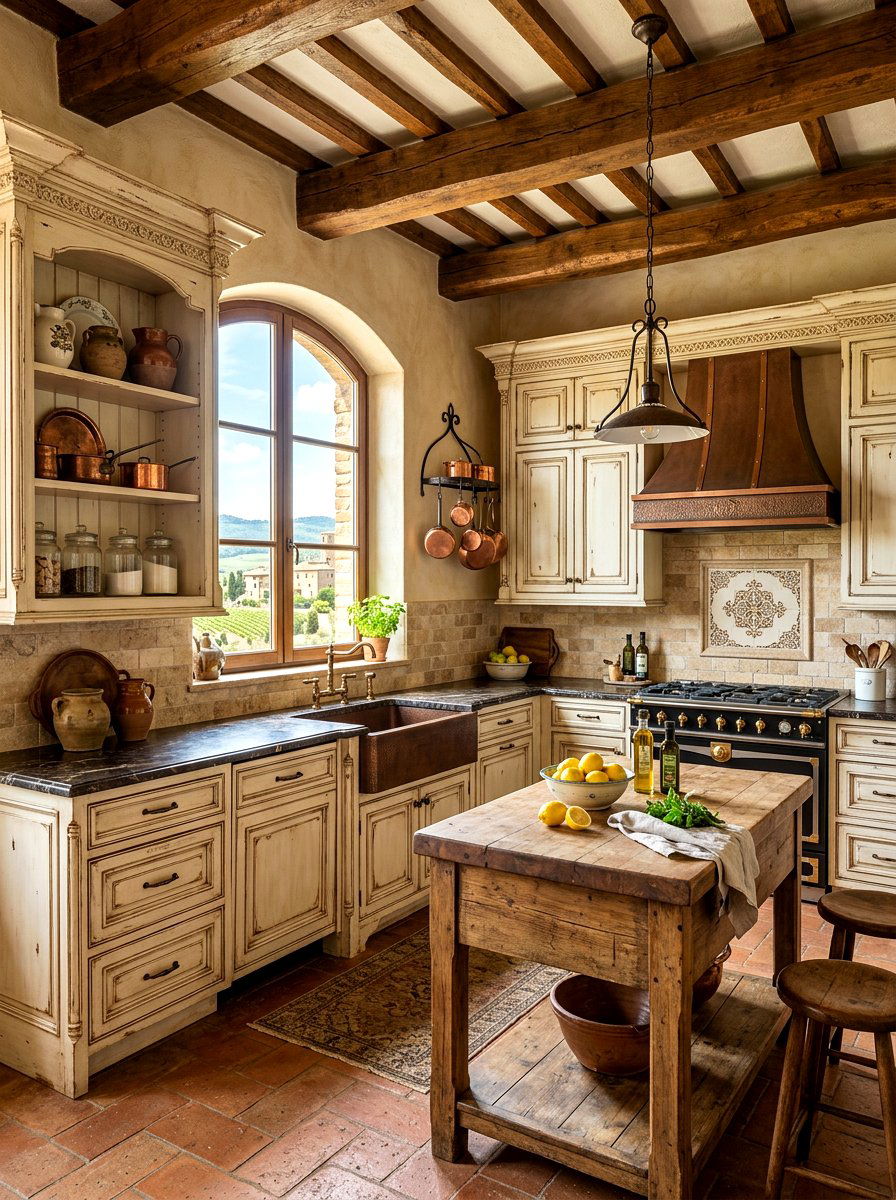
Opting for distressed wood cabinetry allows you to embrace the charming "lived-in" look that defines the heart of a traditional Italian home. These cabinets often feature sanded edges, slight imperfections, and multi-layered glazes that suggest decades of use and love. You can choose rich walnut stains or creamy antiqued whites to set the tone for your specific style. Raised panel doors and ornate molding add a layer of formality, while the weathered finish keeps the overall vibe relaxed and approachable. This style of cabinetry hides minor wear and tear exceptionally well, which makes it an ideal choice for busy families who love to cook together.
6. Tuscan Kitchen Arched Doorways
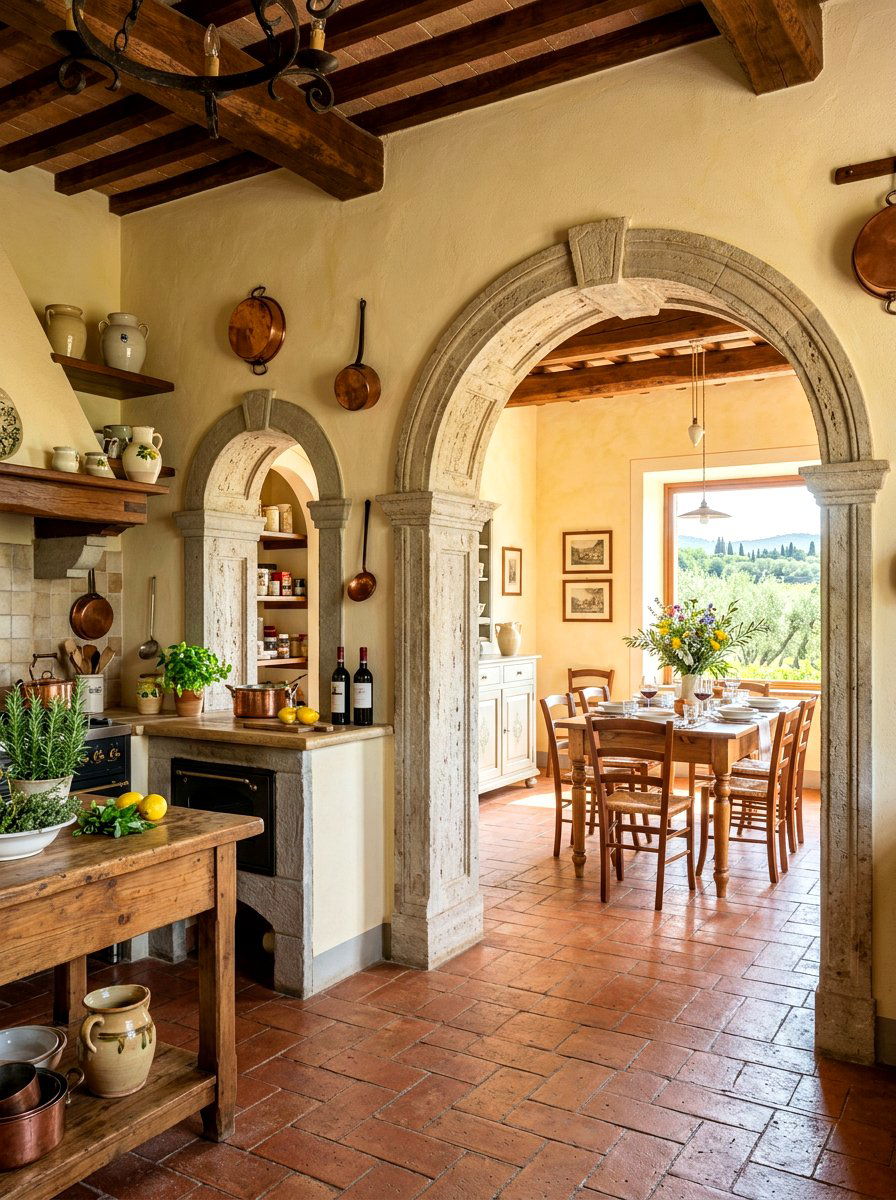
Creating arched entries or windows is a fundamental architectural detail that softens the straight lines of modern construction and adds European grace. Soft, rounded curves mimic the classic silhouettes of historical Italian villas and create a seamless flow between the cooking area and your dining space. You can enhance these arches by lining them with thin brick veneers or matching stone to make them stand out as major design features. This layout trick makes your home feel more open and expensive while providing a unique frame for the views of your kitchen. It is an excellent way to introduce a sense of grandeur without using flashy or modern decor.
7. Tuscan Kitchen Copper Accents
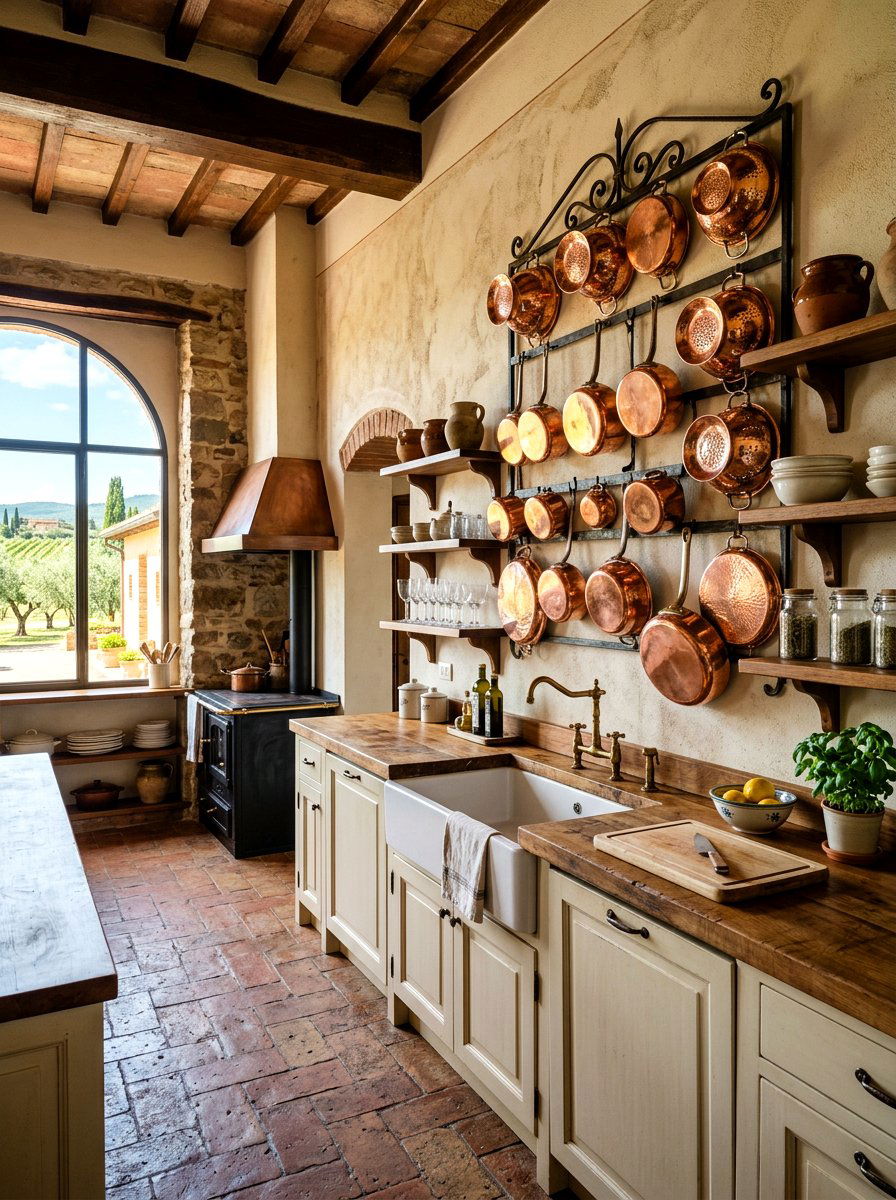
Displaying copper cookware and accessories is a functional way to add metallic warmth and a professional culinary feel to your walls. Hanging heavy copper pots and pans from a wrought iron rack creates a beautiful shimmering display that changes color as the metal ages. This material provides a bright pop of orange-gold that complements the earthy reds of terracotta and the cool tones of natural stone. You can also incorporate copper through a large farmhouse sink or small decorative canisters on the counters. These reflective surfaces catch the light beautifully, adding a layer of luxury and shine to an otherwise matte and rustic interior design.
8. Tuscan Kitchen Plaster Walls
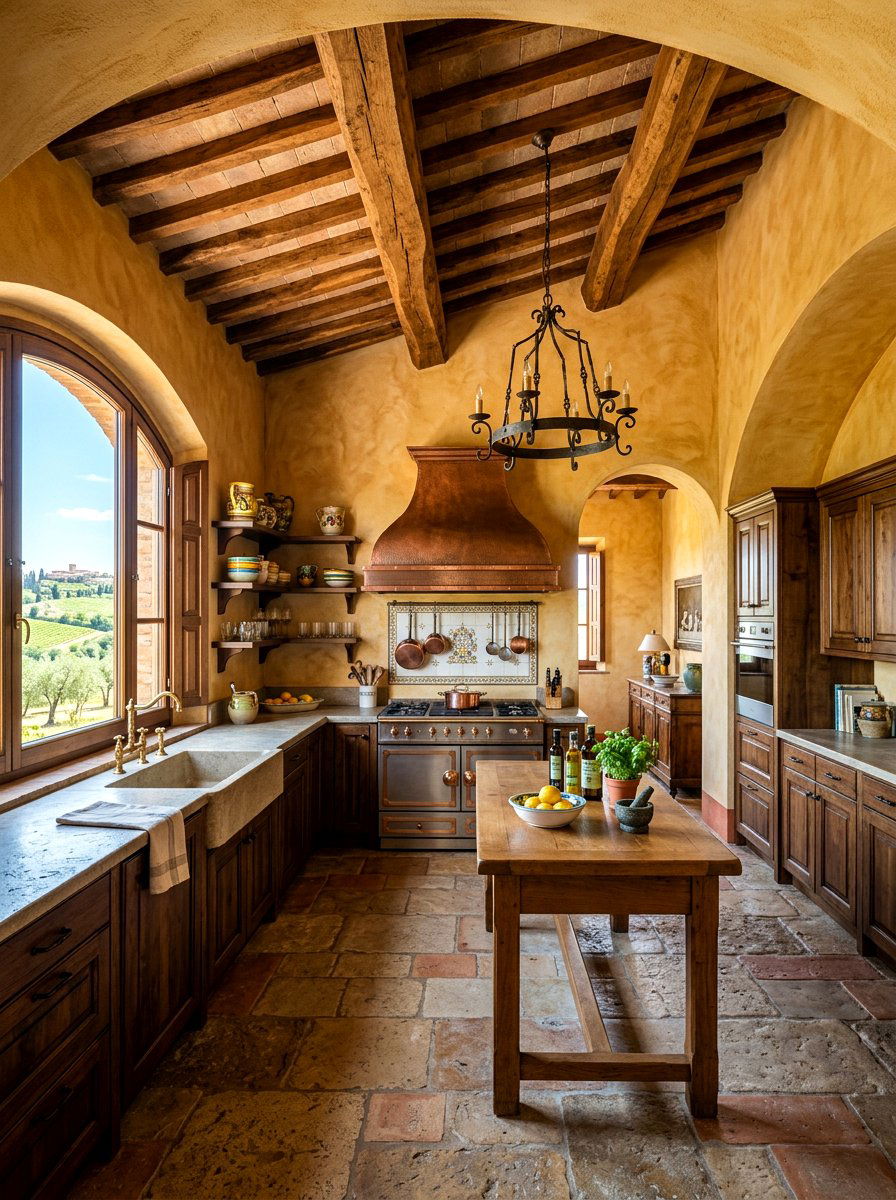
Applying a Venetian plaster or a textured stucco finish to your walls provides a depth of color that standard flat paint cannot achieve. This technique involves layering thin coats of plaster to create a subtle mottled effect that looks like sun-drenched walls in a rural farmhouse. Soft yellows, warm creams, and light ochre are perfect colors for this application because they reflect natural light in a very gentle way. The smooth, slightly polished surface feels cool to the touch and offers a sophisticated backdrop for dark wood furniture. It is a subtle way to add luxury and character to the space without using busy wallpaper patterns.
9. Tuscan Kitchen Rustic Island
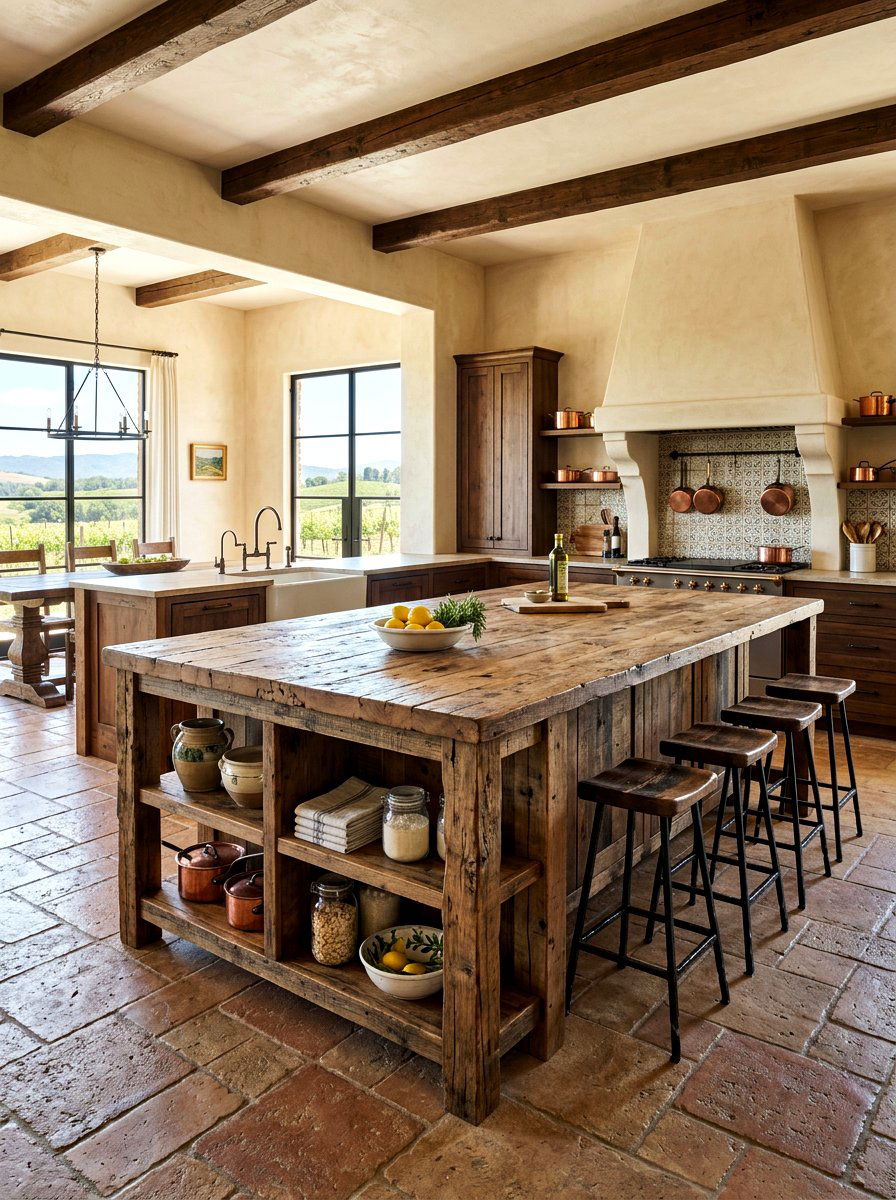
Designing a large central island made from reclaimed wood or featuring a thick butcher block top provides a rugged workspace for meal preparation. A freestanding style that looks like a vintage work table adds to the authenticity of a Mediterranean-inspired layout. You can use the space underneath for open shelving to store large ceramic bowls or woven baskets filled with fresh produce. This piece of furniture often becomes the social hub of the home, where friends can gather while you cook. Mixing a different wood finish or paint color on the island compared to your perimeter cabinets creates a custom, high-end look that feels collected.
10. Tuscan Kitchen Travertine Backsplash
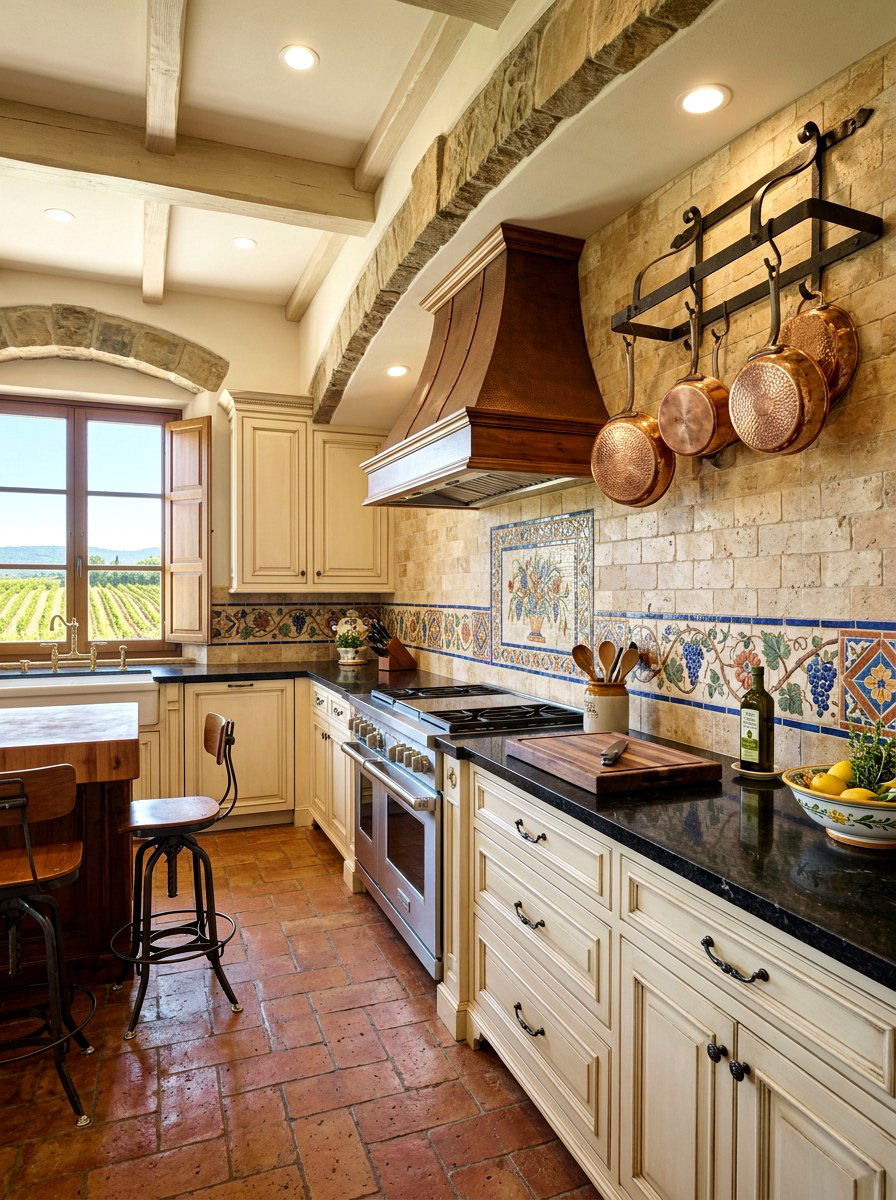
Using travertine tiles for your backsplash adds a soft, natural texture that bridges the gap between your countertops and cabinetry. This natural stone features tiny pits and a range of beige and tan hues that perfectly match the typical Tuscan color palette. You can choose small tumbled squares or a sophisticated subway tile layout to create a timeless look behind your stove. The matte finish of travertine is ideal for diffusing light, preventing harsh glares while you are busy preparing dinner. It is a durable material that stands up well to heat and moisture, ensuring your kitchen remains beautiful and functional for many years to come.
11. Tuscan Kitchen Blue Accents
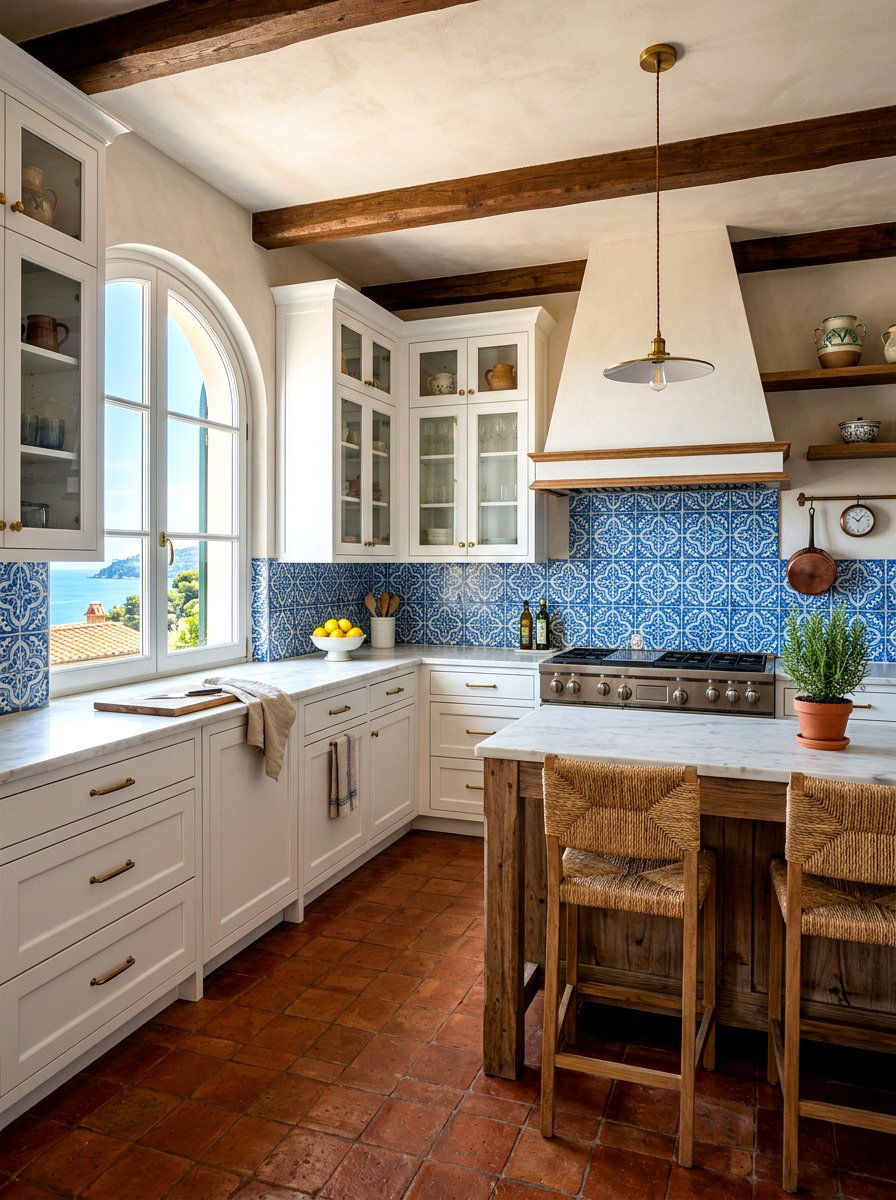
Introducing Mediterranean blue through tiles or decor adds a refreshing splash of color that mimics the sea and sky of coastal Italy. This vibrant shade works beautifully as a contrast to the warm yellows and deep oranges typically found in these rooms. You might consider a hand-painted tile border or a few bold ceramic vases to bring this cooling element into your design scheme. Blue accents prevent the space from feeling too heavy or dark, especially in rooms that do not receive a lot of direct sunlight. This color pairing creates a balanced, vibrant atmosphere that feels energetic during the day and very serene during the evening hours.
12. Tuscan Kitchen Farmhouse Sink
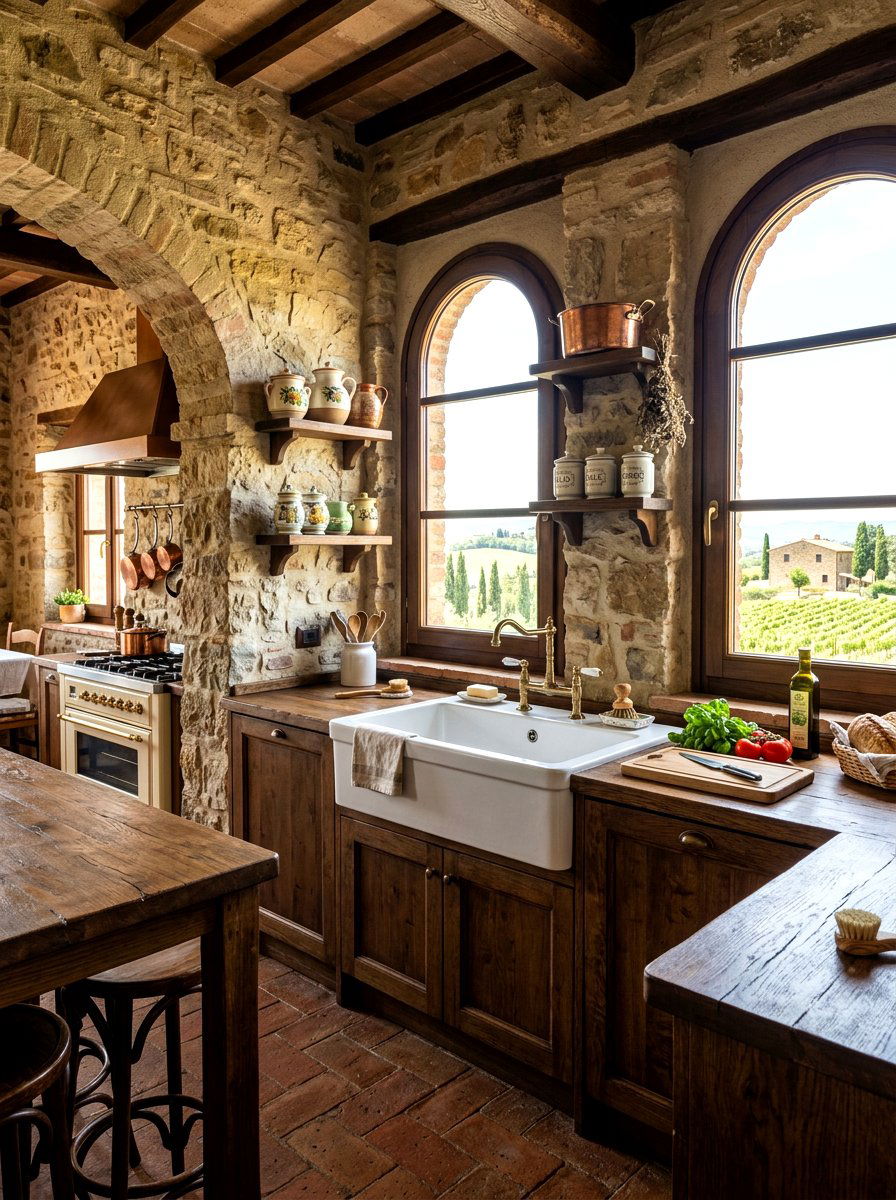
A large, deep apron-front sink made from white fireclay or hammered copper is a quintessential element of any rustic European design. These sinks are designed to be focal points, showing off their beautiful front face instead of being hidden behind cabinet doors. Their massive size makes them incredibly practical for washing large pasta pots or cleaning fresh vegetables from the garden. Choosing a white ceramic finish provides a clean, bright look that stands out against dark countertops, while copper adds a more historic and aged feel. This plumbing fixture instantly gives your home a farmhouse vibe that is both incredibly stylish and highly functional for serious cooks.
13. Tuscan Kitchen Open Shelves
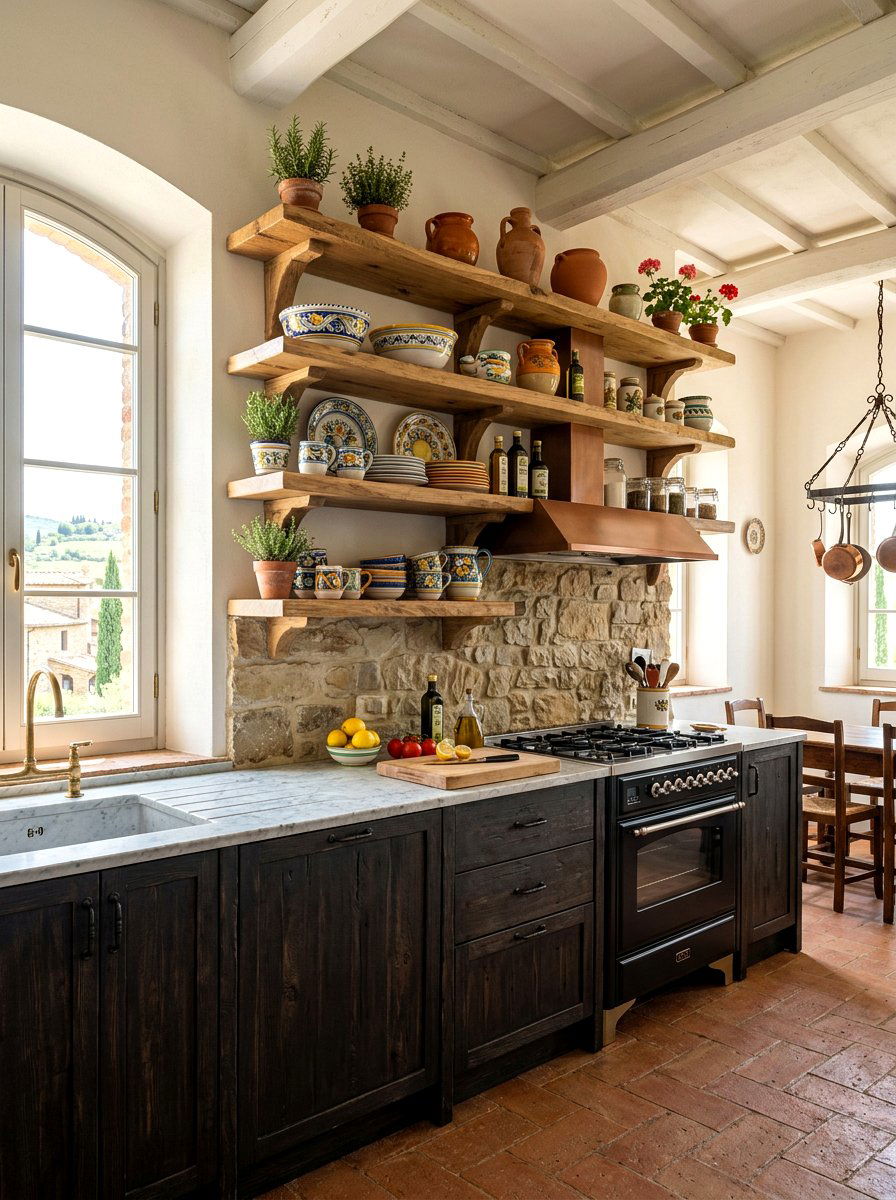
Swapping out some of your upper cabinets for thick wood open shelving creates a more airy and communal feel in your cooking space. This design choice allows you to display your collection of hand-painted ceramics, glass olive oil bottles, and rustic wooden cutting boards as part of the decor. It encourages a more relaxed way of living, where everything you need is within easy reach and beautifully presented. You can use decorative wrought iron brackets to support the shelves, adding another layer of traditional metalwork to the walls. This approach makes small kitchens feel significantly larger by removing the visual weight of heavy, solid cabinet boxes.
14. Tuscan Kitchen Range Hood
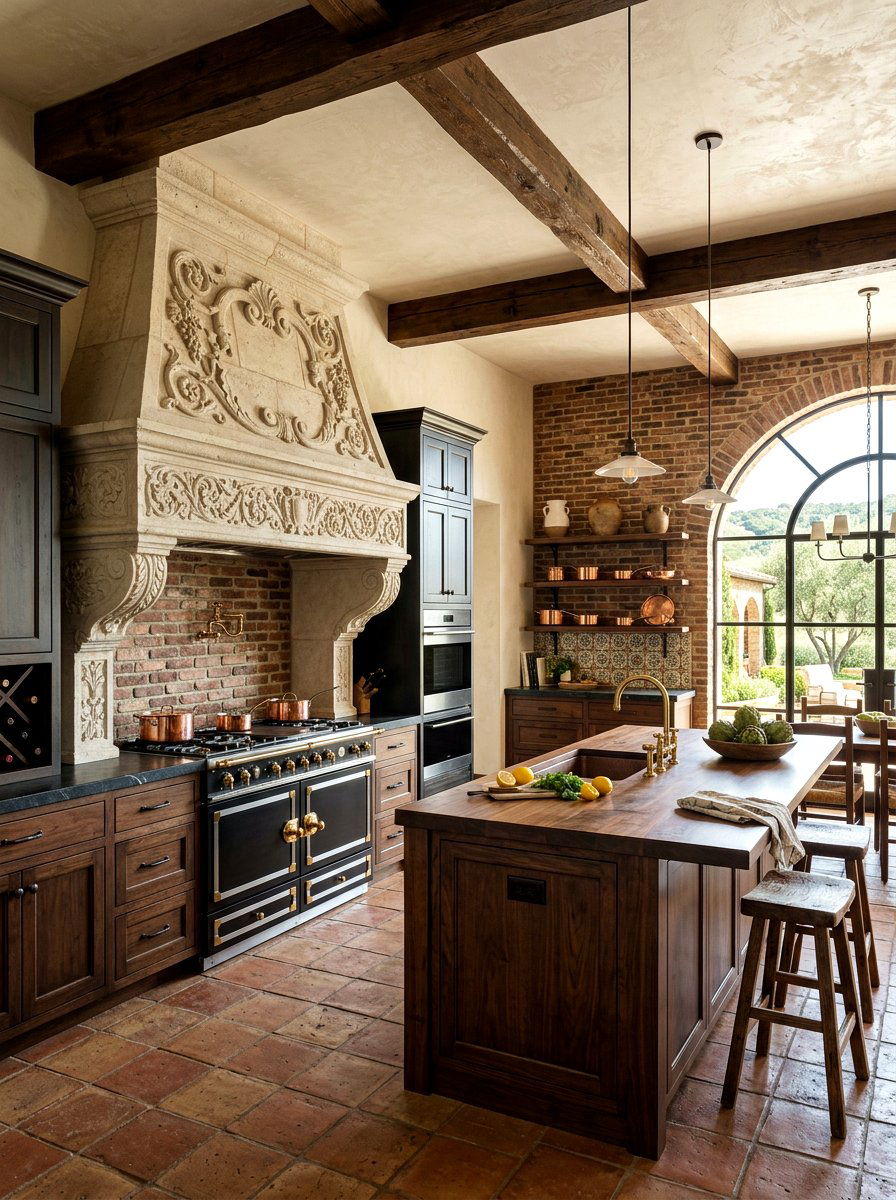
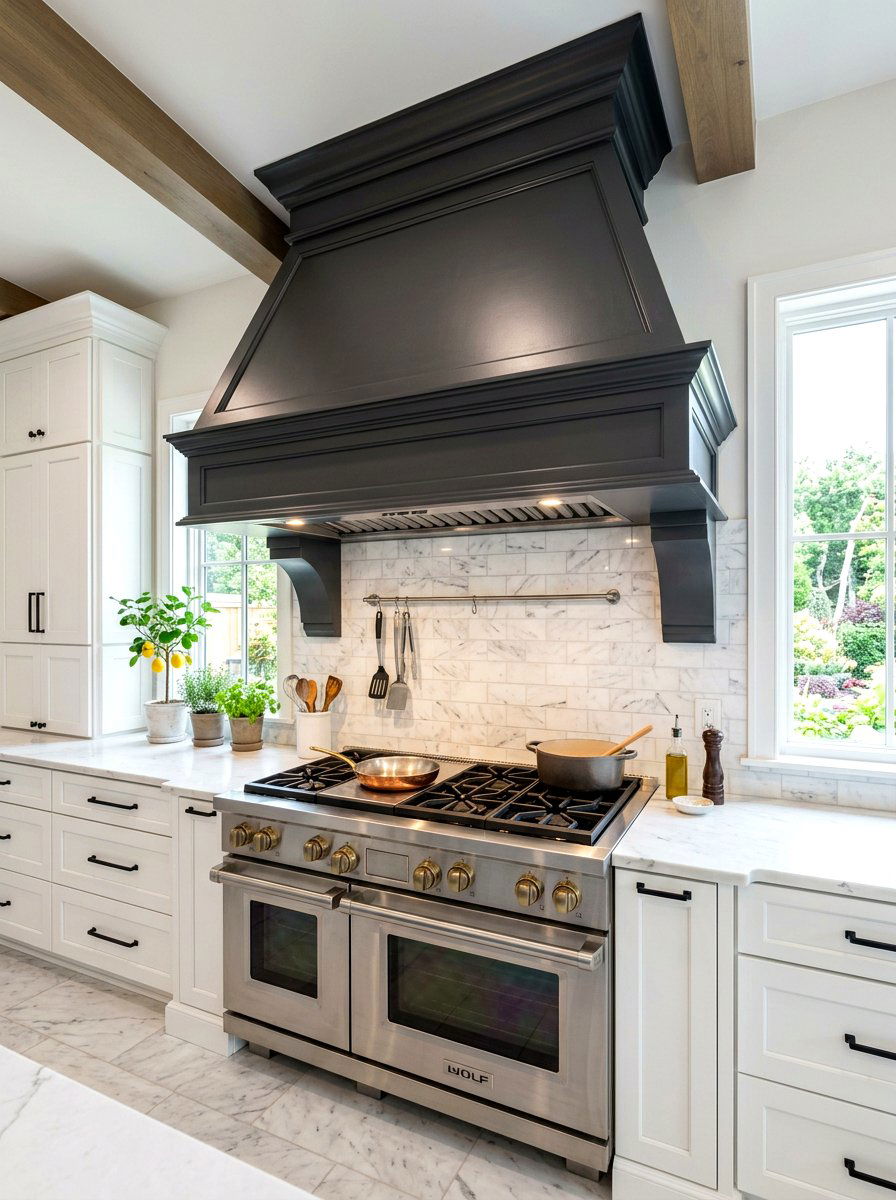
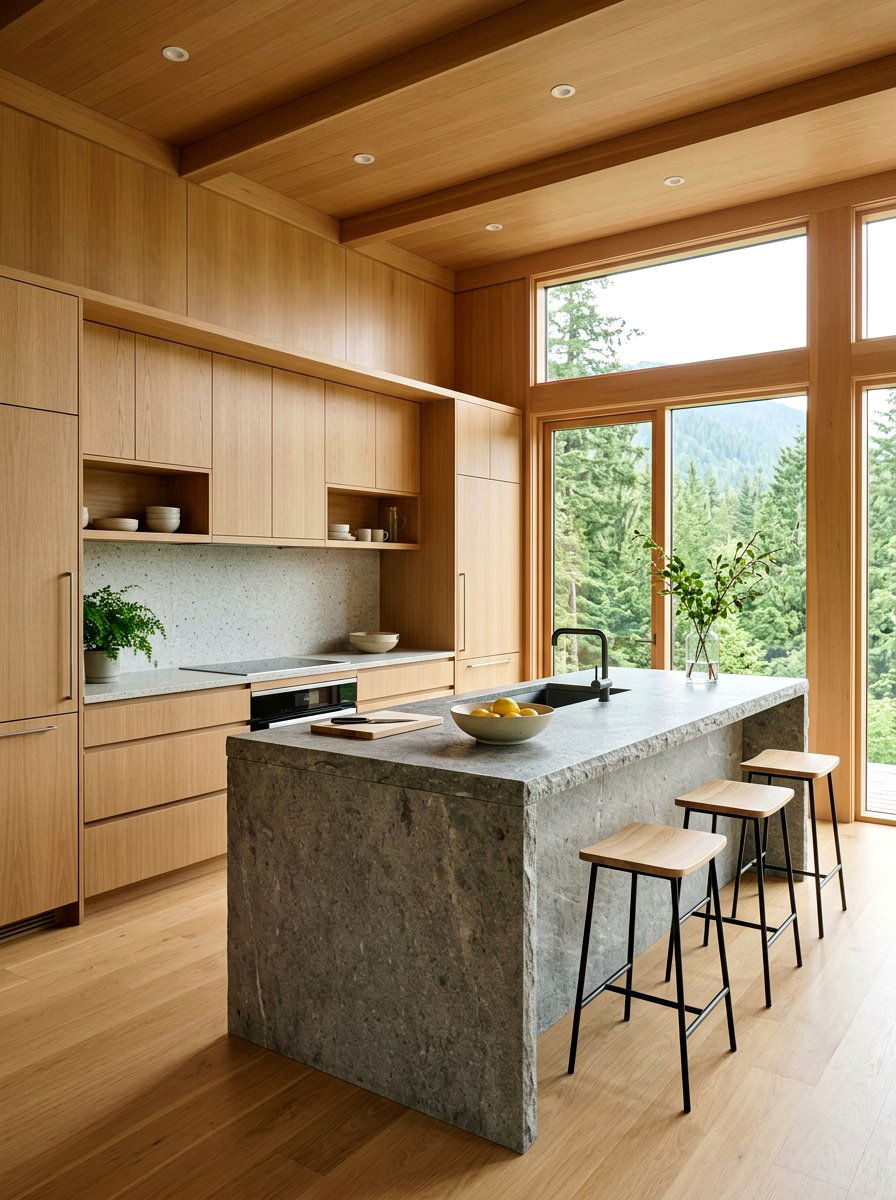
Installing a custom, oversized range hood made from stone, wood, or plaster serves as the dramatic architectural anchor for your entire room. In traditional Italian homes, the cooking hearth was the center of life, and a grand hood honors that tradition with a modern twist. You can decorate the face of the hood with intricate carvings, a simple arched molding, or even a small shelf for displaying spice jars. This feature draws the eye immediately and provides a sense of luxury and scale. Whether it is finished in a bright white plaster or a dark stained wood, it helps define the cooking zone as the primary workstation.
15. Tuscan Kitchen Vaulted Ceiling
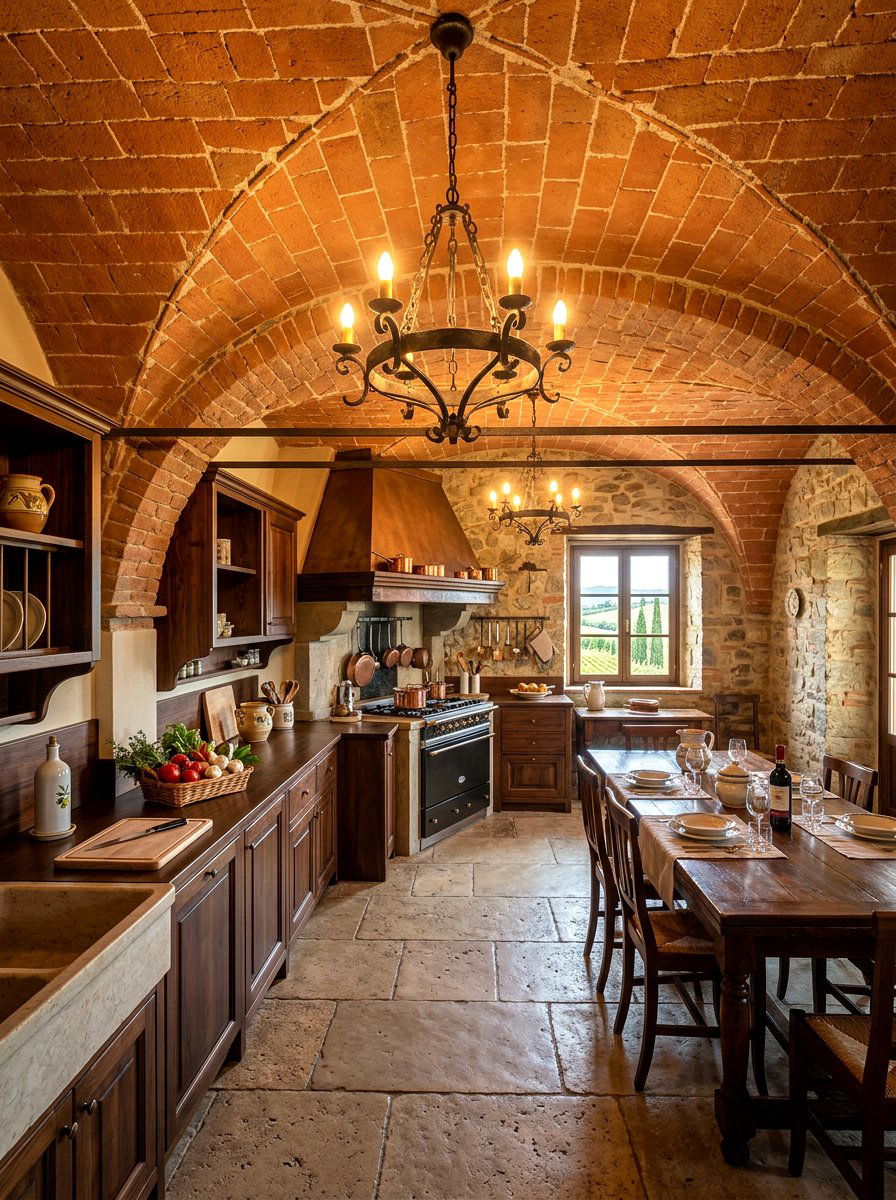
Designing a ceiling with a barrel vault or a brick-lined curve adds an incredible sense of height and historical importance to the room. Using thin brick tiles to line the ceiling creates a warm, textured overhead view that feels like a hidden wine cellar or an ancient villa. This architectural feature is especially effective in long, narrow spaces where the curve can lead the eye toward a large window or a patio door. It provides a unique opportunity to play with lighting, as wall sconces can cast shadows that emphasize the rounded shape. This high-end detail makes your home stand out with a very authentic European flair.
16. Tuscan Kitchen Earth Tones
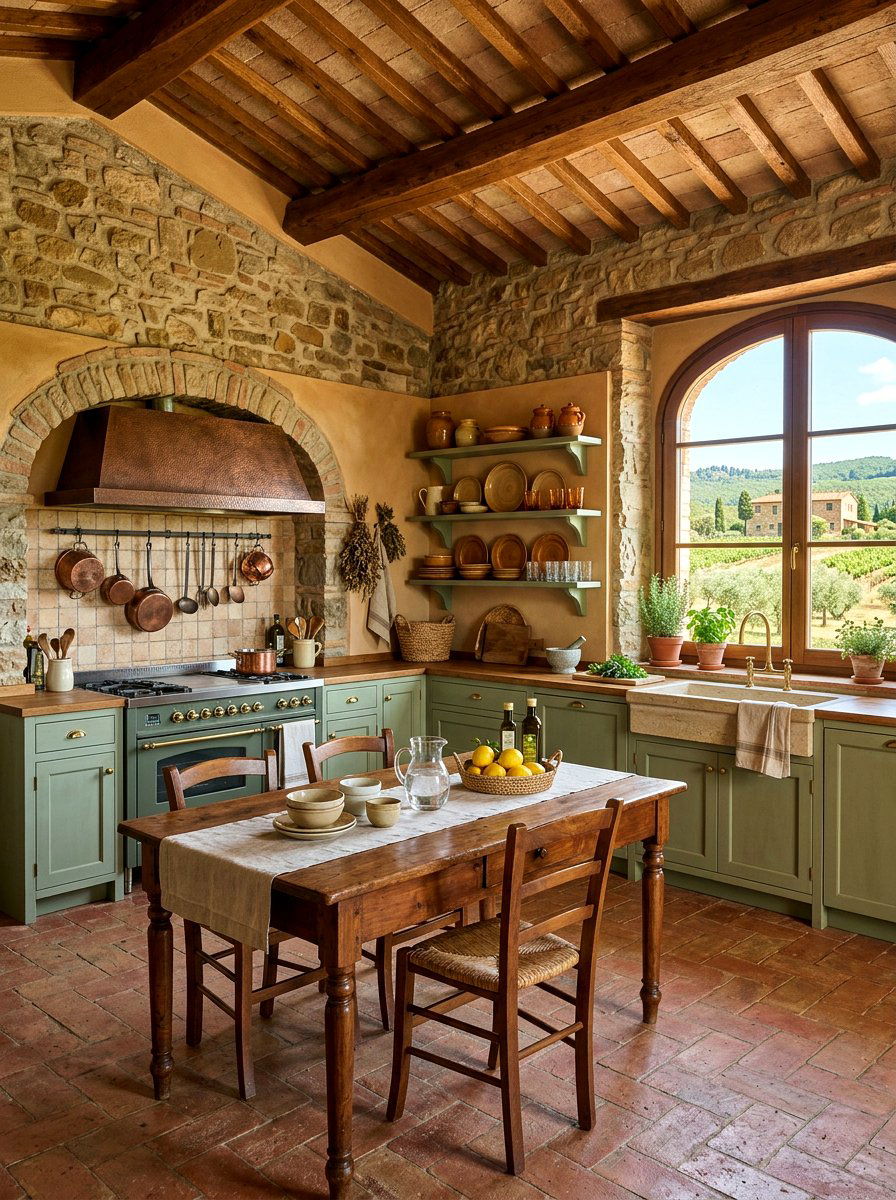
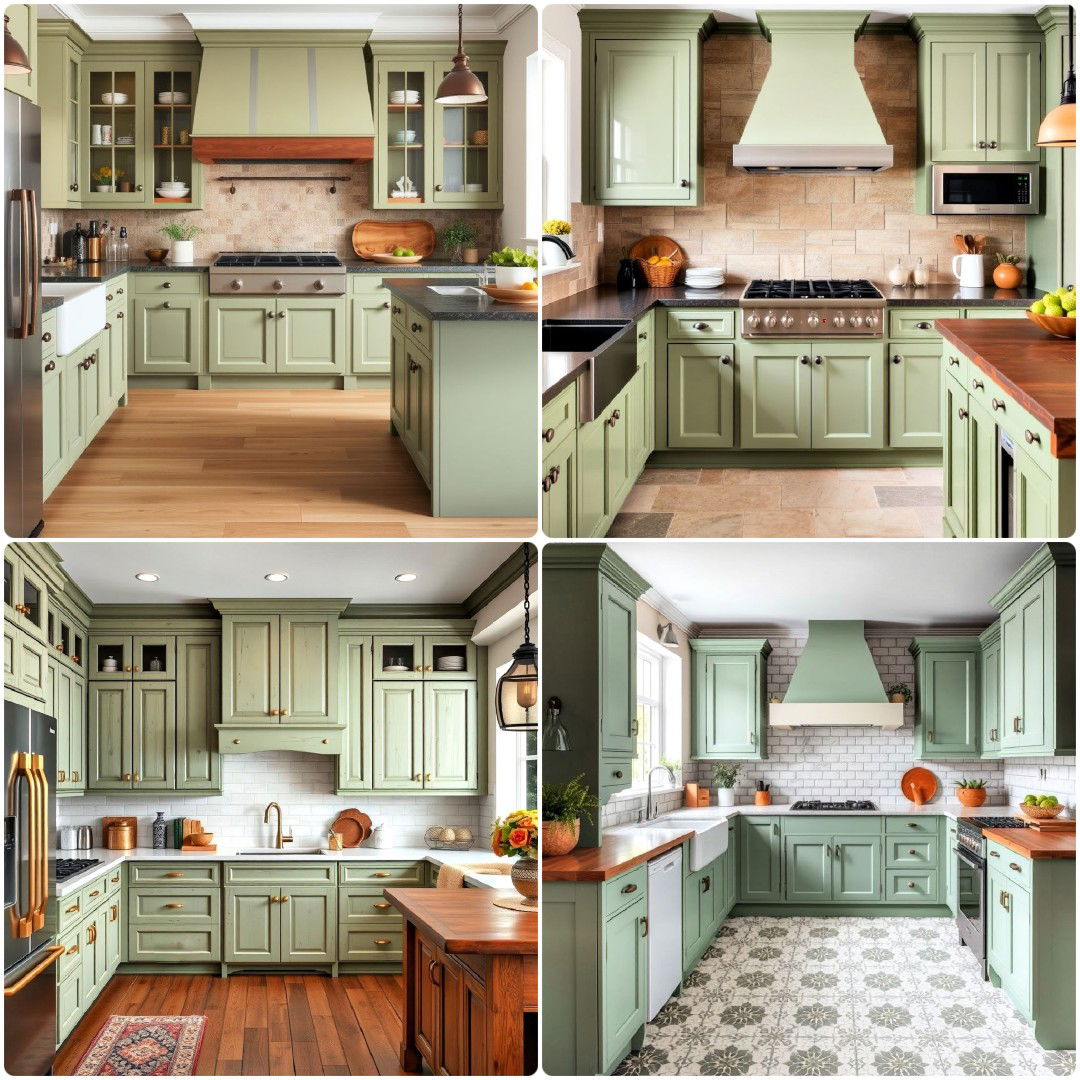
Focusing on a color palette of ocher, terracotta, olive green, and burnt sienna ensures your space feels grounded in the natural beauty of Italy. These earth tones are warm and inviting, creating a cozy atmosphere that makes people want to linger over long meals. You can use these colors on the walls, through your tile choices, or even by painting your lower cabinets a soft sage green. These hues pair naturally with wood and stone, creating a harmonious environment that feels connected to the outdoors. Using multiple shades of the same color adds depth and prevents the design from looking too flat or monochromatic.
17. Tuscan Kitchen Ceramic Tile
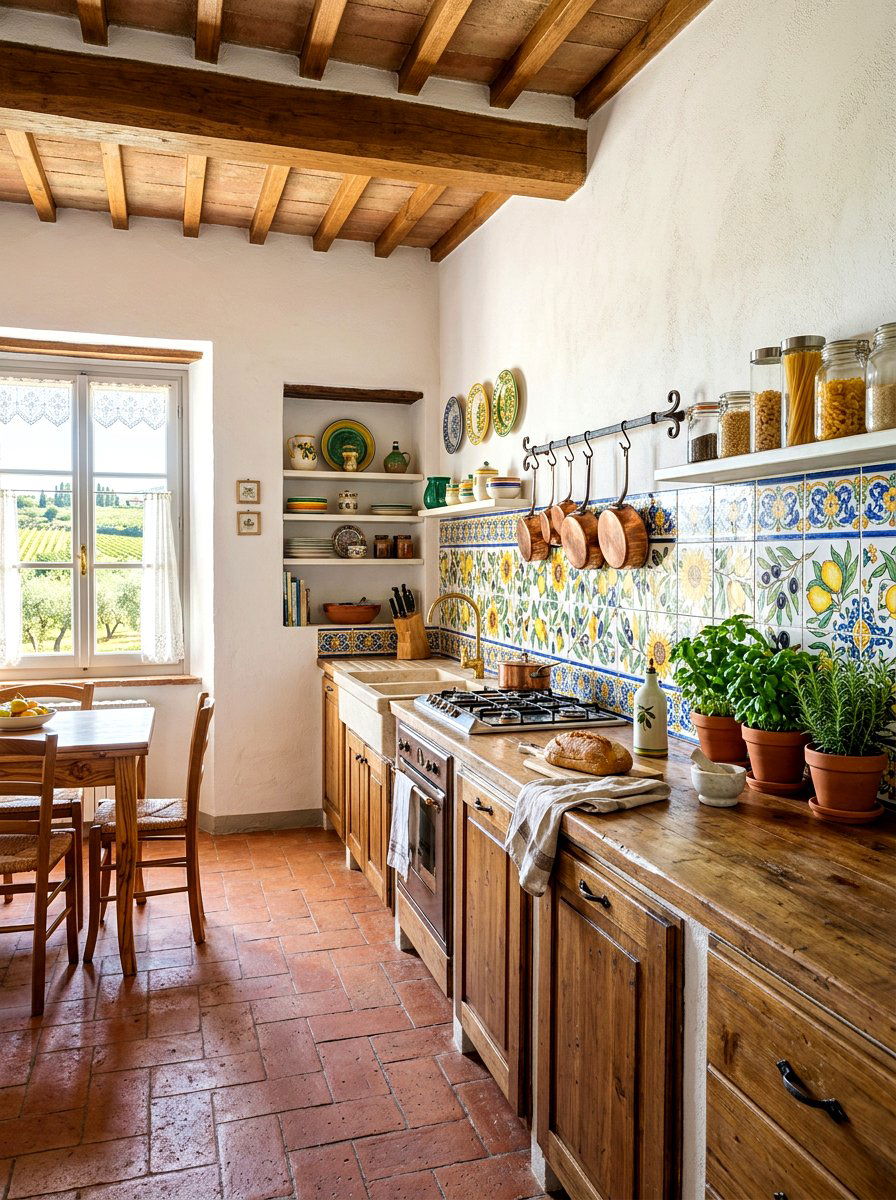
Incorporating hand-painted ceramic tiles with traditional Mediterranean patterns adds a layer of artistic detail and historical charm to your walls or floors. These tiles often feature intricate floral motifs, lemons, or geometric designs in shades of yellow, blue, and green. You can use them as a decorative border around your backsplash or as a vibrant insert in your flooring. The glossy finish of glazed ceramic provides a nice contrast to the matte surfaces of stone and wood found elsewhere in the room. This element brings a touch of human craftsmanship and personality, making your home feel unique and full of vibrant character and Italian soul.
18. Tuscan Kitchen Pizza Oven
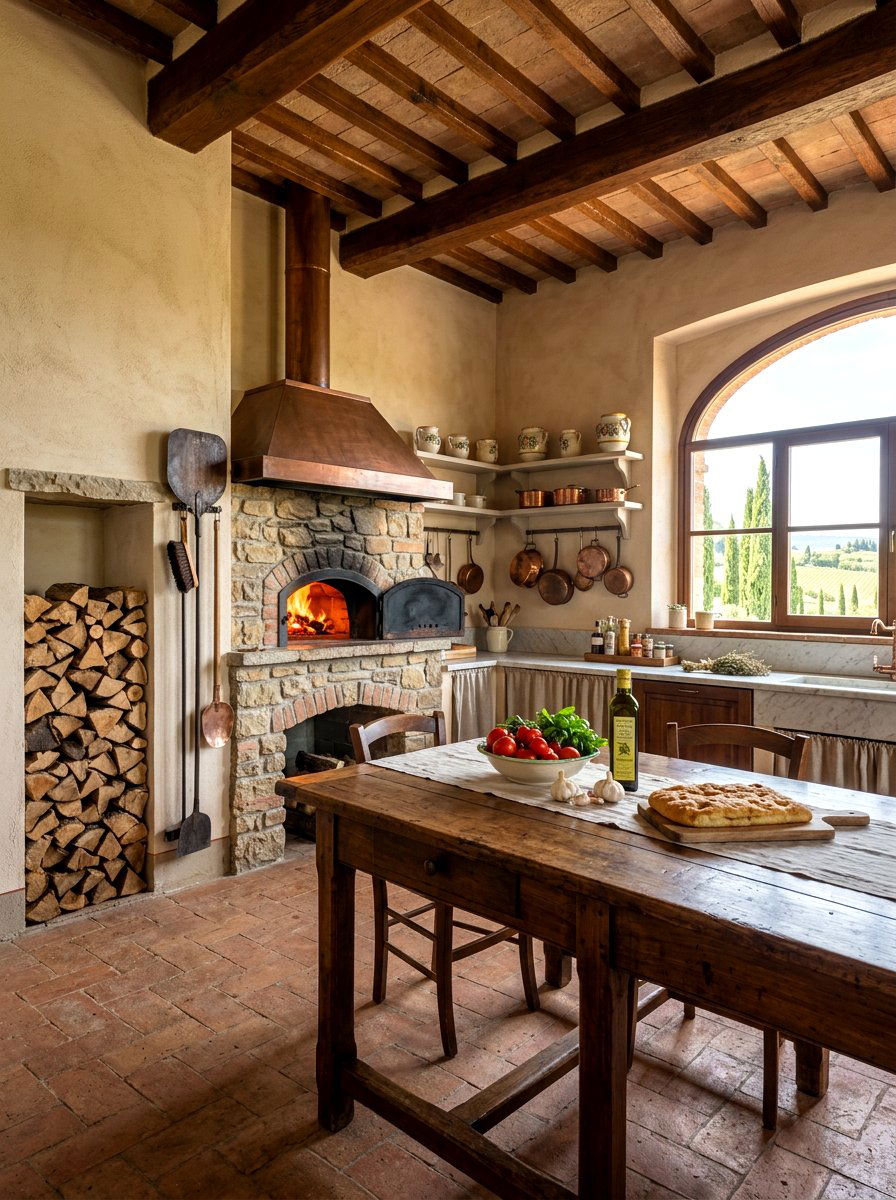
Building a wood-fired pizza oven into a corner of your room creates the ultimate culinary destination for family gatherings and weekend parties. Often finished with the same stone or plaster as your walls, these ovens become a massive focal point that emphasizes the importance of traditional cooking. The black iron door and the stack of wood nearby add a rustic, functional aesthetic that is hard to beat. Even if you don't use it every day, it provides a sense of luxury and old-world lifestyle that defines the Tuscan experience. It is a dream feature for anyone who loves authentic Italian flavors and entertaining many guests.
19. Tuscan Kitchen Bar Stools
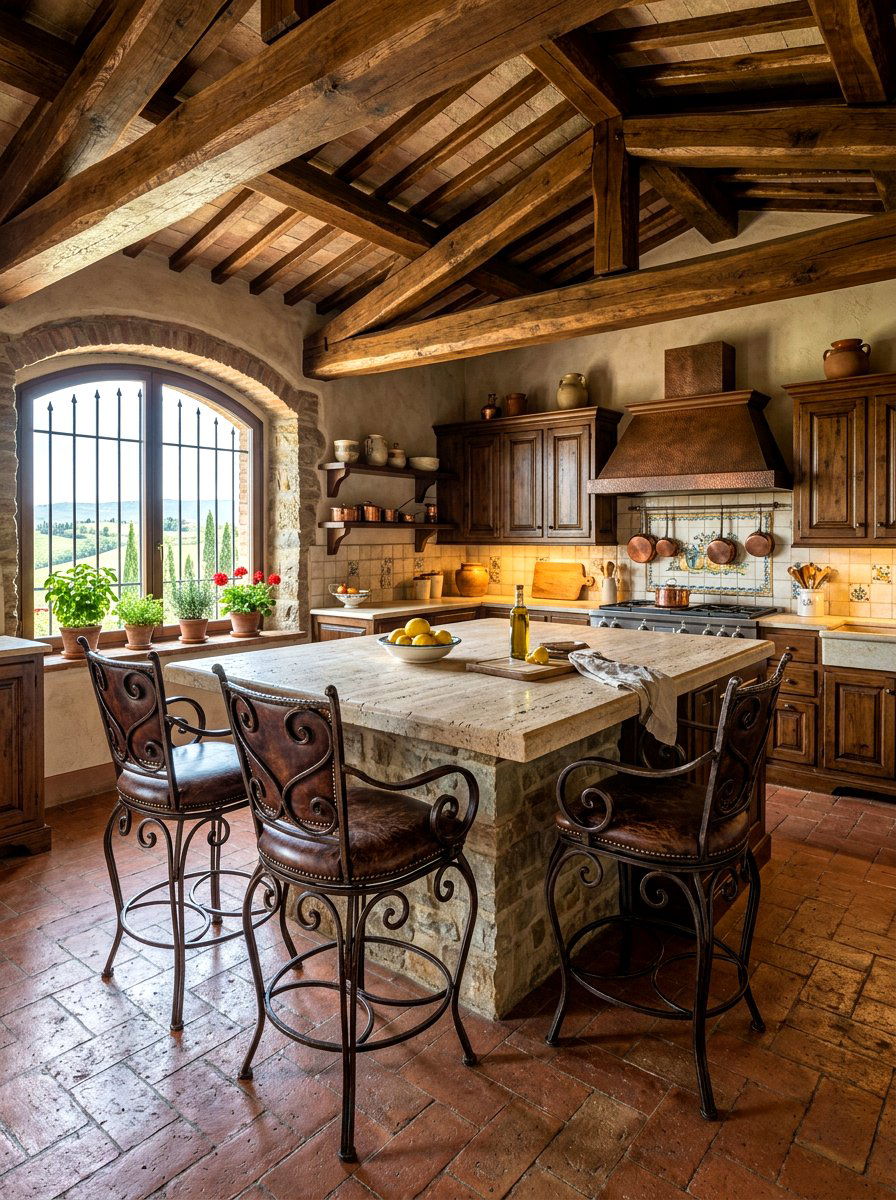
Choosing bar stools with wrought iron frames and leather or woven seats provides a sturdy and stylish seating option for your kitchen island. These materials reflect the rustic and durable nature of Italian furniture while offering a comfortable place for guests to sit. You should look for designs that feature curved backs or twisted metal legs to match the scrollwork found in your lighting fixtures. Dark leather seats add a touch of sophistication and are easy to wipe clean after family meals. These stools bridge the gap between a functional workspace and a comfortable social hub, ensuring your island is the most popular spot in the entire house.
20. Tuscan Kitchen Dark Cabinets
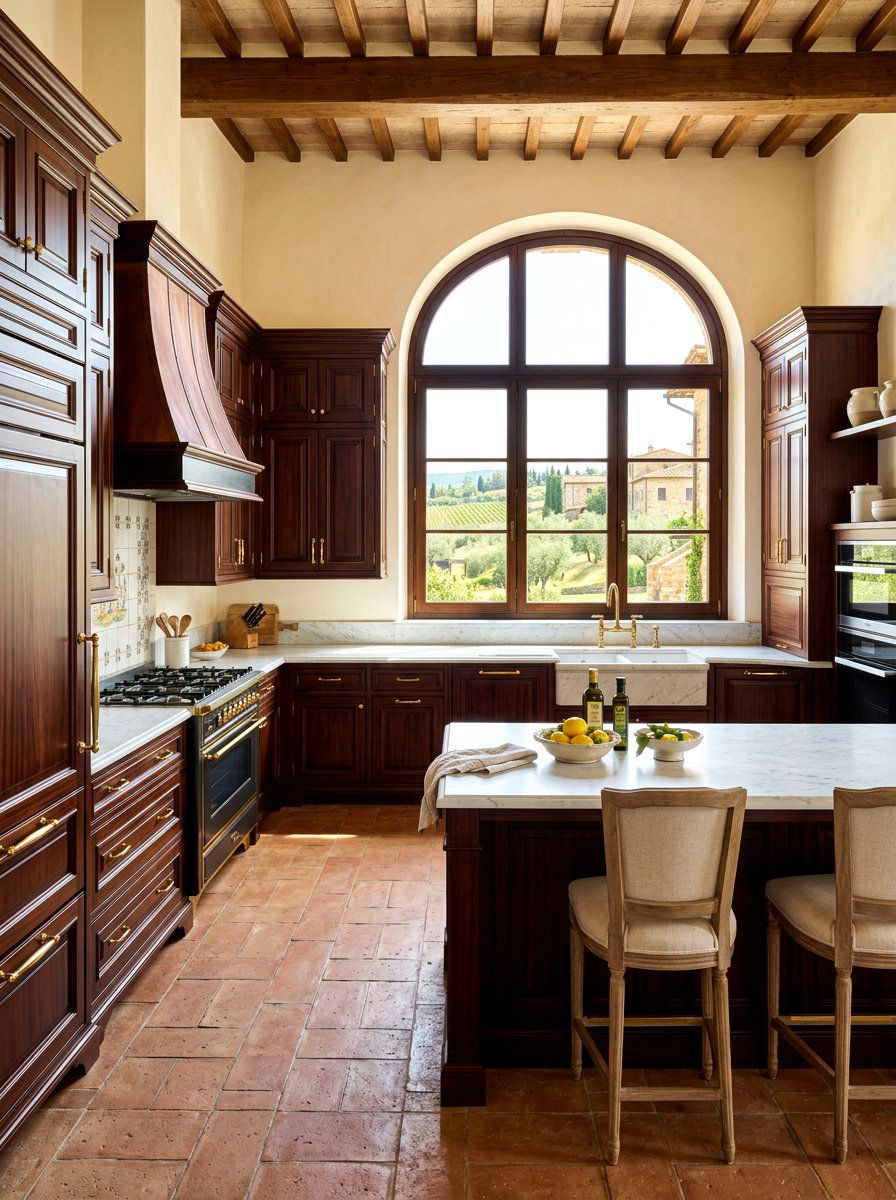
Using deep walnut or mahogany stains for your cabinetry provides a rich, formal look that feels anchored and very traditional. Dark wood contrasts beautifully against light travertine floors and cream-colored plaster walls, creating a high-contrast environment that feels luxurious. You can add glass-front doors to some of the upper cabinets to prevent the dark wood from making the room feel too heavy or closed in. This style of cabinetry is perfect for homeowners who want a more masculine or stately version of the Mediterranean aesthetic. When paired with brass or bronze hardware, these cabinets look exceptionally elegant and remain timeless as trends change.
21. Tuscan Kitchen Arched Windows
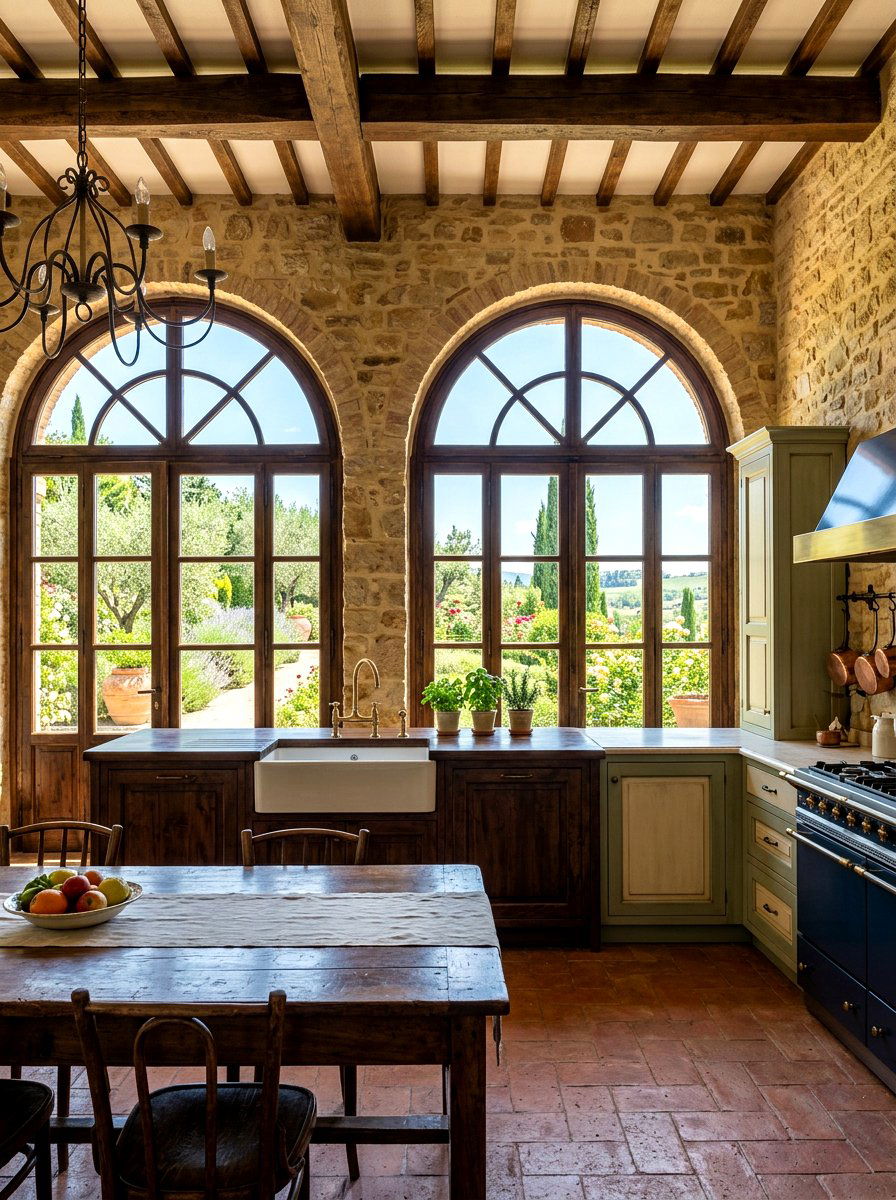
Installing large arched windows allows natural light to flood the space while adding a beautiful architectural curve that matches your doorways. These windows often feature thick wooden frames or even wrought iron dividers that add to the old-world feel. Placing a sink directly under an arched window provides a stunning view of your garden while you work, making daily chores feel more peaceful. The soft shape of the window helps break up the hard angles of your counters and appliances. It is a classic design choice that makes any room feel like it belongs in a sunny villa overlooking the lush hills of Tuscany.
22. Tuscan Kitchen Herb Garden
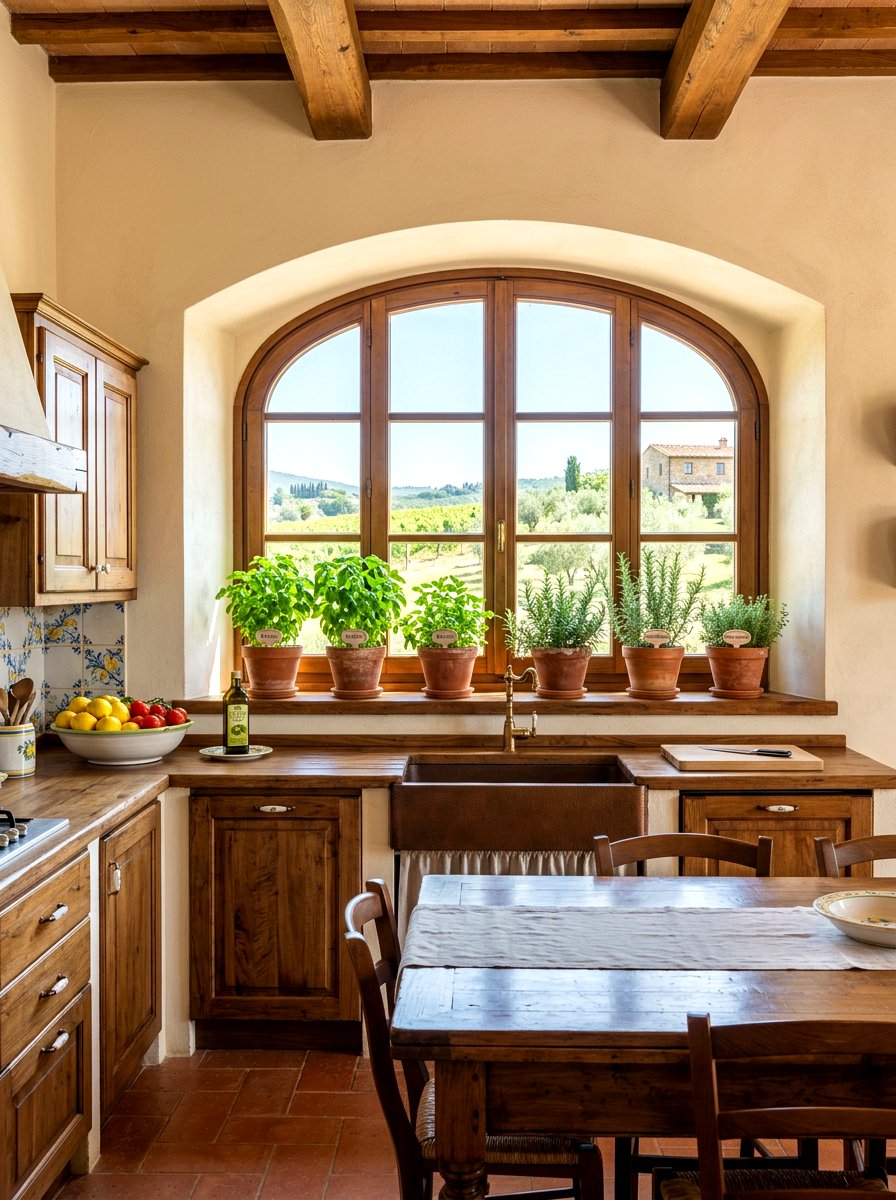
Creating a dedicated space for an indoor herb garden brings life, color, and incredible scents directly into your cooking environment. You can place small terracotta pots on a sunny windowsill or install a custom wall rack for a vertical garden of basil, rosemary, and thyme. This living decor element is both beautiful and practical, ensuring you always have fresh ingredients for your favorite Italian recipes. The greenery provides a natural pop of color that looks stunning against stone walls or wood shelving. It emphasizes the "farm-to-table" lifestyle that is so central to the culture and spirit of the fabled Tuscany region.
23. Tuscan Kitchen Antique Hardware
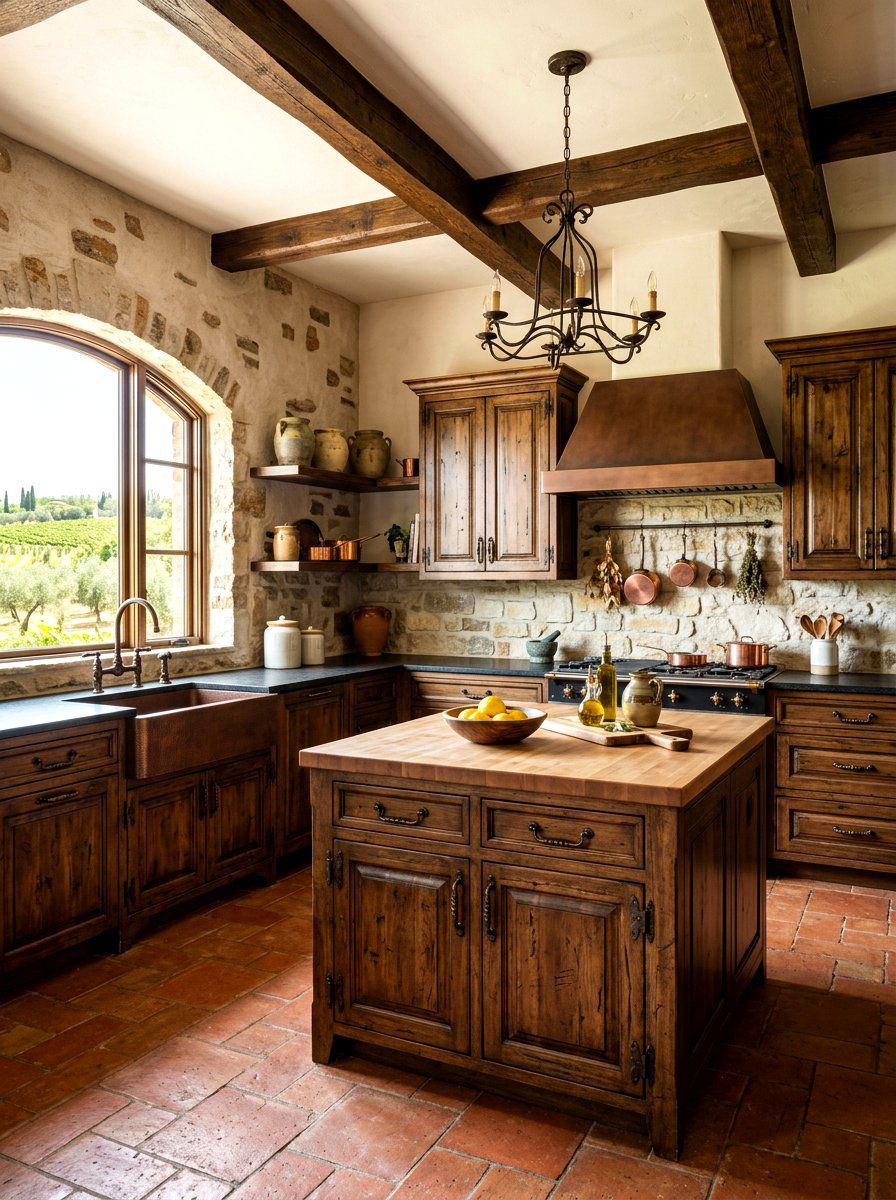
Selecting cabinet pulls and knobs with an oil-rubbed bronze or antique brass finish adds the perfect finishing touch to your rustic cabinetry. These metals feature a dark, weathered patina that looks like it has been touched by many hands over several generations. You should look for hardware with a heavy, solid feel and slightly irregular shapes to maintain the handcrafted aesthetic. This small detail ties together your lighting and plumbing fixtures, creating a cohesive look throughout the entire space. Antique-style hardware is an affordable way to upgrade standard cabinets and give them a more custom, historical character that fits the Mediterranean theme perfectly.
24. Tuscan Kitchen Marble Counters
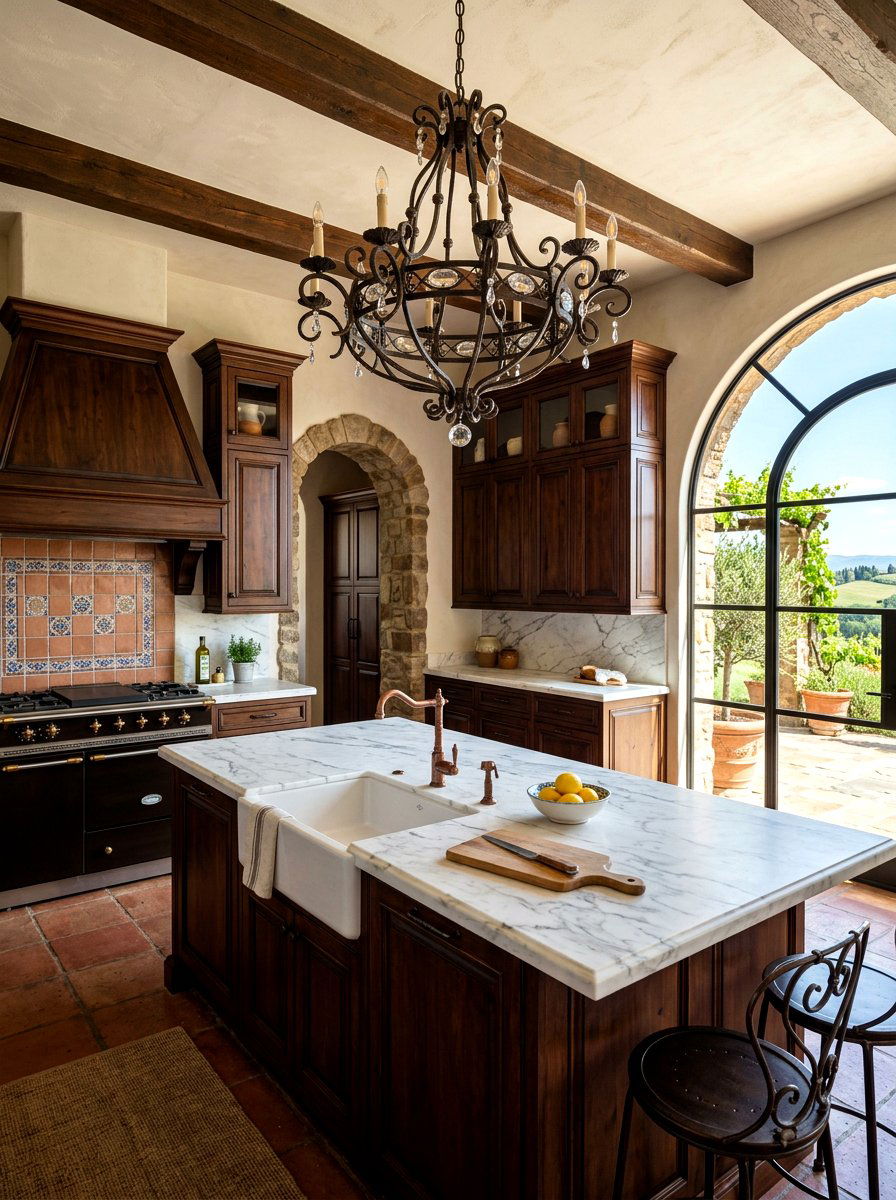
Choosing honed marble countertops with a matte finish provides a luxurious and cool surface that is ideal for rolling out fresh pasta dough. While polished marble can feel too modern, a honed or leathered finish has a soft, velvety texture that feels more authentic to a rustic villa. The natural veining in the stone adds subtle movement and a layer of elegance that balances the rougher textures of wood and stone. Marble is a classic choice for Italian interiors because of its durability and timeless beauty. It pairs exceptionally well with both dark and light cabinetry, making it a versatile centerpiece for your kitchen.
25. Tuscan Kitchen Vintage Furniture
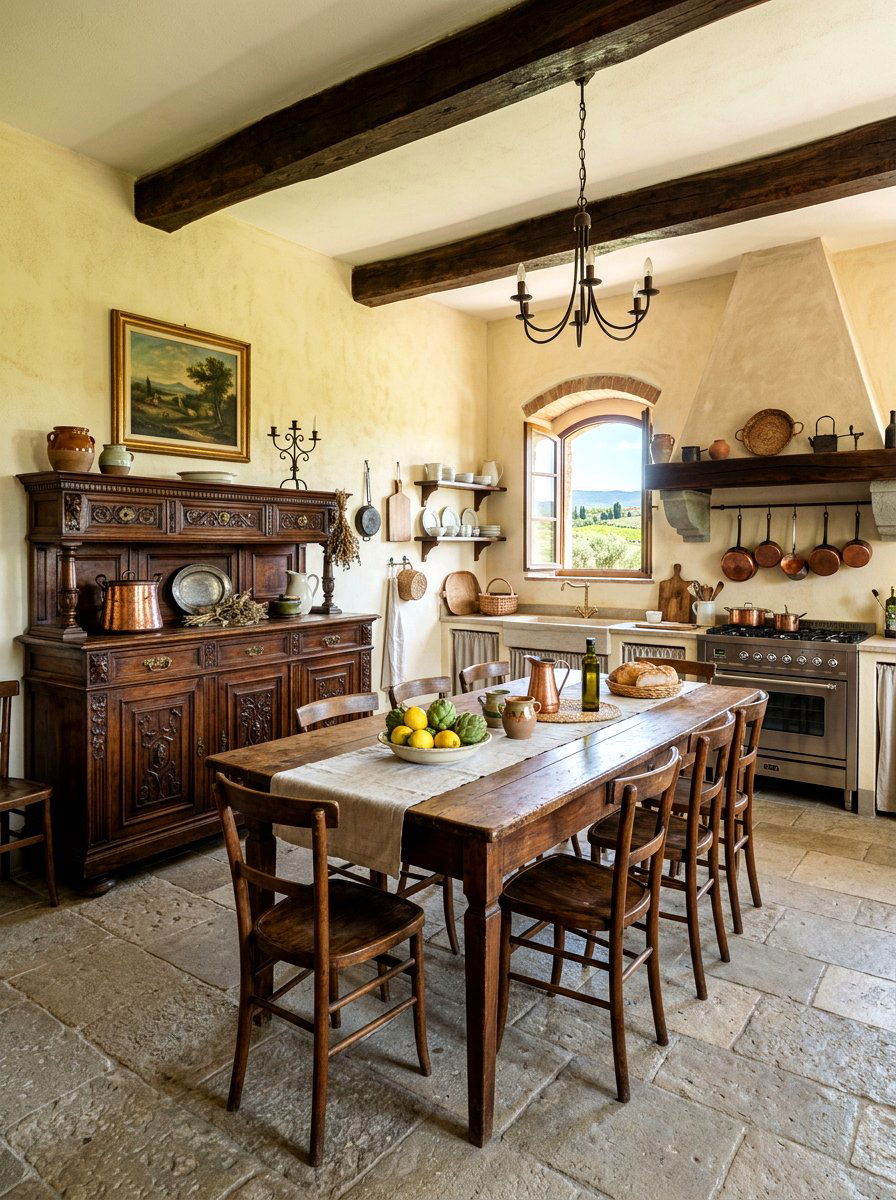
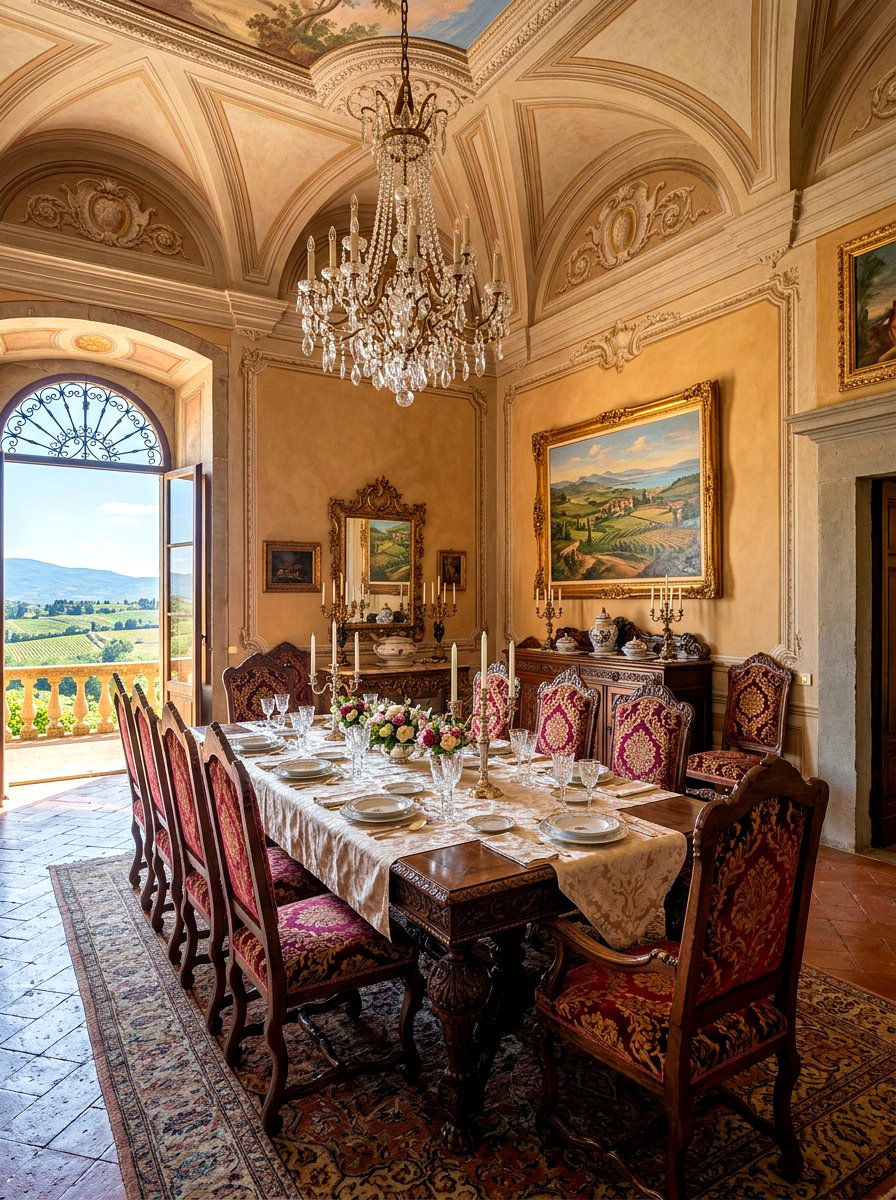
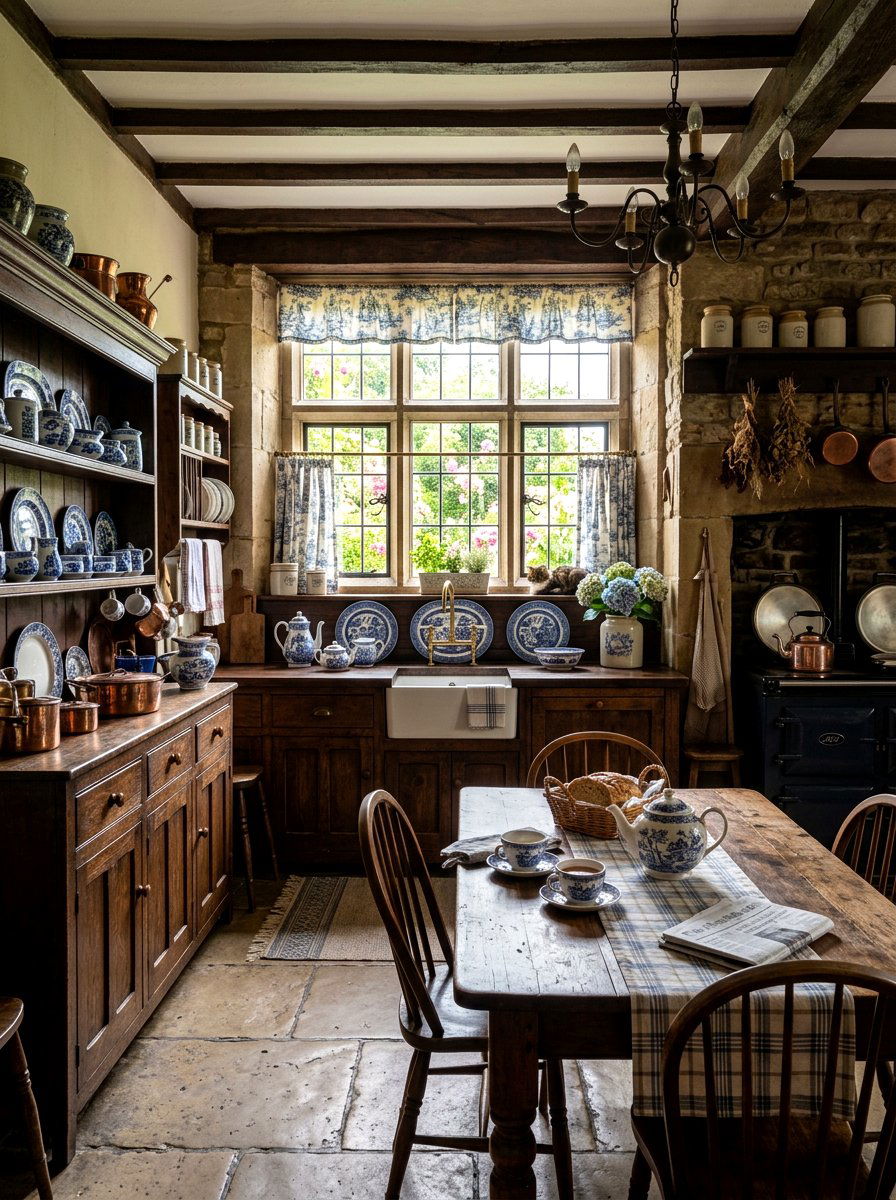
Incorporating an antique buffet, a hutch, or a long farmhouse dining table makes the space feel like it has been furnished over many years. Mixing individual pieces of furniture with built-in cabinetry adds a "collected" feel that is much more inviting than a matching set of modern units. Look for items with turned legs, carved details, or a slightly chipped paint finish to add maximum character. A large wooden table in the center of the room can serve as both a dining area and an extra prep space, emphasizing the communal nature of the home. These vintage pieces provide a soul and a sense of history.
26. Tuscan Kitchen Walk In Pantry
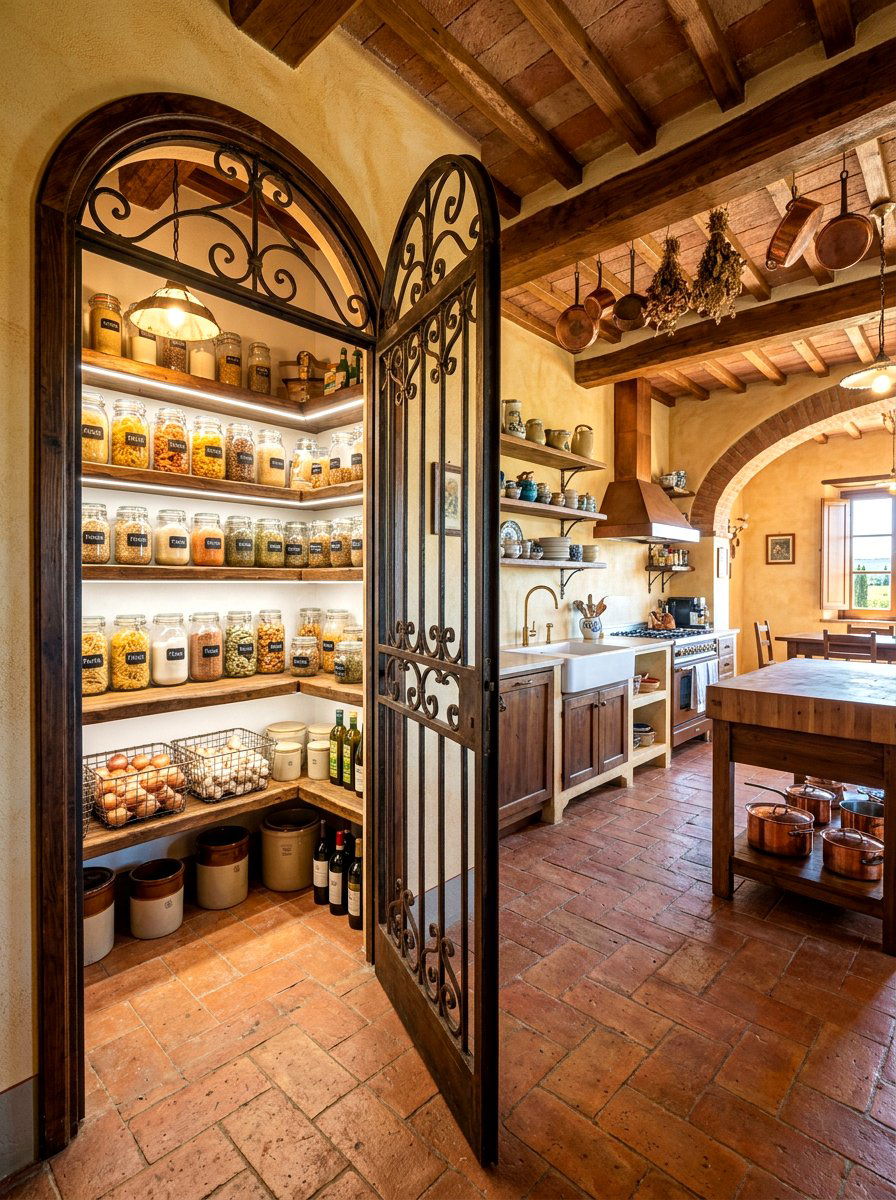
Designing a walk-in pantry with a heavy wood door or a wrought iron gate provides a beautiful and organized place to store your bulk ingredients. Lining the pantry walls with open shelves filled with glass jars of pasta, flour, and grains keeps your main cooking area clutter-free while still looking authentic. You can use the same floor tiles inside the pantry to create a seamless look that extends the design into every corner. This functional space allows you to keep the main kitchen looking like a showpiece while providing all the storage a modern family needs. It is a luxury feature that adds significant value.
27. Tuscan Kitchen Hanging Herbs
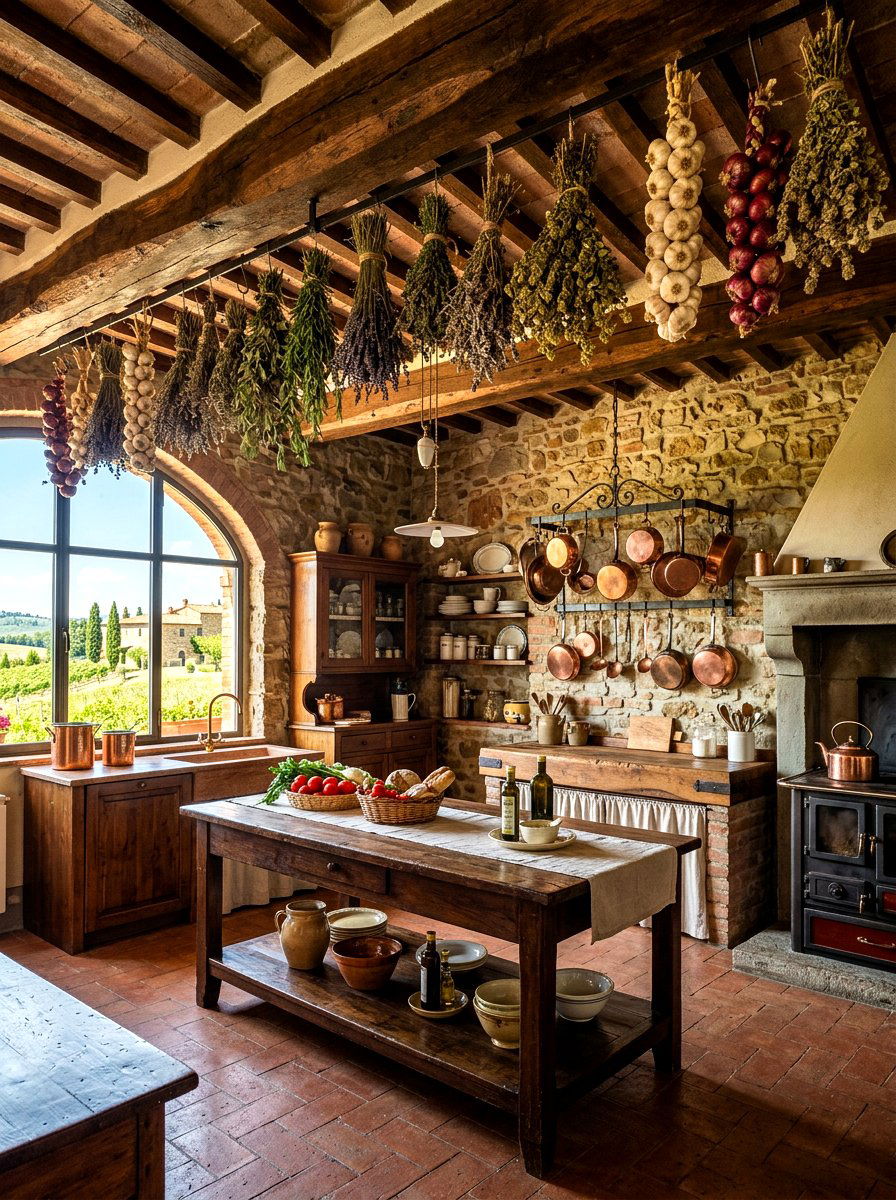
Suspending bundles of dried herbs, garlic, and onions from your ceiling beams or a wall rack adds a sensory layer of authenticity and charm. This traditional storage method not only keeps your most-used ingredients close at hand but also fills the air with the earthy scents of the Italian countryside. The visual texture of the dried plants provides a rustic, farmhouse-style decoration that costs almost nothing to create. It makes your cooking space feel active, used, and deeply connected to the seasons and the land. This small detail is a favorite for Pinterest-worthy photos because it feels so incredibly warm and lived-in.
28. Tuscan Kitchen Mosaic Tile
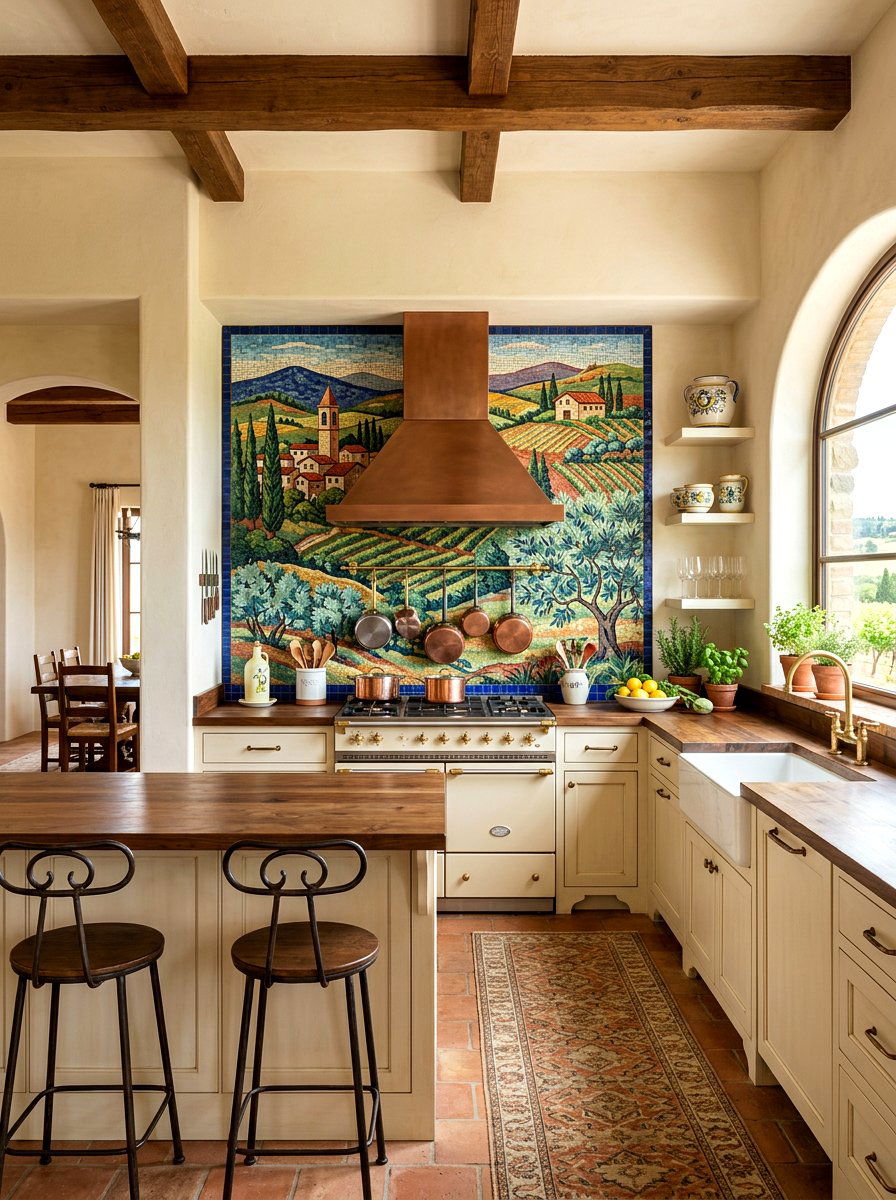
Using mosaic tiles for a medallion behind the stove or as a decorative strip along the floor introduces a refined artistic element to your room. These tiny tiles can be used to create intricate patterns or scenes of the Italian landscape in soft, natural colors. A mosaic backsplash serves as a stunning focal point that breaks up the large surface of a stone wall. The variation in color and the many grout lines add a rich texture that feels very Mediterranean. This is a great way to introduce a bit of your own personality and artistic flair into a traditional design scheme.
29. Tuscan Kitchen Timber Accents
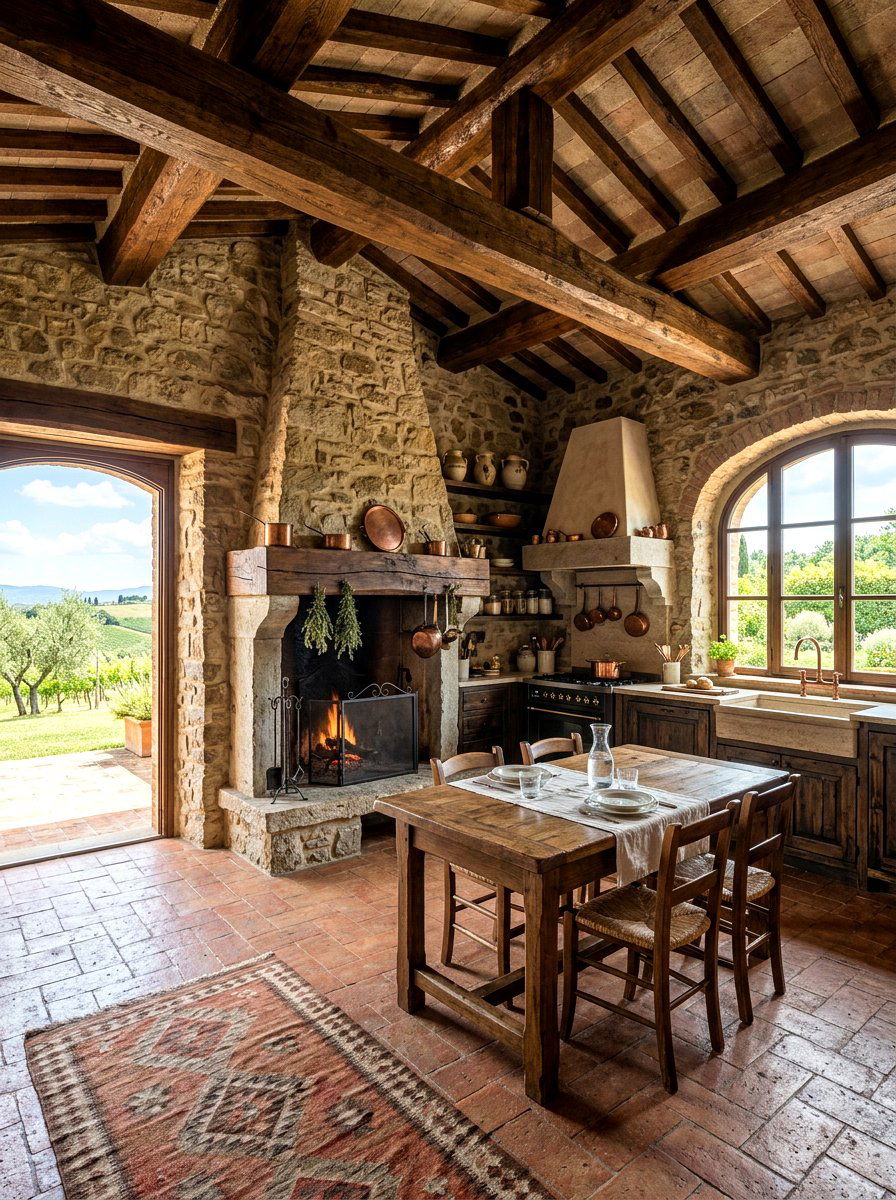
Using heavy timber for door headers, fireplace mantels, or decorative trim adds a sense of structural strength and rustic warmth to the space. These thick pieces of wood provide a dark, grounding element that frames your doorways and emphasizes the height of your ceilings. You should choose wood that has been hand-hewn or shows the marks of its previous life to maximize the "found" and historical aesthetic. Timber accents look particularly good when they are used to bridge the gap between stone walls and plaster ceilings. This material is essential for creating the rugged, farmhouse vibe that makes Tuscan design so popular and enduring.
30. Tuscan Kitchen Limestone Floors
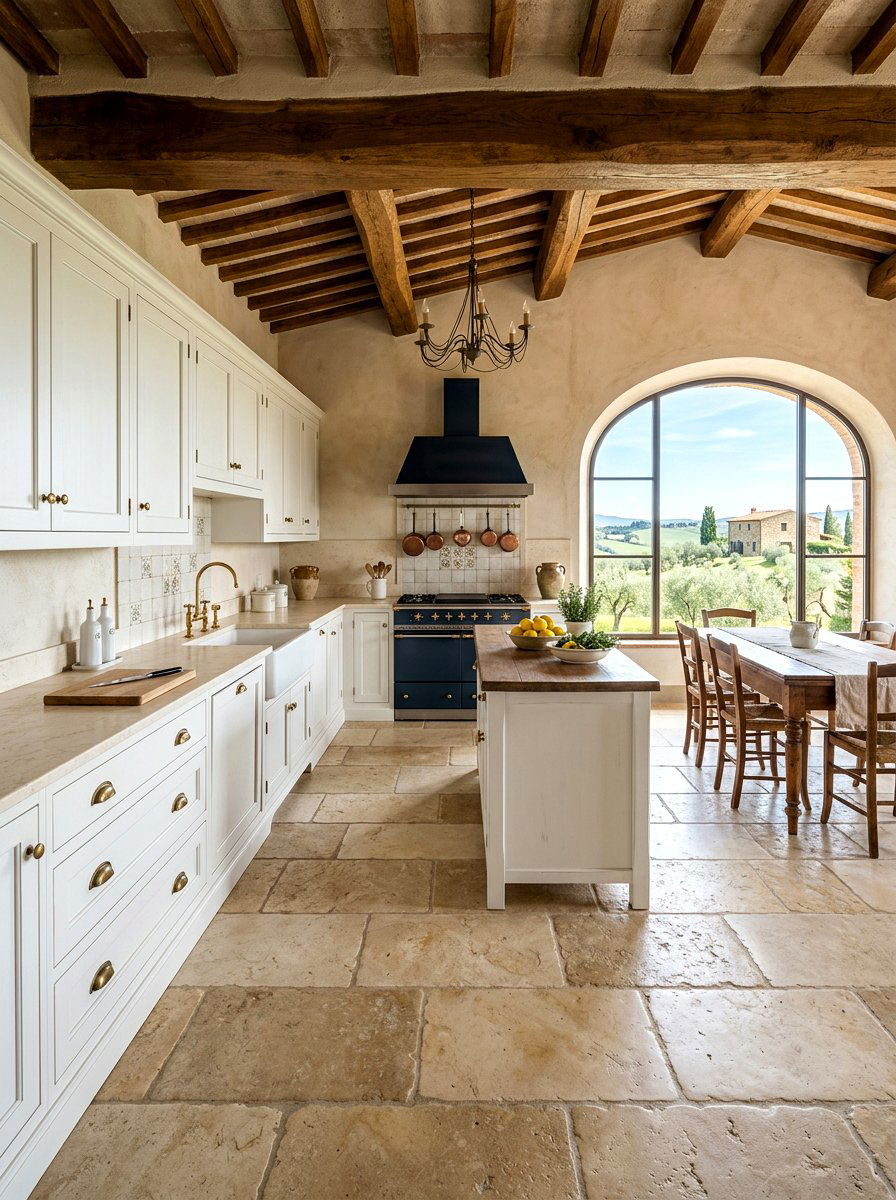
Opting for large limestone pavers in varying neutral shades provides a sophisticated and durable floor that feels like it belongs in a grand villa. Limestone has a soft, matte appearance that is very forgiving and hides the occasional spill or crumb perfectly. Its natural color variations, from light cream to warm tan, provide a subtle pattern that doesn't overwhelm the rest of the room. This stone is naturally cool, which is a wonderful feature during hot summer months when you are spending a lot of time cooking. It offers a cleaner, more refined look than terracotta while still maintaining that essential connection to natural materials.
Conclusion:
Designing a Tuscan-style kitchen is about more than just choosing the right tiles or cabinets; it is about creating a warm and soulful atmosphere where memories are made. By blending natural textures like stone and wood with artistic details like wrought iron and hand-painted ceramics, you can build a space that feels both luxurious and incredibly comfortable. These thirty ideas offer a roadmap to achieving a look that balances old-world charm with the functional needs of a modern home. Whether you go for a full architectural renovation or just add a few rustic accents, your kitchen will become a timeless sanctuary that celebrates the beauty of Italian living.

Related posts: