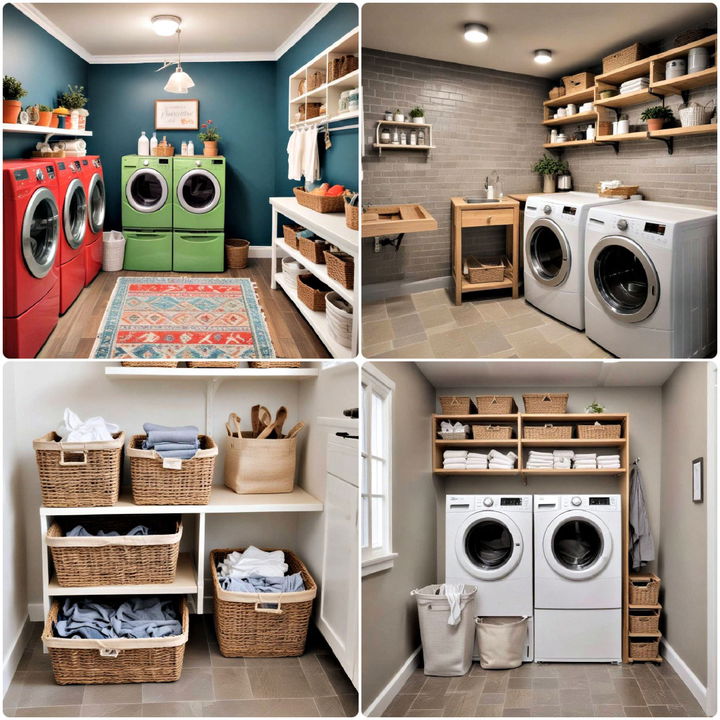
Basement laundry areas often feel like forgotten zones, yet they offer a fantastic canvas for creating a highly functional and stylish workstation. Many homeowners struggle with dark or damp subterranean spaces that make weekly chores feel like a burden rather than a simple routine. By transforming your lower level into a bright and efficient area, you can significantly improve your daily workflow and add real value to your home. Whether you are dealing with a tiny corner or a sprawling unfinished layout, there are countless ways to incorporate storage and organization. Let’s explore various ways to elevate your basement laundry zone into a space you actually enjoy spending time in every single week.

1. Basement laundry room with sink
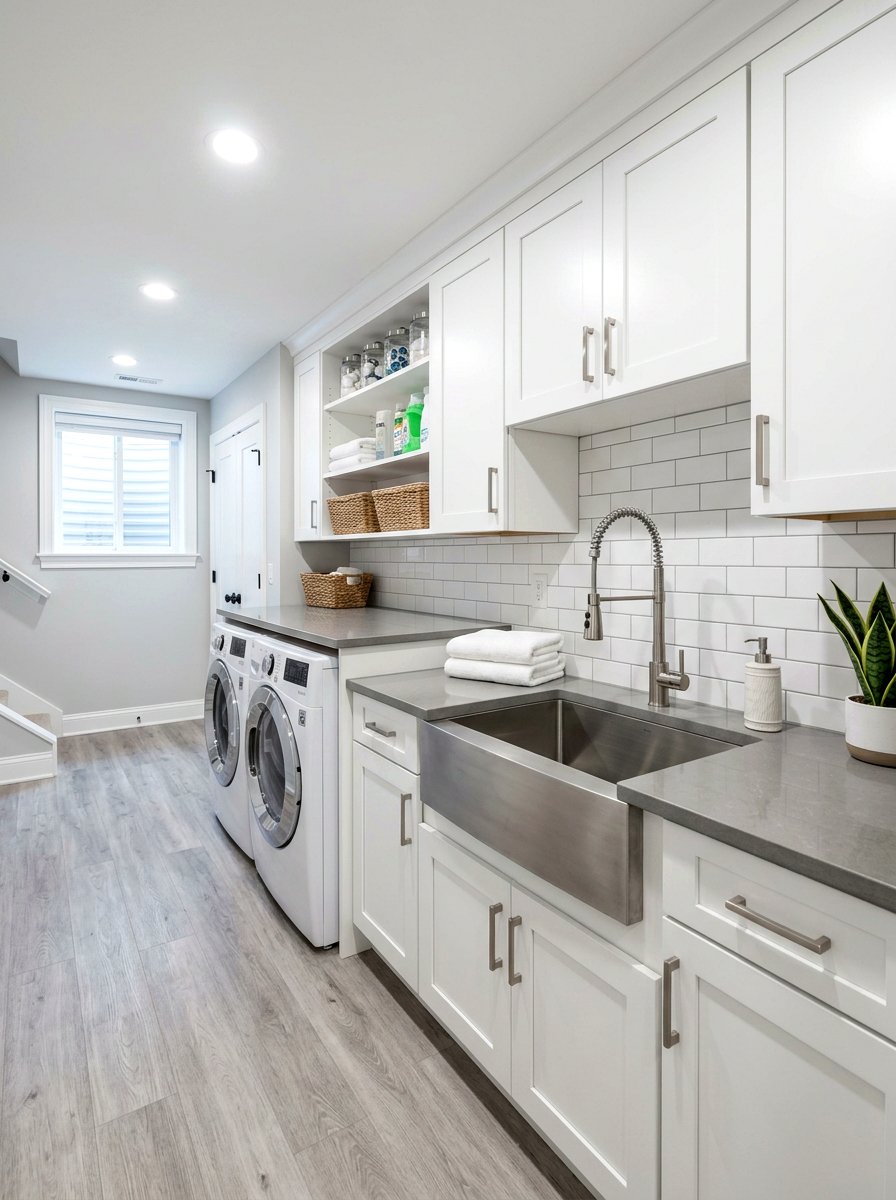
Does your current laundry setup lack a proper place to scrub out tough stains or soak delicate garments before washing? Adding a deep utility sink is one of the most practical upgrades you can make to a basement workspace. These sinks provide a dedicated spot for messy tasks that you would rather keep away from the main kitchen or bathroom. You can choose from classic stainless steel models or sleek drop-in ceramic options that match your cabinetry. Integrating a tall faucet with a pull-down sprayer makes filling buckets or rinsing large items incredibly easy. A well-placed sink turns a simple laundry nook into a versatile multi-purpose utility station.
2. Small basement laundry room
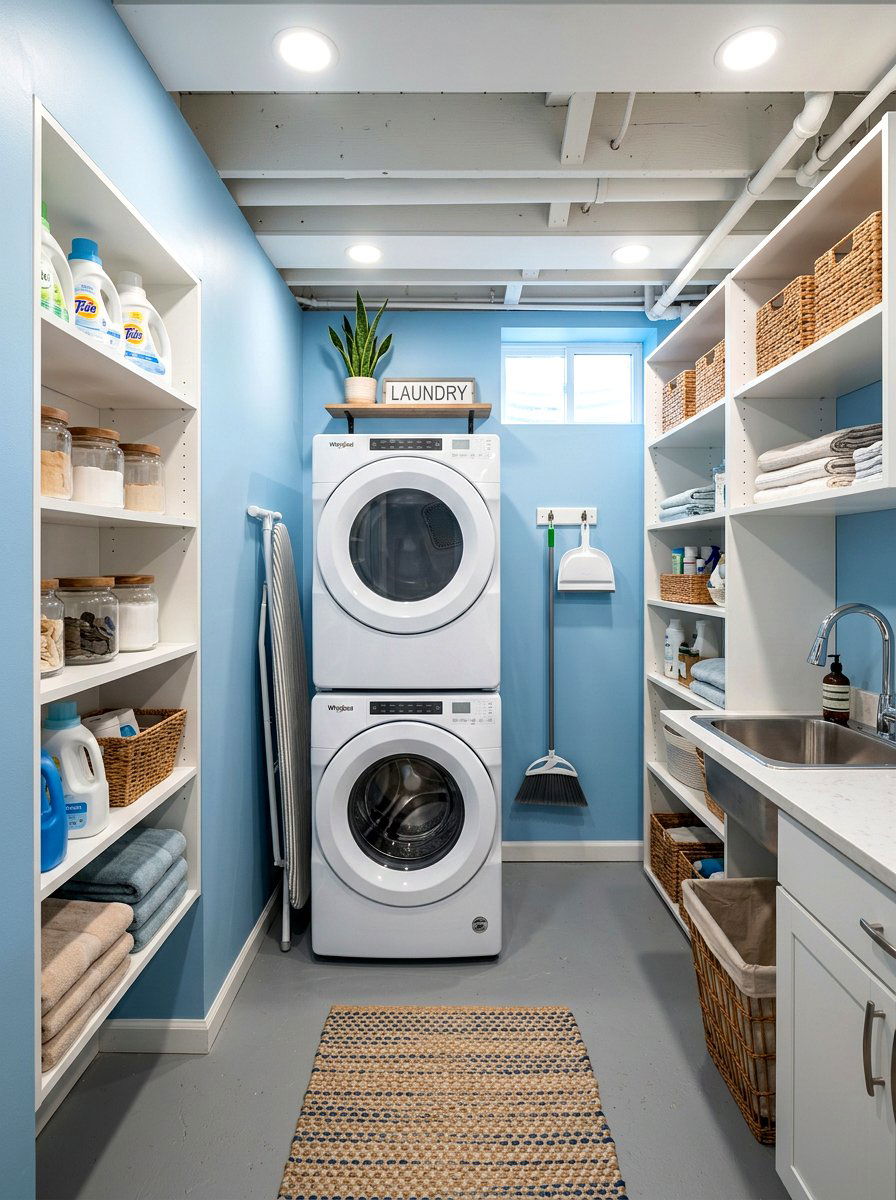
Working with a cramped layout in your basement requires a clever approach to maximize every available square inch of space. Many homeowners find that using vertical storage is the key to success when the footprint is limited by walls. You can install shelving units that reach the ceiling or use wall-mounted organizers to keep supplies off the floor. Choosing a light color palette can also help the area feel much more open and airy than it actually is. Small rugs and bright task lighting further define the zone without taking up physical room. Even the tightest basement corner can become a high-performing laundry hub with the right layout.
3. Unfinished basement laundry area
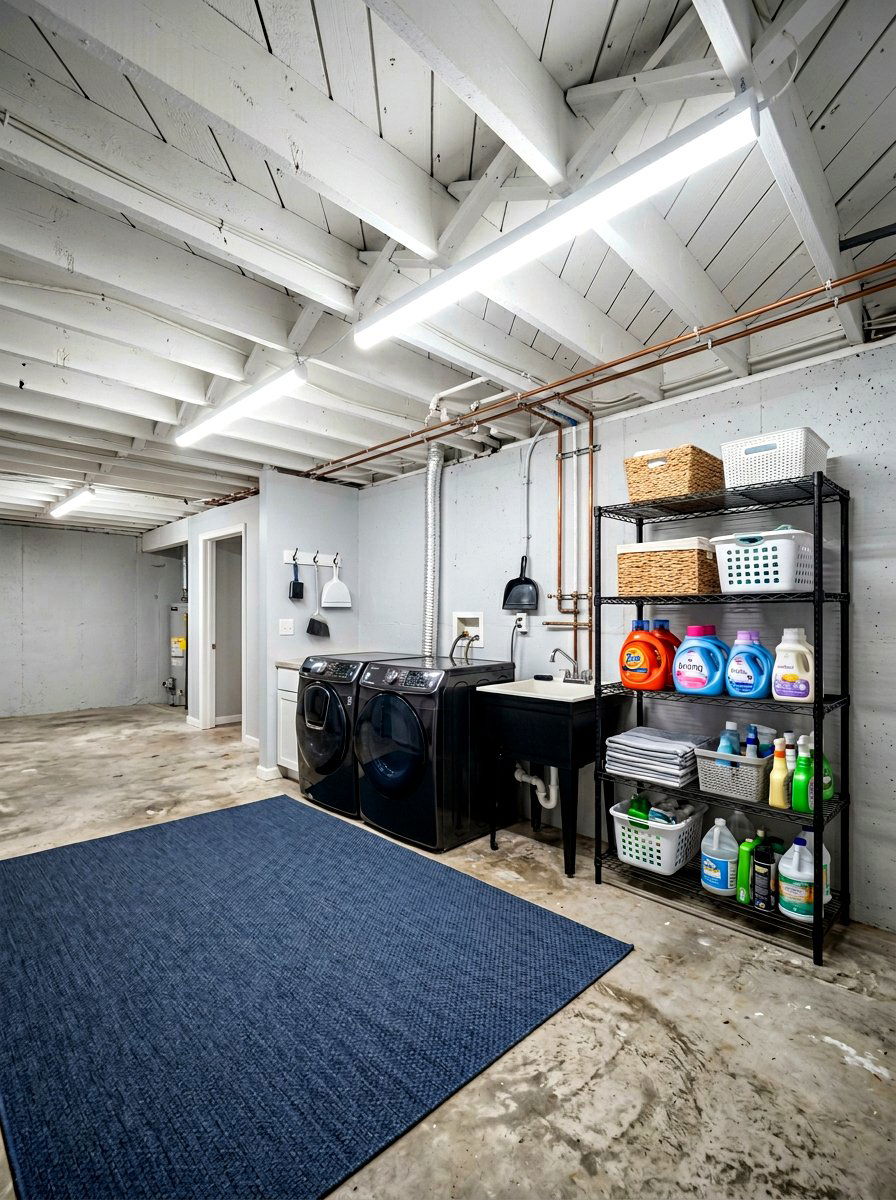
Converting a raw and unfinished basement into a functional laundry zone does not require a massive renovation or a huge budget. You can start by painting the exposed ceiling joists white or black to give the space a deliberate industrial feel. Using large outdoor rugs can hide cold concrete floors while adding a layer of comfort under your feet. Bright shop-style LED lighting helps eliminate the dark shadows often found in underground spaces. Simple freestanding wire shelving provides plenty of storage for detergents and baskets without needing permanent walls. This approach celebrates the rugged architecture of your home while creating a very practical and organized place to work.
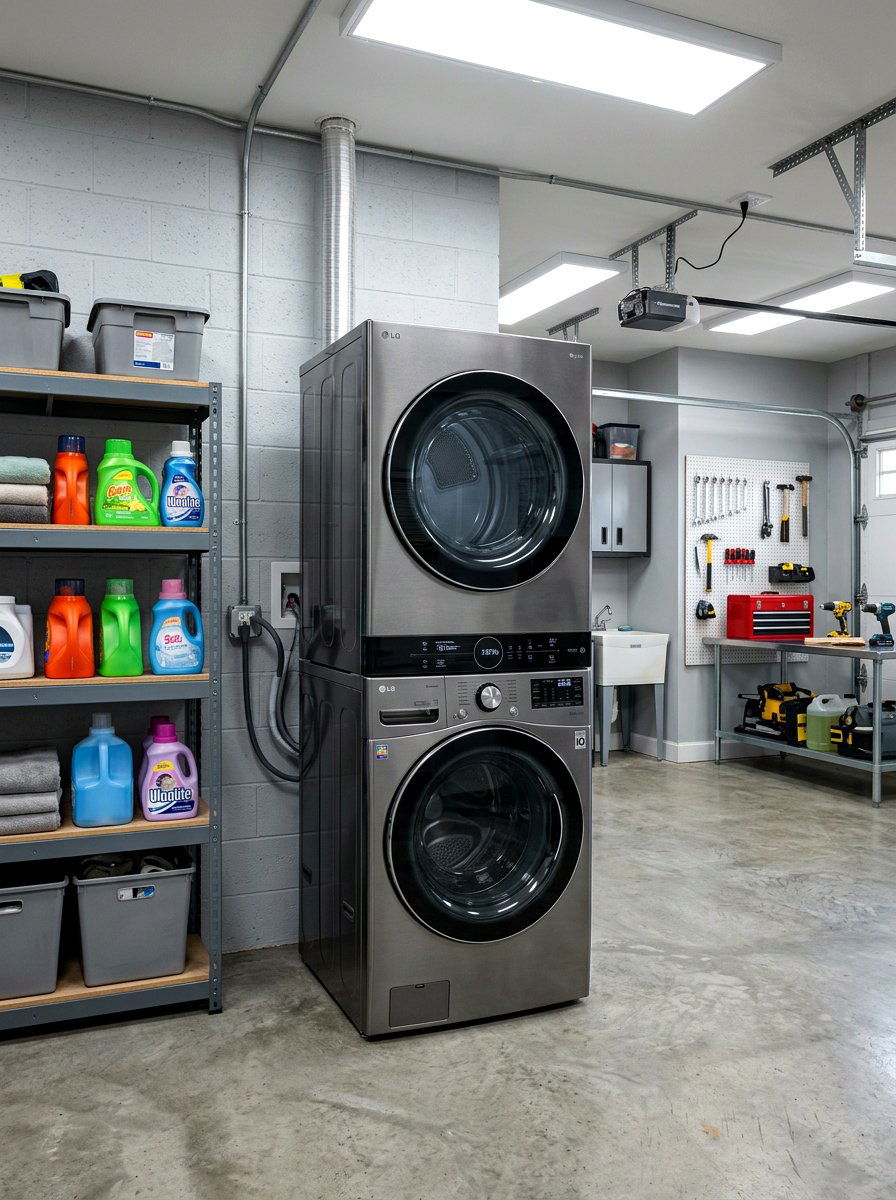
4. Stacked washer and dryer basement
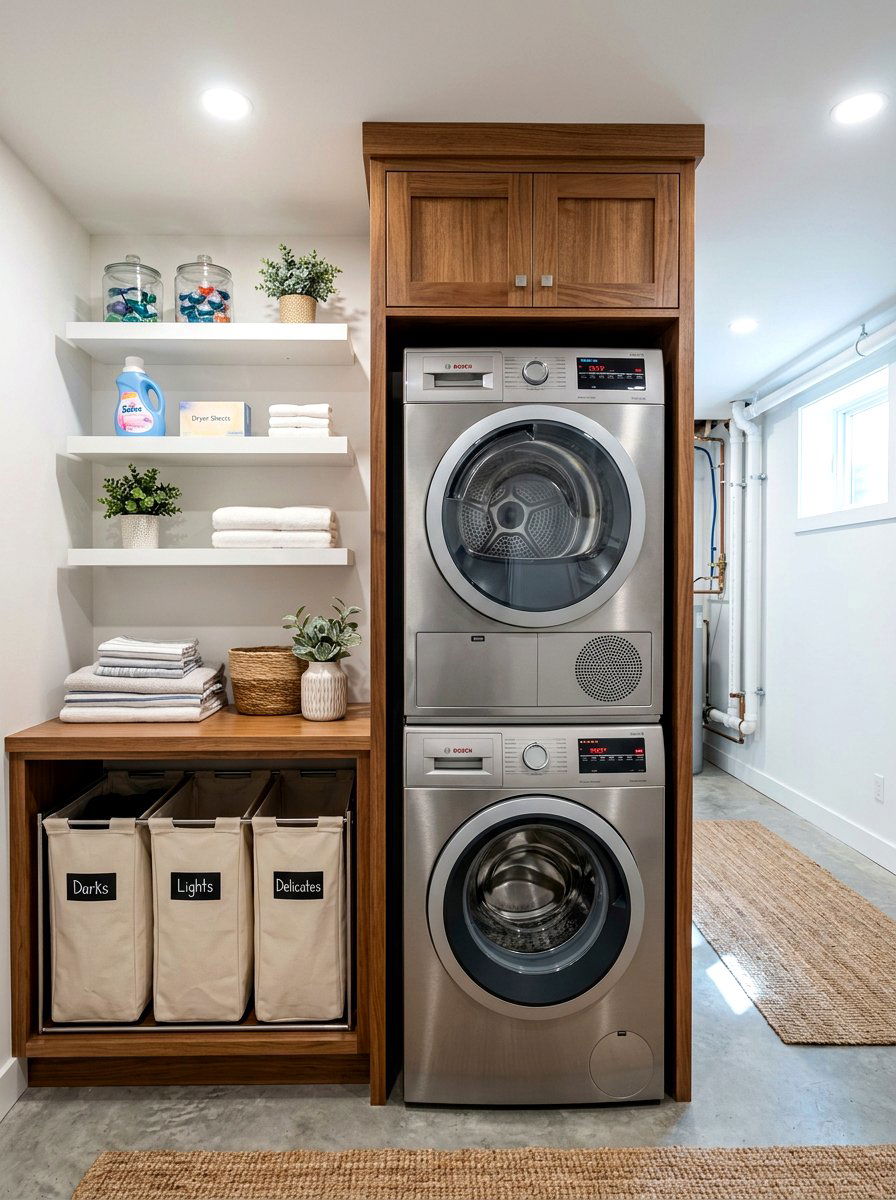
When floor space is at a premium, stacking your washer and dryer is the most effective way to save room. This vertical arrangement frees up valuable square footage for other features like a sorting station or a small utility sink. Many modern front-loading machines are designed specifically for this purpose and come with secure stacking kits. You can even build a custom wooden surround to give the stacked units a more integrated and high-end look. By reaching upward instead of outward, you leave more room for movement in a narrow basement. This layout is particularly popular for basement closets or small corner installations in larger rooms.
5. Basement laundry storage cabinets
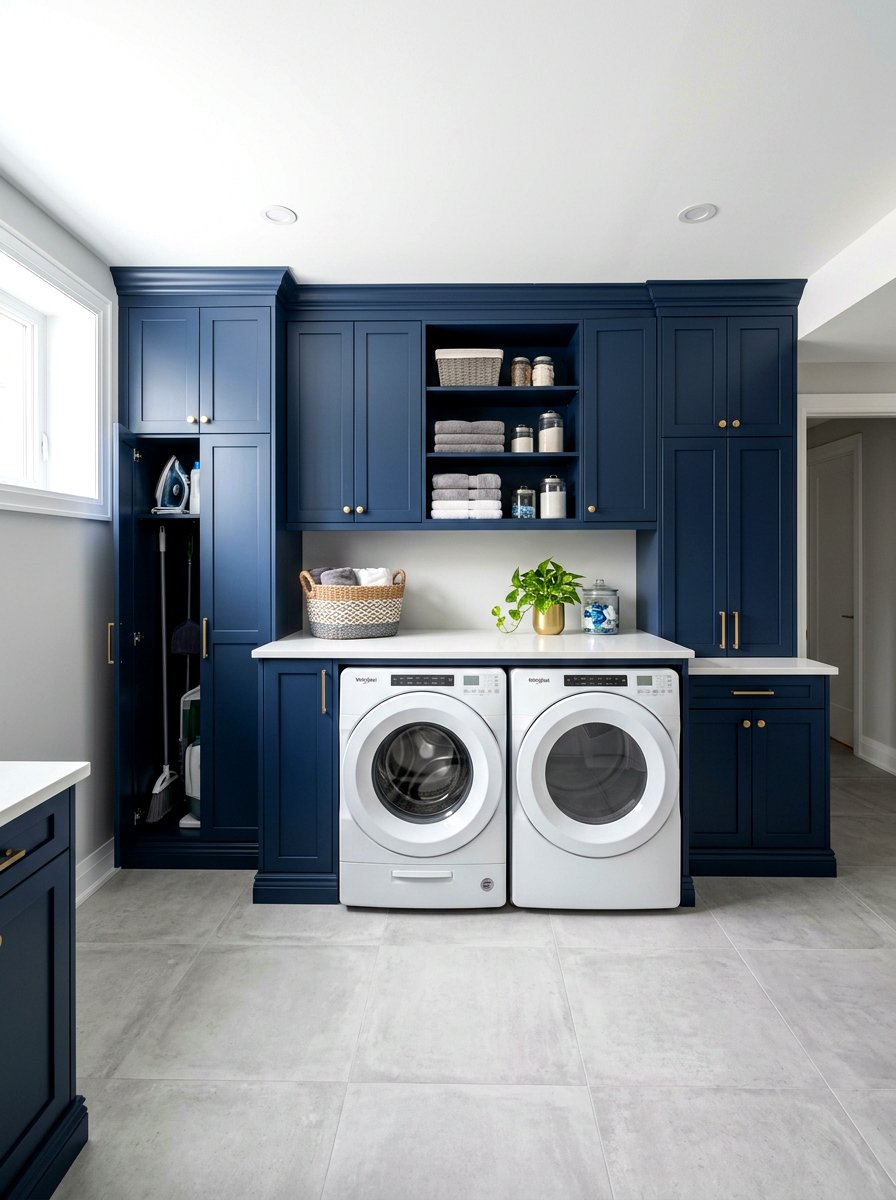
Installing a full set of cabinets is the ultimate way to hide the clutter that naturally accumulates in a laundry zone. You can use upper cabinets to store cleaning supplies and lower cabinets to house bulkier items like hampers or vacuums. Choosing shaker-style doors in a bright color can instantly modernize the entire basement area. If you want a more budget-friendly option, you can find pre-assembled utility cabinets at most home improvement stores. These units provide a clean and uniform appearance while keeping all your laundry essentials organized and out of sight. Cabinets also help protect your supplies from the dust often found in lower levels.
6. Laundry room folding table basement
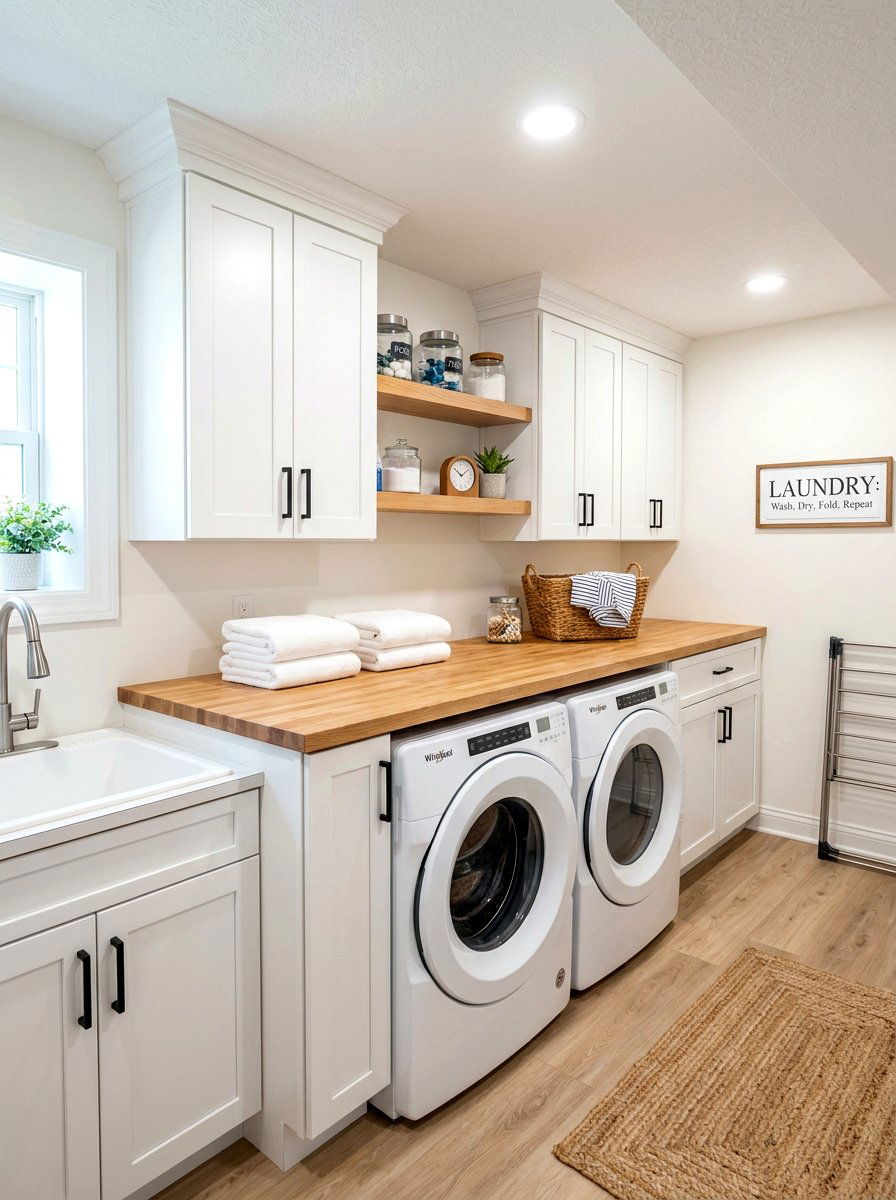
Having a dedicated surface for folding clothes can prevent clean laundry from piling up on top of the dryer. If you have side-by-side machines, you can install a continuous countertop directly across the top of the units. For smaller spaces, a wall-mounted drop-leaf table is a fantastic alternative that can be tucked away when not in use. You should choose a durable material like laminate or sealed wood that can withstand the weight of heavy laundry baskets. This simple addition streamlines your entire workflow by allowing you to sort and fold items immediately after they come out of the dryer. It makes the chore feel much faster.
7. Finished basement laundry room
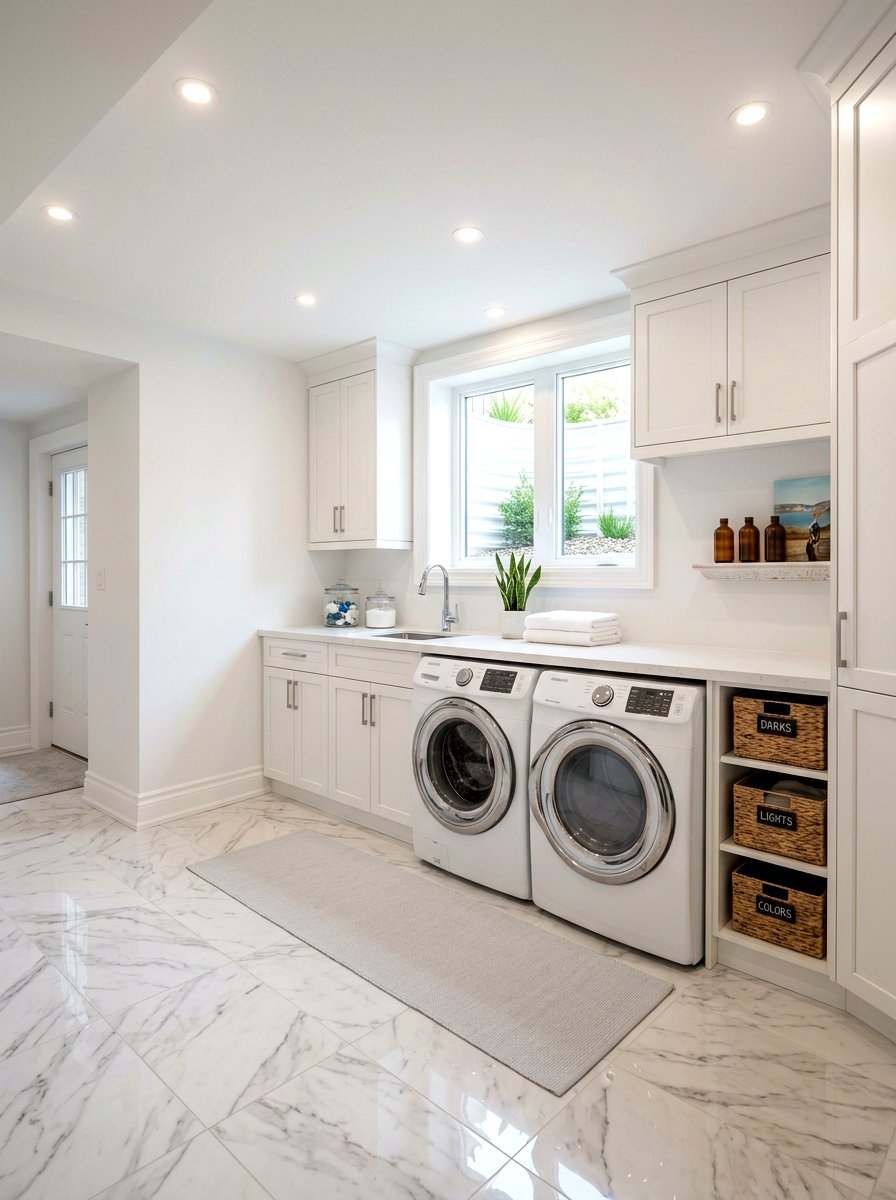
A fully finished laundry room looks and feels like any other part of your home, making it a much more inviting space. This involves installing drywall, proper flooring, and decorative trim to create a cohesive interior design. You can integrate the laundry area into a larger basement floor plan that might include a family room or home gym. Using high-quality materials like quartz countertops and recessed lighting will elevate the room from a utility zone to a luxury suite. A finished space is easier to keep clean and helps regulate the temperature and humidity levels in the basement. It is a smart investment for any homeowner's long-term value.
8. Industrial basement laundry room
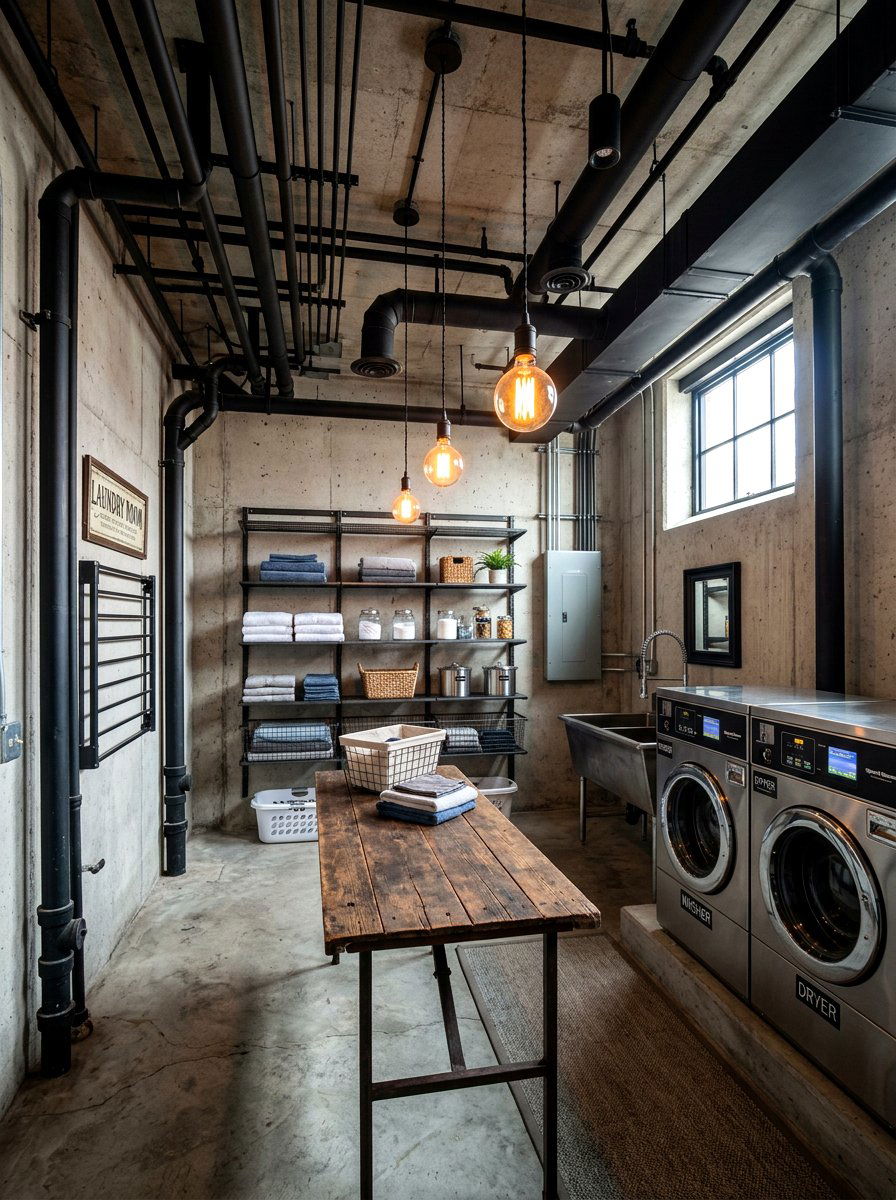
If your basement has exposed pipes and concrete walls, an industrial design style is a natural and stylish choice. You can lean into this aesthetic by using metal shelving units, black iron hardware, and reclaimed wood accents. Instead of hiding the plumbing, consider painting the pipes in a contrasting color to make them a part of the decor. Durable materials like galvanized steel and distressed wood thrive in a basement environment and require very little maintenance. This style is both rugged and modern, providing a cool and edgy vibe to a traditionally boring space. It works especially well in older homes with plenty of architectural character.
9. Modern basement laundry room
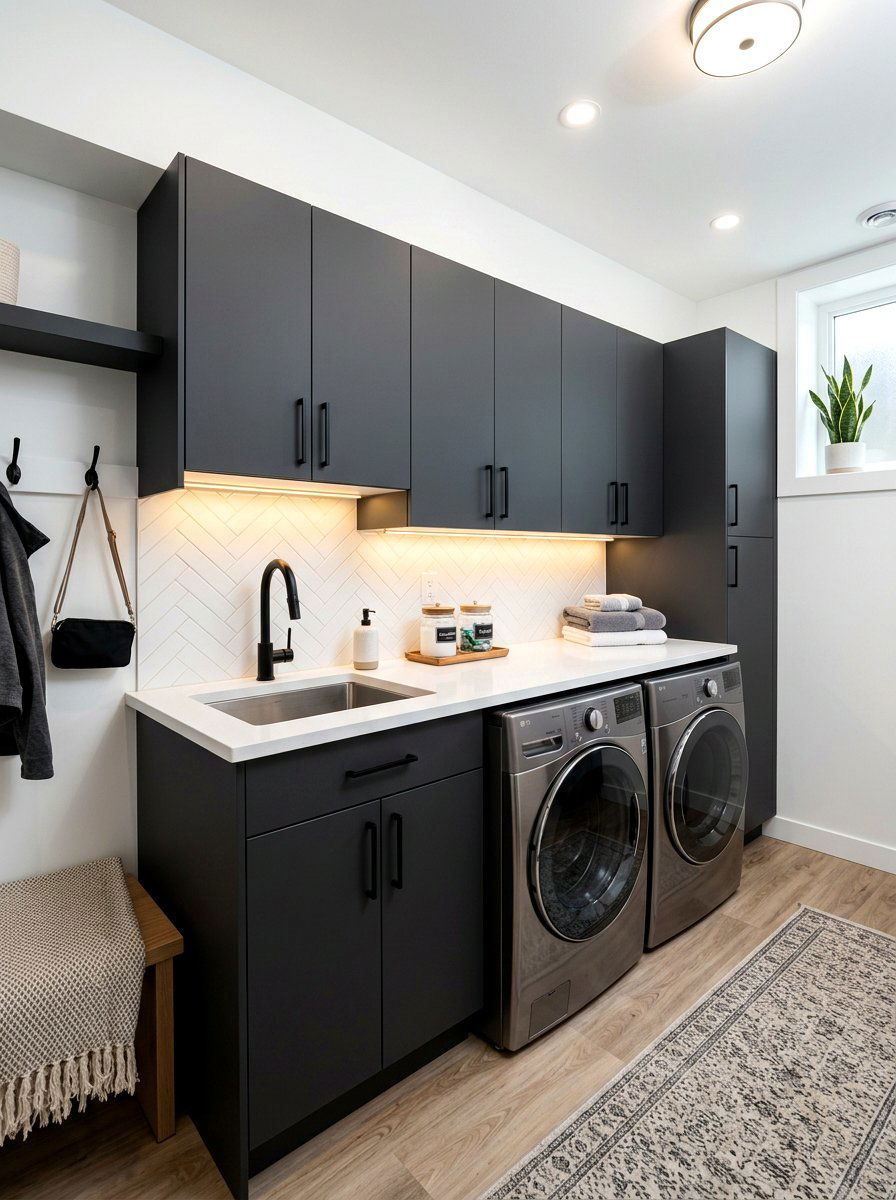
A modern approach to laundry design focuses on clean lines, minimalist hardware, and a monochromatic color scheme. You might choose flat-panel cabinets in a soft grey or matte black to create a sophisticated and high-end look. Integrating high-tech appliances with smart features can further enhance the modern feel of the workspace. Using a sleek subway tile backsplash adds a touch of texture without overwhelming the visual flow of the room. Under-cabinet LED lighting provides a futuristic glow while also serving as excellent task lighting for sorting clothes. This style is perfect for homeowners who want their basement to feel like a high-end extension of their upper floors.
10. Farmhouse basement laundry room
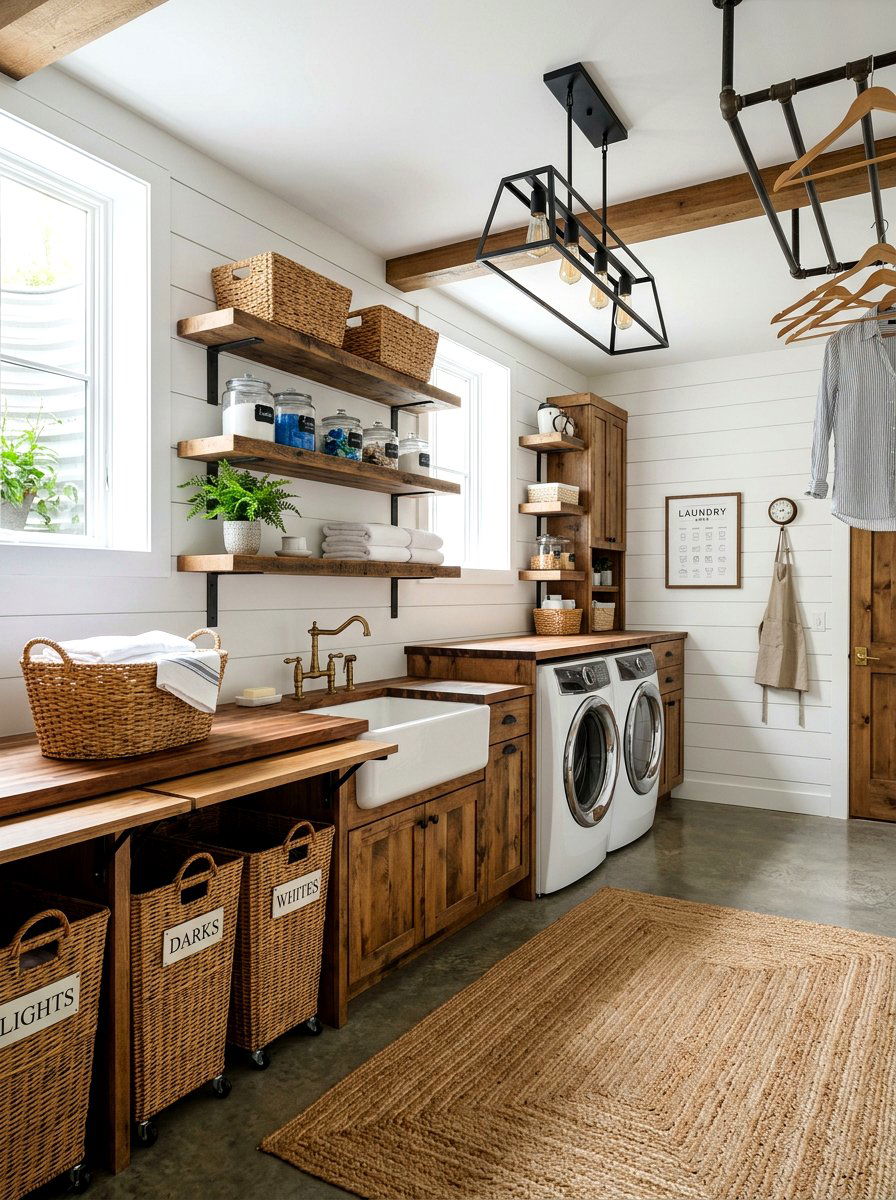
The farmhouse style is incredibly popular because it brings a sense of warmth and coziness to any room. In a basement, you can achieve this look by using white shiplap walls, wicker baskets, and rustic wooden shelves. A large porcelain apron-front sink is a classic farmhouse element that adds both beauty and massive utility to the area. You can also incorporate vintage-inspired signs and soft textile accents like checkered rugs to complete the aesthetic. This design style makes the laundry area feel more like a part of a country home rather than a dark basement. It creates a welcoming atmosphere that makes chores feel a lot less tedious.
11. Laundry room countertop basement
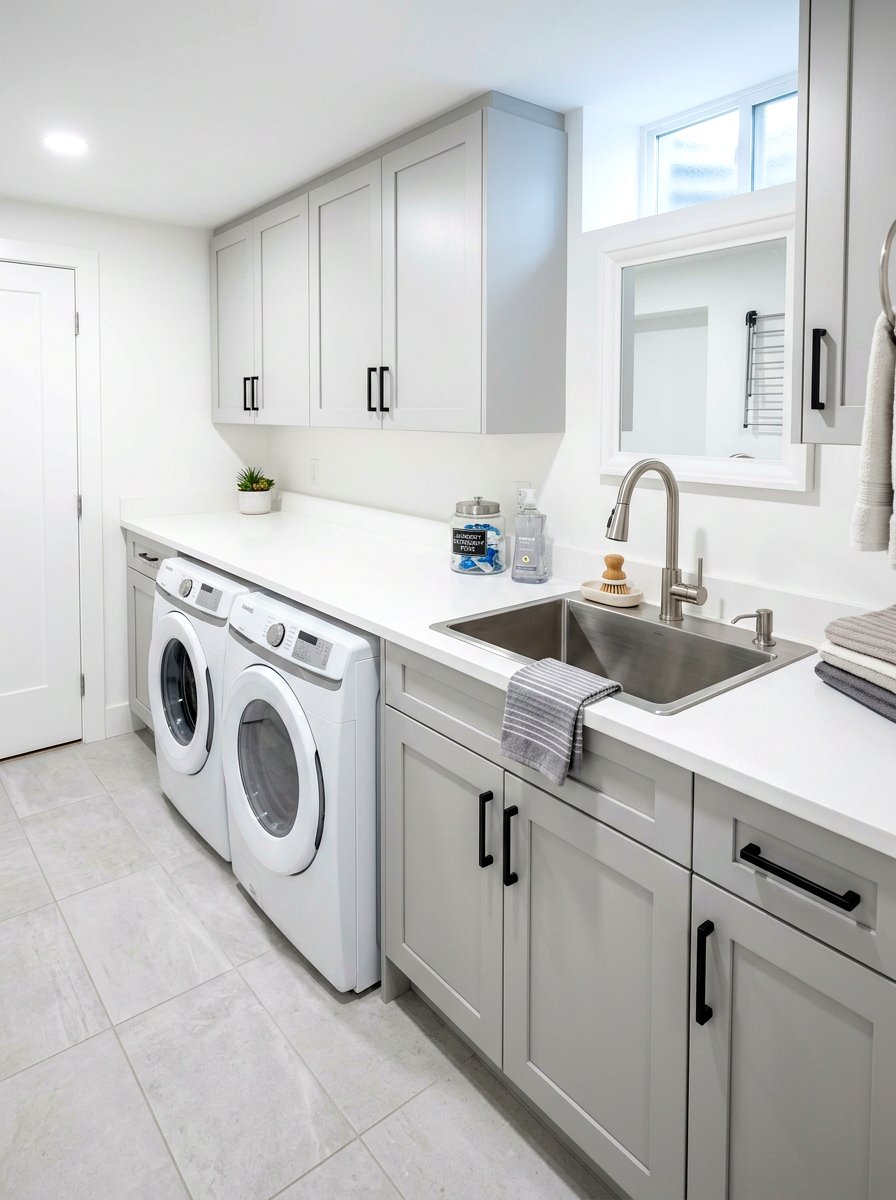
Adding a countertop over your washer and dryer is one of the most effective ways to create a unified workspace. This solid surface prevents small items like socks from falling behind the machines while providing a huge area for sorting. You can use a variety of materials, ranging from affordable butcher block to high-end granite or quartz. If you are a DIY enthusiast, a simple plywood sheet with a nice veneer can be a cost-effective way to get the look. A countertop also helps to dampen the noise and vibration of the machines, which is a great bonus in a basement setting. It truly transforms the room.
12. Basement laundry room lighting
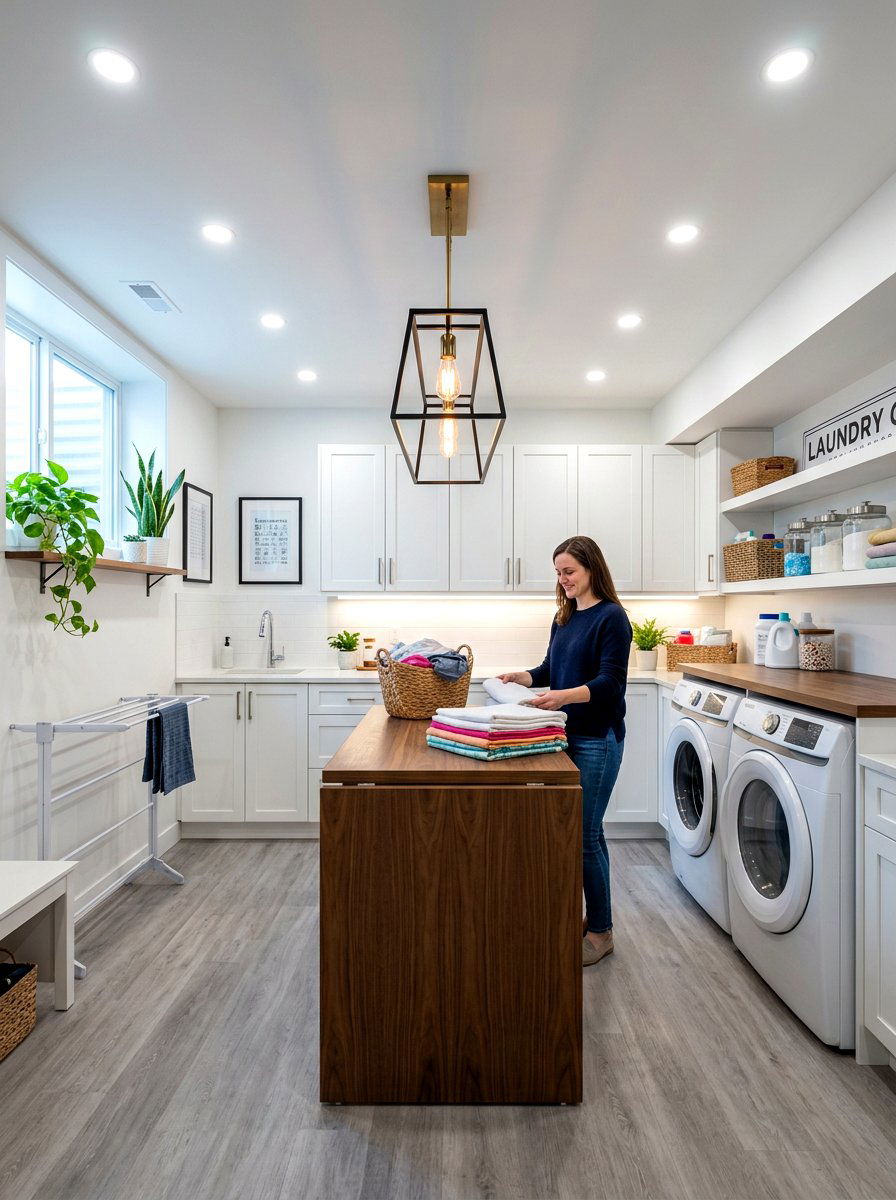
Lighting is perhaps the most important element when designing a room that is located below ground level. Basements often lack natural windows, so you must rely on a layered lighting plan to keep the space bright. Recessed ceiling lights provide great overall illumination, while pendant lights can add a decorative touch over a folding station. You should also consider adding under-cabinet lighting to brighten up your work surfaces for better visibility. Choosing "daylight" balanced bulbs will help the room feel less like a cave and more like an airy, sun-drenched space. Good lighting makes it much easier to spot stains and read small labels on clothes.
13. Open shelving basement laundry
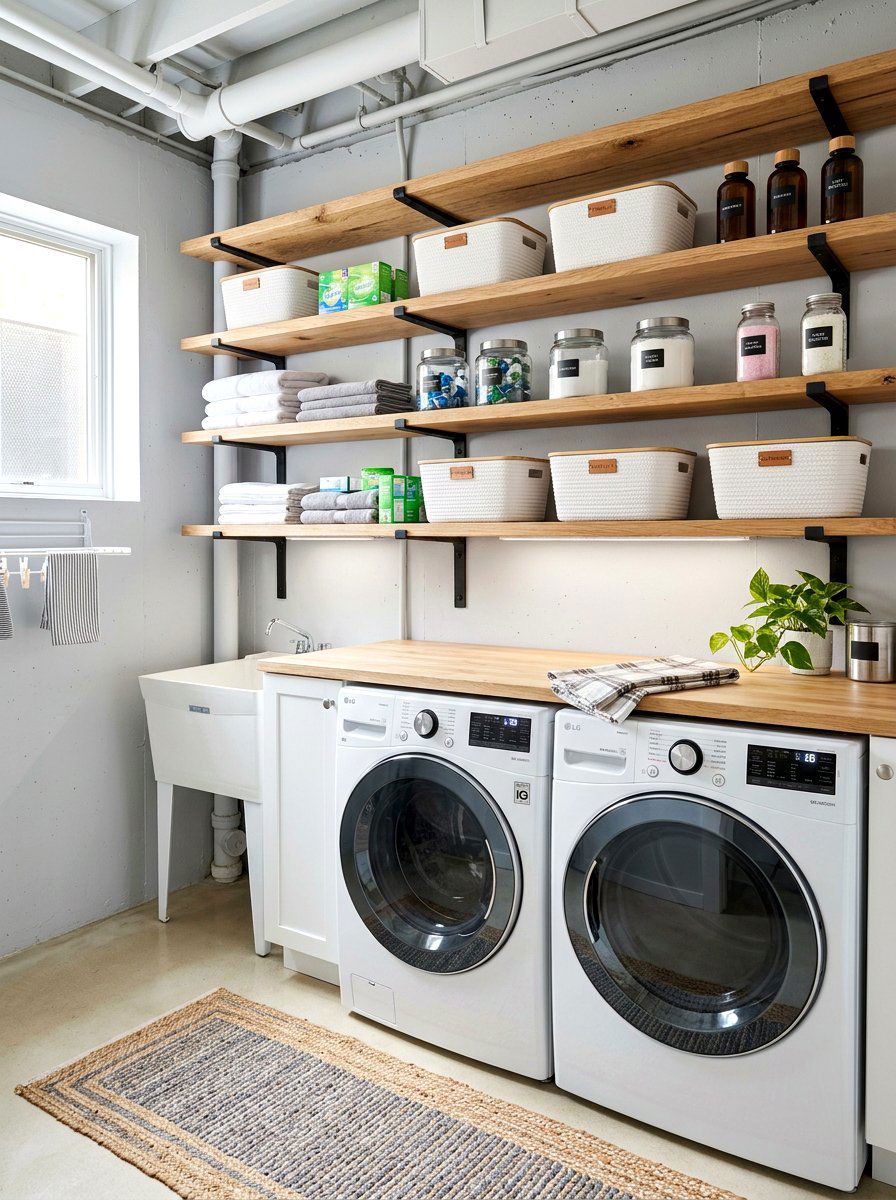
Open shelving is a fantastic choice for basement laundry rooms because it keeps everything visible and within easy reach. You can use thick wooden planks supported by metal brackets to create a look that is both modern and functional. Placing frequently used items like detergent pods and fabric softeners in decorative glass jars can turn your supplies into decor. This storage method also prevents the space from feeling too enclosed or heavy, which is important in smaller basement layouts. You can easily adjust the height of the shelves as your needs change over time. It is an affordable and stylish way to organize your utility supplies.
14. Built in basement laundry
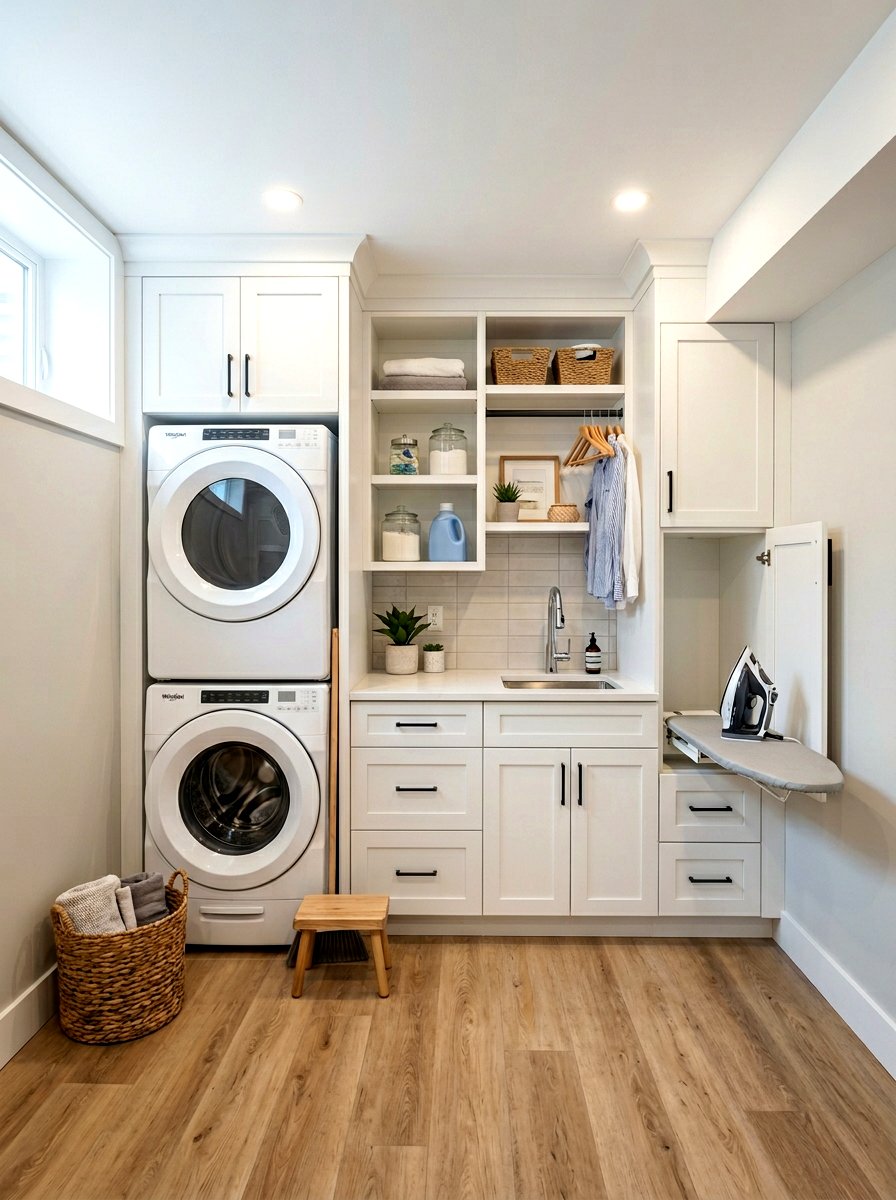
Creating a built-in look for your laundry area makes the entire space feel custom and high-end. This usually involves framing the appliances with cabinetry or custom woodwork to make them appear integrated into the wall. You can include pull-out hampers and hidden drying racks within the built-in units to maximize every inch of space. This approach is excellent for multi-purpose basements where you want the laundry machines to be discreet when not in use. It provides a seamless transition between the laundry zone and the rest of the finished basement area. A built-in setup is both visually stunning and incredibly practical for long-term organization.
15. Basement laundry room floor
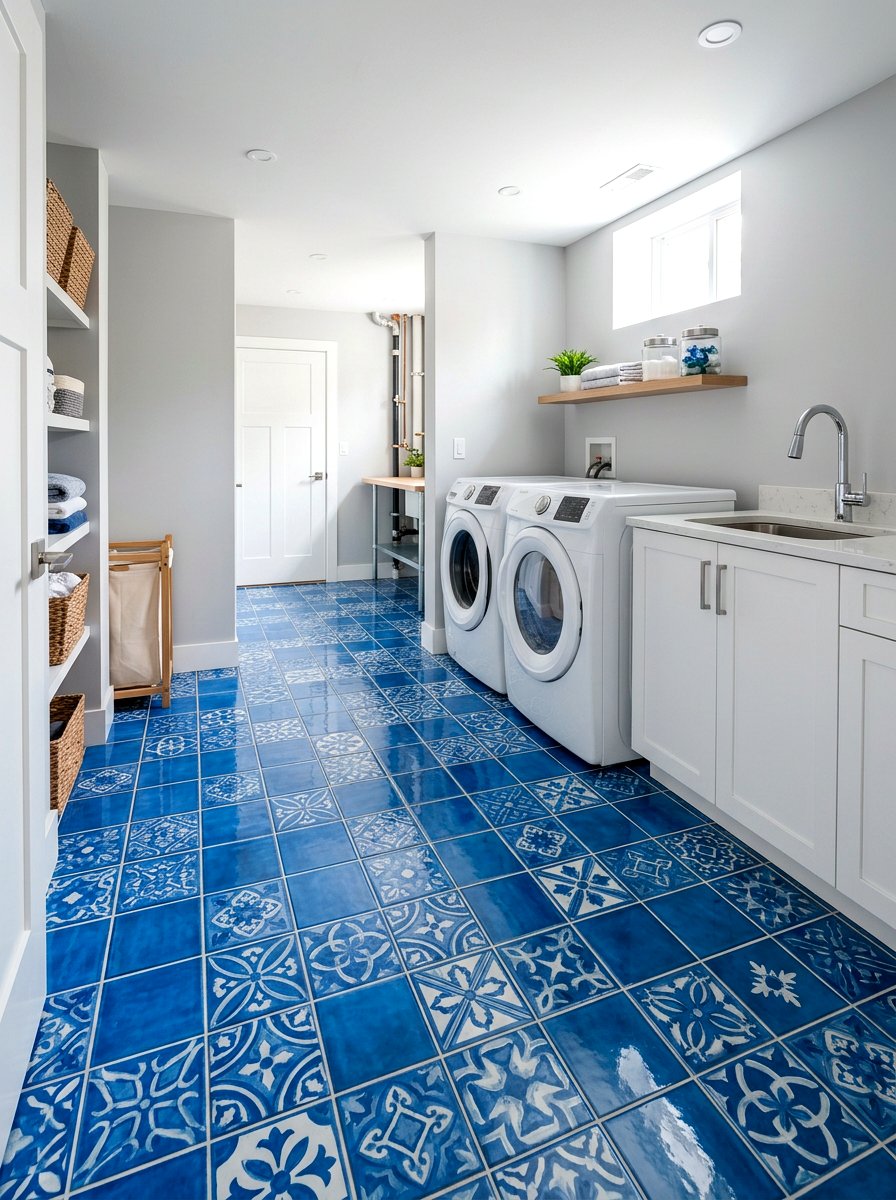
Choosing the right flooring for a basement laundry room is critical because the area is prone to moisture and potential leaks. Ceramic or porcelain tiles are excellent choices because they are completely waterproof and very easy to mop clean. You can find tiles that mimic the look of natural stone or wood to match your specific design style. Luxury vinyl plank is another popular option that provides a softer feel underfoot while remaining highly water-resistant. No matter what material you choose, ensure the subfloor is properly leveled to prevent the washing machine from vibrating excessively. A durable floor will protect your home and look great for many years.
16. Subway tile basement laundry
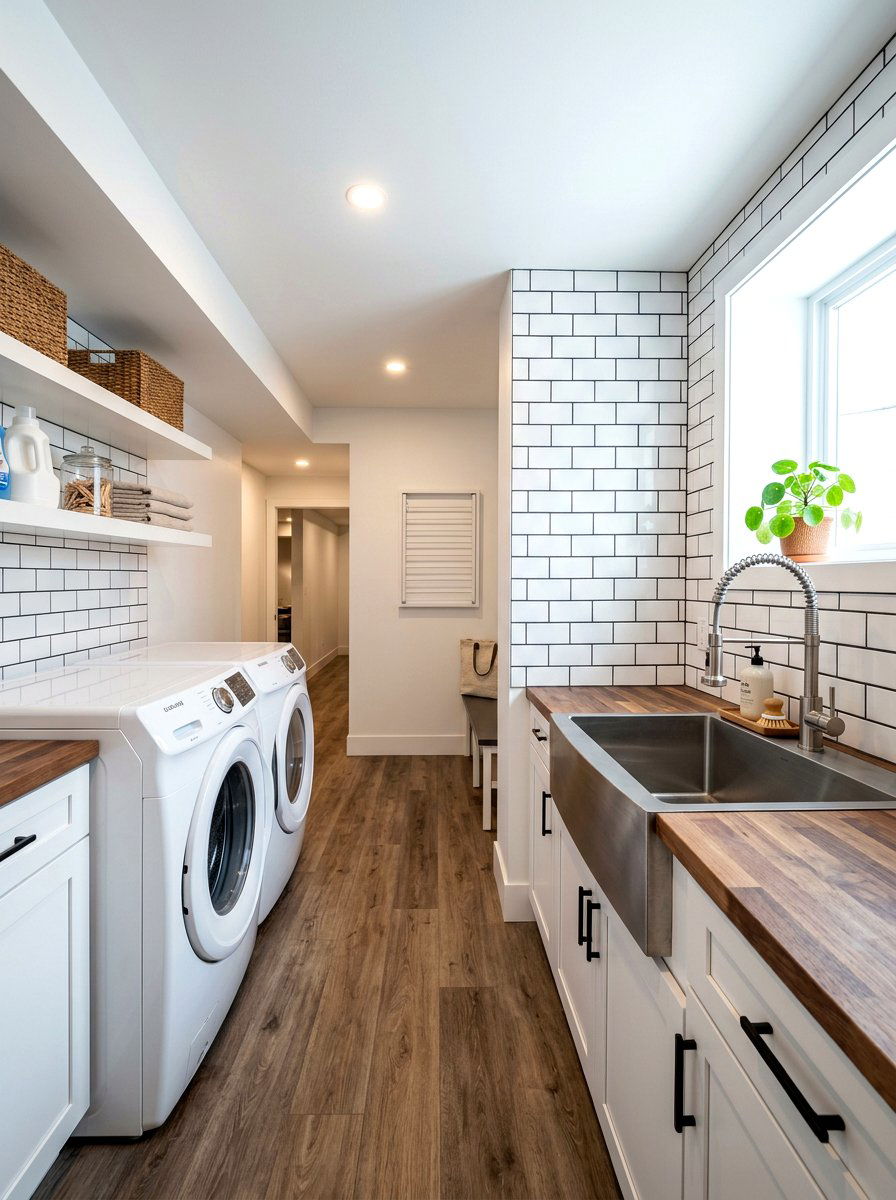
Subway tile is a timeless design choice that works perfectly as a backsplash in a basement laundry area. These tiles are affordable, easy to install, and provide a clean and polished look behind your sink or machines. You can choose a classic white tile with dark grout for an industrial feel, or a colored tile for a modern pop. The reflective surface of the tiles helps to bounce light around the room, making a dark basement feel much brighter. It is also very easy to wipe down if detergent or water splashes onto the wall. Subway tile offers a high-end look without a high-end price tag.
17. Drying rack basement laundry
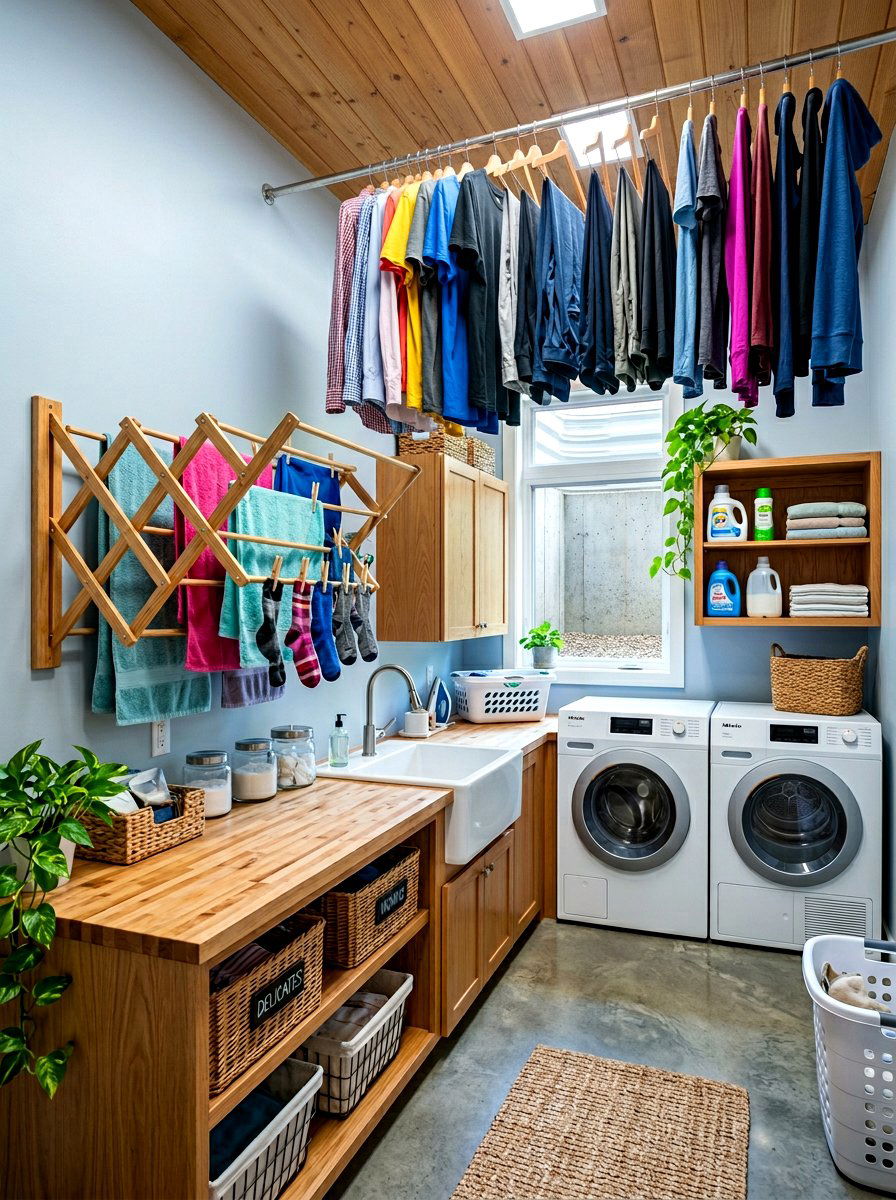
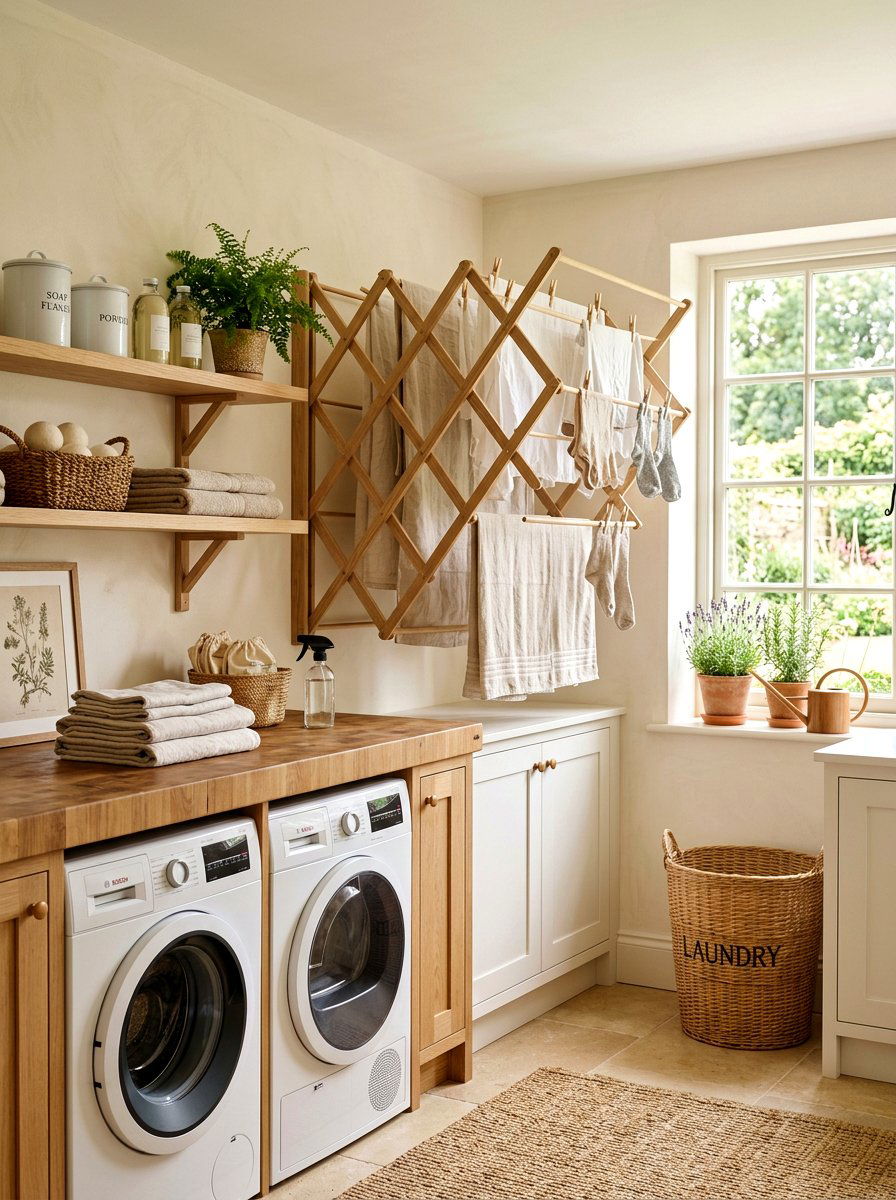
Not all clothing items should go into the dryer, so having a dedicated spot for air-drying is essential. Wall-mounted drying racks are perfect for basements because they can be folded flat against the wall when they are not in use. You can also install a simple tension rod between two cabinets or walls to hang items on hangers. For a more creative solution, consider a pull-out drawer that features a mesh screen for drying delicate sweaters flat. Keeping your air-drying items organized in one spot prevents damp clothes from being draped all over the house. It is a simple addition that significantly improves the functionality of the room.
18. Hideaway basement laundry room
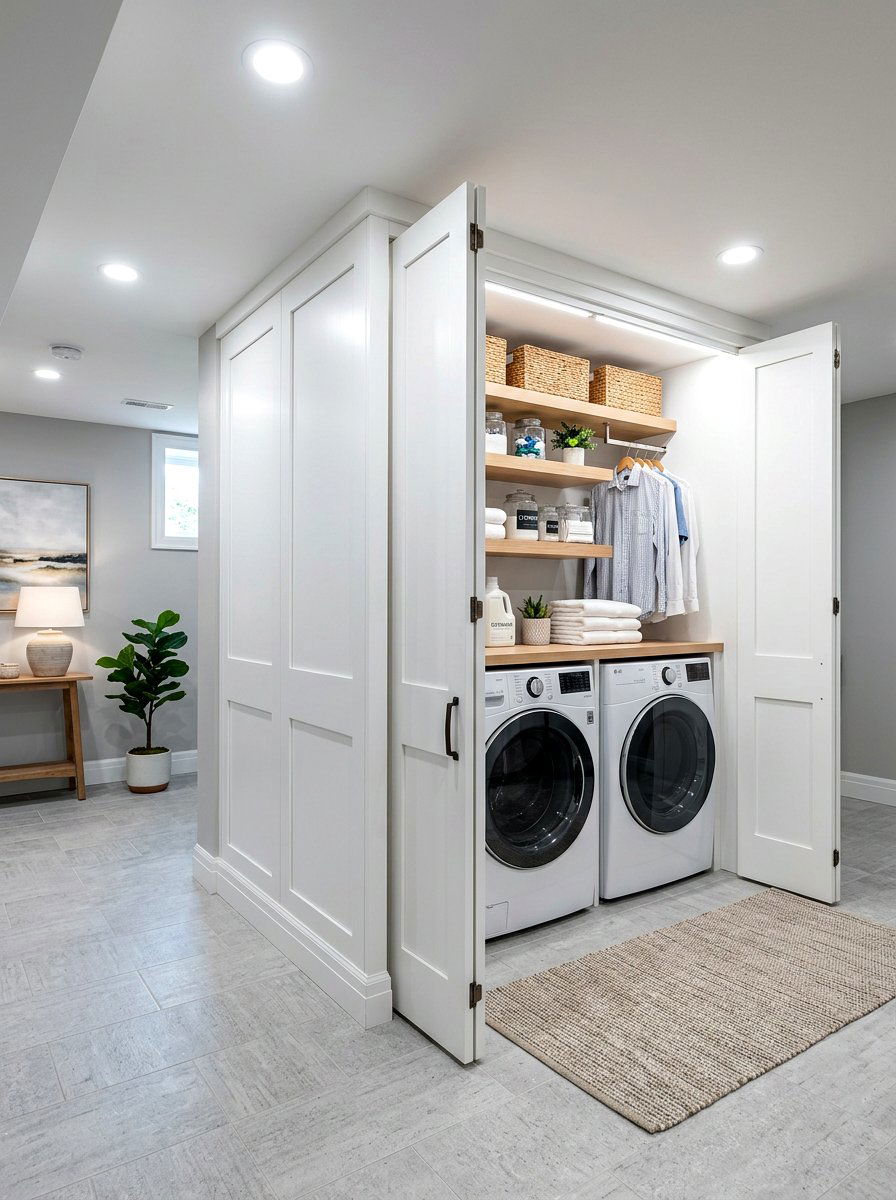
If you prefer to keep your laundry chores out of sight, a hideaway design is the perfect solution for your basement. You can use large pocket doors or stylish barn doors to conceal the entire laundry area when it is not being used. This is particularly useful in finished basements that serve as a guest room or a media center. Behind the doors, you can still have a fully functional setup with shelving, lighting, and a folding station. This allows you to have a hard-working utility space without sacrificing the aesthetic of your main living area. It is the best of both worlds for many homeowners.
19. Corner basement laundry area
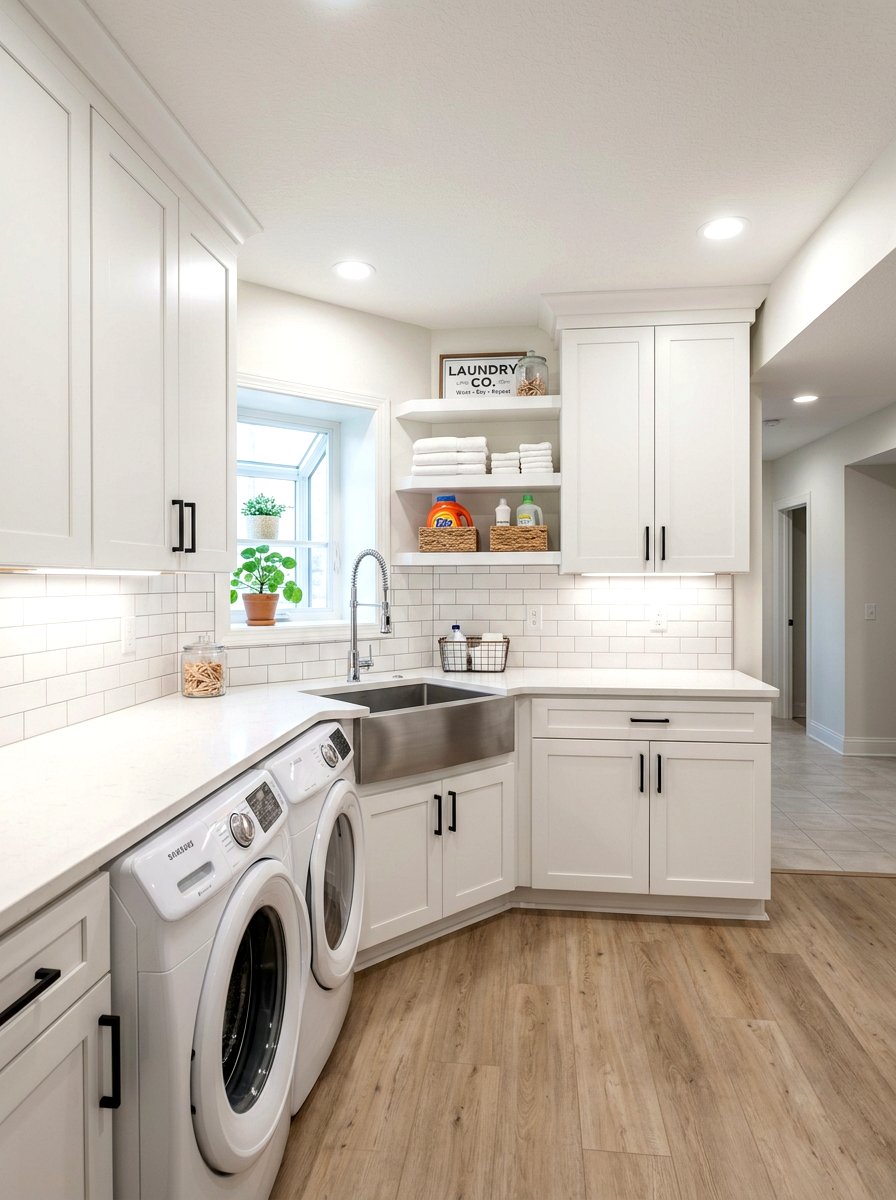
Oftentimes, the best place for a laundry station is tucked into an unused corner of the basement. You can use a corner-specific layout to make the most of this awkward space by using L-shaped countertops and shelving. Placing the washer and dryer on one wall and a utility sink on the adjacent wall creates a very efficient work triangle. You can also add corner shelving units to store laundry baskets and cleaning supplies without taking up much floor space. Even a small corner can feel like a complete room if you use consistent colors and materials throughout the design. It is a smart way to utilize every bit of space.
20. Basement laundry mudroom combo
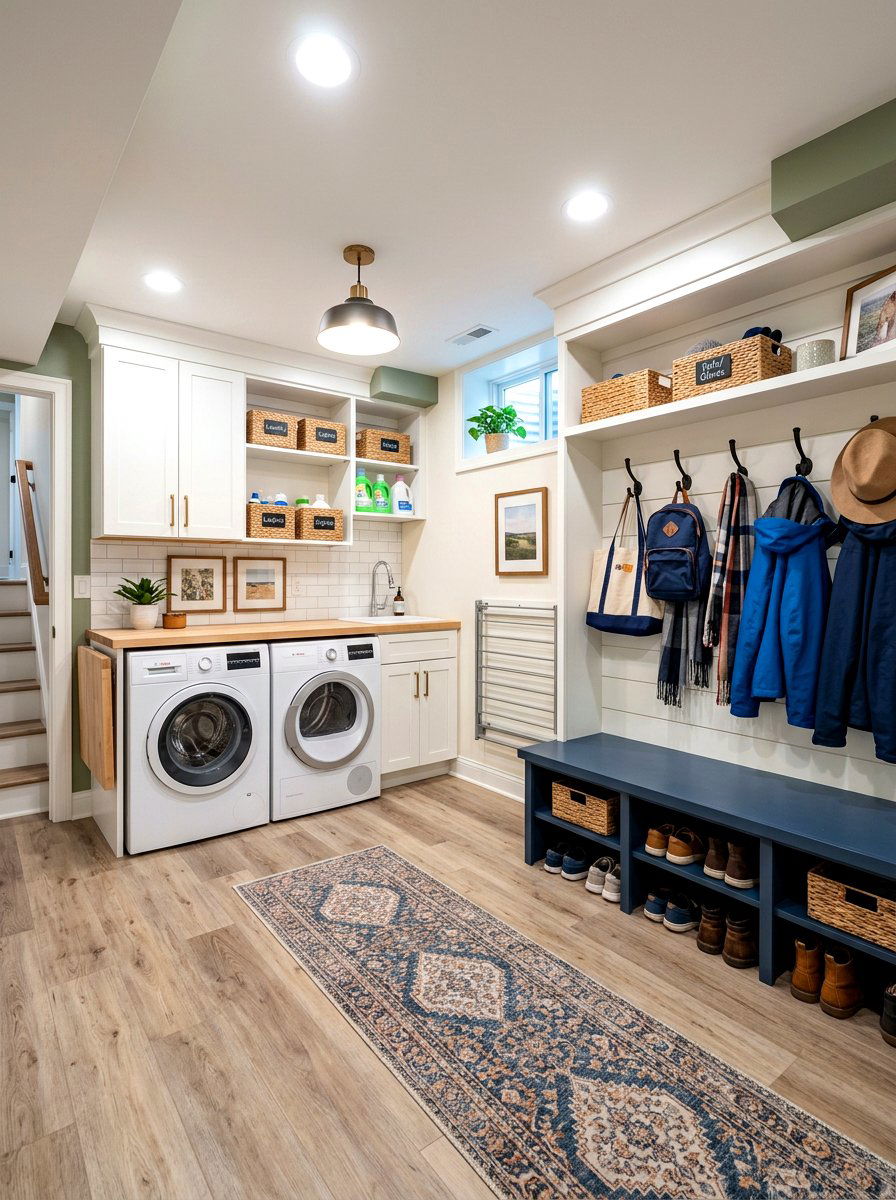
Combining your laundry room with a mudroom is a brilliant way to handle dirty clothes and shoes as soon as you enter the home. This is especially effective if your basement has a walk-out entrance leading from the backyard or garage. You can install a row of lockers or hooks for coats and bags alongside your washing machines. A durable bench provides a place to sit while taking off boots, with storage underneath for athletic gear. This layout keeps the mess contained in one area and prevents dirt from being tracked through the rest of the house. It is a highly functional and very organized way to live.
21. Grey basement laundry room
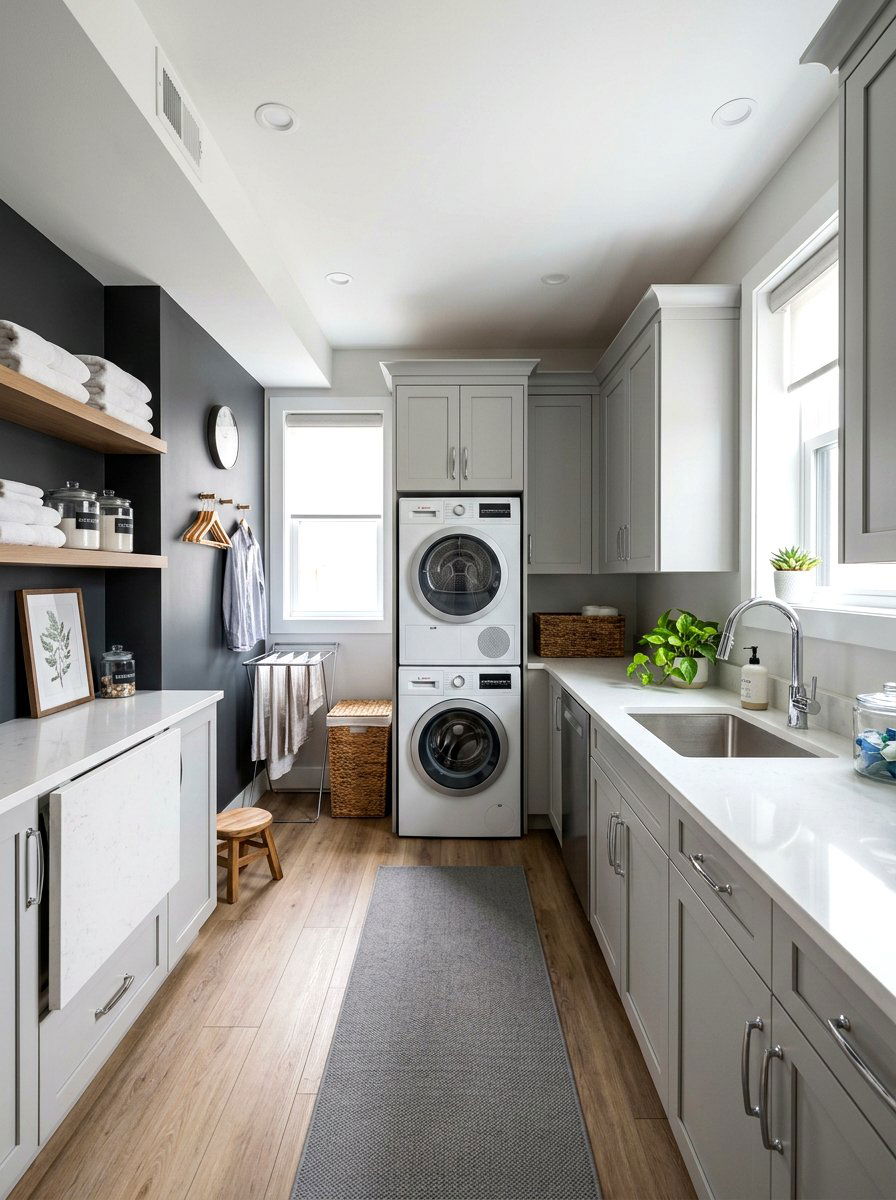
Grey is a fantastic color choice for a basement laundry room because it feels sophisticated and clean without being too stark. You can use a light dove grey on the cabinets to brighten the space, or a deep charcoal for a more dramatic look. Pairing grey tones with white countertops and chrome hardware creates a very modern and timeless aesthetic. This color also does a great job of hiding small scuffs and dust that are common in basement areas. Adding a few wooden accents or colorful rugs can prevent the grey from feeling too cold. It is a versatile neutral that works with almost any home style.
22. White basement laundry room
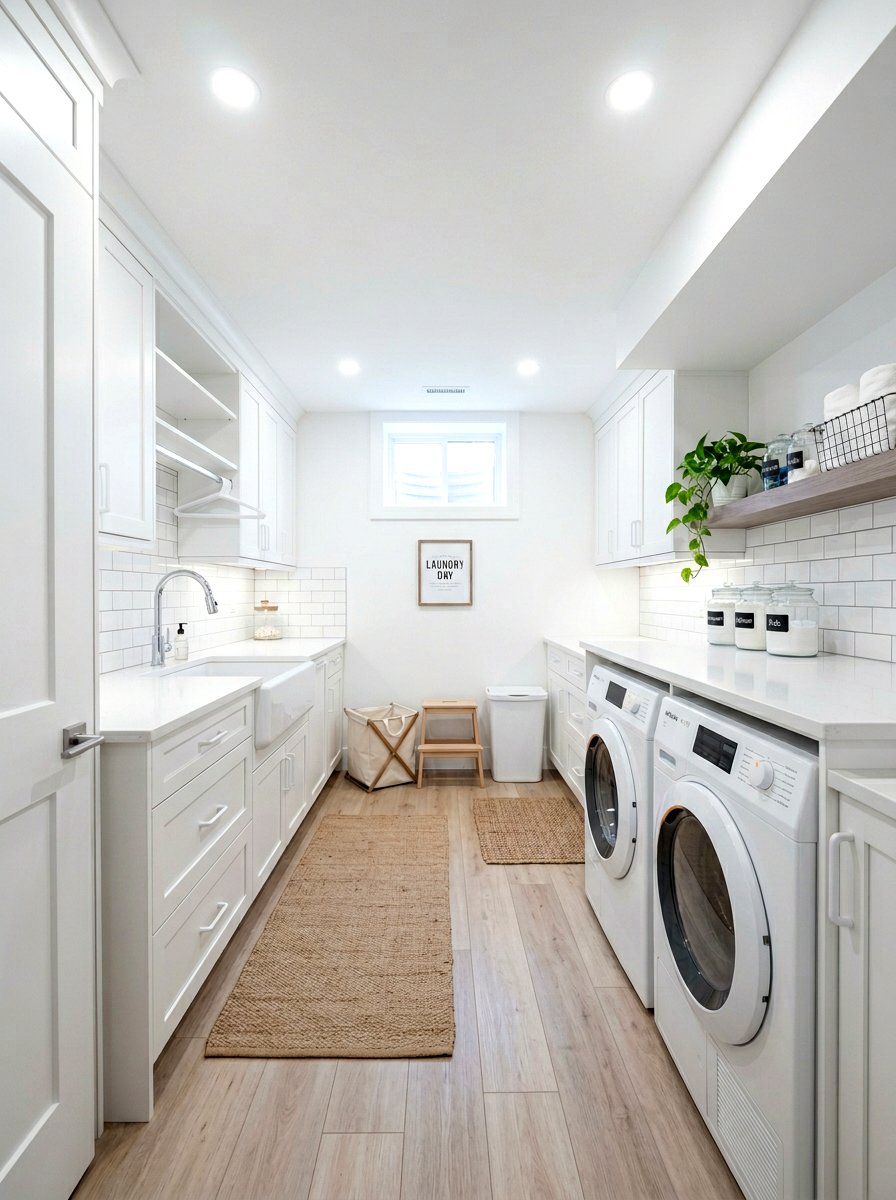
A purely white laundry room is the ultimate way to make a dark basement feel bright and expansive. Using white cabinets, walls, and countertops allows the limited light to bounce around the room as much as possible. To prevent the space from looking too sterile, you can incorporate different textures like a tiled backsplash or woven storage baskets. White also makes it very easy to see if your laundry area needs a quick cleaning or tidying up. This color palette provides a sense of cleanliness and freshness that is perfectly suited for a room dedicated to washing clothes. It is a classic choice that never goes out of style.
23. Basement laundry room wallpaper
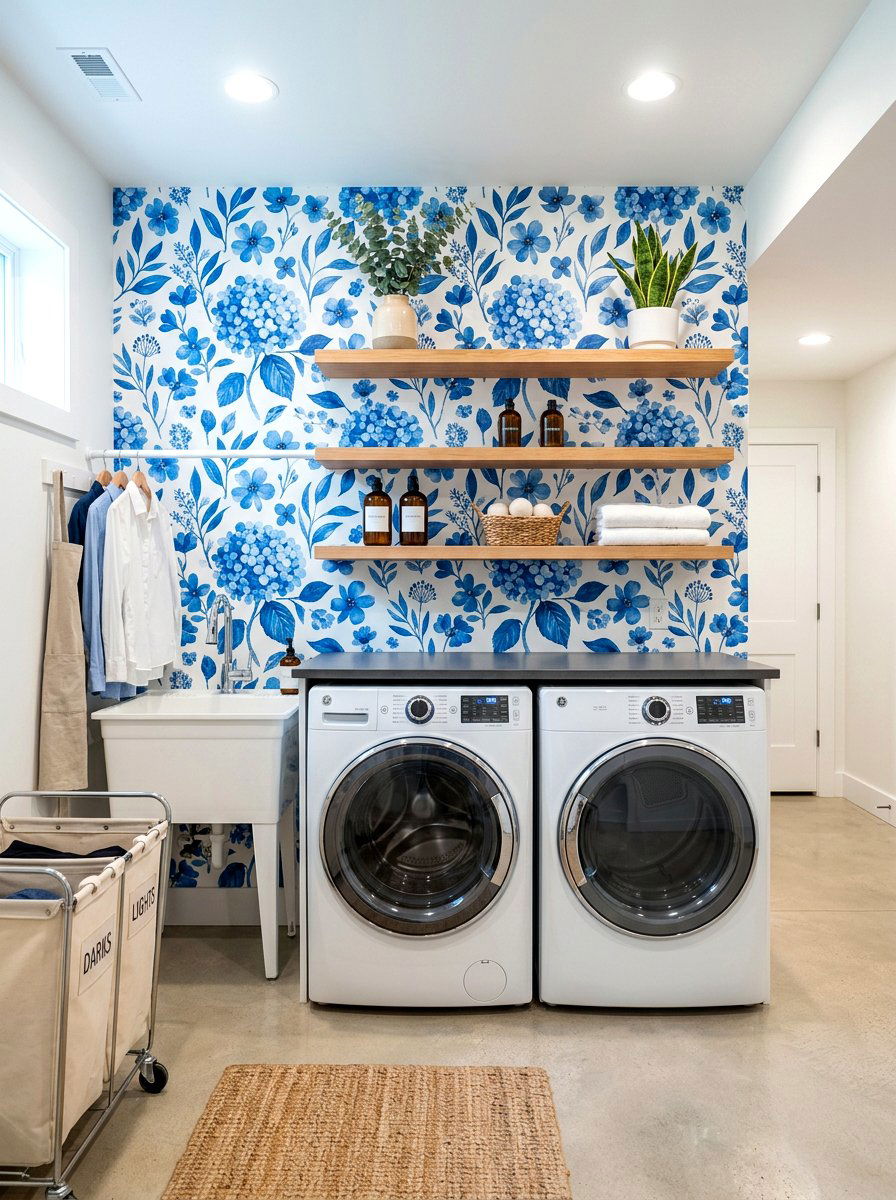
Adding wallpaper is a fun and easy way to inject some personality into an otherwise utilitarian basement space. Since the laundry room is often a separate area, you can afford to be a bit more bold with patterns and colors. A floral print or a geometric design can turn a boring wall into a beautiful focal point that makes you smile. Many modern wallpapers are peel-and-stick, making them easy to install even on smooth basement walls. Choosing a moisture-resistant vinyl wallpaper will ensure that the design stays looking great despite the humidity of the room. It is a simple way to make the space feel unique.
24. Wood look basement laundry
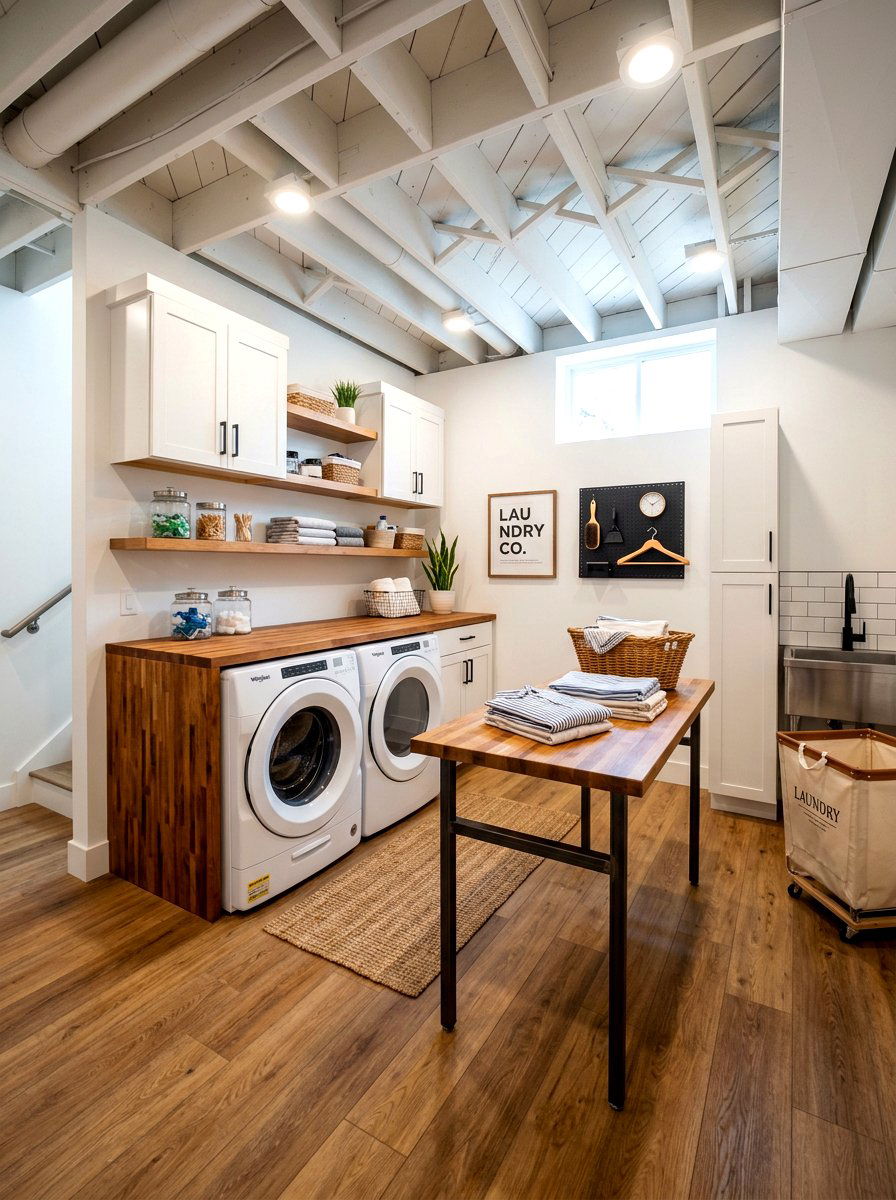
Using wood-look materials brings a sense of warmth and nature into a basement environment that might otherwise feel cold. You can achieve this look with water-resistant luxury vinyl planks that mimic the grain and texture of real hardwood. Adding butcher block countertops over your machines provides a sturdy and beautiful work surface that feels very high-end. You can also use floating wood shelves to display your supplies and add a touch of organic style to the walls. These elements help to ground the space and make it feel more connected to the upper levels of your home. It creates a very cozy and inviting atmosphere for chores.
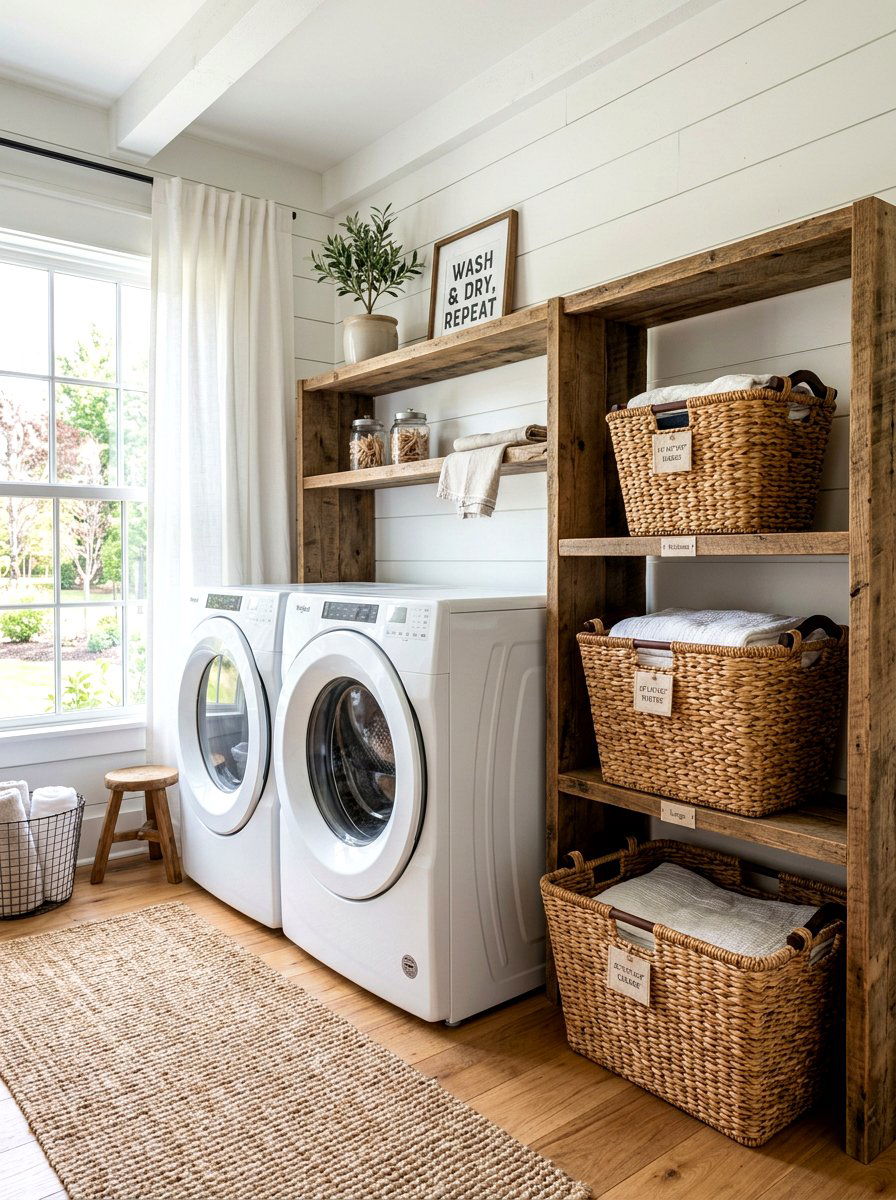
25. Basement laundry room closet
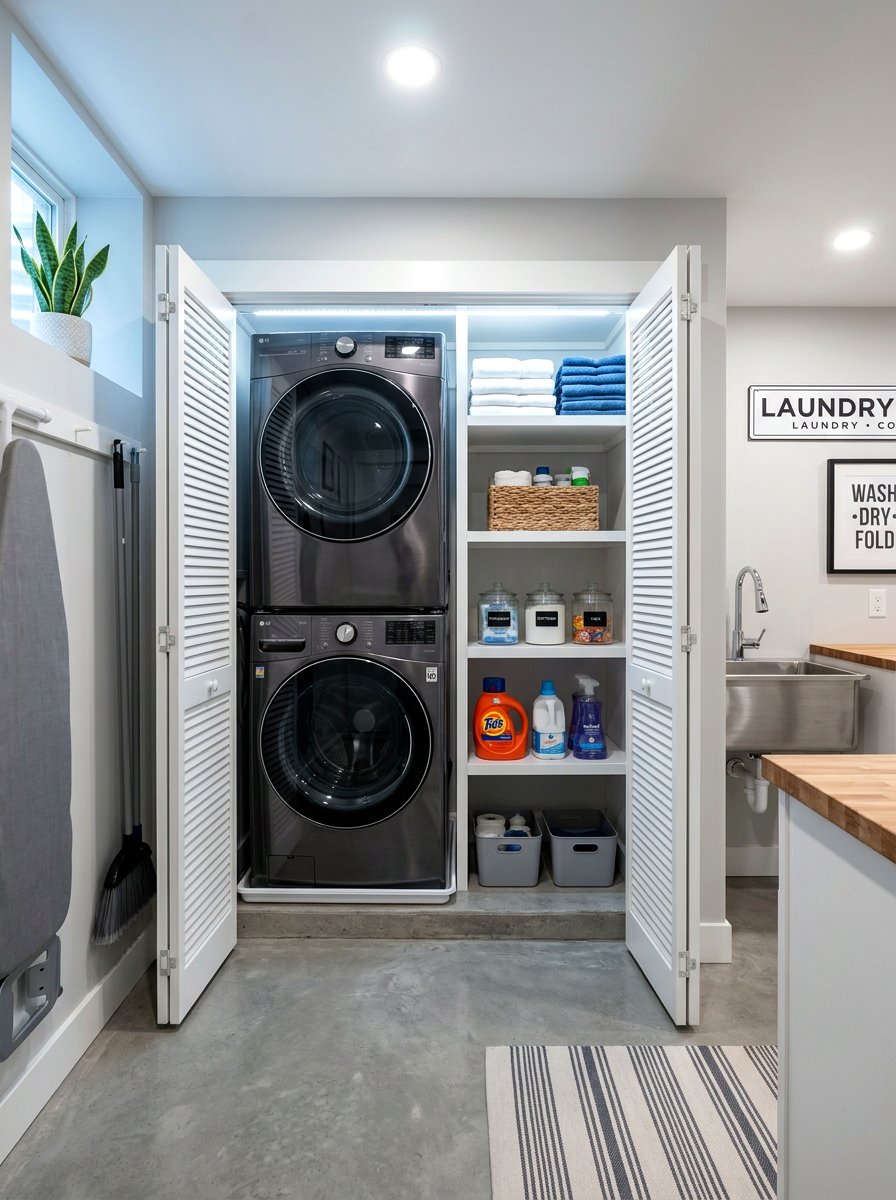
If you only have a small amount of space, a dedicated laundry closet is a very efficient and tidy option. You can use bifold doors to enclose the washer, dryer, and a few shelves in a compact area. This setup keeps everything contained and allows you to hide the mess behind closed doors in a matter of seconds. Installing a small light inside the closet is essential for seeing what you are doing while sorting loads. You can also mount a small drying rack or an ironing board holder on the back of the closet door. A well-organized closet proves that you do not need a large room to have a great laundry.
26. Floating shelves basement laundry
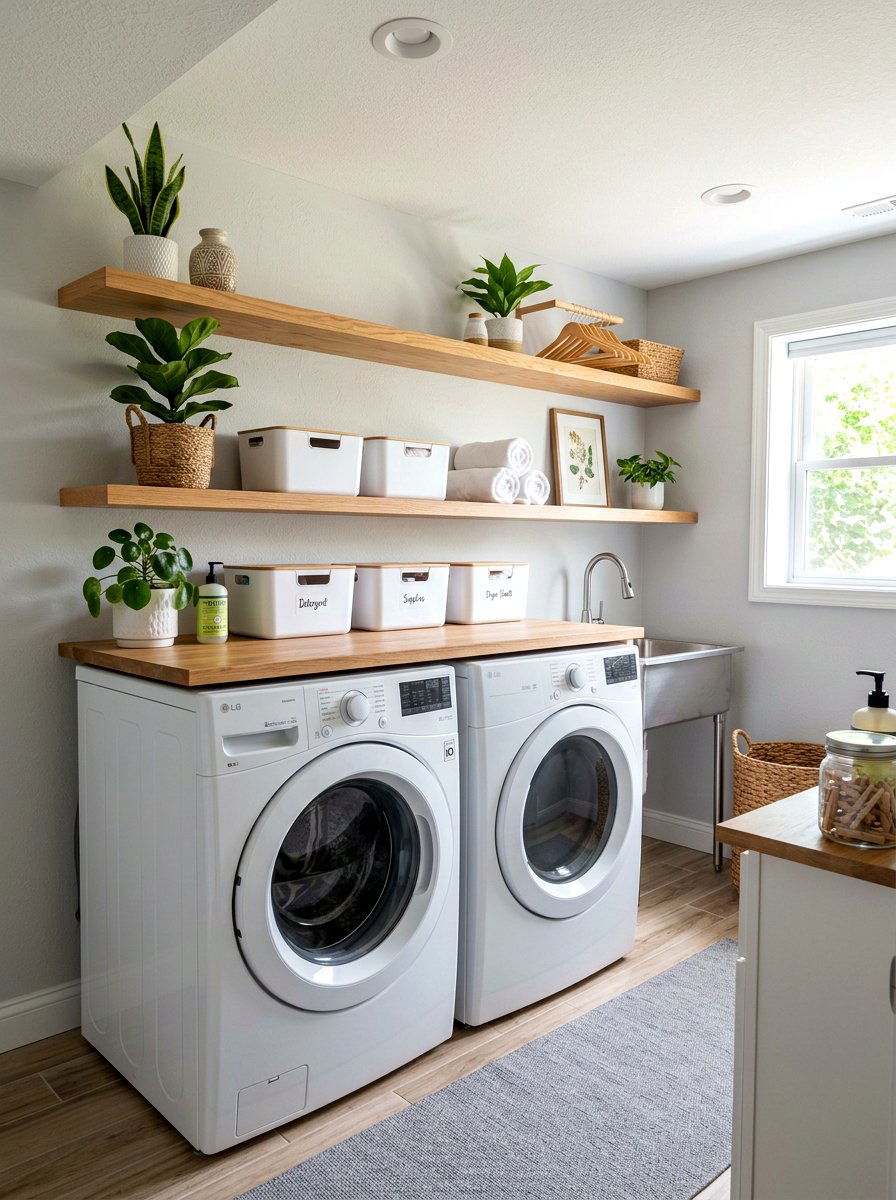
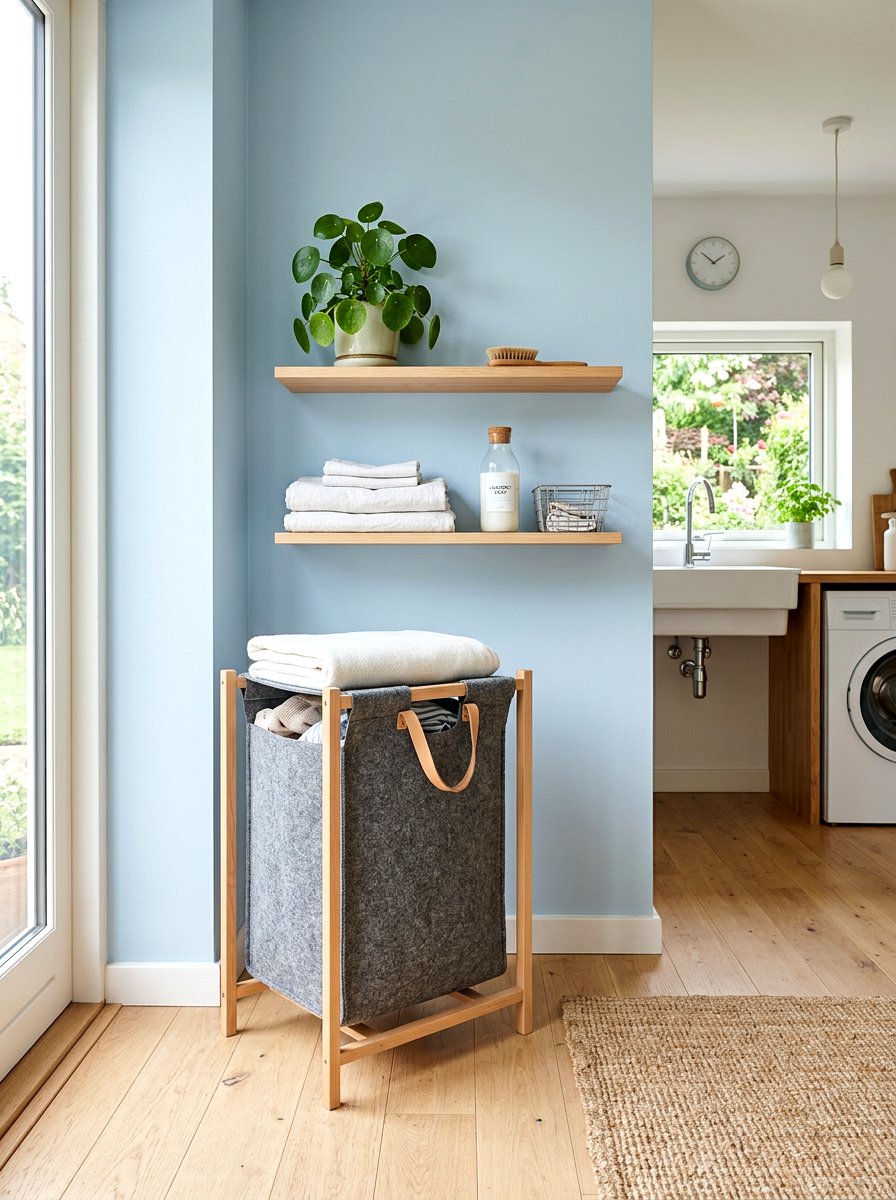
Floating shelves are a popular design choice because they provide storage without the visual bulk of traditional cabinets. They create an open and airy feel that is particularly beneficial in smaller basement laundry rooms. You can use these shelves to store your detergent, glass jars of supplies, and even a few small decorative plants. Supporting the shelves with hidden brackets gives them a sleek and modern appearance that fits well with many decor styles. They are also very easy to clean and allow you to see all your supplies at a single glance. Floating shelves are a simple way to add both style and storage to any wall.
27. Laundry chute basement room
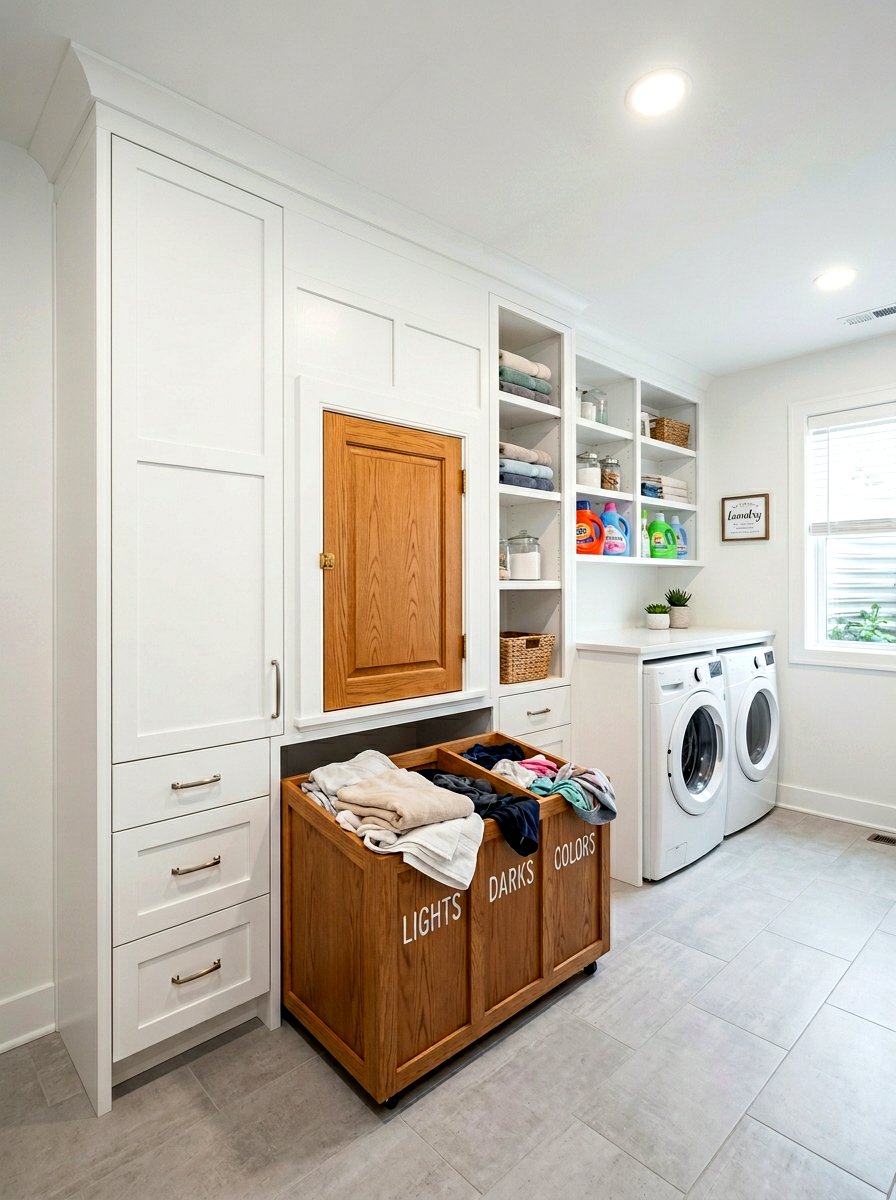
If your home has multiple stories, a laundry chute is a classic convenience that saves you from carrying heavy baskets down the stairs. The chute can empty directly into a designated bin or cabinet right next to your washing machine in the basement. This system keeps dirty clothes off the floors of the upper levels and makes the start of laundry day much faster. You can design the exit of the chute to look like a stylish built-in cabinet that matches the rest of your laundry room decor. It is a practical architectural feature that adds a lot of functional charm to an older or multi-level home.
28. Pegboard basement laundry wall
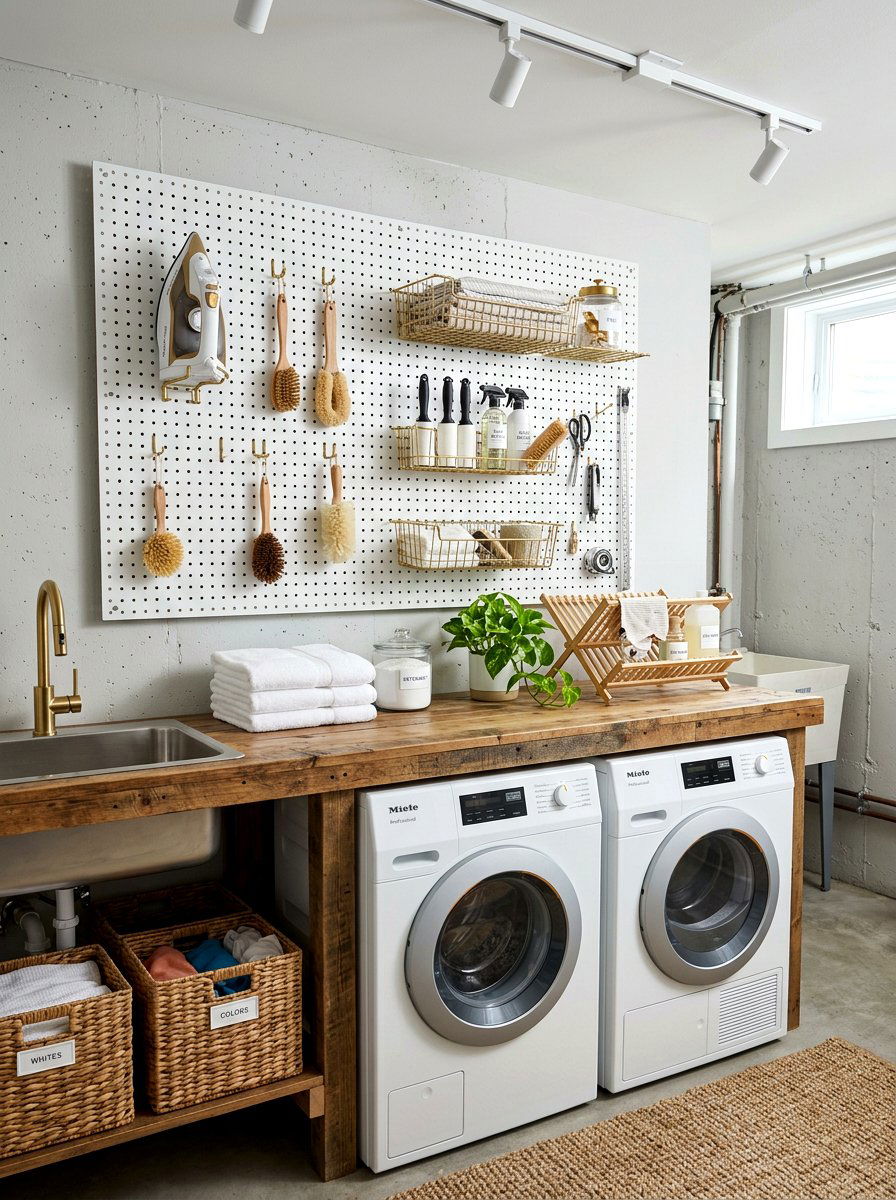
A pegboard is an incredibly versatile organization tool that allows you to customize your storage as your needs change. You can hang hooks for your ironing board, baskets for small cleaning tools, and even racks for your hangers. Painting the pegboard a bright color can also serve as a decorative element in your basement laundry zone. This vertical storage solution keeps your countertops clear and your supplies within easy reach at all times. It is an affordable and very effective way to organize a wide variety of different items in a small space. A pegboard is perfect for anyone who loves a highly organized and efficient workshop.
29. Basement laundry room rugs
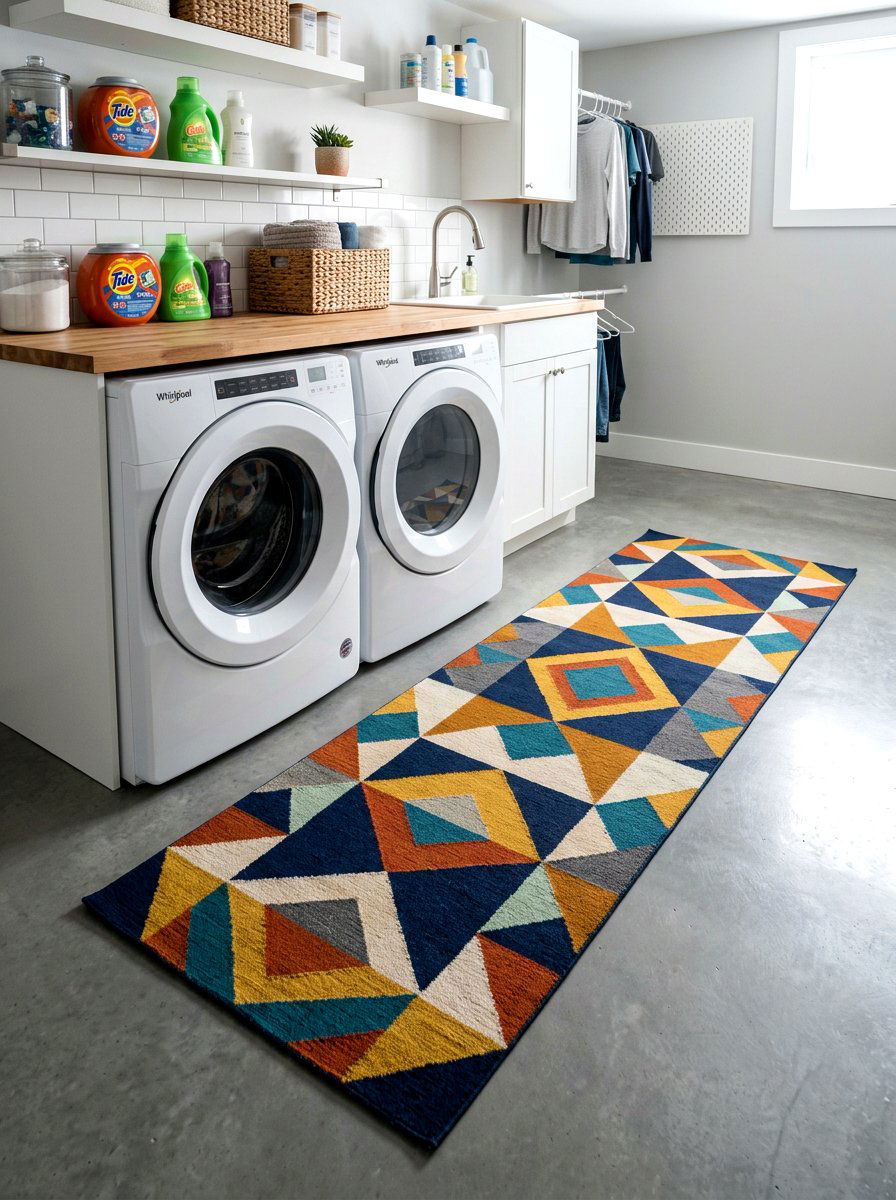
Adding a rug is a simple way to provide comfort and style to a hard basement floor. A soft, cushioned runner placed in front of your machines can make standing for long periods much easier on your feet and back. You should choose a rug made from durable and washable materials like polypropylene or cotton to handle occasional spills. Rugs also help to dampen the sound of the machines and add a much-needed layer of warmth to a cold concrete floor. Choosing a pattern that complements your wall color can help to tie the entire room together visually. It is a small touch that makes a big difference.
30. Luxury basement laundry room
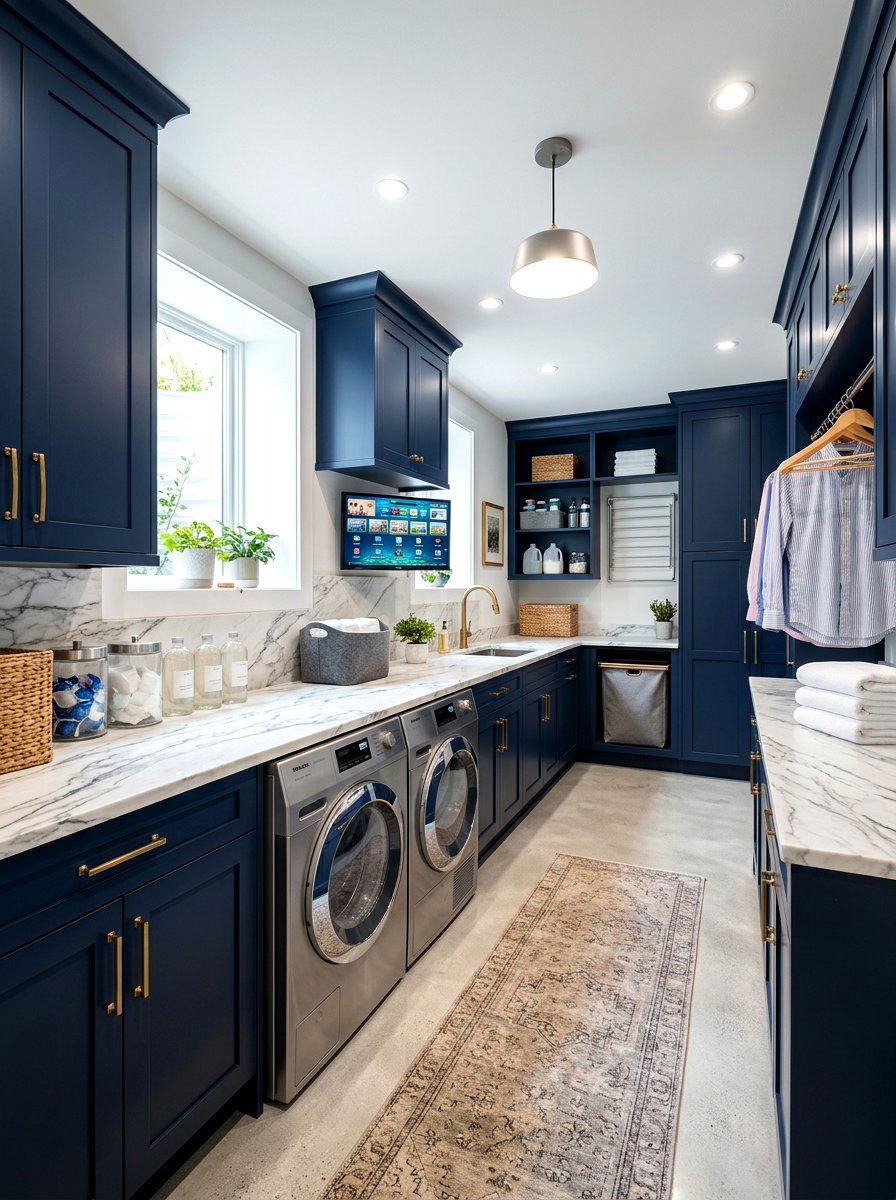
A luxury laundry room features high-end finishes and extra amenities that turn a chore into a high-end experience. You might include marble countertops, custom-built cabinetry, and high-performance appliances with the latest technology. Adding a built-in television or a high-quality sound system can make the time spent folding clothes much more enjoyable. Some luxury setups even include a small beverage fridge or a dedicated pet-washing station within the same area. Using sophisticated lighting fixtures and designer hardware elevates the room to a professional level of design. This type of space is a true highlight of a well-appointed home and provides immense daily convenience for the entire family.
Conclusion:
Transforming your basement into a beautiful and functional laundry area is one of the most rewarding home improvement projects you can undertake. By focusing on smart storage, bright lighting, and durable materials, you can turn a subterranean utility zone into a highly efficient workspace. Whether you prefer a modern minimalist look or a cozy farmhouse aesthetic, there are endless ways to customize the area to fit your personal style. Remember to prioritize waterproofing and ventilation to ensure the space remains clean and comfortable for years to come. With a little creativity and planning, laundry day can become a task you actually look forward to in your new basement retreat.

Related posts: