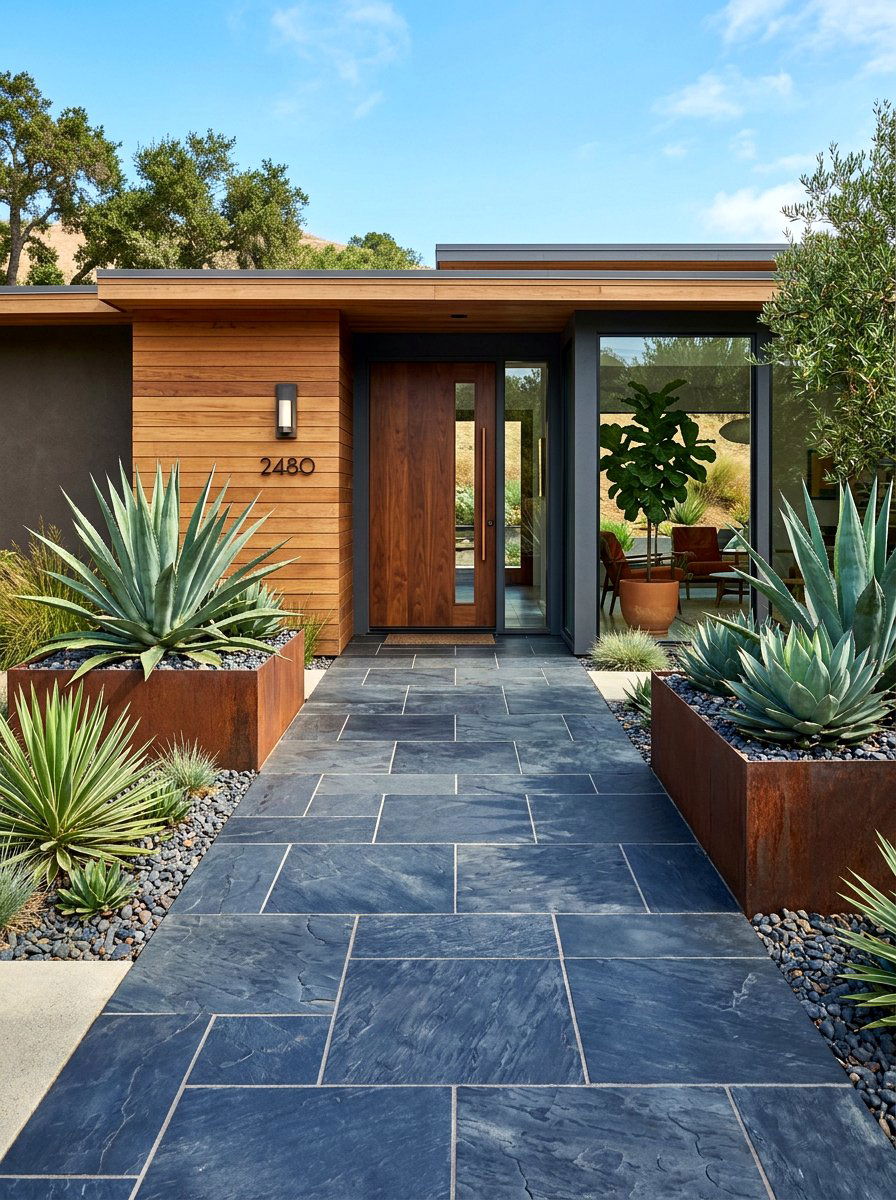
Starting a greenhouse project involves more than just selecting the right glass or plants; it requires a functional floor plan that enhances your daily gardening experience. The walkway serves as the central artery of your growing space, providing a clean path for foot traffic while managing water runoff and humidity levels. A well-designed path prevents mud buildup, offers stability for heavy pots, and adds a significant aesthetic layer to your glass-enclosed sanctuary. Whether you prefer the rustic charm of weathered brick or the modern sleekness of geometric tiles, choosing the right material transforms a basic utility area into a beautiful destination for every season.

1. Pea Gravel Greenhouse Path
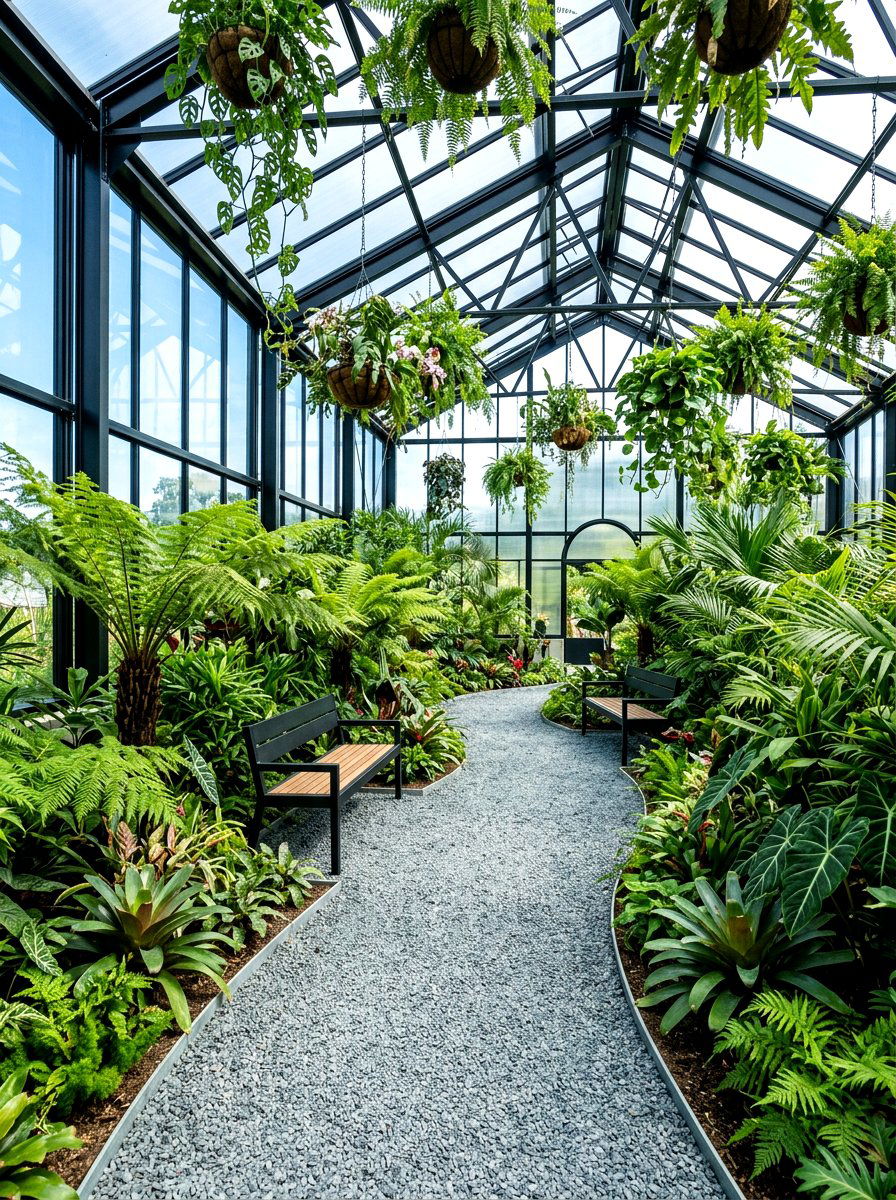
Pea gravel is a classic choice for hobbyists because it offers exceptional drainage and a pleasing crunch underfoot. These small, rounded stones are incredibly easy to install, requiring only a simple landscape fabric base to prevent weed growth. This material helps maintain a humid environment as water can seep through the gaps and evaporate slowly. Because the stones are small and loose, they naturally adjust to the contours of your greenhouse floor without requiring professional leveling. You can choose from various colors like warm tan, cool gray, or mixed white to complement your interior styling and keep the space feeling bright and airy.
2. Reclaimed Brick Greenhouse Floor
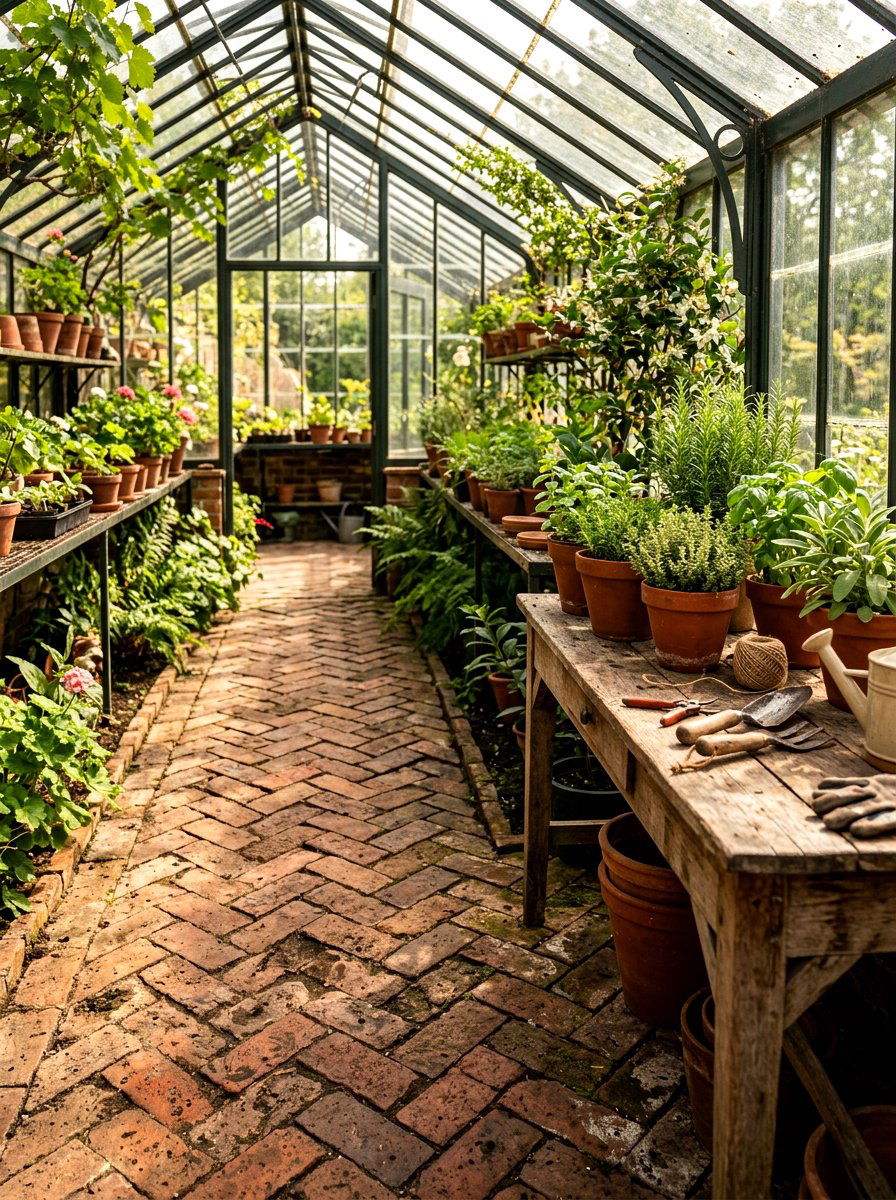
Reclaimed bricks bring an undeniable sense of history and warmth to a traditional garden glasshouse. These salvaged materials often feature unique patinas and weathered textures that new bricks simply cannot replicate. Laying them on a bed of sand allows for natural drainage while creating a sturdy, level surface for your potting benches and heavy planters. Bricks are excellent at absorbing solar heat during the day and releasing it slowly at night, which helps regulate the temperature for sensitive tropical plants. This choice is perfect for those who want a sustainable, recycled option that looks better the more it ages over many successful growing seasons.
3. Cedar Plank Greenhouse Walkway
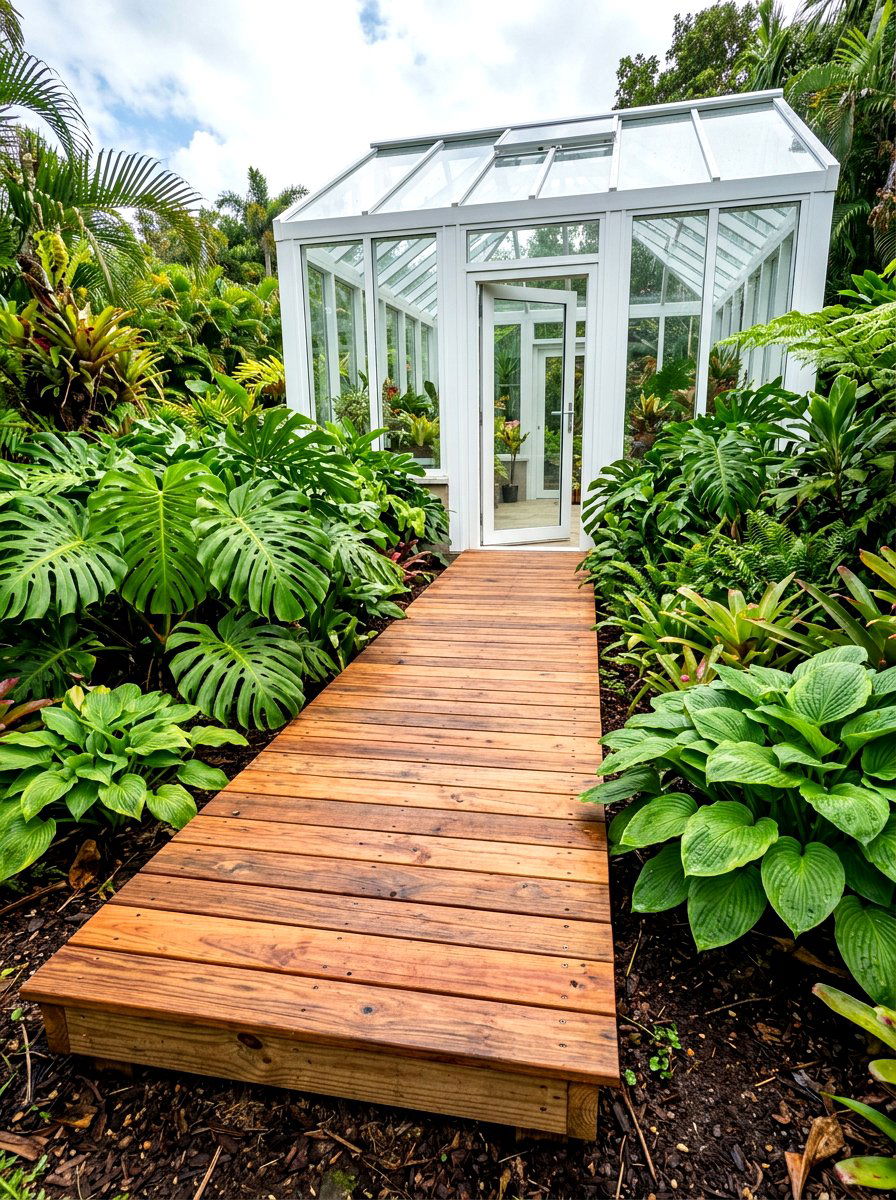
Cedar planks provide a naturally rot-resistant surface that adds a beautiful, organic feel to your indoor garden. The warm reddish tones of the wood create a striking contrast against the green foliage of your ferns and seedlings. Because cedar contains natural oils that repel insects and decay, it performs exceptionally well in the humid conditions typically found inside a greenhouse. You can install these planks as a raised boardwalk to keep your feet dry during heavy watering sessions. The aromatic scent of the wood adds another sensory layer to the experience, making your greenhouse feel like a luxurious and tranquil wooden spa retreat.
4. Flagstone Greenhouse Stepping Stones
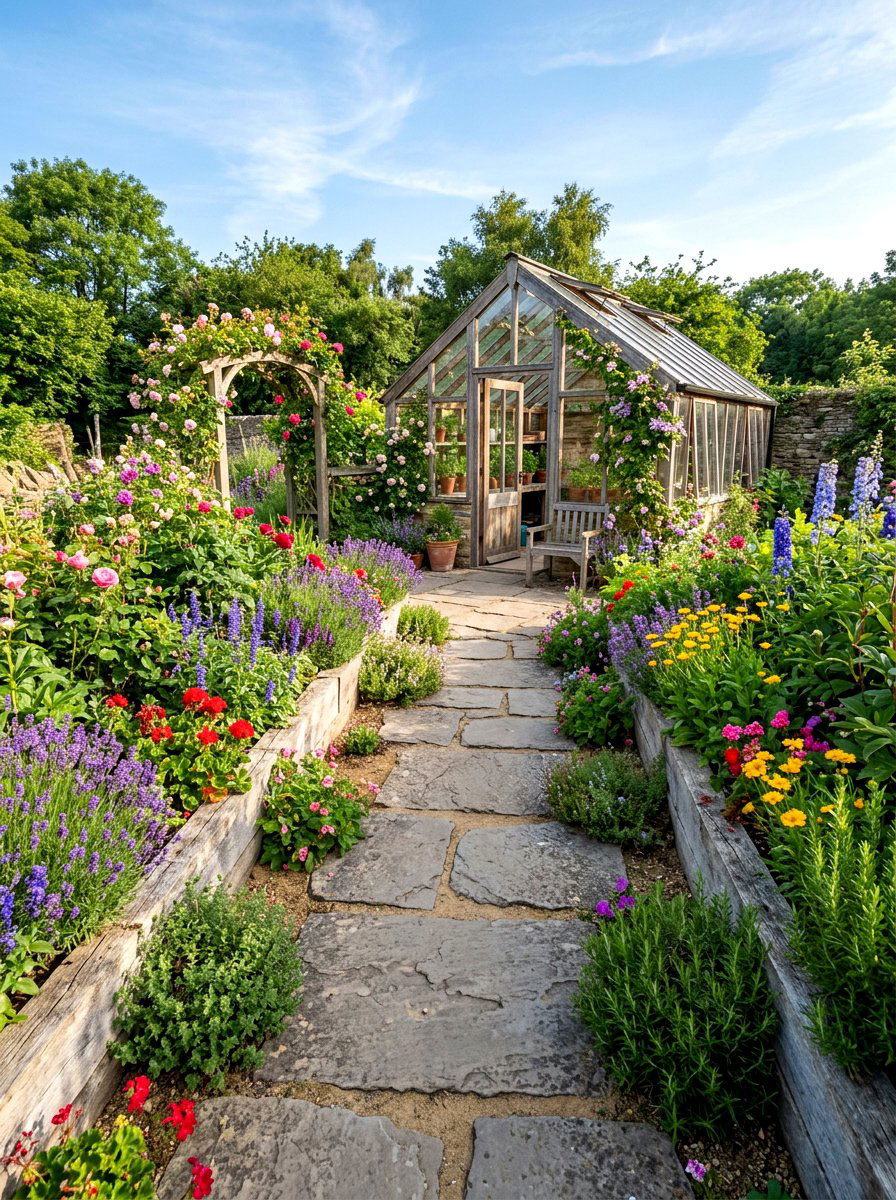
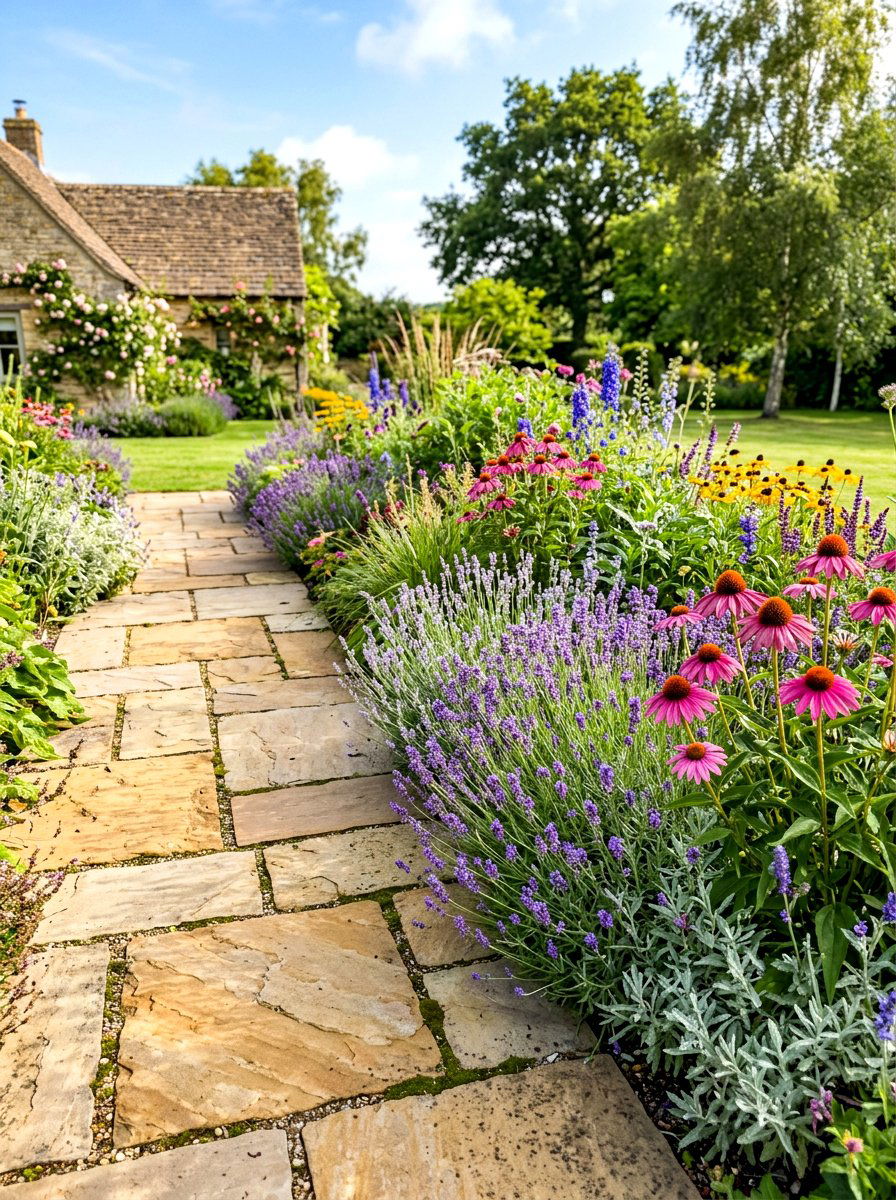
Flagstone stepping stones offer a rugged and natural aesthetic that feels like a winding forest trail. Each stone has a unique shape and size, allowing you to create a custom layout that flows perfectly through your plant benches. Because flagstones are large and heavy, they provide a very stable surface that won’t shift as you walk with full watering cans. You can fill the gaps between the stones with smaller pebbles or moss to create a lush, integrated look. This material is incredibly durable and can withstand heavy use, making it a wise long-term investment for any serious or professional backyard gardener.
5. Flagstone Path With Moss
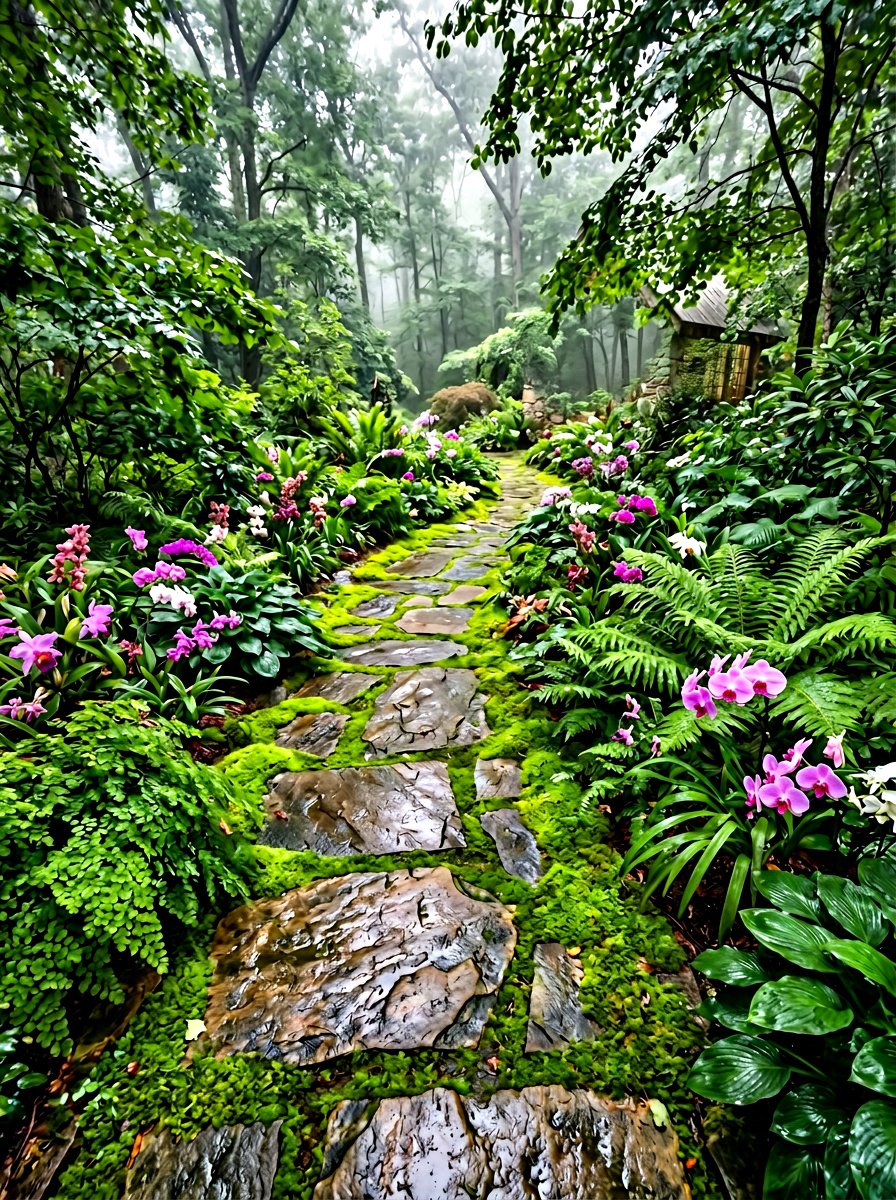
Incorporating live moss between flagstone slabs creates a soft, fairytale appearance that instantly ages your greenhouse in the best way possible. The vibrant green moss thrives in the humid and shaded conditions found under the lower leaves of your larger plants. This combination provides a permeable surface that allows excess water to return to the earth while keeping the air moist. It feels incredibly soft underfoot and helps to muffle sounds, creating a quiet and meditative atmosphere for your daily gardening tasks. This living walkway is ideal for gardeners who want their indoor space to feel like a seamless extension of the natural world.
6. Concrete Slab Greenhouse Walkway
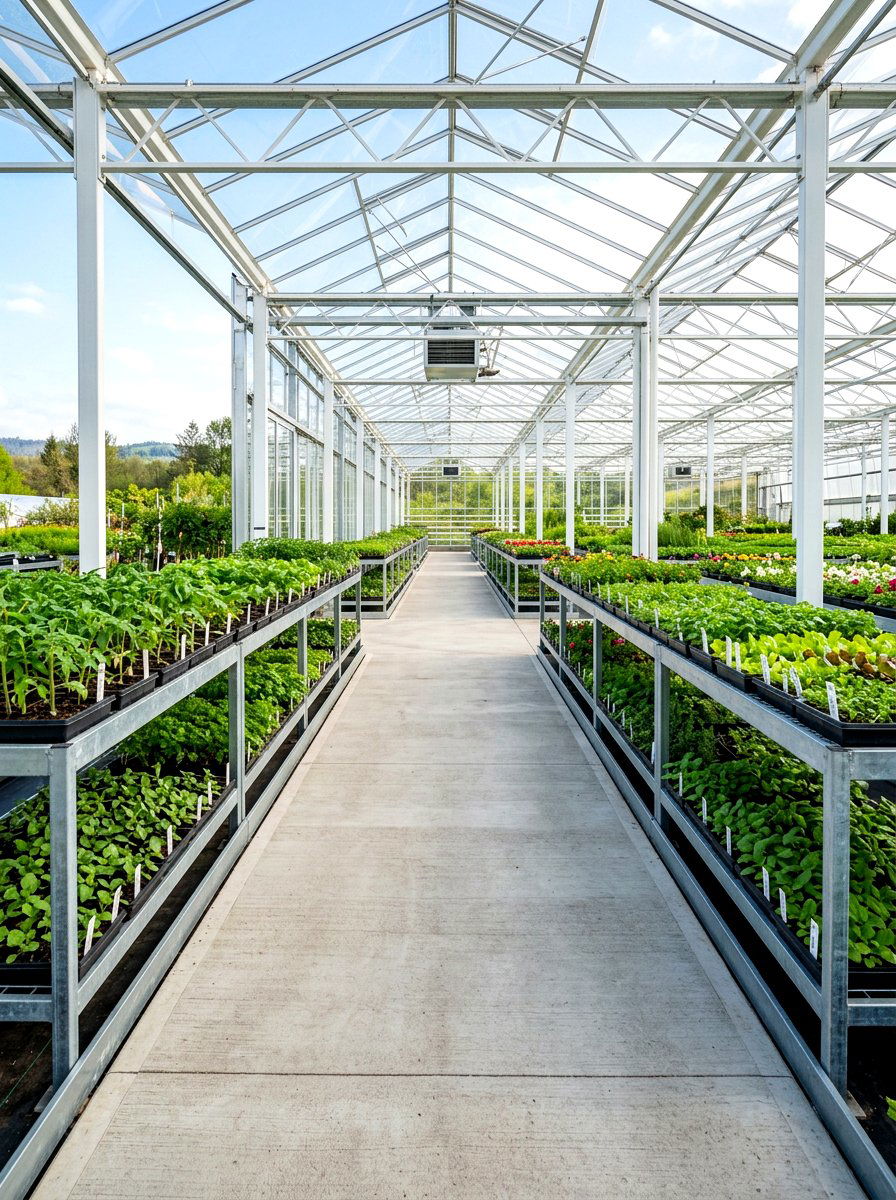
Concrete slabs are the ultimate choice for gardeners who prioritize durability and ease of cleaning above all else. A smooth concrete path allows you to roll heavy carts and wheelbarrows with minimal effort, which is essential for large-scale growing operations. While concrete can be expensive to install, it is virtually maintenance-free and can last for decades without showing signs of wear. You can finish the surface with a slight texture to prevent slipping when the floor gets wet from misting or spills. Its light gray color reflects sunlight, which can help increase the overall light levels available to your sun-loving vegetable crops.
7. Interlocking Wood Tiles Greenhouse
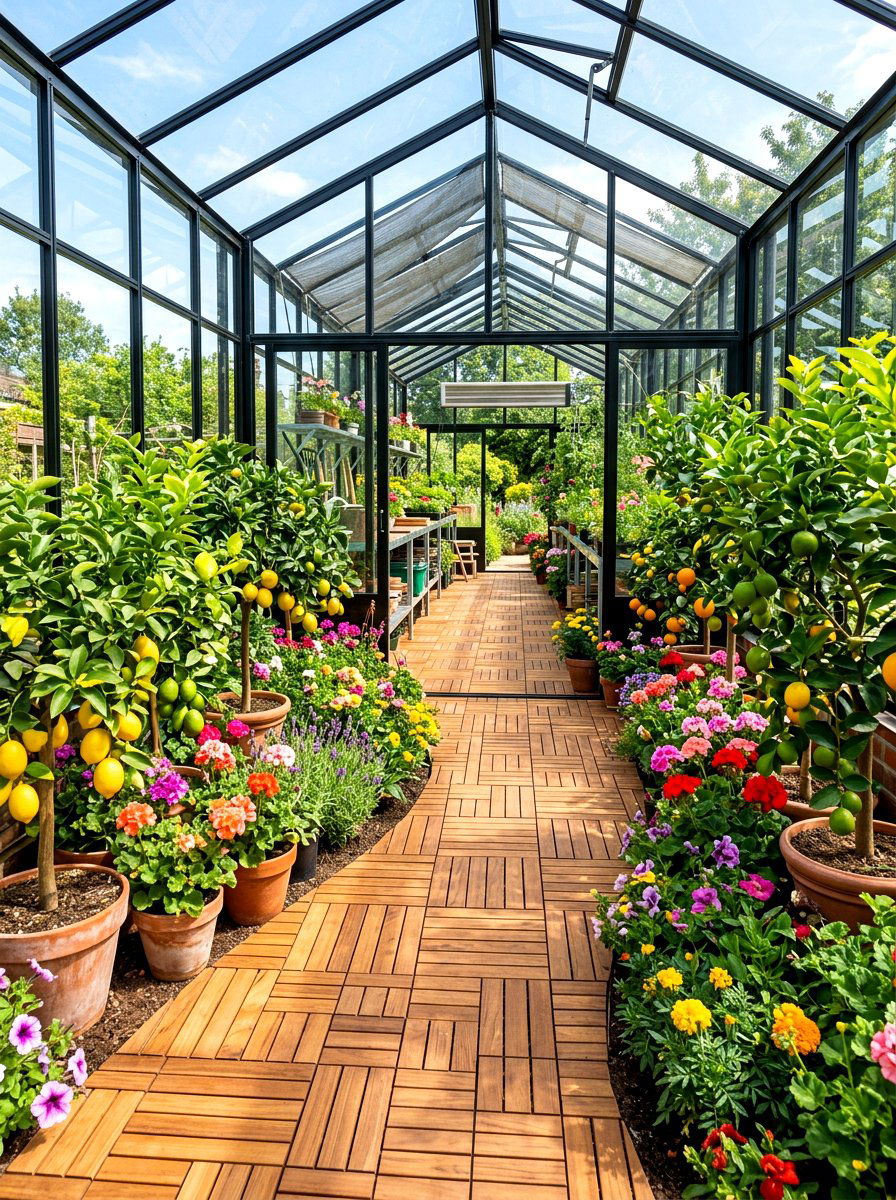
Interlocking wood tiles are a fantastic DIY solution for someone who wants the look of a deck without the complex construction. these modular tiles snap together in minutes, allowing you to cover your existing dirt or gravel floor with ease. They are typically made from weather-resistant hardwoods like acacia or teak, ensuring they can handle the constant moisture of a greenhouse environment. If you decide to reorganize your layout or move to a new home, you can simply unclip the tiles and take them with you. The slat design ensures that water drains away quickly, keeping your walkway safe and completely free of standing puddles.
8. River Rock Greenhouse Path
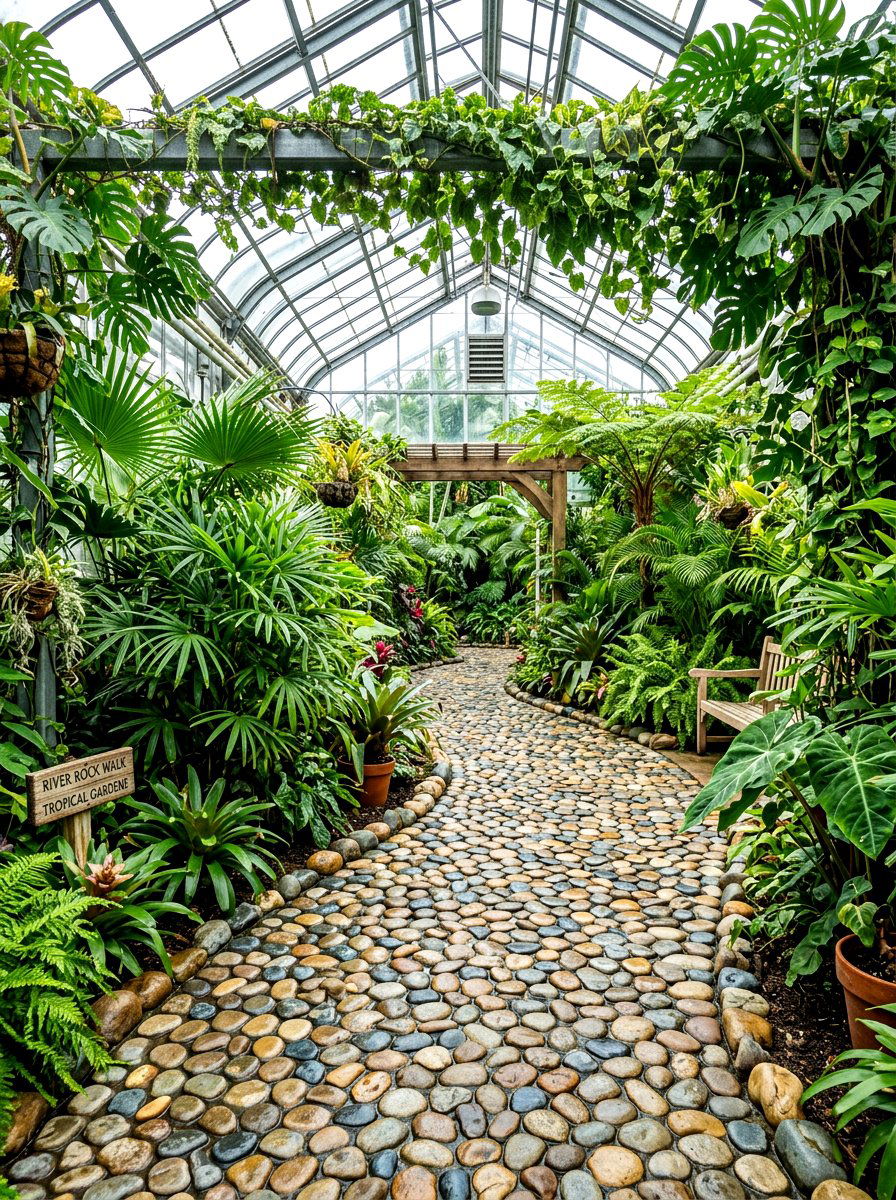
River rocks provide a smooth, water-worn texture that brings a sense of serenity and Zen to your greenhouse interior. These larger, rounded stones create a visually interesting walkway that mimics the bed of a mountain stream. Because of their varied sizes, they create a very porous surface that handles drainage exceptionally well, even during intense watering. The natural shades of blue, gray, and brown look beautiful when wet, adding a glistening quality to your floor. This style works best in greenhouses with a more relaxed, tropical, or informal theme where the organic shapes of the rocks can truly shine as a central design feature.
9. Herringbone Brick Greenhouse Floor
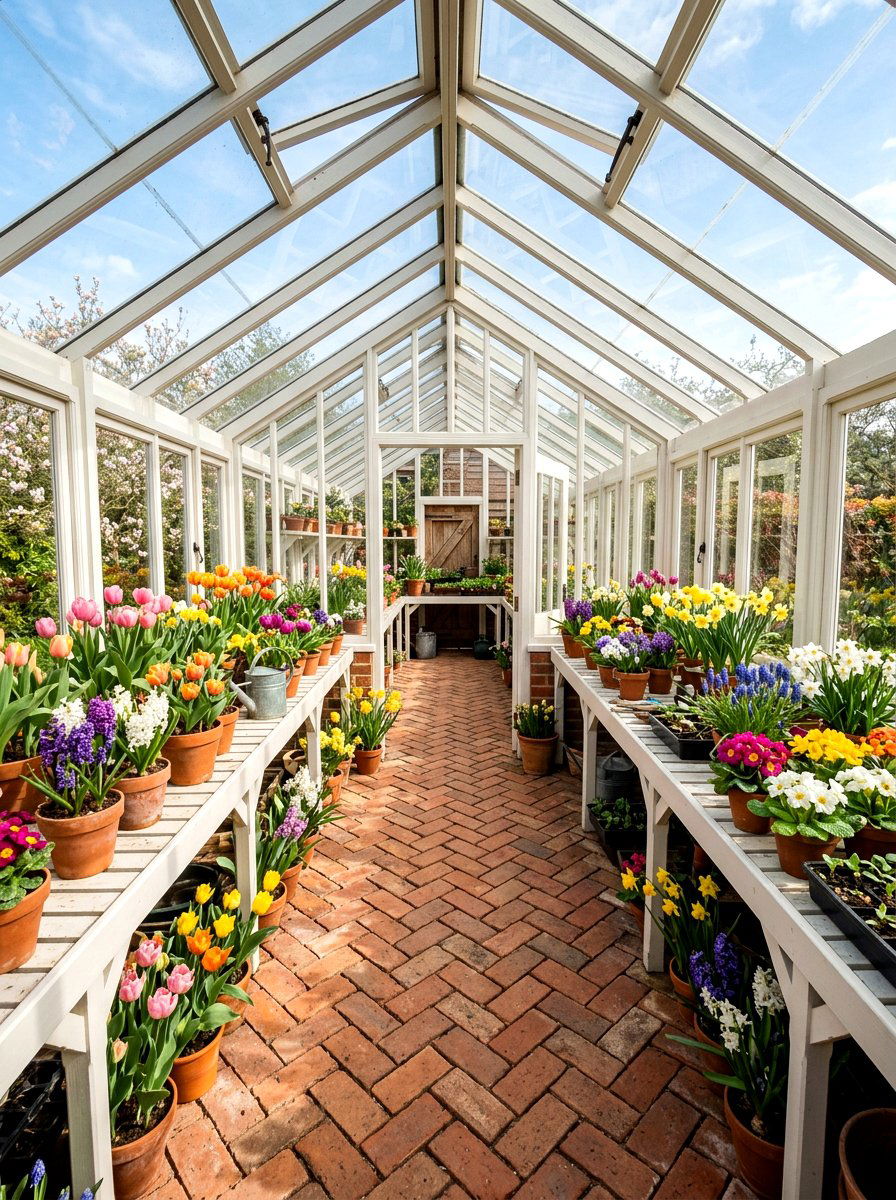
Laying bricks in a herringbone pattern adds a touch of sophisticated European elegance to your glasshouse structure. This classic design creates a very strong and stable surface that resists shifting over time because of how the bricks lock together. The repetitive geometric pattern draws the eye down the length of the walkway, making even a small greenhouse feel longer and more spacious. It requires a bit more precision during installation, but the finished result is a high-end look that complements both modern and Victorian styles. The red and orange tones of the brick help to warm up the space visually on gray, overcast winter days.

10. Cobblestone Greenhouse Walkway
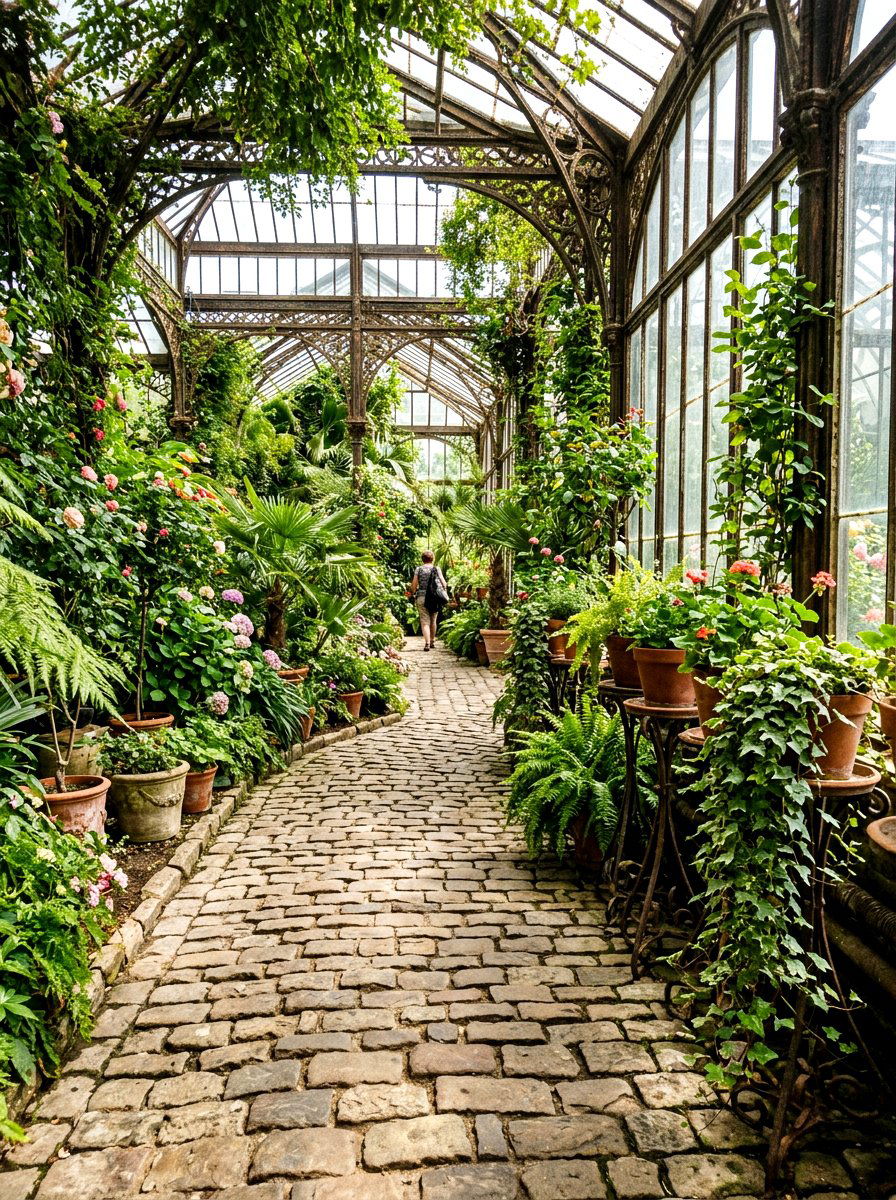
Cobblestones offer an old-world charm that makes your greenhouse feel like it belongs in a historic English cottage garden. These thick, durable stones are practically indestructible and can handle the weight of heavy storage racks and large ceramic pots without cracking. The irregular surface provides excellent traction, which is a major safety benefit in a space that is frequently wet. While the uneven texture might be a challenge for rolling carts, the aesthetic payoff is immense, providing a timeless foundation for your plant collection. Cobblestones are perfect for creating a rugged, rustic look that pairs beautifully with iron shelving and vintage-style garden decor.
11. Wood Chip Greenhouse Path
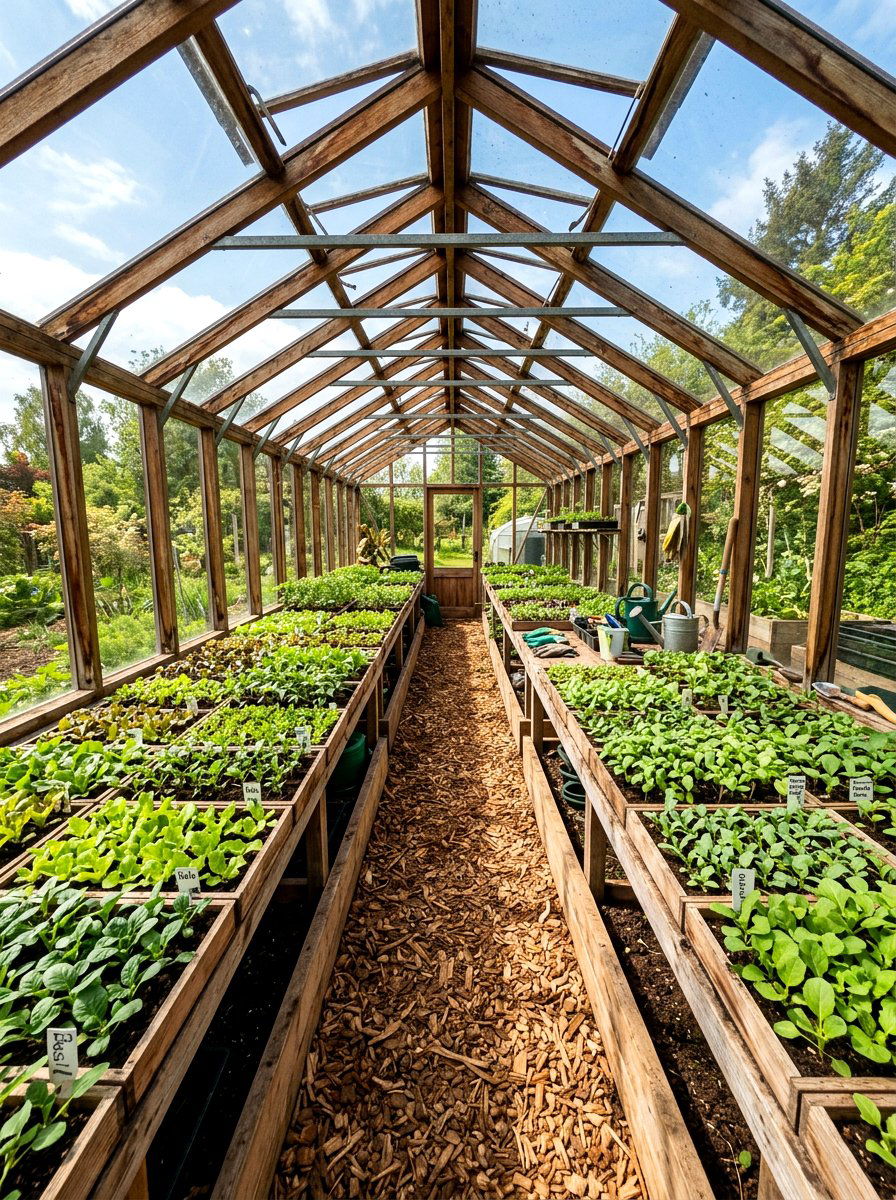
Wood chips are perhaps the most affordable and accessible material for creating a quick and functional walkway inside your greenhouse. This organic material provides a soft and cushioned surface that is very comfortable for your back and joints during long hours of potting. Wood chips are excellent at absorbing excess moisture and slowly releasing it, which helps to maintain stable humidity levels for your tropical species. Over time, the chips will break down and can be replaced or even added to your compost pile. This is a great temporary solution for new gardeners who are still deciding on their permanent greenhouse layout and flooring options.
12. Slate Tile Greenhouse Flooring
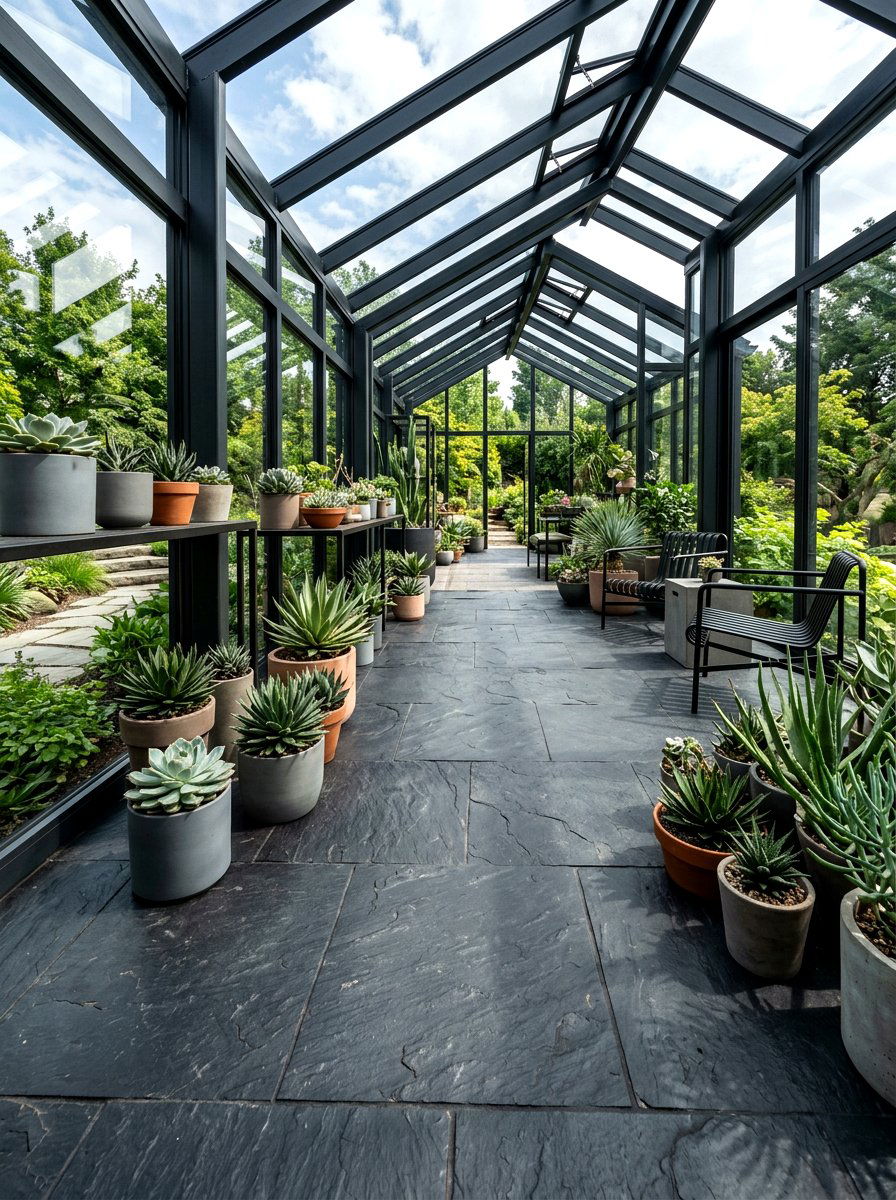
Slate tiles offer a sophisticated, modern look with a natural cleft texture that provides inherent slip resistance for wet areas. The deep charcoal and blue-gray hues of slate create a dramatic backdrop that makes the bright greens and colorful blooms of your plants pop. These tiles are very thin compared to pavers, which allows for a lower profile walkway that won't take up too much vertical space. Slate is also a natural thermal mass, meaning it will store heat from the sun and keep your greenhouse warmer during the night. It is an elegant choice for a contemporary greenhouse that doubles as an outdoor living room.
13. Pressure Treated Lumber Walkway
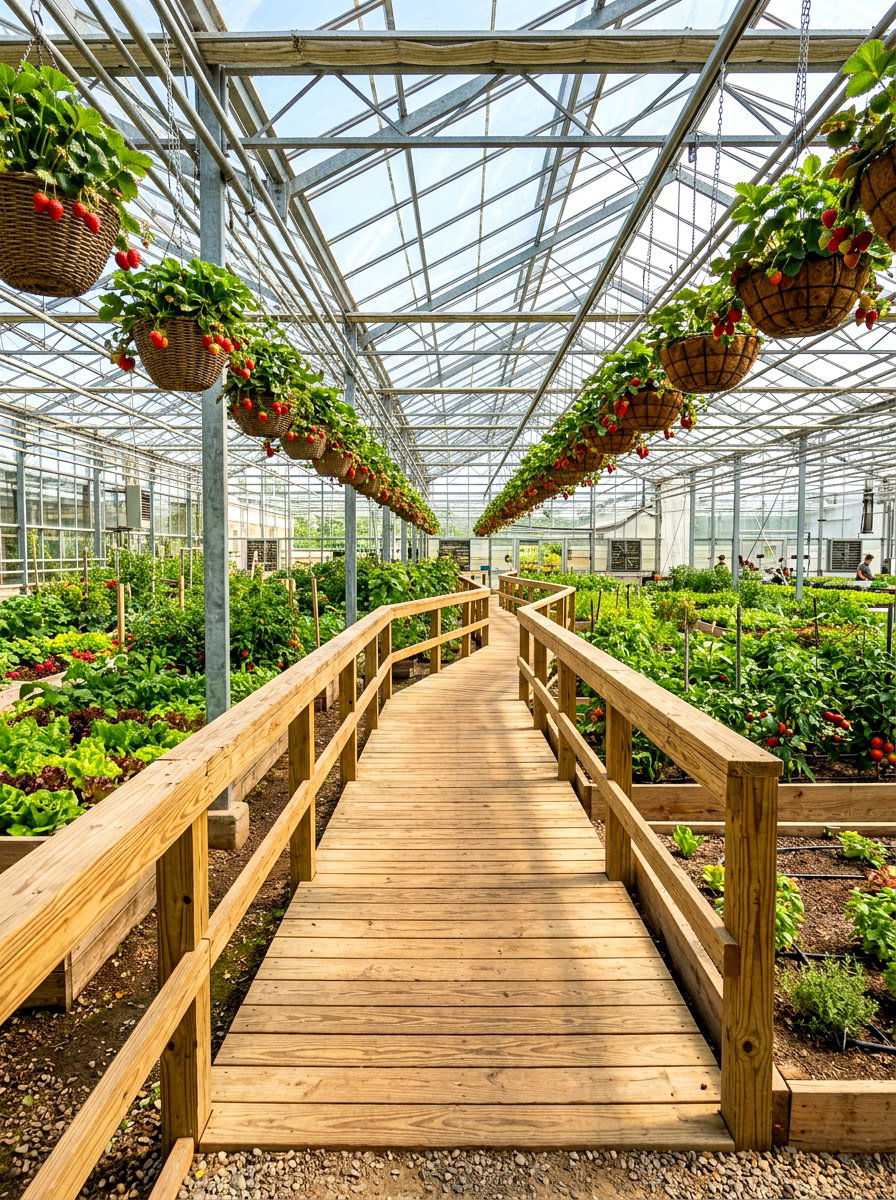
Using pressure-treated lumber for your greenhouse walkway is a practical and cost-effective way to ensure your flooring lasts for many years. This wood is specifically treated to resist rot, fungal growth, and wood-boring insects, making it a rugged choice for damp environments. You can build a simple boardwalk or a series of low platforms to create a clear, raised path through your growing beds. Painting or staining the wood can help it blend in with your greenhouse frame or provide a bold pop of color. It is a sturdy material that provides a reliable and flat surface for all of your heavy-duty gardening equipment.
14. Paver Stone Greenhouse Path
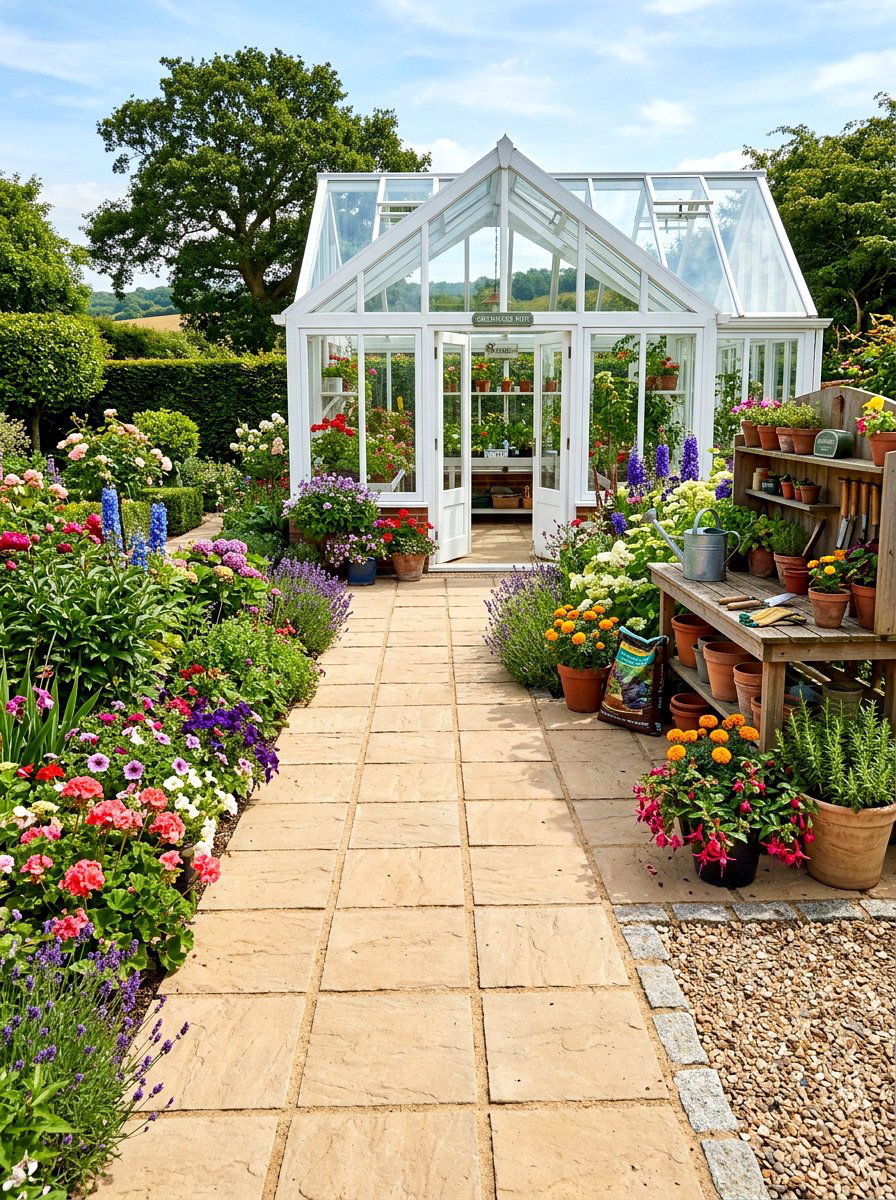
Paver stones come in a vast array of shapes, colors, and textures, making them one of the most versatile options for greenhouse flooring. You can choose large square pavers for a clean, minimalist look or smaller tumbled pavers for a more traditional feel. They are designed to be laid easily on a bed of sand or fine gravel, which allows for excellent drainage and prevents the floor from becoming muddy. Pavers are very easy to sweep and keep clean, ensuring your greenhouse remains a professional and organized workspace. Their consistent thickness makes it easy to maintain a perfectly level path throughout the entire structure.
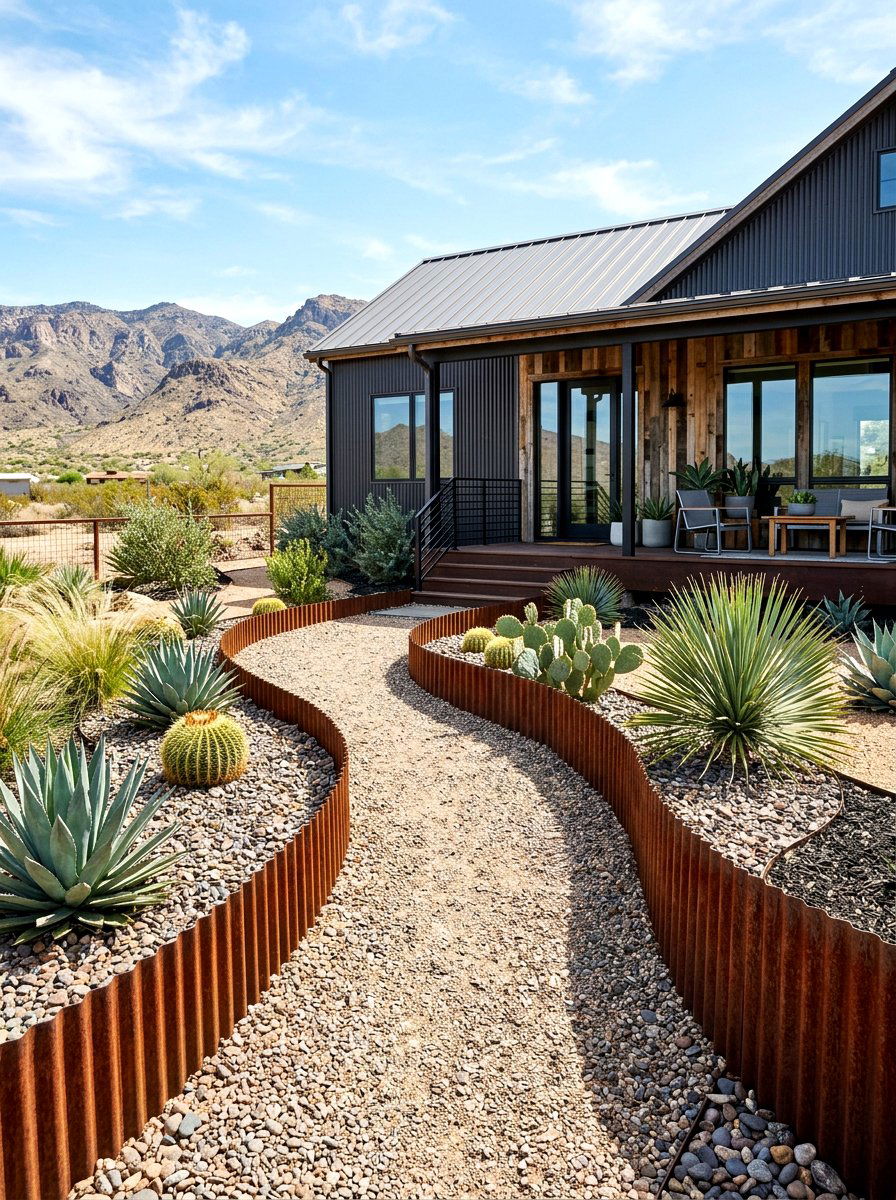
15. Crushed Limestone Greenhouse Walkway
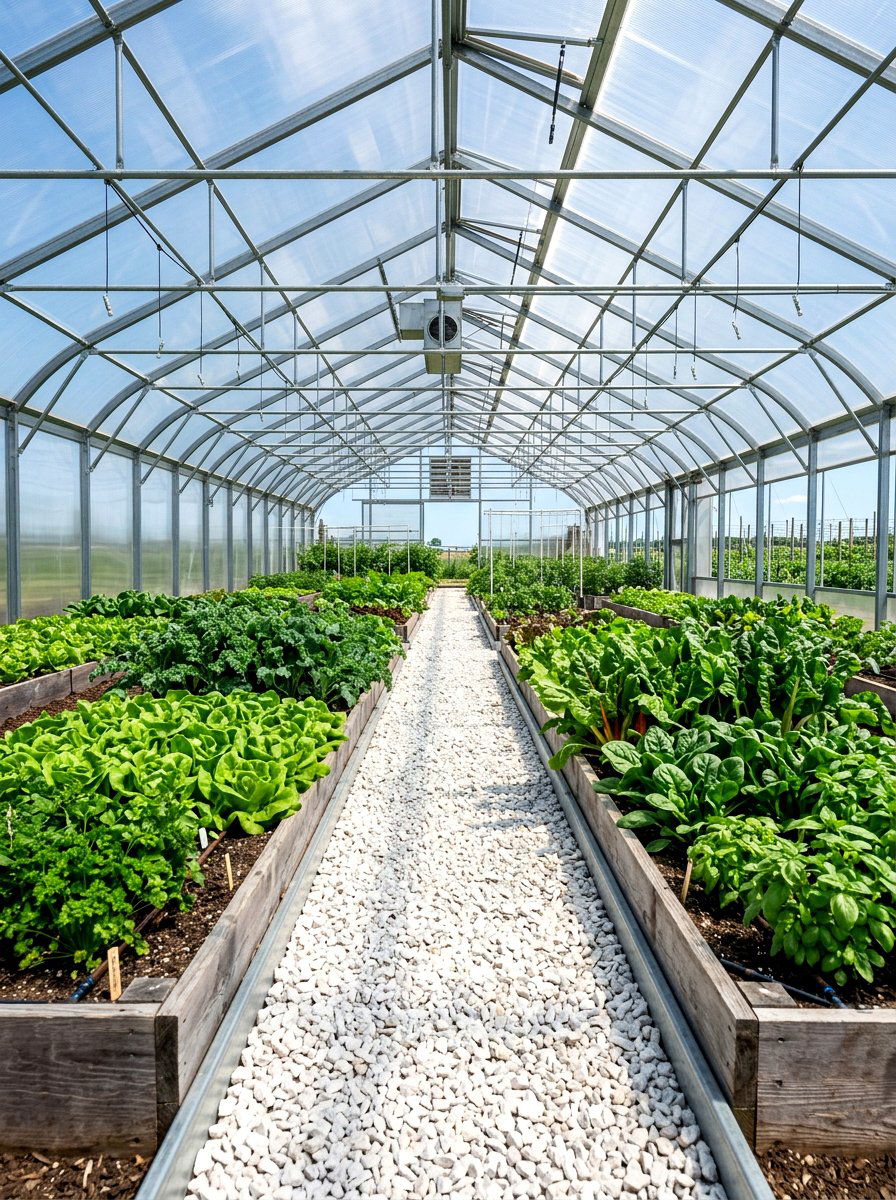
Crushed limestone provides a bright, crisp white or light tan walkway that reflects a significant amount of light back up onto your plants. This can be a major advantage during the shorter days of winter when every bit of light helps with seedling growth. The sharp, angular edges of crushed limestone allow the stones to lock together, creating a much more stable walking surface than rounded pea gravel. It offers superb drainage and is a very affordable material for covering large floor areas. The clean, neutral color of the limestone provides a professional look that works well with any style of greenhouse or garden.
16. Decomposed Granite Greenhouse Path
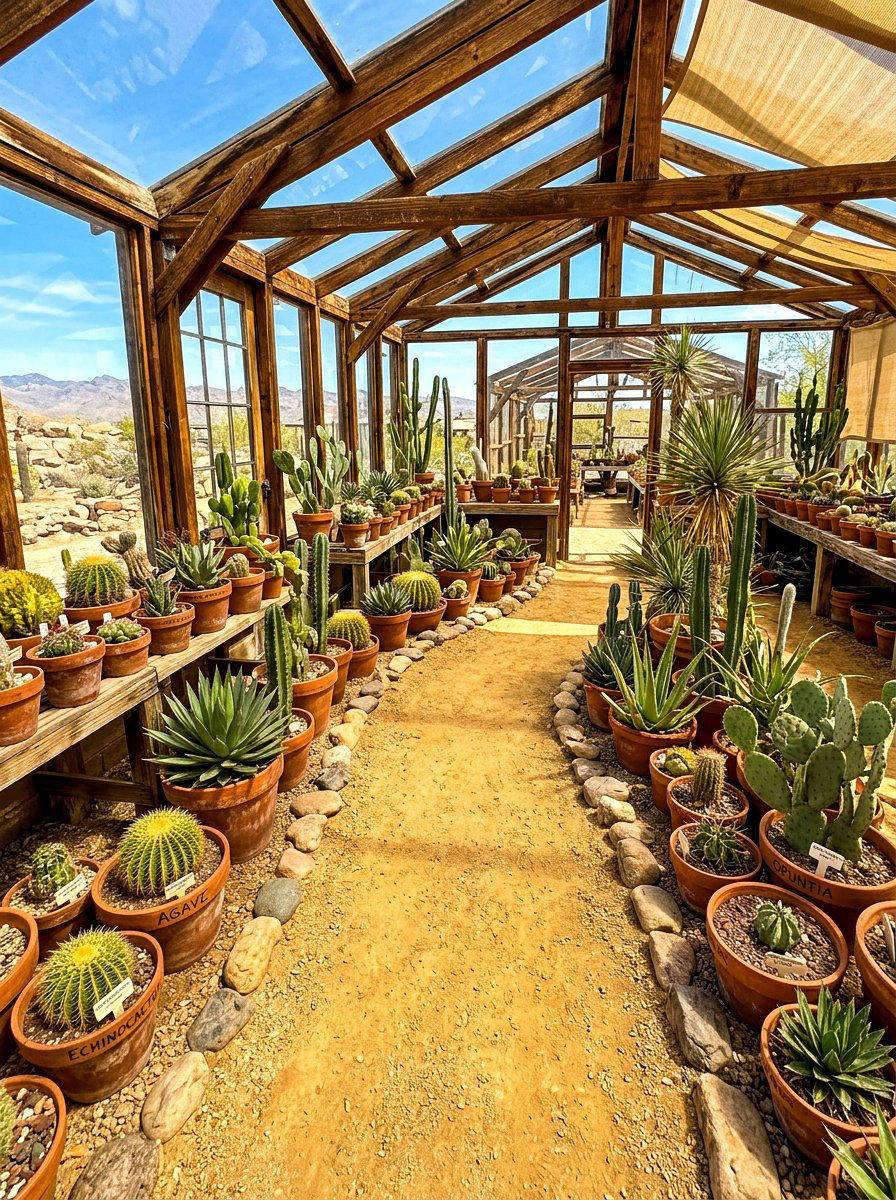
Decomposed granite is a popular choice for those who want a natural, earthy look that is more stable and firm than traditional gravel. This material consists of very fine granite particles that pack down tightly to create a surface that is almost as hard as pavement. It still allows water to drain through, making it an excellent choice for a greenhouse environment where irrigation is constant. The soft, sandy texture is very comfortable underfoot and comes in various warm shades like gold, rose, and brown. It is a low-maintenance option that provides a beautiful, desert-inspired aesthetic for your succulent or cactus collection.
17. Natural Bark Mulch Walkway
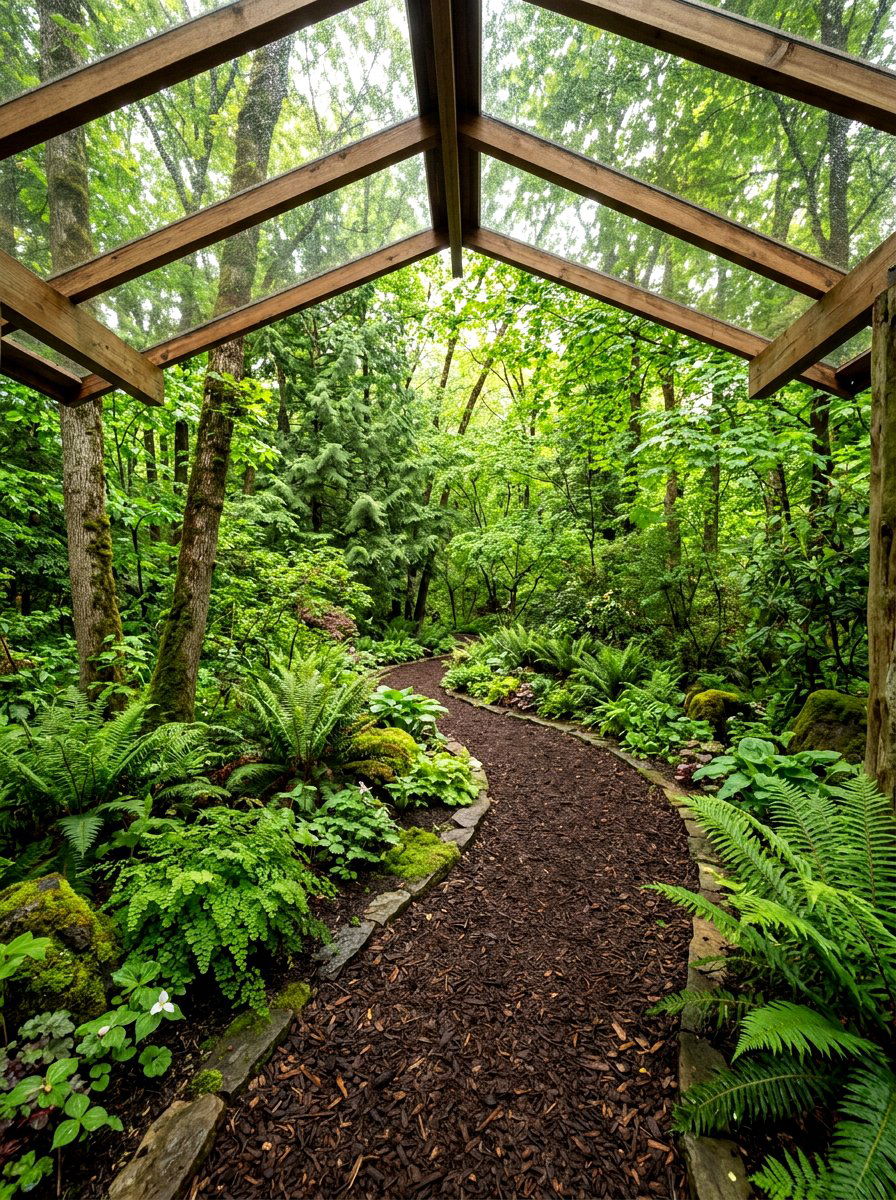
Bark mulch offers a soft, organic walkway that smells wonderful and feels very natural inside a greenhouse setting. This material is excellent at suppressing weeds that might try to grow in the damp soil of your greenhouse floor. It provides a thick, insulating layer that can help keep the ground from freezing in colder climates, protecting the roots of plants in ground-level beds. Bark mulch is very easy to spread and can be replenished whenever it starts to look thin or weathered. Its dark, rich color provides a beautiful contrast to the bright colors of flowers and the translucent walls of the greenhouse.
18. Stamped Concrete Greenhouse Floor
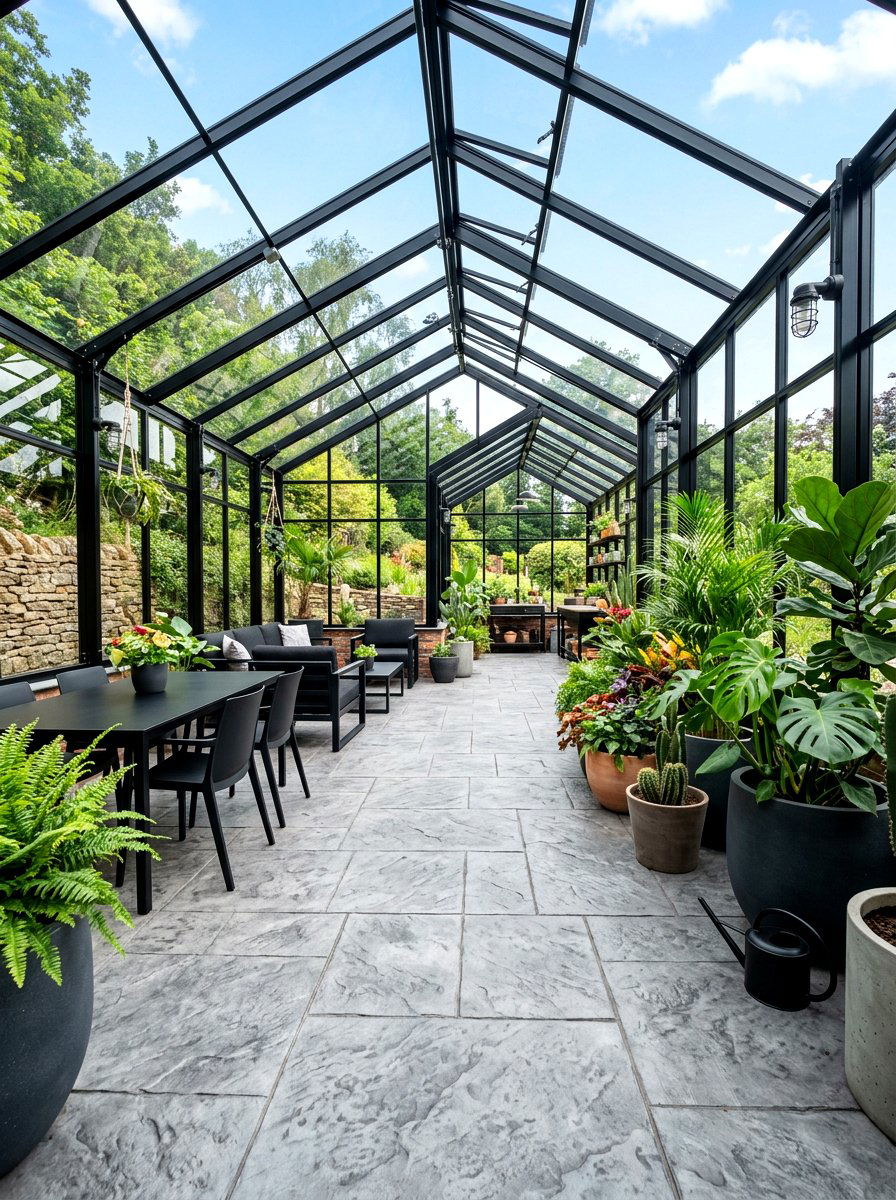
Stamped concrete allows you to achieve the look of expensive stone, brick, or even wood while maintaining the durability and ease of a solid concrete floor. You can choose from a variety of patterns and colors to match the specific style of your greenhouse architecture. This option provides a completely seamless surface with no cracks for weeds to grow through, making it very easy to keep clean. The textured surface provides excellent grip, which is important for safety in a high-moisture environment. Stamped concrete is a high-end choice that adds significant value and a professional finish to your permanent backyard greenhouse installation.
19. Redwood Slat Greenhouse Walkway
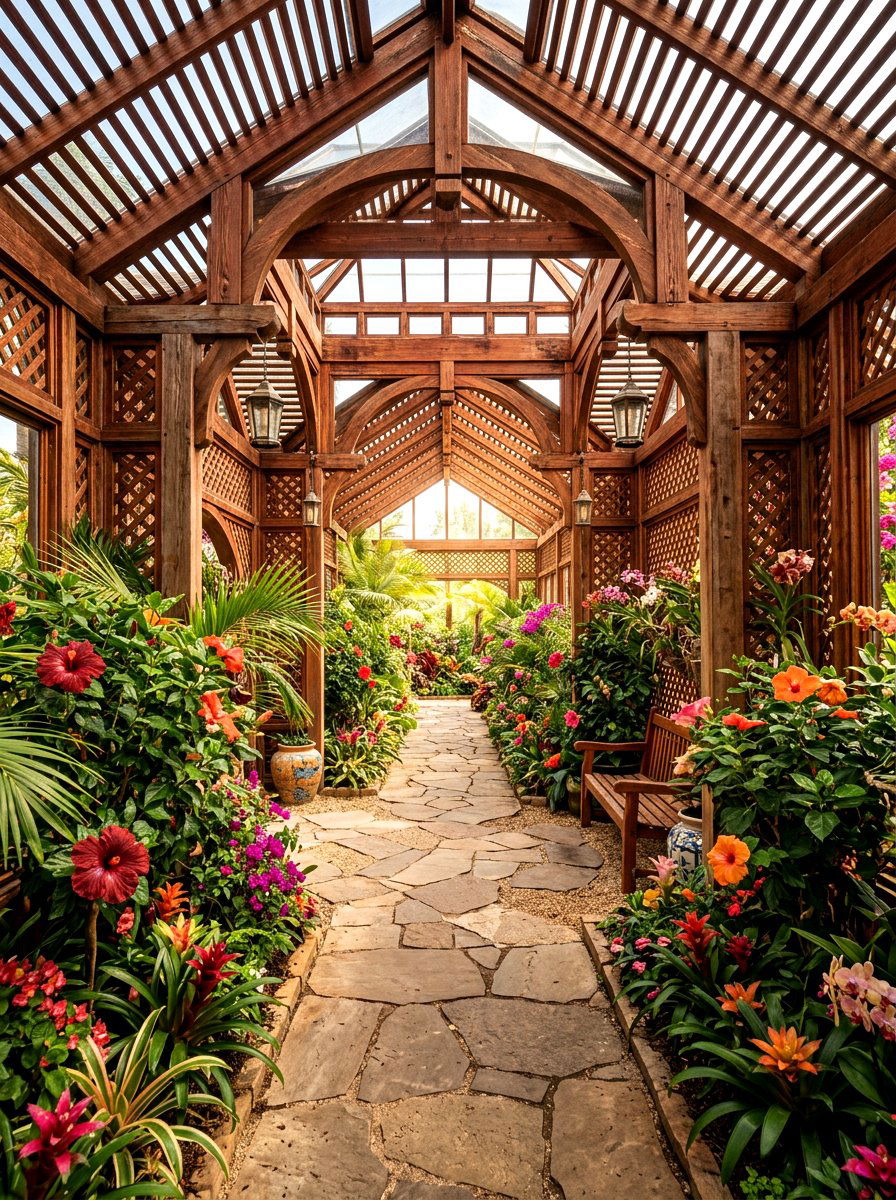
Redwood is a premium material known for its incredible beauty and natural resistance to decay, making it perfect for a luxury greenhouse. The rich, deep red tones of the wood create a warm and inviting atmosphere that feels like a high-end conservatory. Using slats instead of solid boards allows water to fall through to the ground below, preventing any standing water on the walking surface. Redwood is very stable and less likely to warp or twist compared to other types of wood. It is a sustainable choice that ages gracefully, turning a beautiful silvery-gray over time if left untreated, or maintaining its red hue with a sealer.



20. Geometric Pattern Tile Floor
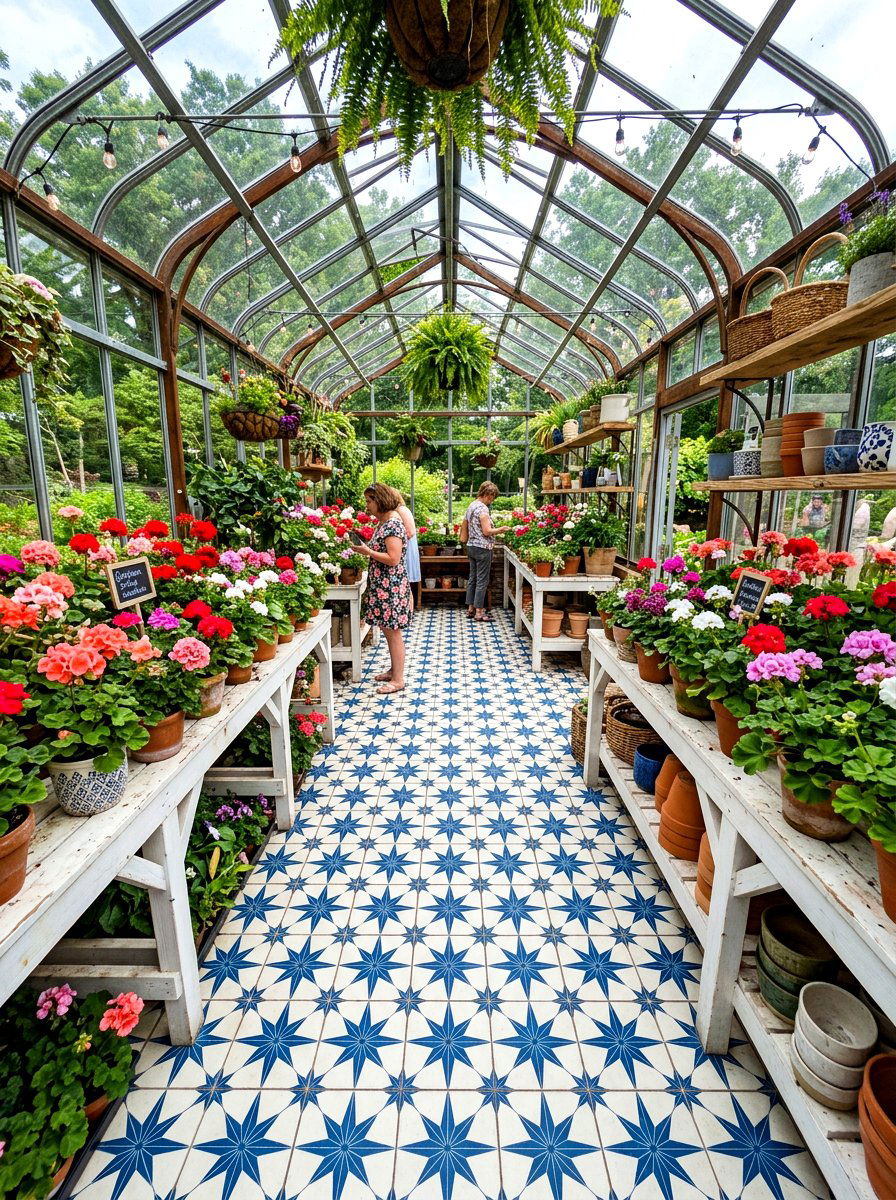
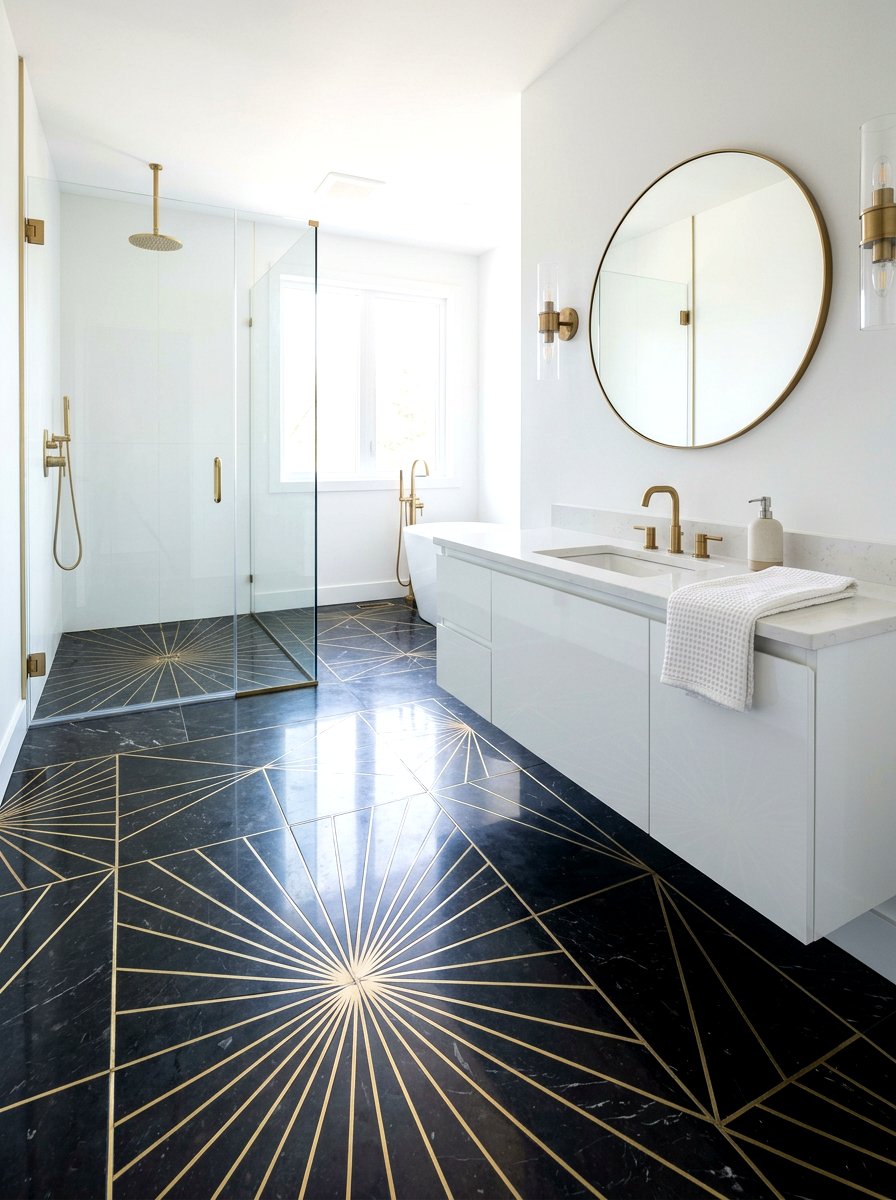
Geometric pattern tiles are a major trend for 2025, offering a bold and artistic way to personalize your greenhouse floor. These tiles can be arranged to create intricate stars, hexagons, or modern abstract designs that turn your walkway into a work of art. Using ceramic or porcelain tiles ensures that the surface is easy to wipe down and resistant to stains from soil or fertilizer. This choice is perfect for a boutique-style greenhouse that serves as a space for entertaining guests or enjoying a morning coffee. The vibrant patterns add a sense of energy and personality that makes the space feel truly unique and creative.
21. Stepping Stone And Gravel Combo
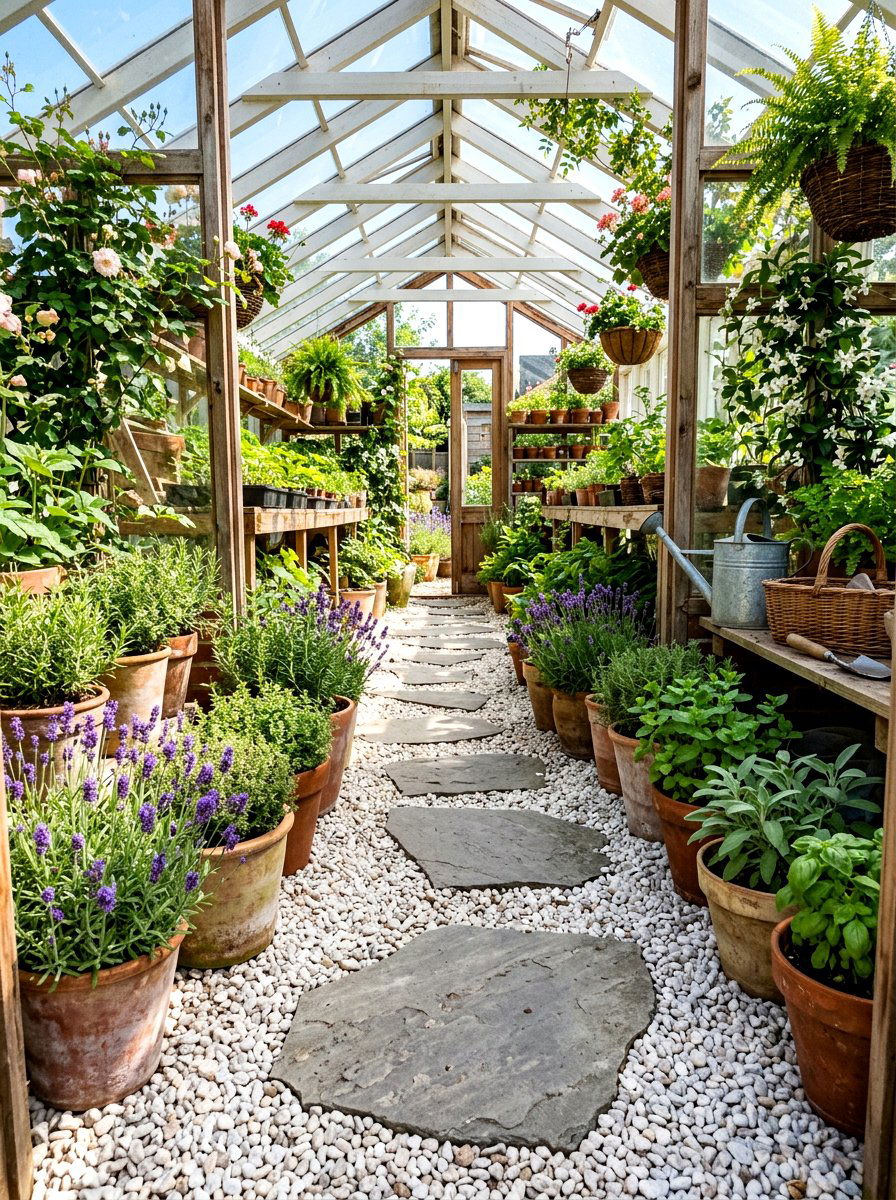
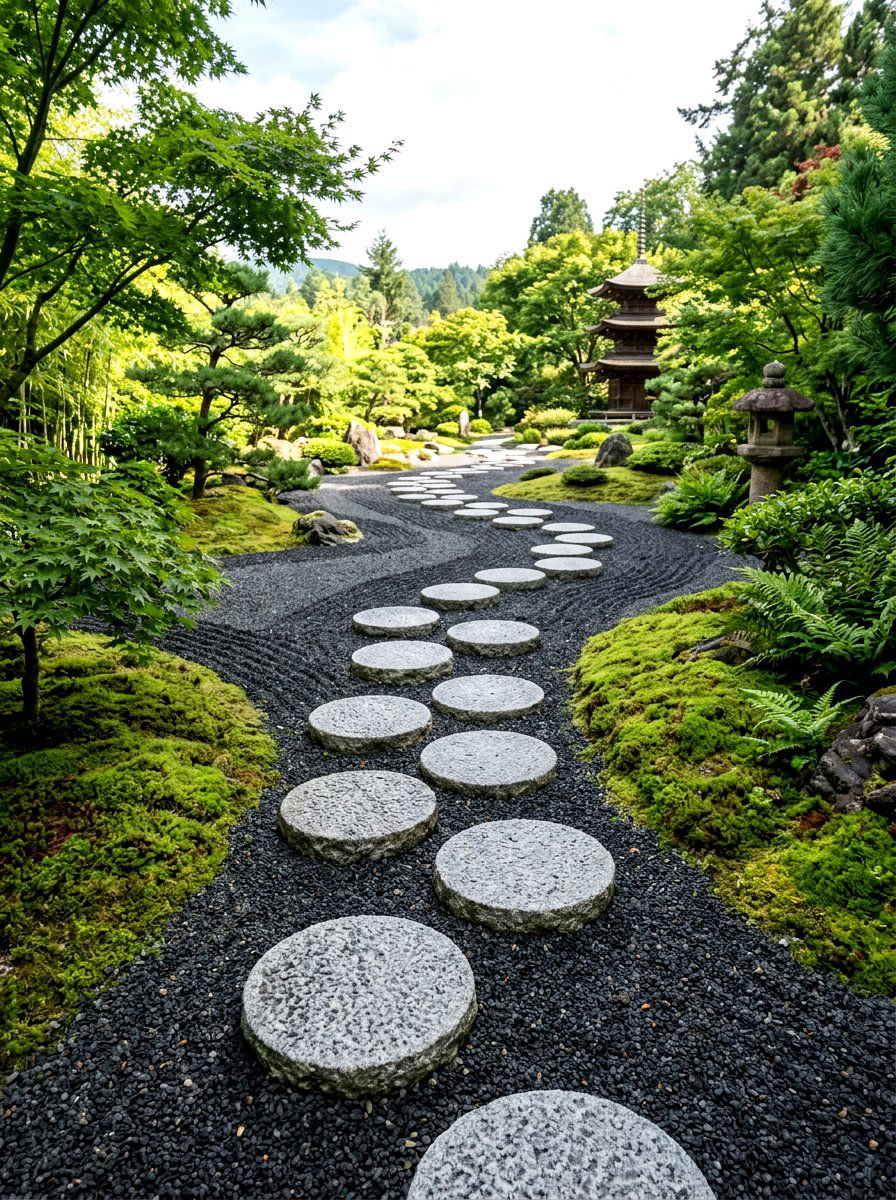
Combining large stepping stones with a base of fine gravel provides both stability and excellent drainage in a visually appealing way. The stones give you a solid place to step, while the gravel fills in the gaps and creates a permeable surface for water. This look is very popular in traditional English gardens because it feels both formal and relaxed at the same time. You can play with different colors of gravel to highlight the texture and shape of your chosen stepping stones. This combination is very easy to maintain, as you can simply rake the gravel back into place if it ever gets disturbed.
22. Permeable Paver Greenhouse Walkway
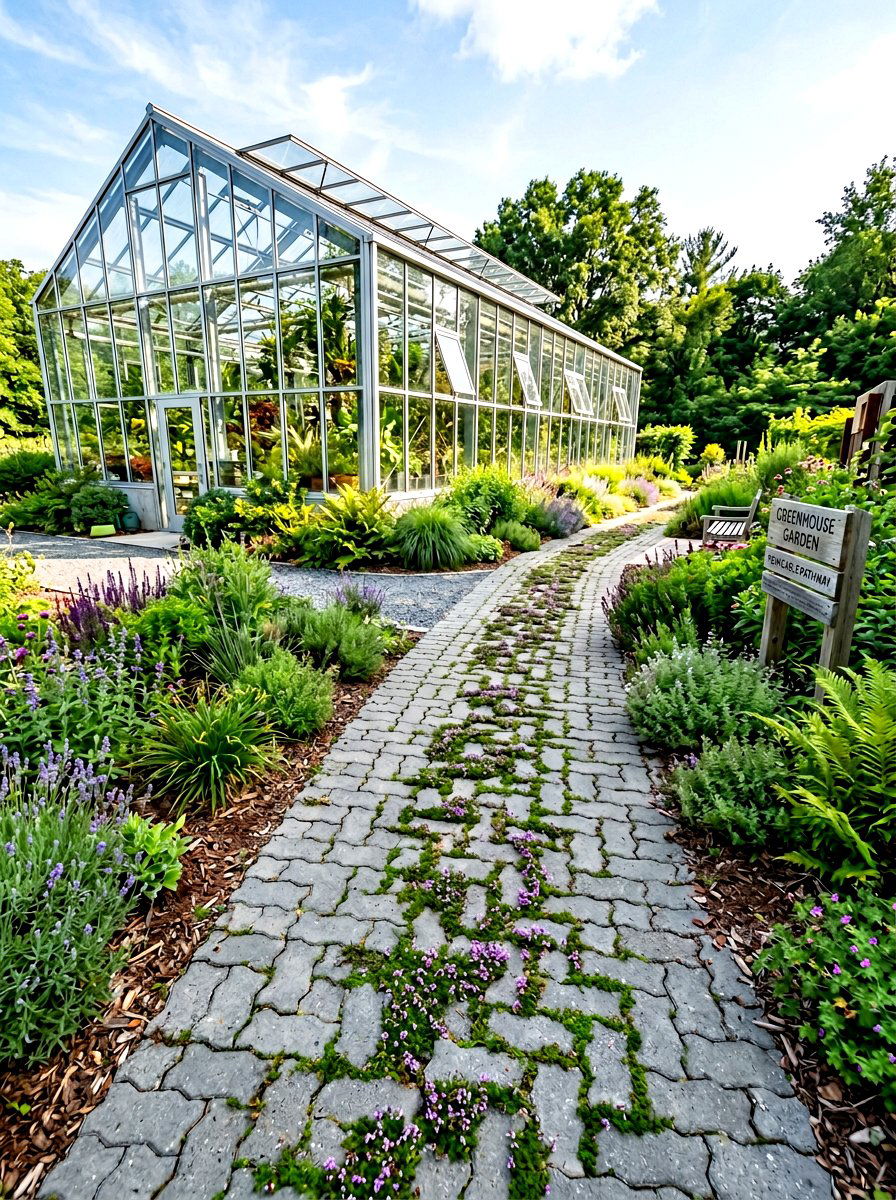
Permeable pavers are an eco-friendly choice designed specifically to manage water runoff by allowing it to flow through the joints and into the ground. These pavers often have larger gaps that can be filled with fine stone or even low-growing groundcover plants like creeping thyme. This system helps prevent puddles from forming on your walkway, keeping the greenhouse environment cleaner and safer. They are extremely durable and can support the weight of heavy shelving units and large garden equipment. Choosing permeable materials is a responsible way to manage the water usage in your greenhouse while creating a very professional and structured floor design.
23. Mosaic Pebble Greenhouse Path
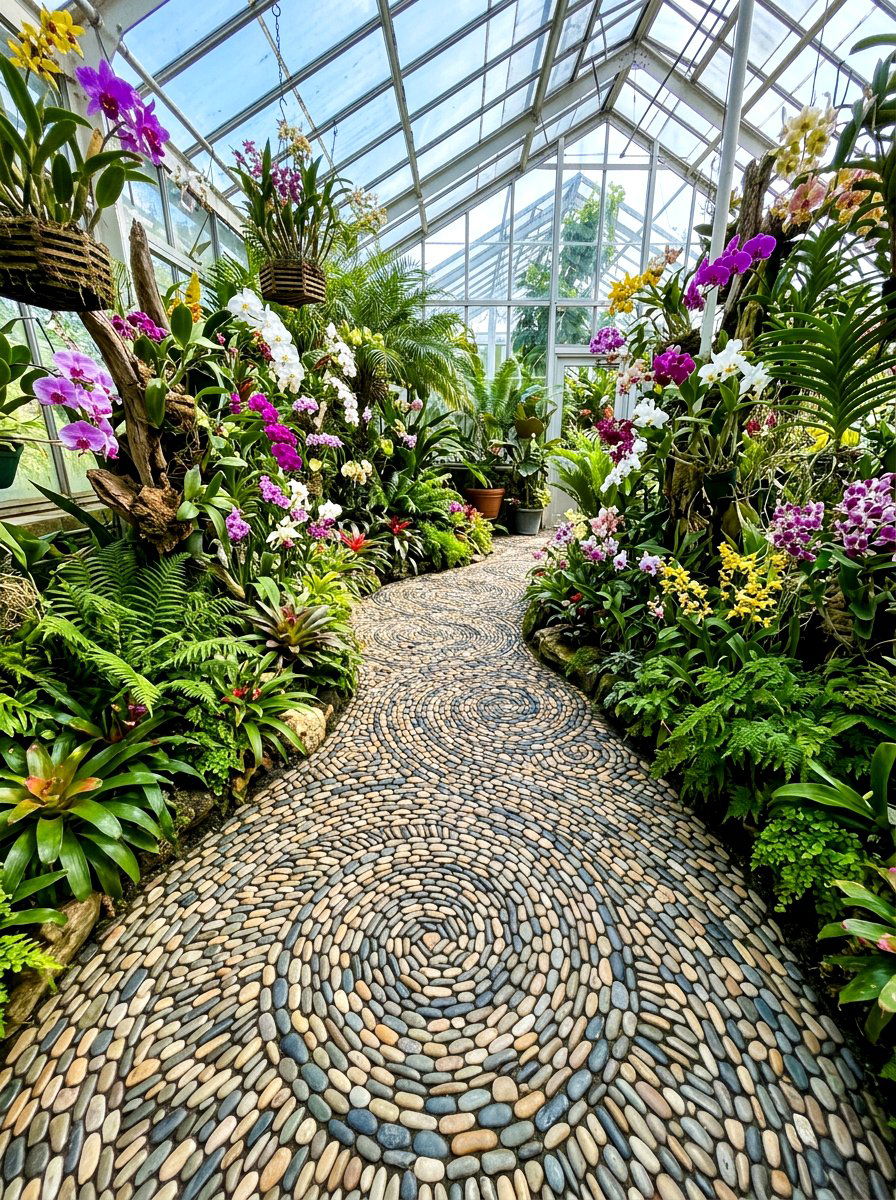
A mosaic pebble path is a stunning way to add a handcrafted, artistic touch to your greenhouse interior. You can use small, polished river pebbles to create winding patterns, floral designs, or even spiral shapes in the floor. This technique requires embedding the pebbles into a bed of mortar or sand, resulting in a very durable and textured surface. The variety of colors available in natural pebbles allows for incredible creativity and customization. This type of walkway is a true conversation piece that turns your greenhouse into a magical sanctuary where every detail has been carefully and lovingly considered by the gardener.
24. Recycled Pallet Wood Walkway
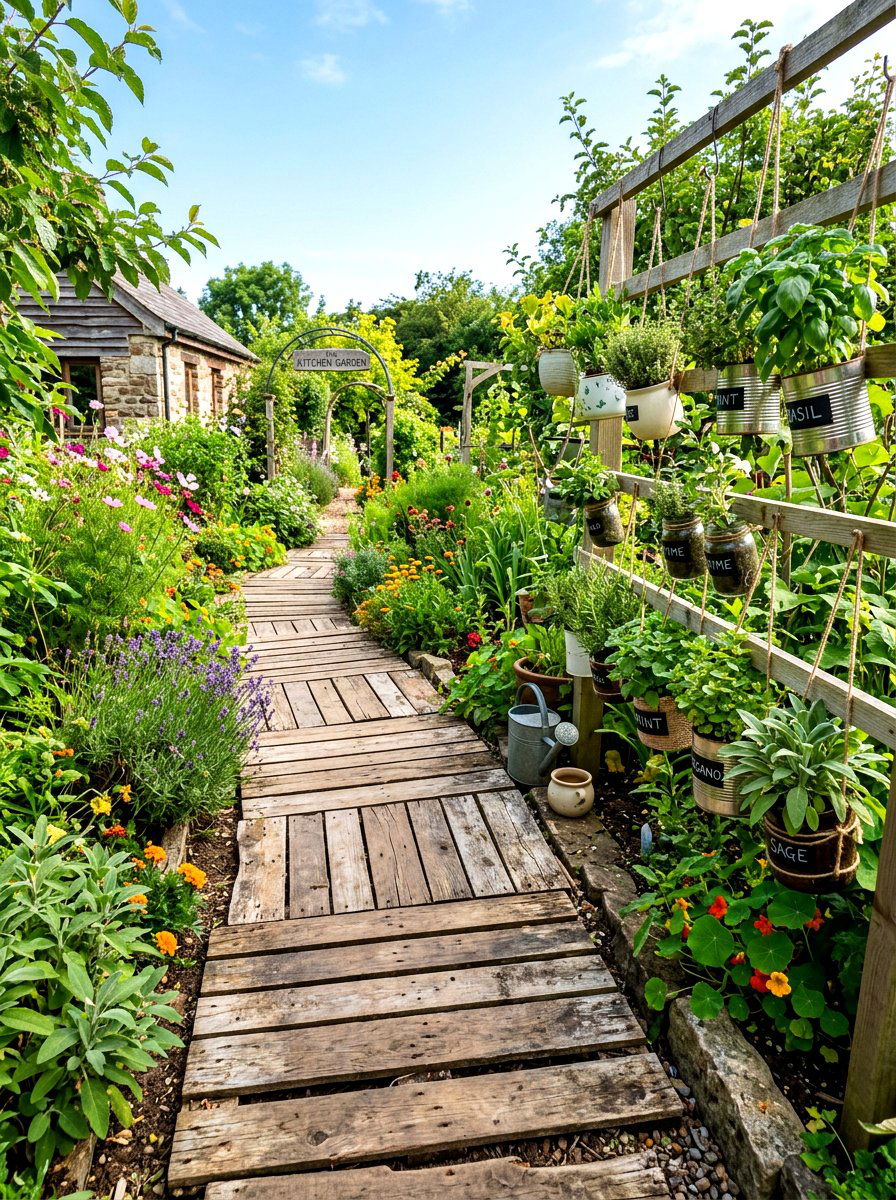
Using recycled pallet wood is a budget-friendly and sustainable way to create a rustic, industrial-style walkway in your greenhouse. By breaking down old pallets and treating the boards with a non-toxic sealant, you can build a charming boardwalk that keeps you off the damp ground. The mismatched colors and textures of the various boards add a lot of character and a "shabby chic" vibe to the space. This is a great project for the DIY enthusiast who wants to reduce waste and save money while building a functional path. It provides a sturdy and level surface that is easy to replace if any boards become damaged.

25. Sandstone Greenhouse Path
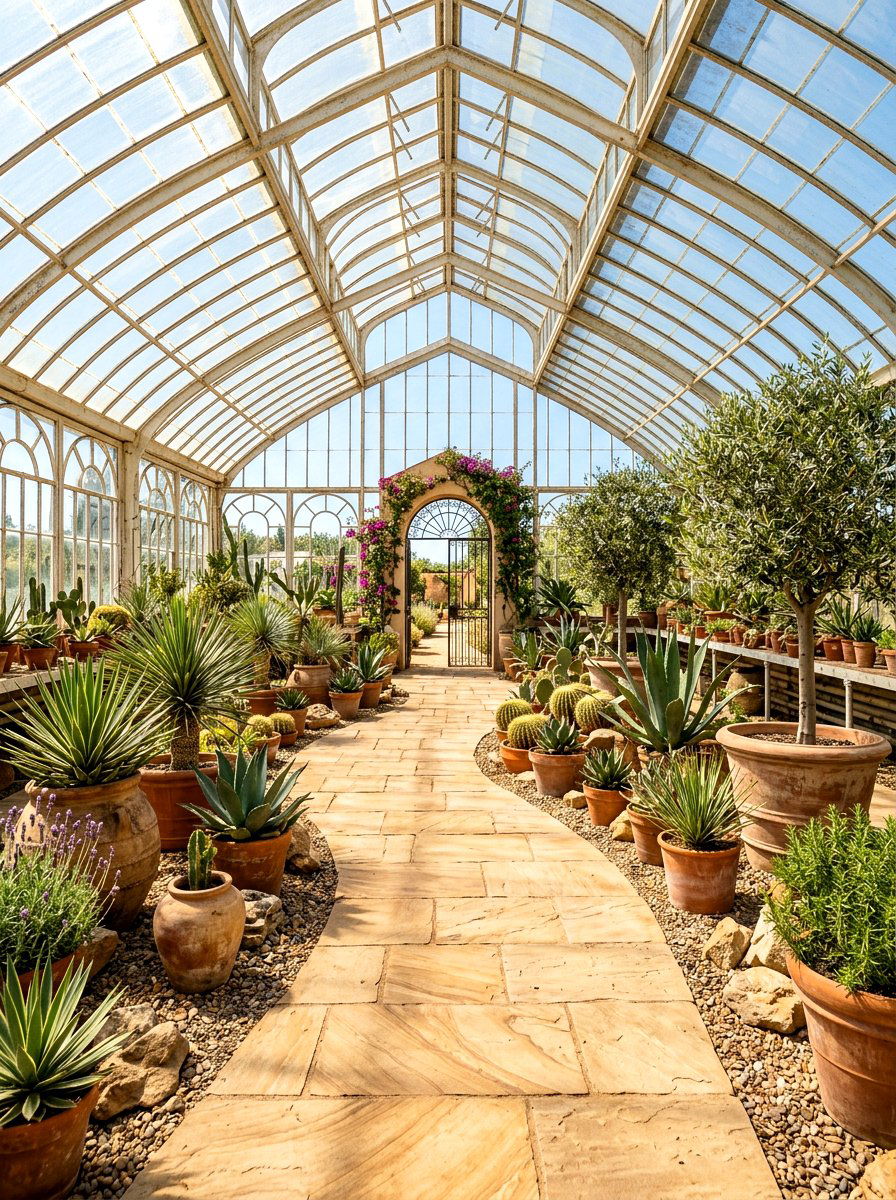
Sandstone provides a soft, warm aesthetic with beautiful natural veining that makes every piece look like a unique work of art. Its sandy texture offers a high level of natural slip resistance, which is perfect for the humid and often wet conditions of a greenhouse. Sandstone is very durable and holds up well to the constant foot traffic of daily gardening activities. The light, earth-toned colors help to keep the greenhouse feeling warm and bright even on the most cloudy days. It is a timeless material that coordinates perfectly with natural wood benches and terracotta pots, creating a very cohesive and organic design.
26. Checkerboard Tile Greenhouse Floor
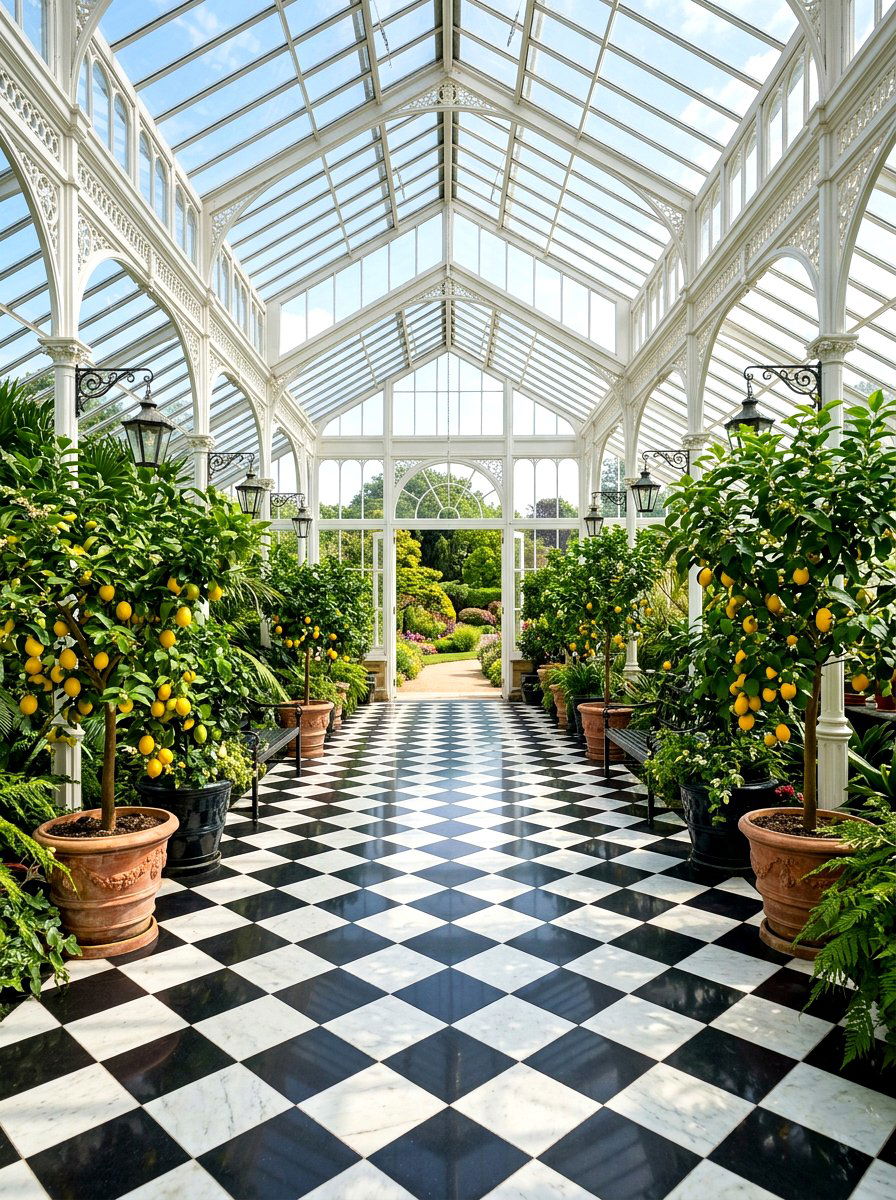
A checkerboard tile floor brings a sense of classic, vintage elegance that is reminiscent of traditional orangeries and grand Victorian conservatories. You can use black and white tiles for a high-contrast, traditional look, or choose softer tones like terracotta and cream for a more Mediterranean feel. This pattern makes a strong visual statement and creates a very orderly and clean appearance in the greenhouse. Tiles are incredibly easy to mop and sanitize, which helps in maintaining a healthy environment for your delicate plants. This floor style is perfect for those who want their greenhouse to feel like an elegant and formal extension of their home.
27. Travertine Greenhouse Walkway
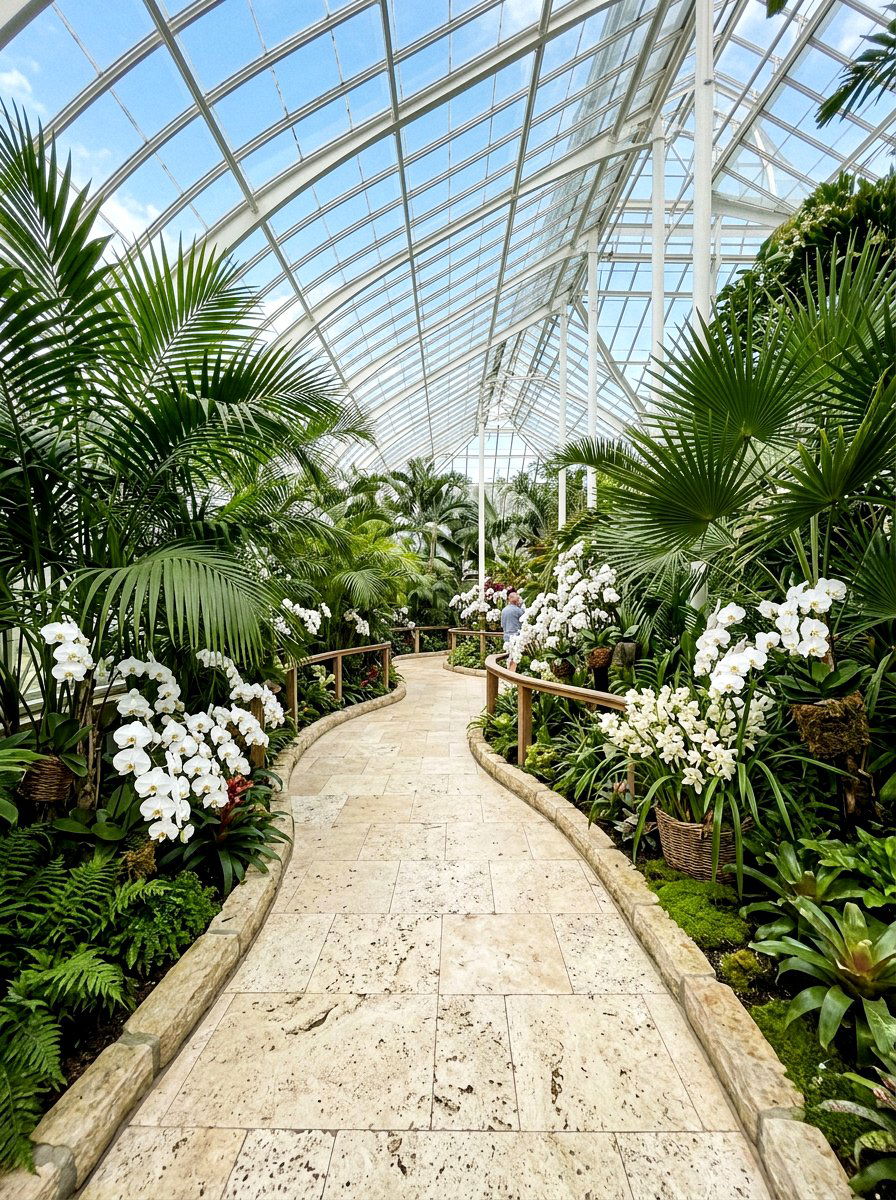
Travertine is a form of limestone that offers a luxurious, high-end look with a unique pitted texture and warm, buttery colors. This natural stone is very cool underfoot, which can be quite comfortable during the hot summer months inside a glass structure. Because it is a natural material, it blends seamlessly with the organic elements of your garden. You can choose "tumbled" travertine for a more rustic, aged appearance that hides dirt and wear very well. It is a sophisticated flooring choice that turns a simple hobby greenhouse into a high-end botanical retreat that feels like a professional conservatory or a luxury hotel garden.
28. Bluestone Greenhouse Path
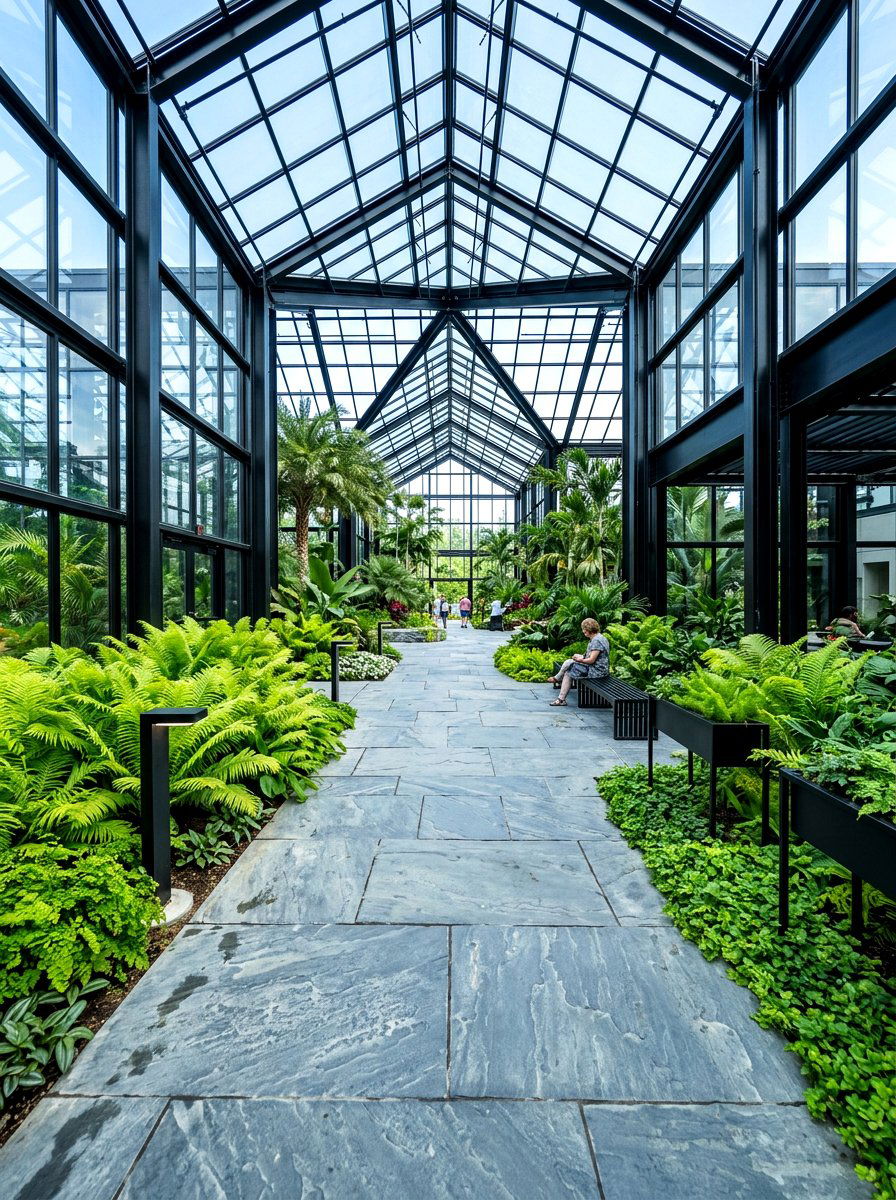
Bluestone is a dense, durable sandstone that is prized for its beautiful deep blue and gray tones. It provides a very cool and calming aesthetic that looks particularly stunning when paired with bright green tropical plants. Bluestone is very resistant to cracking and can withstand the extreme temperature fluctuations that often occur in a greenhouse. You can install it in large, rectangular slabs for a clean and modern look or use irregular pieces for a more natural and organic feel. Its flat surface is very easy to walk on and provides a very stable base for your potting tables and heavy decorative planters.
29. Raised Wooden Greenhouse Walkway
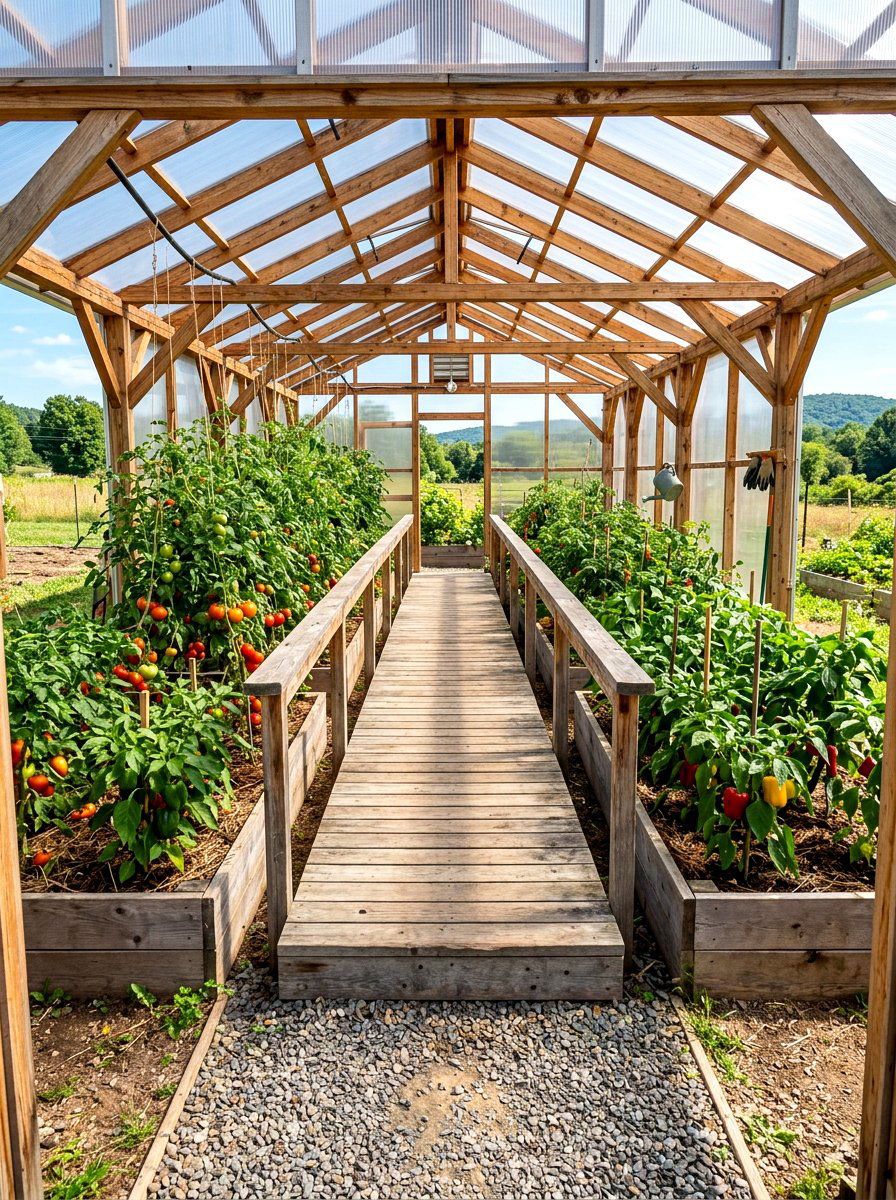
A raised wooden walkway, or boardwalk, is an excellent functional choice if your greenhouse is built on uneven ground or in an area prone to flooding. By elevating the path, you ensure that you always have a dry and clean place to walk, regardless of how much you water your plants. This design also allows for air circulation underneath the path, which can help prevent rot and keep the ground from becoming stagnant. You can use various types of wood, such as cedar or pressure-treated pine, to build a sturdy and reliable structure. This style adds a sense of adventure and architectural interest to your interior layout.
30. Terrazzo Tile Greenhouse Floor
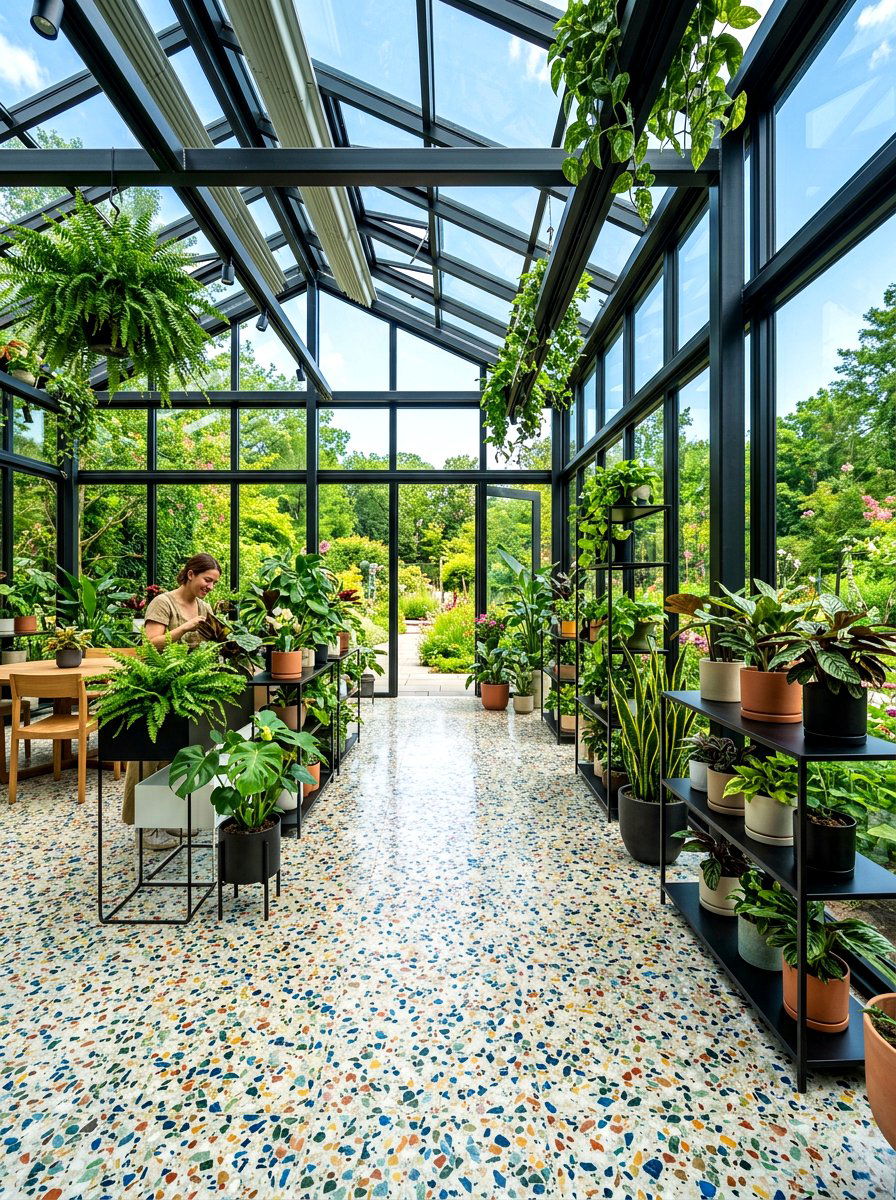
Terrazzo tiles are a modern and incredibly durable choice that features chips of marble, quartz, or glass embedded in a smooth cement base. This material is virtually indestructible and offers a unique, speckled appearance that adds a playful yet sophisticated touch to your greenhouse. Terrazzo is very easy to maintain and can be cleaned with a simple hose-down, making it ideal for a busy gardener. The variety of colors available allows you to pick a palette that perfectly complements your greenhouse frame or your favorite plant species. It is a stylish and contemporary option that provides a professional, high-performance floor for any modern glasshouse.
Conclusion:
Selecting the ideal walkway for your greenhouse is a vital step in creating a space that is as functional as it is beautiful. From the natural textures of flagstone and river rock to the modern efficiency of concrete and geometric tiles, your choice defines the character of your indoor garden. A well-planned path not only protects your plants by managing drainage and humidity but also ensures your comfort and safety as you navigate your green sanctuary. By considering durability, maintenance, and your personal design style, you can transform your greenhouse into a professional and inviting environment that inspires your passion for growing all year long.

Related posts: