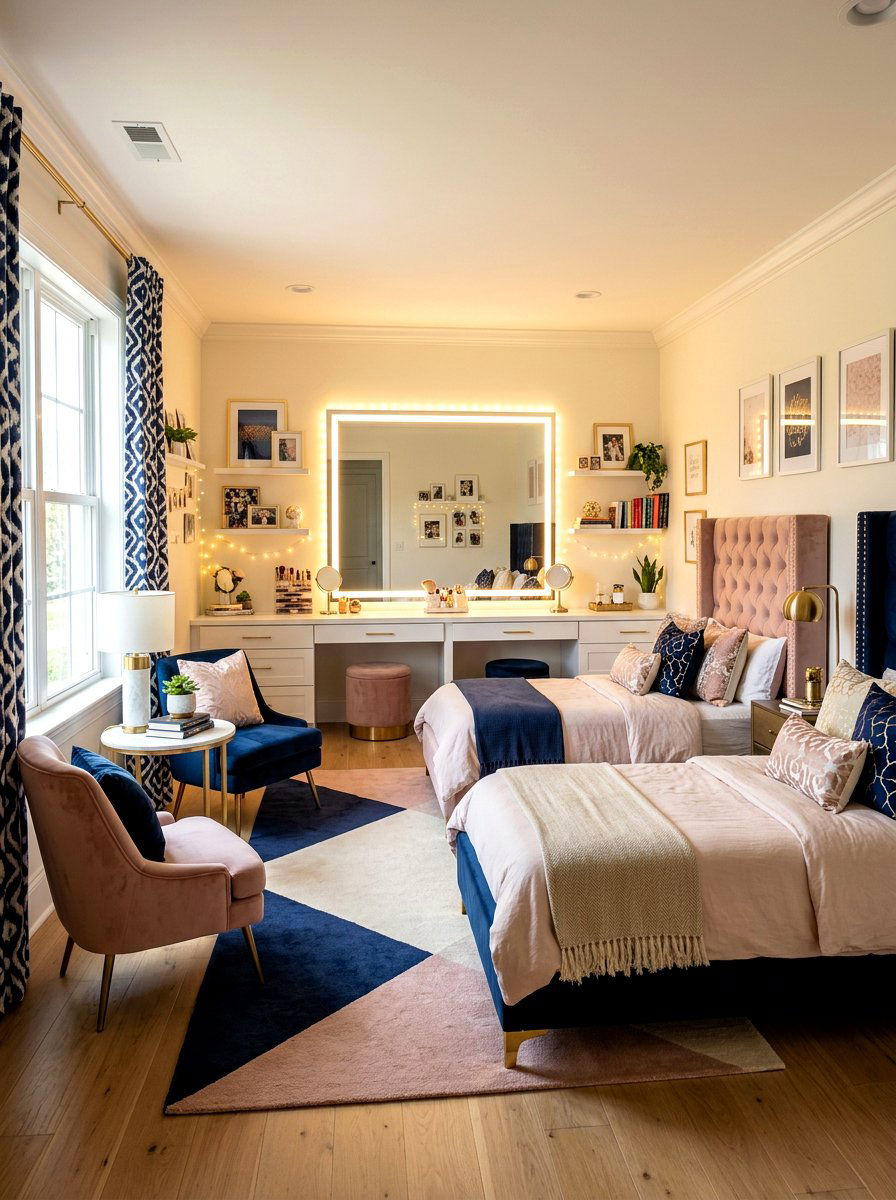
Designing a shared bedroom for your children often feels like a giant puzzle where every piece needs to fit perfectly to ensure harmony and functionality. Whether you are dealing with a small apartment or simply want your kids to bond in a communal space, finding the right balance between individual personality and cohesive design is essential. A well-planned shared room encourages cooperation while still respecting each child's need for a private corner. From clever furniture placements to creative storage solutions, there are endless ways to make a shared space feel double the fun without feeling twice as crowded or cluttered. By prioritizing smart layouts and versatile decor, you can transform any room into a peaceful sanctuary.
1. Bunk bed with stairs
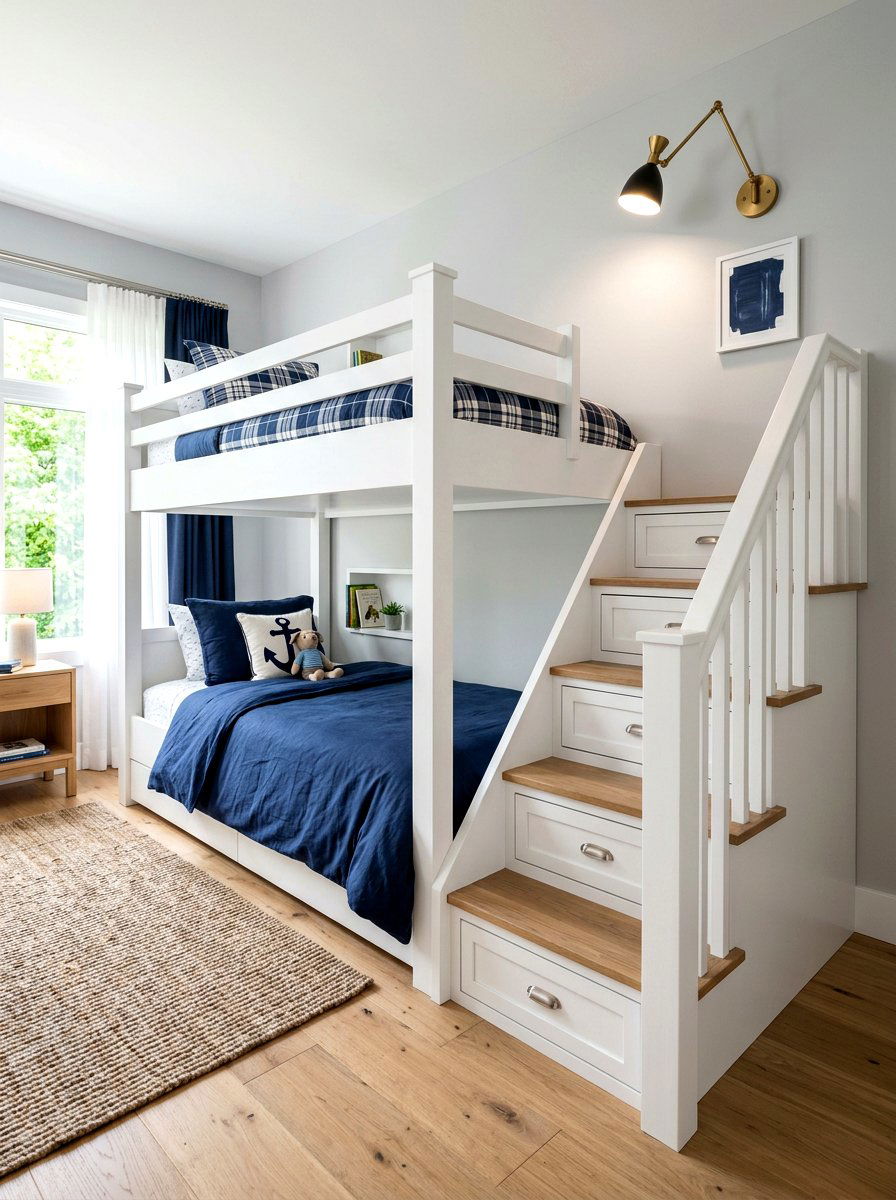
Choosing a bunk bed with stairs instead of a traditional ladder is one of the smartest moves for a high-traffic shared room. Not only do stairs provide a much safer way for younger children to reach the top bunk, but they also offer incredible hidden storage opportunities within each step. You can use these built-in drawers to house extra linens, toys, or seasonal clothing that would otherwise clutter the floor. This setup works perfectly in narrow rooms where floor space is at a premium. By utilizing vertical space and incorporating storage, you create a cleaner, more organized environment that helps kids feel more relaxed in their shared sleeping quarters every single night.
2. Gender neutral shared bedroom
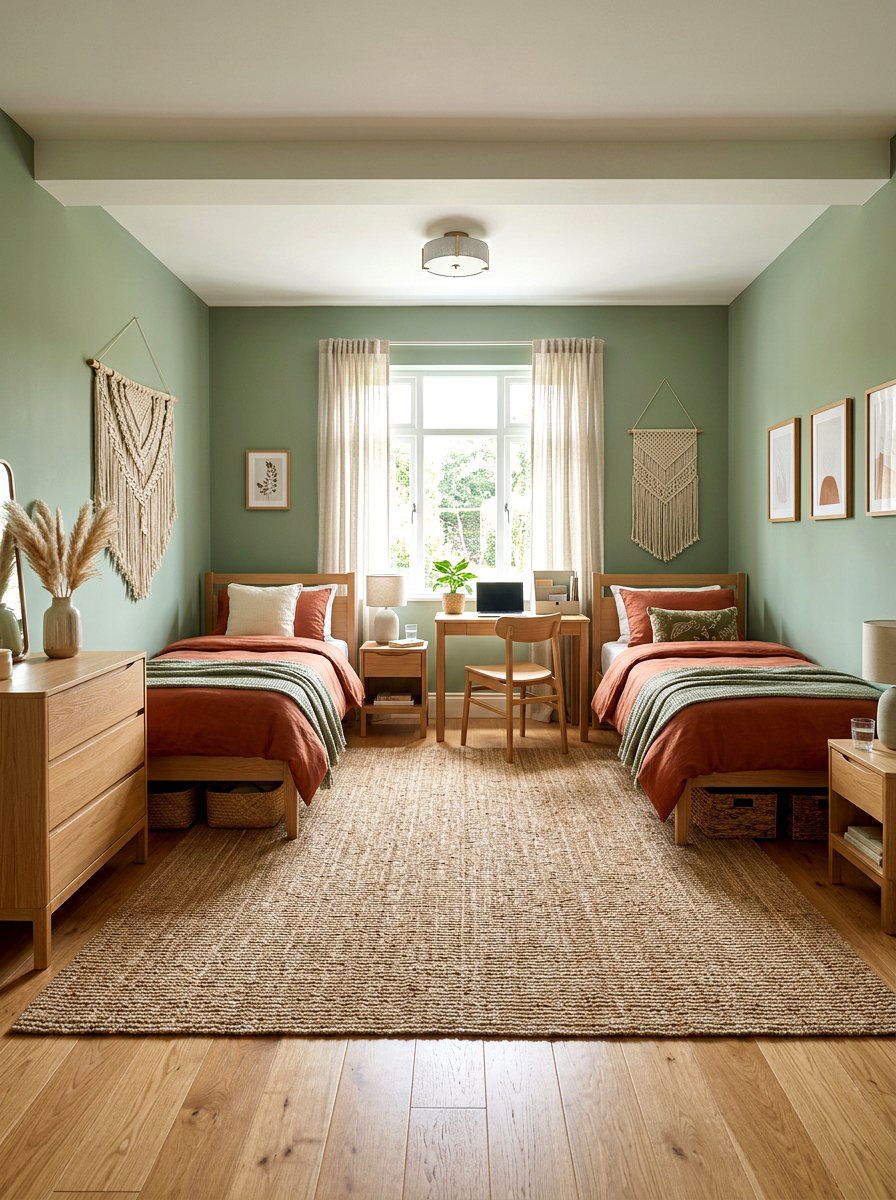
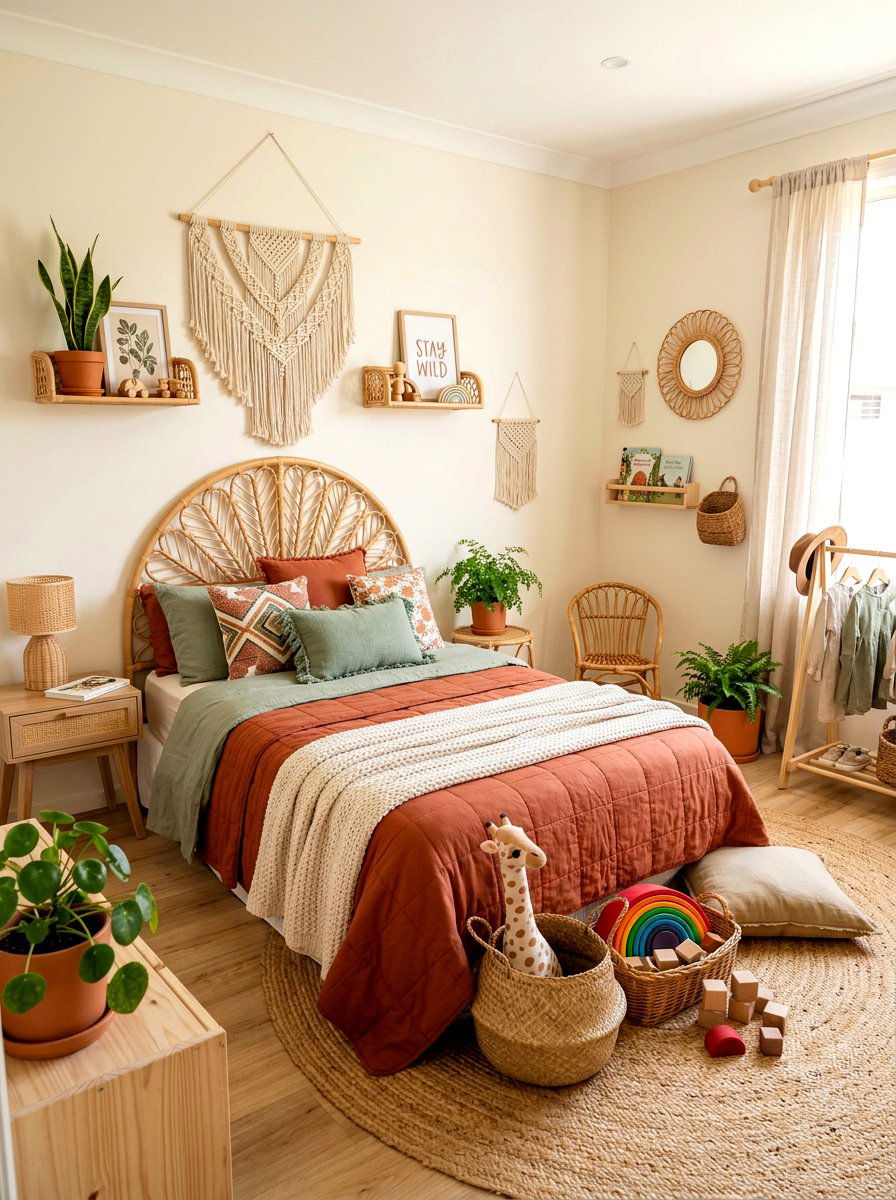
Creating a gender neutral shared bedroom is a wonderful way to accommodate siblings of different sexes while maintaining a stylish, cohesive aesthetic. Instead of sticking to traditional pinks or blues, try a palette of earthy tones like sage green, warm terracotta, or soft mustard yellow. These colors feel fresh and modern, and they grow beautifully with your children as they age. Using natural wood furniture and woven textures can further ground the space and keep it from feeling too themed. When you focus on a balanced color scheme, each child feels equally represented, making the shared living experience much more harmonious and enjoyable for the entire family over time.
3. Shared room with room divider
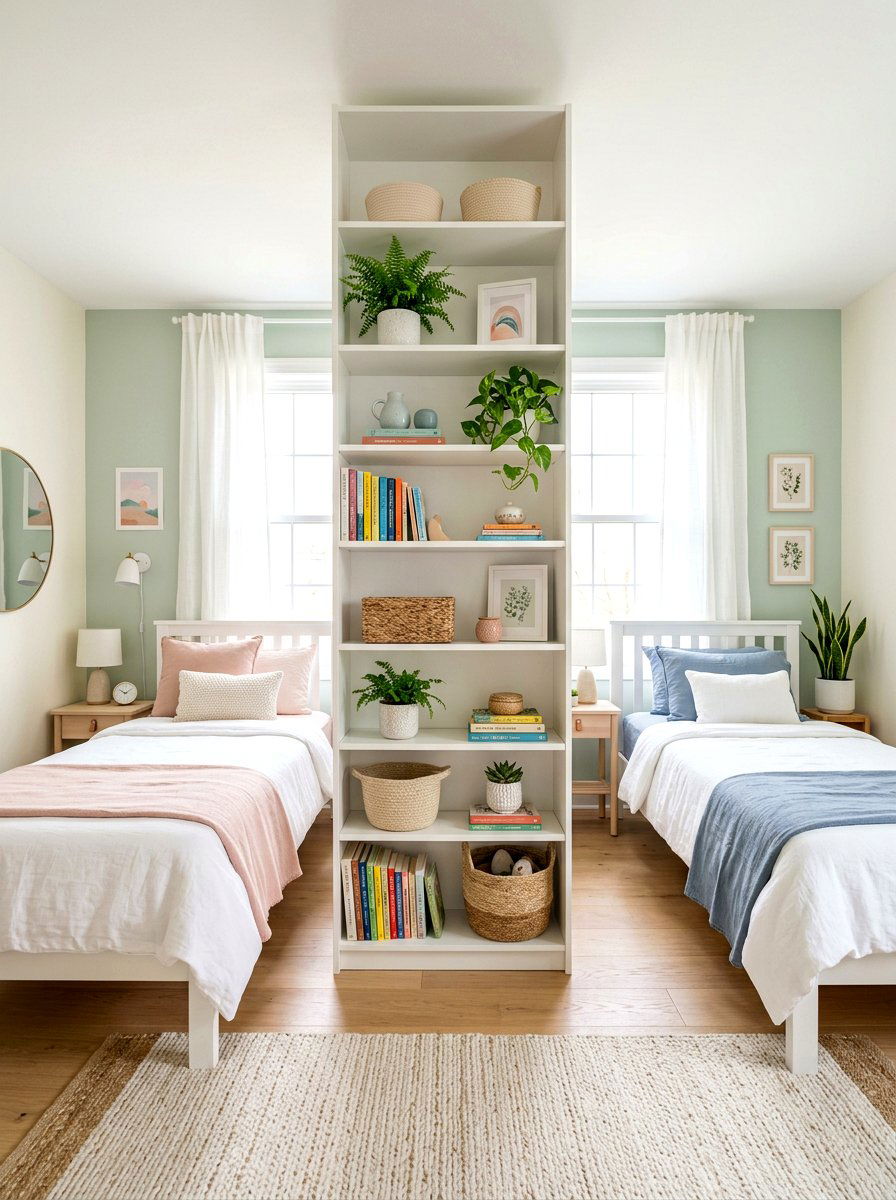
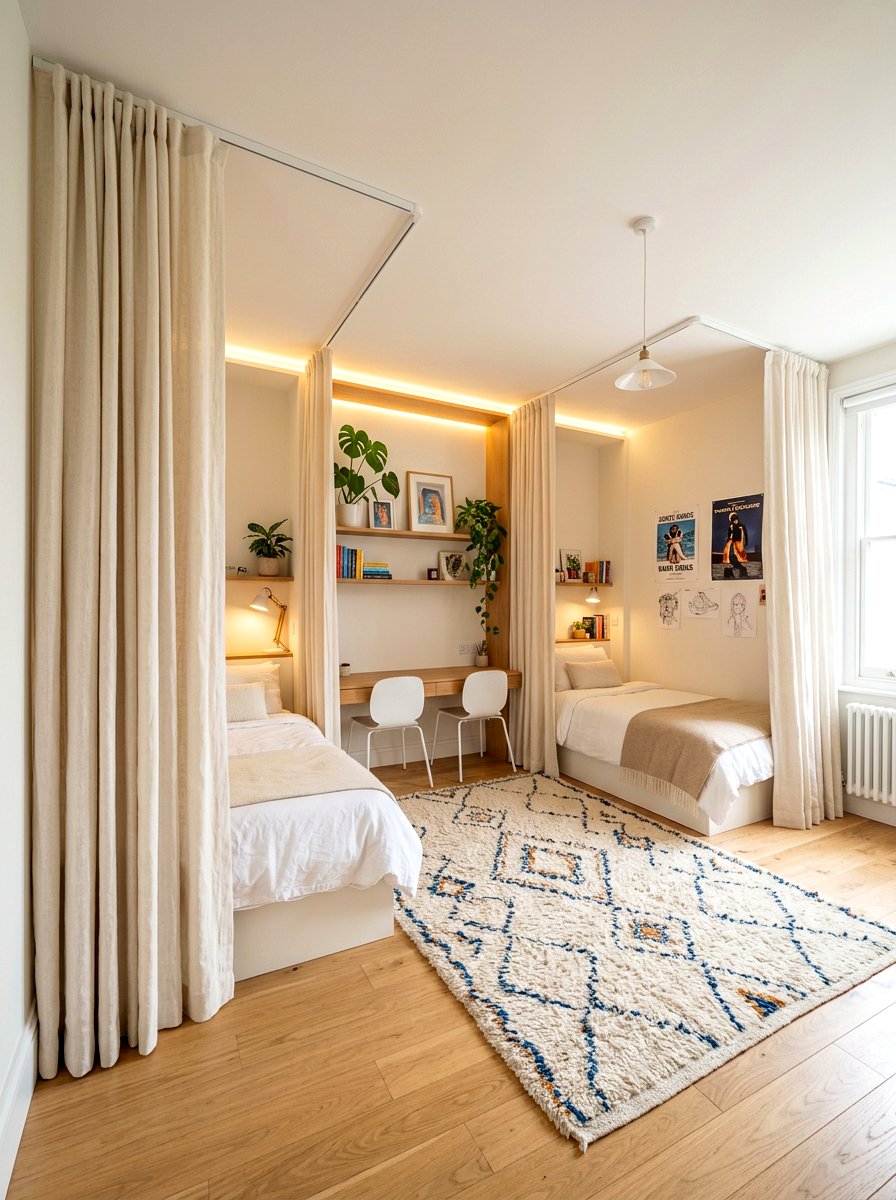
Have you ever considered using a room divider to give your children a sense of privacy in a communal space? A tall, open-backed bookshelf is an excellent functional choice because it separates the sleeping areas without blocking natural light. You can also use ceiling-mounted tracks for heavy curtains, allowing kids to "close" their side of the room whenever they need quiet time. This simple architectural trick helps reduce sibling conflict by defining clear boundaries. It creates a feeling of having two separate rooms within one, which is particularly beneficial as children grow older and begin to value their independence and personal space much more than before.
4. Twin beds side by side
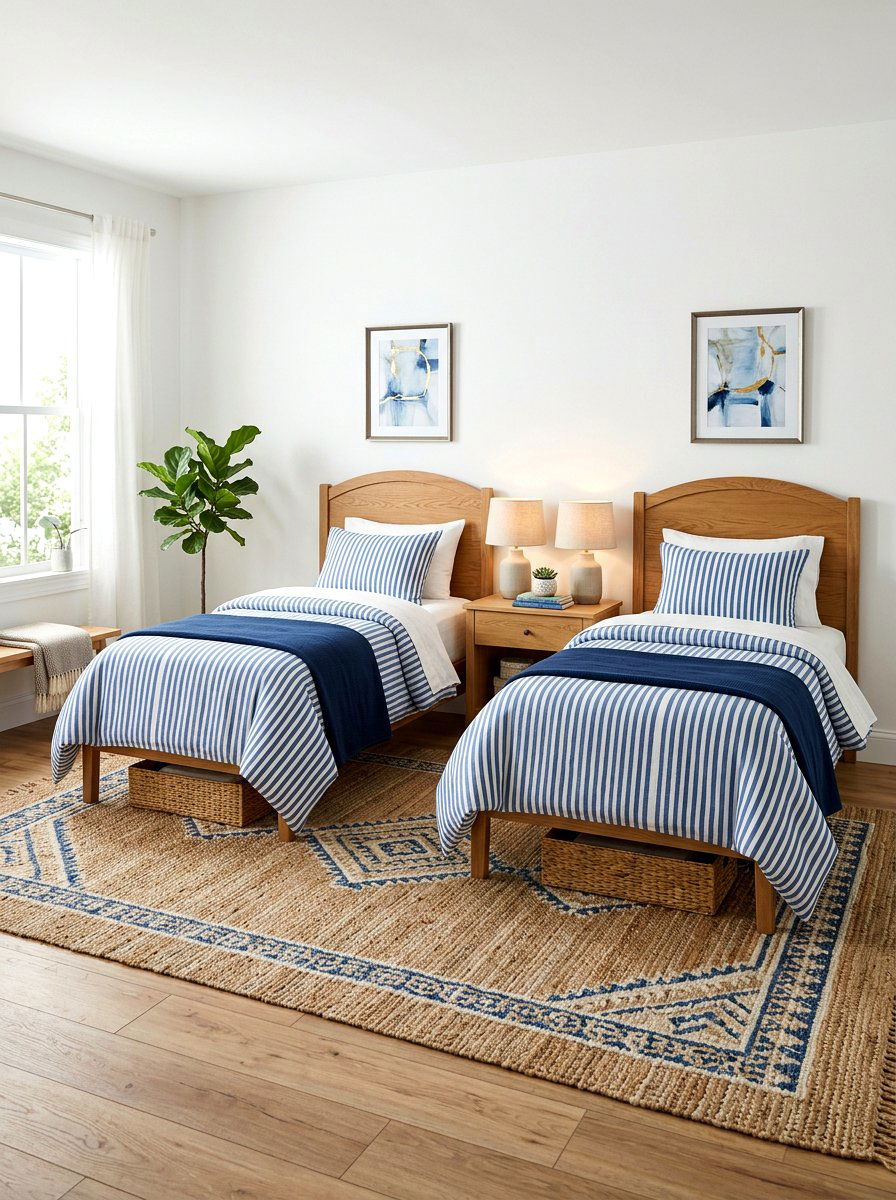
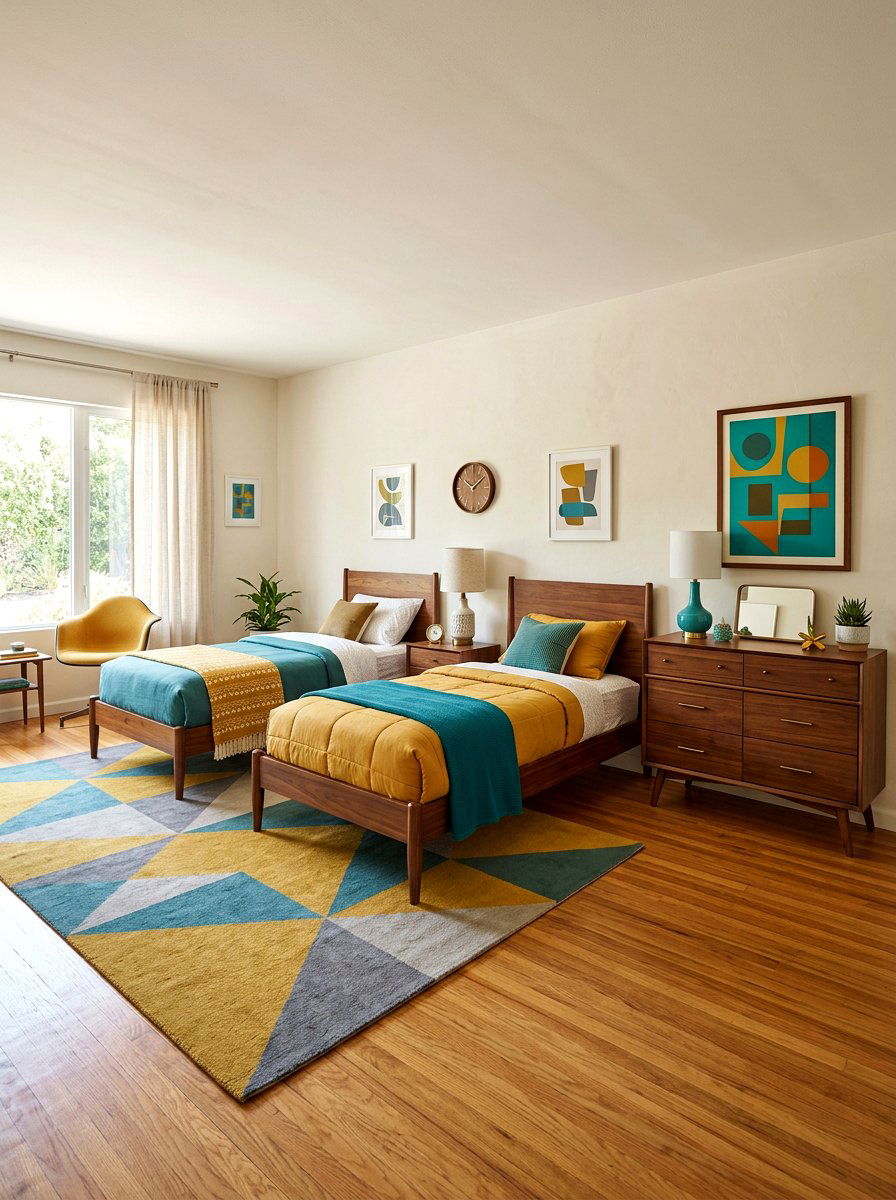
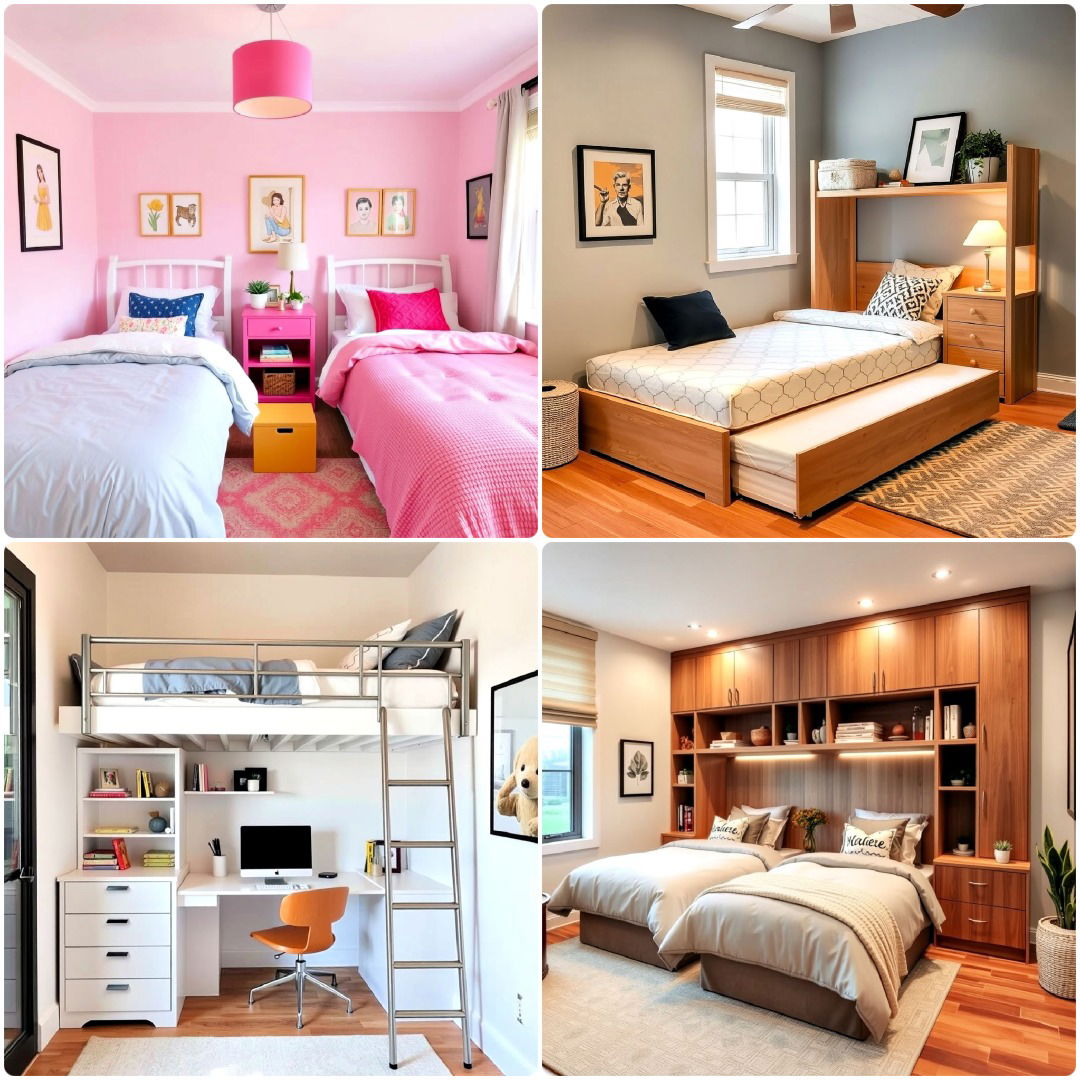
Placing twin beds side by side with a shared nightstand in the middle is a classic layout that promotes symmetry and balance. This traditional arrangement works best in wider rooms where there is plenty of space for two separate floor paths. To keep the room looking intentional, use matching headboards and identical bedding sets for a polished, hotel-like feel. If the kids want to show their personality, let them choose different accent pillows or wall art for their specific side. This approach maintains a unified look while still acknowledging individual tastes, ensuring the room feels organized, spacious, and welcoming for both children to enjoy together.
5. Built in bunk beds
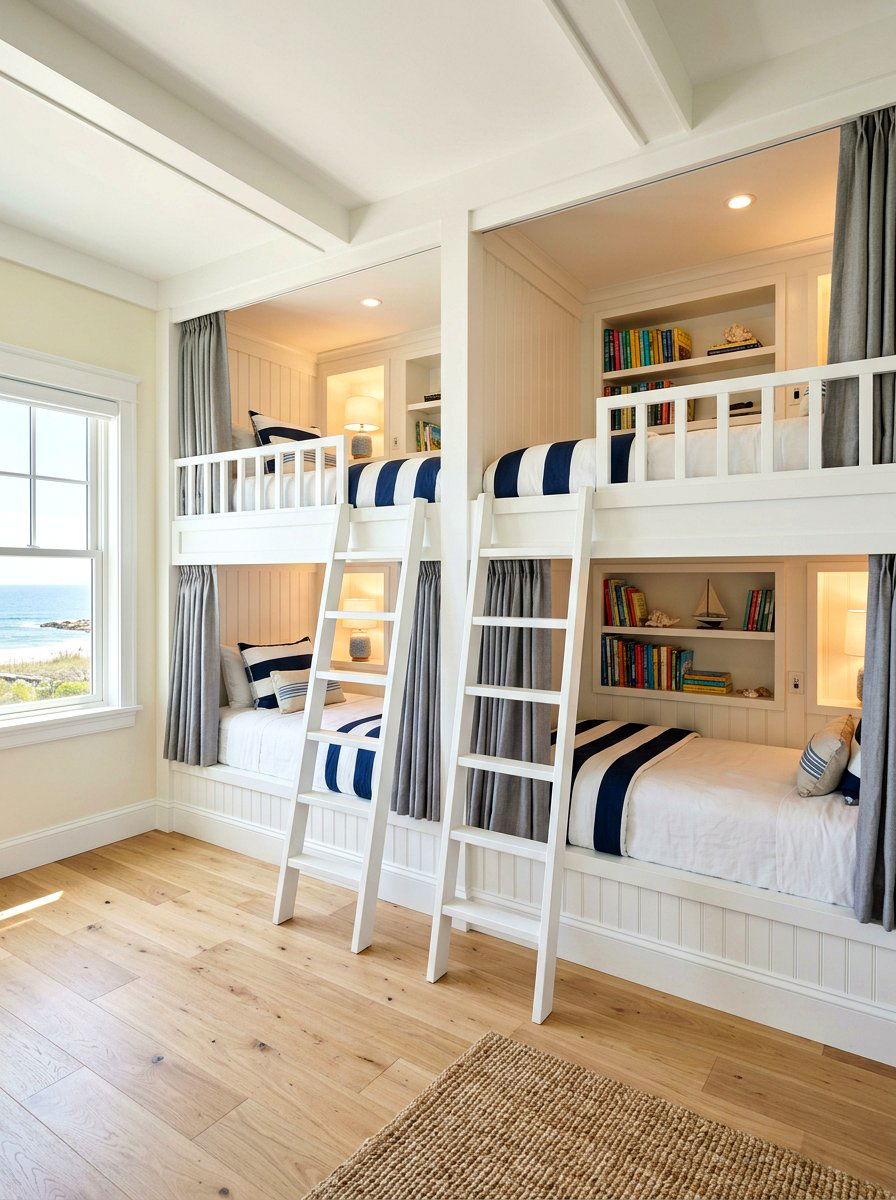
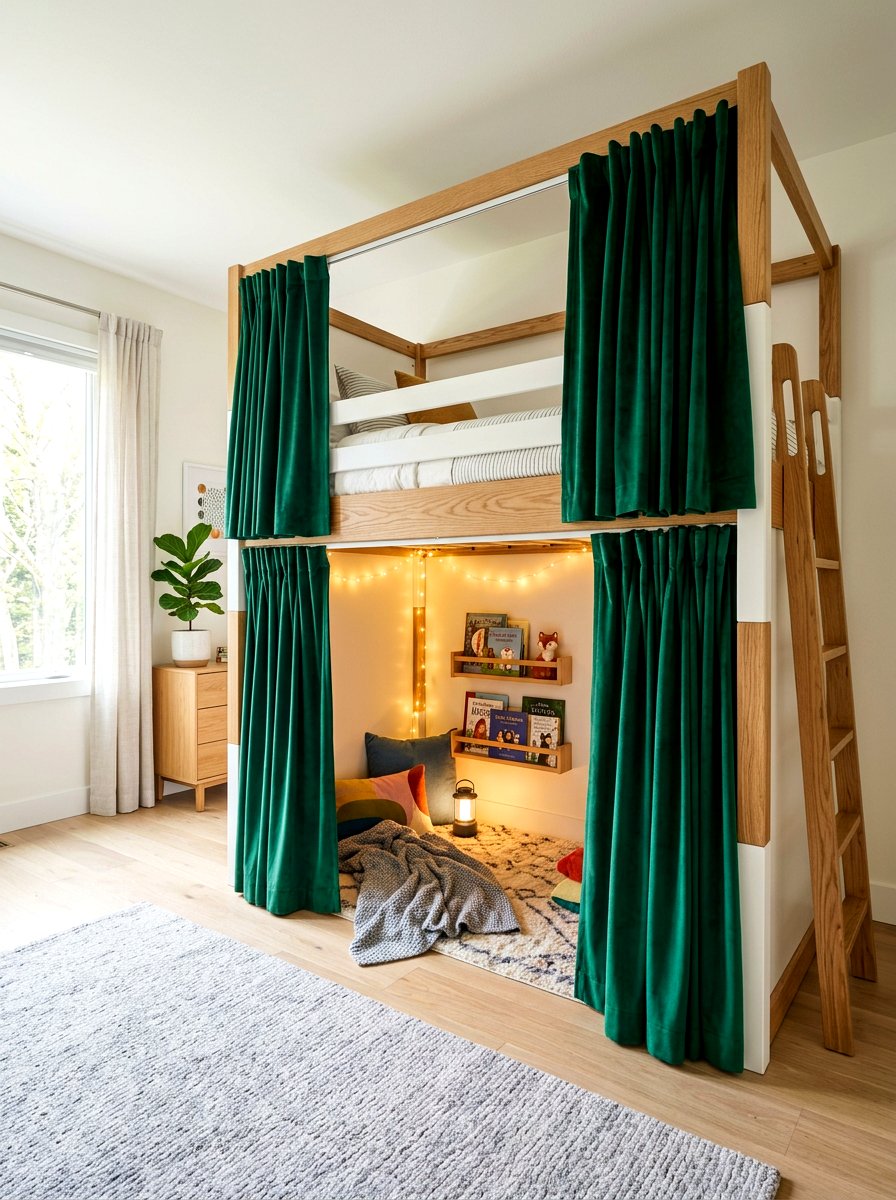
Imagine a room where the beds feel like a permanent part of the architecture, offering a sleek and custom look. Built in bunk beds are the ultimate solution for maximizing every square inch of a shared kids' room. Unlike freestanding units, these are often constructed directly into the walls, providing superior stability and a seamless aesthetic. You can add integrated reading lights, small niches for books, and even individual curtains for a cozy, cabin-like feel. This design approach eliminates the "cluttered furniture" look and makes the entire room feel much larger and more high-end, proving that shared spaces can be both incredibly functional and visually stunning.
6. Shared bedroom for boy and girl
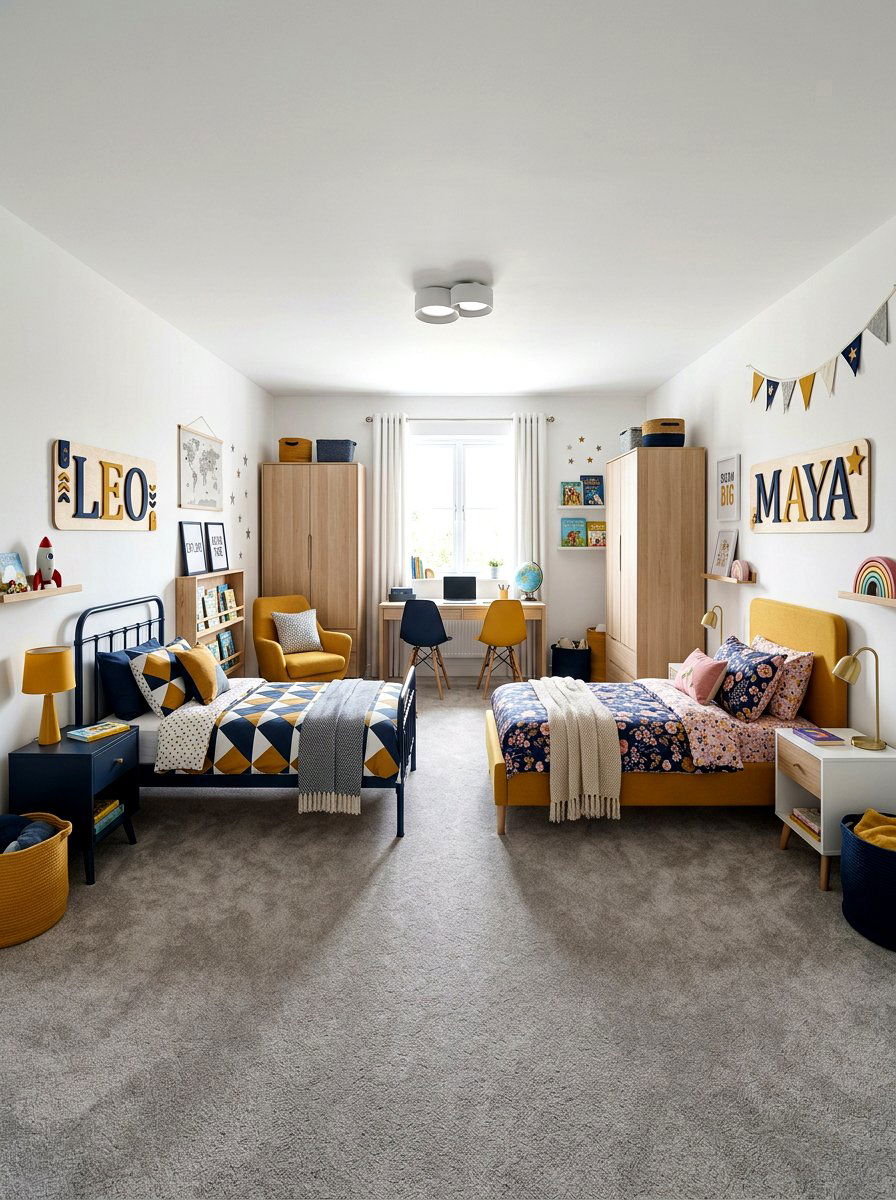
When siblings of different genders share a room, the design challenge is finding a middle ground that makes both feel at home. A great strategy is to use a "bridge" color that appeals to everyone, such as navy blue, charcoal gray, or a vibrant teal. You can distinguish their individual areas using personalized bedding or unique wall decals that reflect their specific hobbies. Placing the beds on opposite sides of the room helps create distinct zones for each child. By focusing on shared furniture styles but individual decorative touches, you create a space that feels unified yet perfectly tailored to each child’s unique personality and preferences.
7. Small shared bedroom storage
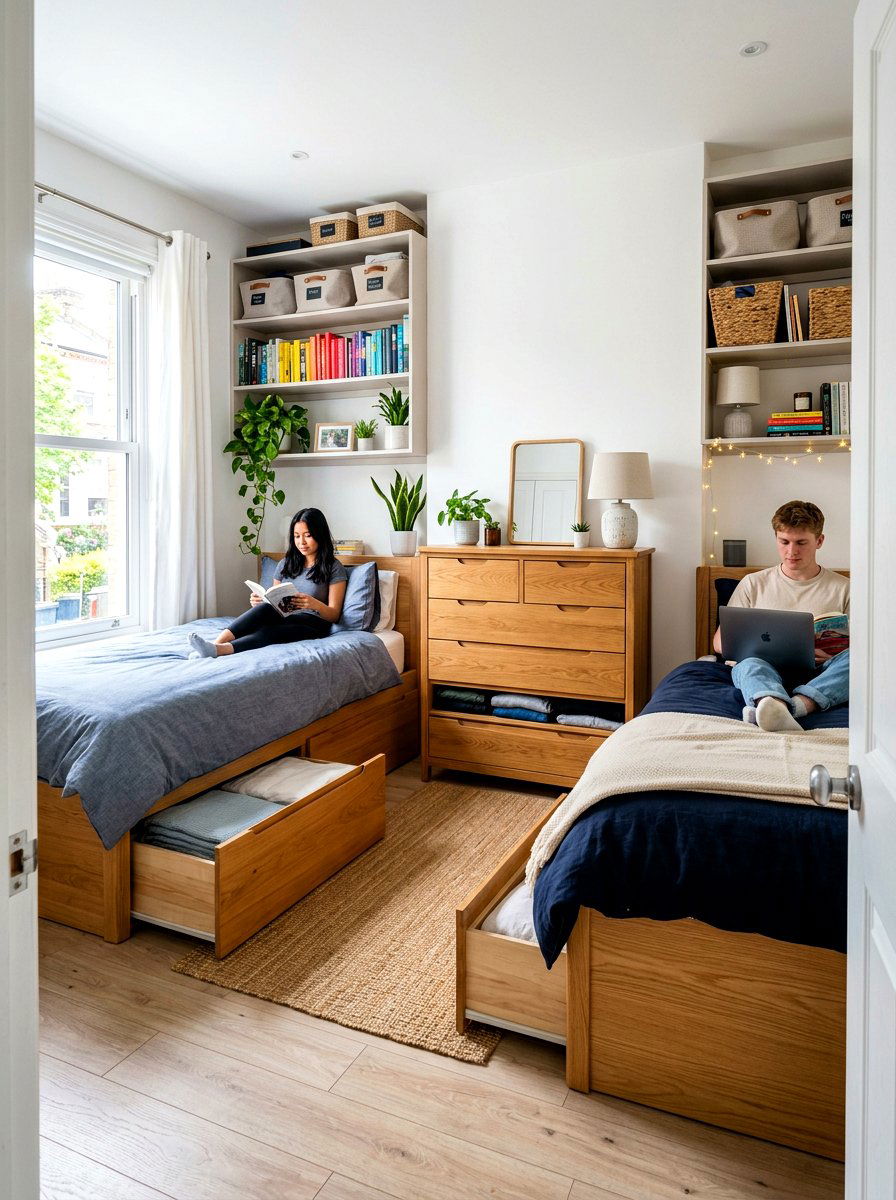
Are you struggling to fit two of everything into a tiny room without it feeling like a storage unit? The secret to managing small shared bedroom storage is looking up and under. Utilize the vertical space by installing shelves high on the walls for items that aren't used daily. Opt for bed frames with deep under-bed drawers to hide away bulky toys and out-of-season clothing. Using a single large dresser instead of two small ones can also save significant floor space. When every item has a specific home, the room stays tidy, making the small footprint feel much more manageable and less stressful for your kids.
8. Triple bunk beds for kids
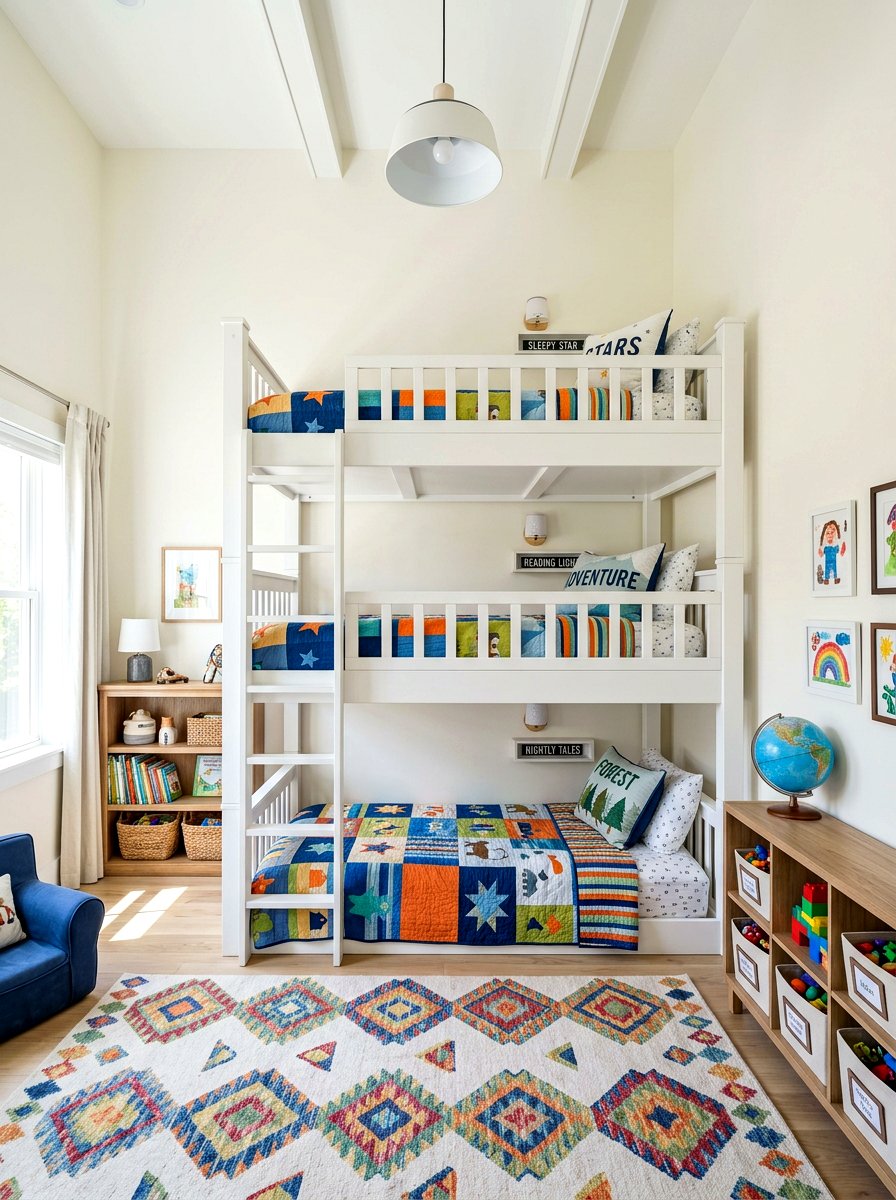
If you are housing three children in one room, triple bunk beds are an absolute lifesaver for preserving floor space. These vertical towers can be configured in a straight stack or an L-shape to fit the specific corners of your room. Modern designs are surprisingly sturdy and often feature safety rails and wide ladders for peace of mind. By stacking the sleeping areas, you leave the rest of the floor open for a shared desk, a play rug, or a cozy reading corner. This setup turns the bedroom into a fun, treehouse-like adventure for the kids while keeping the overall living area organized and easy to navigate.
9. Shared room floor bed
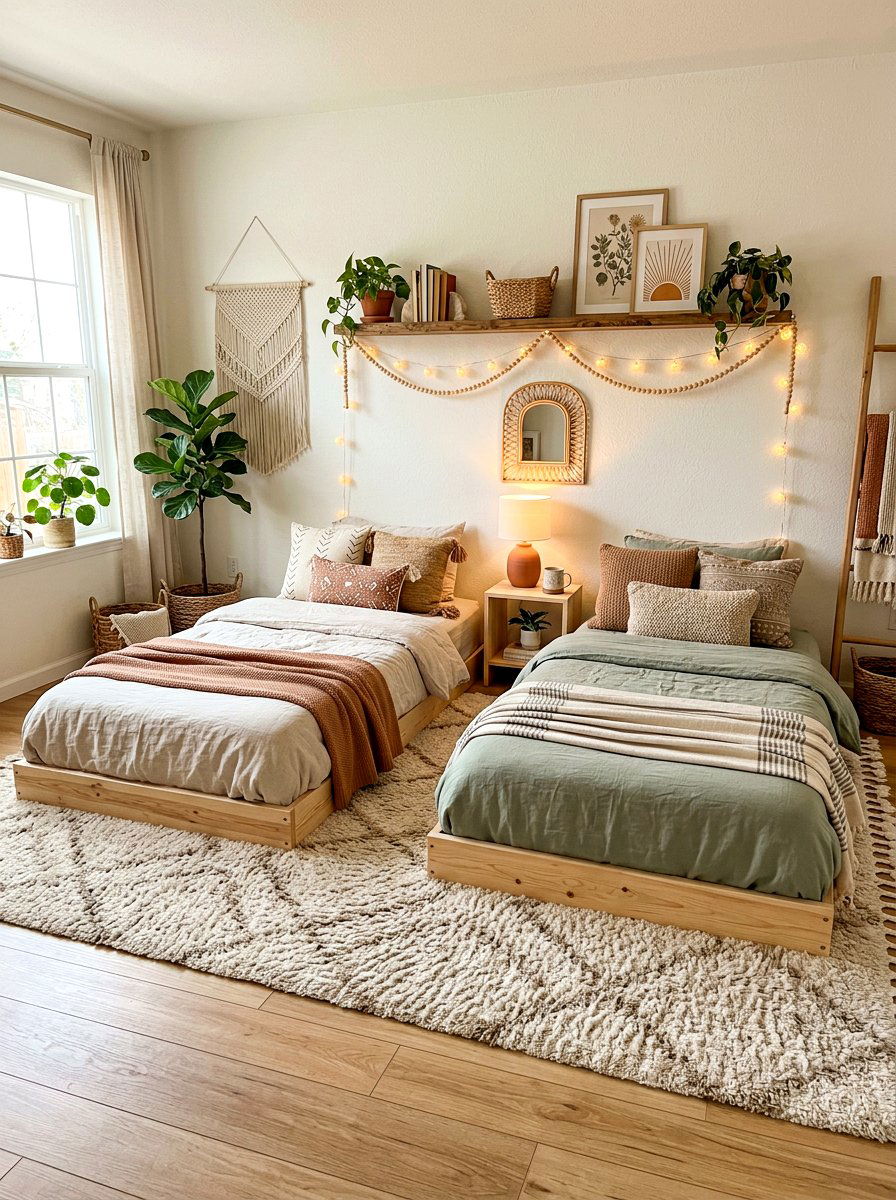
Using a shared room floor bed is an excellent choice for families following Montessori principles or those with very young toddlers. Low-profile beds make the space feel much more open and accessible, allowing children to safely climb in and out on their own. You can place two floor beds side by side or in an L-shape to create a large, soft "island" for sleeping and play. This layout reduces the visual weight of the furniture, which helps a shared room feel more airy and calm. It is a practical and stylish way to transition kids from cribs to "big kid" beds without the fear of falls.
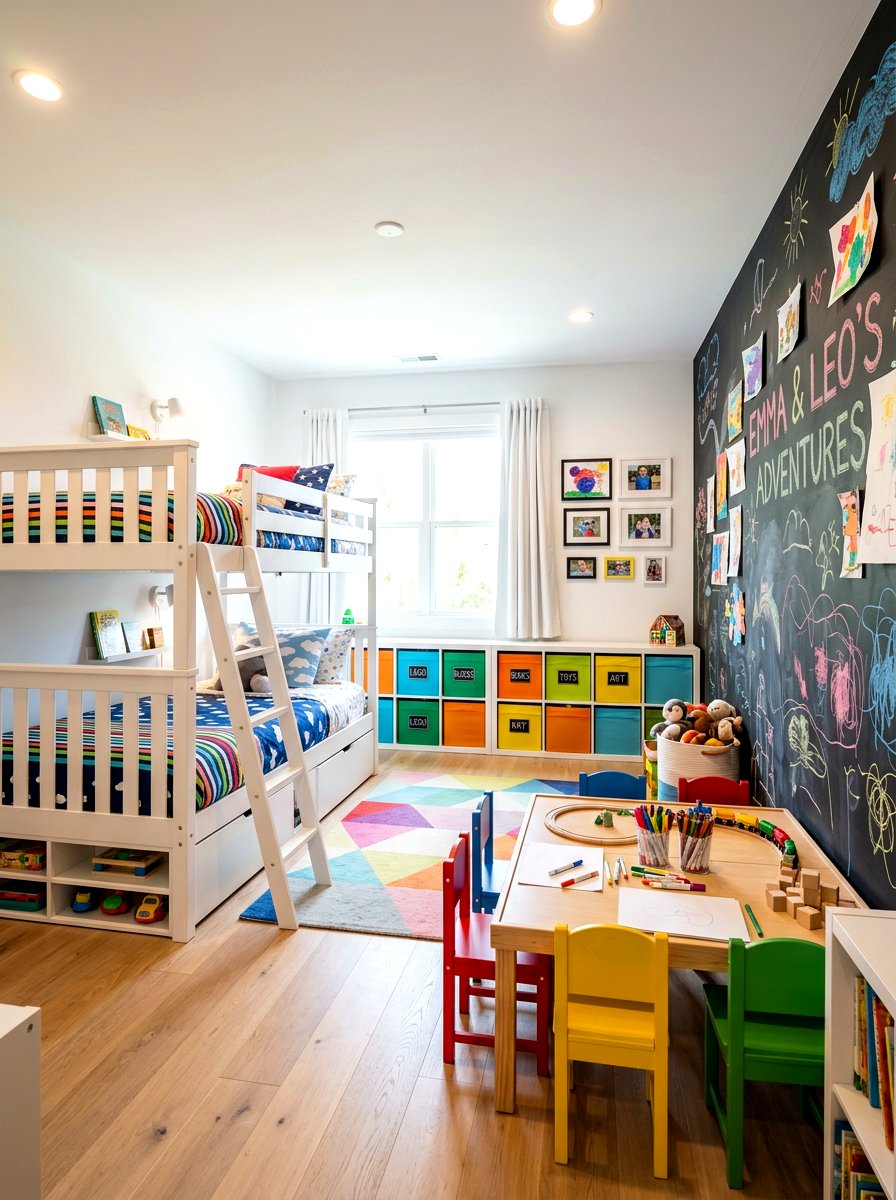
10. L shaped bunk beds
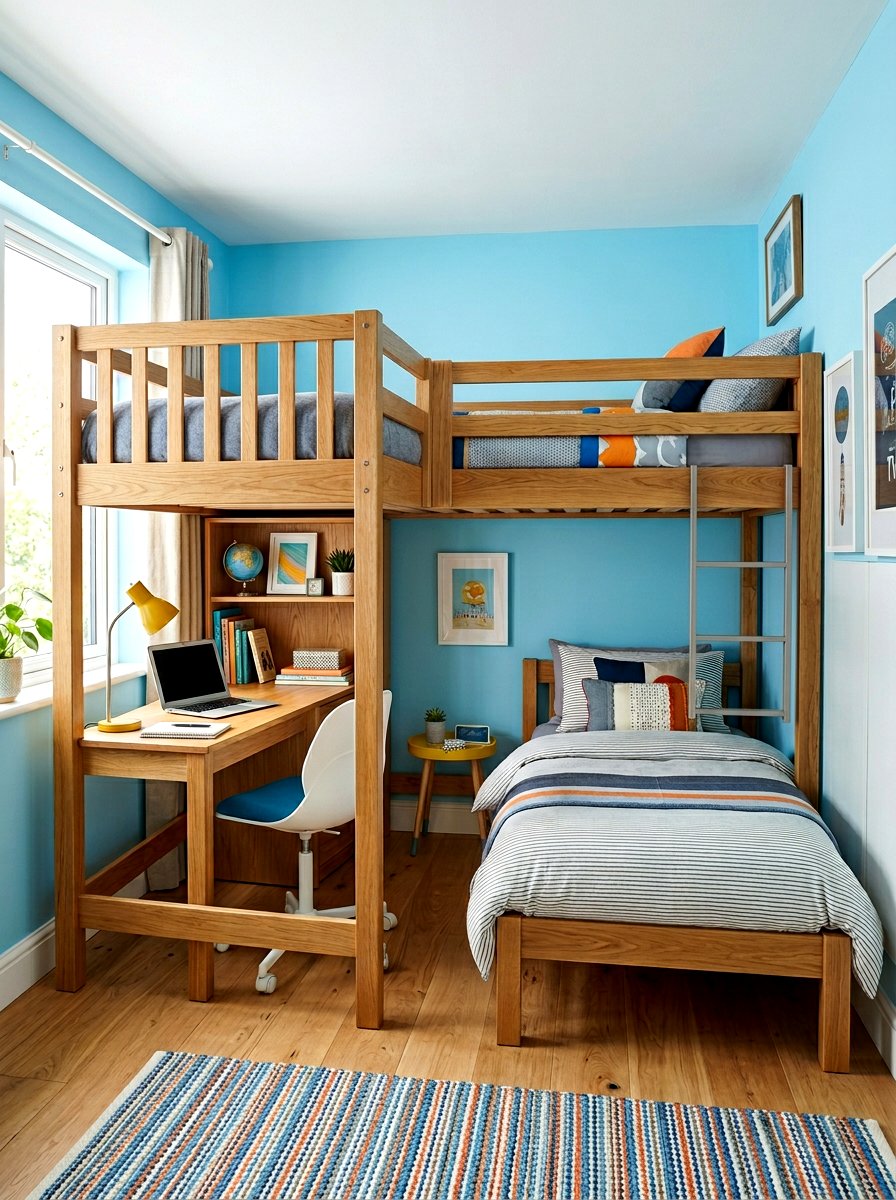
L shaped bunk beds are a fantastic alternative to traditional stacks because they utilize the corners of a room so efficiently. This configuration places the bottom bunk perpendicular to the top, creating a little alcove underneath the upper bed. You can use this extra space for a small desk, a toy chest, or a bean bag chair for reading. This layout feels less closed-in than standard bunks and provides a more open visual field across the room. It is perfect for kids who want to be near each other but still crave a little "den" of their own to hang out in during the daytime.
11. Shared nursery and toddler room
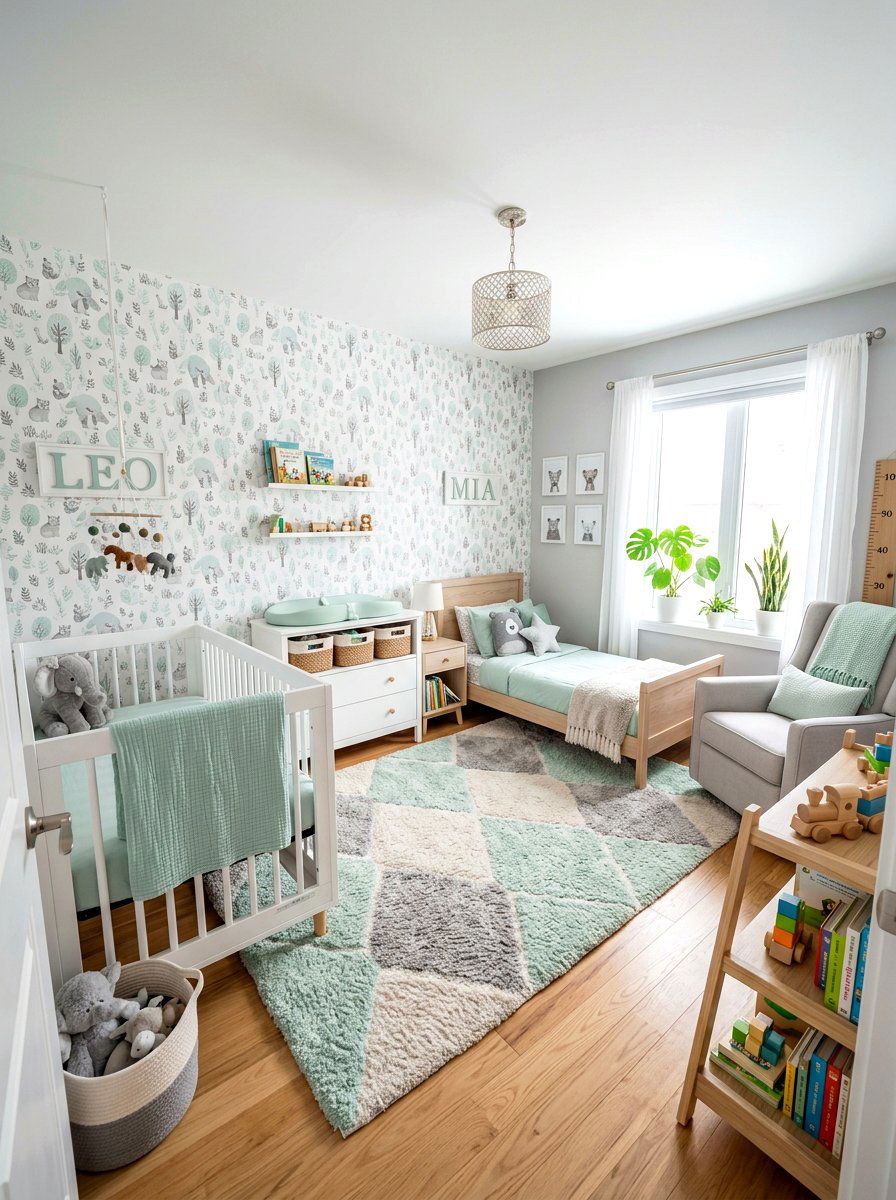
Designing a shared nursery and toddler room requires a careful balance between safety and accessibility for two different developmental stages. Keep the crib in a quieter corner away from the door to ensure the baby isn't disturbed by the toddler’s movements. Use a soft rug to dampen noise and create a communal play area in the center of the room. Storage should be tiered, with the toddler’s toys on lower shelves and baby supplies kept out of reach. By using a cohesive color palette, you can blend the two different bed types into a single, beautiful space that feels intentional rather than just a temporary fix.
12. Shared desk for two kids
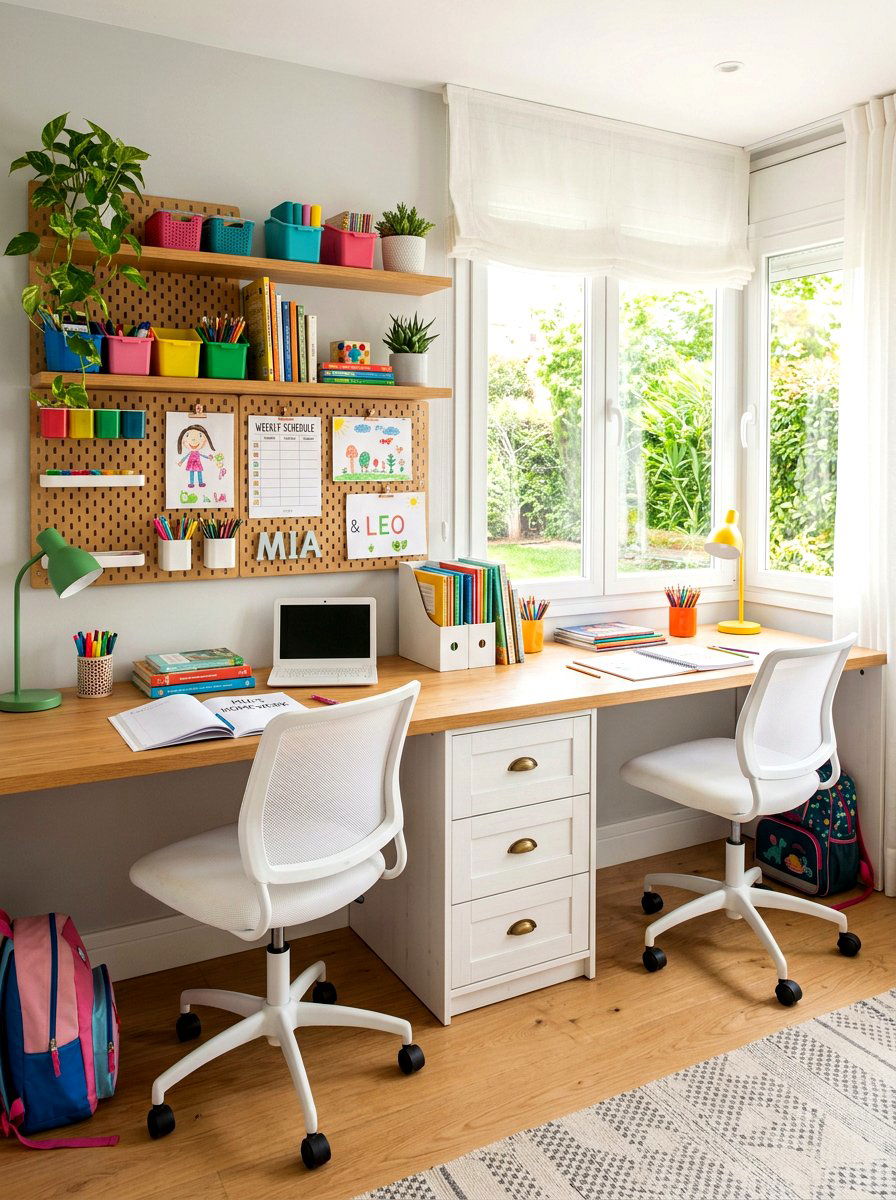
Do your children need a dedicated spot for homework and creative projects without taking up too much room? A long, shared desk for two kids is the perfect solution for encouraging productivity while saving space. You can use a single long countertop mounted to the wall with two comfortable chairs tucked underneath. Adding a central drawer unit provides a natural boundary and gives each child their own place to store school supplies and art tools. This streamlined look keeps the room from feeling cluttered with multiple pieces of furniture and creates a focused environment where siblings can work side-by-side quietly and efficiently every day.
13. Modern shared kids bedroom
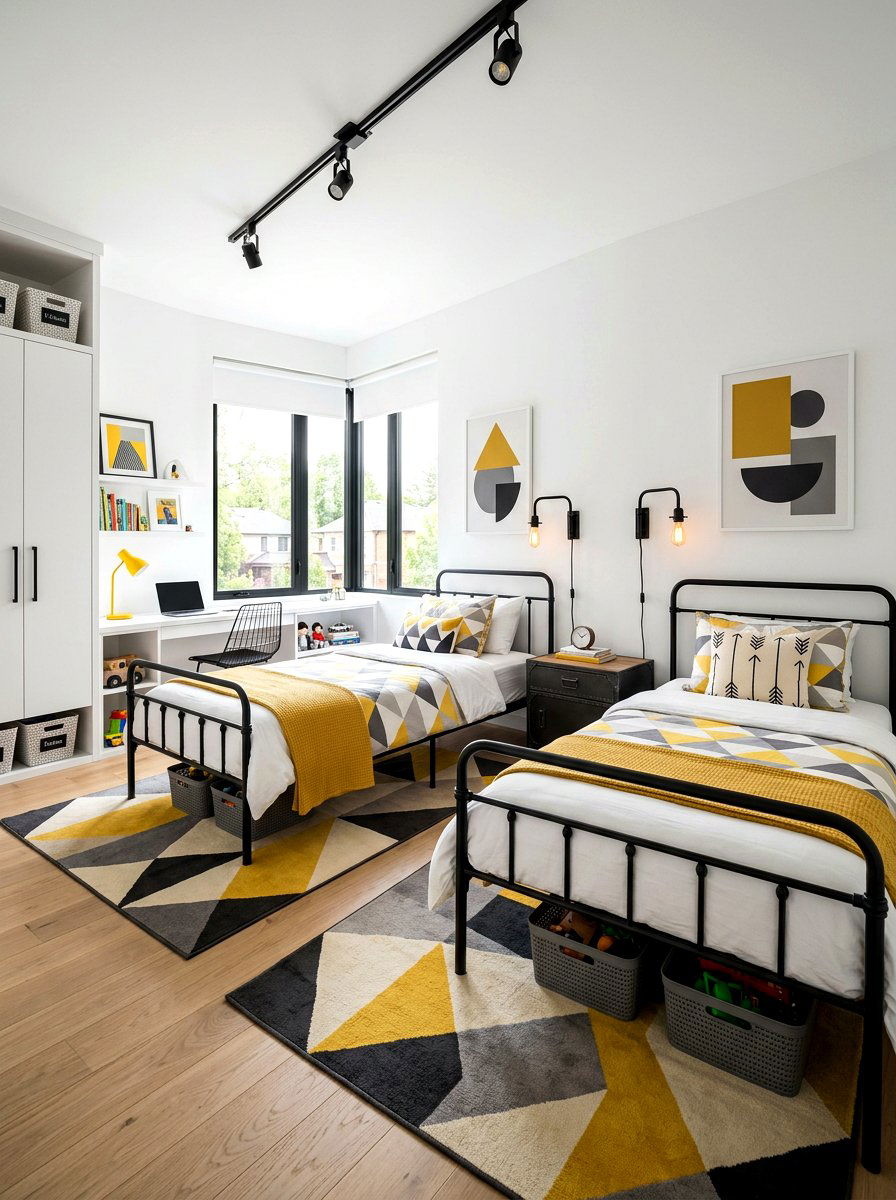
A modern shared kids bedroom focuses on clean lines, a minimal color palette, and multi-functional furniture. Think about using sleek metal bed frames or light-toned wood to keep the vibe fresh and uncluttered. Geometric patterns on rugs or pillows add a touch of playfulness without overwhelming the senses. Modern design often prioritizes smart organization, such as wall-mounted cubbies and hidden storage, which is essential when two children share a room. This style is incredibly versatile, making it easy to update as your kids' tastes change. It creates a sophisticated yet kid-friendly environment that looks great and functions even better for a busy family lifestyle.
14. Shared bedroom with loft beds
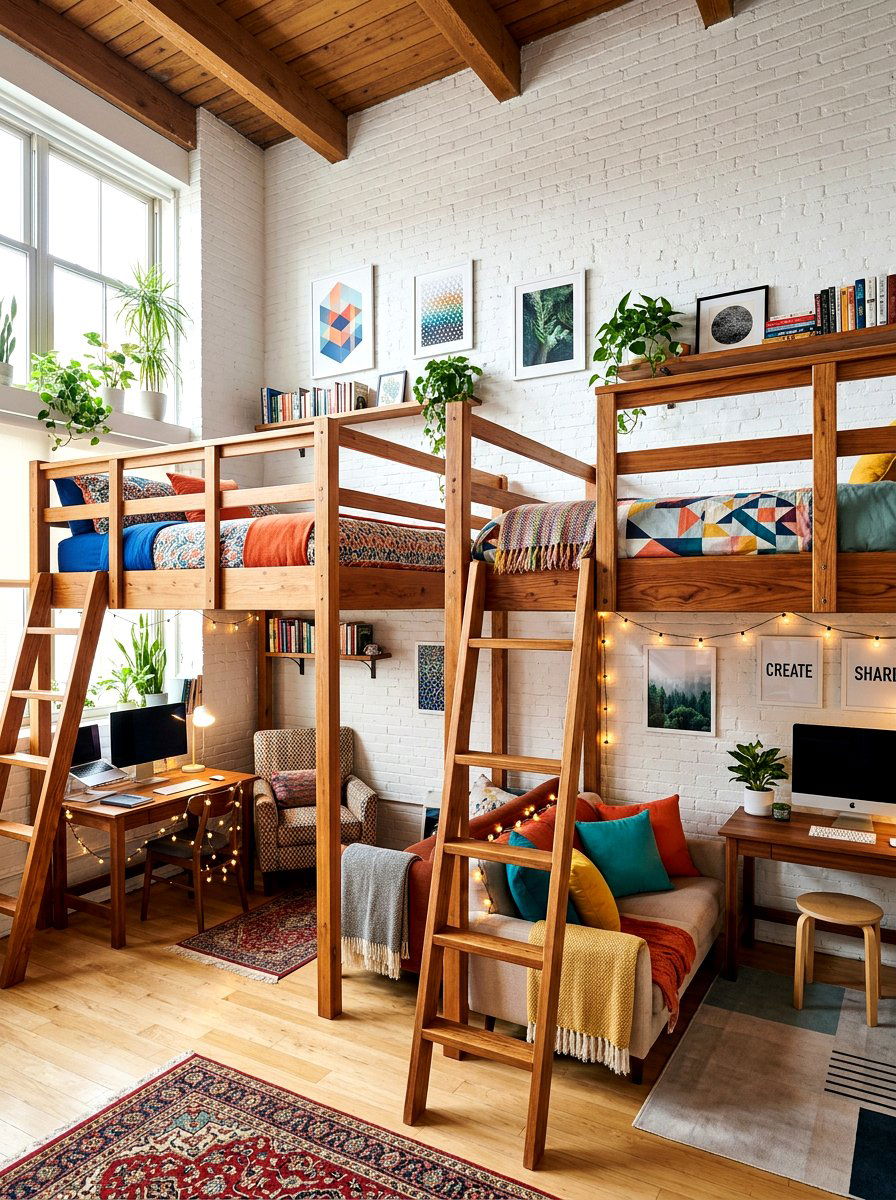
Loft beds are a game-changer for shared rooms because they essentially double the usable square footage of the floor. By elevating the sleeping area, you create a massive amount of space underneath for other essential activities. One child can have their bed lofted with a desk below, while the other has a cozy lounge area under theirs. This vertical separation gives each child a sense of having their own "level" in the room, which can be very exciting. It is an ideal solution for older children or teenagers who need more privacy and space for studying, gaming, or simply hanging out with friends.
15. Minimalist shared room
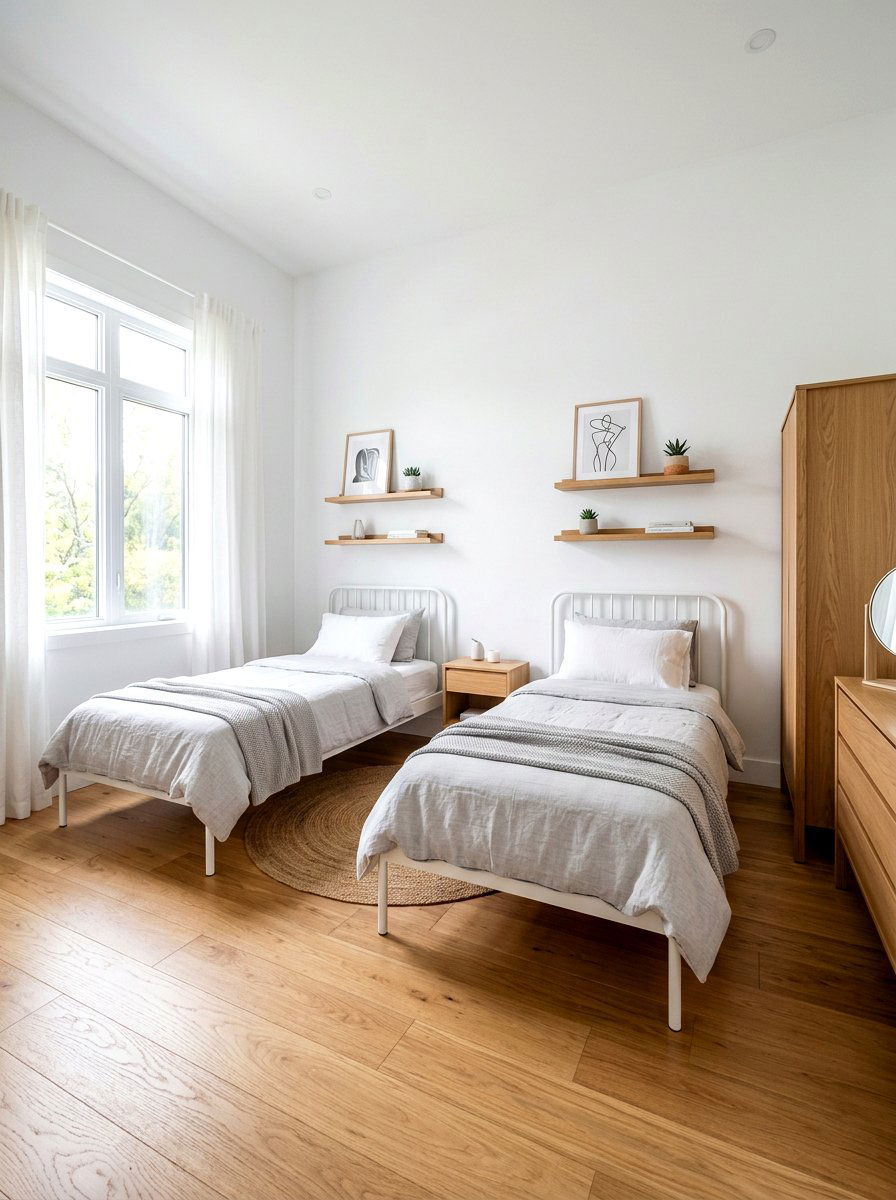
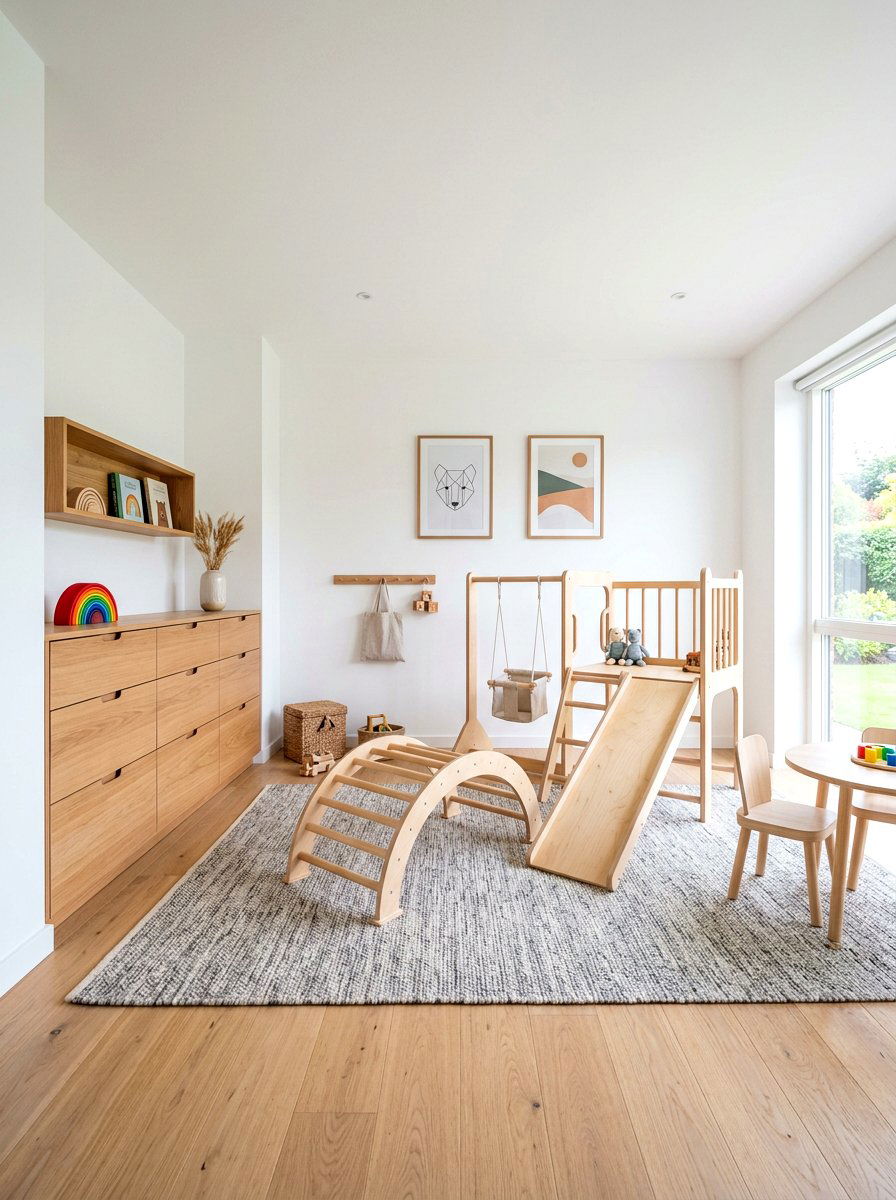
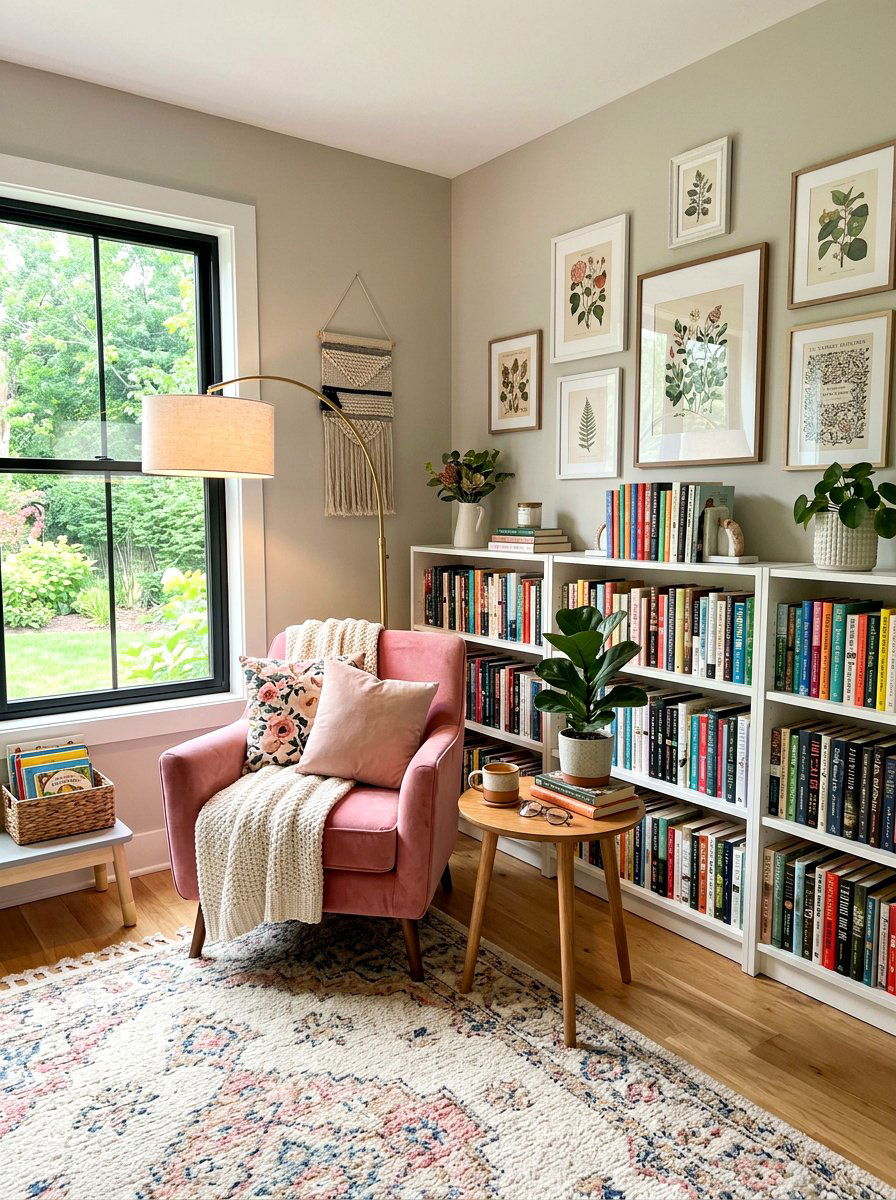
Embracing a minimalist shared room approach can significantly reduce the daily stress of cleaning and organizing. Focus on quality over quantity by choosing a few high-quality furniture pieces that serve multiple purposes, like beds with built-in drawers. A restricted color palette of white, gray, and natural wood keeps the room feeling calm and spacious. By limiting the number of toys and decor items on display, you create a serene environment that helps children wind down more easily at night. Minimalism teaches kids to value the things they have and makes the shared living experience feel much less chaotic and more intentional for everyone involved.
16. Shared kids room with wallpaper
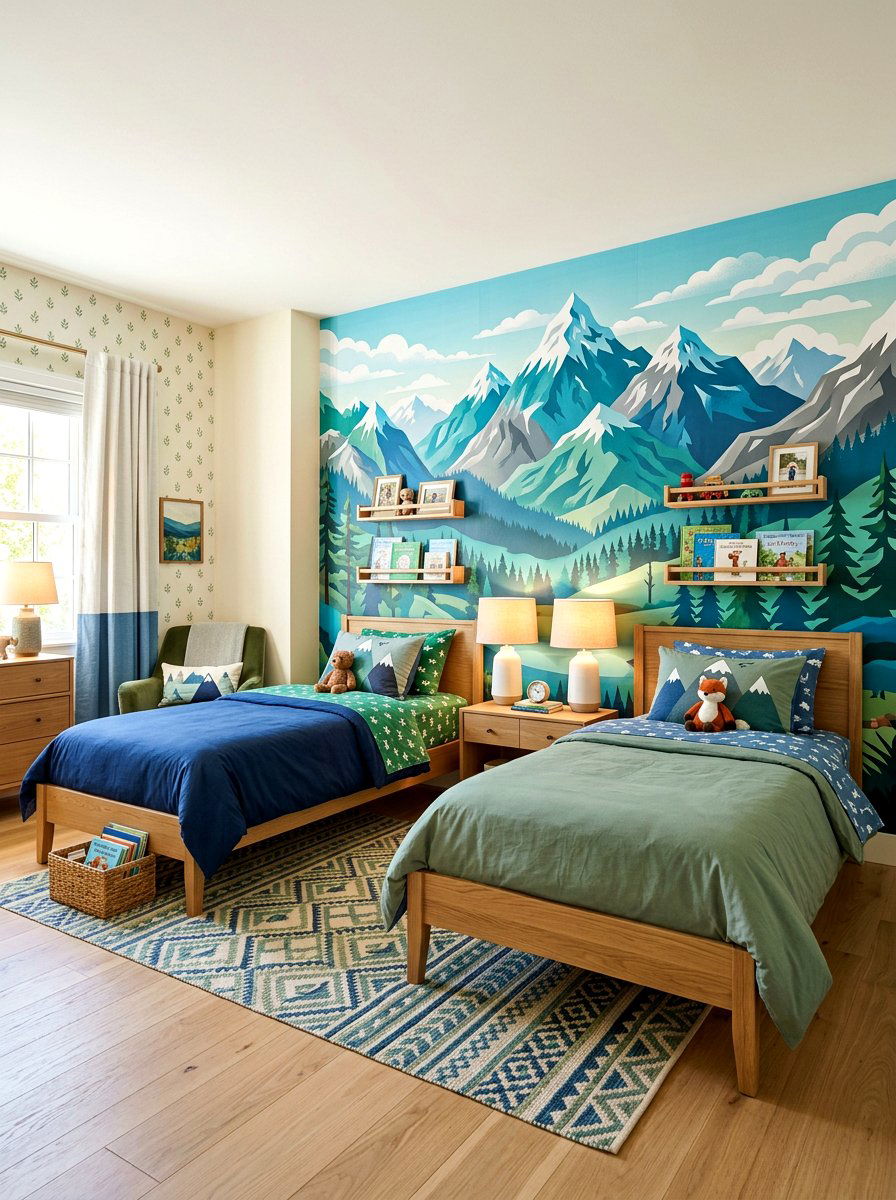
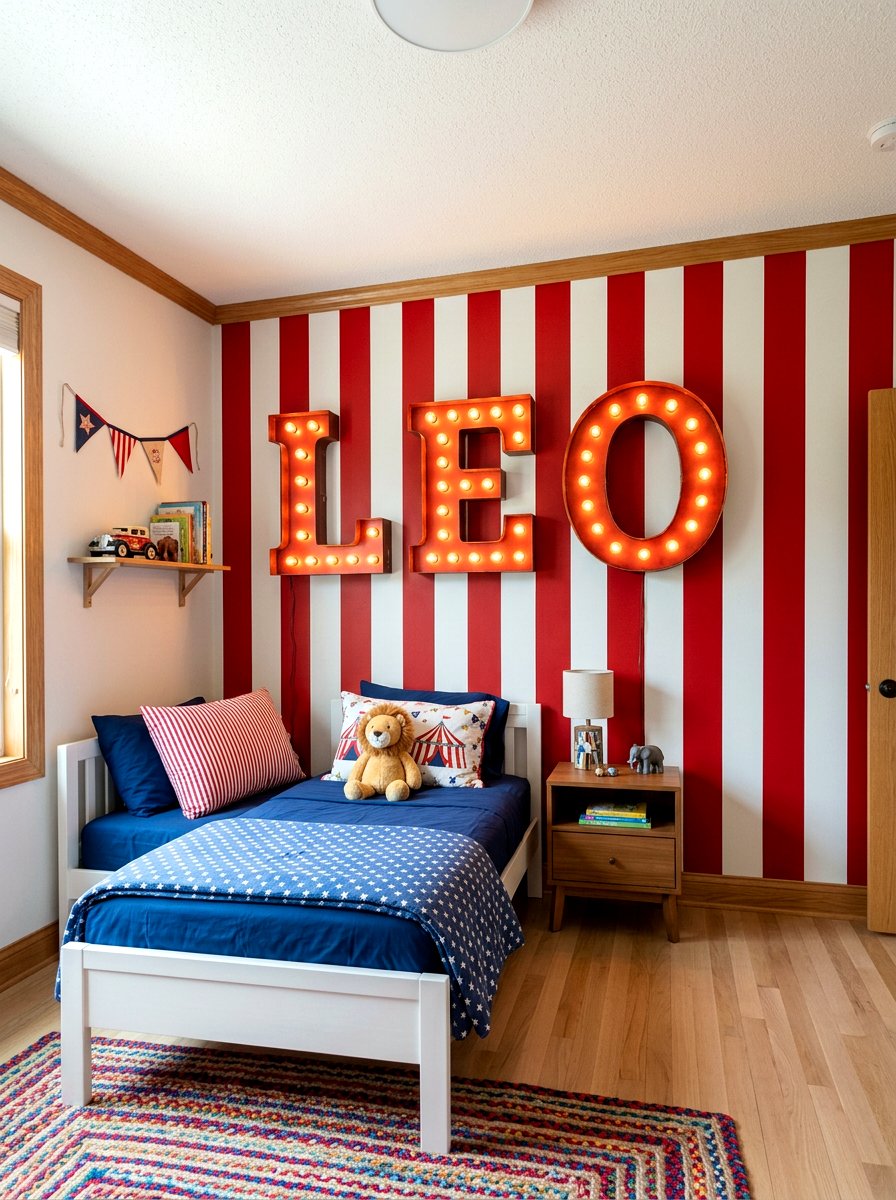
Adding wallpaper to a shared kids room is an instant way to define the space and add a big splash of personality. You can use a bold, full-wall mural to create a focal point that ties the two beds together, or apply a subtle pattern to just one side of the room to designate a specific child’s zone. Modern peel-and-stick options are fantastic because they are easy to remove or change as your kids grow. Whether you choose stars, mountains, or a whimsical forest, wallpaper adds depth and character that paint alone cannot achieve. It makes the room feel cozy, customized, and truly special for your children.
17. Colorful shared bedroom
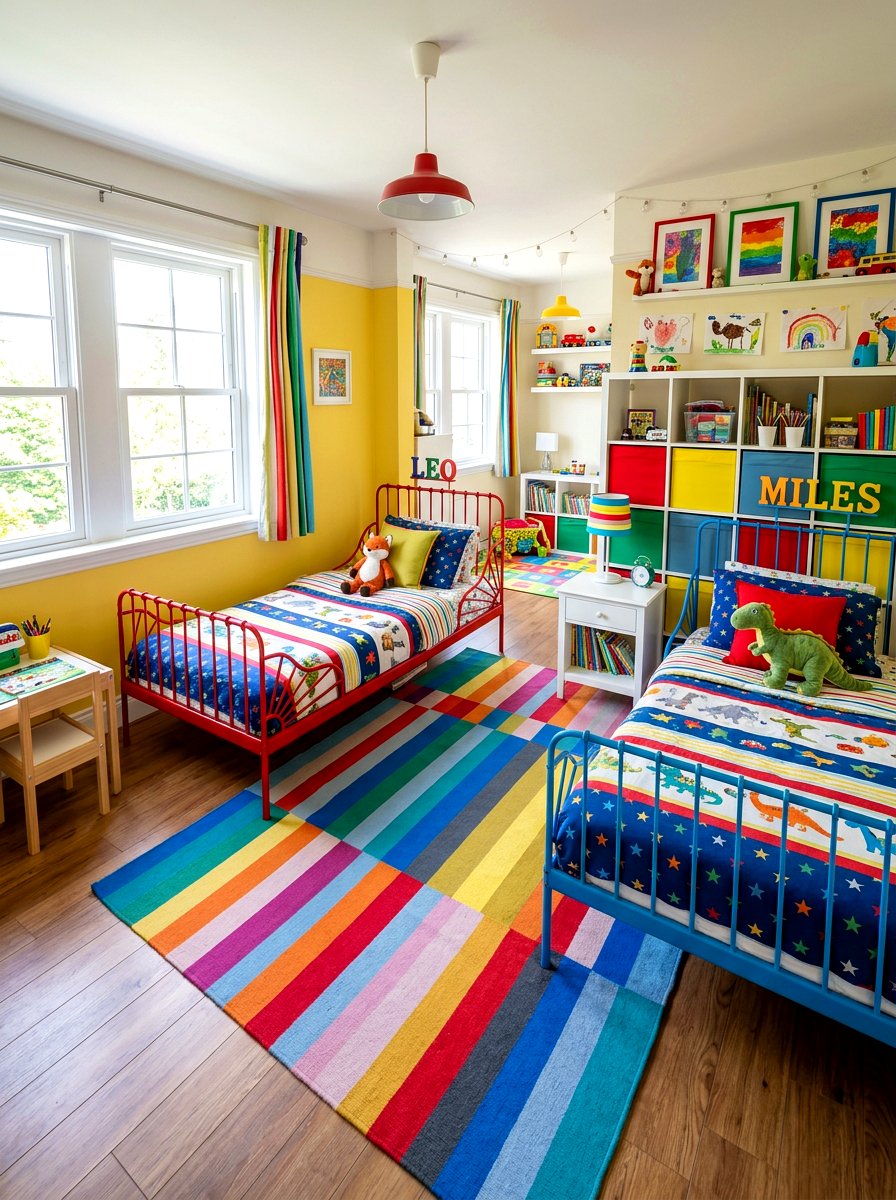
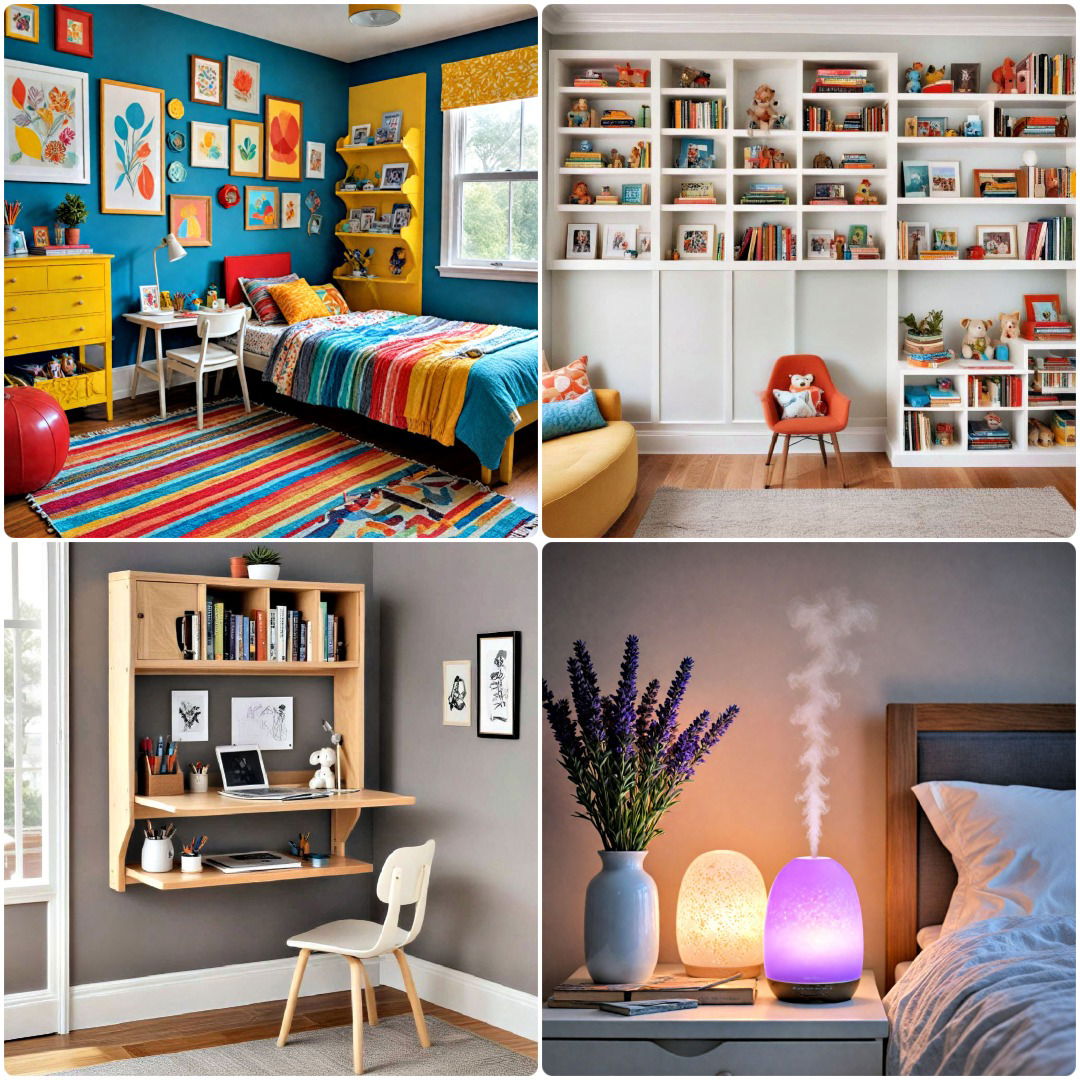
A colorful shared bedroom is the perfect way to reflect the high energy and creativity of childhood. Instead of choosing just one hue, try a vibrant mix of primary colors or a bright pastel palette that everyone loves. You can use color blocking on the walls to visually separate the two sleeping areas, giving each child a dedicated "zone" in their favorite shade. Bright rugs, multi-colored bedding, and playful accessories keep the mood cheerful and fun. This approach works best when you keep the furniture neutral, allowing the pops of color to really shine and create an environment that feels alive, inspiring, and full of joy.
18. Shared room window seat
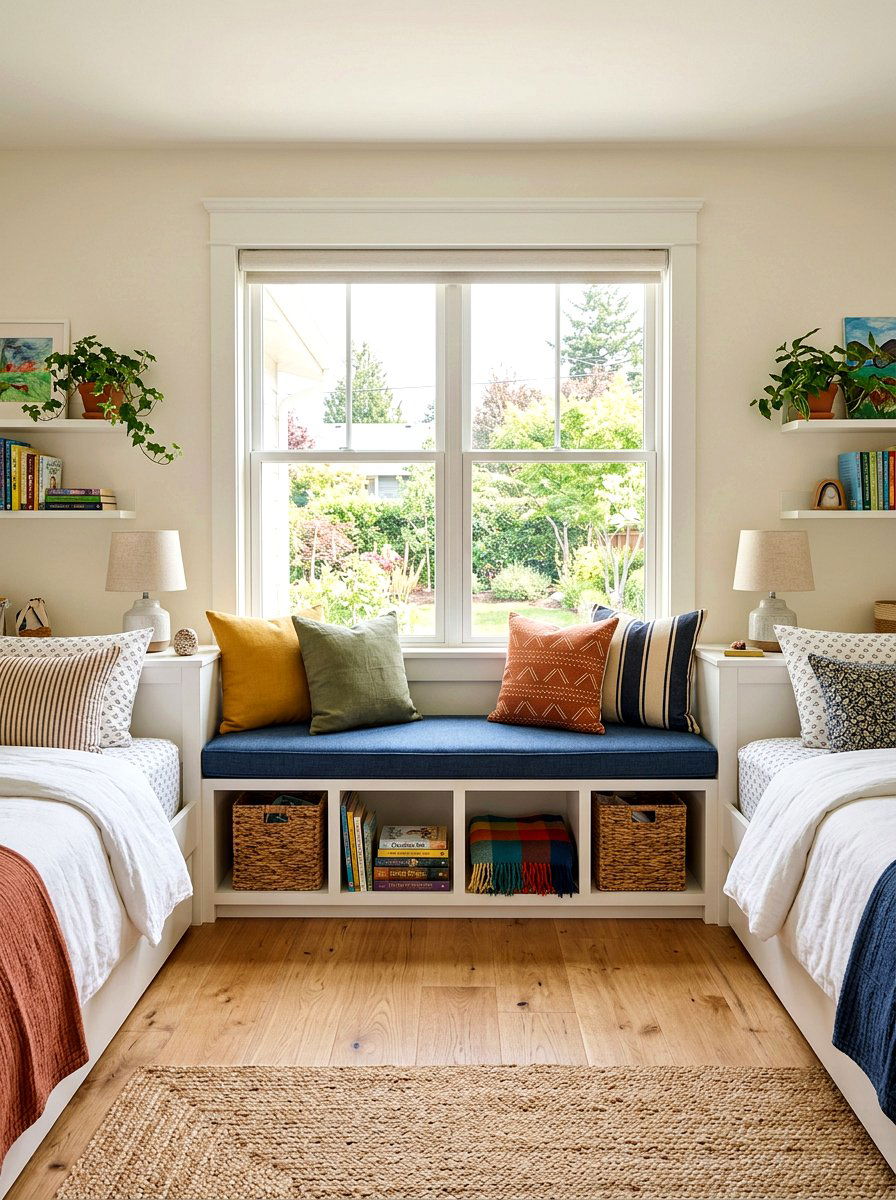
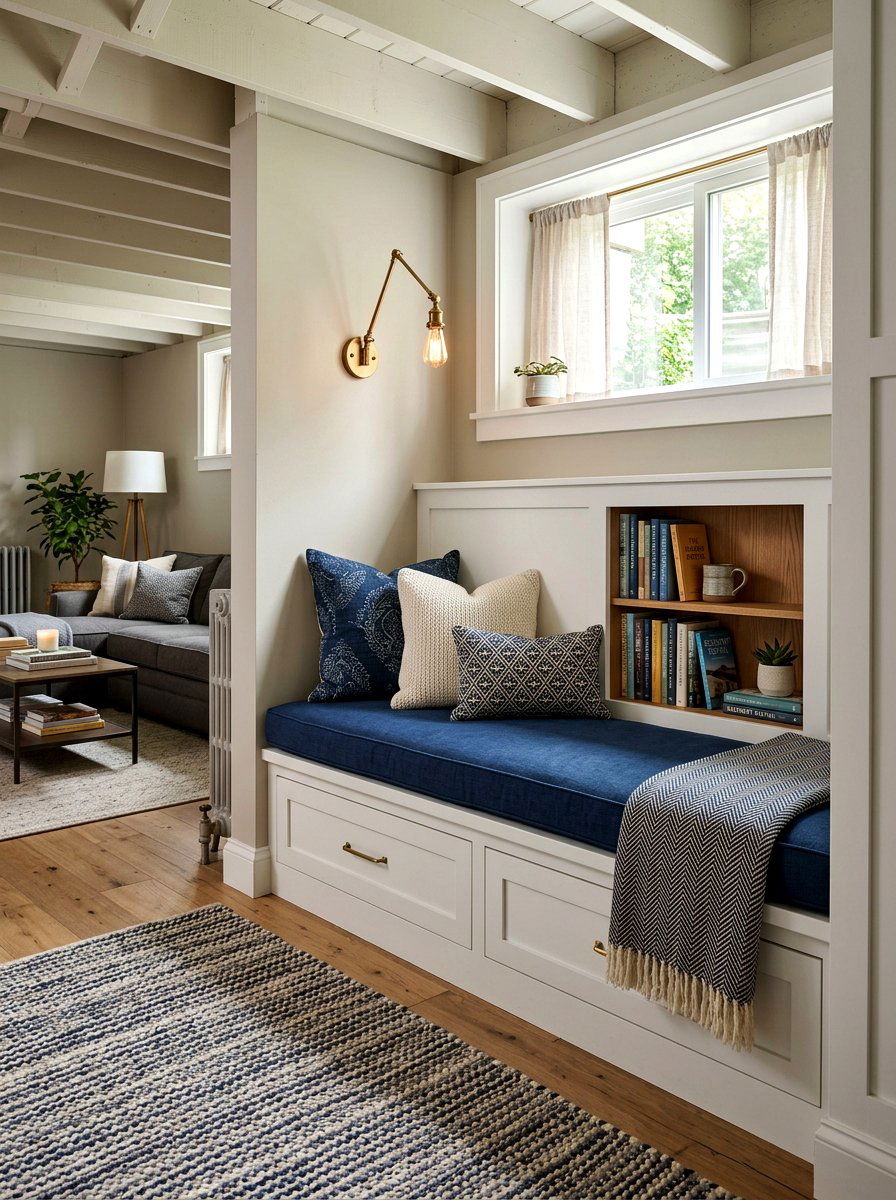
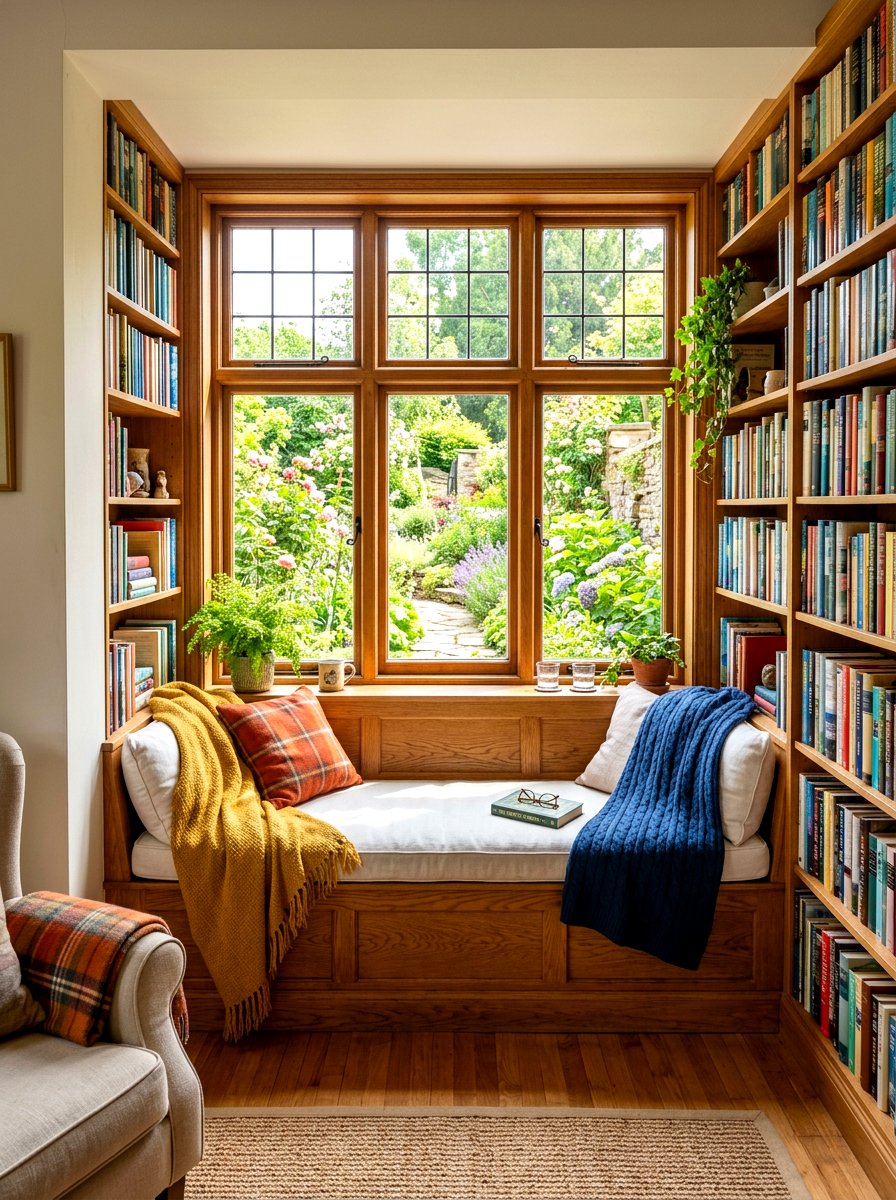
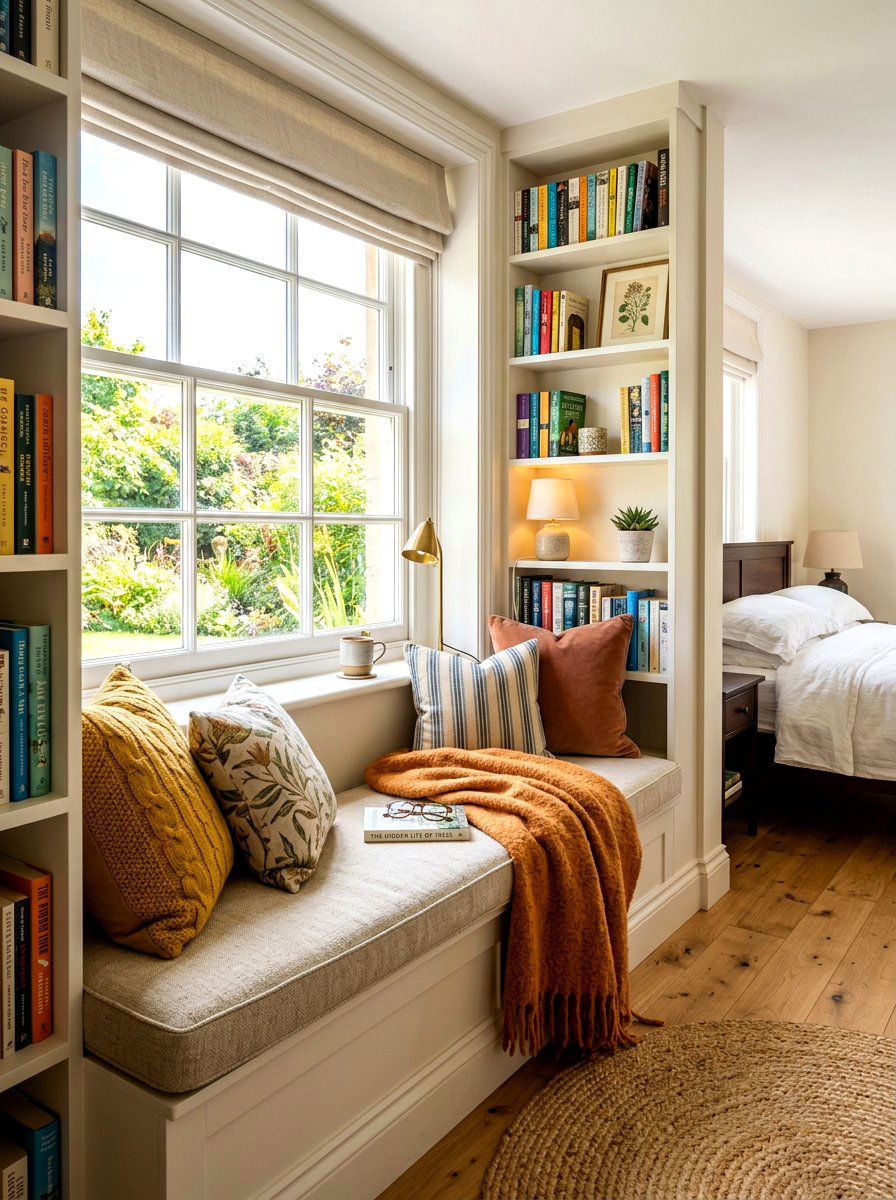
Integrating a shared room window seat provides a cozy, communal spot for kids to relax and look outside. This architectural feature often includes built-in storage underneath, making it a double-duty winner for shared spaces. It serves as a neutral ground where siblings can sit together to read books or play with handheld toys. Soft cushions and plenty of throw pillows make it the most inviting corner of the room. By framing the window, you also pull in more natural light, which makes the entire bedroom feel larger and more connected to the outdoors. It is a timeless addition that adds charm and functionality simultaneously.
19. Shared bedroom reading nook
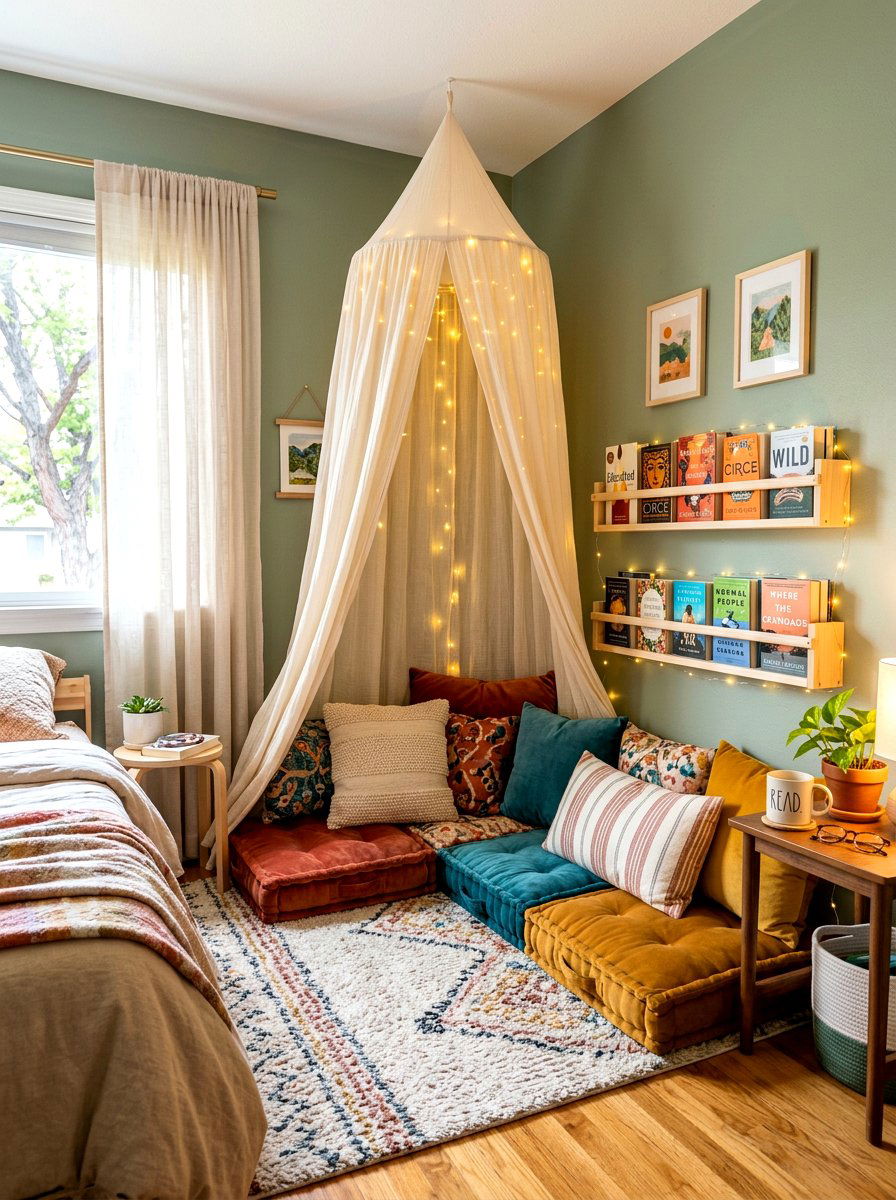
Creating a shared bedroom reading nook is a wonderful way to encourage a love of books while providing a quiet escape from the "sharing" aspect of the room. All you need is a comfortable floor cushion, a small wall-mounted bookshelf, and a dedicated light source in a quiet corner. Using a small canopy or a set of curtains can make the nook feel like a secret hideaway. This gives children a place to go when they need a little time alone to decompress. It is a simple, low-cost addition that significantly enhances the functionality and emotional comfort of a shared kids' sleeping area.
20. Shared closet organization
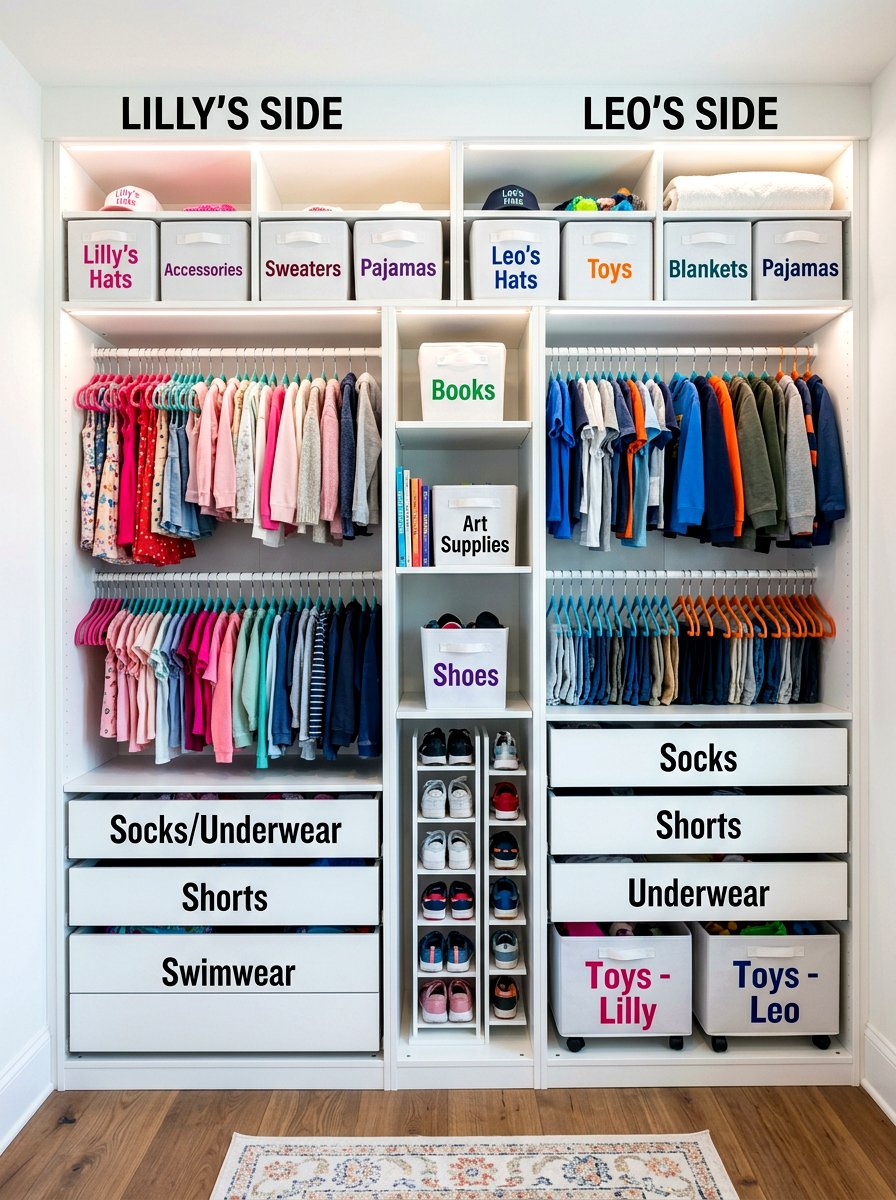
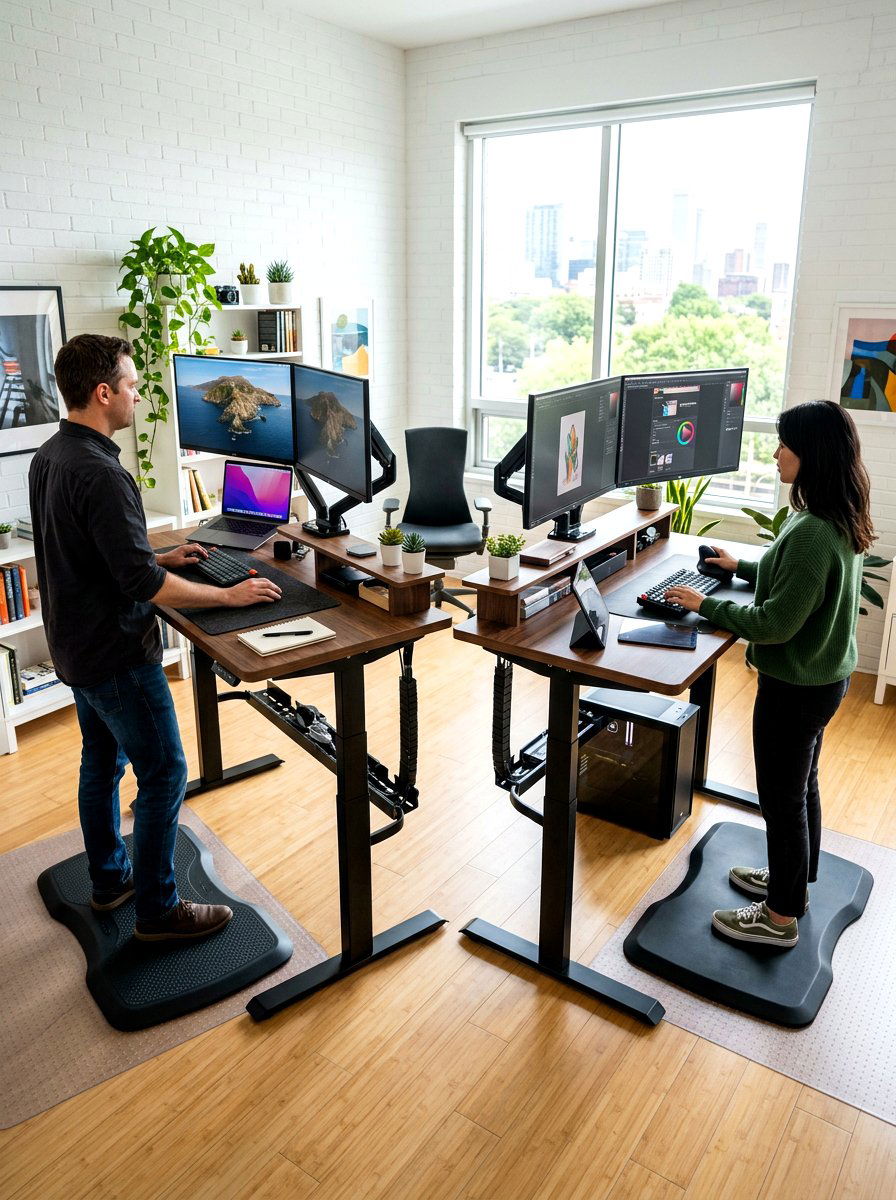
Effective shared closet organization is the backbone of a tidy kids' room. Start by dividing the closet vertically so each child has their own side with equal hanging space and shelf room. Using color-coded hangers or labeled bins can help kids identify their own belongings quickly and independently. If the closet is small, consider removing the doors and installing a curtain to save floor clearance. Adding an extra hanging rod lower down allows younger children to reach their own clothes, fostering a sense of responsibility. When the closet is well-organized, morning routines become much smoother and sibling arguments over misplaced clothes are drastically reduced.
21. Attic shared bedroom
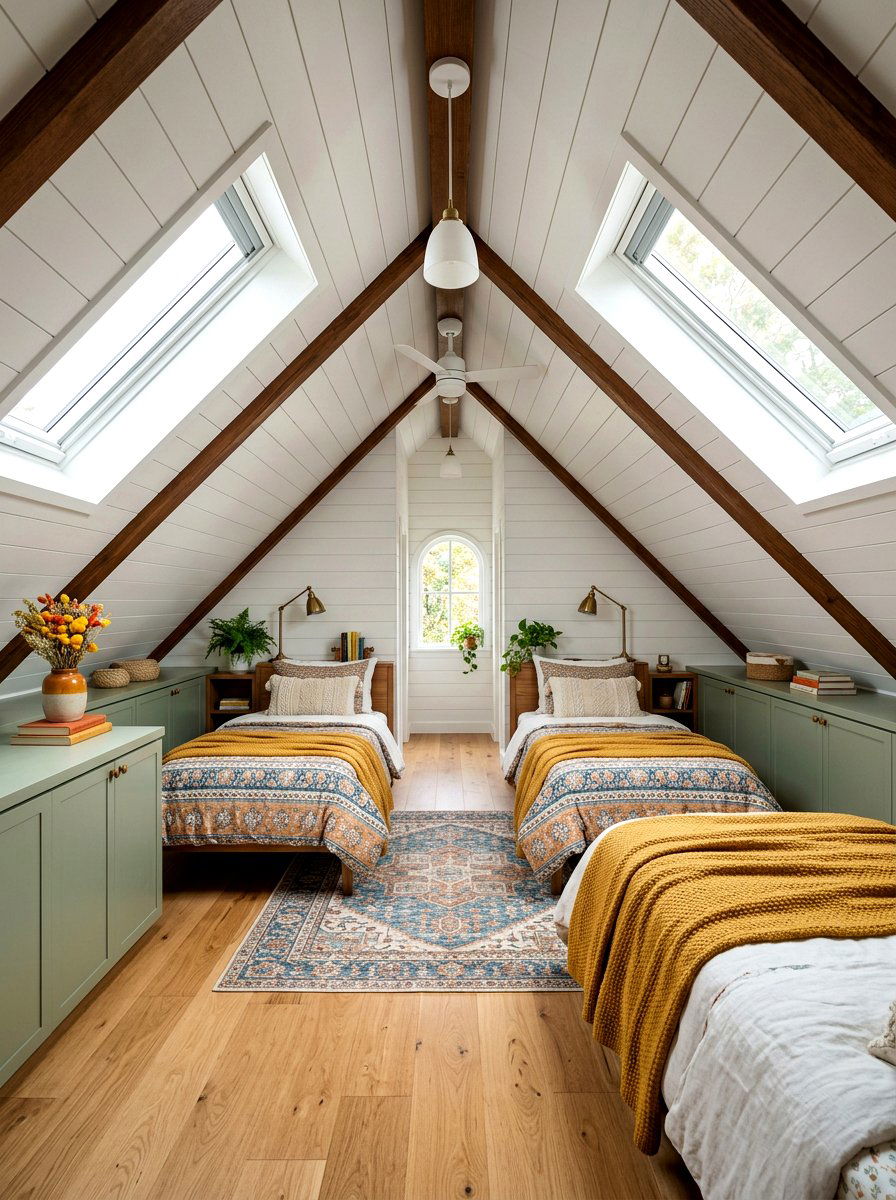
Transforming an attic into a shared bedroom offers a unique, cozy atmosphere thanks to the sloped ceilings and unusual nooks. You can place twin beds under the eaves to create a snug sleeping area that feels tucked away from the rest of the house. Use the low walls for custom built-in storage or low-profile bookshelves. Because attics often have interesting architectural lines, keep the decor simple to let the space shine. Skylights can flood the room with natural light, making the "top of the house" feel like a magical, private retreat. It is a fantastic way to utilize unused space for a memorable sibling bedroom.
22. Shared room with daybeds
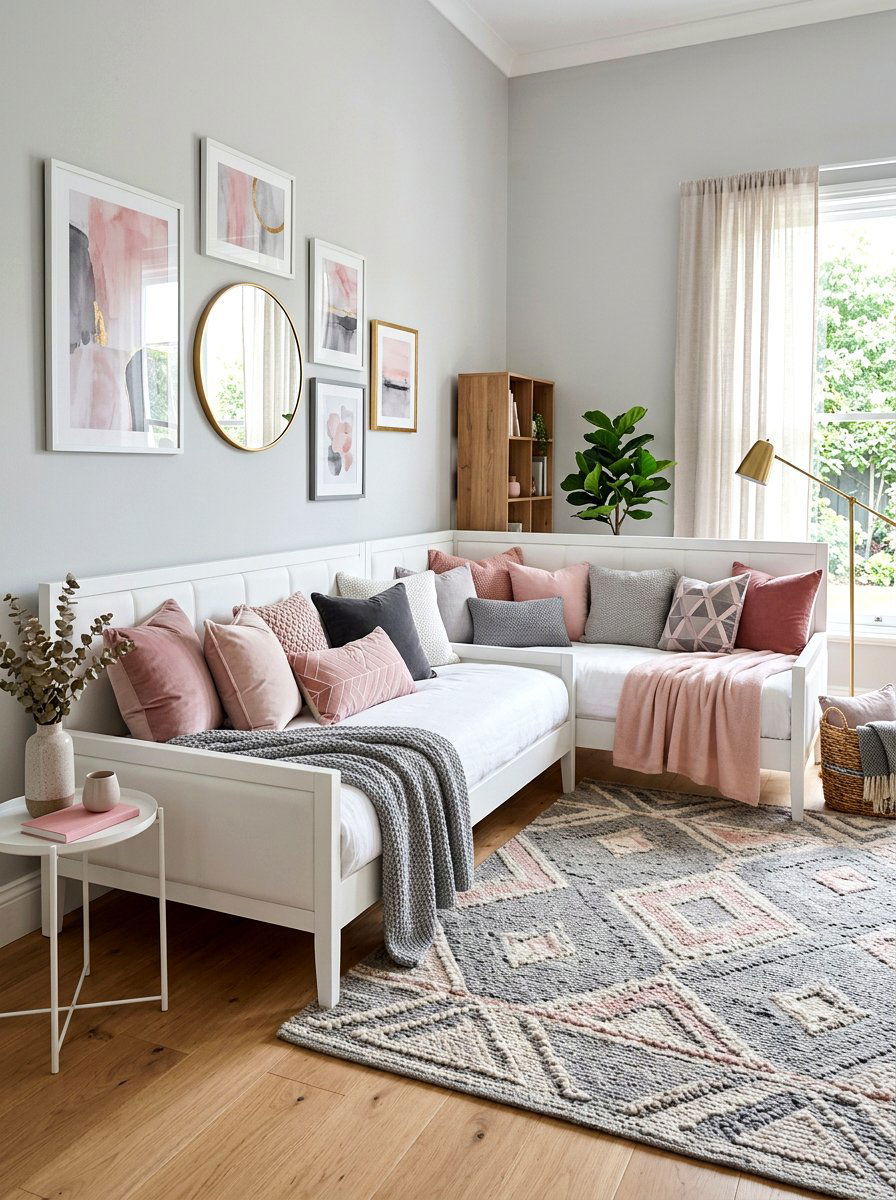
Using daybeds in a shared room is a brilliant way to make a bedroom feel more like a lounge or playroom during the day. Daybeds feature a backrest, so they can be lined with pillows to function as sofas when the kids aren't sleeping. This layout is especially effective in small rooms where the beds take up most of the floor space. You can place them end-to-end along one long wall or in an L-shape in a corner. This versatile furniture choice makes the room feel more sophisticated and provides a comfortable spot for kids to hang out, read, or host friends for playdates.
23. Shared bedroom for teens
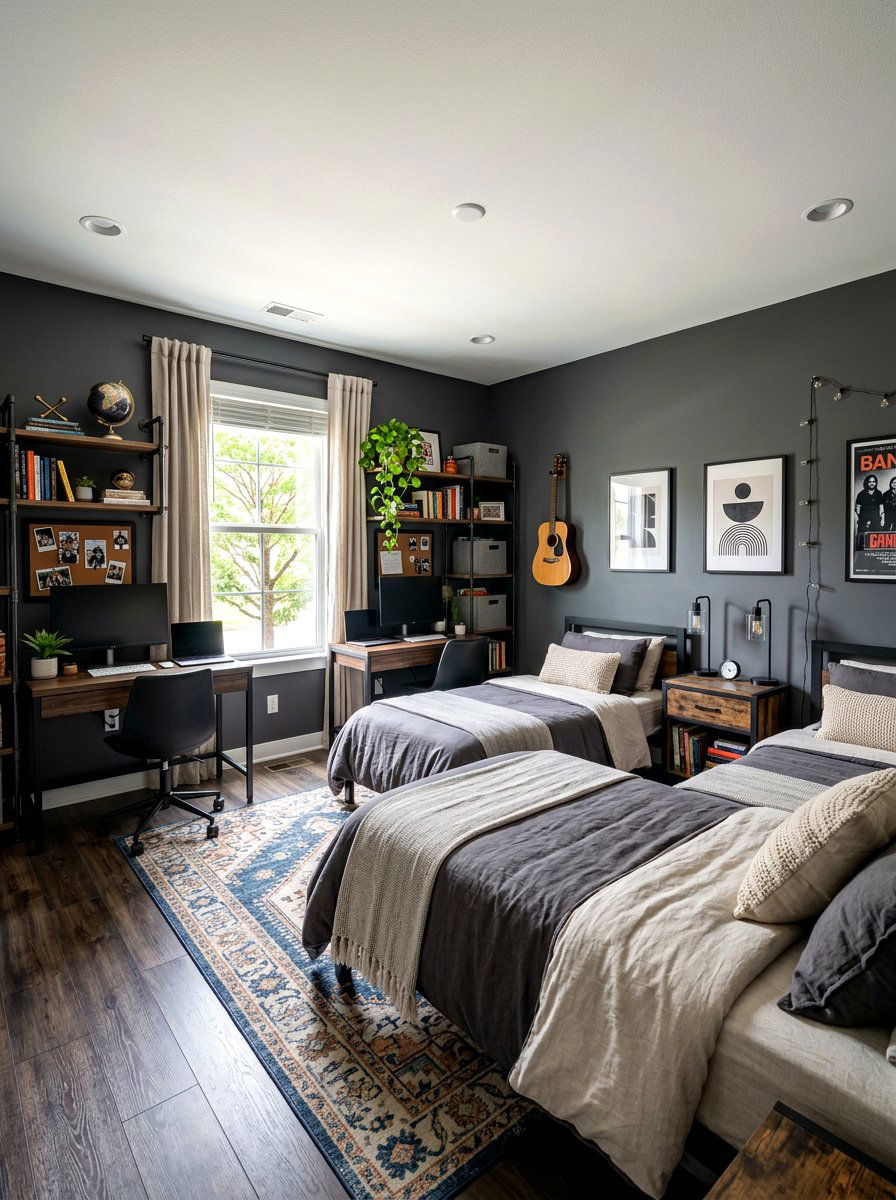
Designing a shared bedroom for teens requires a focus on privacy, individual study spaces, and more mature aesthetics. Moving away from "themed" rooms toward a sophisticated palette of neutrals or moody tones helps the space feel grown-up. Providing each teen with their own desk and a set of high-quality headphones can help them focus on their own activities without clashing. Using taller room dividers or even wardrobes placed back-to-back can create a physical wall between the beds. It is all about acknowledging their need for independence while providing a high-quality environment where they can both feel comfortable and respected as they navigate their teenage years.
24. Scandi style shared room
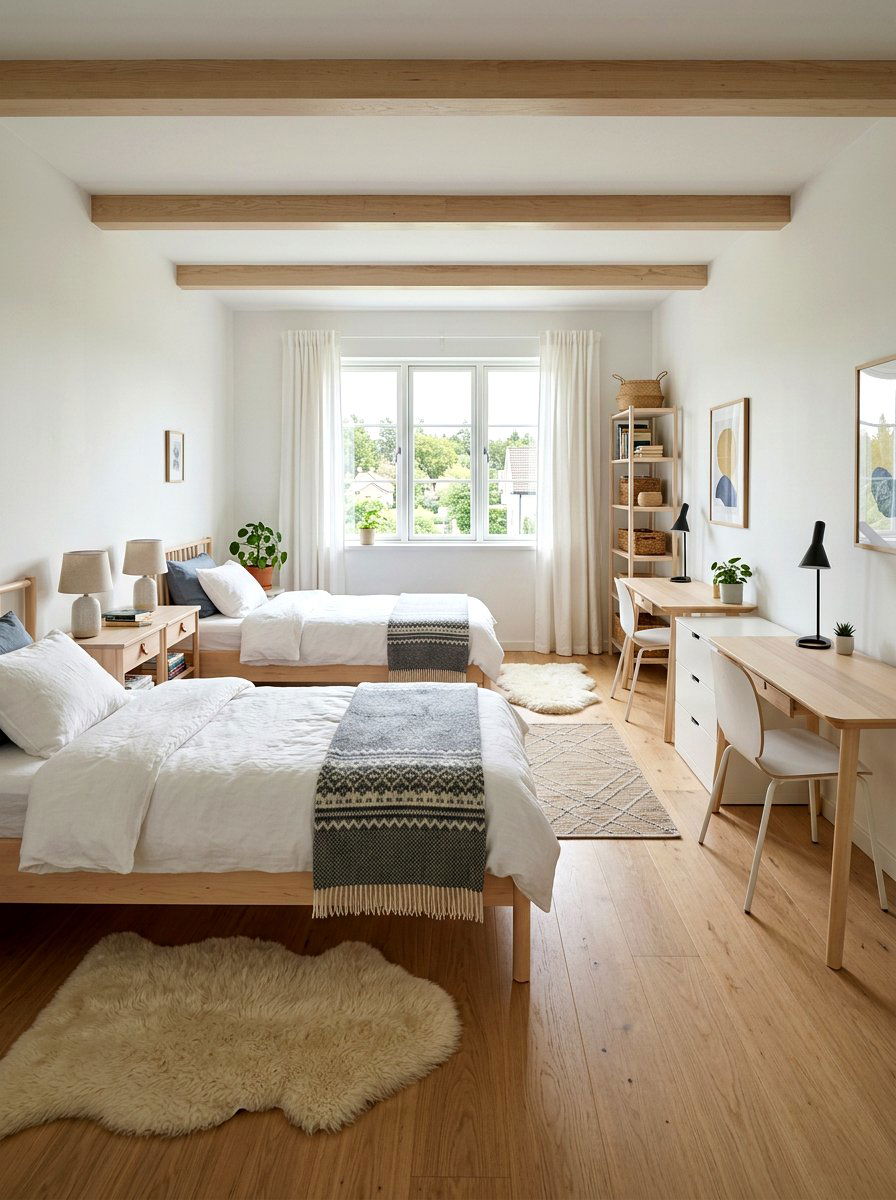
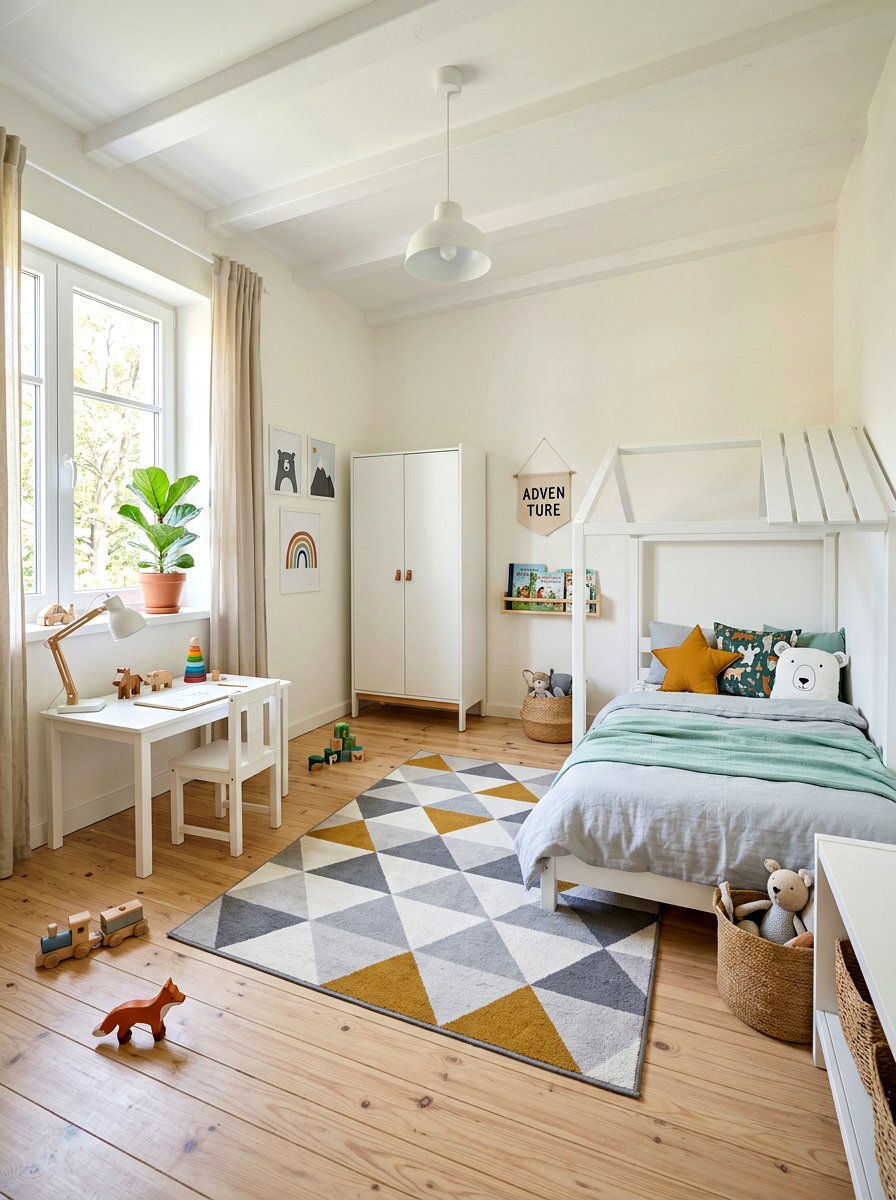
A Scandi style shared room is all about light, air, and natural materials, creating a serene environment that is perfect for sleep. Focus on using light woods like pine or birch paired with a crisp white or soft gray backdrop. Functional, simple furniture is a hallmark of this style, often featuring clever storage solutions that keep clutter at bay. Adding cozy textures like sheepskin rugs or chunky knit blankets brings in the "hygge" feeling of warmth and comfort. This design style is timeless and gender-neutral, making it an ideal choice for siblings of any age who want a peaceful and organized place to call their own.
25. Shared room with curtains
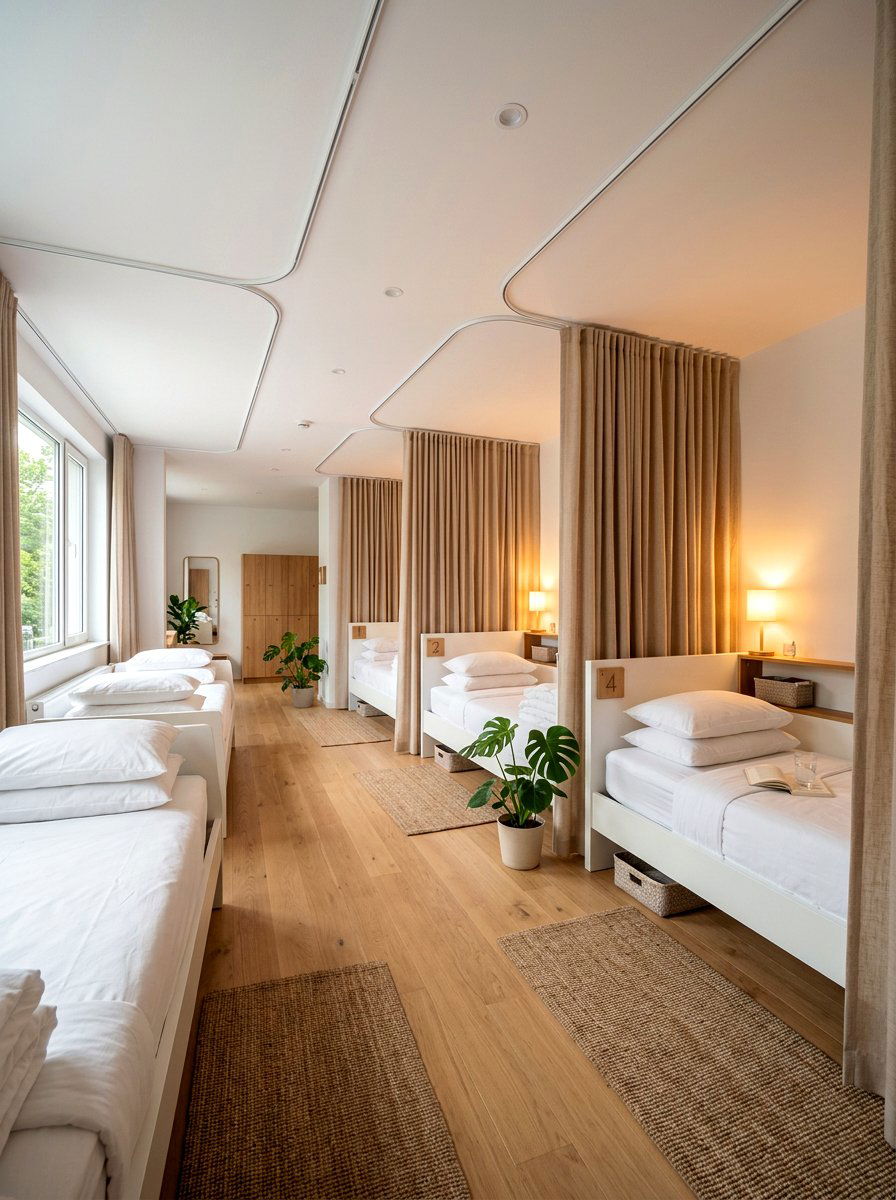
Installing curtains around beds in a shared room is one of the easiest and most effective ways to provide instant privacy. You can hang fabric panels from the ceiling or from the frame of a bunk bed to create a "cocoon" for each child. This is particularly helpful if one child likes to stay up reading while the other needs total darkness to sleep. It adds a soft, decorative element to the room and can make standard beds feel like luxurious four-posters. Curtains also help dampen noise, contributing to a better night’s sleep for both children in their cozy, private sleeping pods.
26. Play area in shared room
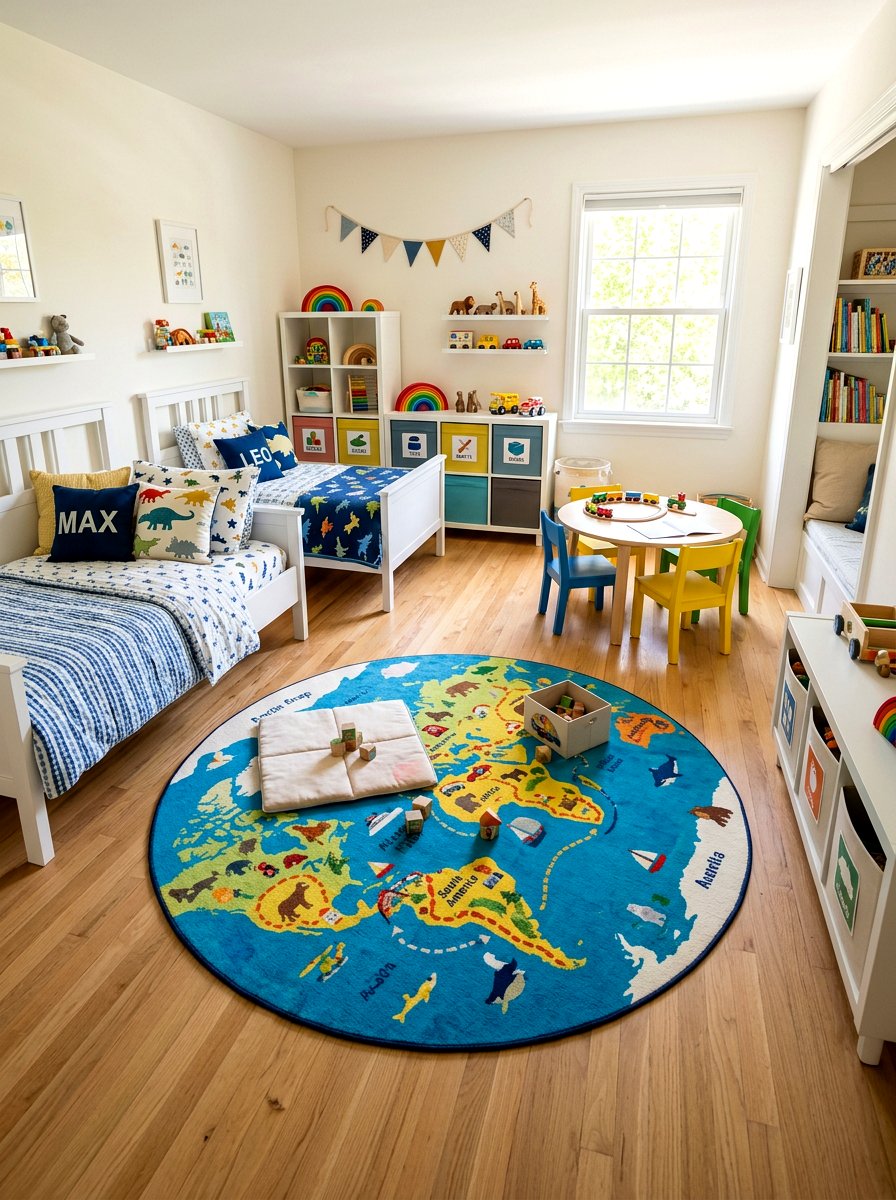
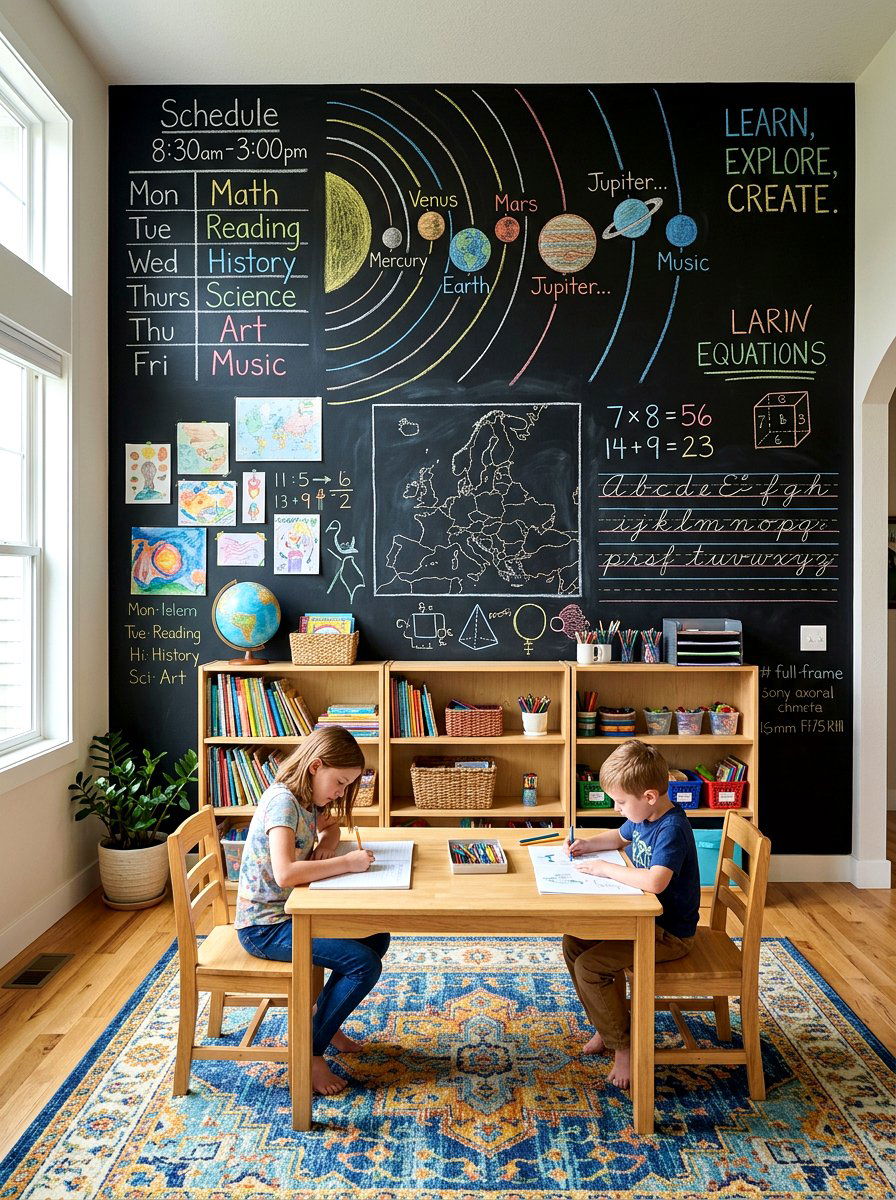
Carving out a dedicated play area in a shared room helps keep the mess contained and provides a central spot for sibling bonding. A large, soft rug can define this zone and provide a comfortable place for building blocks or playing board games. Use low, open bins to store toys so that kids can easily see what they have and help with cleanup when they are finished. If space is tight, a wall-mounted activity board or a chalkboard wall can provide entertainment without taking up any floor space. A well-designed play zone ensures the room is a place for fun as well as rest.
27. Shared bedroom wall decals
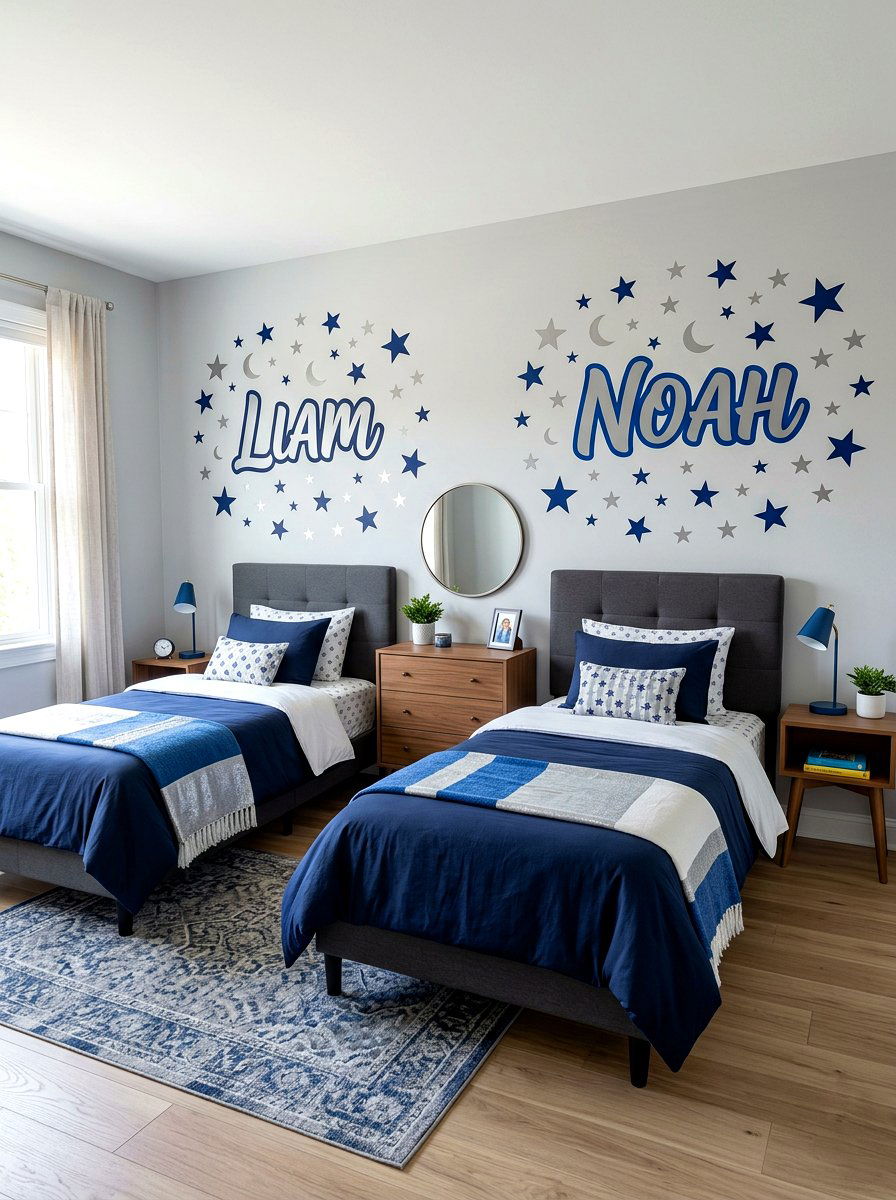
Shared bedroom wall decals offer a low-commitment way to personalize each child 's side of the room without the permanence of paint. You can use their names, favorite animals, or inspirational quotes to mark their individual territories. This is a great way to let kids have a say in the decor without disrupting the overall design theme. Decals are easy to apply and remove, making them perfect for renters or parents who know their kids' interests change rapidly. By using matching styles but different subjects, you can maintain a sense of unity while giving each child a unique and personalized backdrop for their bed.
28. Coastal shared bedroom
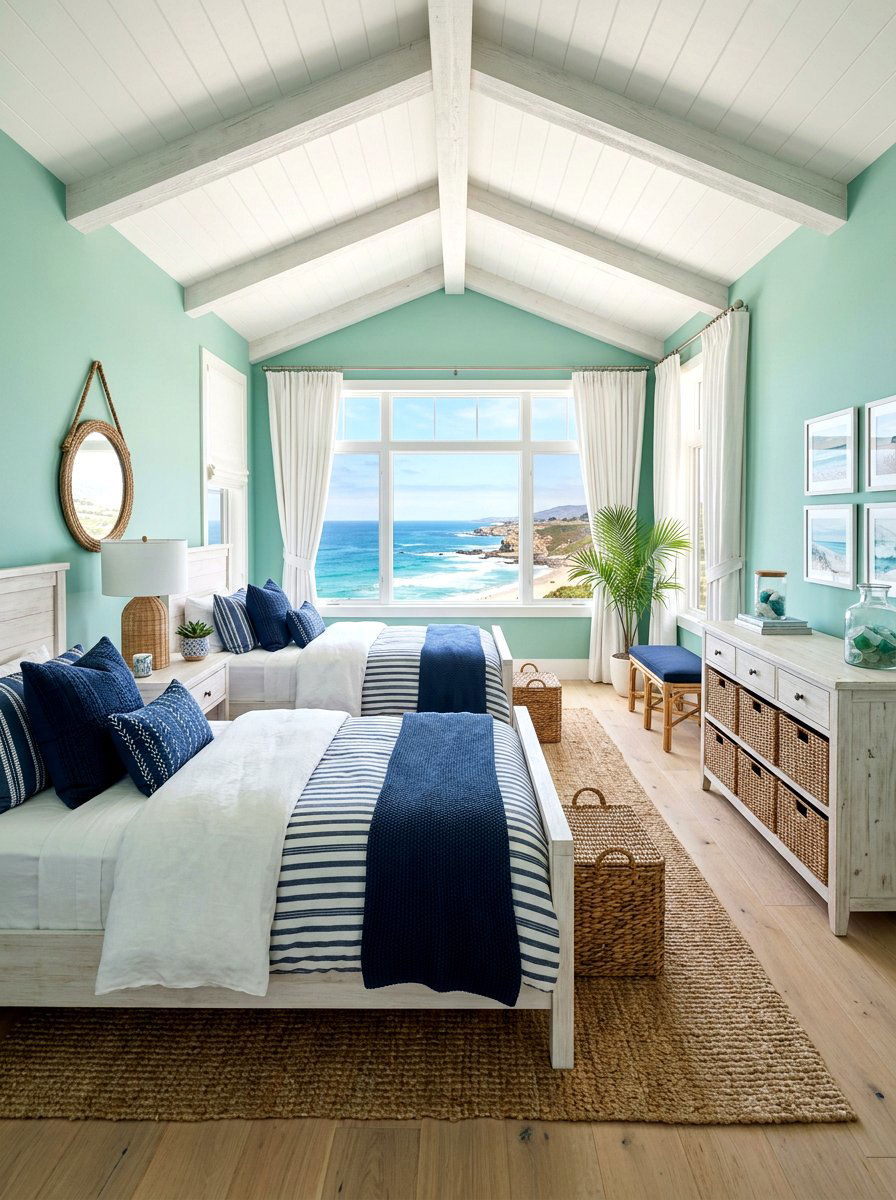
A coastal shared bedroom brings a breezy, relaxed vacation vibe to your home every single day. Use a palette of sandy beiges, crisp whites, and various shades of seafoam or navy blue to set the mood. Natural textures like jute rugs, rattan baskets, and light-washed wood furniture reinforce the seaside theme. You can add subtle nautical touches like rope details on mirrors or framed coral art without making it feel like a theme park. This style is naturally calming and promotes a sense of openness, making even a small shared room feel like a light-filled, airy sanctuary where kids can truly unwind and relax.
29. Shared room book storage
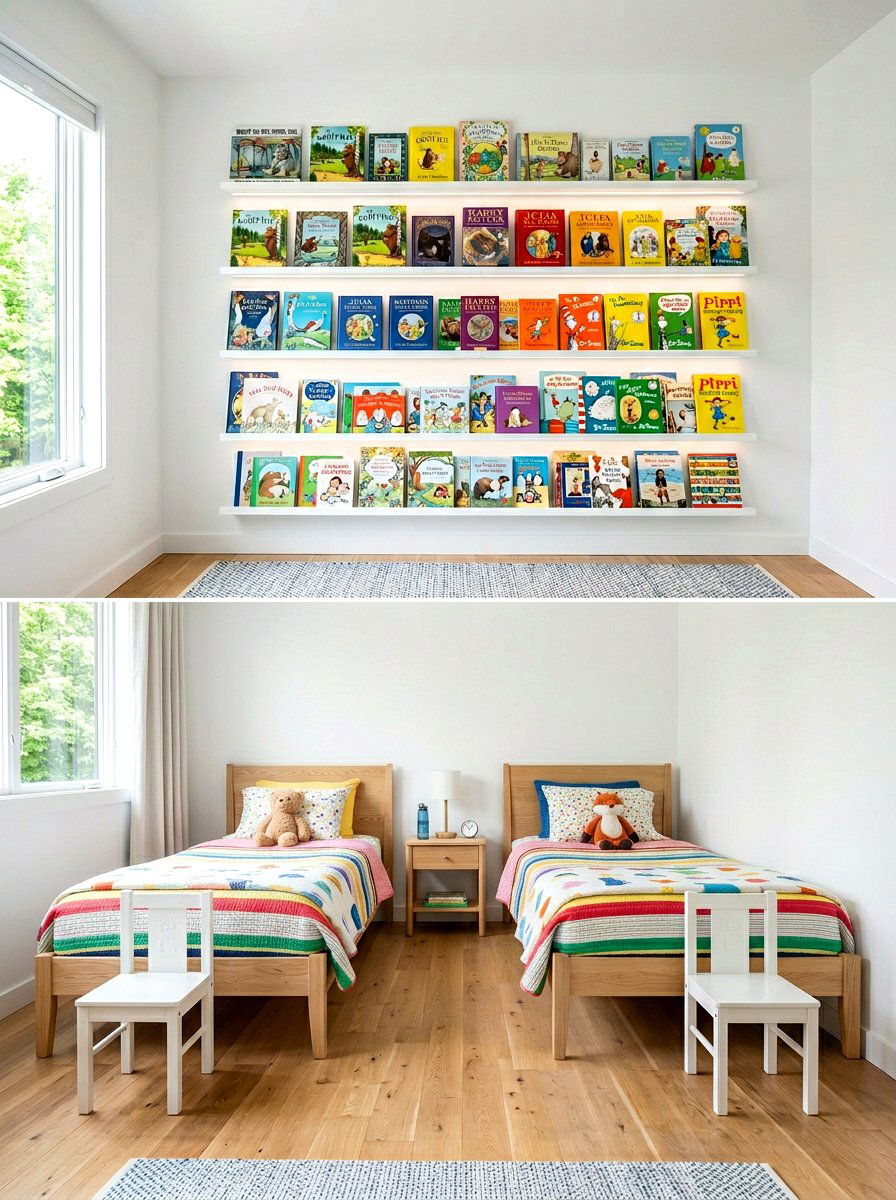
Managing book storage in a shared room is essential for keeping the space tidy and encouraging a daily reading habit. Using slim "picture book" ledges on the walls is a great way to display books facing forward, which is much more enticing for young children. You can give each child their own set of ledges next to their bed so they can keep their favorite stories within arm's reach. For larger collections, a central rotating bookcase or a shared library wall works well. Keeping books organized by color or size can also turn the storage unit into a beautiful piece of decor for the whole room.
30. Rustic shared kids bedroom
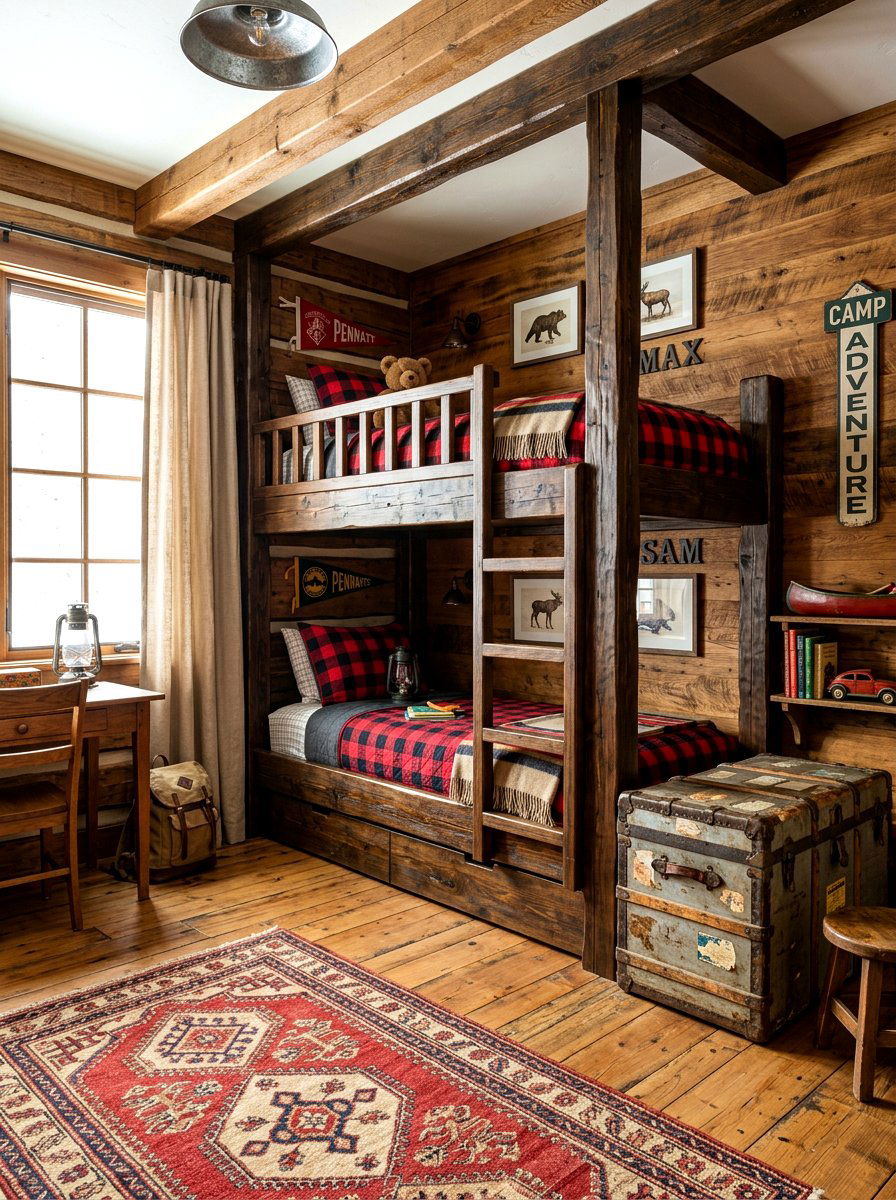
A rustic shared kids bedroom uses warm woods, vintage-inspired metal accents, and cozy textiles to create a timeless, rugged atmosphere. Think about using reclaimed wood for headboards or sturdy iron bunk beds that can withstand years of play. Buffalo plaid blankets and faux fur throws add layers of warmth and texture that make the room feel incredibly inviting. This style is perfect for creating a "camp-like" experience for siblings, fostering a sense of adventure and togetherness. It is a durable and practical design choice that looks even better with a little bit of wear and tear, making it perfect for active kids.
Conclusion:
Designing a shared kids 'room is a rewarding journey that balances practical needs with creative expression. By focusing on smart layouts, such as bunk beds or room dividers, you can provide each child with a sense of ownership even in a communal space. The key is to listen to your children' s preferences while maintaining a cohesive design that keeps the room looking organized and peaceful. Whether you choose a modern, minimalist, or colorful theme, a well-thought-out shared room fosters sibling bonding and teaches valuable lessons in cooperation. With the right storage and furniture choices, any shared bedroom can become a functional, stylish, and happy sanctuary for your children to grow in together.

Related posts: