Designing a shared space for siblings is a beautiful challenge that requires balancing personal identity with functional layout. It is about more than just fitting two beds into one area; it is about creating a cohesive environment where children can play, sleep, and grow together. Whether you are dealing with a small apartment or a large suburban home, the right styling can turn a cramped room into a sanctuary. You have to consider lighting, storage, and individual preferences while maintaining a unified aesthetic. This guide explores creative ways to organize furniture, choose color palettes, and select decor that works for every age group and personality type.
1. Shared Boy And Girl Bedroom
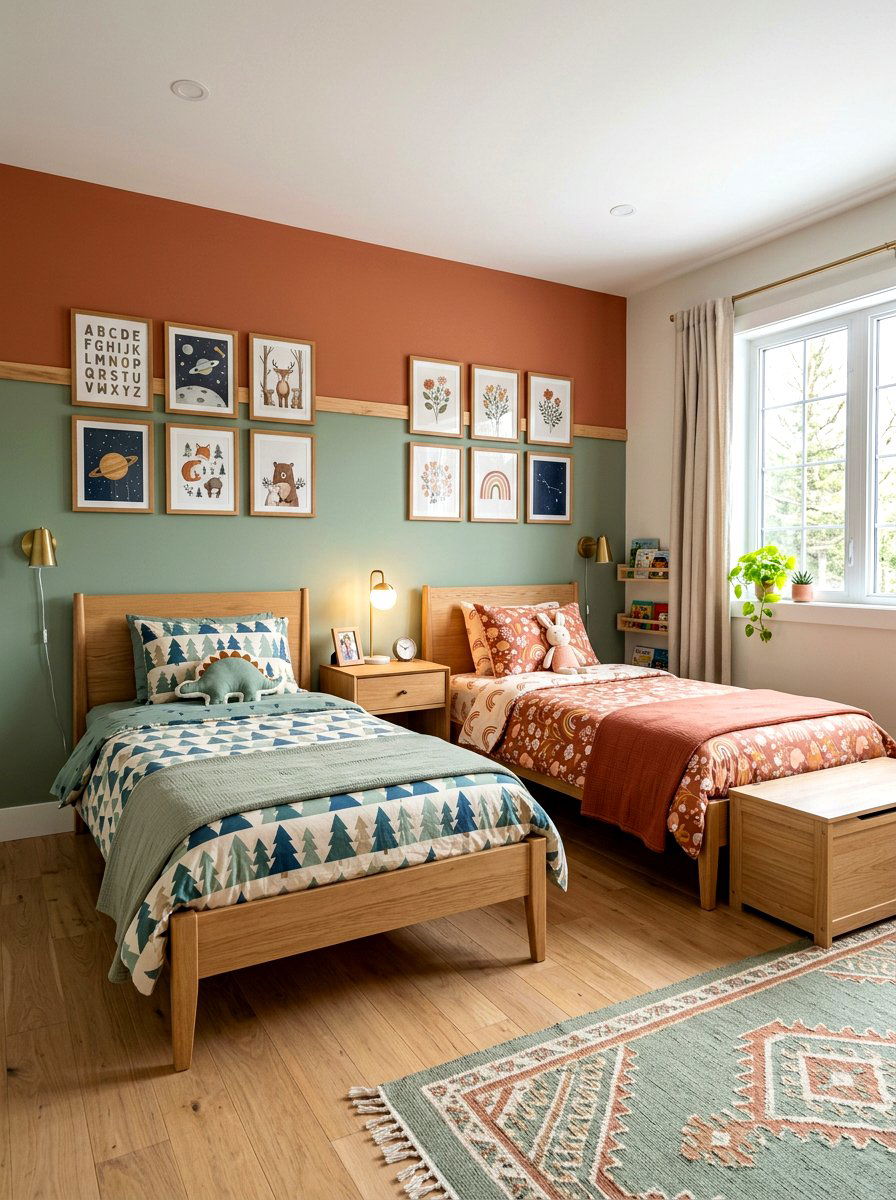
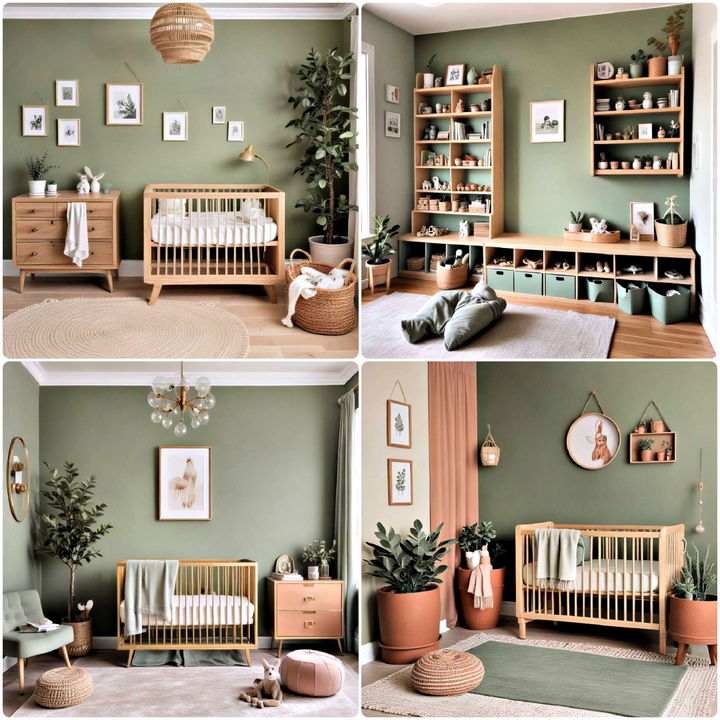
Creating a space for a brother and sister requires a clever approach to color and layout. You can use a split wall paint technique where one side is a soft sage green and the other a warm terracotta. This creates a visual boundary without feeling disconnected. Each child can have their own bedding that reflects their personality while staying within the same color family. Using a shared central nightstand helps save space and keeps the room feeling open. Adding personal art above each bed makes the kids feel like they have their own special area within the large room.
2. Neutral Shared Toddler Room
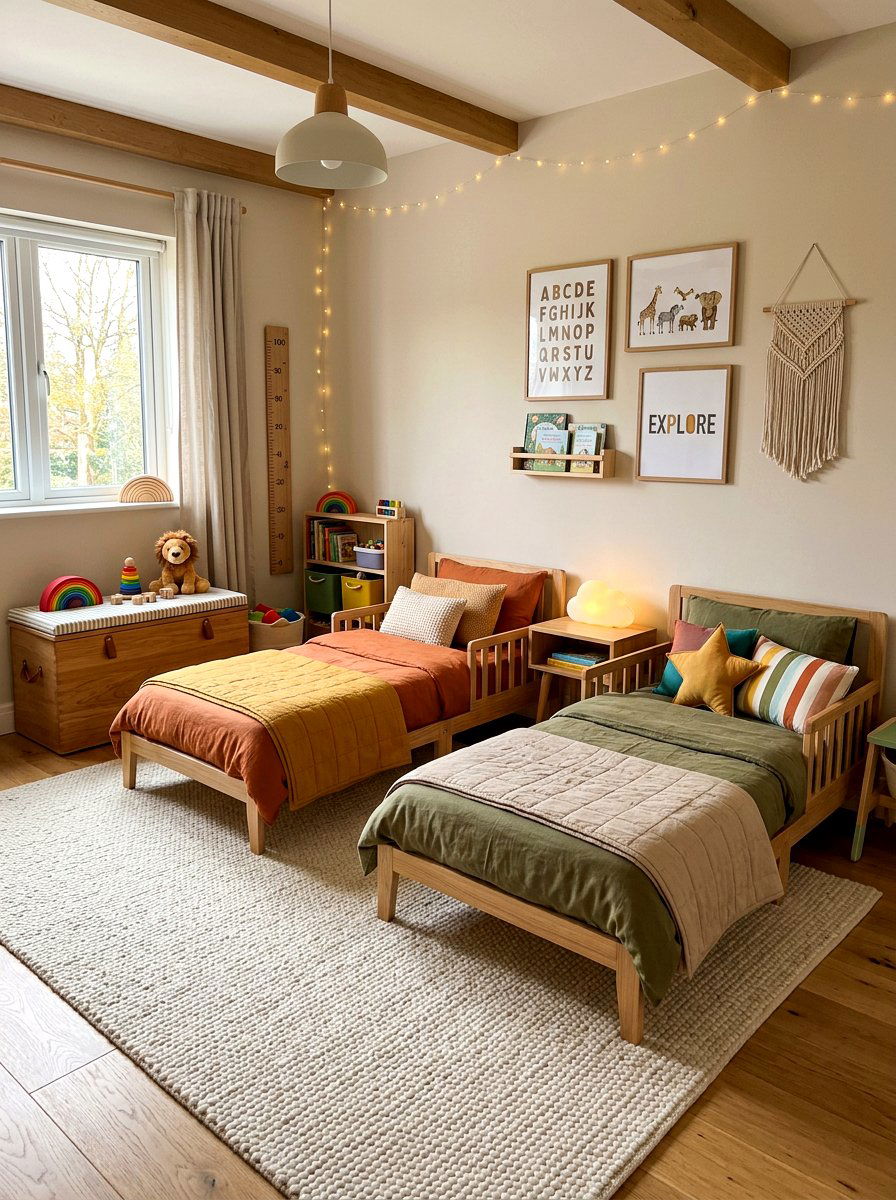
A neutral palette is perfect for toddlers because it creates a calm environment that is conducive to sleep and play. You should focus on soft textures like wool rugs and cotton bedding in shades of cream, beige, and light gray. Low-profile beds are a great choice for safety, ensuring that little ones can easily climb in and out. Adding a large wooden toy chest at the foot of the beds provides ample storage while keeping the floor clear for activities. Warm, dimmable lighting helps transition from playtime to bedtime smoothly while maintaining a cozy, safe atmosphere.
3. Small Shared Kids Bedroom
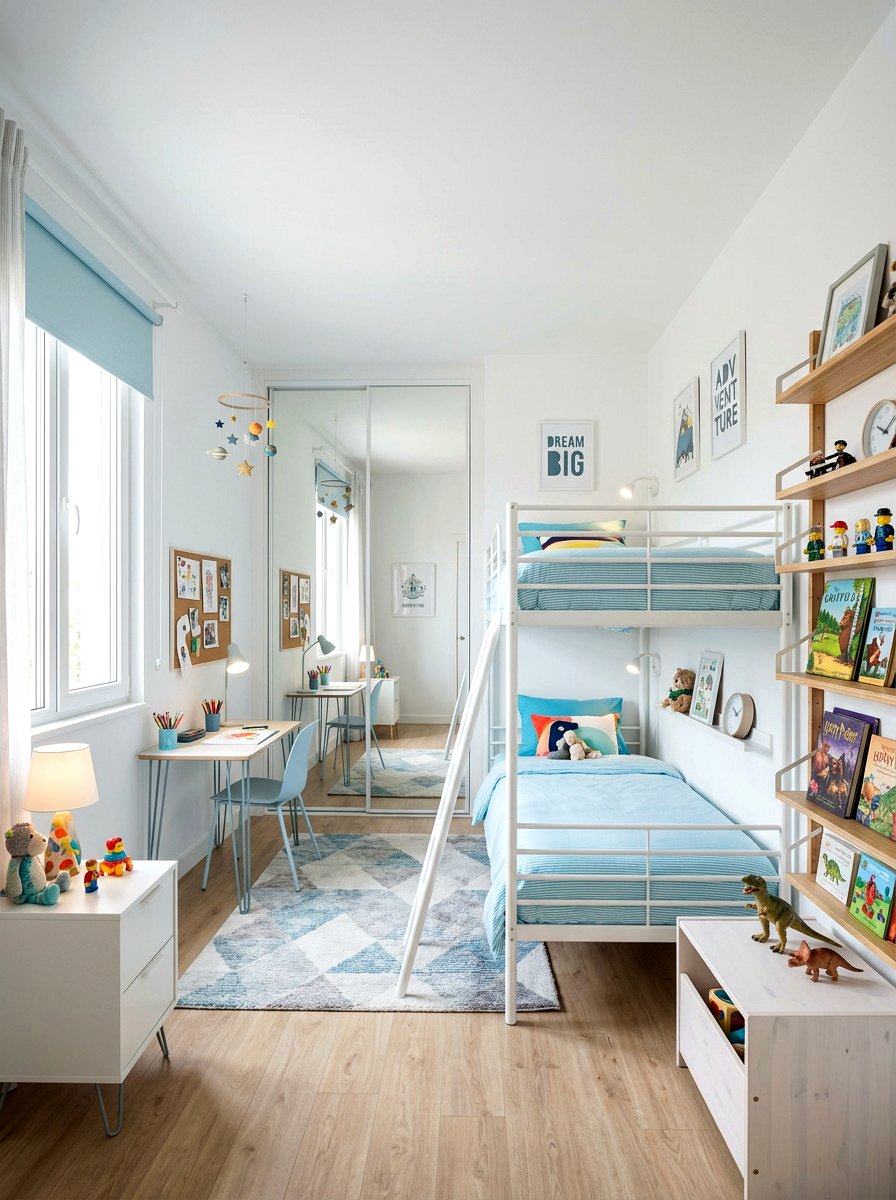
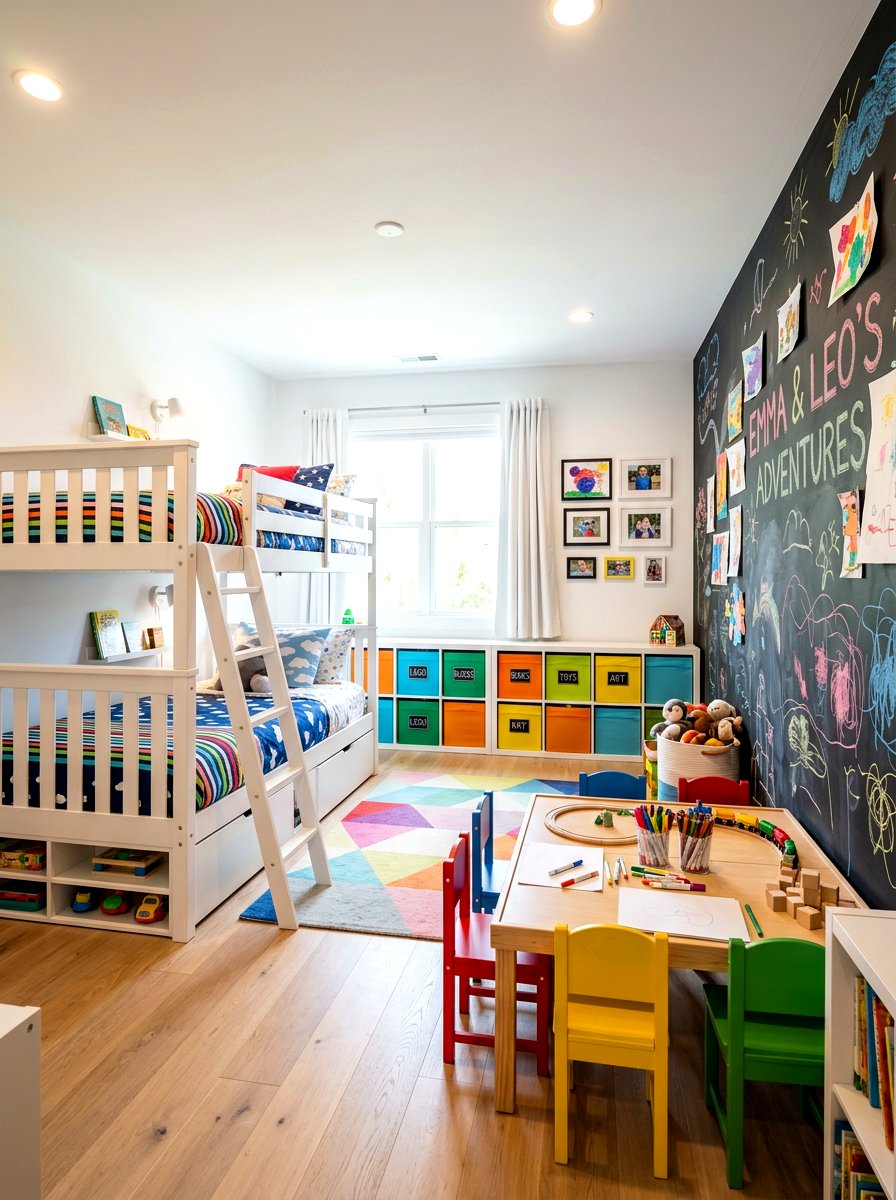
When you are working with a tight floor plan, maximizing vertical space becomes the top priority for a functional layout. Using a standard bunk bed is a classic solution, but you can elevate the look with integrated wall shelving for books and toys. Keep the walls painted in a bright white or very light blue to help the room feel more expansive and airy. Choose furniture with thin legs to maintain a sense of openness on the floor. Mirrored closet doors can also be a great trick to reflect light and make the small space feel twice as large.
4. Modern Bunk Bed Room
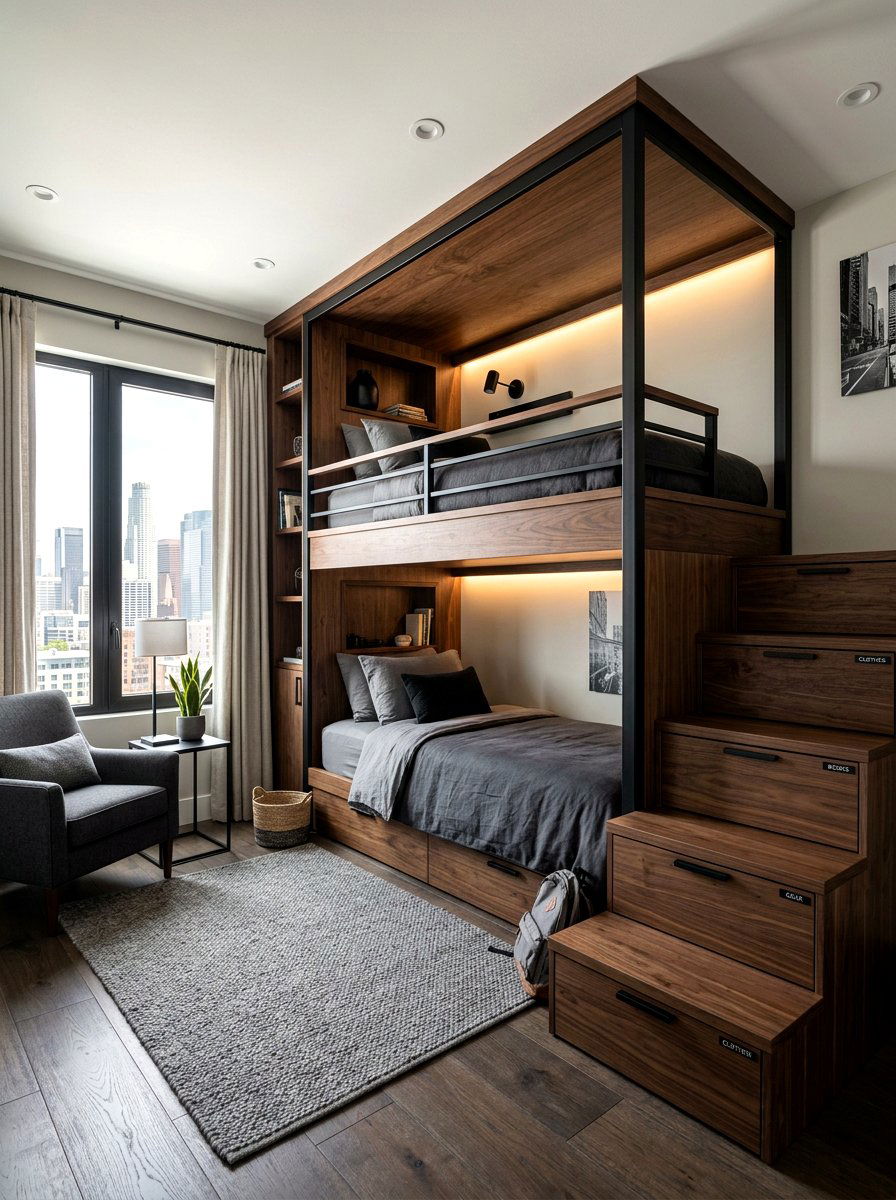
A modern approach to bunking involves sleek lines and built-in features that look like a seamless part of the architecture. You can opt for a custom-built frame that includes wide stairs instead of a ladder, providing extra safety and hidden storage drawers. Dark wood or matte black metal finishes give the room a sophisticated feel that can grow with the children as they age. Pairing these structural beds with simple, monochromatic linens creates a clean look. Recessed LED lighting inside each bunk adds a personal touch for nighttime reading without disturbing the other sibling.
5. Symmetrical Twin Bed Room
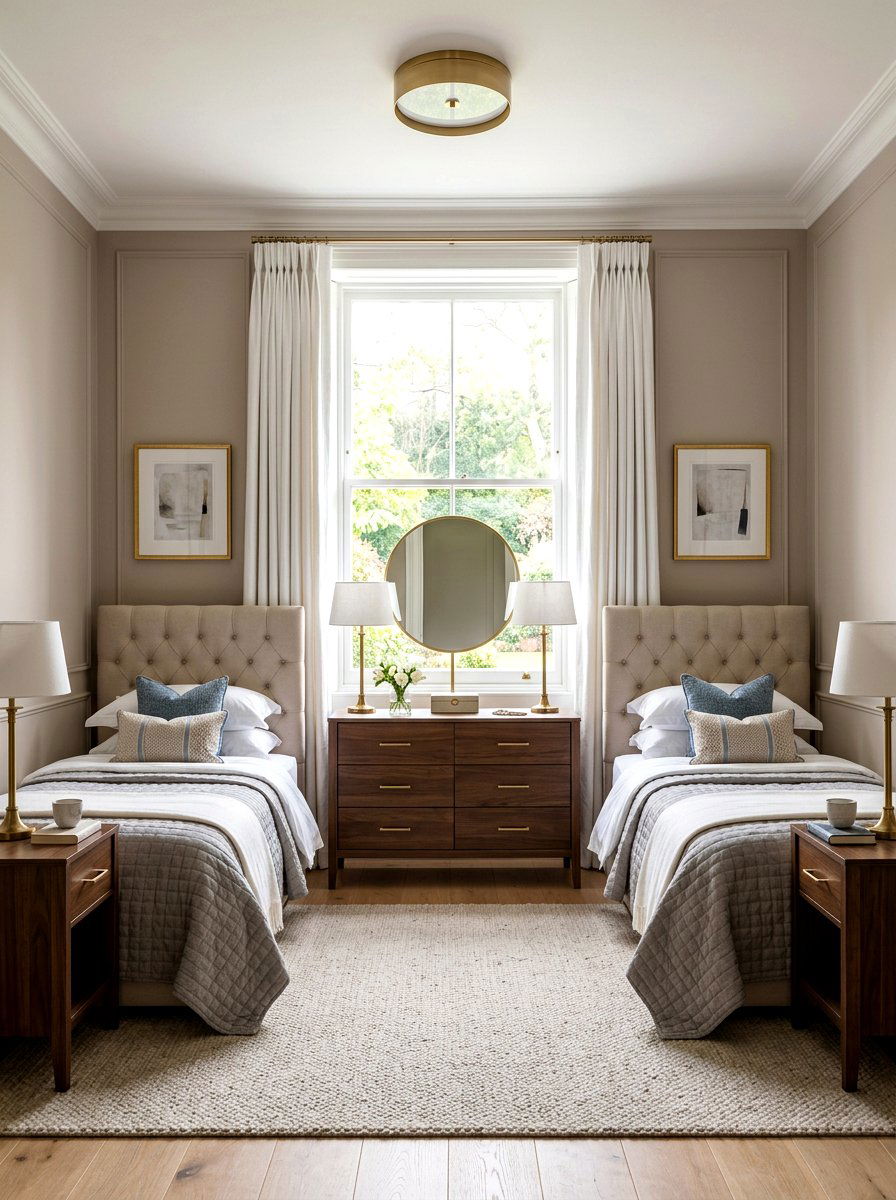
Symmetry brings an immediate sense of order and calm to a shared living space, making it feel very intentional. You can place two identical twin beds on opposite walls with a shared large window or a double dresser between them. This layout works exceptionally well in square rooms and helps eliminate arguments over who has the better setup. Use matching headboards and identical lamps to reinforce the harmony of the design. Letting each child choose a different colored throw blanket allows for subtle personalization while keeping the overall room aesthetic perfectly balanced and visually organized.
6. L Shaped Bed Layout
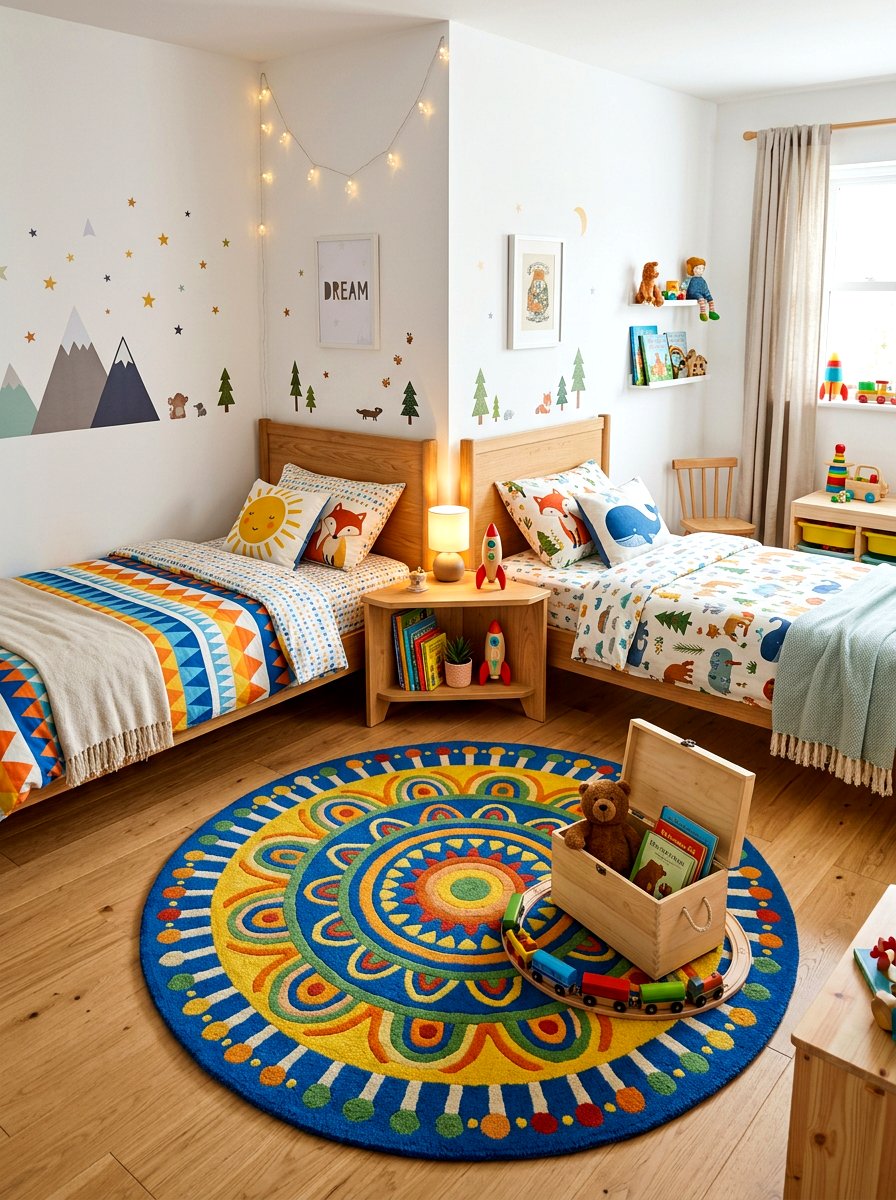
An L-shaped arrangement is a fantastic way to open up the center of the room for a shared play area. You place the beds in a corner so they meet at the headboards, which creates a cozy and private feel for both children. This layout is especially useful in narrow rooms where side-by-side beds might feel too crowded or block the walkway. You can add a small corner table where the beds meet to hold a shared lamp and a few favorite books. Using a large, round rug in the center ties the entire space together beautifully.
7. Shared Room Partition Layout
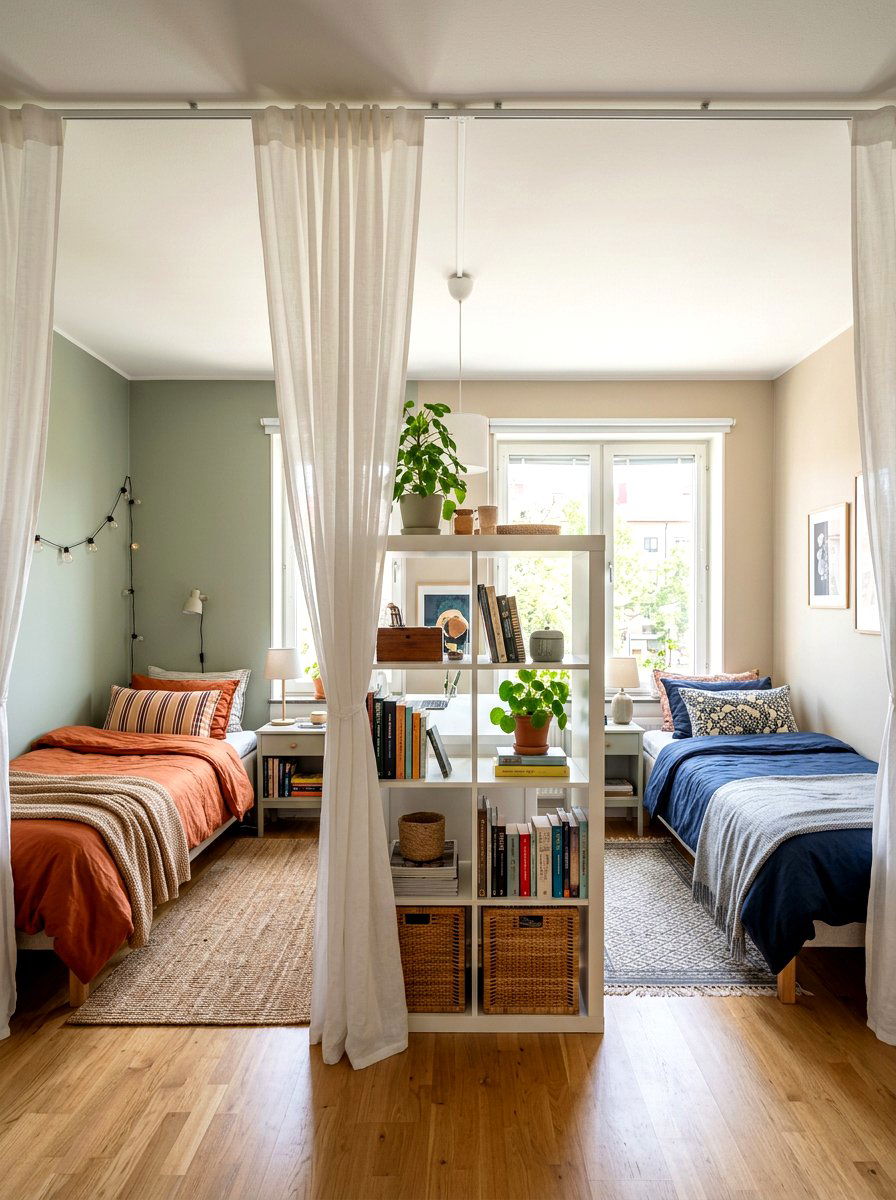
If your children are craving a bit of independence, using a physical partition is a smart way to divide the space. A tall, open-backed bookshelf can serve as a room divider that provides storage for both siblings while letting light pass through. You could also install a ceiling track with a heavy fabric curtain that can be pulled closed at night for maximum privacy. This setup allows one child to sleep while the other reads with a small lamp. It transforms a single bedroom into two mini-suites, giving each child a much-needed sense of personal territory.
8. Loft Bed Workspace Room
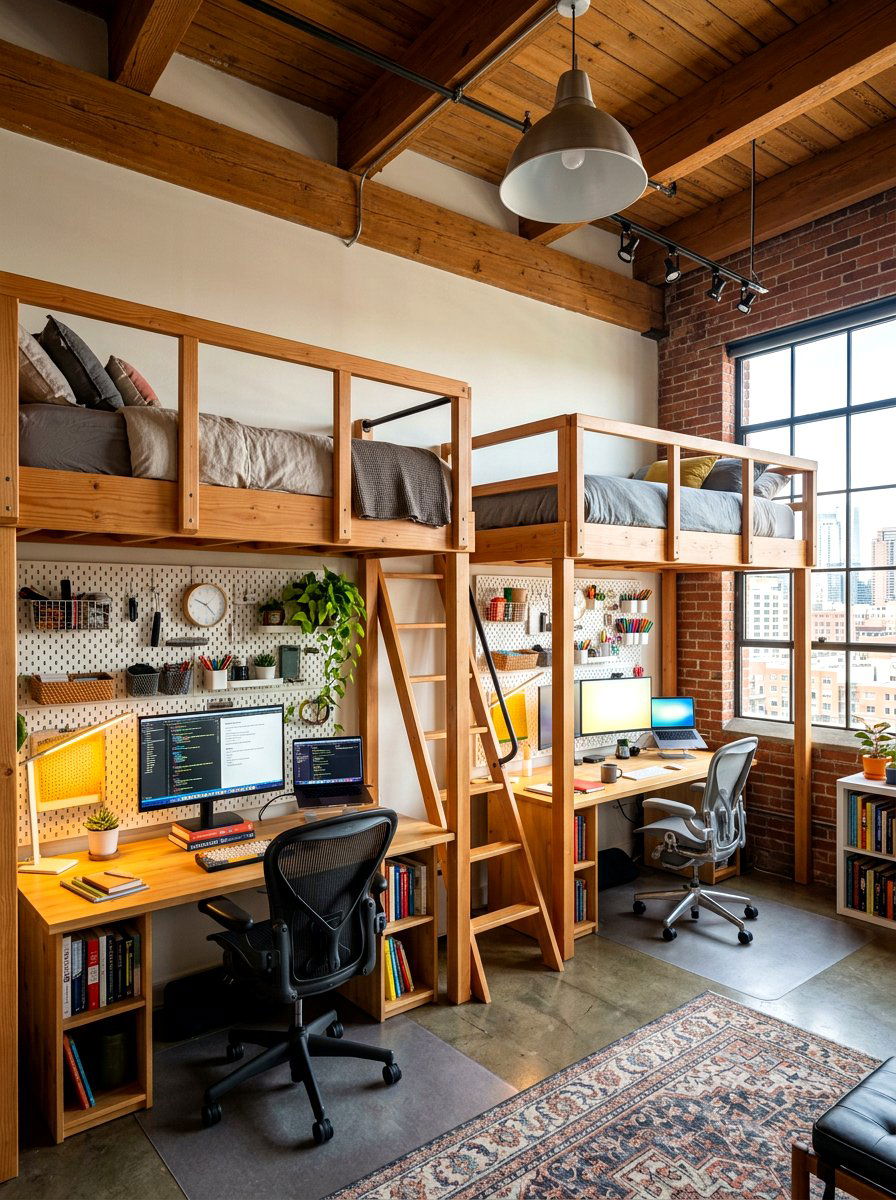
For older siblings who need a dedicated spot for schoolwork, a loft bed setup is the ultimate space-saving solution. By elevating the mattress, you free up the entire floor area beneath for a full-sized desk and a comfortable ergonomic chair. This design works best in rooms with high ceilings to ensure there is plenty of headroom for both levels. Each sibling can have their own private workstation directly under their bed, which helps minimize distractions during homework time. Adding cork boards or pegboards on the walls nearby allows them to display their own personal notes and art.
9. Minimalist Shared Kids Space
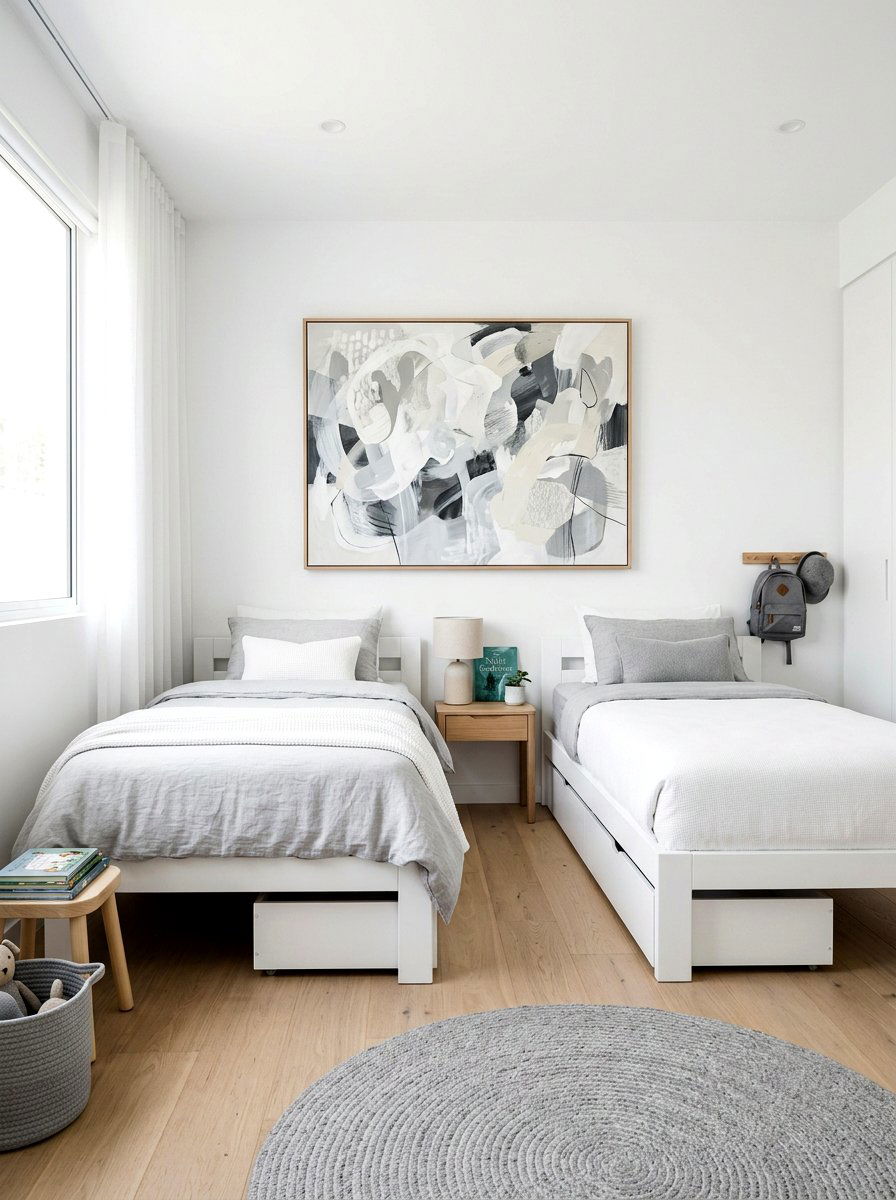
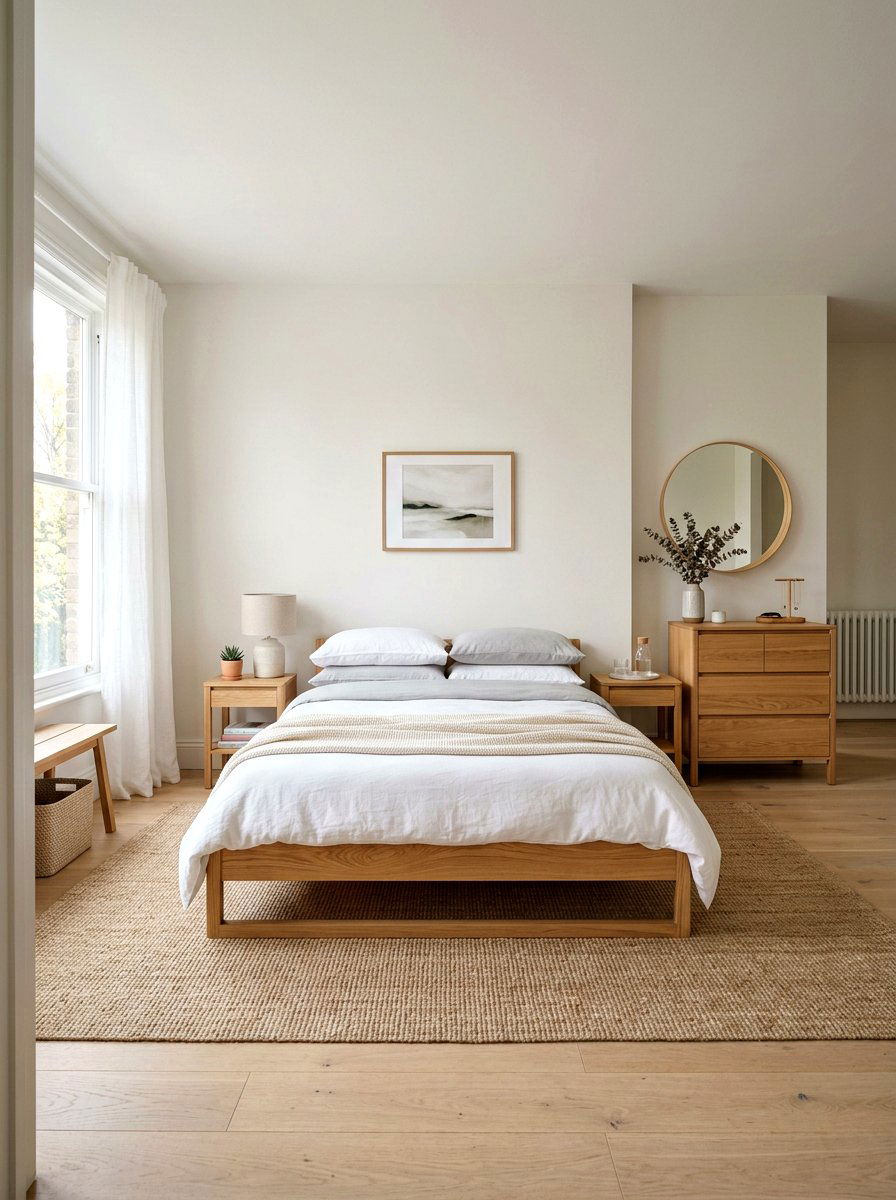
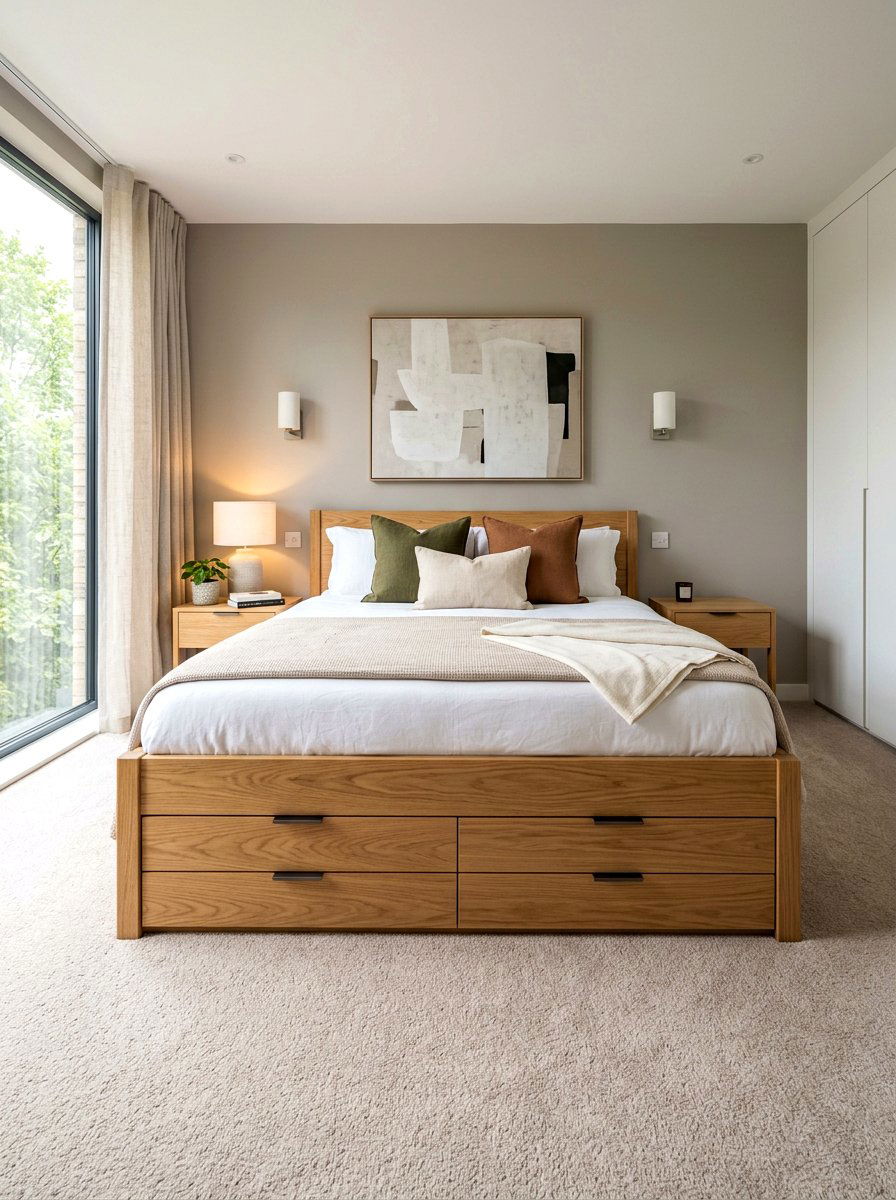
Adopting a minimalist style helps reduce visual clutter and creates a serene environment for rest and relaxation. You should focus on high-quality furniture with clean lines and a very limited color palette of whites and natural wood tones. Using hidden storage solutions, like under-bed drawers or a large walk-in closet with labeled bins, keeps toys and clothes out of sight. A single large piece of abstract wall art can act as the focal point for the room. This approach is ideal for children who get overstimulated easily and need a quiet, organized place to unwind.
10. Triple Bunk Bed Room
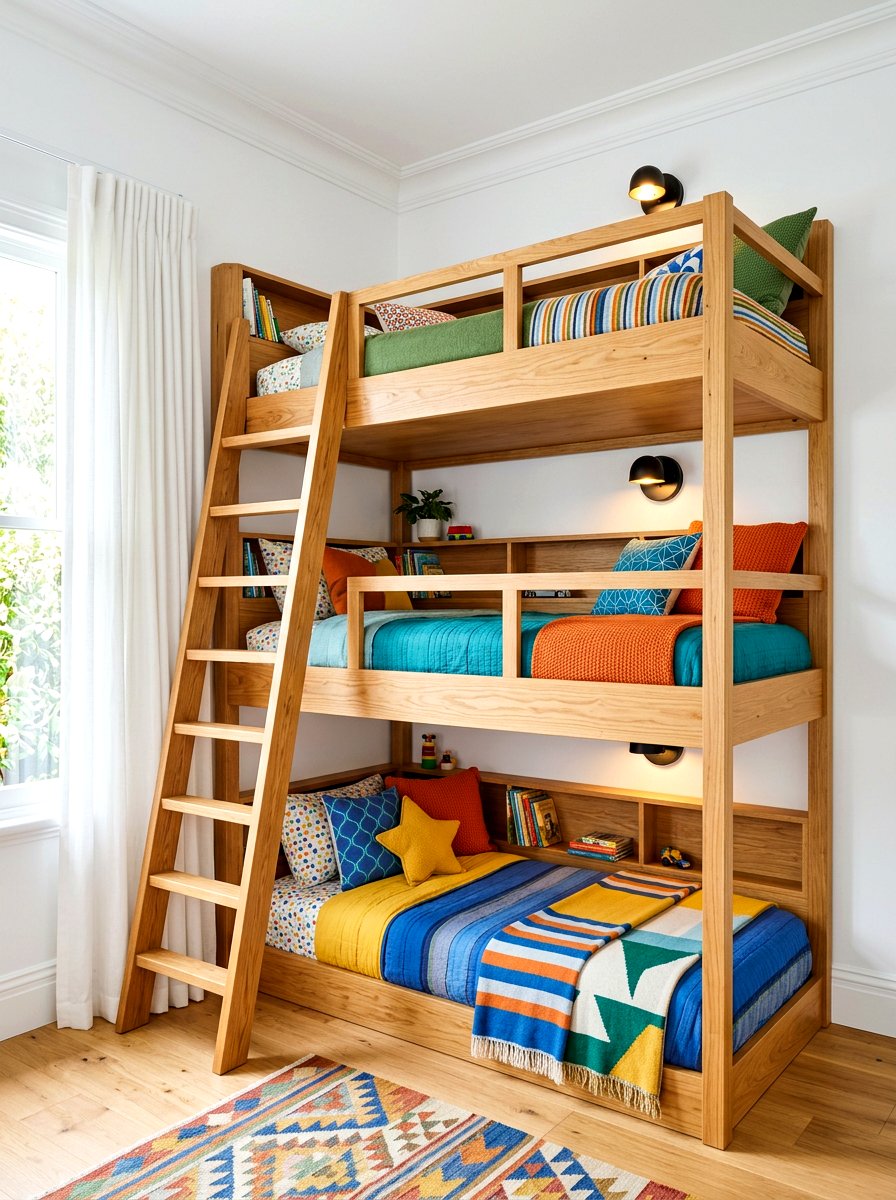
Designing a room for three siblings requires a creative vertical layout that doesn't sacrifice comfort or accessibility for everyone. A triple bunk bed that spans from floor to ceiling is a powerful way to utilize a single wall for all sleeping quarters. You can stagger the beds in an offset pattern to give the middle and bottom bunks a more open and less claustrophobic feel. Using individual wall-mounted sconces for each level ensures that everyone has their own light source. Sturdy railings and a secure ladder are essential safety features for this high-density sleeping arrangement.
11. Playroom Sibling Shared Room
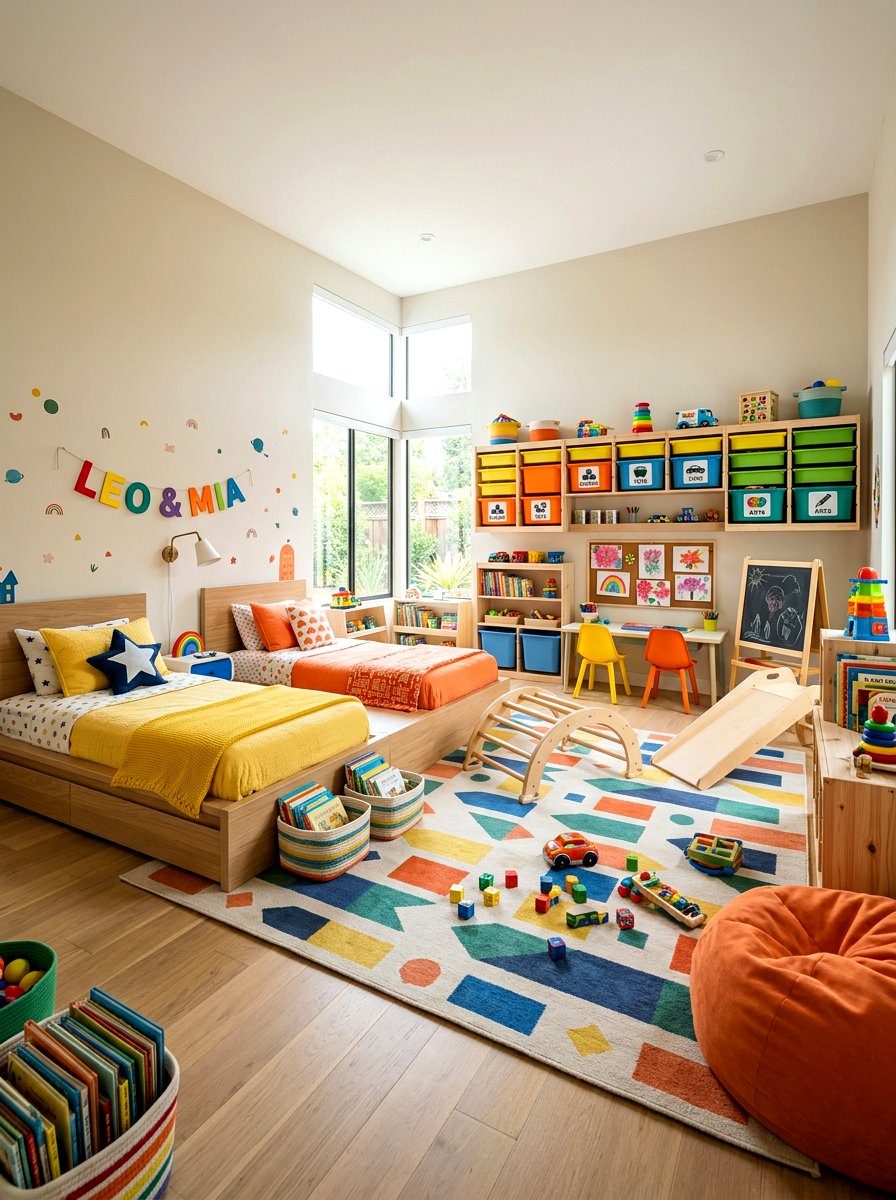
When the bedroom also serves as the primary playroom, the design should emphasize flexibility and durable, easy-to-clean materials. You can use low-profile platform beds that double as seating during the day for reading or playing video games. A large, durable area rug with a playful pattern provides a comfortable spot for floor activities like building blocks or puzzles. Wall-mounted bins at a child’s height encourage them to clean up their own toys after they are finished playing. Bright, energetic accent colors like yellow or orange can help stimulate creativity and make the room feel fun.
12. Boho Style Shared Room
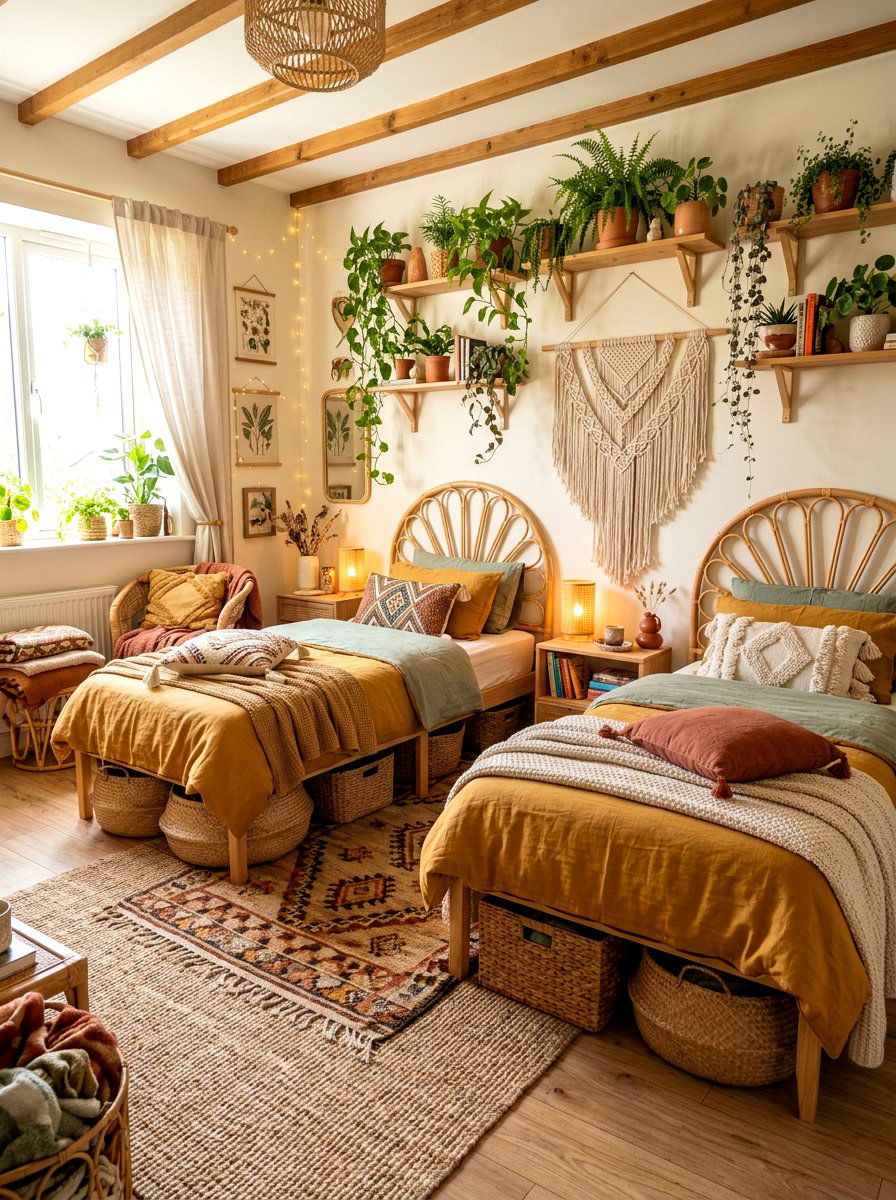
A bohemian design is perfect for creating a cozy, whimsical atmosphere that feels warm and inviting for children of all ages. You can incorporate natural materials like rattan headboards, woven baskets, and macramé wall hangings to add rich texture. Using a mix of layered rugs in different patterns creates a soft and playful floor space for siblings to hang out on. Choose a palette of earthy tones like mustard, rust, and sage to keep the room feeling grounded. Hanging a few indoor plants in safe, high locations adds a fresh and lively element to the space.
13. Scandinavian Shared Kids Room
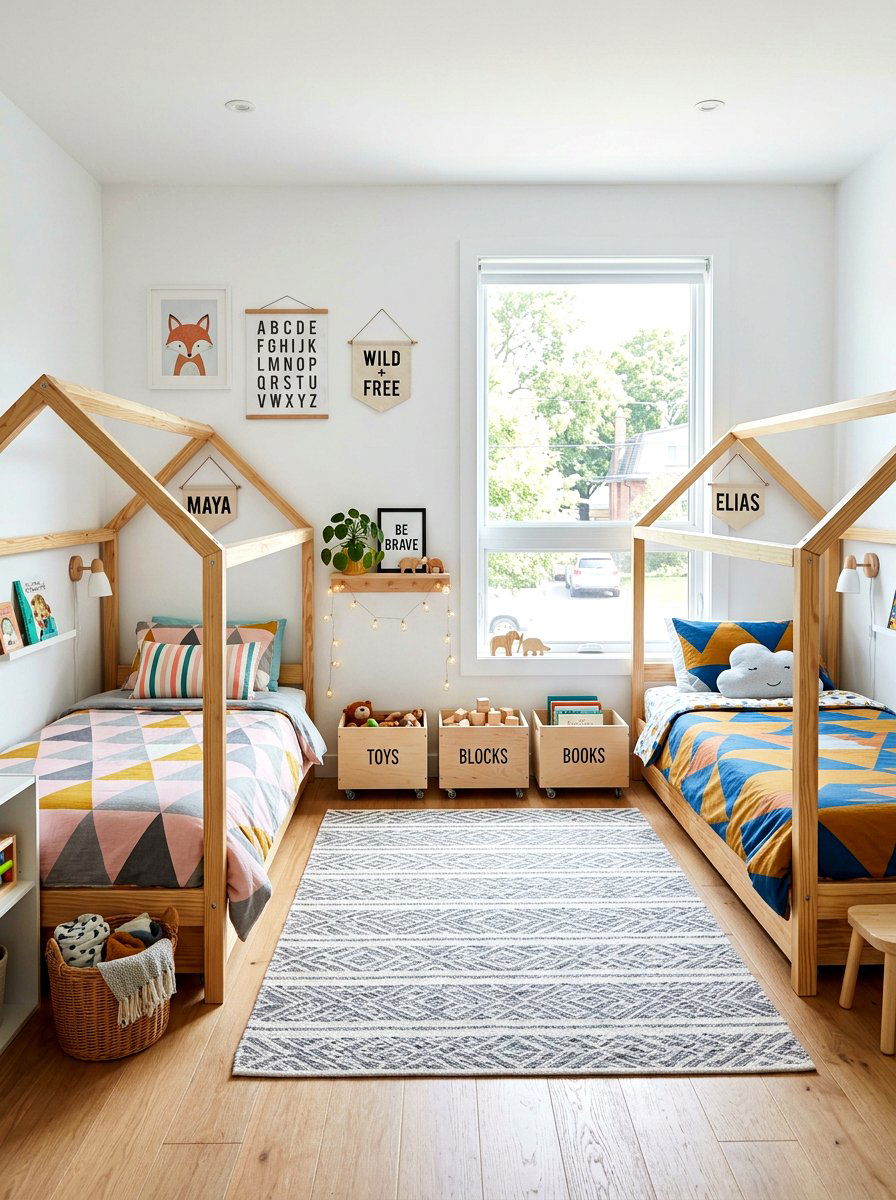
The Scandinavian look is characterized by its use of light woods, functional furniture, and a bright, airy color scheme. You can choose simple house-shaped bed frames made of pine to add a touch of playful architectural interest to the room. Keeping the walls white helps maximize natural light, which is a core element of this specific design style. Use textiles with simple geometric prints or nature-inspired motifs to add visual interest without overwhelming the space. Functional storage pieces, like rolling wooden crates, make it easy for children to move their favorite toys around the room.
14. Nursery And Toddler Shared Room
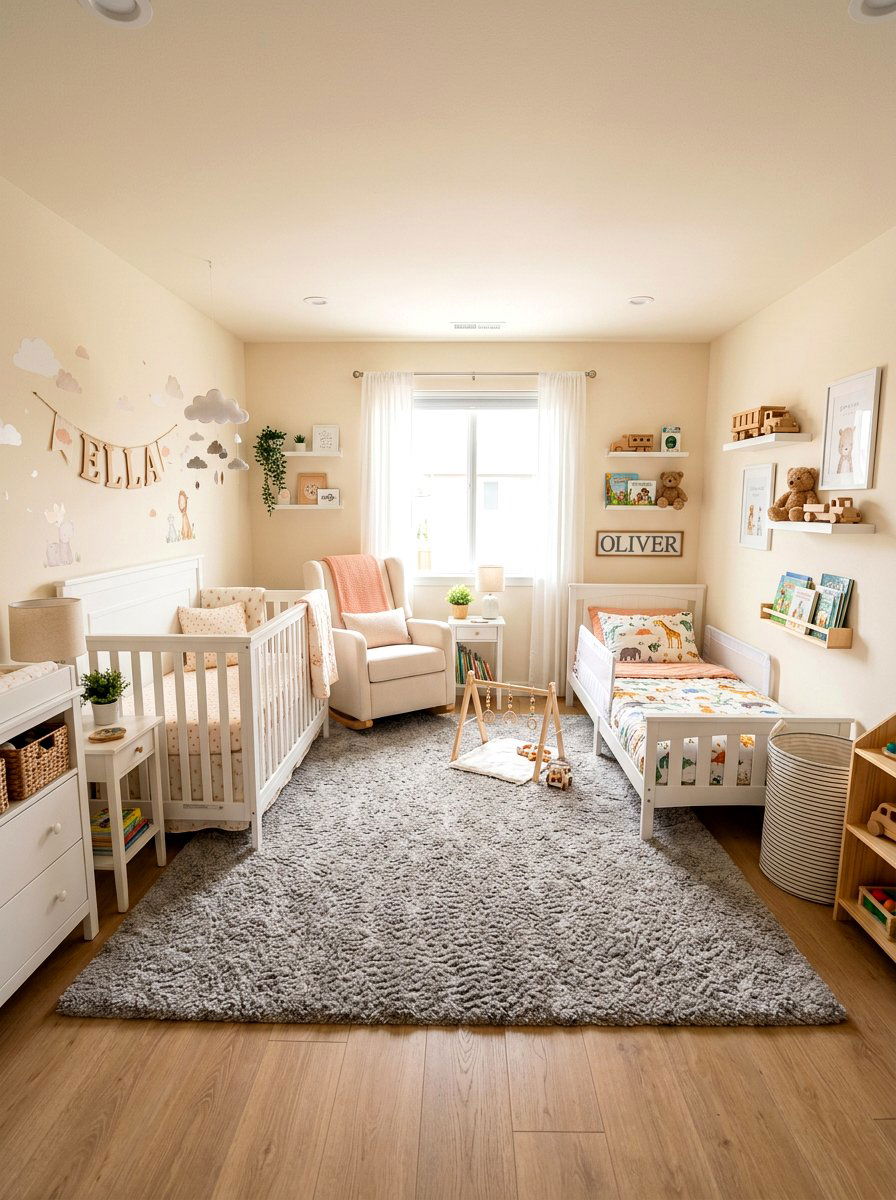
Sharing a room between a baby and a toddler requires careful planning to accommodate two very different schedules and needs. You can place the crib in a quiet corner away from the main play area to help the baby sleep through the toddler’s activities. Using a soft, plush rug helps muffle the sound of footsteps and falling toys during nap times. A comfortable rocking chair in the center of the room can serve as a shared spot for nursing or reading bedtime stories. Choosing a soft, pastel color palette helps create a soothing environment for both children.
15. Built In Bunk Wall Room
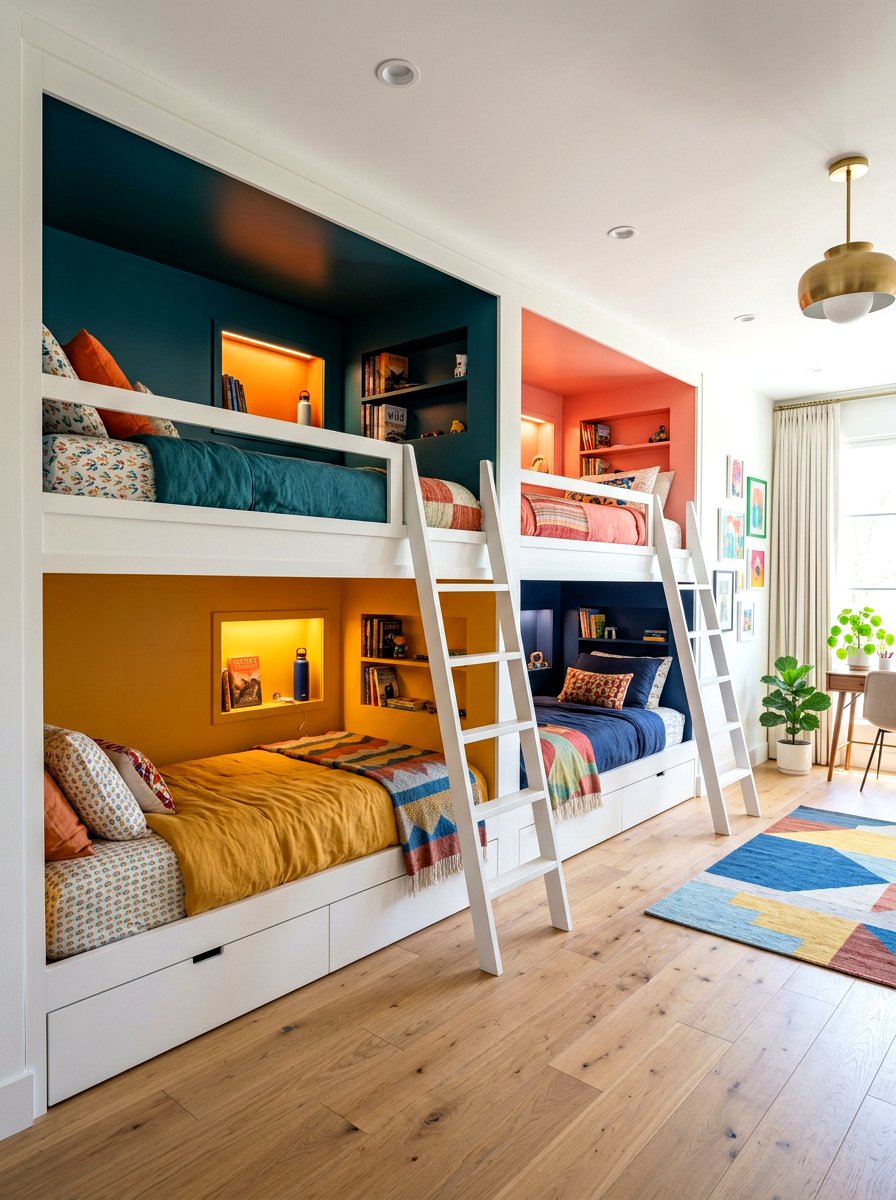
A built-in bunk wall offers a high-end, custom look that maximizes every inch of space along a single side of the room. By framing the beds into the wall, you create a flush surface that leaves the rest of the floor completely open. You can include integrated niches next to each pillow to serve as built-in nightstands for water bottles and small clocks. Painting the interior of each bunk a different color can provide a fun and personalized touch for each sibling. This permanent structure adds significant value and a very polished, architectural feel to the home.
16. Shared Teen Sister Room
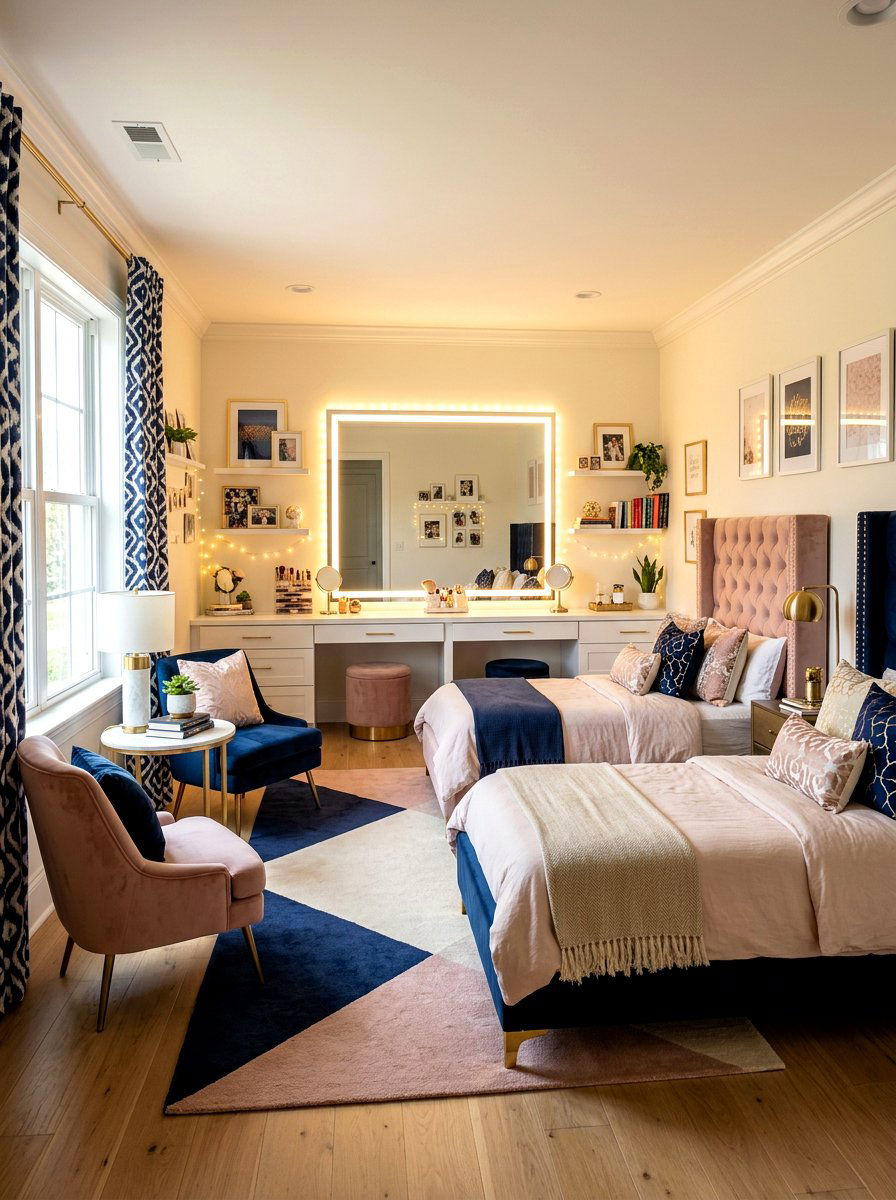
As girls enter their teenage years, their shared room needs to transition from a playroom into a sophisticated social sanctuary. You can replace twin beds with full-sized mattresses if space allows, using elegant upholstered headboards for a more mature look. A large vanity or a shared dressing area with a high-quality mirror and bright lighting is a great addition for morning routines. Use a palette of sophisticated colors like navy, charcoal, or blush to create a more grown-up atmosphere. Adding a small seating area with velvet chairs provides a private spot for them to chat with friends.
17. Modern Farmhouse Shared Room
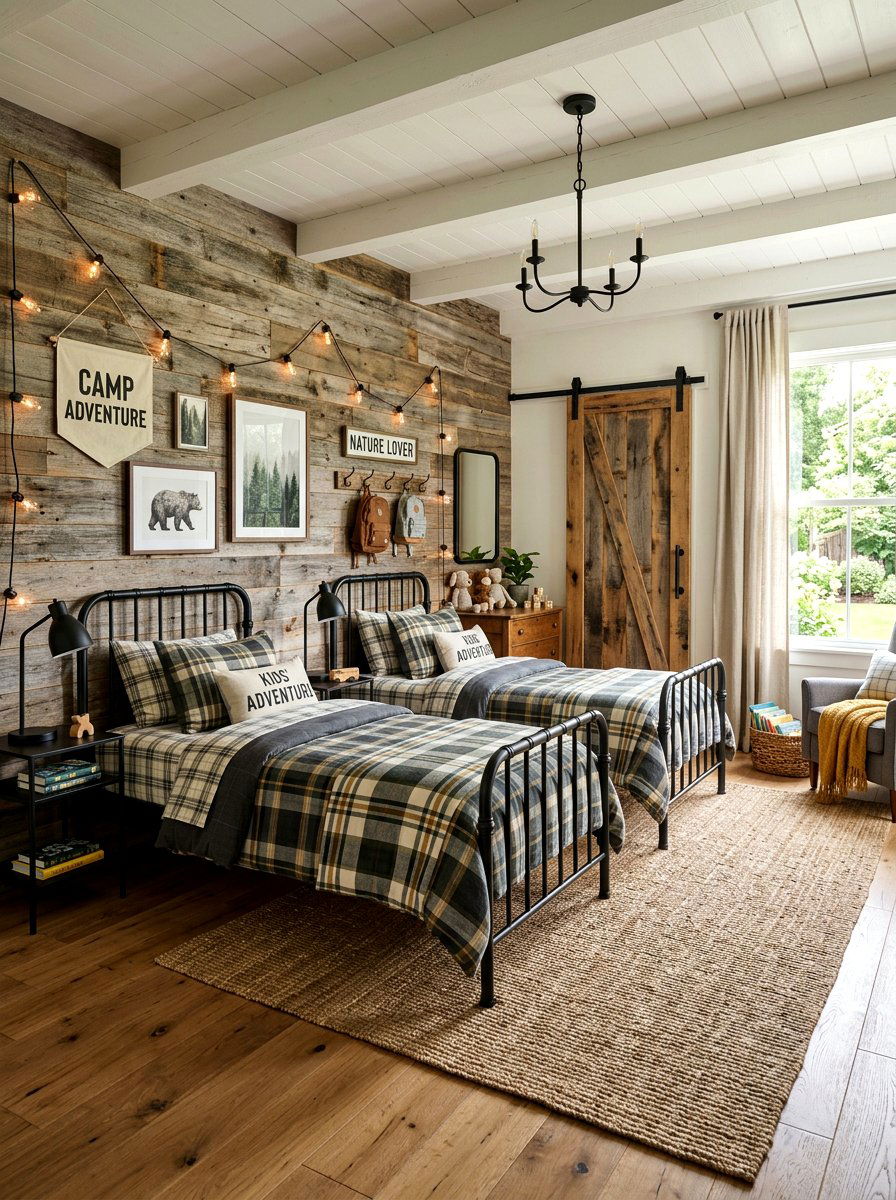
The modern farmhouse style combines rustic charm with clean, contemporary lines to create a very cozy and timeless bedroom environment. You can use iron bed frames and reclaimed wood accents to bring in that classic, lived-in feel that many people love. Neutral walls paired with black hardware and light fixtures provide a sharp contrast that looks very stylish. Using plaid or striped bedding in muted tones adds a touch of traditional pattern without feeling dated. A large sliding barn door for the closet is a functional and iconic feature that perfectly completes this popular design theme.
18. Shared Reading Nook Room
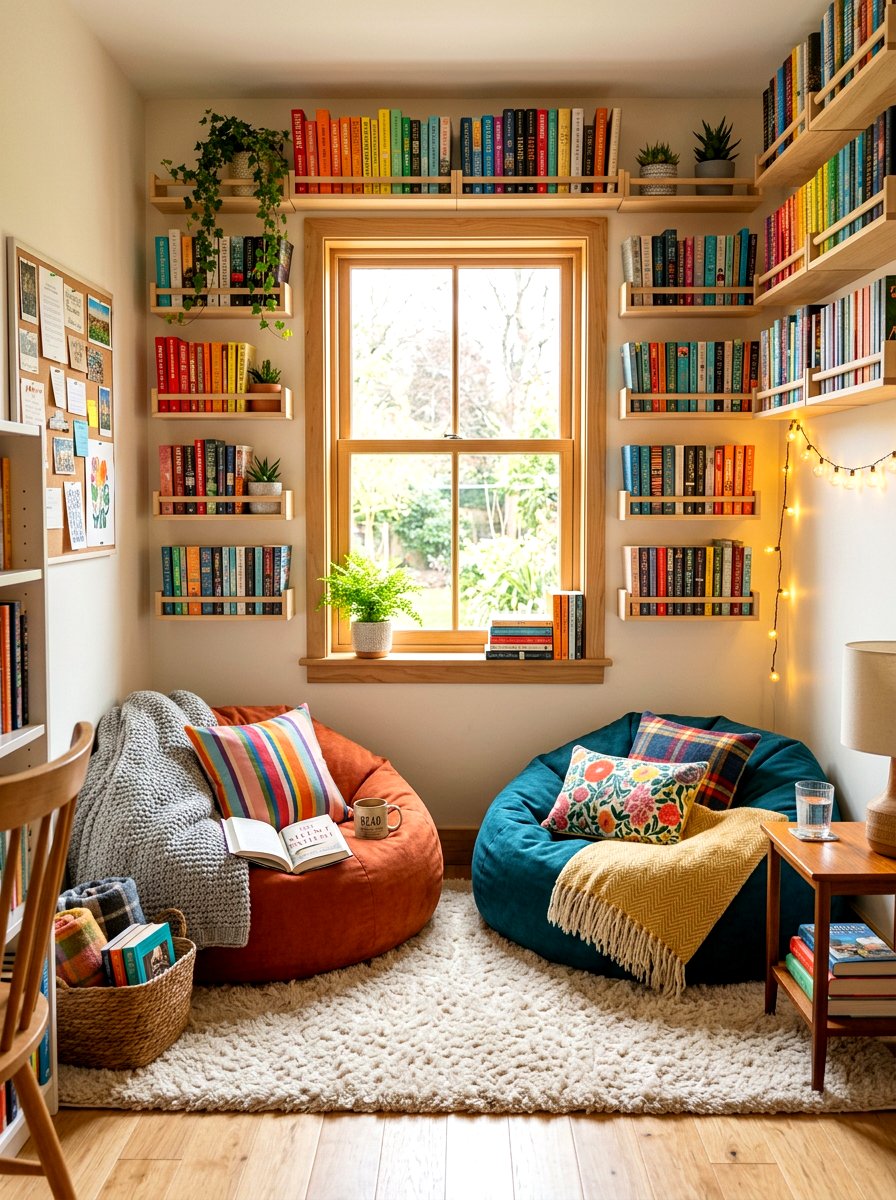
Incorporating a dedicated reading area is a wonderful way to encourage a love for books while providing a quiet zone. You can place a pair of comfortable bean bags or a small upholstered loveseat under a large window with plenty of natural light. Wall-mounted spice racks can be used as slim bookshelves to display colorful book covers like pieces of art. Adding a soft, fuzzy rug and a few extra throw pillows makes the nook feel like a cozy retreat. This shared space allows siblings to sit together quietly while still engaging in their own individual activities.
19. Two Tone Shared Room
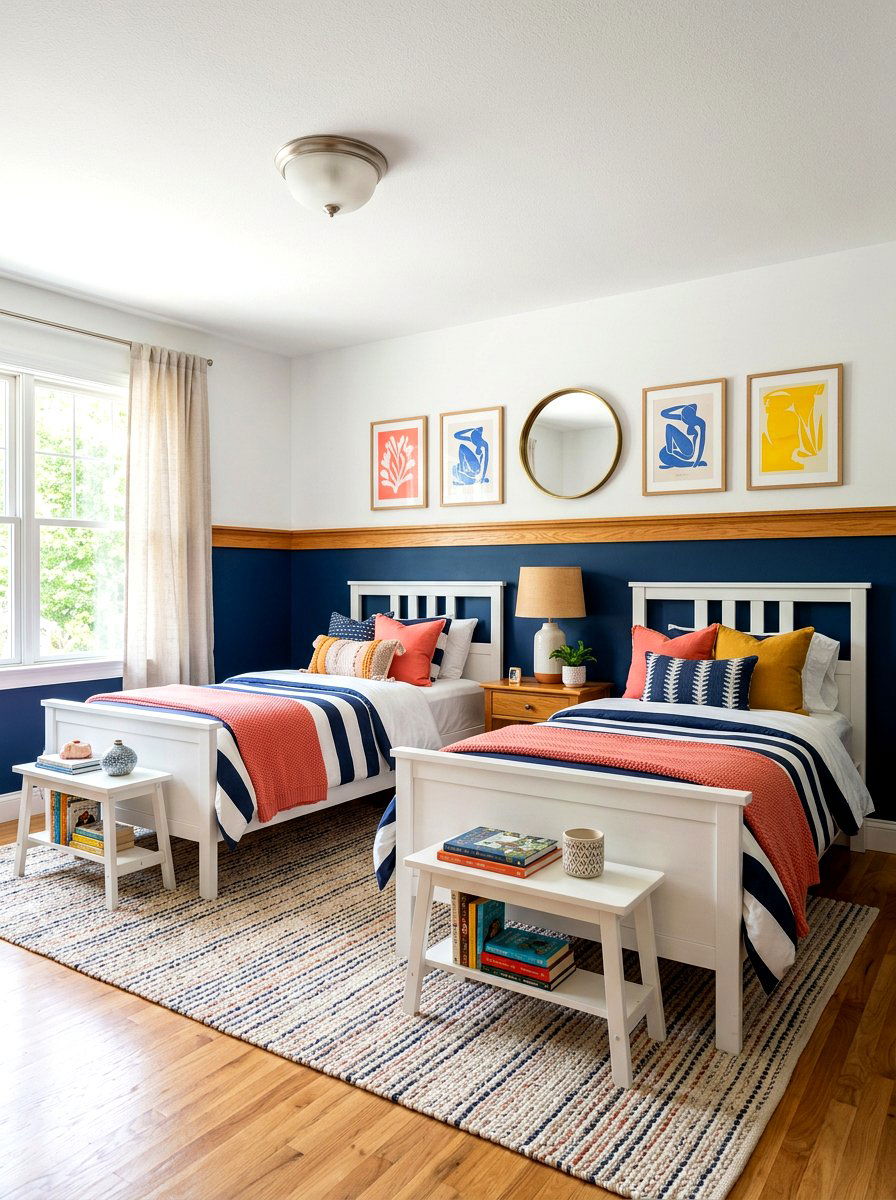
Using a two-tone paint effect on the walls is a simple yet very effective way to add depth and visual interest. You can paint the bottom half of the wall a darker, more durable color while keeping the top half a bright, reflective white. This technique helps ground the furniture and protects the walls from the scuffs and marks that often happen in kids' rooms. Running a thin wooden chair rail between the two colors creates a polished look that feels very intentional. This approach works well with any color combination, from classic navy to trendy terracotta.
20. Shared Canopy Bed Style
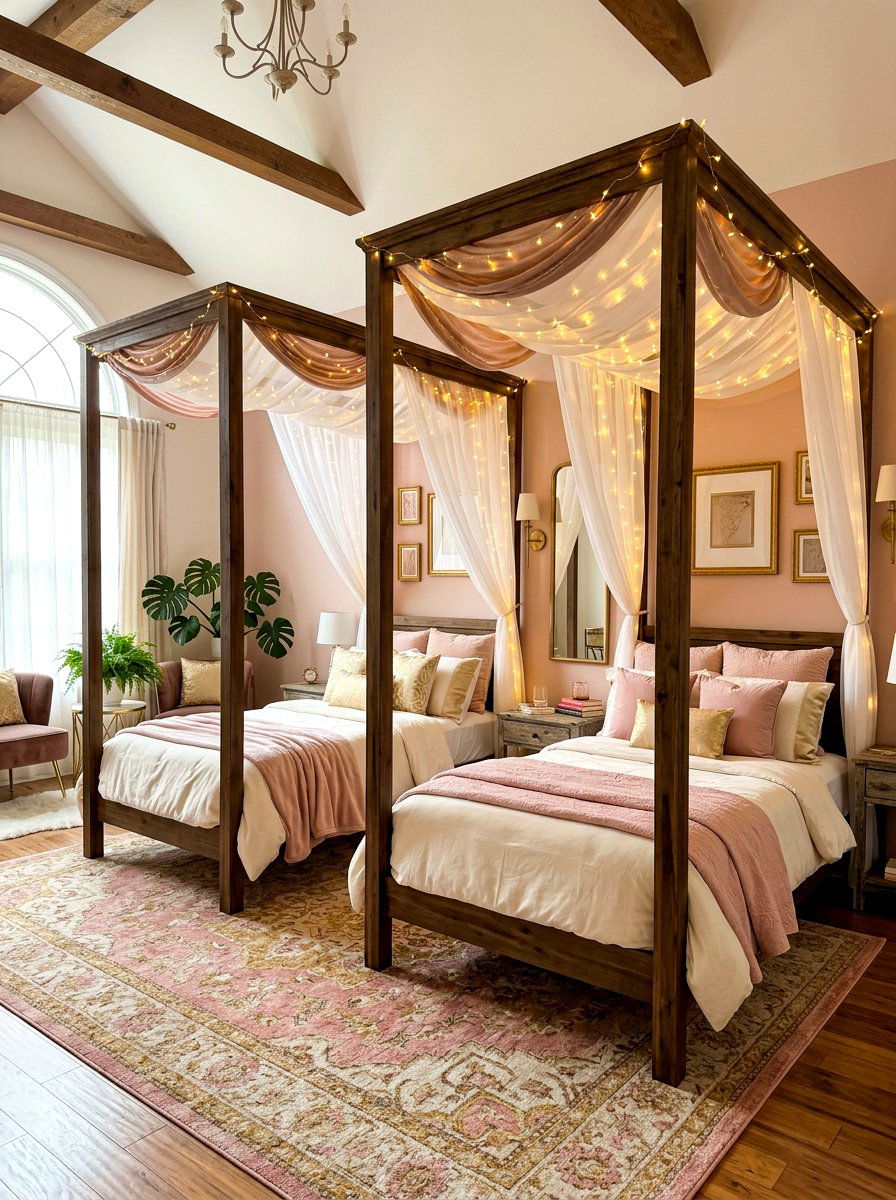
Canopy beds offer a sense of grandeur and privacy that can make a shared bedroom feel like a royal retreat. You can use simple wooden or metal frames with sheer white fabric draped over the top to create a soft, ethereal look. This setup provides each child with their own private "room within a room" when the curtains are drawn. It is a fantastic way to give siblings a sense of individual space without needing to install any permanent walls. Pairing the beds with soft fairy lights inside the canopies adds a magical touch for nighttime.
21. Wood Grain Shared Furniture
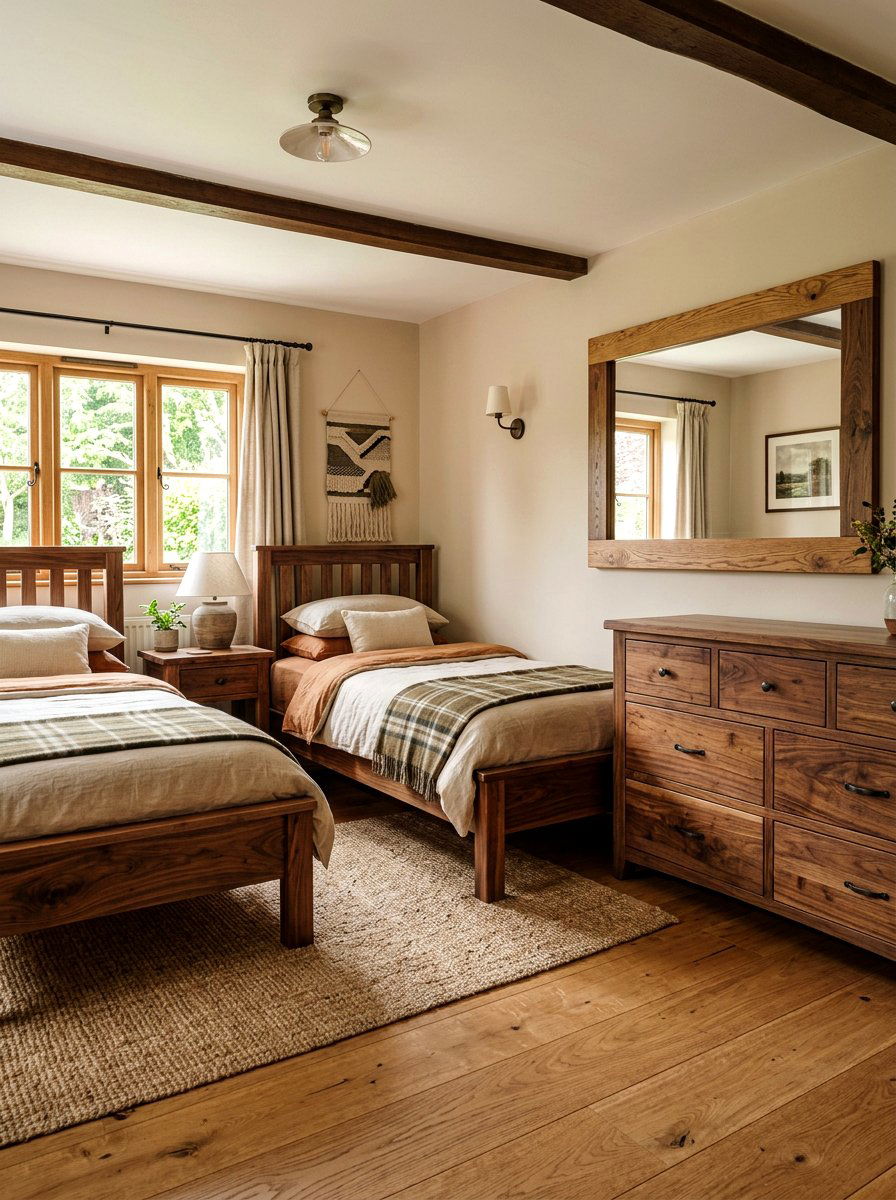
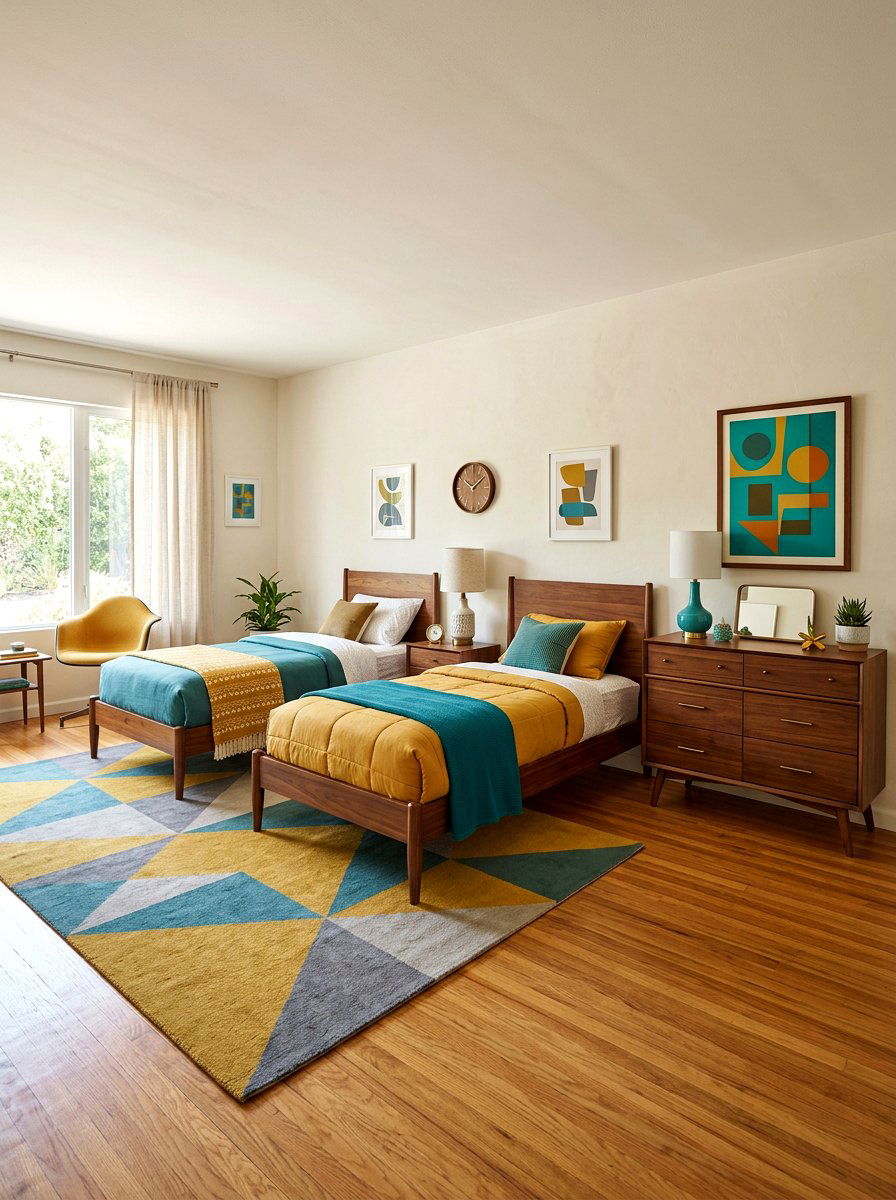
Embracing the natural beauty of wood grain creates a warm and grounded feeling that works perfectly in a sibling bedroom. You can select a set of matching oak or walnut bed frames that showcase the unique patterns of the timber. Natural wood is incredibly versatile and pairs well with almost any color of bedding or wall paint you choose. Using a wooden dresser and a large timber-framed mirror helps unify the room's materials for a very cohesive look. This style is durable and timeless, ensuring the room remains stylish as the children grow and change.
22. Beach Theme Shared Room
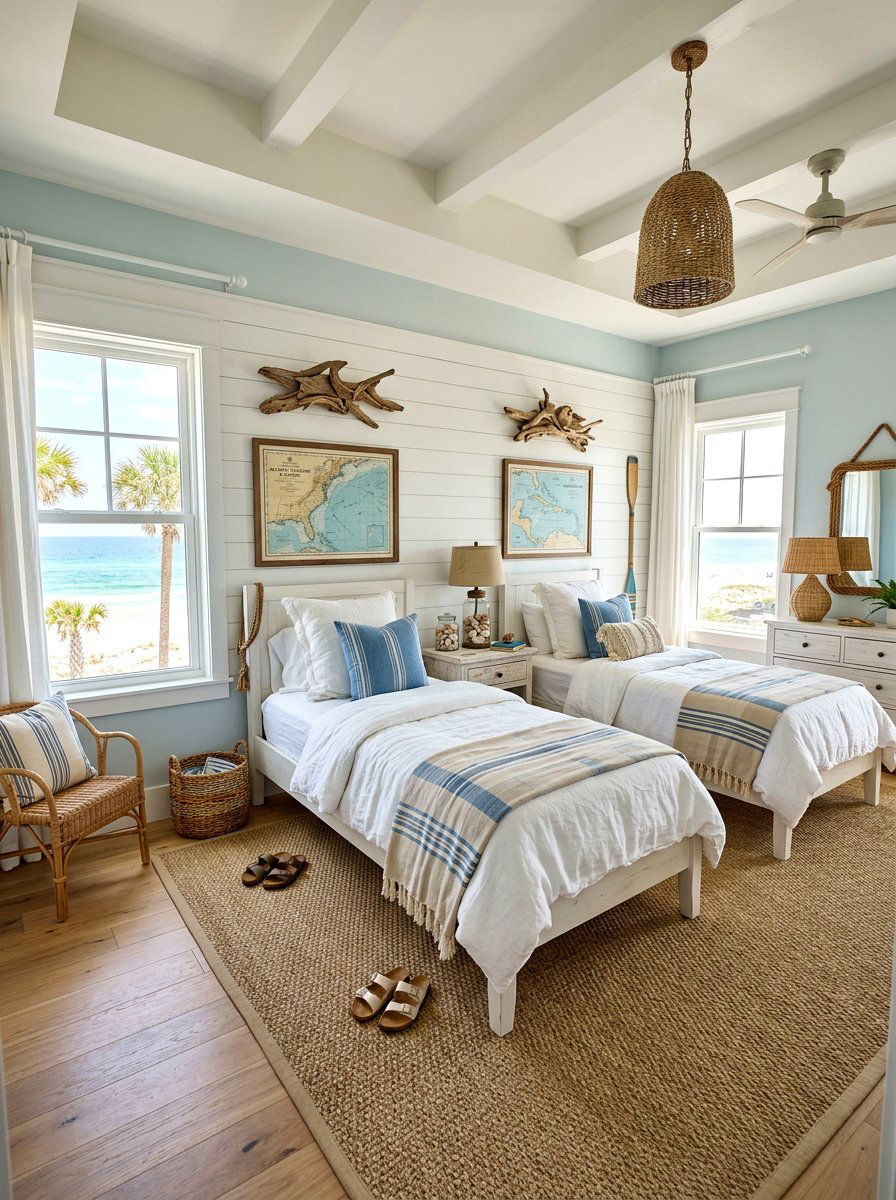
A coastal-inspired design brings a sense of relaxation and light to the room, making it feel like a permanent vacation spot. You can use a palette of soft blues, sandy beiges, and crisp whites to mimic the colors of the ocean. Incorporating natural textures like seagrass rugs, driftwood accents, and linen bedding adds to the authentic beachy vibe. Wall art featuring sea creatures or nautical maps can help reinforce the theme in a playful way. Keeping the layout open and the windows clear allows for maximum natural light to brighten the entire shared living space.
23. Sloped Ceiling Shared Room
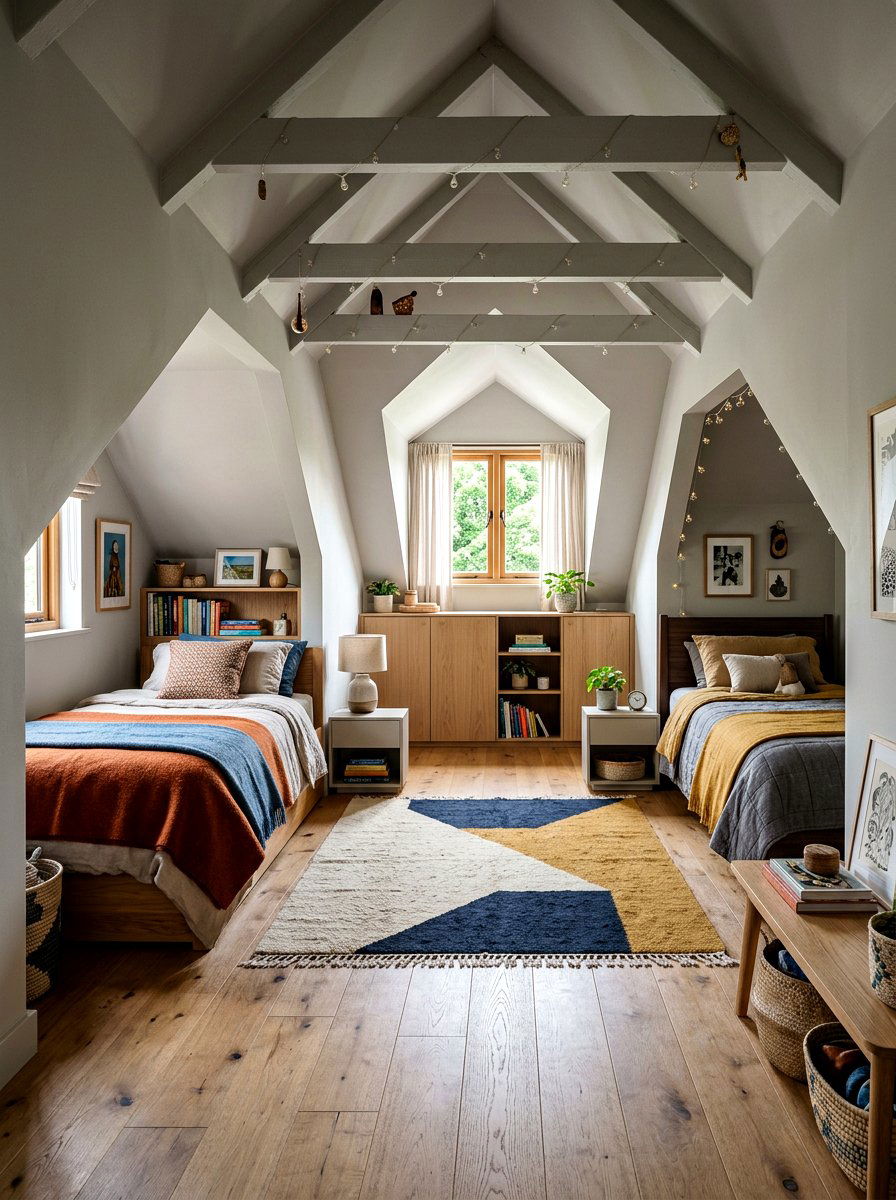
Attic rooms with sloped ceilings present a unique architectural challenge but offer a very cozy and private atmosphere for siblings. You can place the beds directly under the eaves to create a snug, cave-like sleeping area that children often find very exciting. Painting the ceiling the same color as the walls can help blur the lines and make the space feel much larger. Using low-profile furniture is essential to avoid hitting heads on the low parts of the ceiling. Built-in drawers tucked into the short walls provide excellent storage while making the most of the awkward angles.
24. Vintage Style Shared Room
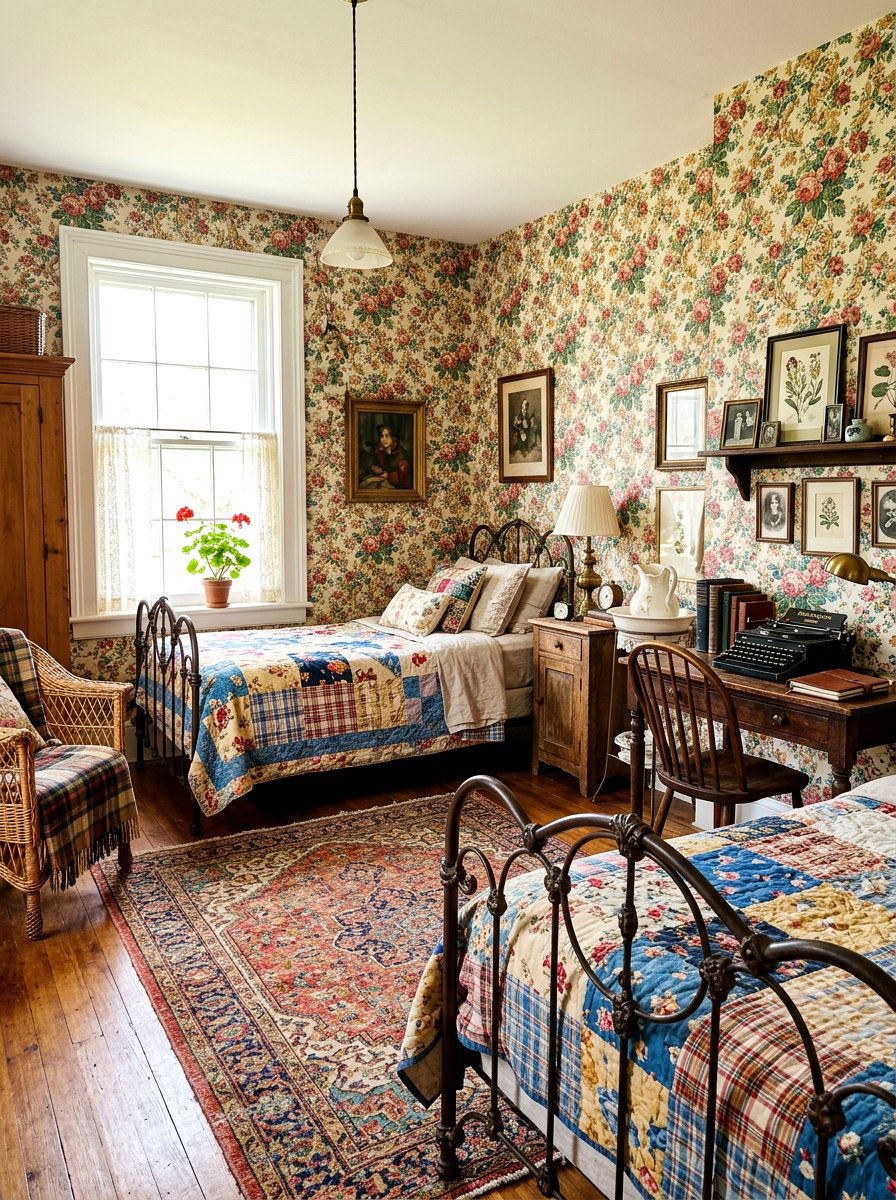
A vintage-inspired room is full of character and charm, often featuring unique finds that tell a story through their design. You can use antique metal bed frames with intricate scrollwork and pair them with patchwork quilts for a very nostalgic look. Floral wallpaper or a classic striped pattern can add a touch of old-world elegance to the walls. Mixing different types of wood furniture, like an old desk and a painted dresser, creates a curated and lived-in feel. This style is perfect for siblings who appreciate a more eclectic and personality-driven environment that feels completely unique.
25. Double Desk Shared Room
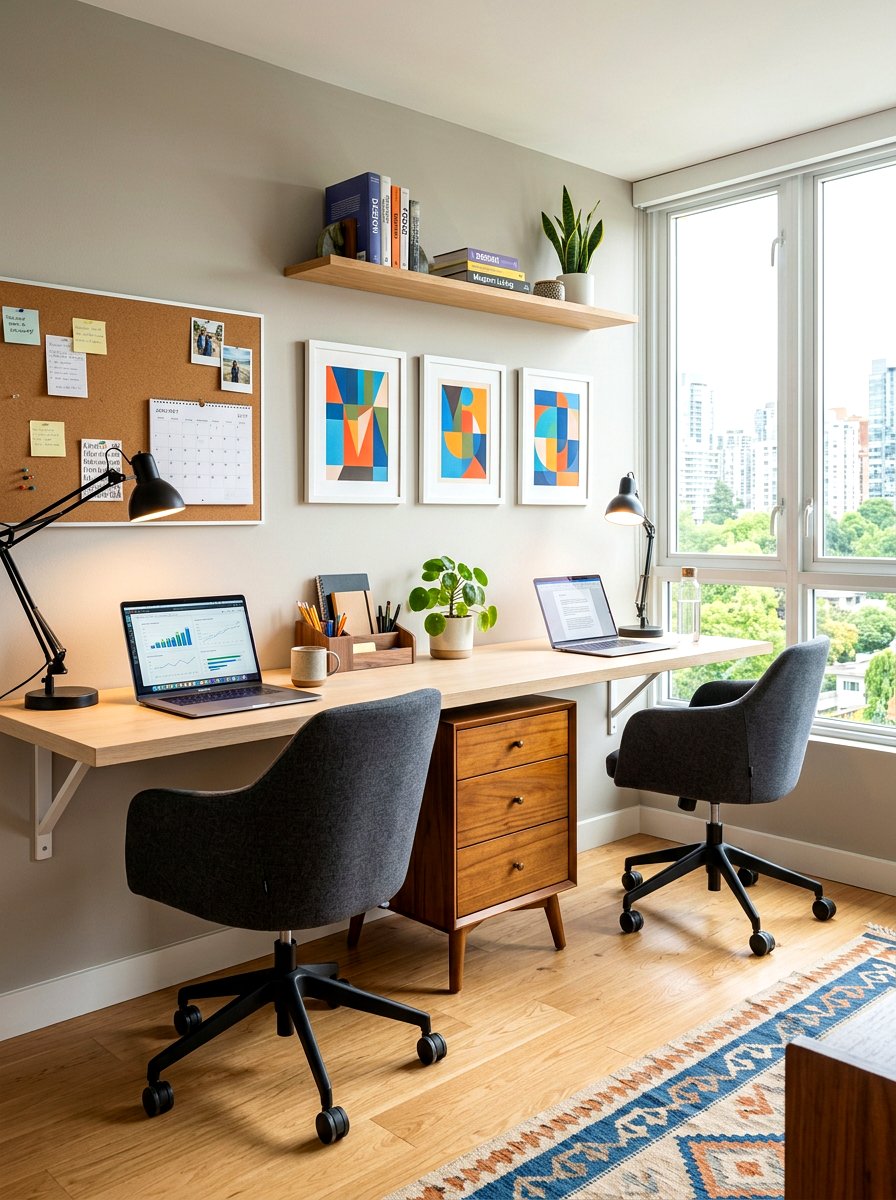
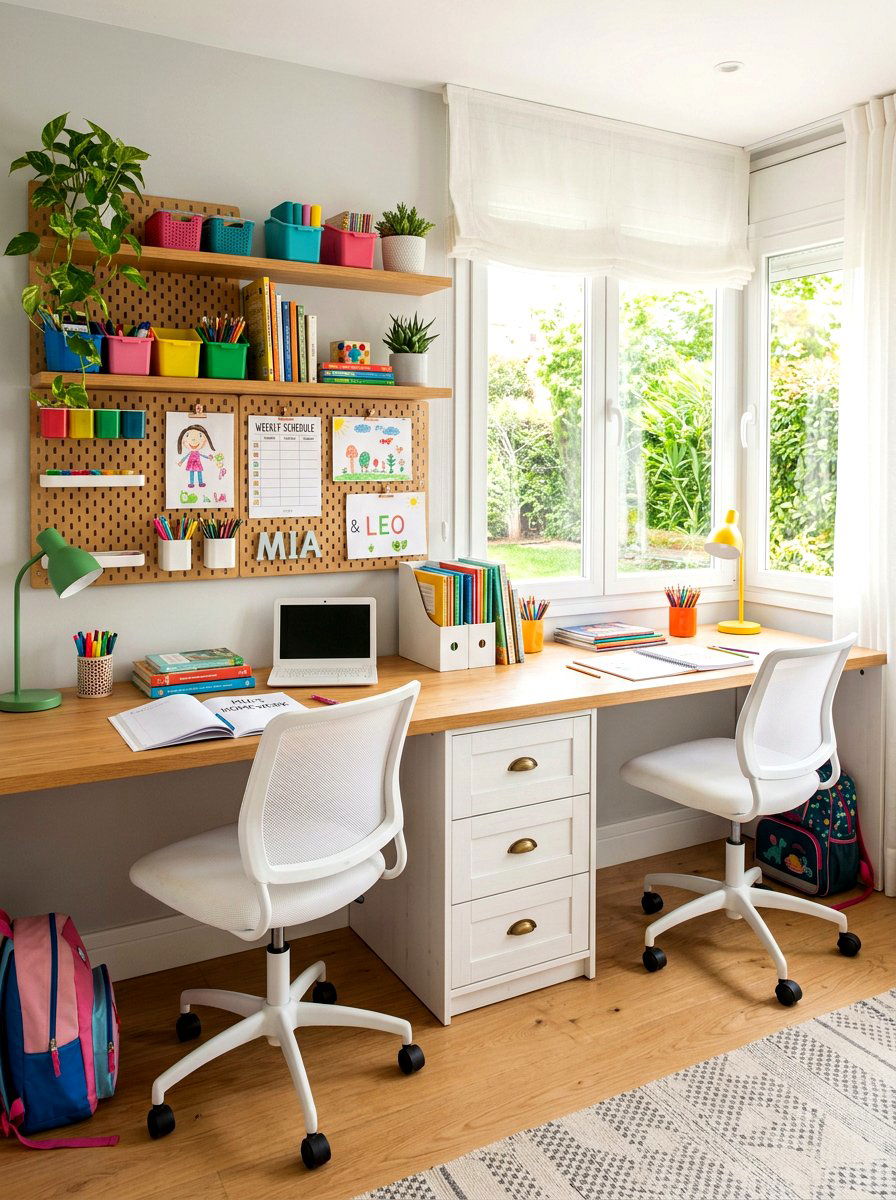
When school becomes a major part of life, having two separate study spots is vital for maintaining peace and productivity. You can install a long, wall-to-wall floating desk that provides ample surface area for two laptops and plenty of textbooks. Placing a set of drawers in the middle of the desk helps define each child’s personal workspace while offering shared storage. Using comfortable, adjustable office chairs ensures that they can sit for long periods without getting tired. Adding individual task lamps and personalized stationery organizers helps each child take ownership of their own dedicated learning zone.
26. Montessori Shared Floor Room
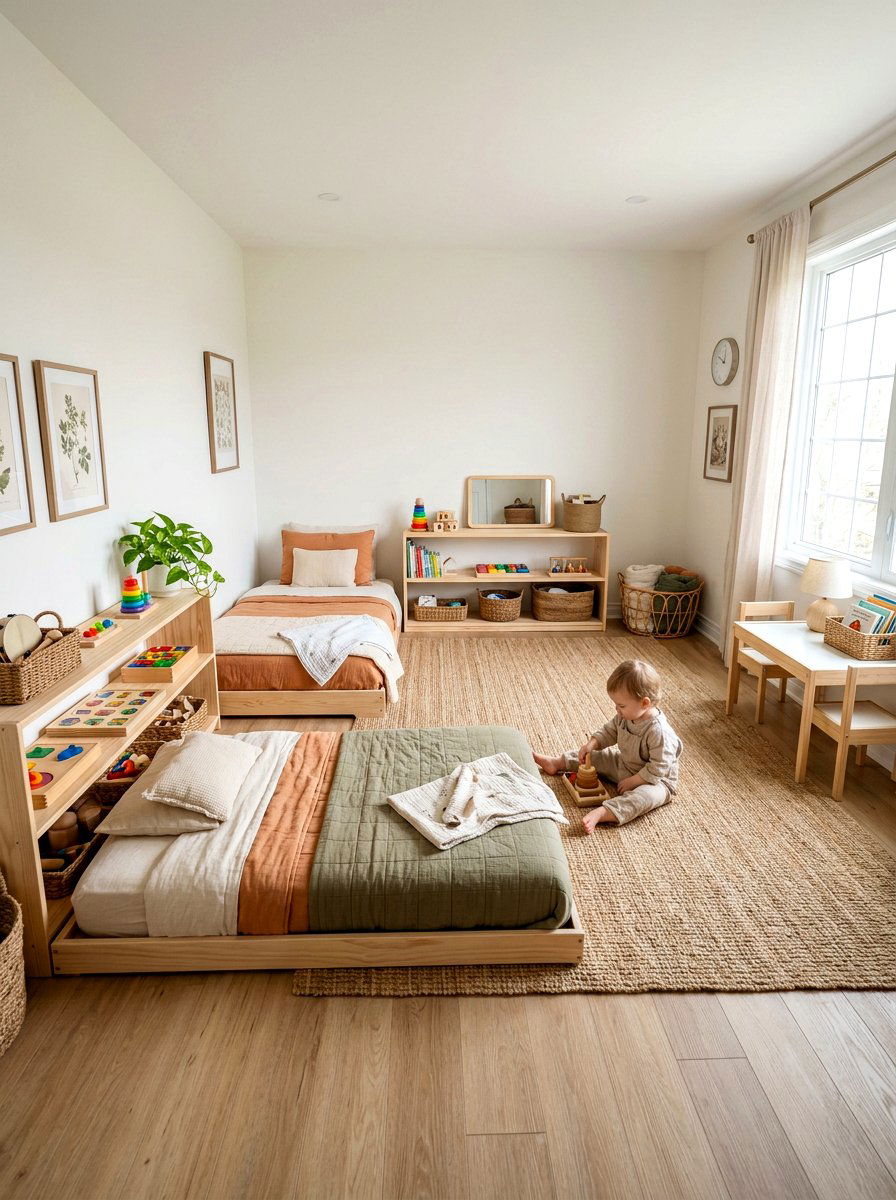
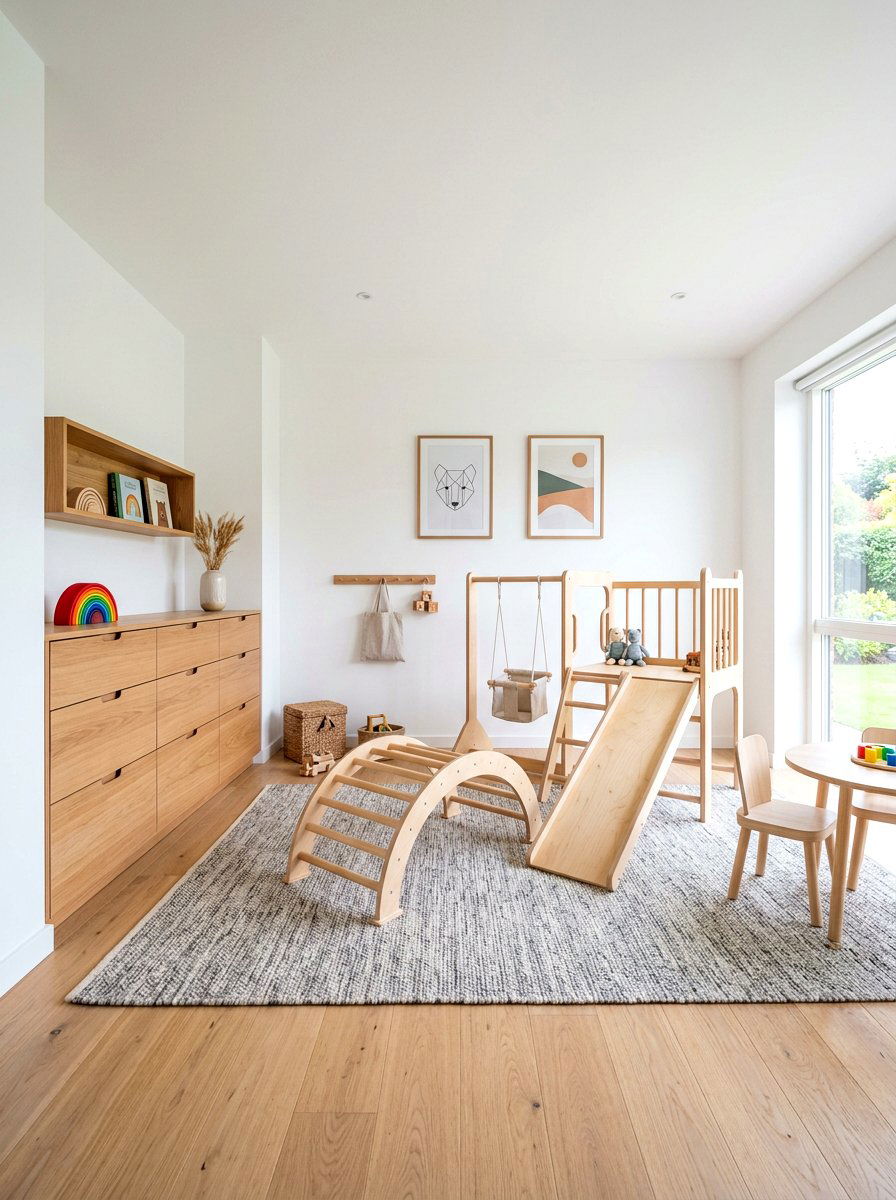
A Montessori-style bedroom focuses on independence and accessibility by keeping everything at the child’s level for easy reach. You can use floor beds instead of traditional frames to allow even the youngest toddlers to get in and out safely. Keeping toys and books on low, open shelves encourages siblings to choose their own activities and clean up after themselves. Using a limited number of high-quality wooden toys helps reduce overstimulation and fosters a more focused play environment. The layout should be simple and open, giving the children plenty of space to move around and explore freely.
27. Dark Blue Shared Bedroom
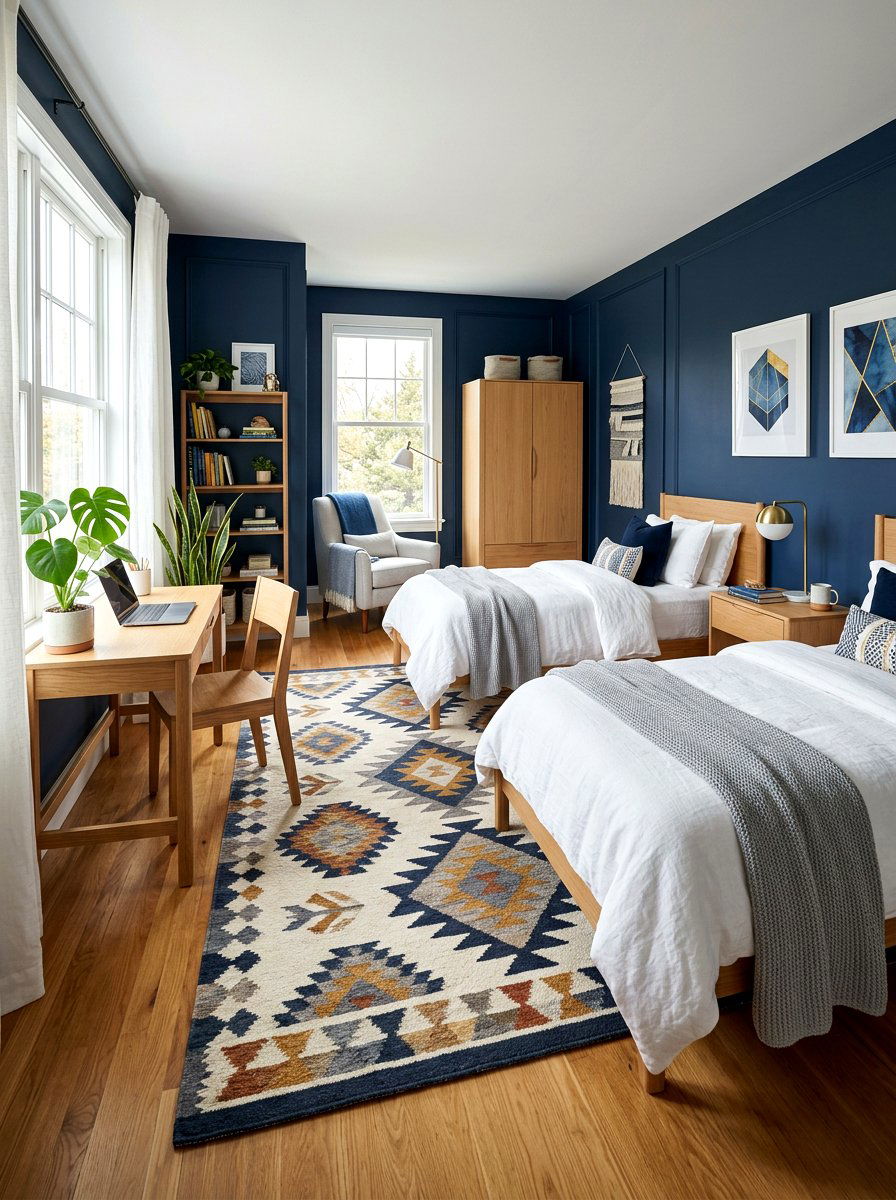
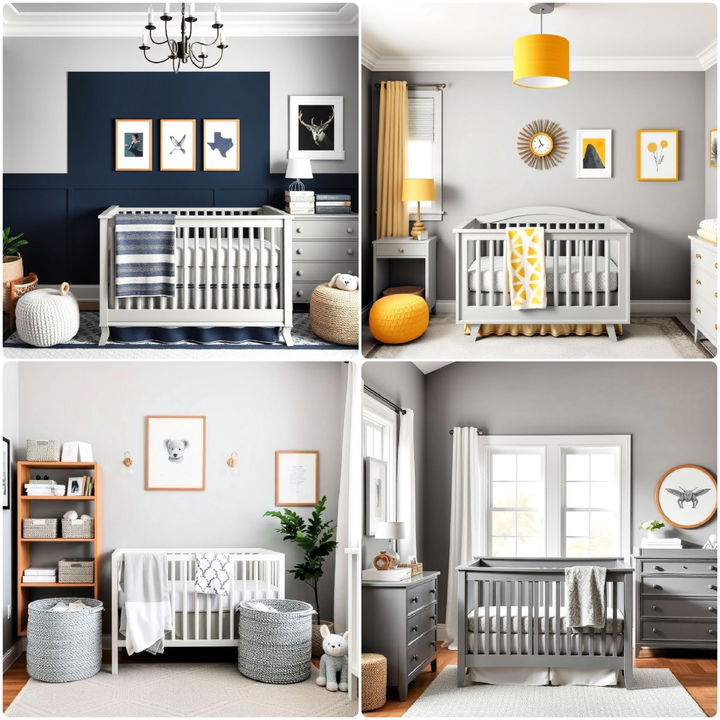
Using a deep, moody color like navy or charcoal on the walls creates a sophisticated and cozy atmosphere for siblings. You can balance the dark walls with crisp white bedding and light wood furniture to keep the room from feeling too heavy. A large, patterned rug with hints of the wall color can help tie the entire design together beautifully. This color choice is excellent for hiding fingerprints and scuffs, making it a very practical option for active children. Dark tones also promote a restful environment, which can help siblings settle down more easily at night.
28. Pastel Rainbow Shared Room
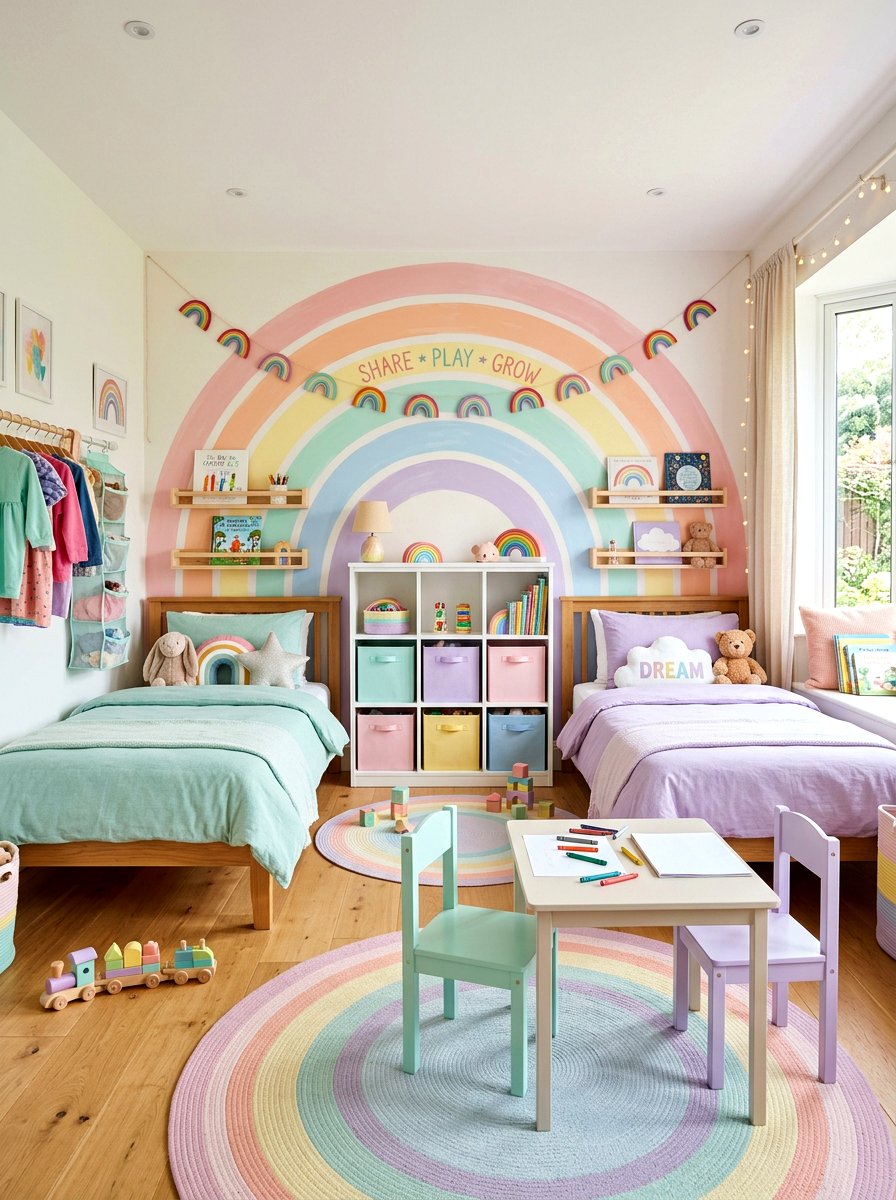
A pastel rainbow theme is a cheerful and inclusive way to decorate a shared space for siblings who love color. You can use a soft palette of mint green, pale lemon, lavender, and sky blue across the bedding and wall decor. Painting a large, muted rainbow mural on the main wall acts as a stunning focal point for the entire room. Each sibling can have their own "signature" pastel color for their personal items like pillows and storage bins. This approach creates a very vibrant and happy atmosphere that feels bright and welcoming for children of all ages.
29. Corner Twin Bed Room
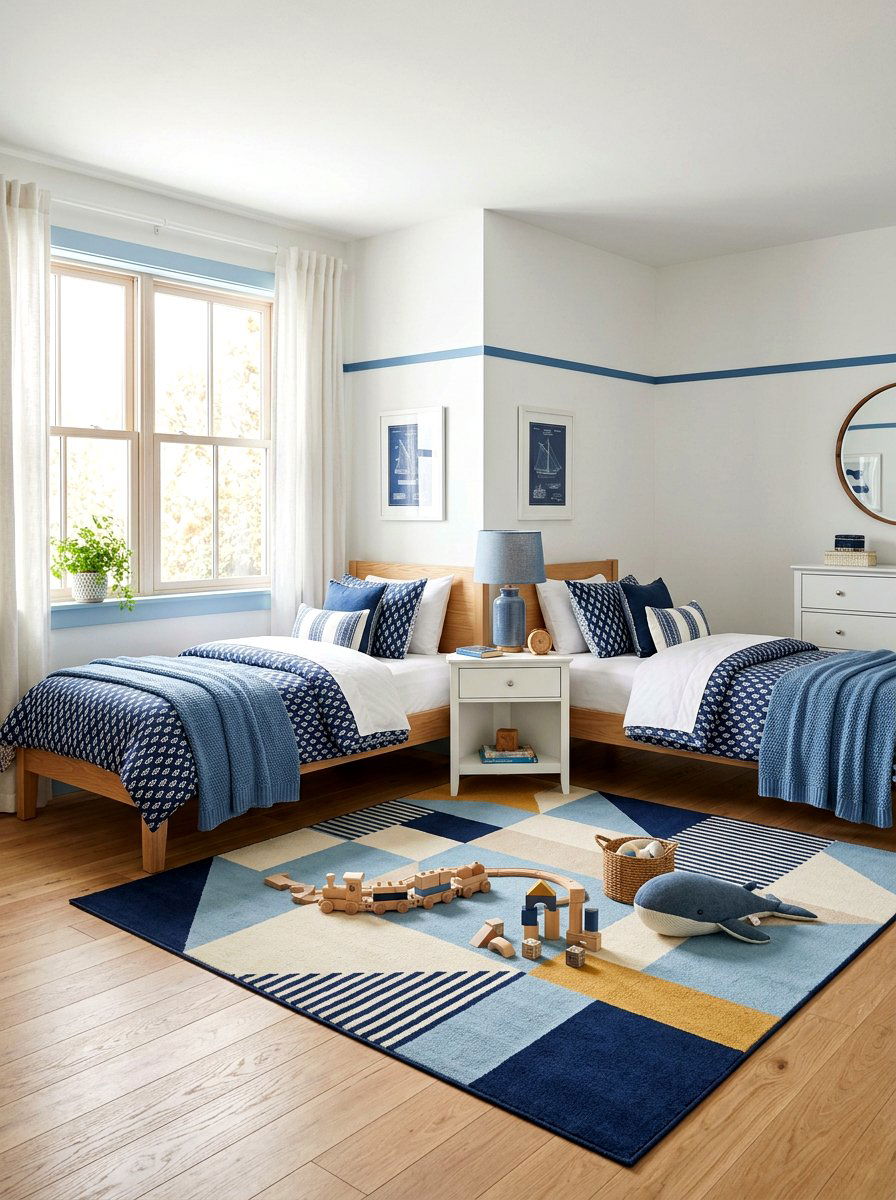
Placing twin beds in a corner layout is a great way to maximize floor space in the center of the room. You can arrange the beds so they meet at a ninety-degree angle, with a shared corner table in between. This configuration creates a cozy, enclosed feeling that makes the sleeping area feel more private and secure for both kids. Using a large, L-shaped rug that covers the floor under both beds helps define the sleeping zone within the larger room. This layout is especially effective in smaller bedrooms where space for play is a top priority.
30. Industrial Metal Shared Room
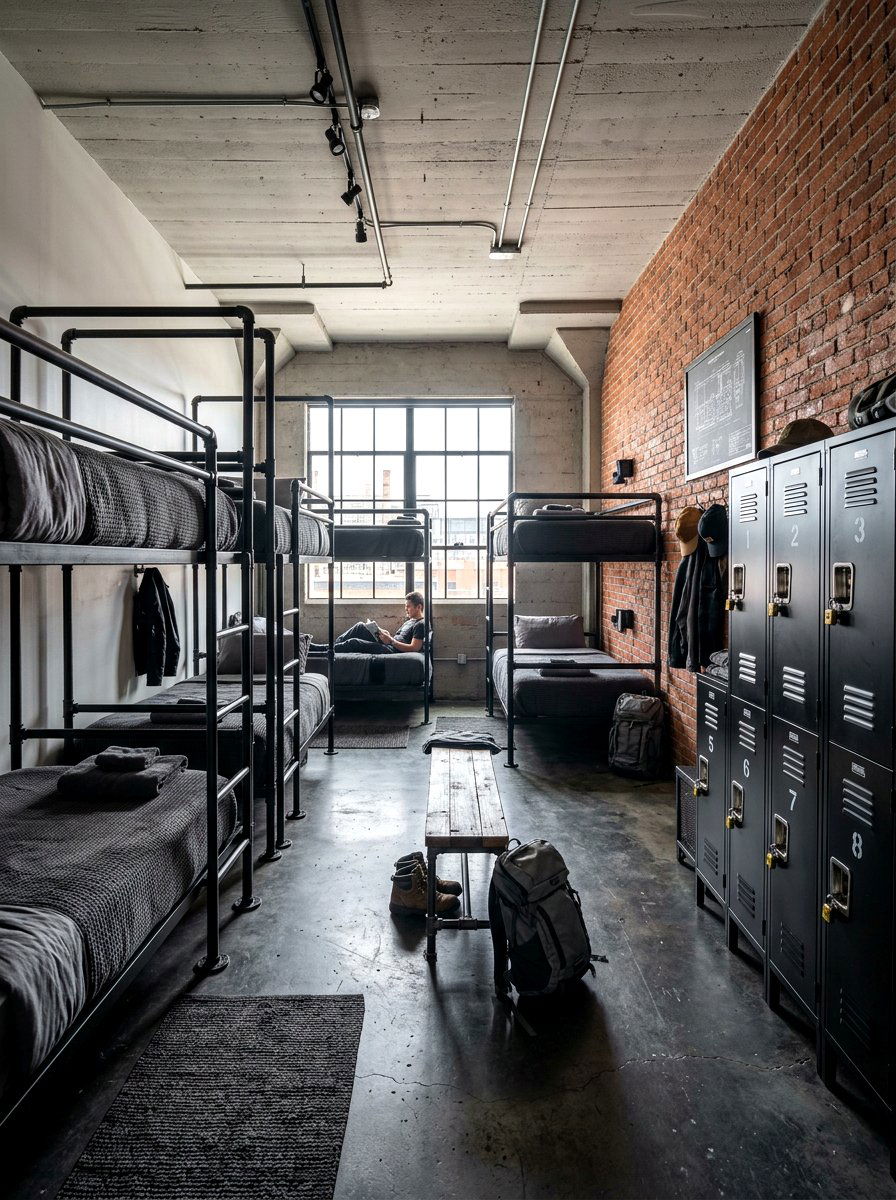
An industrial design style uses raw materials like metal and brick to create a cool and very durable bedroom environment. You can opt for sturdy black metal bunk beds or individual pipe-frame beds for a very rugged and modern look. Exposed brick walls or a faux-brick wallpaper can add a great deal of texture and architectural interest to the space. Using metal lockers instead of traditional dressers provides a unique and fun storage solution for clothes and sports gear. This style is perfect for siblings who want a room that feels edgy, strong, and very functional.
Conclusion:
Transforming a shared bedroom into a functional and stylish sanctuary is a rewarding process that benefits both parents and siblings. By prioritizing clever furniture layouts, cohesive color palettes, and personalized zones, you can create a space where children feel respected and comfortable. The key is to find a balance between shared elements that unify the room and individual touches that celebrate each child's personality. Whether you choose a modern bunk bed or a symmetrical twin bed arrangement, a thoughtful design will foster a positive environment for years to come. Ultimately, a well-decorated shared room is a place where lifelong sibling bonds are built.

Related posts: