Creating a beautiful garden is about more than just selecting the right plants; it involves designing a journey that leads the eye and the feet through your outdoor sanctuary. Stepping stone walkways offer a perfect blend of functionality and aesthetic appeal, protecting your lawn while adding a touch of personality to the landscape. Whether you prefer the rugged look of natural stone or the clean lines of modern concrete, these paths define the flow of your yard. By carefully choosing materials that complement your home’s architecture, you can create an inviting atmosphere that encourages exploration and relaxation. These versatile elements serve as the foundation for a professional, well-curated outdoor living space.
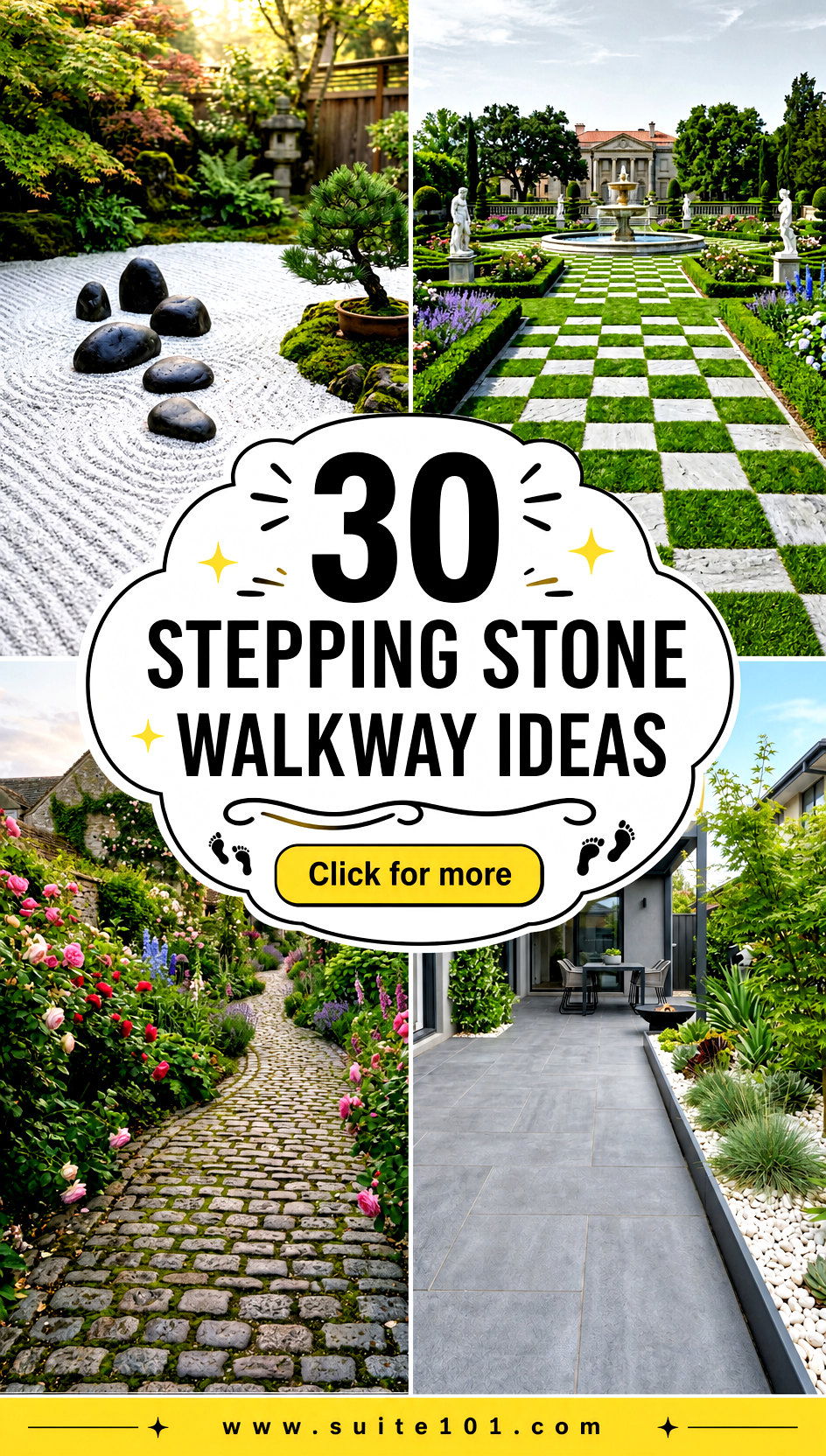
1. Natural Flagstone Path
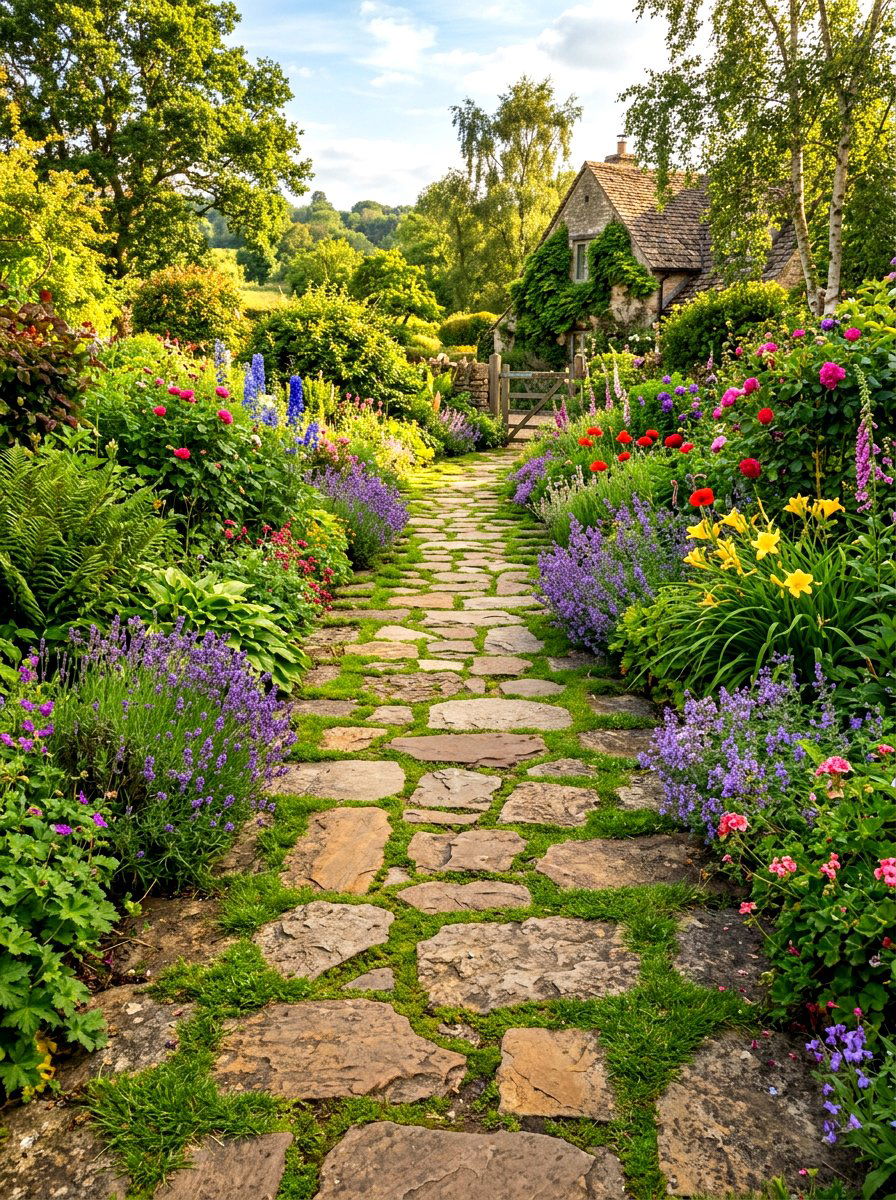
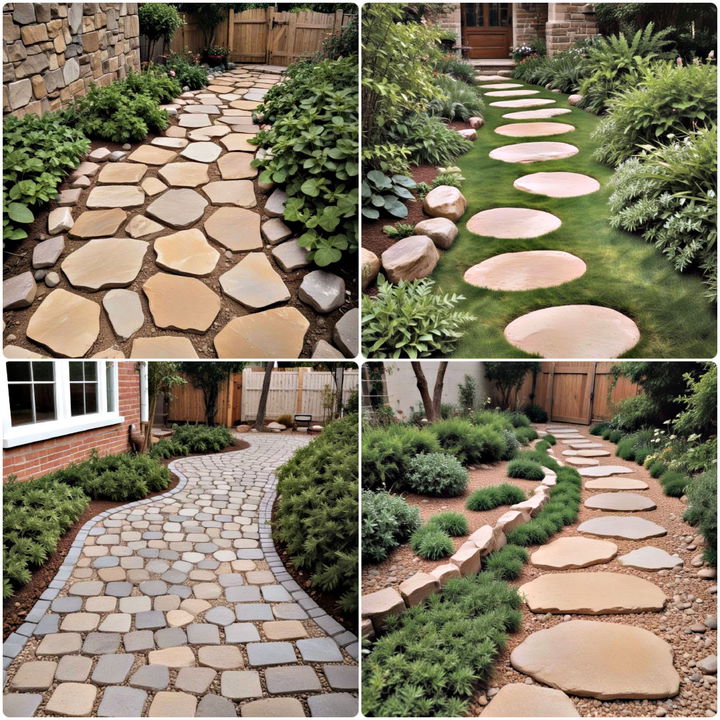
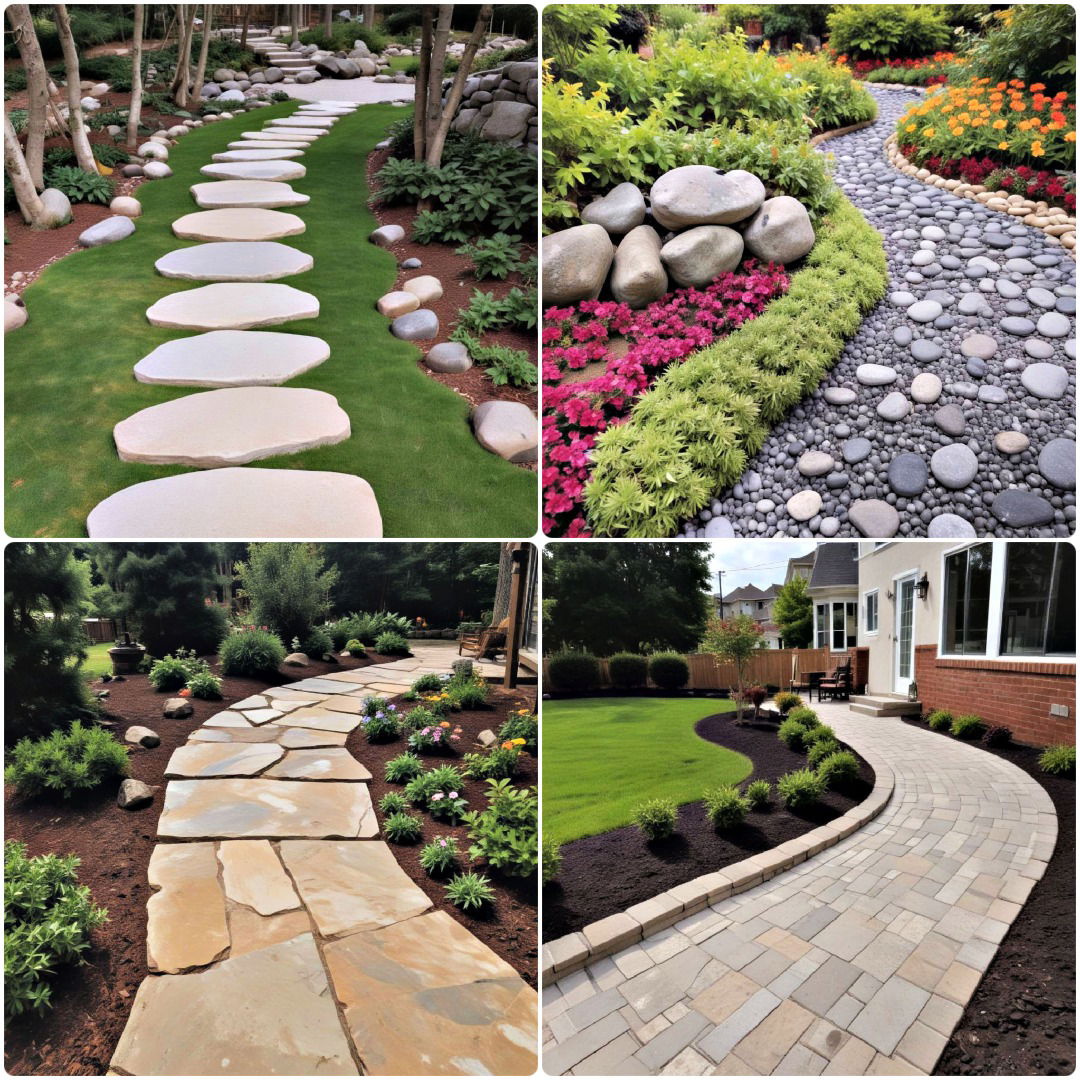
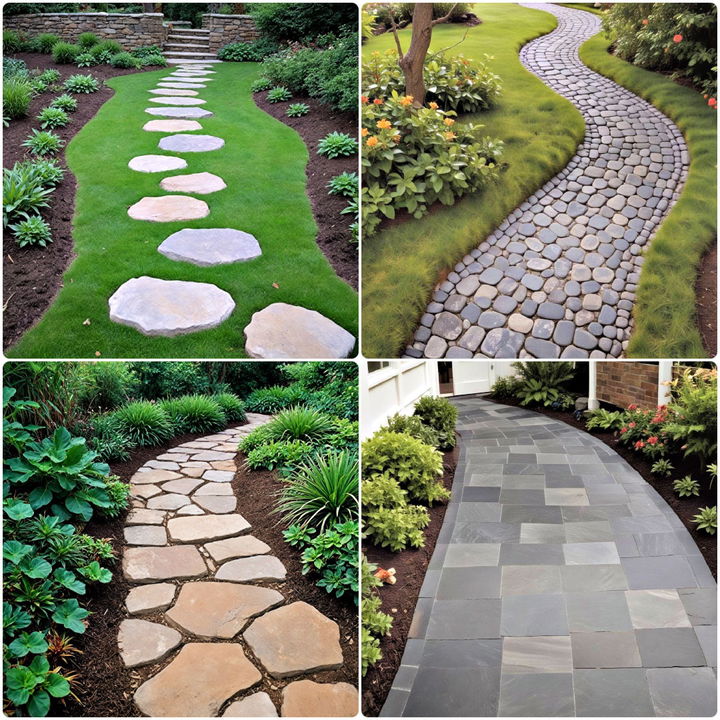
Using natural flagstone is one of the most effective ways to create an organic flow throughout your outdoor space. These irregular stones offer a unique charm because no two pieces are exactly alike in shape or color. You can nestle them into your lawn or surround them with small pebbles to highlight their earthy textures. The varying shapes allow for a winding path that feels intentional yet relaxed. It is a perfect choice for homeowners who want to balance structural design with the wild beauty of nature. Because the stones are heavy and durable, they stay in place well and provide a safe, slip-resistant surface for walking during rainy weather.
2. Square Concrete Pavers
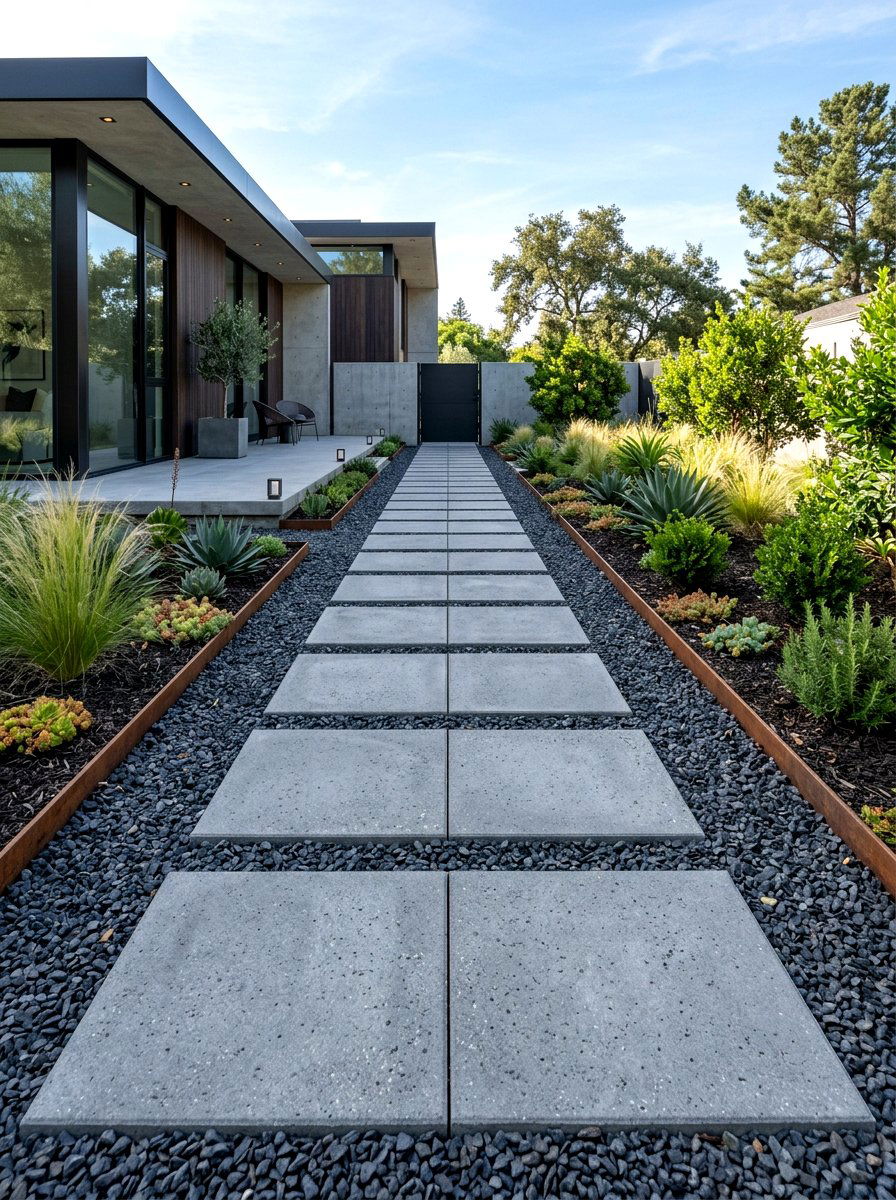
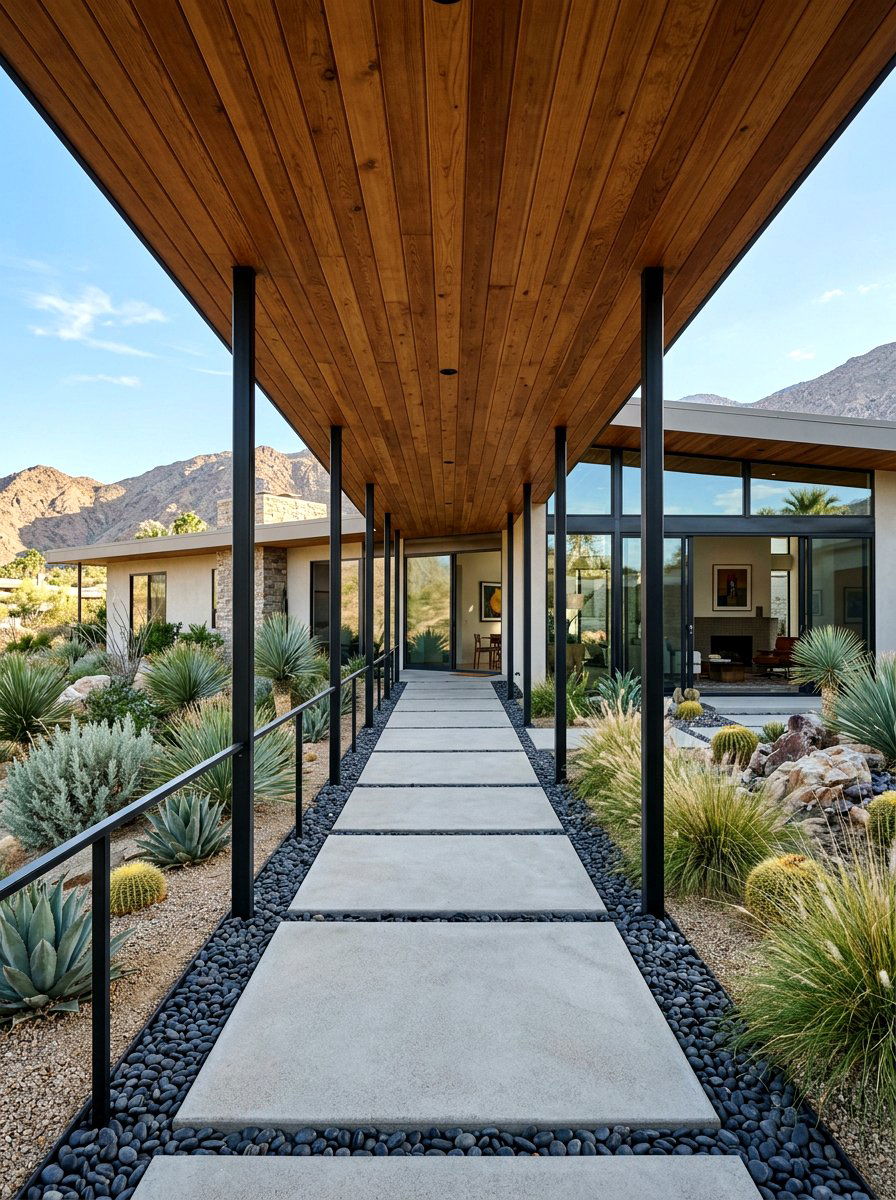
Modern landscape design often relies on clean lines and symmetrical patterns to create a sense of order. Large square concrete pavers are a staple for this aesthetic, providing a crisp contrast against soft green grass or dark mulch. When you space these pavers evenly, you create a floating effect that looks sophisticated and high-end. This style works exceptionally well in contemporary backyards where minimalism is the primary goal. You can choose from various shades of gray or white to match your home’s exterior. These pavers are not only stylish but also incredibly durable, making them a smart long-term investment for any high-traffic garden walkway area.
3. Round Slate Steps
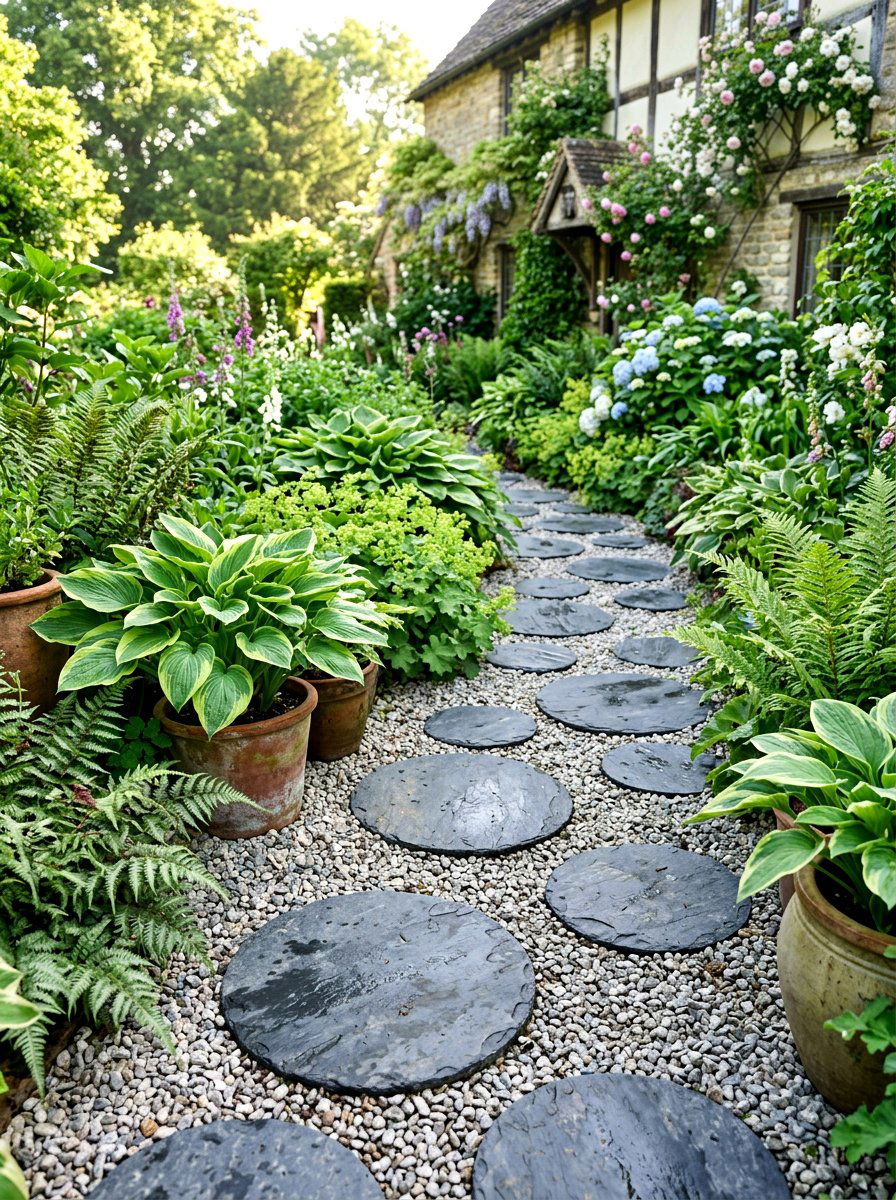
Round slate stepping stones offer a softer, more whimsical alternative to traditional rectangular designs. The circular shape breaks up the harsh angles of fences and flower beds, lending a playful yet elegant feel to the garden. Slate is particularly prized for its layered texture and deep, rich colors that range from charcoal to purple and green. These stones look stunning when placed in a bed of light-colored pea gravel or directly into a lush, green lawn. Their smooth surface is comfortable for bare feet, while the natural variations in the stone ensure that your walkway remains a one-of-a-kind feature that adds significant character to your property.
4. Wood Slice Walkway
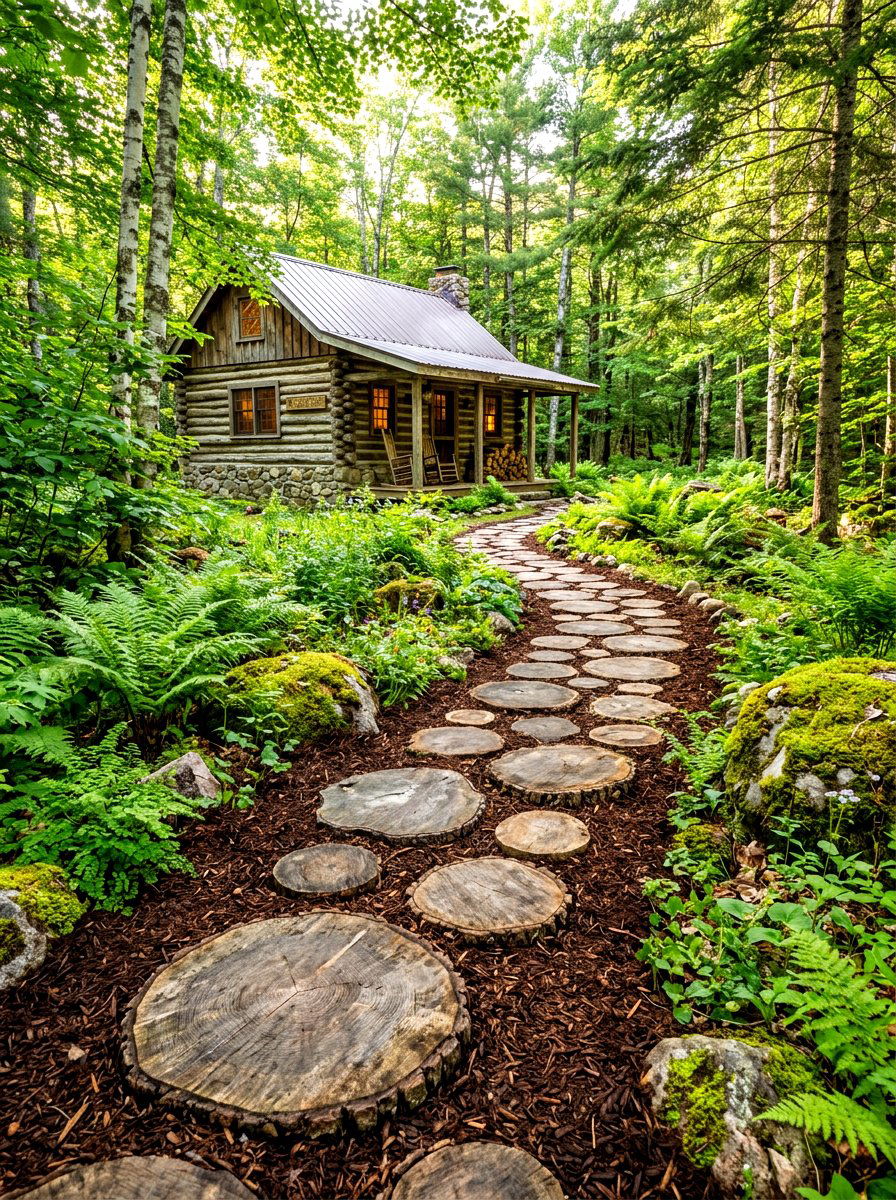
For those who love a rustic or woodland aesthetic, a wood slice walkway is an enchanting choice. These paths are made from cross-sections of logs, showcasing the beautiful natural rings and textures of the timber. They are perfect for shaded garden areas or paths leading to a cozy fire pit. To ensure longevity, it is important to treat the wood with a sealant or choose rot-resistant species like cedar or black locust. When tucked into a bed of mulch or moss, these "cookies" create a fairy-tale atmosphere that feels deeply connected to the forest. This design is budget-friendly and serves as a wonderful conversation starter.
5. River Rock Path
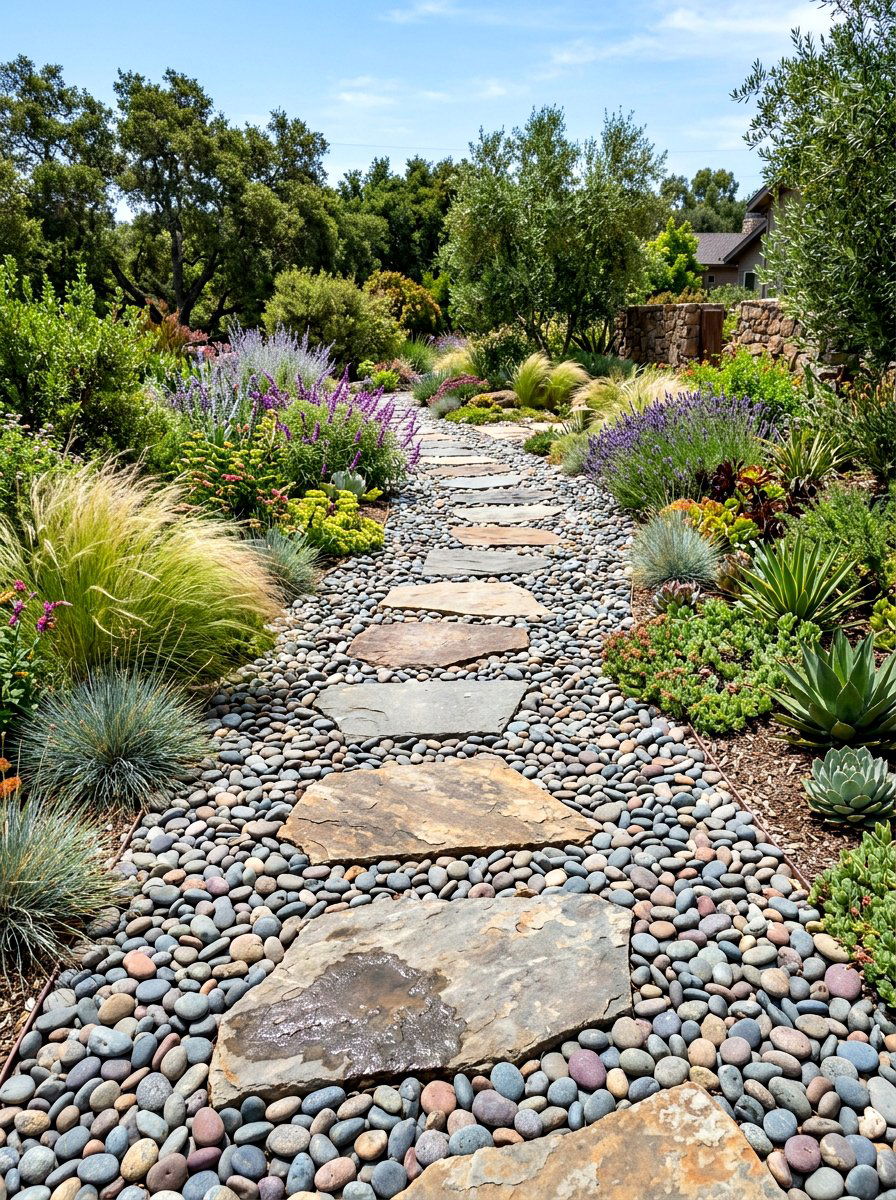
A river rock path brings the soothing energy of a dry creek bed into your backyard. By using large, flat stones as the primary steps and surrounding them with smaller, smooth river pebbles, you create a textured look that handles drainage beautifully. This design is ideal for areas that might get a bit soggy after rain, as the rocks allow water to permeate the ground easily. The mixture of colors — from tans and greys to deep blues — adds visual depth to the landscape. It is a low-maintenance option that requires no mowing and very little weeding, making it perfect for busy homeowners who value natural beauty.
6. Brick Stepping Stones
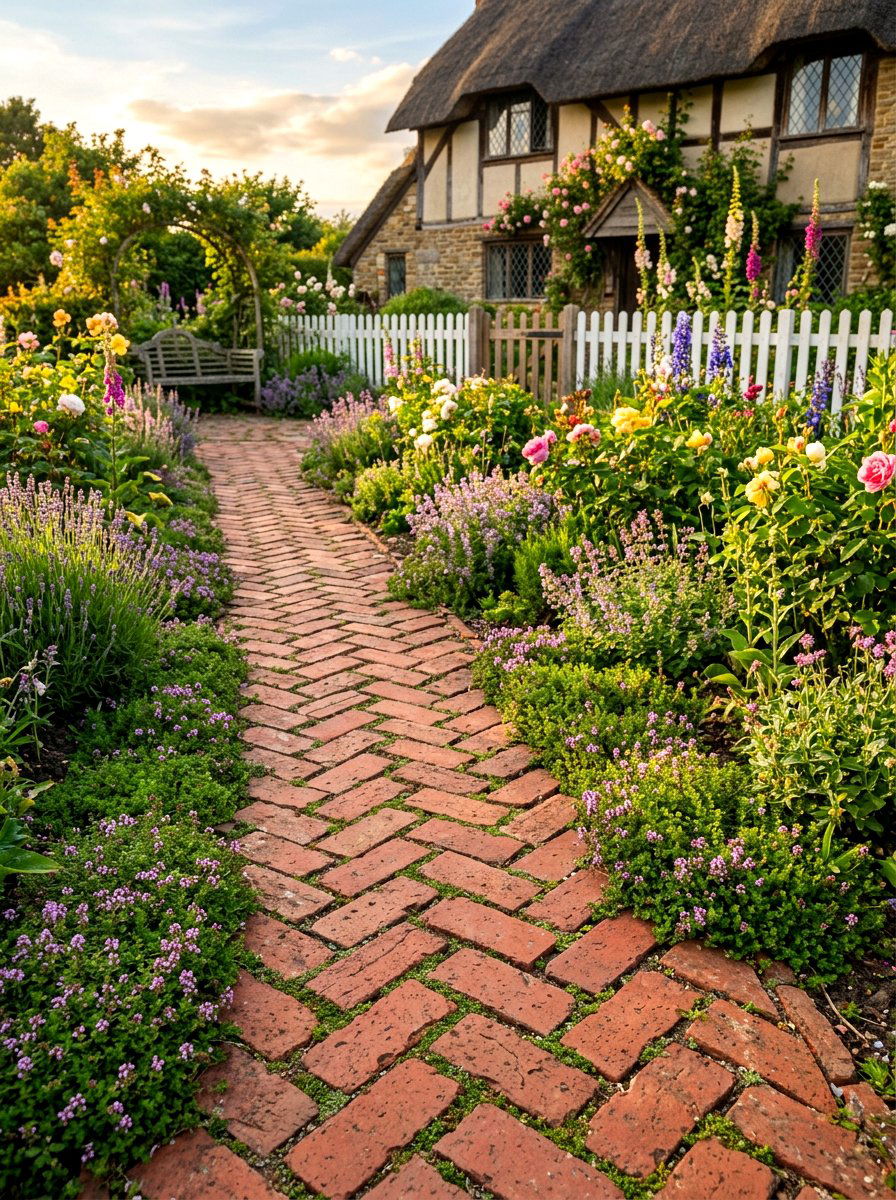
Brick is a timeless material that adds a sense of history and warmth to any garden walkway. Whether you use reclaimed vintage bricks or new ones, they can be laid in various patterns like herringbone or basketweave to create a formal look. Brick stepping stones work particularly well in cottage-style gardens where they complement vibrant floral borders. Their reddish tones provide a beautiful contrast to green foliage and blue-toned plants. Because bricks are uniform in size, they are easy to install as a DIY project. They offer a sturdy and stable surface that ages gracefully over time, developing a lovely patina that enhances their charm.
7. Mosaic Garden Stones
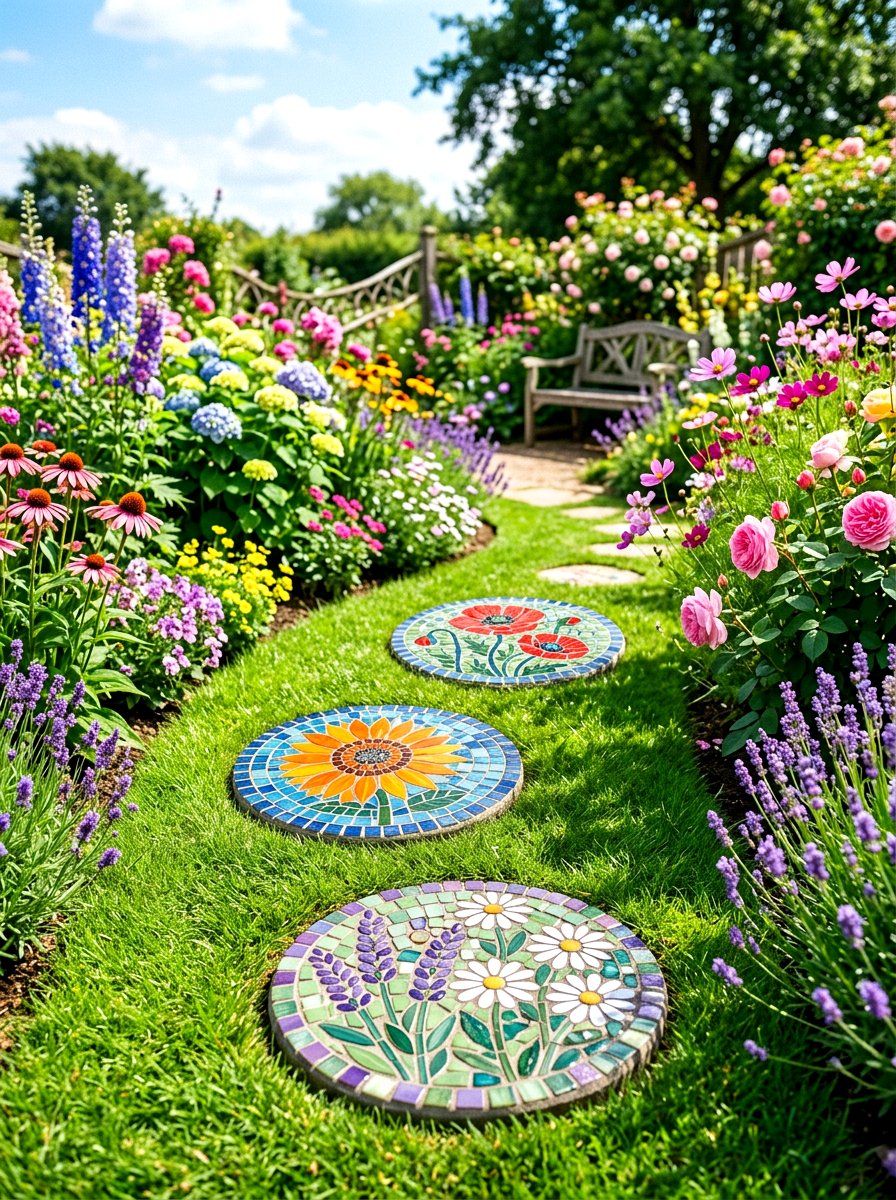
If you want to inject a burst of artistic flair into your landscape, mosaic garden stones are the way to go. These are often handmade projects that incorporate colorful glass, ceramic tiles, or even sea shells embedded into concrete discs. Each stone becomes a miniature piece of art, allowing you to customize your path with patterns or symbols that have personal meaning. While they are decorative, they are also functional steps that can brighten up a shady corner of the yard. Mosaic paths are especially popular in "secret gardens" or children's play areas, where the vibrant colors and intricate designs can be fully appreciated and enjoyed.
8. Large Granite Slabs
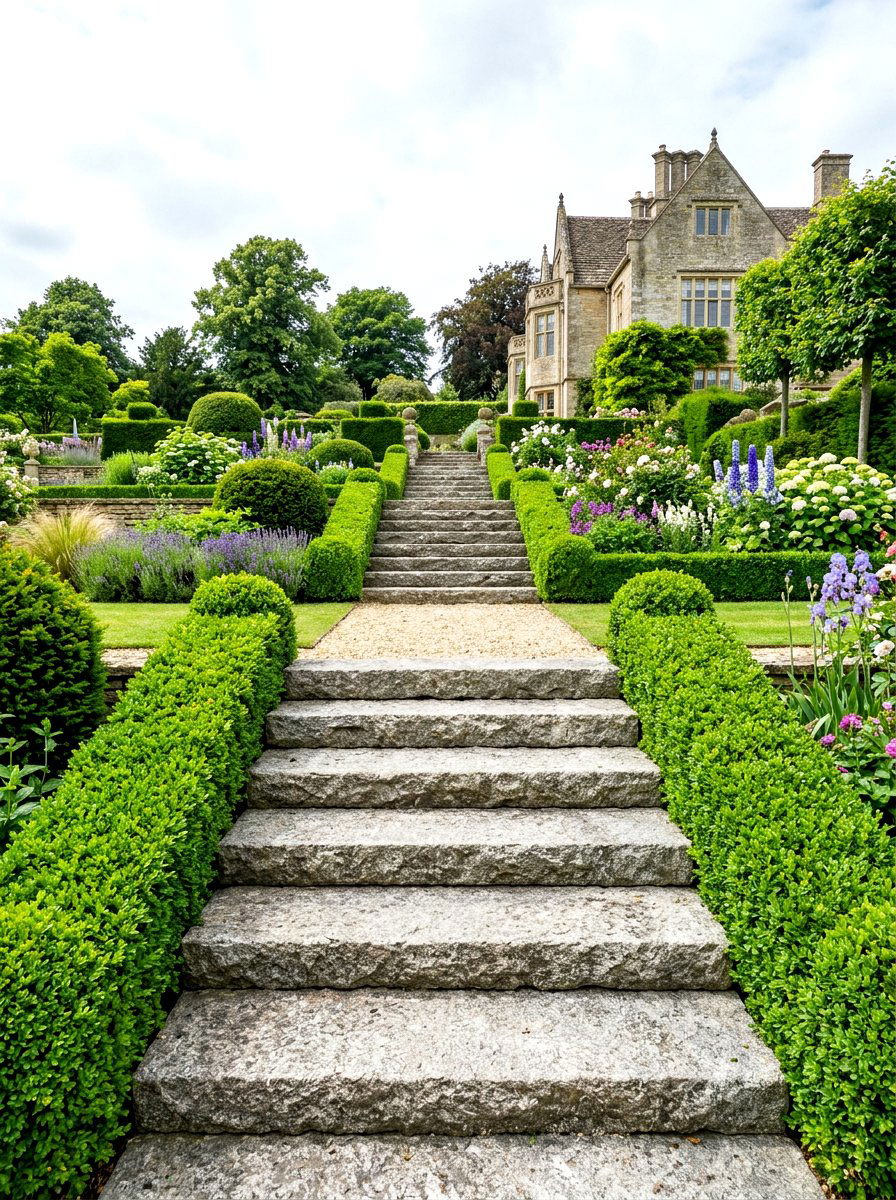
Granite is synonymous with luxury and permanence, making it an excellent choice for a high-end stepping stone walkway. Large granite slabs provide a grand entrance to a home or a sturdy path through a formal garden. Known for its incredible hardness, granite won't crack or fade, even in extreme weather conditions. You can choose a flamed or honed finish to ensure the surface remains slip-resistant. The salt-and-pepper appearance of granite adds a sophisticated texture that pairs beautifully with modern architecture. While it is a more expensive option, the sheer durability and timeless elegance of granite make it a centerpiece of any professional landscape design.
9. Blue Stone Walkway
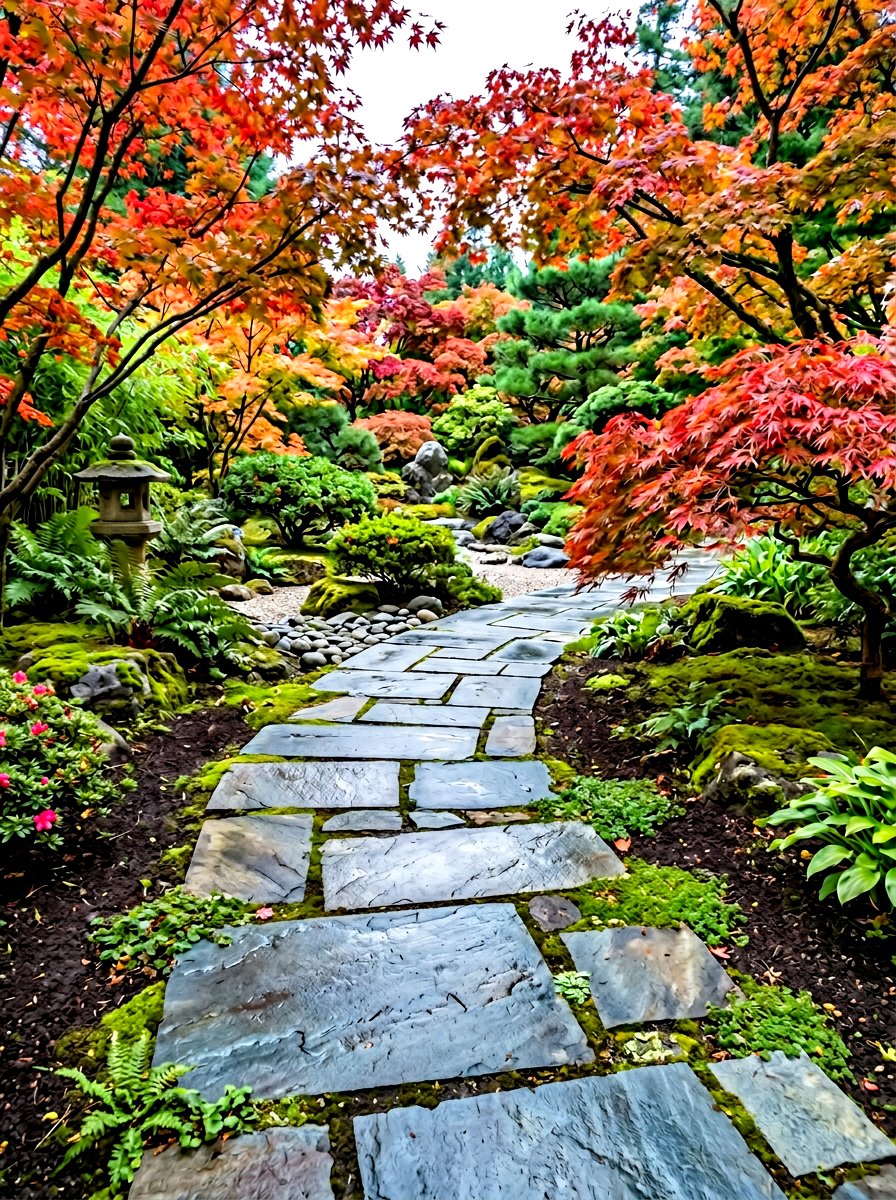
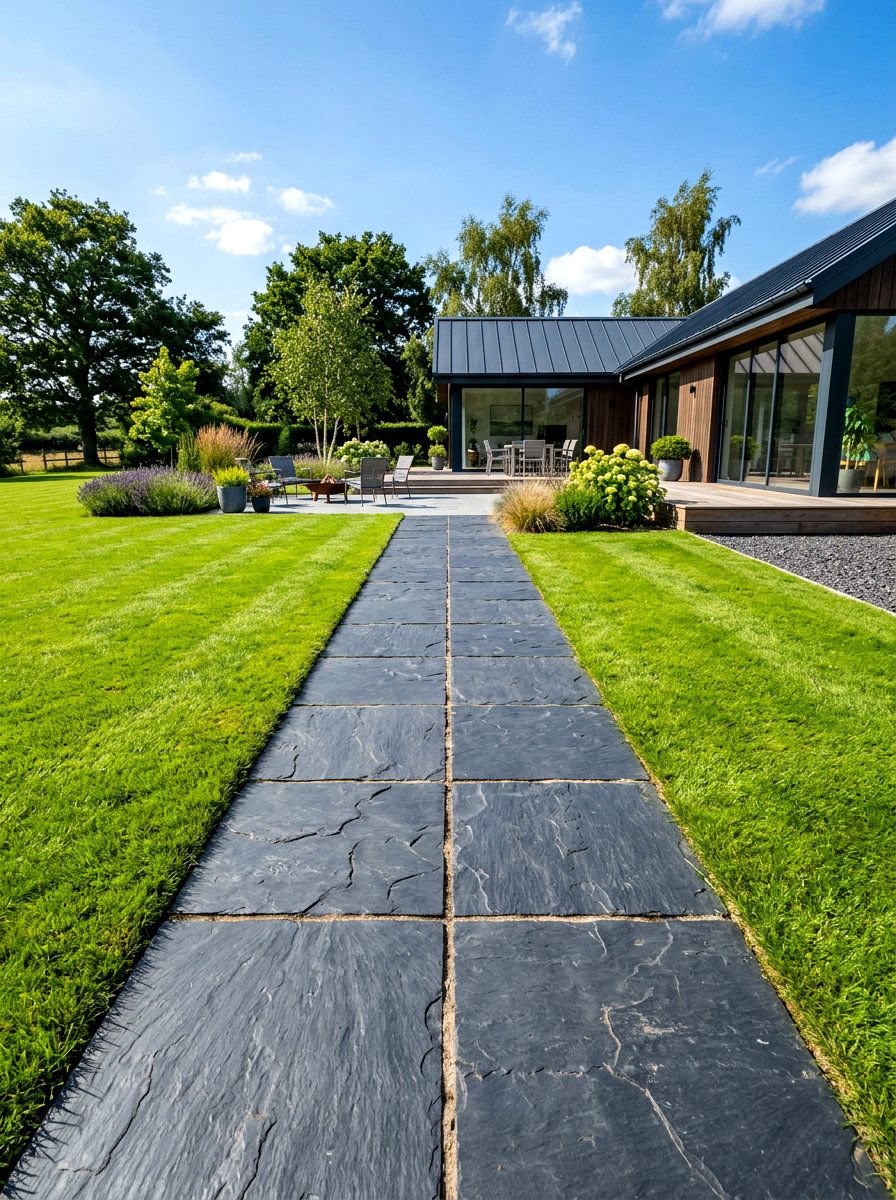
Bluestone is a popular variety of sandstone known for its gorgeous cool tones and natural cleft surface. It is a favorite among landscape architects for creating pathways that look both rugged and refined. The stones can be cut into precise rectangles for a formal look or left in irregular shapes for a more naturalistic "crazy paving" style. When wet, the colors of the stone deepen, showing off shades of royal blue, gray, and even subtle hints of rust. Bluestone is dense and tough, making it resistant to the freeze-thaw cycles found in many northern climates. It provides a flat, stable surface that is perfect for heavy foot traffic.

10. Grass Between Pavers
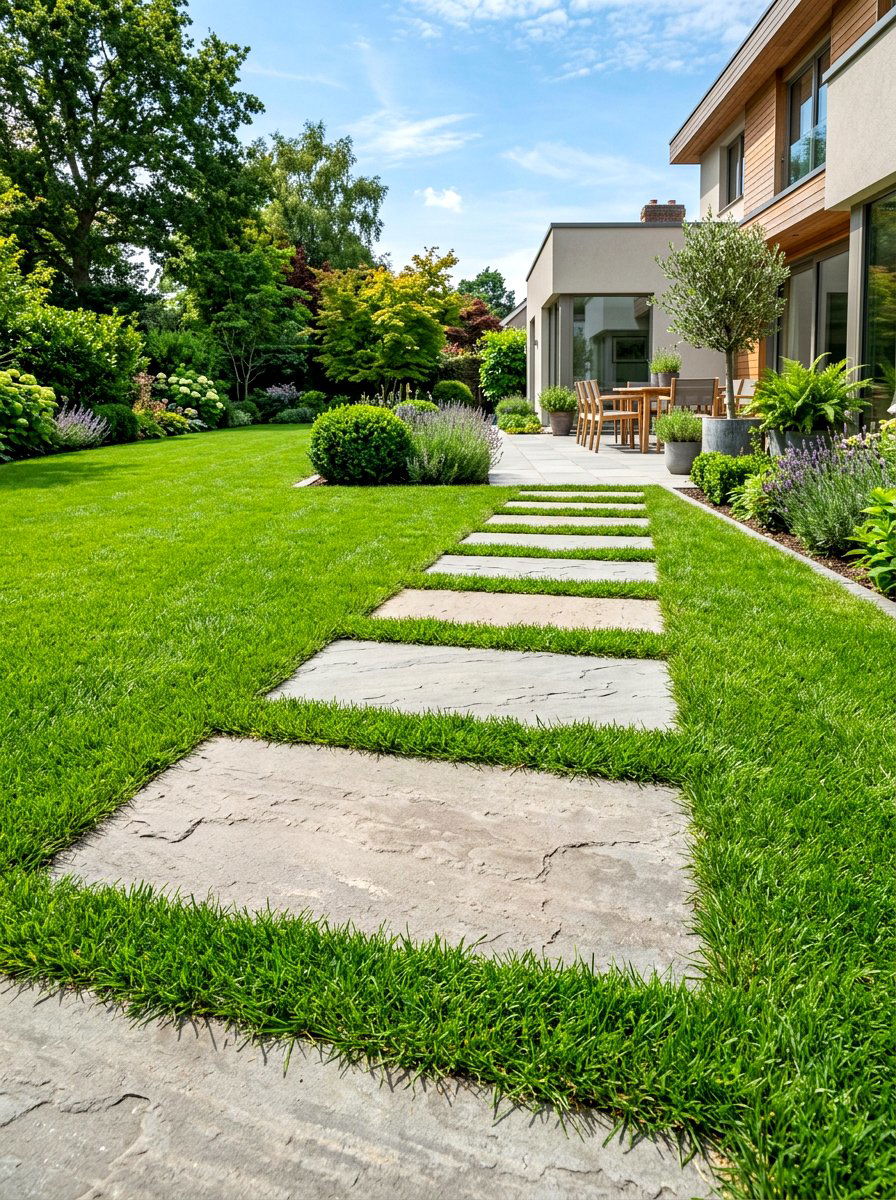
The "stepping stone in grass" look is a classic design choice that maintains the greenery of your yard while providing a clear path. By embedding large pavers directly into the turf, you create a seamless transition between the hardscape and the lawn. This technique is excellent for preventing the "muddy track" that often forms when people walk across the grass repeatedly. It requires precise installation to ensure the stones are level with the ground, allowing a lawnmower to pass right over them. This style is perfect for minimalist gardens where you want to emphasize the lushness of the lawn while still offering a functional way to navigate.
11. Pea Gravel Path
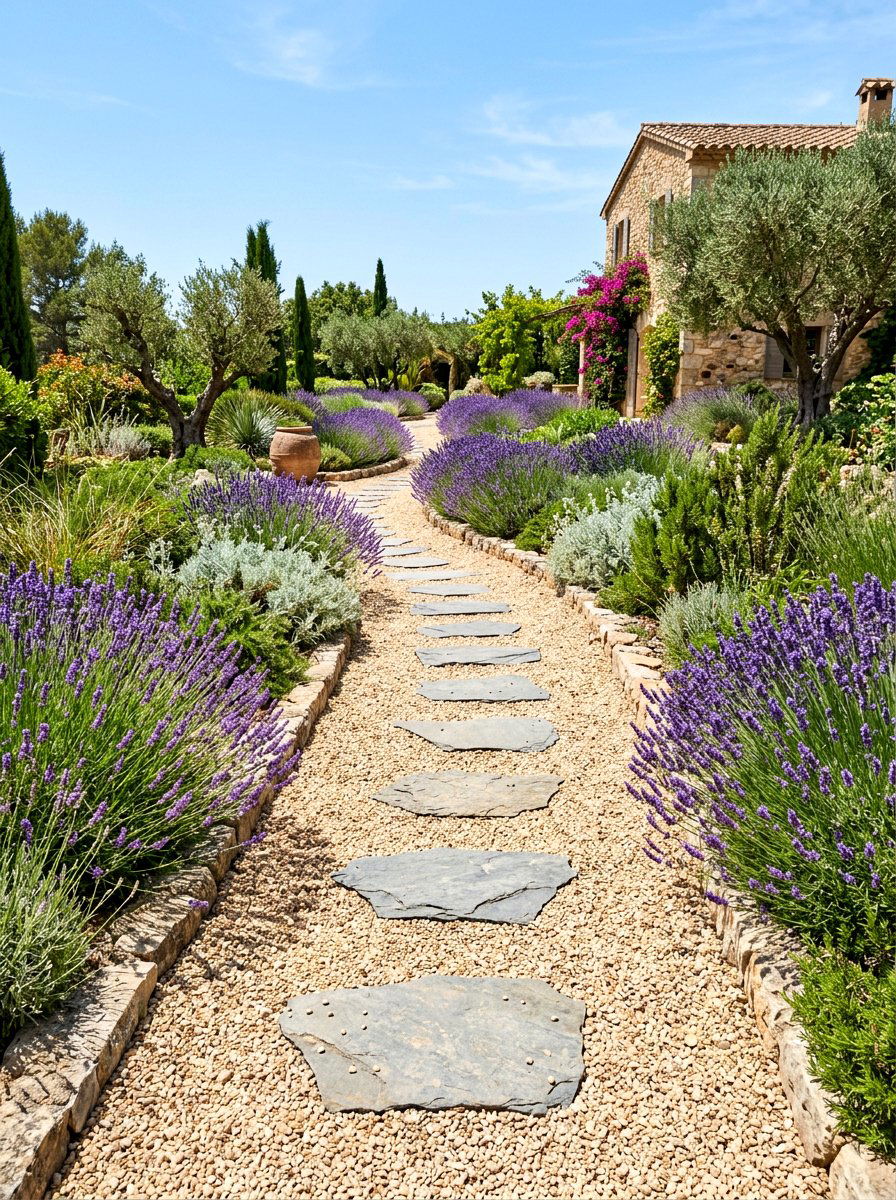
Combining stepping stones with pea gravel is a smart way to create a tactile and auditory experience in your garden. The soft crunch of gravel underfoot provides a sensory reminder of your movement through the space. Using large, flat stones as the primary steps within a gravel-filled trench ensures that the path remains easy to walk on while the gravel handles drainage. This combination is highly effective for preventing erosion and managing runoff. You can play with color contrasts, such as dark charcoal stones set against white or tan gravel. It is a versatile look that fits both Mediterranean-style gardens and modern, desert-themed backyard landscapes.
12. Zen Garden Stones
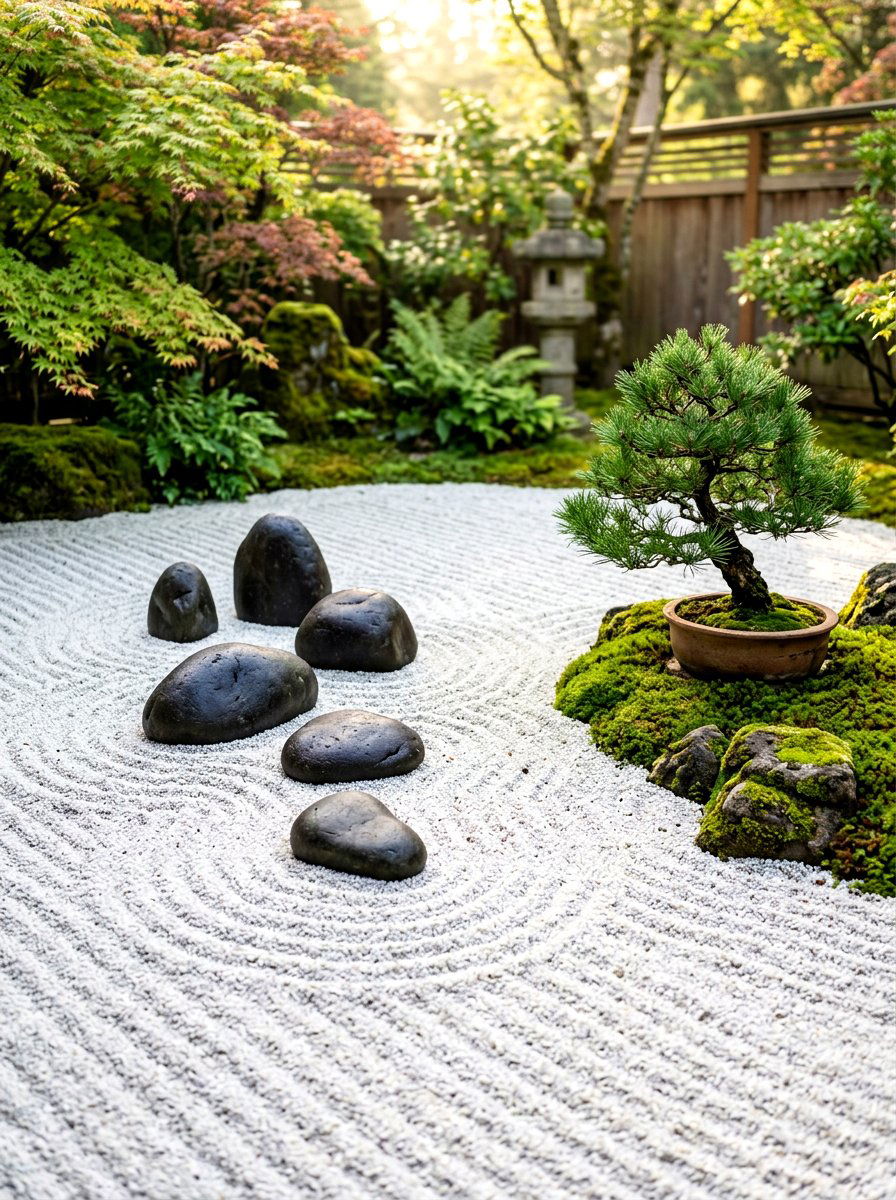
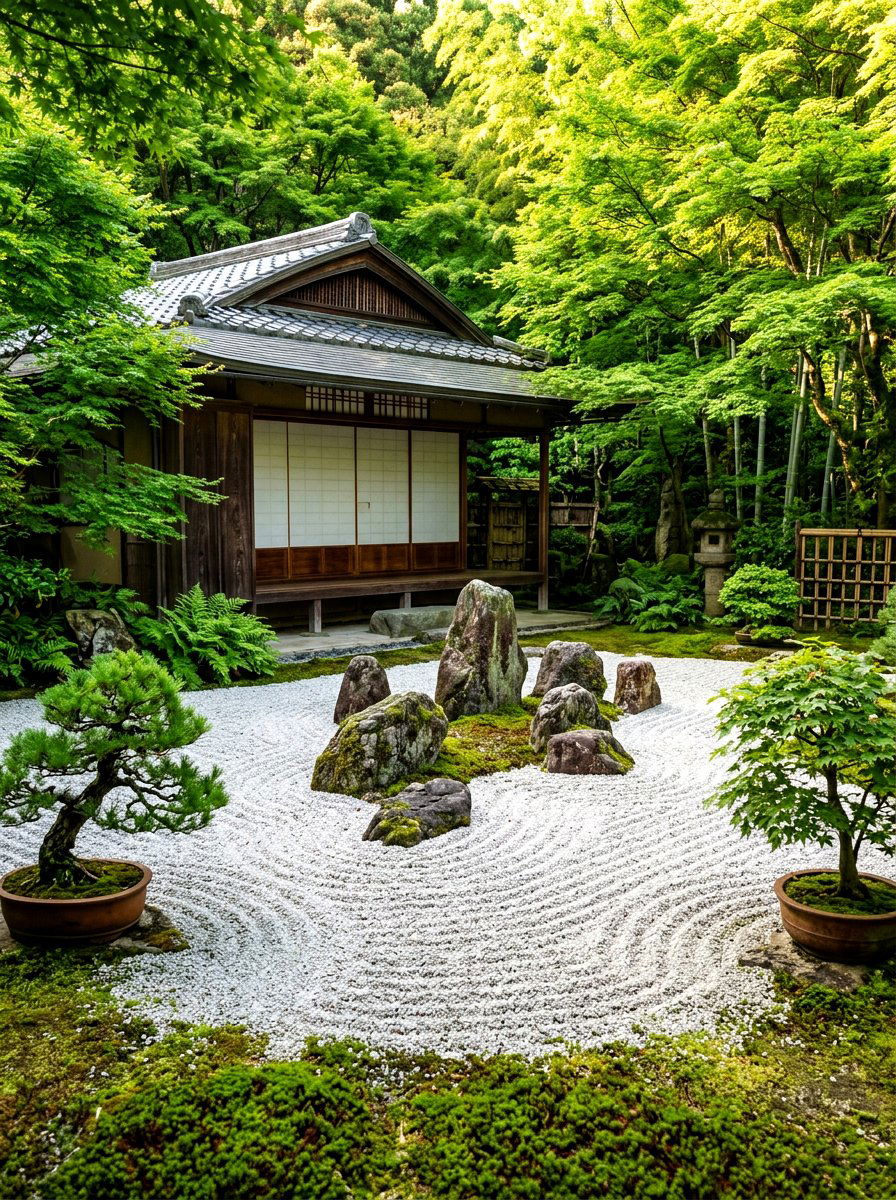
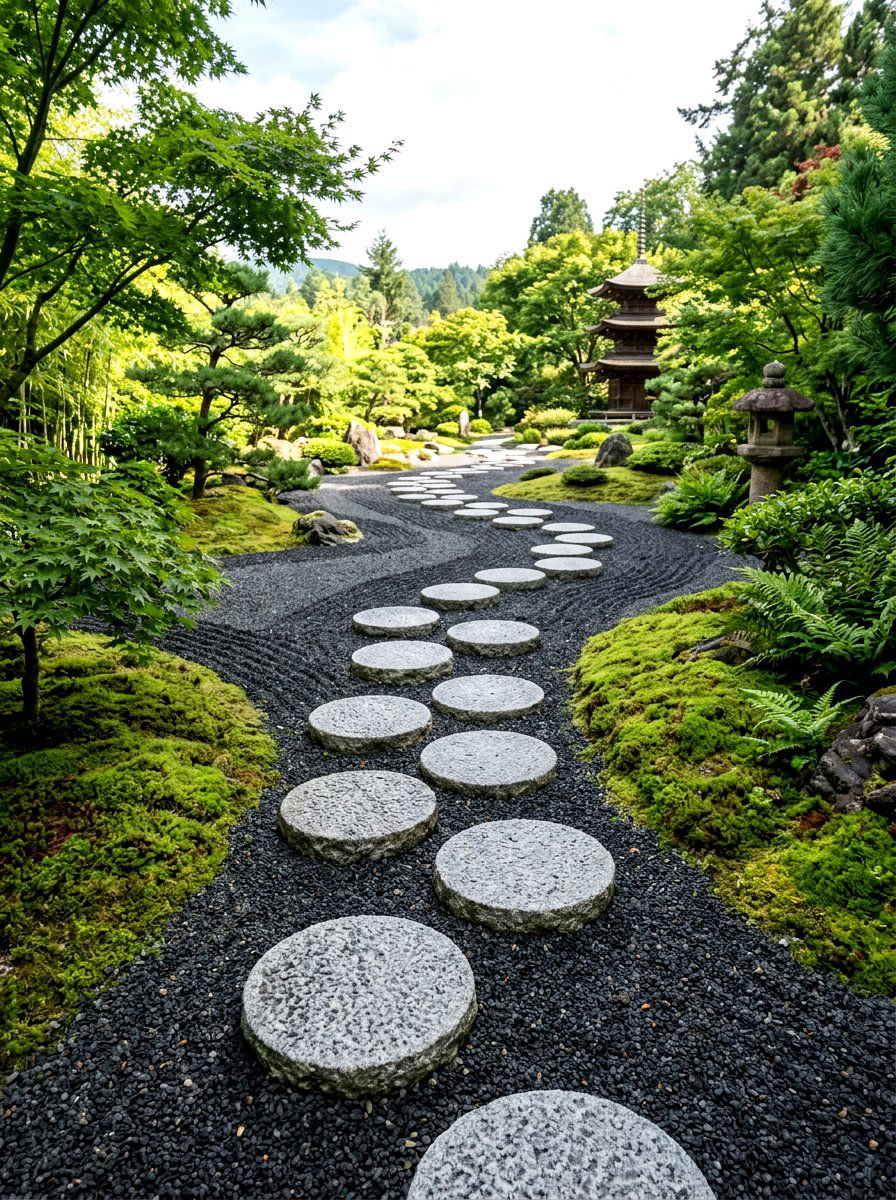
A Zen-inspired walkway focuses on simplicity, balance, and mindfulness. These paths often feature large, smooth stones placed with generous spacing, encouraging a slower pace as you move through the garden. The stones are frequently surrounded by raked sand or very fine gravel to represent water or clouds. This design is meant to be a meditative experience, leading you toward a specific focal point like a stone lantern or a peaceful water feature. By using minimal materials and a neutral color palette, a Zen path creates a sense of tranquility. It is an ideal choice for a small courtyard or a dedicated quiet space for reflection.
13. Geometric Concrete Pavers
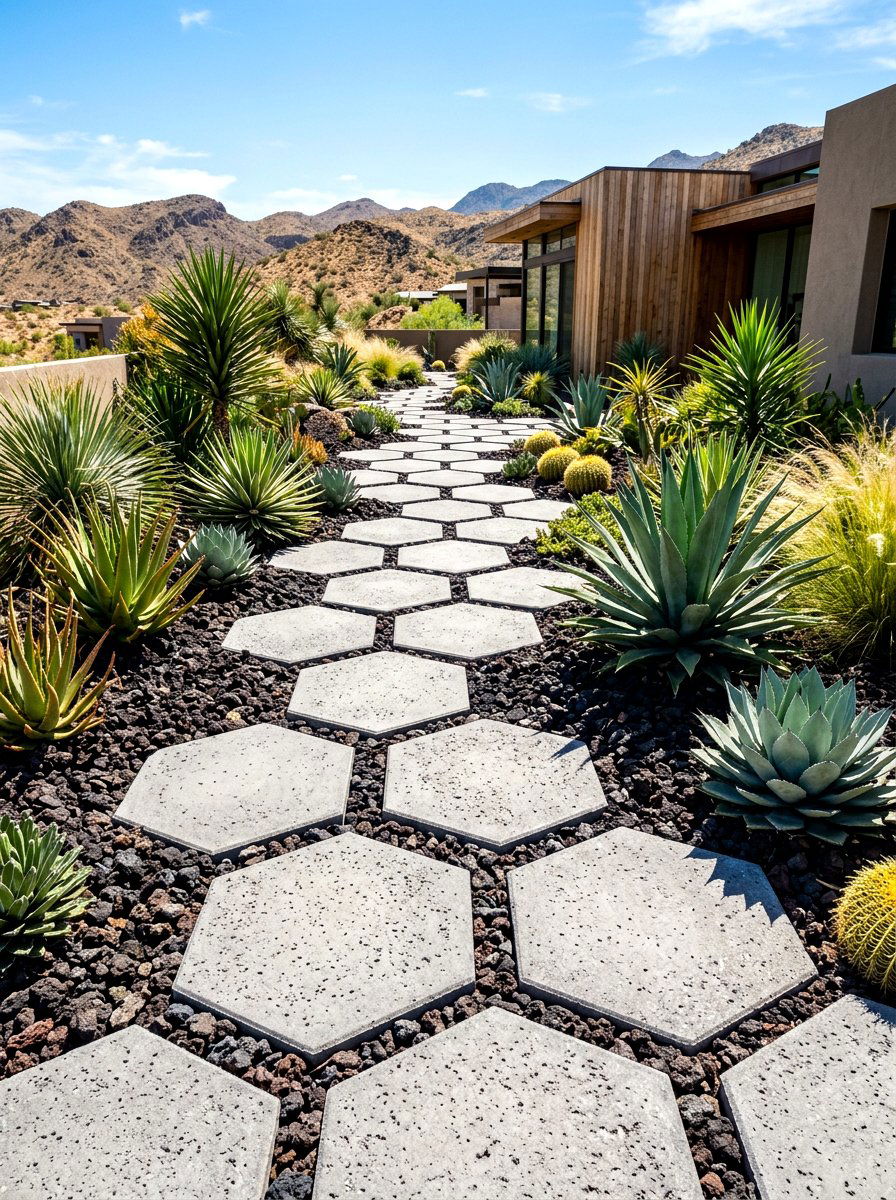
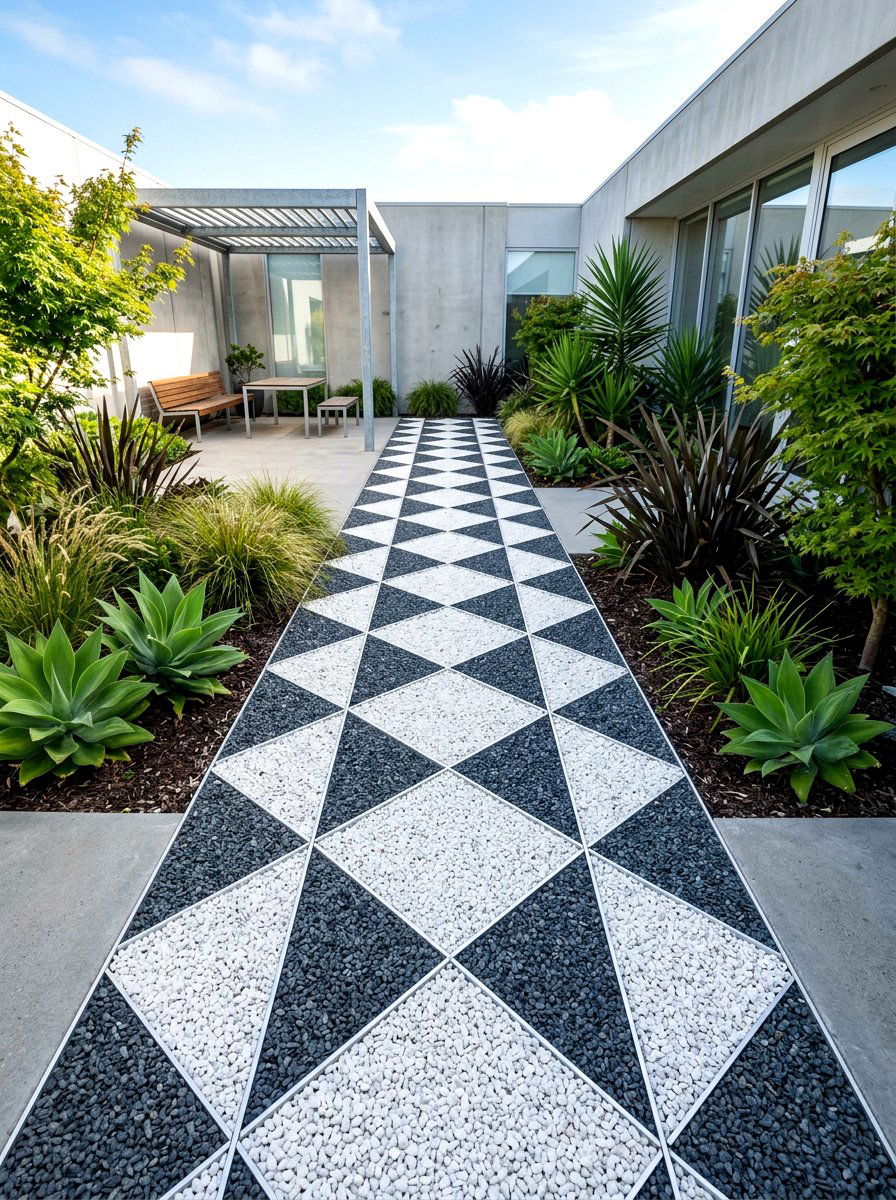
For a bold and artistic statement, consider using geometric concrete pavers in shapes like hexagons or triangles. These non-traditional shapes create a visually stimulating pattern that feels very current and trendy. Hexagonal pavers, in particular, have a honeycomb-like appearance that adds a mathematical beauty to the garden. You can arrange them in clusters or a single line to guide visitors. This style is often used in mid-century modern or ultra-contemporary homes where the architecture is a key design element. The sharp angles and clean edges of these stones provide a striking contrast to the soft, organic shapes of surrounding plants and trees.
14. Recycled Wood Path
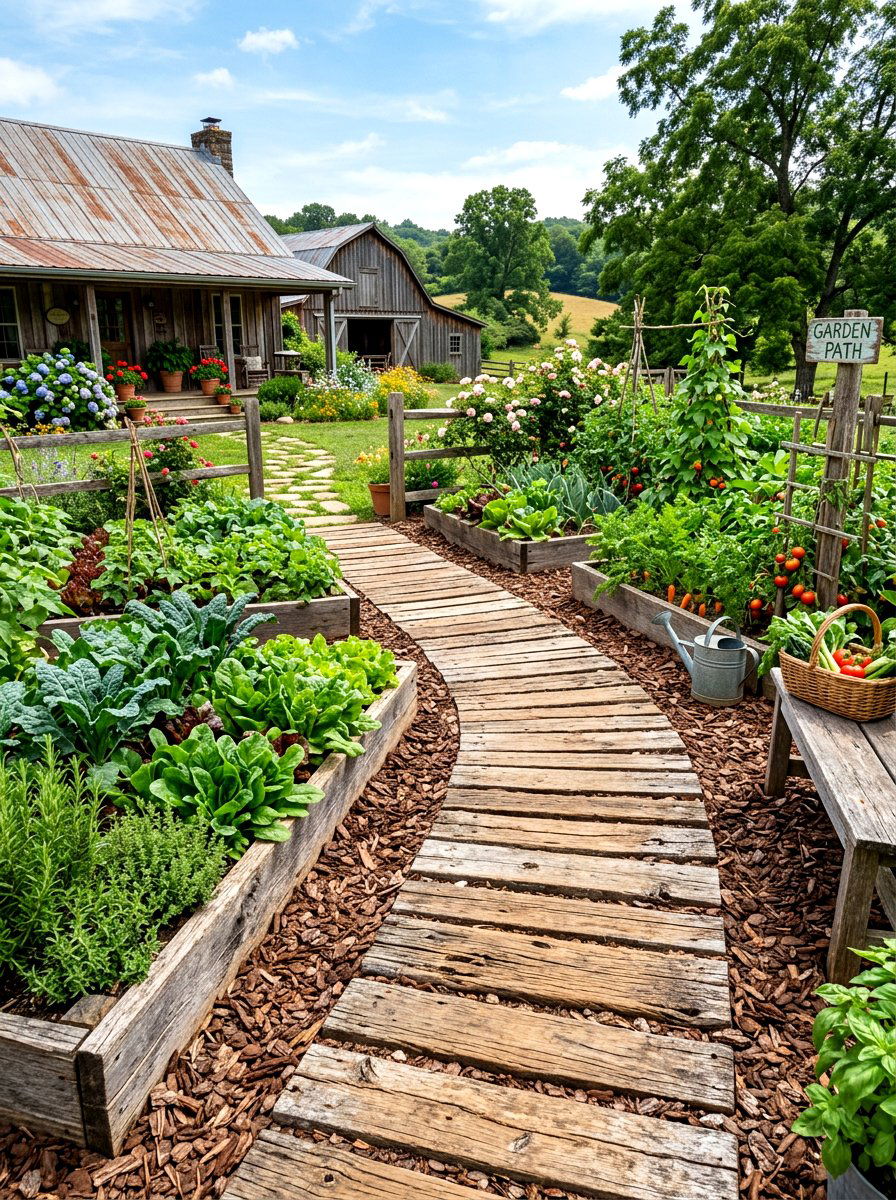
Eco-conscious homeowners often look for sustainable ways to build garden features, and a recycled wood path is a fantastic option. Using reclaimed timber, old railroad ties, or even upcycled pallets can create a walkway with incredible character and history. The weathered look of the wood adds a sense of age and stability to the garden. These paths work well in vegetable gardens or rustic farm-style landscapes. It is important to ensure the wood is safe for ground contact and hasn't been treated with harmful chemicals. This approach not only saves money but also gives a second life to materials that might otherwise end up in a landfill.
15. Travertine Stepping Stones
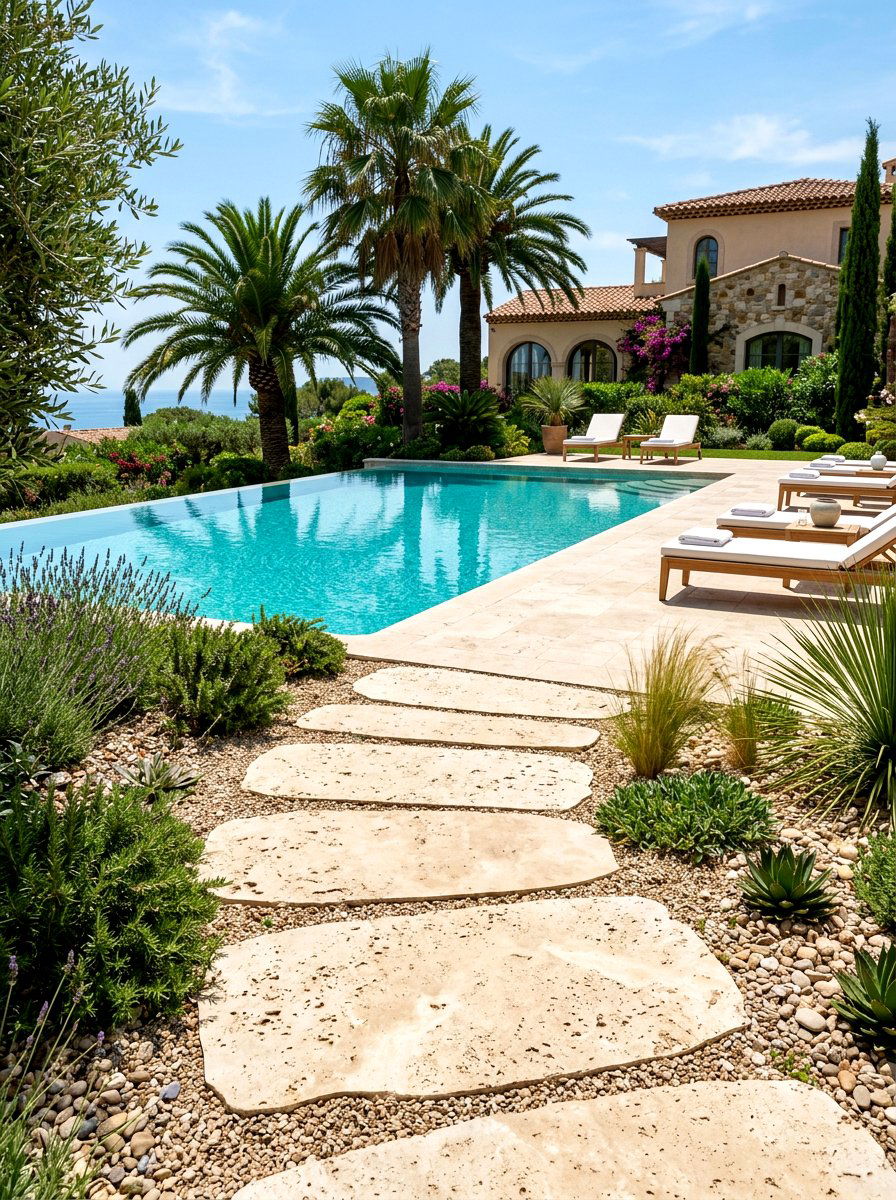
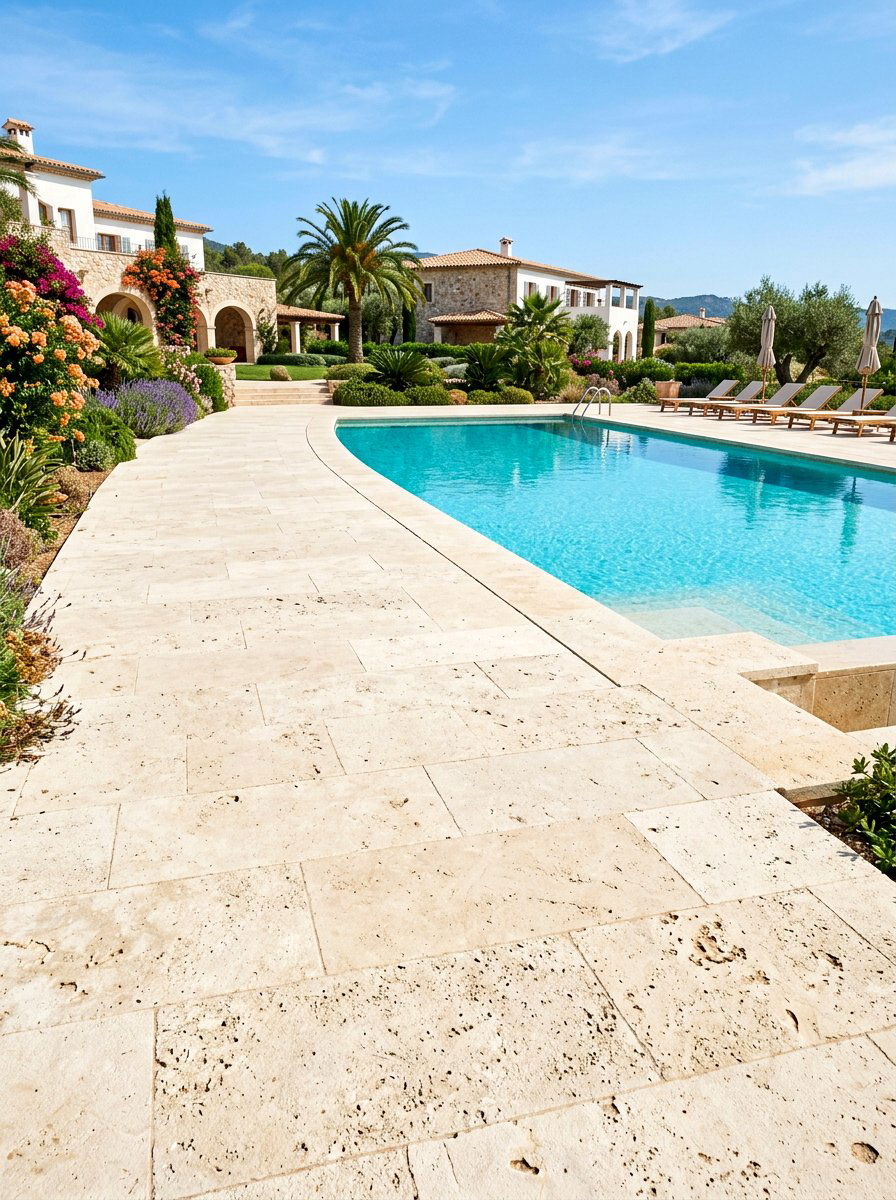
Travertine is a type of limestone that offers an upscale, Mediterranean feel to any outdoor space. It is naturally porous, which gives it a unique pitted texture and makes it stay cool to the touch even in direct sunlight. This makes travertine stepping stones an ideal choice for paths leading to swimming pools or sun-drenched patios. The color palette is usually warm, featuring creams, tans, and soft golds that evoke a sense of vacation and luxury. Despite its delicate appearance, travertine is quite durable when properly sealed. It adds a luminous quality to the garden, reflecting light and making small spaces feel much brighter and more open.
16. Mossy Stone Path
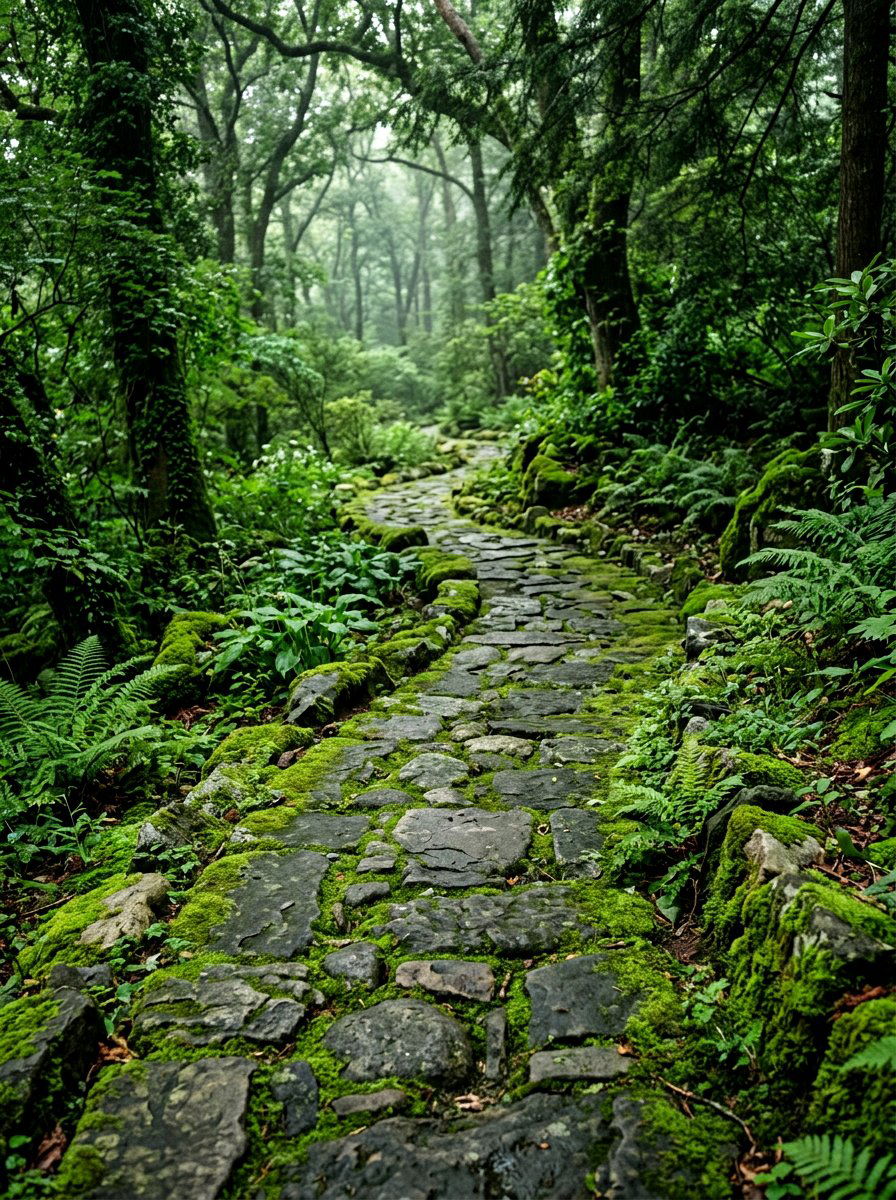
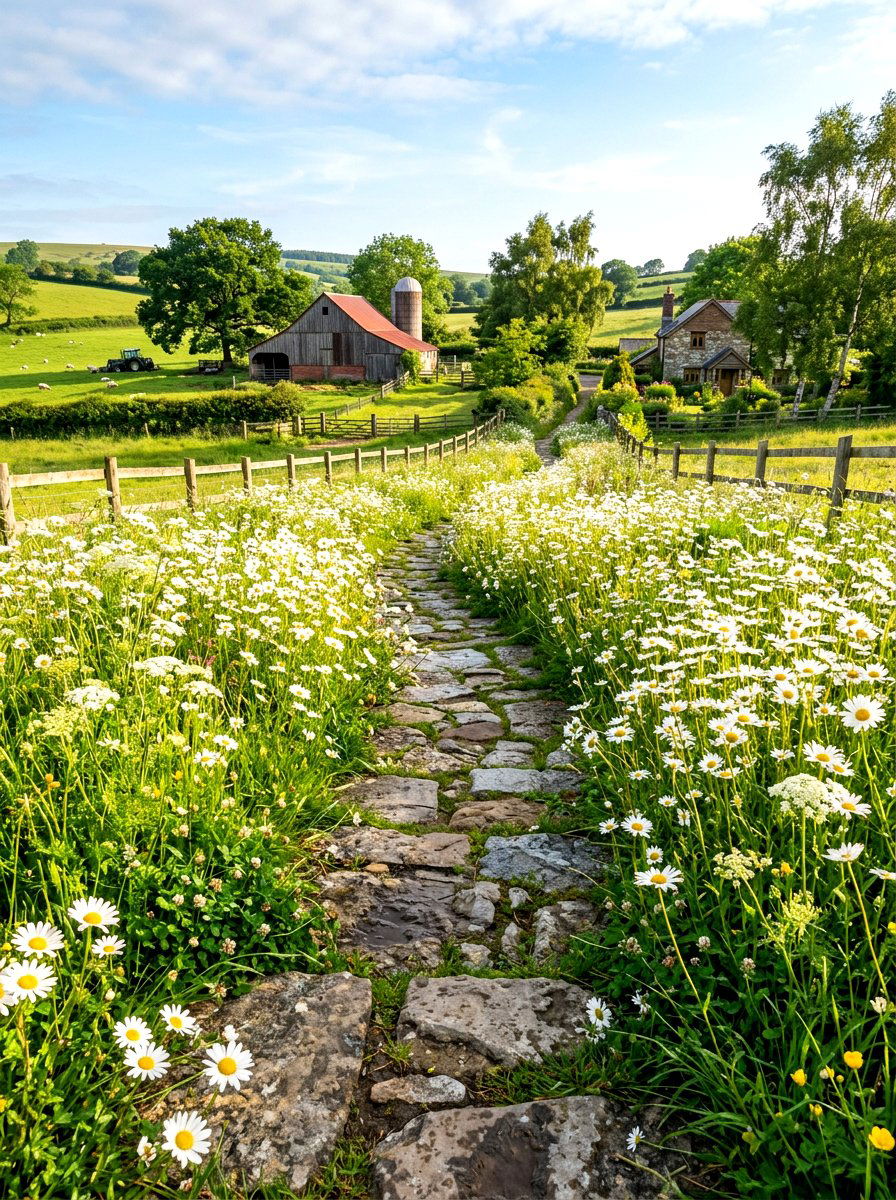
A mossy stone walkway is the ultimate choice for creating a sense of "old world" charm and timelessness. By placing natural stones in a shaded, damp area and allowing moss to grow in the joints, you create a path that looks like it has been there for centuries. This design is perfect for woodland gardens or Japanese-style landscapes. The soft green velvet of the moss provides a beautiful cushion and a vivid color contrast against the grey or brown of the stones. If nature doesn't provide the moss on its own, you can easily "seed" the gaps with moss fragments to speed up the process.
17. Limestone Walkway
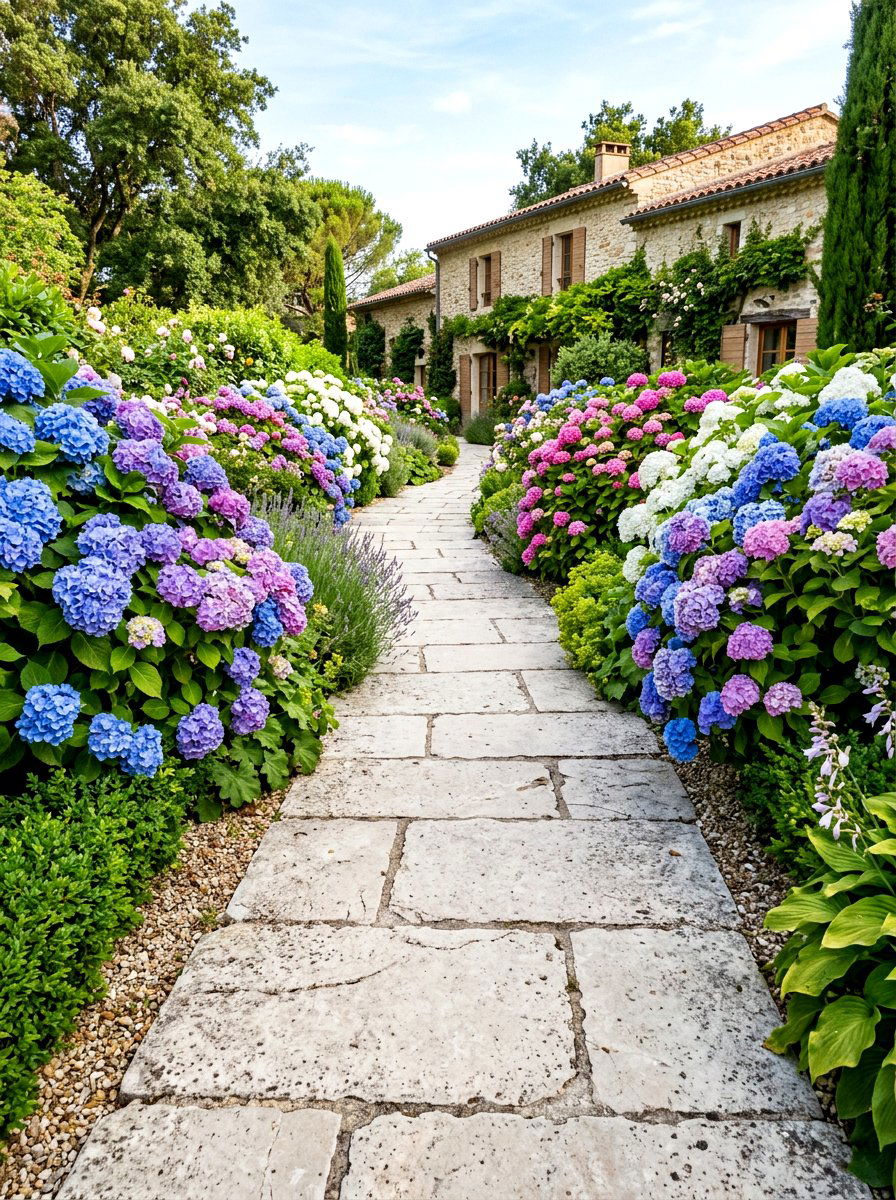
Limestone is a versatile natural stone that comes in a variety of light colors, including pale grey, buff, and white. A limestone stepping stone walkway can brighten up a dark garden path and create a clean, elegant look. It is often used in traditional or French country-style gardens where its light tones complement stone walls and wrought iron furniture. Limestone is easy to cut, allowing for a mix of sizes that can be arranged in a pleasing, random pattern. Over time, it may weather slightly, which only adds to its natural beauty. It provides a very solid and reliable surface that feels high-quality underfoot.
18. Log Slice Steps
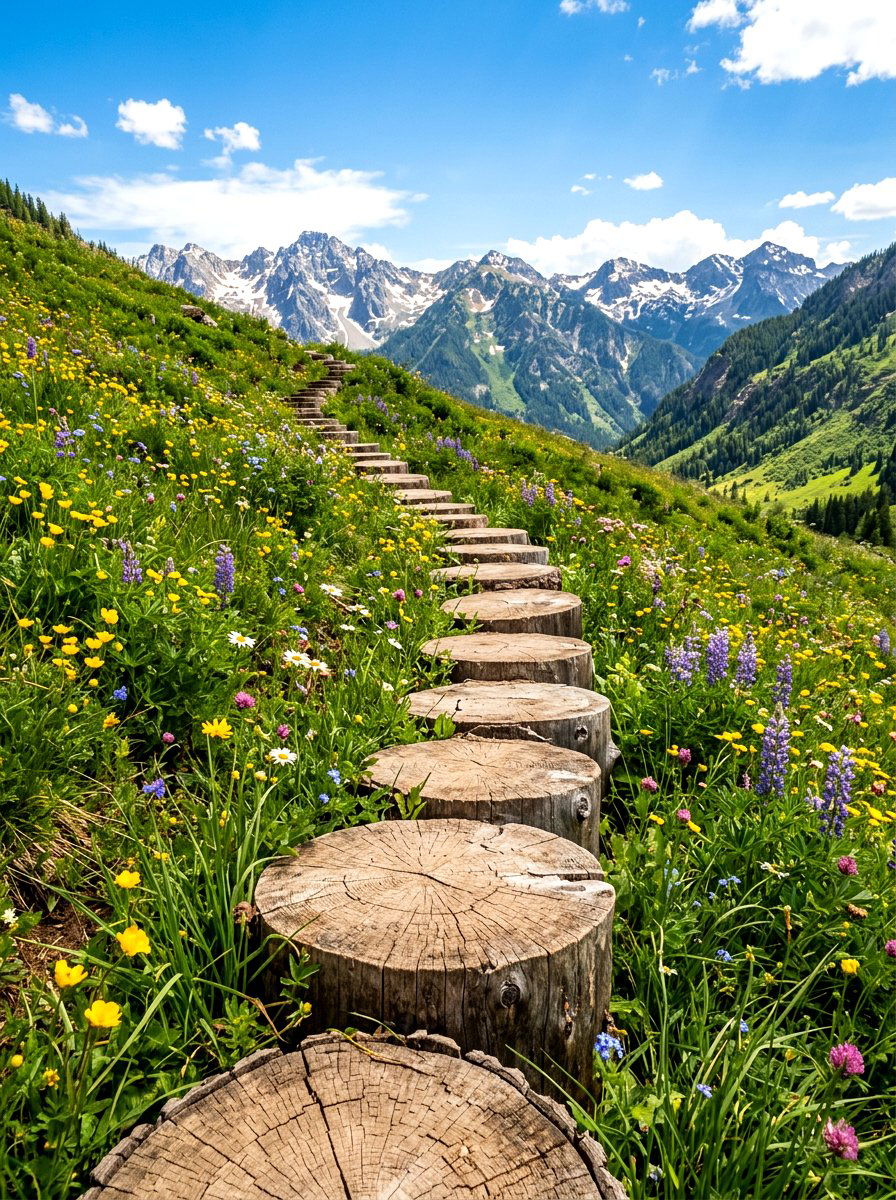
Similar to wood slices but often thicker and more substantial, log slice steps are perfect for tackling slight changes in elevation in a rustic garden. These heavy "rounds" can be partially buried into a slope to create a natural-looking set of stairs. They blend seamlessly into a hilly backyard or a garden with lots of trees. Using logs of different diameters can create a more interesting and organic visual rhythm. This design choice emphasizes a "leave no trace" philosophy, as the materials are entirely natural. When surrounded by ferns and forest groundcovers, these log steps make every walk through the garden feel like a mountain hike.
19. Checkerboard Paver Layout
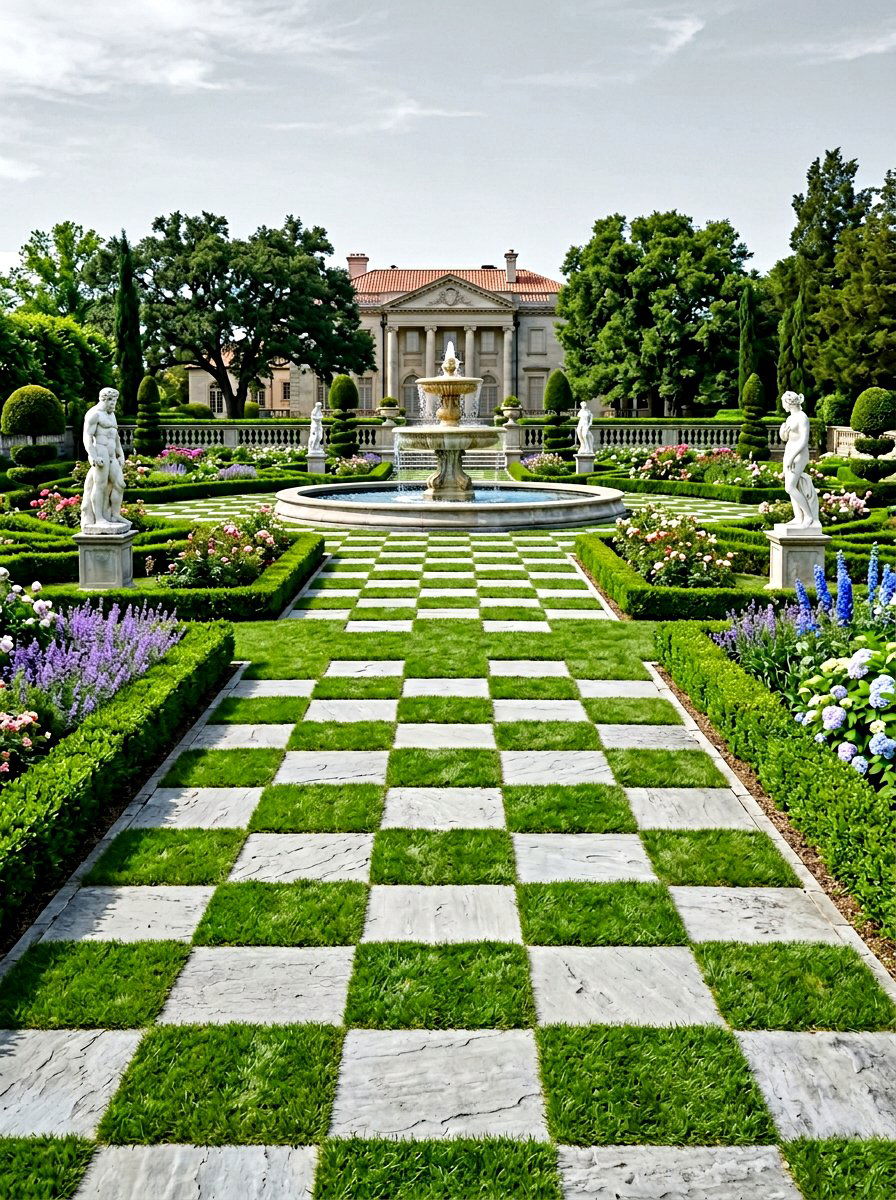
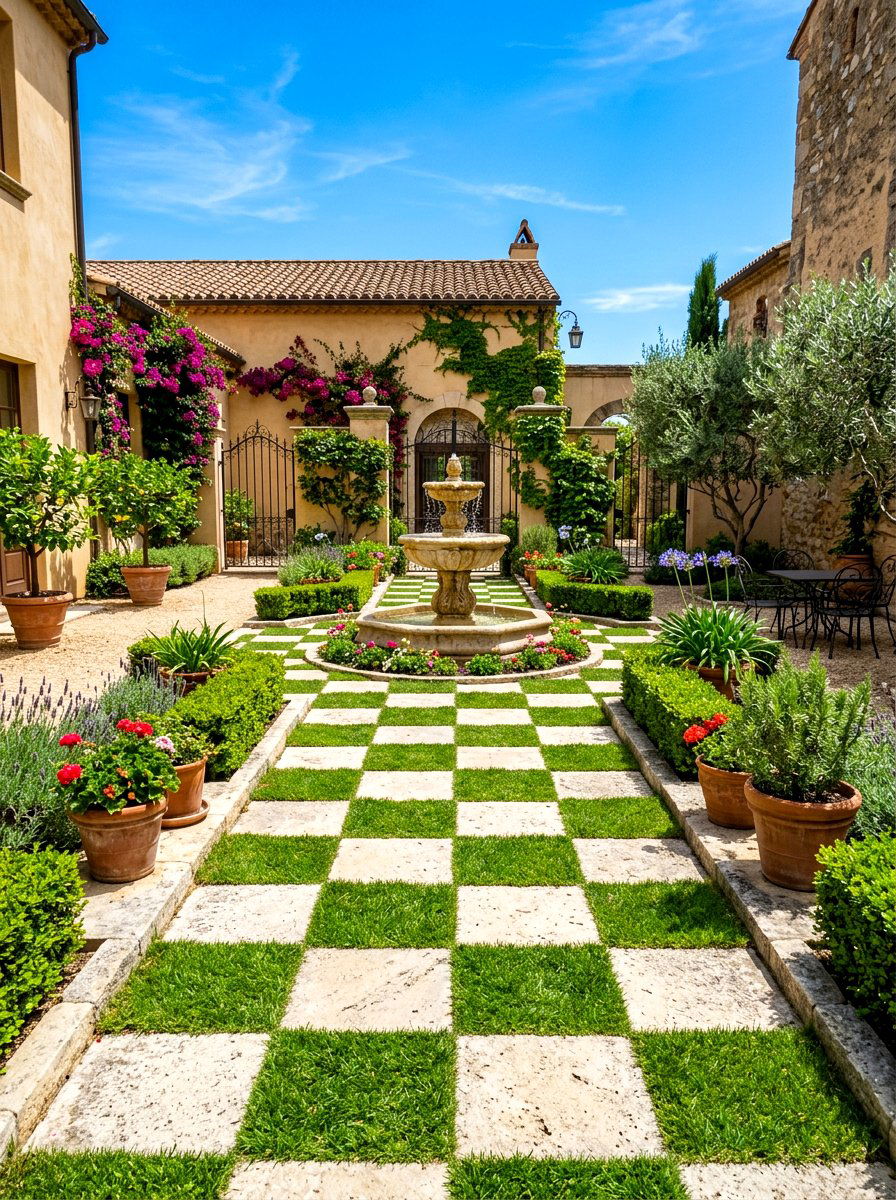
The checkerboard pattern is a classic design technique that brings a touch of formal elegance to the garden. By alternating square pavers with squares of green grass or low-growing groundcover, you create a striking geometric grid. This look is very popular in Italianate or formal English gardens. It works best on flat areas where the precision of the layout can be fully appreciated. You can use large-format concrete pavers or natural stone tiles to achieve this effect. The alternating textures of hard stone and soft greenery make the path feel both structured and alive, providing a visually interesting transition between different sections of your outdoor property.
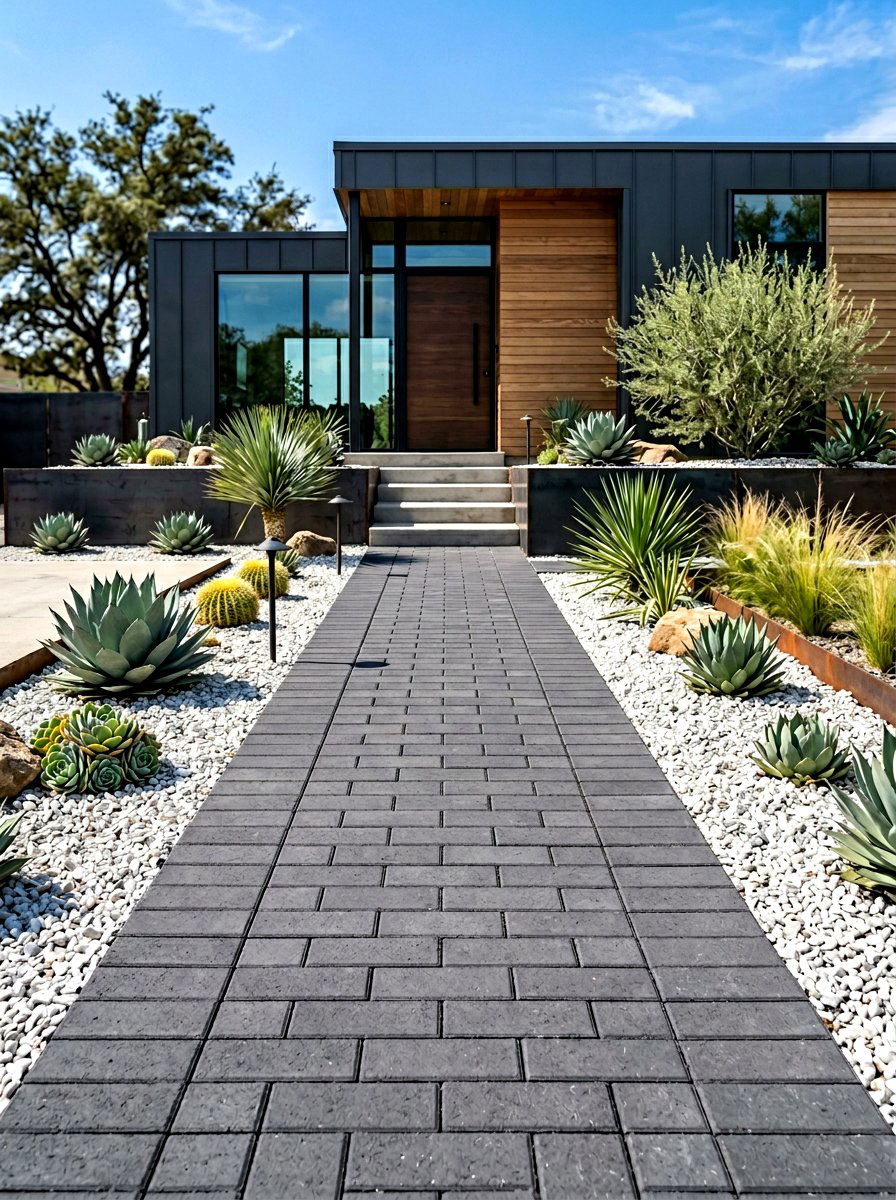
20. Inlaid Stone Path
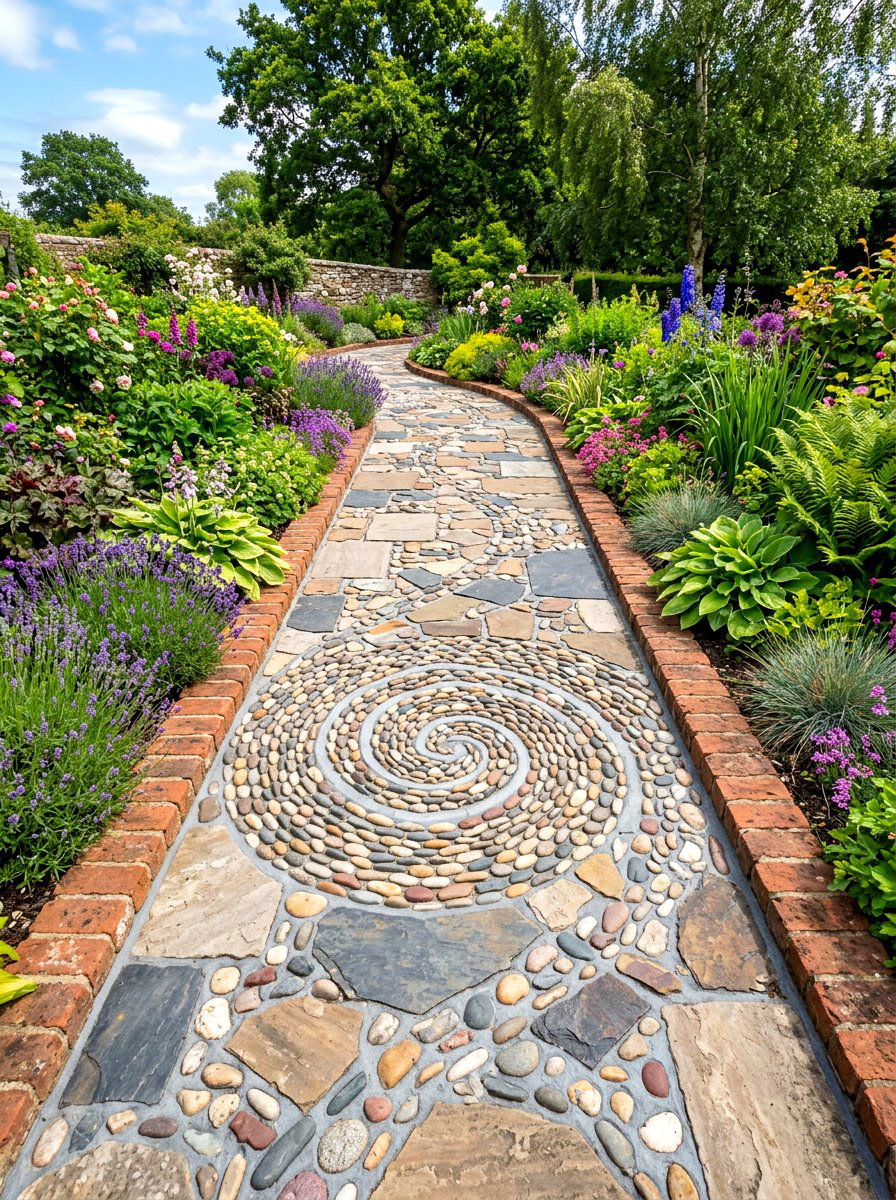
An inlaid stone walkway involves setting smaller decorative stones or pebbles into a larger concrete or mortar base. This allows for the creation of intricate patterns, such as spirals, flowers, or even house numbers, directly into the path. It is a highly durable option because the stones are locked in place, preventing them from shifting over time. This technique is often seen in historical European gardens and adds a layer of craftsmanship to your landscape. You can use different colored stones to create high-contrast designs that serve as a focal point. It is a great way to personalize your entrance and show off your unique style.
21. Precast Concrete Steps
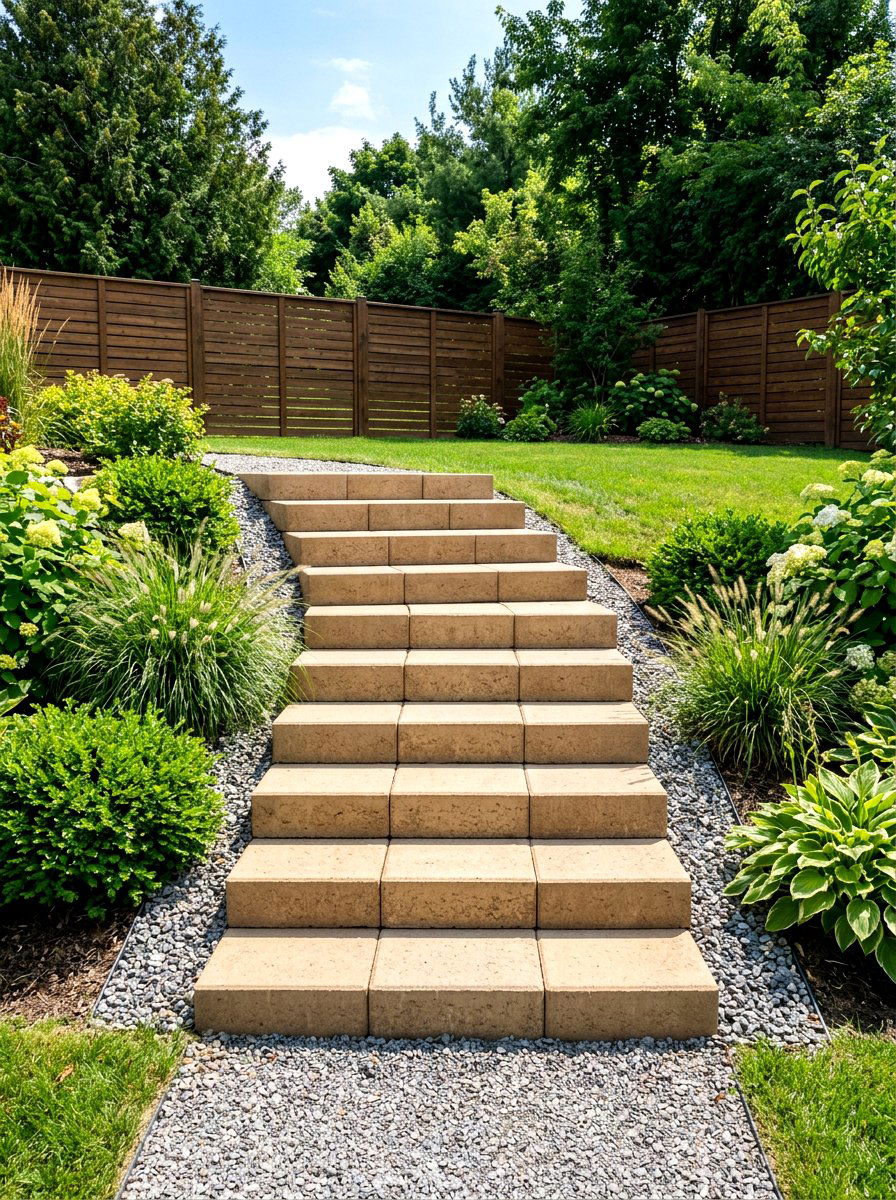
Precast concrete stepping stones are a practical and budget-friendly solution for many homeowners. These are manufactured in molds, ensuring that every stone is uniform in size, weight, and thickness. This consistency makes them incredibly easy to install, as you don't have to worry about leveling irregular pieces. Many precast options are designed to mimic the look of natural stone or brick, giving you the aesthetic you want at a fraction of the cost. They are available in a wide range of colors and textures, from smooth and modern to rugged and rustic. These stones are built to withstand heavy use and various weather conditions without cracking.
22. Sandstone Stepping Stones
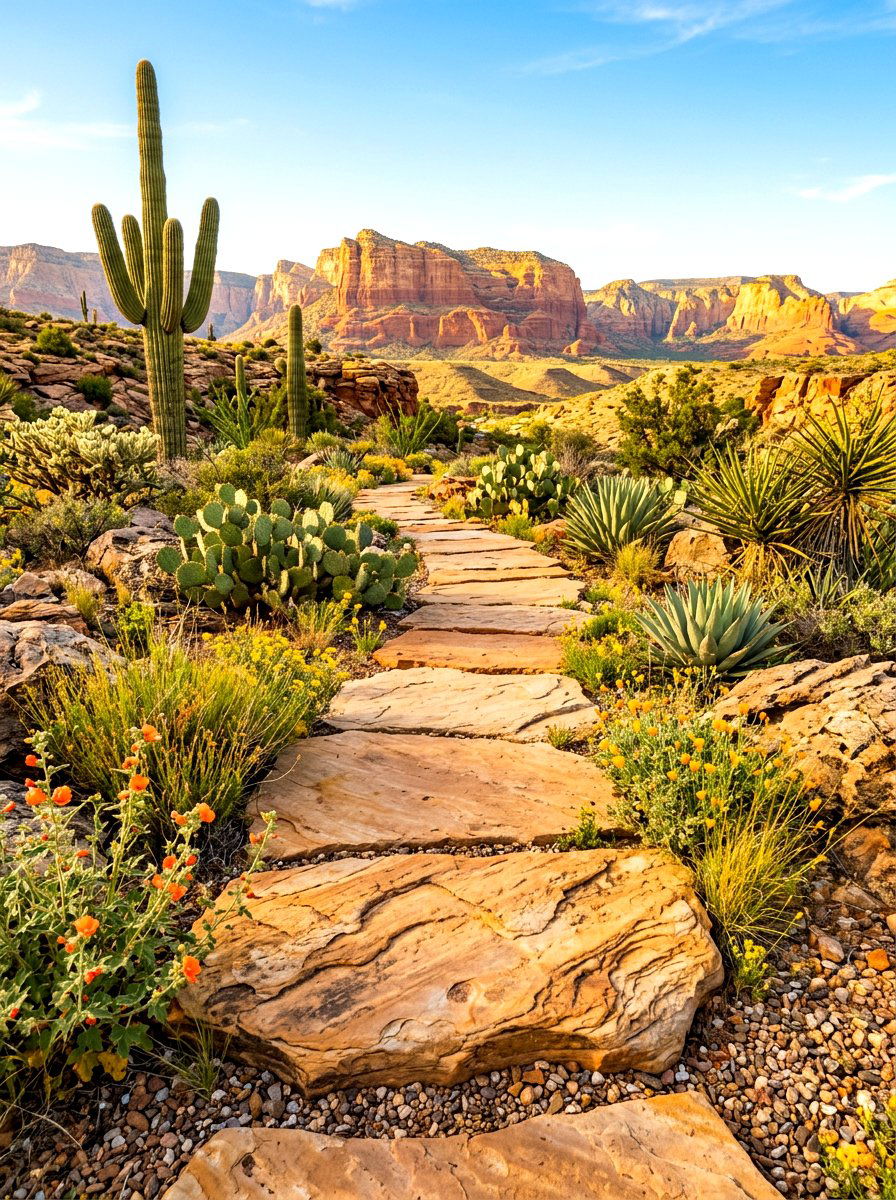
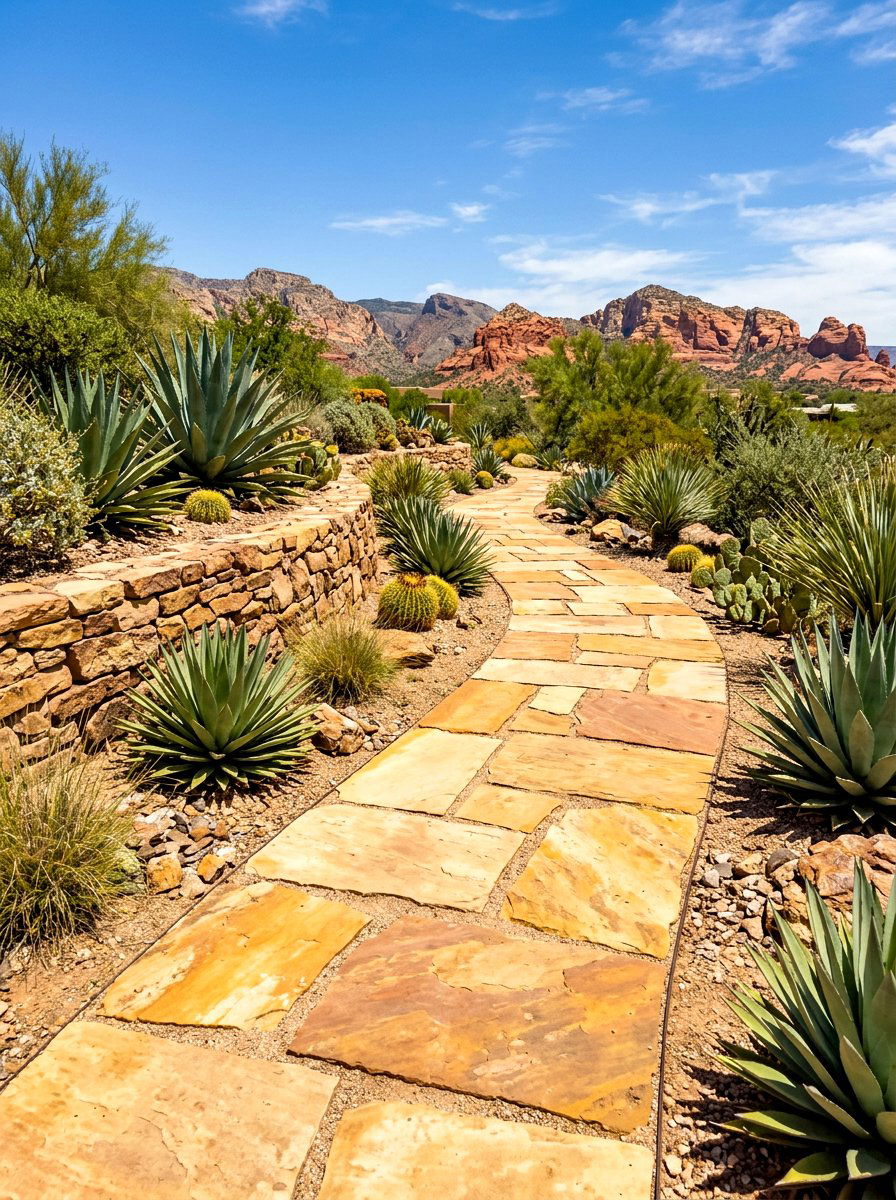
Sandstone is a popular choice for walkways because of its warm, earthy tones and naturally slip-resistant texture. It often features beautiful bands of color that look like desert landscapes or beach sands. Sandstone stepping stones can be used to create a beachy, coastal vibe or a warm, southwestern look. The stone is relatively easy to work with and can be found in many different shapes and sizes. It is a porous stone, so it absorbs water quickly, which helps keep the path dry after a storm. Its natural beauty and durability make it a reliable choice for paths that see frequent use throughout the year.
23. Slate Chip Path
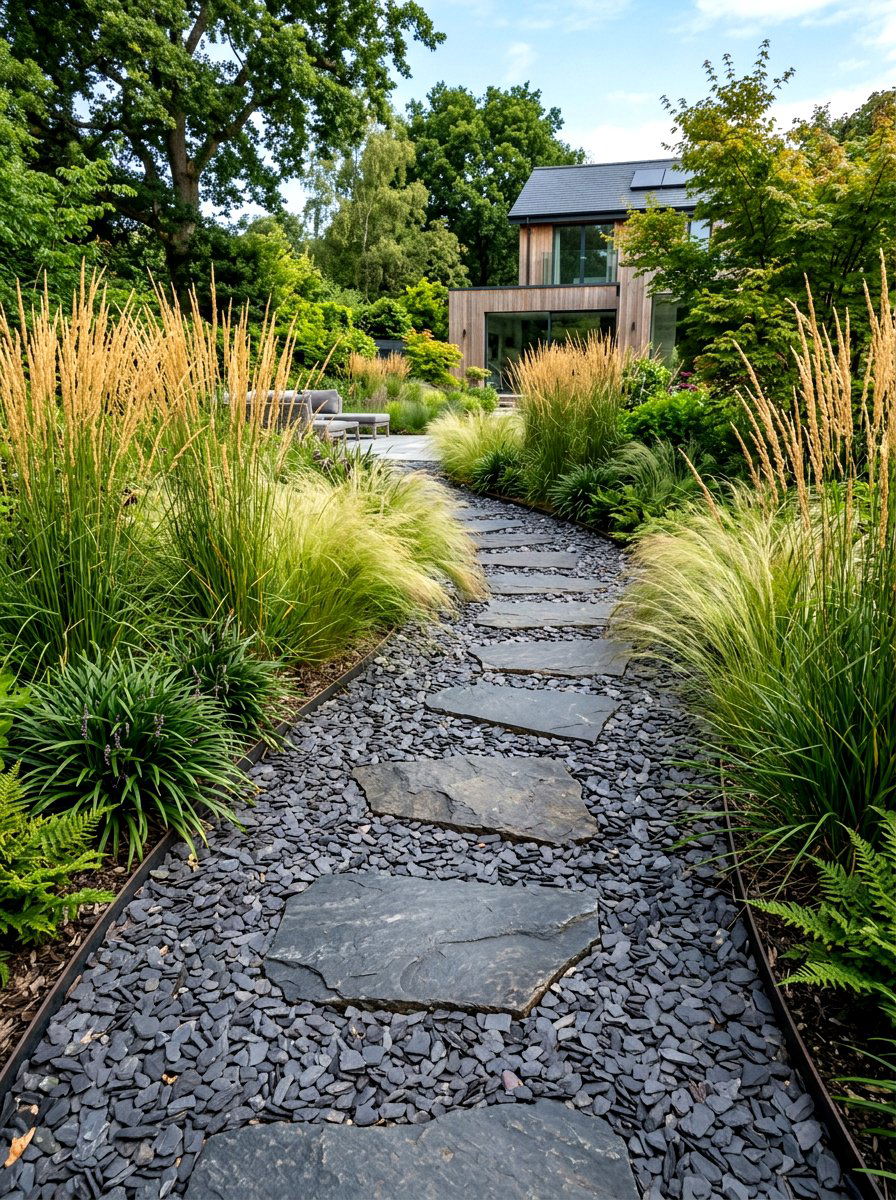
While large slate slabs are common, using slate chips or "mini-slabs" as stepping stones can create a unique, textured effect. These smaller, flatter pieces can be layered to create a path that has a lot of visual depth. The dark, often metallic sheen of slate looks stunning against green foliage. This type of path is excellent for smaller spaces where large pavers might feel overwhelming. The flat profile of slate makes it easy to create a level walking surface. When combined with a border of larger rocks, a slate chip path feels very structured and intentional, providing a sophisticated touch to any modern or traditional backyard garden.
24. Cobblestone Garden Path
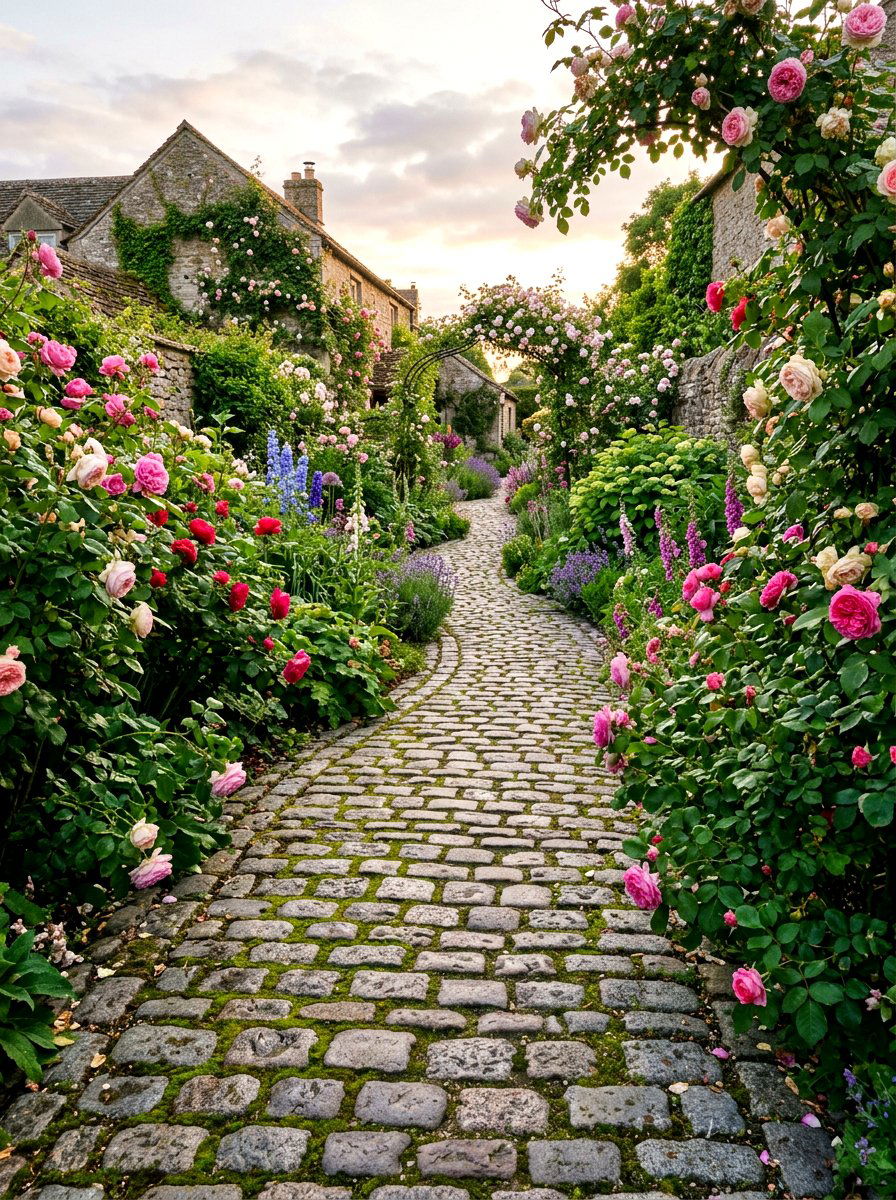
Cobblestones evoke the charm of old European streets and add a wonderful sense of history to a garden. These rounded, often granite stones are incredibly durable and can withstand centuries of use. Using them as stepping stones creates a bumpy, tactile surface that feels very traditional. They are perfect for paths that wind through flower beds or lead to a garden shed. Because they are smaller, you can use them to create tight curves and intricate layouts that larger stones couldn't manage. Cobblestone paths look best when the joints are filled with sand or a low-growing moss, further enhancing their timeless and rustic appearance.
25. Floating Concrete Steps
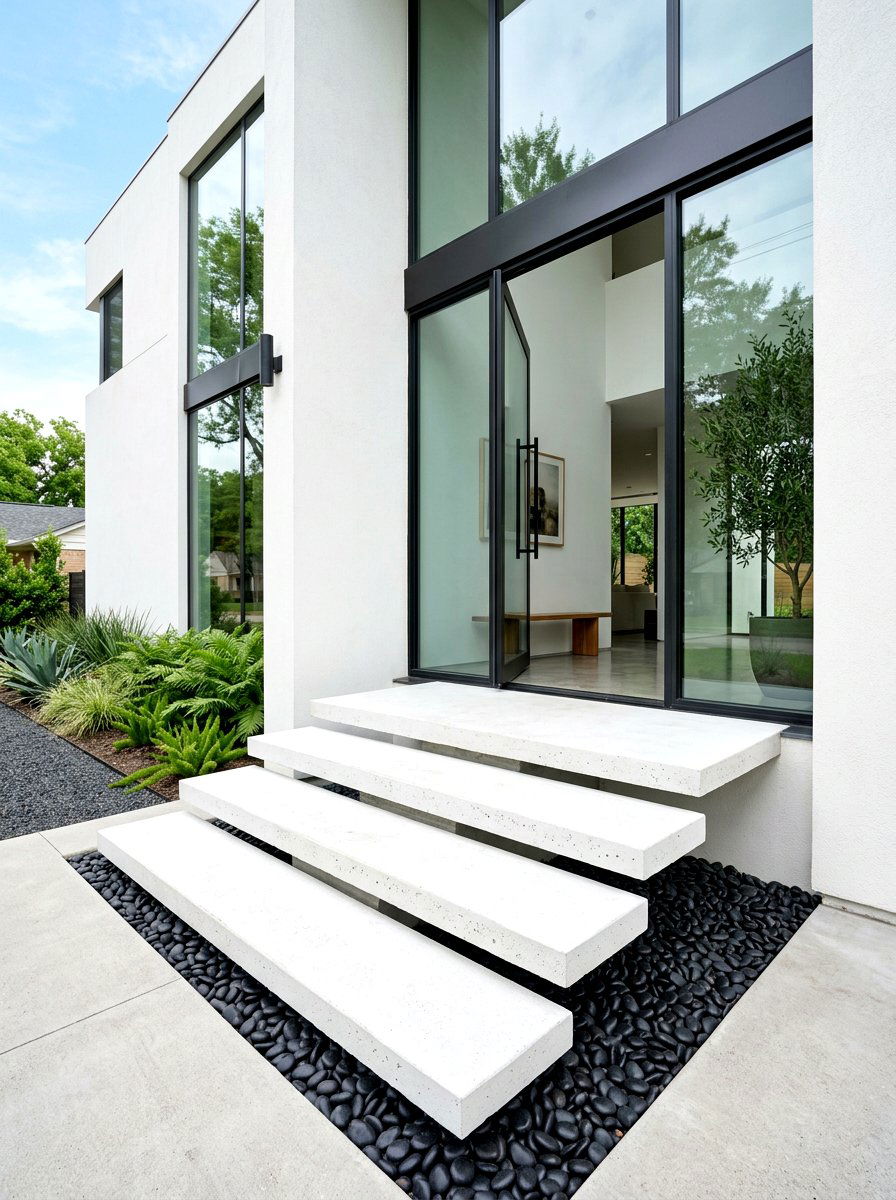
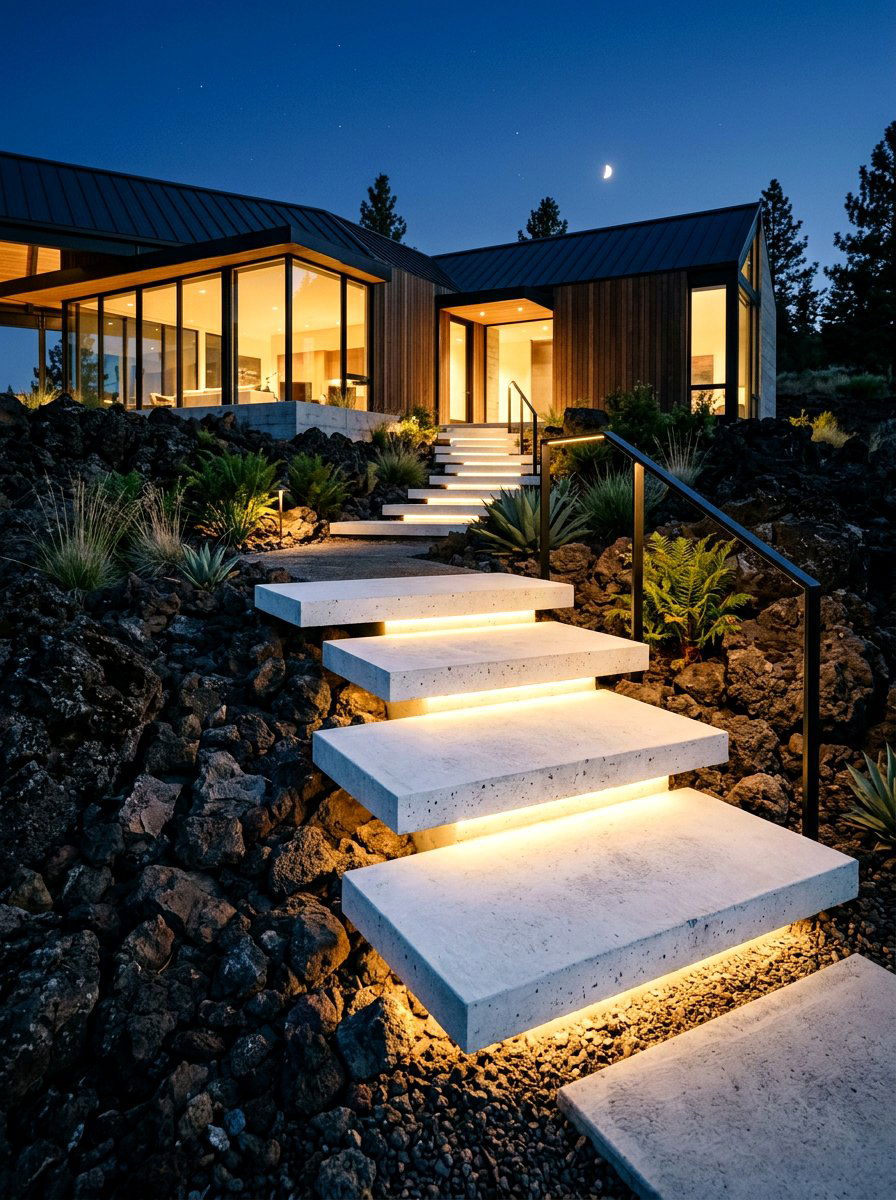
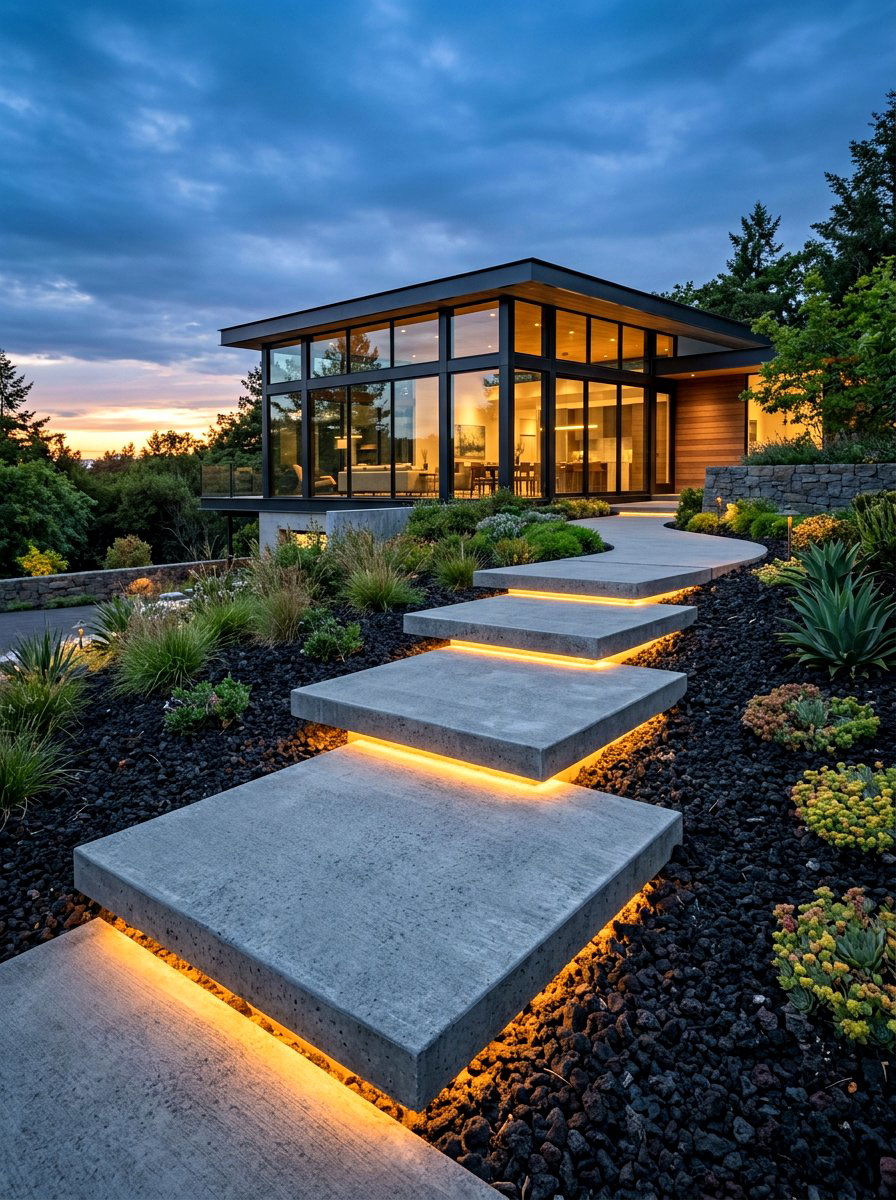
Floating steps are a hallmark of modern landscape architecture. This effect is achieved by placing thick concrete slabs on a hidden support or a recessed base, making it appear as though the stones are hovering just above the ground. This design creates a very clean, architectural look that is perfect for contemporary homes. The space beneath the "floating" stones can be filled with dark river rocks or even integrated lighting to emphasize the shadow lines. This style is often used for front entryways to create a dramatic and inviting approach. It requires professional installation to ensure stability, but the visual impact is absolutely worth the effort.
26. Curved Stone Walkway
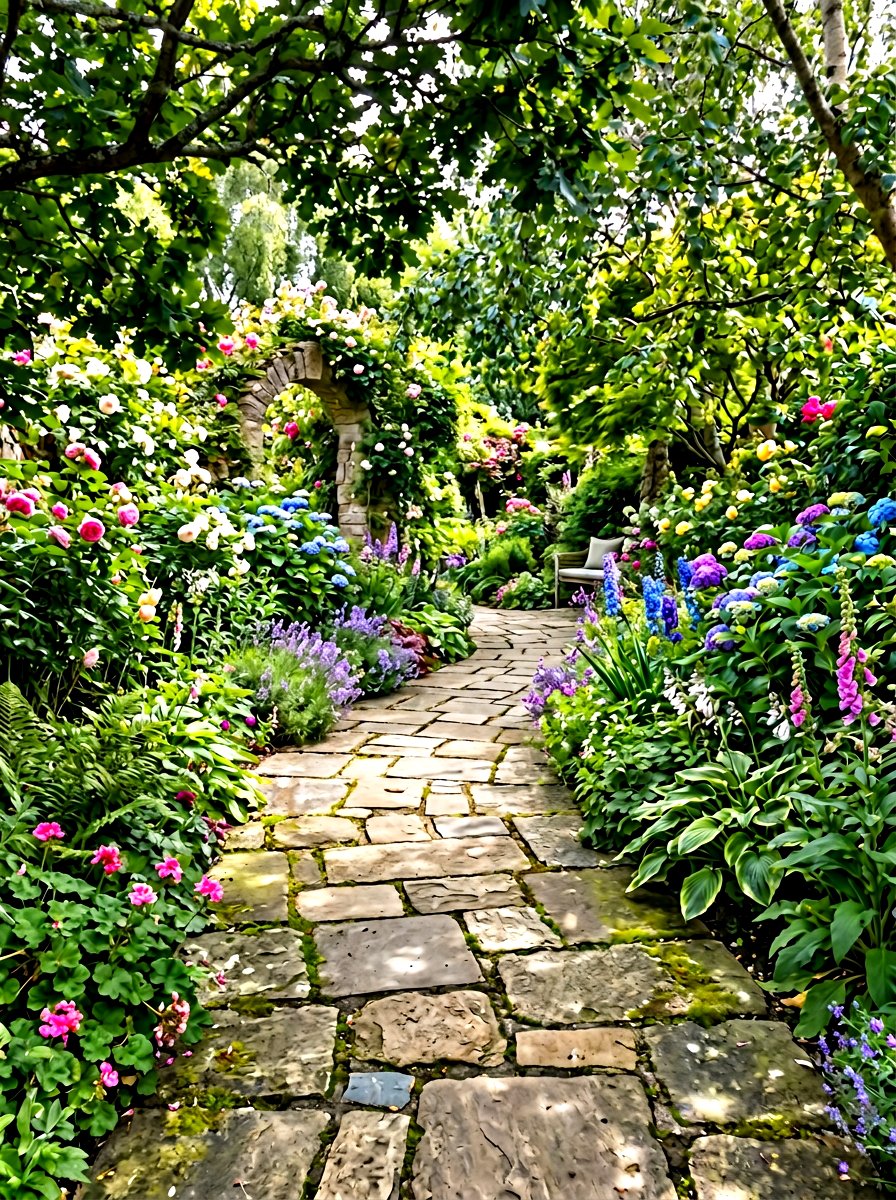
While straight paths are functional, a curved stone walkway adds a sense of mystery and movement to the garden. By gently meandering through your landscape, a curved path encourages visitors to slow down and enjoy the plants on either side. This design is particularly effective for making small gardens feel larger, as you can't see the entire path at once. Using irregular-shaped stones like flagstone enhances the organic feel of the curves. You can use taller plants or shrubs to "hide" parts of the path, creating a journey of discovery. It is a classic landscaping trick that adds a professional, designer touch to any backyard.
27. Hidden Garden Trail

A hidden garden trail is all about creating a secret passage through dense foliage or wooded areas. These paths often use very natural materials like mulch, bark, or small forest stones that blend into the environment. The goal is for the path to be almost invisible from a distance, revealing itself only as you step onto it. This type of walkway is perfect for larger properties with "wild" areas that you want to explore. It creates a sense of adventure and provides a quiet escape from the more formal parts of the yard. It is a low-cost way to add a lot of wonder to your landscape.
28. Modern Grey Paving
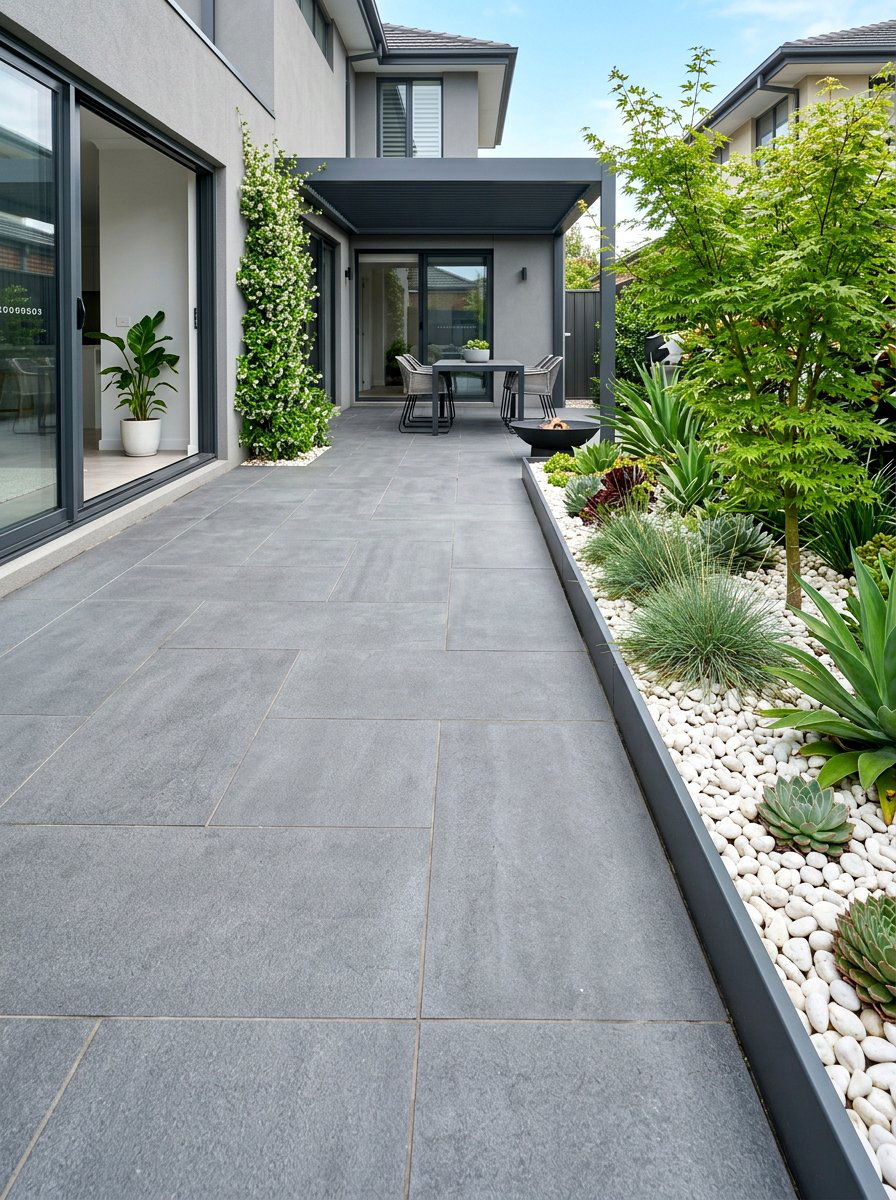
Grey is the go-to color for modern design, and using sleek grey paving stones for your walkway is a sure way to achieve a contemporary look. Whether you choose smooth-finished concrete or sawn-cut basalt, the uniform grey tone provides a neutral backdrop that makes the colors of your plants pop. This style is often paired with black gravel or white pebbles to create a high-contrast, monochrome palette. The clean edges and consistent sizing of these pavers contribute to a sense of order and minimalism. It is a very popular choice for urban gardens and professional office landscapes where a clean, polished appearance is desired.
29. Circular Stone Steps
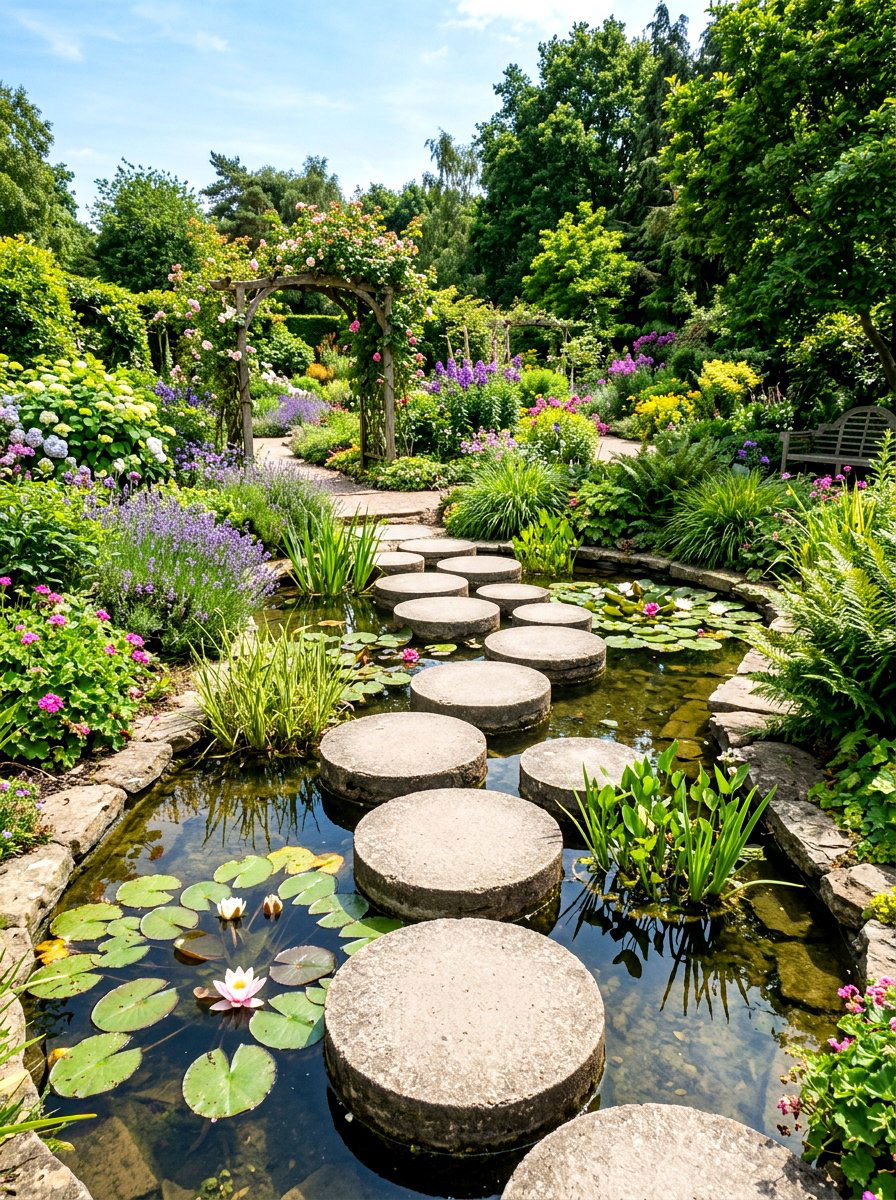
Circular stones provide a friendly and approachable feel to a garden path. Unlike square pavers that can feel rigid, round stepping stones lead the eye in a softer, more fluid way. They are great for creating a "stepping stone" bridge across a small pond or a dry creek bed. You can find circular stones in many materials, from cast concrete with decorative imprints to natural sandstone rounds. Arranging them in a slightly staggered pattern makes the walk feel more playful. They are an excellent choice for family-friendly gardens, as the lack of sharp corners makes them safer for children and pets to run around.
30. Glow In The Dark Path
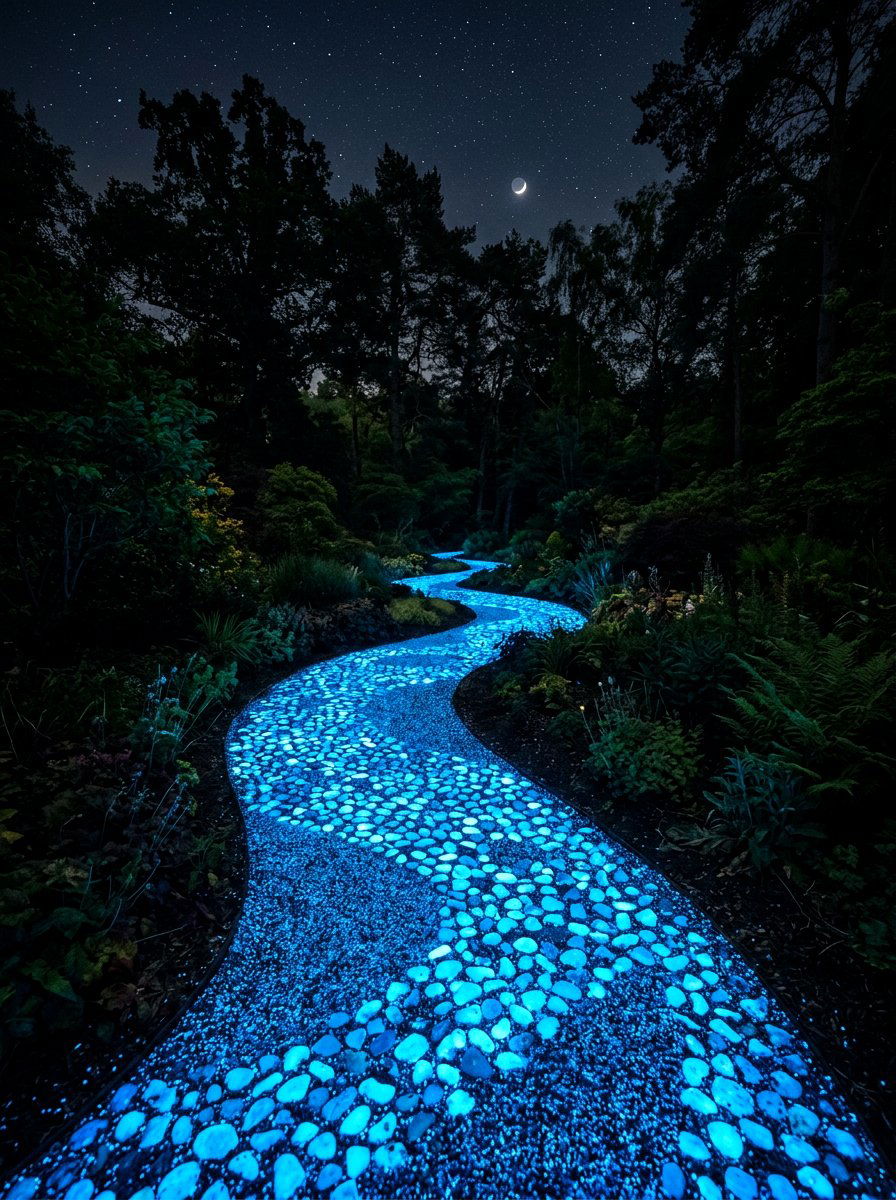
For a truly magical nighttime experience, consider a glow-in-the-dark stepping stone path. This can be achieved using stones that are treated with photoluminescent powder or by embedding small solar-powered LED lights directly into the stones. During the day, they look like normal pavers, but at night, they emit a soft, ethereal glow that guides your way without the need for bright overhead lighting. This is a fantastic safety feature for paths that are used after dark, and it adds a futuristic or fairy-tale quality to the garden. It is a unique way to make your outdoor space usable and enchanting long after the sun goes down.
Conclusion:
Investing in a well-designed stepping stone walkway is one of the easiest ways to elevate the look and feel of your home’s outdoor space. These paths do more than just provide a place to walk; they act as a design element that ties your entire landscape together. From the rustic charm of wood slices to the sophisticated luxury of granite slabs, there is a material and style to suit every personality. By considering factors like drainage, durability, and lighting, you can create a walkway that is both beautiful and practical. We hope these thirty ideas inspire you to start planning your own garden journey today.

Related posts: