Creating a dedicated learning environment at home can significantly transform the educational journey for both parents and children. Whether you are transitioning from a traditional school setting or have been teaching at home for years, the right atmosphere fosters curiosity and focus. Designing a home schoolroom involves balancing functionality with inspiration to ensure every lesson feels engaging and organized. You do not need a massive budget or a separate wing of the house to make this work; even small corners or shared spaces can become vibrant hubs for discovery. In this comprehensive guide, we explore thirty unique home schoolroom ideas that cater to various styles, age groups, and spatial limitations to help you succeed.
1. Small Space Homeschool Setup
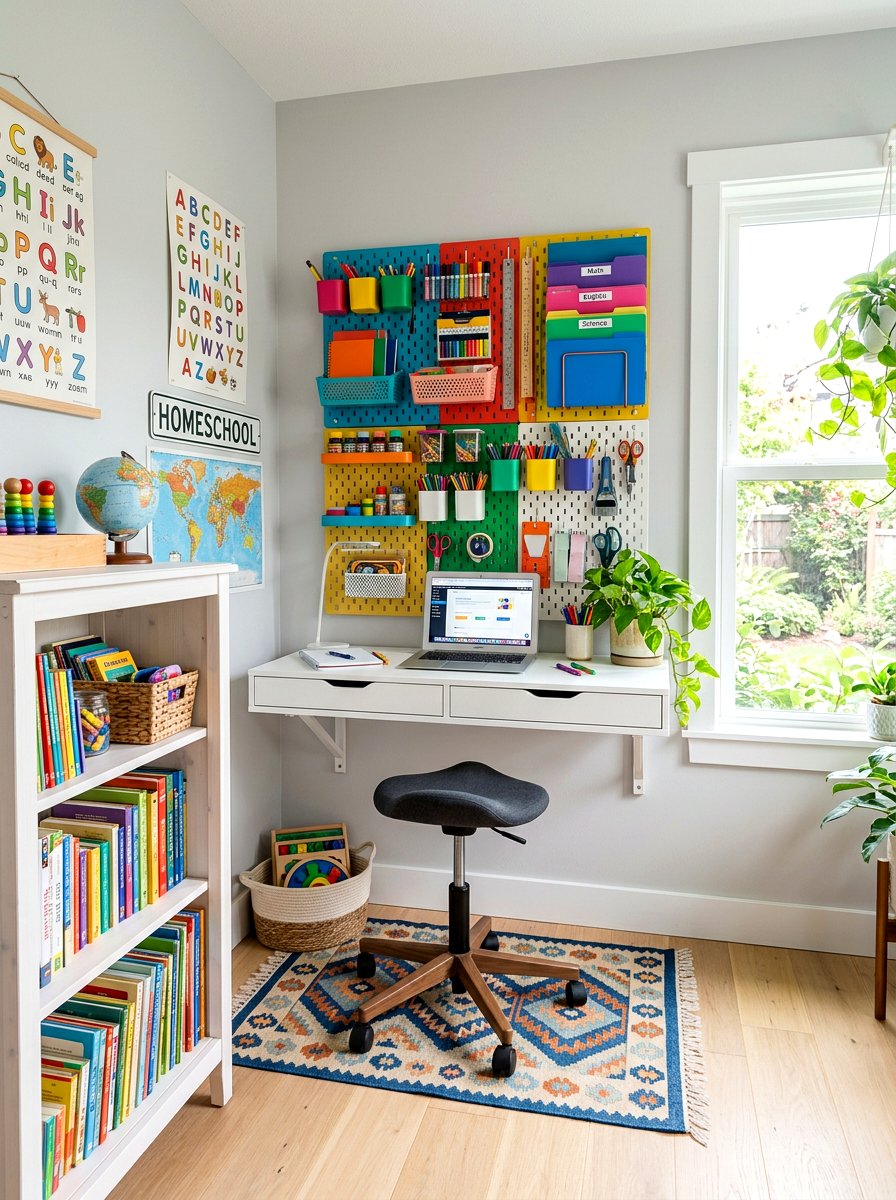
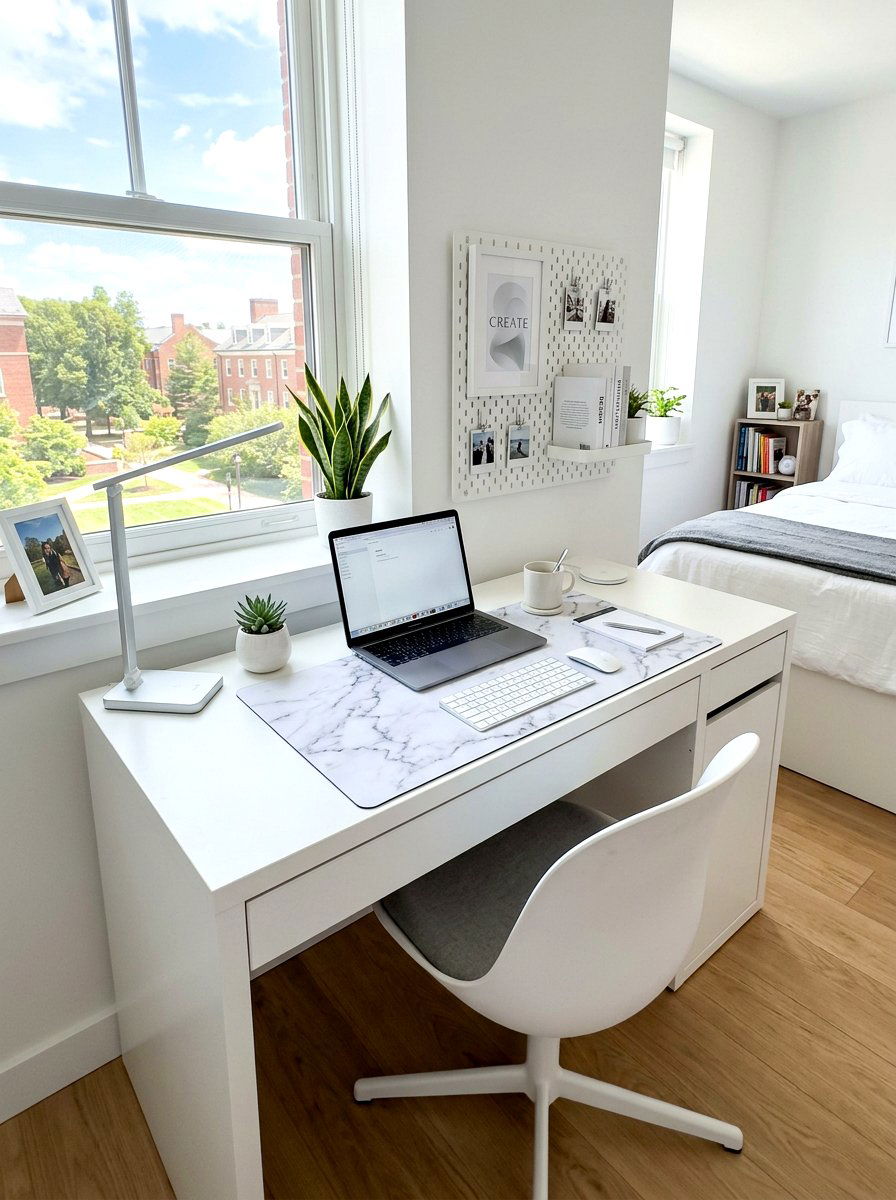
Optimizing a tiny area for education requires a focus on verticality and multi-functional furniture. You can transform a spare corner of your living room or a hallway nook into a productive learning zone by using floating shelves and wall-mounted organizers. Choose a narrow desk that fits the scale of the room without blocking traffic flow. Use pegboards above the workspace to keep pencils, scissors, and art supplies within reach but off the desktop surface. Bright, neutral colors on the walls will make a compact area feel much larger and more inviting. Adding a small floor rug can help define the schoolroom boundaries in a shared living area effectively.
2. Minimalist Homeschool Room
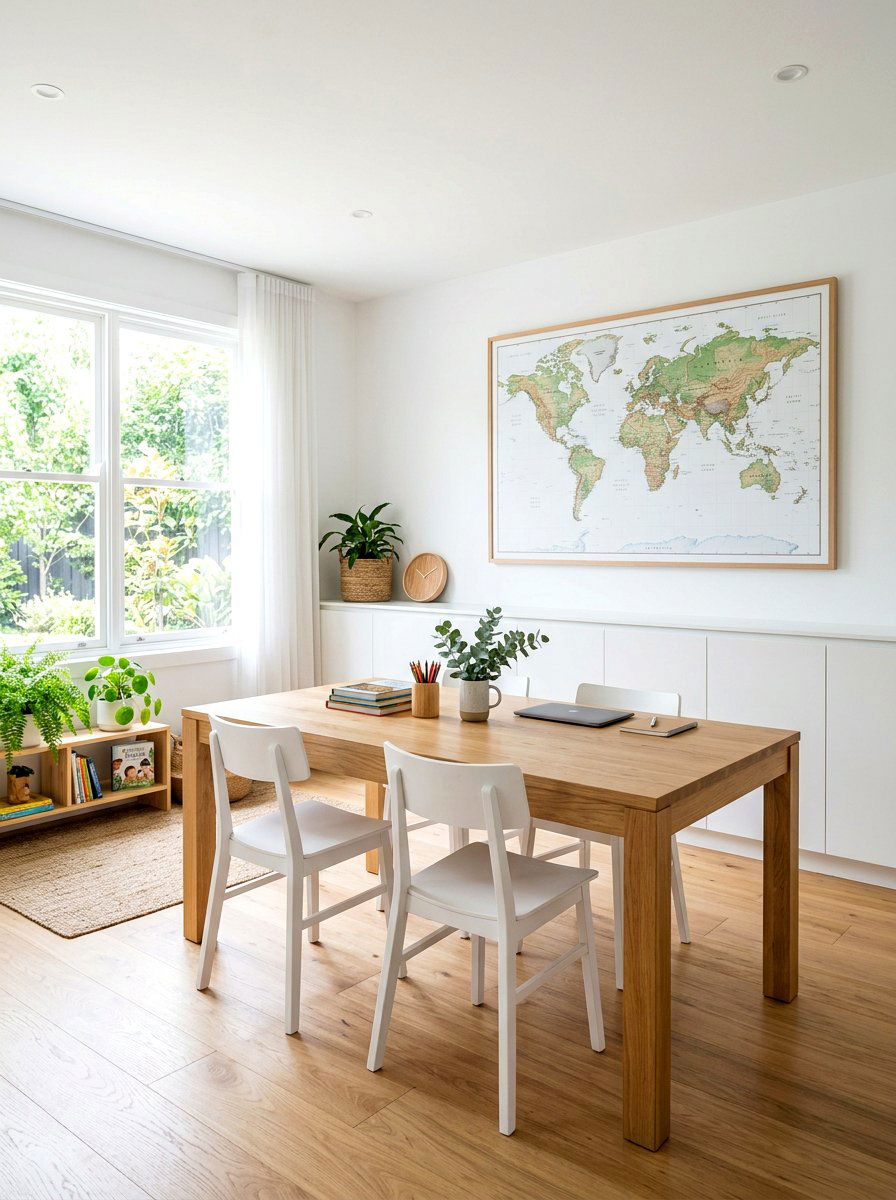
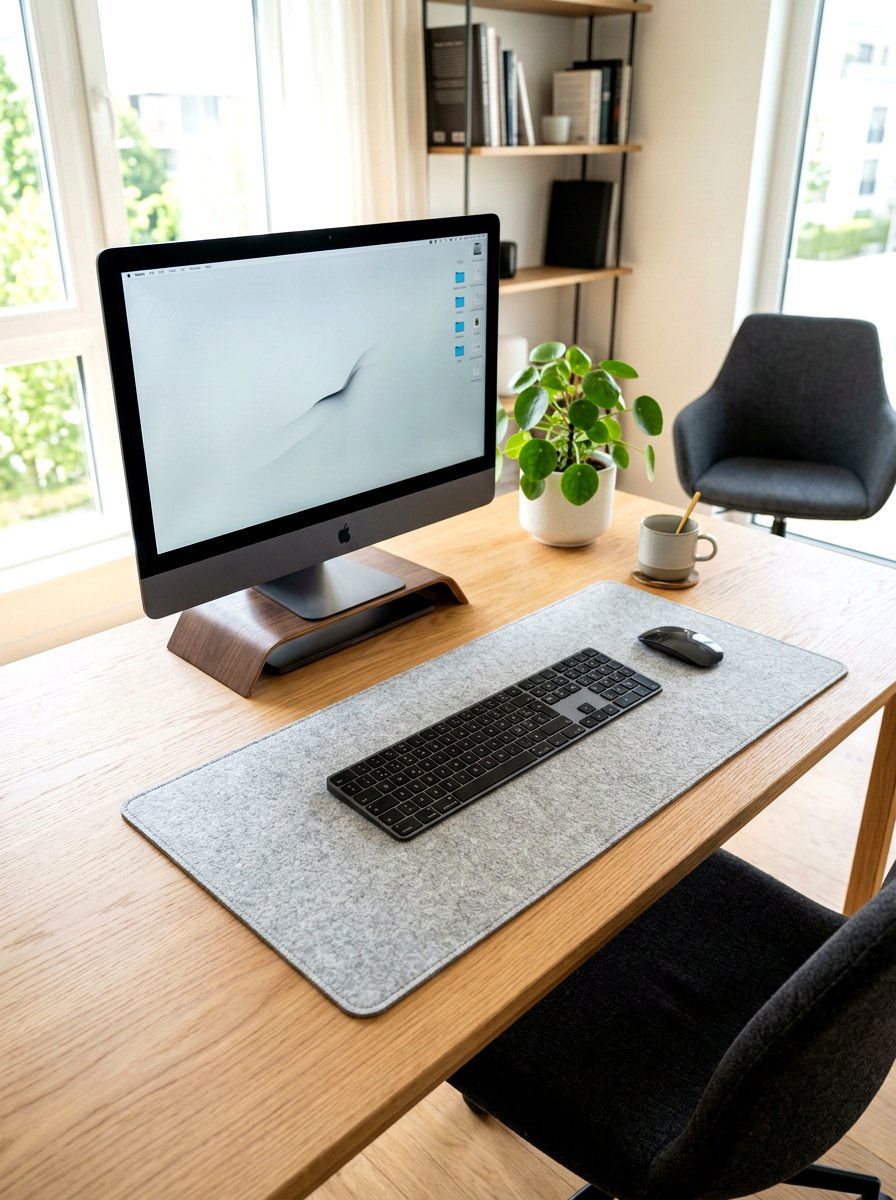
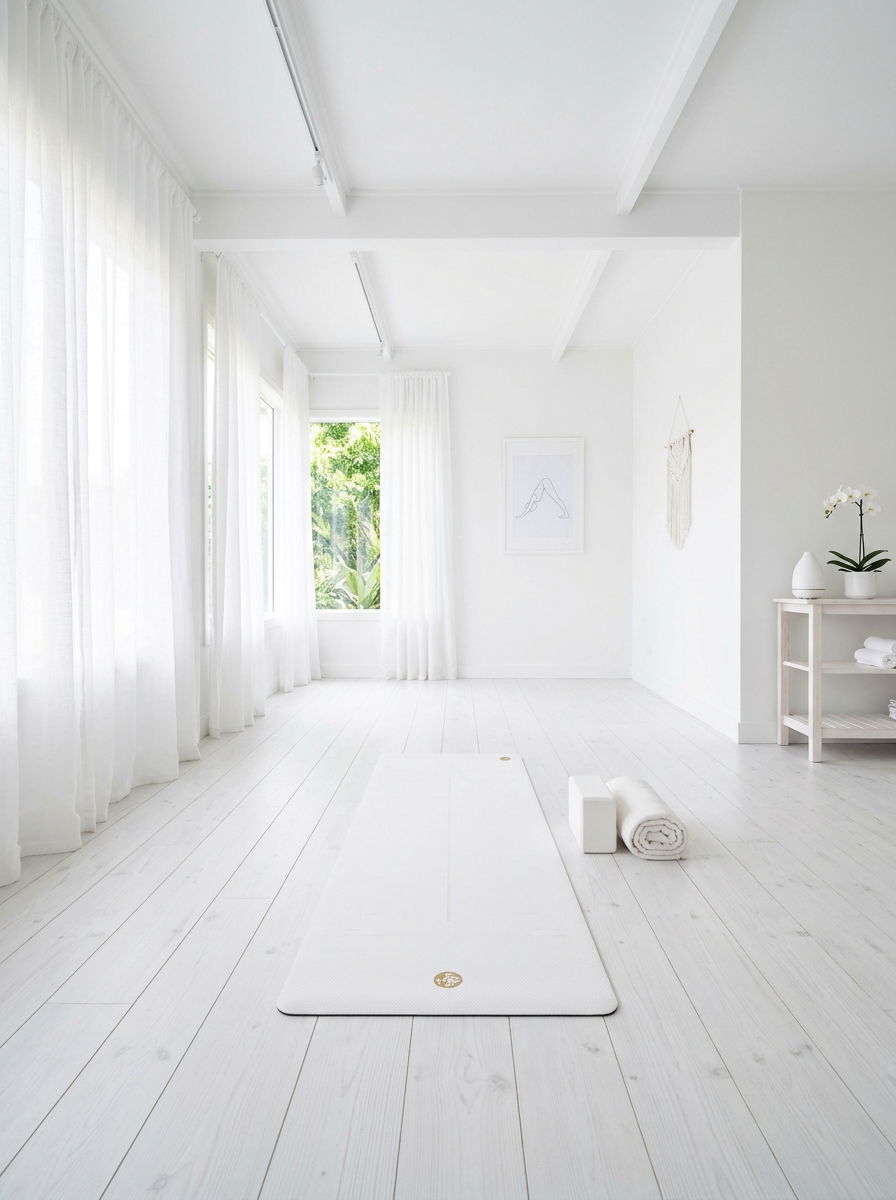
A minimalist approach to a home schoolroom prioritizes a clutter-free environment to reduce distractions for students. Focus on high-quality essentials such as a sturdy wooden table and comfortable ergonomic chairs. Use closed cabinetry or opaque bins to hide colorful curriculum books and loose supplies when they are not in use. This clean aesthetic promotes a sense of calm and helps children focus on their current tasks without visual noise. Natural materials like light wood and linen contribute to a serene atmosphere. By keeping the walls mostly bare or featuring only one impactful piece of educational art, you create a professional and peaceful study environment.
3. Multi Child Homeschool Table
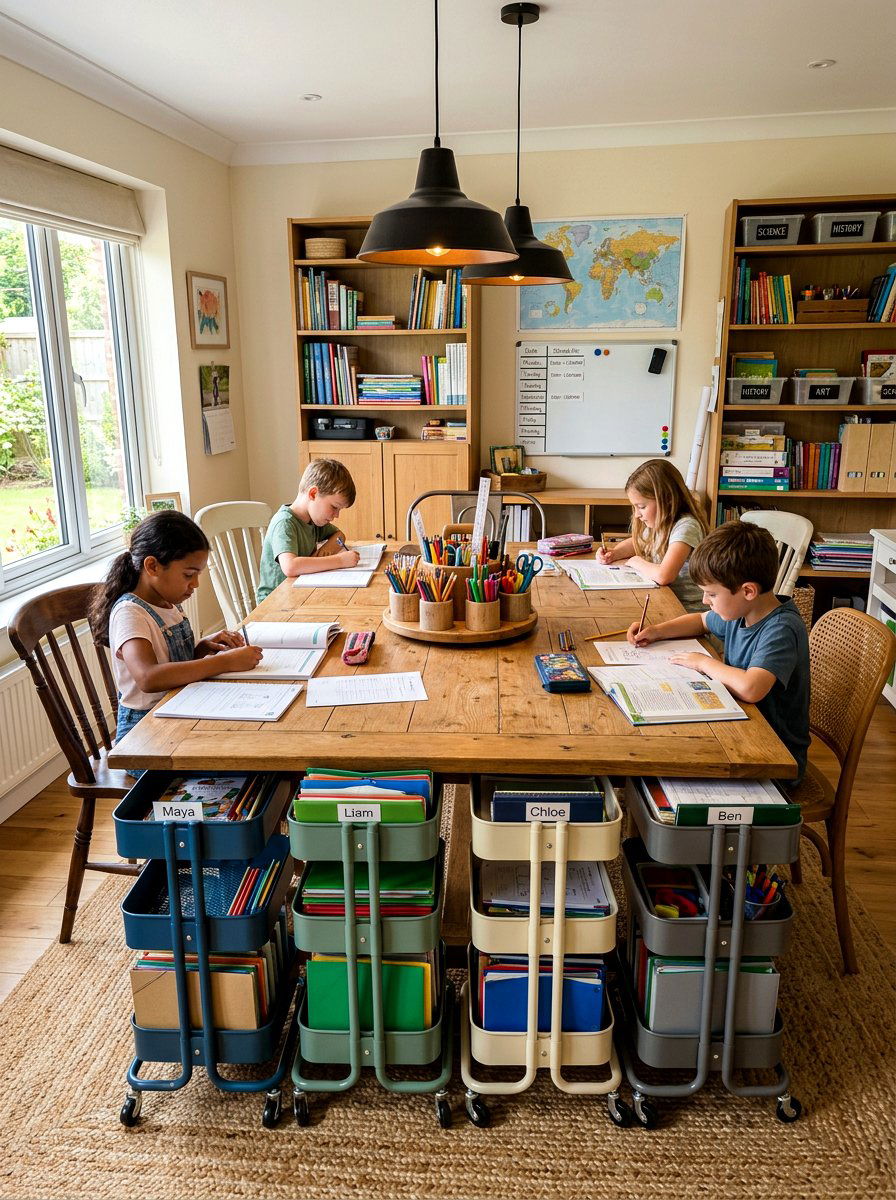
When teaching multiple children of different ages, a large communal table serves as the perfect centerpiece for your schoolroom. A long farmhouse table or a custom-built double-sided desk allows siblings to work side-by-side while still having enough elbow room for their individual projects. You can place a rotating supply caddy in the center of the table so everyone has easy access to shared tools like markers and glue. This layout encourages collaborative learning and makes it easier for the parent to assist several students at once. Consider adding individual rolling carts under the table for each child to store their personal workbooks and supplies.
4. Farmhouse Style Schoolroom
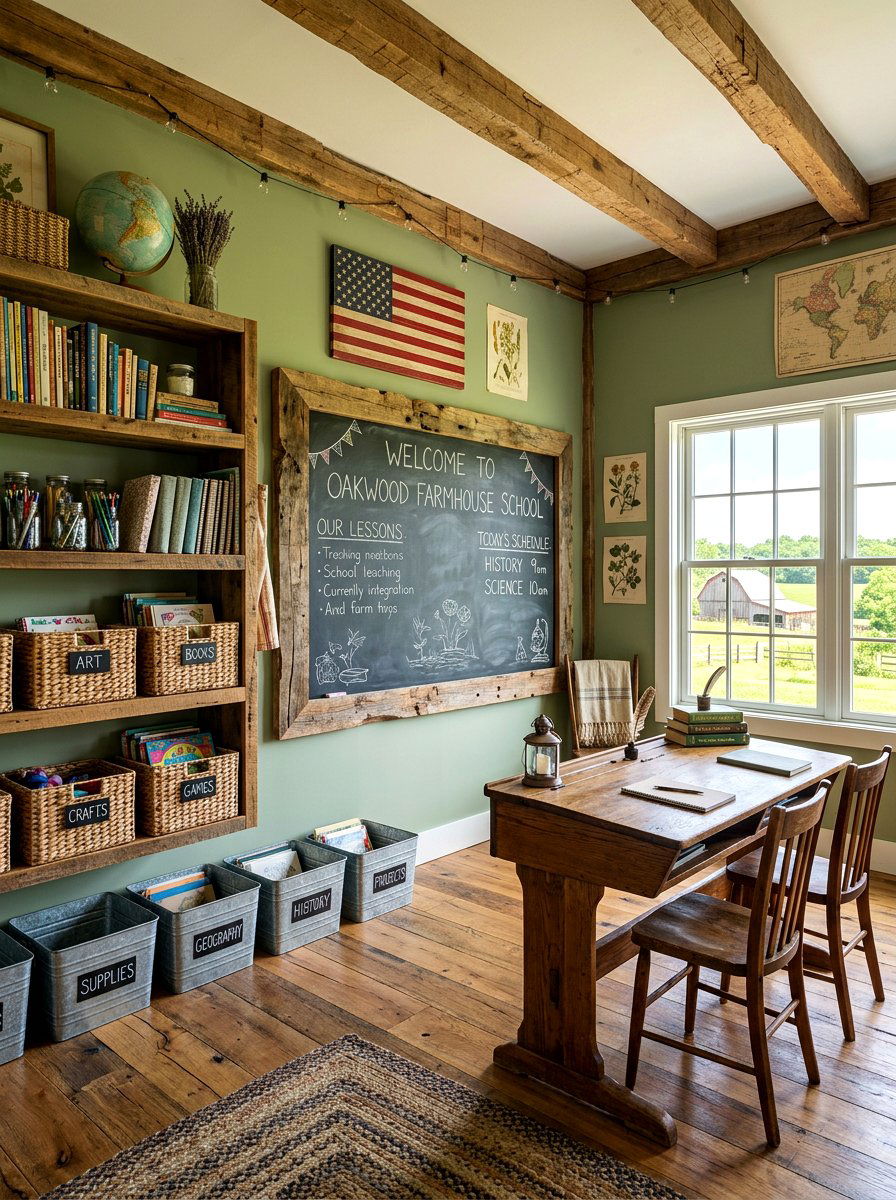
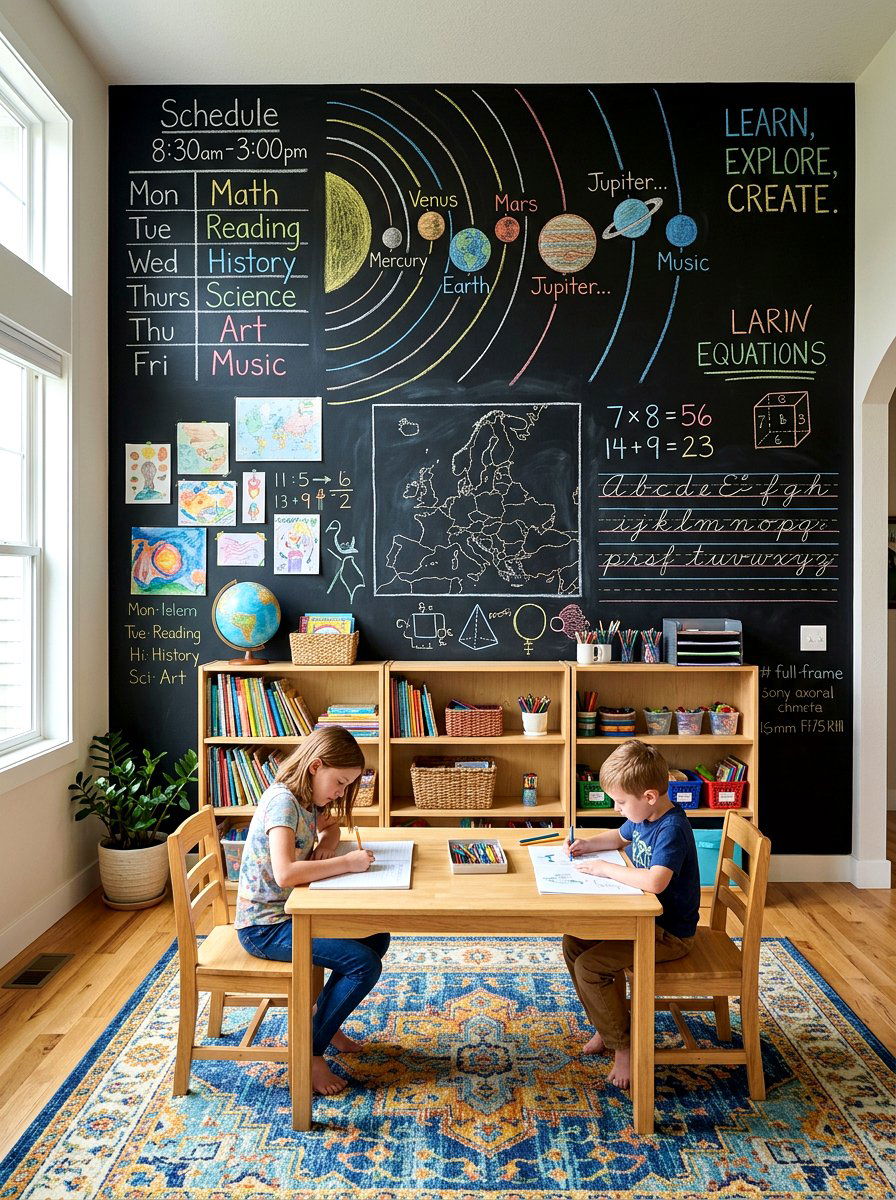
The farmhouse aesthetic brings a warm and rustic charm to a home schoolroom, making it feel cozy and lived-in. Incorporate elements like reclaimed wood shelving, wicker baskets, and galvanized metal bins for an authentic look. A large chalkboard with a wooden frame can serve as the main instructional area while adding a vintage touch to the decor. Neutral tones like cream, sage green, and soft blues work beautifully in this theme. You can use antique jars to hold pens and pencils on the desks. This style is perfect for families who want their educational space to blend seamlessly with the rest of their home’s traditional decor.
5. Nature Themed Homeschool Room
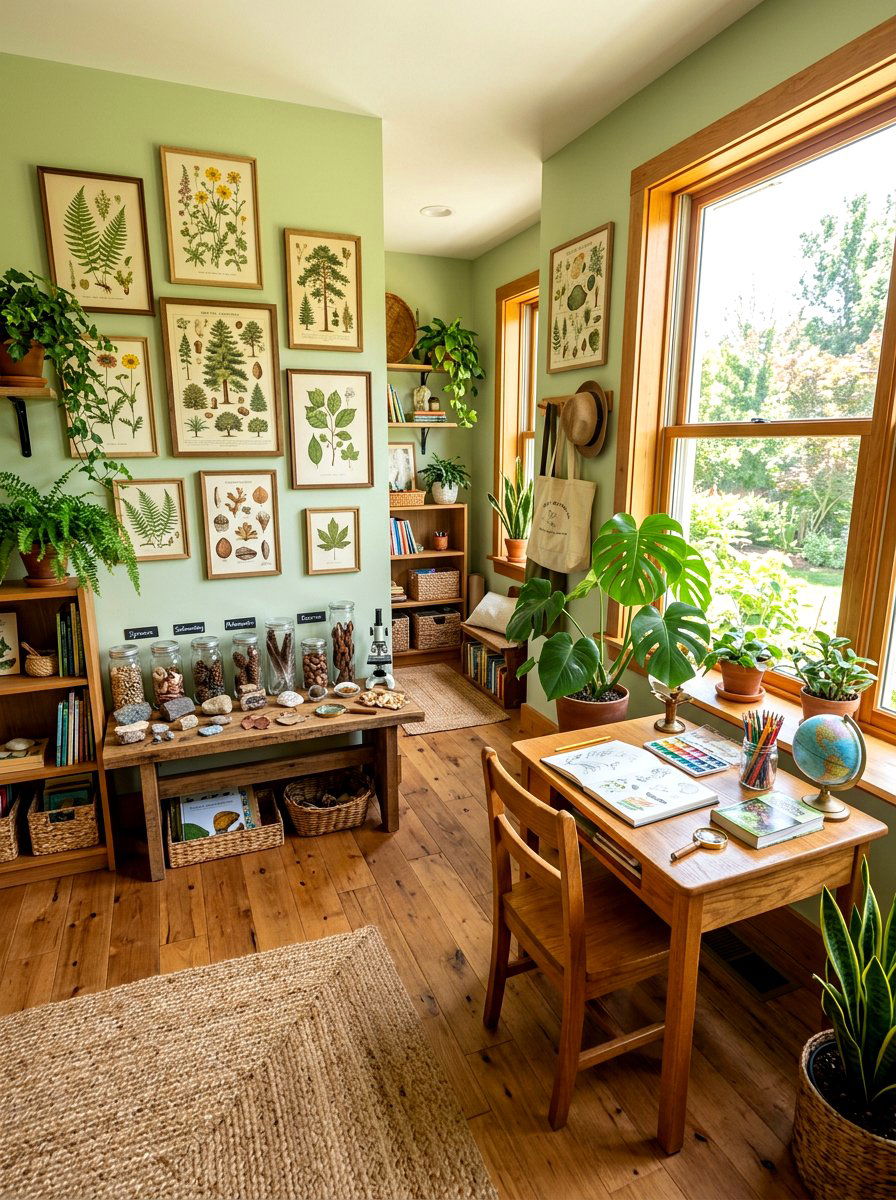
Bringing the outdoors inside can stimulate a child's interest in science and the natural world. Use a palette of greens, browns, and soft yellows to set the mood in your nature-inspired schoolroom. Large windows that allow for plenty of natural light are essential for this design. Incorporate indoor plants, terrariums, and a dedicated nature table where children can display rocks, leaves, or feathers found during outdoor walks. Wooden furniture and botanical prints on the walls complete the look. This environment is perfect for Charlotte Mason style learning, where observation of the natural world is a core part of the daily curriculum and educational experience.
6. Dining Room Homeschool Station
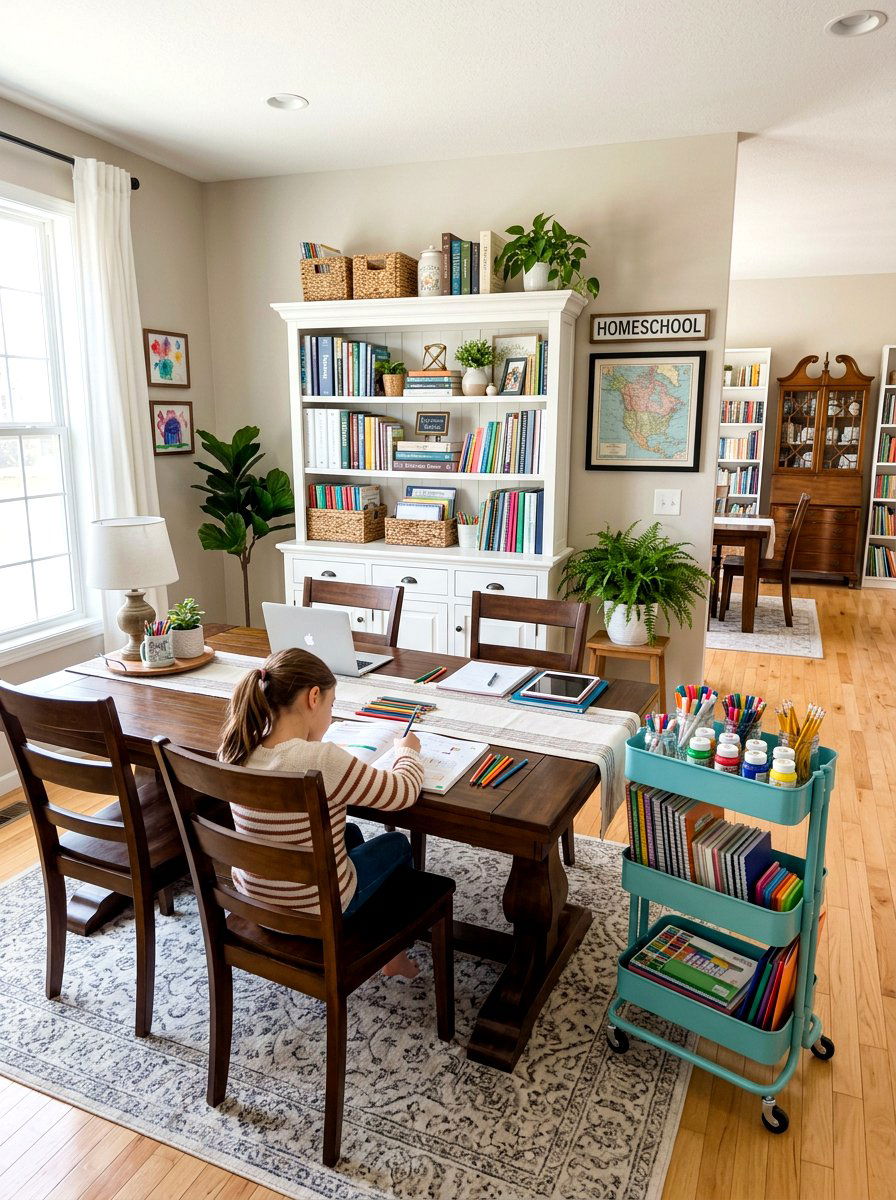
Many families successfully convert their dining room into a temporary or permanent schoolroom because it often houses the largest table in the home. To make this work, use a nearby buffet or sideboard to store textbooks and teaching manuals out of sight when school is over. Rolling carts are also helpful for moving supplies to the table in the morning and back into a closet at night. If the space is permanent, you can hang a large map or a whiteboard on one wall to anchor the room’s educational purpose. This setup is ideal for parents who want to stay close to the kitchen during lessons.
7. Attic Homeschool Classroom
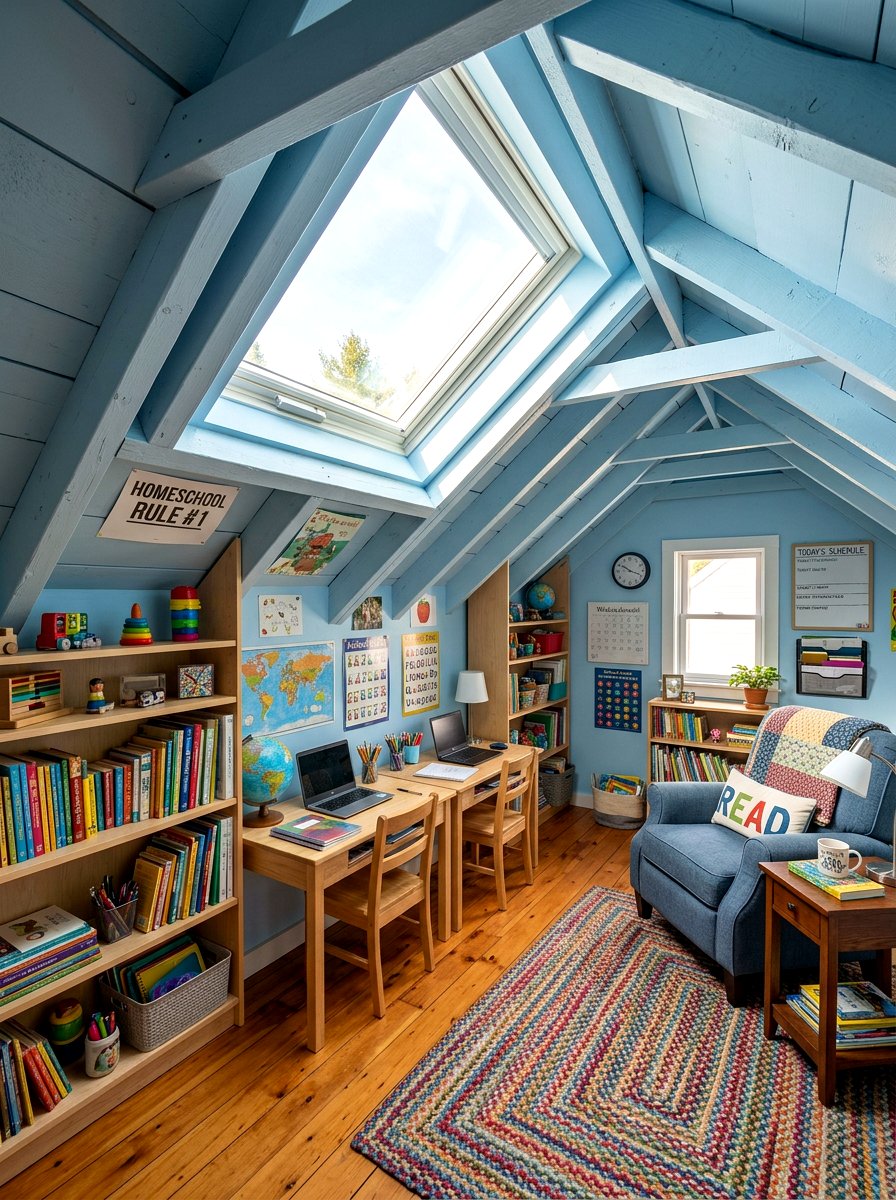
An attic can be a fantastic secluded spot for a home schoolroom, offering privacy away from the noise of the main house. Utilize the unique sloped ceilings by installing low bookshelves or custom-built desks in the eaves. Skylights can provide excellent overhead lighting that keeps the space bright and energized throughout the day. Because attics are often separate, you can lean into a more traditional classroom feel with posters, maps, and large storage units. Ensure the space is well-insulated and ventilated to keep students comfortable in all seasons. Using light-colored paint will help prevent the attic from feeling dark or cramped for the kids.
8. Basement Homeschool Room
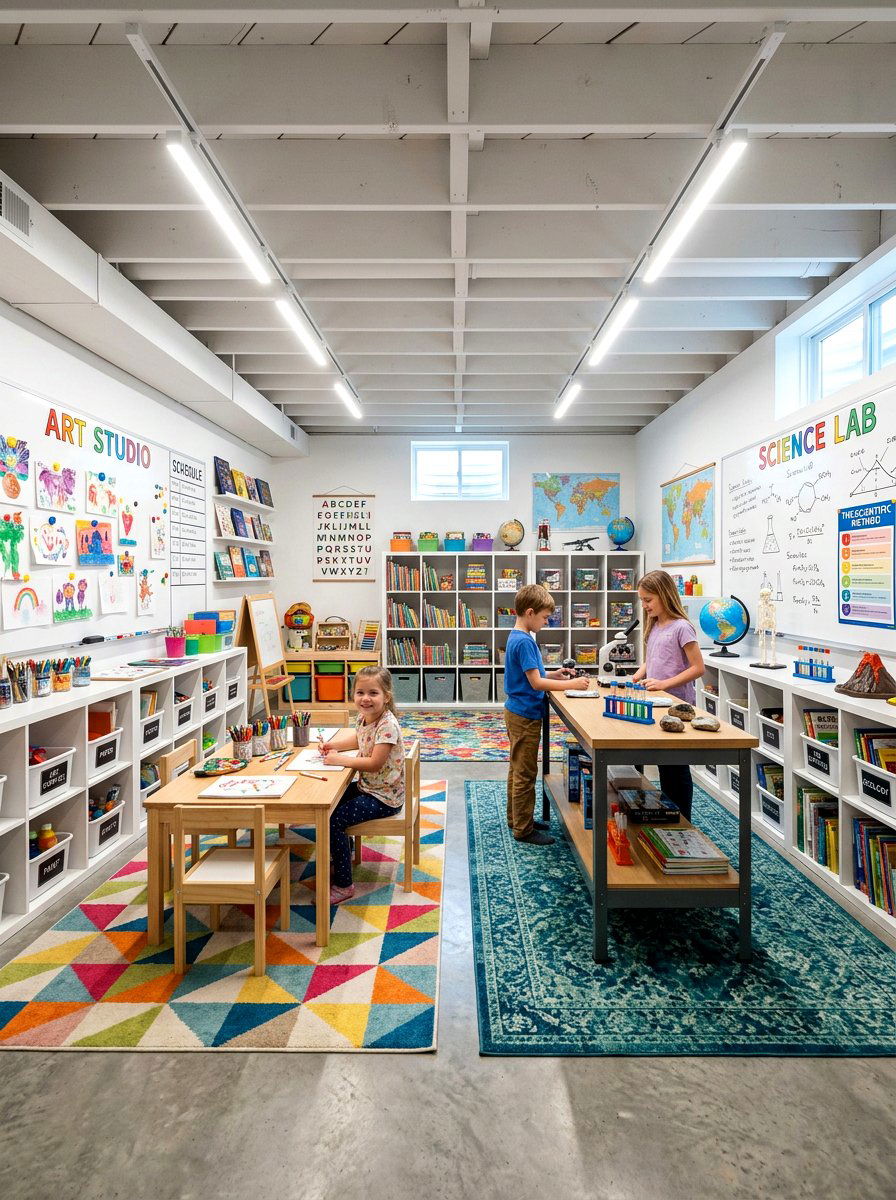
Basements offer ample square footage, making them ideal for large families or those who need separate zones for different subjects. You can divide the open space into a quiet reading nook, an active science area, and a dedicated art station. Since basements can lack natural light, invest in high-quality overhead lighting and floor lamps to keep the room bright. Use colorful area rugs to define the different zones and add warmth to the floor. A basement schoolroom allows for messier projects, like large-scale art or science experiments, without worrying about the main living areas. It is a great place for built-in storage solutions.
9. Modern Homeschool Office
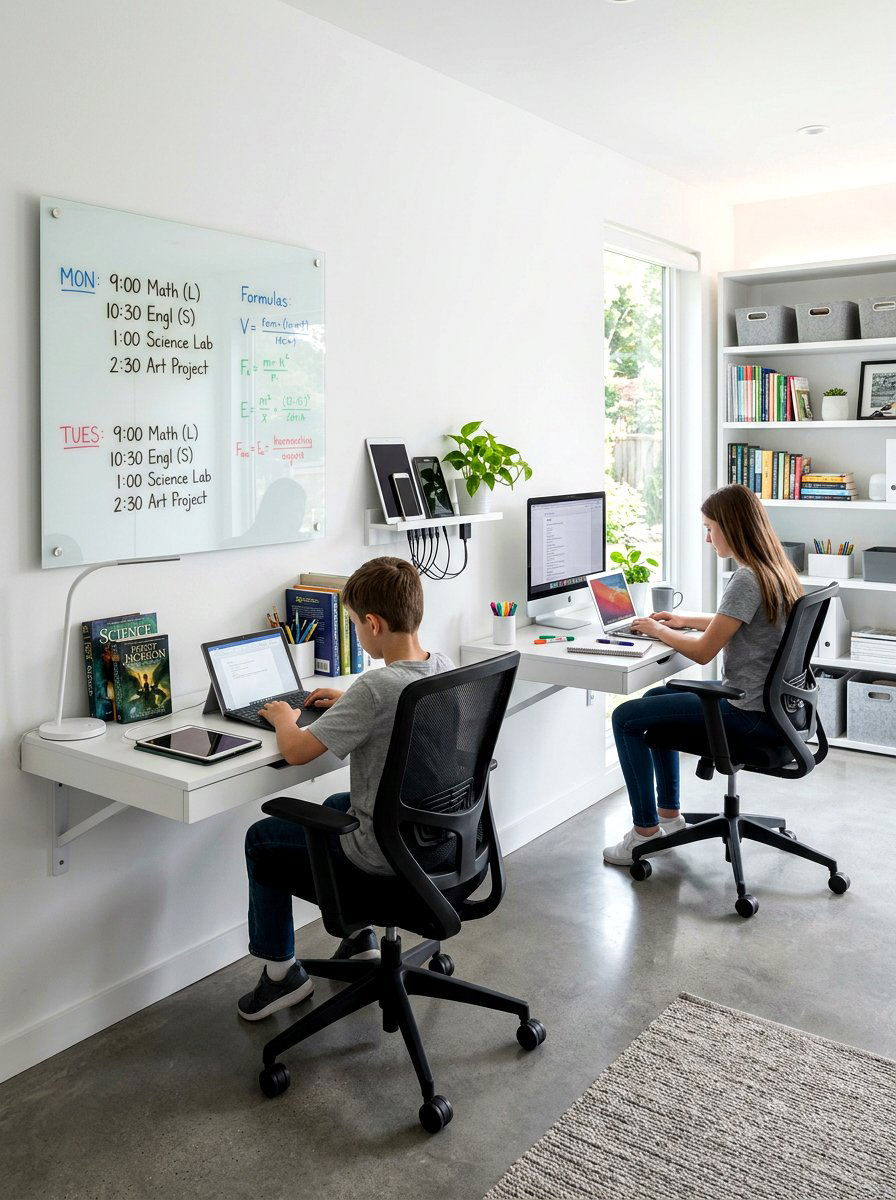
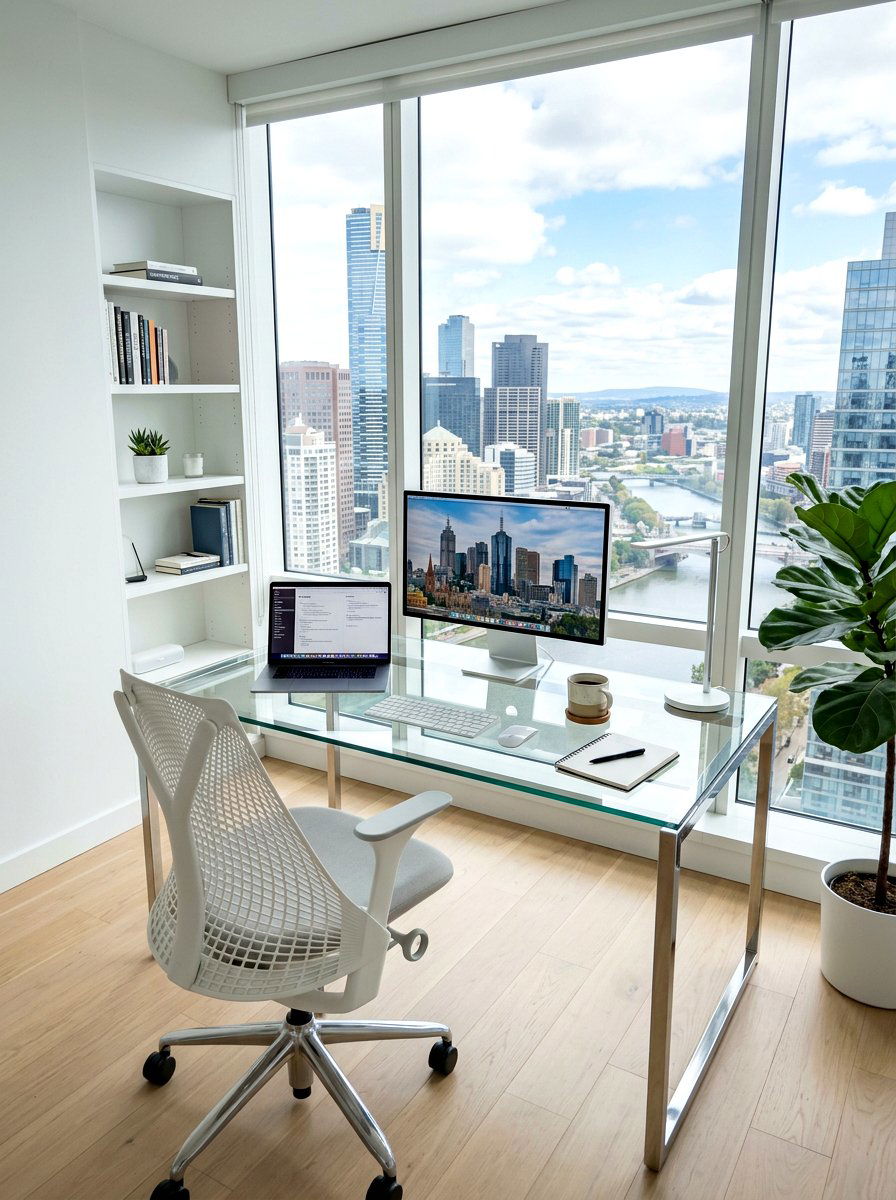
A modern schoolroom focuses on sleek lines, high-tech integration, and a professional atmosphere suitable for older students. Use floating white desks and minimalist chairs to create a sophisticated look. Incorporate a tech station with charging ports for tablets and laptops used in daily lessons. Subtle geometric patterns in rugs or wall art can add visual interest without being distracting. This style often uses a monochromatic color scheme with one or two bold accent colors. A glass whiteboard or a sleek digital screen for presentations can serve as the focal point. This setup transitions well as your children grow into middle and high school age.
10. Montessori Schoolroom Setup
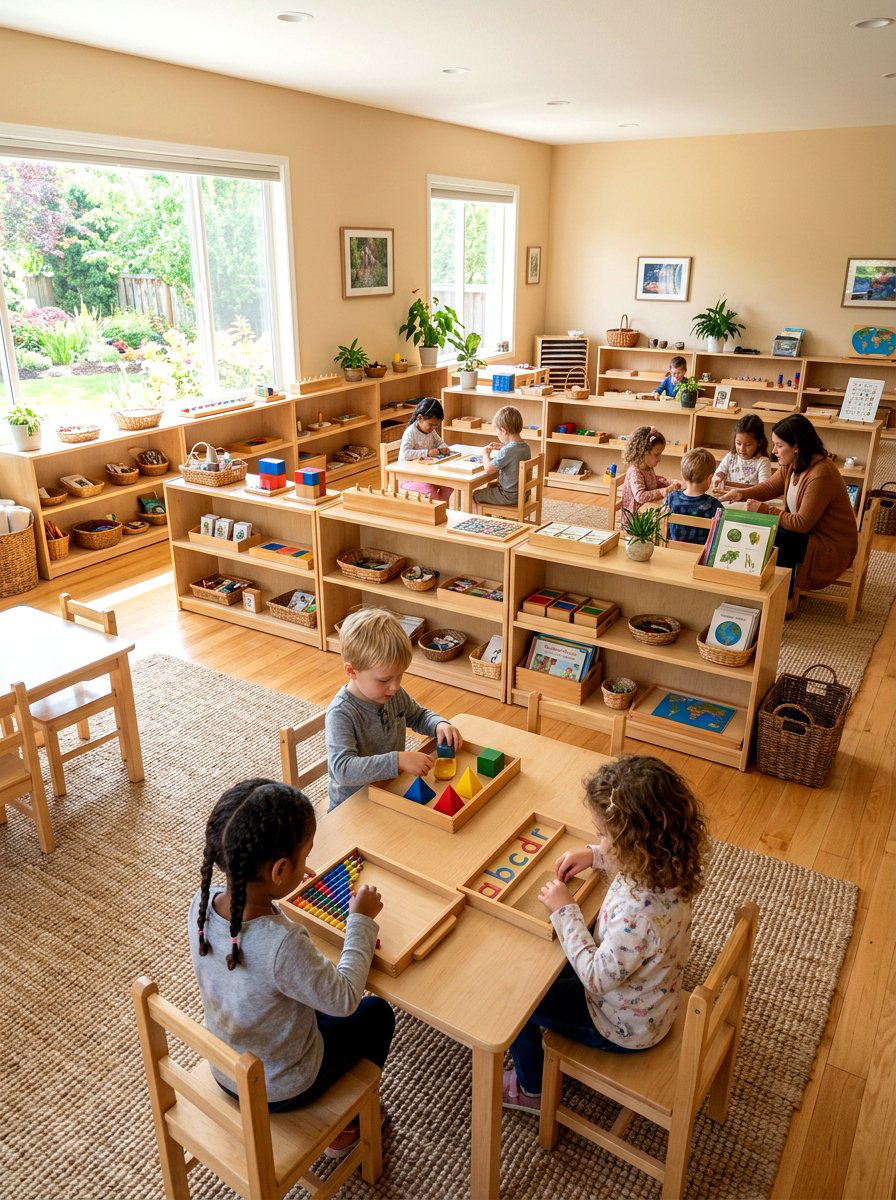
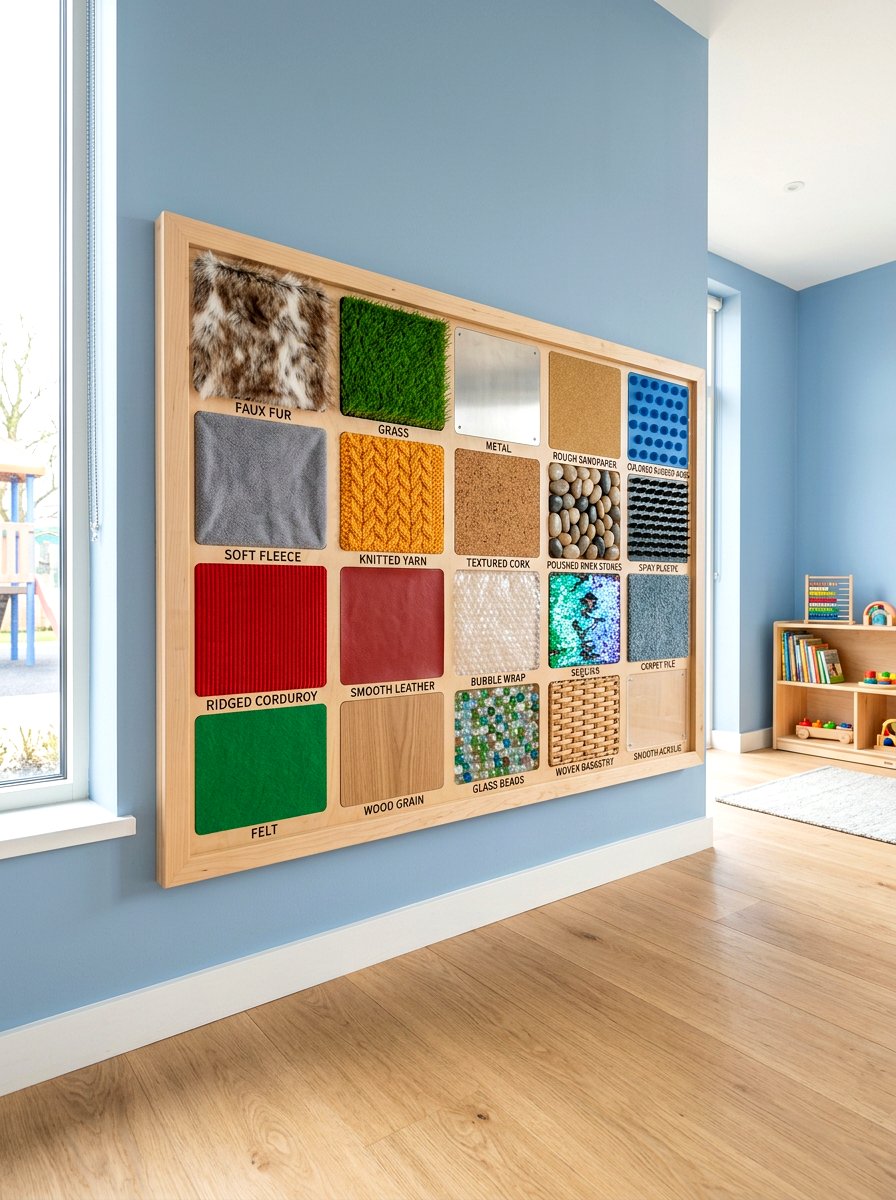
The Montessori method emphasizes independence and accessibility, so your schoolroom should feature low shelving and child-sized furniture. Everything should be within the child's reach, allowing them to choose their own activities and clean up afterward. Use natural materials and neutral colors to create a calm, focused environment. Trays and baskets can be used to organize individual "works" or lessons on the shelves. A simple floor mat or a low work table provides a space for the child to engage deeply with their materials. This design encourages self-direction and respect for the environment, which are key components of the Montessori philosophy for young learners.
11. High School Homeschool Room
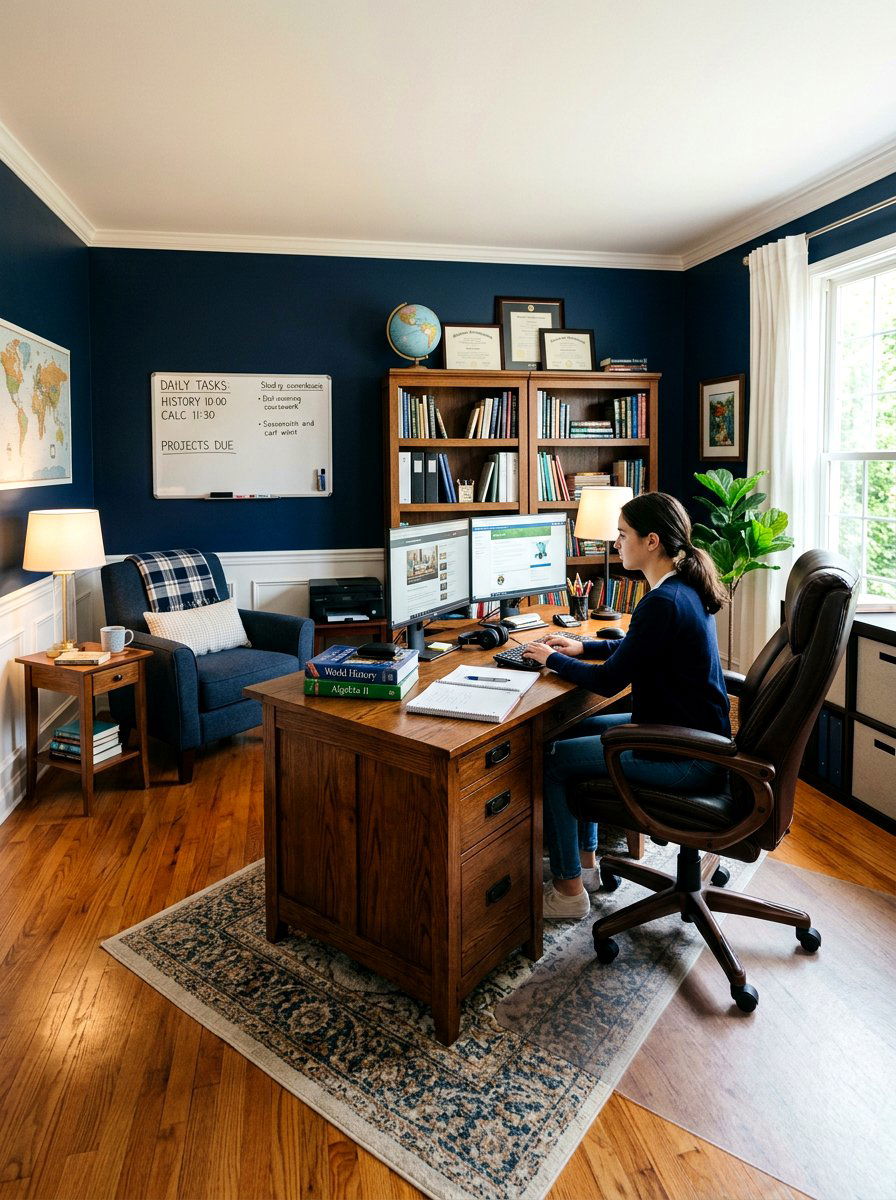
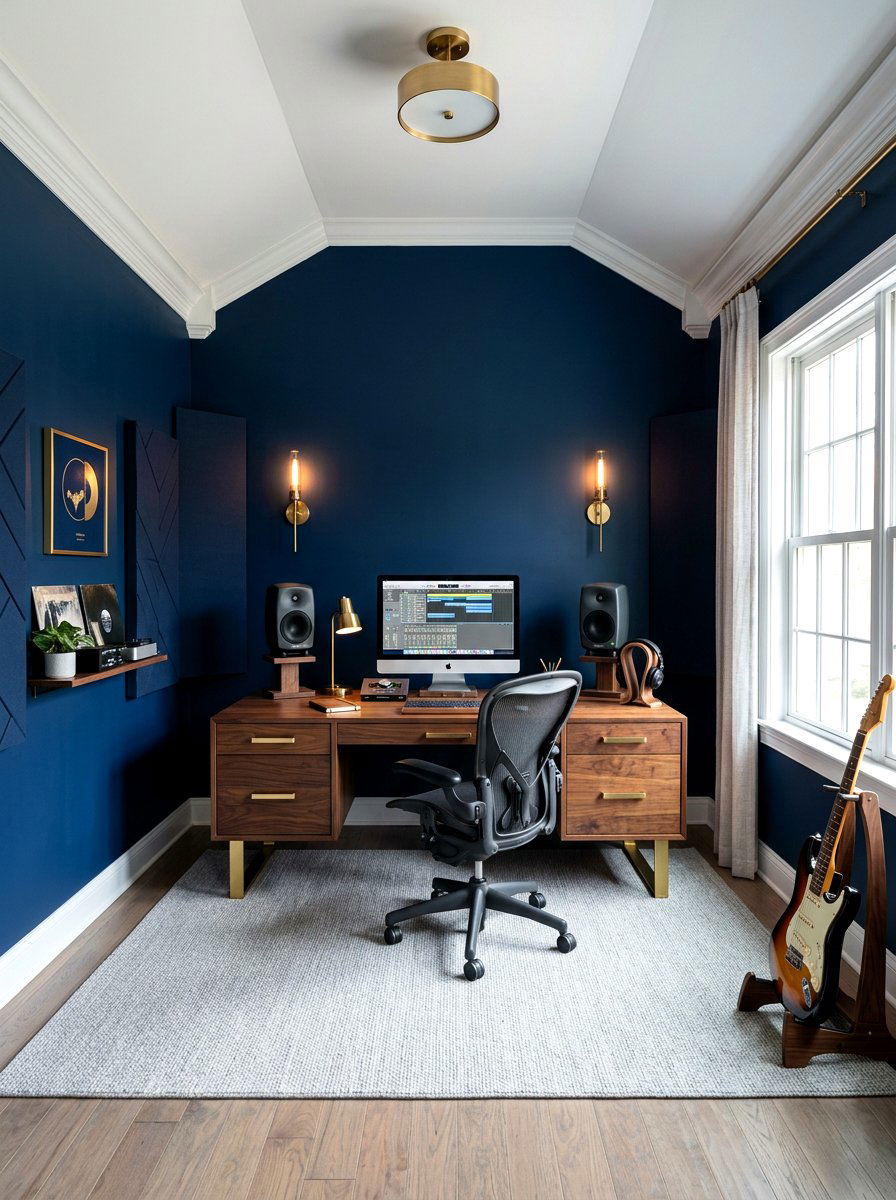
Teenagers need a space that feels more like a college dorm or a home office than a traditional primary classroom. Focus on a large, high-quality desk that accommodates a computer and multiple textbooks. Ergonomic seating is a must for long study sessions. You might include a "coffee shop" style corner with a comfortable armchair and a small side table for independent reading. Use a mature color palette like navy, charcoal, or deep forest green to make the room feel sophisticated. Adding a calendar or a large planner board helps older students learn time management and take ownership of their own daily academic schedules.
12. Industrial Homeschool Space
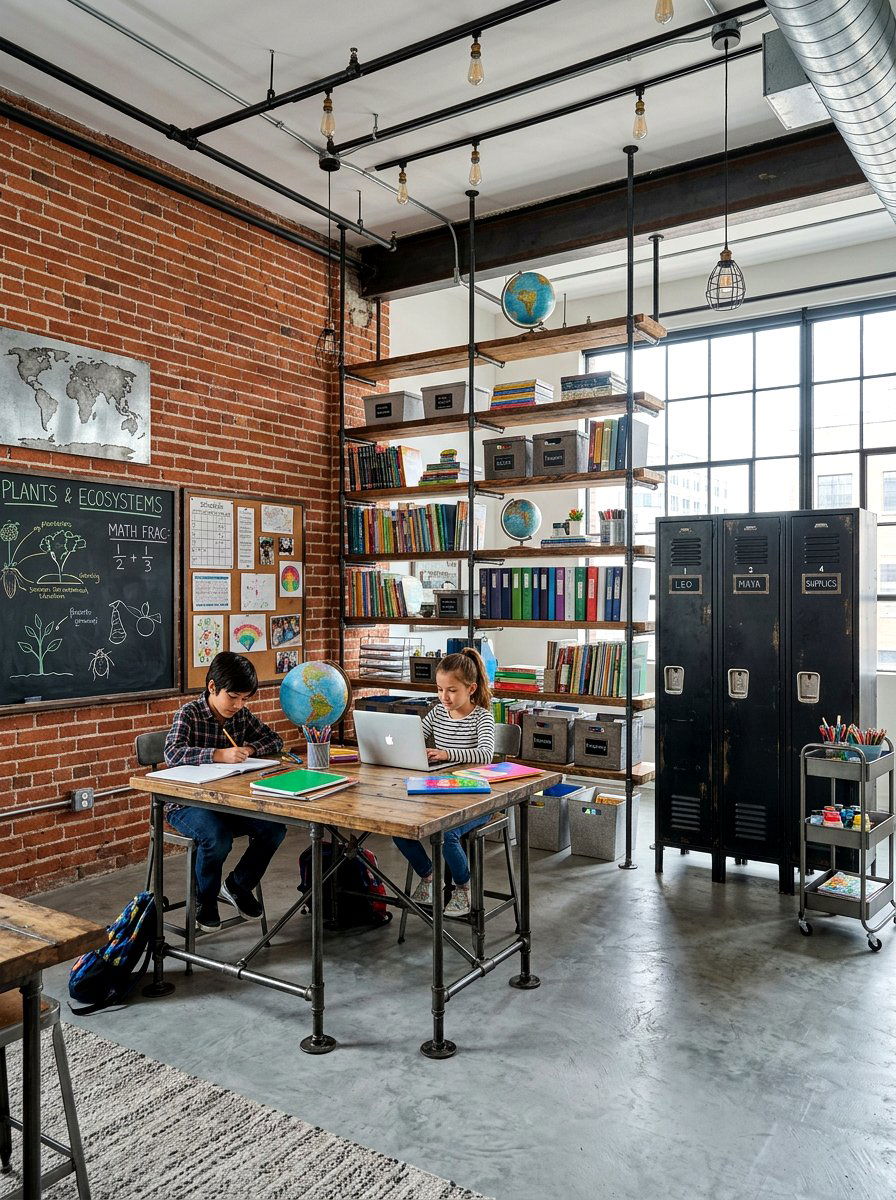
An industrial-style schoolroom combines wood and metal elements for a sturdy, modern look that can handle heavy use. Use pipe shelving for books and metal-legged desks for a durable workspace. Brick wallpaper or exposed architectural details can enhance the urban vibe of the room. This aesthetic often features dark colors like black and gray paired with warm wood tones. It is a great choice for a basement or a garage conversion. Wire baskets and metal lockers provide excellent storage for sports gear and school supplies. This rugged design is both stylish and practical, standing up well to the energetic activities of growing children and students.
13. Scandi Style Schoolroom
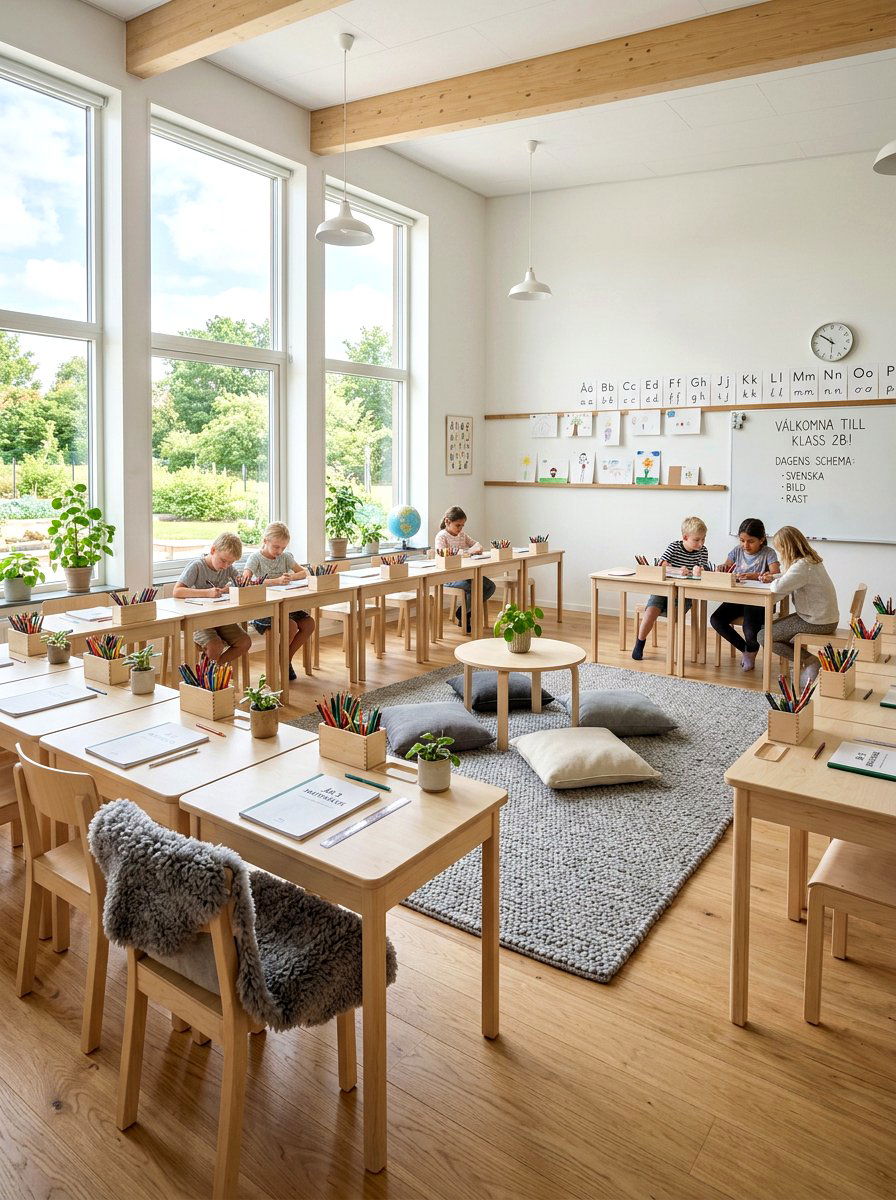
Scandinavian design is perfect for a home schoolroom because it emphasizes light, simplicity, and functionality. Use light-colored woods like birch or pine for the desks and shelving units. Keep the walls white or very light gray to maximize the reflection of natural light. Add warmth with cozy textiles like sheepskin throws on chairs or a thick woven rug. Simple, functional furniture with clean lines keeps the space from feeling cluttered. You can add a few pops of color through educational toys or a single piece of wall art. This style creates a bright, cheerful environment that makes the school day feel light and very productive.
14. Boho Homeschool Nook
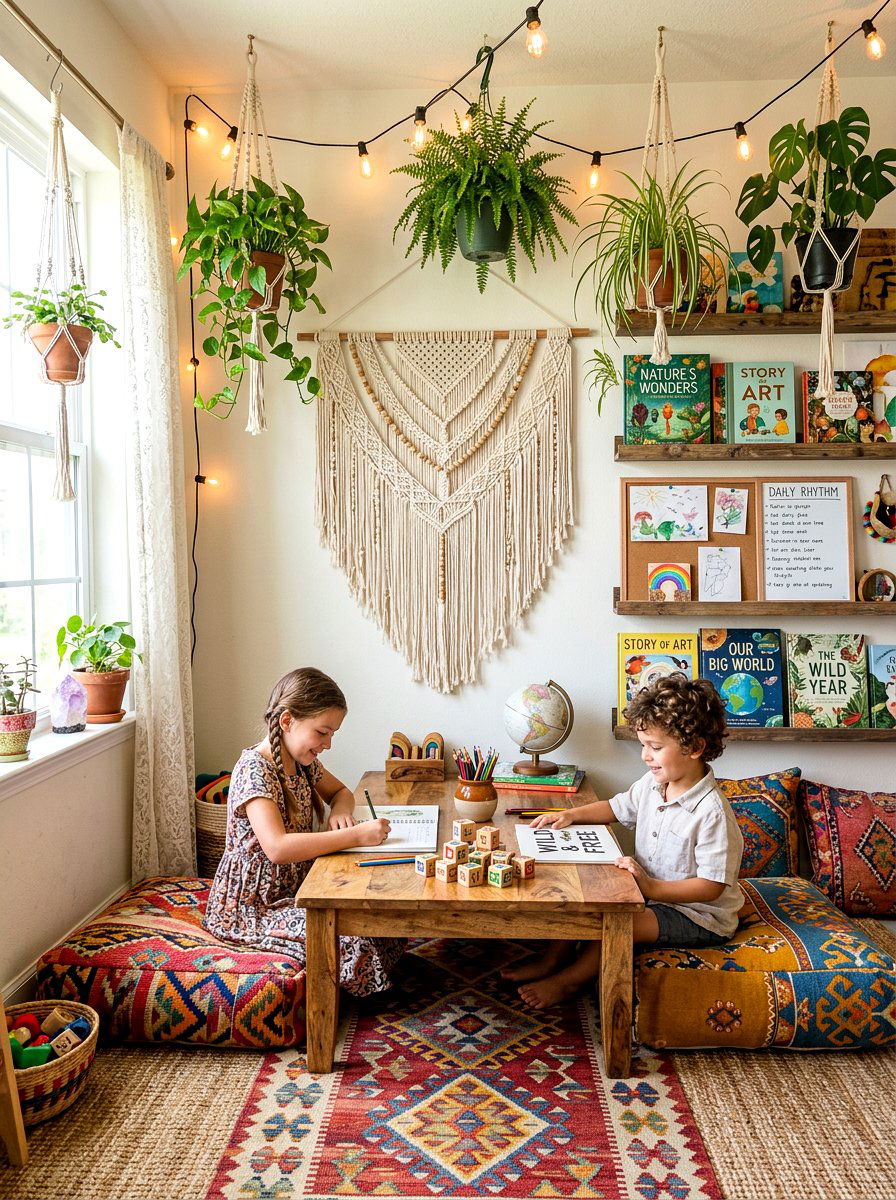
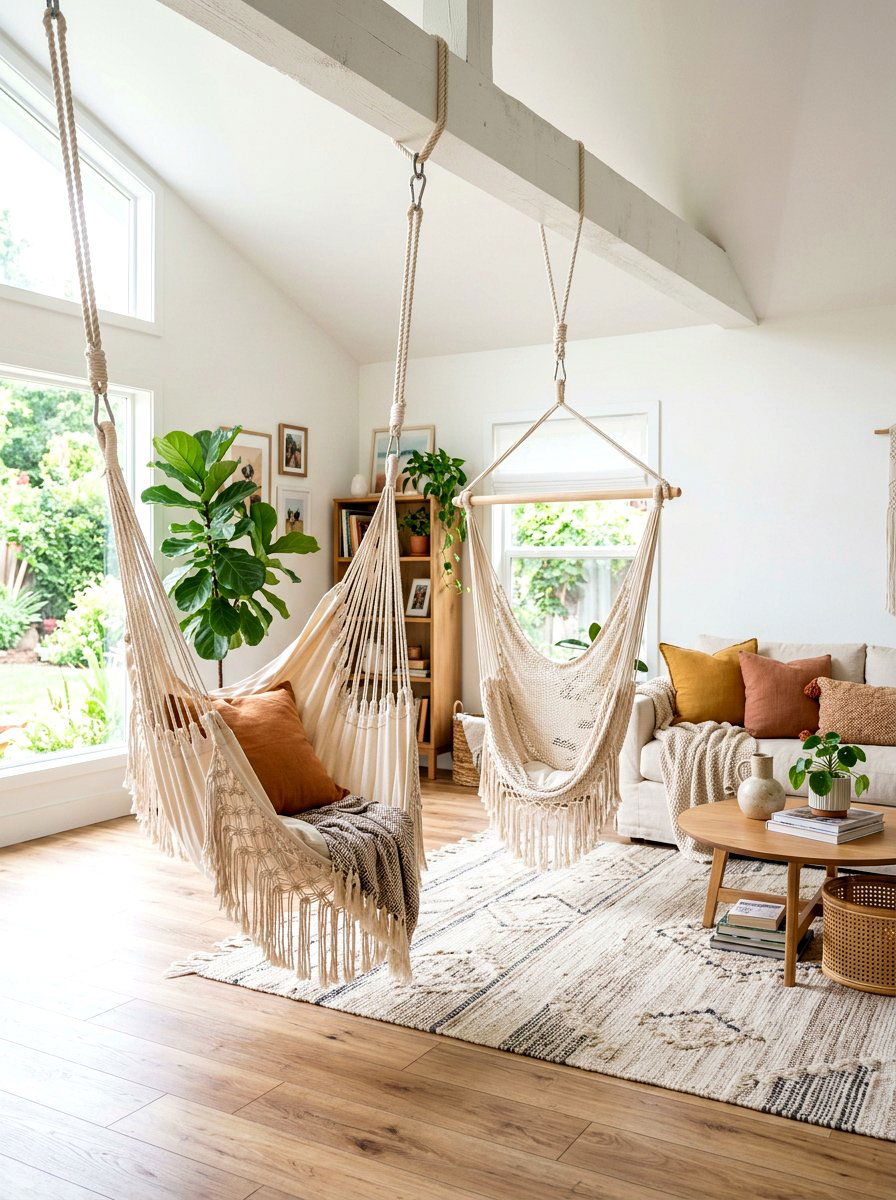
A bohemian-inspired schoolroom is full of texture, plants, and personality, creating a creative haven for young learners. Use macrame wall hangings, colorful floor cushions, and layered rugs to make the space feel cozy and eclectic. A low table or even a coffee table can serve as a relaxed workspace for younger kids. Incorporate plenty of baskets for storage to keep the "organized chaos" manageable. Hanging plants and warm string lights add a magical touch to the room. This style is ideal for families who value creativity and a relaxed, comfortable atmosphere over a traditional school structure. It encourages a love for art and self-expression.
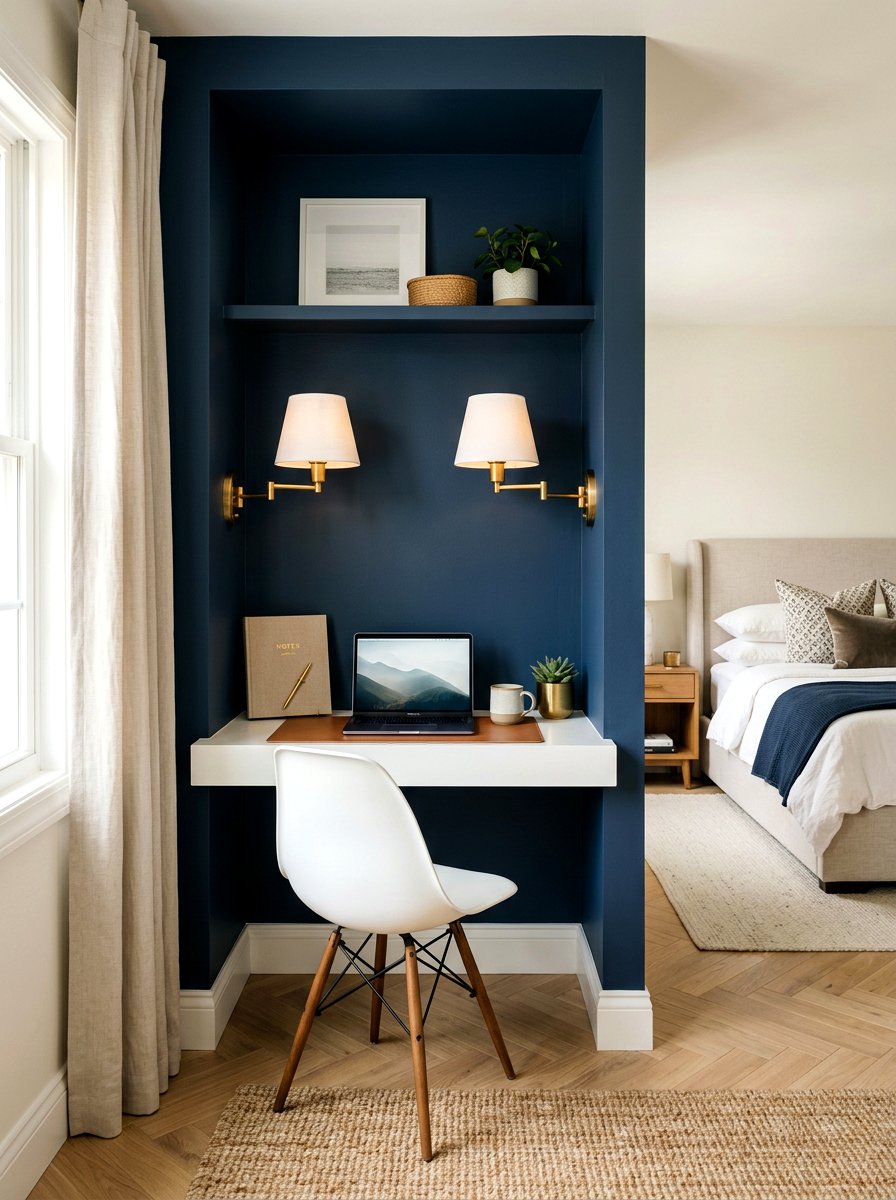
15. Built In Homeschool Desk
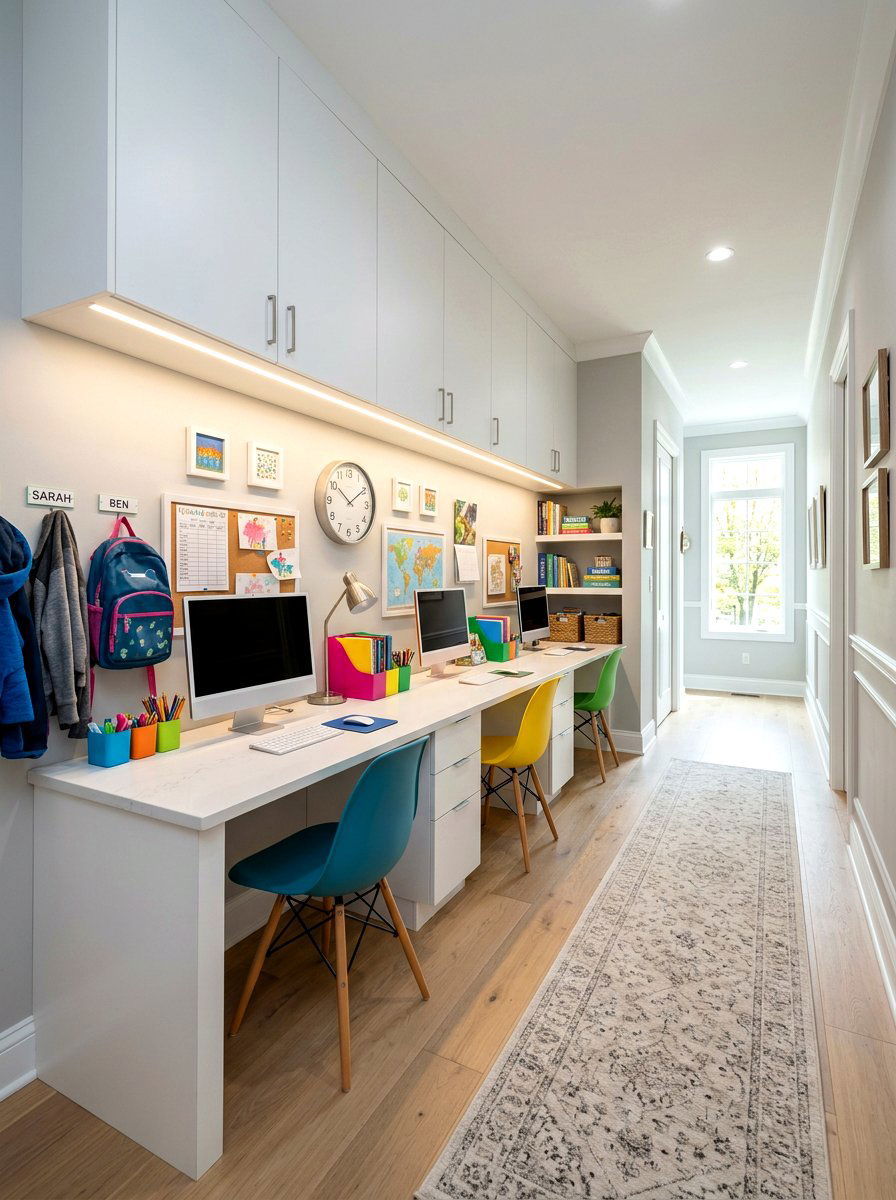
If you have a spare wall in a playroom or a wide hallway, a built-in desk can provide a permanent and streamlined schoolroom solution. Custom cabinetry allows you to design storage specifically for your curriculum and supplies. You can install a long countertop that serves multiple children at once. Overhead cabinets or open shelving can hold books and decorative items, keeping the floor area clear. This is a great way to utilize architectural features like window nooks or alcoves. A built-in setup looks intentional and can add value to your home while providing a very sturdy and efficient workspace for your daily educational needs.
16. Closet Homeschool Room
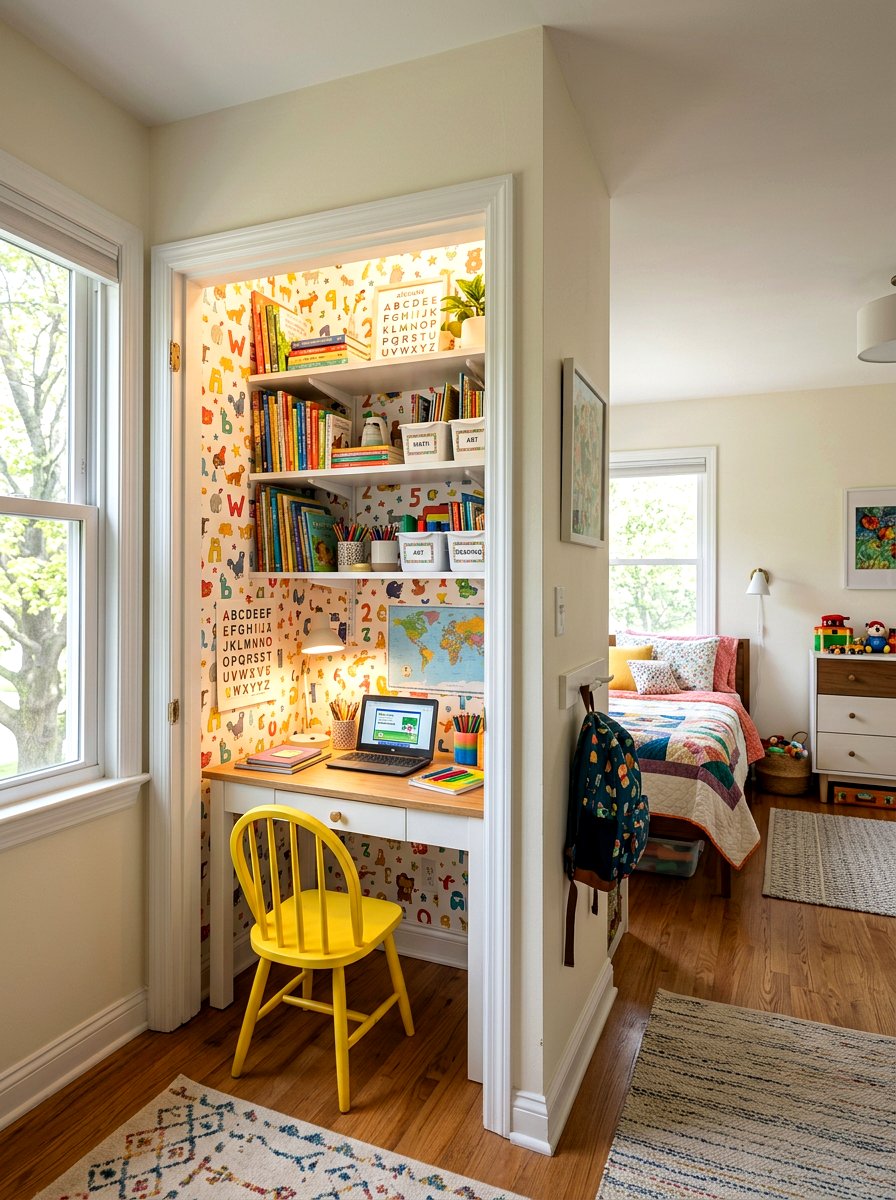
A "cloffice" or closet-office is an ingenious way to create a dedicated schoolroom in a small home or apartment. By removing the doors or replacing them with curtains, you can fit a desk and shelving inside a standard-sized closet. This setup allows you to "close the door" on school at the end of the day, helping to maintain a work-life balance. Use the vertical space for books and supplies by installing shelves all the way to the ceiling. Bright lighting is crucial here to prevent the space from feeling dark. A colorful wallpaper inside the closet can make the small workspace feel like a special, hidden learning retreat.
17. Playroom Homeschool Combo
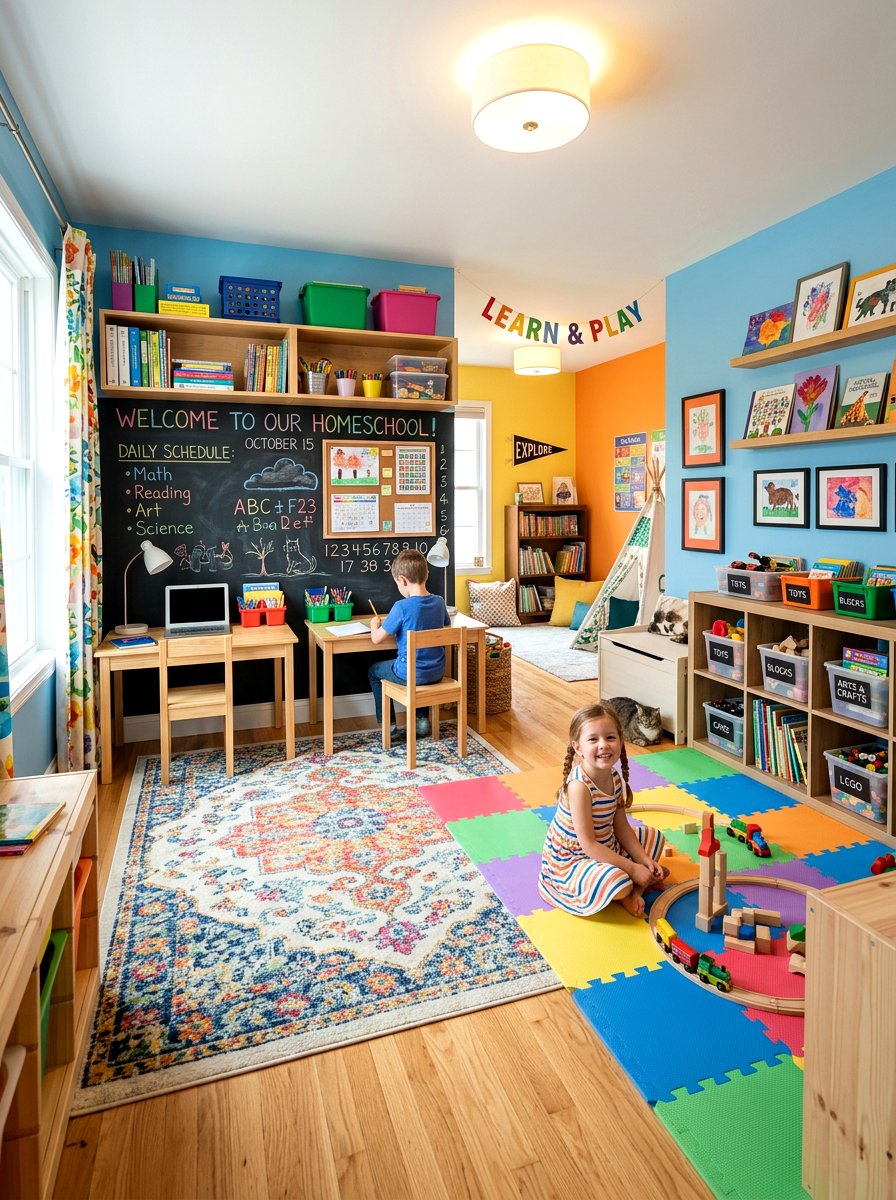
Combining a playroom with a schoolroom is a practical solution for families with younger children who still need plenty of time for imaginative play. You can divide the room into two halves: one for focused desk work and the other for toys and activities. Use open cubby storage to keep school supplies on one side and toys on the other. A large rug in the center can serve as a shared space for both group lessons and block building. This layout makes it easy to transition between structured learning and free play. It keeps all the children's items in one room, reducing clutter in other parts of the house.
18. Sunroom Homeschool Setup
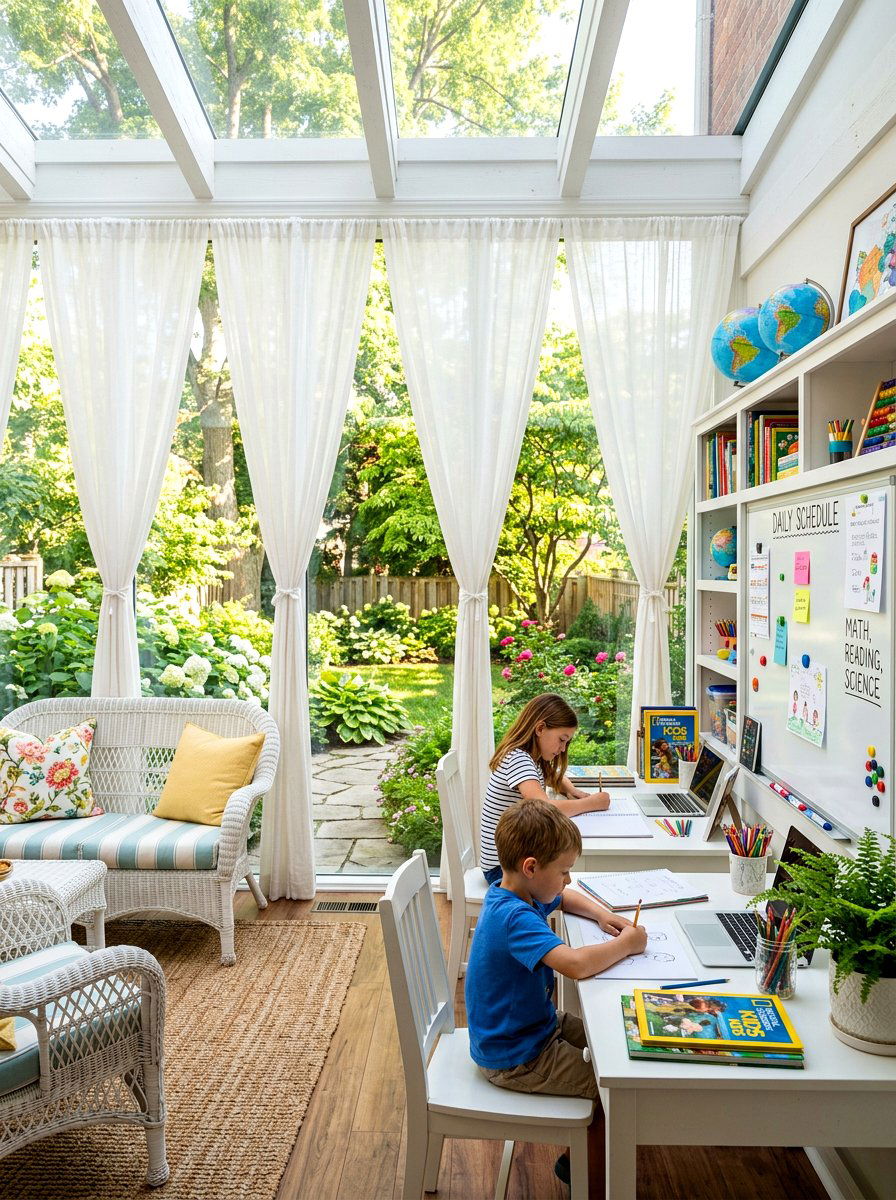
A sunroom provides an incredible amount of natural light, which can boost mood and productivity during the school day. Position desks to face the windows so children can enjoy the view of the garden or neighborhood while they work. Use light, airy curtains to manage glare during peak sun hours. Because sunrooms often have many windows, use freestanding bookshelves or low cabinets for storage. The bright environment is perfect for art projects and nature studies. If the room is not temperature-controlled, ensure you have a space heater or a fan to keep the environment comfortable for learning throughout the entire academic year.
19. Rolling Cart Homeschool Station
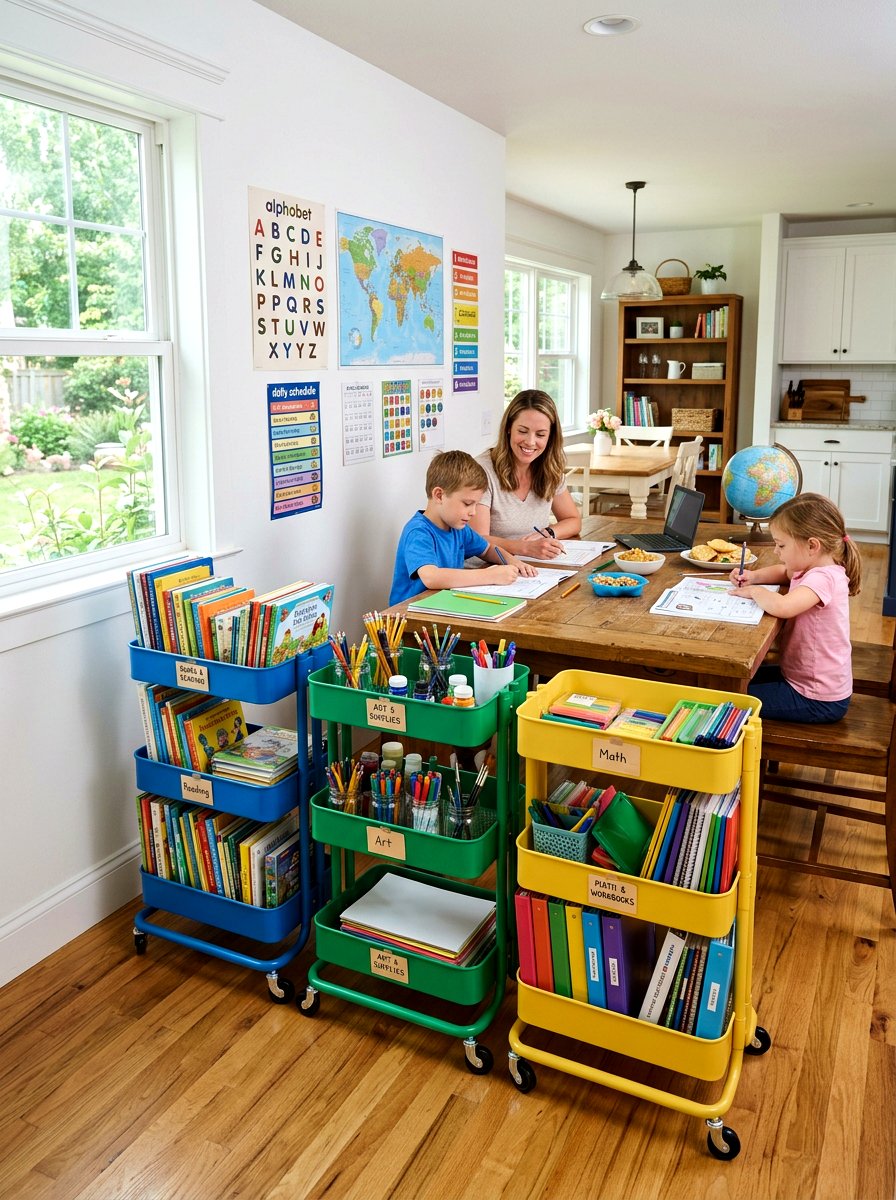
For families who prefer to learn in different spots around the house, a rolling cart system is a game-changer. You can dedicate one cart to each child, filled with their specific books, notebooks, and pencil cases. This allows them to move their "schoolroom" from the kitchen table to the sofa or even outside on a nice day. Use magnetic spice tins on the side of the cart to hold small items like paperclips and erasers. This mobile approach is perfect for small homes where a permanent desk isn't possible. It encourages independence as children are responsible for wheeling their cart to their chosen workspace each morning.
20. Reading Nook Schoolroom
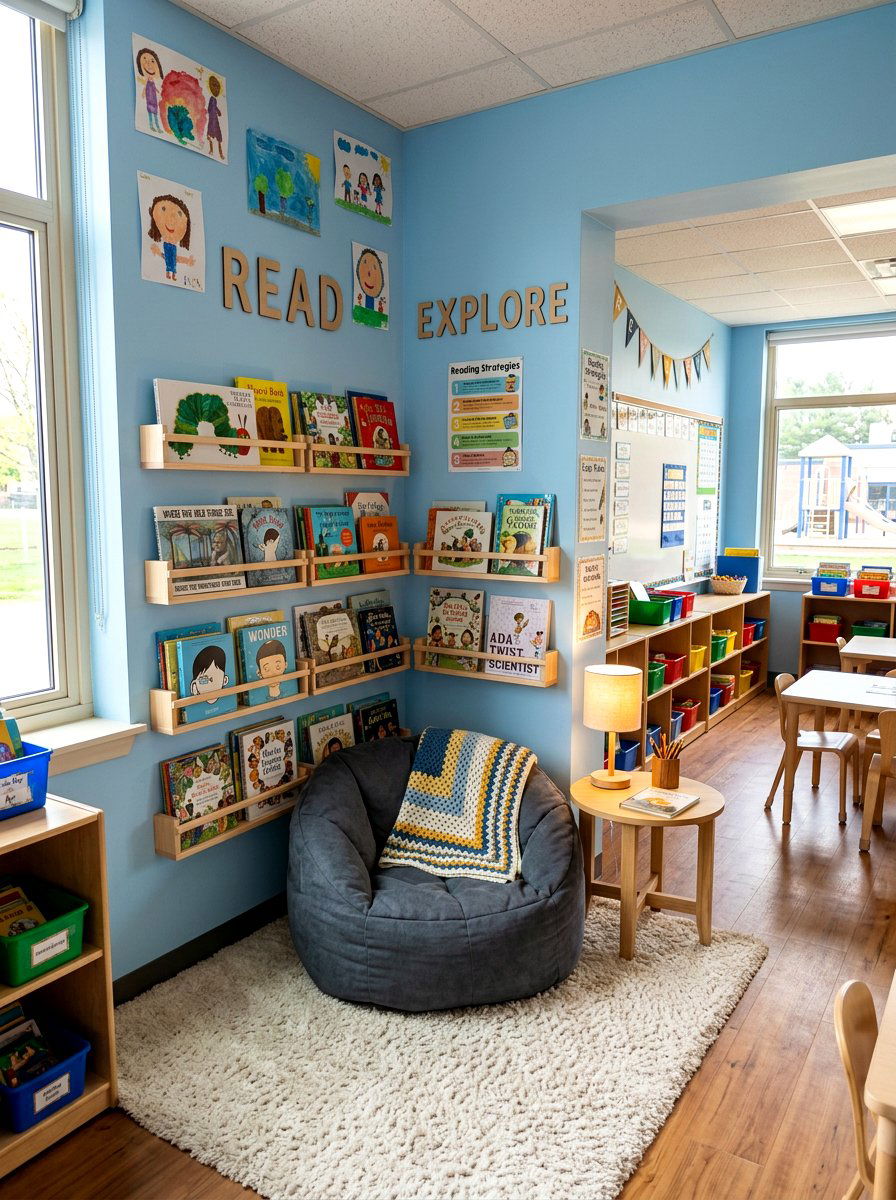
Every home schoolroom benefits from a dedicated space specifically designed for reading and quiet reflection. You can create a cozy nook in a corner using a comfortable beanbag chair, a plush rug, and soft lighting. Wall-mounted book ledges allow children to see the covers of their favorite stories, making them more likely to pick them up. This area serves as a sanctuary for independent reading time or for parents to read aloud to the family. Having a separate spot for reading helps children distinguish between focused "desk work" and the enjoyment of literature. It adds a layer of comfort and warmth to the educational environment.
21. Art Centered Schoolroom
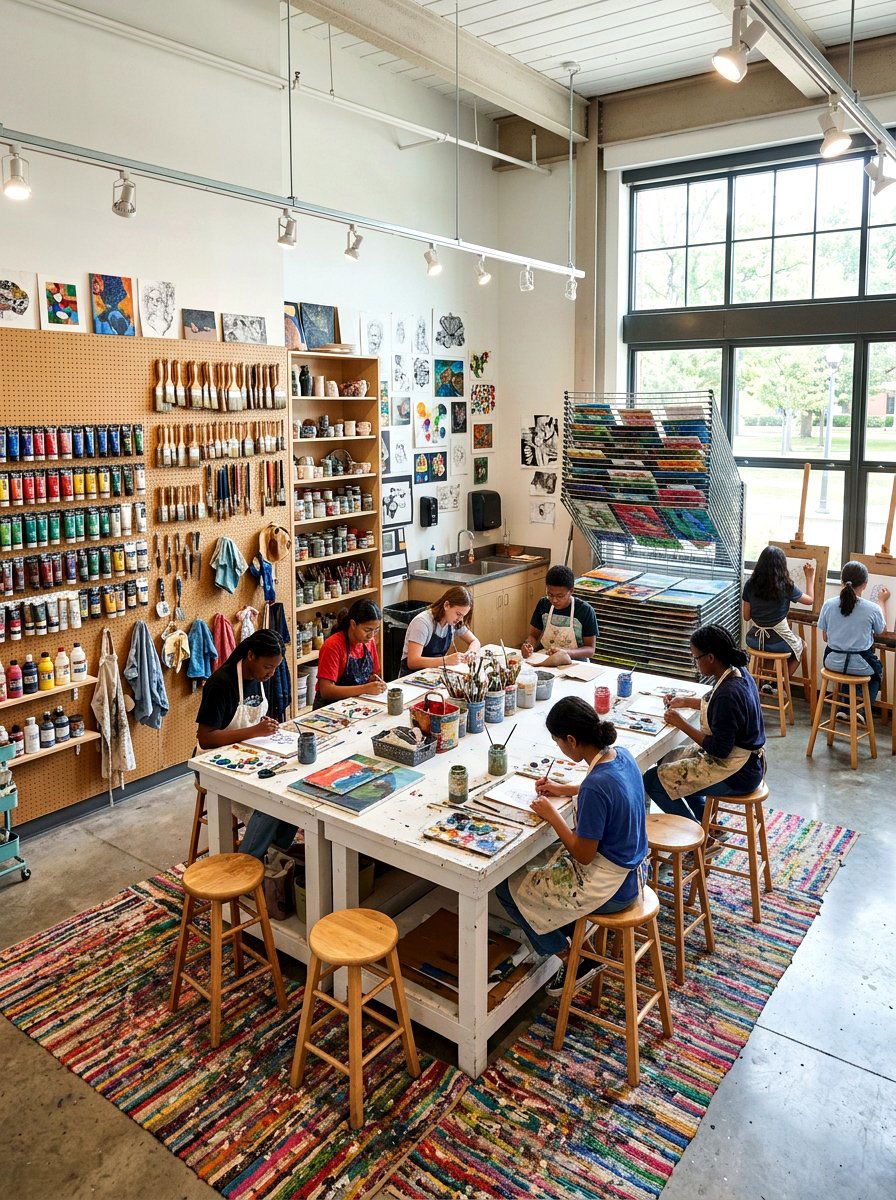
If your curriculum is heavy on creativity, design your schoolroom around a large art island or a sturdy craft table. Use a surface that is easy to wipe clean, such as a laminate top or a large silicone mat. Install a pegboard to organize paints, brushes, and aprons so they are always ready for use. A drying rack for wet paintings is a practical addition that saves space on the table. Display children's masterpieces on a dedicated gallery wall using clips or frames. This setup encourages students to express themselves and makes the messier parts of learning feel manageable and intentional within the designated creative zone.
22. Science Lab Homeschool Room
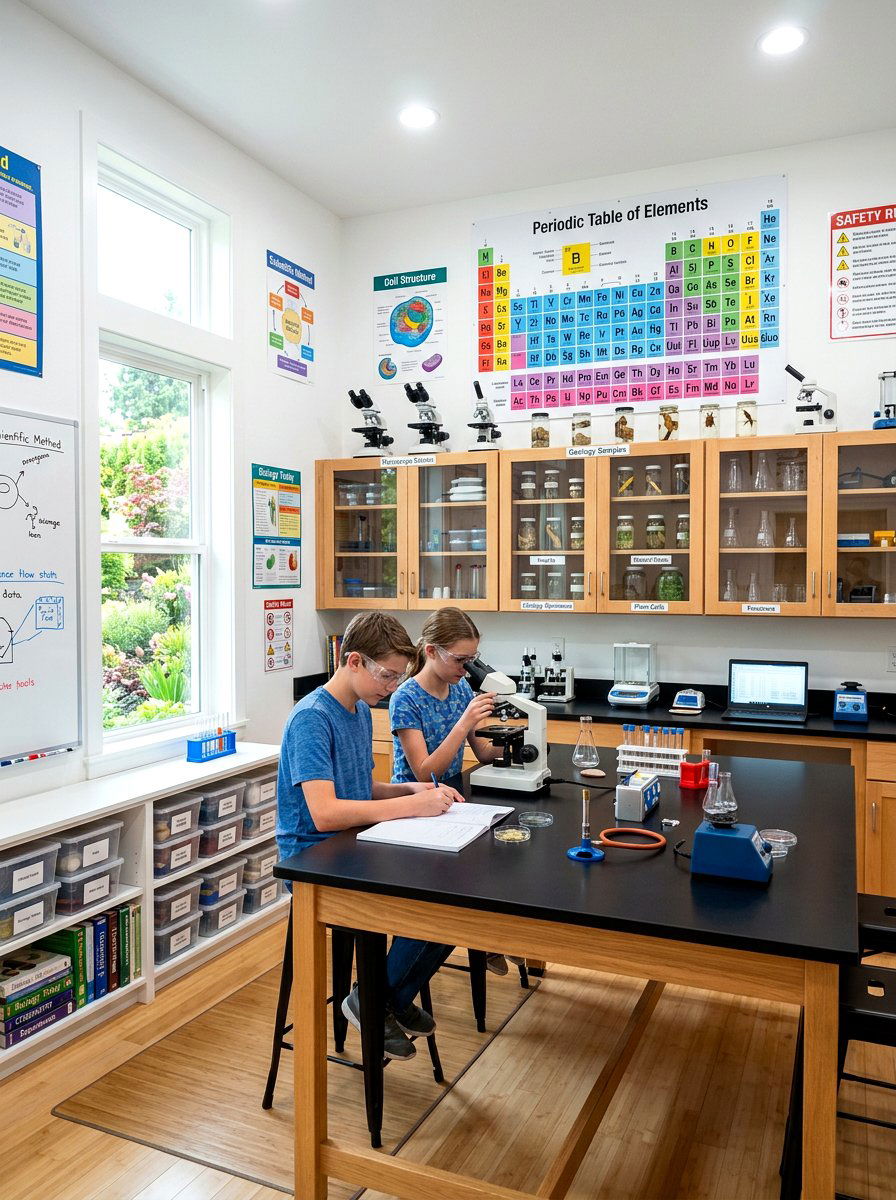
A science-themed schoolroom can ignite a passion for discovery and experimentation in your students. Use a high-top table or a kitchen island as a "lab bench" where kids can stand and work comfortably. Store magnifying glasses, microscopes, and specimen jars in glass-fronted cabinets for a professional look. A large periodic table or a map of the solar system can serve as educational wall decor. Consider adding a small sink if possible, or keep a water station nearby for experiments. This environment encourages hands-on learning and makes science feel like an exciting adventure. It is the perfect place for kids to explore the mysteries of the world.
23. Loft Homeschool Workspace
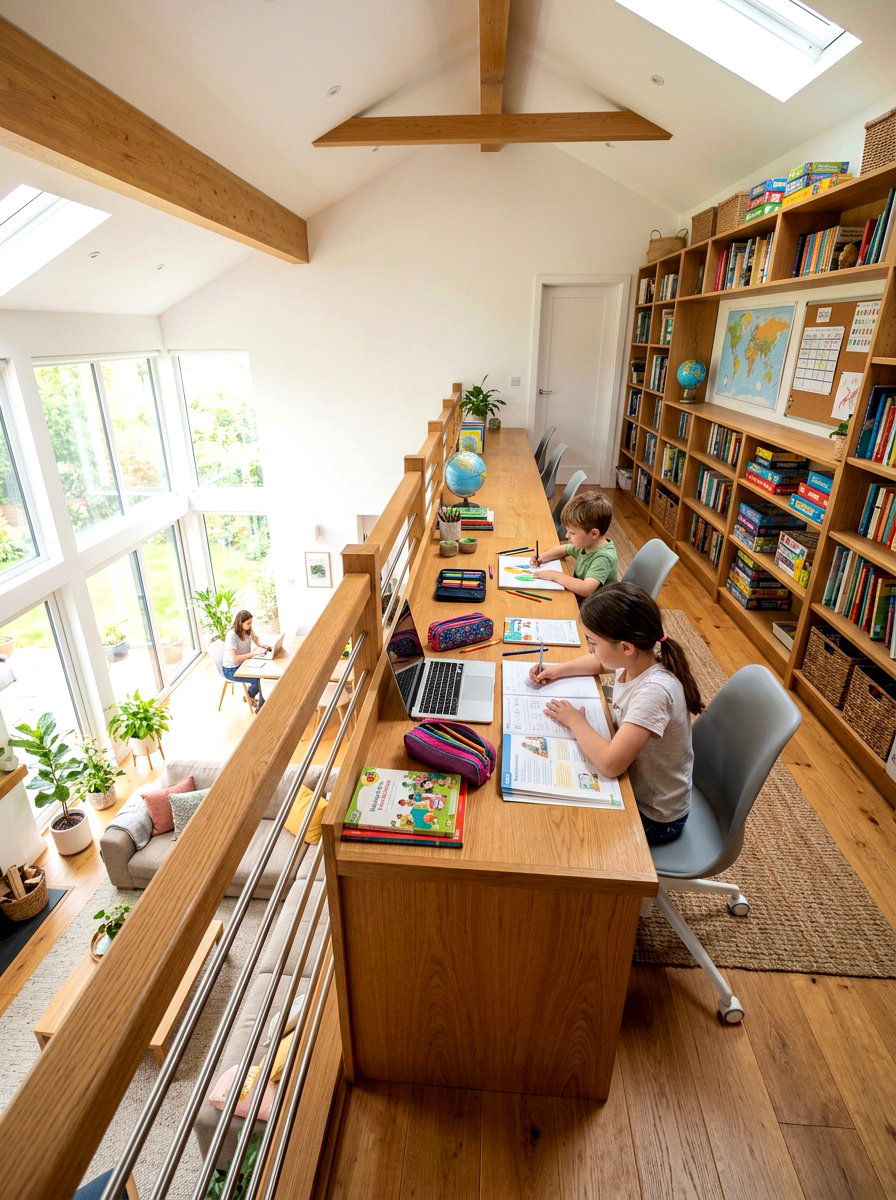
A loft area overlooking a living room can be a wonderful, airy spot for a home schoolroom. This location allows the parent to be nearby while the children work independently. Use a long desk along the railing to maximize the view and the light coming from the floor below. Since lofts are often visible from the rest of the house, keep the design cohesive with your home's overall aesthetic. Use stylish baskets and matching bins to hide any school-related clutter. This elevated space feels special and separate, providing a clear mental boundary for children when it is time to focus on their daily school assignments.
24. Library Style Schoolroom
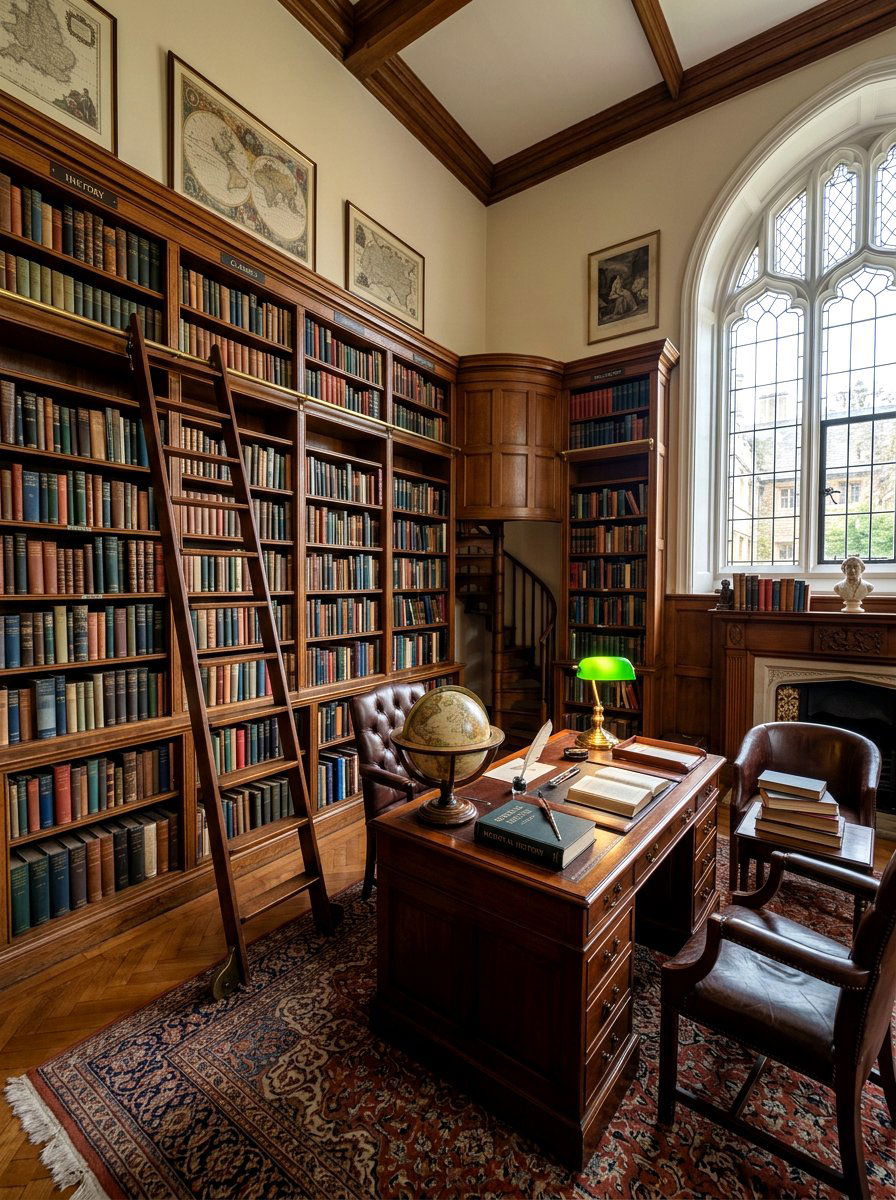
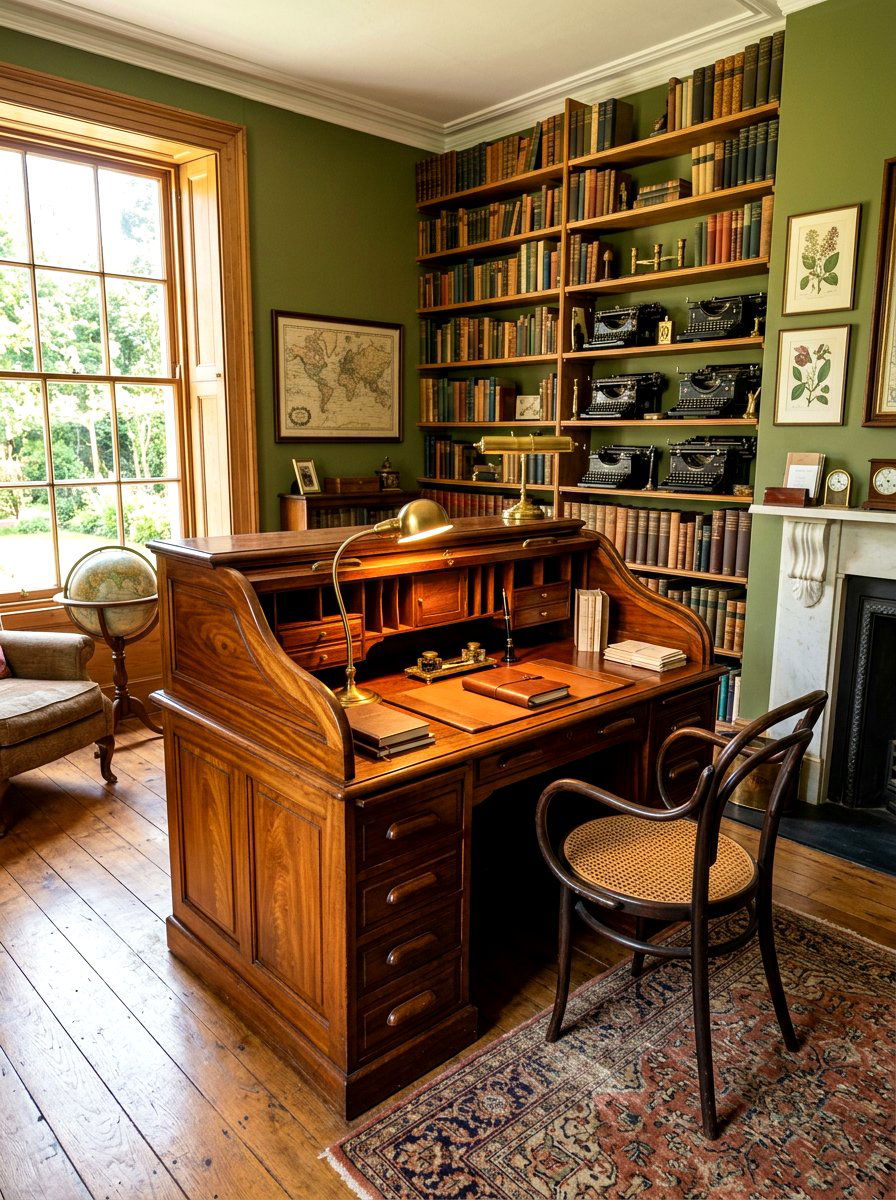
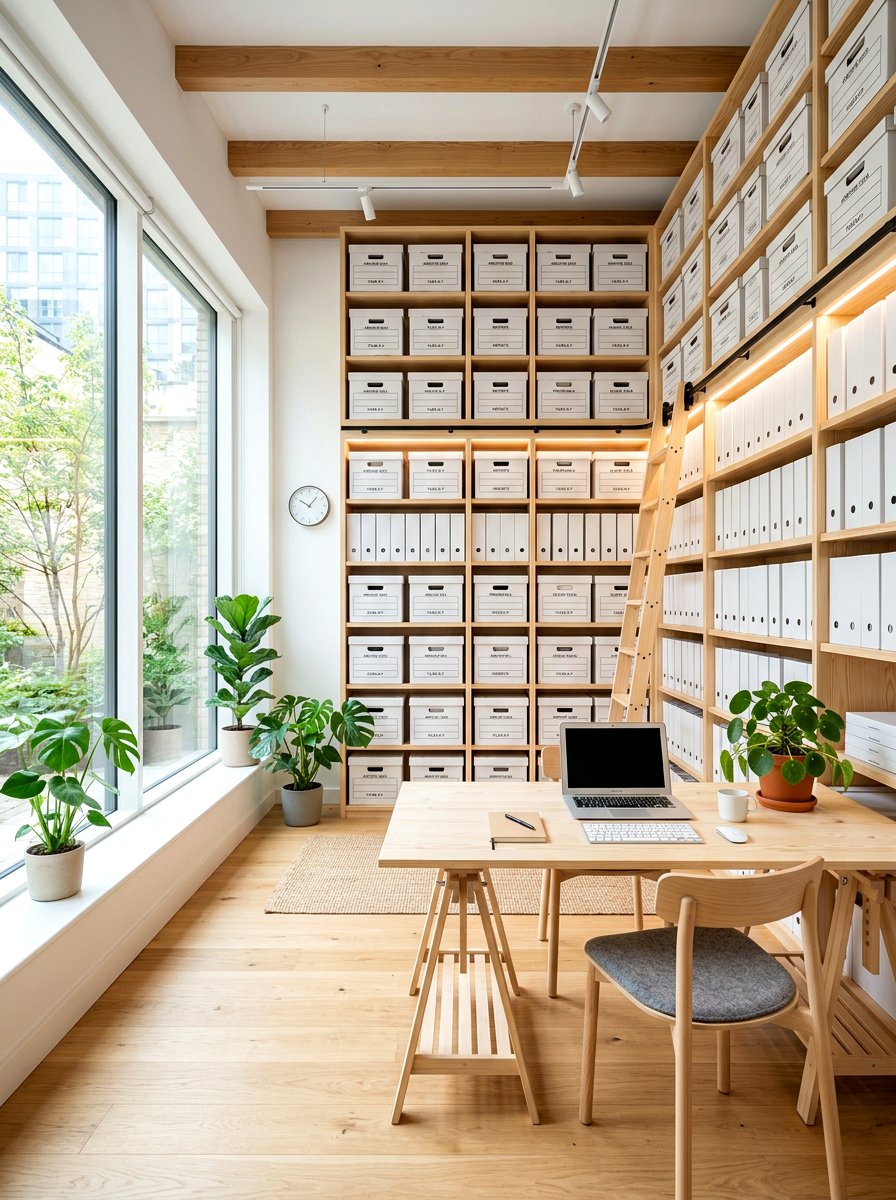
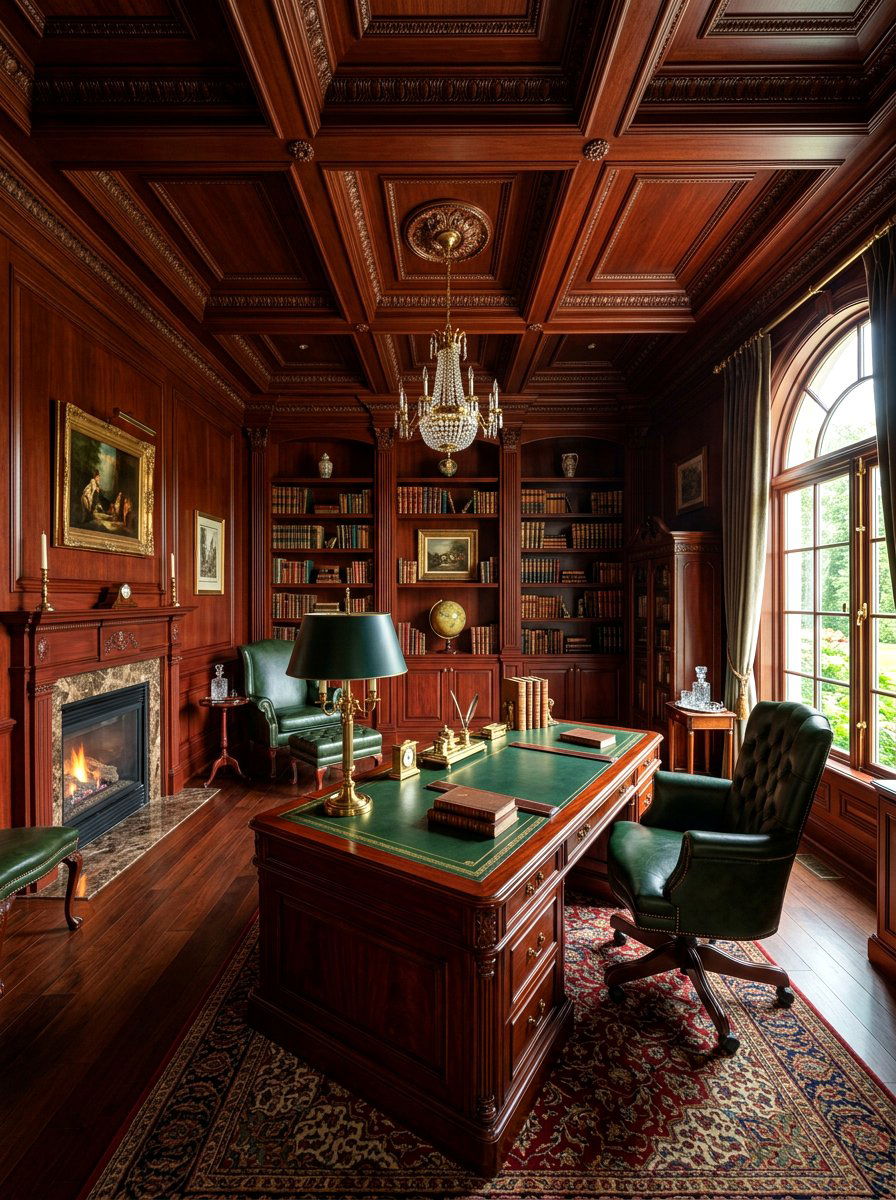
For families who love books, a library-themed schoolroom creates a classic and scholarly atmosphere. Line the walls with floor-to-ceiling bookshelves and use a rolling ladder if the ceilings are high. A large wooden desk and leather chairs add to the traditional feel. You can organize books by subject, grade level, or even color for a visually pleasing look. Soft, warm lighting from brass lamps creates a cozy environment for deep study. This style emphasizes the importance of literature and research in your home education. It is a timeless design that works for all ages and provides a very quiet, dignified space for academic pursuits.
25. Wall Mounted Homeschool Desk
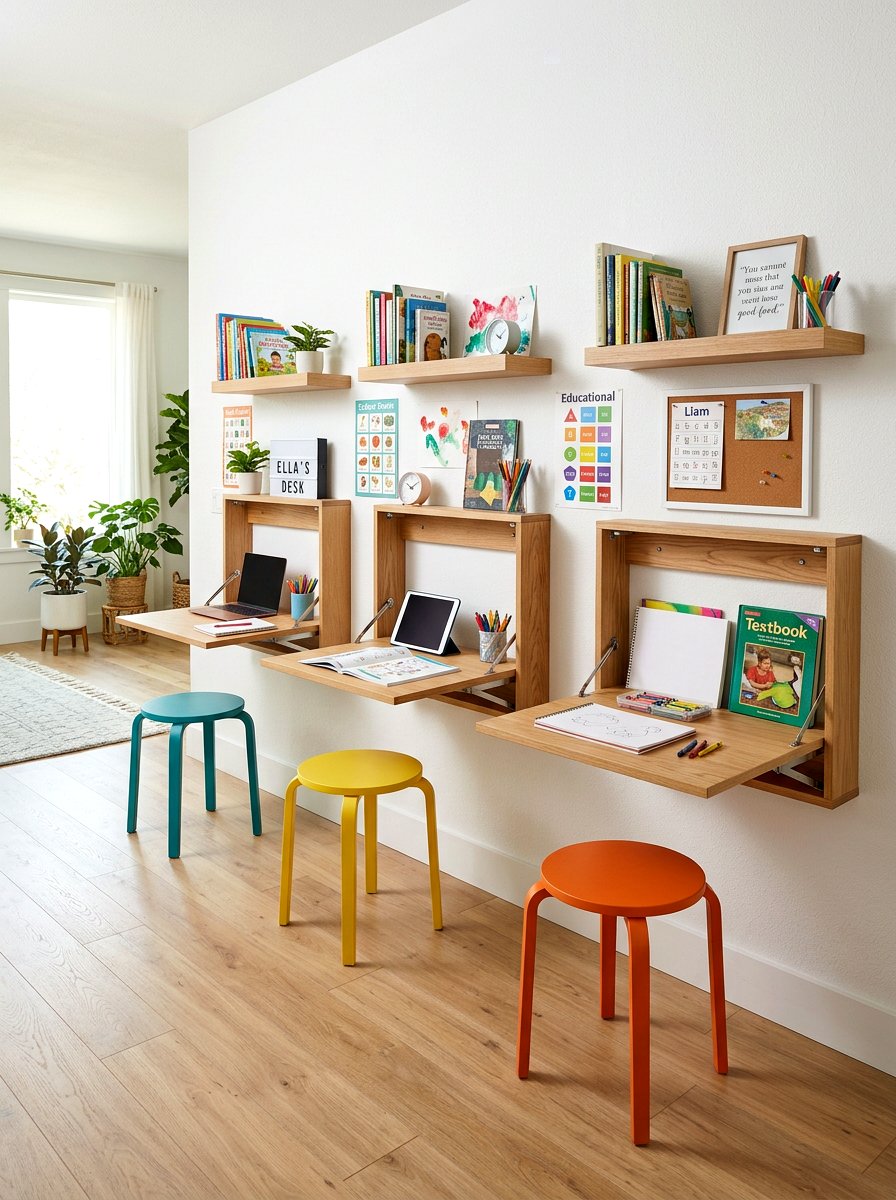
Wall-mounted desks are the ultimate space-saving solution for a multi-purpose home schoolroom. You can install several small desks along one wall, giving each child their own personal workspace without taking up floor area. Some models even fold up against the wall when they are not in use, which is perfect for shared living rooms or bedrooms. Pair these desks with stools that can be tucked underneath to keep the walkways clear. Using the wall for the desk surface allows you to use the area above for shelving and the area below for small storage bins. This clean, modern look is both functional and very visually appealing.
26. Corner Homeschool Setup
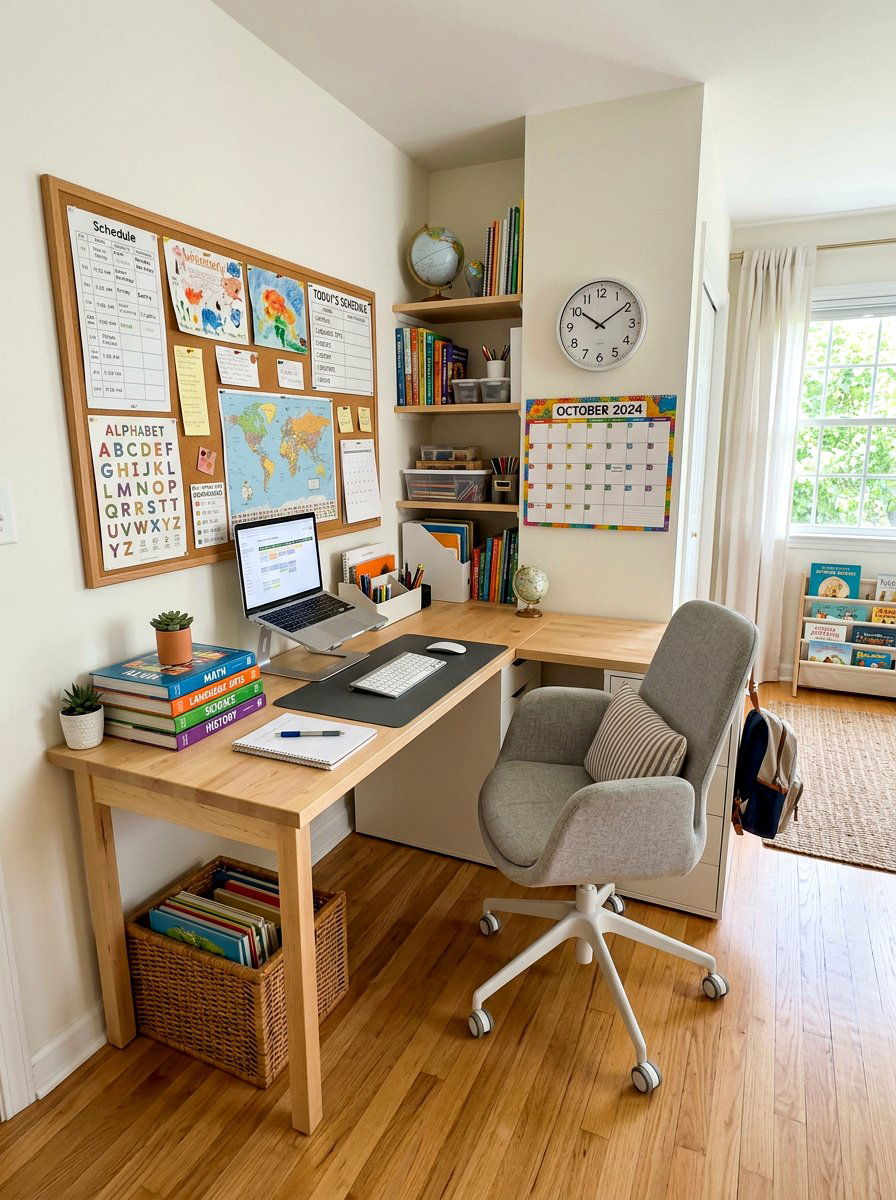
Turning an unused corner into a schoolroom is an efficient way to utilize your home 's square footage. An L-shaped corner desk provides a generous amount of workspace while fitting snugly into the room' s architecture. You can use the walls on either side for a corkboard, a calendar, and floating shelves. This setup feels like a private cubicle, helping children to stay focused on their work by limiting peripheral distractions. A corner nook works well in a bedroom, a living room, or even a large kitchen. It is a simple way to create a dedicated learning zone without needing an entire separate room for your daily lessons.
27. Pastel Homeschool Room
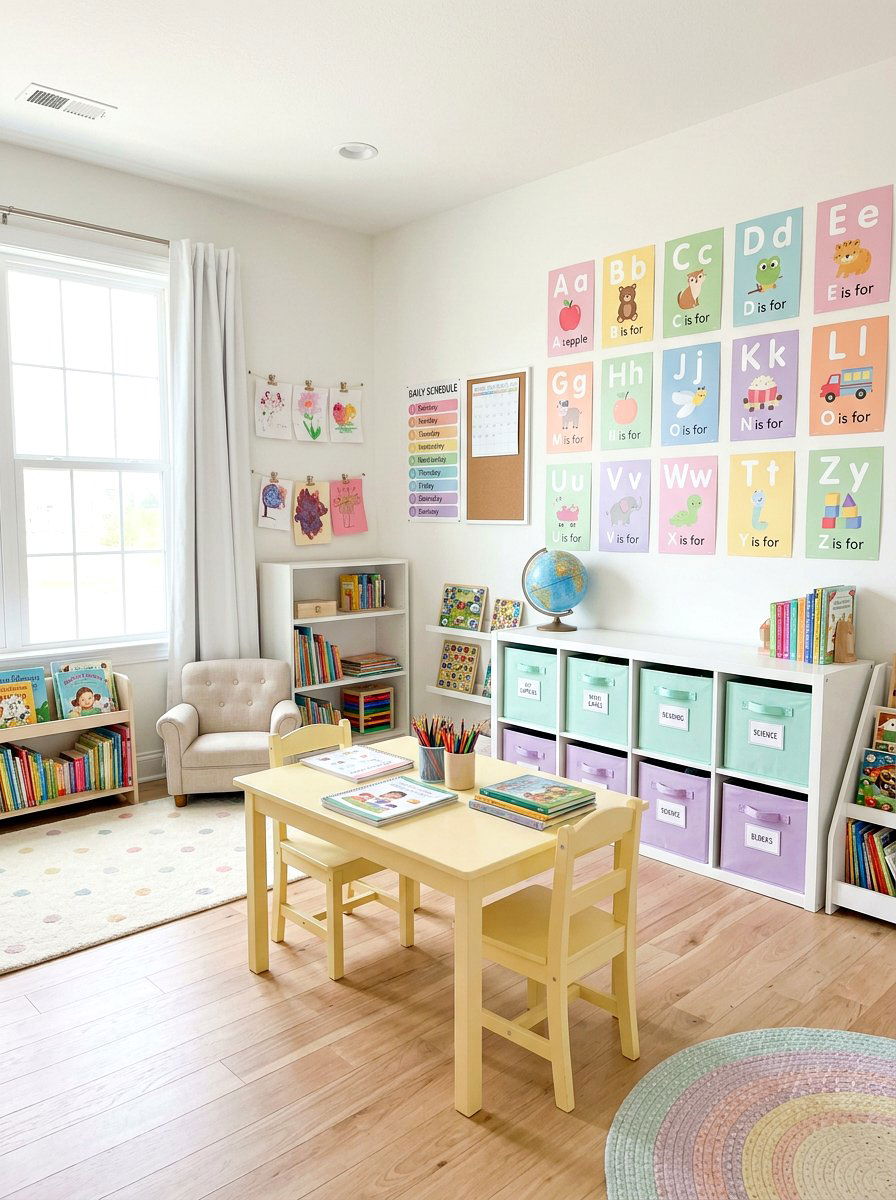
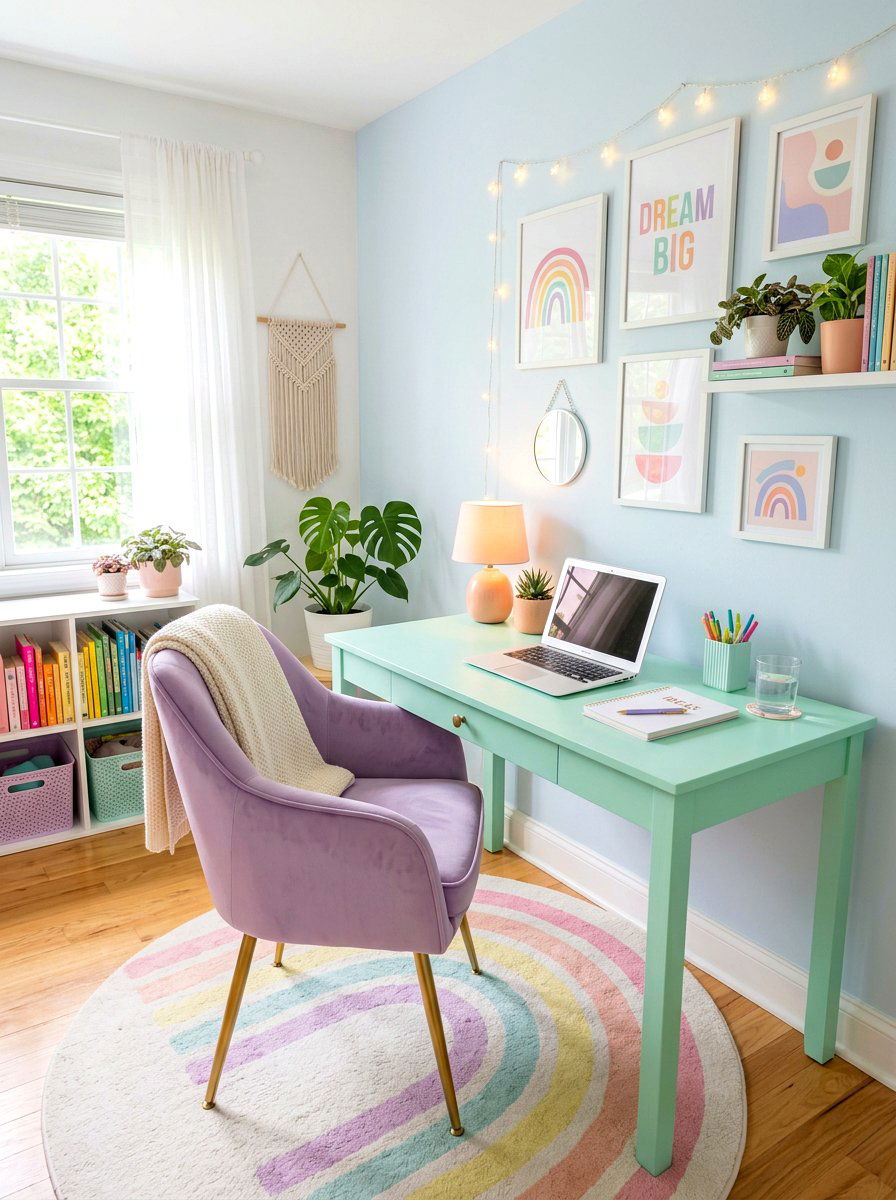
A pastel-colored schoolroom offers a soft, cheerful, and gender-neutral environment that is very inviting for young children. Use shades like mint green, lavender, pale yellow, and baby blue for furniture and decor. These colors are known for being calming rather than overstimulating, which can help with focus. You can paint an old wooden table in a soft pastel hue to give it a fresh, kid-friendly look. Coordinate the storage bins and wall art within the same color palette for a cohesive feel. This aesthetic is bright and happy, making the start of the school day feel like a positive and very gentle experience for everyone involved.
28. Colorful Homeschool Space
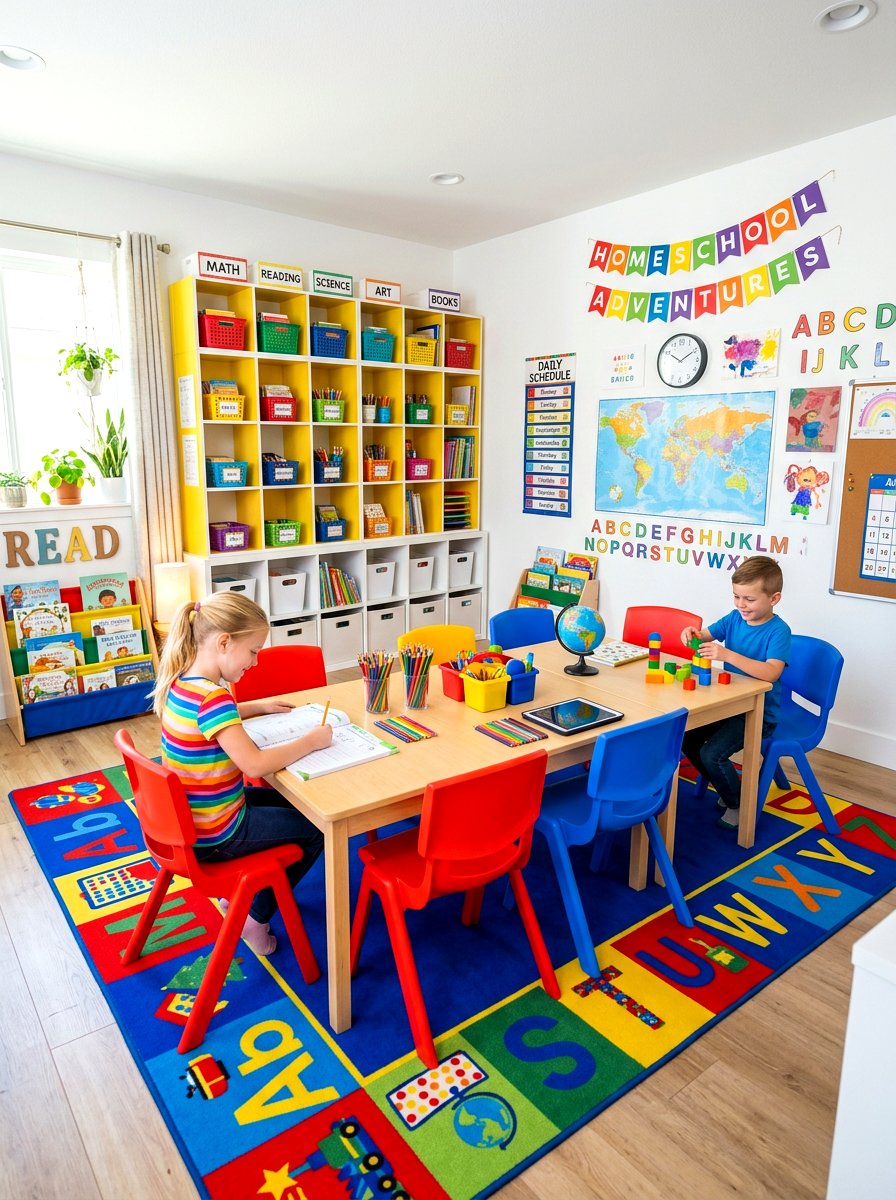
For a high-energy and creative environment, embrace a vibrant and colorful schoolroom design. Use primary colors like red, blue, and yellow to create a space that feels like a classic classroom. A colorful rug can tie the room together and provide a soft place for floor activities. Use multi-colored bins for sorting supplies, which also helps younger children learn their colors while cleaning up. Brightly colored chairs can add a fun pop to a simple white desk. This lively atmosphere is perfect for elementary-aged children who thrive in an environment that feels fun and stimulating. It makes learning feel like an exciting and very joyful part of the day.
29. Wood And White Schoolroom
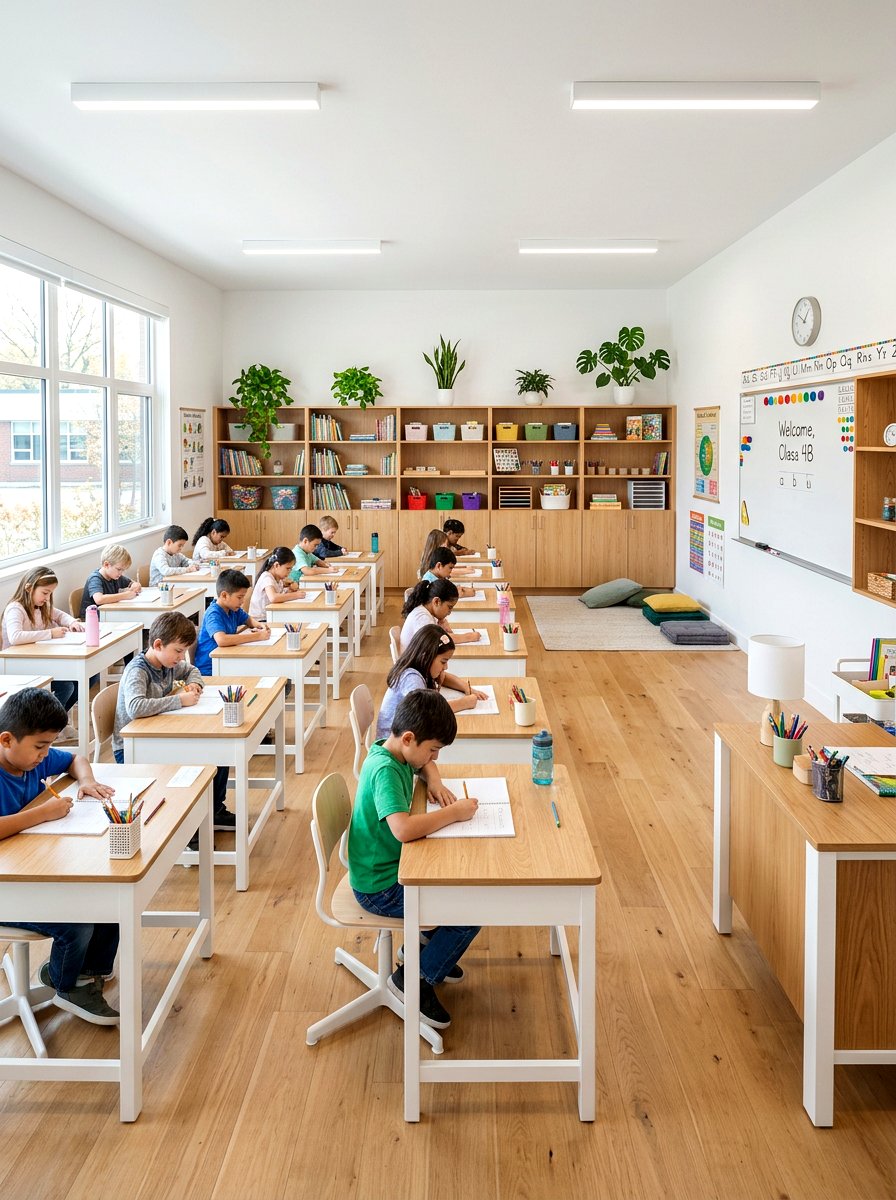
A wood and white color scheme is a timeless choice for a home schoolroom, offering a perfect balance of warmth and brightness. White walls and furniture make the space feel clean and open, while natural wood accents in the shelving or flooring add a cozy, organic touch. This neutral backdrop allows your educational materials, like colorful maps or books, to stand out. It is a very versatile style that can be easily updated with different accent colors as your children’s tastes change. This design feels sophisticated enough for adults to use as a home office while still being a welcoming and very practical space for students.
30. Vintage Style Schoolroom
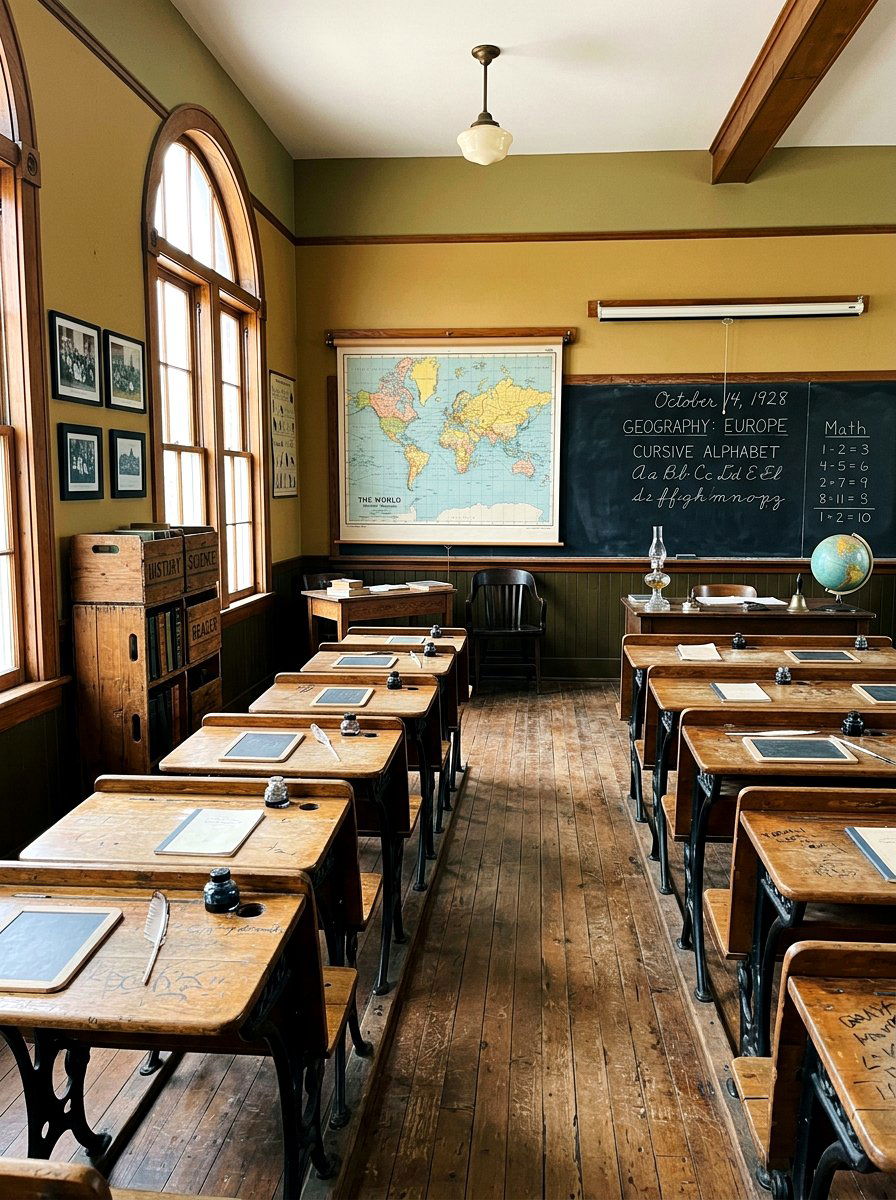
A vintage-inspired schoolroom uses antique or retro elements to create a space with history and character. Look for old-fashioned school desks with integrated chairs, vintage maps, and classic globes to decorate the room. An old abacus or a set of wooden blocks can serve as both toys and educational tools. Use muted tones like mustard yellow, olive green, and burnt orange to enhance the retro vibe. This style celebrates the history of education and creates a unique environment that feels like stepping back in time. It is a wonderful way to incorporate family heirlooms or thrift store finds into a functional and very charming learning space.
Conclusion:
Setting up the perfect home schoolroom is a journey that evolves alongside your children 's growth and your family' s unique educational needs. From minimalist nooks to grand library-style rooms, the goal is always to create a space where learning feels natural and inspiring. By focusing on organization, comfort, and personal style, you can build an environment that minimizes stress and maximizes curiosity. Remember that the most effective schoolroom is one that reflects your family’s values and supports your daily routine. We hope these thirty ideas have provided the inspiration you need to design a beautiful, functional, and viral-worthy learning space in your own home.

Related posts: