Creating a dedicated sensory playroom is one of the most rewarding gifts you can give to a developing child, offering a safe haven for exploration and regulation. These thoughtfully designed spaces cater to various needs, whether a child seeks intense movement or requires a quiet sanctuary to decompress from daily stressors. By integrating specific elements that target the vestibular, proprioceptive, and tactile systems, you transform a standard room into a powerful developmental tool. A well-planned sensory environment fosters independence, improves motor skills, and provides essential emotional support. From vibrant climbing zones to calming light installations, every design choice helps a child navigate their world with greater confidence, comfort, and joy.
1. Climbing wall for kids
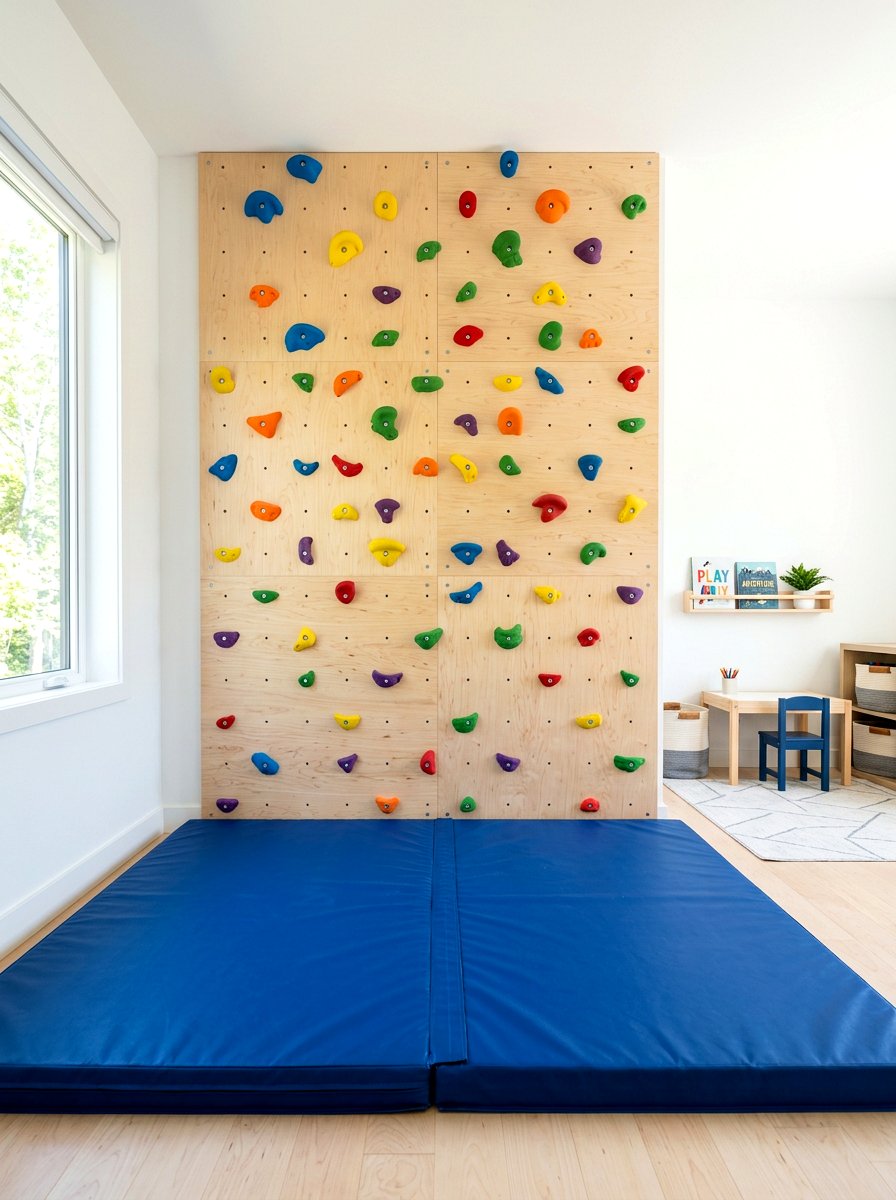
Have you ever noticed how naturally children try to scale every piece of furniture in the house? Installing a professional climbing wall inside a playroom provides a safe and structured outlet for that high-energy physical drive. This full-wall installation usually features colorful, textured handholds scattered across a sturdy plywood backing, creating a vertical playground that challenges the body. Beyond just being fun, climbing helps children develop significant upper body strength and refined hand-eye coordination through calculated movements. You can customize the difficulty by adjusting the placement of the grips, making it a design feature that truly grows alongside your child’s physical abilities and confidence.
2. Bubble tube for sensory room
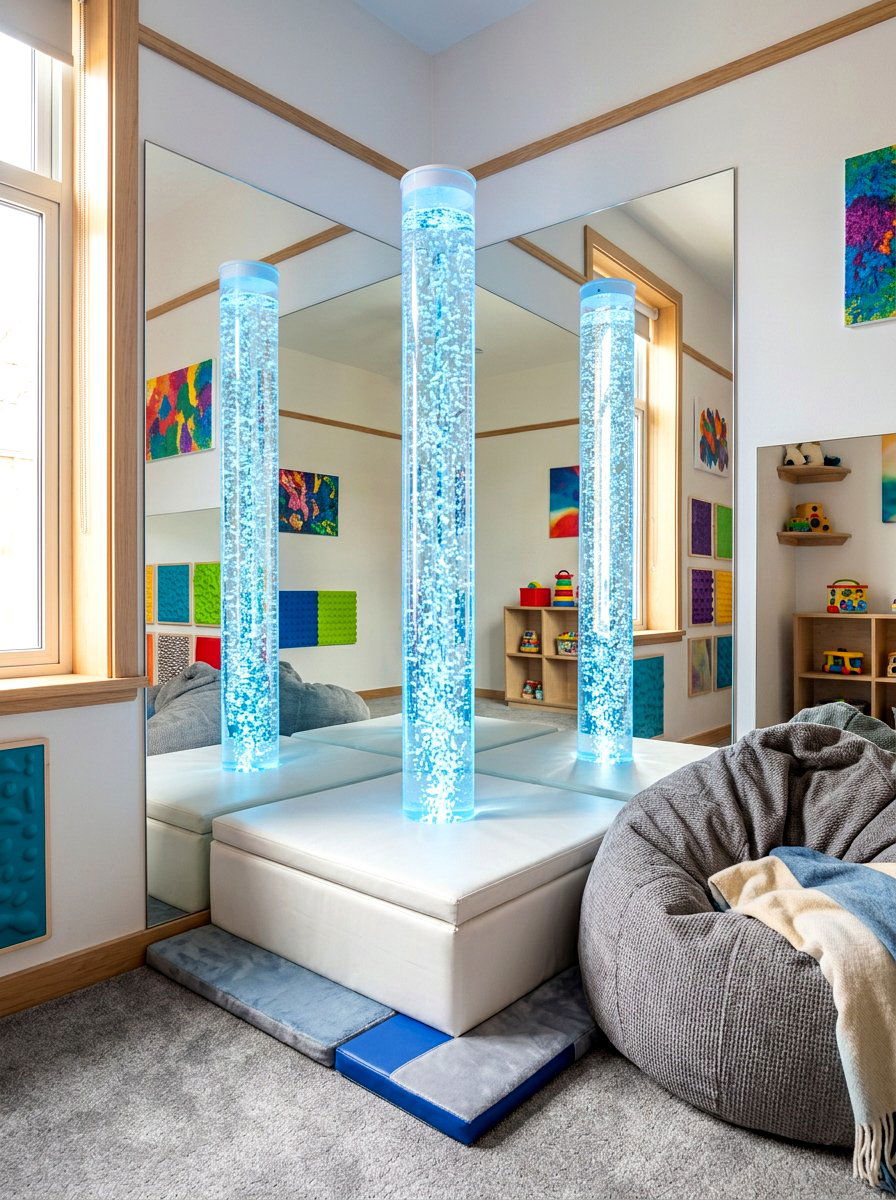
Imagine a glowing pillar of water filled with rising bubbles and changing colors that instantly captures a child’s attention and calm. A bubble tube is often the heart of a visual sensory zone, providing a mesmerizing focal point that helps regulate the nervous system. These tall, acrylic cylinders use internal LED lighting to cycle through soothing shades of blue, green, and purple, while the gentle hum of the pump provides a subtle auditory comfort. Positioned in a corner with surrounding mirrors, the visual impact is doubled, creating an immersive experience that encourages quiet observation. It is an ideal tool for children who need a predictable visual rhythm to relax.
3. Sensory swing for indoors
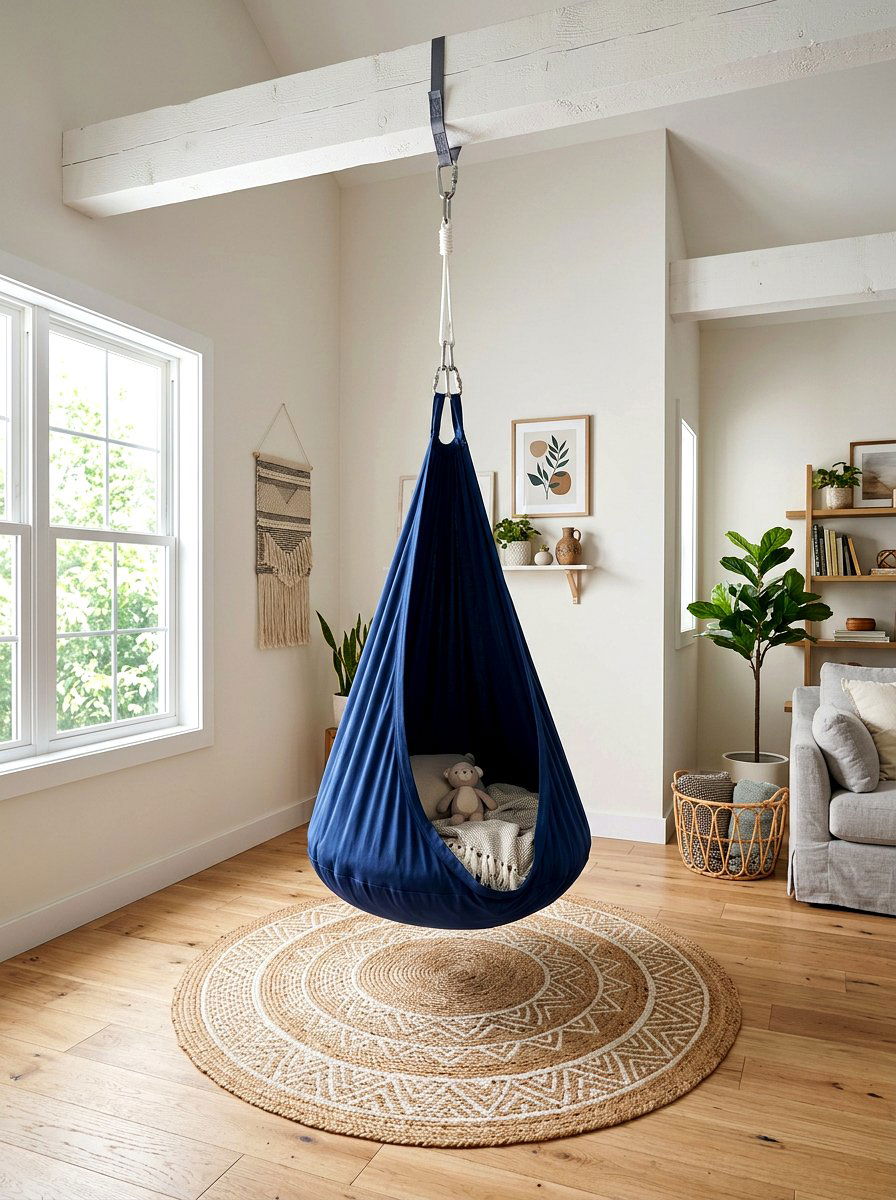
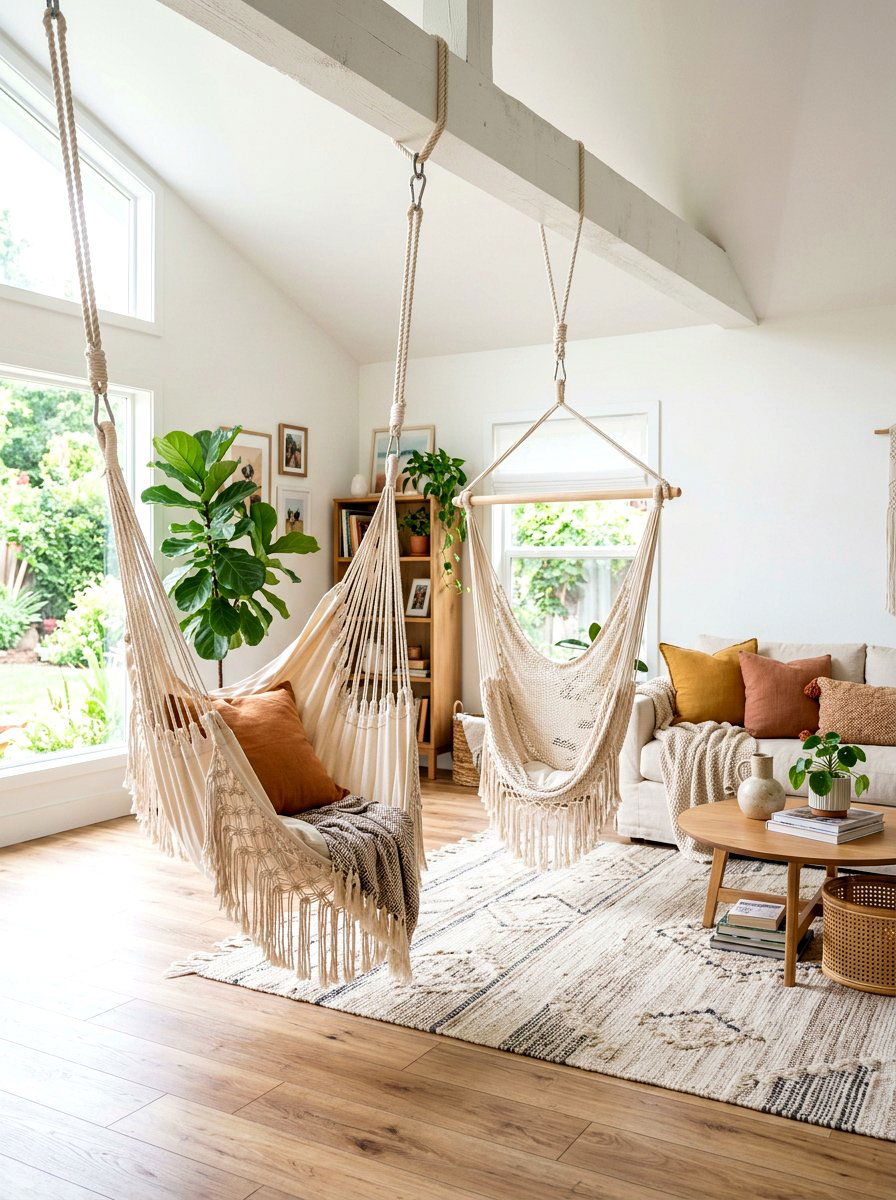
Is there anything more soothing than the rhythmic motion of a swing while being safely cocooned in soft, stretchy fabric? An indoor sensory swing, often made from heavy-duty spandex or nylon, provides essential vestibular input that helps children understand their body’s position in space. These swings can be mounted to a heavy-duty ceiling beam, allowing for spinning, bouncing, or gentle swaying depending on the child's current emotional needs. The wrap-around nature of a pod swing also offers deep pressure, which feels like a firm hug to the entire body. It serves as both an active play tool and a private retreat for those seeking a moment of peace.
4. Liquid floor tiles for kids
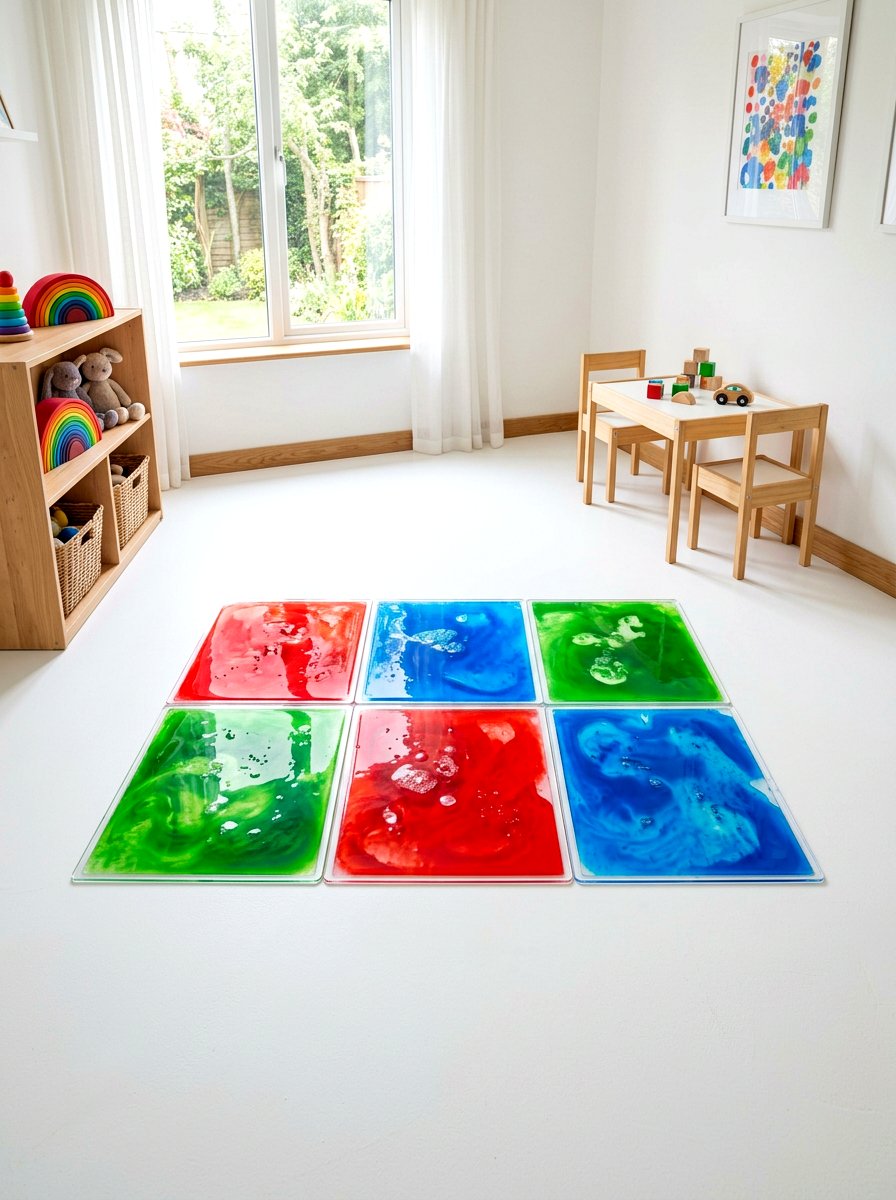
What if every step a child took resulted in a beautiful, moving explosion of color right beneath their feet? Liquid sensory floor tiles are gel-filled squares that react to pressure, causing the vibrant internal fluids to swirl and shift into unique patterns. These tiles are usually installed in a dedicated walkway or a small grid, encouraging children to jump, dance, or stomp to see the visual changes. The squishy texture provides a unique tactile sensation that keeps kids engaged while they work on their balance and gross motor skills. They are incredibly durable and add a high-tech, modern aesthetic to any contemporary playroom layout.
5. Soft foam ball pit
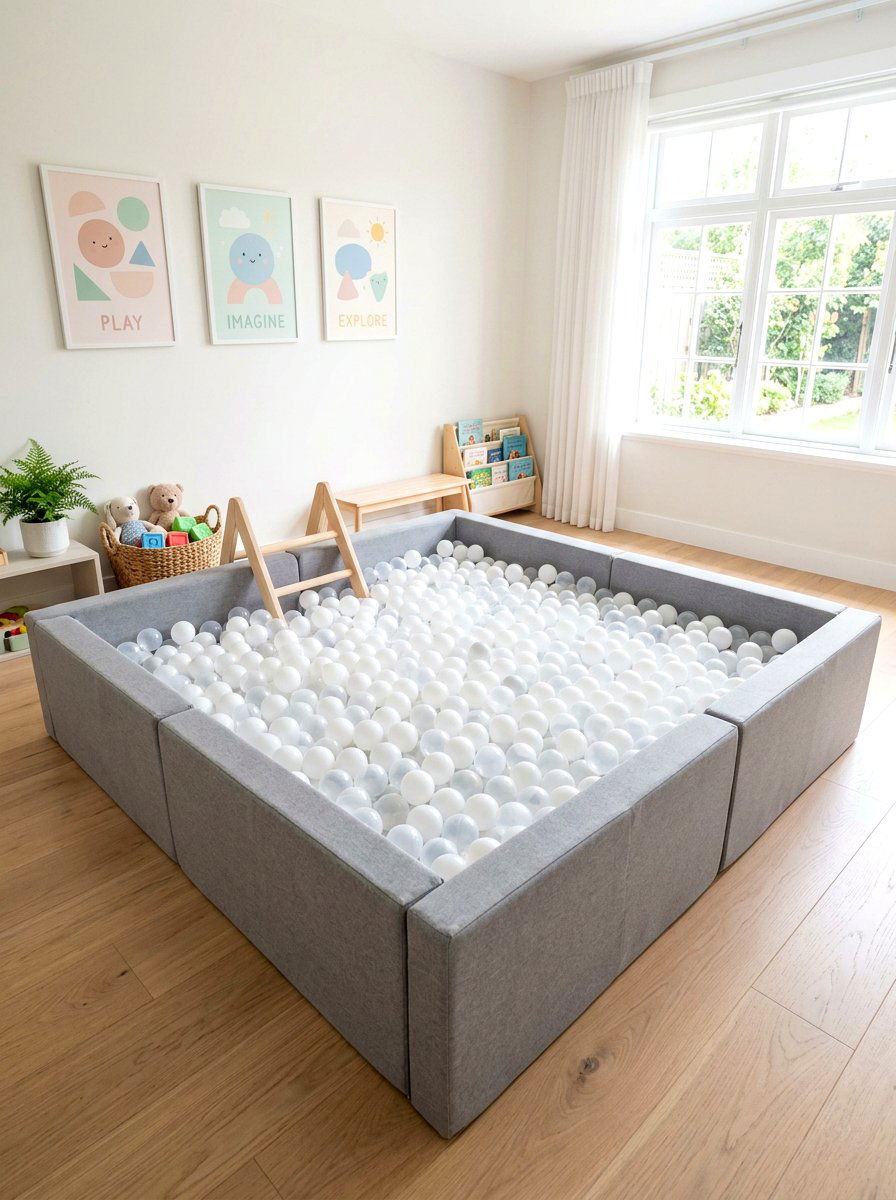
Walking into a room filled with thousands of soft, colorful spheres instantly signals a time for uninhibited joy and physical exploration. A soft foam ball pit offers a deep sensory experience where children can submerge their bodies, providing a safe form of tactile and proprioceptive input. The constant pressure of the balls against the skin helps children feel grounded and secure as they navigate the shifting surface. You can choose a neutral color palette for a modern home or go with bright, primary colors to stimulate visual engagement. This large-scale feature often becomes the favorite destination for social play and imaginative underwater adventures in the playroom.
6. Magnetic wall for playroom
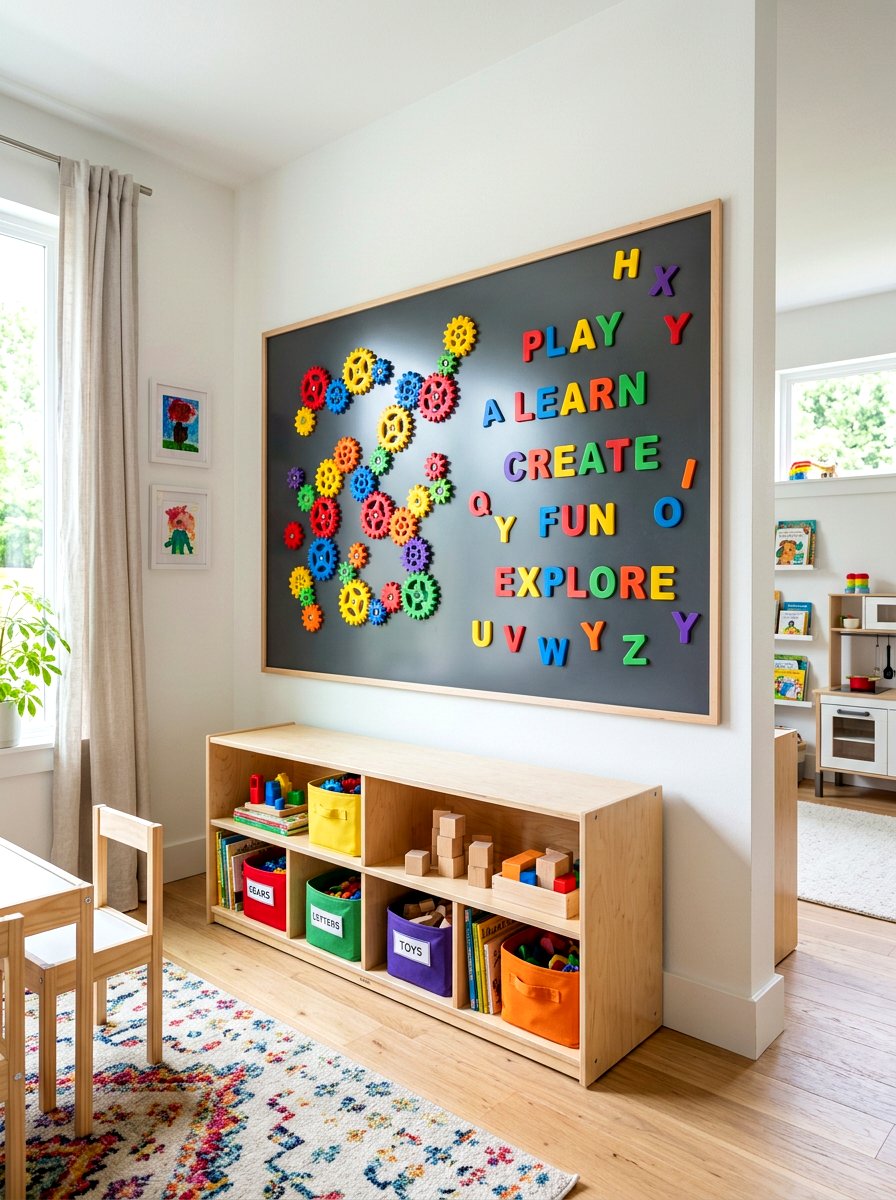
Could a simple wall become a dynamic canvas for building, sorting, and creative problem-solving without the mess of traditional art supplies? By applying high-quality magnetic paint or installing large galvanized steel sheets, you create a massive vertical playground for various magnetic toys and tools. Children can spend hours arranging colorful gears, alphabet letters, or intricate marble runs that stick directly to the surface. This setup encourages vertical play, which is excellent for strengthening core muscles and improving wrist stability. It keeps the floor clear and provides a centralized location for organized, educational play that feels like magic to curious young minds exploring cause and effect.
7. Kids light table station
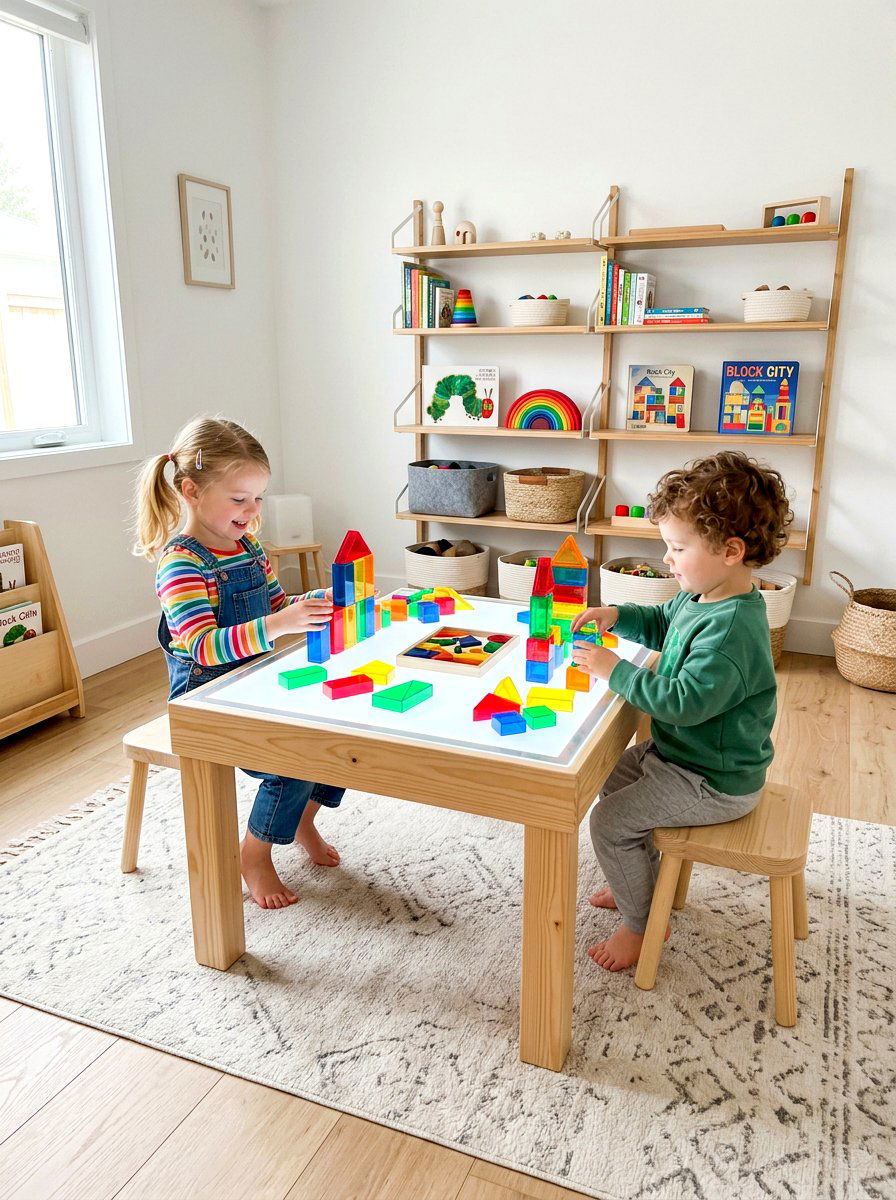
Setting up a dedicated light table station introduces a world of translucent beauty and scientific discovery into your child's daily routine. These glowing surfaces illuminate colorful translucent blocks, sand trays, or X-rays, making every detail pop with vibrant clarity and high visual contrast. Children are naturally drawn to the soft glow, which helps them focus on fine motor tasks like tracing shapes or sorting colored gems. You can build a custom table with internal LED strips or purchase a portable light pad that sits atop a standard desk. This station is perfect for quiet, focused play that enhances visual tracking and encourages deep concentration in a bright environment.
8. Sensory bin for toddlers
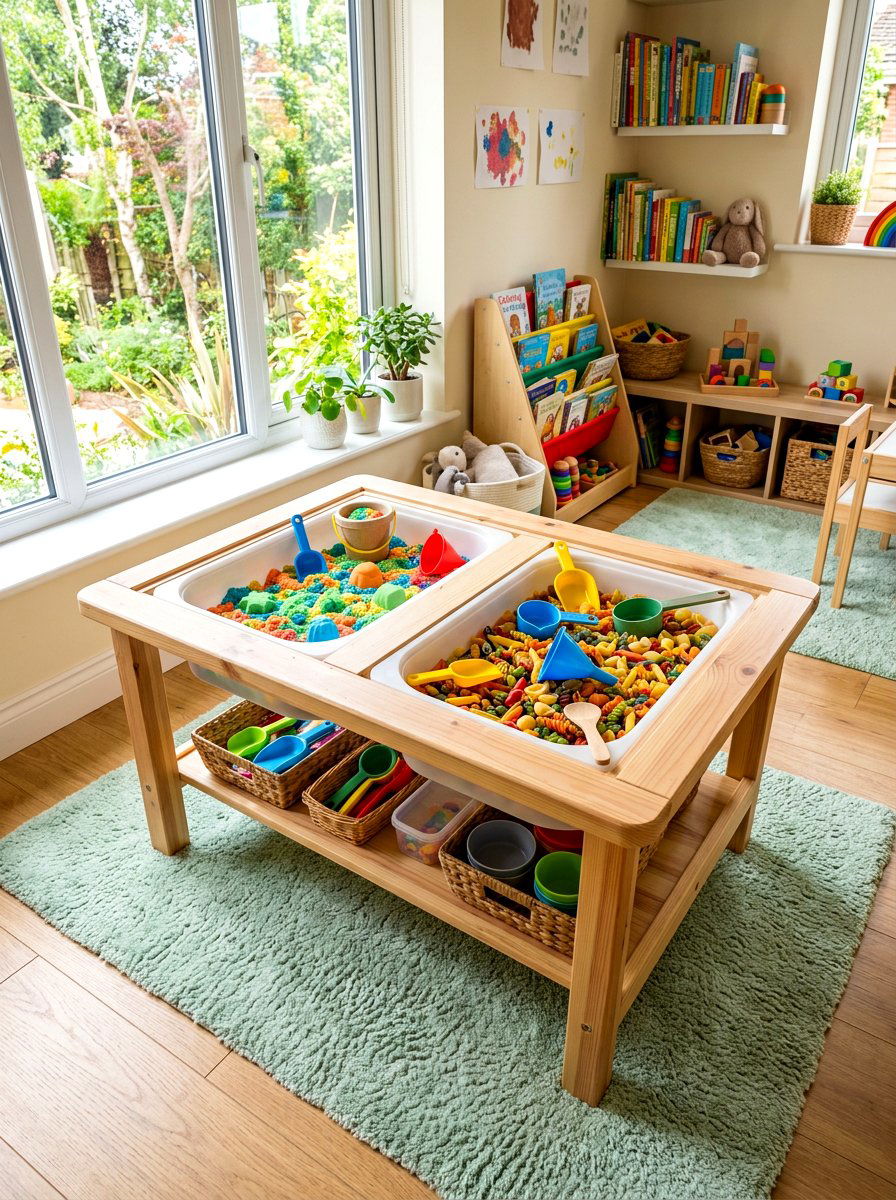
Does your child love digging through different materials to discover hidden treasures tucked away in the depths of a container? A sensory bin station involves a sturdy, child-height table equipped with removable bins filled with varying textures like dried beans, kinetic sand, or water beads. Each bin offers a unique tactile adventure that helps toddlers develop fine motor control as they scoop, pour, and sift through the materials. You can rotate the themes weekly to keep the experience fresh, using scoops, funnels, and small figurines to spark imaginative storytelling. This organized approach to "messy play" keeps the tactile exploration contained while providing endless hours of educational fun.
9. Large crash pad for jumping
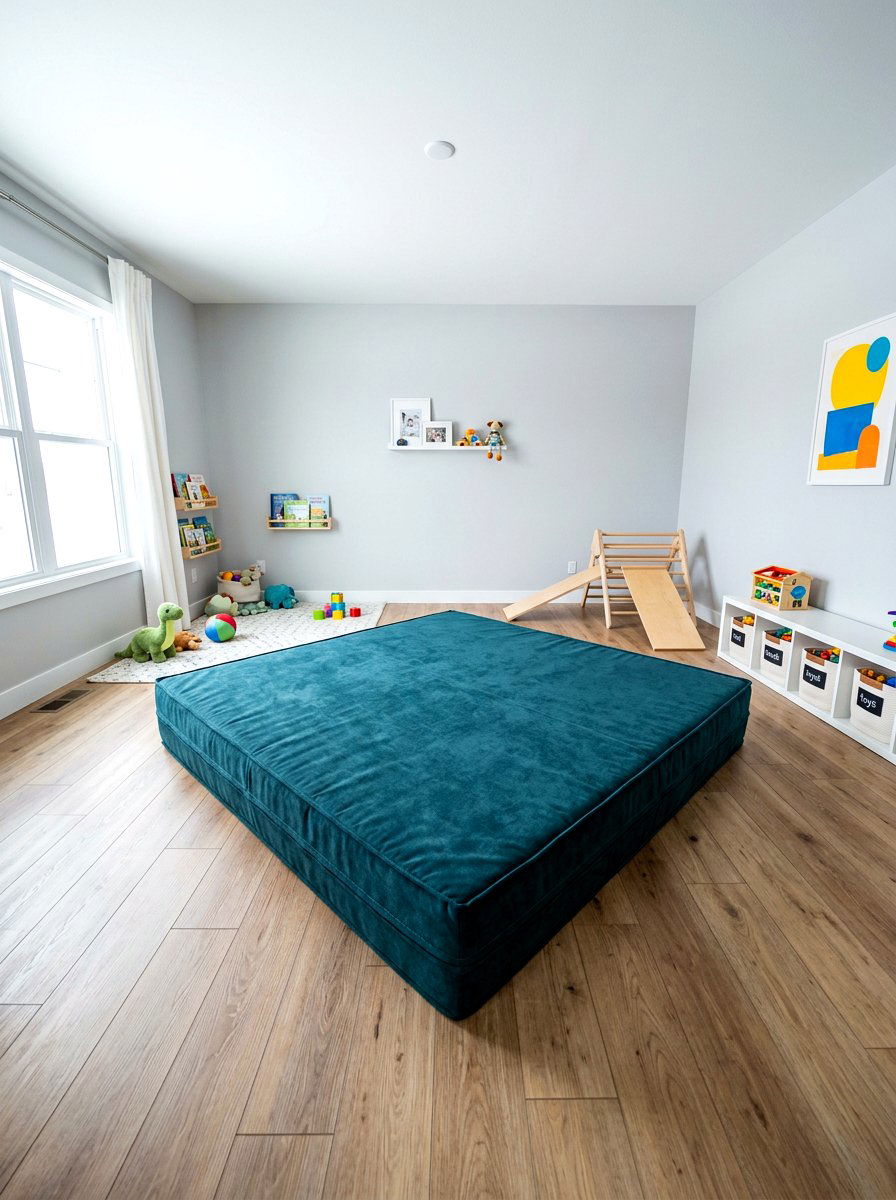
Providing a designated spot for high-impact landing is essential for children who seek intense proprioceptive input through jumping and crashing. A large crash pad is essentially a giant, foam-filled pillow encased in a durable, easy-to-clean vinyl or soft fabric cover that absorbs every impact. It creates a safe zone at the bottom of a slide or beneath a climbing wall, allowing kids to hurl themselves into the softness without risk of injury. The deep "squish" of the foam provides the heavy work their muscles crave, helping them regulate their energy levels. When play time is over, it serves as a incredibly comfortable spot for relaxing or reading.
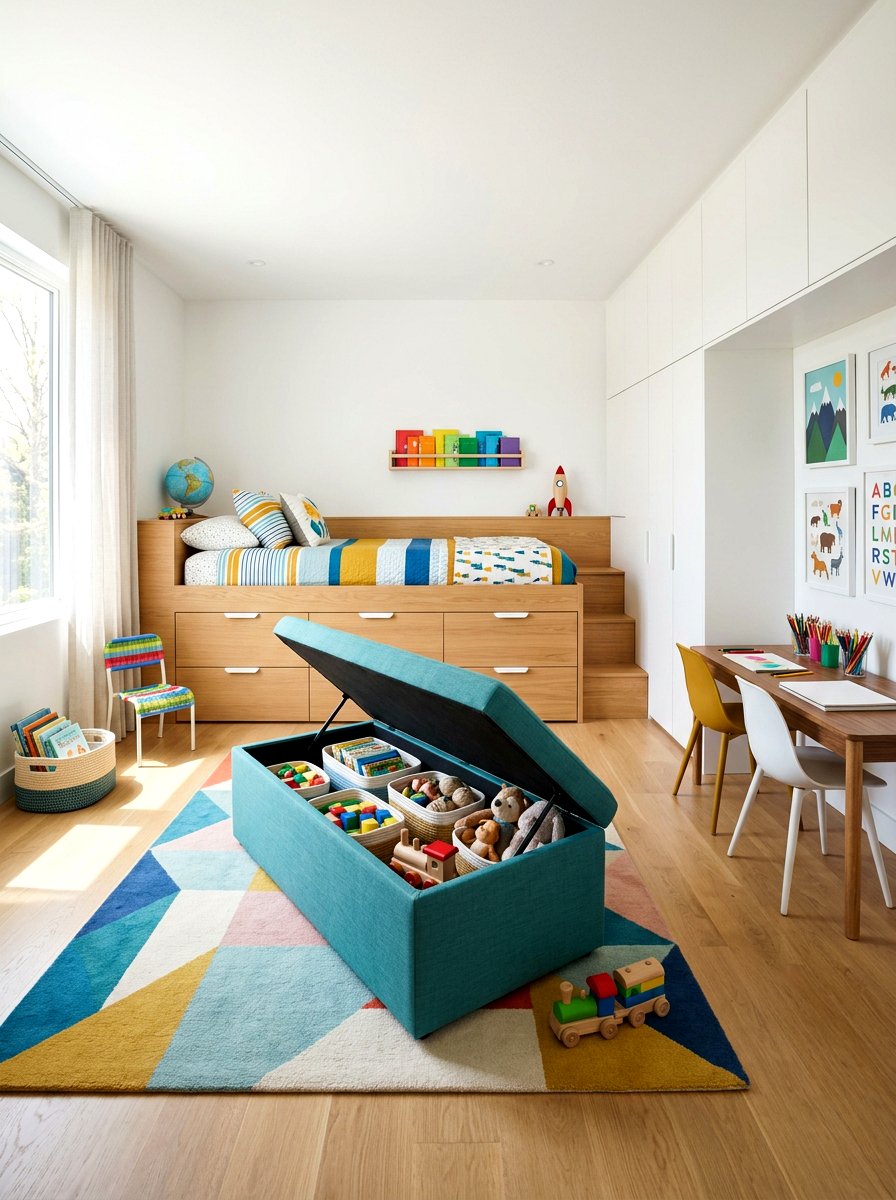
10. Fiber optic lighting for sensory room
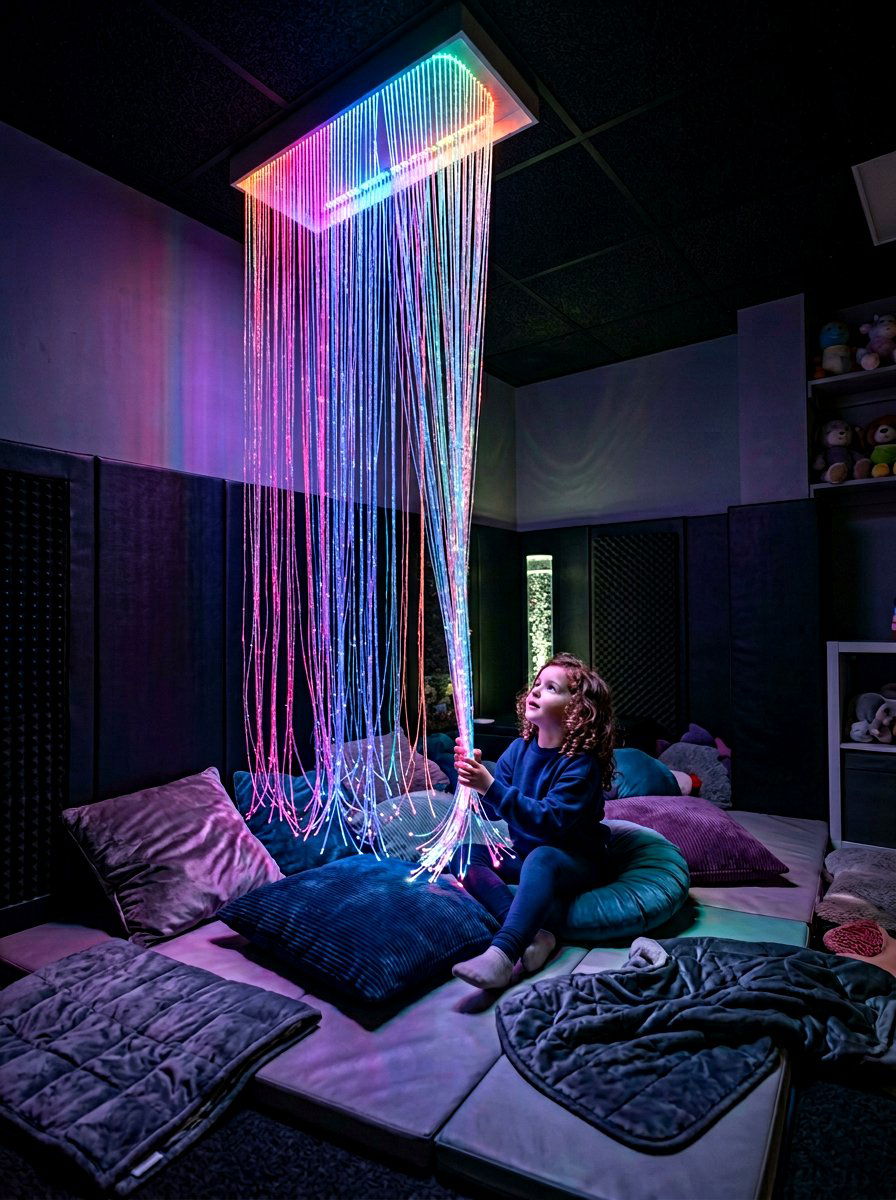
Imagine a cascading waterfall of glowing strands that a child can safely touch, hold, and wrap around their arms. Fiber optic lighting kits consist of a light source and dozens of long, plastic tails that carry light to the very tips without conducting any heat. These strands can be hung from the ceiling to create a glowing curtain or placed on the floor for up-close tactile and visual interaction. The slow color-changing effect is deeply mesmerizing and helps children transition from a high-energy state to a more relaxed mood. It adds a magical, ethereal quality to the playroom that feels both sophisticated and incredibly soothing for all ages.
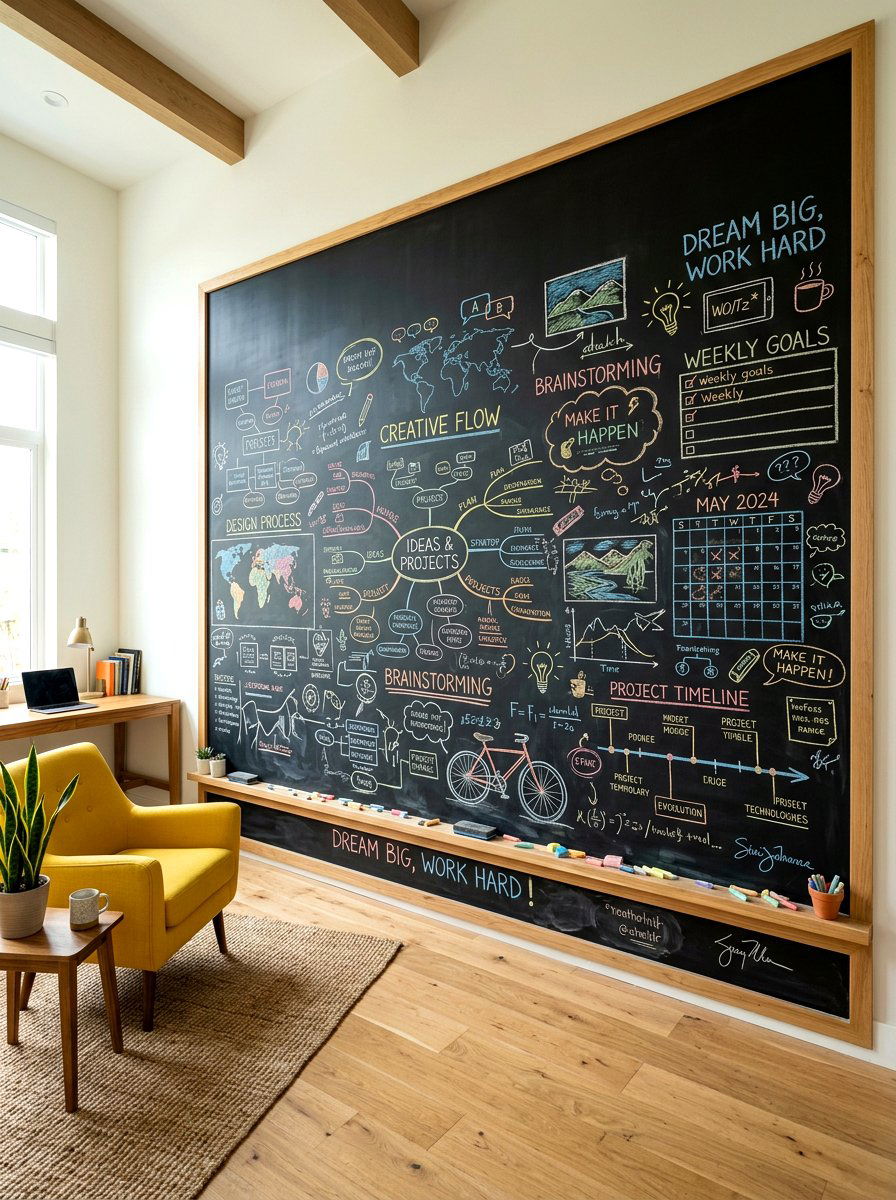
11. Full wall chalkboard
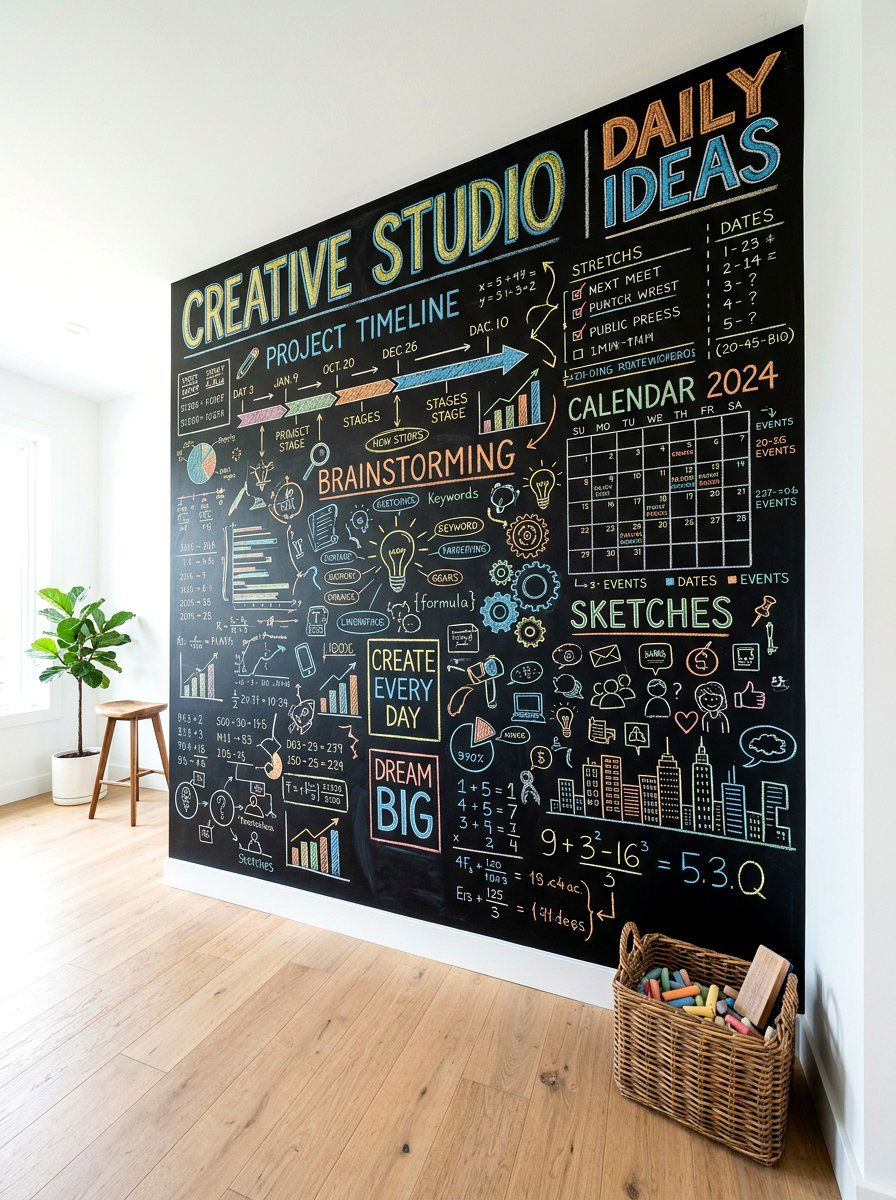
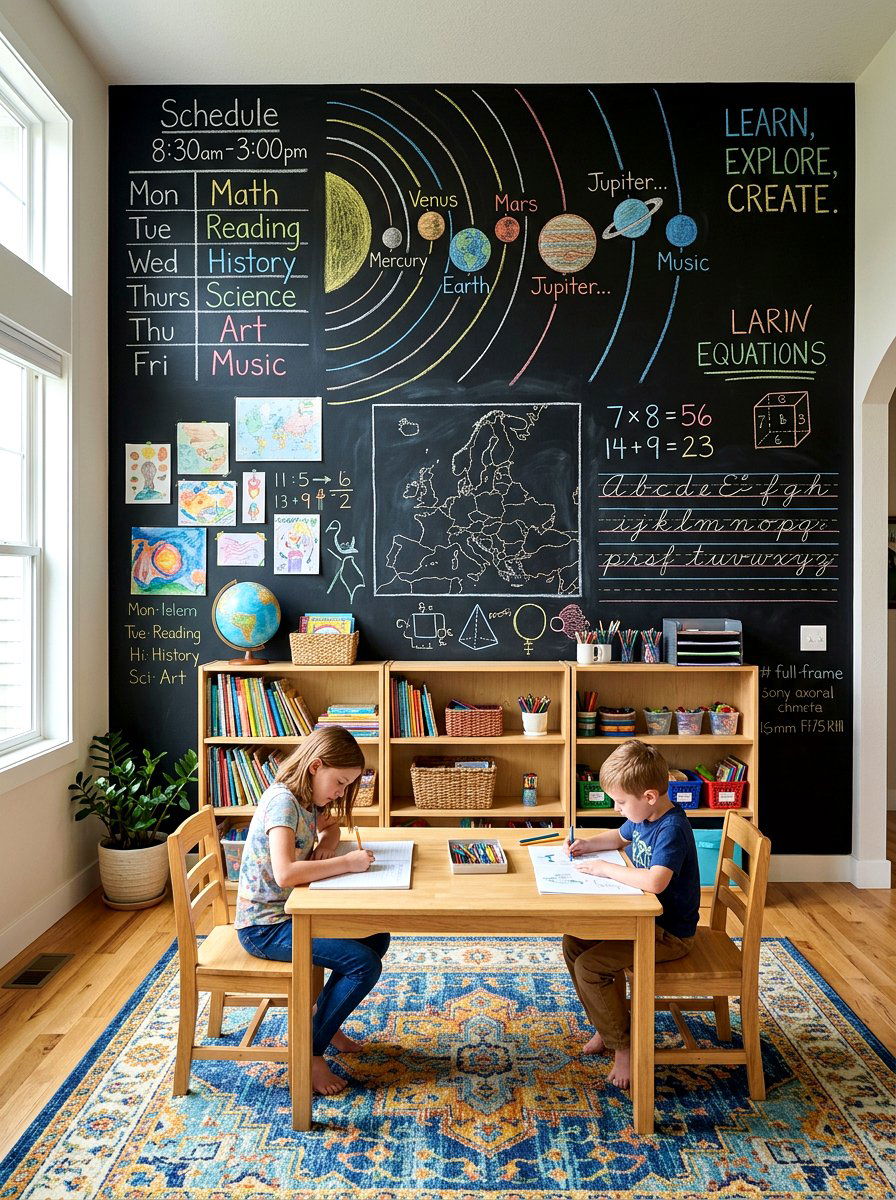
Transforming an entire section of the room into a giant chalkboard allows children to express their creativity on a massive scale. By using specialized matte black chalkboard paint, you create a permanent surface where kids can practice writing, drawing, and mural-making using chunky, colorful chalk. This vertical surface encourages large arm movements and helps develop the shoulder stability necessary for future handwriting tasks. It also serves as a functional backdrop for daily schedules or educational games that involve the whole family. The dusty texture of the chalk provides a specific tactile feedback that many children find satisfying, making art a truly sensory-rich experience throughout the day.
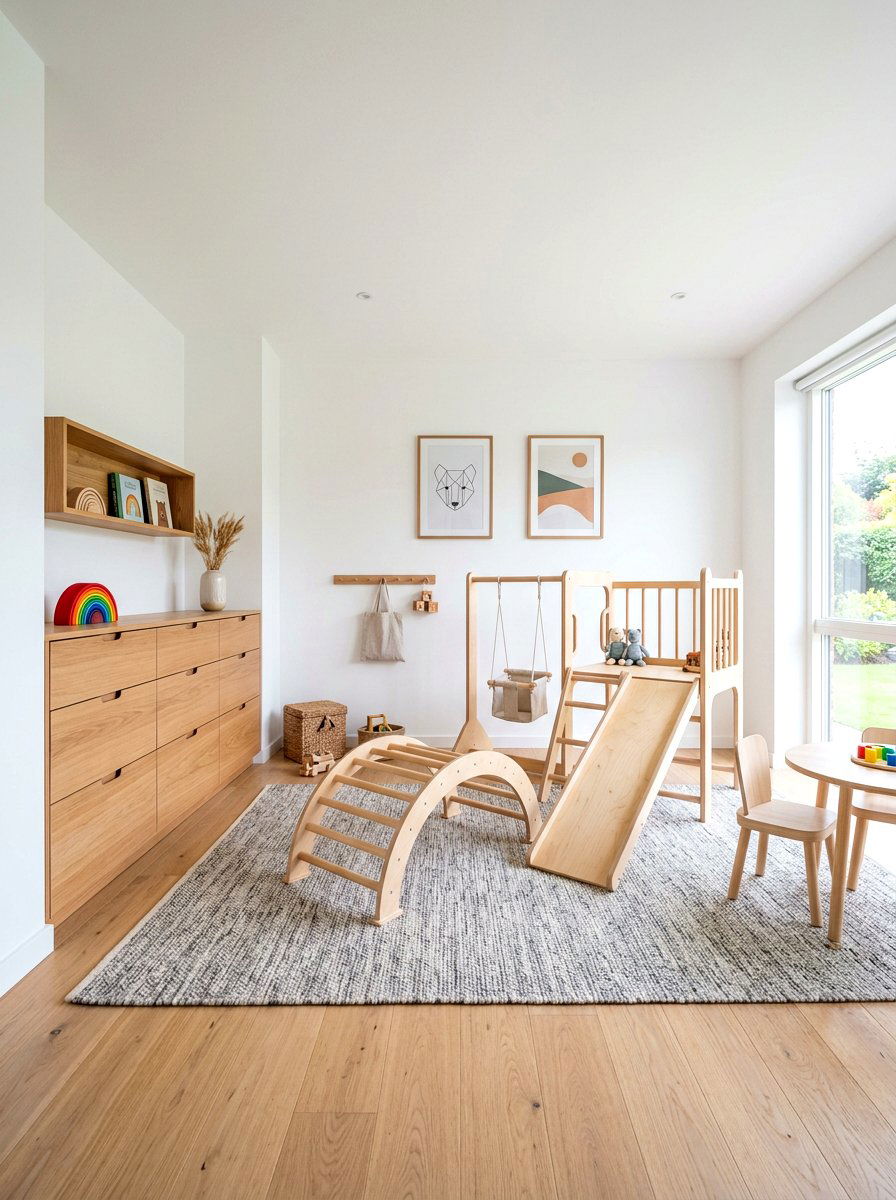
12. Indoor slide for toddlers
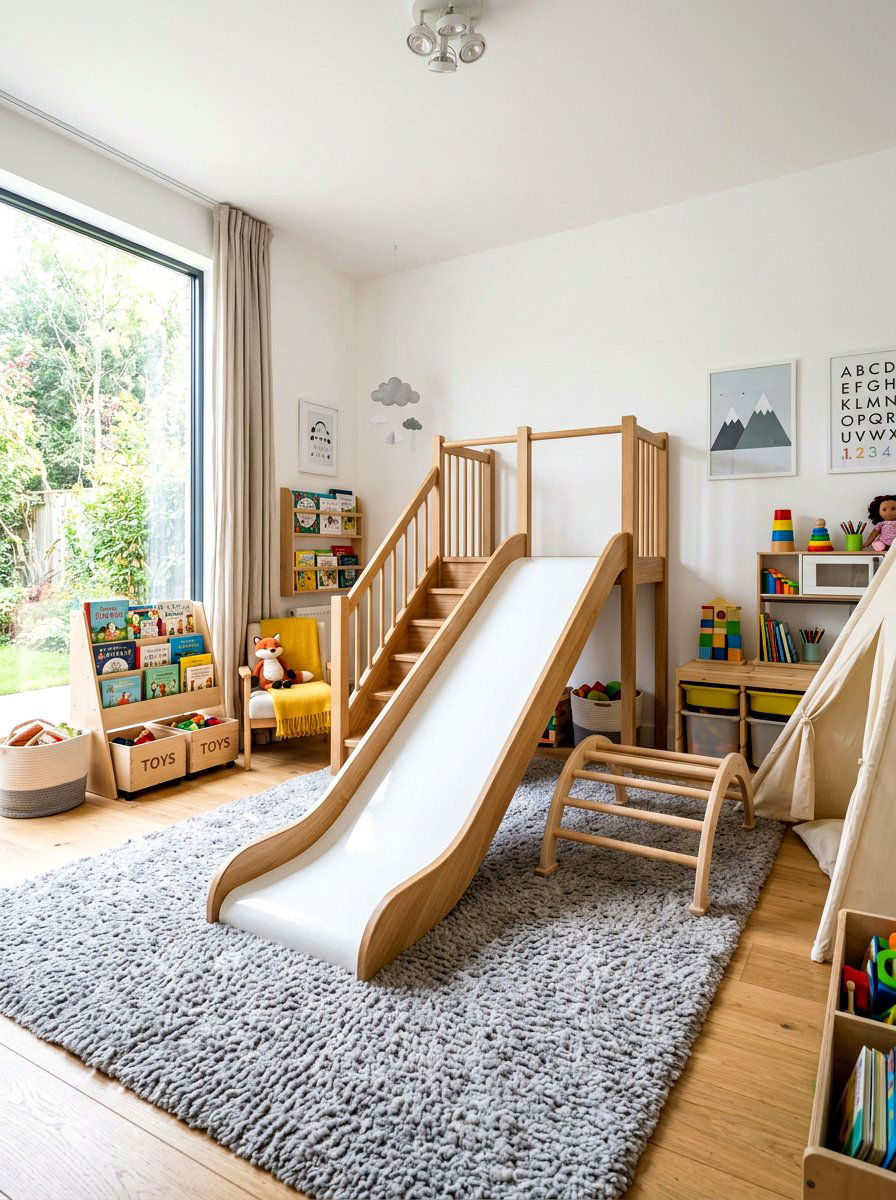
Integrating a sleek, modern slide into the playroom layout adds a thrilling element of movement that children can enjoy regardless of the weather outside. A wooden or high-quality plastic slide provides a consistent way for kids to practice climbing up and sliding down, which builds significant gross motor coordination. The physical sensation of speed and the slight "tummy flip" during the descent provide exciting vestibular stimulation that many children actively seek. To ensure a safe landing, you can position the slide so it ends on a soft rug or a dedicated crash pad. It anchors the room’s design, creating an instant focal point for active and energetic play sessions.
13. Wooden balance beam for kids
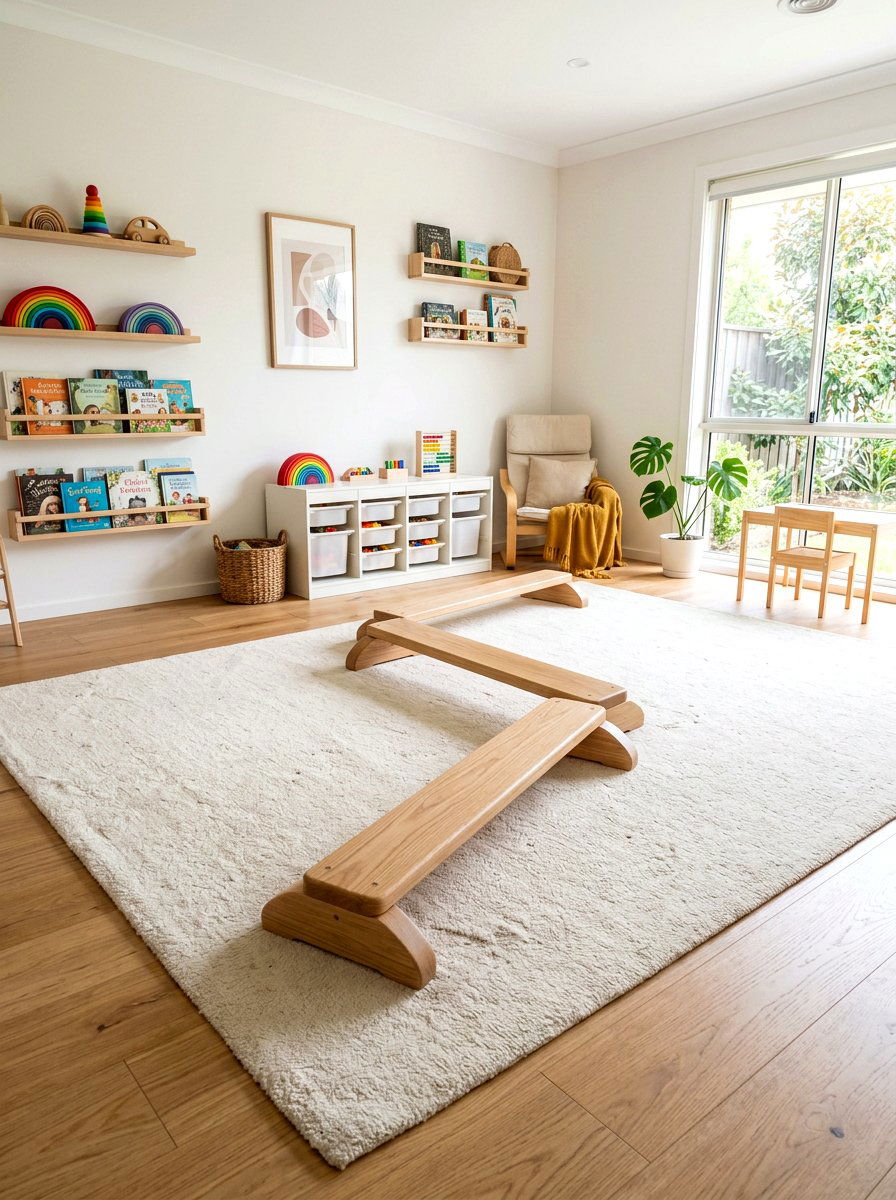
Walking across a narrow, elevated surface requires a surprising amount of focus, core strength, and physical coordination for a developing child. A wooden balance beam can be a permanent fixture or a modular set that allows you to create different shapes and paths across the playroom floor. This simple piece of equipment helps children master their sense of balance while providing a low-stakes challenge that builds their physical self-confidence. You can incorporate the beam into a larger obstacle course, encouraging kids to navigate the space in creative ways. The smooth, natural texture of the wood also adds a beautiful, organic element to the overall interior design of the space.
14. Tactile sensory wall panel
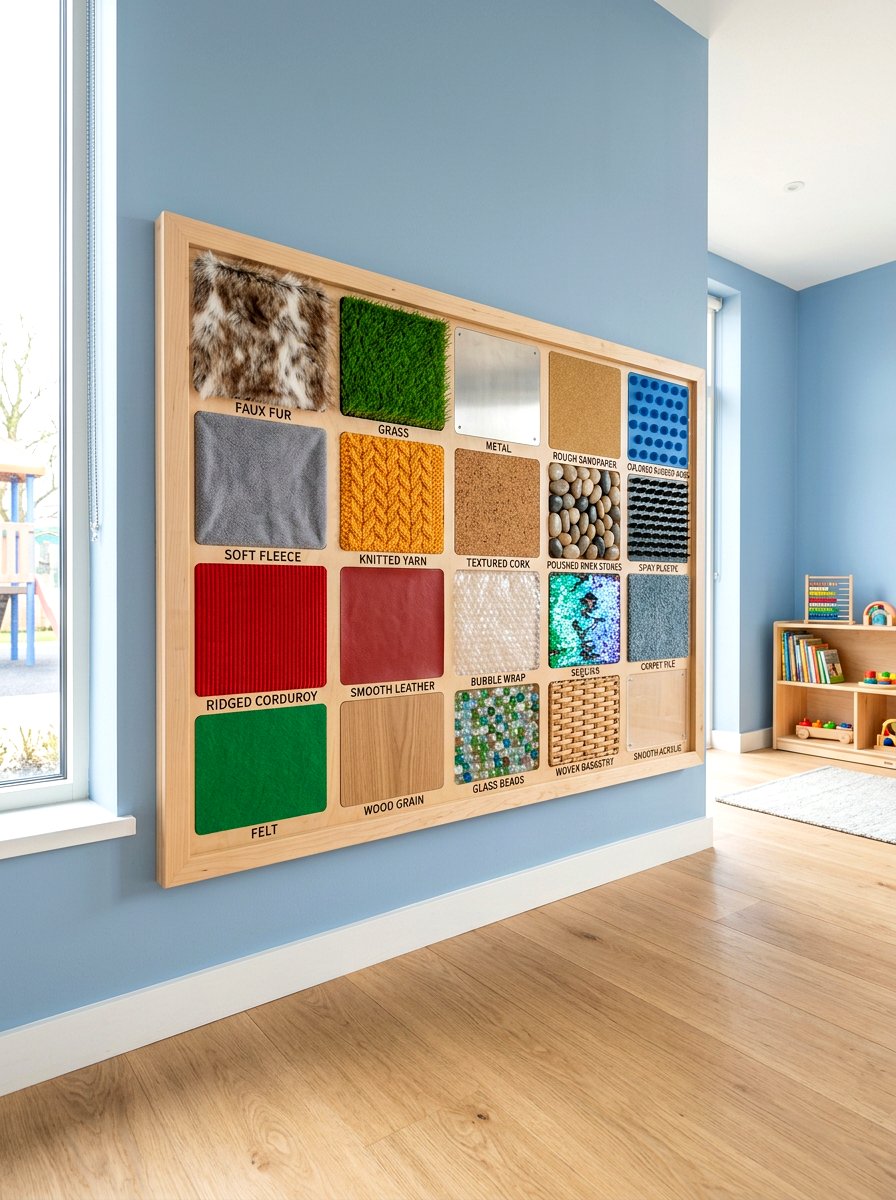
Why limit exploration to toys on the floor when the walls can offer a rich tapestry of textures for little hands to discover? A tactile sensory wall panel features a variety of materials like faux fur, rough sandpaper, smooth metal, soft sponges, and clicky switches all mounted at a child's eye level. As children move along the wall, they experience a wide range of sensations that help them process different tactile inputs and improve their sensory vocabulary. These panels are particularly useful for keeping busy hands engaged while a child is standing, promoting better posture and focus. You can easily customize the panels with household items to match your child’s preferences.


15. Dark sensory play tent
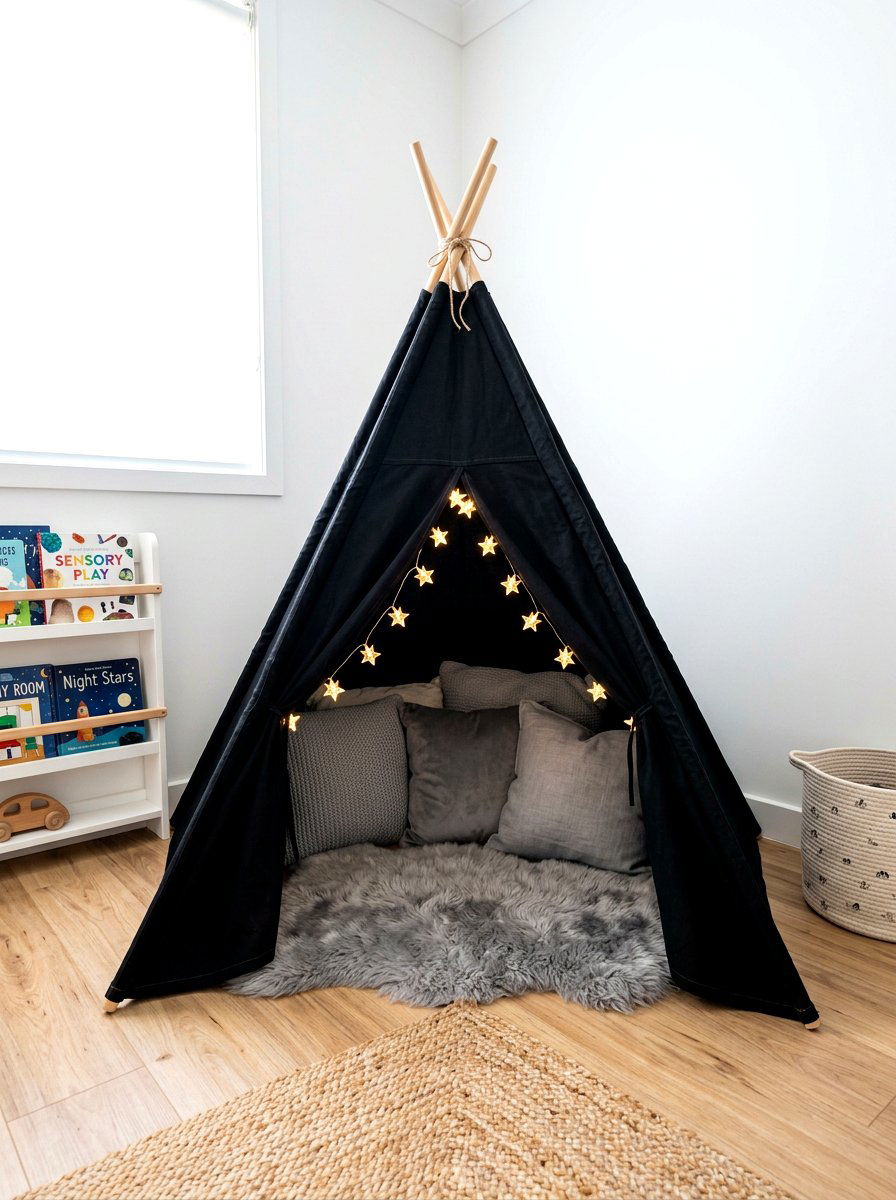
Sometimes the best way to process a busy day is to retreat into a dark, quiet space where the outside world completely disappears. A dark sensory play tent is a blackout fabric structure that blocks out overhead lights, creating a controlled environment for light-up toys and projectors. Inside, you can add glow-in-the-dark stars, fiber optic lamps, or a small galaxy projector to create a private mini-universe. This cozy nook provides a "safe zone" for children who feel overstimulated by bright lights or loud noises, allowing them to self-regulate in peace. It’s a perfect addition for a corner, filled with soft pillows and a weighted blanket for comfort.
16. Acrylic mirror wall for kids
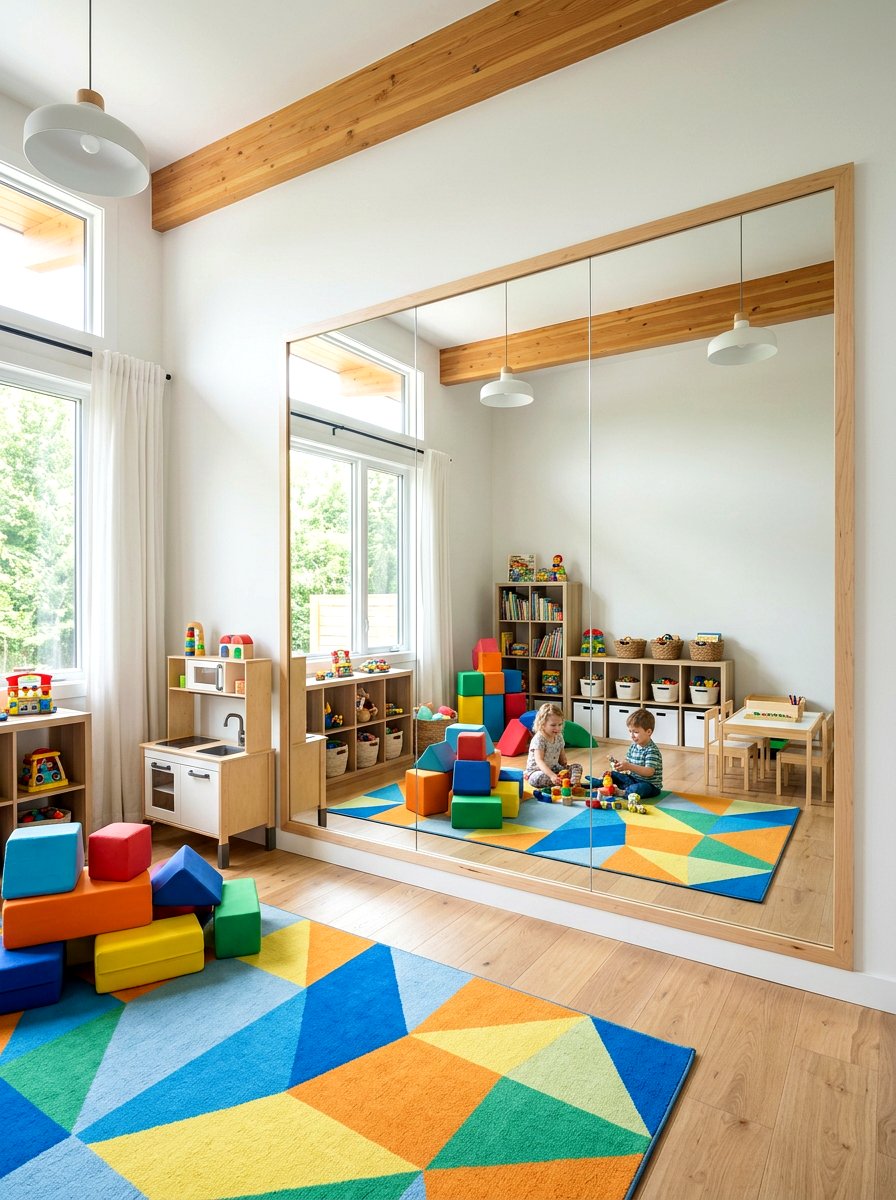
Installing a large, shatterproof acrylic mirror on one wall of the playroom can dramatically change how a child perceives themselves and the space around them. Mirrors are incredible tools for developing body awareness, as children can see their own movements in real-time while they dance, jump, or make faces. For younger children, a mirror wall encourages tummy time and social interaction with their own reflection, which helps with early cognitive development. The reflective surface also bounces light around the room, making a small playroom feel much larger and brighter. It is a simple yet highly effective way to add visual depth and a sense of wonder to the environment.
17. Hanging hammock chair
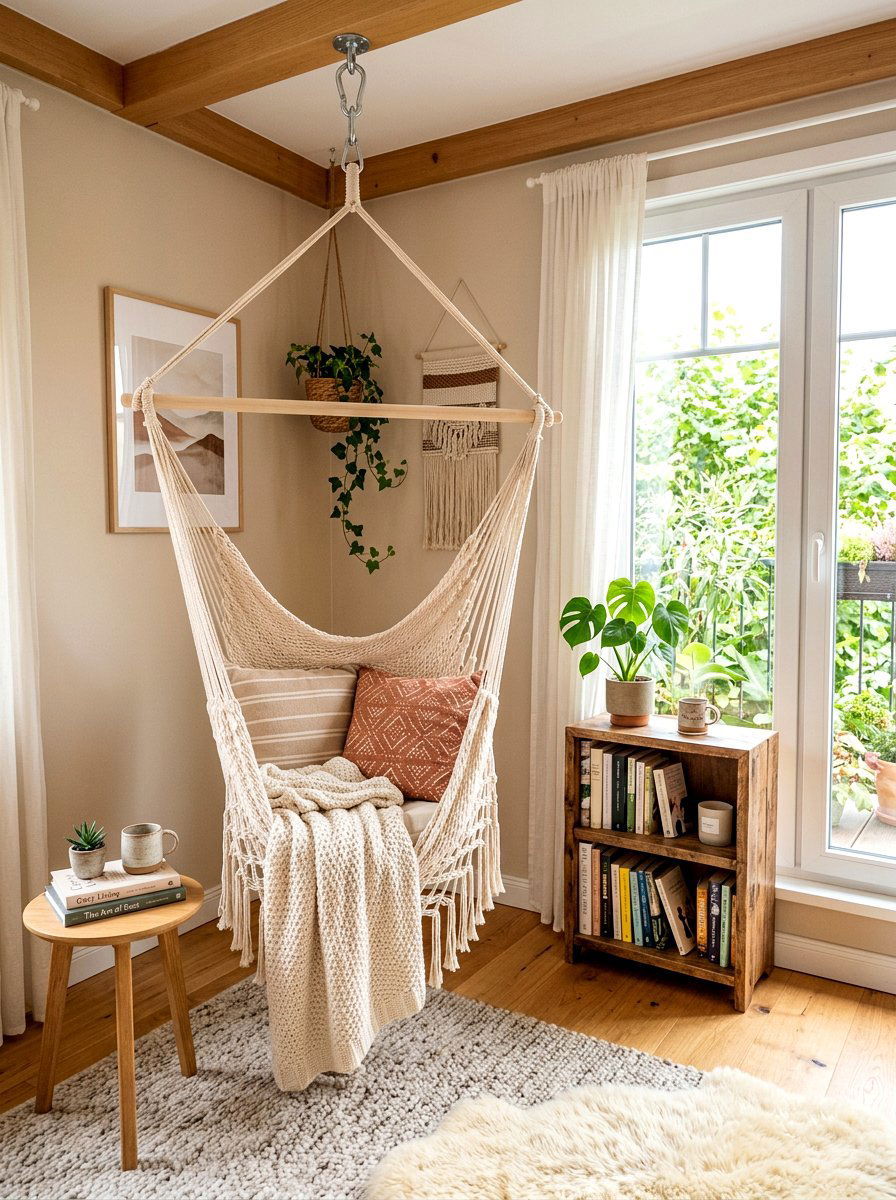
There is something uniquely comforting about being suspended in the air while gently swaying back and forth in a soft, fabric seat. A hanging hammock chair provides a cozy, enclosed space that offers deep pressure to the sides of the body, creating a secure "cocoon" effect. This type of seating is perfect for children who enjoy a rhythmic motion to help them focus while reading a book or listening to music. Because it only requires a single mounting point, it can be easily tucked into a corner without taking up much floor space. It adds a whimsical, relaxed vibe to the room that invites children to slow down and rest.
18. Interactive sound wall for kids
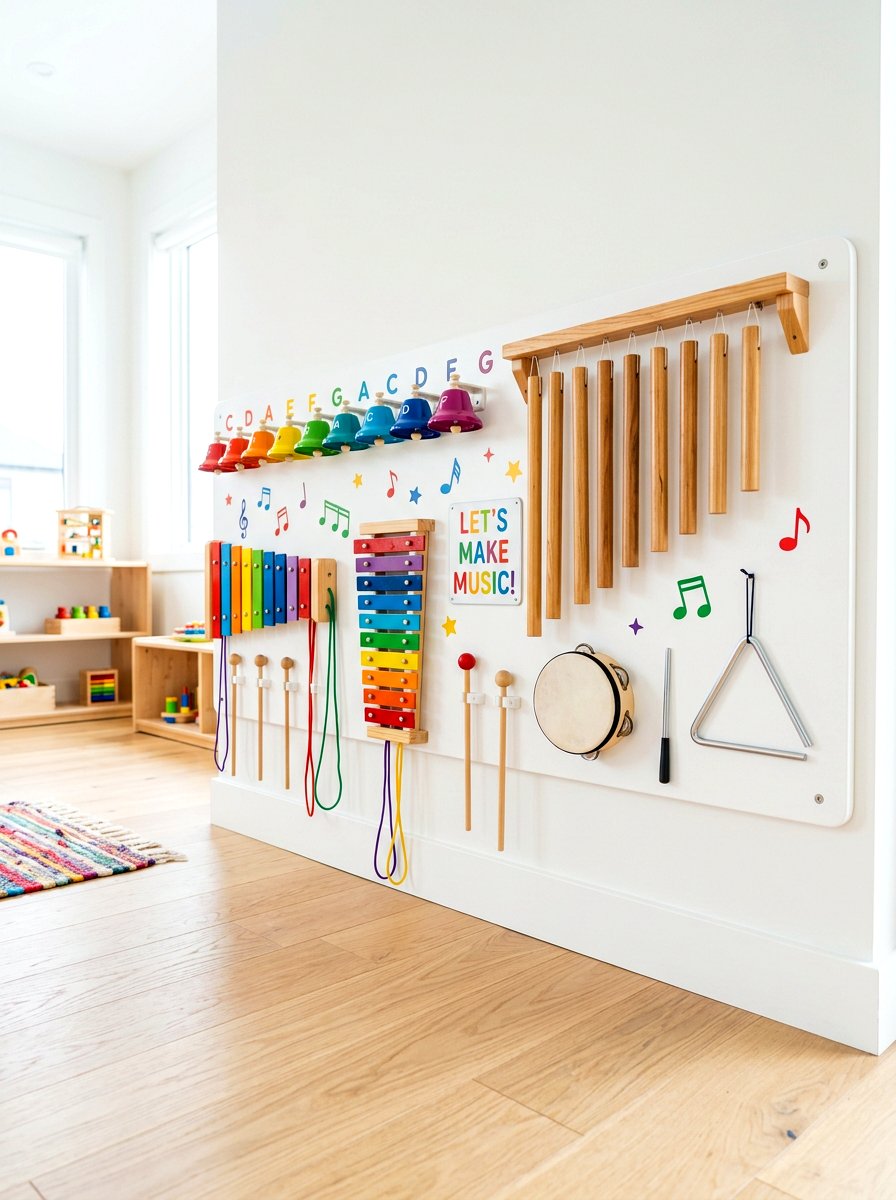
Can you imagine a wall that sings, whistles, and hums every time your child reaches out to touch its various musical components? An interactive sound wall features mounted instruments like xylophones, chimes, bells, and even DIY rainsticks made from PVC pipes and beads. As children explore the wall, they learn about cause and effect while developing an appreciation for different auditory tones and rhythms. This vertical musical station encourages auditory processing and can be a great way for children to express their emotions through sound. By using different materials, you can create a wide range of volumes, ensuring the noise stays at a comfortable level for the household.
19. Balancing stepping stones for kids
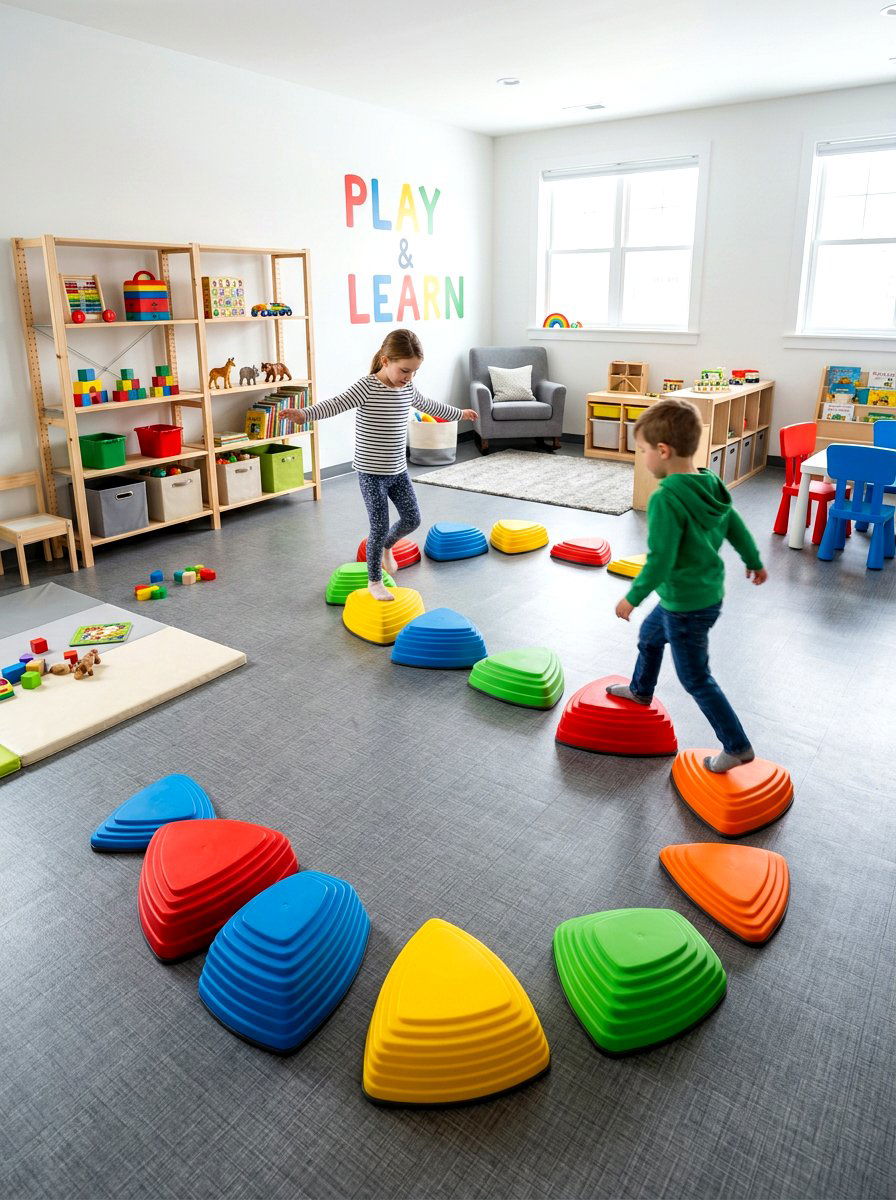
Creating a dynamic path across the room using colorful, textured stepping stones turns the floor into a fun and challenging "lava" game. These stones come in varying heights and slopes, forcing children to adjust their footing and balance with every step they take. The surfaces often feature different patterns like bumps or ridges, providing a gentle foot massage that offers tactile feedback through the soles of the feet. This activity is excellent for developing spatial awareness and improving the strength of the muscles in the feet and legs. Because they are lightweight and stackable, you can easily clear them away when the playroom needs to be used for other activities.
20. Large pegboard for playroom
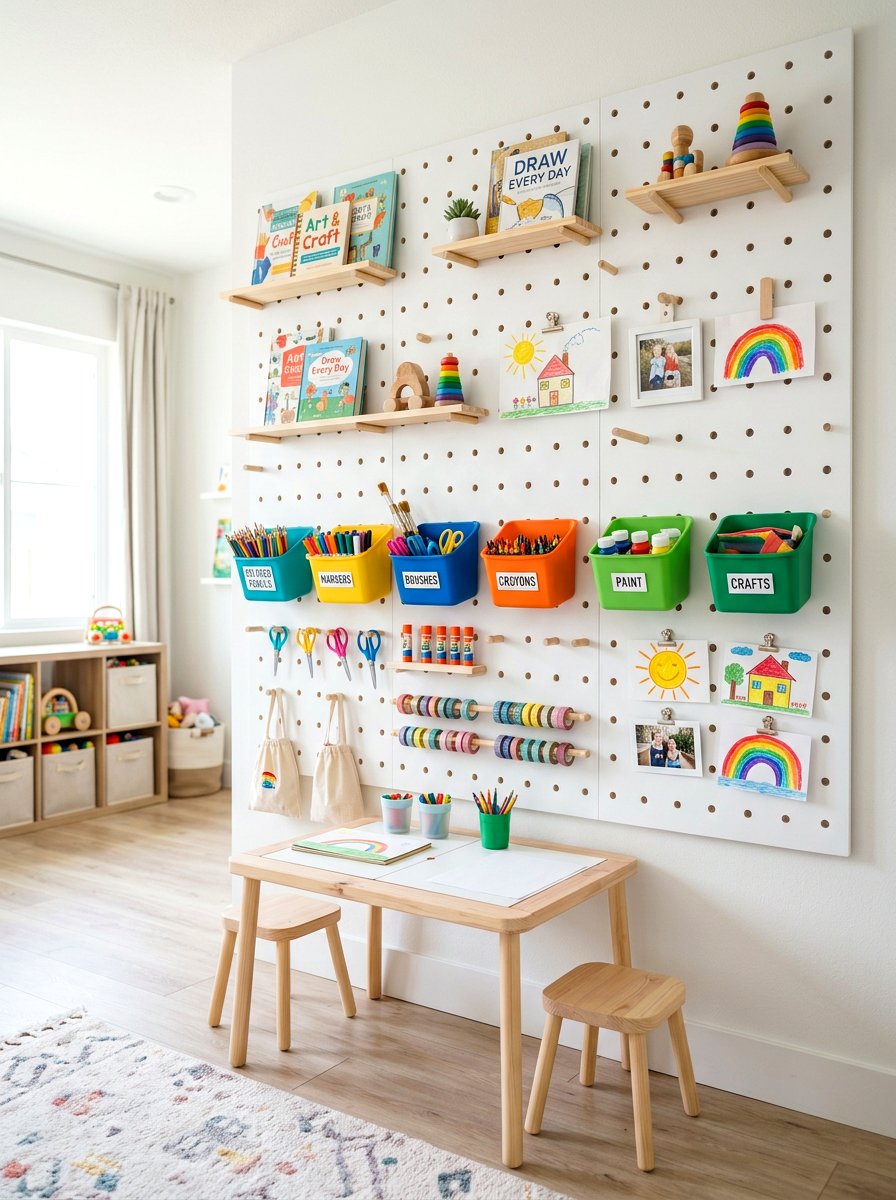
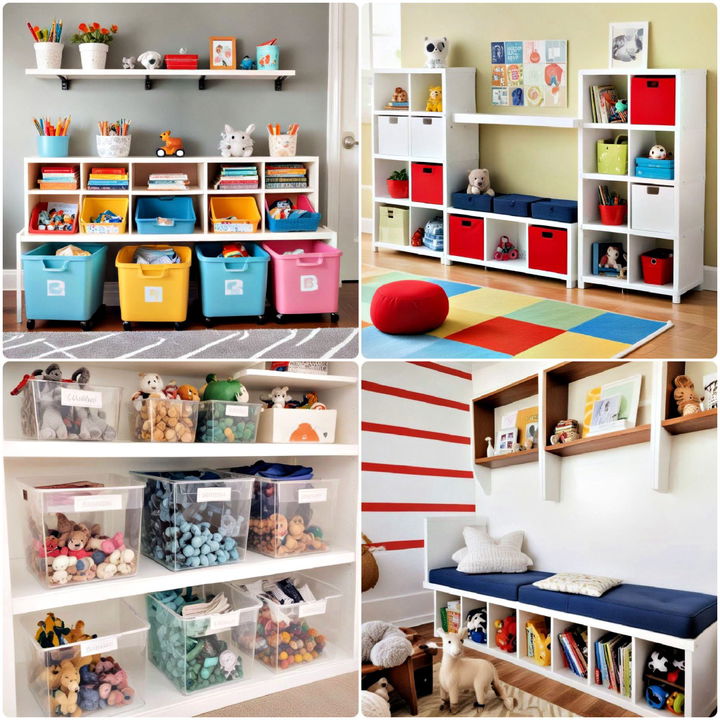
A large, wall-mounted pegboard is the ultimate modular storage and play solution for a busy, ever-changing sensory environment. You can use colorful pegs to create intricate patterns, hang bins filled with sensory toys, or even build a custom vertical water wall using tubes and funnels. This setup allows you to easily rotate toys and equipment, keeping the playroom fresh and engaging without the need for new furniture. Children enjoy the fine motor challenge of pushing the pegs into the holes, which strengthens their fingers and improves their precision. It’s a clean, organized way to display art supplies and tools while keeping them within easy reach of little hands.
21. Soft play foam block
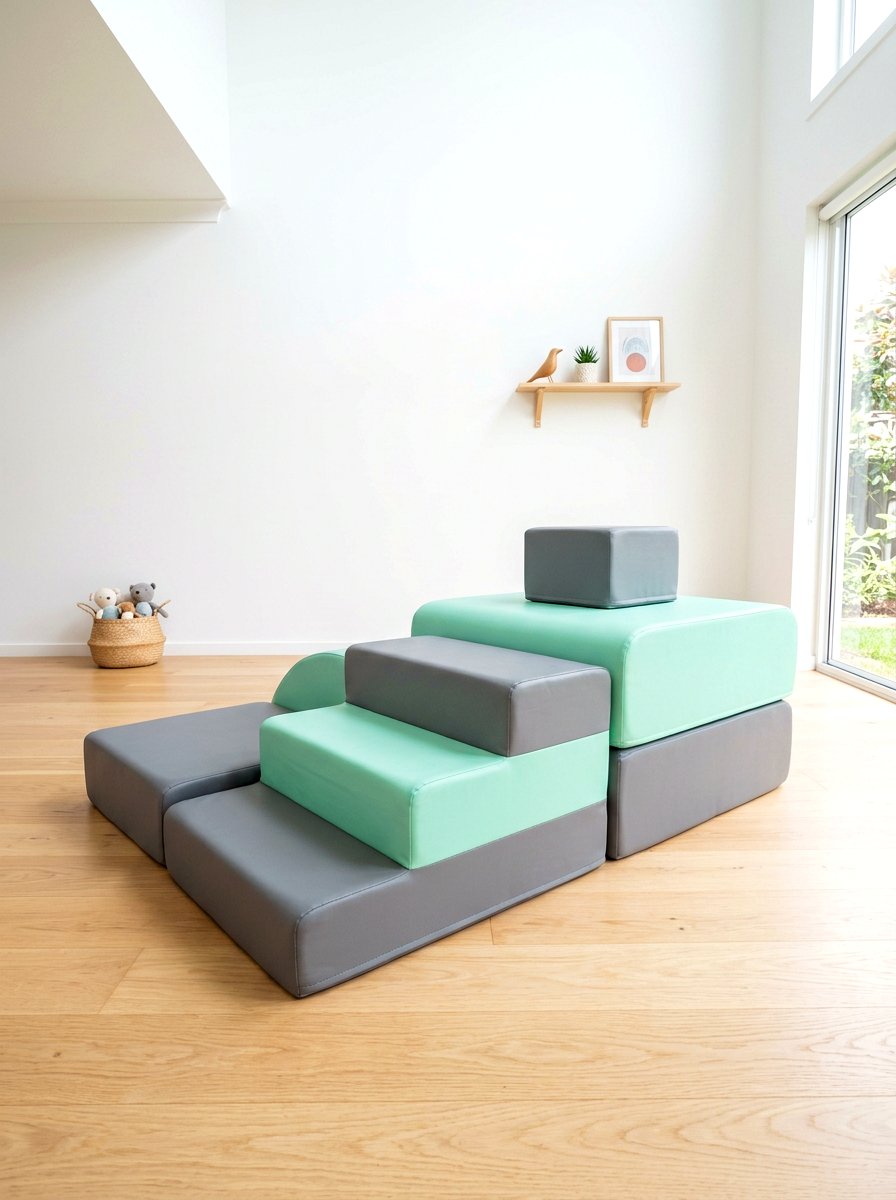
Building giant towers and then knocking them down is a classic childhood joy that provides endless opportunities for physical and creative play. Soft play foam blocks are lightweight, oversized shapes covered in colorful vinyl that children can stack, climb, and arrange into imaginative forts. Because they are soft, there is no risk of injury if a tall tower happens to tumble over during a particularly enthusiastic building session. These blocks encourage gross motor skills as children lift, carry, and balance the different pieces to create their own custom landscapes. They are incredibly versatile and can be used to create stairs, tunnels, or comfortable seating areas throughout the playroom.
22. LED ceiling cloud light
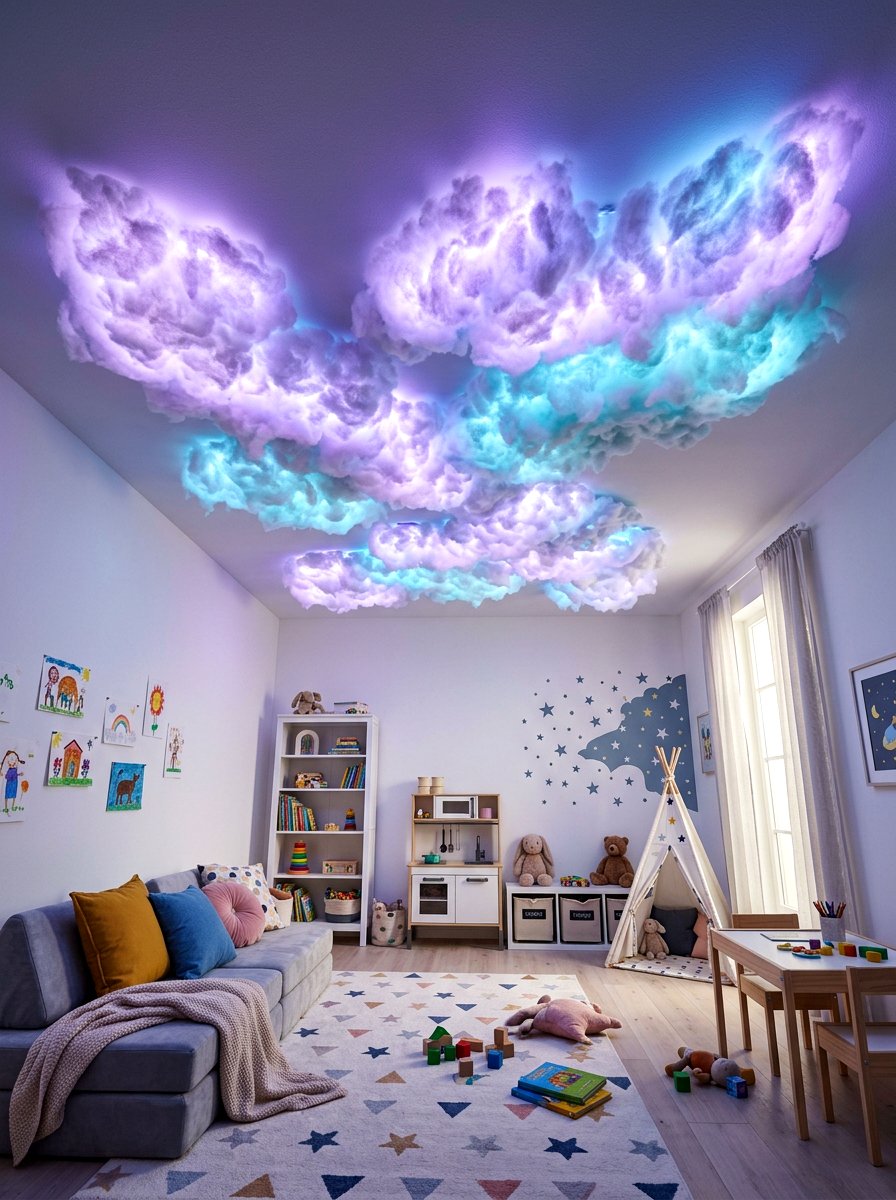
Transforming a standard ceiling into a dreamy, glowing sky can turn a regular playroom into a magical and calming wonderland. LED ceiling cloud lights are often made from soft, cloud-shaped diffusers or DIY cotton batting that hides color-changing LED strips. When turned on, the "clouds" glow with a soft, ethereal light that can simulate a sunset, a thunderstorm, or a clear blue sky. This overhead feature provides gentle ambient lighting that is much less harsh than standard fluorescent bulbs, making the room feel more inviting and less clinical. It’s a stunning visual centerpiece that encourages children to lay back on the floor and gaze upward in quiet relaxation.
23. Collapsible sensory play tunnel
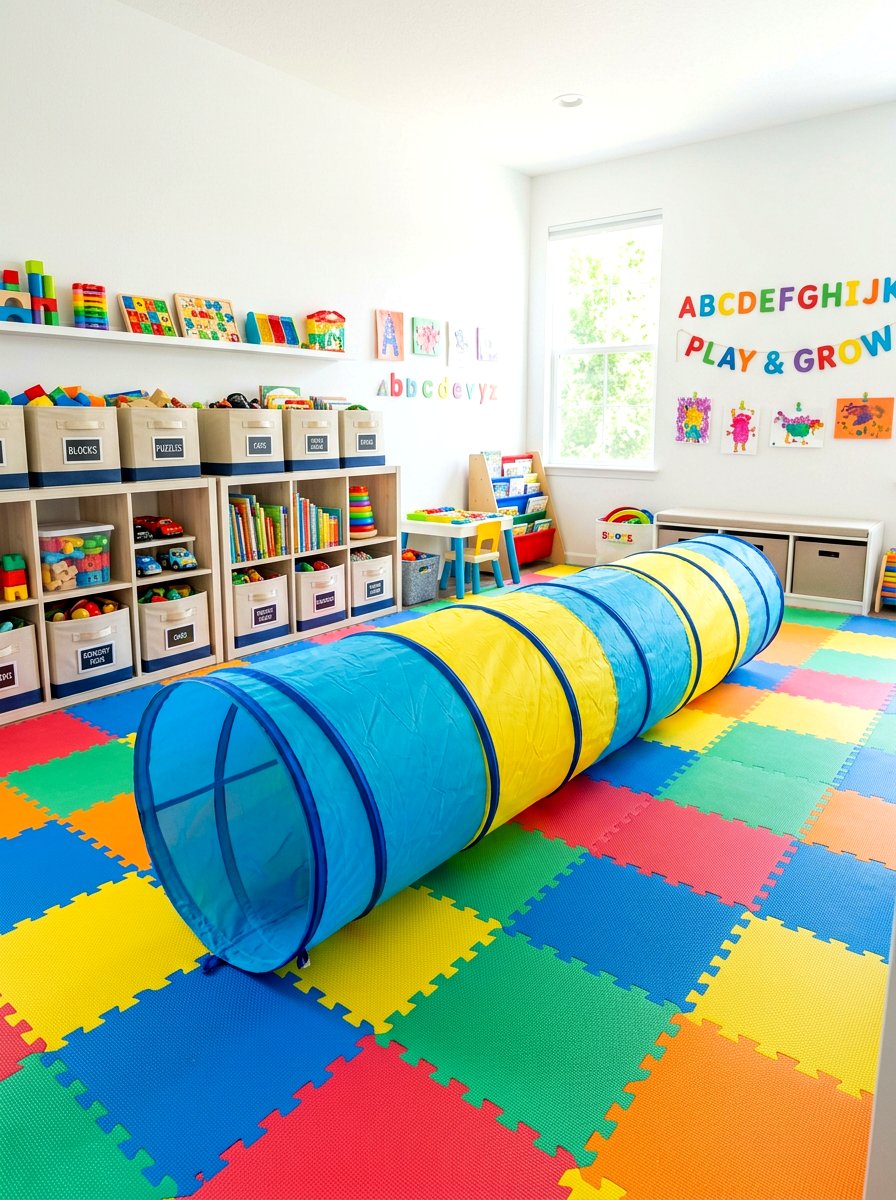
Crawling through a long, dark tunnel provides a unique form of proprioceptive input as children feel the fabric pressing against their shoulders and knees. A collapsible sensory play tunnel is an easy addition to any playroom that can be popped open for an afternoon of fun and tucked away in a closet when finished. It encourages "heavy work" and bilateral coordination as children navigate the narrow passage to reach the other side. You can place different textures inside the tunnel or cover it with blankets to make it even darker and more challenging. It’s a simple tool that promotes motor planning and provides a fun, physical way to move through the space.
24. Large lego wall station
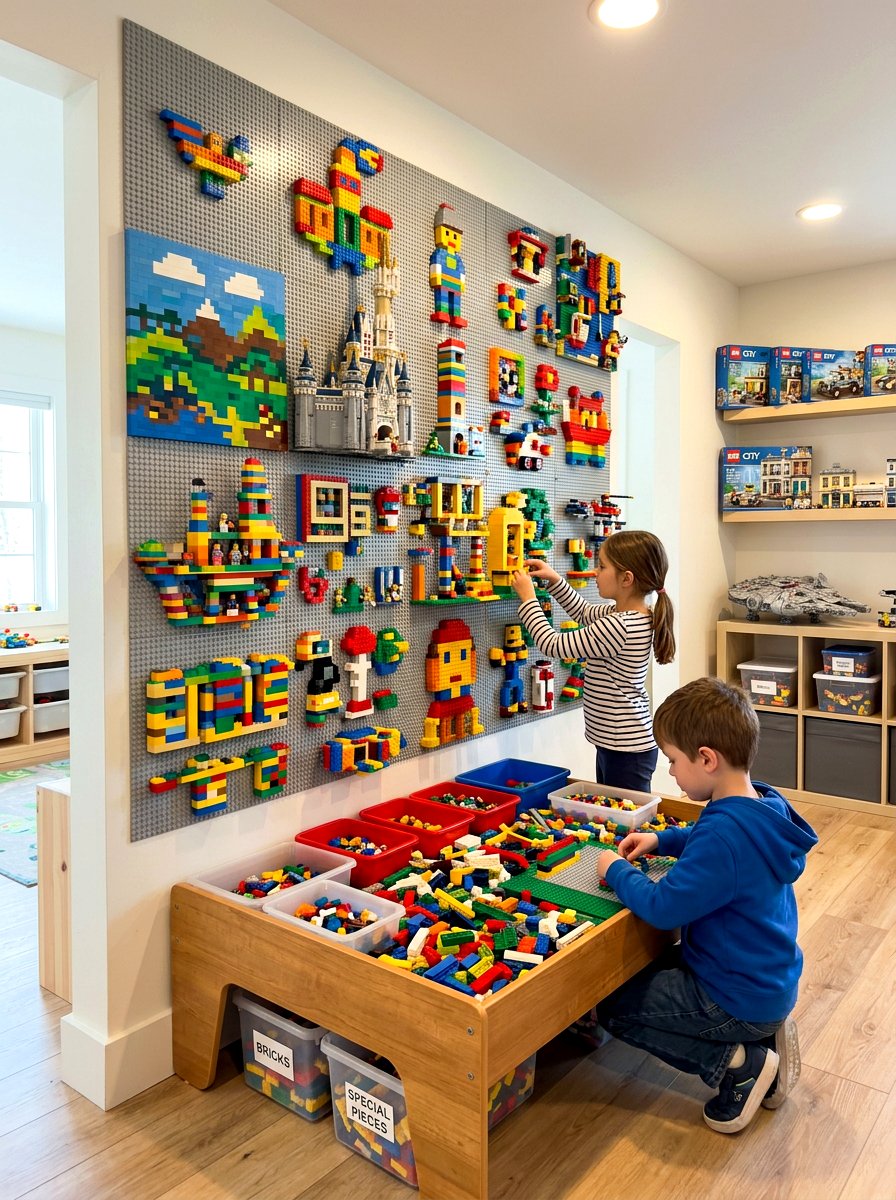
Every young builder dreams of a space where their creations can defy gravity and stay perfectly in place on a vertical surface. A large Lego wall station is created by mounting several baseplates to a sturdy wall panel, allowing children to build outward rather than just upward. This setup keeps thousands of tiny bricks off the floor and provides a dedicated area for long-term projects that won't be accidentally knocked over. Building on a vertical surface challenges a child’s spatial reasoning and encourages them to stand while they work, which is great for their overall physical posture. It’s a neat, organized, and highly engaging feature for any modern creative playroom.
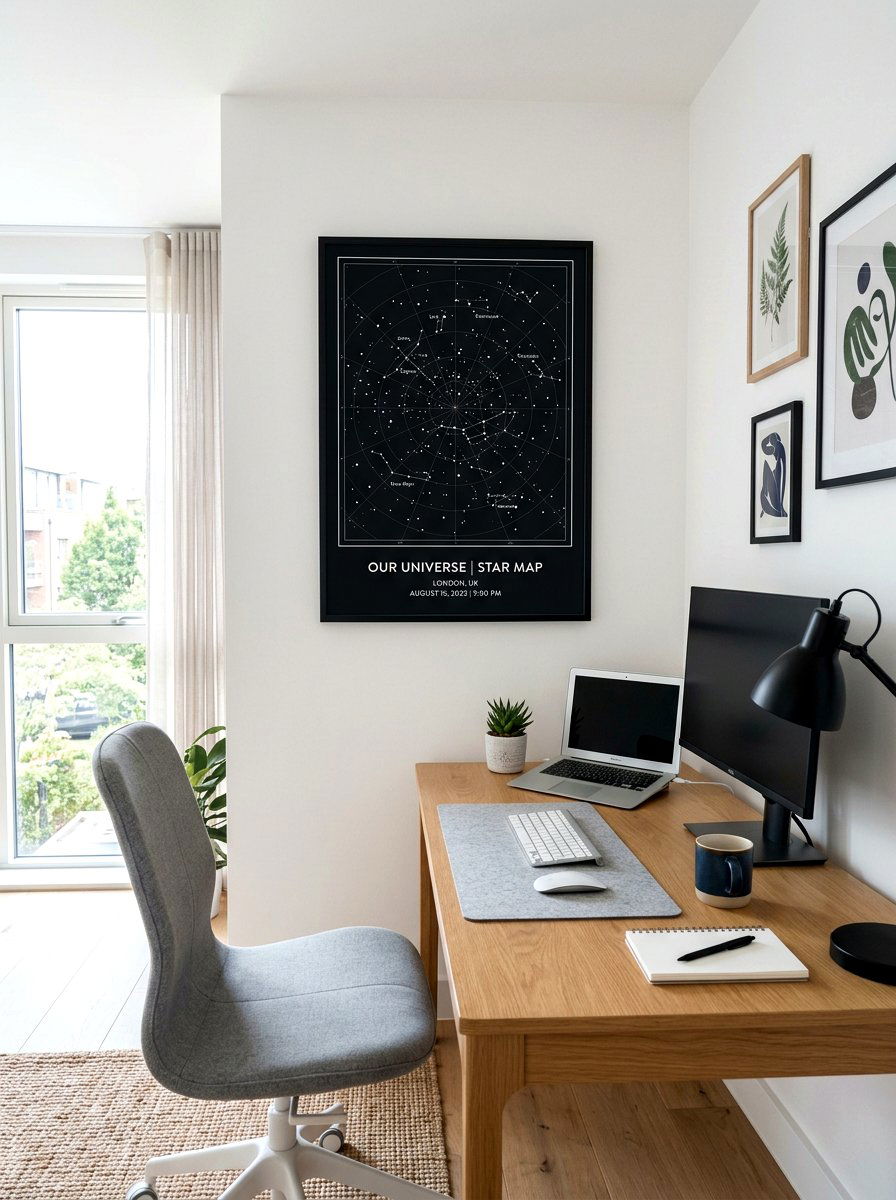
25. Kids art station table
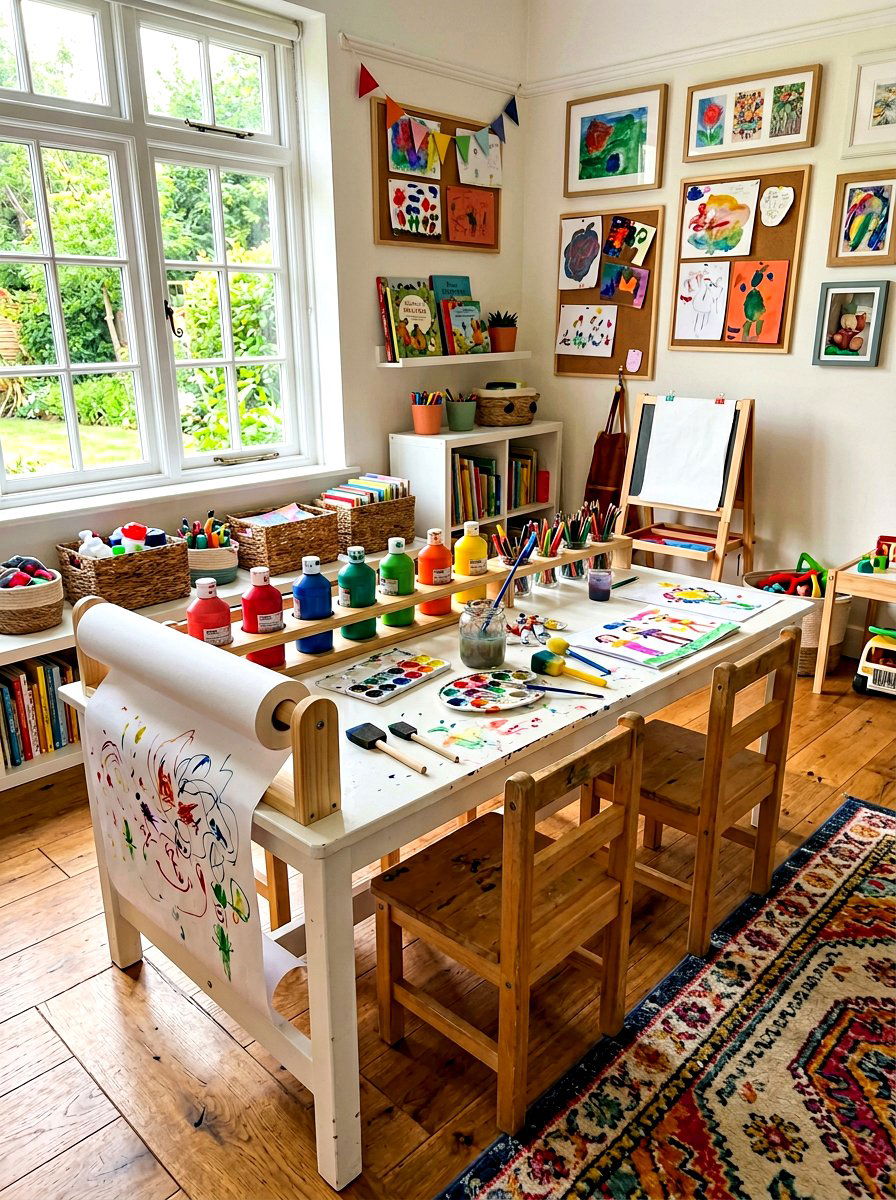
Providing a dedicated space for messy creativity allows children to explore different mediums like paint, clay, and markers without the fear of damaging furniture. A high-quality kids art station usually features a large, easy-to-clean tabletop, built-in storage for supplies, and perhaps a roll of paper that can be pulled across the surface. This organized environment helps children focus on their artistic process, fostering self-expression and fine motor development. You can include different seating options like stools or even a standing desk height to accommodate different preferences. Having all their tools in one place encourages independence, as children can start and clean up their own projects with minimal adult assistance.
26. Indoor monkey bars for kids
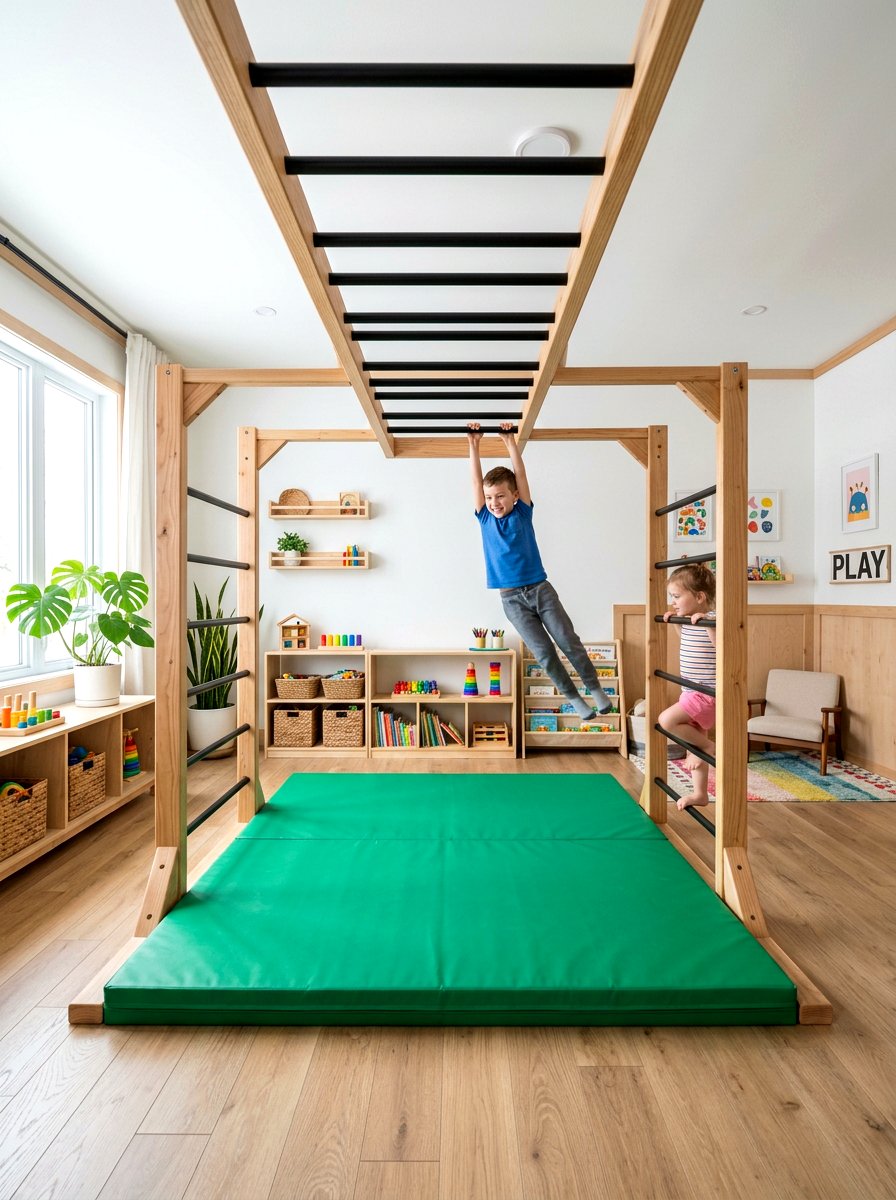
For children who have a constant need to hang, swing, and climb, installing indoor monkey bars can be a life-changing addition to their playroom. These bars are typically mounted to a sturdy wooden frame or directly into ceiling joists, providing a safe way to build incredible upper body strength and grip. Swinging from bar to bar requires complex motor planning and a great deal of physical determination, which boosts a child's sense of accomplishment. You can place soft mats or a crash pad underneath to ensure every drop is a safe one. It’s a high-energy feature that turns the playroom into a mini-gym, perfect for burning off extra steam indoors.
27. Weighted blanket nook
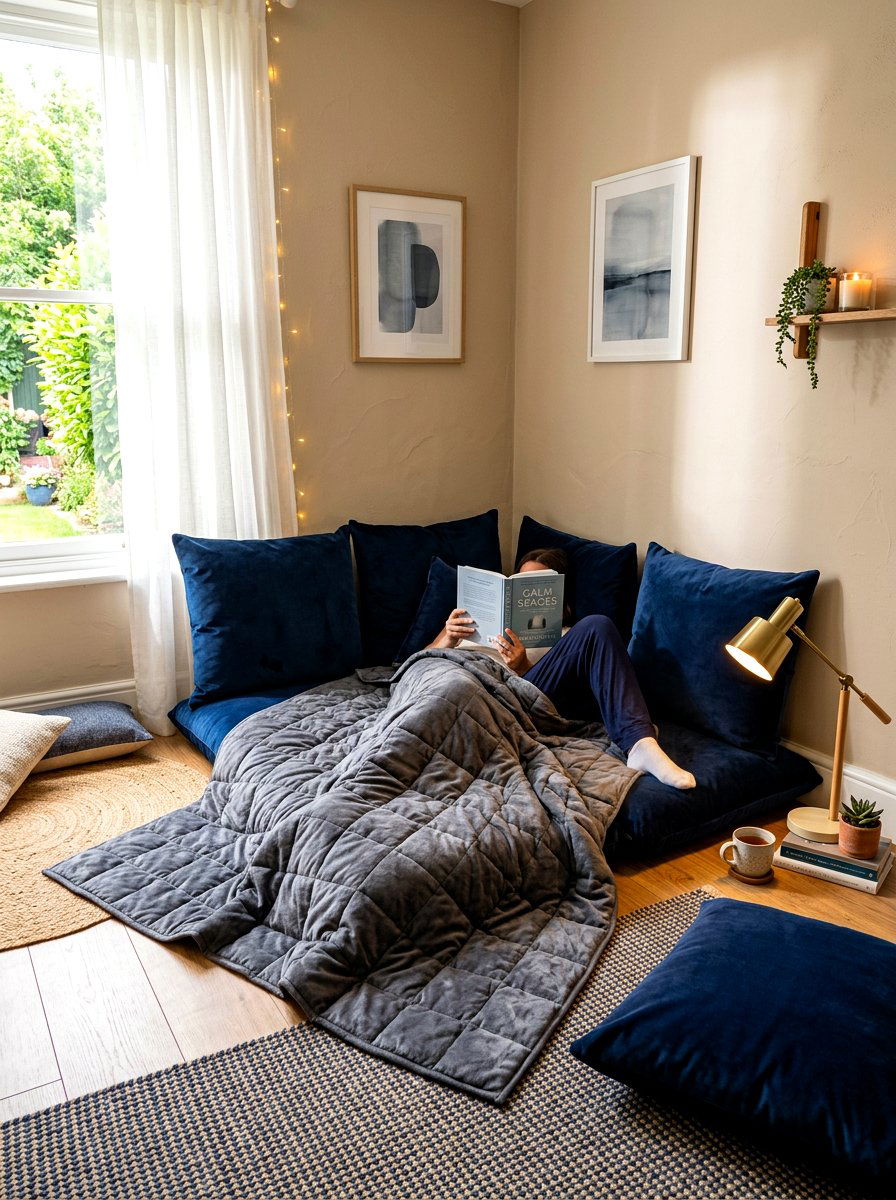
After a long session of active play, having a quiet corner where a child can feel the "grounding" effects of deep pressure is essential. A weighted blanket nook is a cozy, semi-enclosed space filled with soft floor cushions and a blanket filled with glass beads or poly-pellets. The gentle, even pressure of the weighted blanket mimics the feeling of a firm hug, which helps to lower heart rates and promote a sense of security. This area is perfect for children who struggle with anxiety or who need help transitioning from high-energy activities to a more regulated state. It’s a simple, low-tech solution that provides profound emotional and sensory benefits for many kids.
28. Toddler busy board for wall
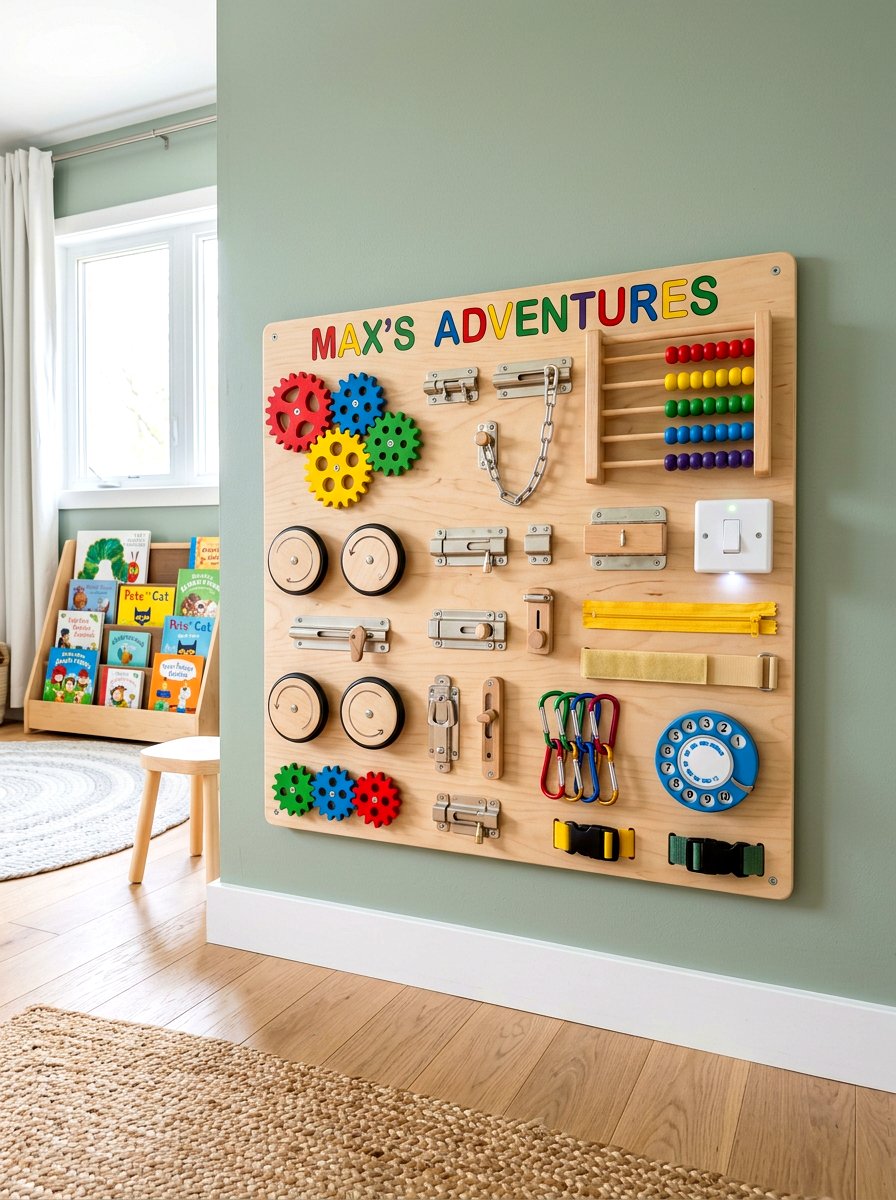
A wall-mounted busy board is a treasure trove of fine motor challenges that keep toddlers engaged as they learn how the world works. These boards are typically covered in various hardware and household items like latches, zippers, wheels, buttons, and sliding bolts. As children manipulate the different objects, they develop the finger strength and coordination needed for daily tasks like dressing themselves. The various sounds and textures provide immediate sensory feedback, making the learning process both fun and rewarding. By mounting it to the wall, you keep the floor clear and ensure the board stays at the perfect height for curious little explorers to stand and play.
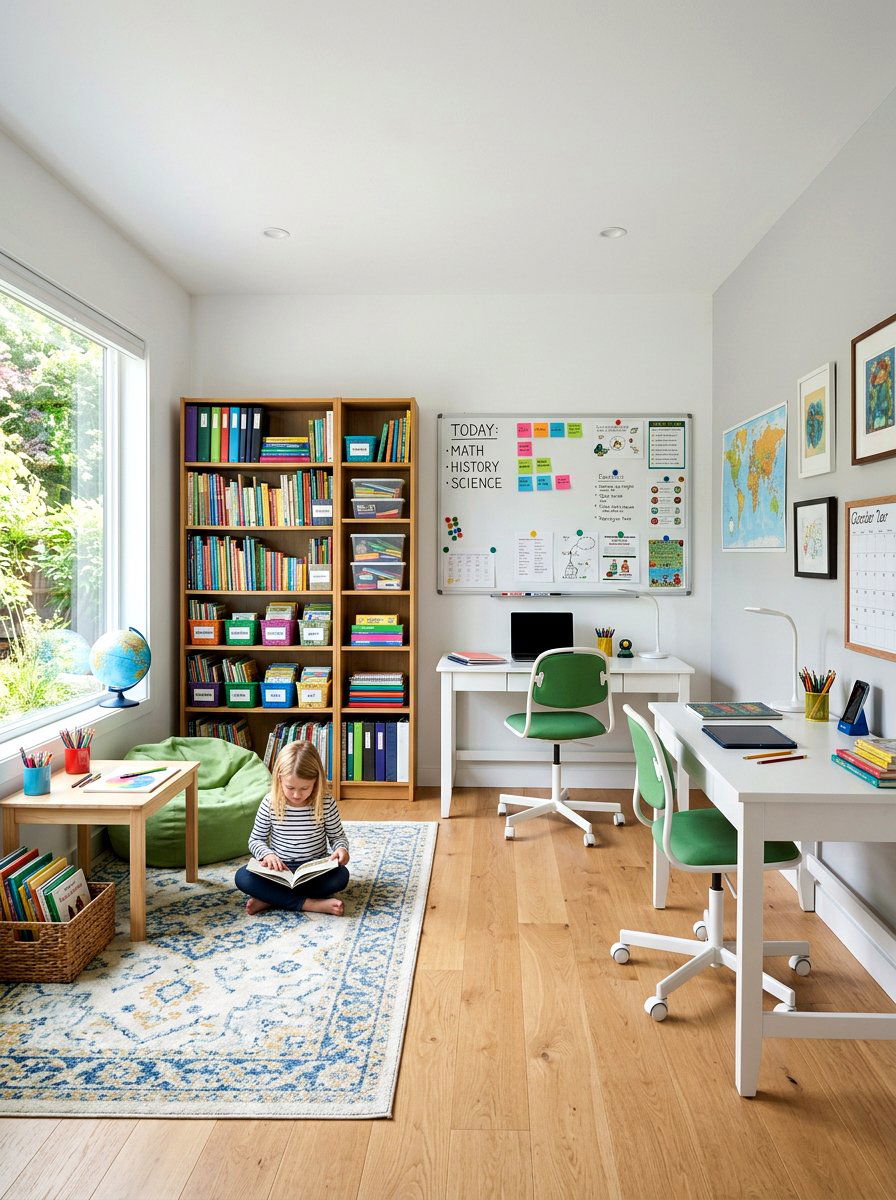
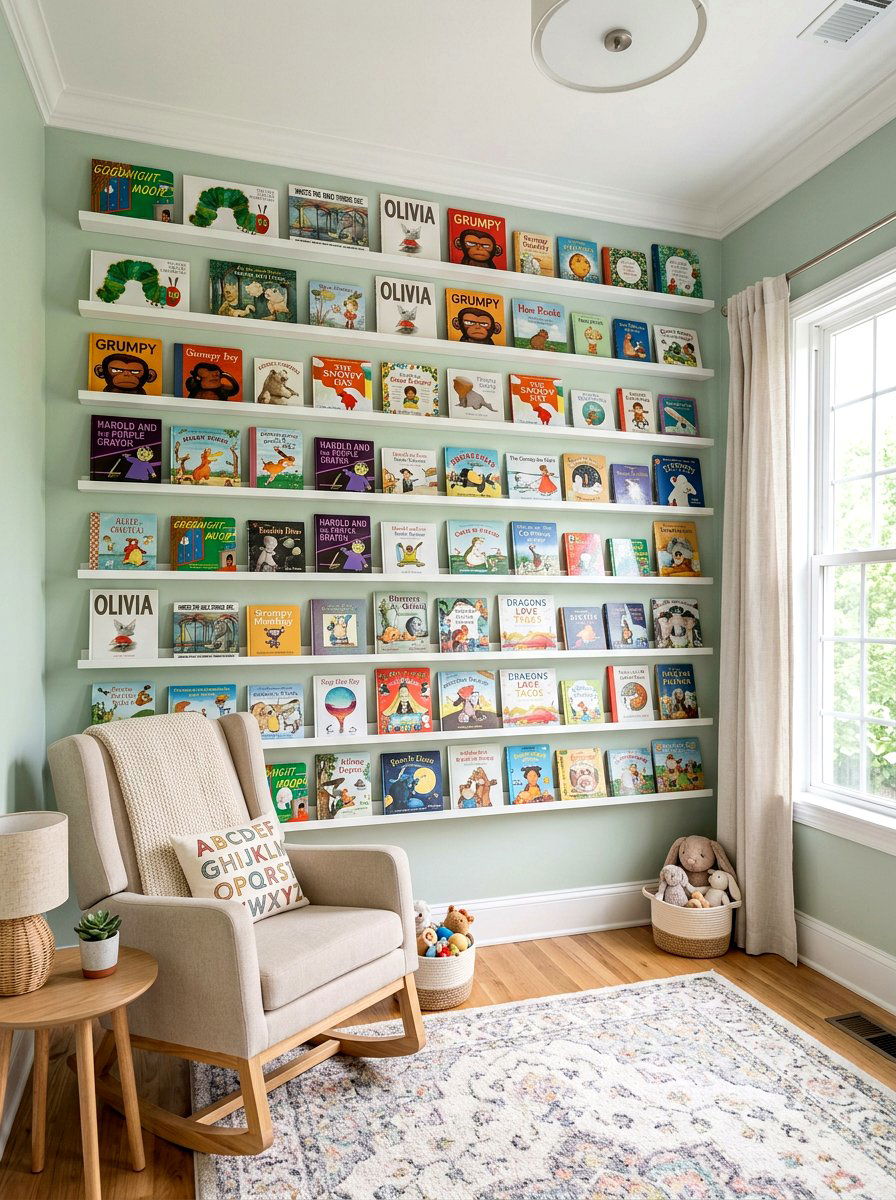
29. Cozy reading nook for kids
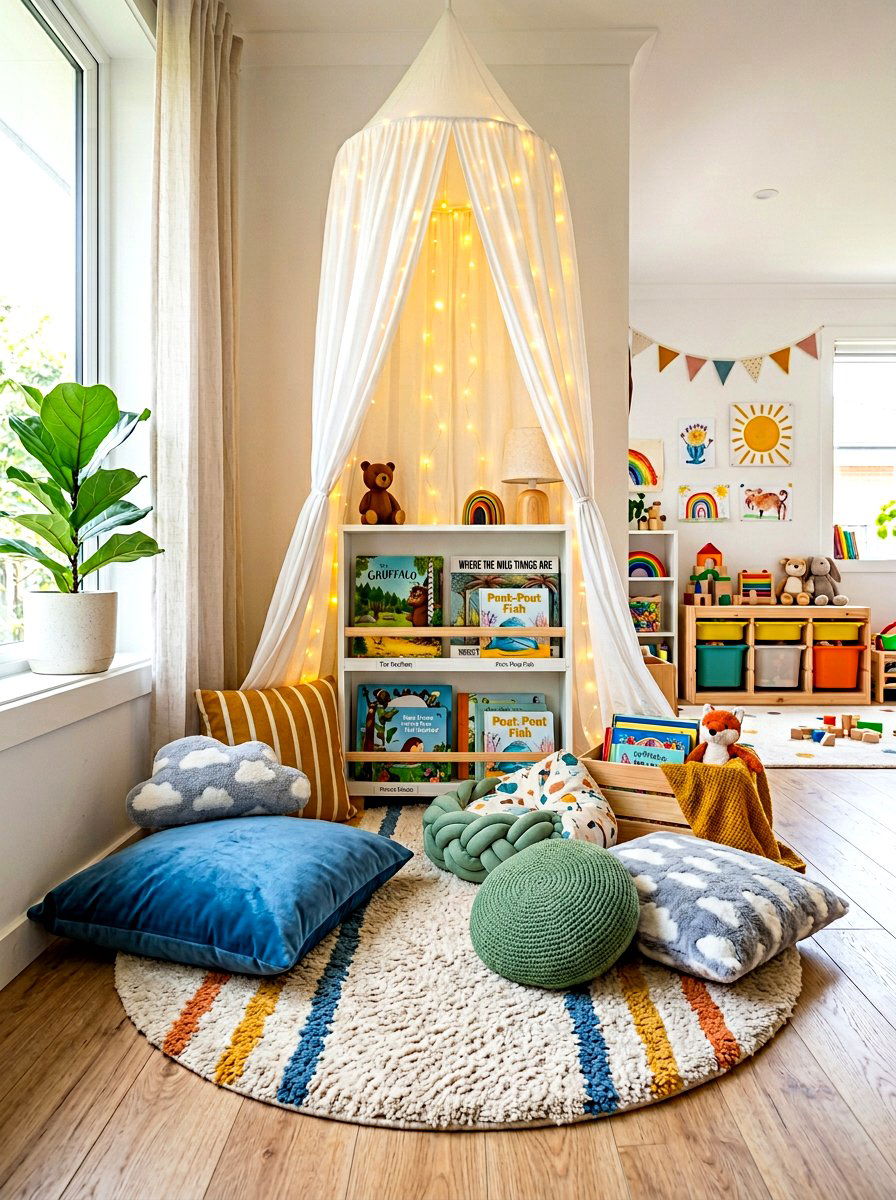
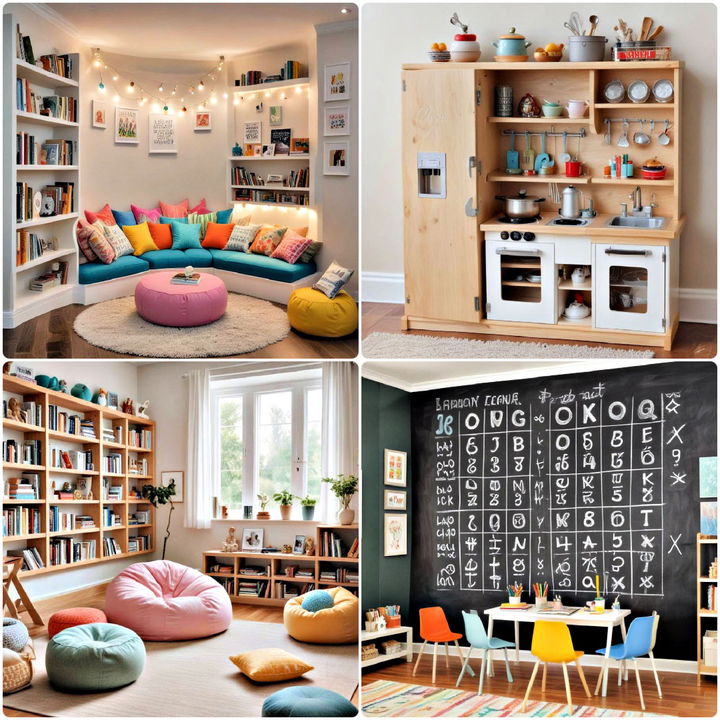
Creating a dedicated space for books and quiet reflection encourages a love of literacy while providing a much-needed break from the noise of the day. A cozy reading nook can be as simple as a corner filled with oversized bean bags, a canopy of soft lights, and a low bookshelf within easy reach. This area should feel distinct from the active zones of the playroom, using softer textures and more muted colors to signal a time for relaxation. Children can retreat here with their favorite stories, using the quiet environment to process their thoughts and engage their imaginations. It adds a peaceful, intellectual dimension to the sensory-rich playroom design.
30. Nature inspired sensory playroom
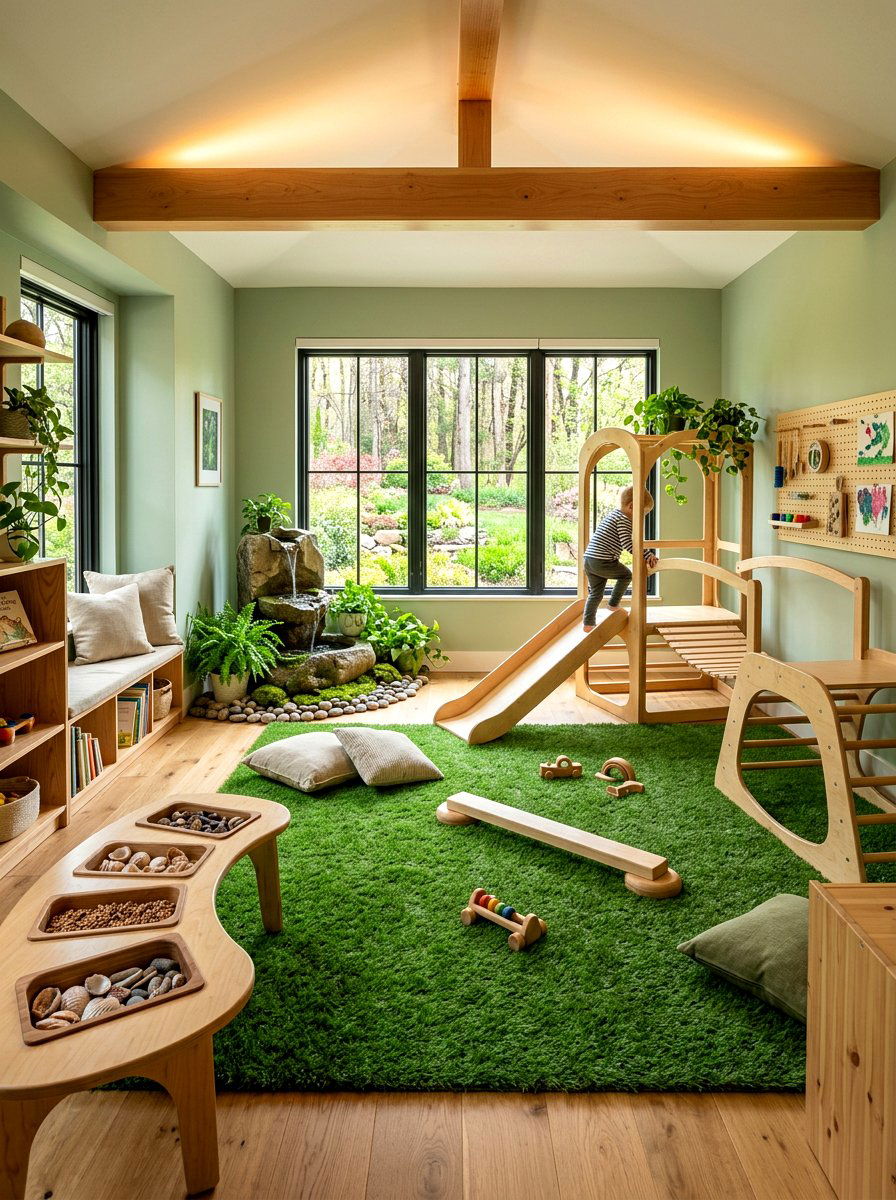
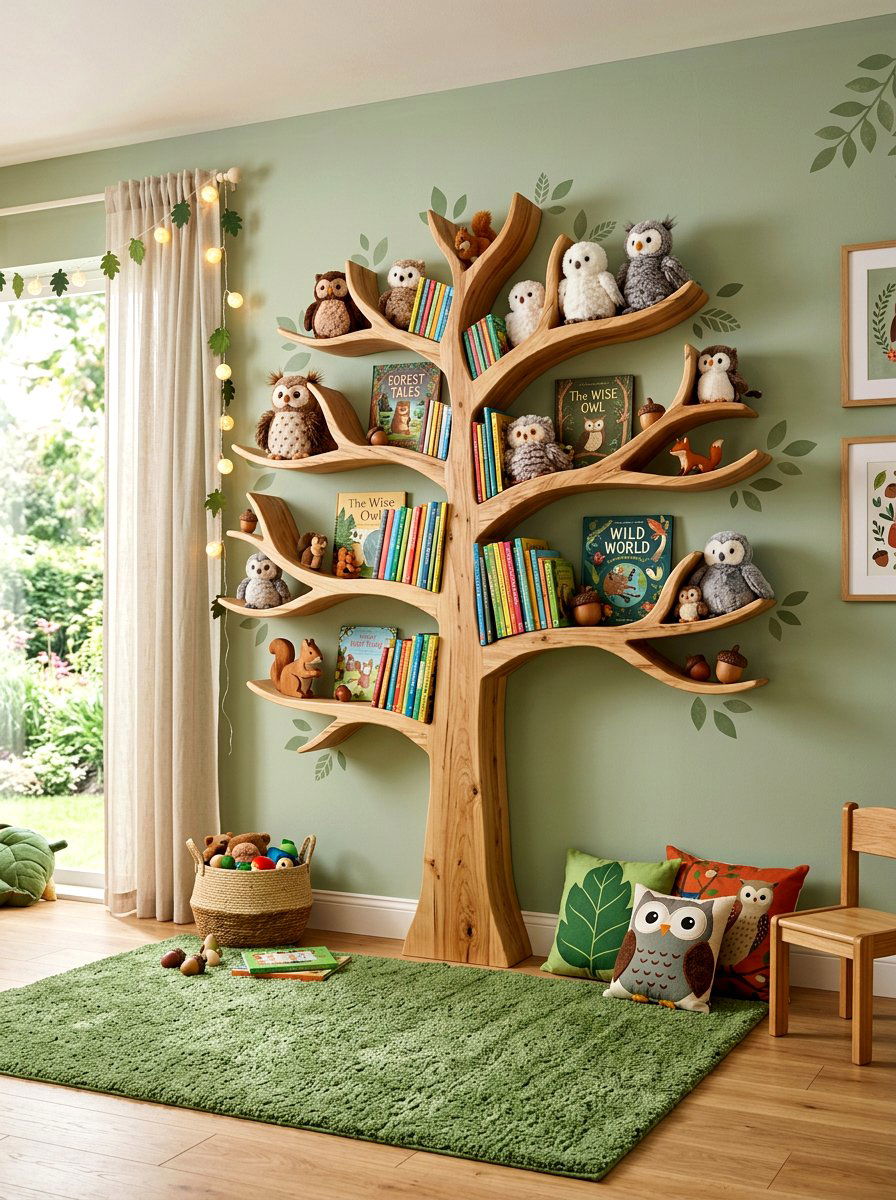
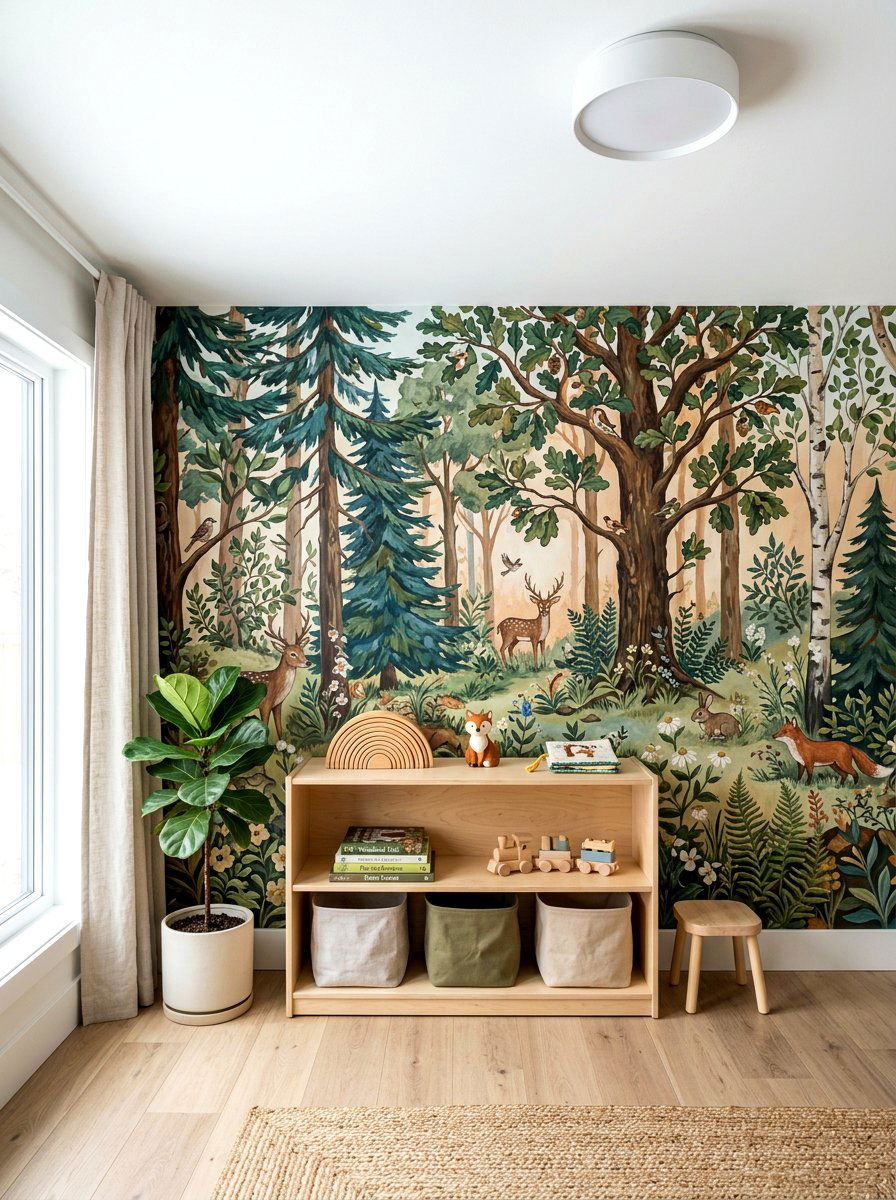
Bringing elements of the outdoors inside creates a grounding and serene environment that helps children feel connected to the natural world. A nature-inspired sensory playroom uses a palette of soft greens, warm browns, and sandy beiges, complemented by natural materials like wood, wool, and stone. You might include a water feature for gentle auditory input, a tray of smooth river rocks for tactile sorting, or even a living wall of non-toxic plants to improve air quality. This design approach avoids the overstimulation of bright plastic toys, offering a more tranquil experience that promotes focus and calm. It’s a beautiful way to create a sophisticated, healing space for children of all ages.
Conclusion:
Designing a sensory playroom is an ongoing journey of discovery that evolves alongside your child's changing needs and developmental milestones. By carefully selecting a mix of active movement zones and calming retreats, you provide a balanced environment that supports every facet of their growth. Whether it is the thrill of an indoor slide or the quiet comfort of a weighted blanket nook, each element serves a specific purpose in helping a child regulate their emotions and sharpen their physical skills. Remember that the best sensory spaces are those that reflect the unique personality and preferences of the child who uses them most. Ultimately, these rooms are about more than just play; they are foundational spaces where children learn to navigate their world with resilience, curiosity, and a deep sense of peace.

Related posts: