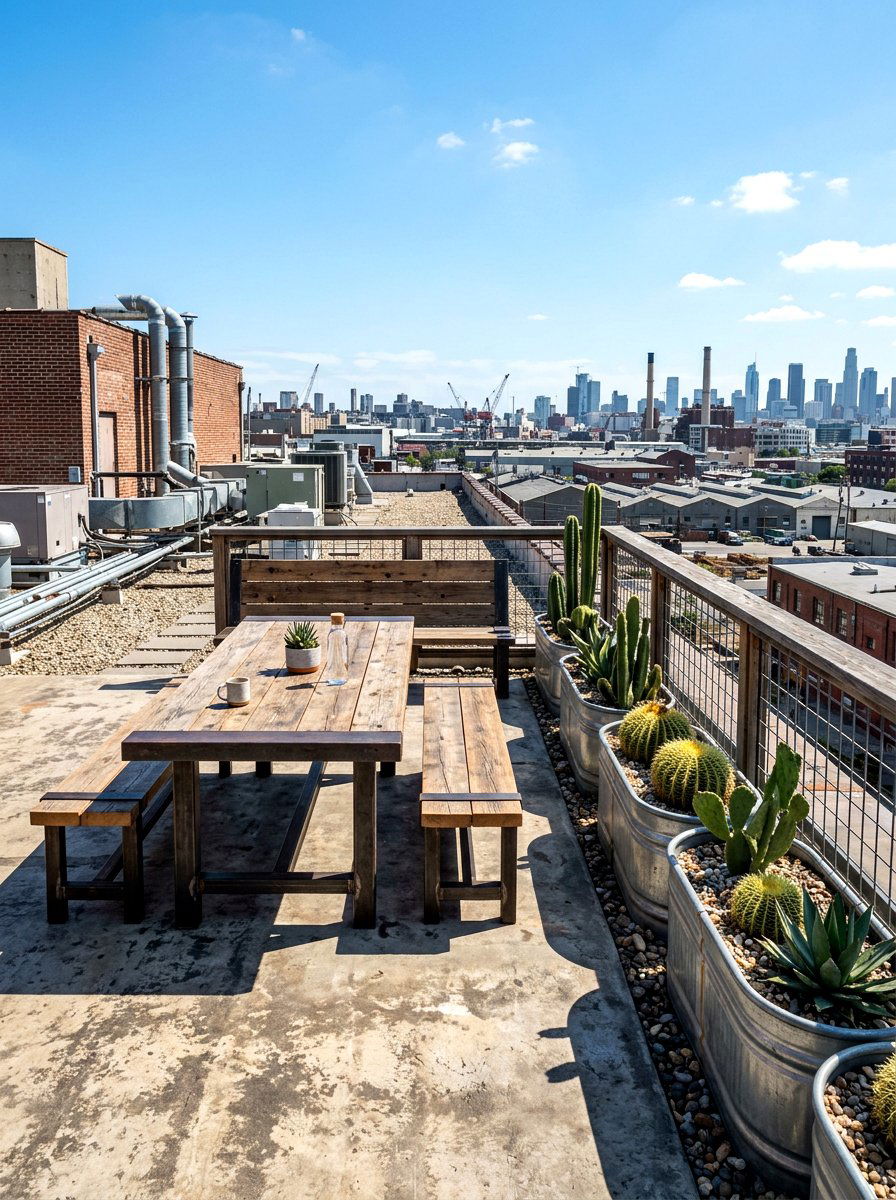
Creating a lush and functional outdoor space doesn't require a massive backyard when you have a well-planned courtyard at your disposal. These enclosed areas offer a unique microclimate that is often perfectly suited for growing a variety of aromatic and culinary plants. By transforming your small patio or walled-in area into a productive sanctuary, you can enjoy fresh flavors just steps from your kitchen. Whether you prefer a sleek modern look or a rustic cottage feel, herb gardening in a courtyard allows for intense fragrance and visual beauty. These spaces act as a private retreat where the scent of rosemary, mint, and lavender lingers in the still air, creating a sensory experience that enhances your home and well-being.
1. Mediterranean Courtyard Herb Garden
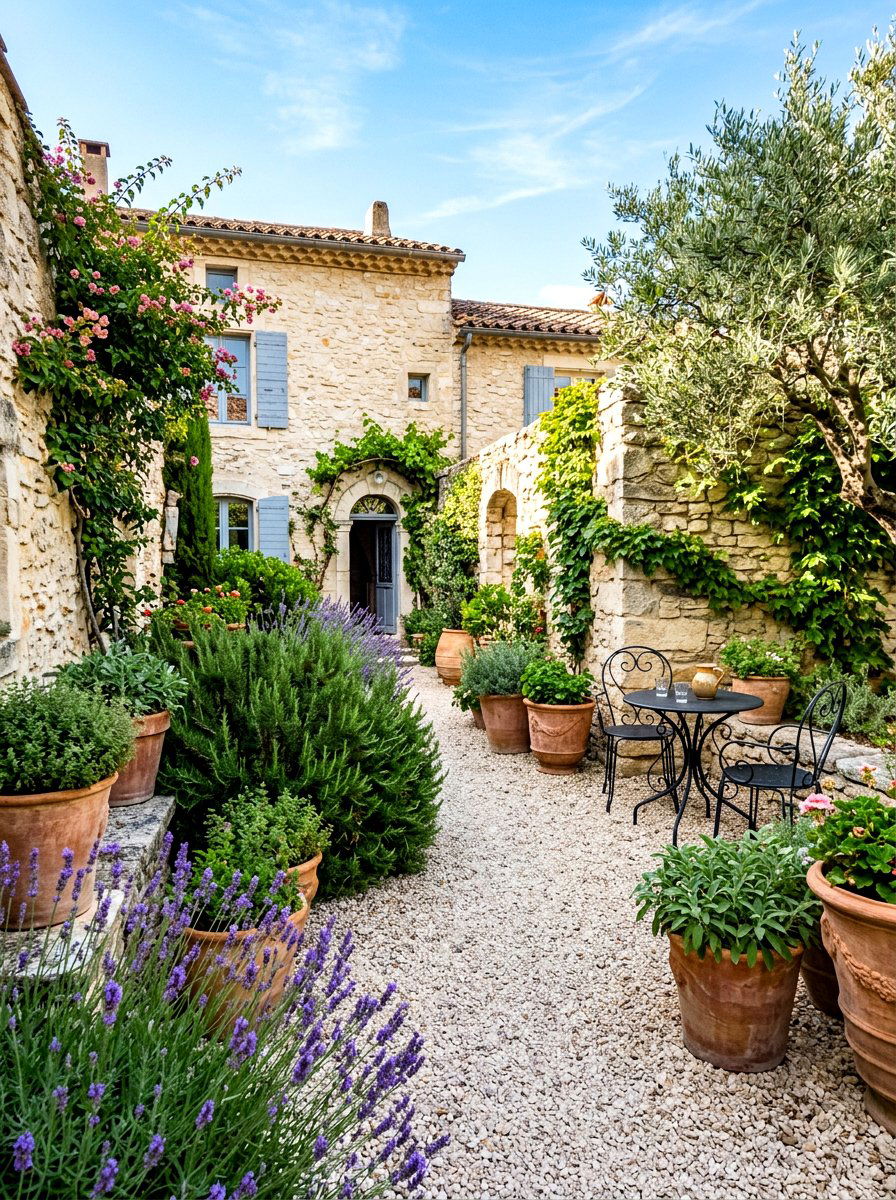
Have you ever dreamed of stepping outside into a warm, sun-drenched space filled with the scent of fresh rosemary and lavender? A Mediterranean courtyard herb garden brings this vision to life by using classic stone elements and heat-loving plants. This specific setup typically features terracotta pots of varying sizes arranged on gravel or cobblestone floors. You can plant drought-tolerant herbs like thyme, oregano, and sage that thrive in the intense afternoon sun. The light-colored stone walls reflect warmth back onto the plants, helping them grow faster. Adding a small wrought iron bistro set makes the space feel like a private Italian villa. It is a perfect way to turn a small, walled-in area into a productive sanctuary.
2. Vertical Herb Wall Garden
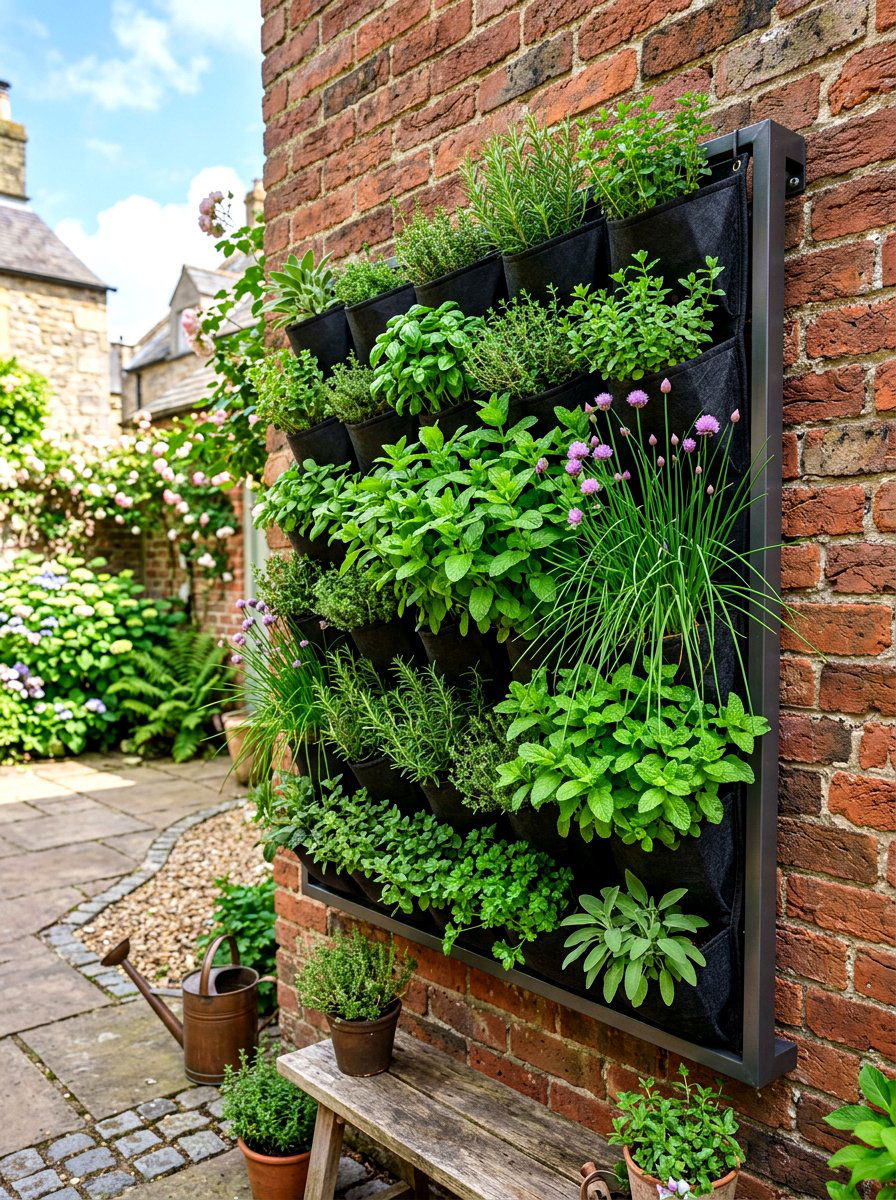
What do you do when your floor space is limited but you still want a massive harvest of fresh greens? A vertical herb wall garden is the ultimate solution for compact urban courtyards or narrow balconies. This design uses the height of your walls to create a lush, living tapestry of edible plants. You can install modular pocket systems, wooden trellises with attached pots, or even sleek metal frames to hold your herbs. Mint, chives, and cilantro do exceptionally well in these elevated systems because they benefit from the improved air circulation. Watering is often simplified with a built-in drip irrigation system that runs down the wall. This setup transforms a boring brick surface into a stunning green focal point.
3. Raised Bed Herb Garden
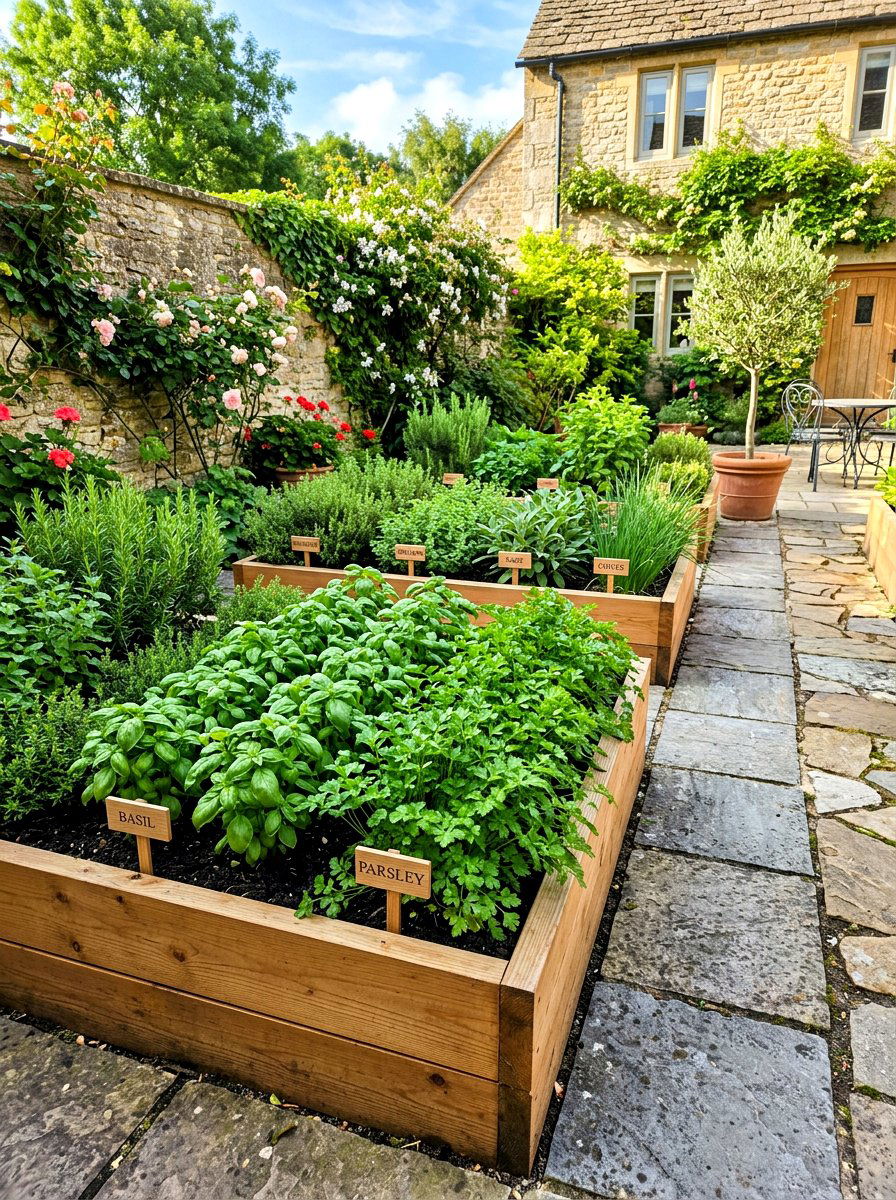
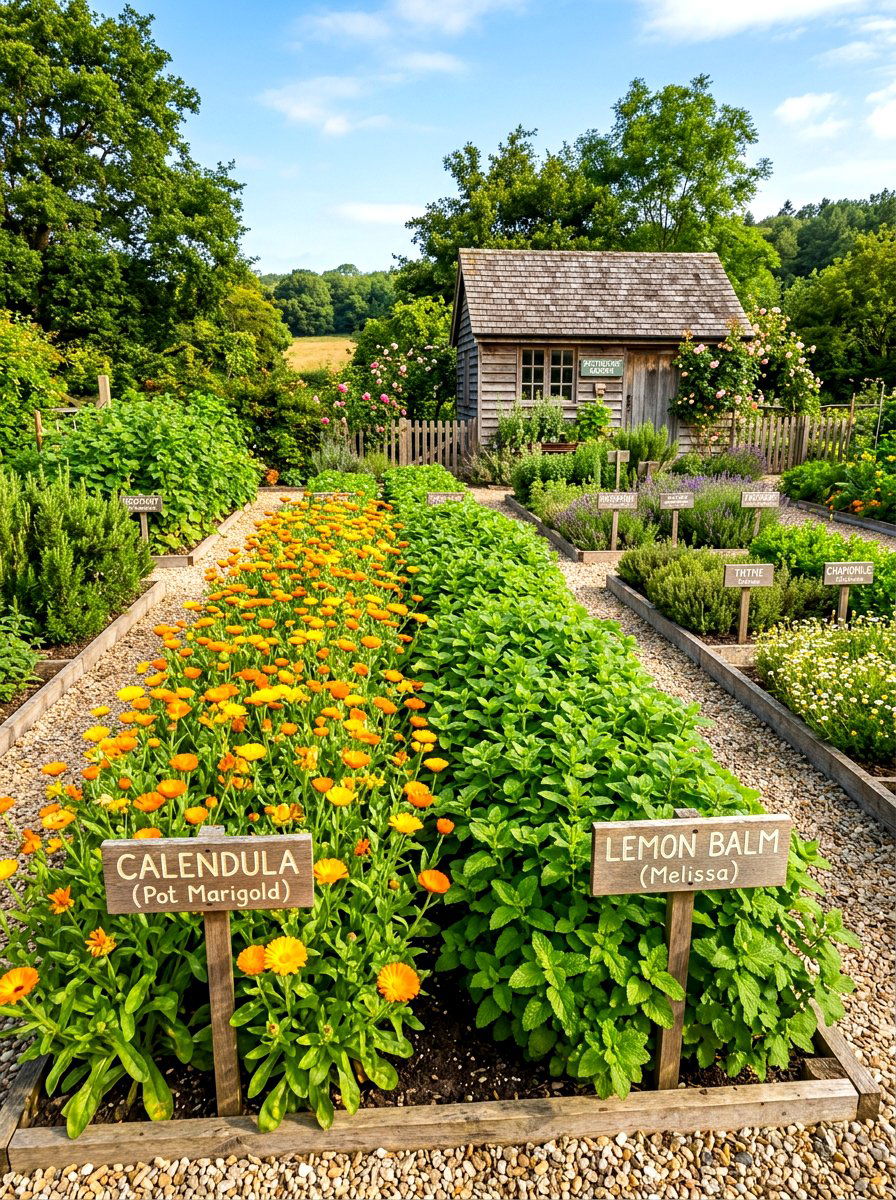
Do you want a structured and organized way to grow your favorite seasonings while saving your back from constant bending? A raised bed herb garden offers a neat, professional look that defines the layout of any courtyard. By building beds out of cedar wood, stone, or even modern corten steel, you can control the soil quality perfectly. These elevated structures are ideal for grouping herbs with similar watering needs, such as moisture-loving basil and parsley in one section. The height of the beds also provides natural drainage and helps keep invasive weeds at bay. Adding wide caps to the edges of the beds creates a convenient place to sit while you harvest your daily ingredients for dinner.
4. Container Herb Garden
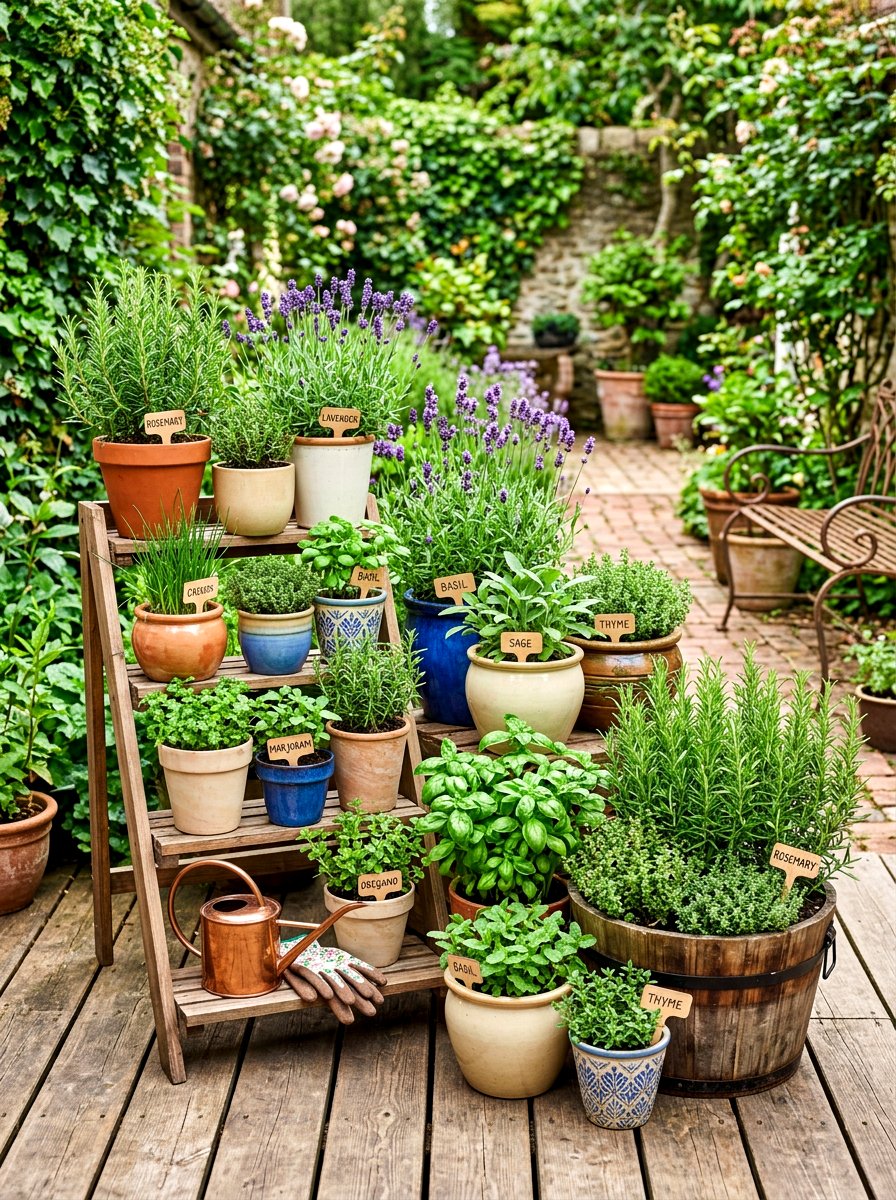
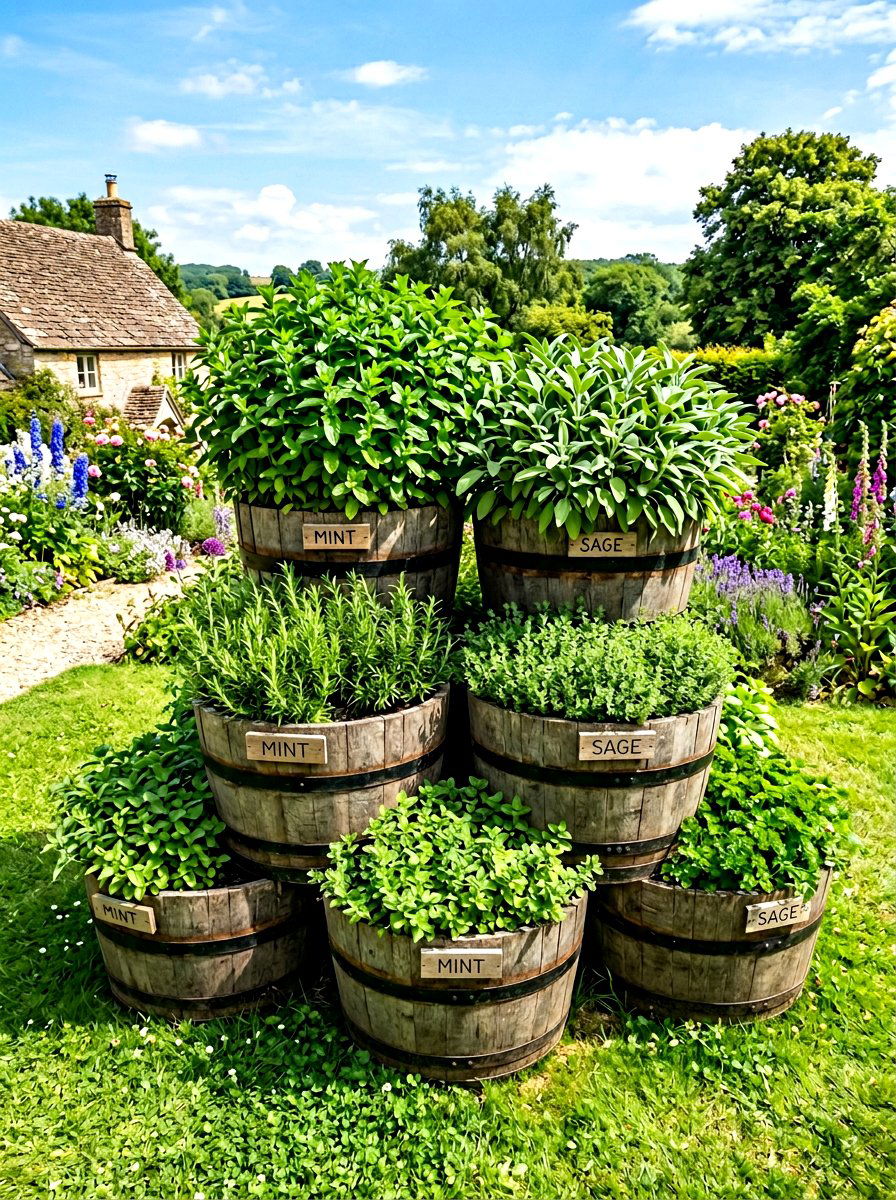
Are you looking for a flexible gardening style that allows you to move your plants around as the seasons change? A container herb garden is the most versatile option for any courtyard, regardless of its size or permanent flooring. You can use a mix of ceramic pots, wooden crates, and resin planters to create a layered and textured look. This method is particularly useful for herbs like mint, which are known to take over entire beds if not restricted. Grouping your pots in clusters of three or five creates a more intentional and artistic appearance than scattered single plants. Using different heights for your containers ensures that every plant gets enough sunlight and adds visual depth to the space.
5. Spiral Herb Garden
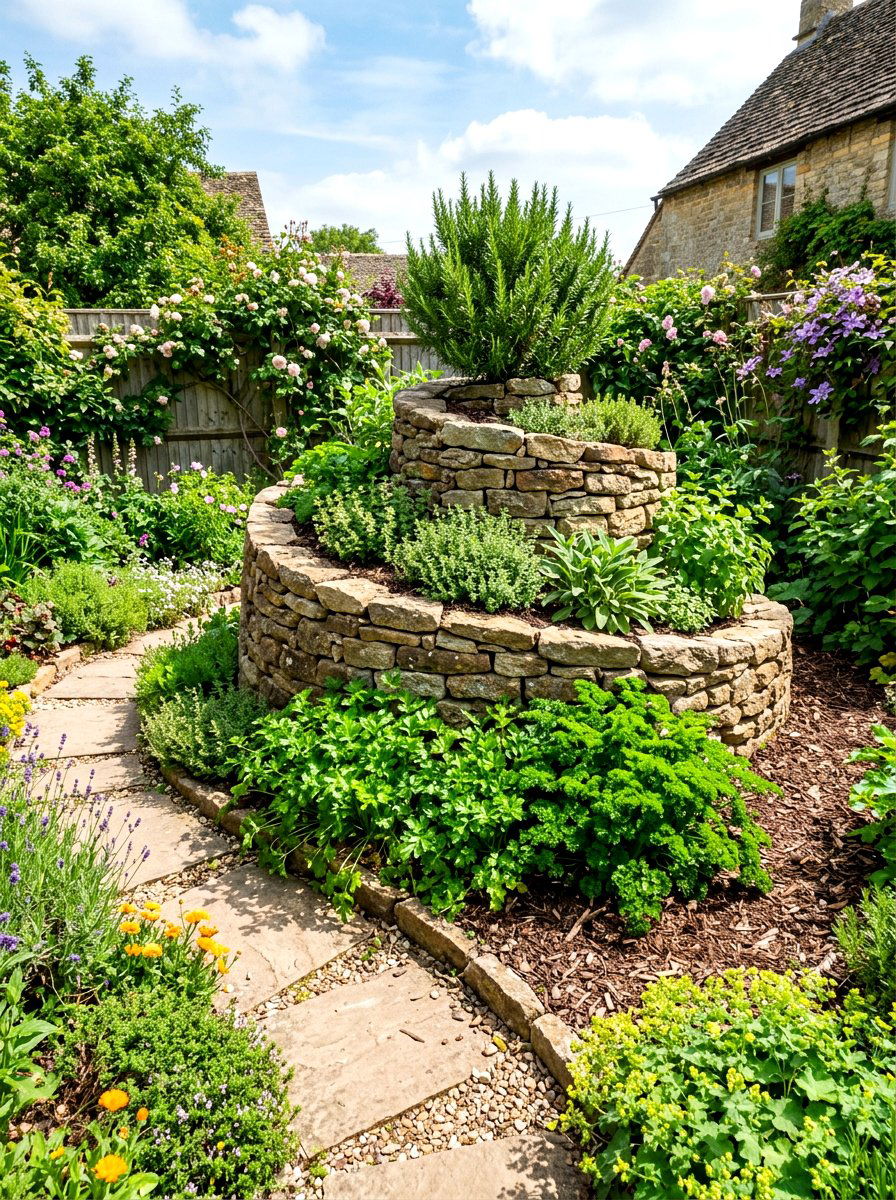
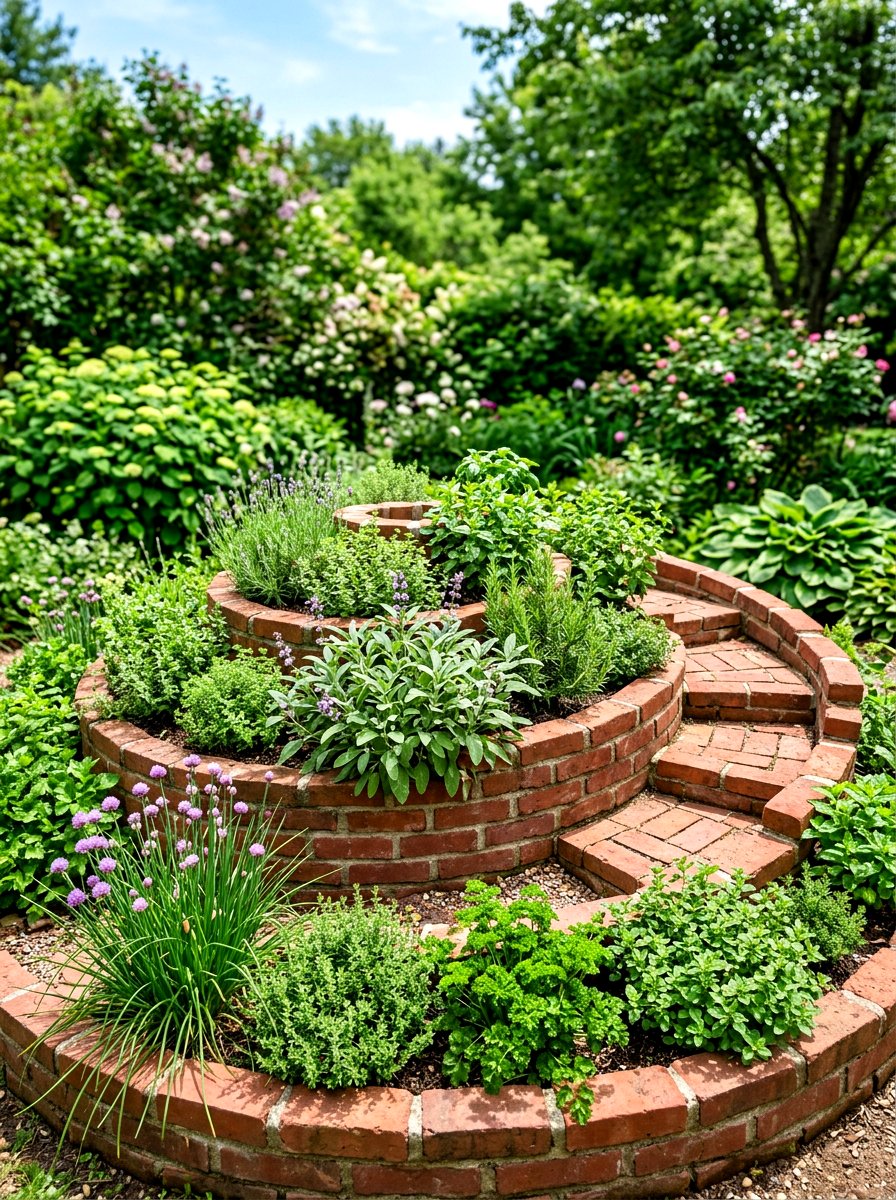
Have you considered using a three-dimensional layout to maximize your planting area in a small footprint? A spiral herb garden is a permaculture-inspired design that creates various microclimates within a single, beautiful structure. Built from stones or bricks, the spiral rises upward, with the top being the driest and sunniest spot. This is where you would plant rosemary and thyme, which love drainage and heat. As the spiral winds downward, the soil stays moisture-rich and shaded, making it perfect for parsley and chives. Not only is this a highly efficient way to grow many plants, but it also serves as a striking sculptural element. It is a conversation starter that brings a natural, organic feel to courtyards.
6. Window Box Herb Garden
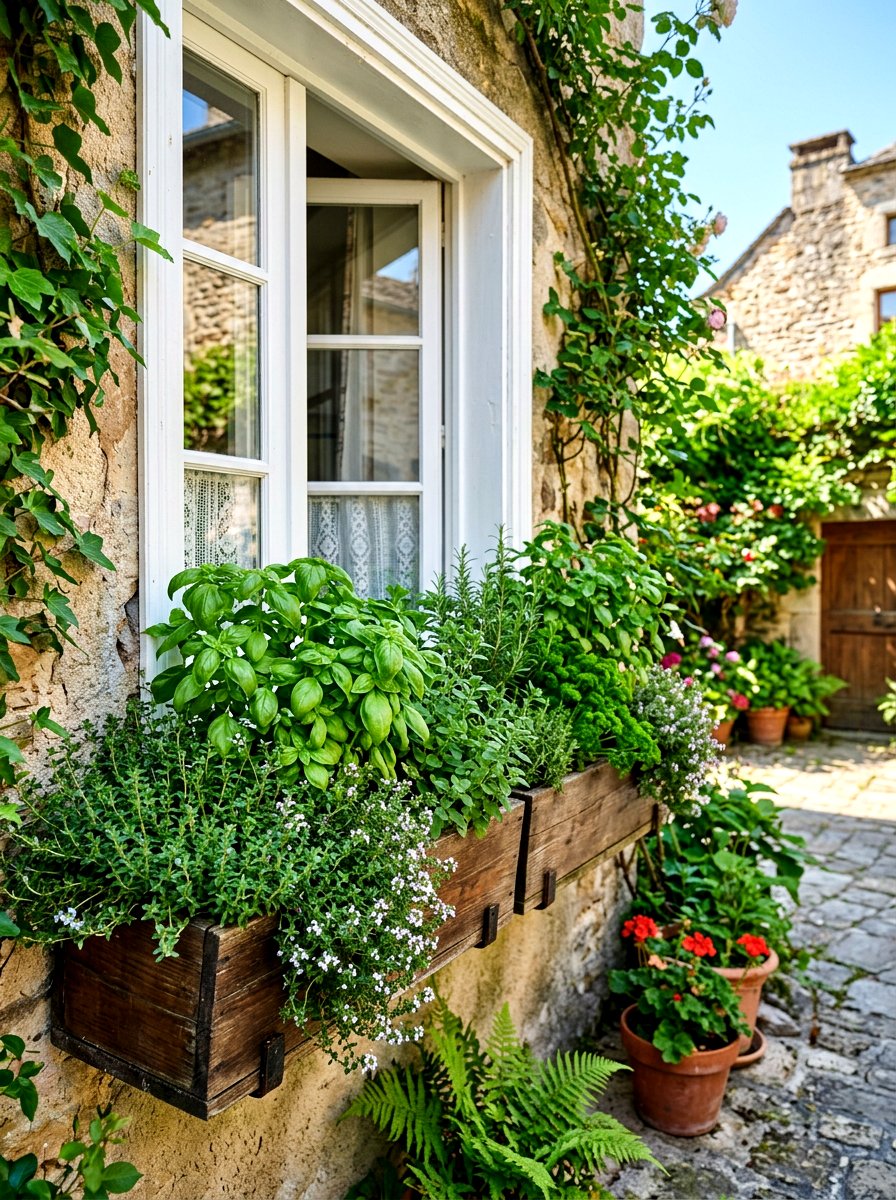
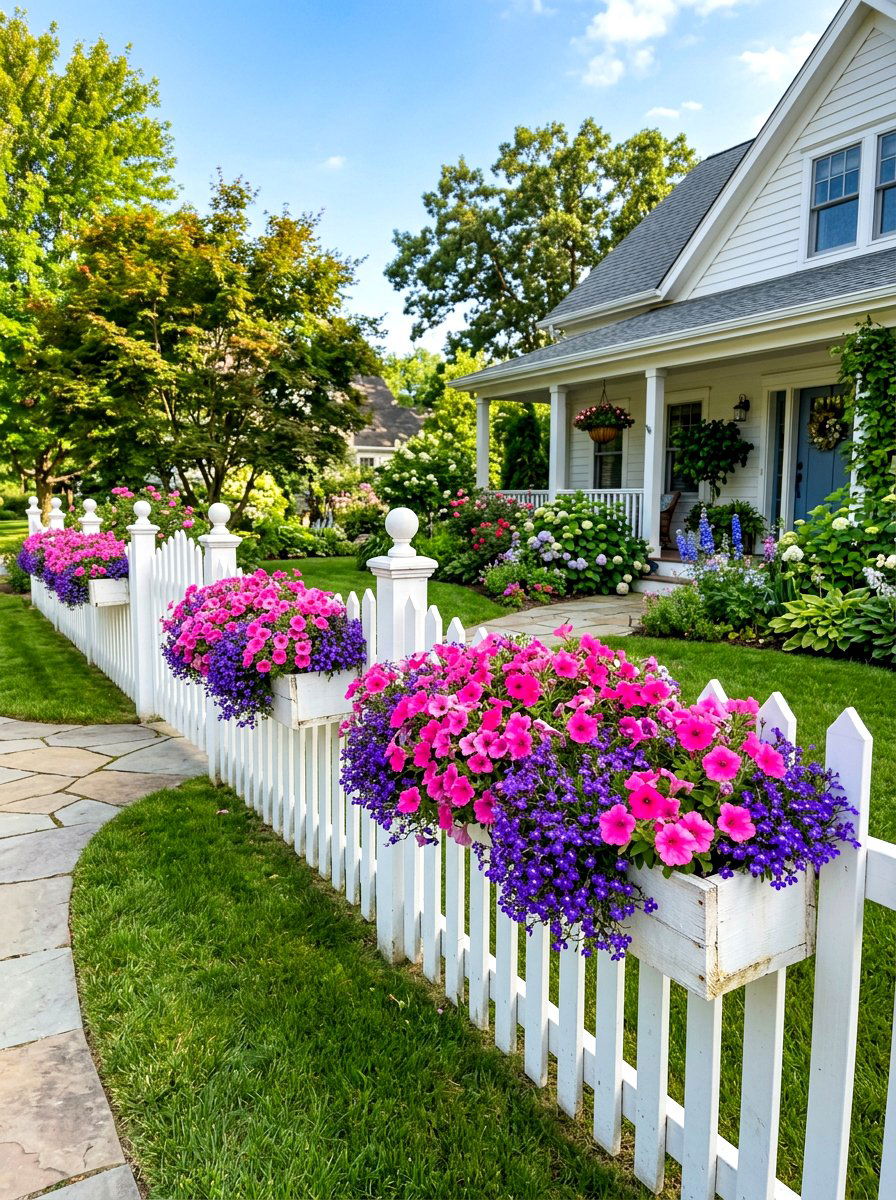
Could your courtyard walls or windows use a splash of functional greenery that also smells amazing? A window box herb garden is a classic choice that brings the garden right up to eye level and makes harvesting incredibly easy. These long, narrow planters are perfect for growing low-profile herbs like creeping thyme, winter savory, and various types of basil. When placed under a window that opens into the kitchen, the scent of the herbs can waft indoors on a light breeze. Choose boxes that match your home's architecture, whether that is rustic wood or modern matte black metal. Ensure they have proper drainage holes and sturdy brackets to withstand the weight of wet soil and growing plants.
7. Tiered Herb Garden
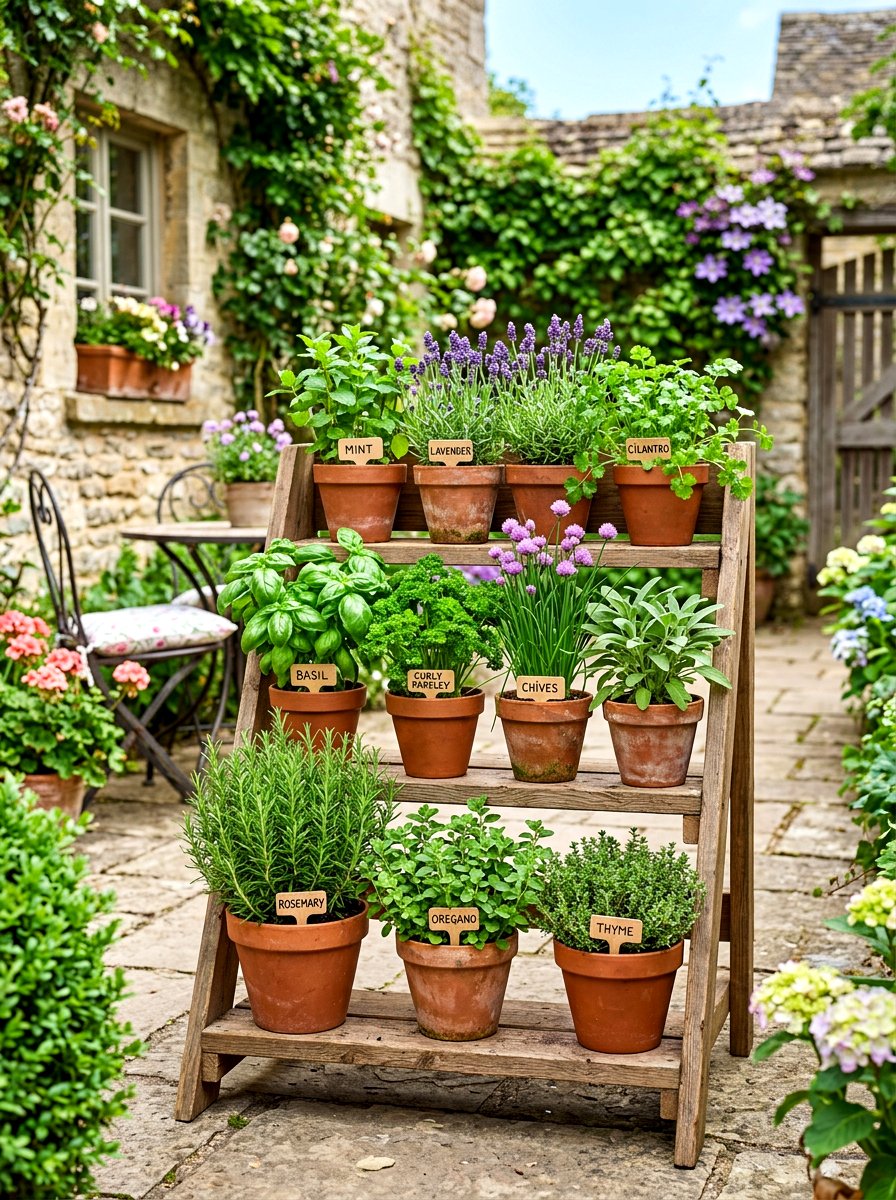
What if you could stack your favorite plants in a way that looks like a lush green waterfall? A tiered herb garden uses multiple levels to create a high-impact display without occupying much floor space. This can be achieved with a pre-built shelving unit, a series of stepped planter boxes, or even a converted old ladder. The tiered approach is excellent for courtyards with uneven sun exposure, as you can place the sun-hungry plants at the top. Lower tiers can house shade-tolerant herbs like lemon balm or chervil. This vertical arrangement makes every plant accessible for snipping and watering. It creates a dense, overgrown look that feels like a secret garden tucked away in the city.
8. Geometric Herb Garden
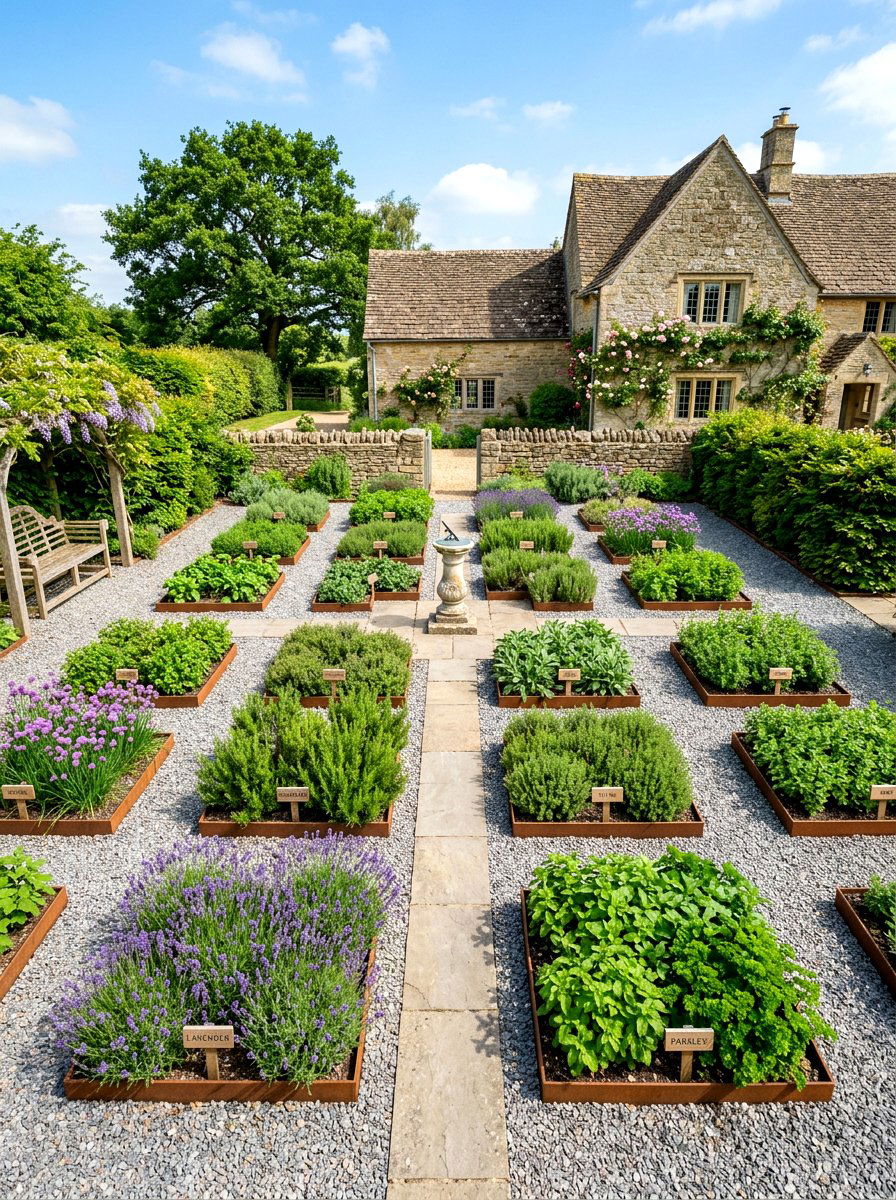
Do you prefer a modern, clean look with sharp lines and an organized aesthetic? A geometric herb garden uses symmetrical shapes like squares, triangles, or hexagons to create a very structured layout. You can use metal edging or thin brick borders to define these shapes on the courtyard floor. Filling each section with a different herb variety creates a striking checkerboard effect that is visually satisfying. This style works best in contemporary courtyards where the architecture is minimalist and focused on order. Using gravel or polished stones between the geometric sections helps suppress weeds and highlights the green of the plants. It is a sophisticated way to integrate a kitchen garden into a high-end outdoor living area.
9. Indoor Outdoor Kitchen Herb Garden
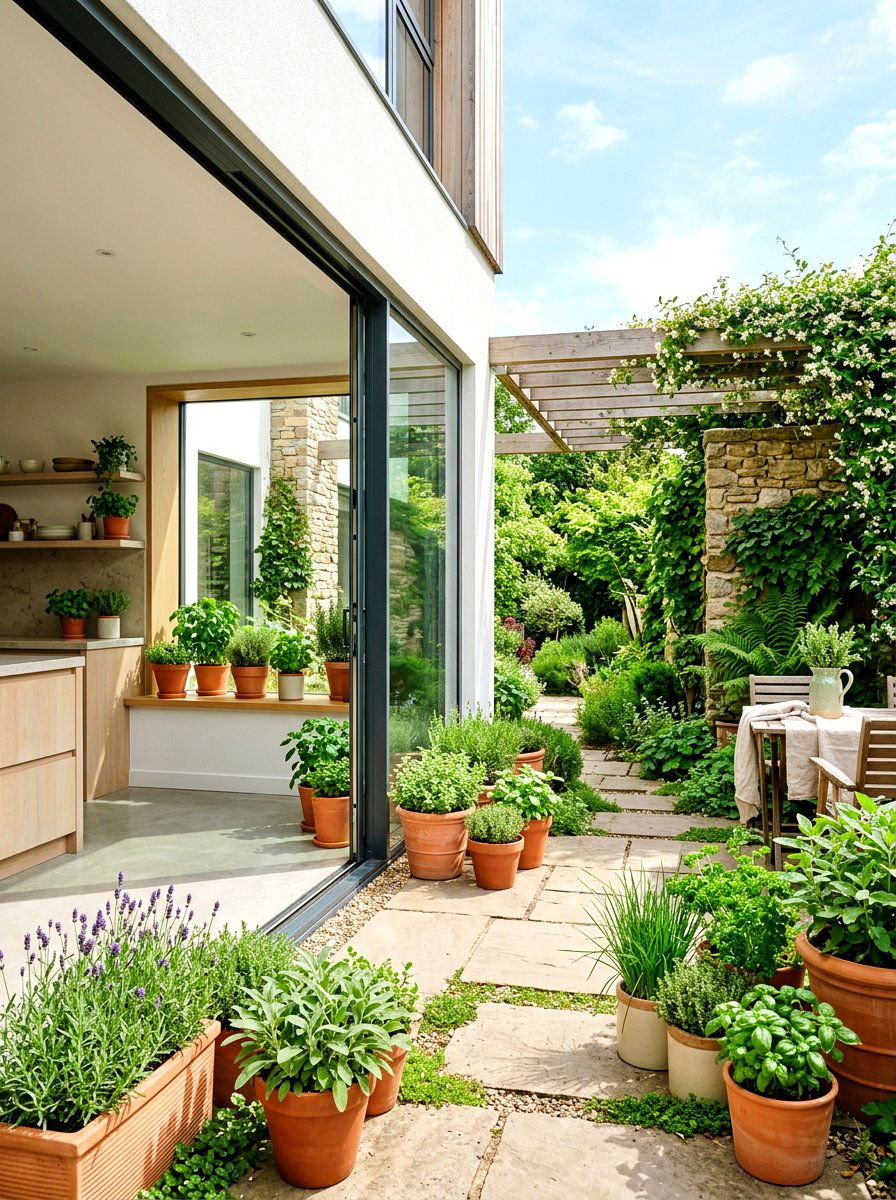
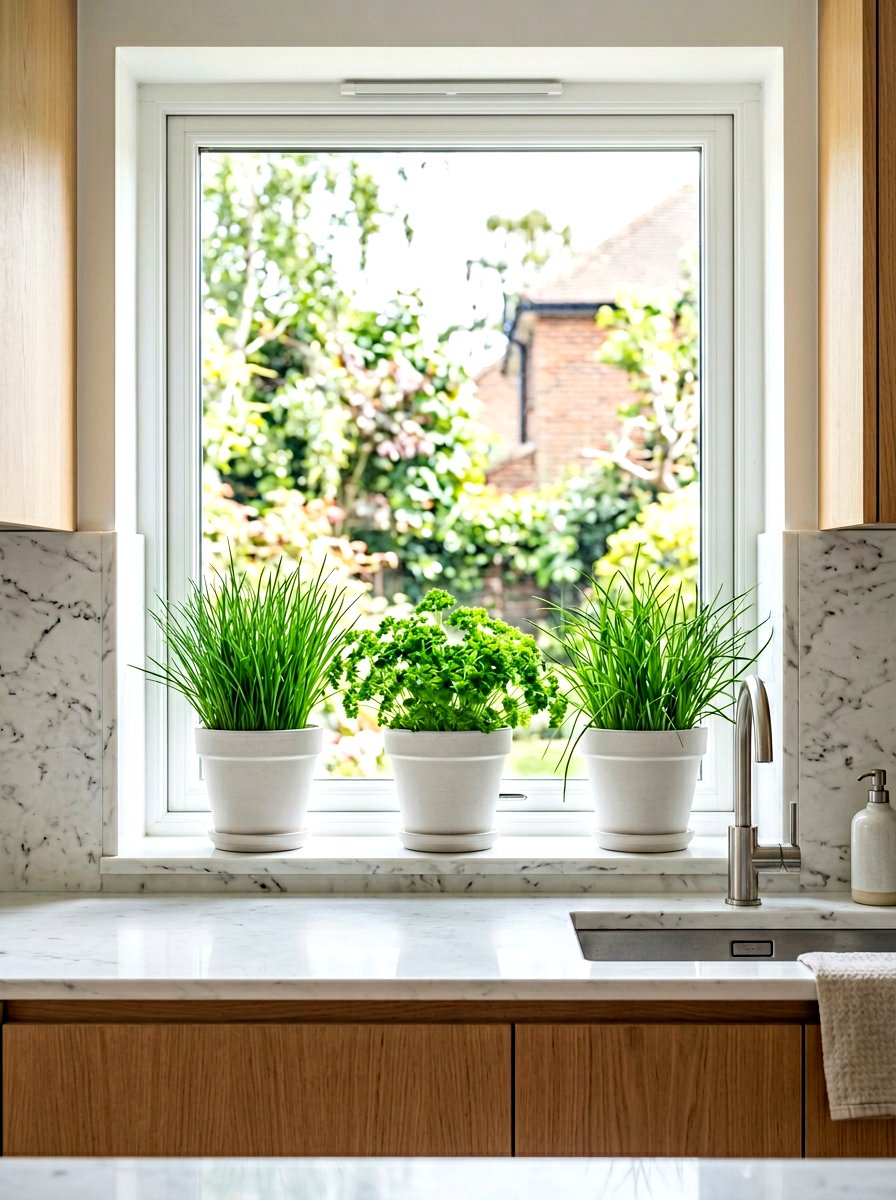
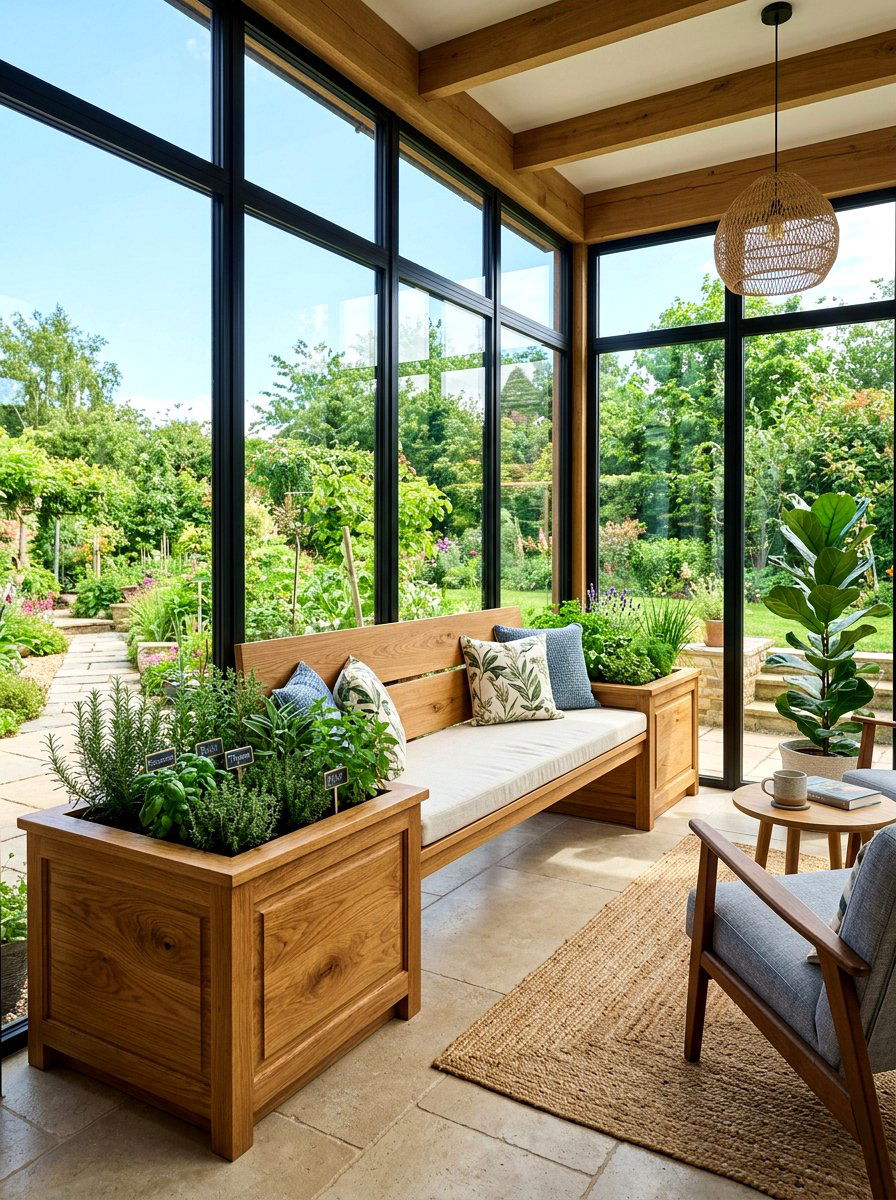
Imagine being able to reach out from your stove and pluck fresh leaves directly from the soil. An indoor-outdoor kitchen herb garden blurs the lines between your interior and the courtyard by placing plants near large glass doors or windows. This design often uses matching planters both inside the kitchen and just outside on the patio to create a seamless visual transition. By keeping your most-used culinary herbs like cilantro, dill, and basil within arm's reach, you are much more likely to use them in your daily cooking. This setup works beautifully with large sliding glass walls that open up to reveal a lush green wall or a series of pedestals holding aromatic pots.
10. Hanging Herb Garden
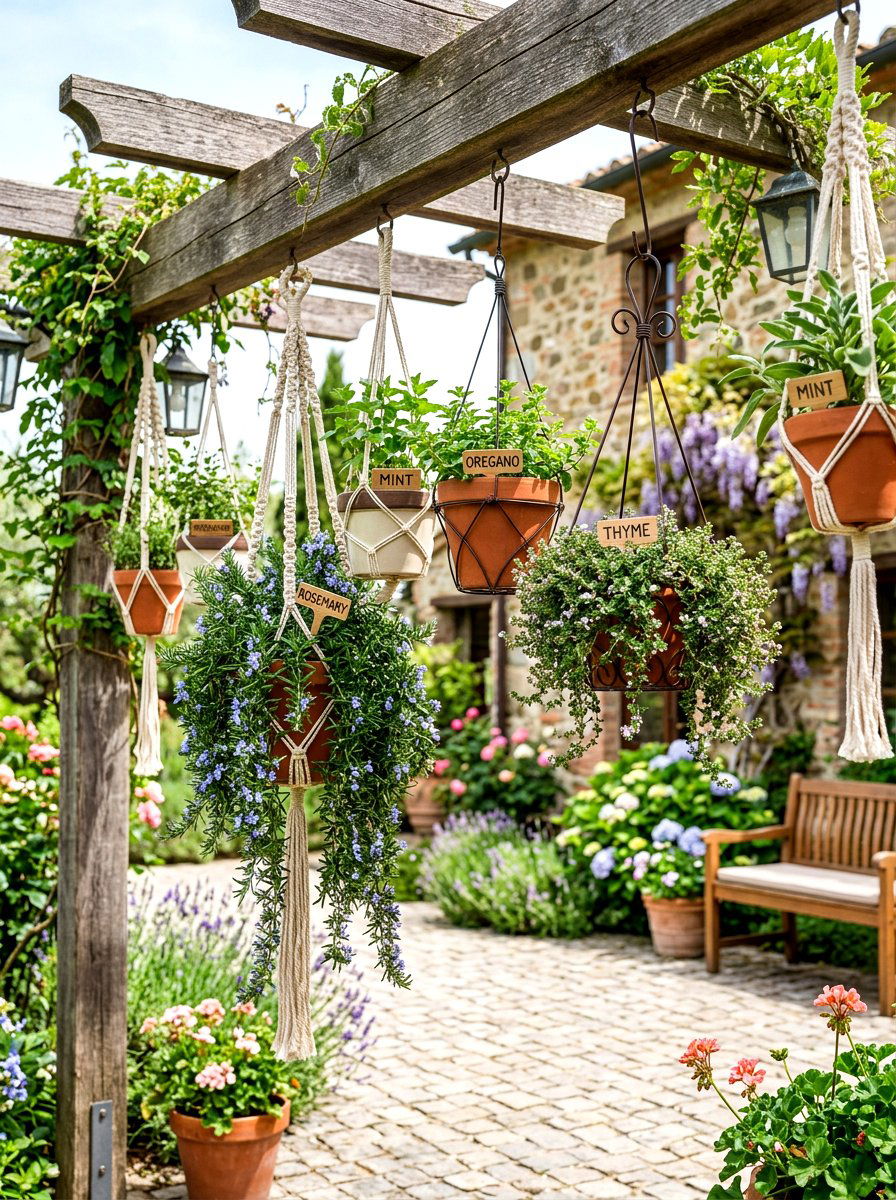
Are you struggling to find space for even a single pot on your courtyard floor? A hanging herb garden takes your greenery to the sky by using hooks, pergolas, or wall-mounted brackets. You can use traditional macramé hangers for a bohemian look or sleek wire systems for something more modern. Hanging baskets are perfect for trailing herbs like prostrate rosemary or creeping thyme, which will spill over the sides elegantly. This method keeps your herbs away from ground pests and makes them easy to maintain without any kneeling. Just make sure your hanging structures are strong enough to support the weight of the soil. It is a great way to add overhead greenery to a small space.
11. Pallet Herb Garden
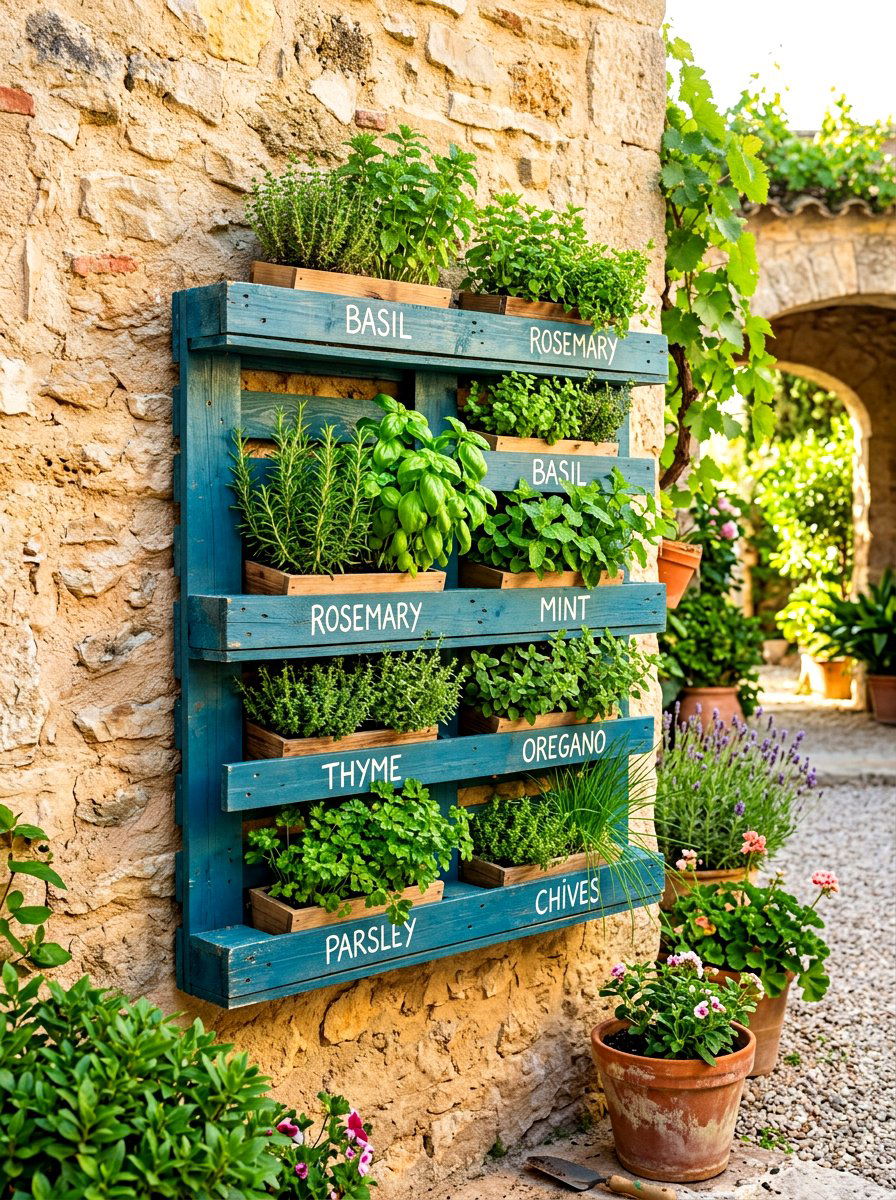
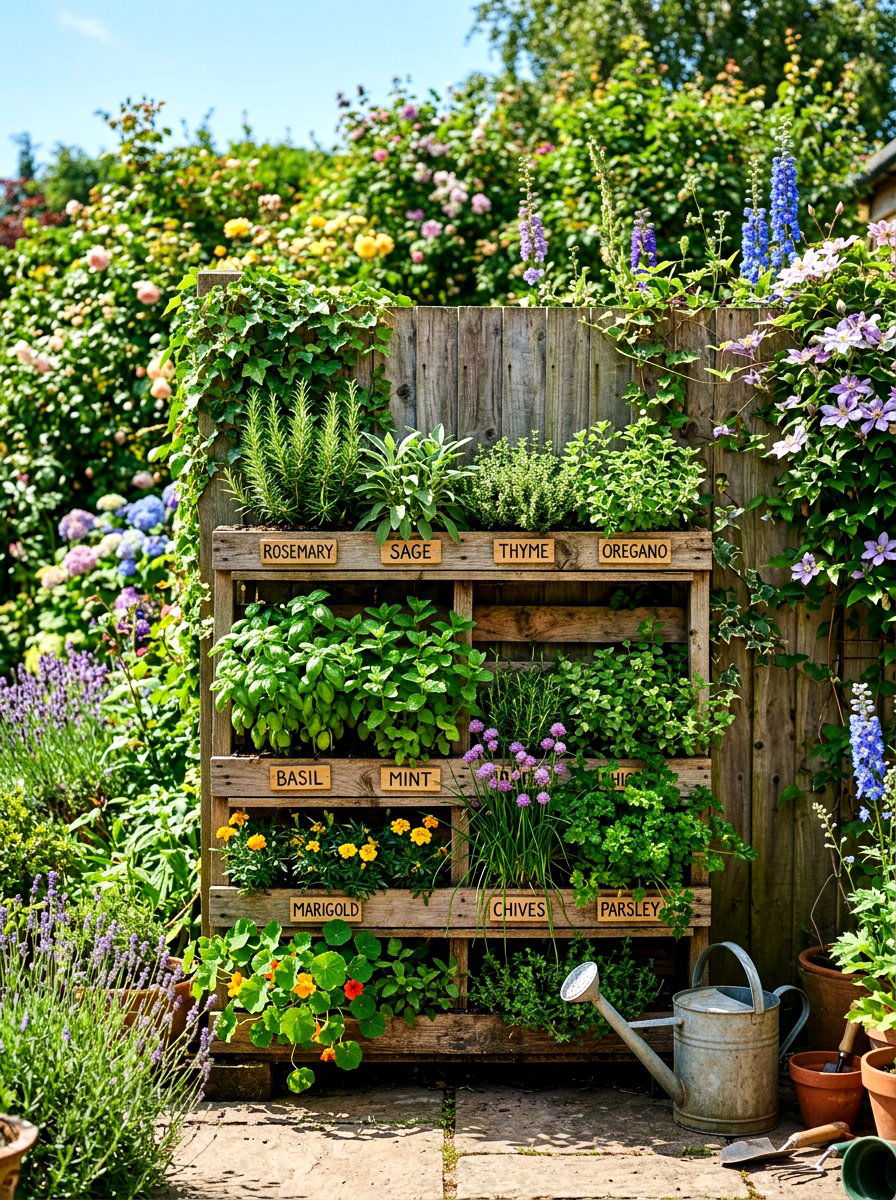
Do you enjoy DIY projects that turn everyday items into something beautiful and productive? A pallet herb garden is an affordable and eco-friendly way to create a vertical planting space in your courtyard. By adding backing and small shelves to a wooden shipping pallet, you create narrow troughs perfect for many different herbs. You can lean the pallet against a wall or mount it securely to save precious floor space. Painting the wood in a bright color or a muted charcoal can completely change the vibe from rustic to modern. This style is particularly effective for growing smaller herbs like chives, tarragon, and various types of dwarf basil. It is a creative solution for any budget-conscious gardener.
12. Ladder Herb Garden
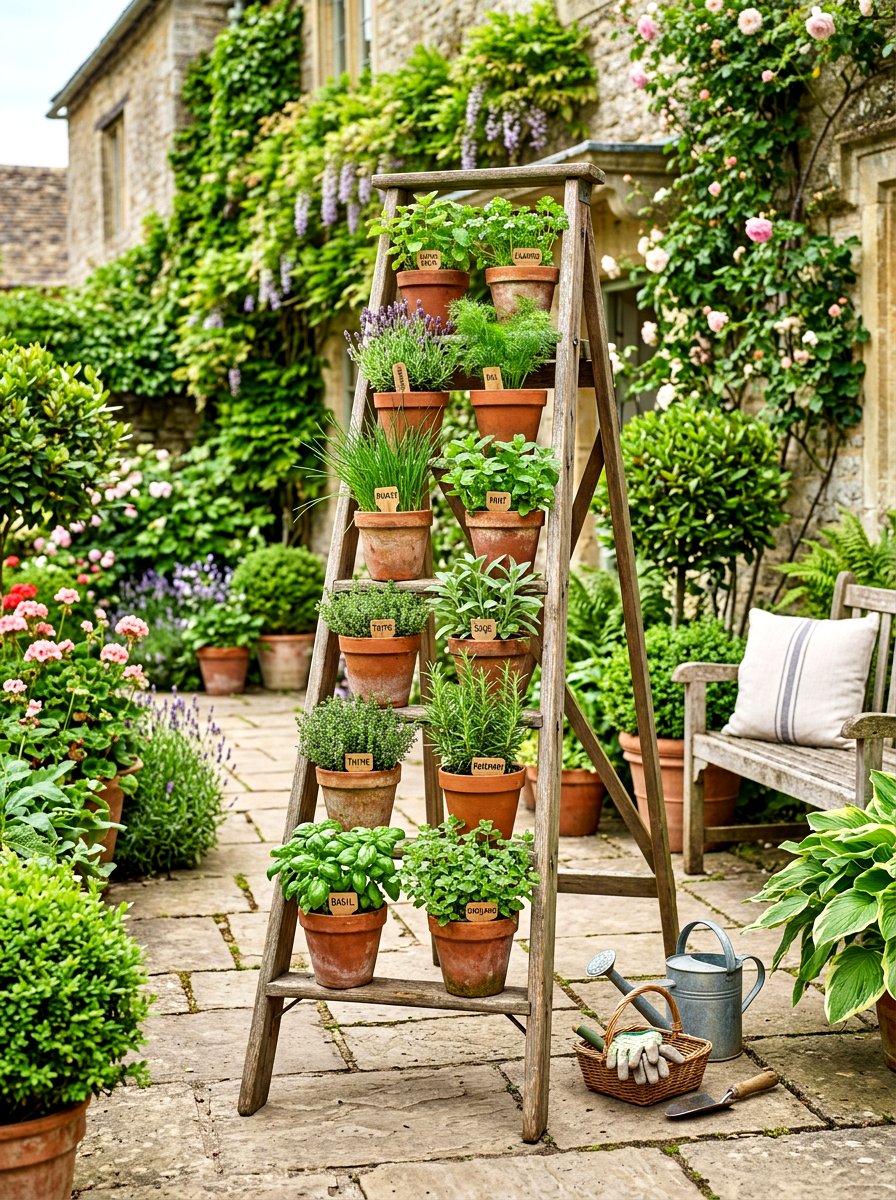
What if you could turn a simple piece of household equipment into a stunning plant display? A ladder herb garden uses a traditional A-frame ladder or a leaning garden ladder to hold several levels of pots. This is a fantastic temporary solution for renters because it doesn't require any permanent installation or drilling into walls. You can place different sizes of terracotta pots on each rung, creating a diverse and interesting visual hierarchy. It allows you to move the entire setup if you find a spot in the courtyard with better sunlight. The wooden or metal frame of the ladder provides a sturdy backdrop for your greenery. It adds a touch of whimsical, lived-in charm to any outdoor area.
13. Gravel Herb Garden
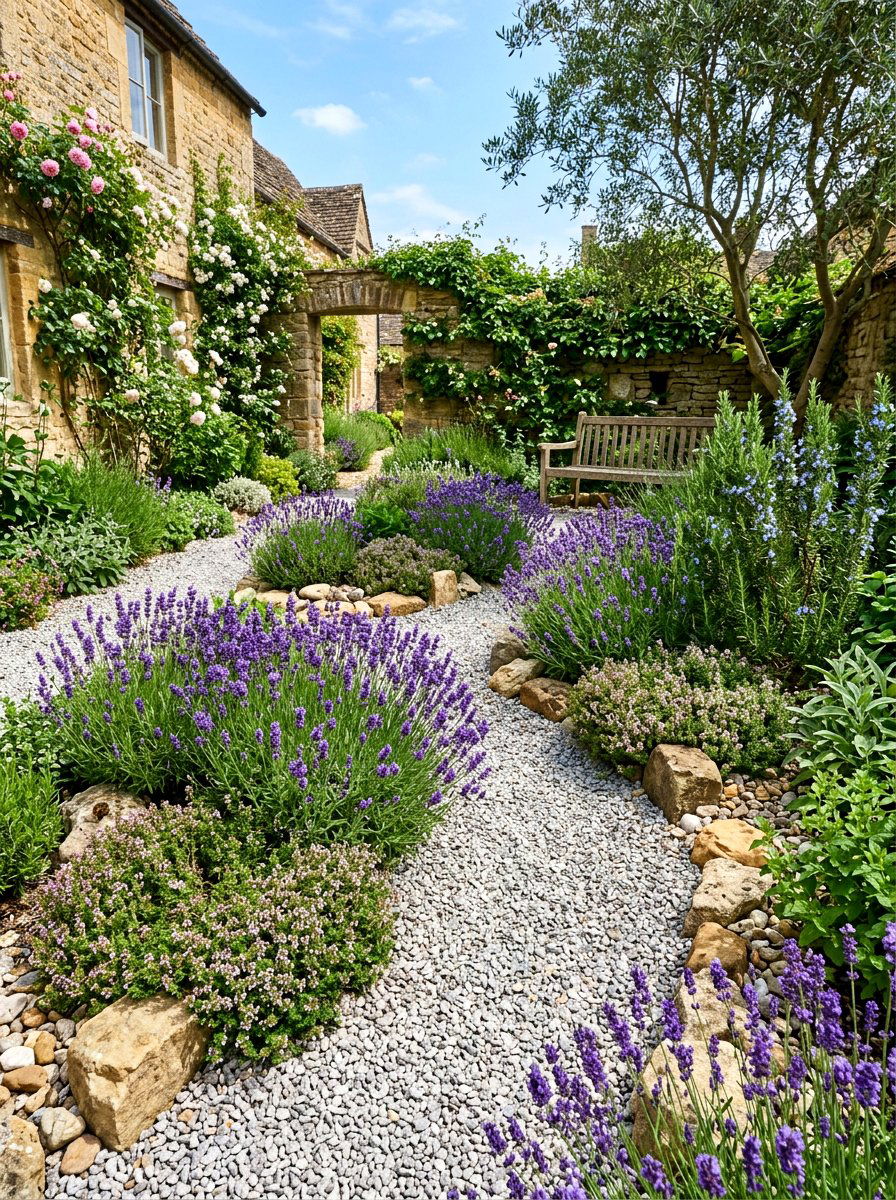
Is your courtyard floor covered in loose stone, and are you wondering how to make it feel more alive? A gravel herb garden is a low-maintenance and very stylish option that mimics the natural growing conditions of many Mediterranean plants. You can plant herbs like lavender, thyme, and santolina directly into the ground through a layer of gravel. The stones act as a mulch, keeping the roots cool while the foliage enjoys the reflected heat from above. This style creates a very relaxed, natural look that doesn't feel overly manicured. It is perfect for a courtyard where you want a sense of effortless beauty. Walking on the gravel also releases a crunching sound that adds to the sensory experience.
14. Brick Herb Garden
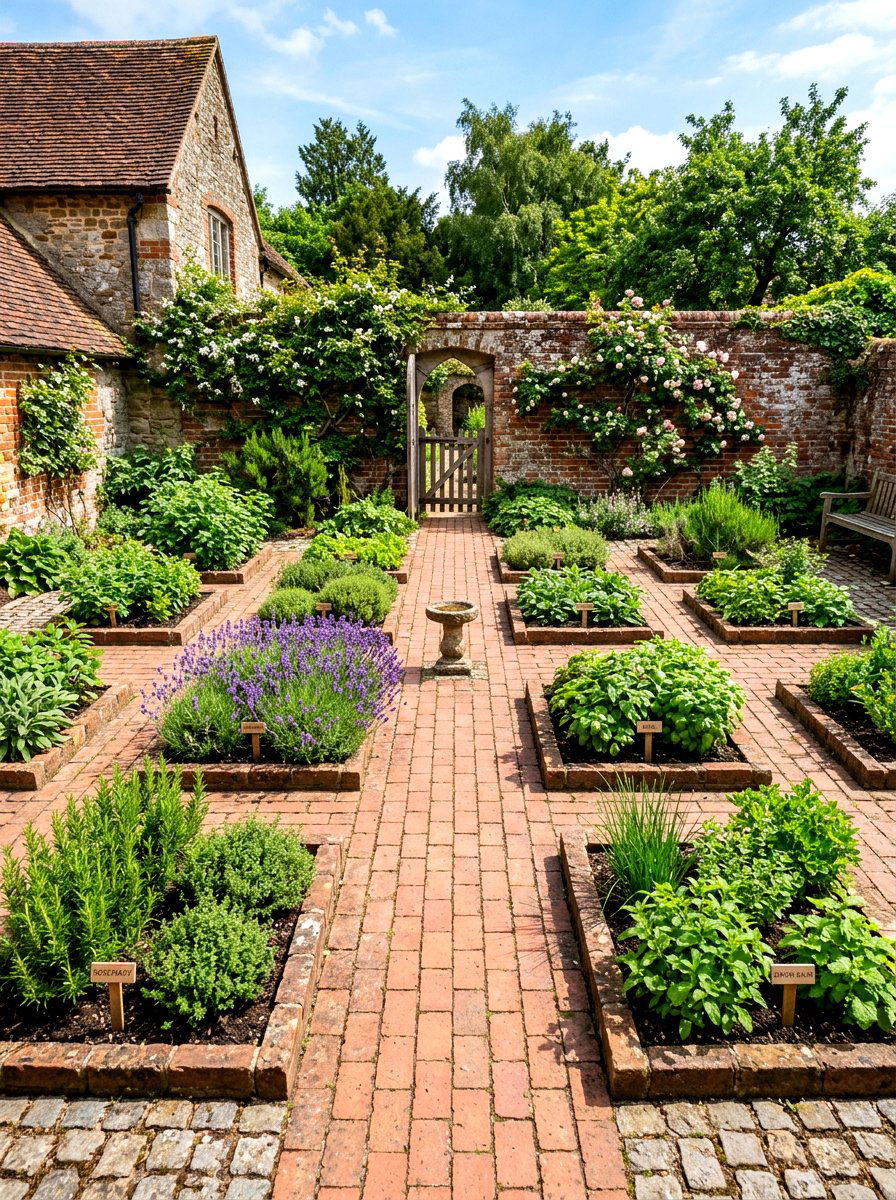
Do you love the look of classic, old-world architecture and want a garden that feels like it has been there for decades? A brick herb garden uses traditional red or weathered bricks to create permanent borders and paths. You can build small, square planting pockets within a brick-paved courtyard to hold individual herb varieties. This keeps the space looking very neat and organized while providing a warm, earthy backdrop for the green leaves. Bricks also absorb heat during the day and release it slowly at night, which is beneficial for tender herbs during cooler months. This traditional style is incredibly durable and only looks better as the bricks develop a natural patina and some moss over time.
15. Formal Parterre Herb Garden
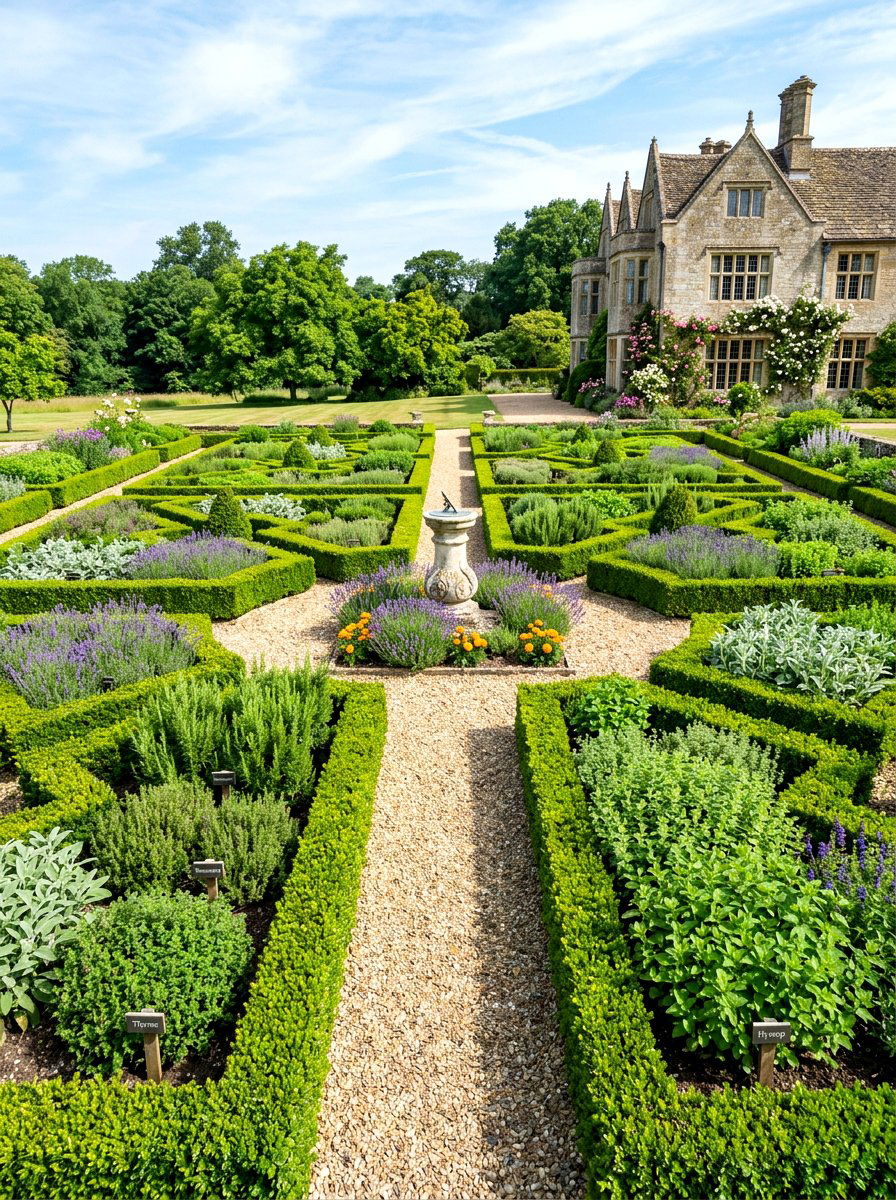
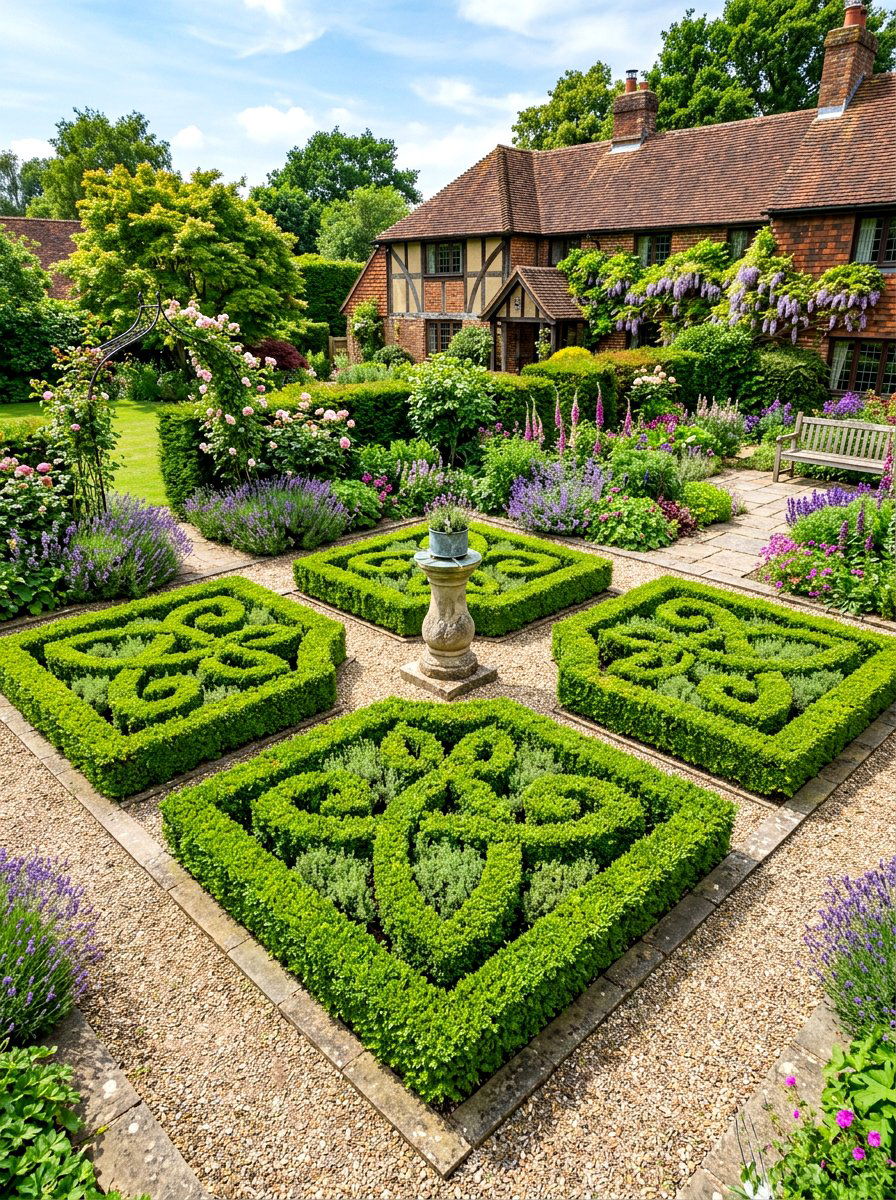
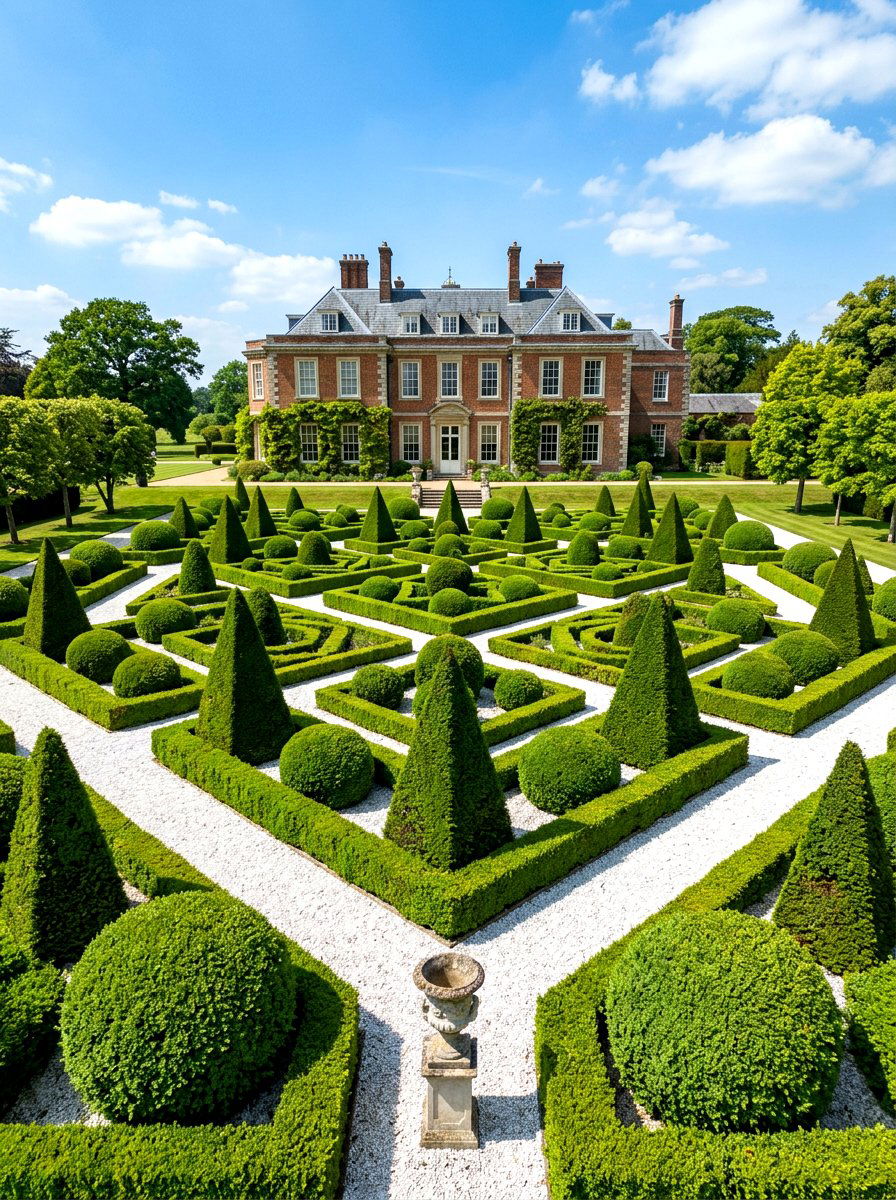
Are you inspired by the grand gardens of Europe and want to recreate that elegance on a smaller scale? A formal parterre herb garden uses clipped low hedges, such as boxwood, to create intricate patterns that are filled with herbs. In a courtyard, you can scale this down by using small wooden dividers or stone paths to create a similar effect. Each section of the parterre can be dedicated to a single herb, creating a tapestry of different colors and textures. This design requires a bit more maintenance to keep the edges sharp, but the result is a sophisticated and high-end outdoor space. It turns a simple herb patch into a stunning work of living art that defines your home.
16. Shady Herb Garden
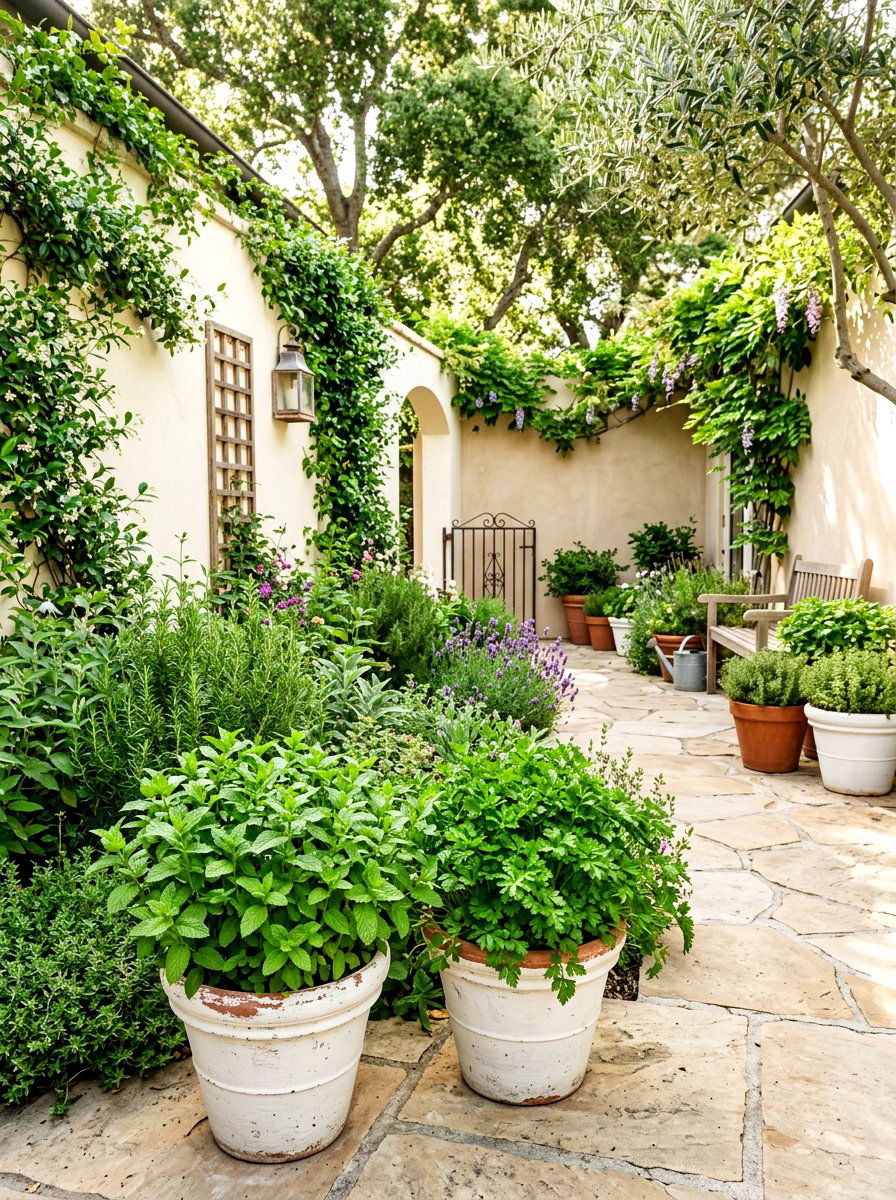
Does your courtyard suffer from limited sunlight because of high walls or overhanging trees? A shady herb garden is still very possible if you choose the right plants that thrive in dappled light or partial shade. Herbs like mint, chervil, lemon balm, and parsley are surprisingly resilient in lower light conditions. You can enhance the brightness of the space by using light-colored pots and white-painted walls to reflect what little sun is available. Adding a mirror to one of the walls can also help bounce light into the darker corners of the courtyard. This type of garden often feels very lush and cool, making it a refreshing place to sit during the hottest parts of the mid-summer days.
17. Herbal Tea Garden
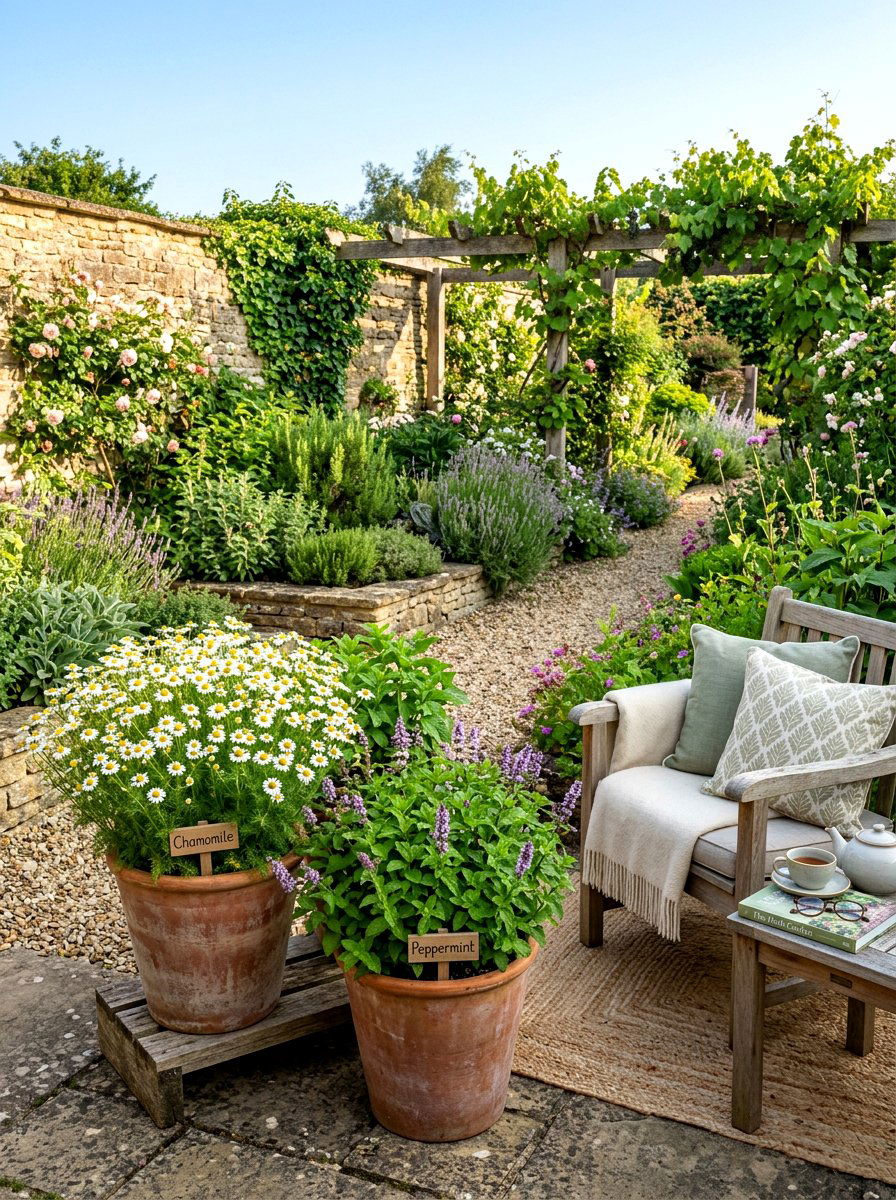
Would you love to have a dedicated spot where you can harvest ingredients for a soothing afternoon drink? An herbal tea garden focuses on plants like chamomile, peppermint, lemon verbena, and stevia. Arranging these in a cozy corner of your courtyard near a comfortable chair creates a perfect relaxation zone. You can use large, deep pots to give the mint plenty of room to grow without it spreading to other areas. This specific theme gives your garden a clear purpose and makes the harvesting process a mindful ritual. The scents of these particular herbs are often very calming and sweet. It is a wonderful way to bring a functional and therapeutic element into your outdoor living space.
18. Border Herb Garden
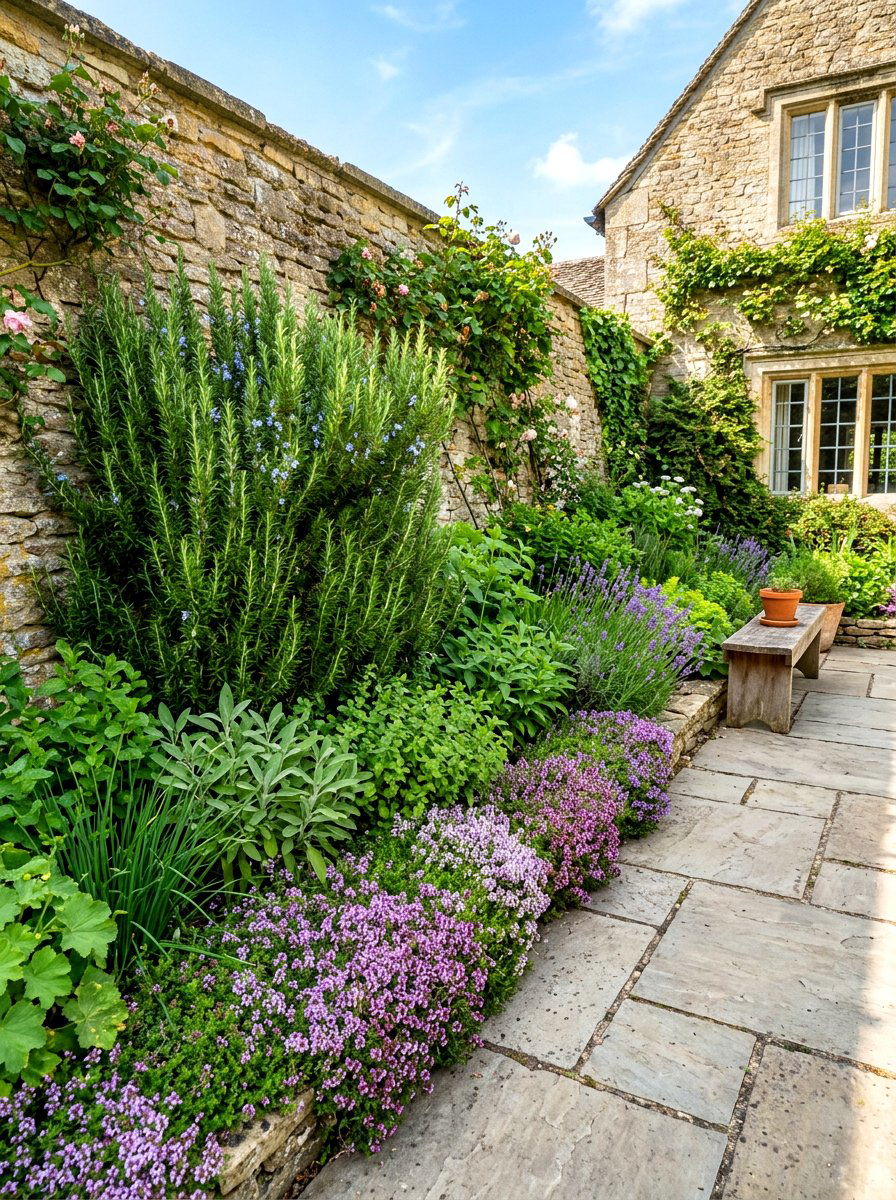
What if you could frame your courtyard with a fragrant and edible perimeter? A border herb garden runs along the edges of your patio or against the boundary walls, leaving the center clear for furniture or movement. This design uses the "tall in the back, short in the front" rule to ensure every plant is visible. You might have tall bay trees or upright rosemary against the wall, followed by mid-sized sage, and finally creeping thyme at the very edge. This creates a very lush and full look that makes a small courtyard feel like a larger landscape. The border acts as a soft transition between the hard surfaces of the courtyard and the vertical walls surrounding it.
19. Compact Micro Herb Garden
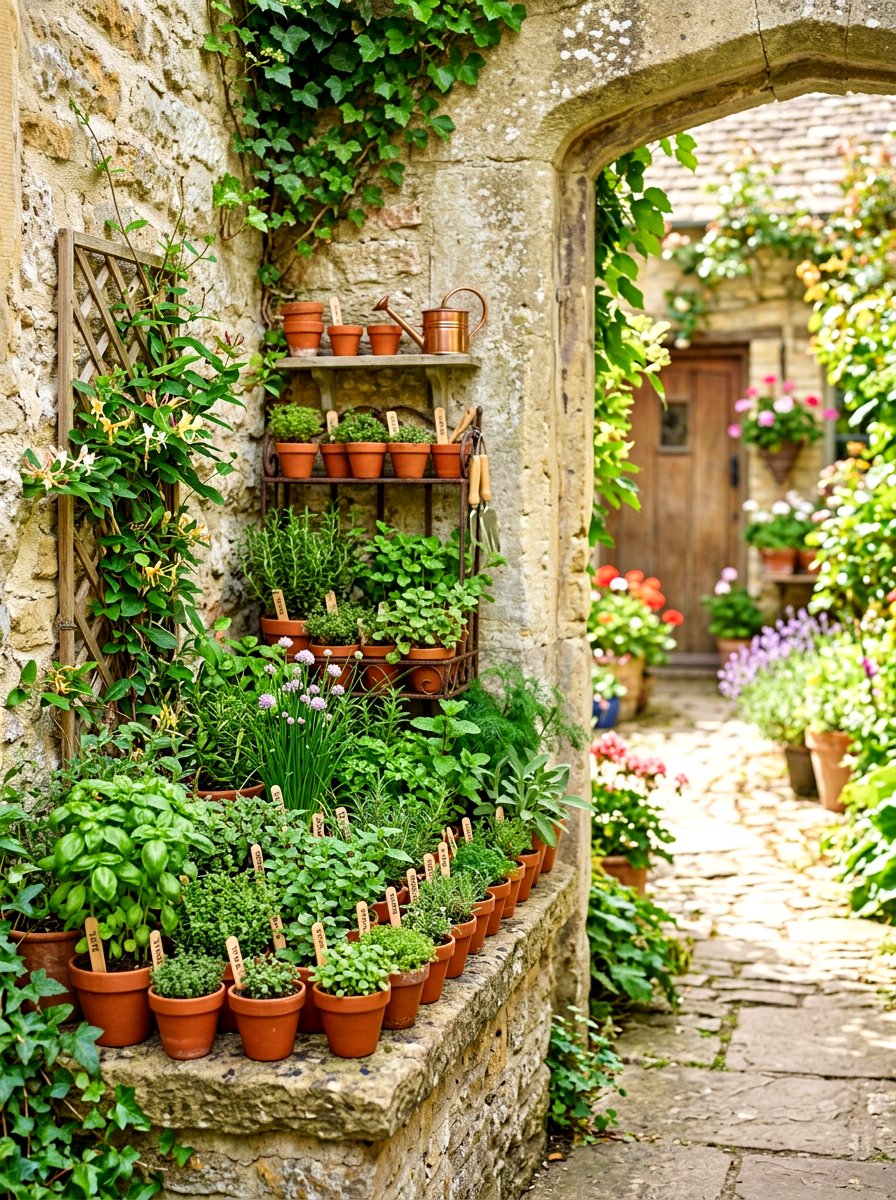
Are you dealing with an incredibly tiny space, like a small light well or a tiny alcove? A compact micro herb garden proves that you don't need much room to be successful. This approach focuses on miniature herb varieties and small-scale containers that fit onto ledges or narrow shelves. You can use magnetic tins on a metal door or tiny hanging glass jars to grow just enough for a few meals. Using high-quality potting mix and liquid fertilizer is key to keeping these small plants healthy. Even a single square foot of space can host several types of herbs if you are creative with your placement. It brings a touch of life and greenery to the most unexpected urban corners.
20. Patio Herb Garden
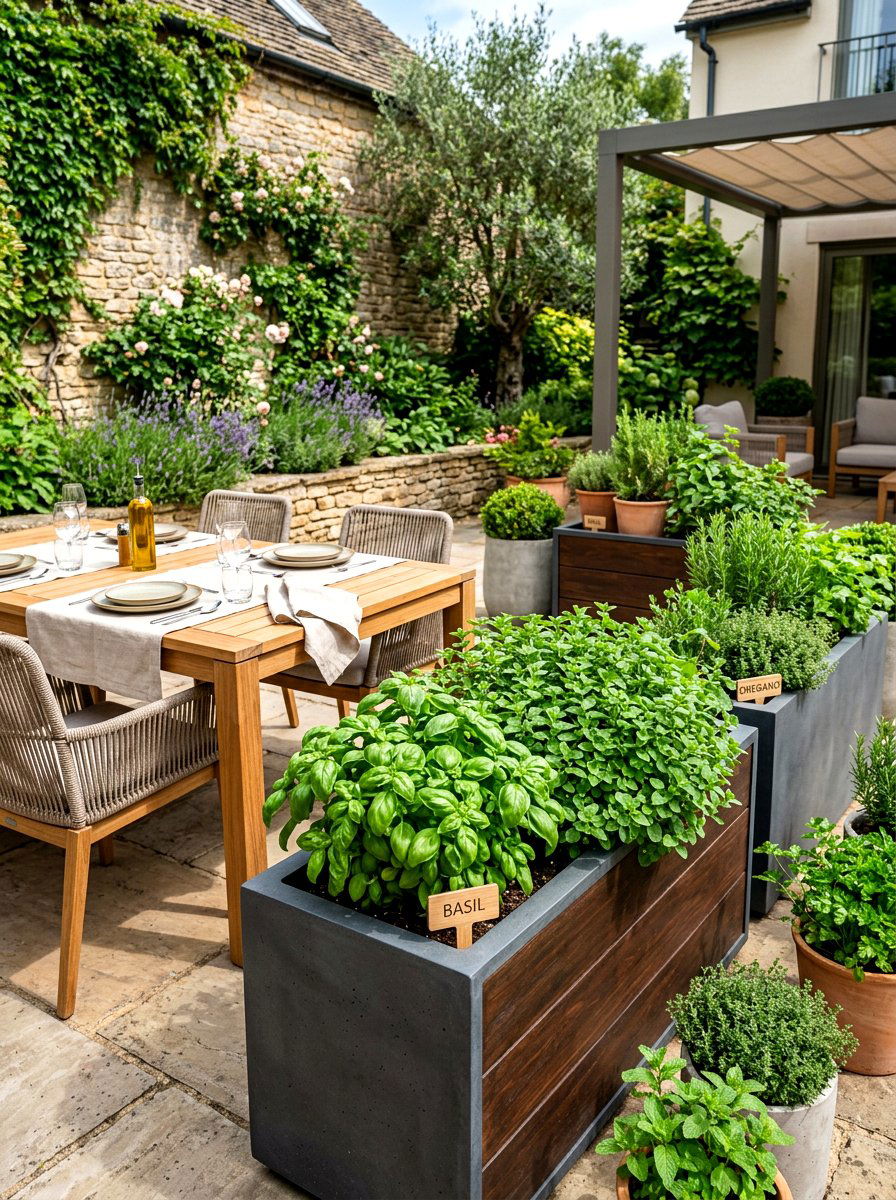
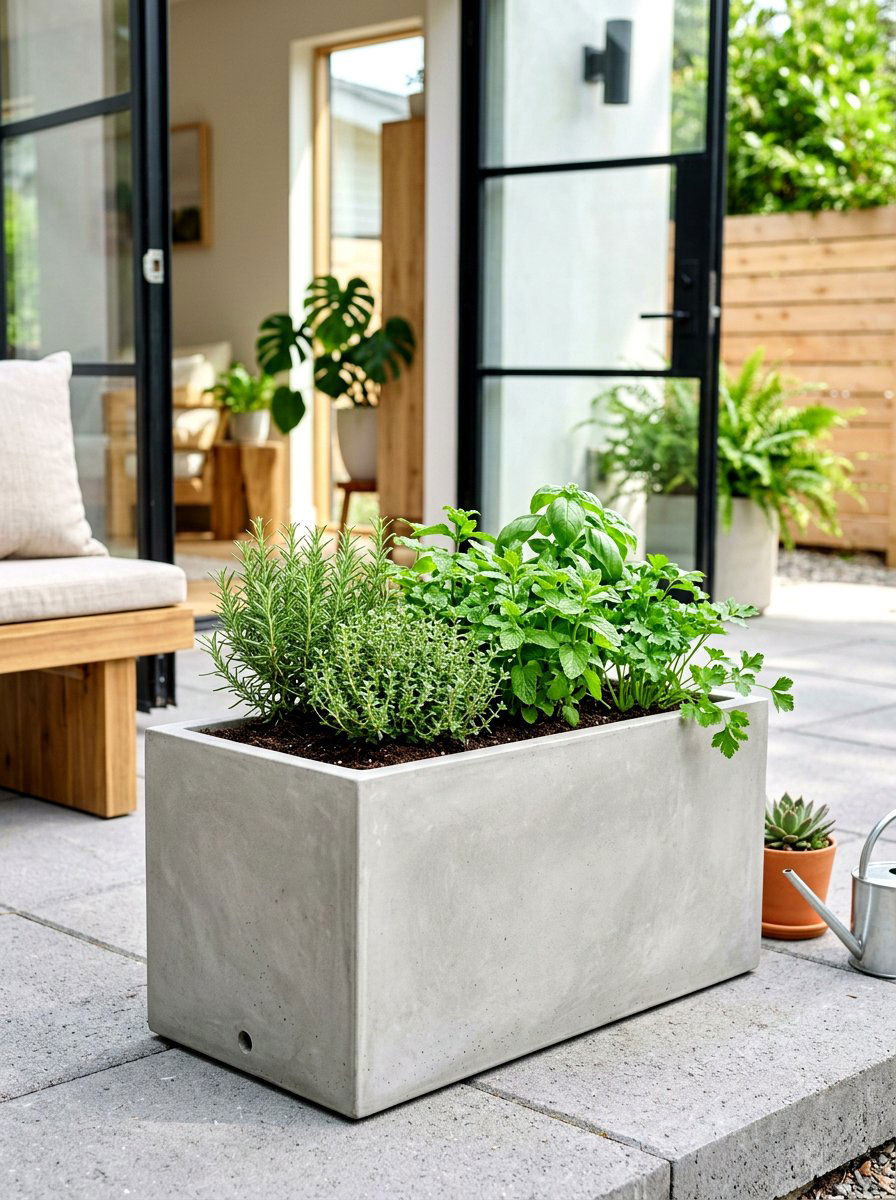
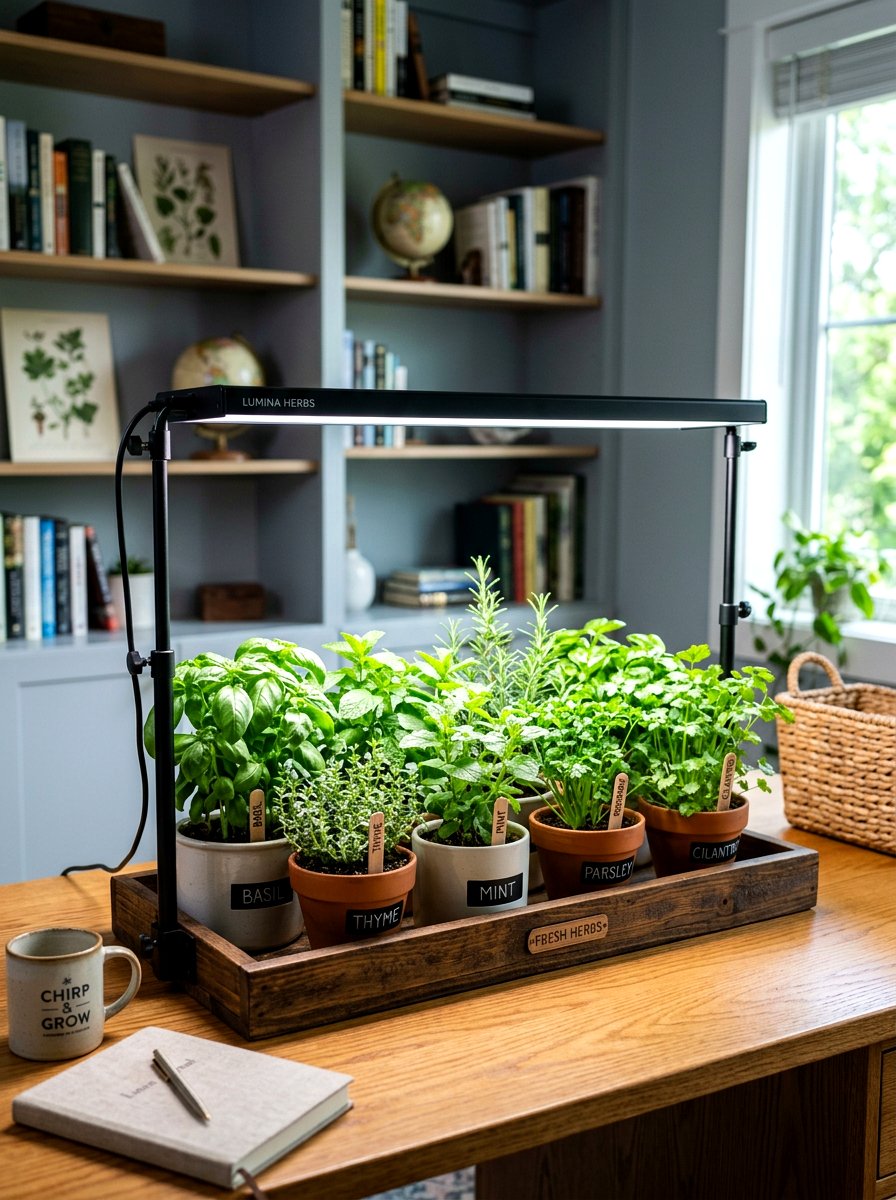
Do you want a garden that feels like a natural extension of your outdoor dining and lounging area? A patio herb garden integrates plants directly into the living space by using large planters as room dividers or side tables. You can place a large pot of fragrant basil right next to your dining table for guests to pick and add to their salads. Using heavy, high-quality containers that match your outdoor furniture creates a cohesive and professional look. This style of gardening is all about lifestyle and making the herbs a part of your everyday relaxation. The proximity of the plants ensures you will always have fresh garnishes ready for your outdoor cocktails or summer grilled meals.
21. Minimalist Herb Garden
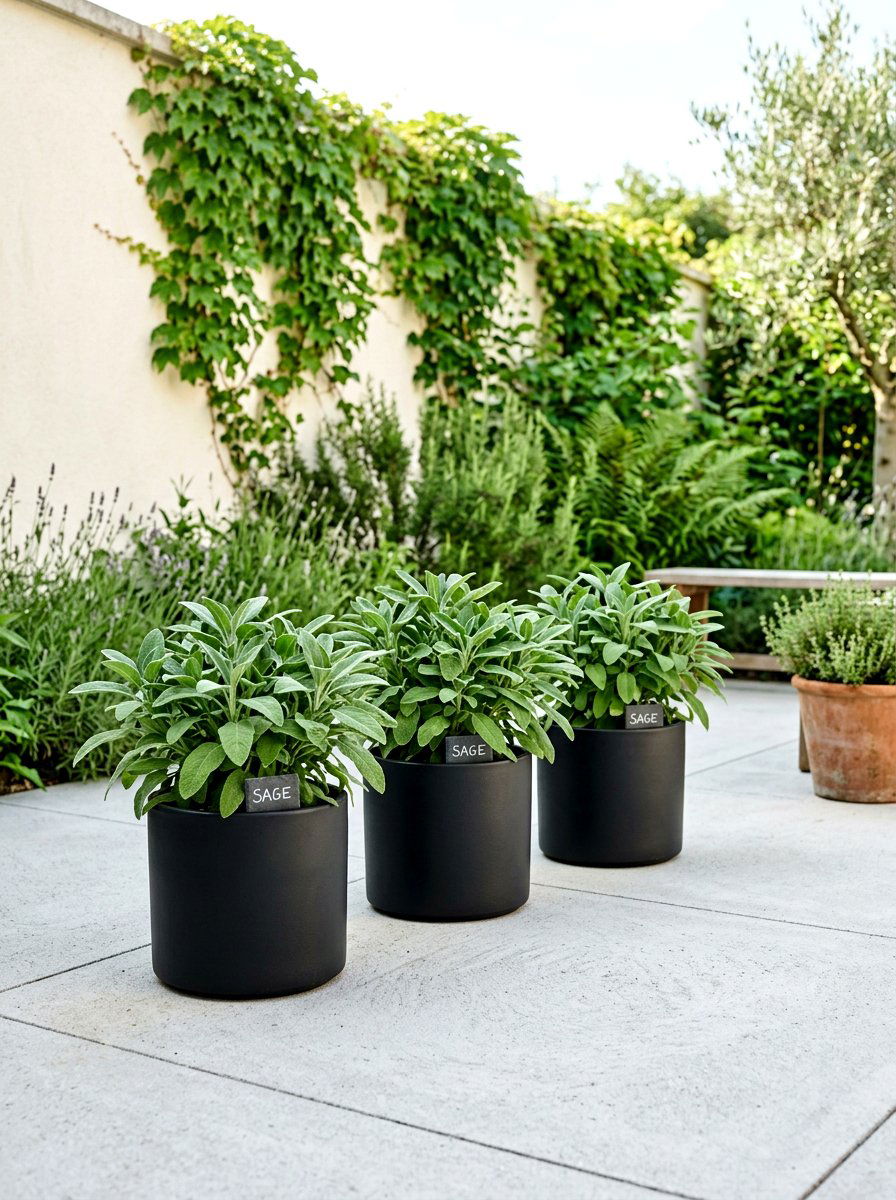
What if your style is more about "less is more" and you want a garden that feels clean and modern? A minimalist herb garden uses a limited color palette and a few carefully selected plants to make a strong statement. You might choose three identical black pots and fill them each with a single type of herb, like structured rosemary or silver-leafed sage. The focus is on the shape and texture of the plants rather than a wild variety of colors. This looks fantastic against a backdrop of smooth concrete or dark wood fencing. By keeping the design simple, you create a sense of calm and order that is perfect for a contemporary home. It is easy to maintain and looks great year-round.
22. Terracotta Herb Garden
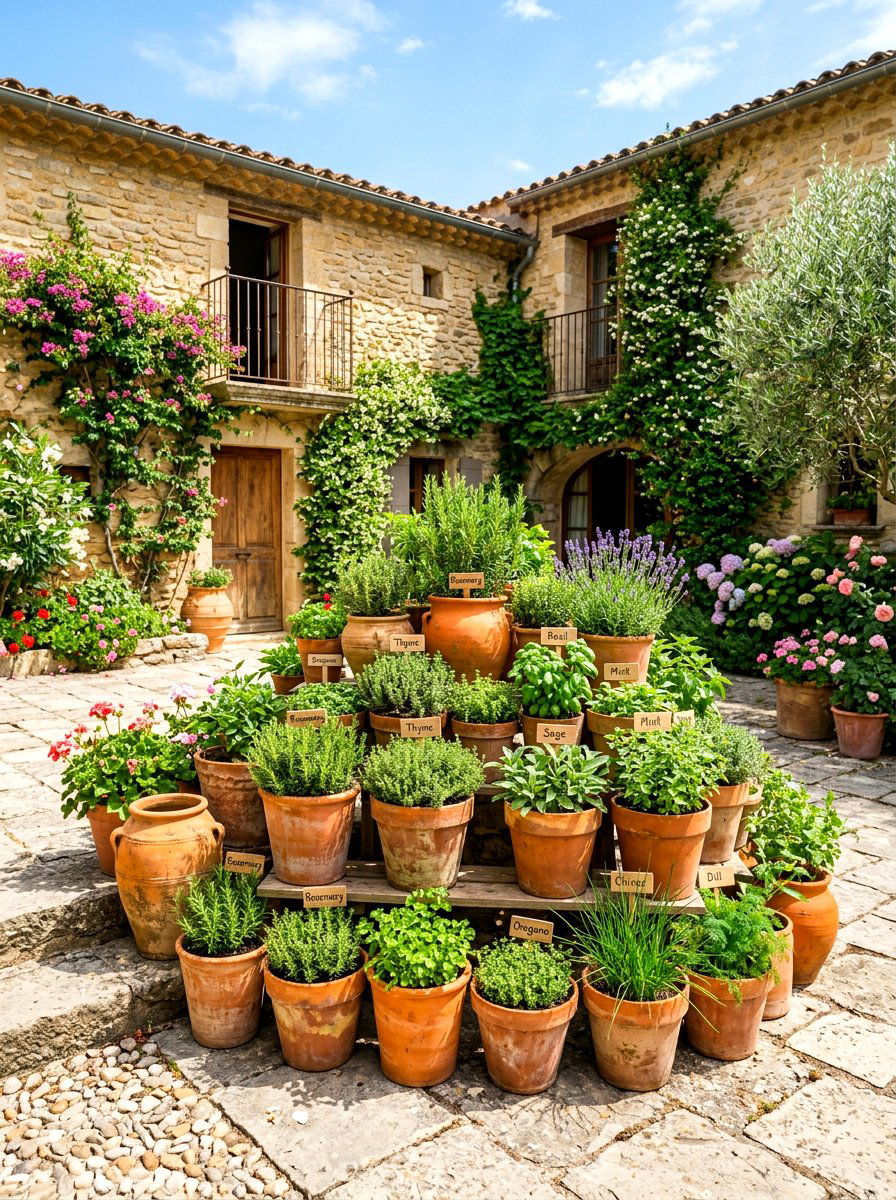
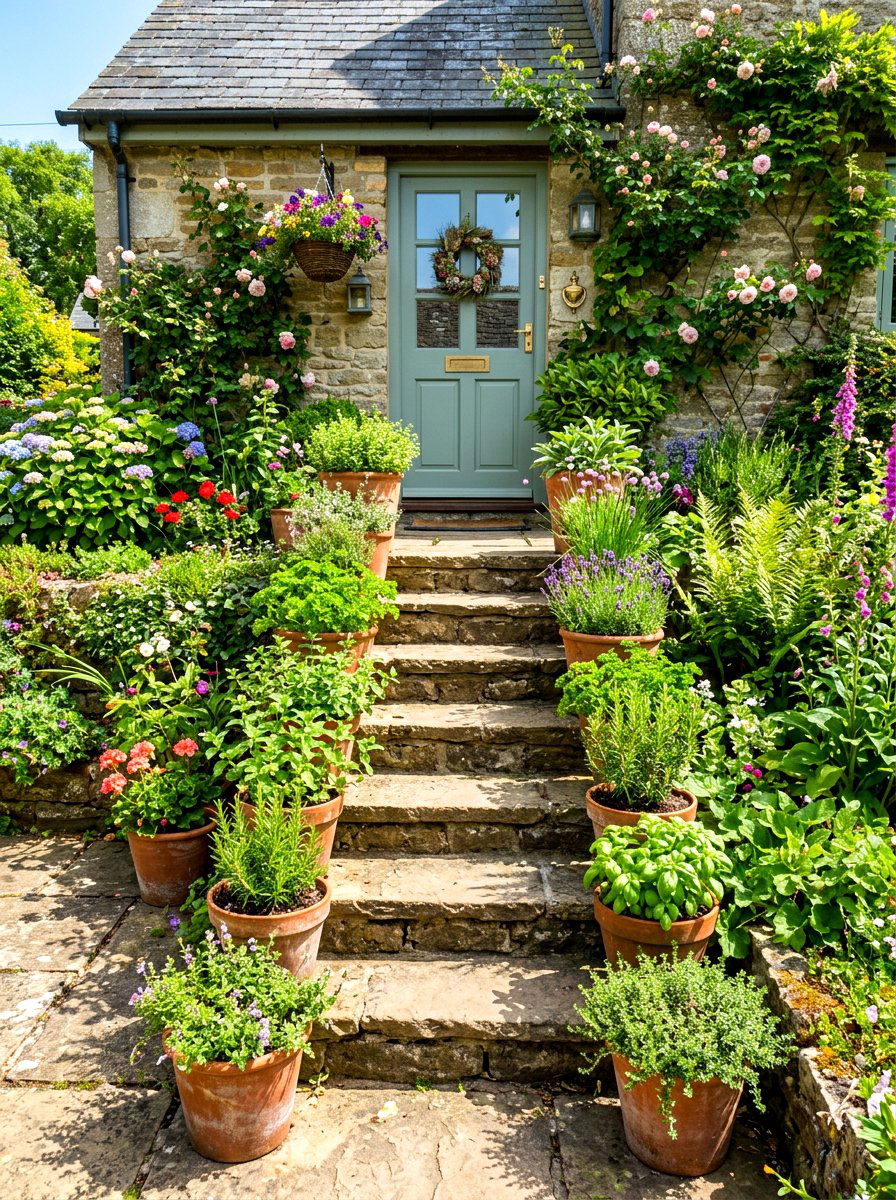
Is there anything more classic and warm than the look of orange-hued clay pots filled with green life? A terracotta herb garden relies on the timeless appeal of these breathable containers to create a rustic, earthy vibe. You can collect pots of different shapes and heights to create a dynamic and interesting display on your courtyard floor. The porous nature of terracotta is excellent for herbs like oregano and thyme because it prevents the soil from staying too soggy. Over time, the pots will develop a beautiful white salt patina that adds to their aged, antique charm. This style feels very grounded and traditional, making any courtyard feel like a cozy part of a Mediterranean or farmhouse-style home.
23. Fragrant Herb Garden
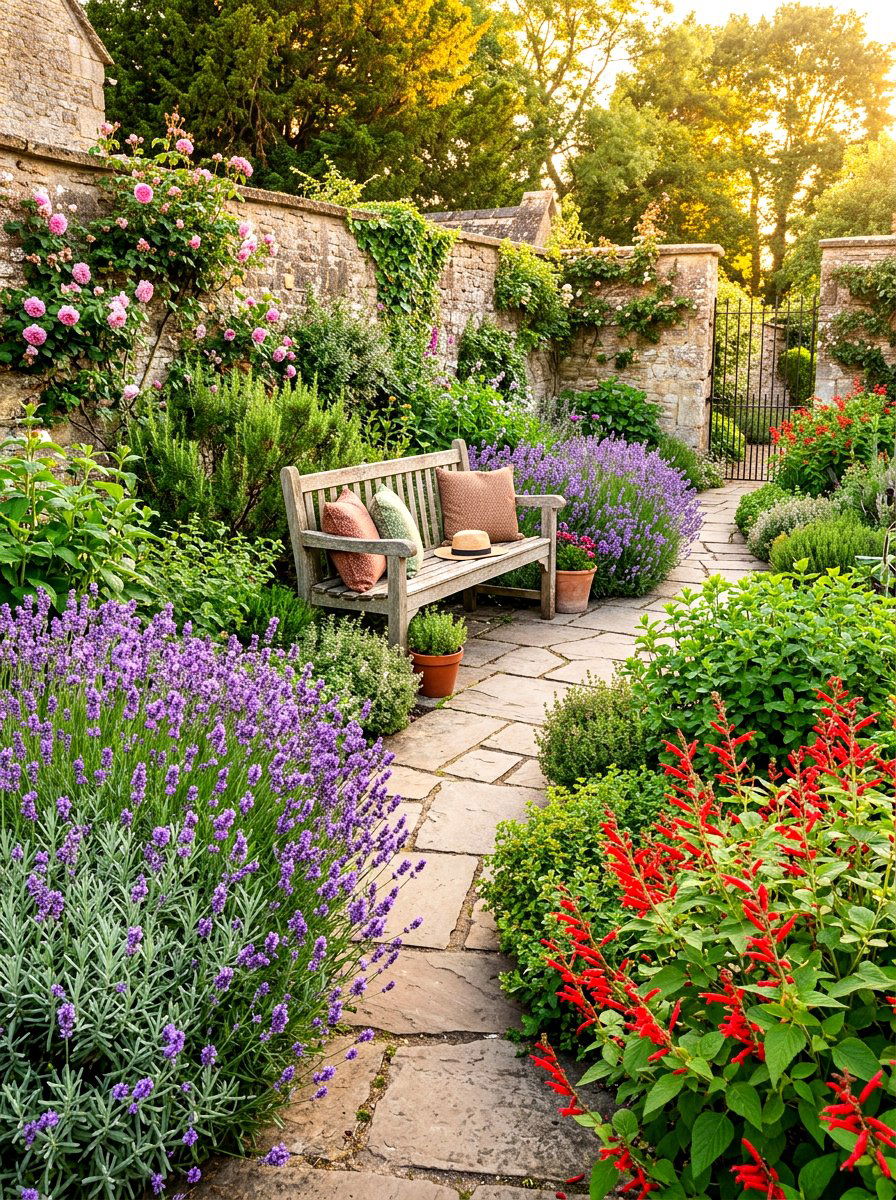
Do you want to walk into your courtyard and be immediately hit by a wave of incredible natural perfume? A fragrant herb garden prioritizes the scent of the plants over everything else. You would fill your space with lavender, jasmine-scented herbs, pineapple sage, and lemon thyme. Placing these plants near entryways or seating areas ensures that every time someone passes by, the aroma is released. Using various heights for the plants allows the scent to fill the air at different levels. This type of garden is particularly magical in the evening when the air is still and the fragrances become more concentrated. It turns your outdoor space into a therapeutic aromatherapy zone that naturally reduces stress and boosts your mood.
24. Zen Herb Garden
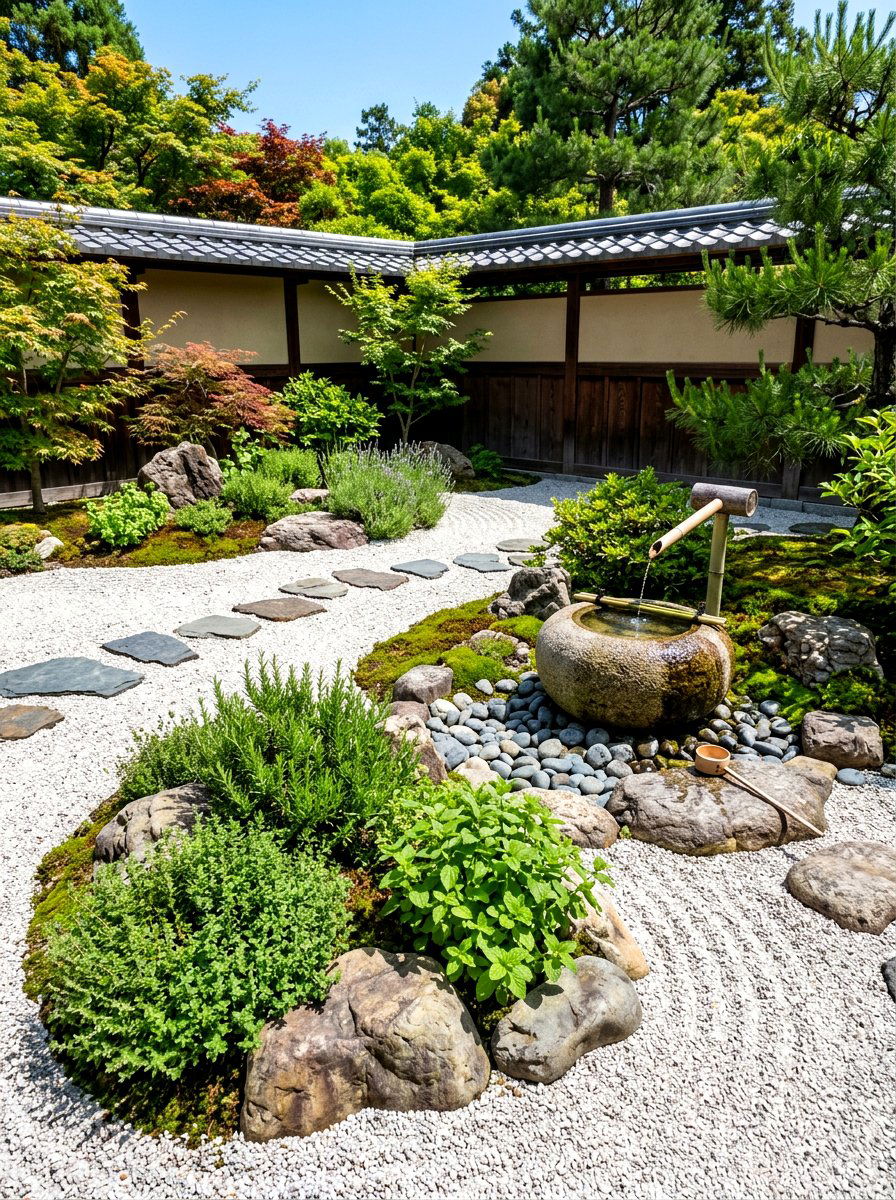
What if your courtyard could be a place of quiet reflection and total peace? A Zen herb garden incorporates elements of Japanese design, such as raked sand, smooth river stones, and simple greenery. Instead of a wild variety of herbs, you might choose a few types with soft textures, like creeping thyme or delicate fennel. The layout is usually very open and uncluttered, allowing for a sense of space and tranquility. You can add a small stone water feature to provide a soothing background sound that masks city noise. This type of garden isn't just about growing food; it is about creating a meditative environment where you can disconnect from the busy world and find your inner calm.
25. Wall Mounted Herb Garden
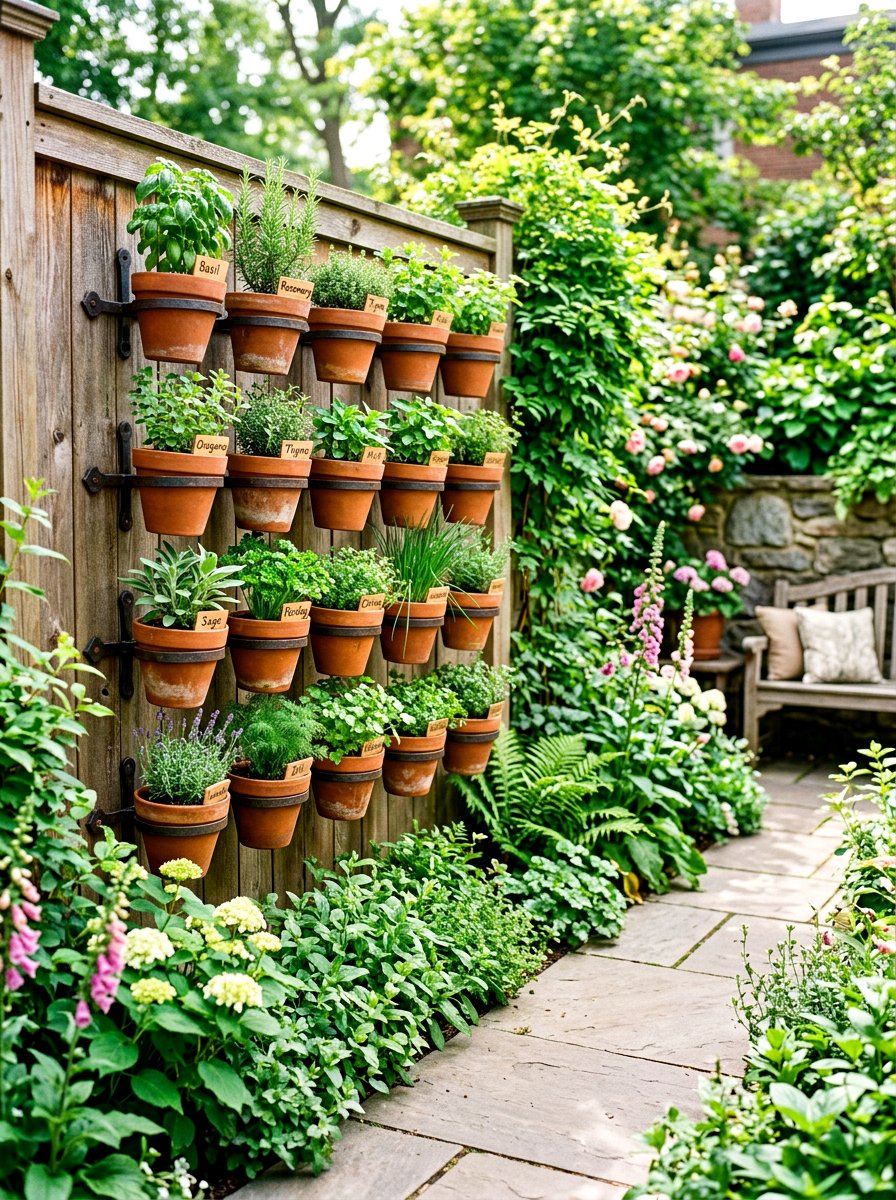
Are your walls the only thing you have left to work with in your small courtyard? A wall-mounted herb garden uses vertical space creatively by attaching individual pots directly to a fence or brick wall. You can use specialized ring brackets, wooden slats with hooks, or even recycled tin cans for a more industrial look. This method allows you to create patterns or even spell out words with your plants. It keeps the herbs at a comfortable height for maintenance and keeps them away from curious pets. Ensure that your mounting system is very secure, as pots become heavy when watered. It is a fantastic way to add a "living art" piece to an otherwise empty and boring wall.
26. Upcycled Herb Garden
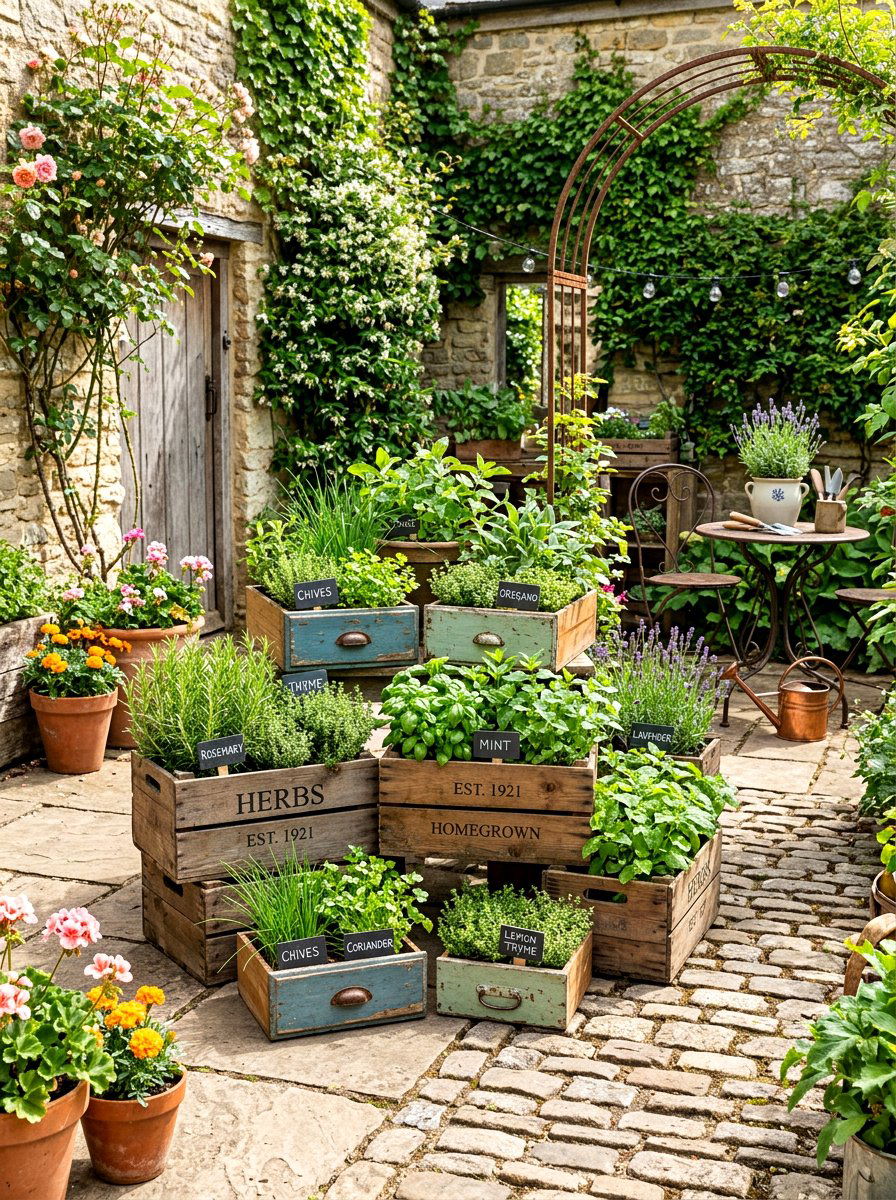
Do you love the idea of giving old objects a second life while growing your own food? An upcycled herb garden uses repurposed items like old wooden crates, metal colanders, or even vintage drawers as unique planters. This gives your courtyard a lot of personality and a "shabby chic" or eclectic feel. You can find these items at thrift stores or even in your own attic. Just make sure to add drainage holes to any unconventional container to keep your herbs from drowning. This style of gardening is very sustainable and shows off your creativity. It is a great conversation starter and makes your garden feel completely unique to you and your personal history.
27. Rustic Metal Herb Garden
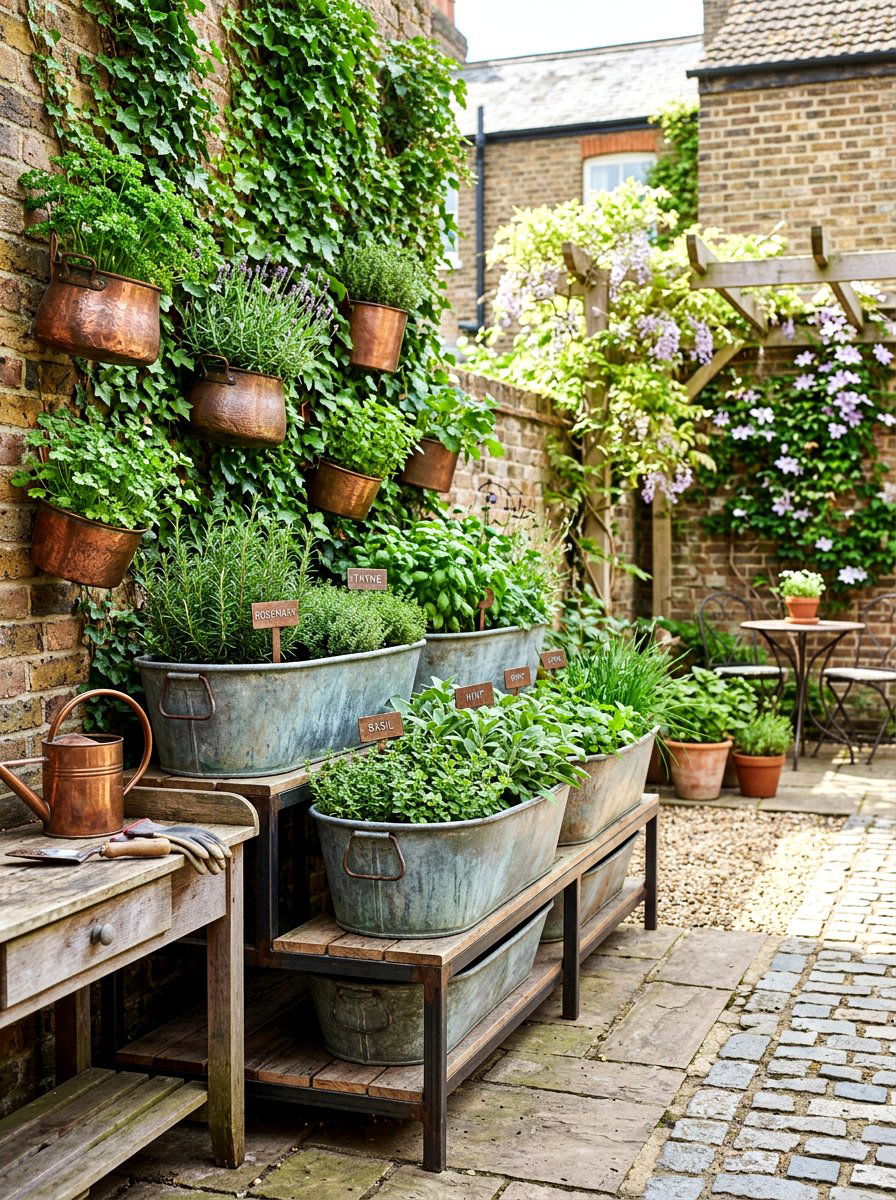
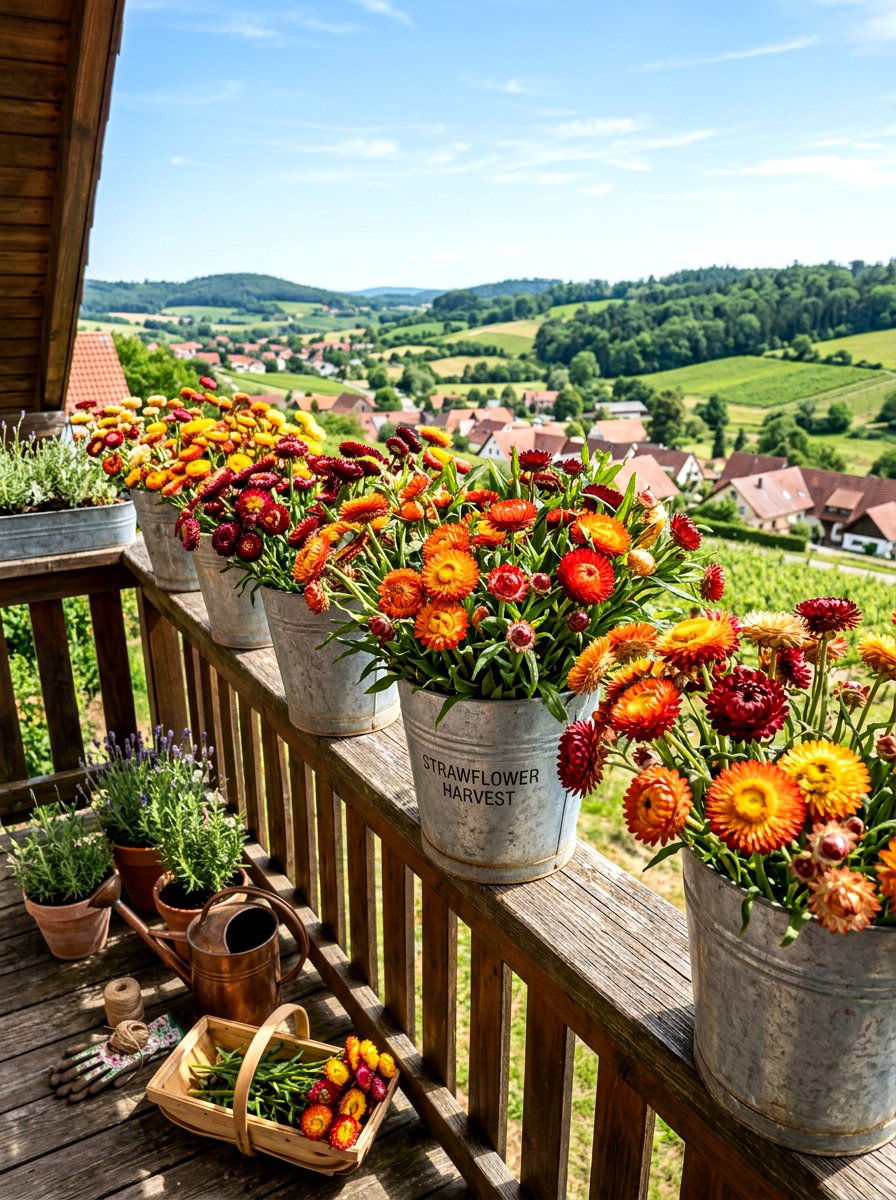
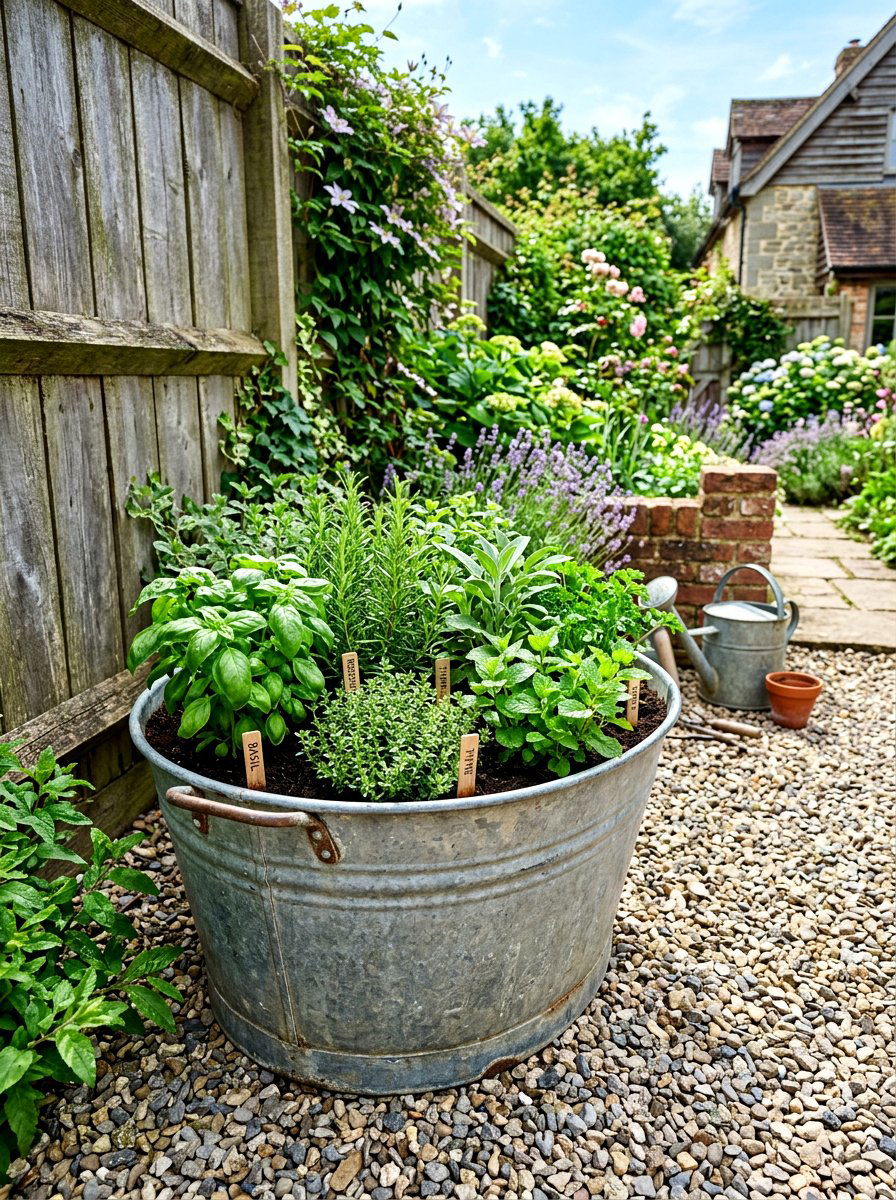
What if you want a look that is both industrial and natural at the same time? A rustic metal herb garden uses materials like galvanized steel troughs, copper pots, or weathered corten steel beds. The cool, hard surface of the metal provides a beautiful contrast to the soft, organic texture of the herbs. Galvanized buckets are particularly popular because they are affordable, durable, and have a classic farm-style look. Metal containers can get hot in the direct sun, so they are best suited for heat-loving herbs or placed in slightly shaded areas of the courtyard. This style is incredibly sturdy and can withstand all types of weather while maintaining its stylish, slightly edgy aesthetic for many years.
28. Multi Level Herb Garden
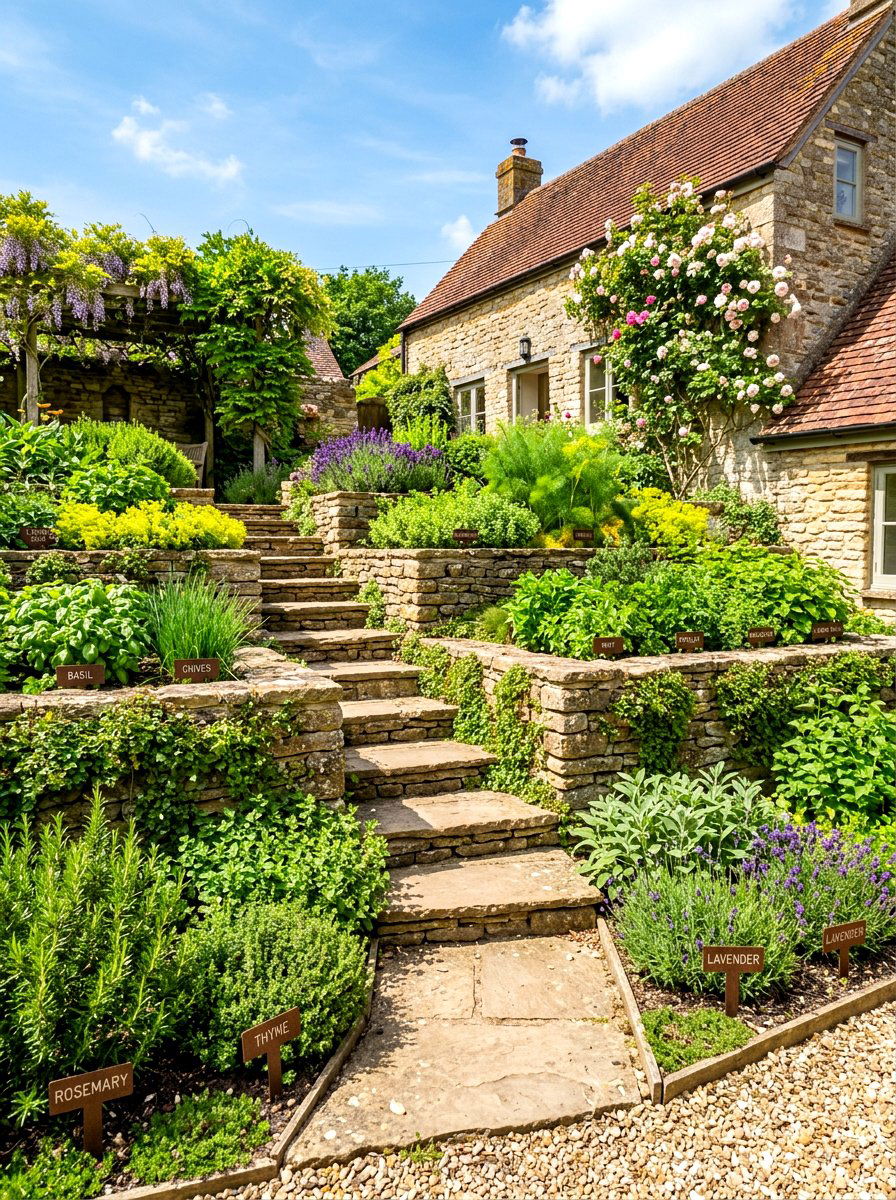
Have you ever thought about building a mini-stadium for your plants to ensure they all get the best view? A multi-level herb garden uses built-in stone or wood steps to create distinct tiers for planting. This is a great way to handle a sloped courtyard or to simply add architectural interest to a flat space. You can use the different levels to separate herbs by their culinary use, such as a "pizza level" with basil and oregano and a "salad level" with chives and parsley. The varying heights make harvesting very easy and give the garden a lush, abundant feeling. It creates a sense of depth and complexity that makes even a small courtyard feel more significant.
29. Tropical Herb Garden
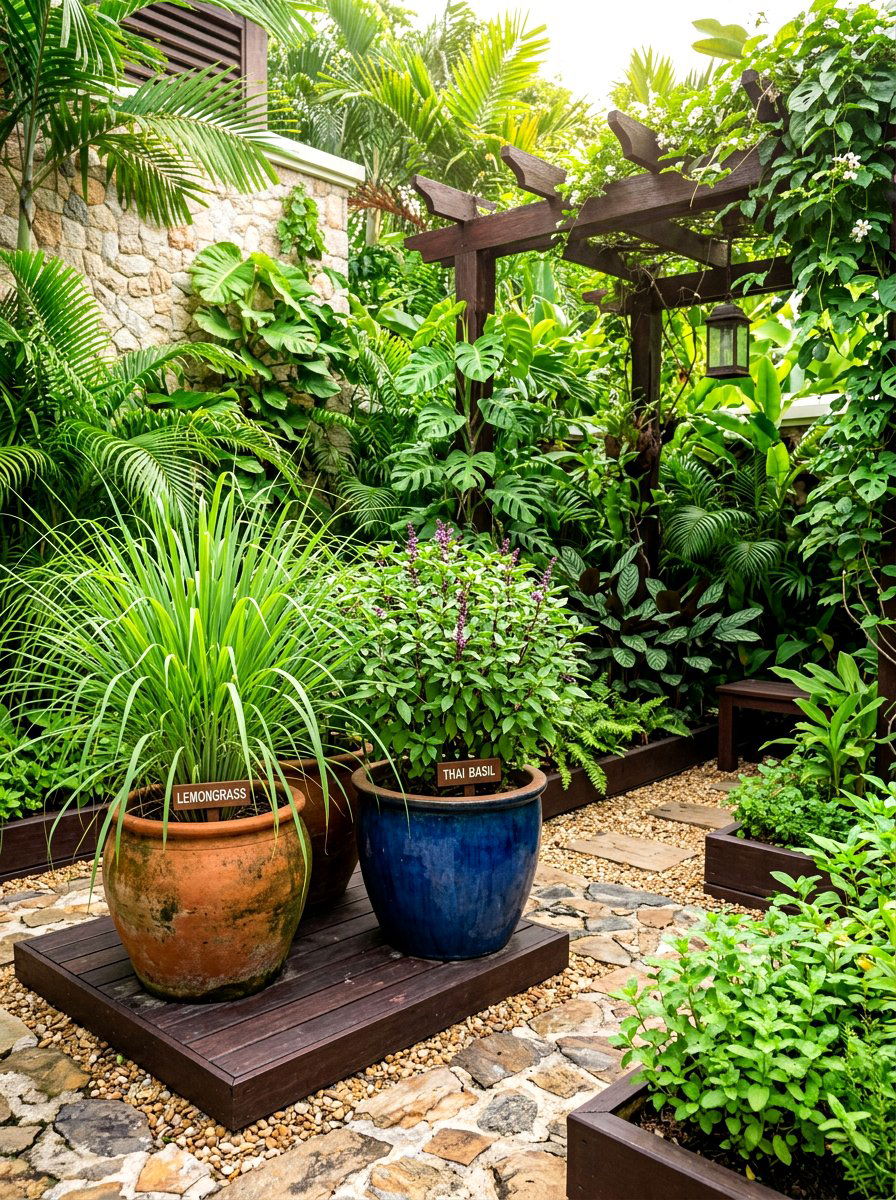
Do you live in a humid climate and want to embrace a lush, jungle-like aesthetic? A tropical herb garden uses large-leafed herbs and exotic varieties like lemongrass, ginger, and Thai basil. These plants often have bold shapes and vibrant green colors that create a very dense and vibrant atmosphere. You can pair these with traditional courtyard elements like dark wood and bright white stone to make the greenery pop. Tropical herbs often grow very quickly and can provide a lot of privacy if planted in tall containers along the perimeter. This style turns your courtyard into an exotic getaway where you can feel like you are on vacation every time you step outside for a few fresh leaves.
30. Cottage Herb Garden
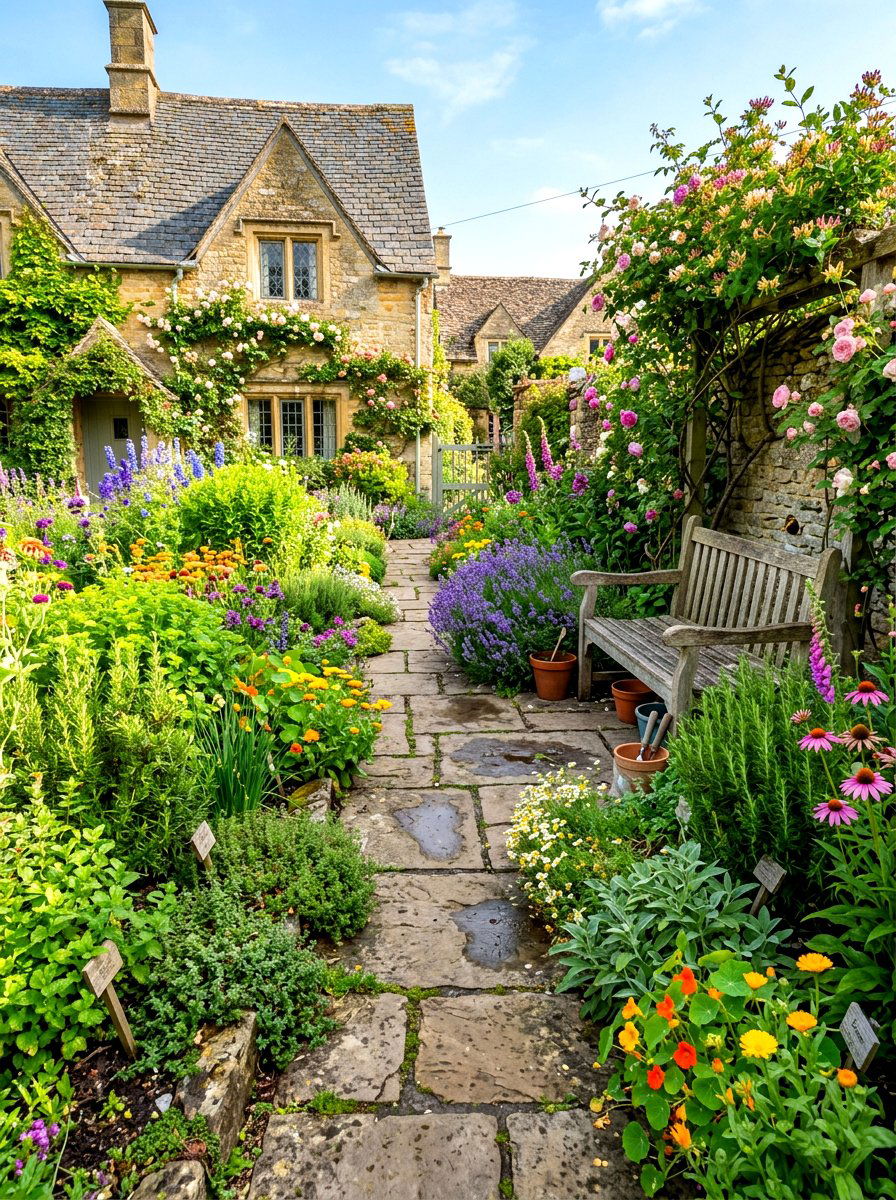
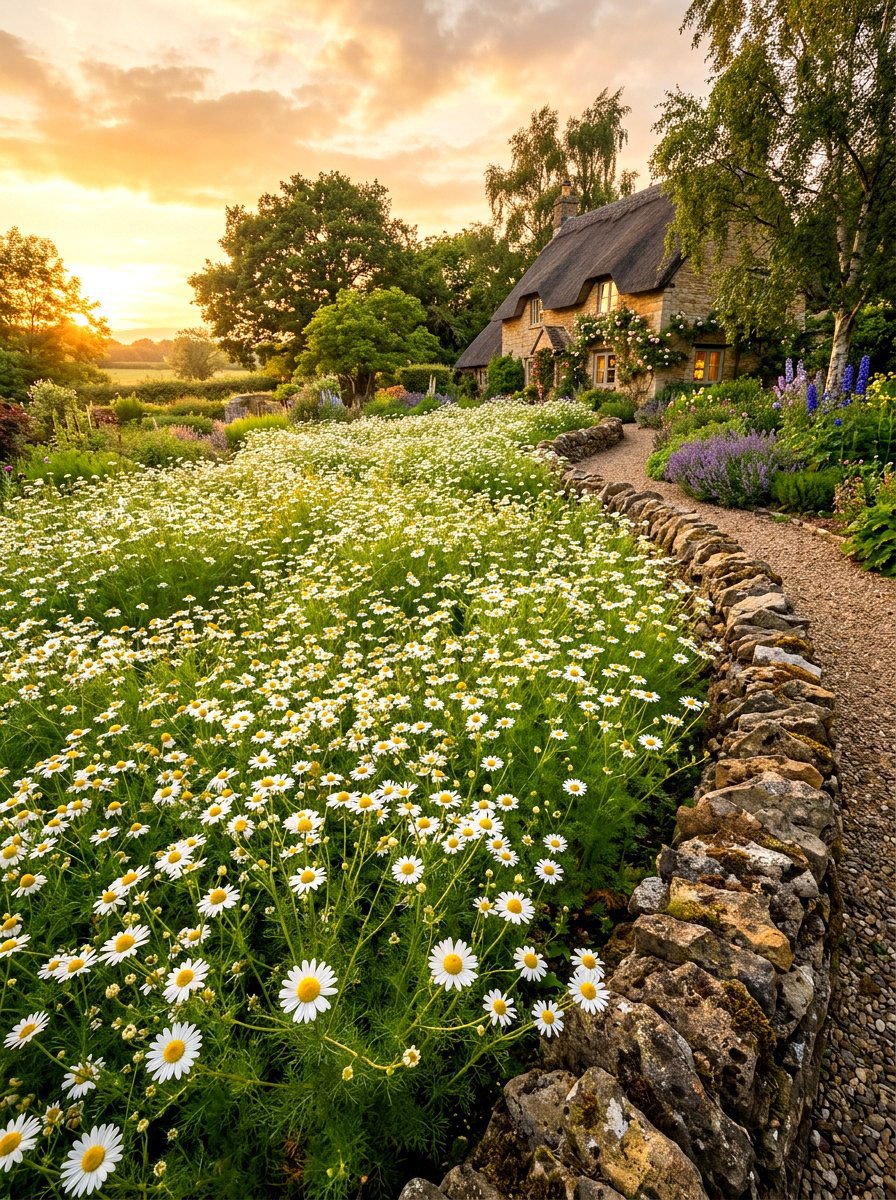
Would you like a garden that feels intentionally wild, romantic, and full of old-fashioned charm? A cottage herb garden is all about abundance and mixing herbs with traditional flowering plants. You might have rosemary bushes growing alongside roses, and chives tucked in between daisies. The look is informal and "messy" in the best possible way, with plants spilling over paths and onto the furniture. This style is very welcoming and attracts a lot of beneficial insects like bees and butterflies. Using rustic wooden furniture and weathered stone paths completes the look. It is a garden that feels lived-in and loved, providing a constant source of beauty and fresh ingredients for your home-cooked country meals.
Conclusion:
A courtyard herb garden is more than just a place to grow food; it is a transformative design element that brings life, fragrance, and color to your home. By choosing the right style and layout for your specific space, you can create a highly productive area that also serves as a beautiful retreat. Whether you go for the sleek lines of a minimalist design or the lush abundance of a cottage garden, the key is to make it your own. Fresh herbs are a luxury that anyone can enjoy, regardless of the size of their outdoor area. Start small, experiment with different varieties, and soon you will have a thriving sanctuary right outside your door.

Related posts: