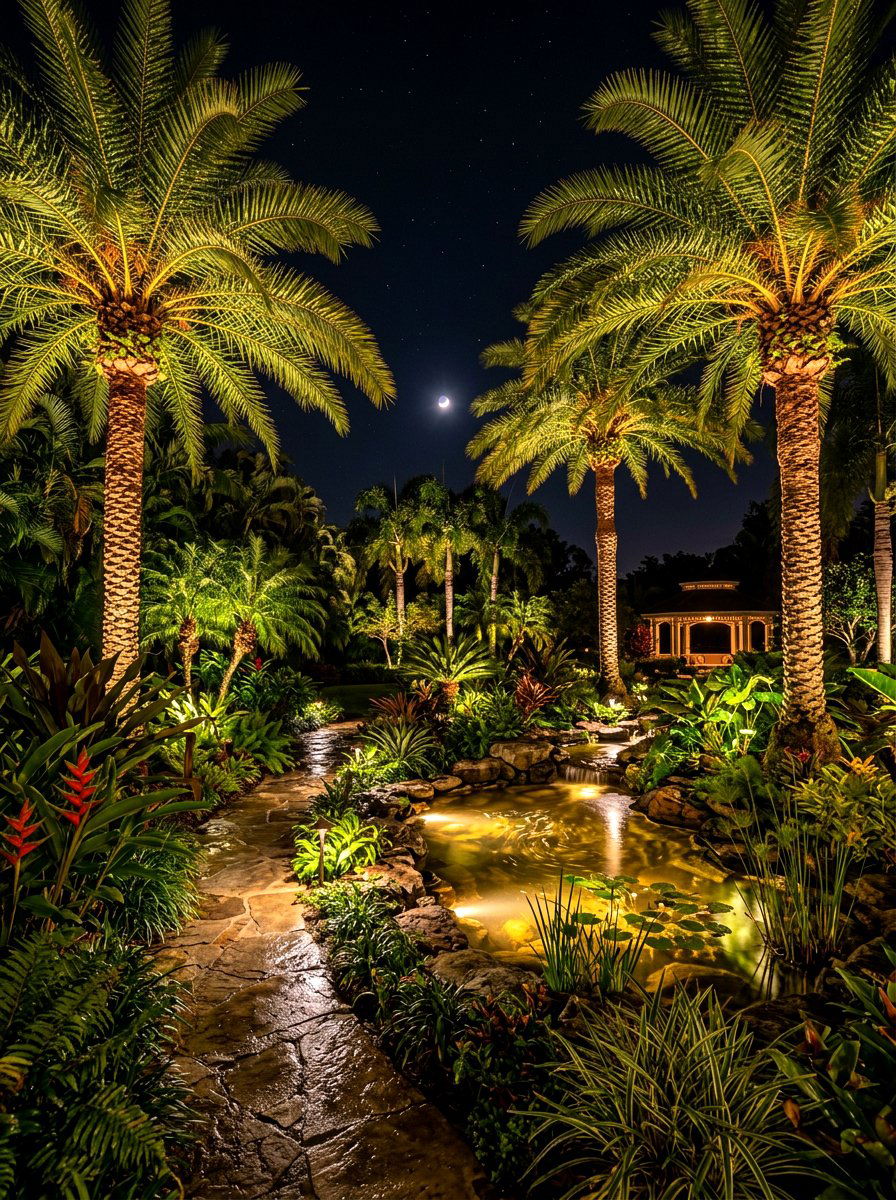
Transforming your outdoor space with a serene blue palette is a sophisticated way to create a tranquil sanctuary right at home. True blue is a rare and coveted color in the botanical world, making these gardens feel incredibly special and curated. Whether you are looking to build a massive floral border or a cozy nook filled with soft sapphire petals, the visual impact of cool tones is undeniable. Blue flowers tend to recede visually, which helps small yards feel much larger and more expansive than they actually are. This guide explores thirty unique ways to integrate these refreshing hues into your outdoor living spaces effectively.
1. Hydrangea Garden Path
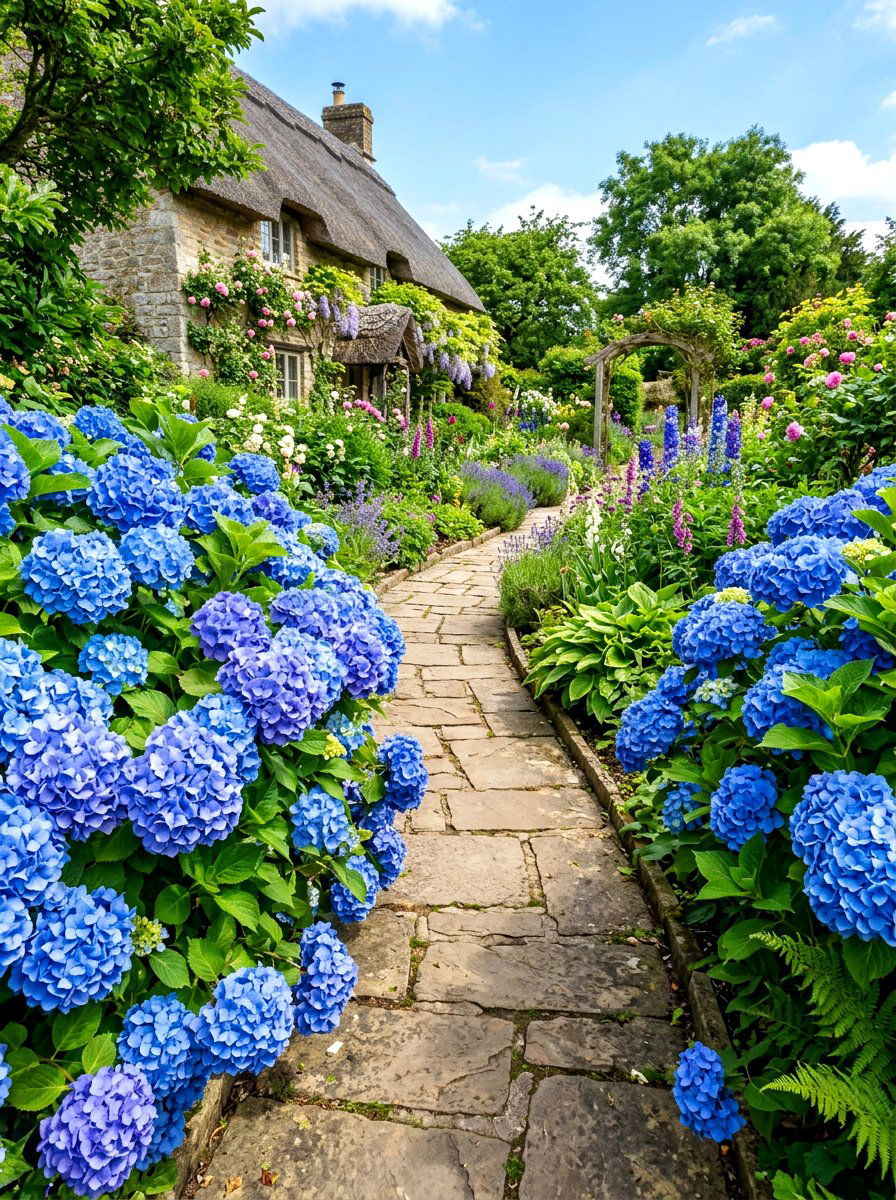
Walking through a path lined with massive blue hydrangeas feels like entering a fairytale world filled with soft textures and vibrant colors. These shrubs are famous for their giant, mophead blooms that can range from a pale sky blue to a deep, electric indigo depending on the soil. To achieve the best results, you should ensure your soil remains acidic, as this is the secret to maintaining that iconic blue pigment. Planting them along a stone walkway creates a lush, tunnel-like effect that provides plenty of shade and a cooling atmosphere during hot summer days. This specific garden layout works perfectly for traditional or cottage-style homes looking for massive curb appeal.
2. Delphinium Garden Border
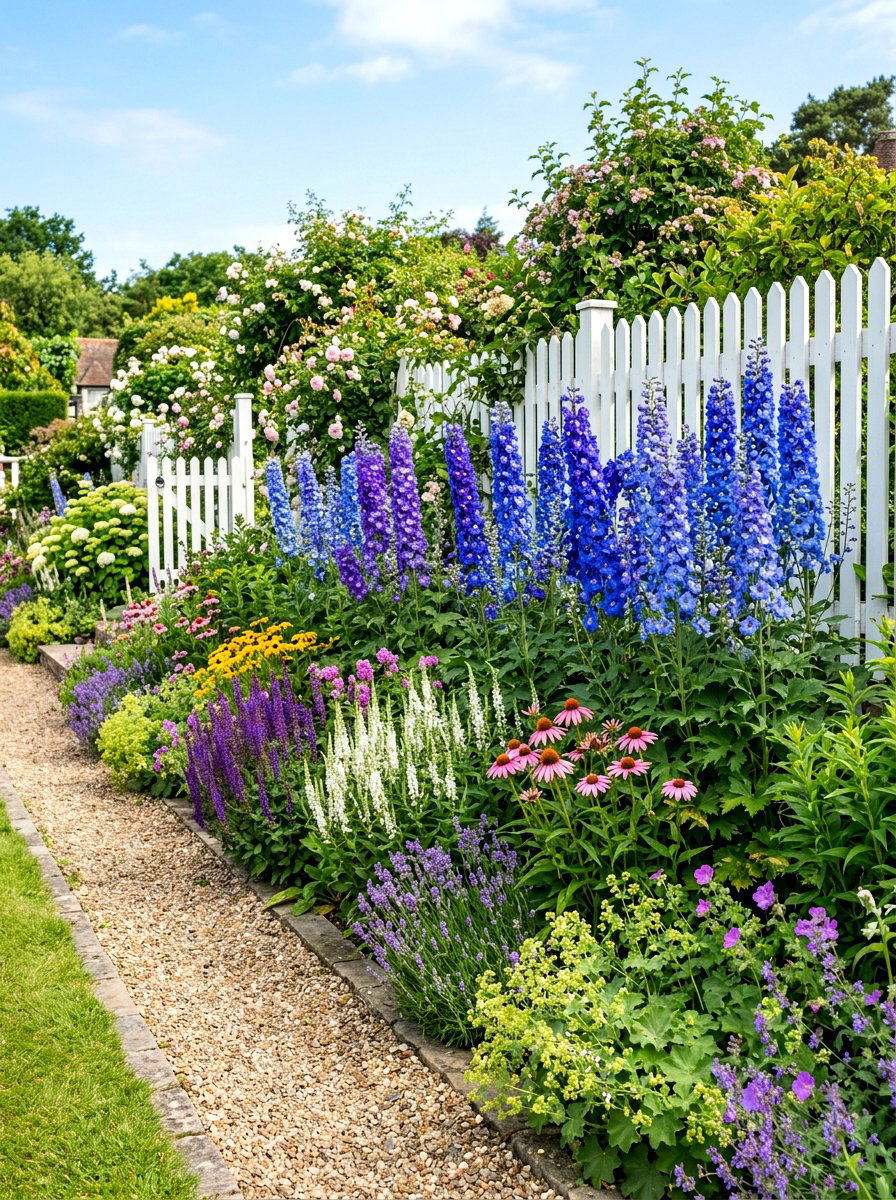
Creating a tall and dramatic garden border is easy when you use towering blue delphiniums as your primary vertical element. These plants produce stunning spikes of blossoms that can reach several feet in height, making them ideal for the back of a flower bed. The various shades of cobalt and sky blue they offer provide a regal look that pairs beautifully with white fences or stone walls. Because they grow so tall, they act as a natural screen that adds privacy and structure to your backyard. You should stake them early in the season to ensure their heavy floral heads remain upright and visible throughout the summer months.
3. Blue Salvia Rock Garden
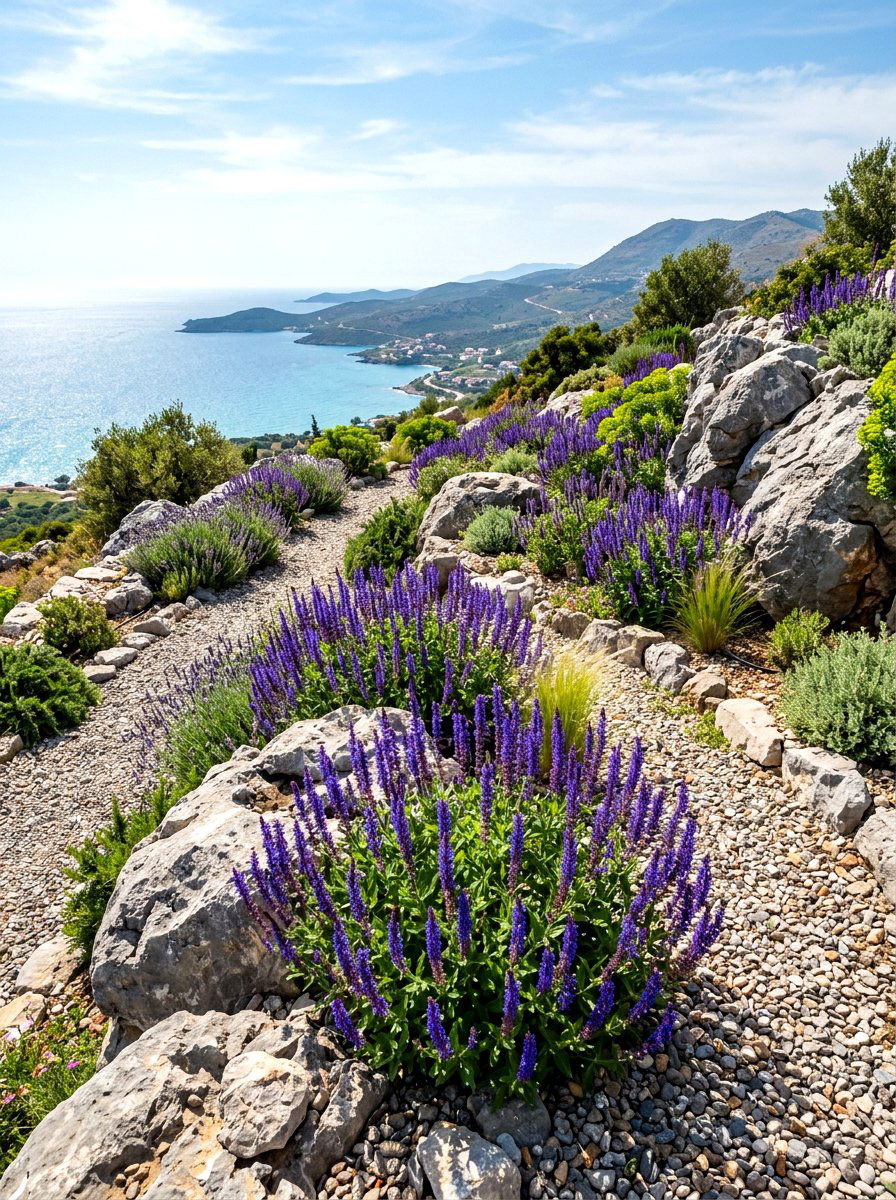
Designing a rock garden with blue salvia is an excellent way to incorporate drought-tolerant beauty into a sunny corner of your yard. The spiky, upright habit of salvia provides a sharp contrast to the rounded edges of large boulders and gravel paths. These plants are incredibly hardy and attract a variety of pollinators like bees and hummingbirds, adding life and movement to your landscape. The deep violet-blue hues look especially striking against grey stones or sandy soil, creating a Mediterranean-inspired aesthetic. This type of garden requires very little maintenance once established, making it a perfect choice for busy homeowners who want a high-impact look.
4. Blue Poppy Woodland Garden
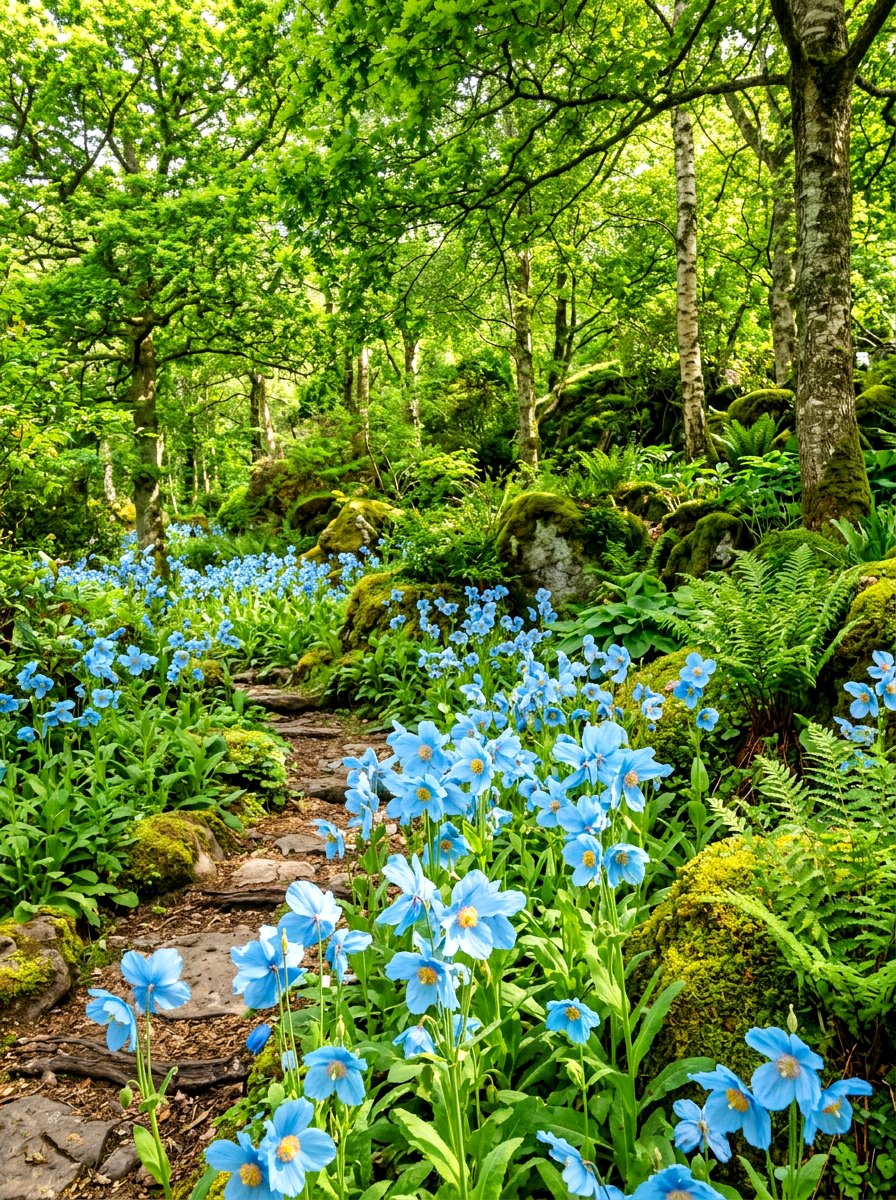
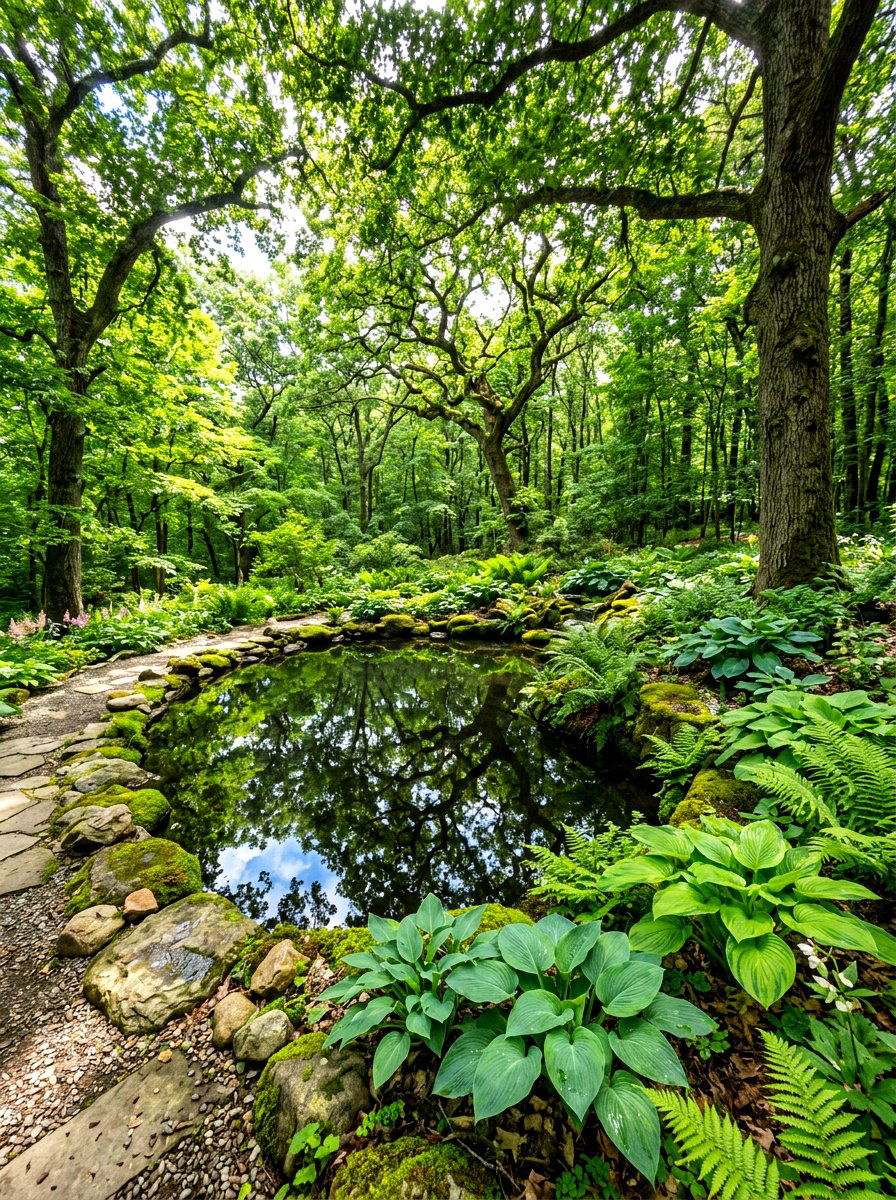
Establishing a woodland garden with rare blue poppies is a dream project for many enthusiasts living in cooler, moist climates. These ethereal flowers, often called Himalayan blue poppies, offer a unique shade of true sky blue that is almost unmatched in nature. They thrive in dappled shade under the canopy of large deciduous trees where the soil stays consistently damp and rich in organic matter. Surrounding them with ferns and mossy rocks enhances the magical, forest-like atmosphere of the space. While they can be challenging to grow, the visual reward of seeing a sea of blue poppies in a shaded glade is truly breathtaking.
5. Forget Me Not Groundcover
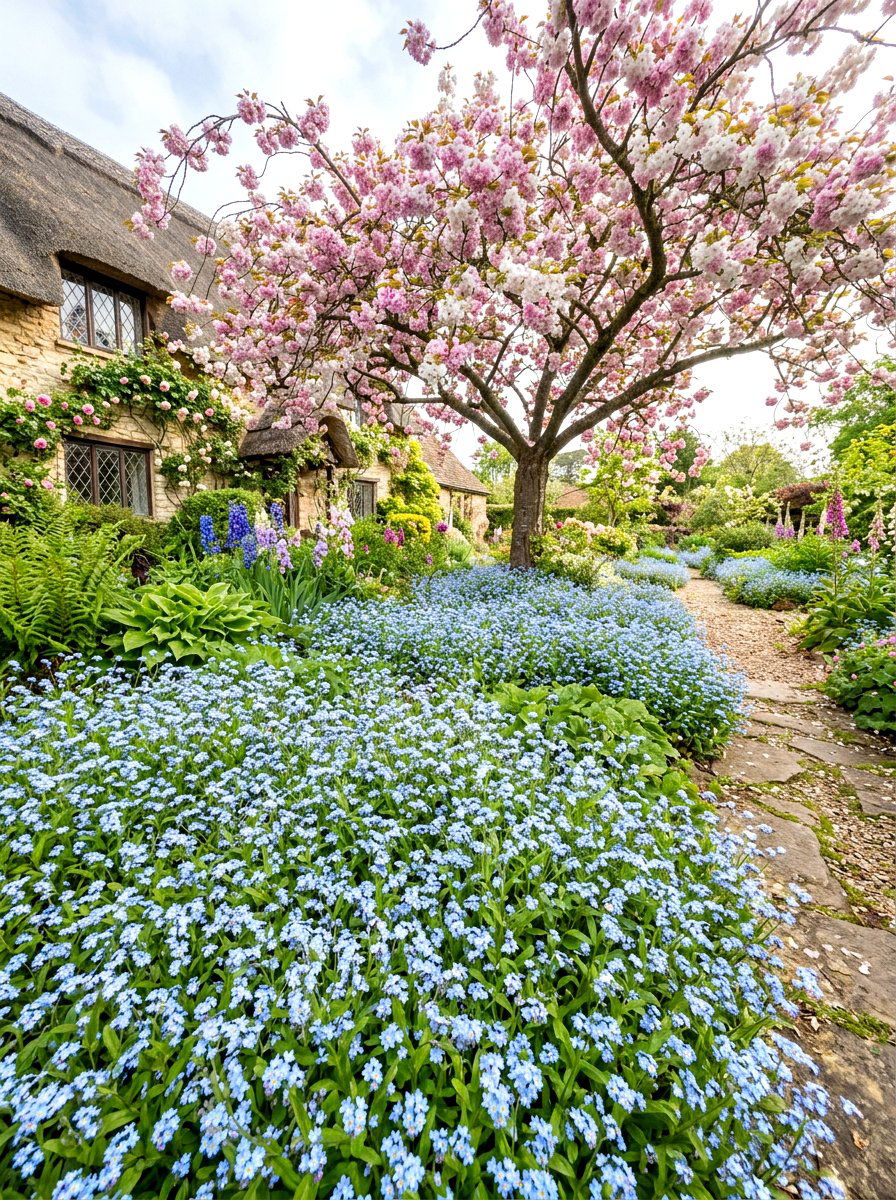
Using forget-me-nots as a living carpet is a charming way to fill in gaps between larger perennials or under flowering shrubs. These tiny, delicate flowers emerge in early spring, creating a soft mist of light blue across the ground that signals the end of winter. They are self-seeding, which means they will naturally spread and fill your garden beds with a whimsical, cottage-core vibe over time. This groundcover is particularly effective in shaded areas where other plants might struggle to find enough light. The combination of their bright yellow centers and azure petals adds a cheerful touch to any garden corner or path edge.
6. Blue Clematis Vine Trellis
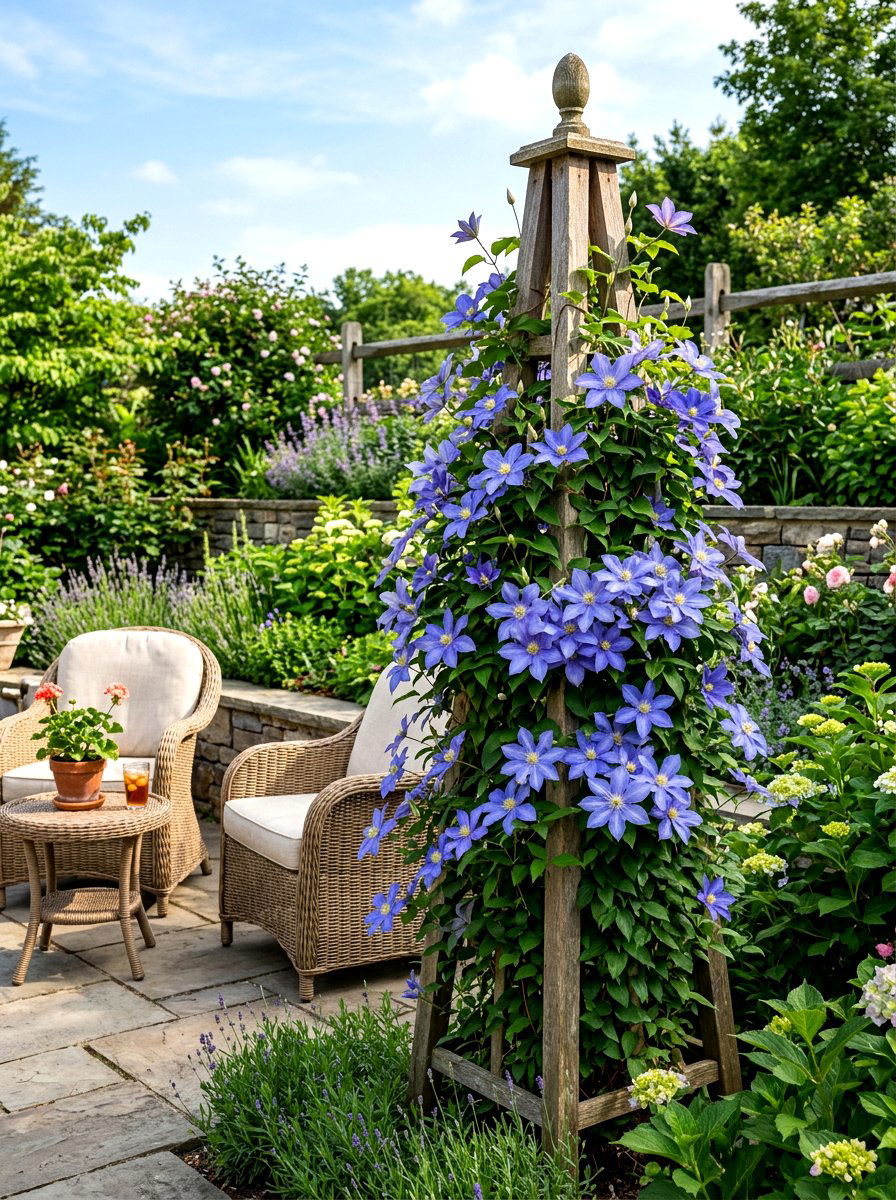
Training blue clematis vines to climb up a wooden trellis or metal obelisk creates a stunning vertical focal point in any garden. There are many varieties of clematis that offer large, star-shaped flowers in shades ranging from soft periwinkle to deep navy. When planted near a patio or porch, these climbing plants provide a sense of enclosure and privacy while adding elegant color at eye level. They look best when their roots are kept cool and shaded while their tops reach toward the sun. This vertical garden design is perfect for small spaces where you want to maximize floral impact without taking up much ground.
7. Blue Star Creeper Path
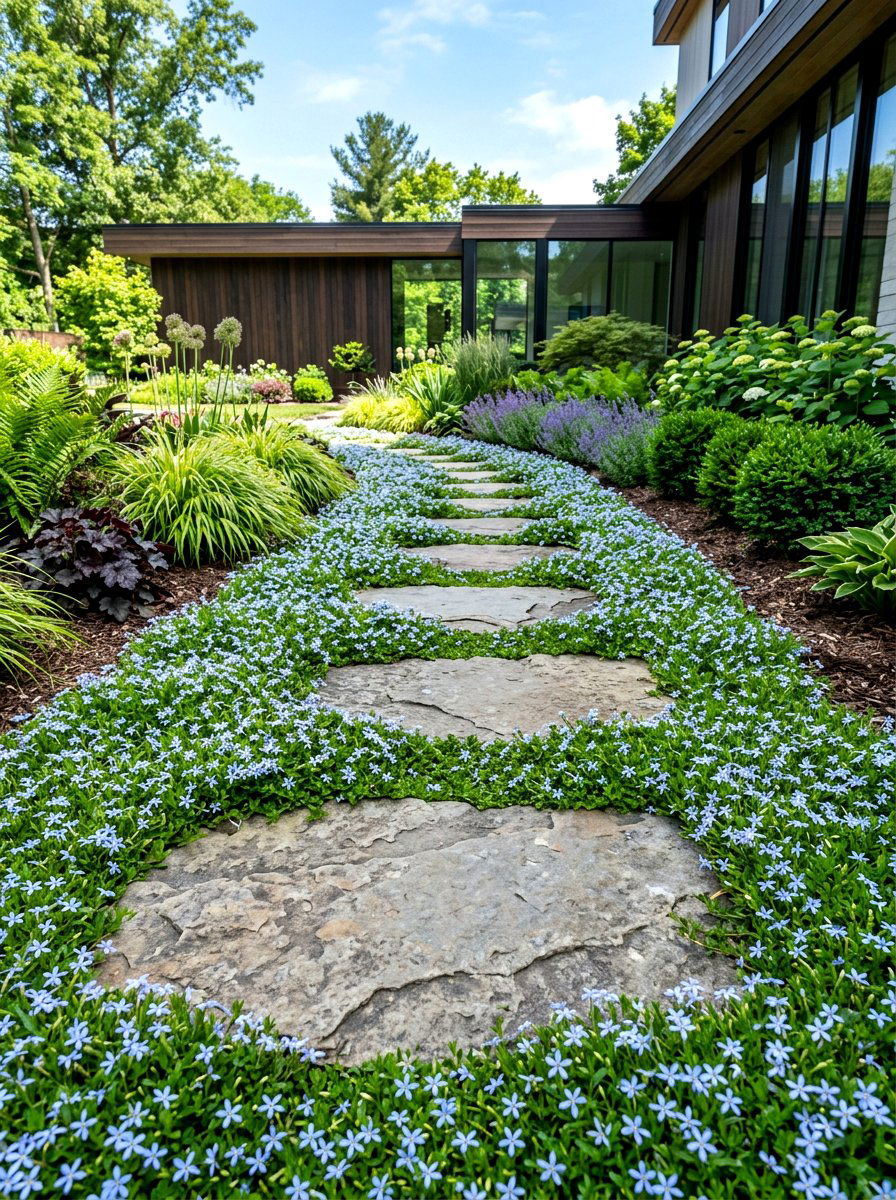
Replacing traditional grass with a blue star creeper lawn or path is an innovative way to introduce color into your heavy-traffic areas. This low-growing perennial is incredibly tough and can handle light foot traffic, making it ideal for planting between stepping stones or as a lawn alternative. In late spring and summer, the foliage is almost entirely covered by thousands of tiny, pale blue star-shaped flowers. The dense mat of green leaves stays attractive year-round, providing a neat and tidy look. This design choice creates a soft, cushiony feel underfoot and eliminates the need for frequent mowing or high-intensity lawn maintenance.
8. Cornflower Wildflower Meadow
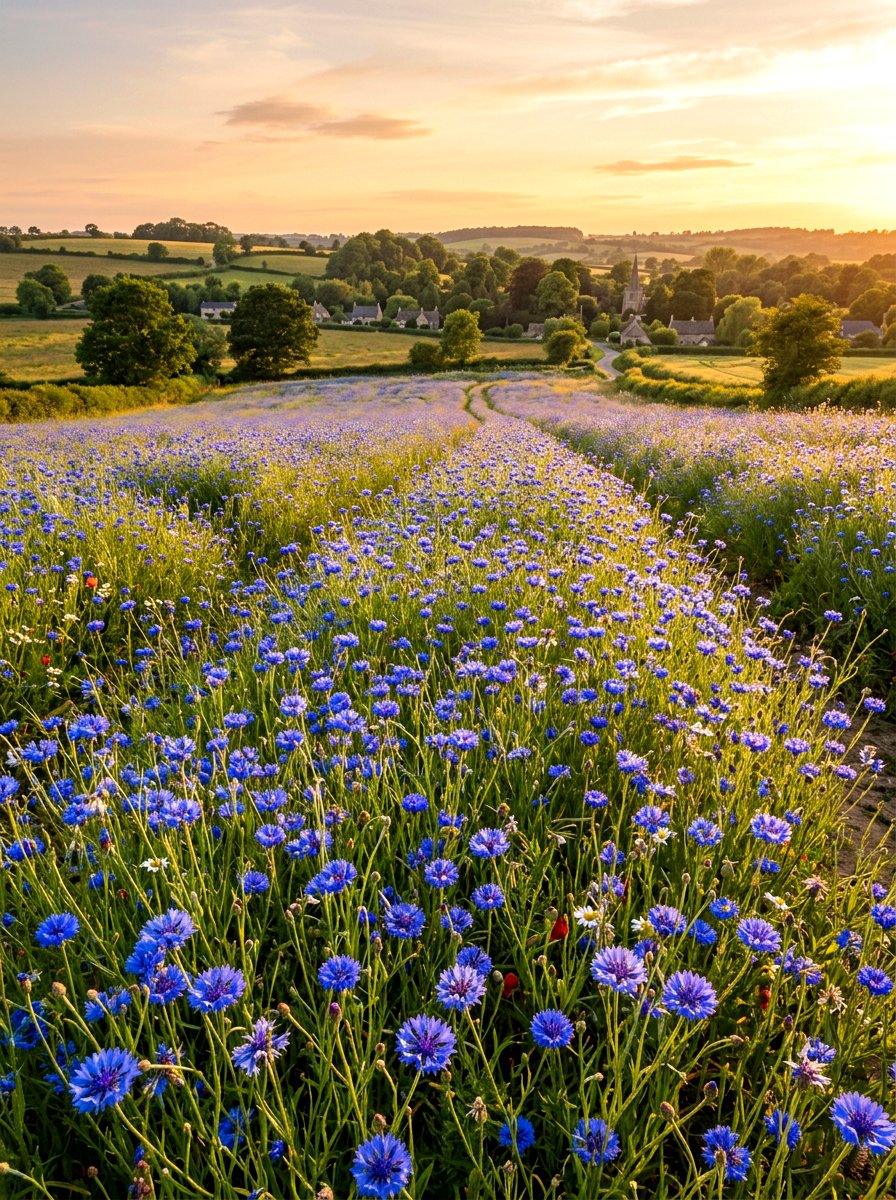
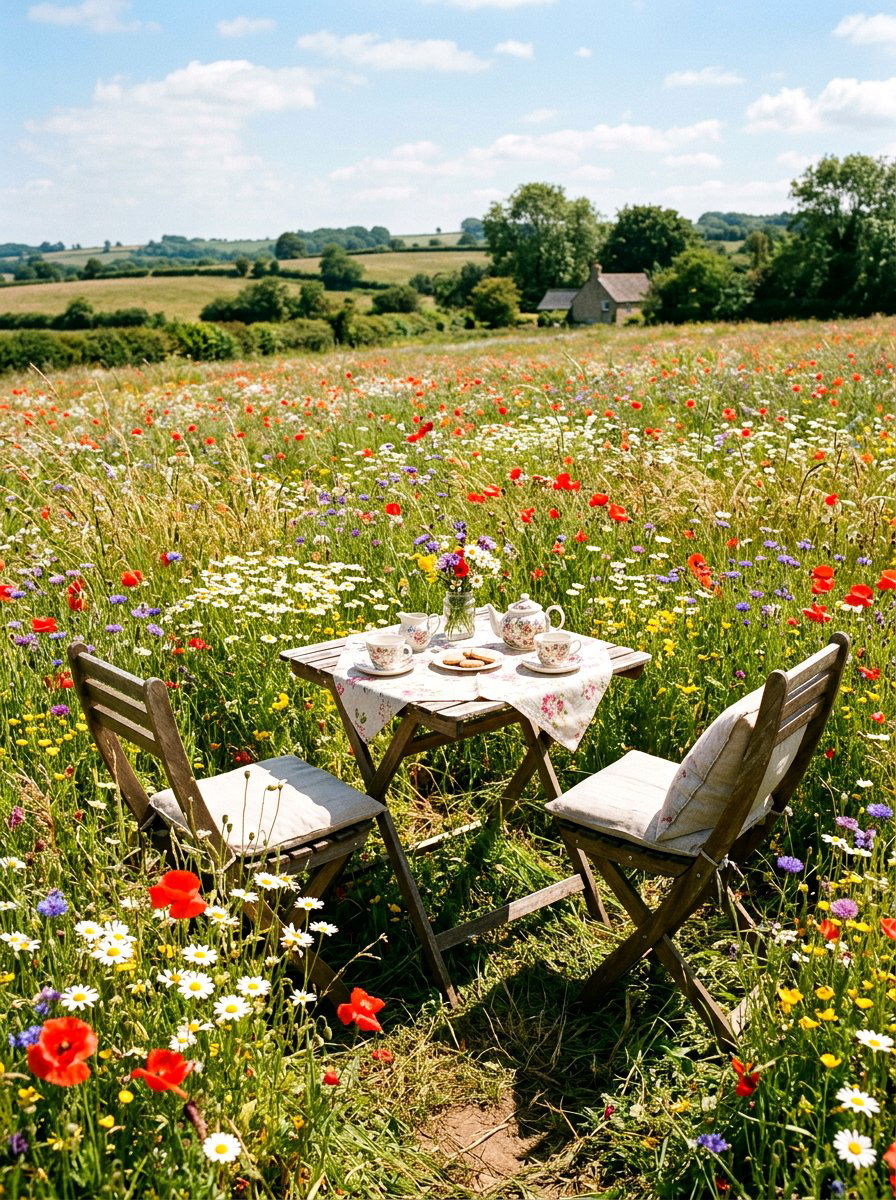
Sowing a wildflower meadow dominated by bright blue cornflowers is a wonderful way to support local biodiversity while creating a rustic landscape. Also known as bachelor's buttons, these annuals are famous for their intense, pure blue pigment that looks spectacular in large drifts. When mixed with native grasses and other meadow flowers, they create a naturalistic scene that sways beautifully in the wind. This type of garden is very easy to start from seed and requires minimal water once the plants are established. It is a perfect solution for large, open areas where you want a low-maintenance but visually stunning floral display.
9. Siberian Iris Pond Edge
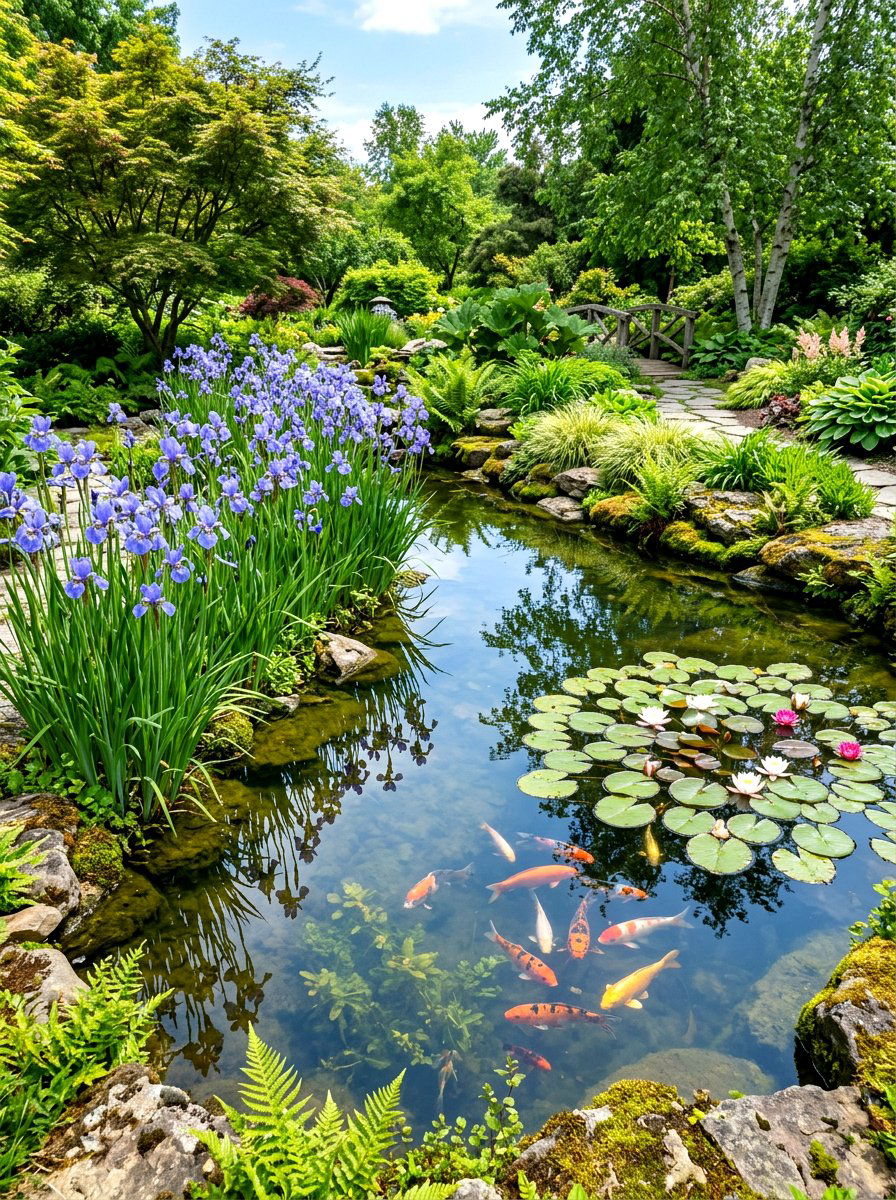
Placing Siberian irises along the edge of a backyard pond or water feature adds elegance and structural beauty to the aquatic landscape. These plants love moist soil and produce graceful, slender leaves that look great even when the flowers are not in bloom. The deep blue and purple-toned blossoms appear in late spring, reflecting beautifully off the surface of the water. Their upright growth habit provides a nice vertical contrast to the flat leaves of water lilies or low-growing pond grasses. This garden setup creates a peaceful, zen-like environment that encourages you to sit and watch the local wildlife enjoy the water.
10. Hyacinth Spring Bulb Garden
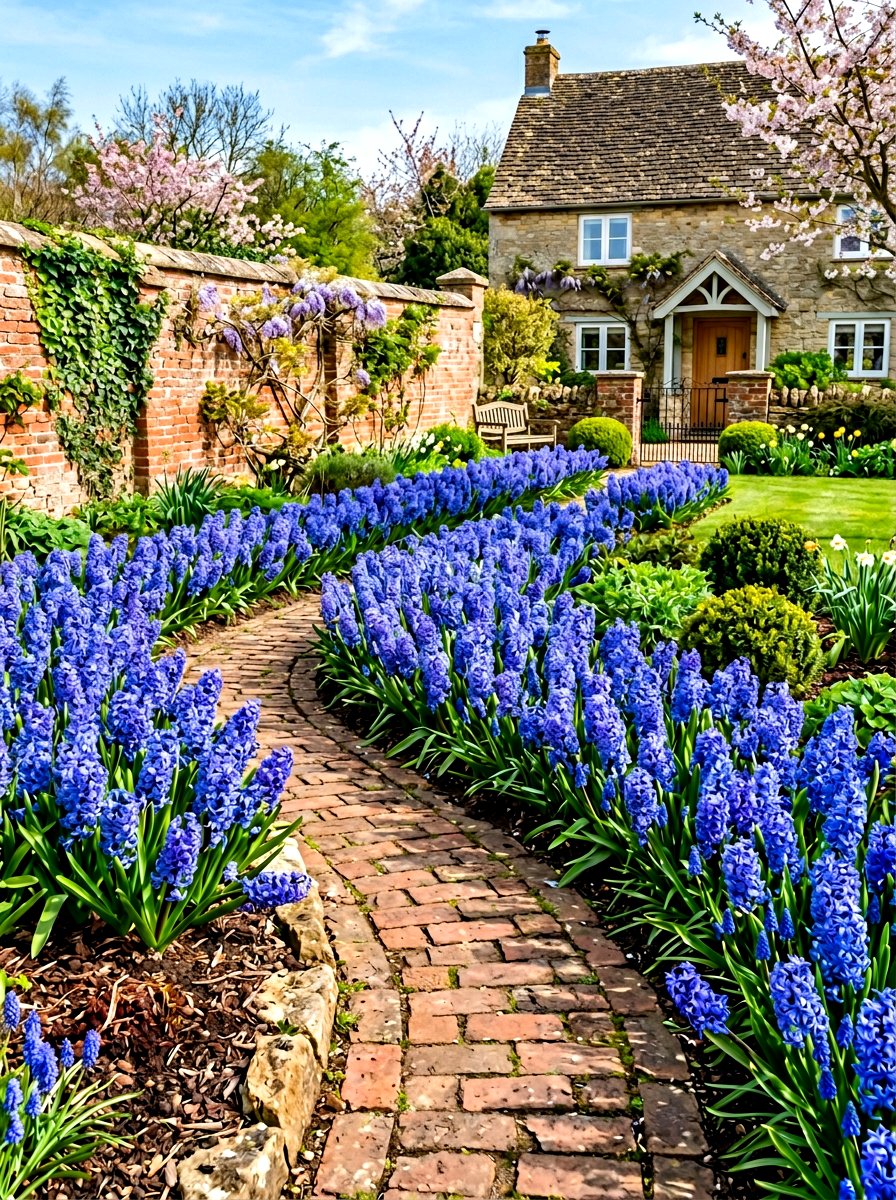
Planting a dedicated spring garden filled with fragrant blue hyacinths is a feast for both the eyes and the nose. These bulbs are among the first to bloom after winter, offering dense spikes of waxy, bell-shaped flowers in various shades of blue. When planted in large clusters or rows along a front walkway, they create a powerful visual impact and a welcoming scent for guests. You can layer them with other spring-blooming bulbs like white tulips or yellow daffodils to create a classic, multi-colored display. Their compact size makes them perfect for small garden beds or as a colorful border for larger shrubs.
11. Blue Marguerite Container Garden
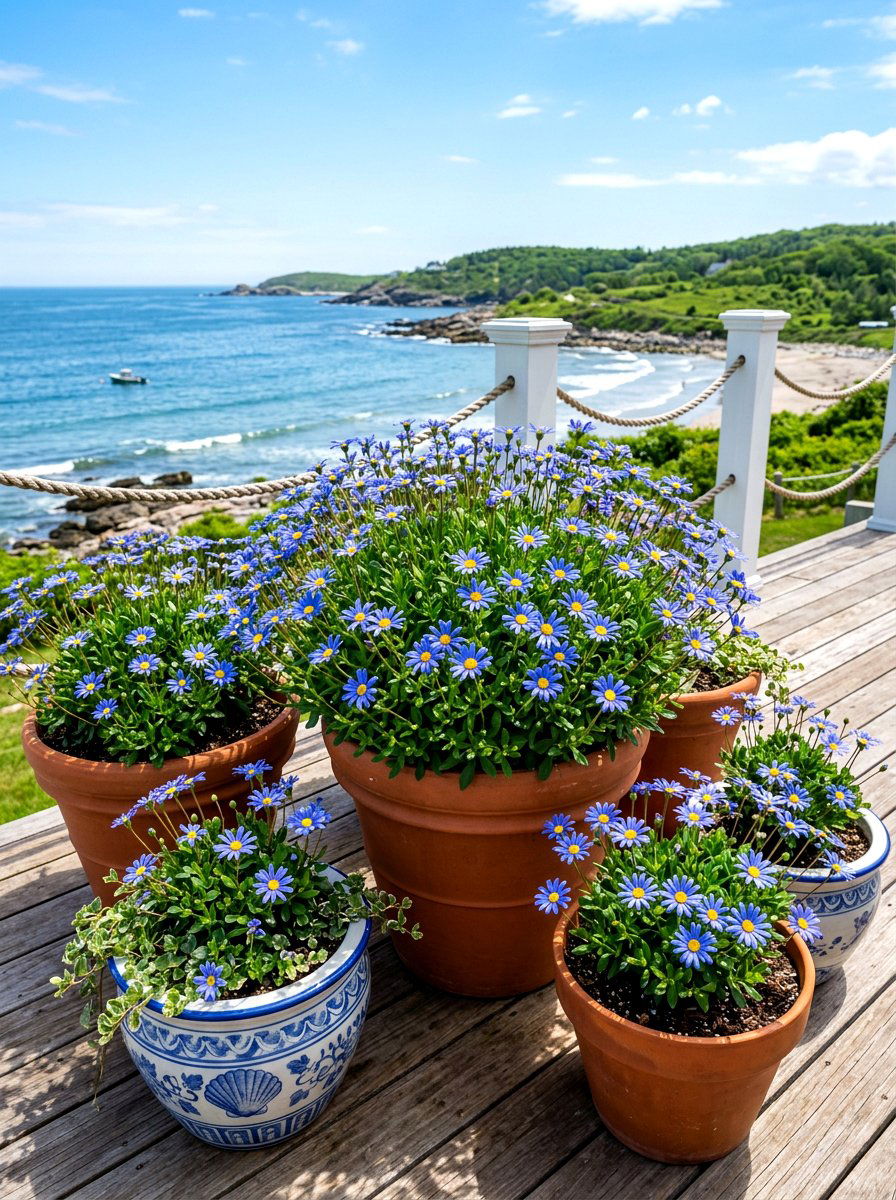
Arranging blue marguerite daisies in large decorative containers is an excellent way to add a pop of color to your patio, deck, or balcony. These daisies feature cheerful yellow centers surrounded by vivid blue petals, giving them a classic and approachable look. They bloom continuously throughout the warmer months, especially if you take the time to remove old flowers regularly. Containers allow you to move the color exactly where you need it most, such as near outdoor seating areas or entryways. Pairing them with trailing silver foliage or white petunias creates a sophisticated and cooling color scheme that feels fresh all summer long.
12. Agapanthus Poolside Landscape
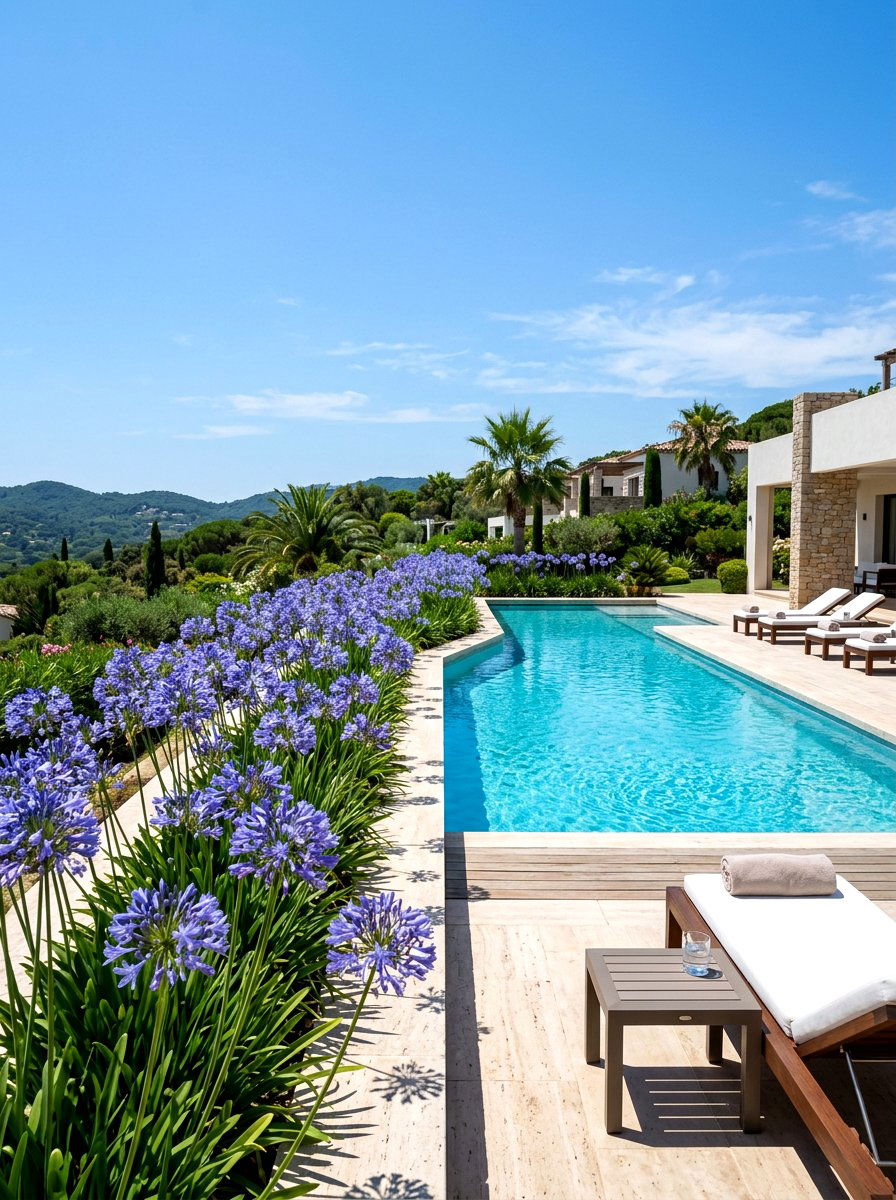
Using agapanthus, also known as Lily of the Nile, around a swimming pool area creates a resort-style atmosphere with very little effort. These plants feature large, spherical flower heads on tall, sturdy stems that rise above clumps of strap-like evergreen leaves. They are incredibly heat-tolerant and love the full sun typically found near pool decks, making them a practical choice for summer landscapes. The cool blue tones of the flowers complement the blue water of the pool perfectly, creating a cohesive and relaxing outdoor environment. Their architectural shape also adds a modern, structured look that enhances contemporary home designs and outdoor living areas.
13. Morning Glory Privacy Fence
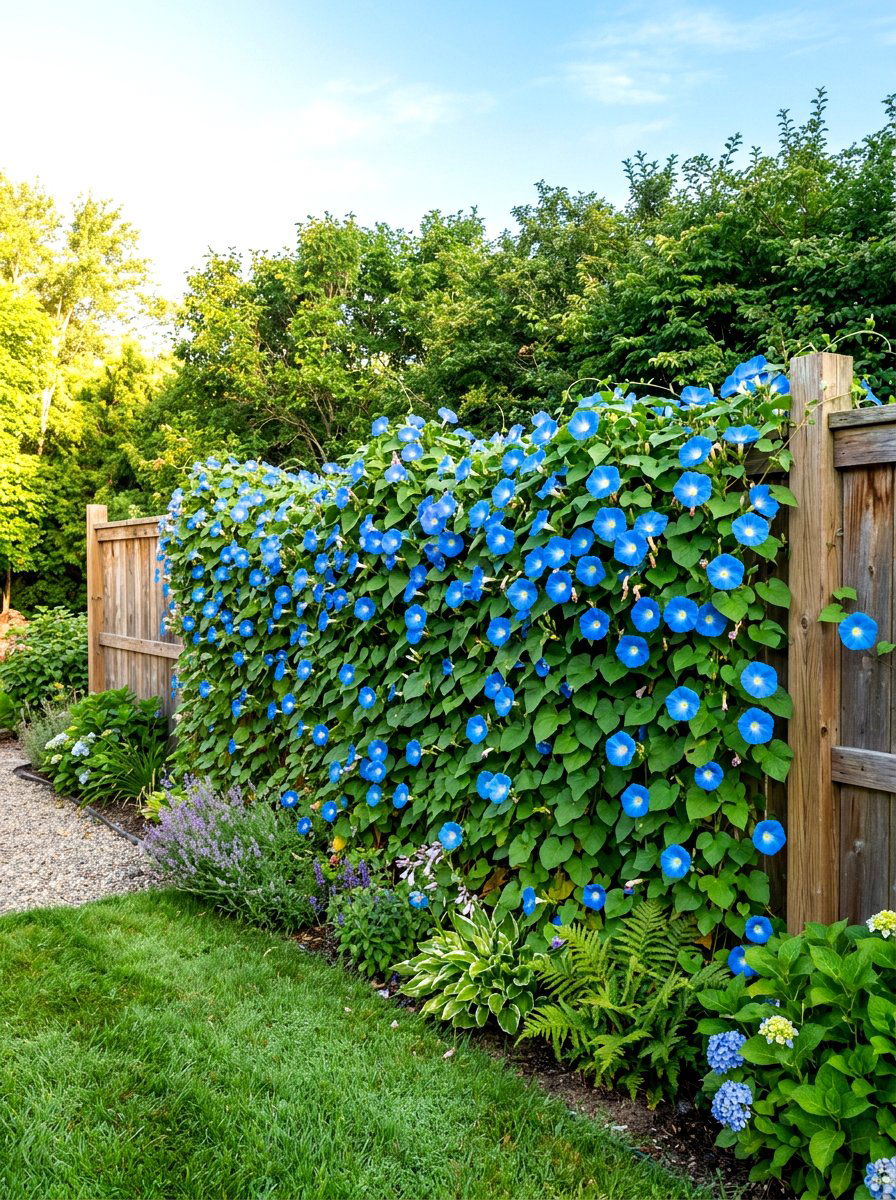
Growing heavenly blue morning glories over a chain-link or wooden fence is a fast and affordable way to create a living privacy screen. These vigorous vines can cover a large area in a single season, producing hundreds of large, trumpet-shaped blooms that open every morning. The vibrant sky-blue color is truly iconic and looks stunning against the green heart-shaped leaves of the vine. This garden idea is perfect for hiding unsightly structures or adding a sense of seclusion to a suburban backyard. Because they are annuals, you can easily change your garden theme each year, though they often drop seeds to return naturally.
14. Blue Hydrangea Cottage Garden
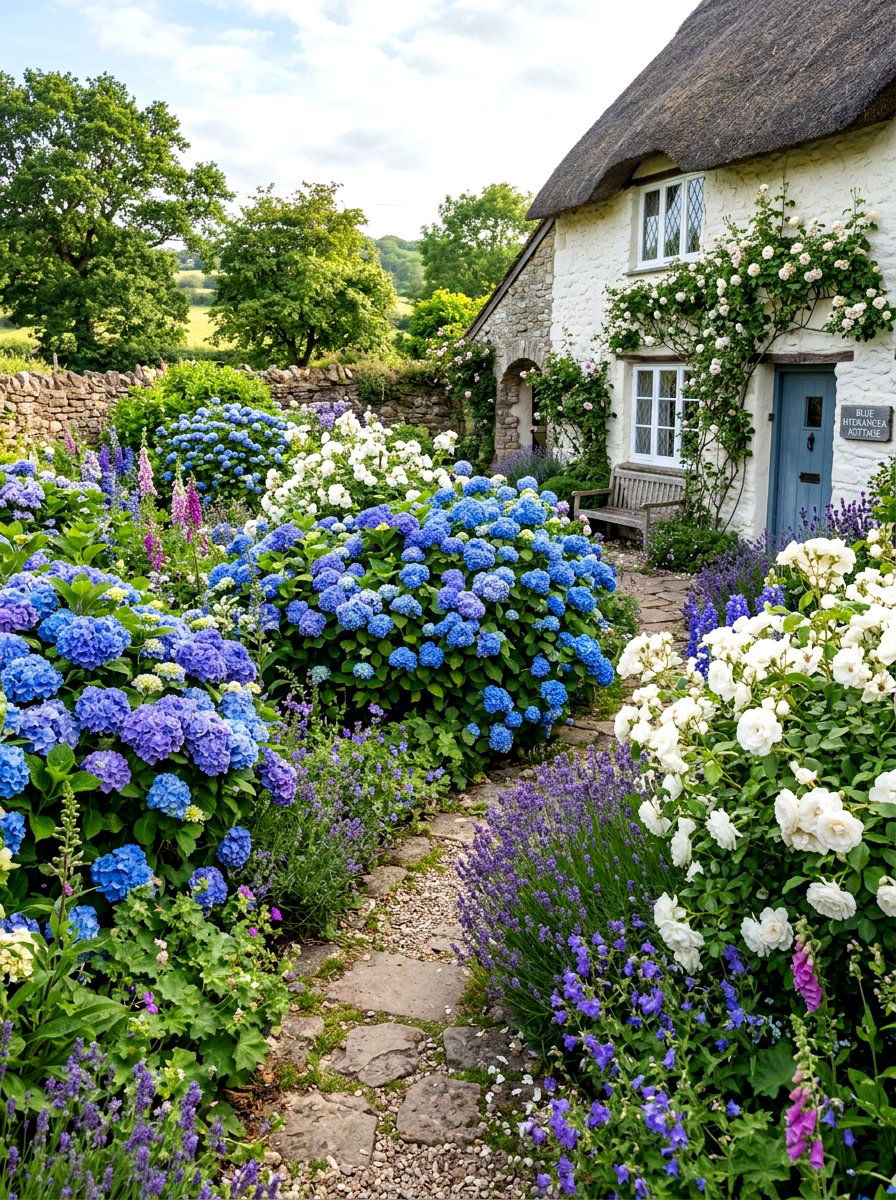
Building a classic cottage garden centered around blue hydrangeas is the ultimate way to achieve a romantic and timeless landscape. In this design, you mix the large, billowing shrubs with other traditional favorites like lavender, roses, and foxgloves for a dense and layered look. The soft blue tones of the hydrangeas act as a grounding element that ties the different floral colors together. This style of gardening celebrates a bit of wildness and overflow, where plants are allowed to mingle and spill over the edges of pathways. It creates a lush, cozy atmosphere that feels deeply personal and full of natural, unpretentious charm.
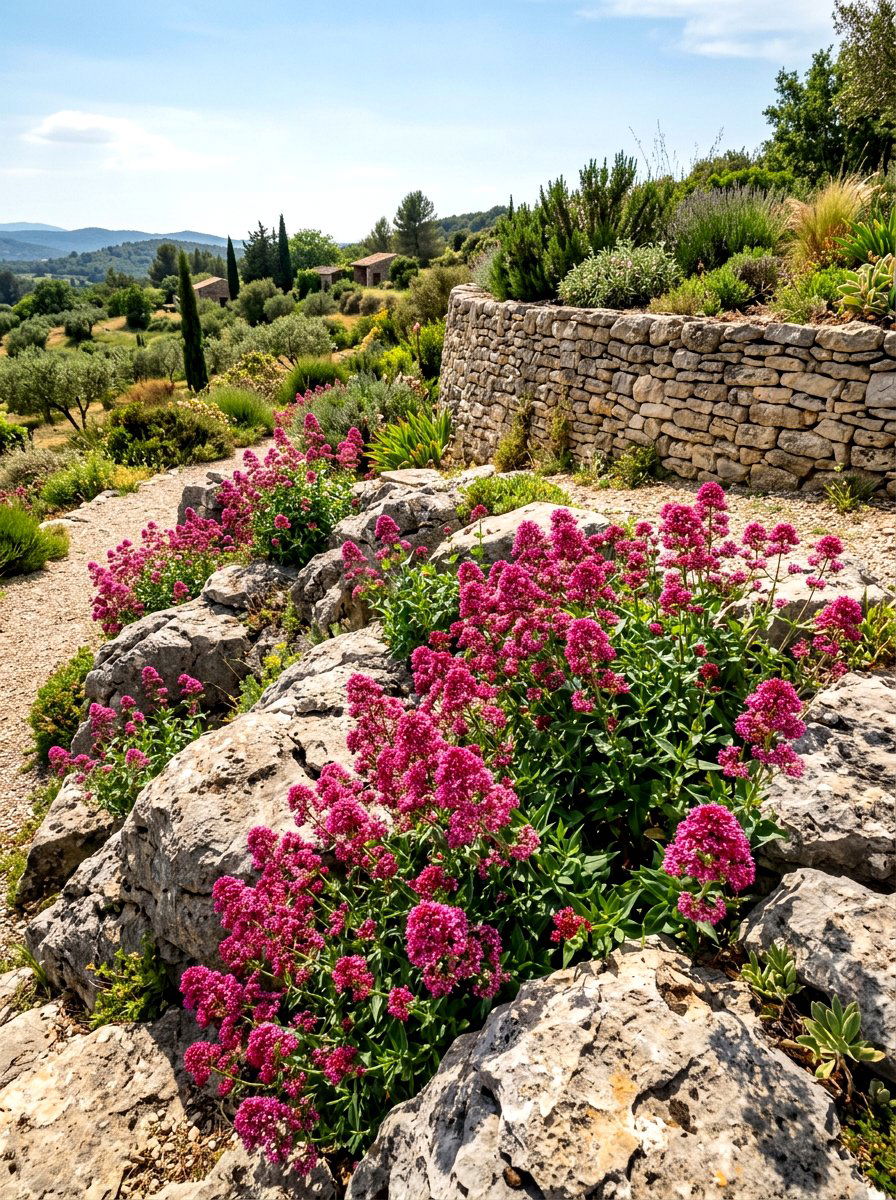
15. Sea Holly Coastal Garden
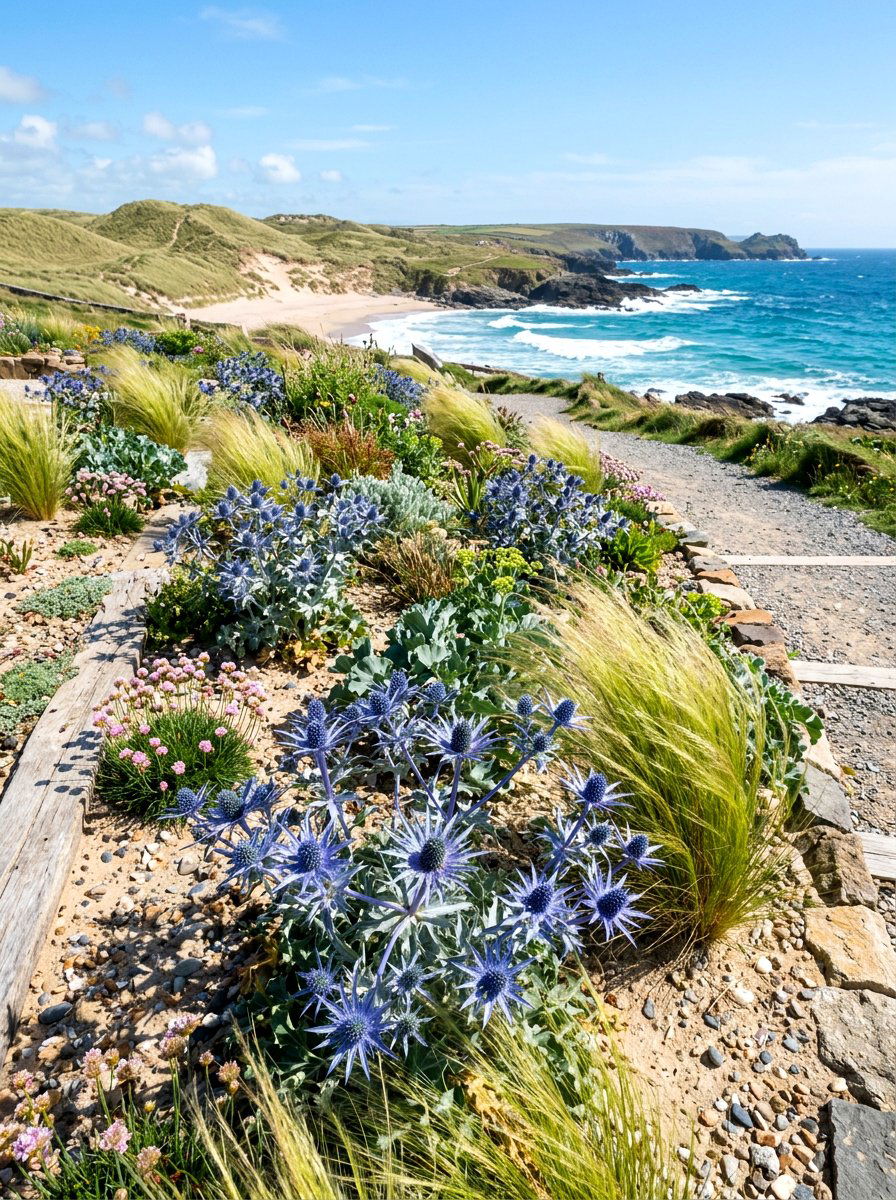
Designing a coastal garden with sea holly is a smart way to embrace plants that thrive in sandy soil and salty air. Sea holly, or Eryngium, features unique, architectural flower heads that look like metallic blue thistles surrounded by spiky bracts. Their silvery-blue color and tough texture make them a standout feature in any seaside landscape where traditional flowers might wilt. They are exceptionally drought-tolerant and attract a wide range of interesting pollinators to your yard. Pairing them with ornamental grasses and weathered wood elements enhances the rugged, natural beauty of a coastal theme while providing a very modern and artistic aesthetic.
16. Globe Thistle Xeriscape
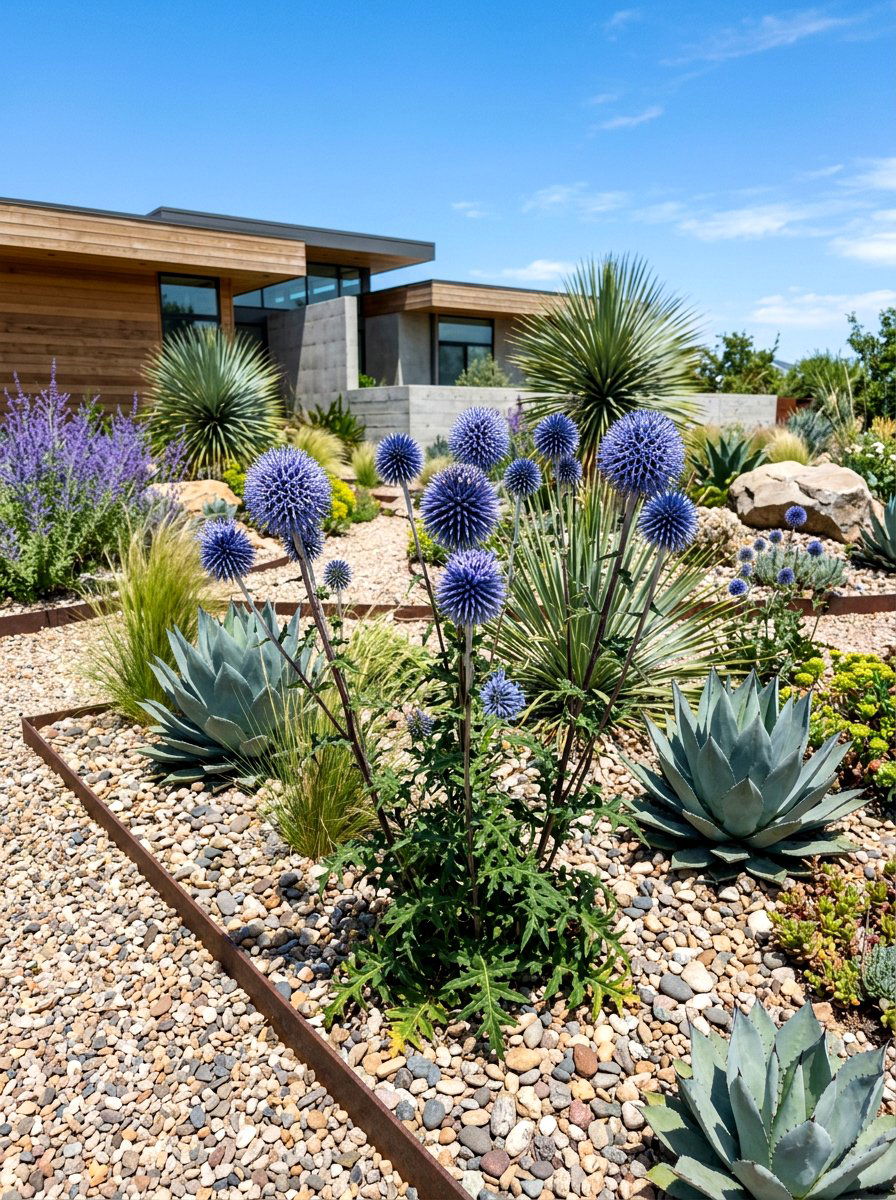
Incorporating globe thistle into a xeriscape or water-wise garden adds a touch of whimsy and height without requiring much irrigation. These plants produce perfectly round, golf-ball-sized flower heads in a stunning shade of steel blue that look almost structural. They are incredibly resilient and can handle poor soil and intense sun with ease, making them ideal for low-maintenance landscapes. The spiky foliage provides a nice contrast to softer plants, and the dried flower heads remain attractive well into the winter months. This garden design is perfect for homeowners looking to reduce their water usage while still maintaining a vibrant and interesting outdoor floral display.
17. Periwinkle Shade Garden
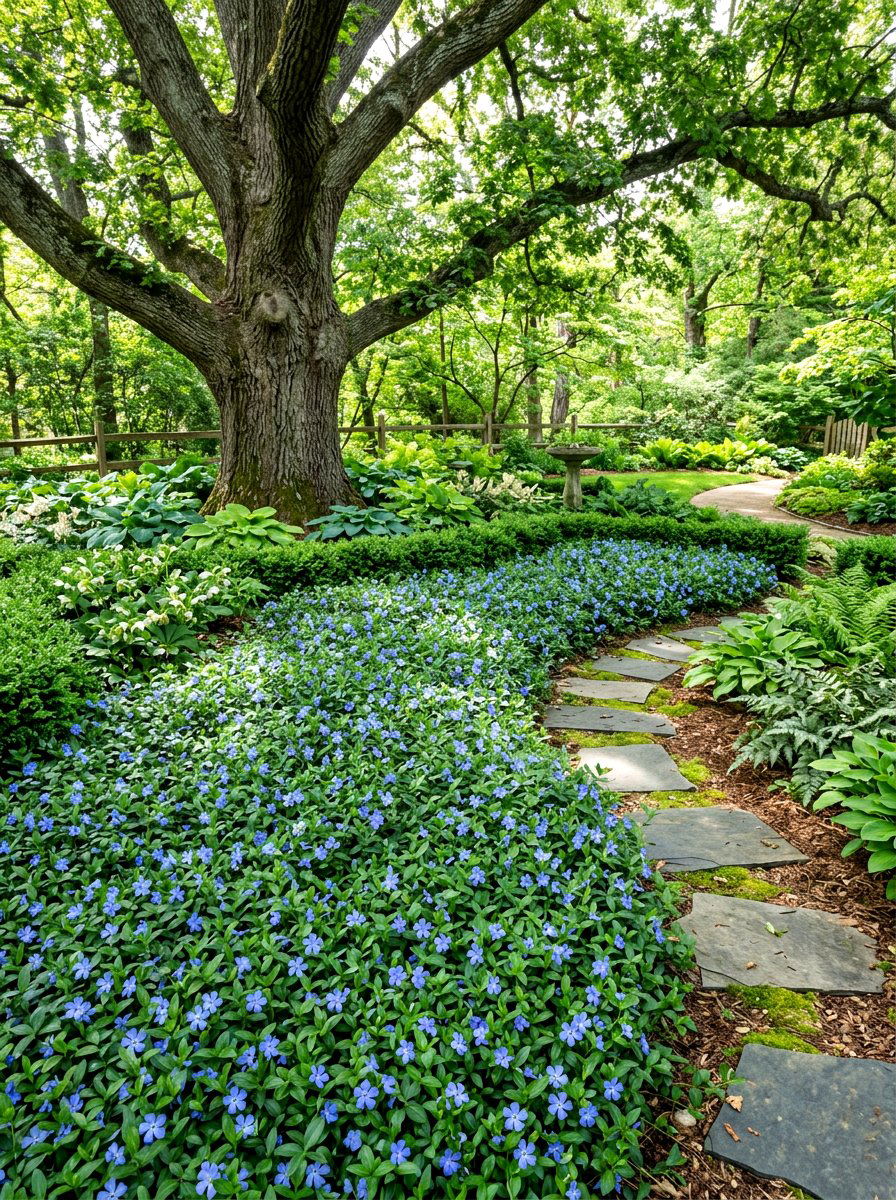
Establishing a shade garden with periwinkle, or Vinca minor, is a classic solution for areas under large trees where grass simply will not grow. This trailing evergreen groundcover produces glossy green leaves and charming five-petaled blue flowers in the spring and early summer. It creates a dense, weed-suppressing mat that keeps the ground looking lush and manicured throughout the entire year. The blue blossoms add a delicate touch of color to the darker corners of your property, brightening up the space effectively. This is a very hardy plant that requires almost no care once it has filled in the desired area of your garden.
18. Trailing Lobelia Hanging Basket Garden
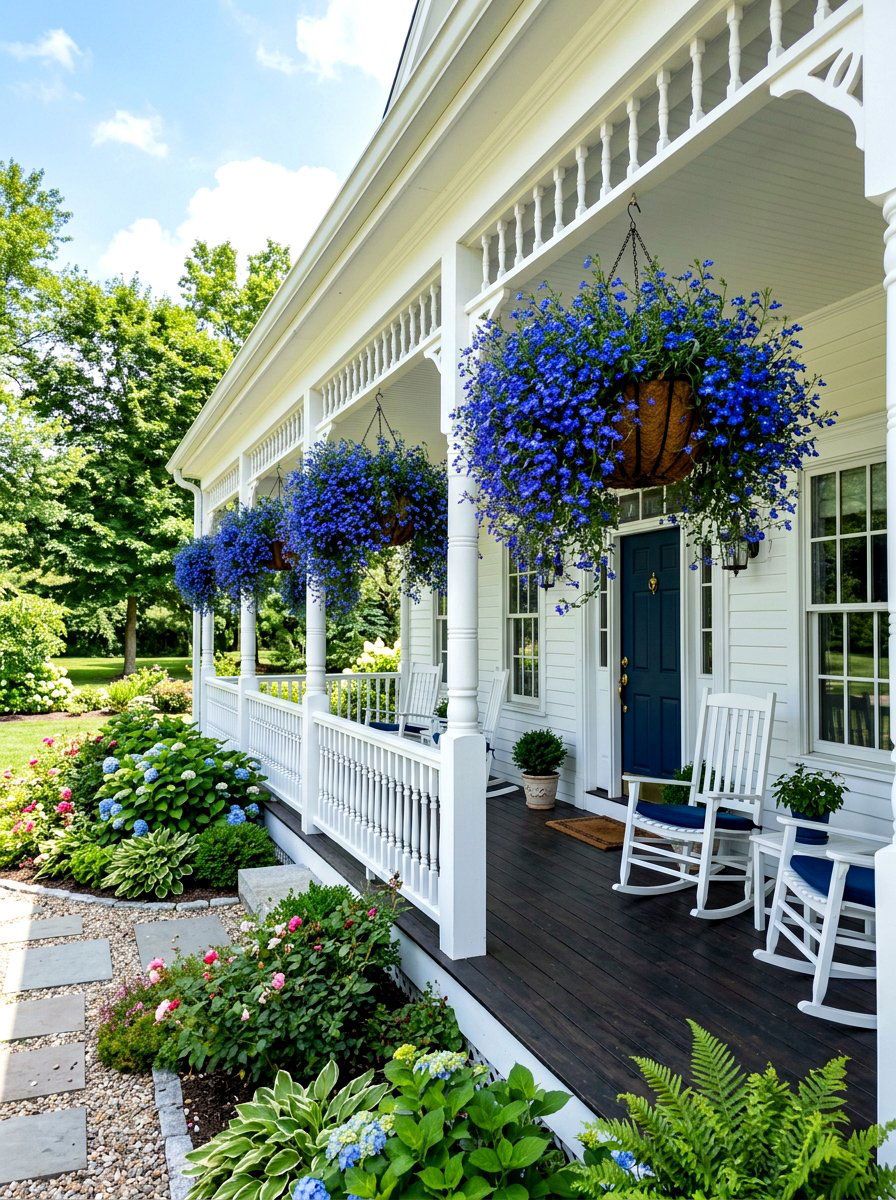
Decorating your porch or patio with hanging baskets filled with trailing blue lobelia creates a waterfall of color at eye level. Lobelia is prized for its intense, saturated blue hues and its ability to completely cover a container with tiny, delicate blossoms. These plants look best when allowed to spill over the edges of a basket, creating a soft and flowing appearance that softens the lines of your home. They thrive in cooler weather, making them perfect for spring and autumn displays. Mixing different shades of blue or adding a few white accents can create a multi-dimensional look that enhances your outdoor decor.
19. Amsonia Native Garden
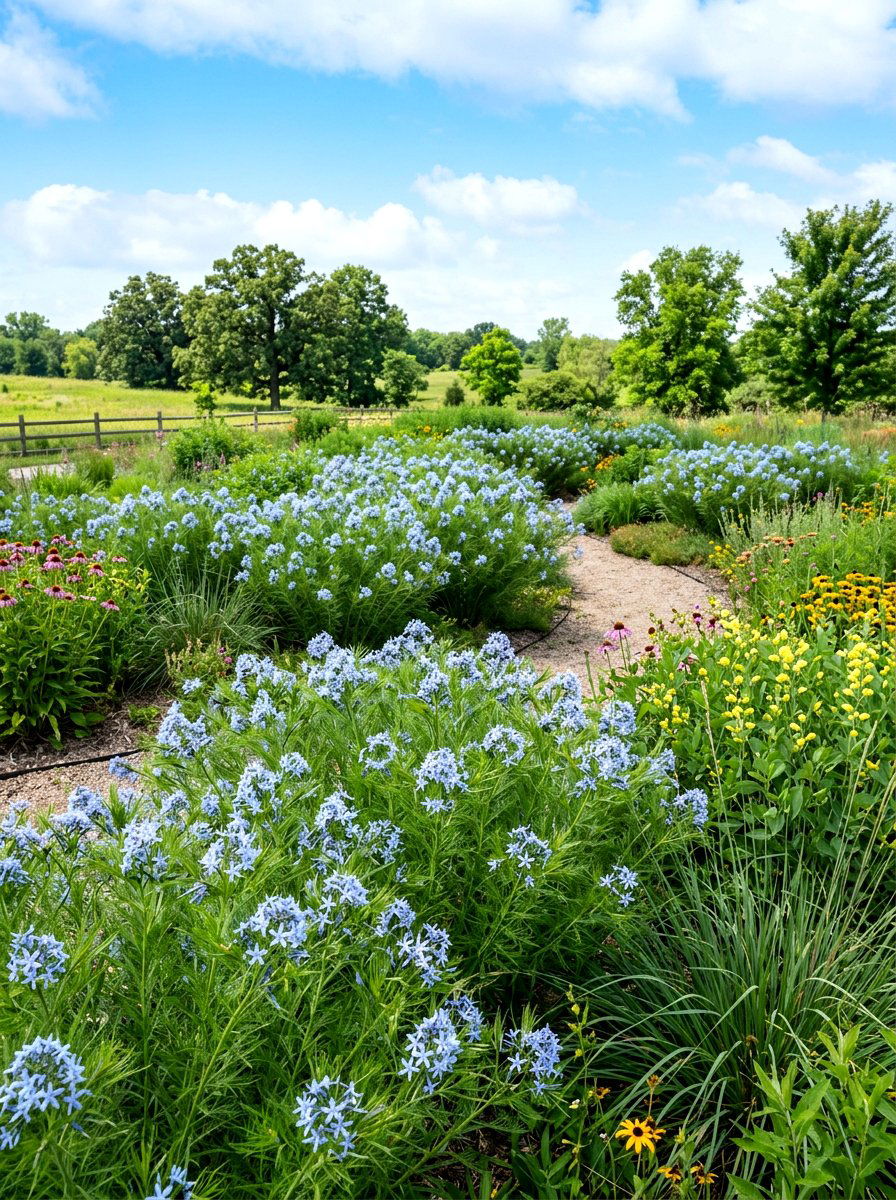
Creating a native garden with Amsonia, commonly known as Bluestar, is a wonderful way to support local ecology while enjoying multi-season interest. In the spring, these plants are covered in clusters of delicate, light blue star-shaped flowers that attract early-season butterflies. The feathery green foliage stays attractive all summer long, providing a soft and airy texture to your flower beds. One of the best features of this plant is that the leaves turn a brilliant golden-yellow in the fall, offering a second wave of color. This hardy perennial is very easy to grow and fits perfectly into a naturalistic or prairie-style garden layout.
20. Bluebell Forest Floor
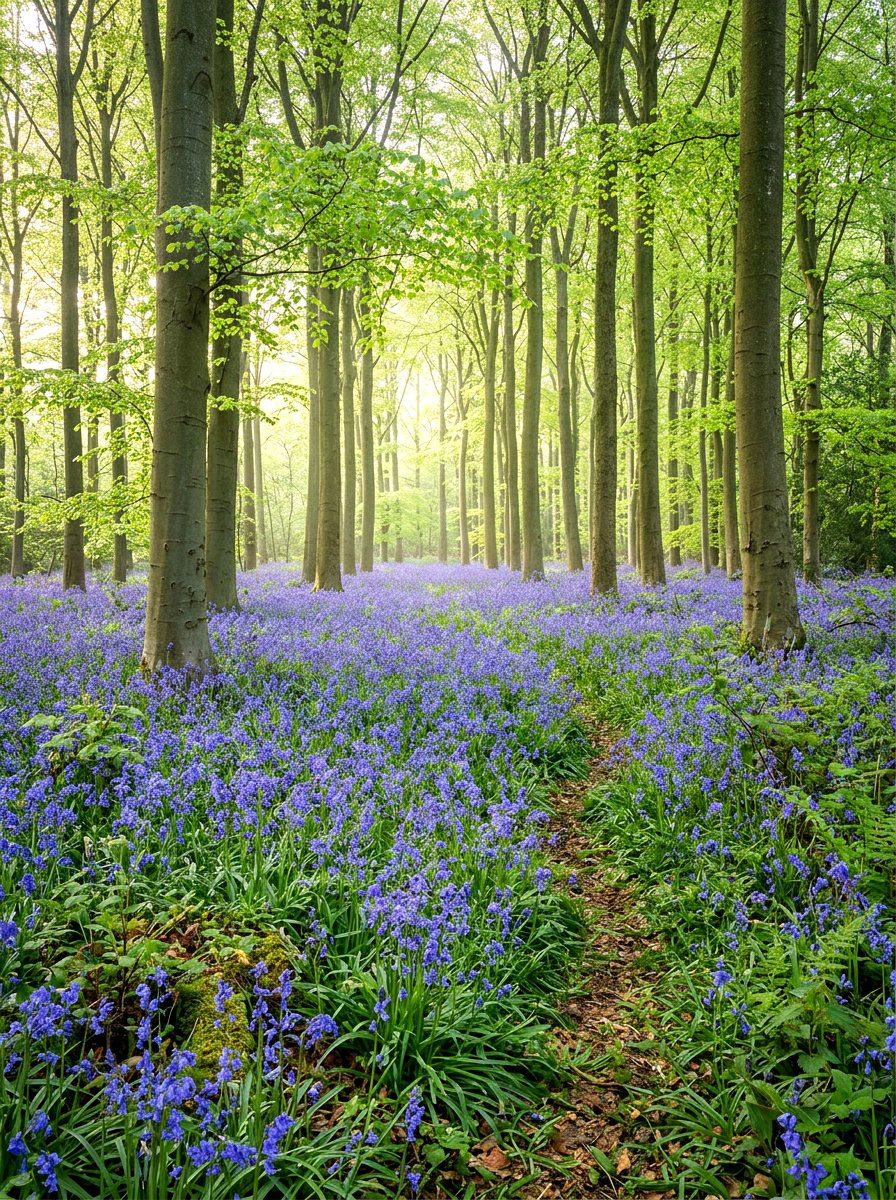
Planting a carpet of bluebells under a grove of trees or in a shaded corner mimics the beauty of an ancient woodland floor. These spring-blooming bulbs produce nodding, bell-shaped flowers that create a sea of violet-blue as they naturalize over several years. They are best planted in large quantities to achieve the maximum visual impact, making the ground appear as though it is covered in a soft blue mist. This garden design feels very peaceful and historic, providing a sense of permanence and connection to nature. They go dormant in the summer, allowing other shade-loving perennials like hostas to take over the space later.
21. Alpine Gentian Rockery
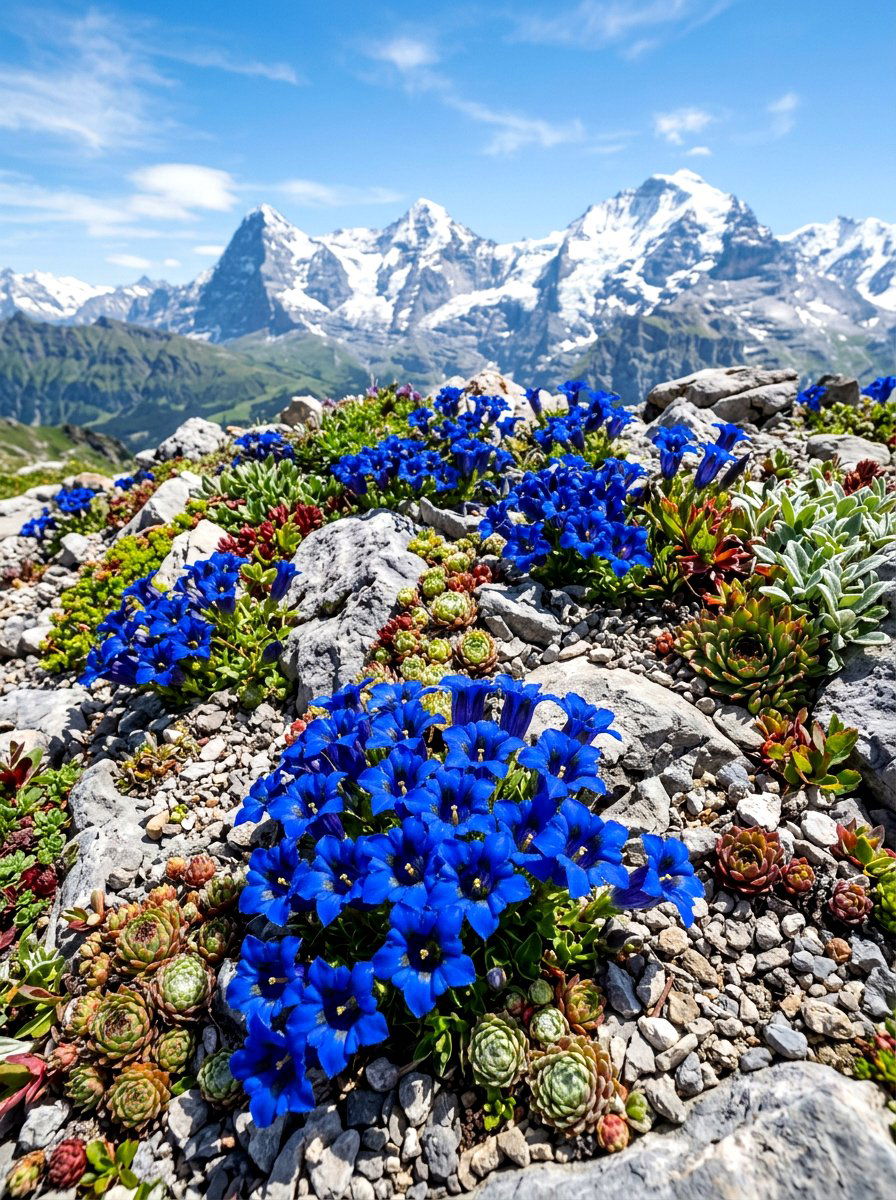
Building a specialized rockery for alpine gentians is a rewarding project for gardeners who appreciate intense, deep blue colors. Gentians are famous for having some of the truest and most vivid blue pigments found in the entire plant kingdom. These low-growing plants thrive in rocky, well-drained soil that mimics their native mountain habitats, making them perfect for a sunny rock garden. Their trumpet-shaped flowers open wide in the sunlight, creating a jewel-like effect against the grey stones. While they require specific growing conditions, the sheer brilliance of their color makes them a prized focal point for any collector of rare and beautiful garden plants.
22. False Indigo Prairie Garden
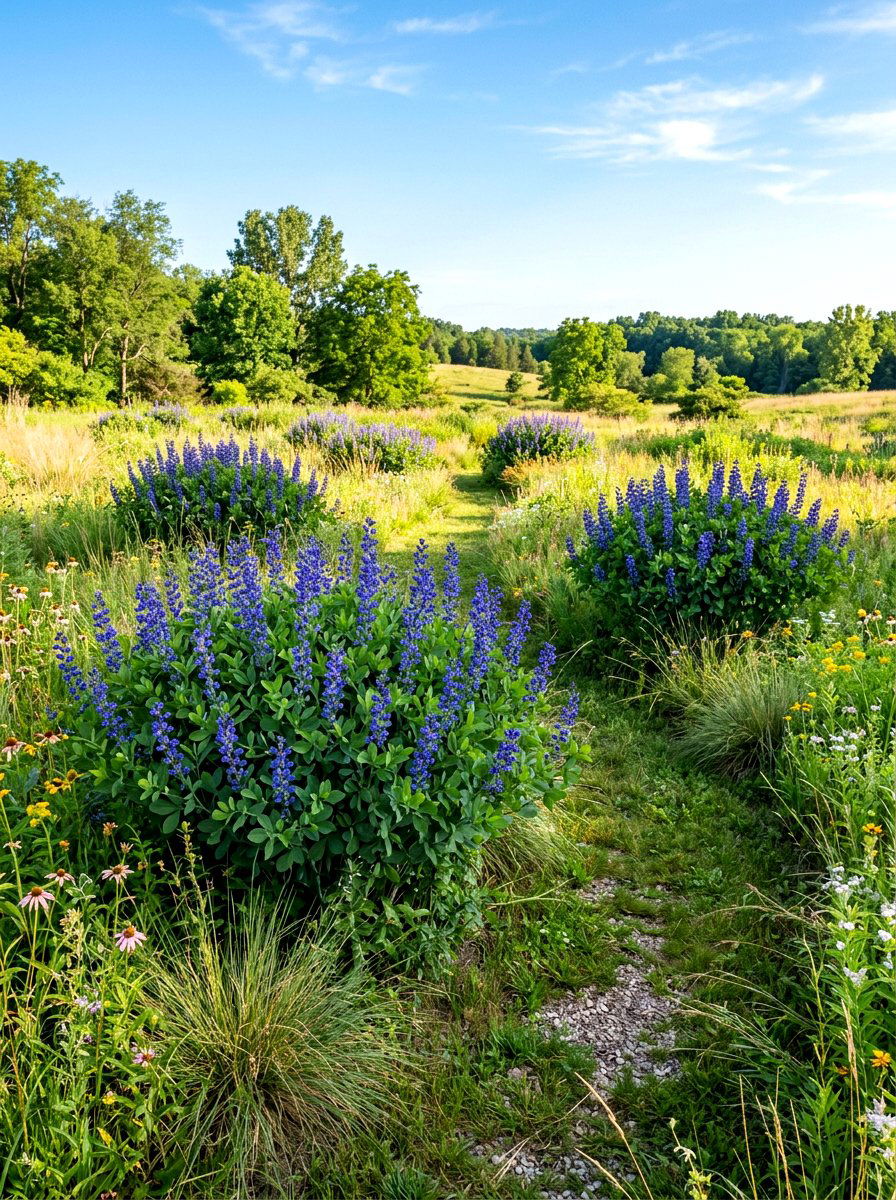
Integrating False Indigo, or Baptisia, into a prairie-style garden adds height, structure, and beautiful pea-like blue flowers to your landscape. This native perennial forms a large, shrub-like mound of blue-green foliage that remains attractive throughout the entire growing season. The tall flower spikes emerge in late spring, providing a vertical element that stands out among ornamental grasses and other wildflowers. After the flowers fade, interesting black seed pods develop, adding visual interest well into the winter. This is an incredibly long-lived and sturdy plant that develops a deep taproot, making it very drought-tolerant and reliable for many years in the garden.
23. Grape Hyacinth Walkway
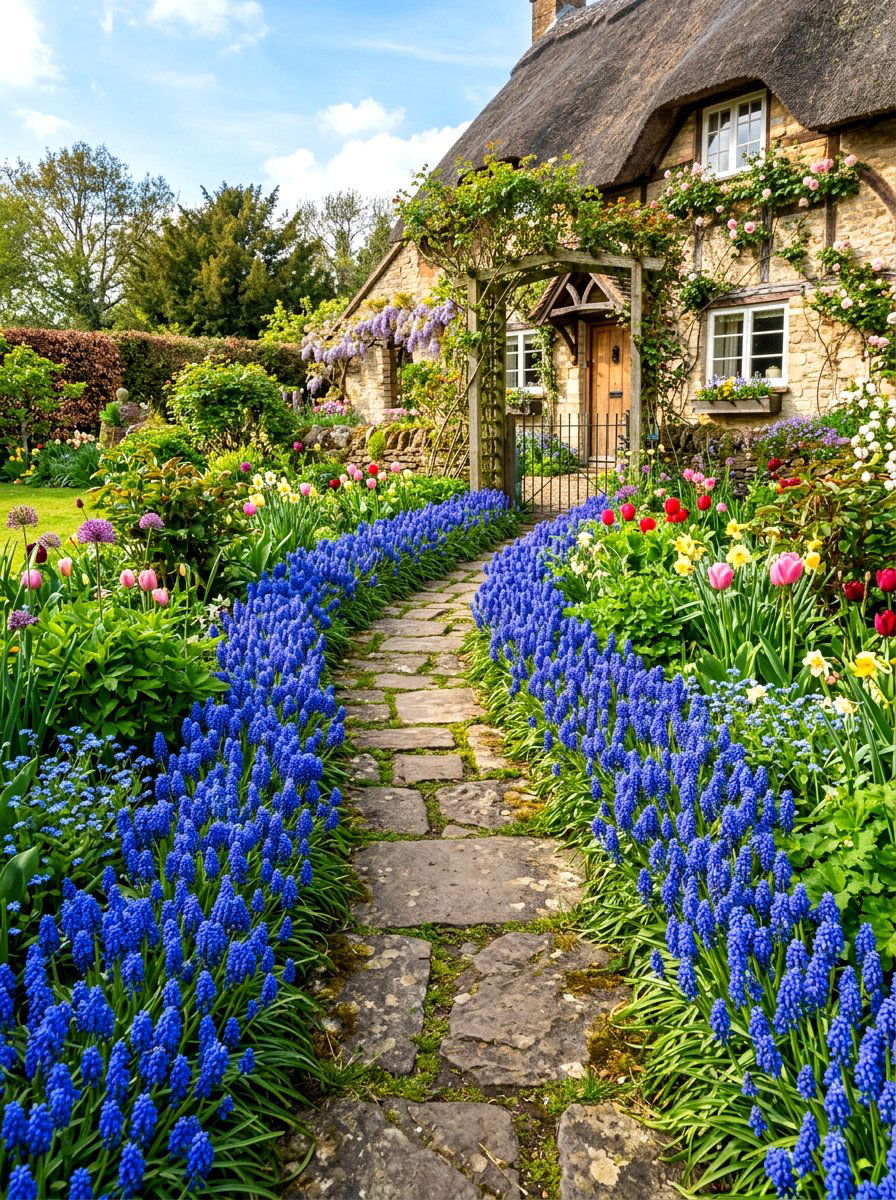
Lining a garden path or driveway with grape hyacinths is a charming way to welcome the arrival of spring each year. These small bulbs, also known as Muscari, produce tight clusters of tiny blue bells that look remarkably like miniature bunches of grapes. They are very easy to grow and will naturally multiply over time, eventually forming a thick ribbon of blue color along your walkways. Their diminutive size makes them perfect for planting at the very front of a border where they won't be hidden by larger plants. They also look fantastic when planted in containers or forced indoors for an early burst of color.
24. Siberian Squill Lawn
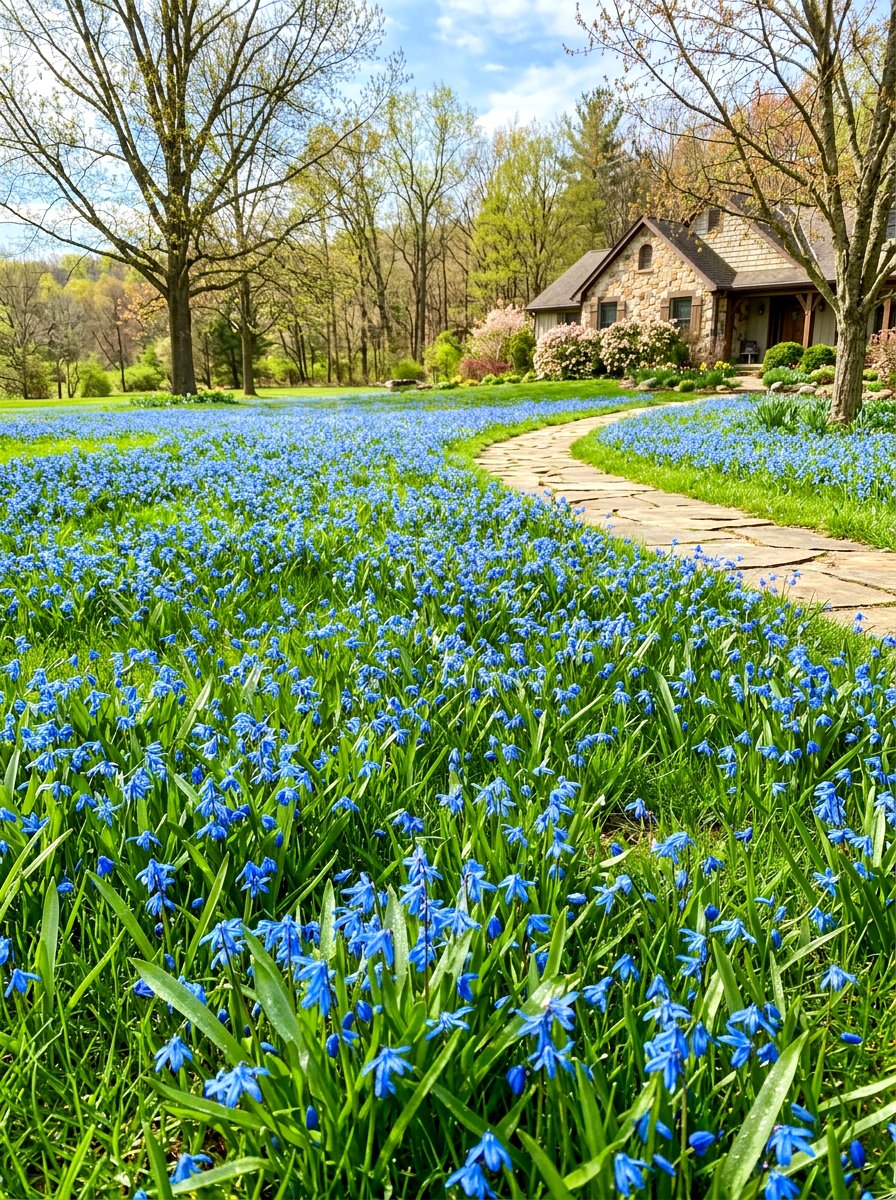
Naturalizing Siberian squill in your lawn is a creative way to enjoy a massive display of blue color before your grass even begins to grow. These tiny bulbs bloom very early in the spring, often popping up through the last bits of melting snow to signal warmer days. When planted by the hundreds in a grassy area, they create a breathtaking blue carpet that covers the entire yard for several weeks. Because they finish blooming and their foliage dies back before the first lawn mowing is required, they are a perfect "plant and forget" solution for adding effortless spring beauty to your property.
25. Nigella Love In A Mist Garden
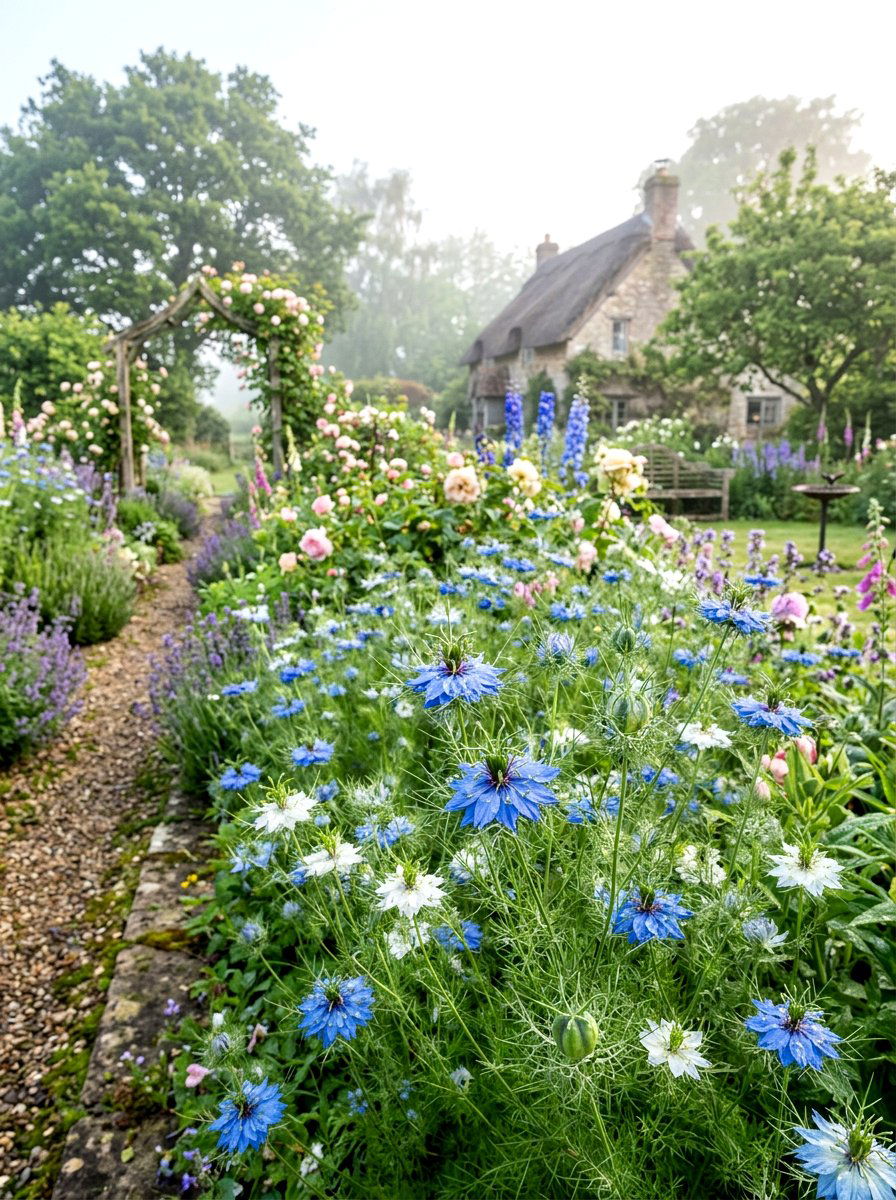
Growing Nigella, often called Love-in-a-Mist, in a cottage garden patch adds a layer of fine texture and whimsical blue color to the space. This annual plant features delicate, fern-like foliage that creates a soft green haze around the star-shaped blue blossoms. The flowers are followed by very decorative, balloon-like seed pods that look great in both the garden and in dried floral arrangements. It is a very easy plant to grow from seed and will often self-sow, returning year after year with minimal effort. Its unique look adds a sense of old-world charm and mystery to any mixed flower border or cutting garden.
26. Blue Hibiscus Tropical Garden
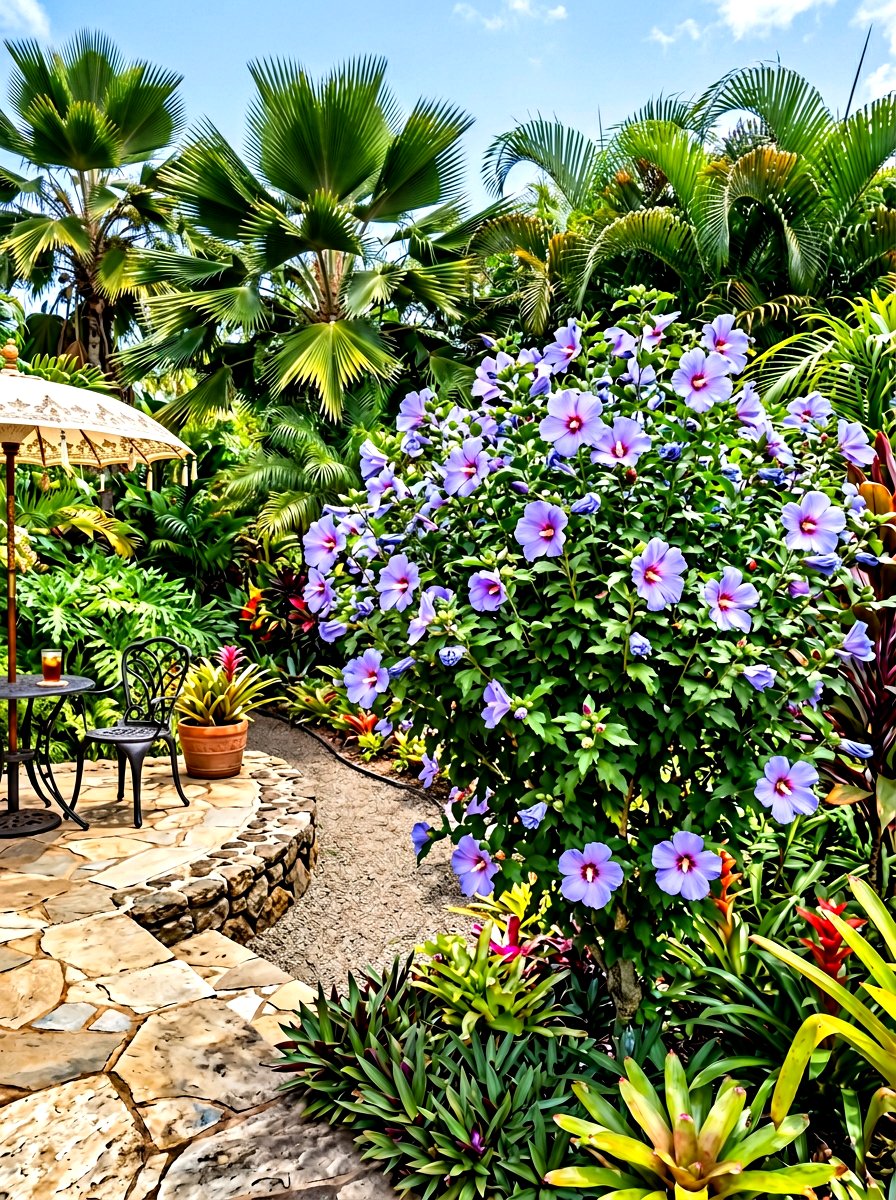
Creating a tropical-themed corner with blue hibiscus is a fantastic way to introduce large, exotic-looking blooms to a sunny and warm part of your yard. Unlike traditional red hibiscus, the blue varieties offer large, lavender-blue petals with a dark central eye, providing a much cooler and more relaxed vibe. These shrubs can grow quite large and act as a beautiful backdrop for other tropical plants like palms or bird of paradise. They bloom repeatedly throughout the summer and autumn, ensuring that your garden stays vibrant and colorful for many months. This plant is perfect for creating a lush, private oasis that feels like a vacation spot.
27. Blue Petunia Patio
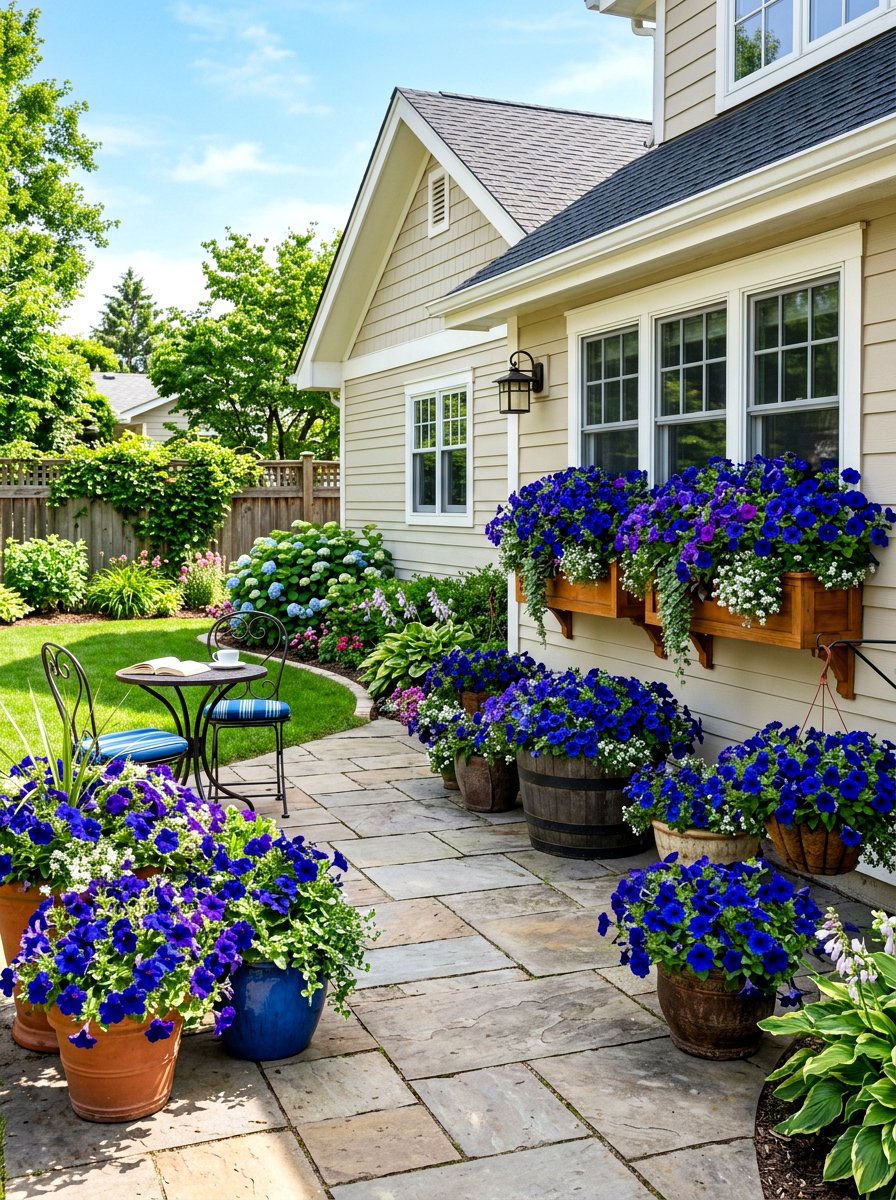
Filling patio planters and window boxes with blue petunias is a classic and reliable way to ensure a continuous display of color all season long. Modern breeding has produced petunias in incredible shades of midnight blue and velvet purple-blue that look stunning when planted in mass. These flowers are known for their resilience and ability to bounce back after rain, making them a practical choice for outdoor living areas. Their trailing habit allows them to spill elegantly over the sides of pots, softening the hard edges of stone patios or wooden decks. They provide a cheerful and approachable look that everyone can enjoy during outdoor gatherings.
28. Sweet Pea Vertical Garden
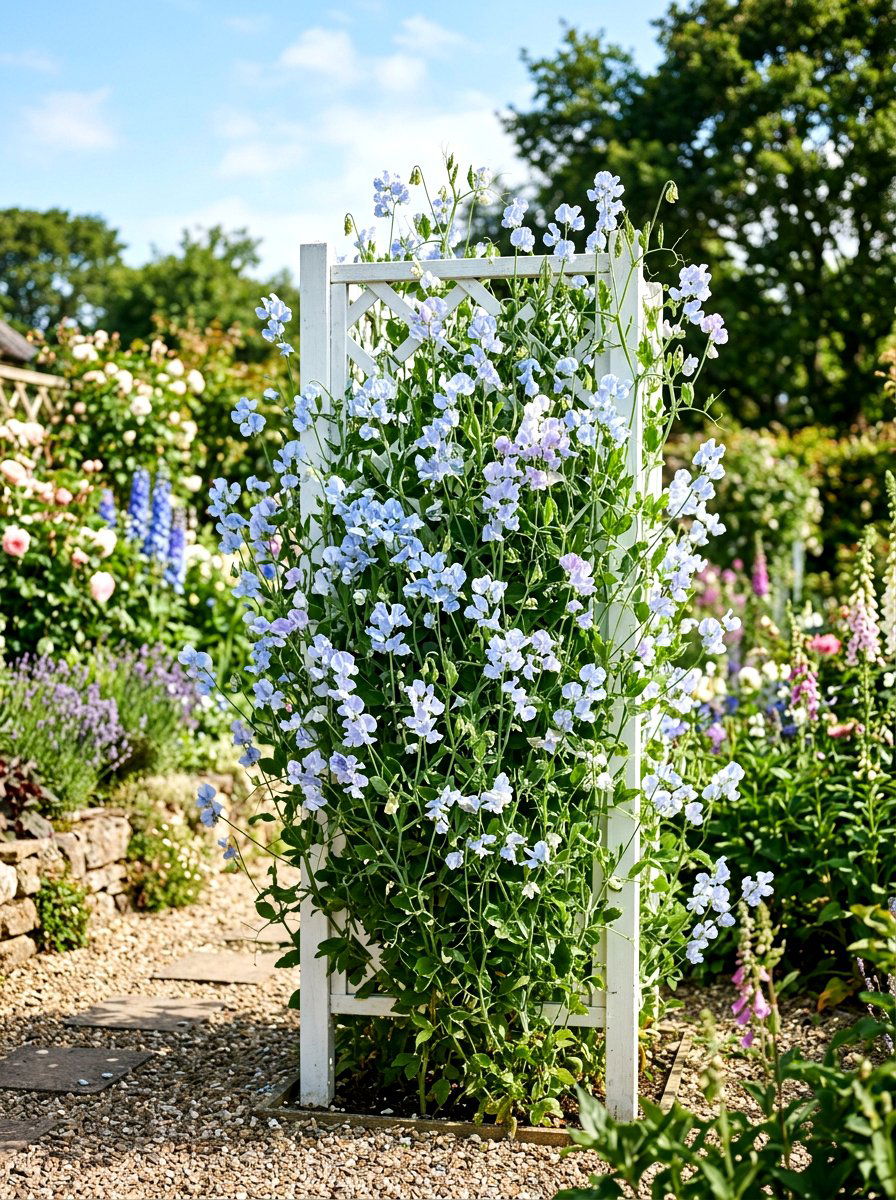
Training blue sweet peas to grow up a decorative obelisk or garden net adds both vertical color and an incredible fragrance to your backyard. These climbing annuals produce delicate, ruffled flowers in various shades of powder blue and lavender that are highly prized for their sweet scent. By growing them vertically, you bring the fragrance closer to nose-level, making them a delight to walk past in the morning. They are excellent for cutting, allowing you to bring a bit of your blue garden indoors to enjoy in a vase. This garden idea is perfect for adding a romantic and sensory element to a small space.
29. Blue Echeveria Succulent Garden
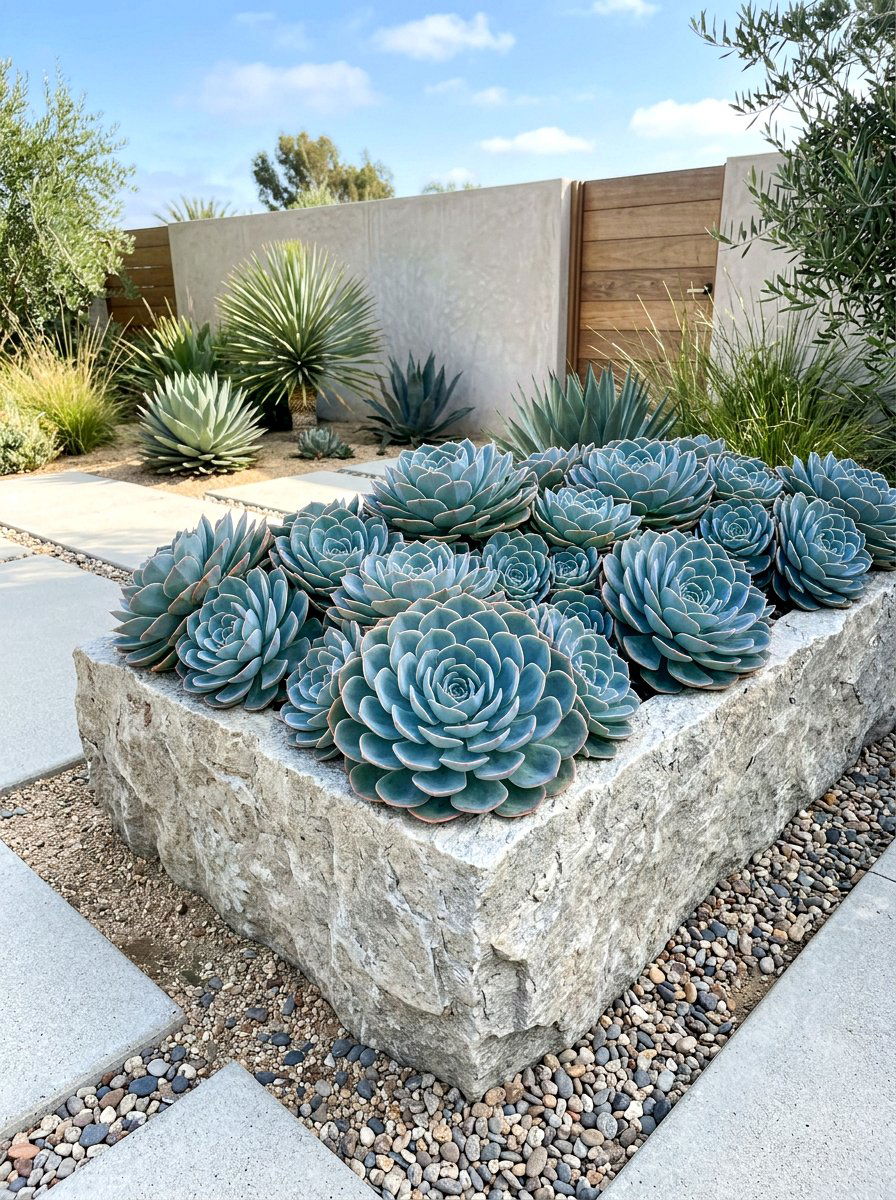
Designing a modern succulent garden with blue echeveria is a stylish way to incorporate cool tones into a low-water landscape. Many echeveria varieties feature thick, fleshy leaves in stunning shades of powdery blue, teal, and silver, often arranged in a perfect rosette shape. When planted in a decorative stone bowl or a geometric garden bed, they create a clean and sculptural look that is very popular in contemporary design. These plants require very little water and thrive in sunny spots, making them ideal for rockeries or rooftop gardens. Their subtle blue hues provide a calming contrast to more vibrant green or red succulent varieties.
30. Blue Aster Fall Garden
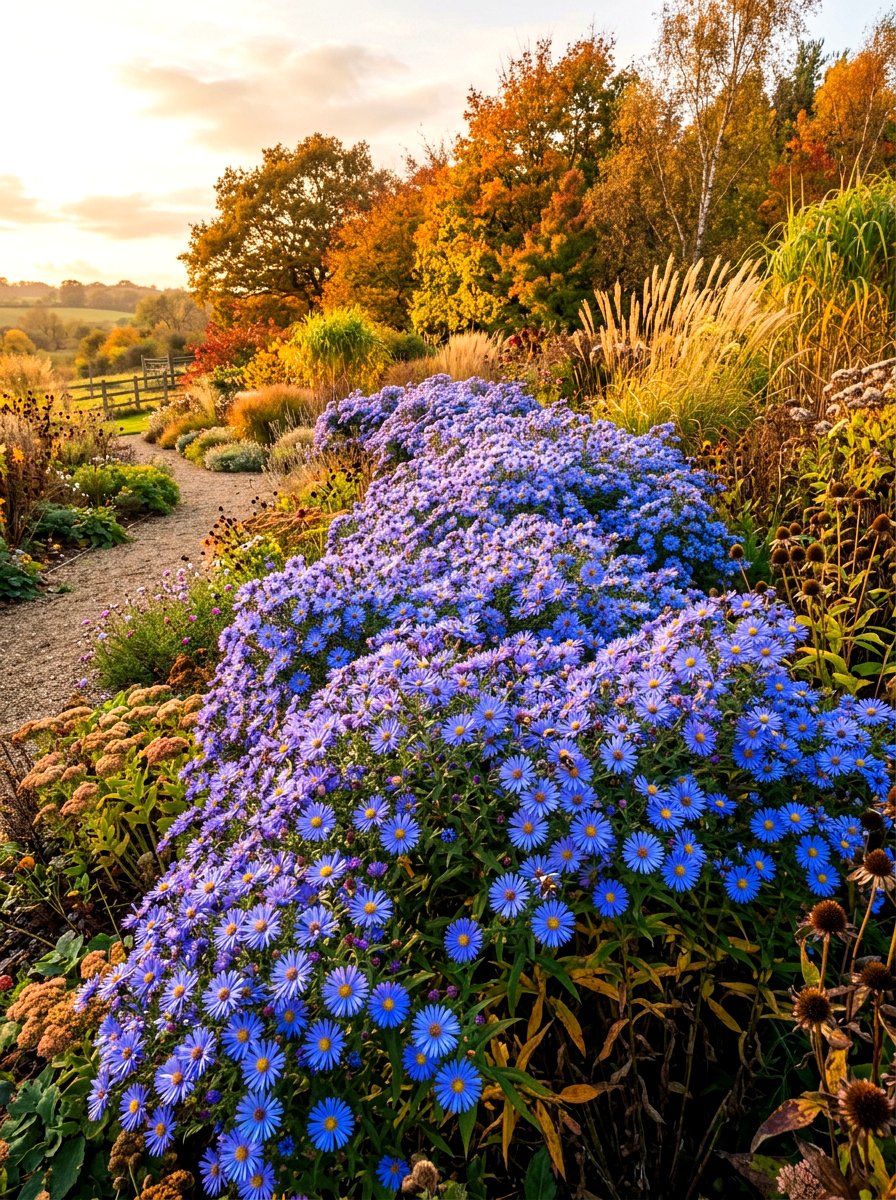
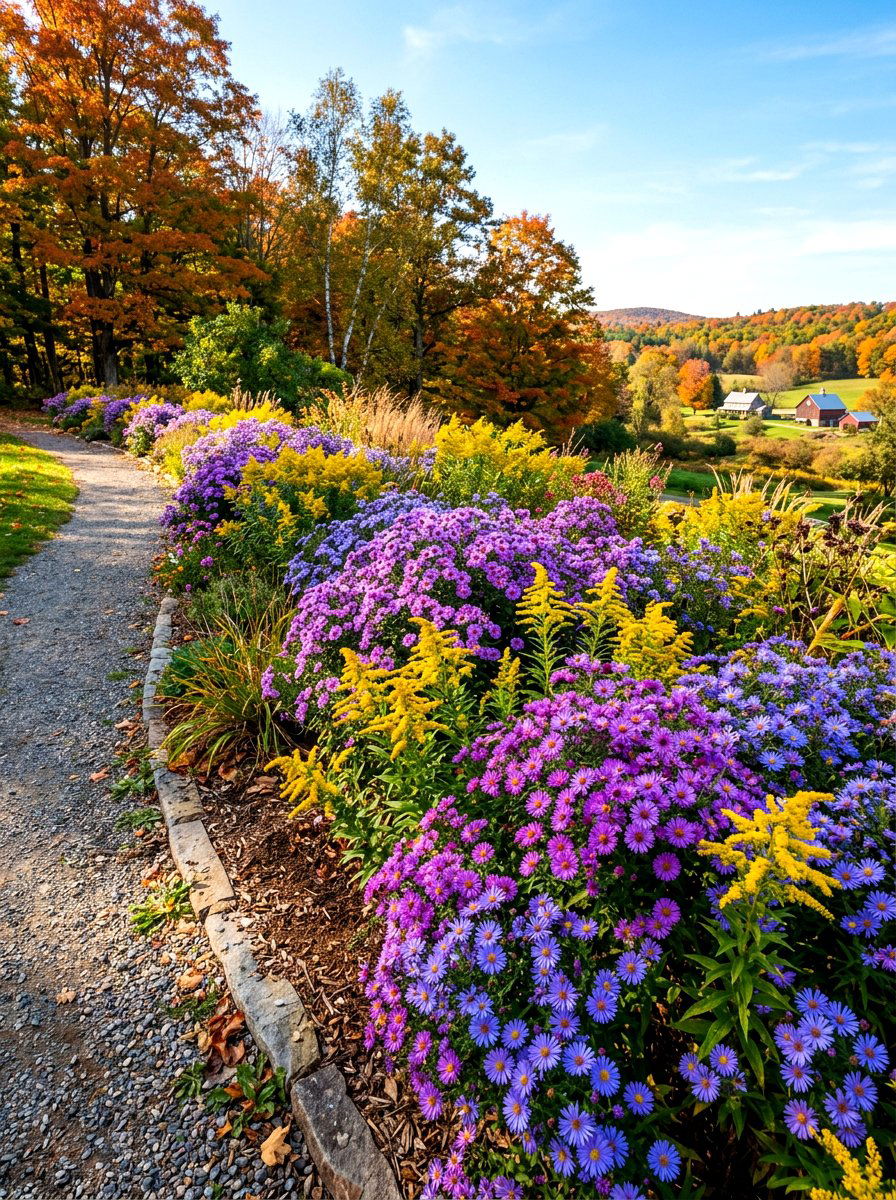
Ending the gardening season with a burst of color is easy when you plant a dedicated fall garden featuring vibrant blue asters. These perennials wait until late summer and autumn to bloom, providing a vital source of nectar for migrating butterflies and bees. The daisy-like flowers cover the entire plant in a dense cloud of blue, creating a spectacular finale for your landscape. They look best when planted in large drifts alongside ornamental grasses or yellow goldenrod for a classic autumnal color combination. Their hardy nature and reliable blooming habit make them a staple for anyone wanting to maintain a beautiful garden well into the cooling months.
Conclusion:
Cultivating a garden filled with blue flowers offers a unique opportunity to design a space that feels both ethereal and deeply grounding. By carefully selecting a variety of plants — from the towering spikes of delphiniums to the soft carpets of forget-me-nots — you can create a multi-dimensional landscape that evolves throughout the seasons. The calming influence of blue tones makes these gardens the perfect retreat for relaxation and reflection in our busy lives. Whether you choose to go with a strictly monochromatic theme or mix your blues with whites and silvers, the resulting sanctuary will undoubtedly become a cherished part of your home for many years to come.

Related posts: