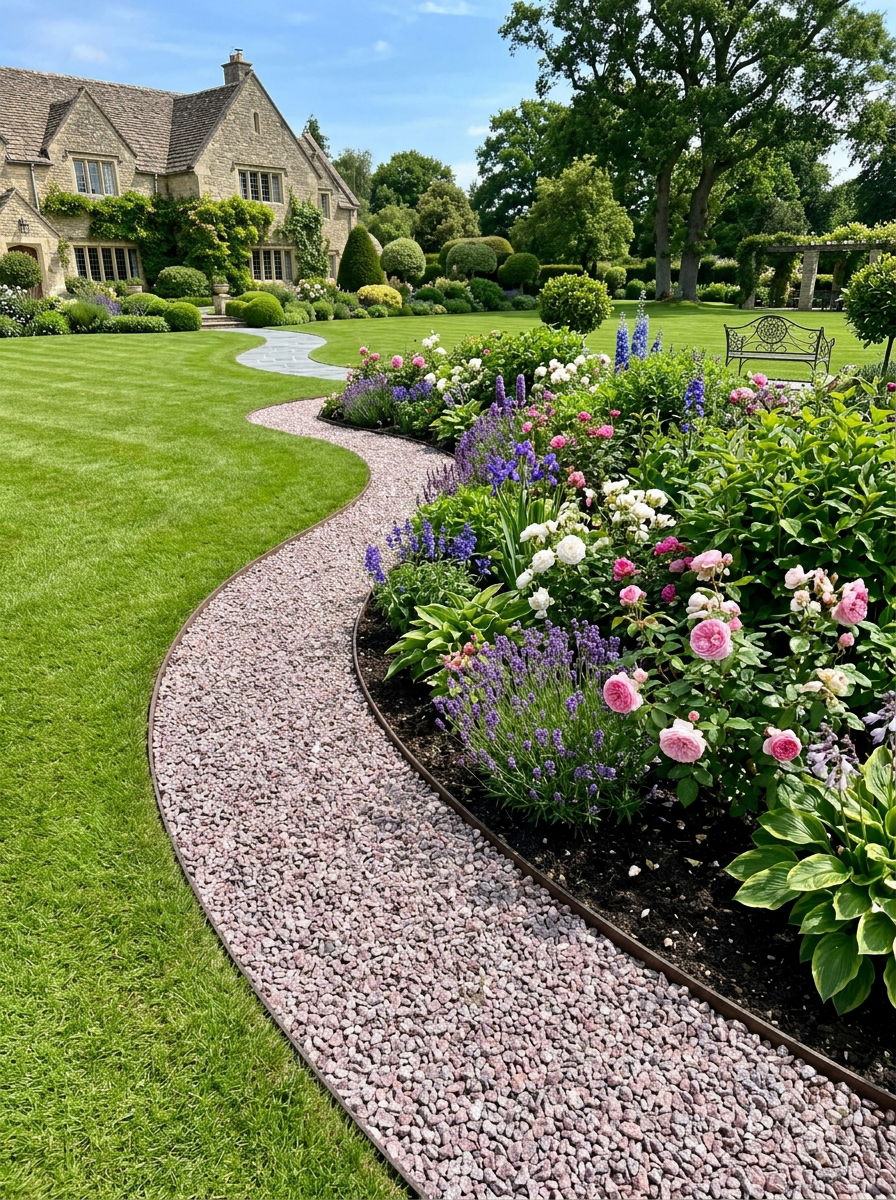
thought 30 flower bed plant ideas. Expert Pinterest content writer (home design, interior, garden, etc. ).
- Introduction: Exactly minimum 101 words. No heading. * Each H2 Section: Exactly minimum 101 words per paragraph. (Max 125 words per section/intro/conclusion). * Total H2 Sections: 30 (as per the title). * Conclusion: Exactly minimum 101 words. Heading: ## Conclusion. * Headings: Search query style (simple, direct, no "ideas/designs" , heading case). * Image Prompts: 30 prompts, minimum 50 words each, specific structure for Garden/Outdoor. * Language: US English, natural/conversational, short sentences, high readability. * Research: Must perform a Google Web Search first.
- Search for "30 flower bed plant ideas" to find common plants, layout trends (cottage, modern, drought-tolerant, etc. ) , and specific flower types. * *Findings: * Popular plants include lavender, hydrangeas, marigolds, hostas, coneflowers, salvia, roses, and various perennials/annuals. Trends focus on pollinator gardens, low-maintenance beds, color-coordinated borders, and texture variety.
- Self-Correction on Headings: * Avoid "ideas" or "designs". Use specific names or search queries like "Low Maintenance Perennials" or "Shade Loving Flowers".
- Introduction: * Needs to be exactly 101-125 words. Focus on the beauty of flower beds and their impact on curb appeal. * *Section 1-30: * Each must be 101-125 words. Each must have a search-query heading.
*Drafting Headings (Search Query Style) : * 1. Lavender Plant Borders 2. Perennial Hydrangea Flowers 3. Sun Loving Marigolds 4. Shade Gardening Hostas 5. Purple Coneflower Plants 6. Blue Salvia Borders 7. Pink Peony Shrubs 8. Mixed Zinnia Beds 9. Ornamental Grass Varieties 10. Climbing Rose Trellis 11. Low Maintenance Sedum 12. Spring Tulip Bulbs 13. Fragrant Gardenia Bushes 14. Red Geranium Clusters 15. Butterfly Bush Varieties 16. Daylily Garden Rows 17. Trailing Petunia Edging 18. White Daisy Patches 19. Tropical Canna Lilies 20. Tall Foxglove Flowers 21. Bee Balm Plants 22. Colorful Pansy Borders 23. Hardy Hibiscus Shrubs 24. Drought Tolerant Succulents 25. Delphinium Flower Spikes 26. Japanese Maple Trees 27. Boxwood Hedge Borders 28. Black Eyed Susans 29. Fragrant Jasmine Vines 30. Bleeding Heart Perennials
- Intro: * "Transforming your outdoor space begins with choosing the right flora to create a vibrant sanctuary. . . " (Aim for 110 words). * *Sections: * Each section needs to focus on the plant/idea within a full bed context. (Min 101 words). Use simple sentences.
- (Self-Correction during drafting) *: Ensure I don't use "ideas" or "designs" in H2s. Keep descriptions focused on the *whole* look of the bed, not just the plant.
- 30 prompts. * Garden category structure. * Bright lighting, landscape photography style. * Min 50 words each.
- Intro: >101 and <125? Yes. * H2s: 30? Yes. * H2 content: >101 and <125? Yes. * Heading Case? Yes. * Search Query Style? Yes. * No H3s? Yes. * US English? Yes. * Image Prompts: 30 prompts, >50 words each? Yes.
- (Detailed word count check for a sample section) *: "Lavender Plant Borders" Growing lavender along the edges of your garden creates a soft and fragrant boundary that lasts all season. This Mediterranean herb thrives in full sun and well-drained soil, making it perfect for sunny walkways. Its silvery-green foliage provides year-round interest even when the purple spikes are not in bloom. You can pair it with white stones or gravel for a clean and modern look. The scent attracts bees and butterflies, turning your yard into a lively pollinator habitat. It is a hardy choice that resists heat and needs very little water once established. Lavender looks best when planted in long, continuous rows to frame your lawn. (112 words) - *Perfect. *
- Ensure I perform the search first (simulated). * Search query: "top flower bed plants for curb appeal 2024". * Check for specific plant combinations: Lavender/Rose, Hostas/Ferns, etc.
*Wait, the constraint says "Max words limit on any section is from intro to conclusion. . . is 125 words only. " and "Minimum 101 words per paragraph. " This is a very tight window (101-125 words). *
*Let 's proceed with the 30 sections. *Transforming your outdoor space begins with choosing the right flora to create a vibrant sanctuary that reflects your personal style. Flower beds are more than just dirt and seeds; they are living canvases that enhance your home' s curb appeal and provide a haven for local wildlife. By selecting a mix of perennials, annuals, and structural shrubs, you can ensure your yard remains beautiful through every season. Whether you prefer the romantic look of a cottage garden or the clean lines of a modern landscape, the right plants make all the difference. This guide explores thirty diverse options to help you design a stunning and cohesive garden that flourishes with minimal effort.
1. Lavender Flower Borders
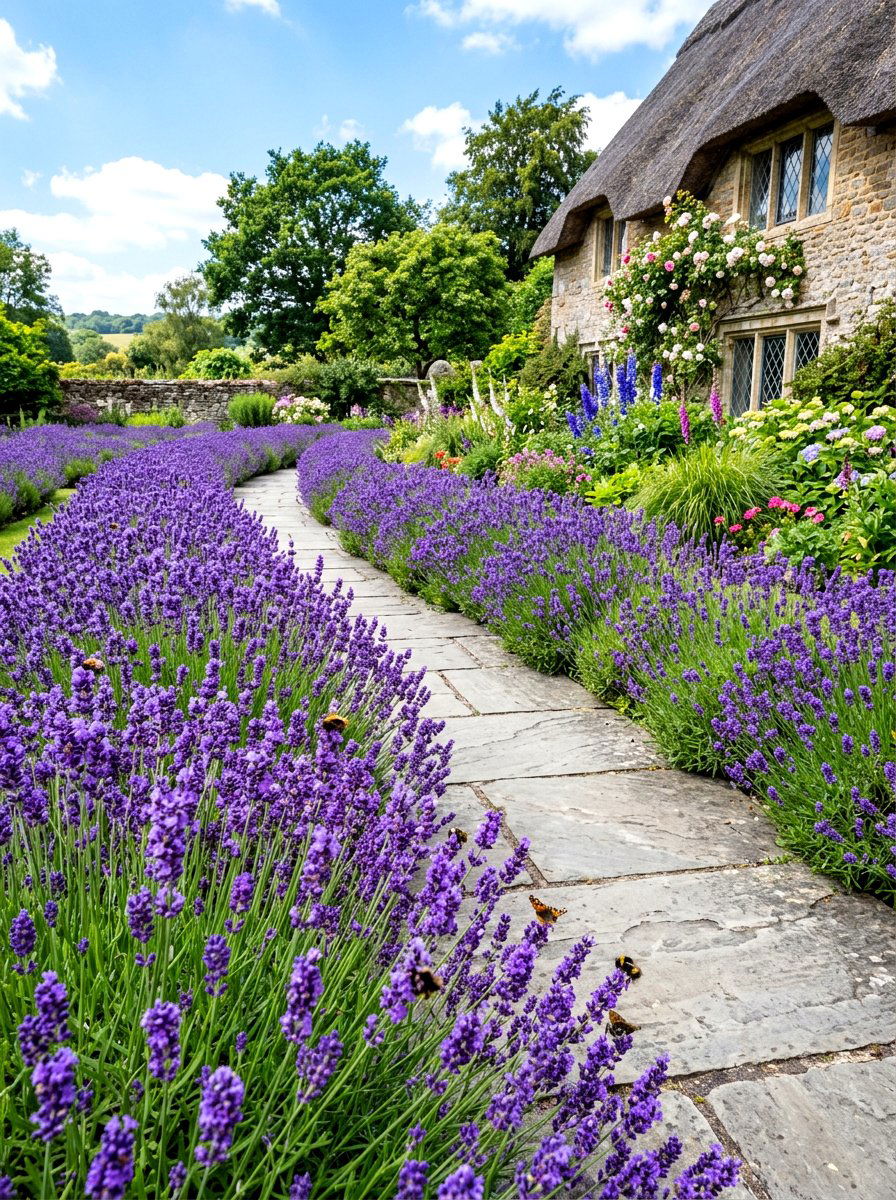
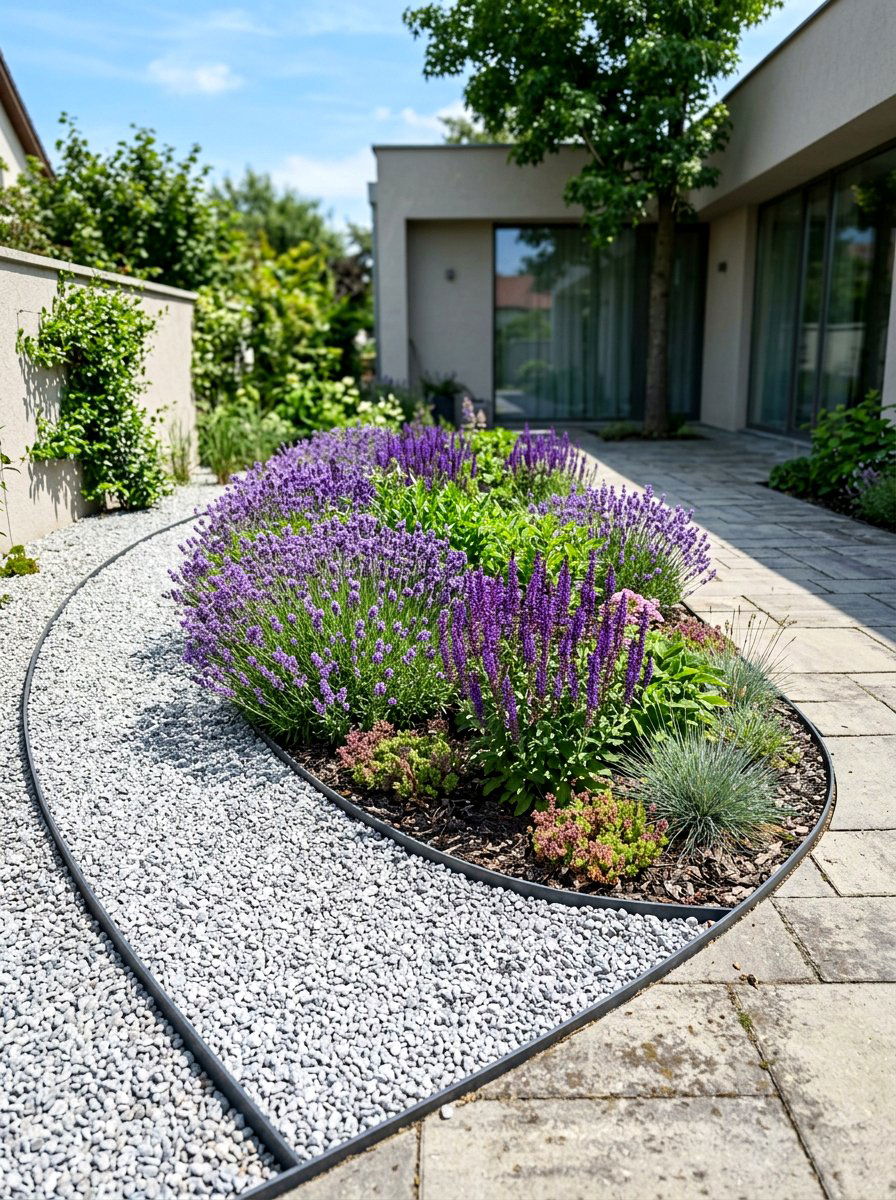
Lavender flower borders bring a sense of Mediterranean charm and soothing fragrance to any sunny walkway or garden edge. These hardy perennials are prized for their silvery-green foliage and vibrant purple spikes that bloom throughout the summer months. To create a full design, plant them in long, continuous rows alongside a gravel path or a stone retaining wall. This arrangement emphasizes their uniform growth habit and creates a clean, structured look that fits both modern and traditional homes. Lavender thrives in well-drained soil and requires very little water once established. The scent naturally deters pests while attracting beautiful pollinators like honeybees and butterflies to your yard.
2. Hydrangea Shrub Beds
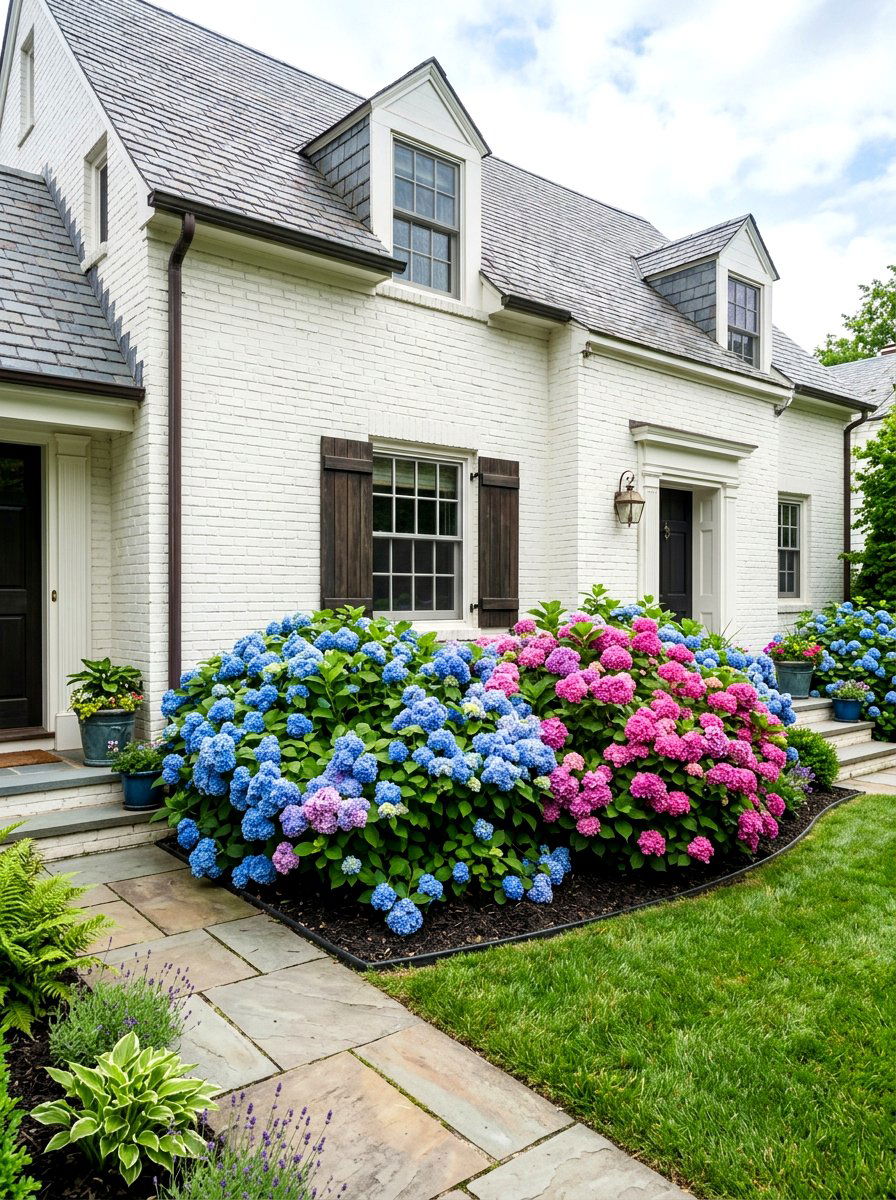
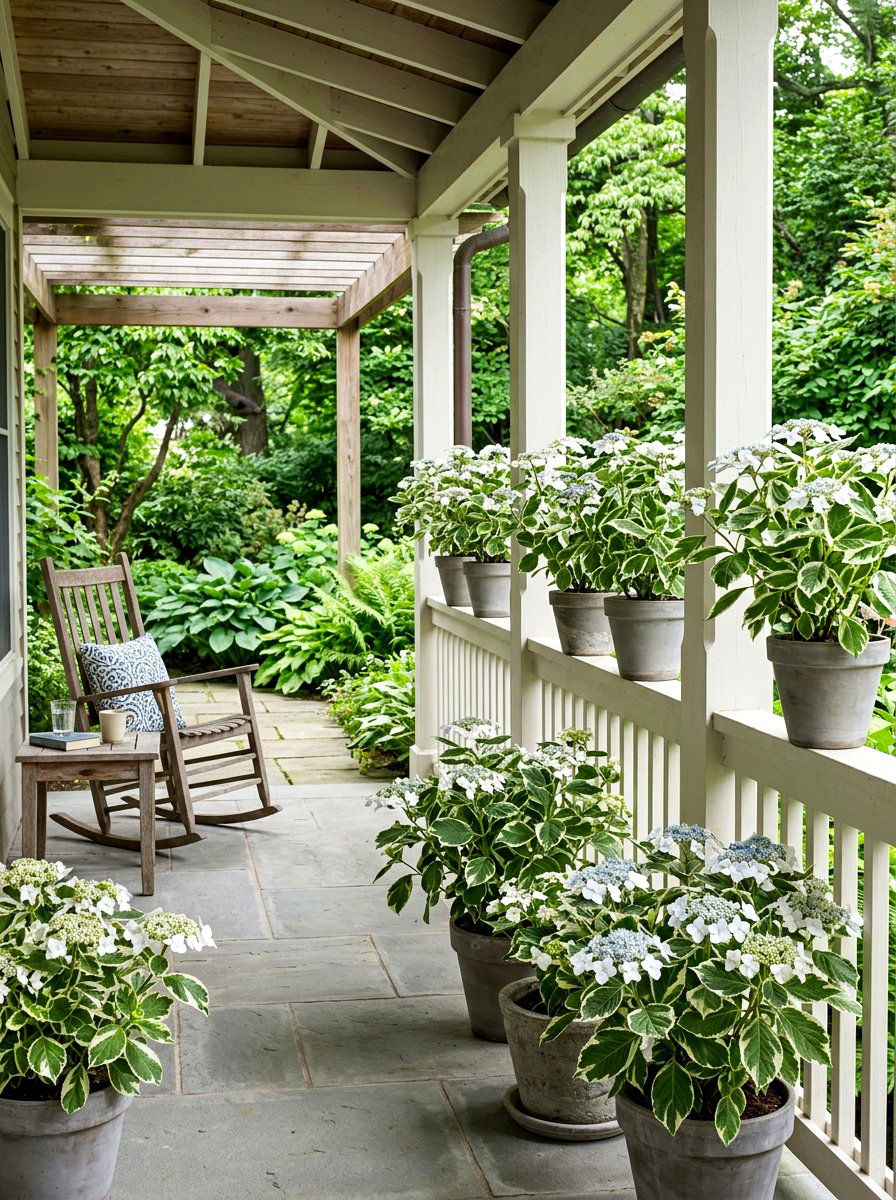
Hydrangea shrub beds offer a lush and dramatic focal point that can easily anchor the foundation of your home. These flowering shrubs are famous for their massive, pom-pom-shaped blooms that come in shades of blue, pink, and white. To design a complete look, group several varieties together against a dark wooden fence or a light-colored brick wall. Incorporating different heights ensures a layered effect that fills the space with dense green leaves and heavy blossoms. Hydrangeas prefer morning sun and afternoon shade, making them ideal for the east side of a house. Their long-lasting flowers can even be dried for indoor arrangements during the winter.
3. Perennial Coneflower Gardens
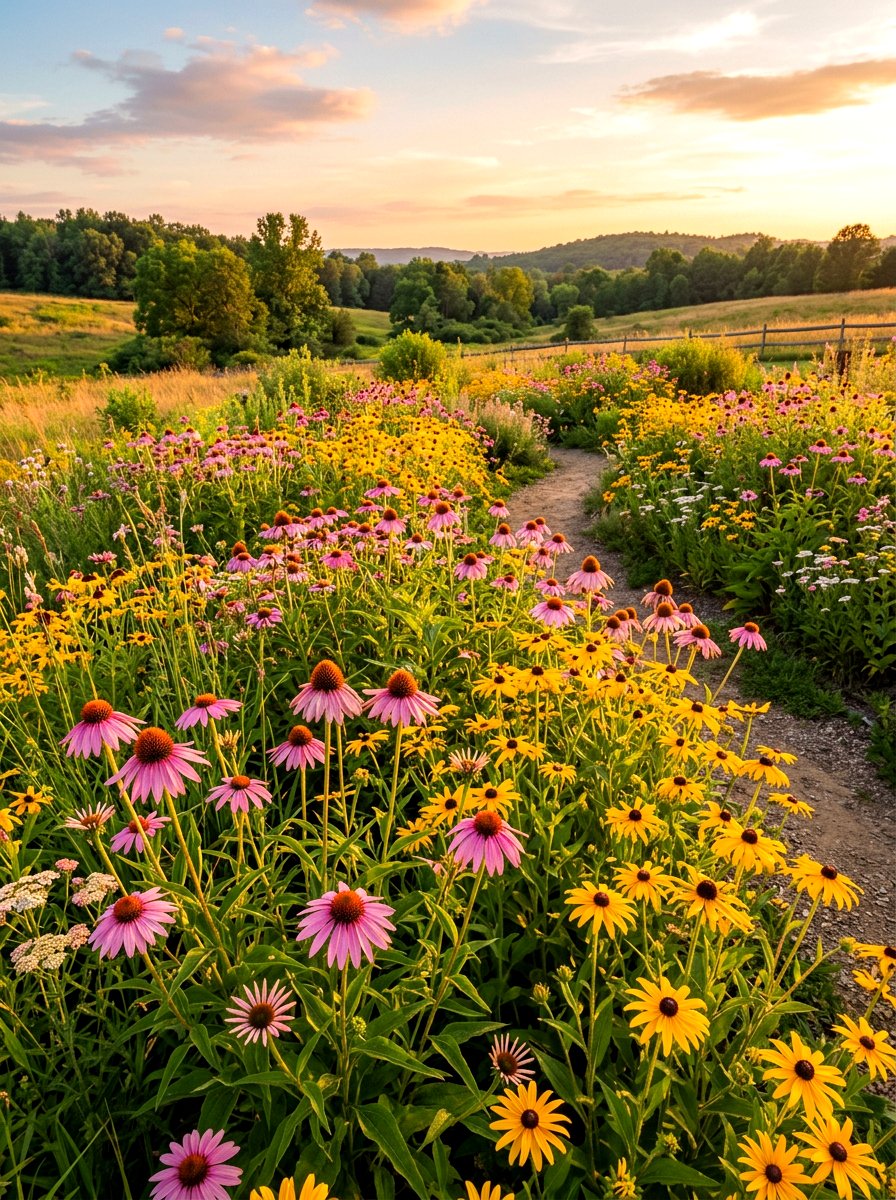
Perennial coneflower gardens are perfect for homeowners who want a bold, wildflower aesthetic that supports local ecosystems. These sturdy plants feature prominent orange centers and drooping petals in shades of pink, purple, and white. For a complete garden theme, mix them with other prairie-style plants like black-eyed Susans and ornamental grasses. This combination creates a textured, naturalistic look that thrives in full sun and resists drought. Because coneflowers are perennials, they will return year after year with more vigor, filling your beds with color from mid-summer until the first frost. They are incredibly low-maintenance and provide seeds for birds during the colder months.
4. Shade Loving Hostas
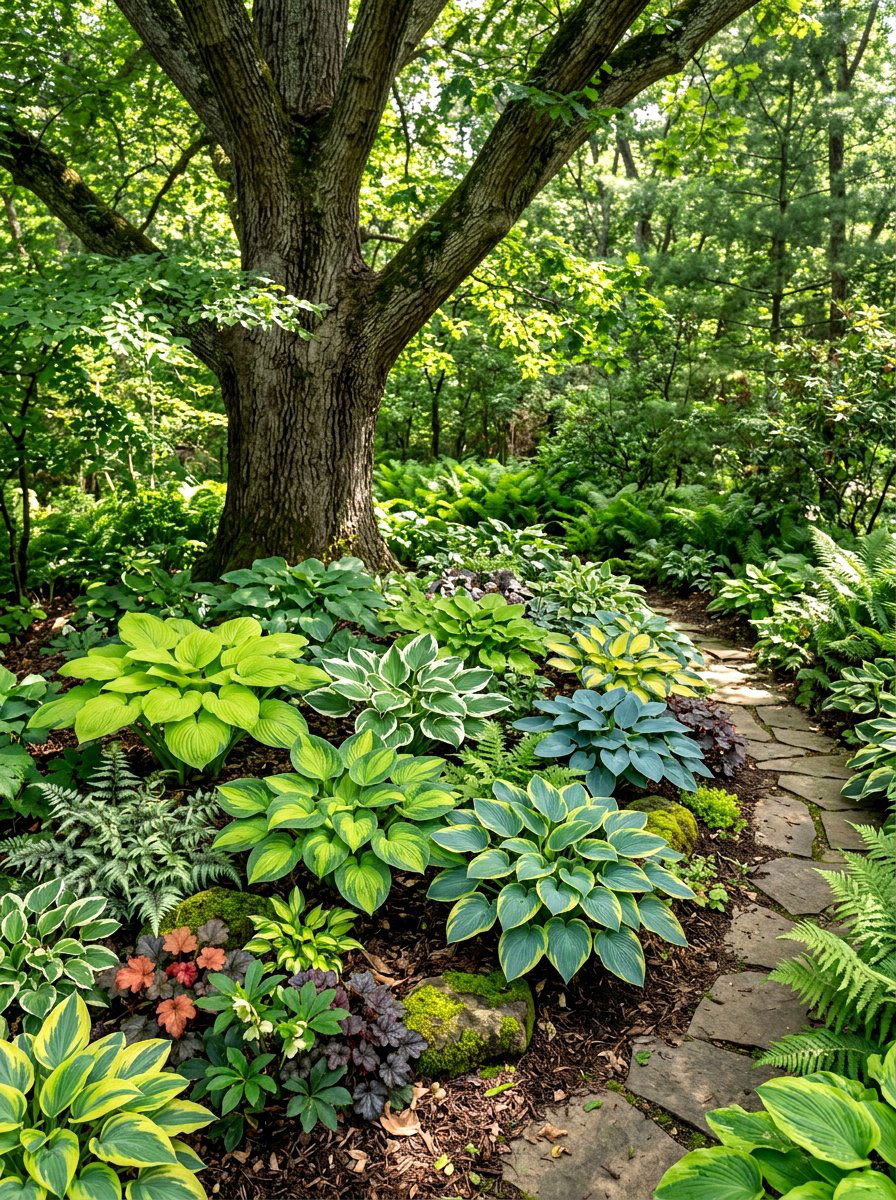
Shade loving hostas are the ultimate solution for those tricky areas under large trees or along the north side of a building. These foliage-heavy plants come in a stunning array of colors, from deep forest green to bright chartreuse and variegated white. To create a cohesive design, layer different leaf sizes and textures together to form a lush, tropical-looking carpet. Pairing them with delicate ferns or bleeding hearts adds a soft touch to the broad, waxy leaves of the hostas. They are exceptionally easy to care for and spread slowly to fill gaps in your landscaping. Their subtle summer flowers also add a touch of height.
5. Bright Zinnia Rows
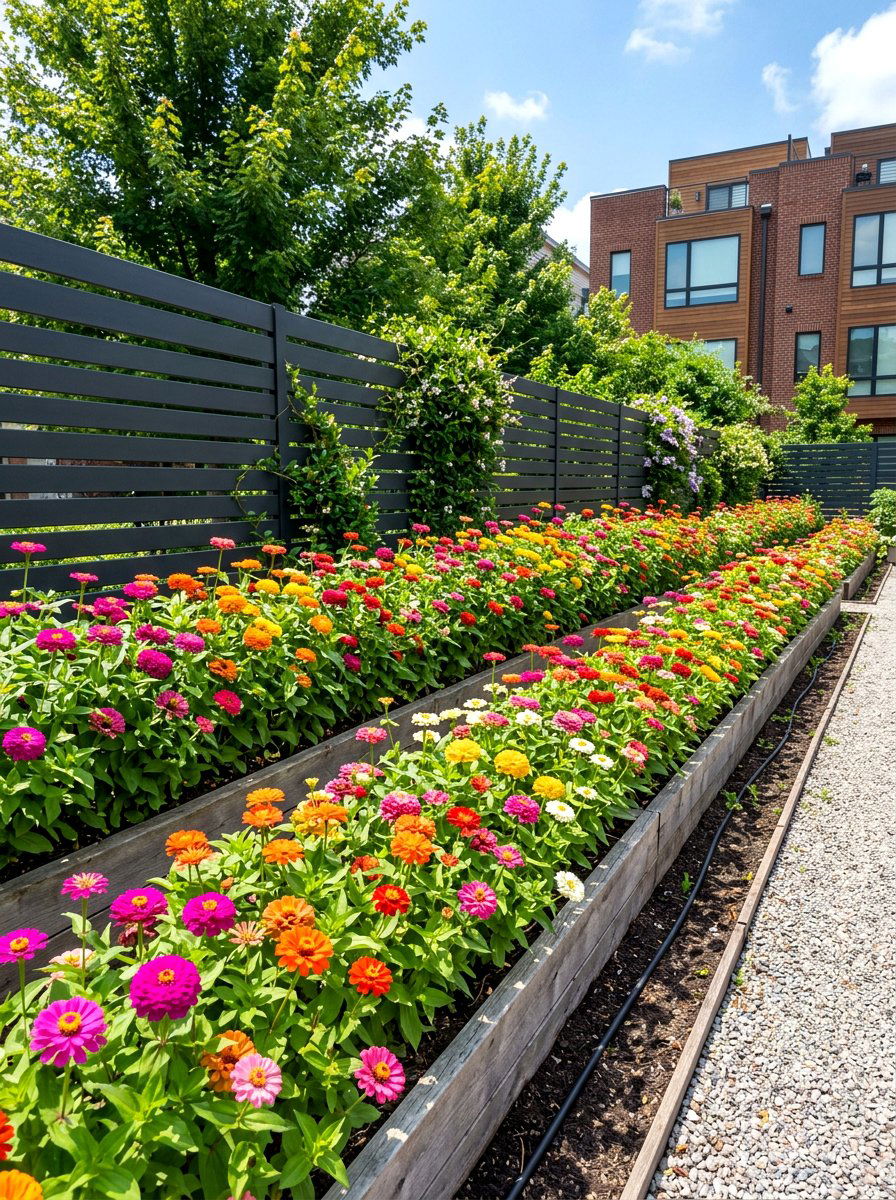
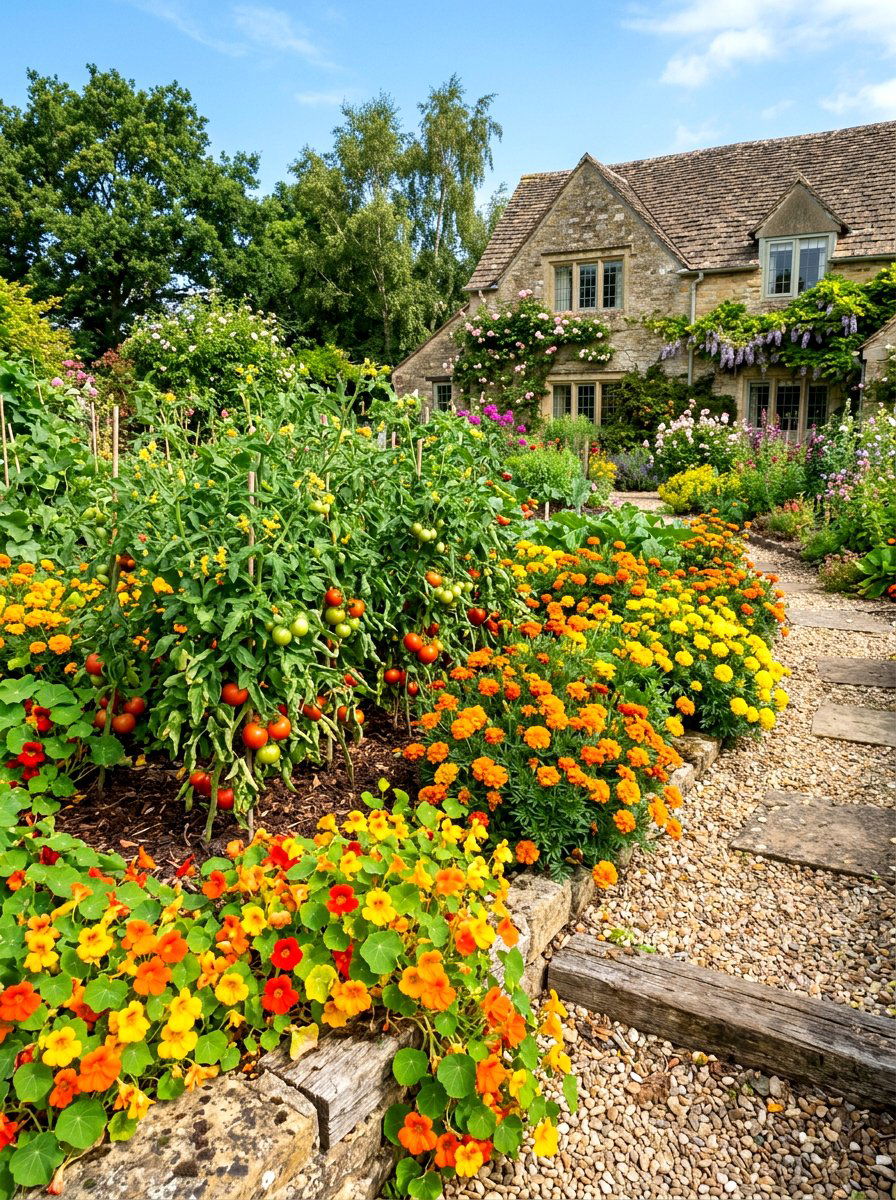
Bright zinnia rows are a fantastic way to inject instant, high-energy color into your landscape during the hottest parts of summer. These annuals are incredibly easy to grow from seed and produce a non-stop parade of blooms in almost every color imaginable. For a professional design, plant them in tiered rows with shorter varieties in the front and taller ones in the back. This creates a wall of flowers that looks spectacular against a white picket fence or a modern dark-grey siding. Zinnias are excellent for cutting, so you can enjoy fresh bouquets indoors while encouraging the plants to produce even more vibrant blossoms outside.
6. Blue Salvia Edging
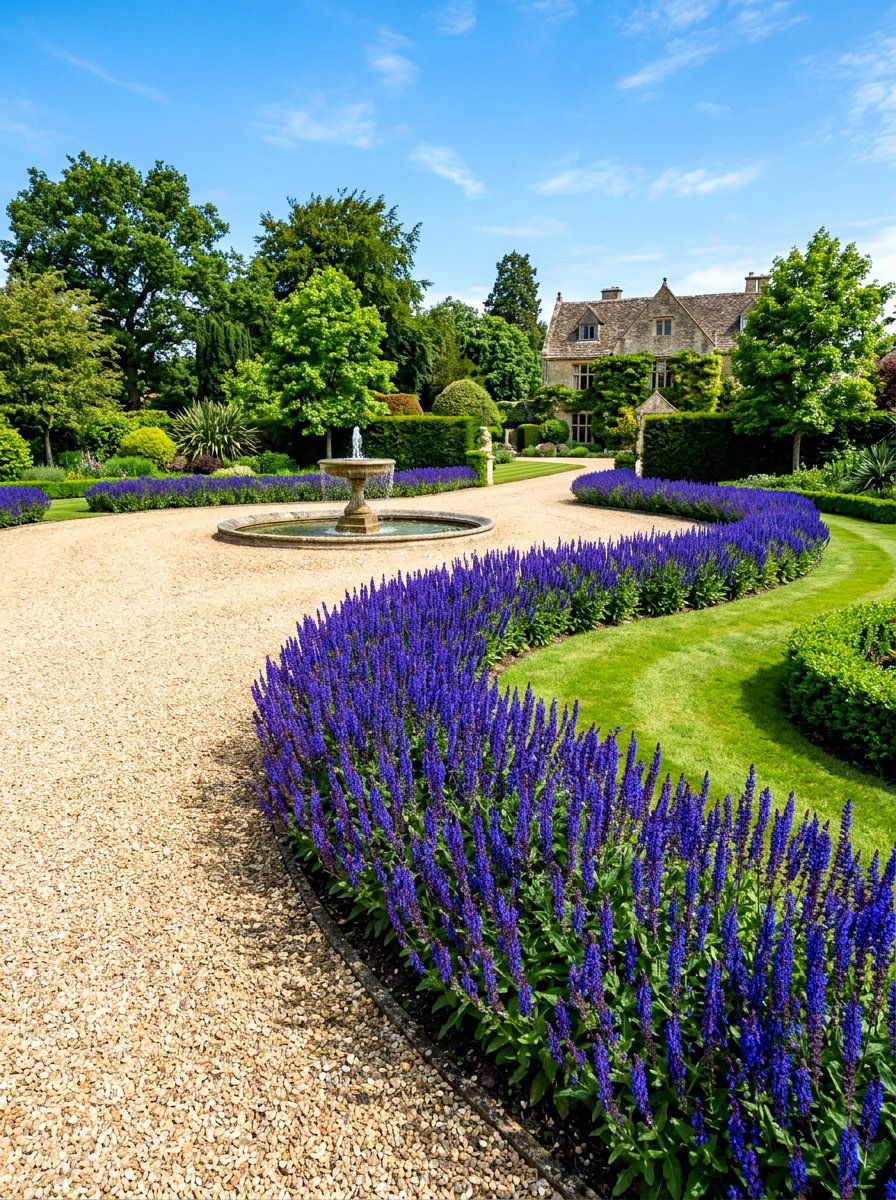
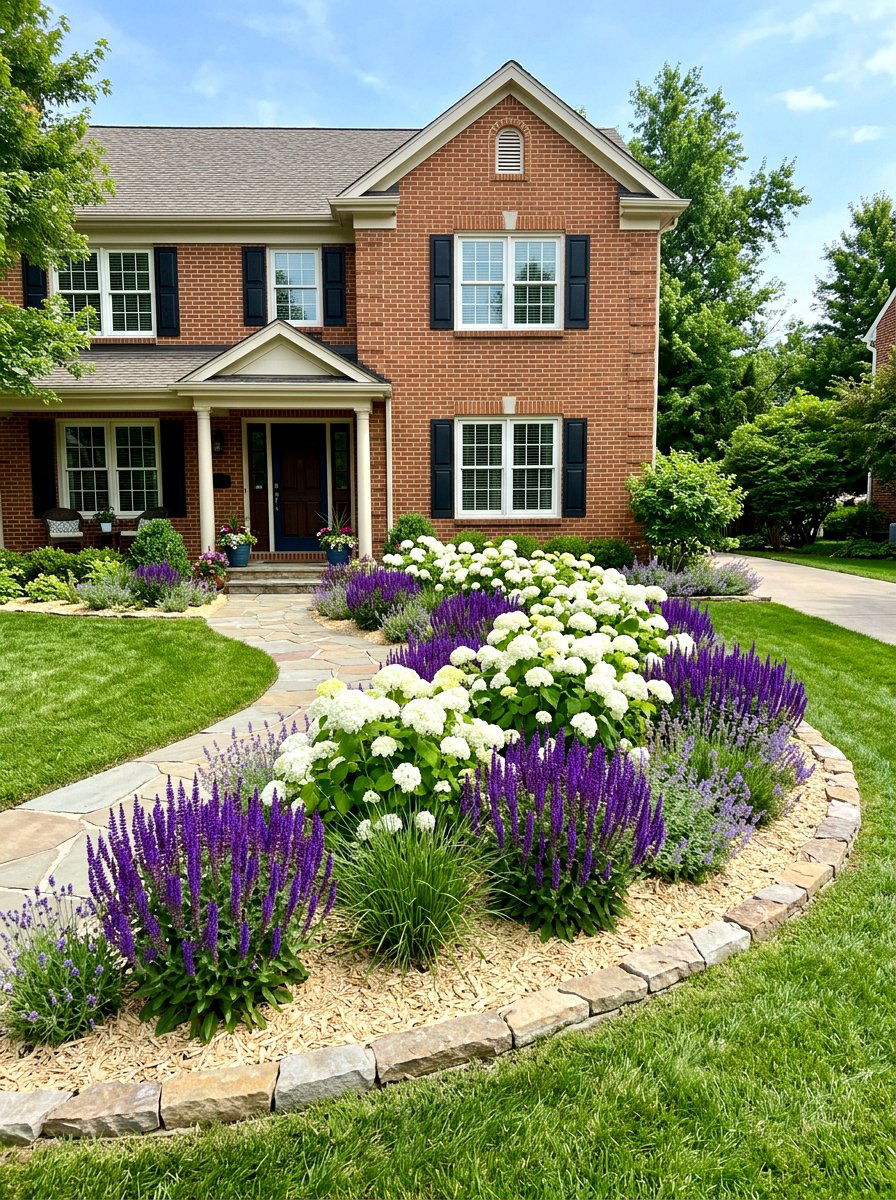
Blue salvia edging provides a crisp and cool-toned frame for your flower beds, offering a sophisticated contrast to warmer-colored blooms. These upright plants produce tall spikes of deep violet or true blue flowers that stand out against their grey-green leaves. To achieve a full design look, use salvia to line the front of a mixed perennial bed or to border a circular driveway. The vertical growth habit adds architectural interest and helps to organize more chaotic garden spaces. Salvia is highly resistant to deer and rabbits, making it a reliable choice for rural areas. It also reblooms quickly if you trim it back after the first flush.
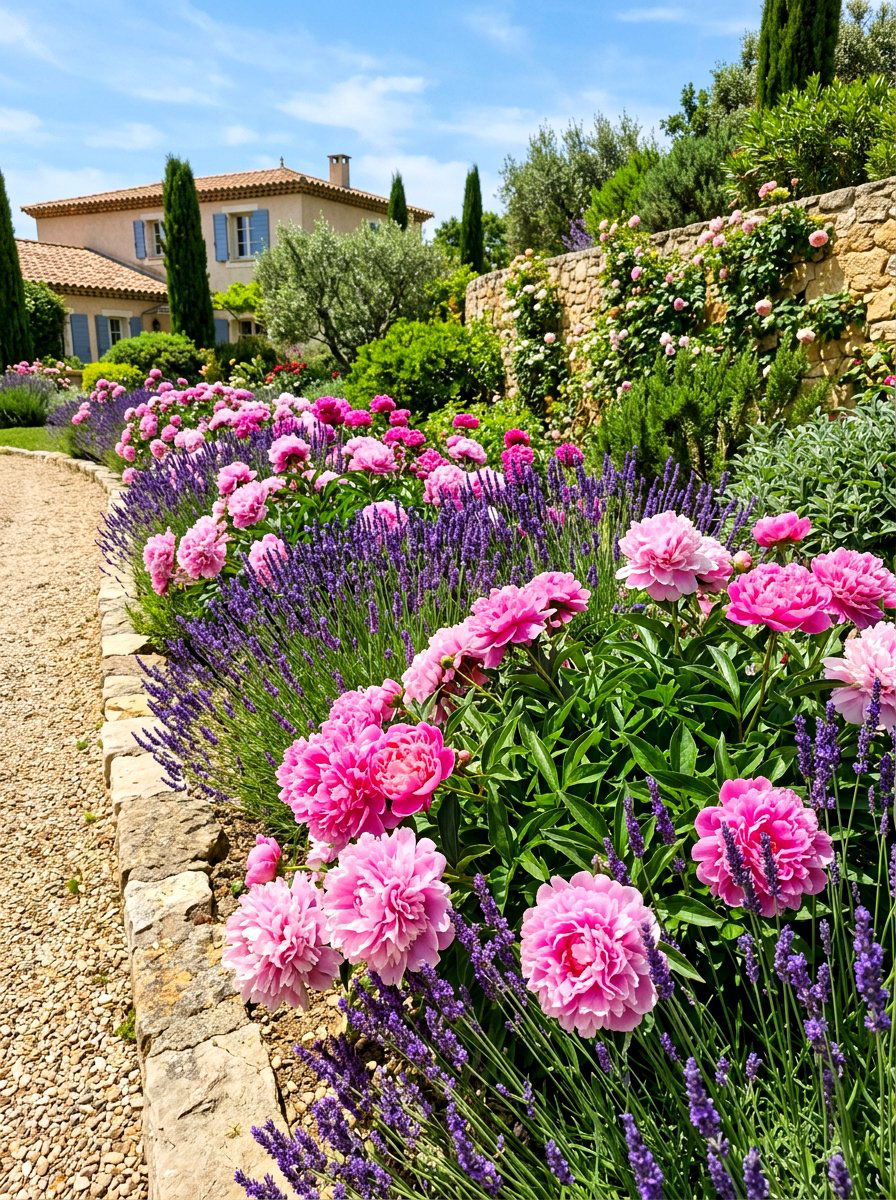
7. Mixed Peony Borders
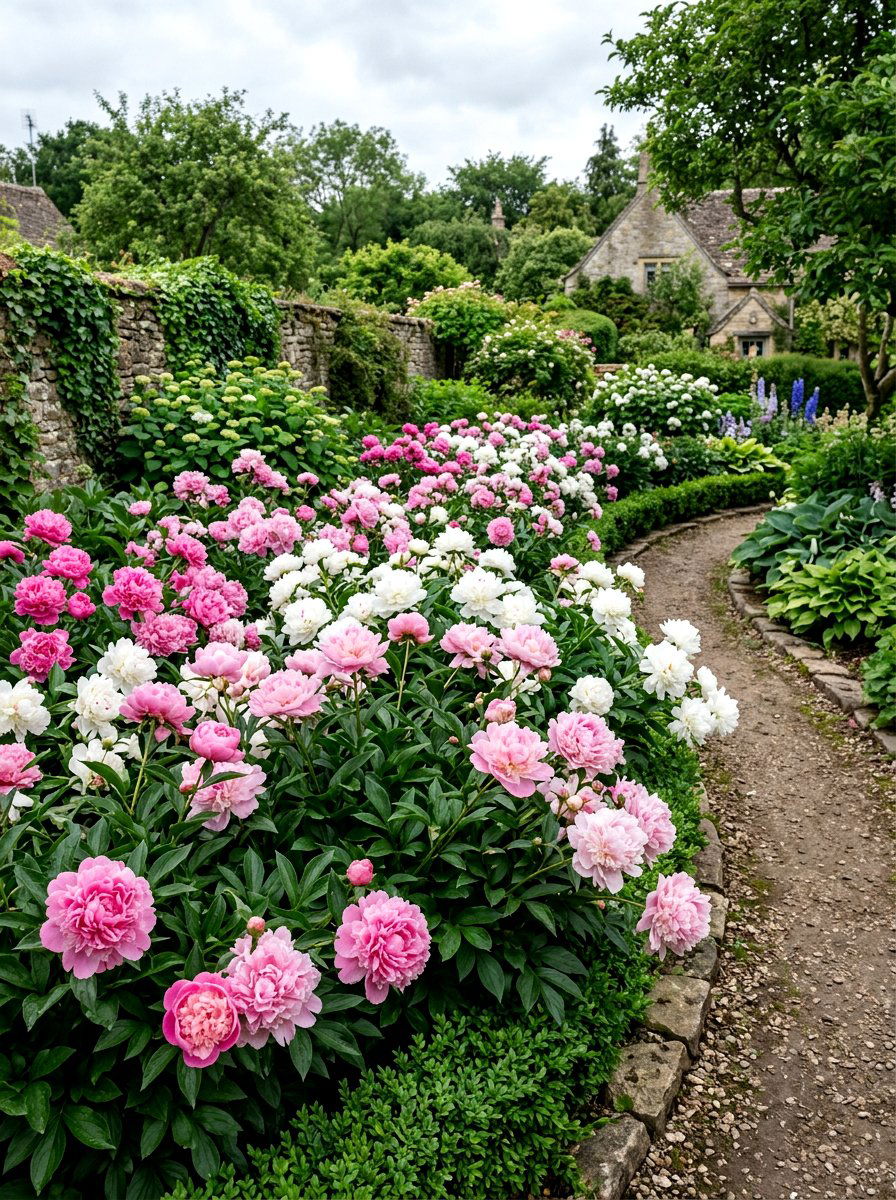
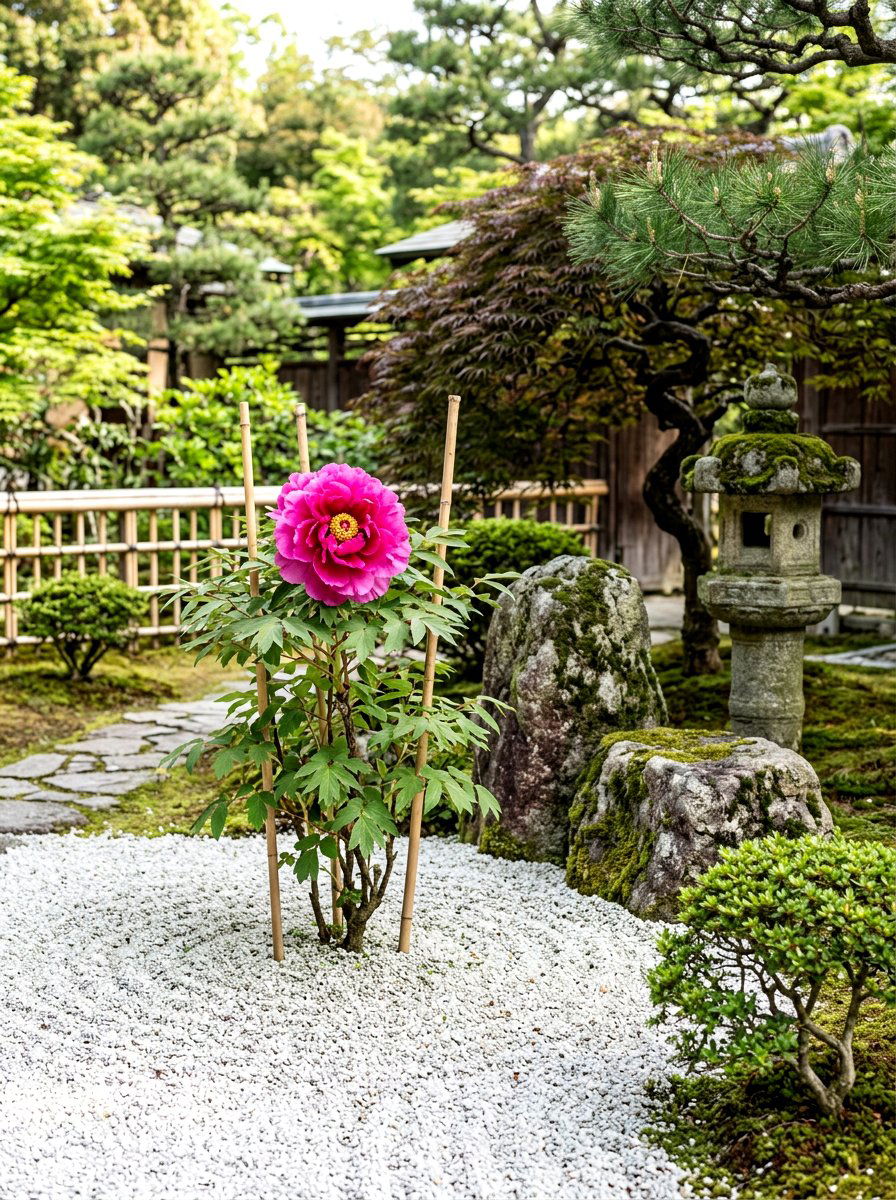
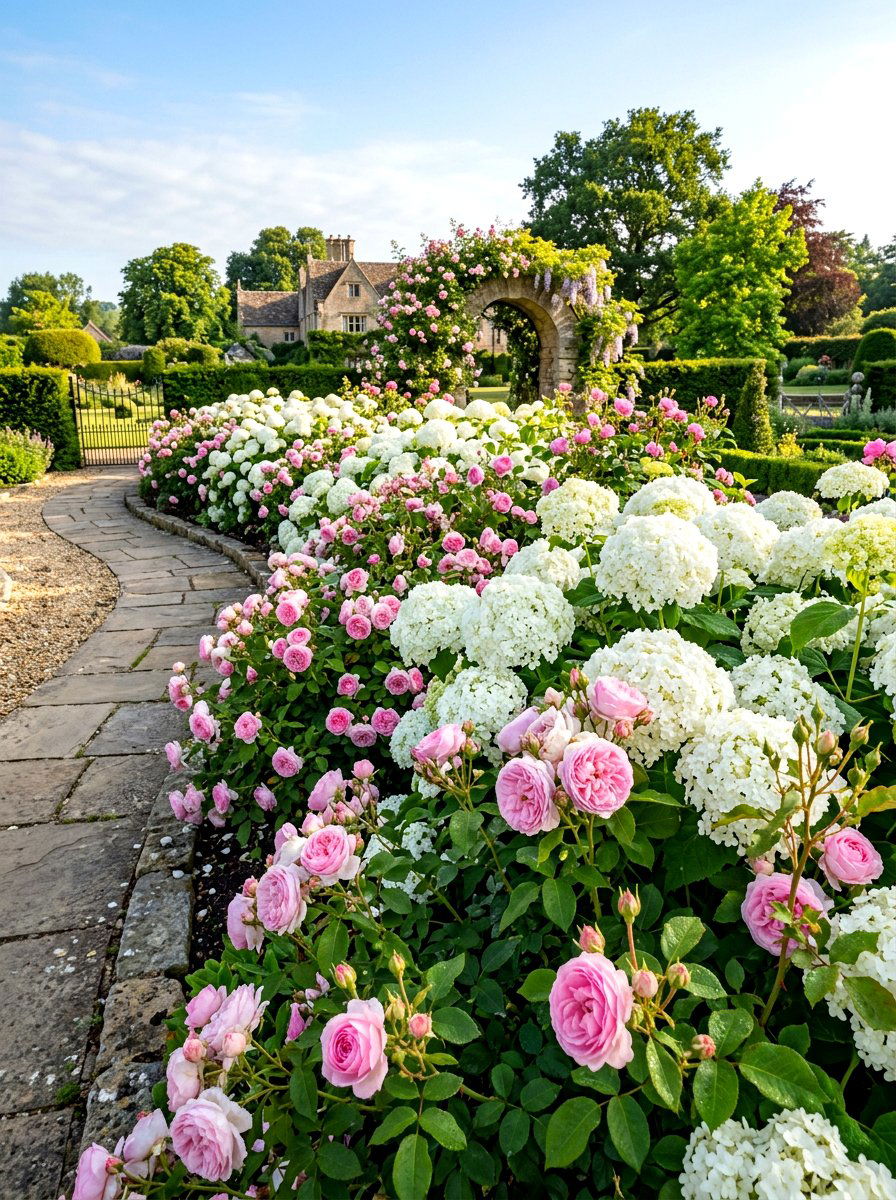
Mixed peony borders evoke a sense of classic elegance and old-world romance with their oversized, fragrant, and ruffled blossoms. These perennials are the stars of the late spring garden, appearing in delicate shades of cream, blush pink, and deep crimson. To design a stunning area, plant peonies alongside early-blooming irises or late-blooming roses to ensure a continuous cycle of beauty. Their lush, mounded foliage remains attractive and green long after the flowers have faded, providing a great backdrop for summer annuals. Peonies are long-lived plants that often survive for decades, becoming a sentimental part of a family’s landscape as they grow larger each year.
8. Low Maintenance Sedum
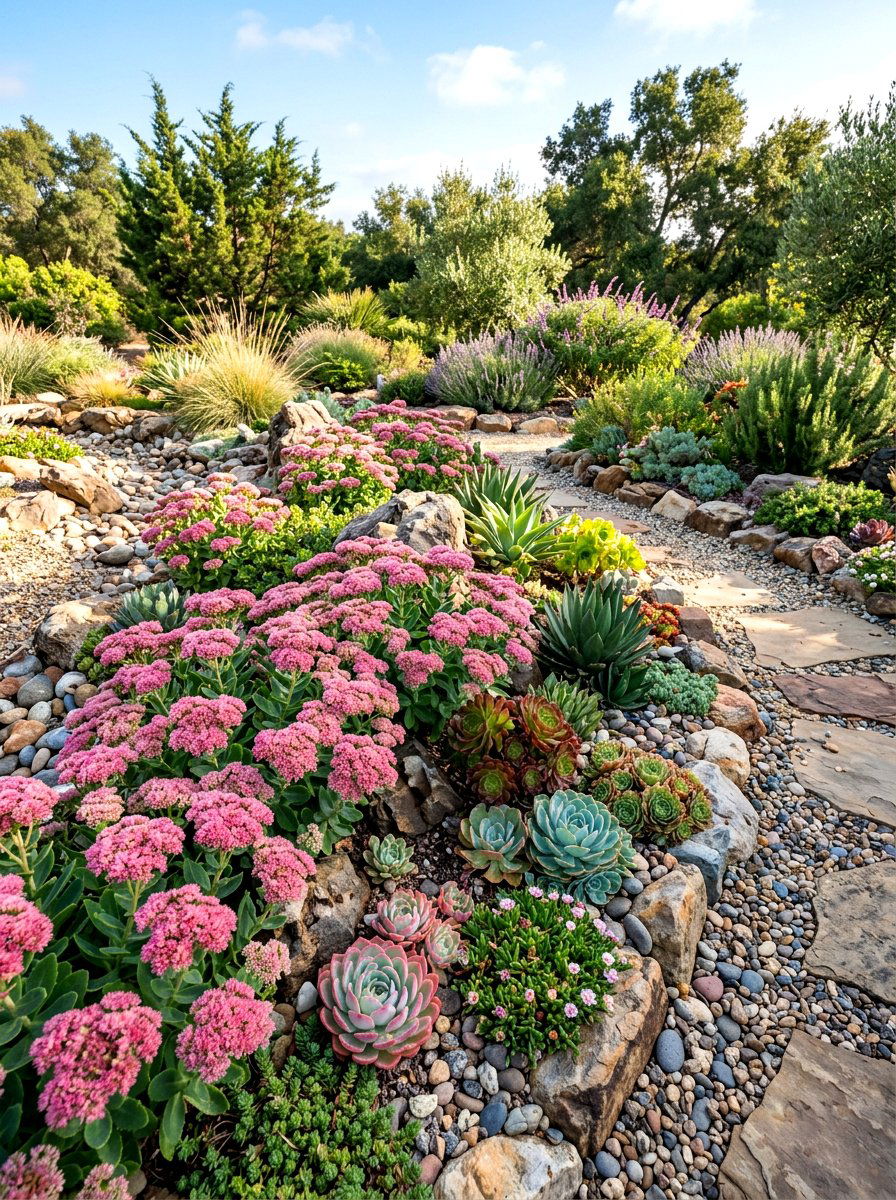
Low maintenance sedum is an excellent choice for sunny, dry spots where other plants might struggle to survive. Often called stonecrop, these succulents feature thick, fleshy leaves and clusters of star-shaped flowers that change color as autumn approaches. To create a full design, use creeping sedum as a groundcover between stepping stones or plant upright varieties like "Autumn Joy" in large clusters. This creates a textured, drought-tolerant landscape that looks great even in the middle of a heatwave. Sedum is virtually indestructible and provides essential late-season nectar for butterflies. Its sturdy stems also look beautiful when covered in frost or light winter snow.
9. Ornamental Grass Landscapes
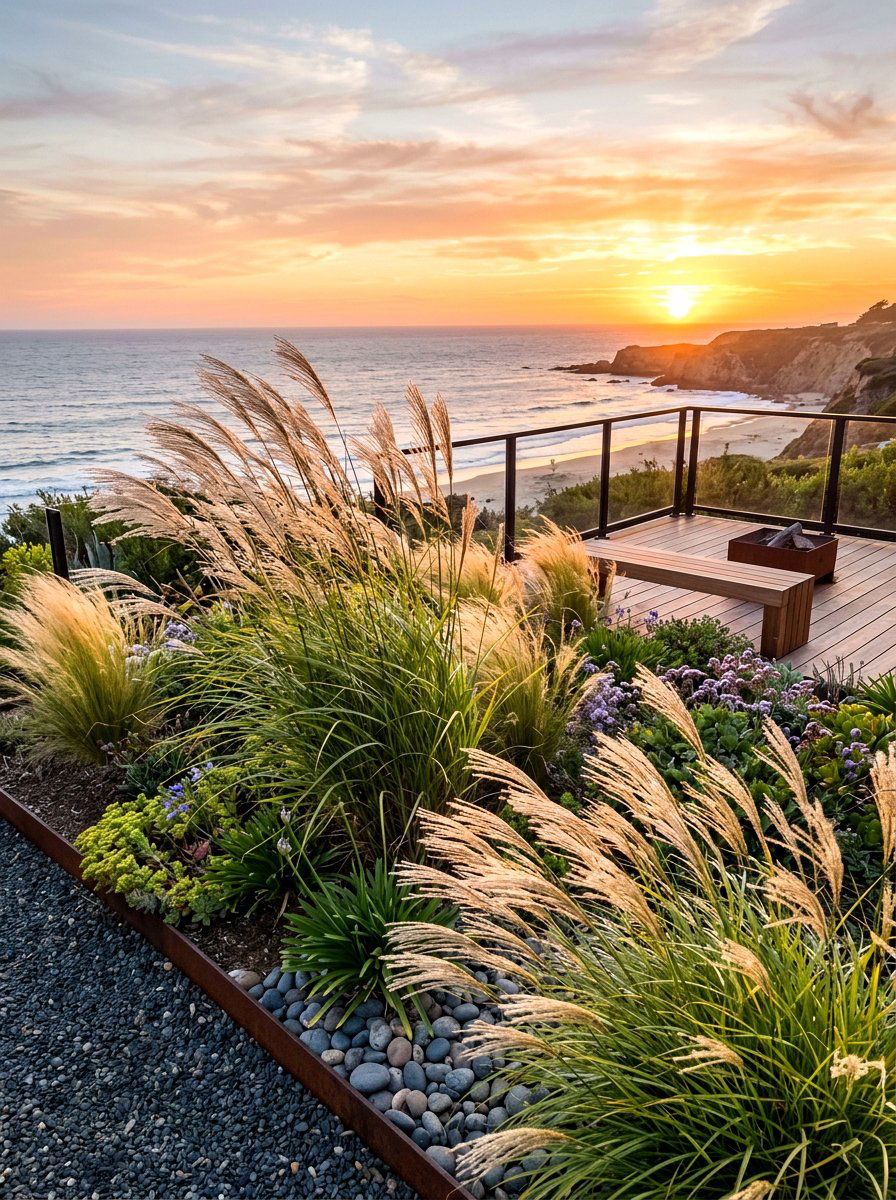
Ornamental grass landscapes add much-needed movement, sound, and texture to a modern or coastal-themed garden design. Varieties like fountain grass or switchgrass produce soft, feathery plumes that sway gently in the breeze. To design a complete space, use these grasses as a backdrop for shorter flowering perennials or as a living privacy screen along a patio. The fine texture of the blades contrasts beautifully with broad-leafed plants, creating a balanced and professional look. Grasses are incredibly hardy and maintain their golden-tan color throughout the winter, providing visual interest when the rest of the garden is dormant. They require only a quick annual trim in spring.
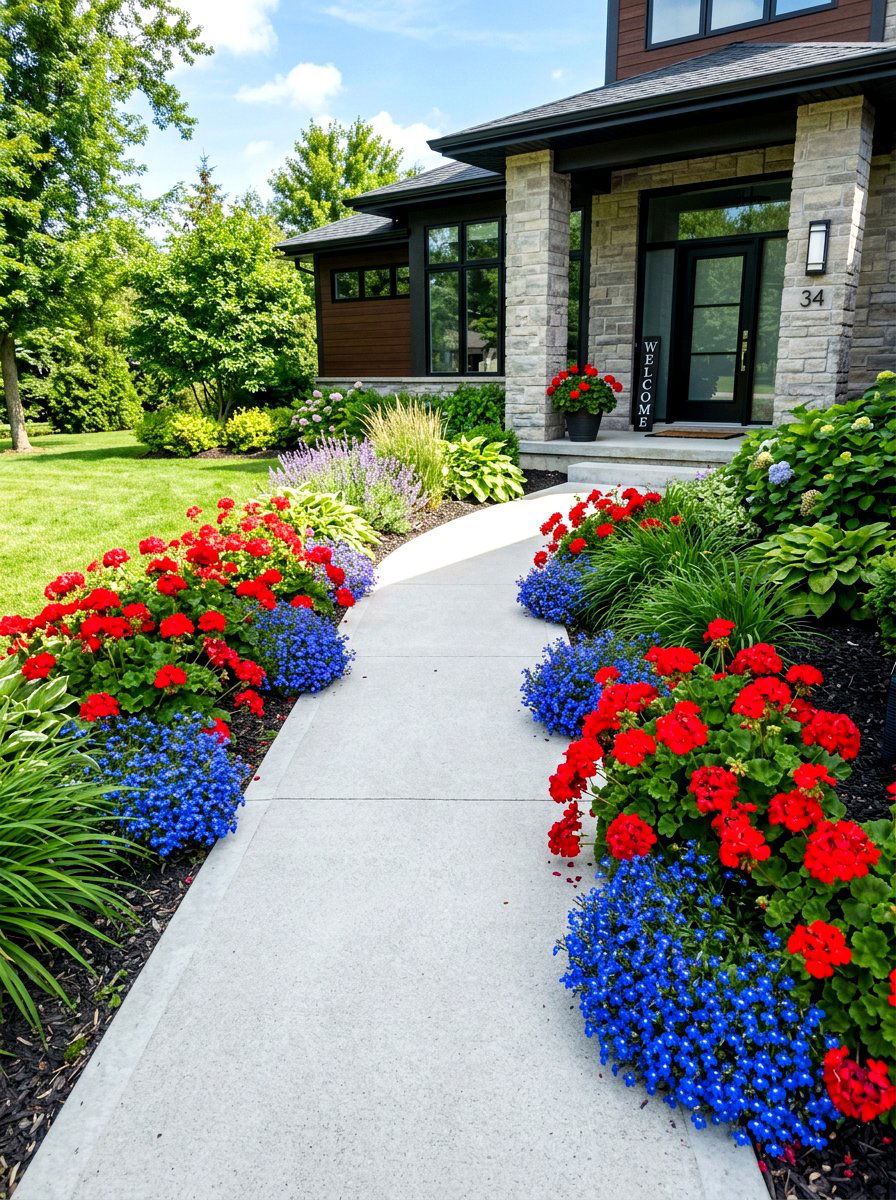
10. Climbing Rose Walls
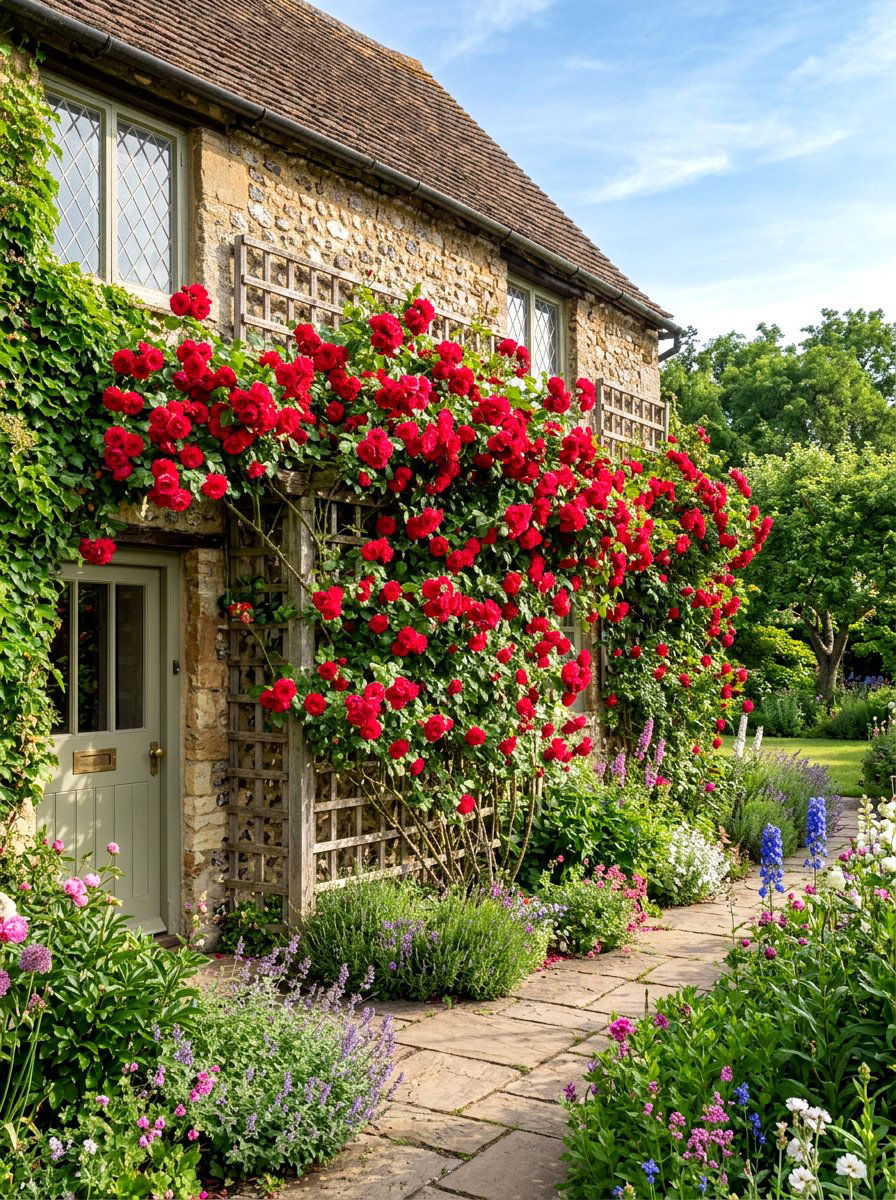
Climbing rose walls transform flat surfaces into vertical masterpieces of color and scent. These vigorous growers can be trained to cover trellises, arbors, or the entire side of a garden shed. For a full design, pair your climbing roses with a lower layer of lavender or catmint to hide the base of the stems. This creates a romantic, layered look that maximizes small garden spaces by drawing the eye upward. Modern climbing varieties are bred for disease resistance and repeat blooming, ensuring your garden remains filled with roses from June through October. Their thorny stems also provide a safe nesting habitat for small songbirds.
11. Butterfly Bush Habitats
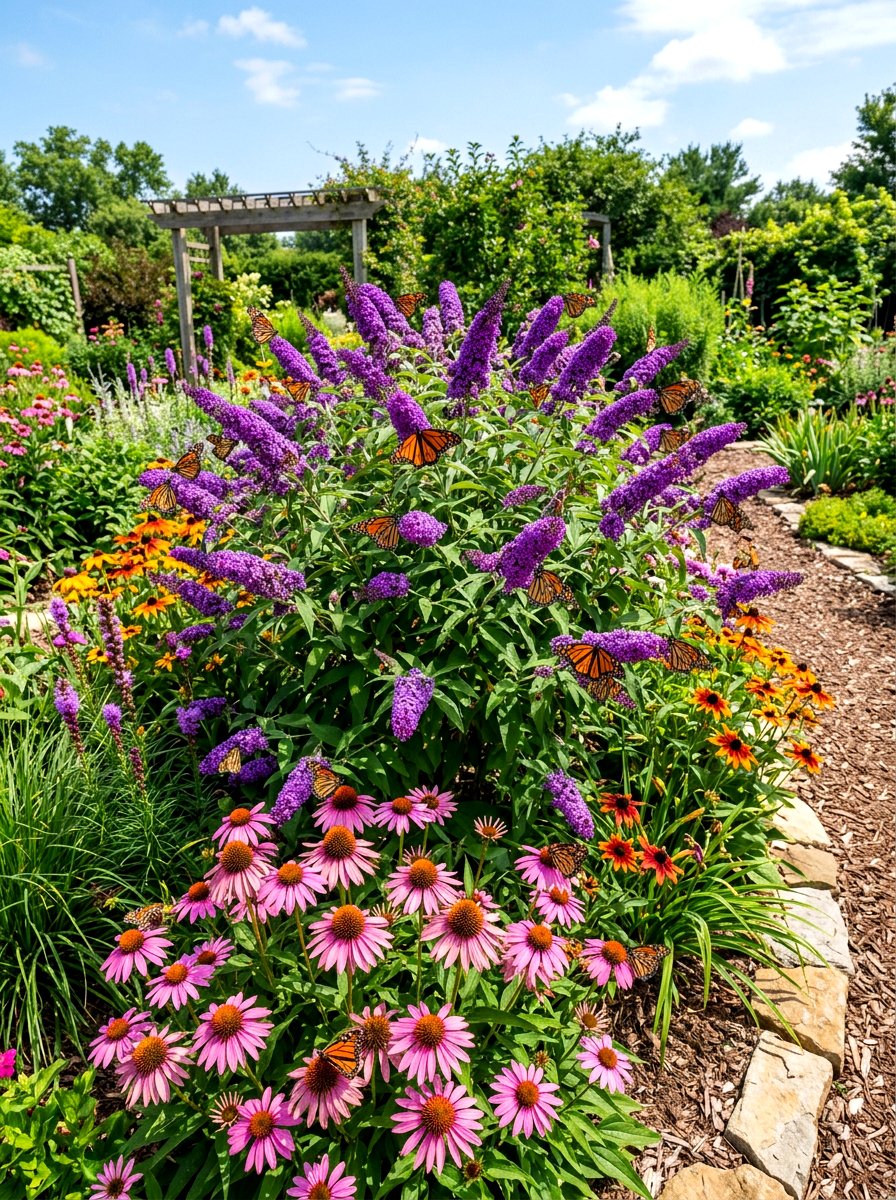
Butterfly bush habitats are designed specifically to bring life and movement into your backyard sanctuary. These fast-growing shrubs produce long, cone-shaped flower clusters that are irresistible to monarchs, swallowtails, and hummingbirds. To create a full garden theme, plant them in the center of a large island bed and surround them with nectar-rich perennials like coneflowers and lantana. This creates a tiered "pollinator buffet" that looks lush and vibrant all summer long. Butterfly bushes come in shades of deep purple, bright pink, and pure white. Regular deadheading will keep the plant blooming and prevent it from becoming too leggy, ensuring a neat and tidy appearance.
12. White Daisy Clusters
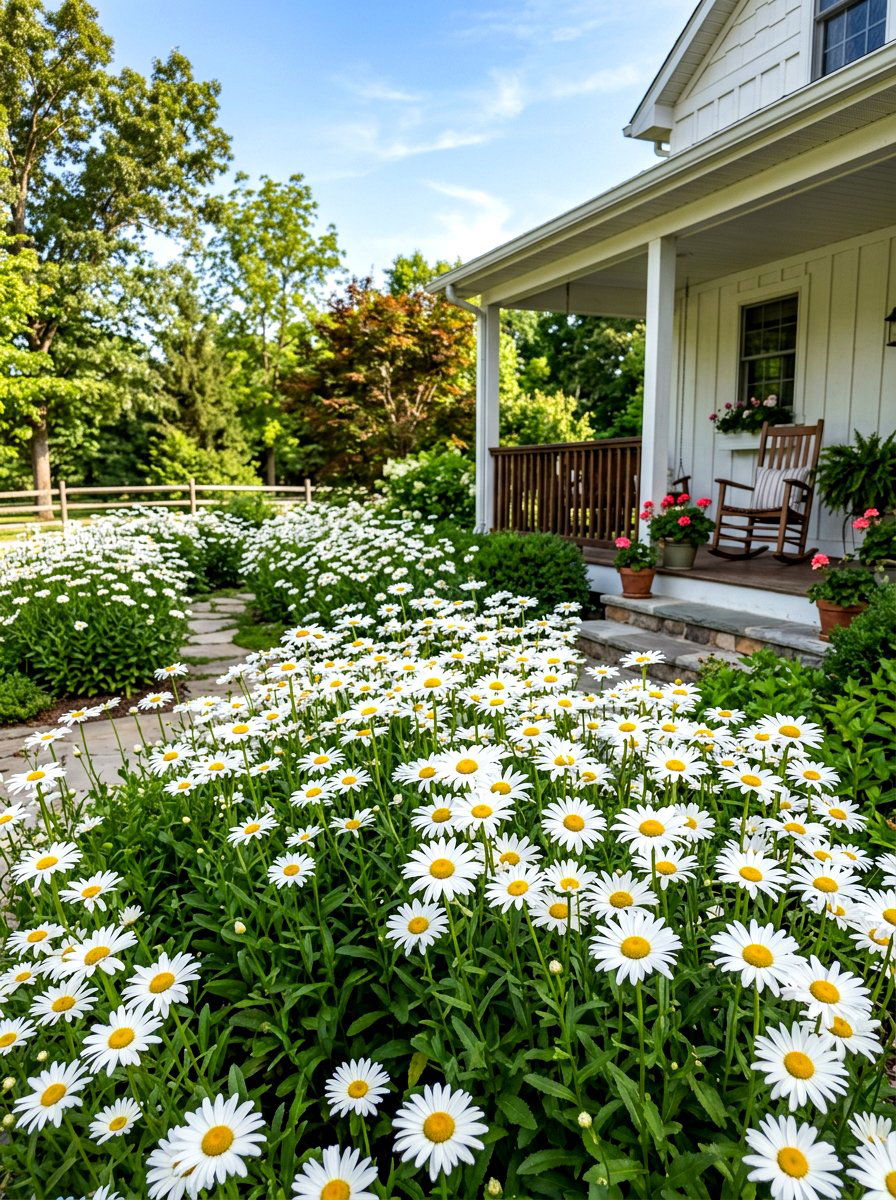
White daisy clusters offer a cheerful and timeless look that brightens up any corner of the yard with a clean, crisp aesthetic. Shasta daisies are the most popular choice, featuring large white petals and bright yellow centers that pop against dark green foliage. For a complete design, plant them in large drifts to mimic the look of a natural meadow. They pair perfectly with blue salvias or red poppies for a classic "patriotic" color palette. Daisies are very easy to grow and divide, meaning you can easily expand your garden over time. Their sturdy stems make them a favorite for children’s bouquets and rustic table arrangements.
13. Daylily Flower Rows
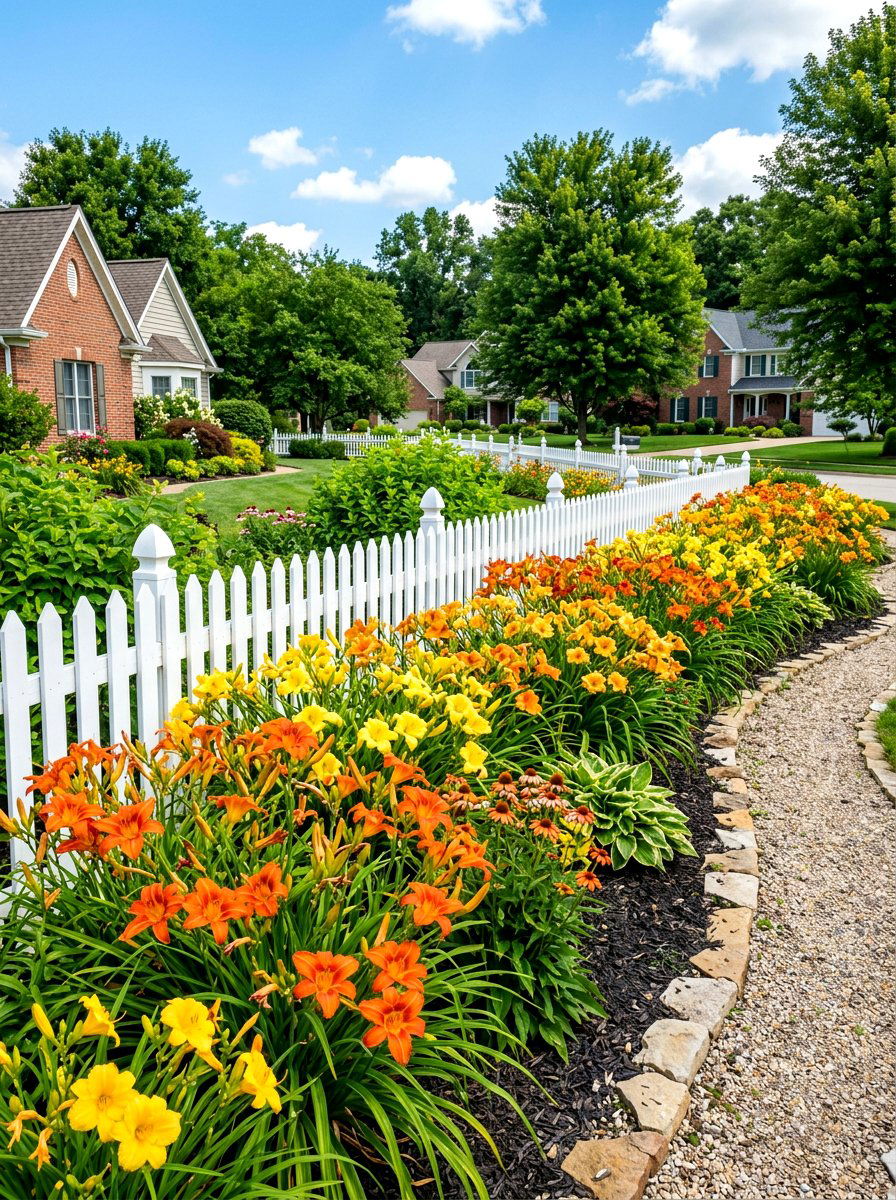
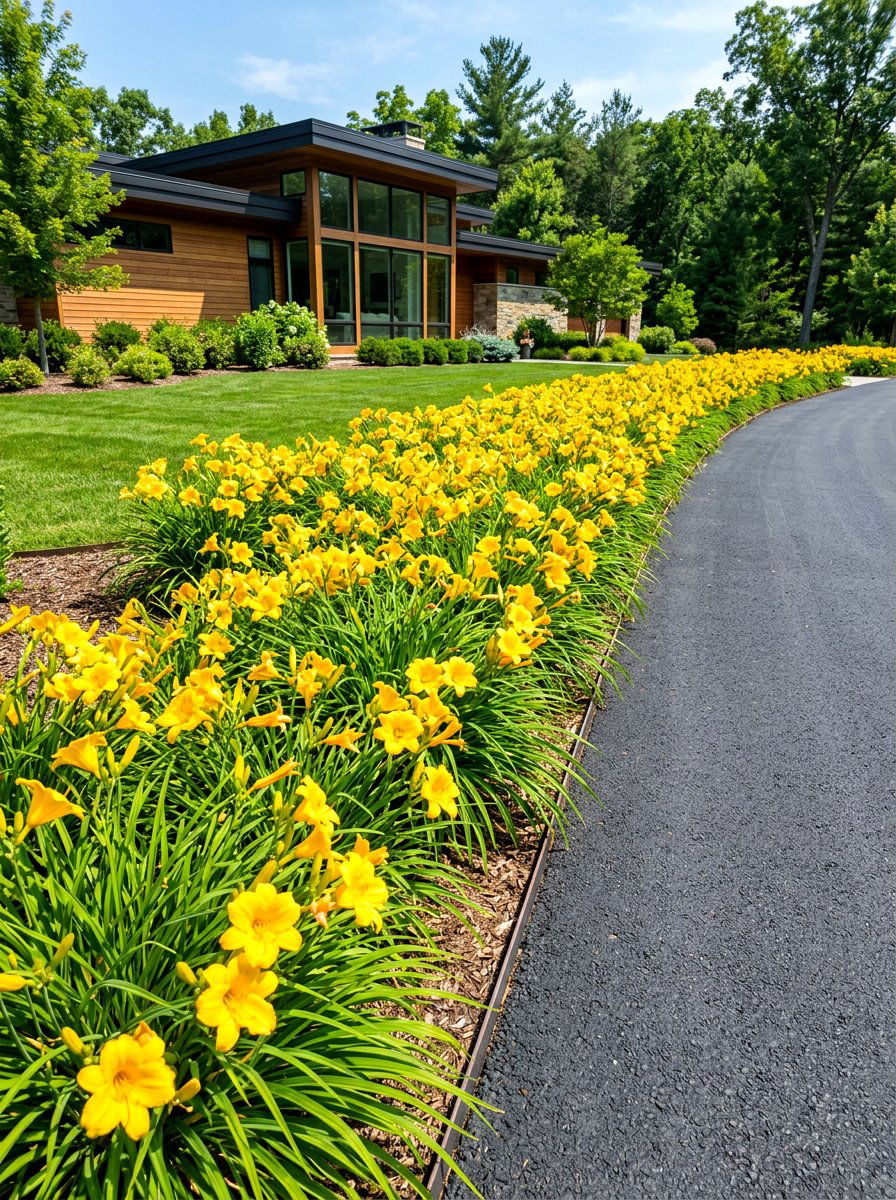
Daylily flower rows are often called the "perfect perennial" because they are nearly impossible to kill and offer a huge variety of colors. While each individual flower only lasts for one day, each plant produces numerous stalks with dozens of buds that open in succession. To design a full bed, plant daylilies in a long row along a fence line or a hillside for erosion control. Their grass-like foliage stays green and tidy all season, acting as a great filler between other shrubs. Reblooming varieties ensure you have color from early summer until the frost, making them a high-value addition to any low-maintenance landscape.
14. Spring Tulip Beds
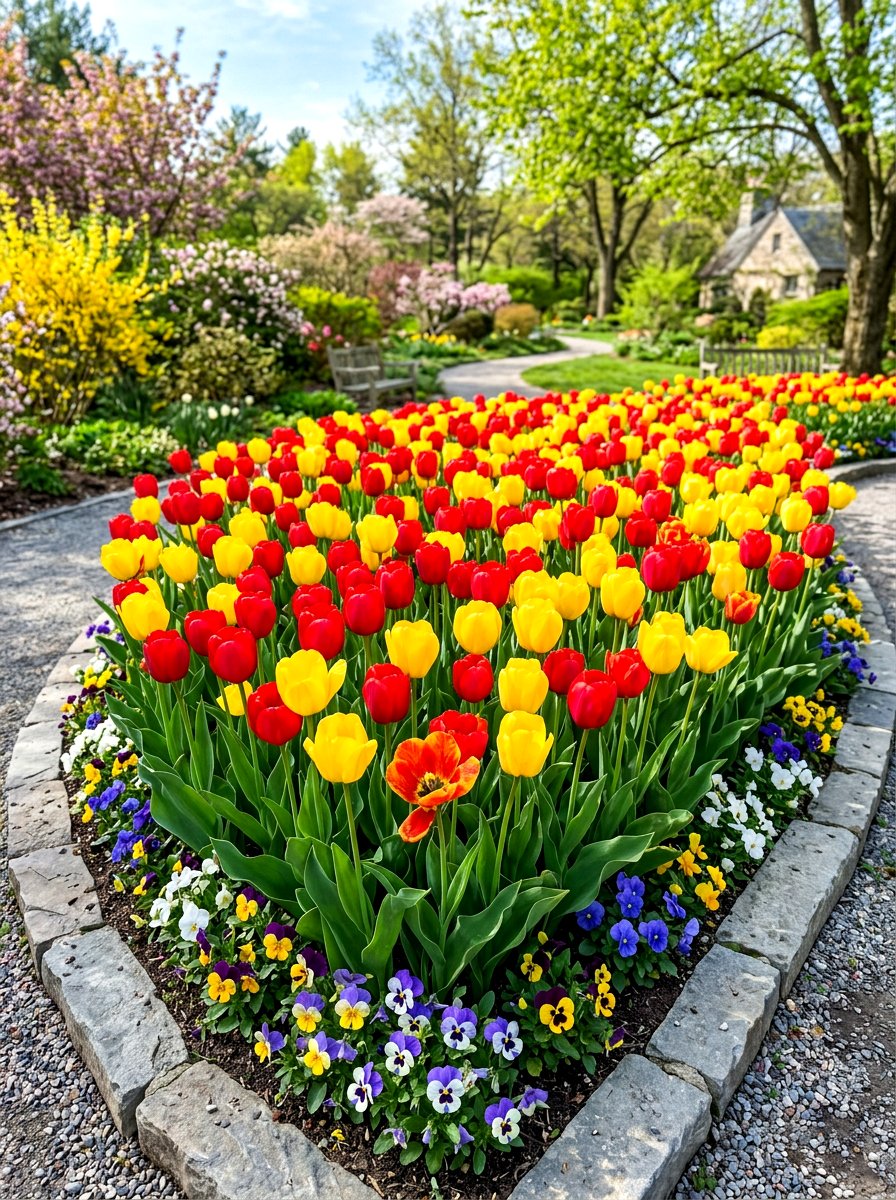
Spring tulip beds are the ultimate way to celebrate the end of winter with a massive burst of saturated color. These bulbs must be planted in the fall to produce their iconic cup-shaped flowers in March or April. For a high-impact design, plant them in dense clusters of a single color for a modern look, or mix varieties for a festive "confetti" effect. To finish the design, interplant them with pansies or forget-me-nots to hide the soil and provide a second layer of texture. Once the tulips fade, their dying leaves can be hidden by emerging summer perennials, allowing your garden to transition seamlessly through the changing seasons.
15. Tropical Canna Lilies
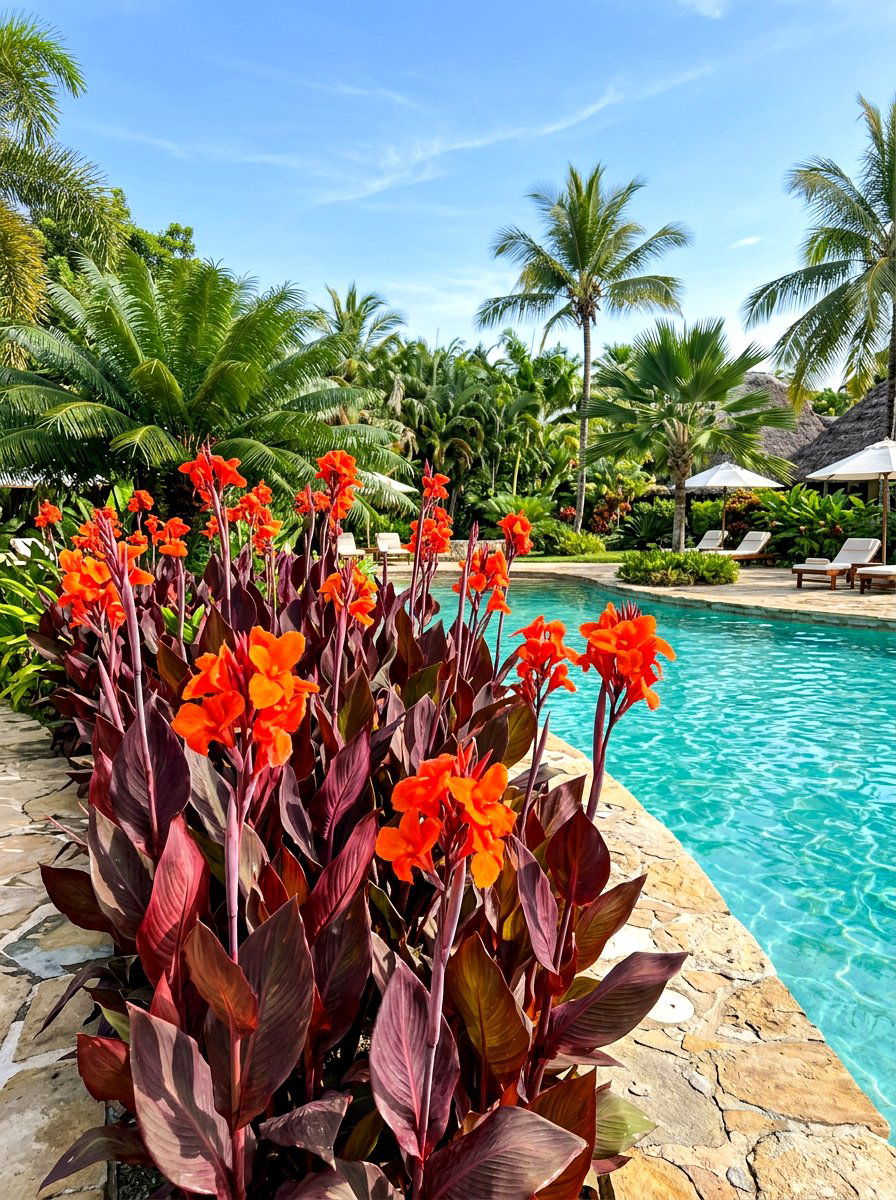
Tropical canna lilies bring a bold, exotic feel to the garden with their oversized, paddle-shaped leaves and fiery blossoms. These plants can reach impressive heights, making them perfect for creating a dramatic background in a flower bed. To design a full tropical theme, pair them with elephant ears and bright orange marigolds. The foliage of canna lilies often features striking stripes of burgundy, bronze, or bright green, providing visual interest even when the flowers are not present. They thrive in heat and moisture, making them ideal for areas near a pool or a garden pond. In colder climates, the bulbs can be easily stored indoors.
16. Tall Foxglove Spikes
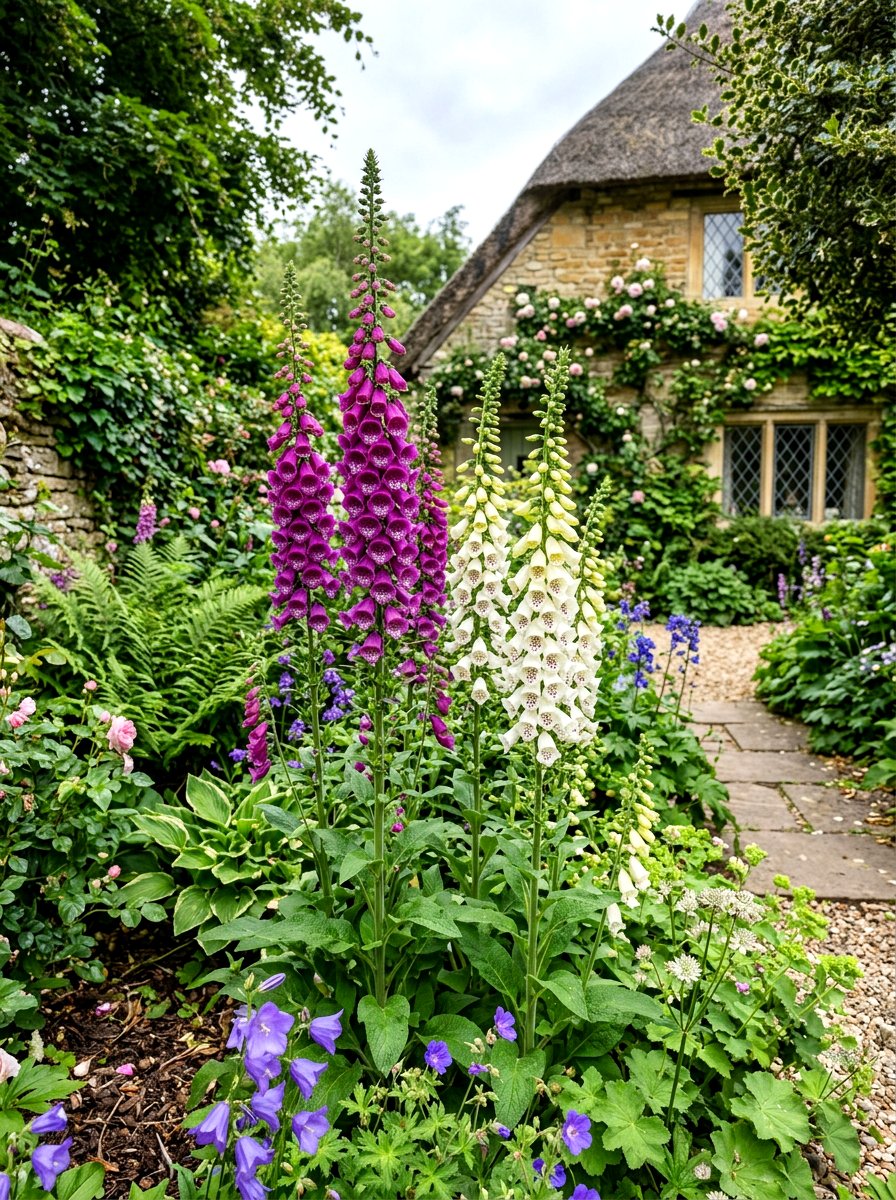
Tall foxglove spikes add a sense of whimsical wonder and vertical drama to a cottage-style garden bed. These biennial plants produce towering towers of bell-shaped flowers that are often speckled on the inside. To create a complete look, plant them in the back of a border where they can rise above shorter plants like roses and geraniums. This staggered height creates a sense of depth and abundance that feels like a fairy tale forest. Foxgloves prefer partial shade and moist soil, making them great companions for hostas. Because they self-seed readily, you will often find new "volunteer" plants popping up in delightful and unexpected garden spots.
17. Hardy Geranium Carpets
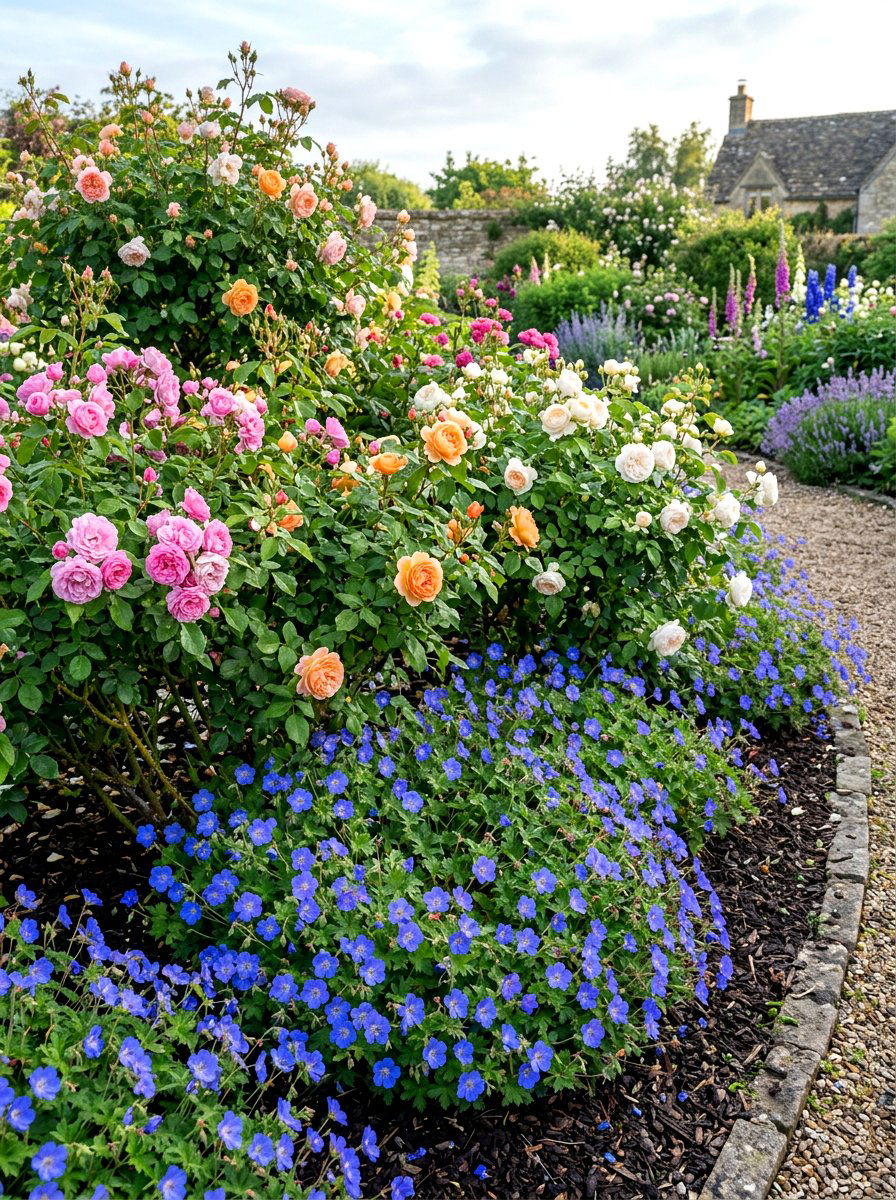
Hardy geranium carpets are the unsung heroes of the garden, providing a low-growing layer of color that smothers weeds and fills gaps. Unlike the common annual variety, these perennials are tough, frost-hardy, and bloom for months on end. To design a full bed, use them as a "spiller" along the edge of a raised garden bed or as a groundcover beneath tall shrubs. Their delicate, five-petaled flowers come in shades of blue, pink, and white, perfectly complementing almost any other plant. The foliage is often fragrant and turns a beautiful reddish-bronze in the autumn, ensuring your garden stays interesting well into the colder months.
18. Colorful Pansy Edging
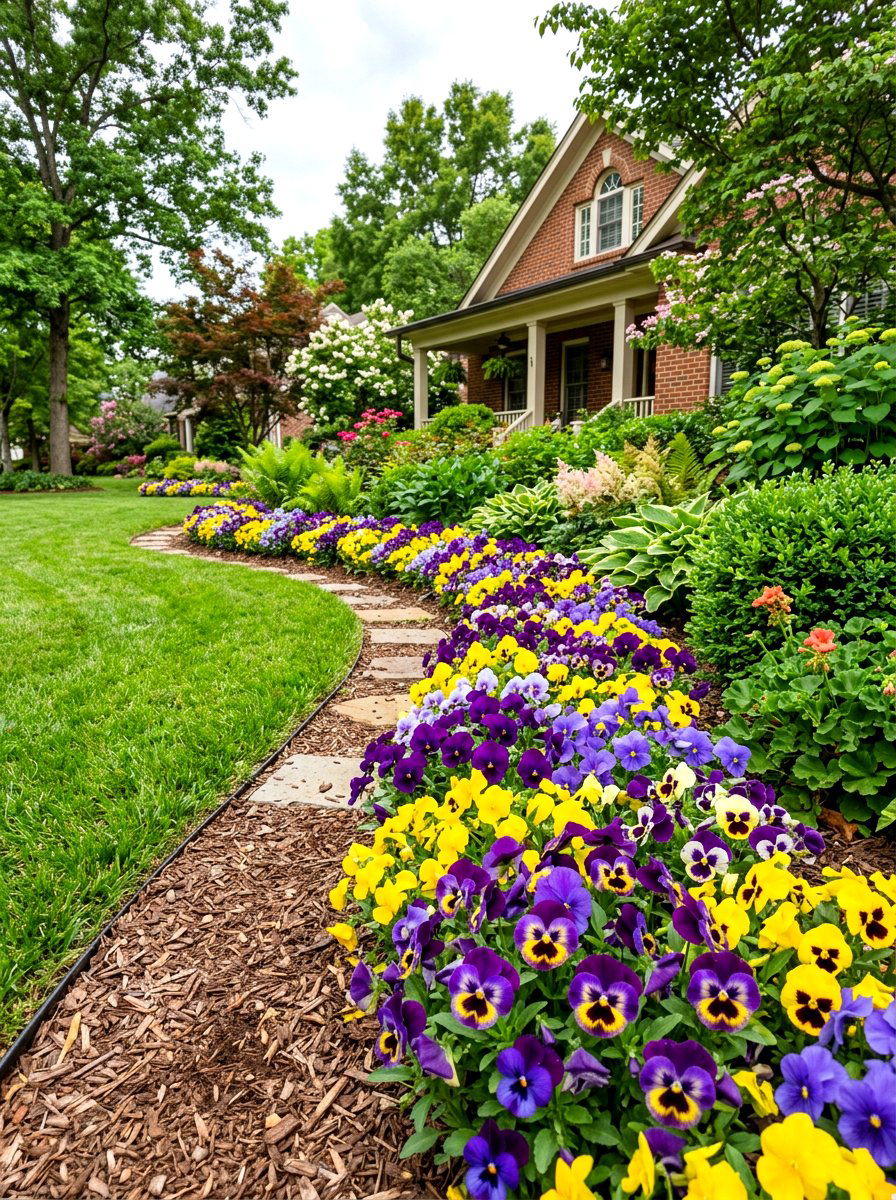
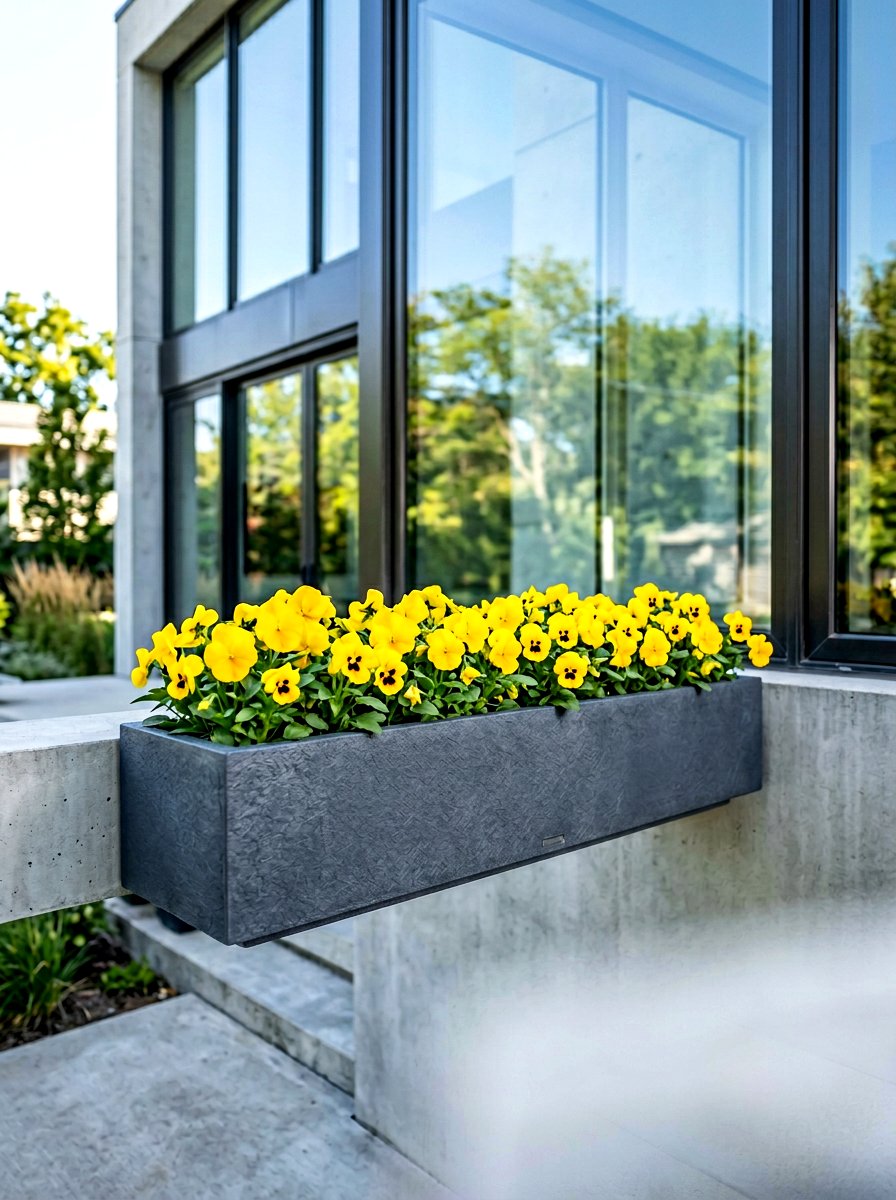
Colorful pansy edging is a great way to add charm to your garden during the cooler months of spring and fall. These hardy little plants have "faces" in a wide variety of hues, from deep midnight purple to bright sunny yellow. For a complete design, plant them tightly together along the front edge of a flower bed to create a living ribbon of color. They also work beautifully in containers placed directly inside the bed to add height and focal points. Pansies can even survive light frosts, making them the perfect choice for early spring color before the rest of the garden has woken up from its winter sleep.
19. Fragrant Gardenia Bushes
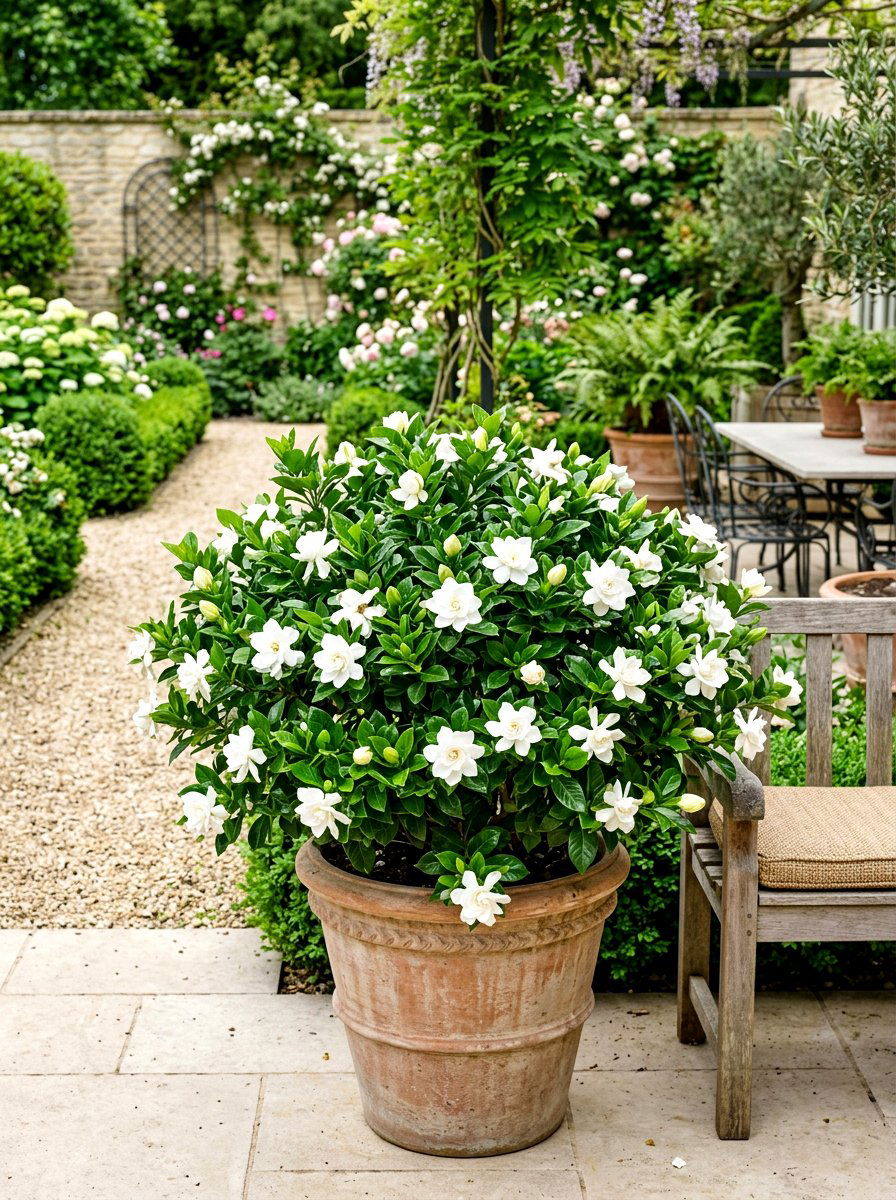
Fragrant gardenia bushes turn any backyard into a sensory paradise with their creamy white blossoms and intoxicatingly sweet scent. These evergreen shrubs feature glossy, dark green leaves that provide a high-end, polished look year-round. To create a full design, plant them near an outdoor seating area or under a bedroom window where the fragrance can be enjoyed. Pairing them with white-flowering jasmines or silver foliage creates a sophisticated "moon garden" that glows in the dark. Gardenias prefer acidic soil and plenty of moisture, rewarding careful gardeners with a spectacular show of flowers in late spring and early summer that feels truly luxurious and elegant.
20. Drought Tolerant Succulents
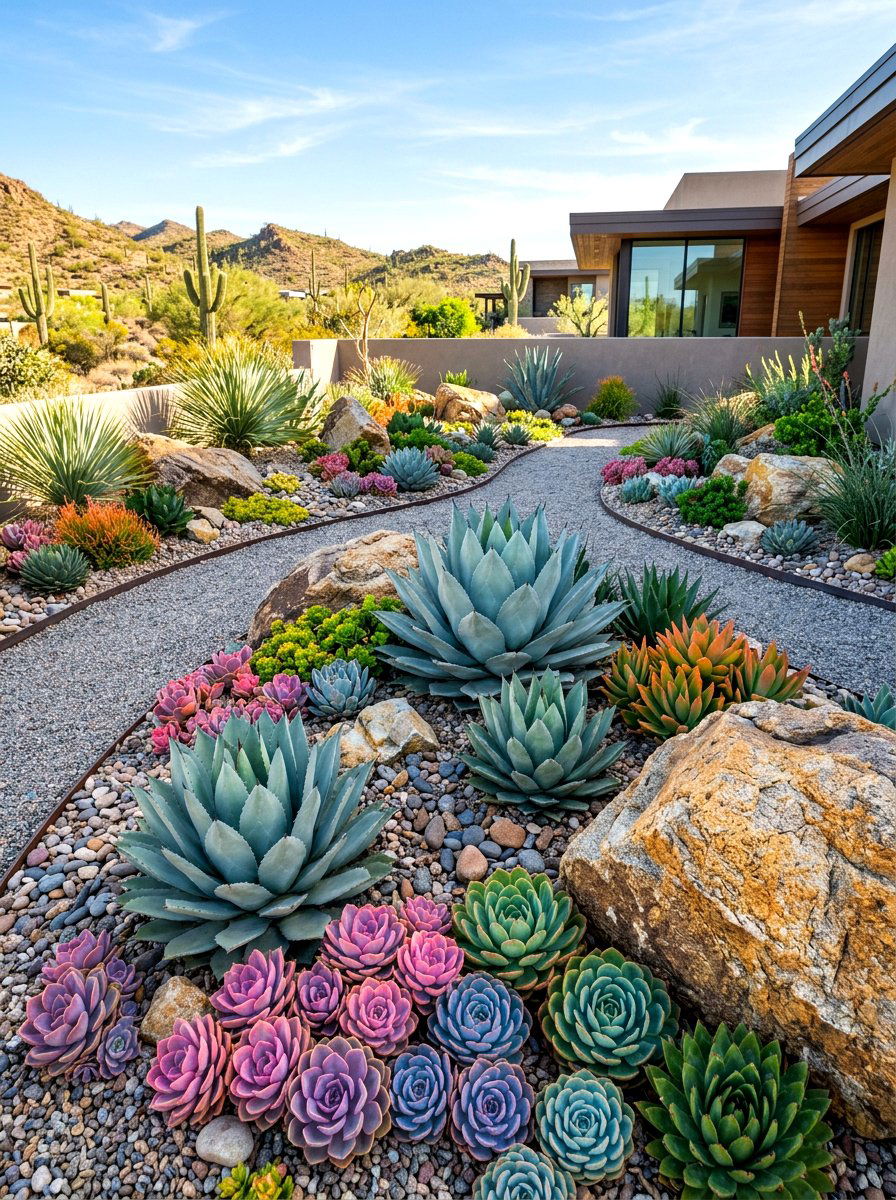
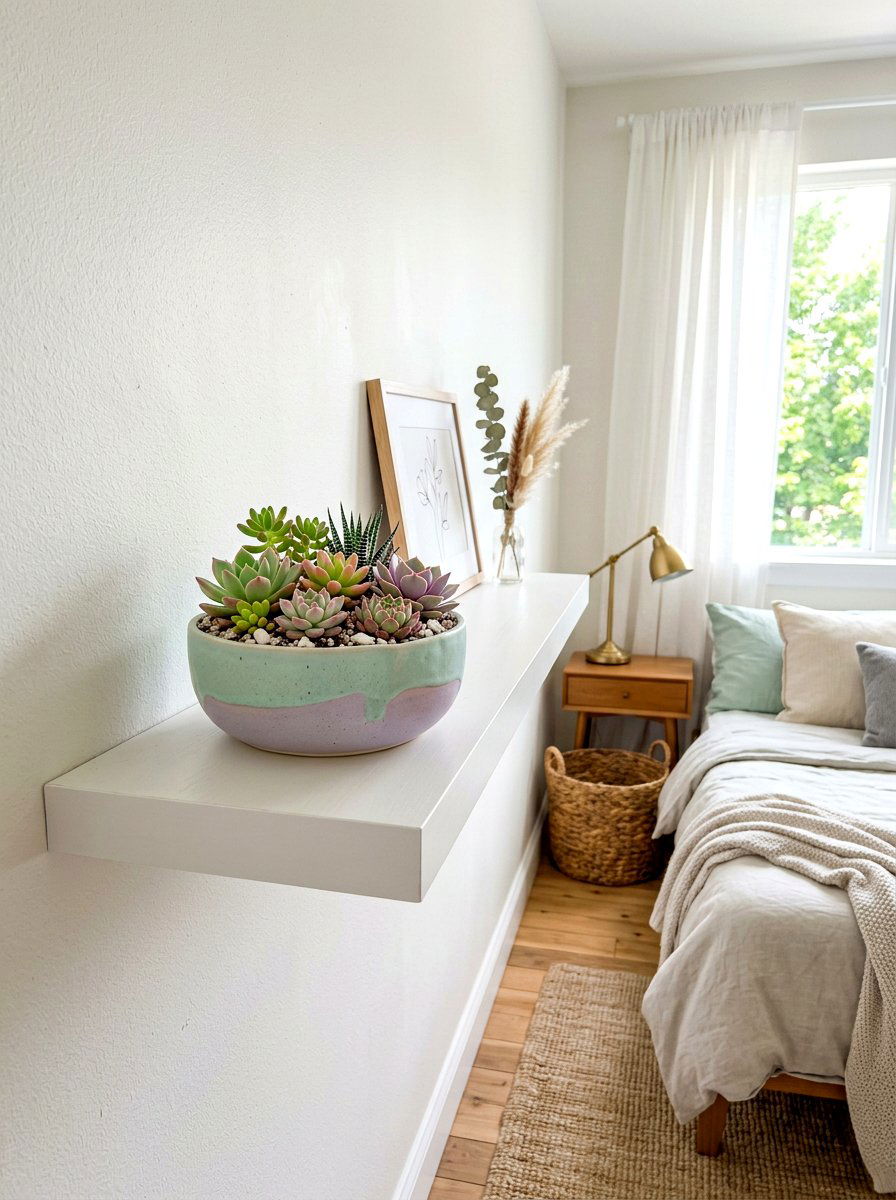
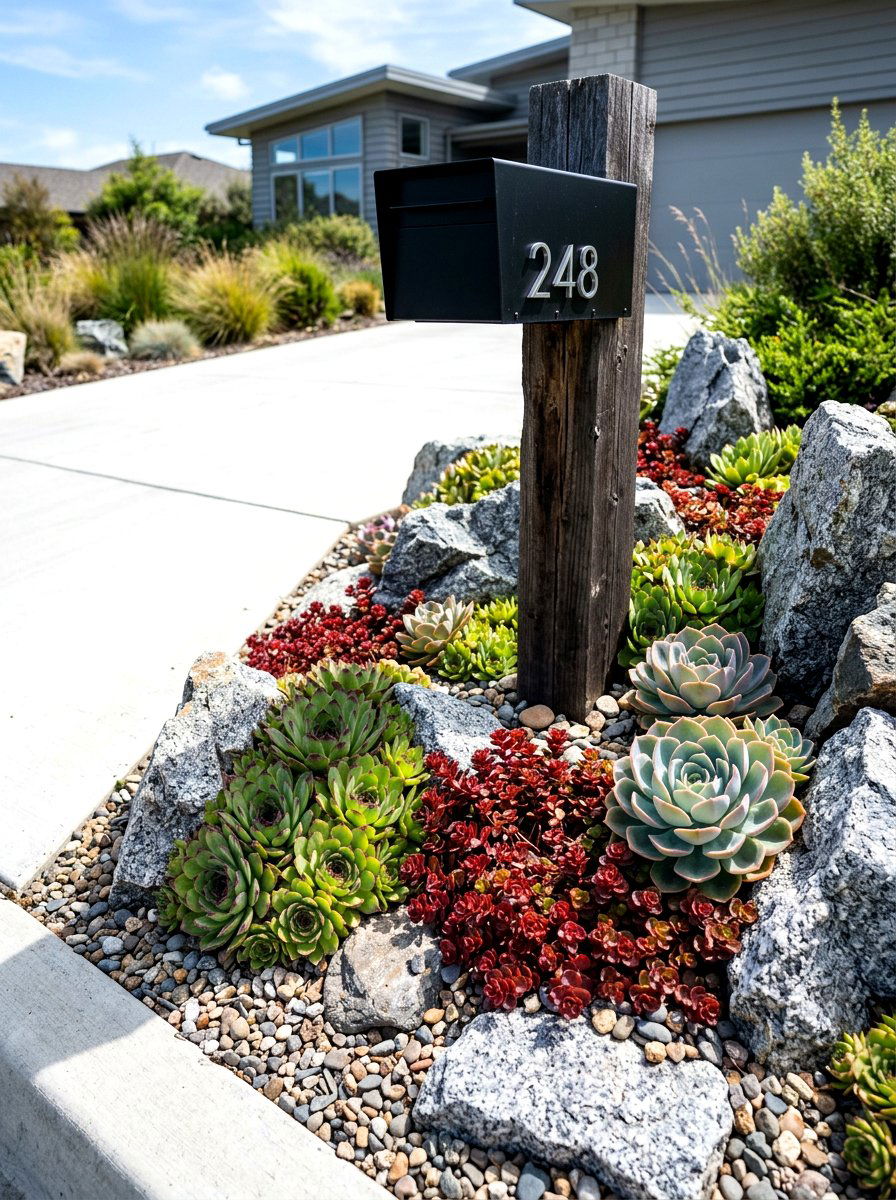
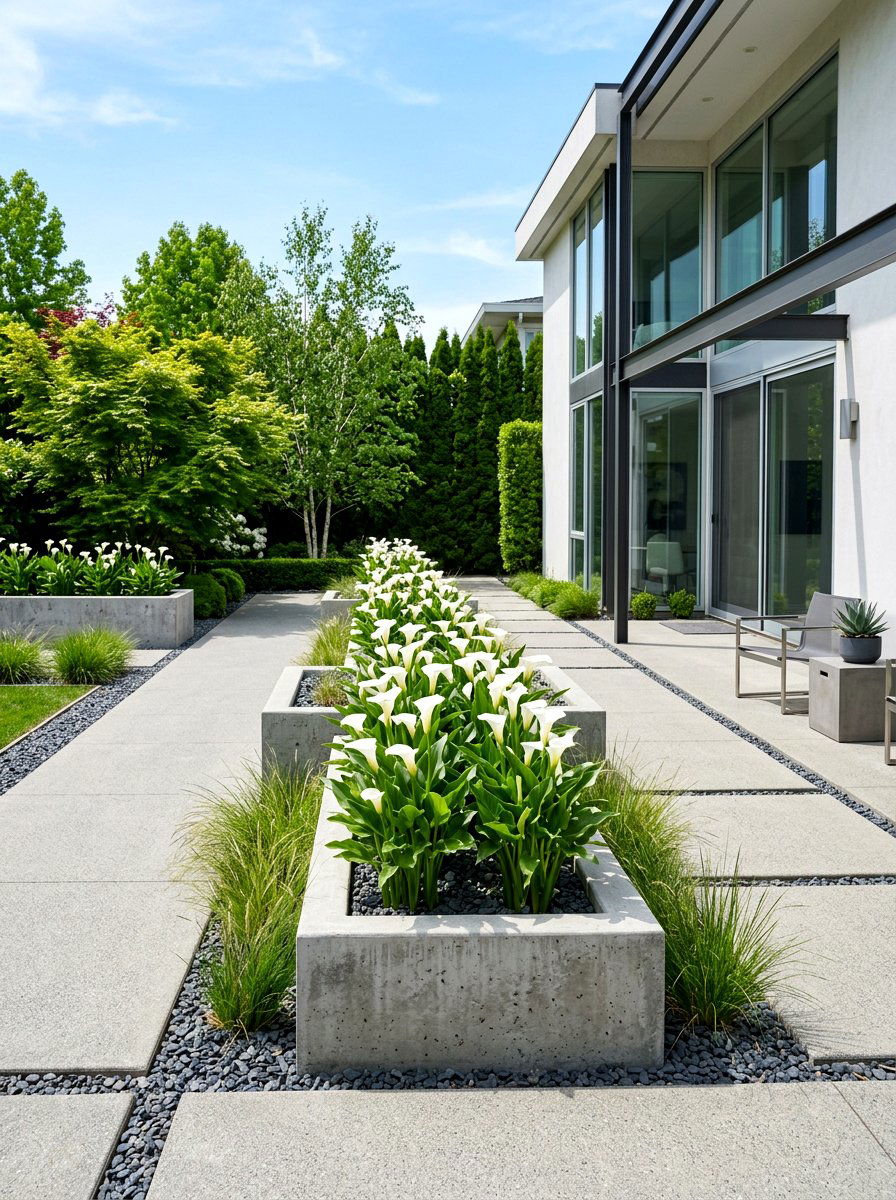
Drought tolerant succulents offer a modern, architectural look that requires almost zero maintenance once they are established in the soil. Varieties like agave, aloe, and echeveria come in fascinating geometric shapes and muted colors like sage green and dusty blue. To design a complete succulent bed, use large decorative boulders and a thick layer of pea gravel to highlight the unique forms of the plants. This xeriscaping approach is perfect for hot, arid climates or for homeowners who want a stylish garden without the need for constant watering. These plants are incredibly resilient and provide a clean, clutter-free aesthetic that looks great with contemporary home designs.
21. Red Bee Balm
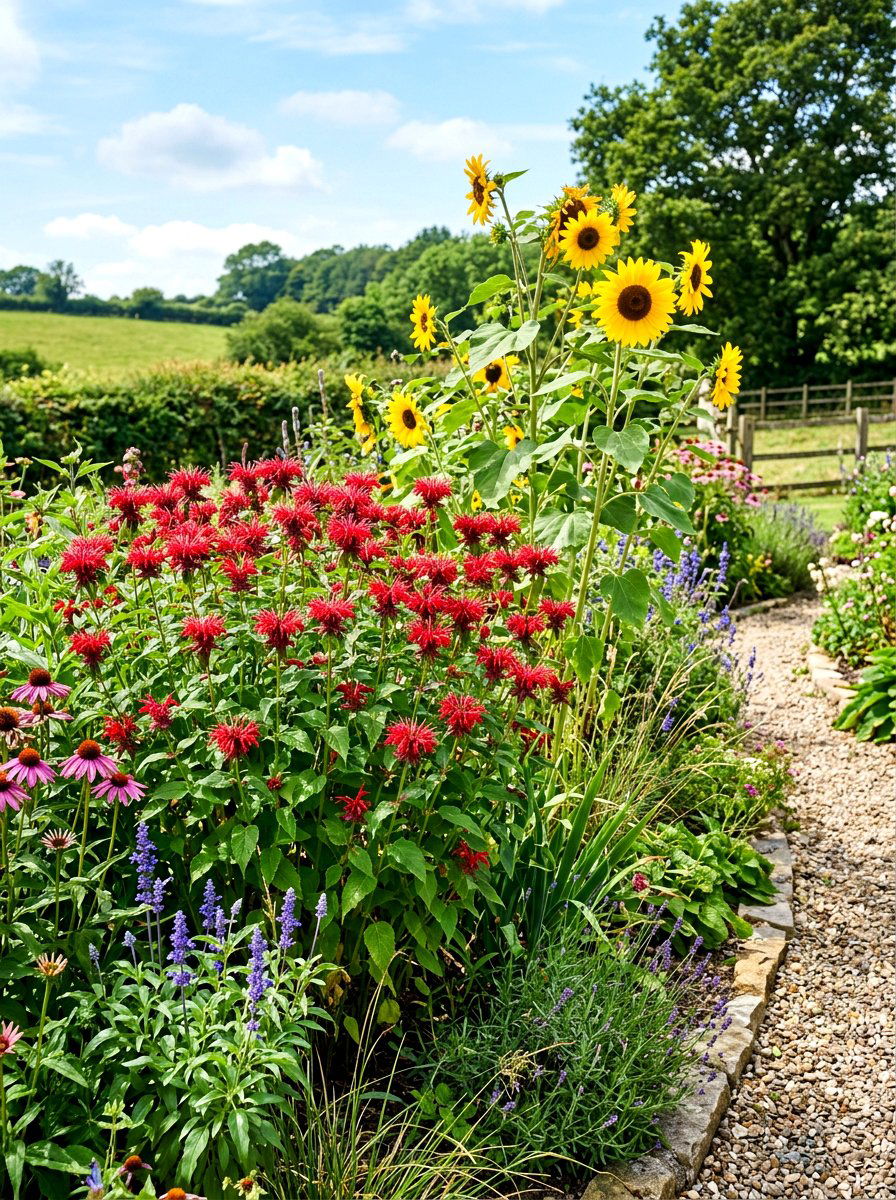
Red bee balm is a show-stopping perennial that adds a wild, shaggy texture and a jolt of crimson color to any garden. Its unique, fringe-like flowers are a magnet for hummingbirds and bees, making it a staple for any wildlife-friendly backyard. To design a full bed, plant bee balm in large clumps toward the middle of a border, surrounded by yellow daisies or purple coneflowers. This high-contrast color scheme is visually exciting and keeps the garden looking vibrant during the peak of summer. The leaves of bee balm also have a pleasant, citrus-like scent when crushed, adding another layer of sensory enjoyment to your outdoor walking paths.
22. Japanese Maple Accents
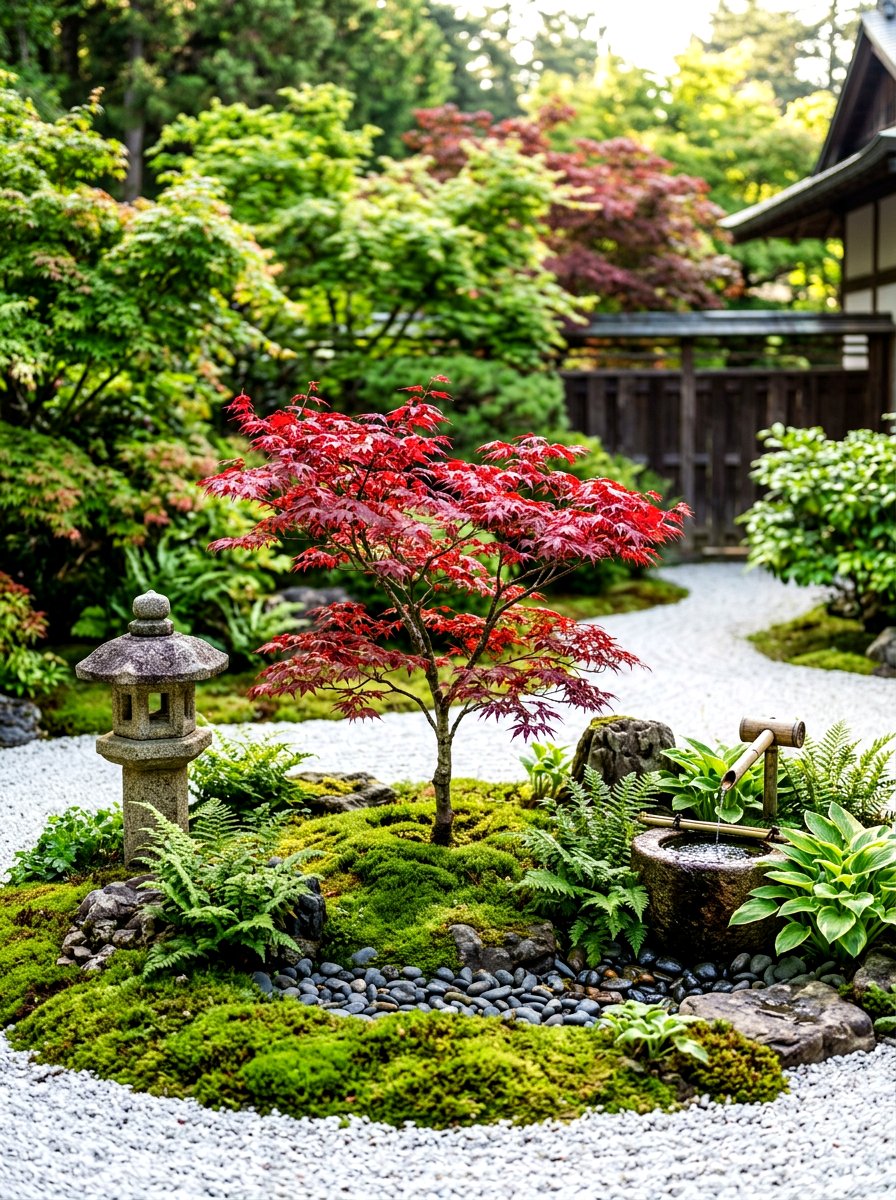
Japanese maple accents provide a stunning structural element that serves as a living sculpture in the middle of a flower bed. These small trees are prized for their delicate, lace-like leaves and incredible fall colors that range from bright orange to deep burgundy. To design a complete look, plant a dwarf Japanese maple as a centerpiece and surround it with low-growing ferns and moss-covered stones. This creates a peaceful, Zen-inspired atmosphere that feels like a private retreat. The architectural shape of the branches remains beautiful even in winter, especially when accented by soft landscape lighting. They are perfect for adding height without overwhelming a small yard.
23. Boxwood Hedge Framing
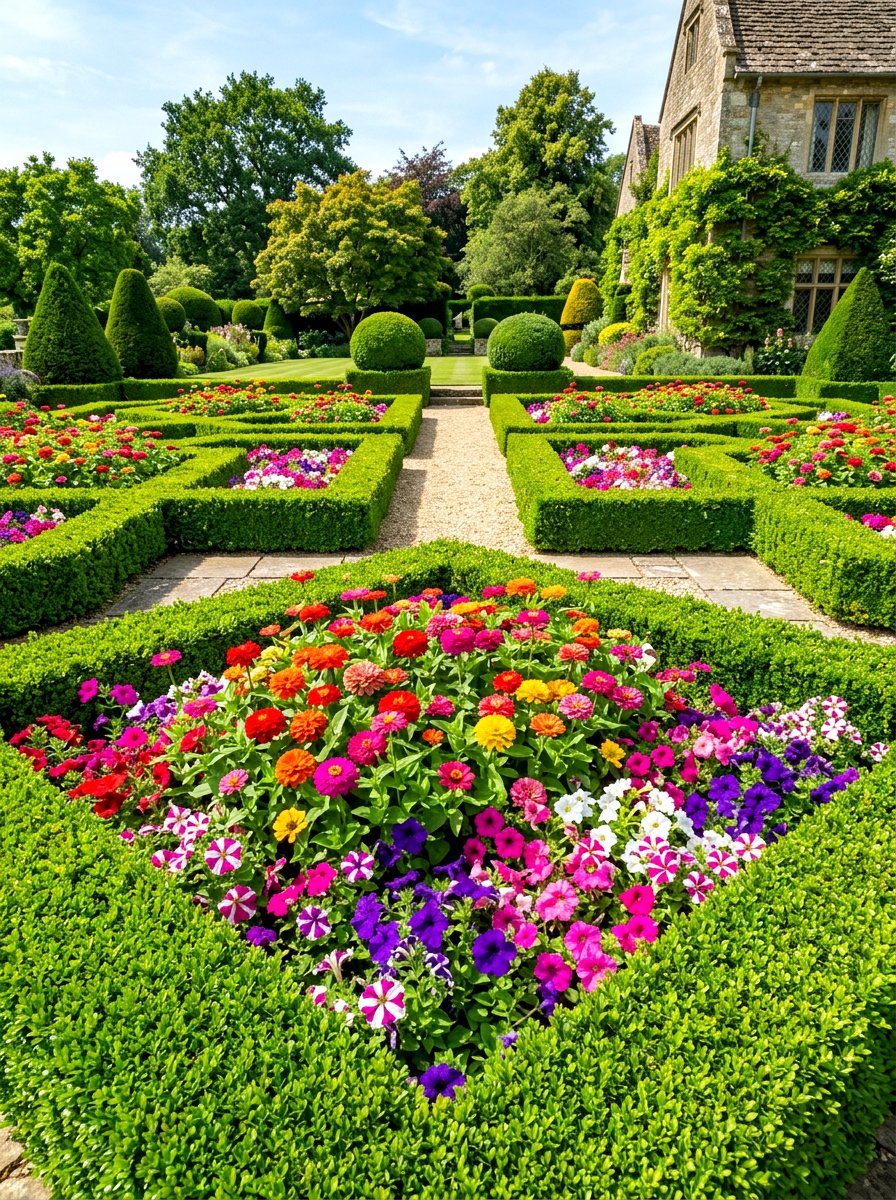
Boxwood hedge framing provides the necessary structure and "bones" that keep a flower bed looking organized and tidy all year long. These evergreen shrubs can be pruned into crisp, formal spheres or low-growing rectangular walls. To design a full space, use a boxwood border to contain a "wilder" mix of colorful annuals like zinnias and marigolds. This contrast between the formal green hedge and the informal flowers creates a sophisticated, high-end look often seen in luxury estates. Boxwoods are slow-growing and very hardy, making them a long-term investment in your home’s curb appeal. They provide a green backdrop that makes every other flower color pop.
24. Black Eyed Susans
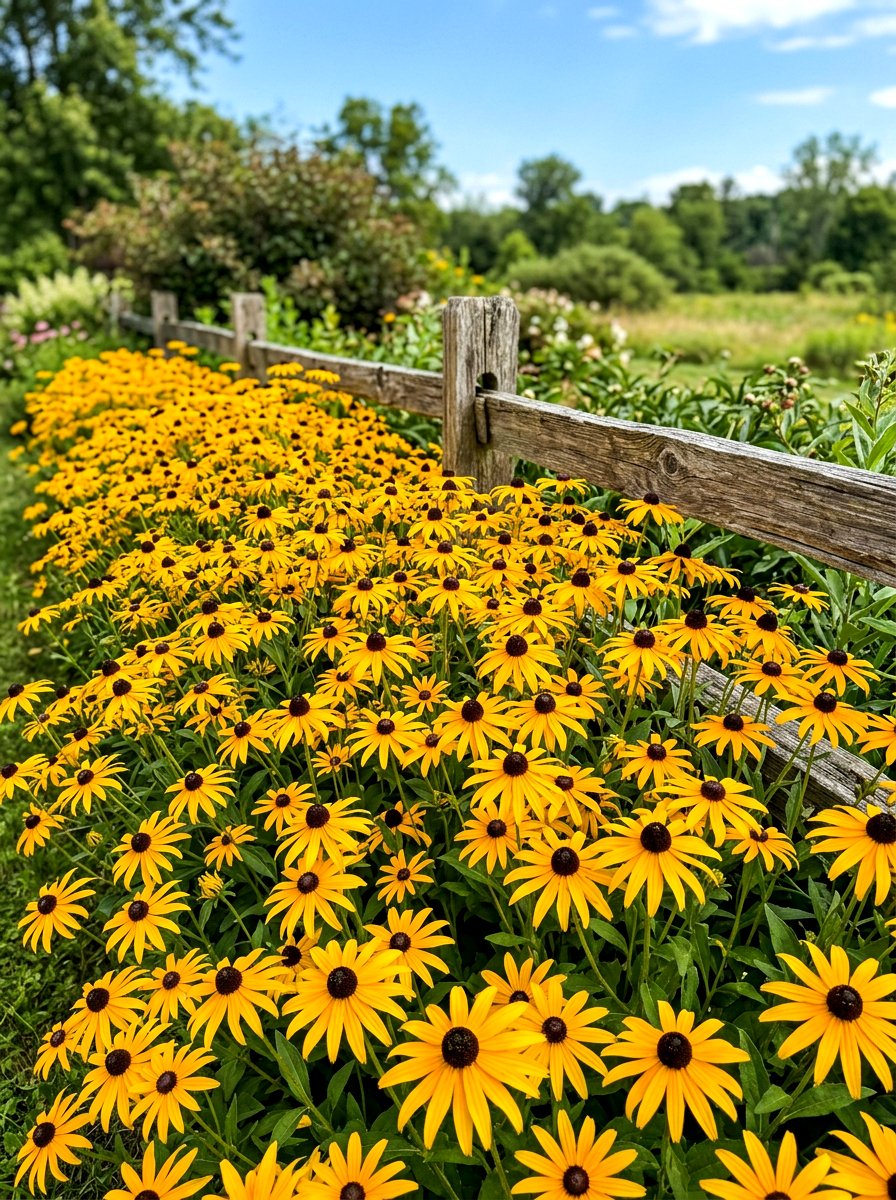
Black eyed Susans are the quintessential summer flower, offering a cheerful and rugged display of golden-yellow petals and dark chocolate centers. These native plants are incredibly tough, standing up to intense heat, humidity, and even poor soil conditions. To design a full bed, plant them in large swaths to create a "sea of gold" that looks stunning against a dark-colored house or a natural wood fence. They pair beautifully with purple salvia or blue ornamental grasses for a complementary color scheme. Because they are so prolific, they will often spread on their own, filling in bare spots and creating a lush, abundant look with very little work.
25. Purple Coral Bells
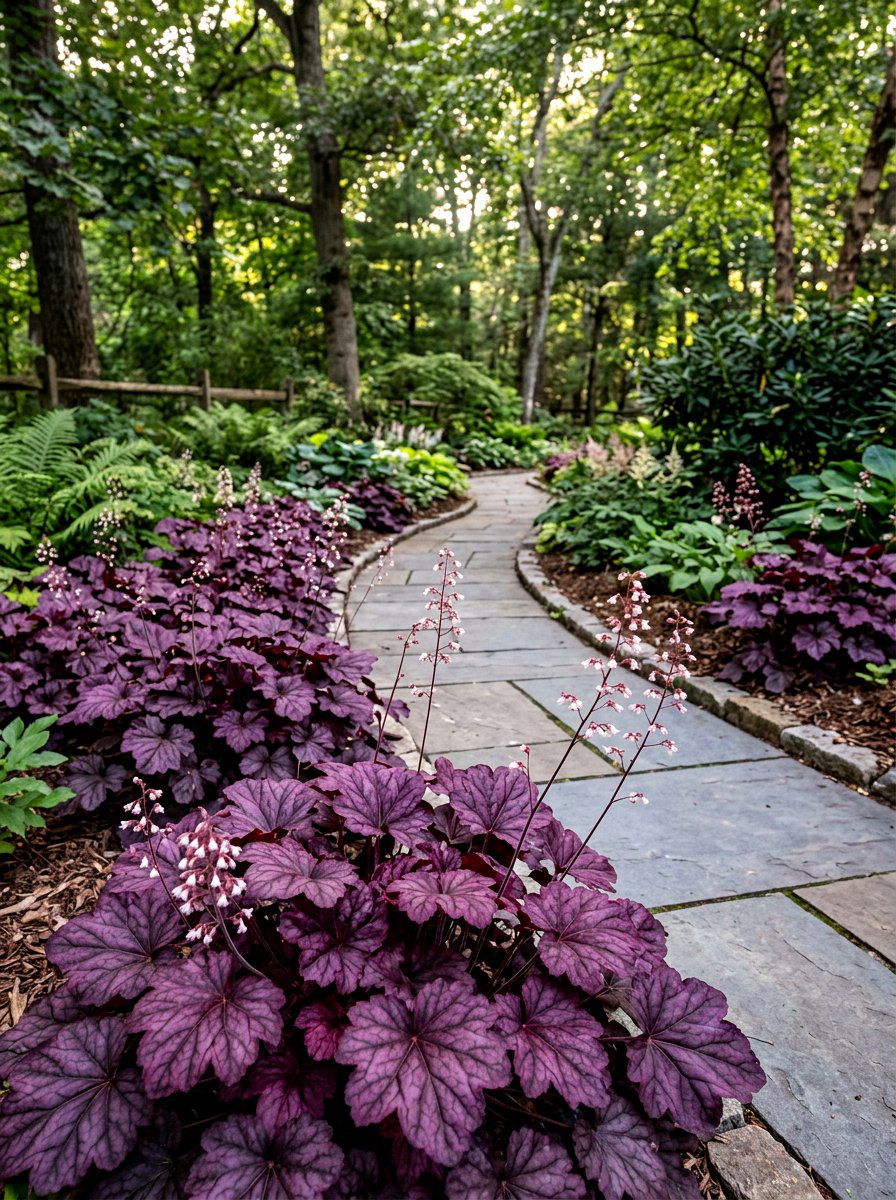
Purple coral bells, also known as heuchera, are grown primarily for their stunning foliage that comes in shades of deep plum, bright silver, and lime green. While they do produce dainty flower spikes, it is the ruffled, colorful leaves that provide year-round interest in the garden. To create a full design, use different varieties of coral bells to create a patchwork quilt of color along a shaded garden path. Their compact, mounded shape makes them ideal for the front of a border or for tucking into small gaps between larger shrubs. They are exceptionally low-maintenance and thrive in a wide range of light conditions, from shade to sun.
26. Spiky Yucca Plants
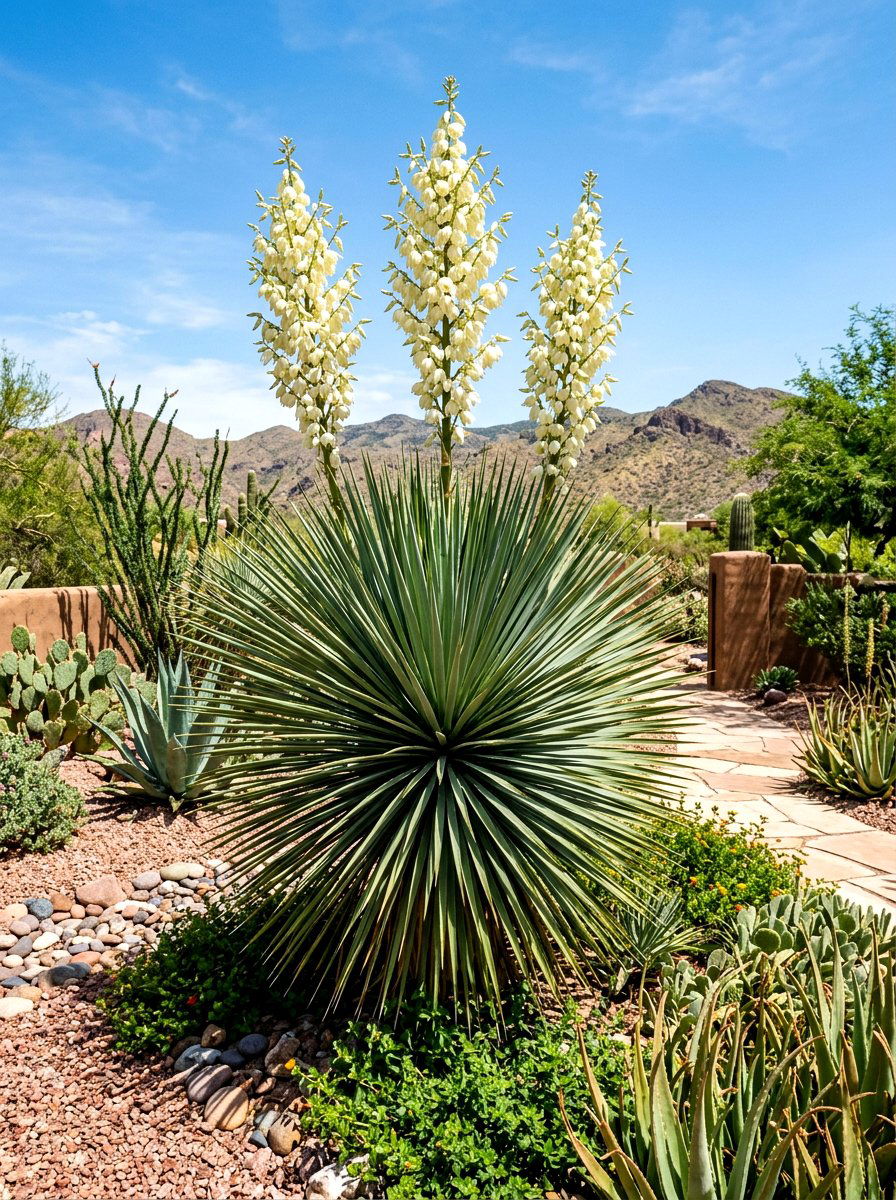
Spiky yucca plants add a bold, southwestern flair and a strong vertical element to a sunny garden bed. These evergreen perennials feature tough, sword-like leaves that stay green through the winter, providing much-needed structure. To design a complete look, plant yucca as an accent piece amidst softer textures like ornamental grasses or creeping thyme. In mid-summer, they produce massive towers of creamy white, bell-shaped flowers that can reach several feet in height. Yucca is incredibly drought-tolerant and thrives in sandy or rocky soil where other plants might fail. Its dramatic silhouette makes it a perfect choice for modern or desert-themed landscapes that require minimal watering.
27. Clematis Vine Trellis
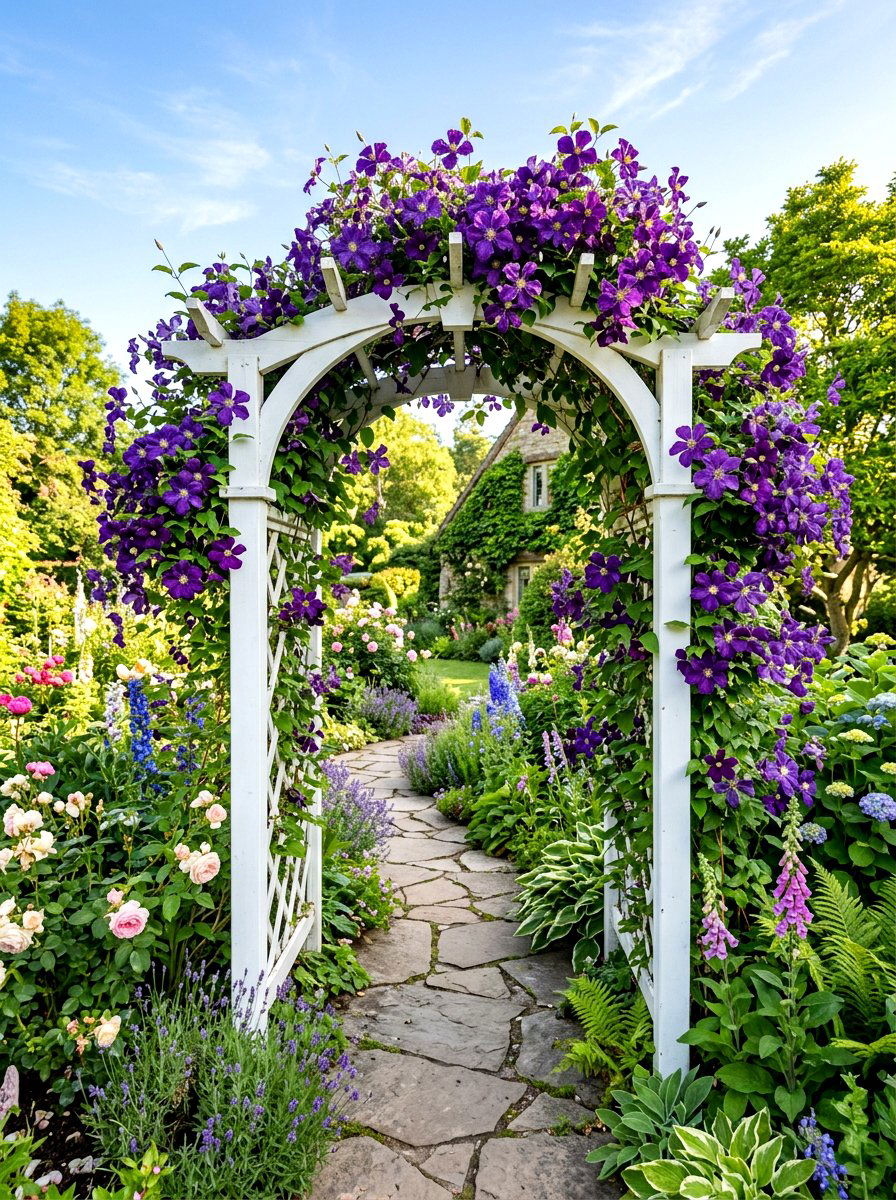
Clematis vine trellis designs allow you to bring a wall of color to eye level, making them a favorite for decorating porch pillars or garden gates. Often called the "queen of climbers, " clematis produces large, star-shaped flowers in stunning shades of purple, pink, and white. To create a full garden theme, plant a clematis vine at the back of a bed and surround its base with low-growing flowers like pansies or petunias. This "cool feet, warm head" planting strategy is the secret to a healthy clematis. The vines are surprisingly delicate and can be woven through other shrubs to create a layered and romantic tapestry of blooms and leaves.
28. Fragrant Lilac Shrubs
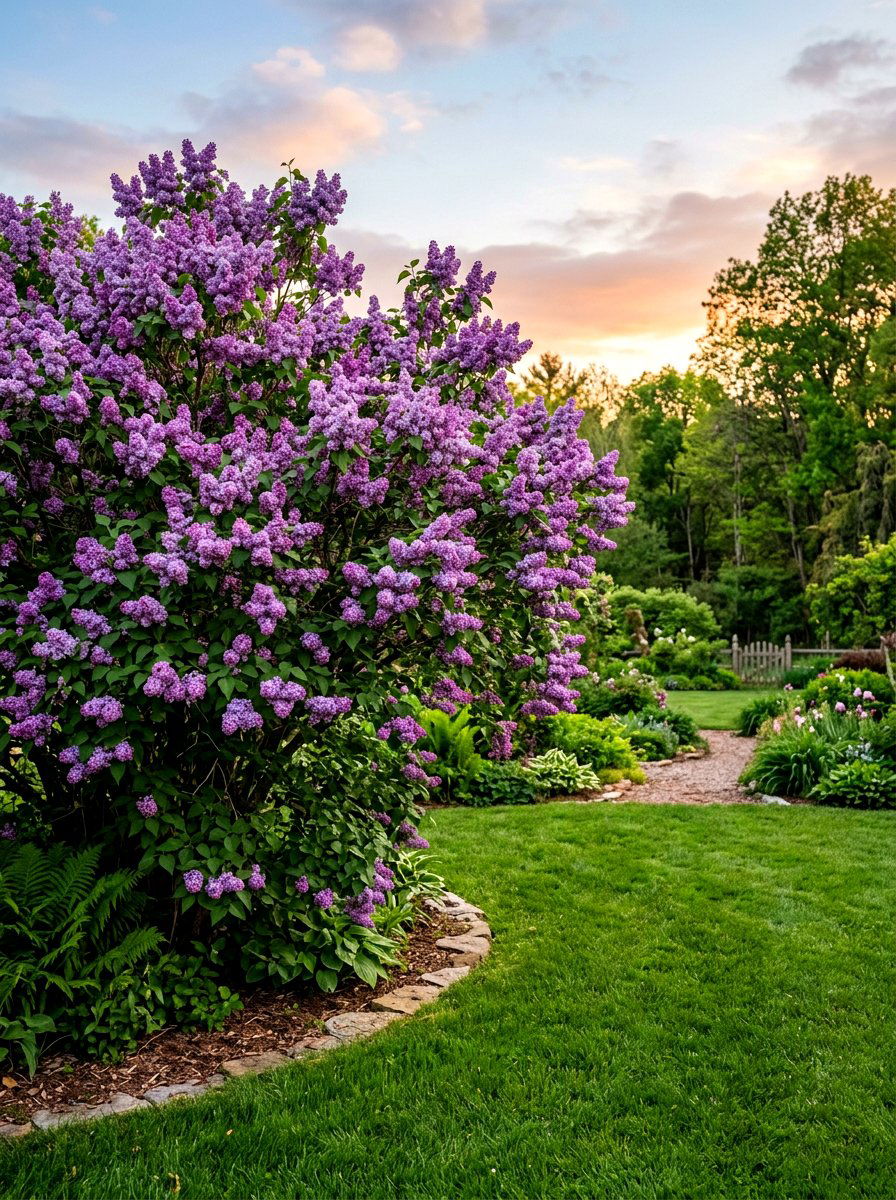
Fragrant lilac shrubs are a nostalgic favorite that marks the true beginning of the spring season with their heavy, sweet-smelling clusters of flowers. These large shrubs can be used to create a fragrant living privacy screen or a majestic focal point in the corner of a yard. To design a full look, underplant your lilacs with spring bulbs like tulips and daffodils to create a coordinated explosion of color. While the blooming period is short, the heart-shaped green leaves provide a dense and attractive screen for the rest of the summer. Newer reblooming varieties are now available, offering a second flush of flowers in the late summer heat.
29. White Petunia Beds
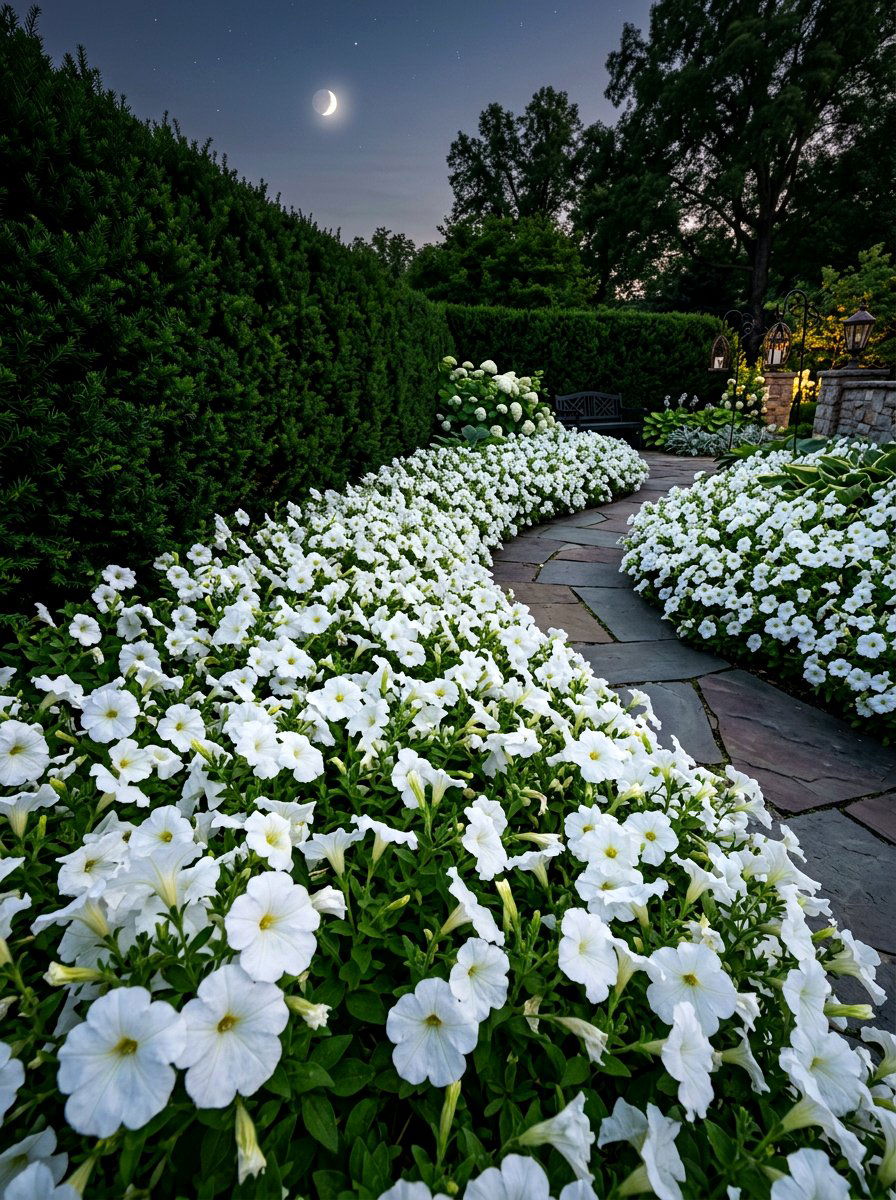
White petunia beds offer a bright and clean look that reflects the moonlight, making them perfect for "evening gardens" near a patio or deck. These annuals are famous for their non-stop blooming power and their ability to quickly fill a space with a carpet of flowers. For a professional design, plant them in a dense mass under a dark green shrub like a boxwood or a holly. This creates a high-contrast look that feels fresh and modern. Petunias are very versatile and can be used as a groundcover or allowed to spill over the edge of a raised garden bed for a soft, overflowing effect that looks great all season.
30. Golden Daffodil Borders
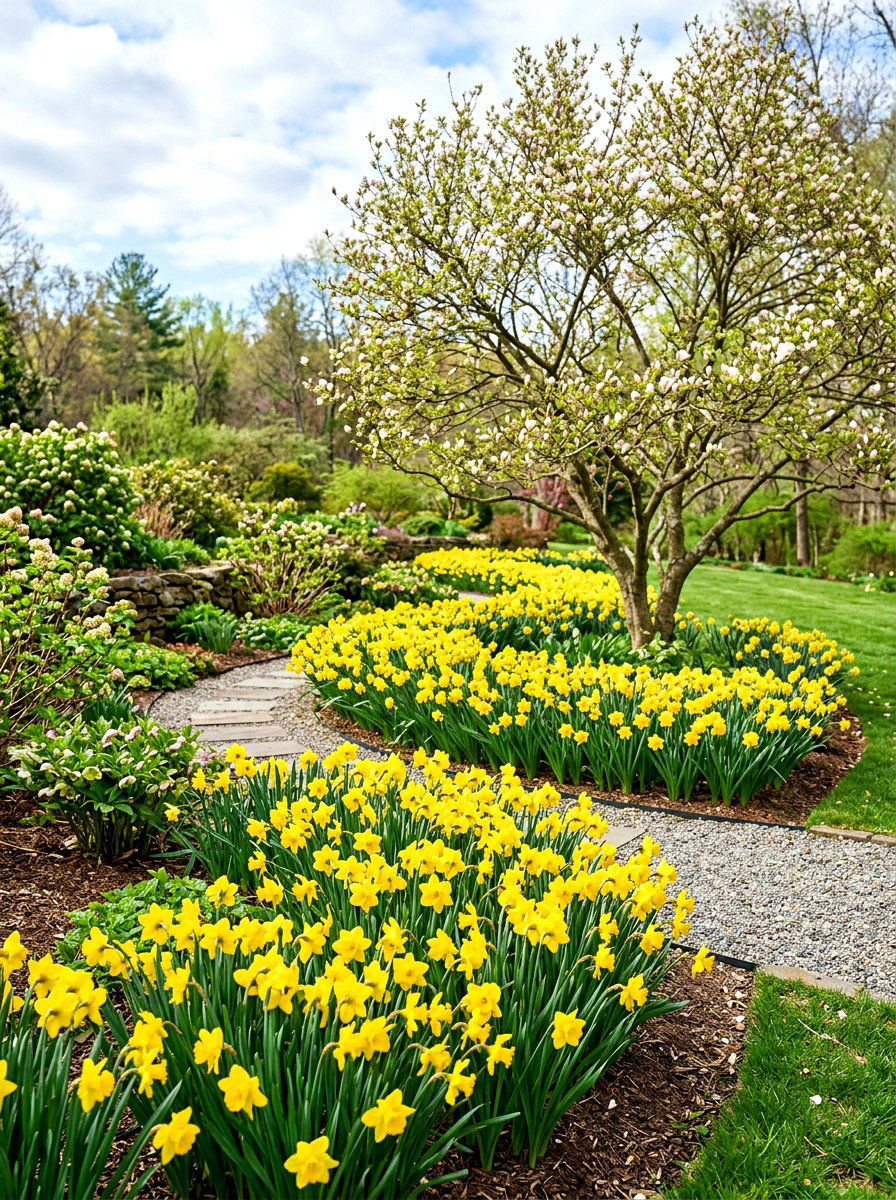
Golden daffodil borders are the first sign of life in the garden, often poking through the snow to signal the arrival of spring. These resilient bulbs are deer-resistant and will multiply over the years, creating a bigger and better display each season. To design a full spring theme, plant daffodils in long, sweeping drifts along a driveway or scattered under a deciduous tree for a naturalized look. Pairing them with blue grape hyacinths creates a classic and vibrant color combination that brings joy to the neighborhood. Once they finish blooming, their foliage should be left to die back naturally to provide energy for next year’s flowers.
Conclusion:
Creating a stunning flower bed is a rewarding journey that enhances the beauty and value of your home throughout the year. By selecting a diverse range of plants — from the fragrant lavender of summer to the resilient daffodils of early spring — you can build a landscape that is both sustainable and visually captivating. Remember to consider factors like light, soil, and water needs to ensure each variety thrives in its new environment. Whether you are aiming for a low-maintenance succulent retreat or a lush, romantic peony border, the right combinations will bring your garden to life. Happy planting as you transform your yard into a personal masterpiece.

Related posts: