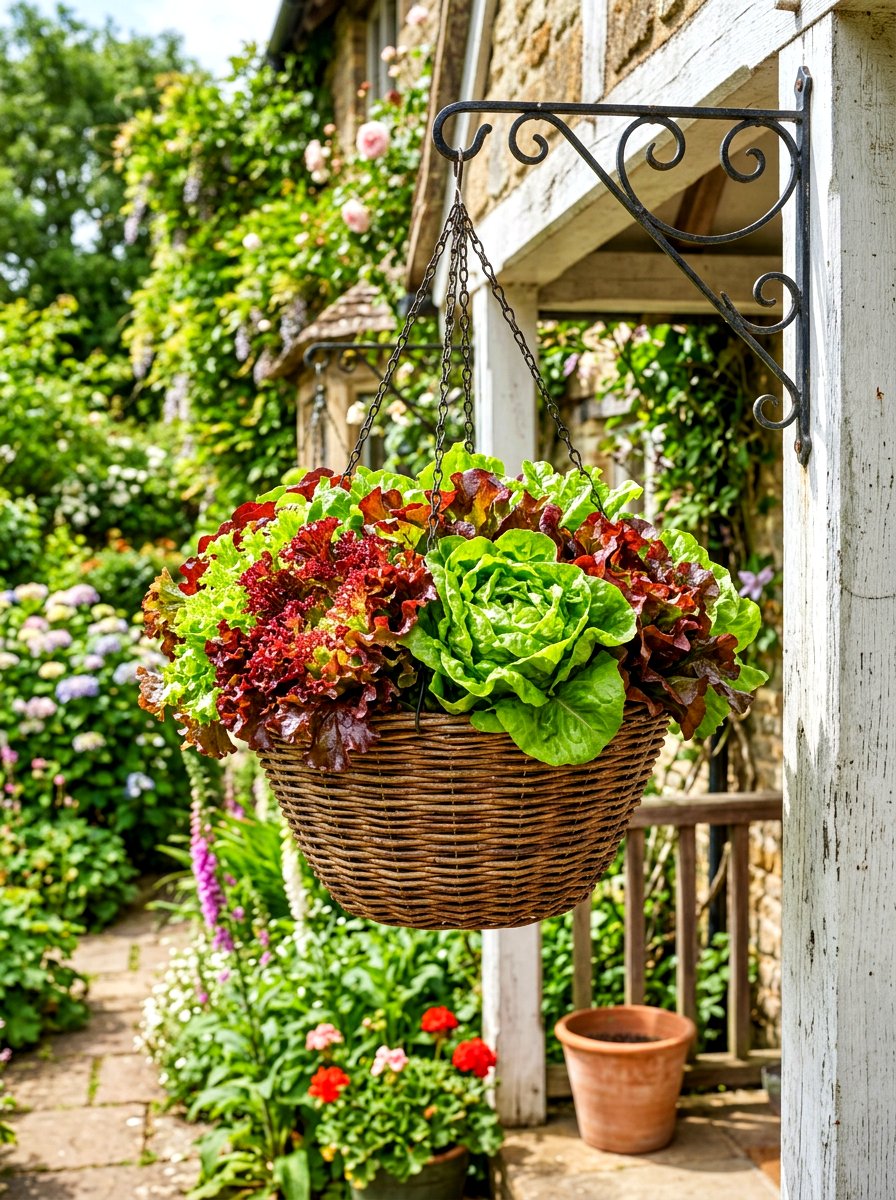
Transforming your outdoor living space into a productive oasis is a rewarding journey that connects you with nature right at your doorstep. Whether you have a sprawling sun-drenched deck or a tiny urban balcony, a patio vegetable garden provides fresh ingredients while enhancing your home’s aesthetic appeal. Modern gardening techniques make it easier than ever to grow a variety of nutritious crops without needing a traditional backyard plot. By selecting the right containers, soil, and plants, you can create a lush, edible landscape that serves as both a functional kitchen garden and a beautiful retreat. This guide explores creative ways to maximize your space and enjoy the unmatched flavor of homegrown vegetables every day.
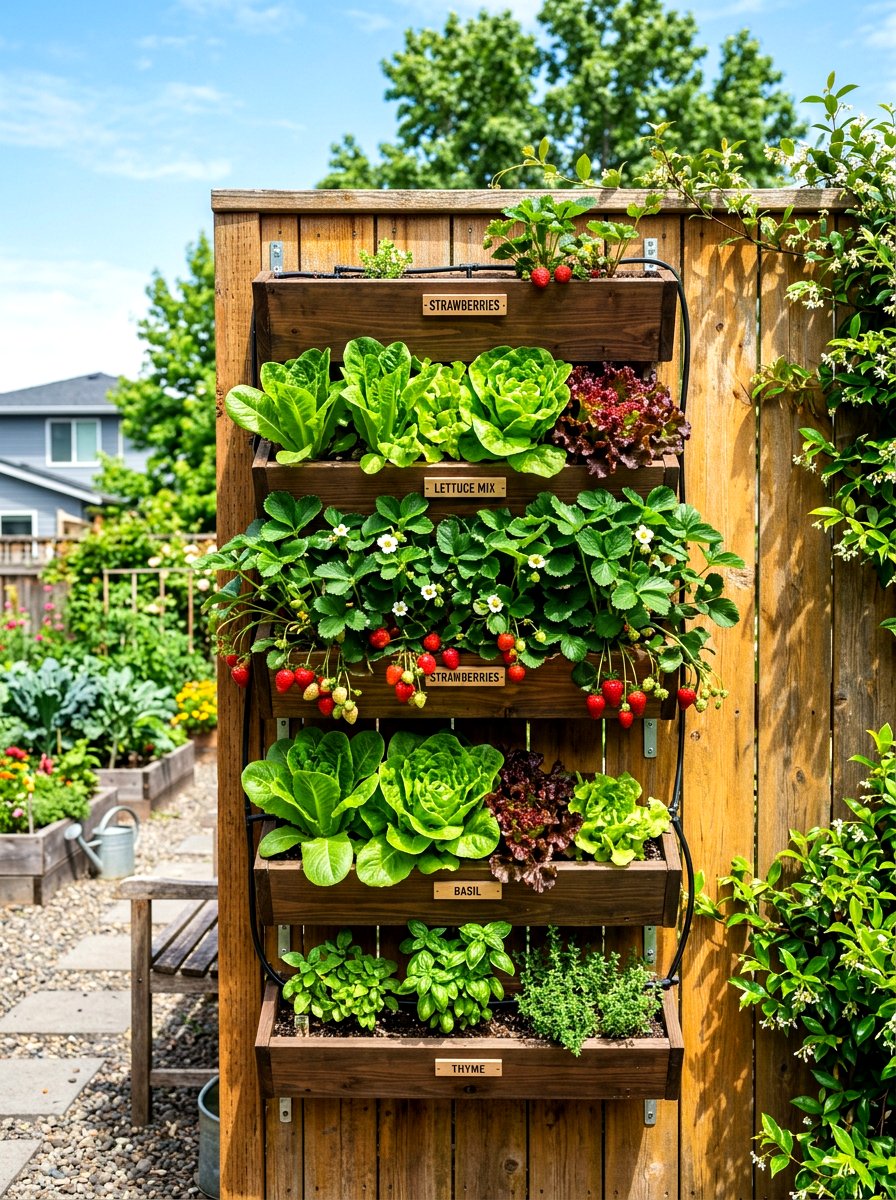
1. Vertical vegetable garden
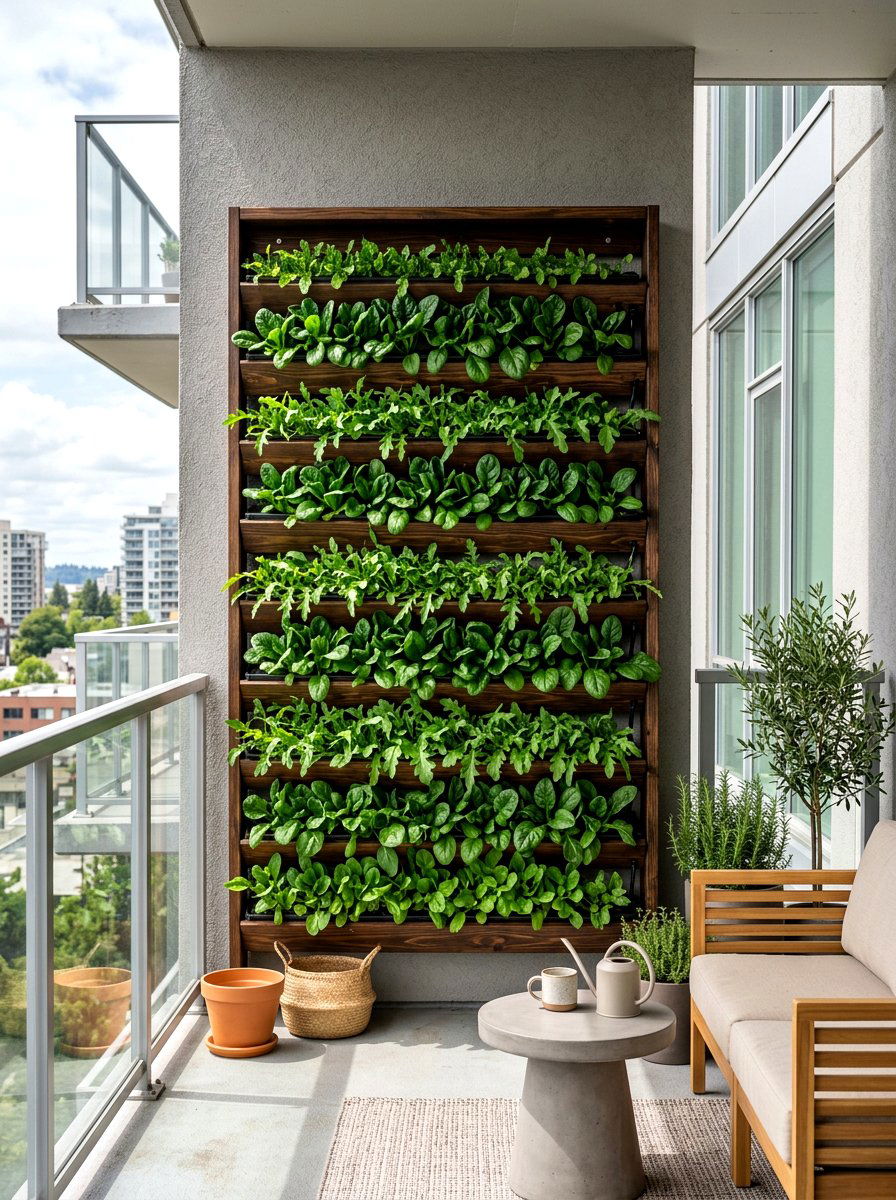
A vertical vegetable garden is a revolutionary way to maximize growing space on a small patio. By utilizing wall surfaces, you can grow an abundance of crops without sacrificing any floor area. This design often features a sturdy wooden or metal frame equipped with multiple rows of planters or pockets. You can plant shallow-rooted greens like spinach, arugula, and various herbs that thrive in these elevated positions. The layout allows for excellent air circulation, which significantly reduces the risk of common fungal diseases. Additionally, harvesting becomes a much easier task since you can reach your vegetables without bending down. This setup effectively turns a plain patio wall into a lush, edible tapestry.
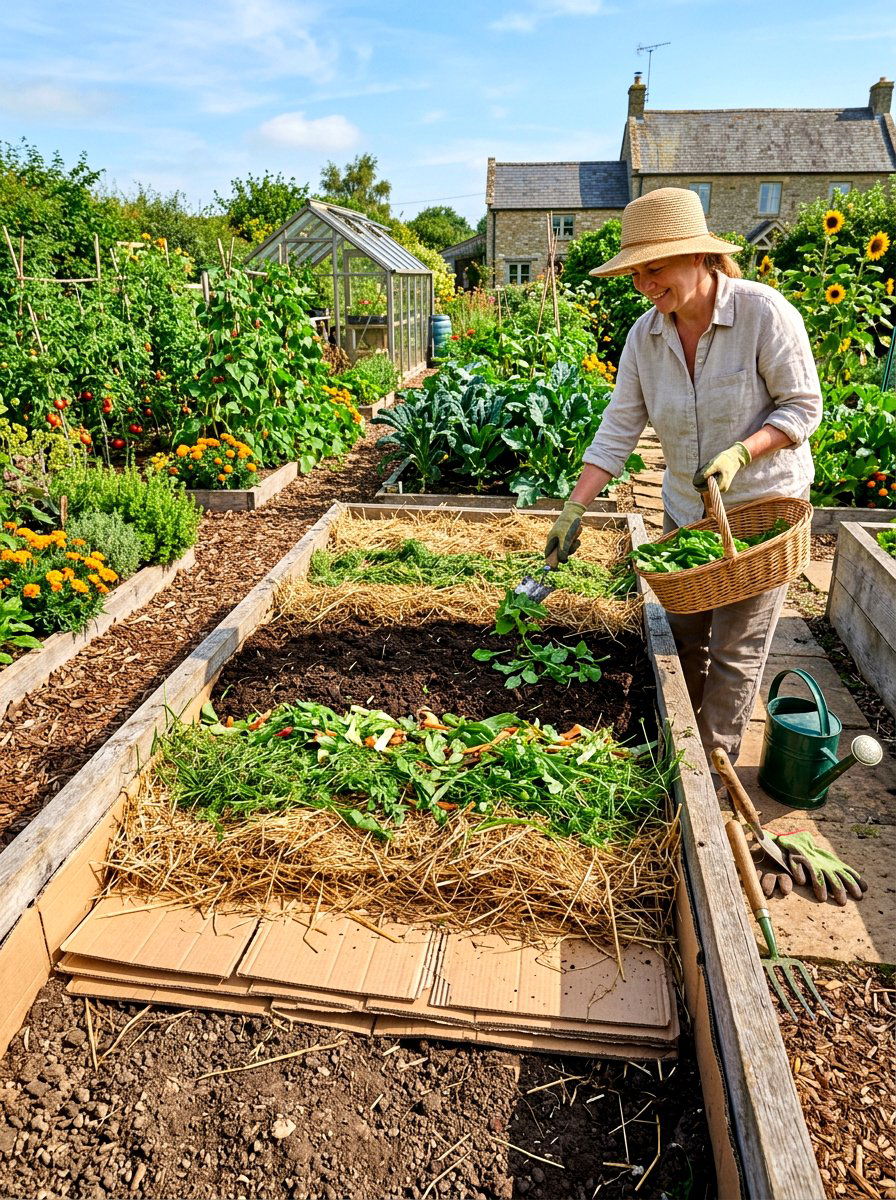
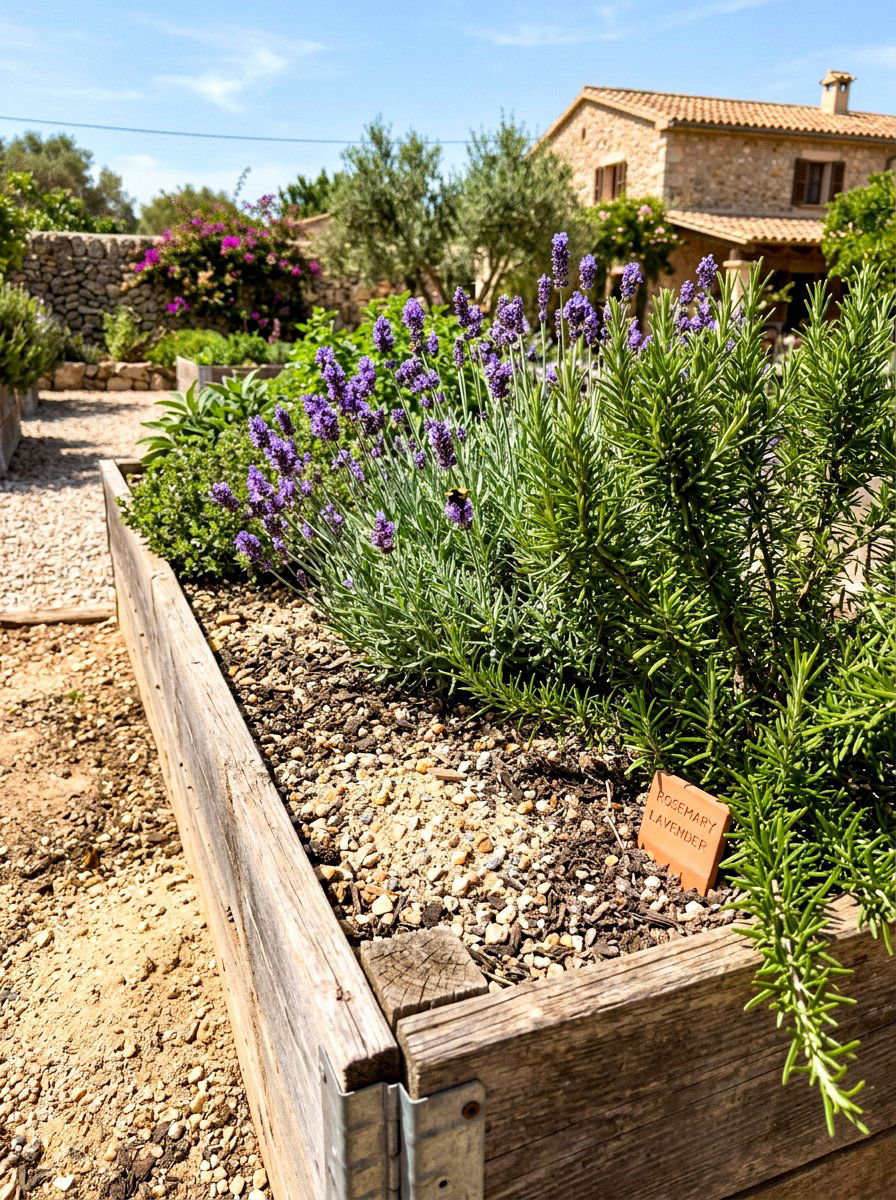
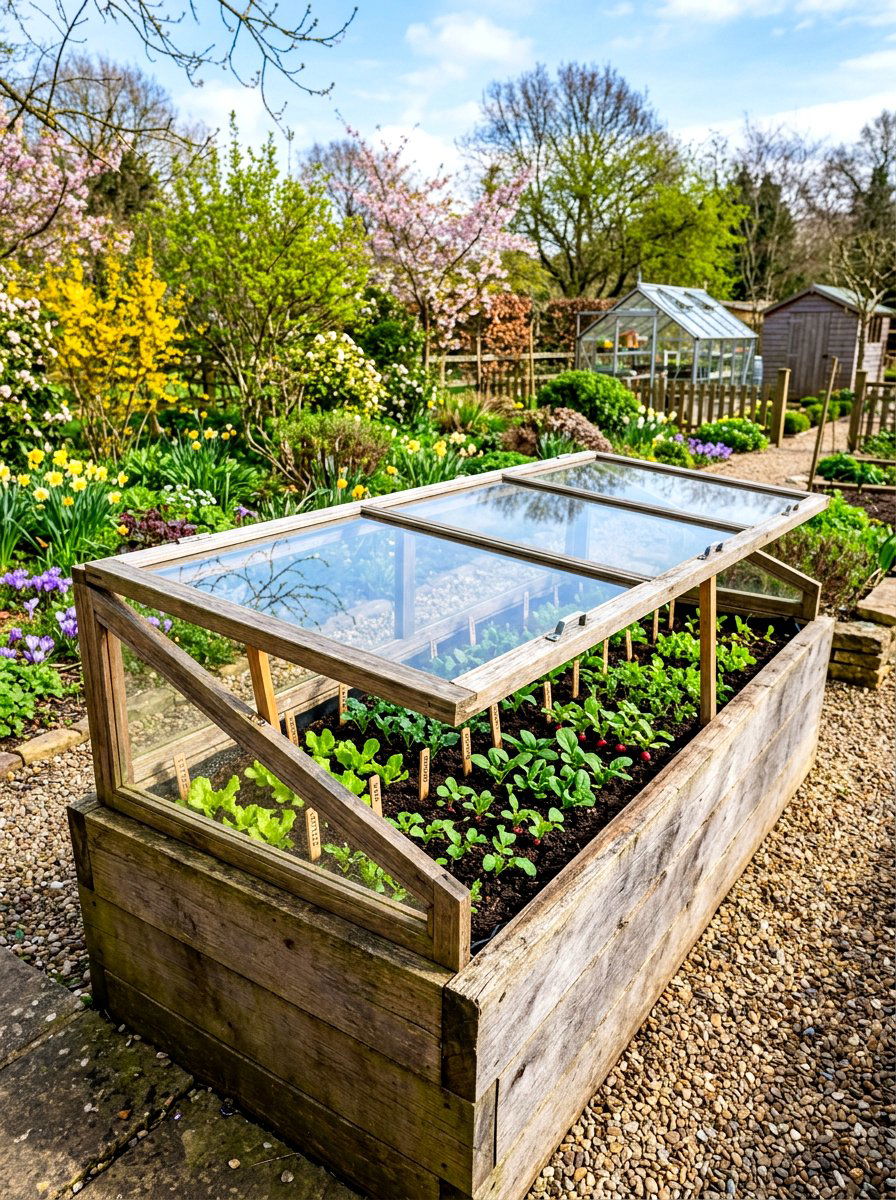
2. Raised bed patio
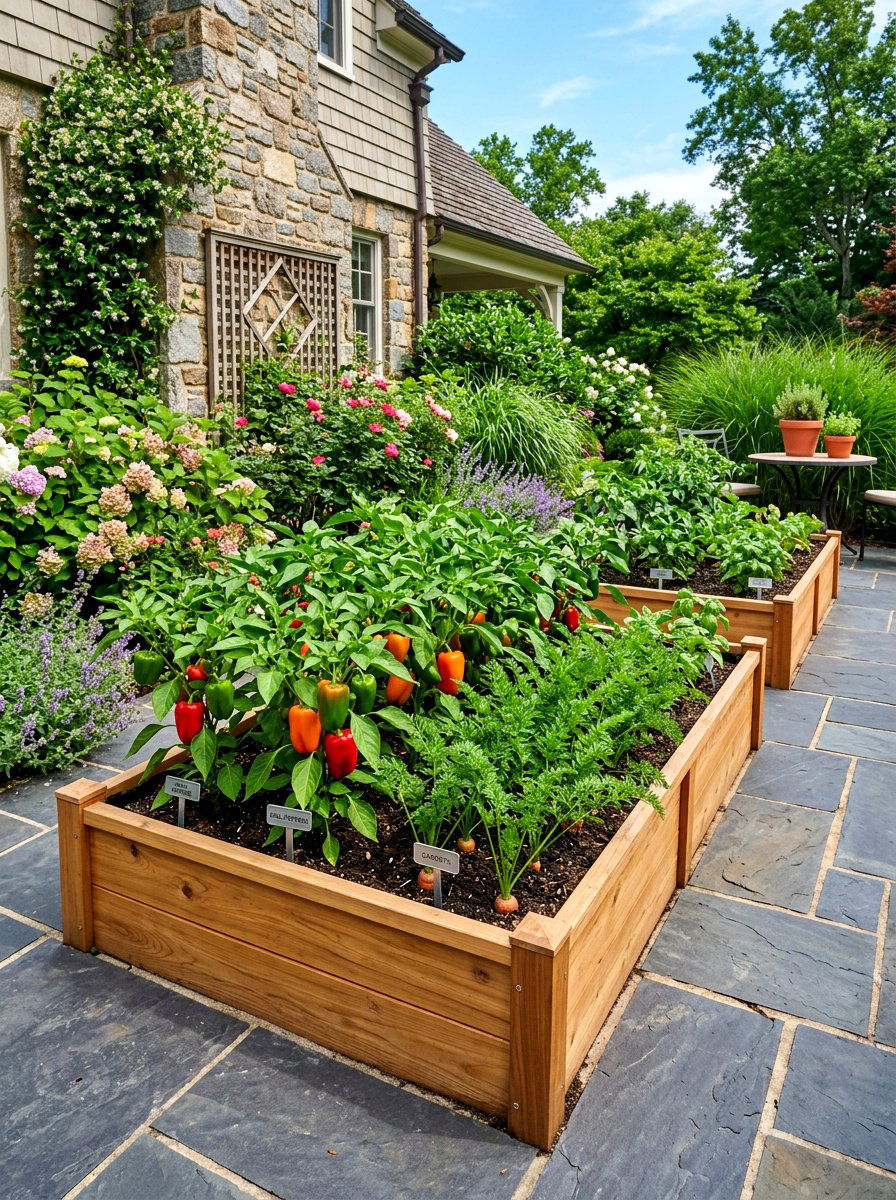
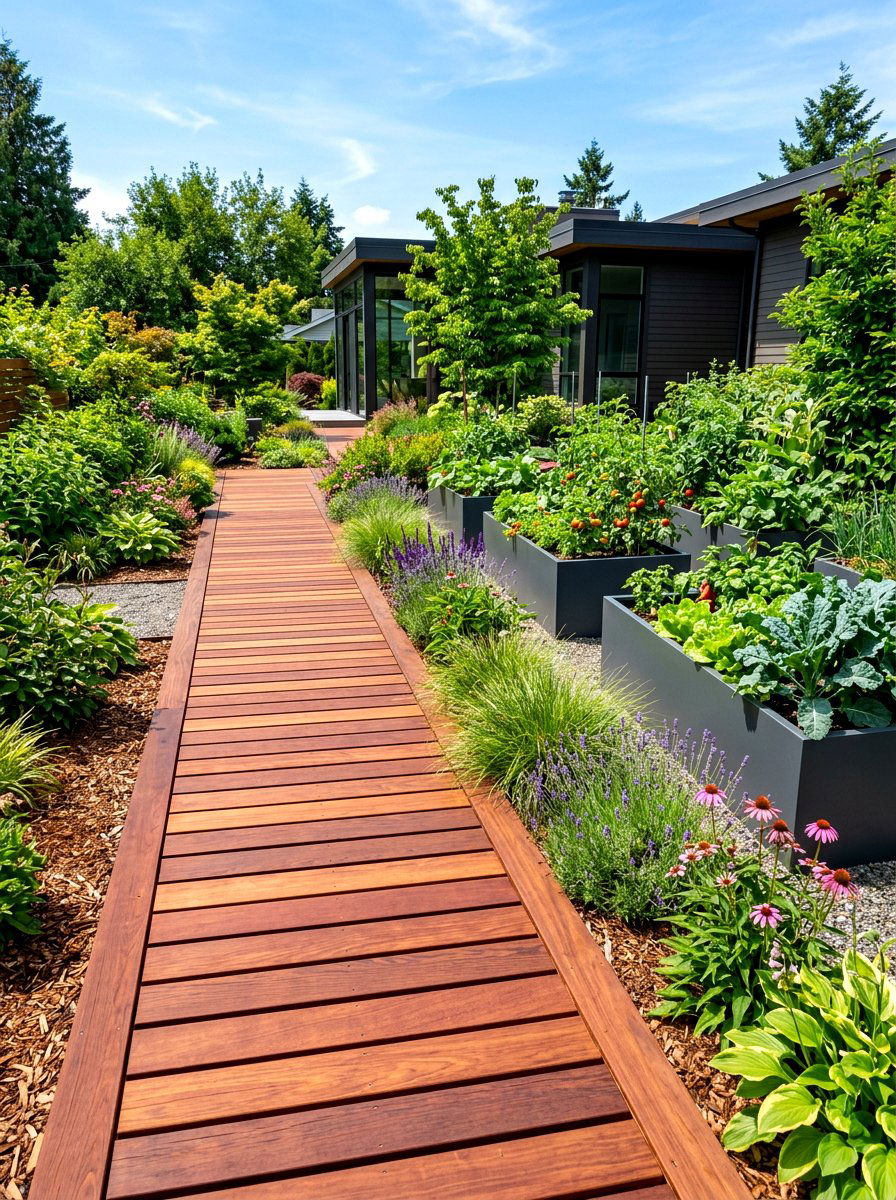
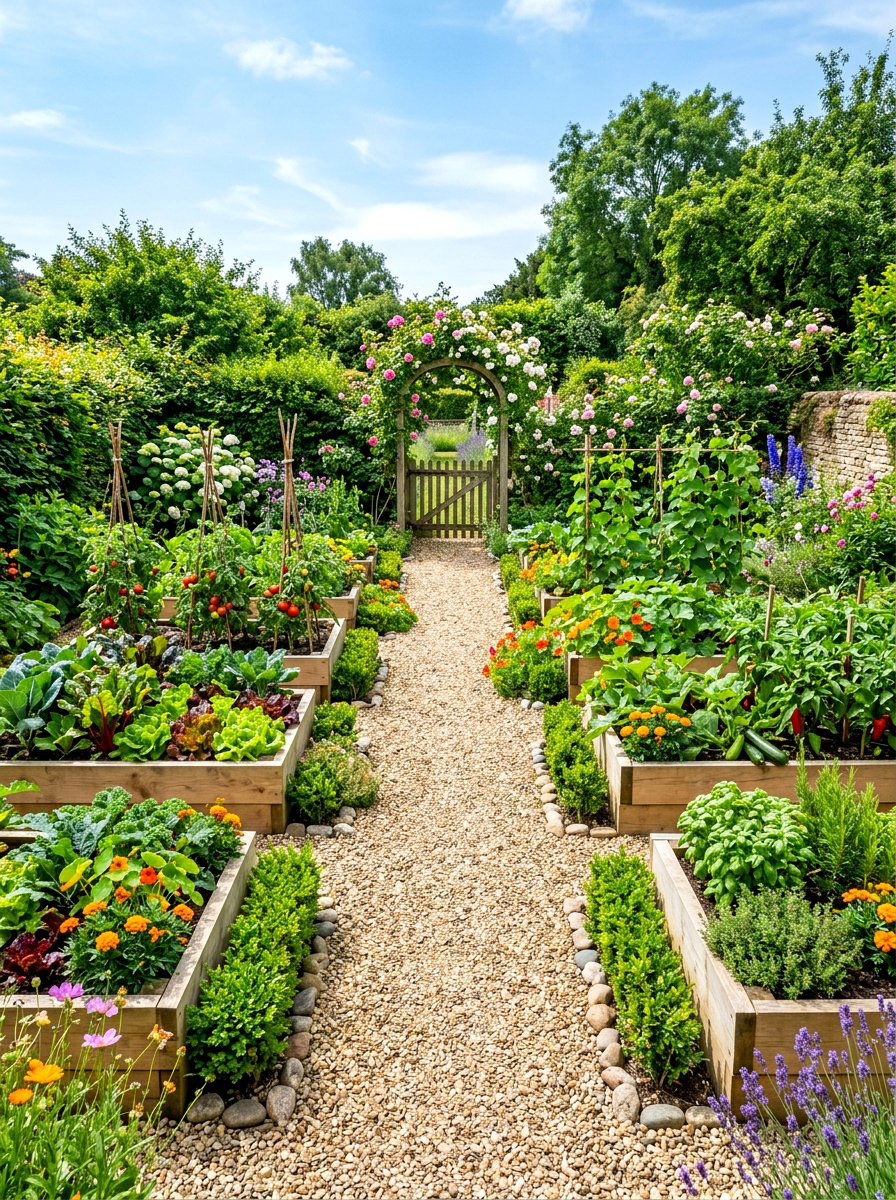
Implementing a raised bed patio design provides a structured and highly organized look to your outdoor gardening space. These beds are typically constructed from rot-resistant cedar or durable composite materials, raising the soil level for better accessibility. Because you control the soil quality entirely, your vegetables often grow faster and healthier than they would in the ground. You can plant a diverse mix of root vegetables, such as carrots and radishes, alongside larger plants like peppers or bush beans. The defined edges of the beds keep the patio clean and prevent soil from washing away during heavy rains. This method is perfect for creating a professional and permanent kitchen garden layout.
3. Container vegetable garden
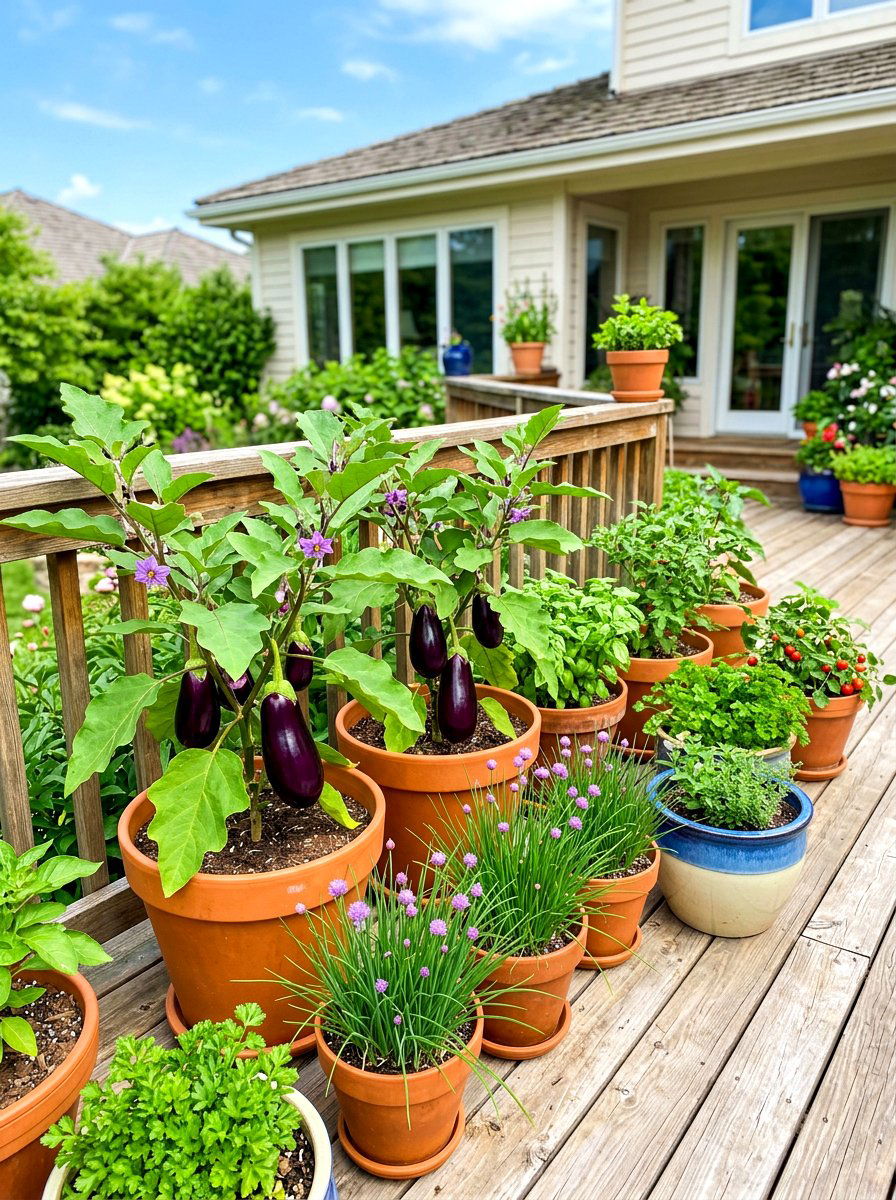
A container vegetable garden offers the ultimate flexibility for patio owners who enjoy rearranging their outdoor living space. By using a curated collection of various pots, you can create a dynamic and visually interesting arrangement. Choose different sizes and materials, such as terracotta, ceramic, or modern resin, to add texture and color to your patio. Larger containers are ideal for heavy feeders like eggplants or cucumbers, while smaller pots work well for chives and parsley. You can easily move these containers to follow the sun throughout the day, ensuring your plants receive the optimal light they need. This modular approach makes gardening approachable for beginners and experienced growers alike.
4. Tiered planter stand
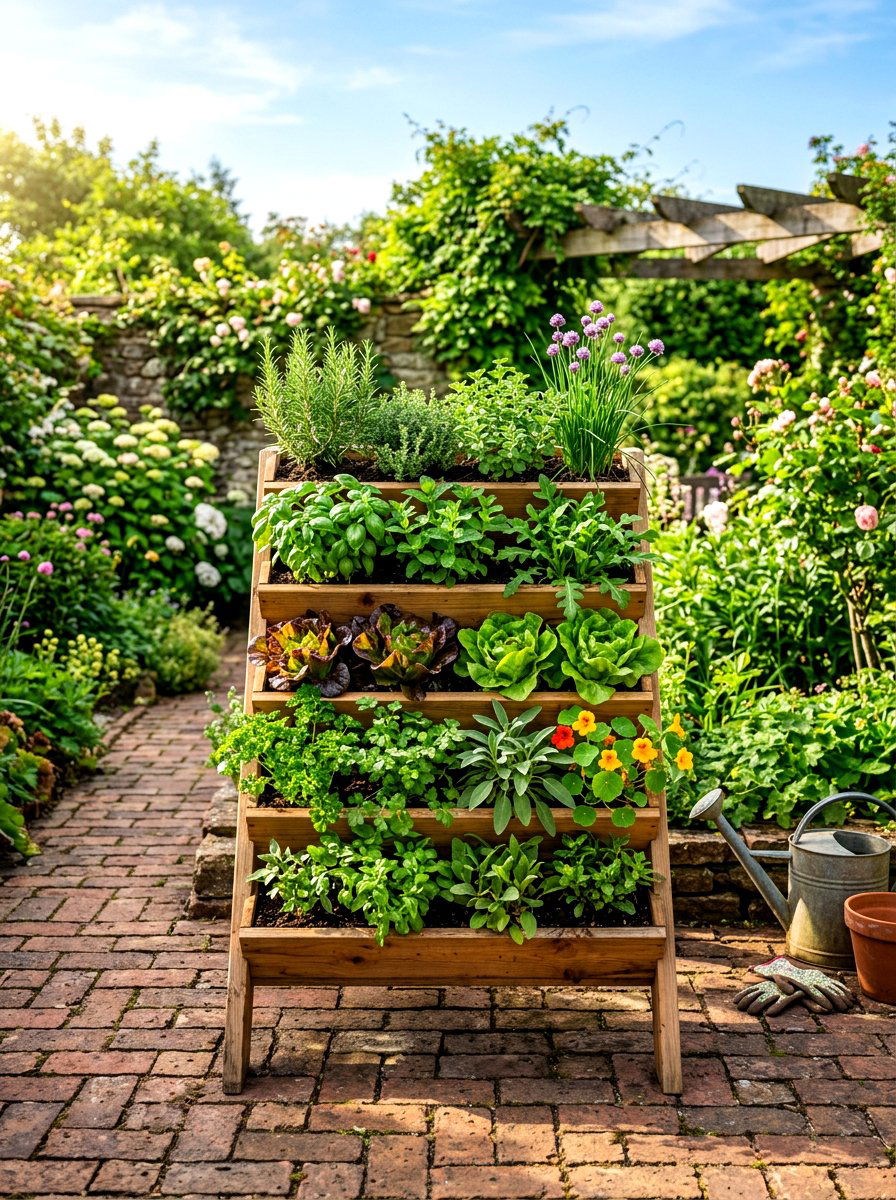
Using a tiered planter stand is an excellent way to add architectural height and visual depth to your patio. These stands often resemble stairs or ladders, allowing you to display multiple layers of greenery in a very compact footprint. By placing sun-loving plants on the top tiers and shade-tolerant varieties on the bottom, you create a perfect microclimate for each vegetable. This design is particularly effective for growing a variety of herbs or leafy greens that can cascade beautifully over the edges. The vertical orientation also keeps the plants away from ground-level pests, ensuring a cleaner harvest. It serves as a beautiful focal point that blends furniture with functional gardening.
5. Hanging vegetable basket
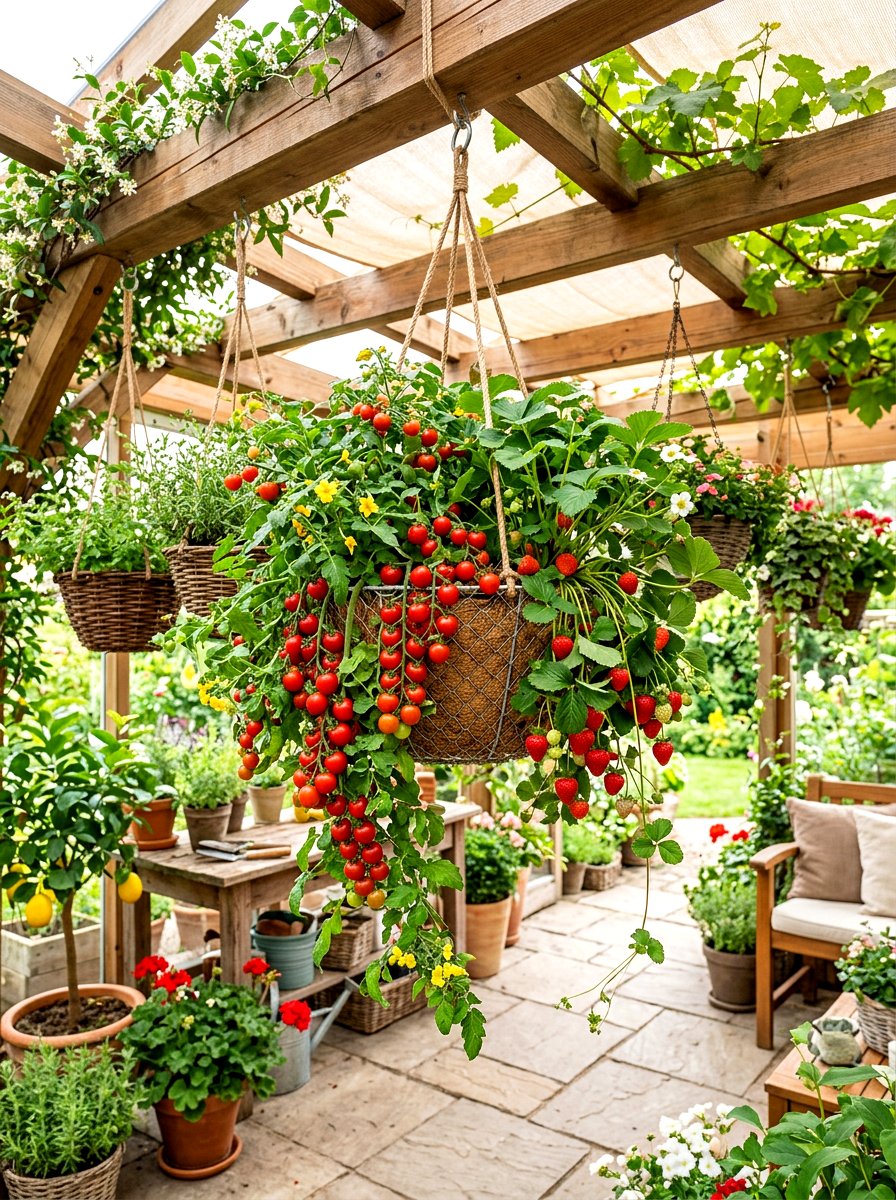
A hanging vegetable basket design utilizes the often-overlooked overhead space on a patio or porch. This method is perfect for trailing vegetable varieties, such as cherry tomatoes or strawberries, which look stunning as they spill over the sides. High-quality hanging baskets equipped with coconut coir liners provide excellent drainage and aeration for the root systems. By elevating your garden, you save valuable floor space for seating or dining areas while still enjoying a bountiful harvest. These baskets also add a soft, natural aesthetic to the patio’s vertical plane. Regular watering is essential for these elevated plants, as they tend to dry out faster than those placed on the ground.
6. Pallet garden wall
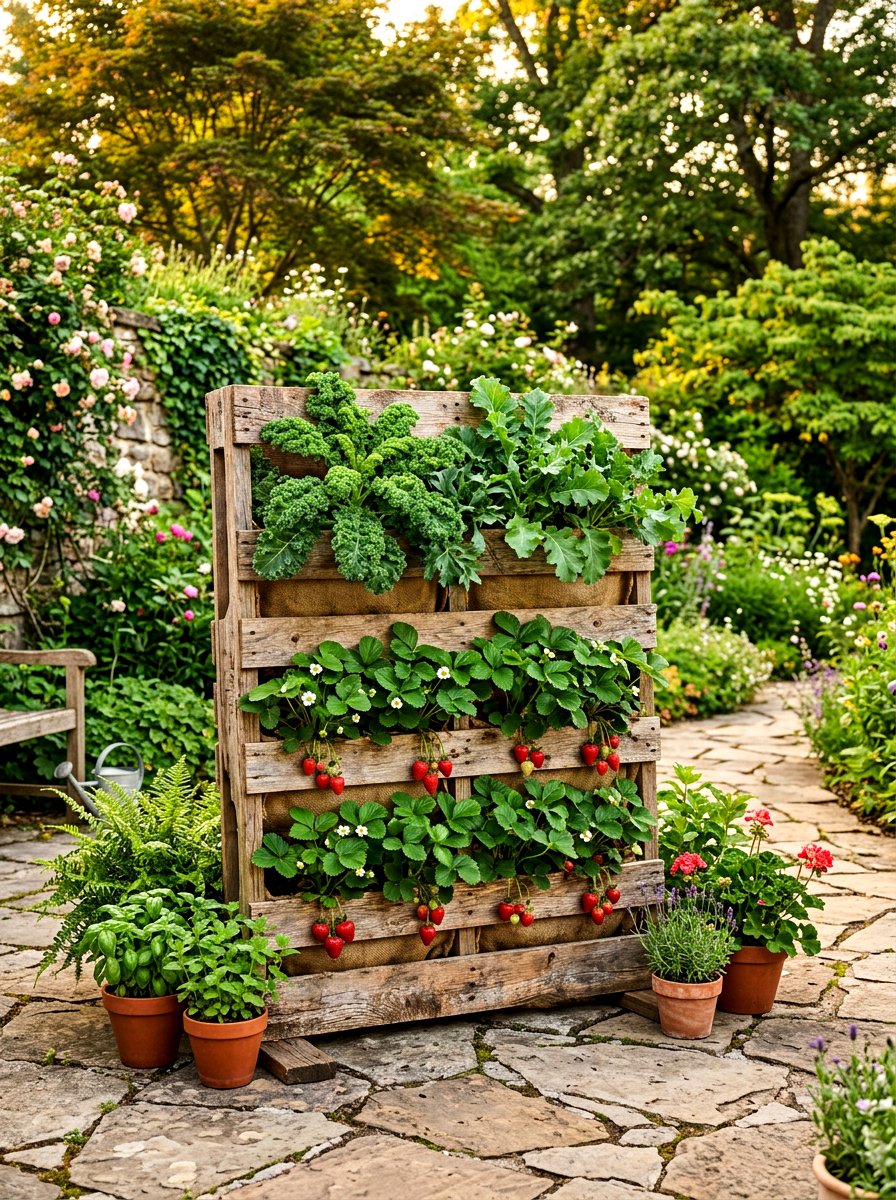
Creating a pallet garden wall is a fantastic way to embrace sustainable design while growing a variety of small vegetables. Reclaimed wooden pallets can be easily converted into vertical planters by adding landscape fabric to create individual planting pockets. This rustic approach adds a charming, farmhouse-style vibe to your patio while providing ample space for compact crops like lettuce, kale, and strawberries. The natural wood tones provide a beautiful backdrop for the vibrant green foliage of your edible plants. This design is highly customizable, allowing you to paint or stain the wood to match your existing outdoor decor. It is a cost-effective solution for anyone wanting a large vertical garden.
7. Herb tower planter
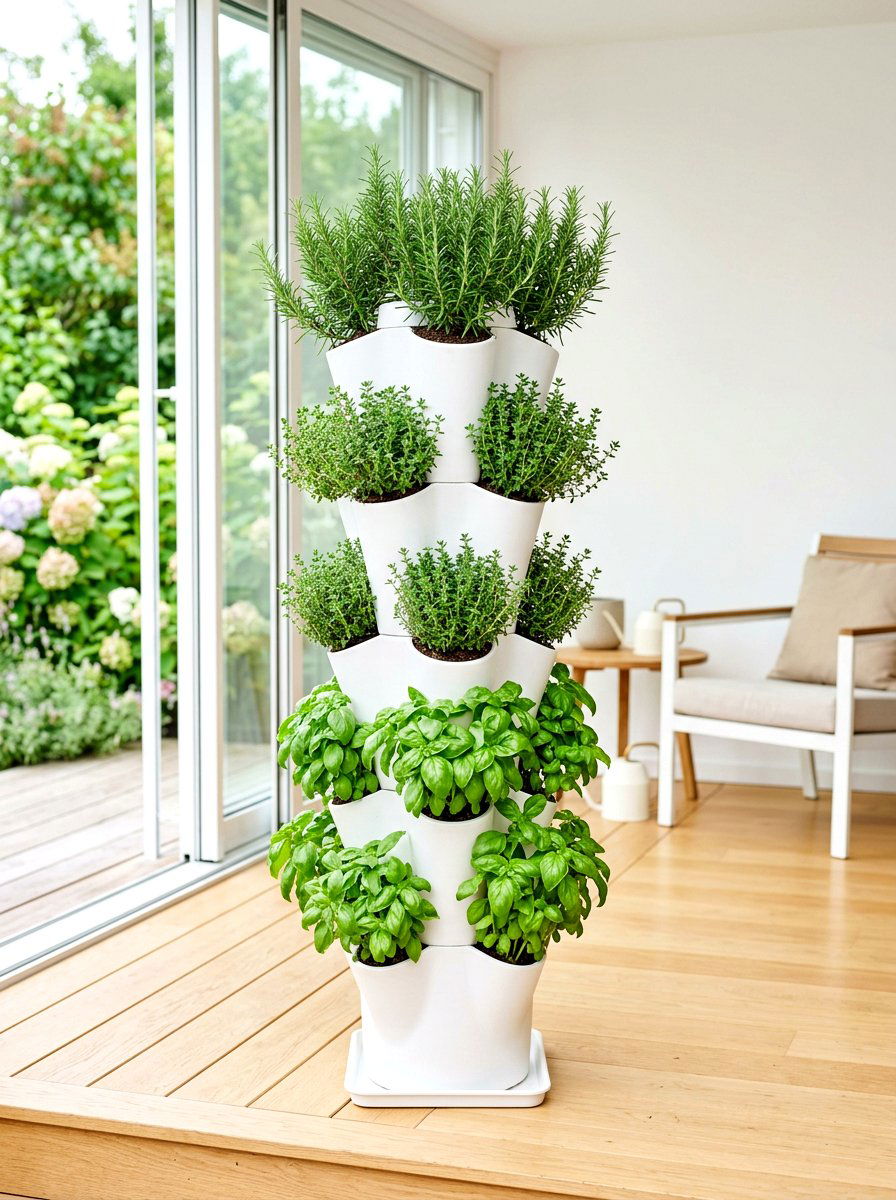
An herb tower planter is a specialized design that stacks multiple planting levels into a single, cohesive vertical unit. This setup is perfect for the cook who wants a wide variety of fresh seasonings just steps away from the kitchen. You can plant different herbs in each opening, such as rosemary, thyme, oregano, and basil, creating a fragrant and beautiful display. The central watering system often found in these towers ensures that moisture reaches every level efficiently. Because the plants are grouped closely together, they create a lush, bushy appearance that looks great in a patio corner. This compact design yields a surprisingly high amount of produce for its size.
8. Modern cedar planter
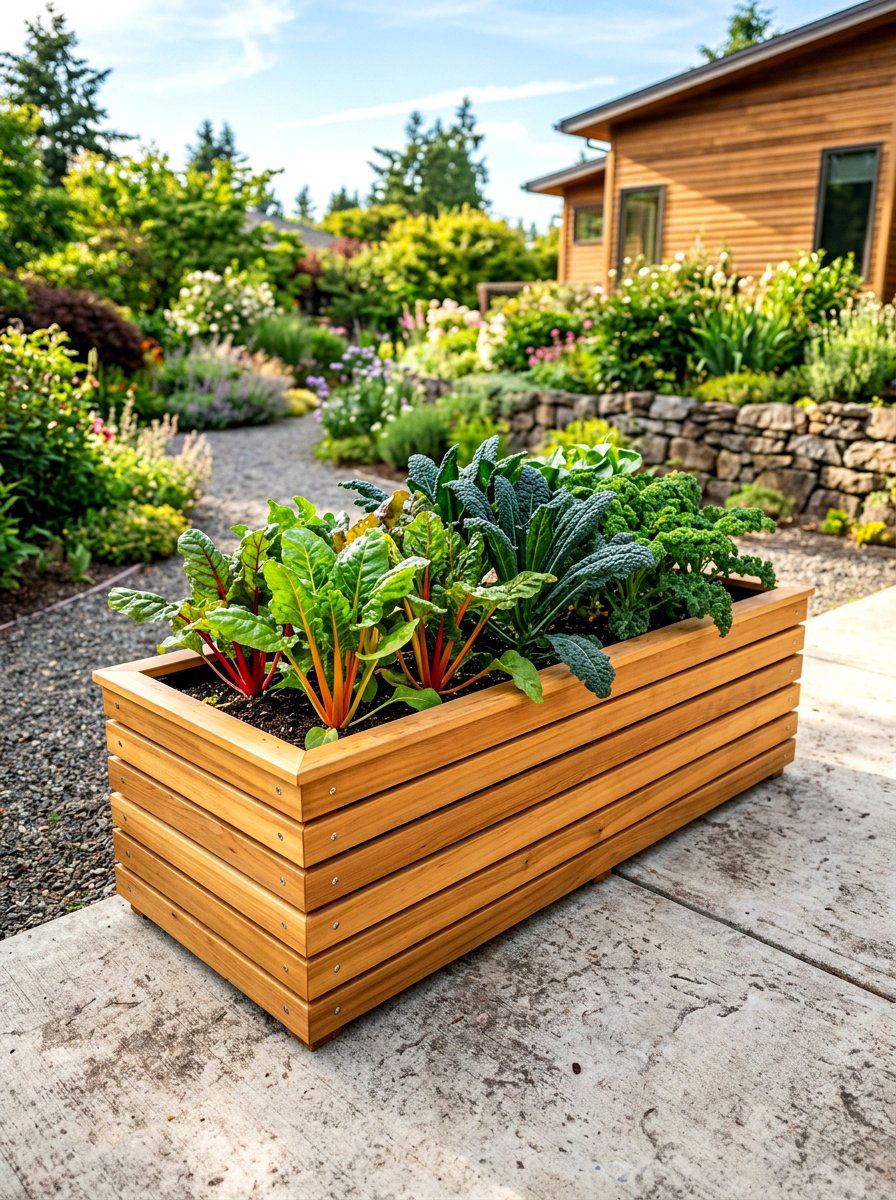
Incorporating a modern cedar planter into your patio design provides a sleek and contemporary aesthetic for your vegetable garden. The clean lines and warm wood tones of cedar complement modern architecture while offering natural resistance to moisture and decay. These large, rectangular planters are perfect for growing tall vegetables like kale or Swiss chard, which provide striking visual interest. You can line several of these planters along the edge of your patio to create a natural boundary or a stylish screen. The depth of these boxes allows for deep root growth, leading to more robust and productive plants. This design choice elevates the garden into a sophisticated outdoor furniture piece.
9. Small space garden
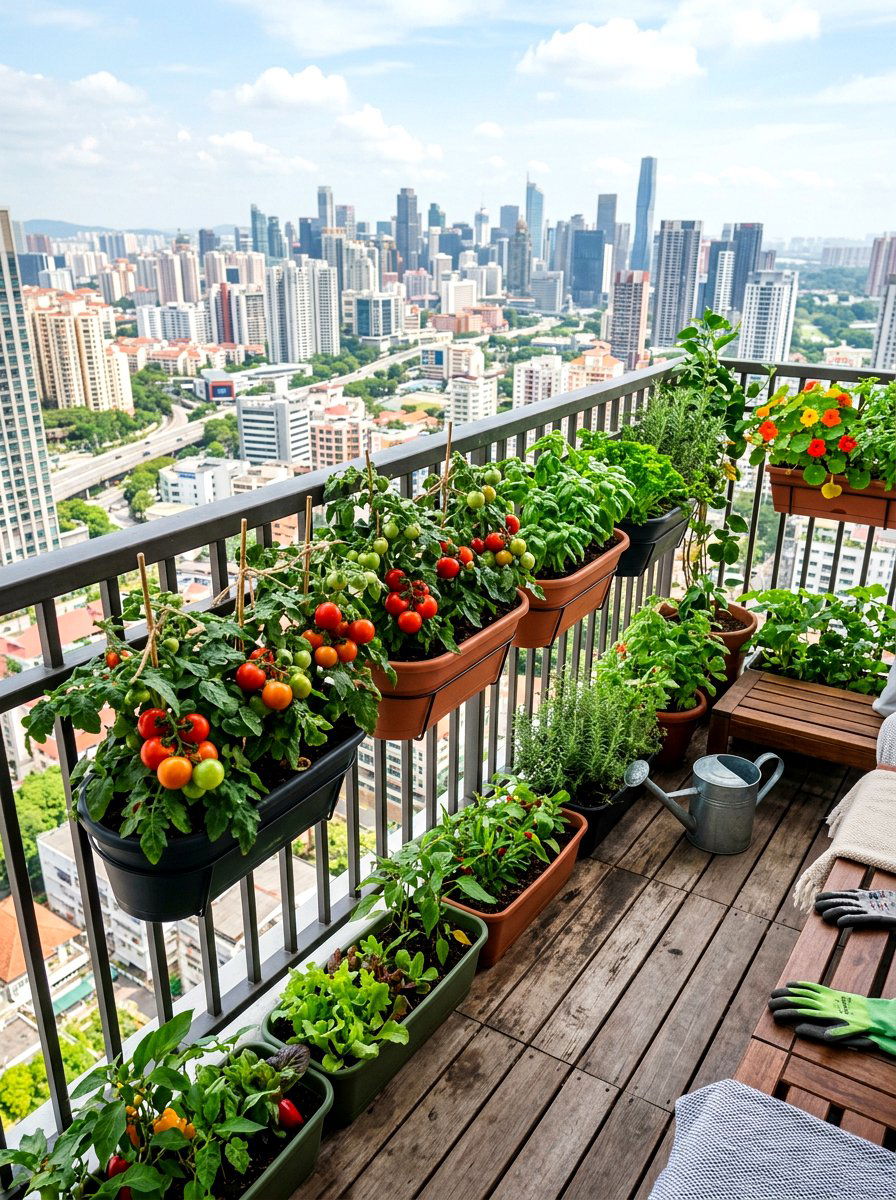
A small space garden design focuses on maximizing every inch of a compact patio through intelligent plant selection and layout. By choosing dwarf or "patio" varieties of popular vegetables, you can grow everything from tomatoes to zucchinis in surprisingly small footprints. This design often utilizes a mix of wall-mounted pots, railing planters, and slimline floor containers to keep the center of the patio open. Use bright, light-colored containers to make the space feel larger and more inviting. Intensive planting techniques, like square-foot gardening, help you get the most yield out of every square inch. This approach proves that you do not need a massive yard to enjoy a successful harvest.
10. Window box vegetable
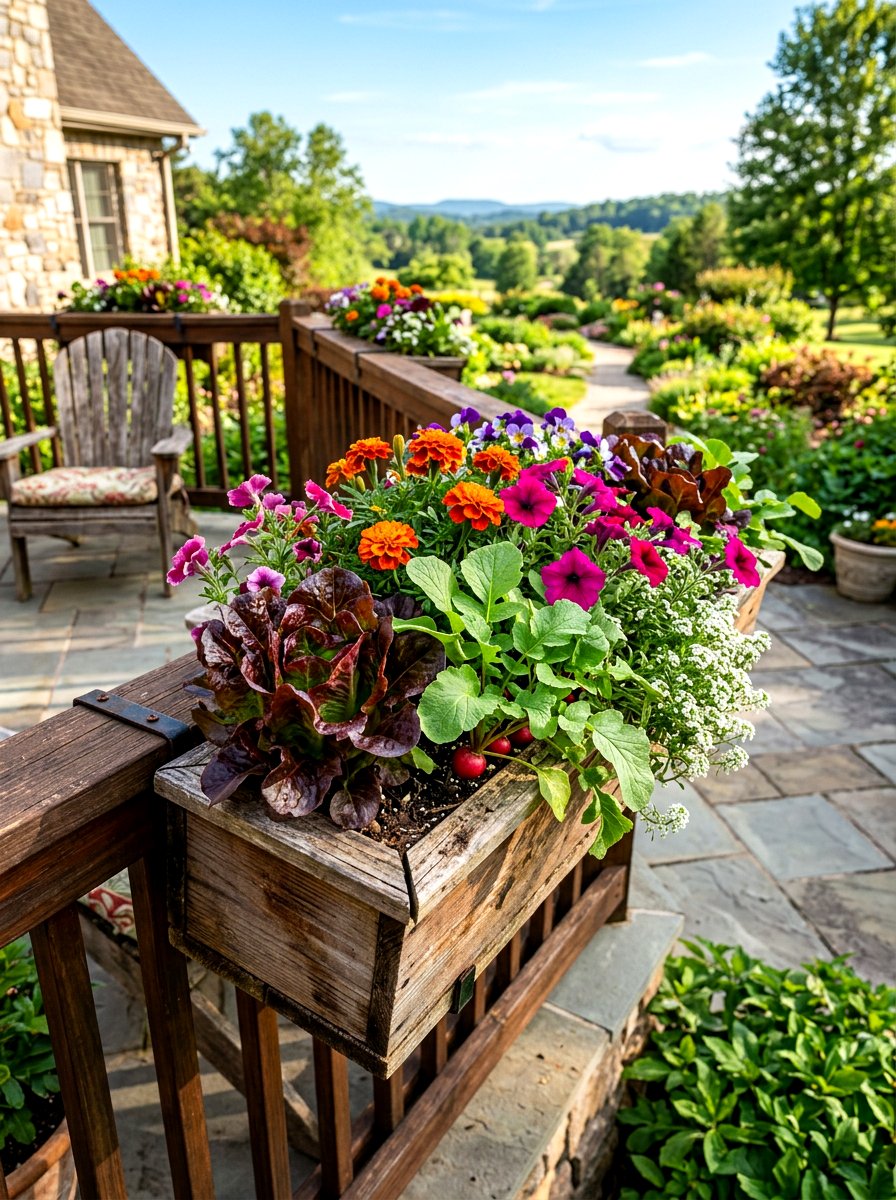
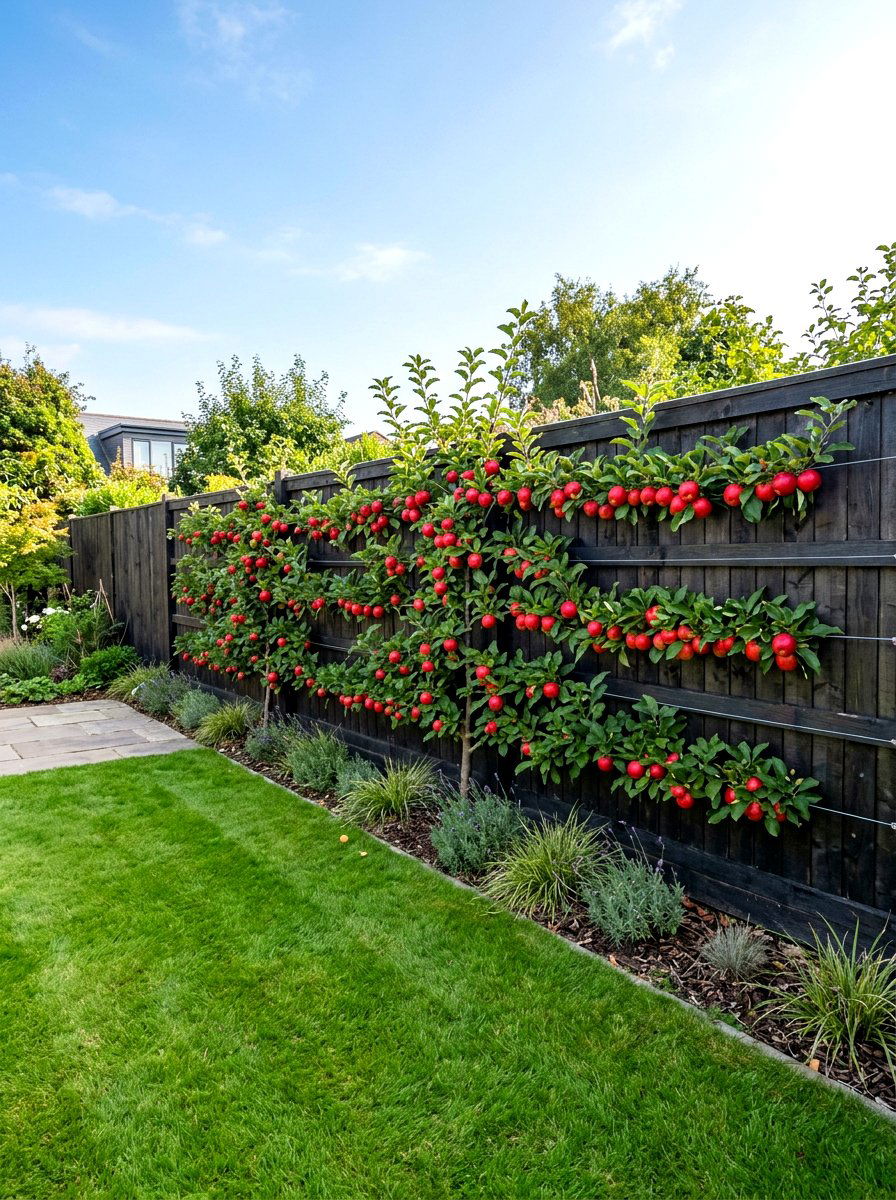
Utilizing a window box vegetable garden is a classic way to add charm and productivity to your patio railings or windowsills. These elongated planters are perfect for growing shallow-rooted crops such as radishes, green onions, and various salad greens. By mounting them on the outside of your patio railing, you save all your floor space for other activities. The proximity to the house makes it incredibly convenient to snip fresh greens for a quick lunch or dinner. You can mix different colors of lettuce or add edible flowers like nasturtiums to create a stunning visual display. This design is easy to maintain and adds immediate curb appeal to your home.
11. Edible privacy screen
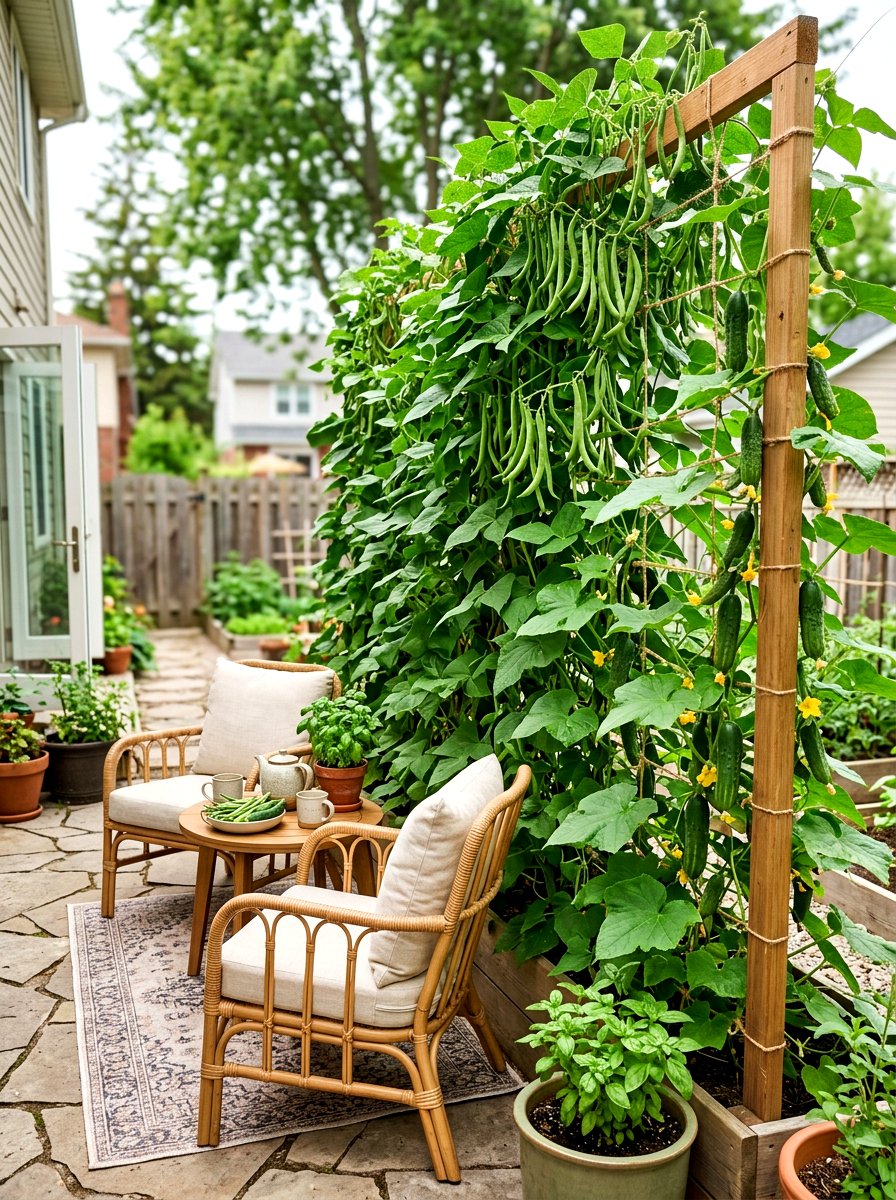
An edible privacy screen serves a dual purpose by providing seclusion from neighbors while producing a delicious harvest. This design typically utilizes a tall trellis or a series of vertical wires to support climbing vegetables like pole beans, cucumbers, or snap peas. As the vines grow and intertwine, they create a thick, green wall that blocks the view and provides a sense of intimacy. The vertical nature of this garden makes it ideal for narrow patios where floor space is limited. In the summer, the dense foliage also provides cooling shade for your seating area. This living wall is a beautiful and functional alternative to traditional fencing or plastic screens.
12. Self watering planter
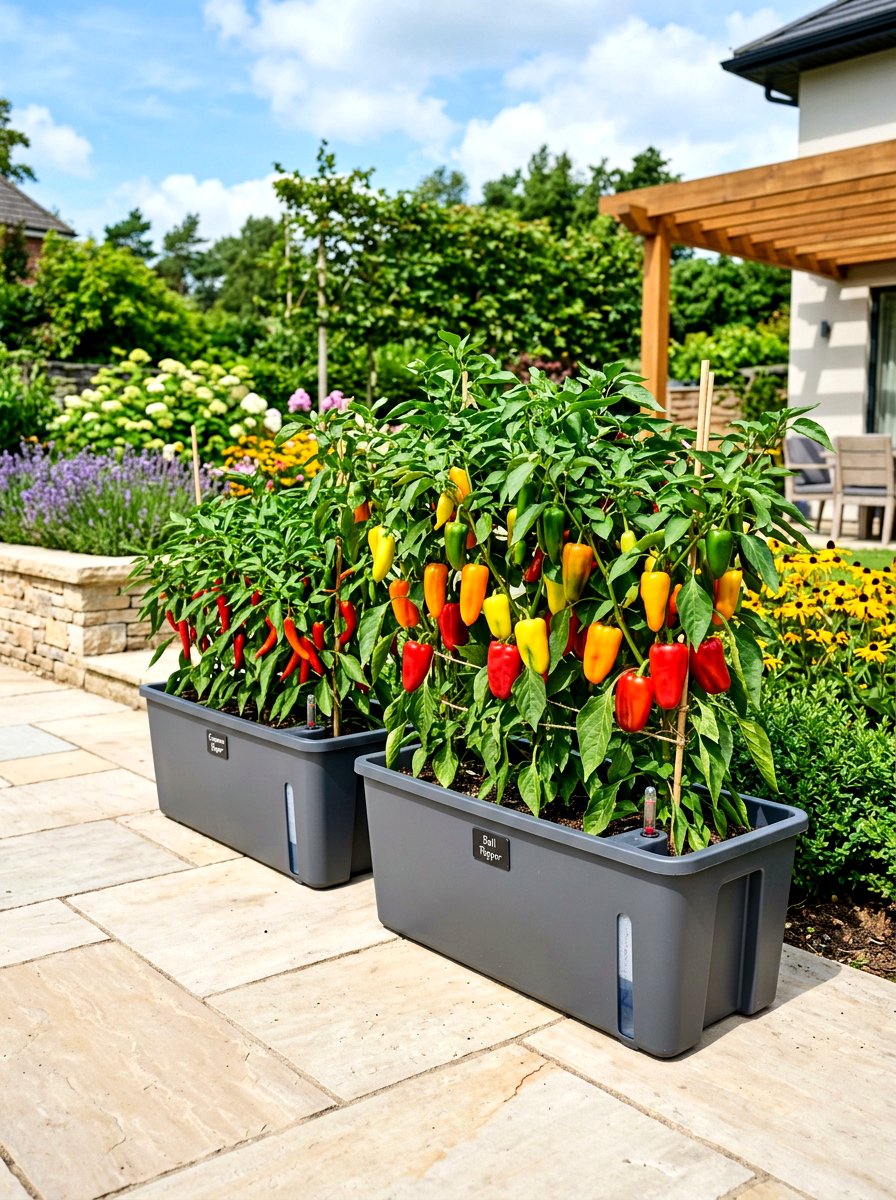
A self watering planter is a game-changer for patio gardeners who have busy schedules or live in hot climates. These innovative containers feature a built-in reservoir at the base that provides a consistent supply of moisture to the plants through capillary action. This design prevents the common cycle of overwatering and drying out, leading to much healthier and more productive vegetables. You can grow moisture-loving crops like tomatoes and peppers with great success using this system. The exterior of these planters often features a modern, clean design that looks fantastic in any outdoor setting. This low-maintenance solution ensures your patio garden remains lush and green even when you are away.
13. Ladder garden shelf
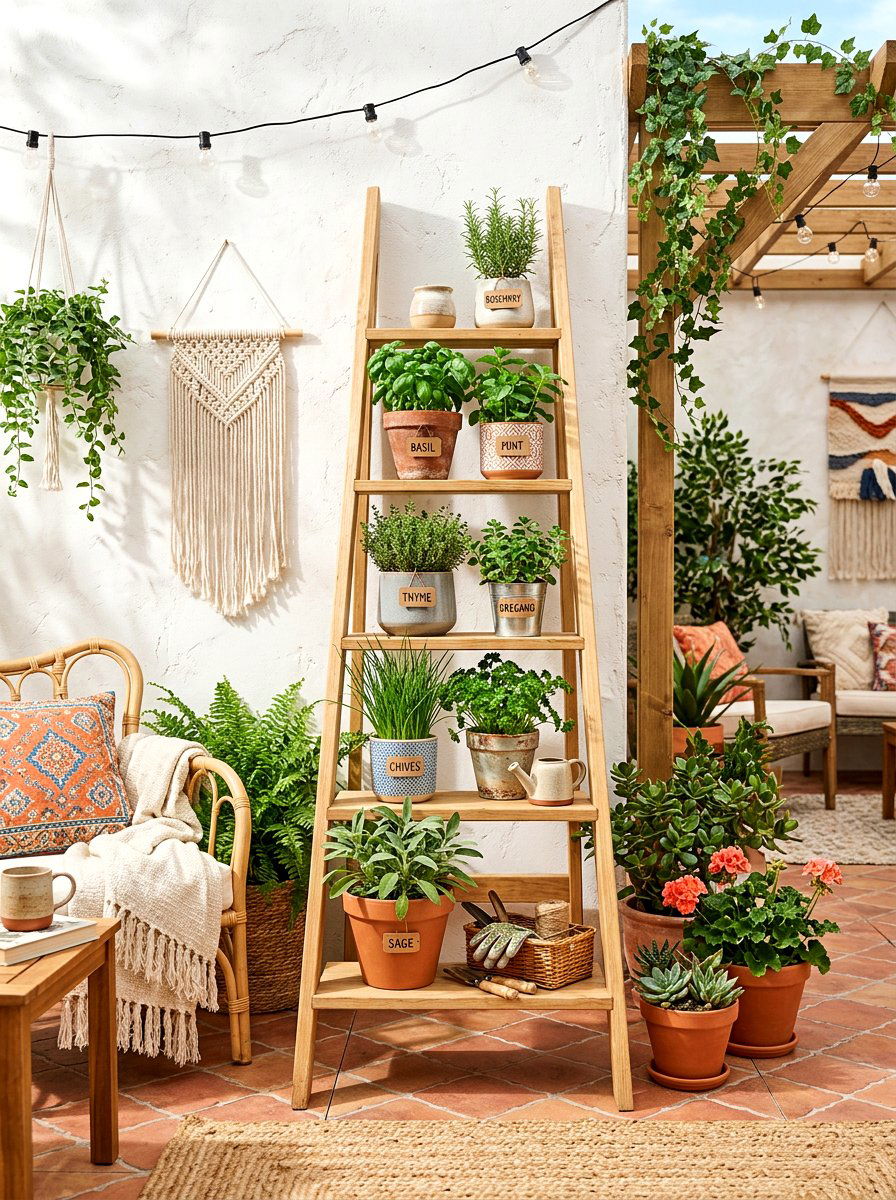
The ladder garden shelf is a popular and stylish choice for adding verticality and charm to a patio vegetable garden. By repurposing an old wooden ladder or purchasing a dedicated garden unit, you can create a tiered display for your favorite edible plants. Each rung or shelf provides a stable platform for various pots and containers, allowing you to organize your garden by plant type or sun requirements. This design is perfect for creating a concentrated "herb station" or a diverse "salad bar" on your patio. The open structure of the ladder ensures that all plants receive adequate light and air circulation. It is a moveable and highly decorative gardening solution.
14. Trellis vegetable garden
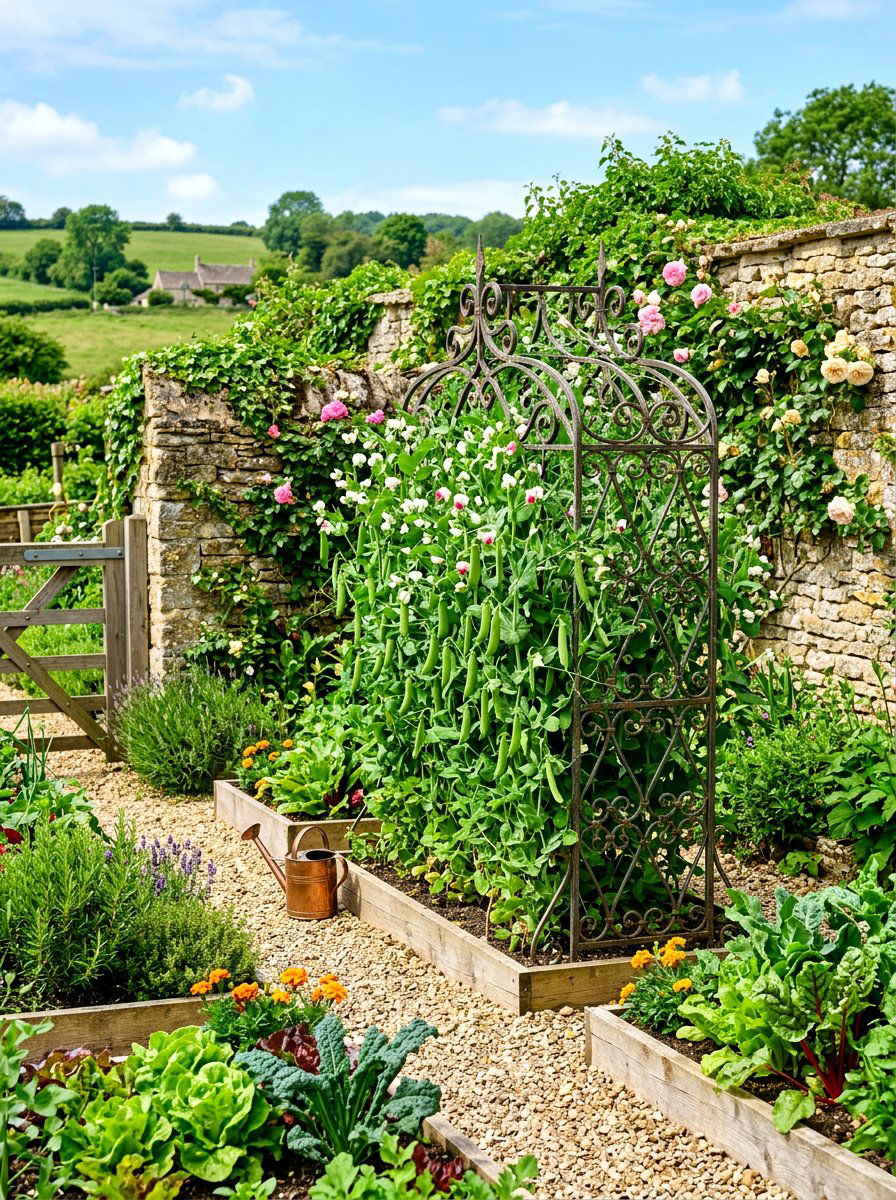
A trellis vegetable garden focuses on the beauty and efficiency of upward growth for vining crops. By installing a decorative metal or wooden trellis against a patio wall, you provide a sturdy support system for plants like tomatoes, peas, and small melons. This design keeps the fruit off the ground, reducing the risk of rot and pests while making the harvest much cleaner. The vertical growth creates a stunning visual backdrop of leaves and ripening vegetables that adds life to any patio. You can pair the trellis with a large bottom planter to create a self-contained gardening unit. This method is highly effective for maximizing yield in very narrow or restricted areas.
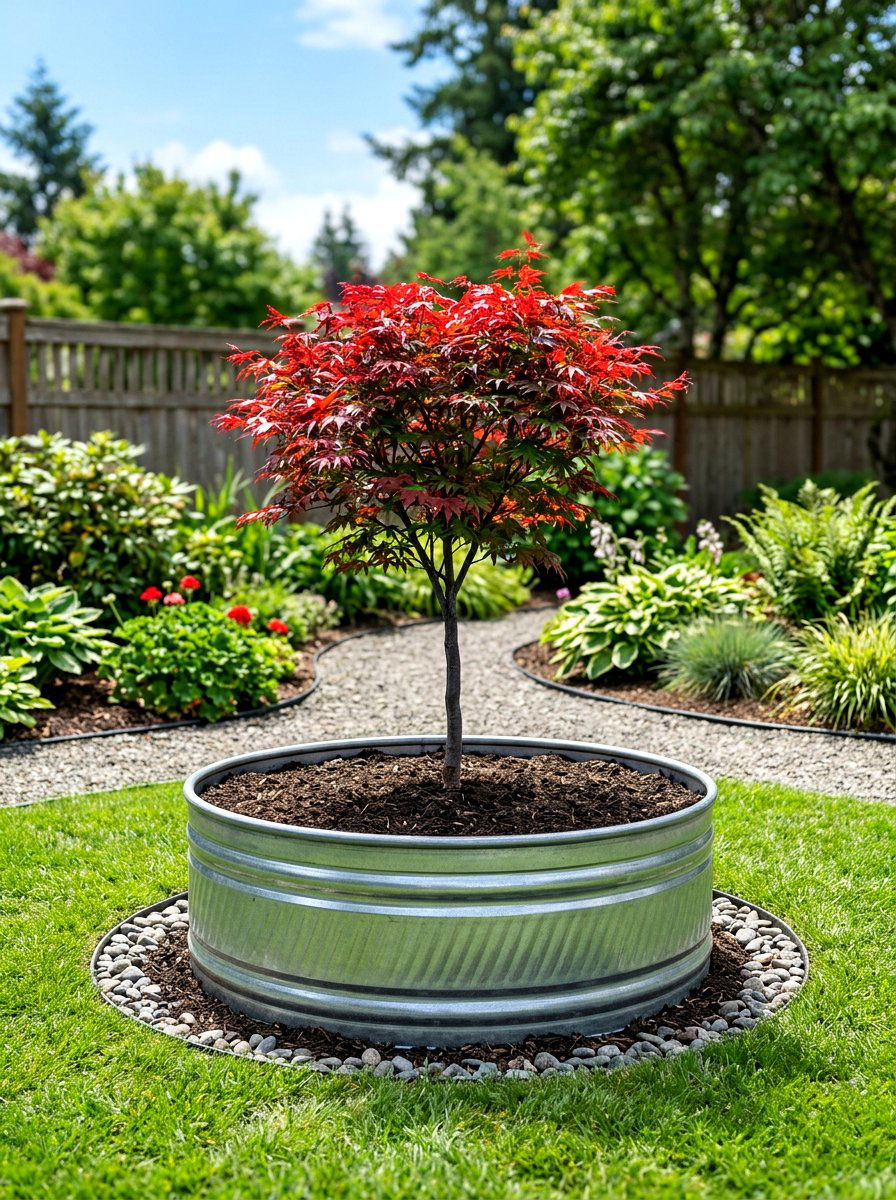
15. Metal trough garden
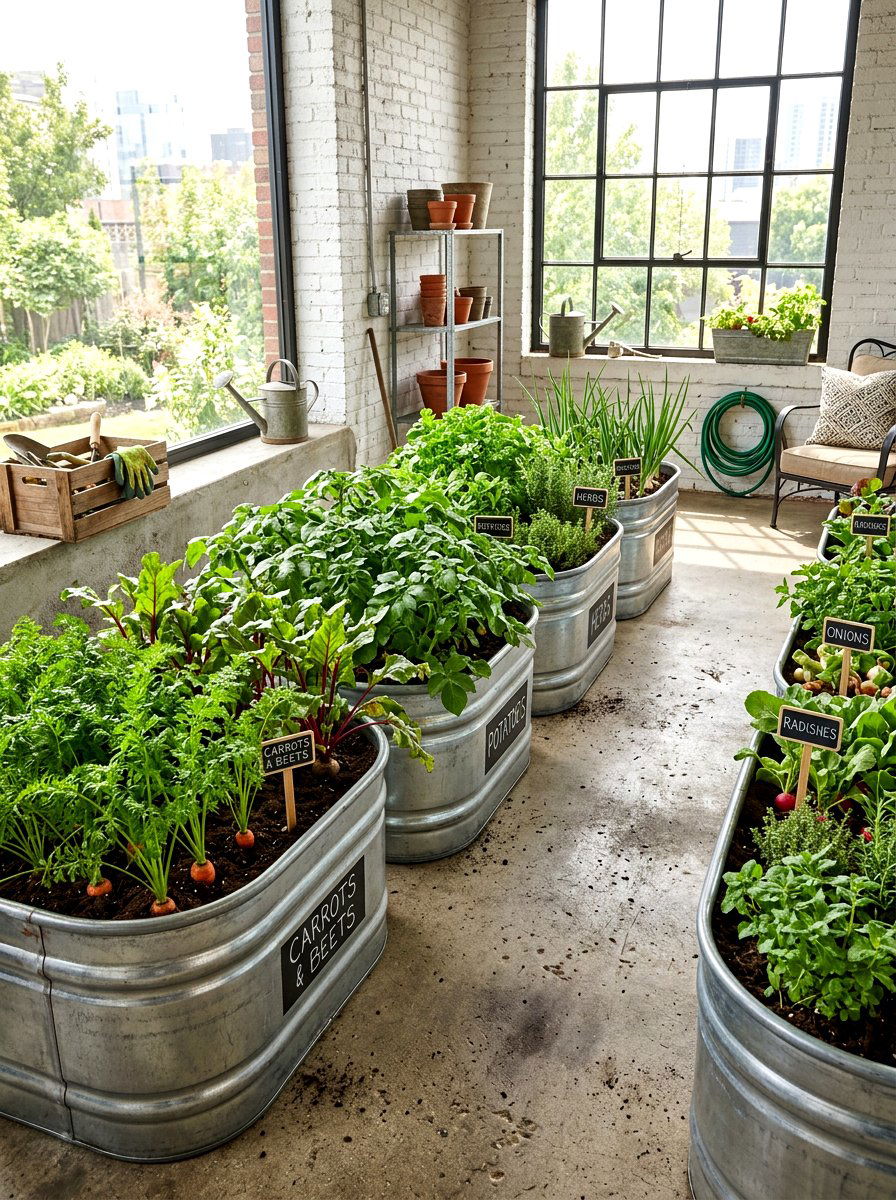
Using a metal trough garden adds an industrial yet rustic flair to your patio while providing a deep and durable growing environment. These galvanized steel containers, often used for livestock, are perfect for growing large quantities of root vegetables or heavy-fruiting plants. The reflective surface of the metal can help keep the soil warm in the spring, giving your garden an early start. Because they are typically large and deep, they hold a significant amount of soil, which helps maintain moisture levels during hot summer days. You can arrange several troughs in a row to create a bold and productive garden border. This design is built to last for many seasons.
16. Hydroponic patio system
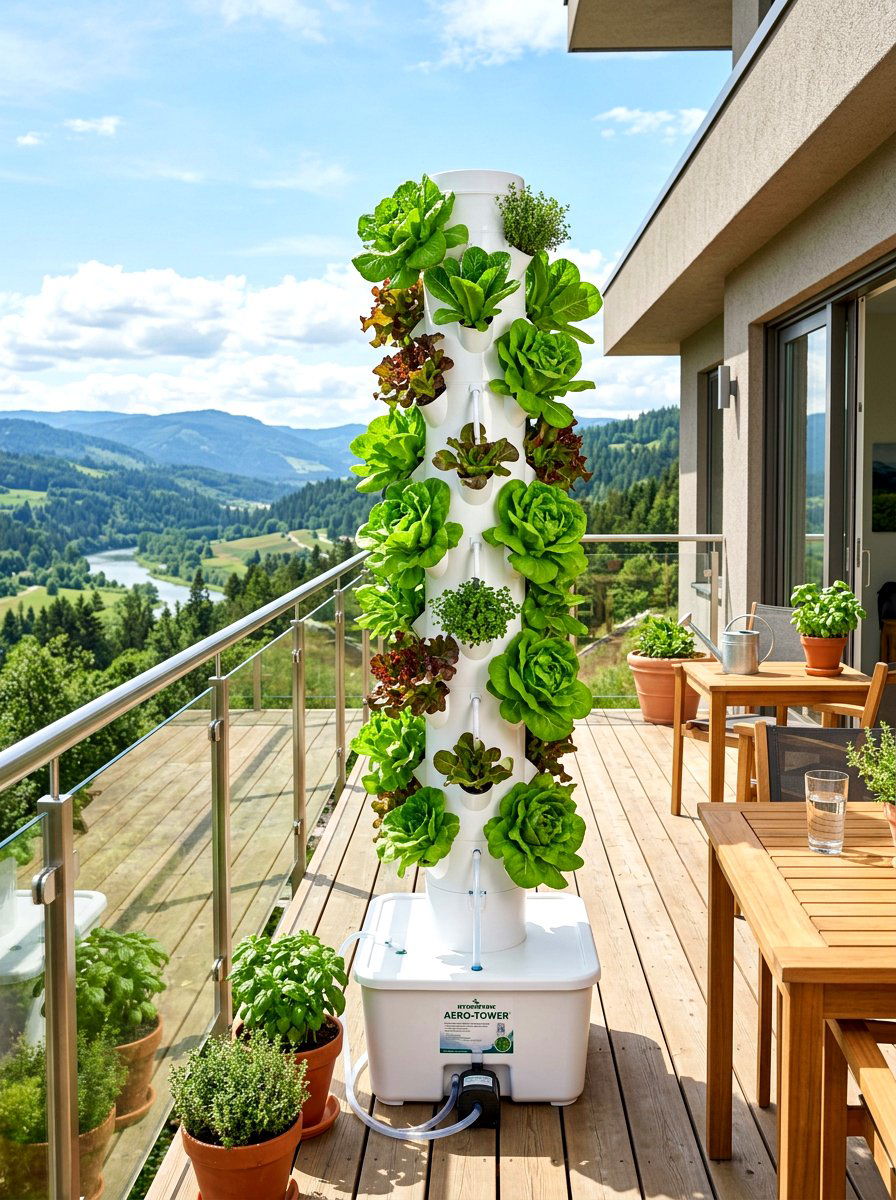
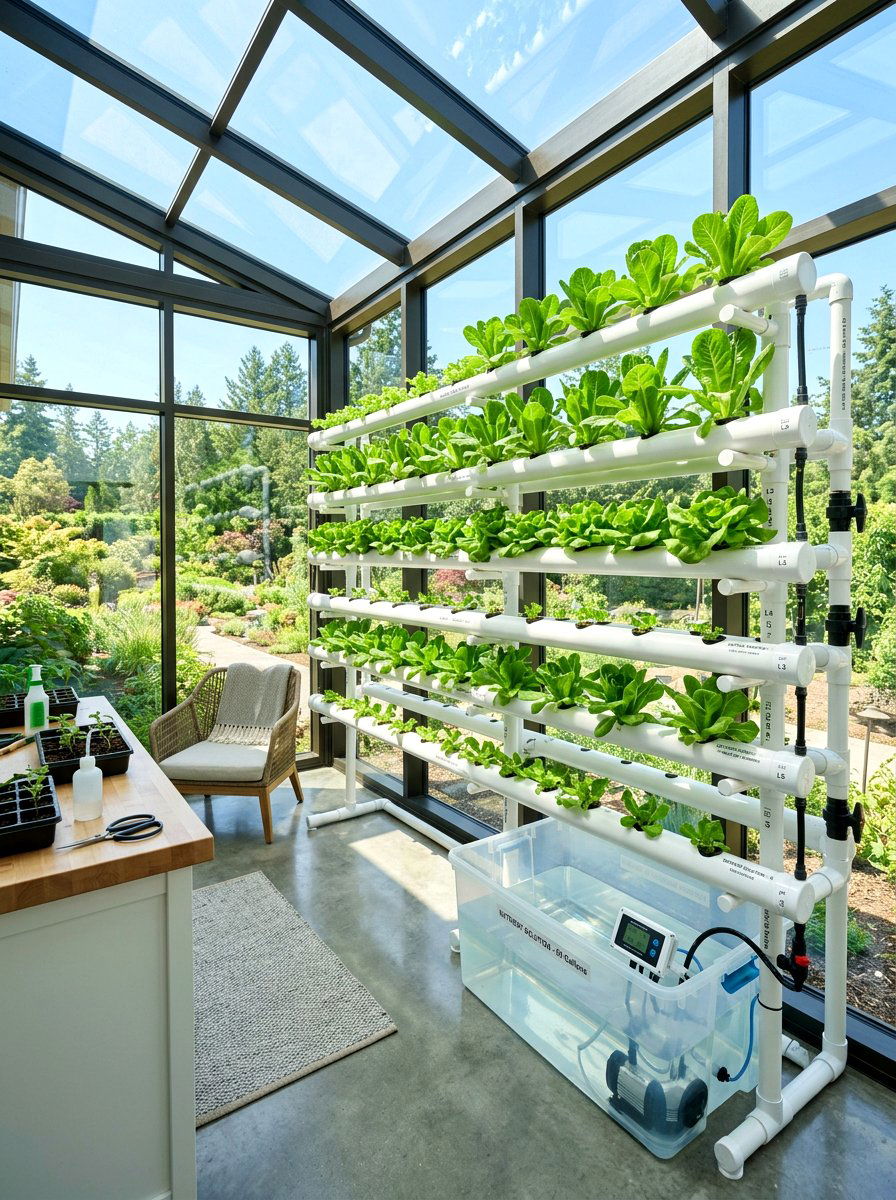
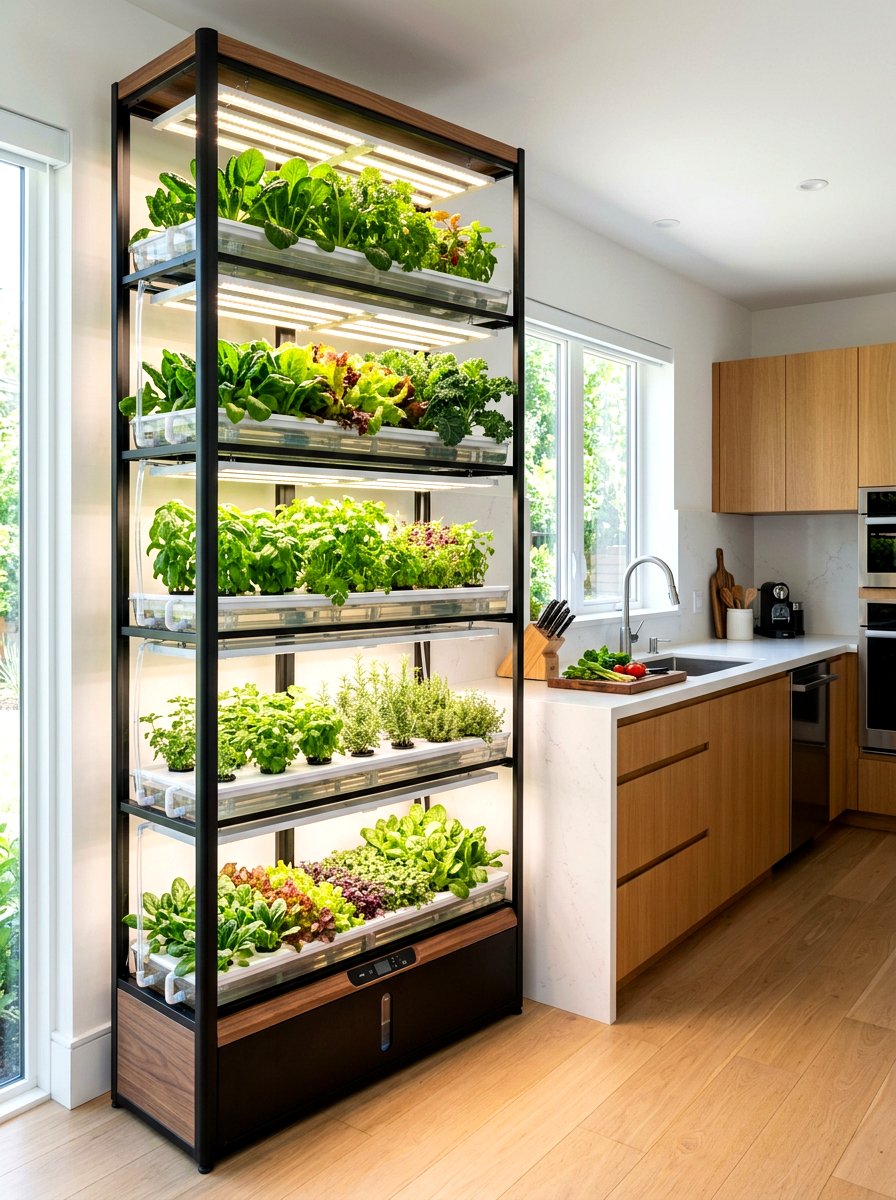
A hydroponic patio system represents the cutting edge of urban gardening, allowing you to grow vegetables without any soil at all. These systems use nutrient-rich water circulated through pipes or towers to feed the plants directly at the roots. This design is incredibly efficient, often resulting in faster growth and higher yields than traditional soil-based methods. It is a perfect choice for tech-savvy gardeners or those with very limited space, as hydroponic towers can grow dozens of plants in just a few square feet. The sleek, modern look of the equipment adds a sophisticated, futuristic vibe to your patio. It is a clean and highly productive way to garden outdoors.
17. Greenhouse patio cabinet
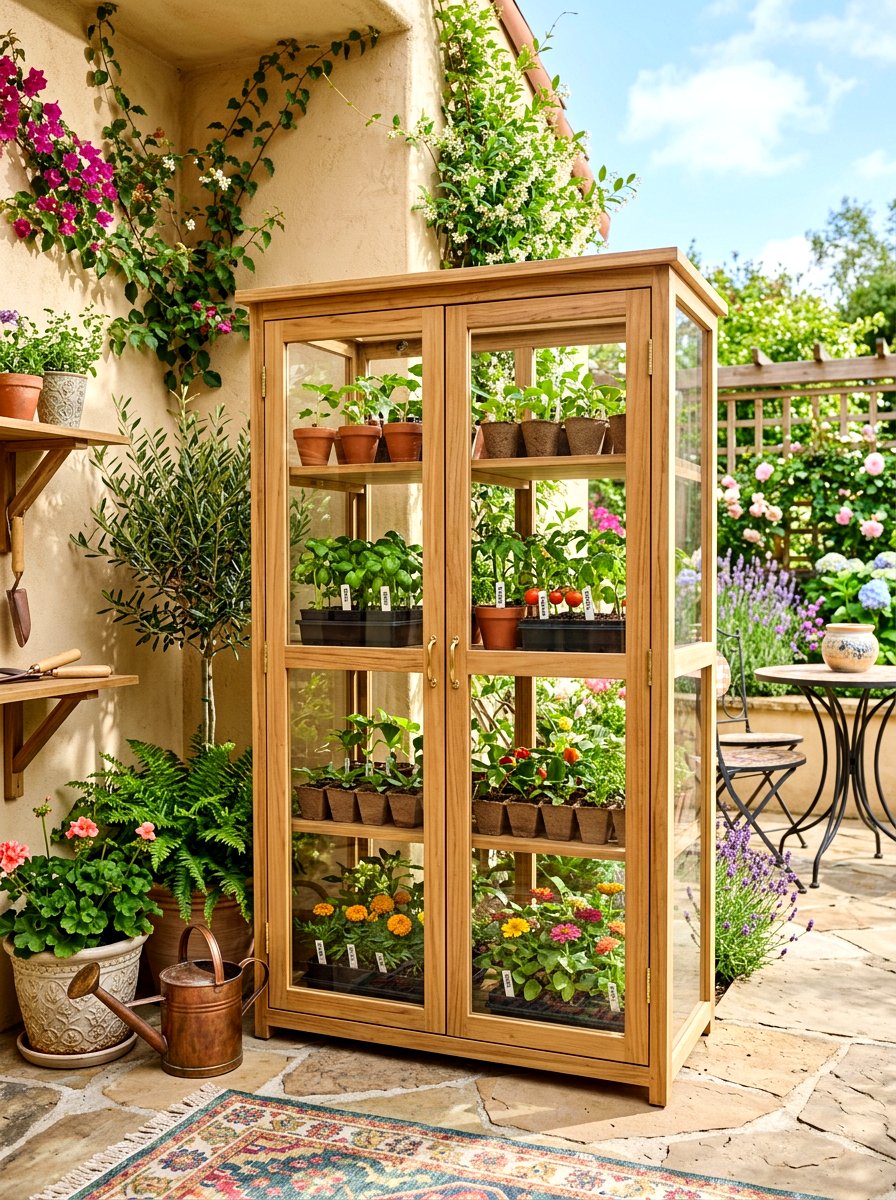
A greenhouse patio cabinet is an excellent design for gardeners who want to extend their growing season into the cooler months. These compact, glass or polycarbonate-walled structures sit directly on your patio and provide a protected environment for delicate seedlings and leafy greens. During the spring, you can use the shelves to start your vegetables early, protected from frost and wind. In the summer, the doors can be opened to provide ventilation while still offering some protection from pests. The vertical design takes up very little floor space but offers multiple levels for a diverse range of plants. It is a functional and attractive addition for the dedicated patio grower.
18. Balcony vegetable garden
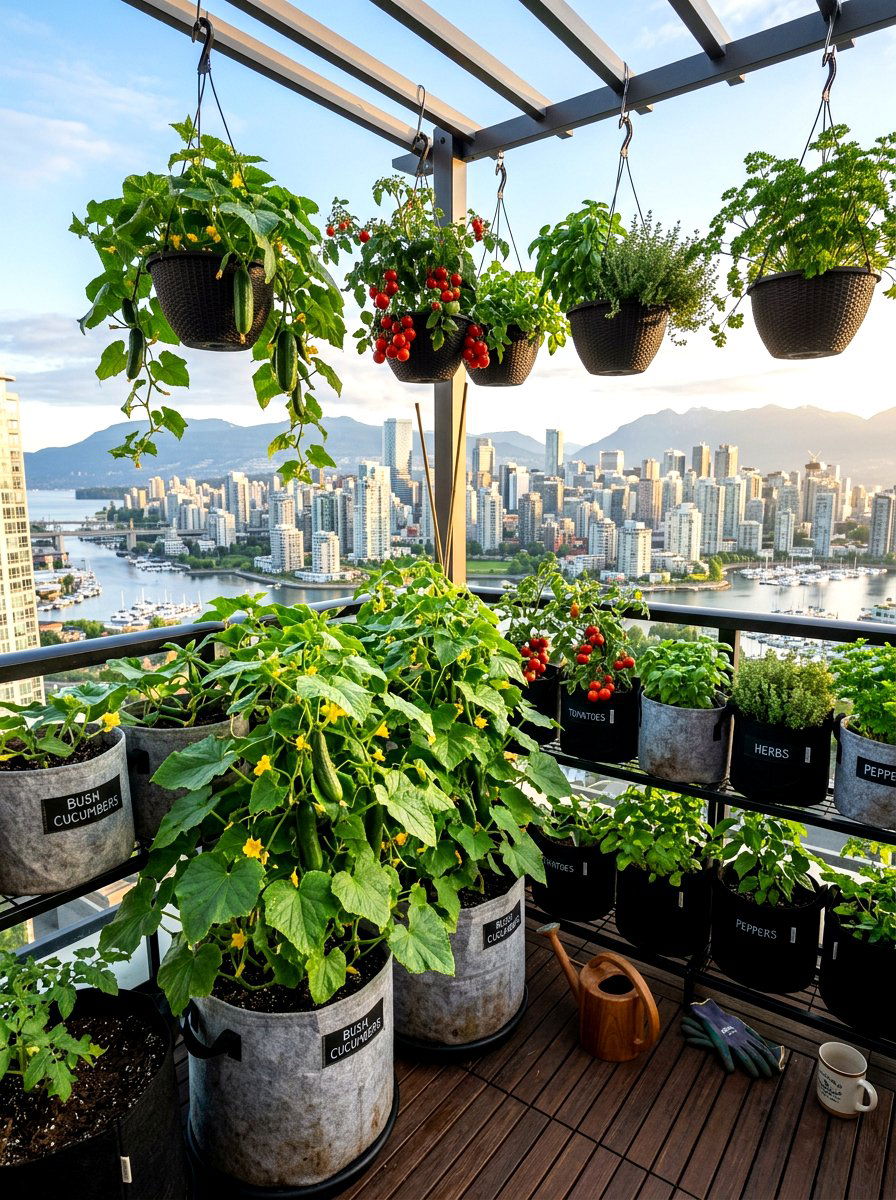
A balcony vegetable garden design focuses on light-weight solutions and space efficiency for apartment dwellers. By using resin pots and fabric grow bags, you can significantly reduce the weight on your balcony while still enjoying a productive garden. This design often incorporates railing-mounted planters and slim vertical stands to keep the floor clear for a small chair or table. Choose high-yielding, compact varieties like "Micro Tom" tomatoes or bush-style cucumbers that thrive in containers. Utilizing the vertical space with hanging pots or a small wall-mounted trellis is key to success. This setup proves that even a few square feet of outdoor space can be a thriving source of fresh food.
19. Compact veggie patch
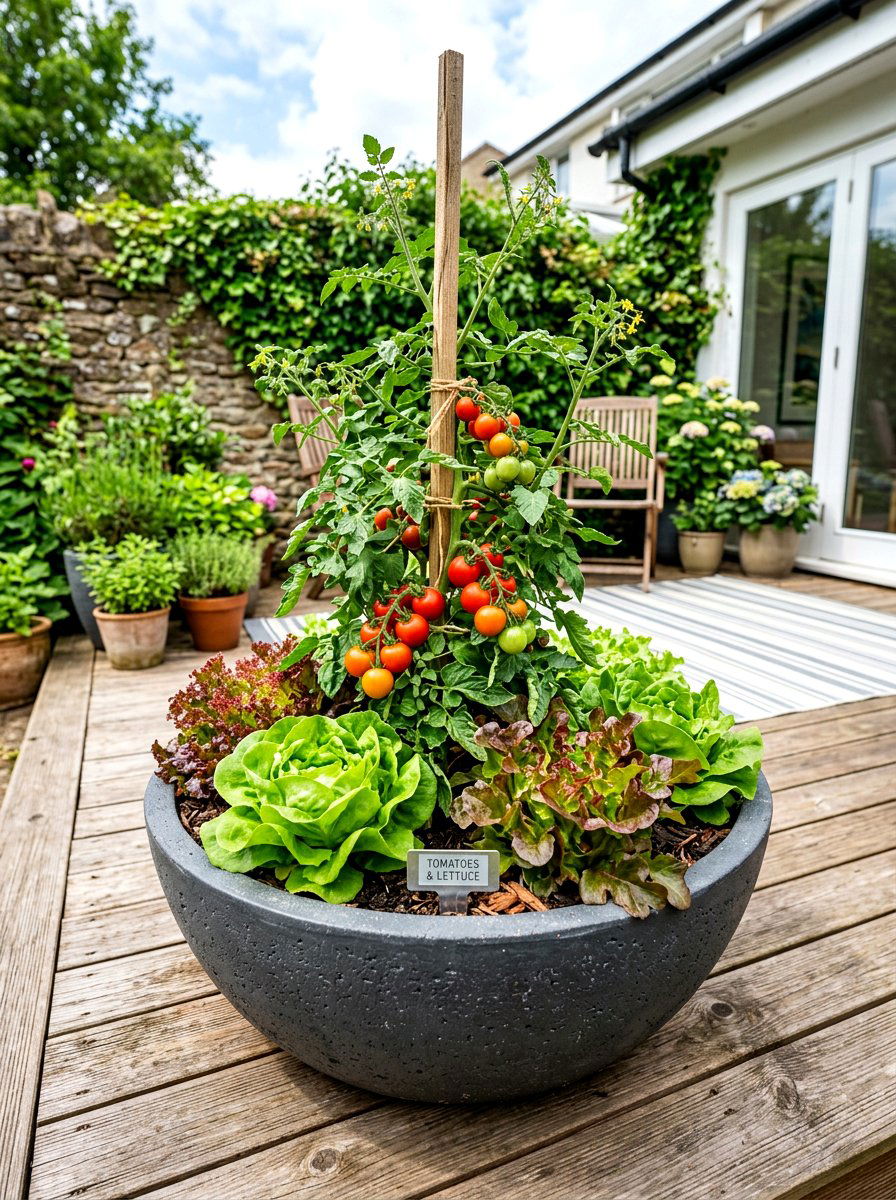
A compact veggie patch design utilizes a single, large container or a small raised bed to grow a diverse variety of vegetables in one spot. By using intensive planting methods like intercropping, you can grow lettuce around the base of a tomato plant or radishes between rows of carrots. This "all-in-one" approach is perfect for beginners who want to experience growing multiple crops without managing dozens of individual pots. The concentrated nature of this garden makes it very easy to water and fertilize efficiently. You can place this patch in the sunniest corner of your patio to ensure maximum productivity. It is a simple yet highly effective way to start gardening.
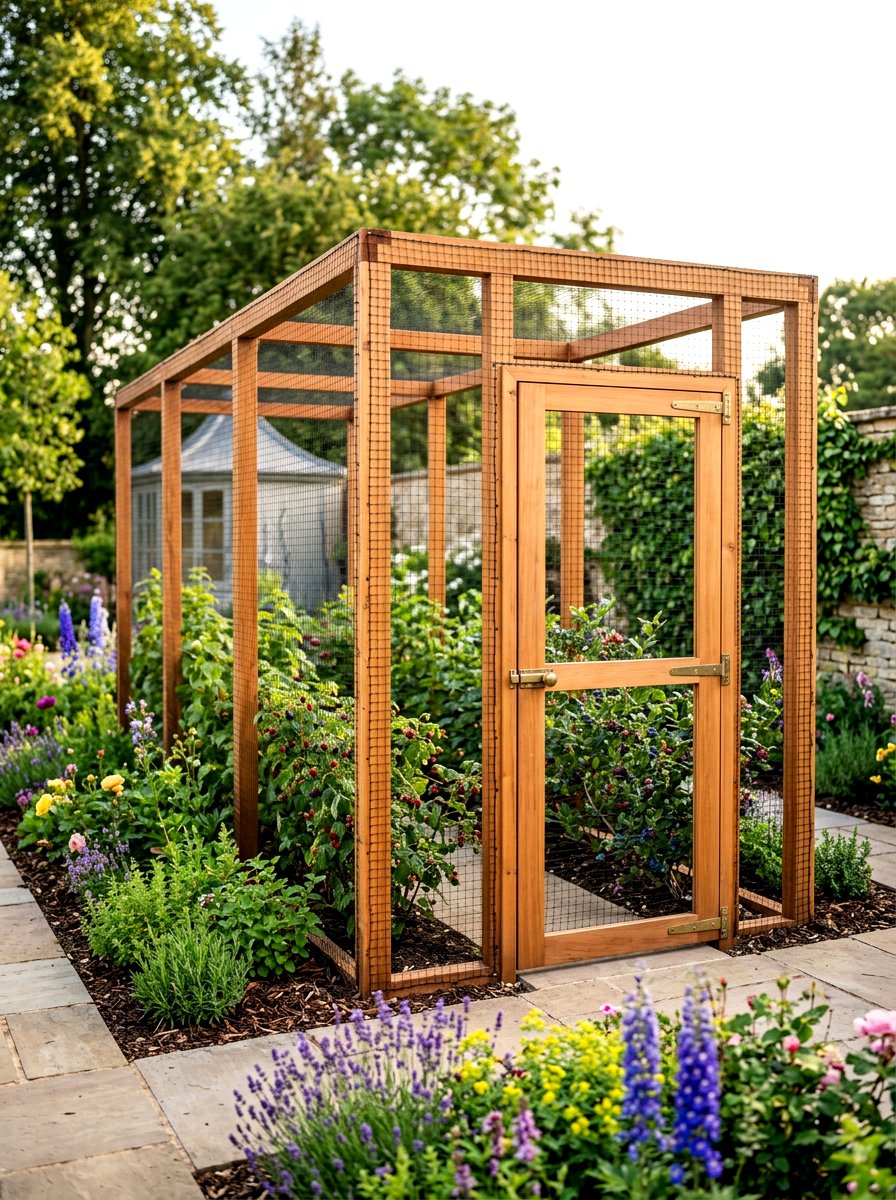
20. Corner garden unit
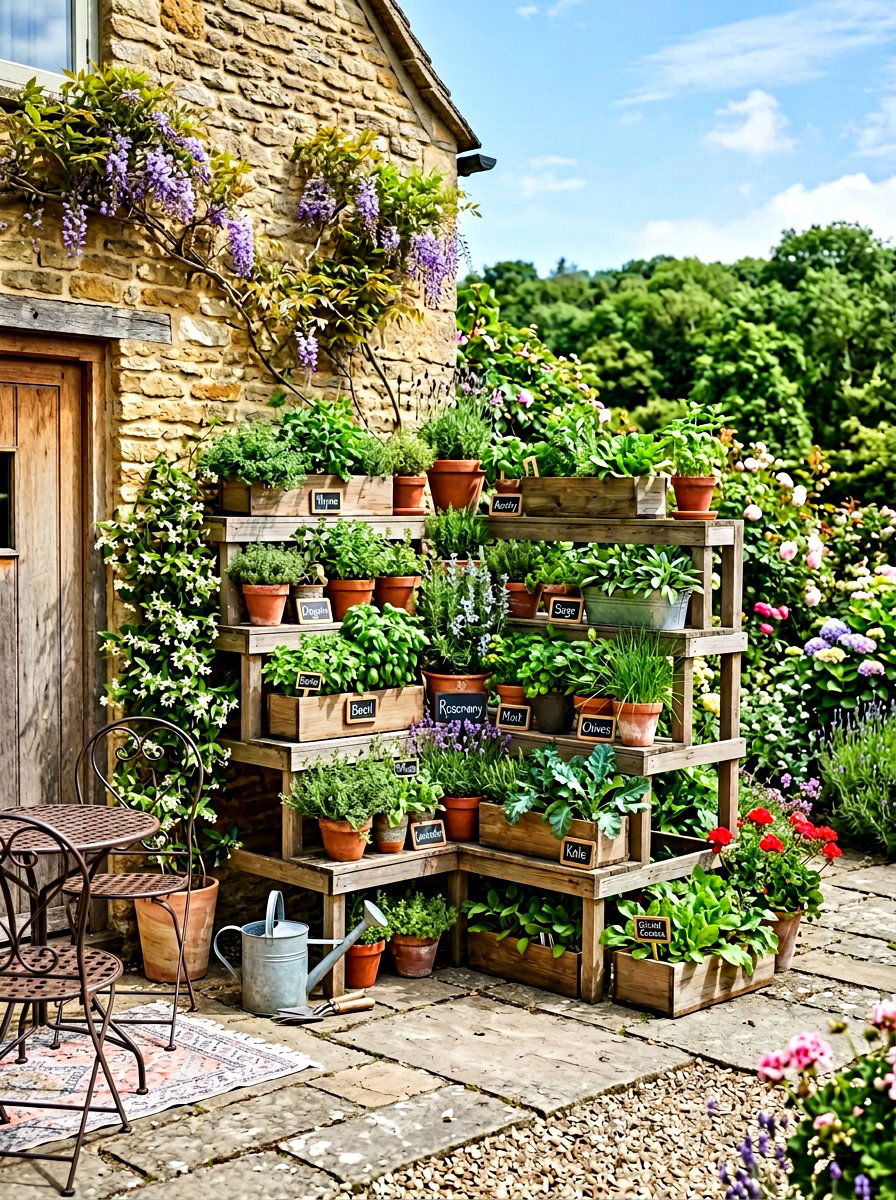
A corner garden unit is specifically designed to fit into the often-underutilized 90-degree angles of a patio. These triangular or L-shaped planters maximize your growing area by reclaiming space that is usually left empty. You can find beautiful tiered corner stands made of wood or metal that allow you to grow a variety of herbs and small vegetables at different heights. This layout creates a lush, green focal point that softens the hard edges of your outdoor space. By placing taller plants in the back and shorter ones in the front, you create a beautiful layered effect. This design is a smart way to add more greenery without crowding your patio.
21. Potted tomato garden
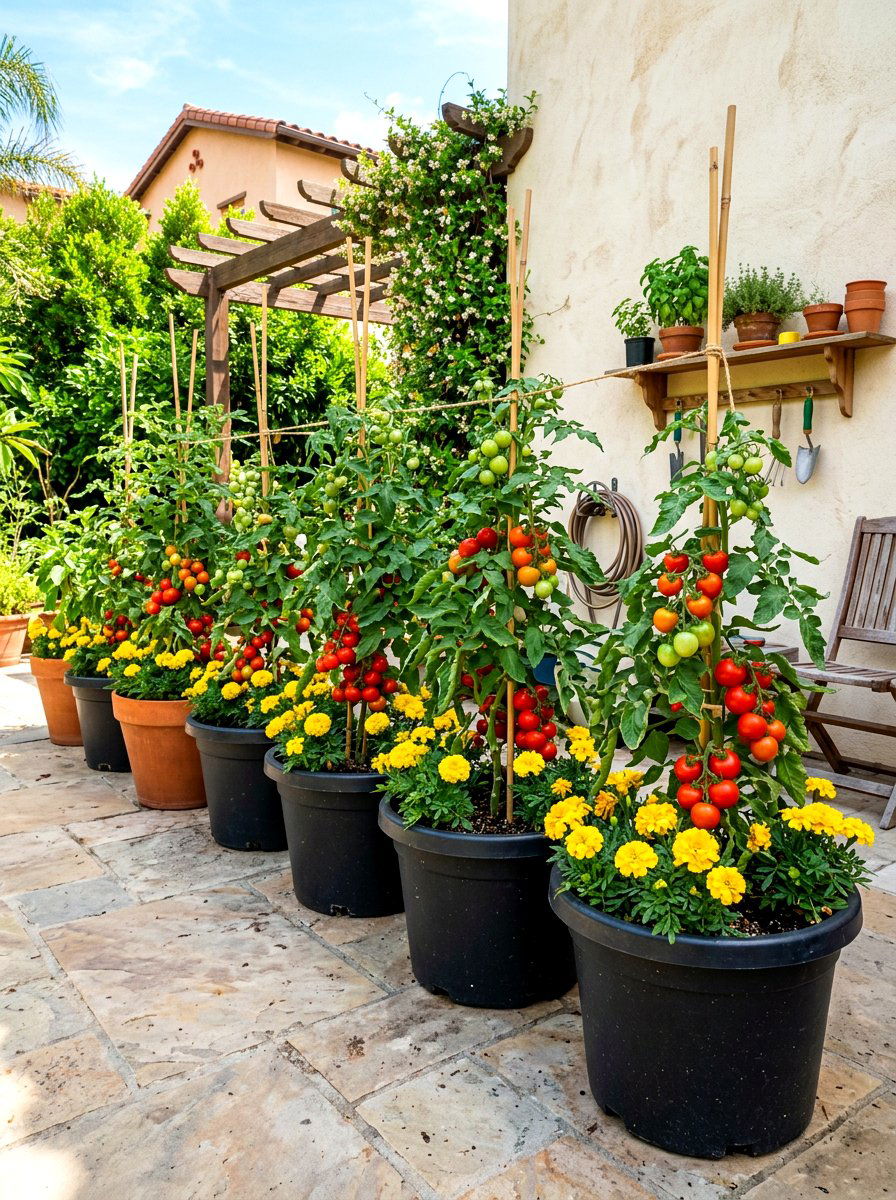
A potted tomato garden is a classic patio staple that focuses on the most popular home-grown vegetable. By choosing determinate or "bush" varieties, you can grow heavy harvests in standard five-gallon containers. This design often includes a decorative cage or a sturdy stake to support the weight of the ripening fruit. You can arrange a row of these pots along a sunny wall to create a vibrant and productive display. Under-planting the tomatoes with basil or marigolds not only saves space but also provides natural pest protection and a beautiful color contrast. This focused approach ensures you have a steady supply of fresh, sun-ripened tomatoes all summer long.
22. Salad greens planter
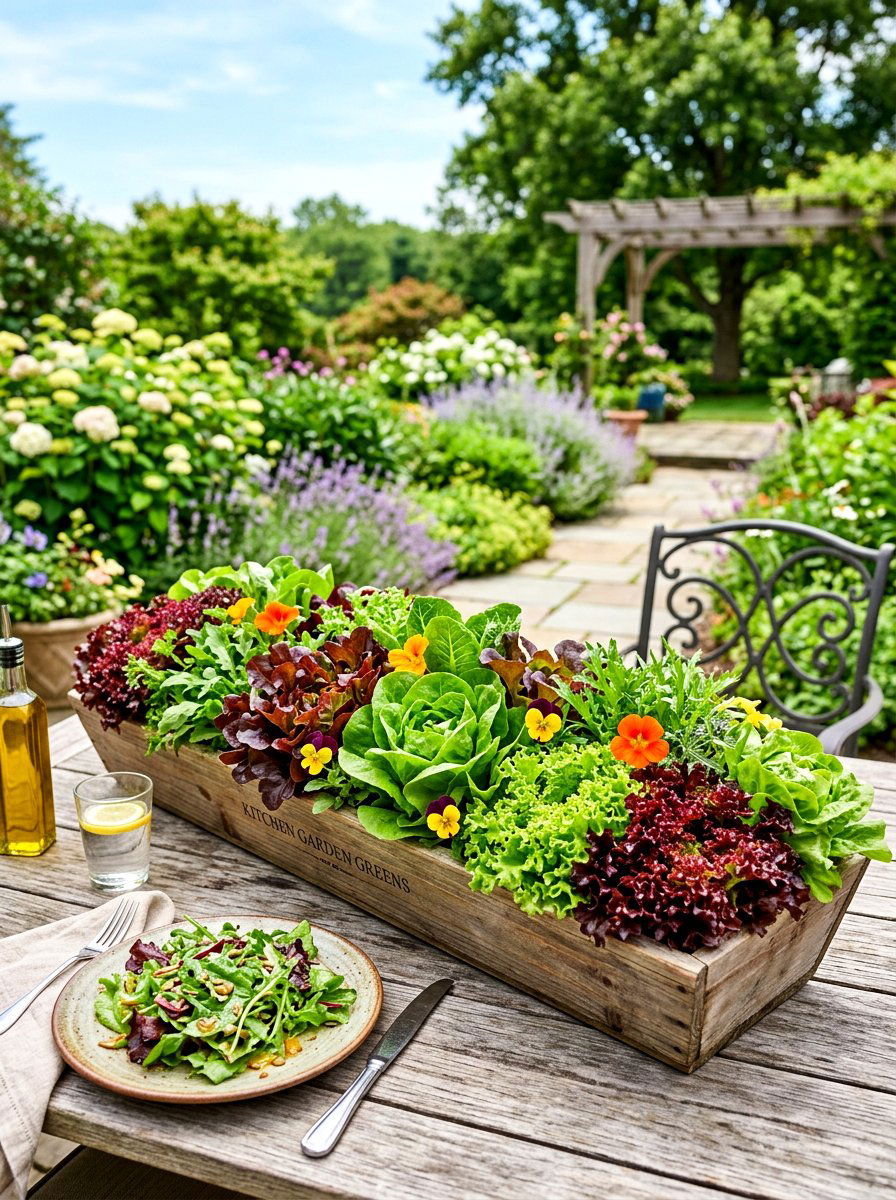
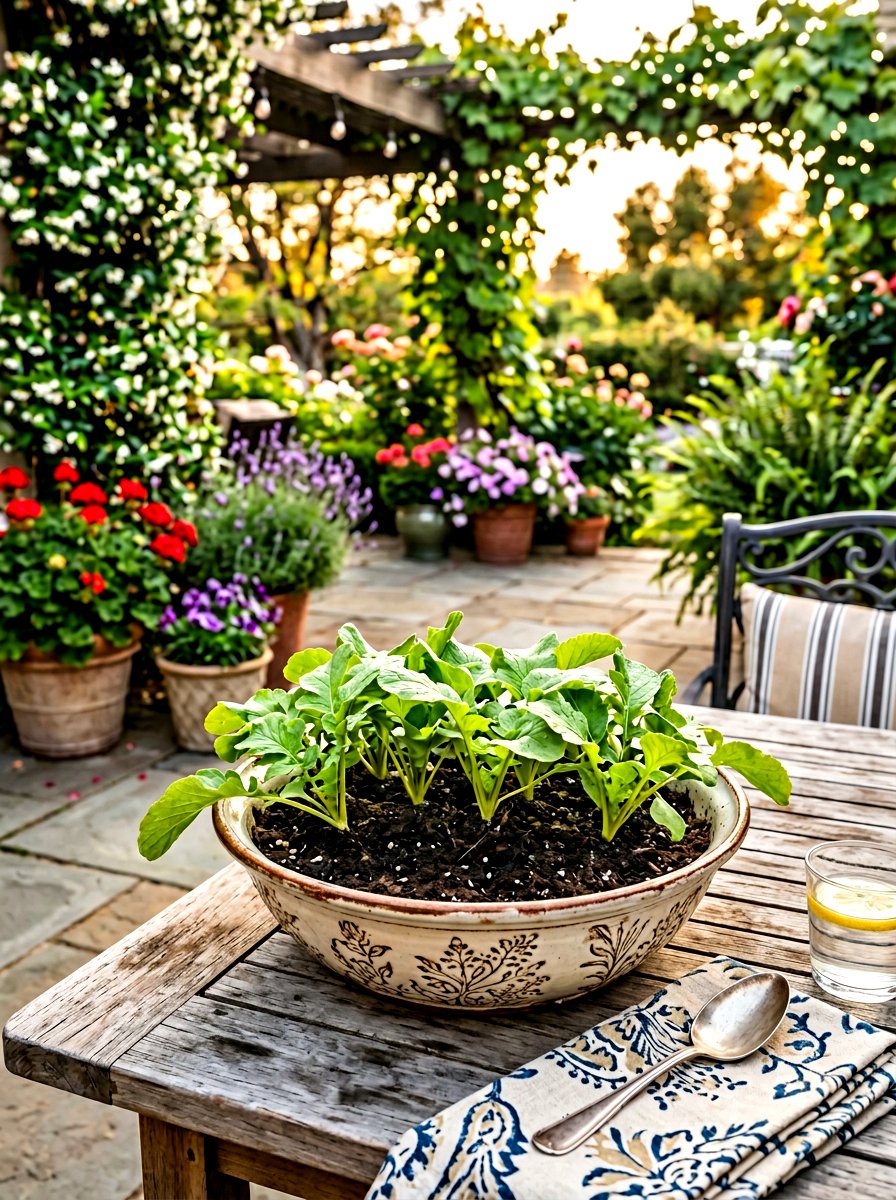
A salad greens planter is a shallow, wide container designed specifically for the rapid growth and easy harvest of lettuces, spinach, and kale. Because these plants have shallow root systems, they do not require deep soil, making these planters lightweight and easy to move. You can create a "cut-and-come-again" garden where you harvest just the outer leaves, allowing the plants to continue growing for weeks. Using a variety of leaf colors and textures, such as red oakleaf and curly emerald kale, creates a beautiful edible carpet. This design is perfect for placing on a patio table or a nearby bench for the most convenient harvesting experience imaginable.
23. Wheelbarrow garden display
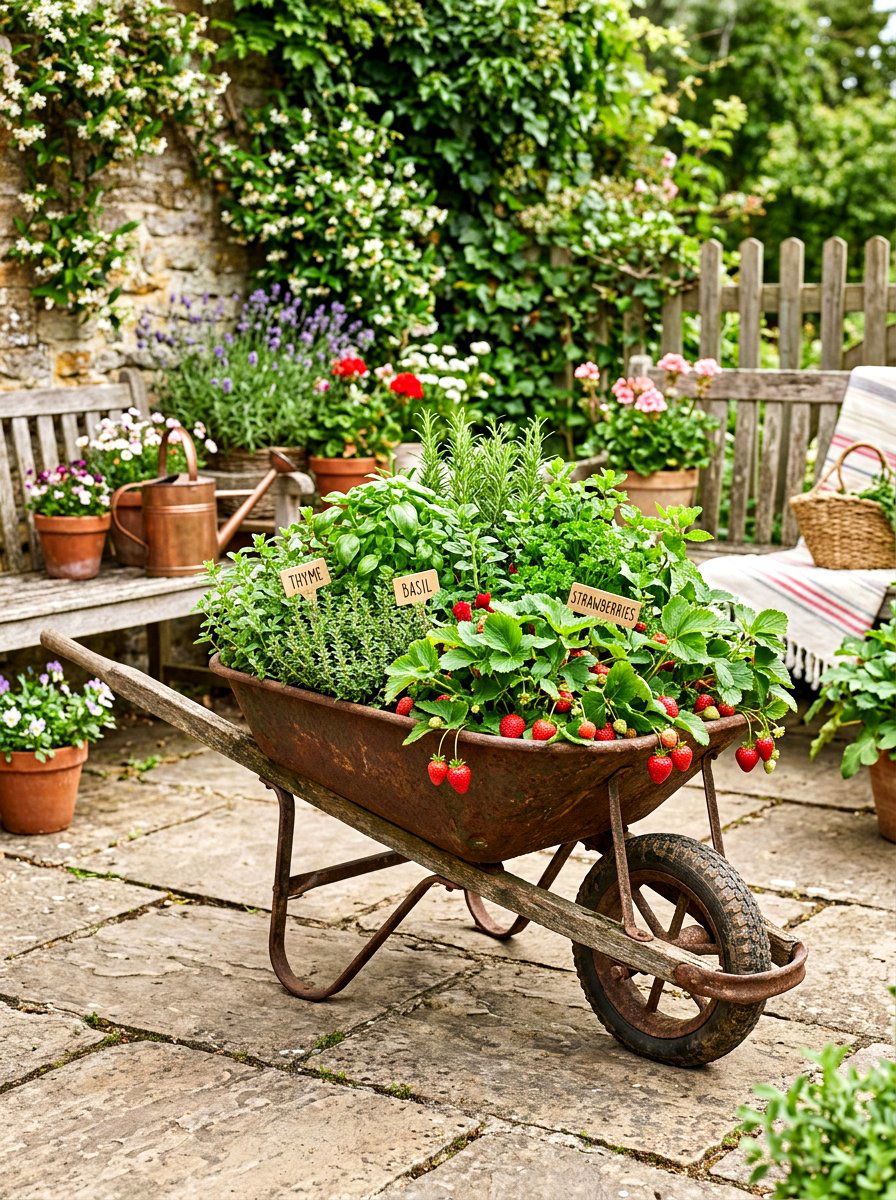
A wheelbarrow garden display adds a whimsical, mobile, and rustic element to your patio vegetable garden. By repurposing an old metal or wooden wheelbarrow, you create a deep planting vessel that can be easily moved to follow the sunlight. This design is perfect for a colorful mix of vegetables and herbs, such as trailing strawberries and upright peppers. The mobility of the wheelbarrow allows you to clear the patio space for large gatherings or protect the plants during extreme weather. It serves as a charming conversation piece that brings a touch of the countryside to your urban or suburban patio. This creative container is both functional and highly decorative.
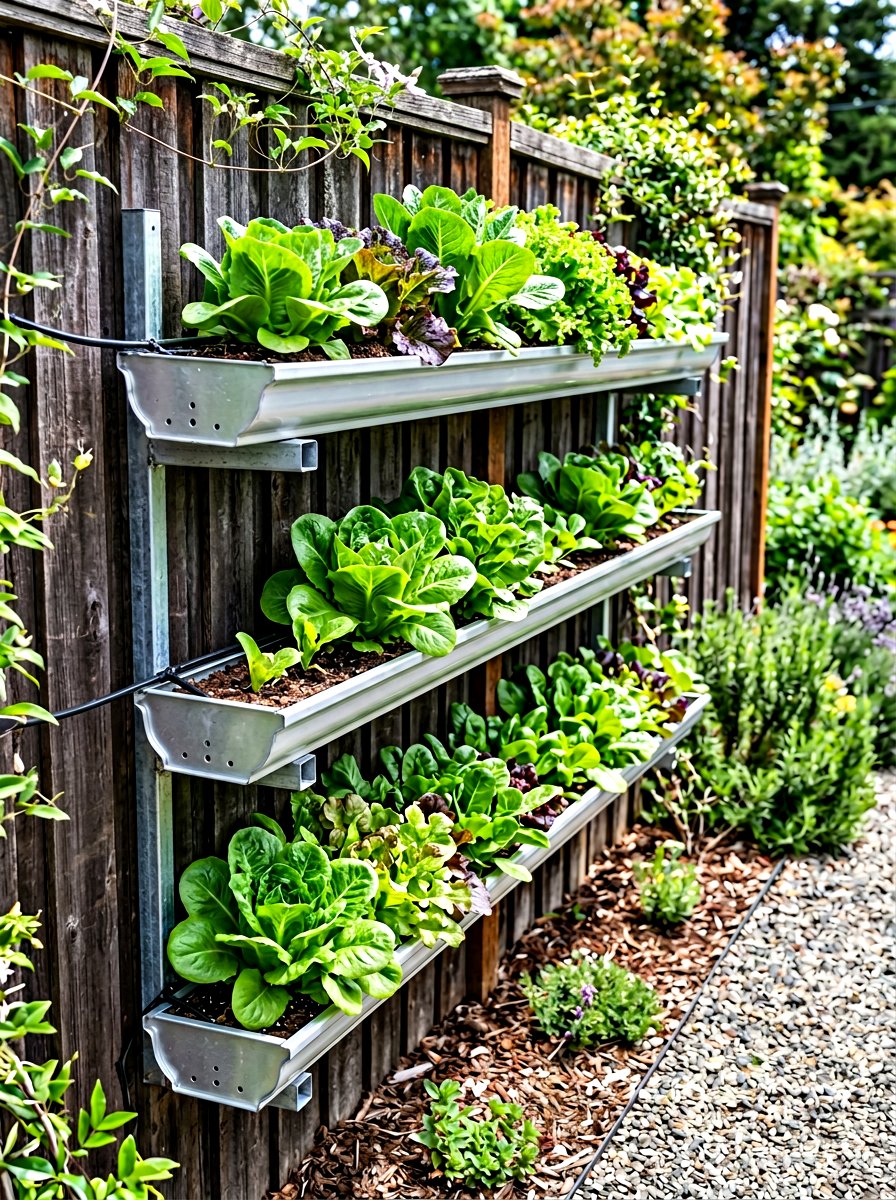
24. Gutter garden wall
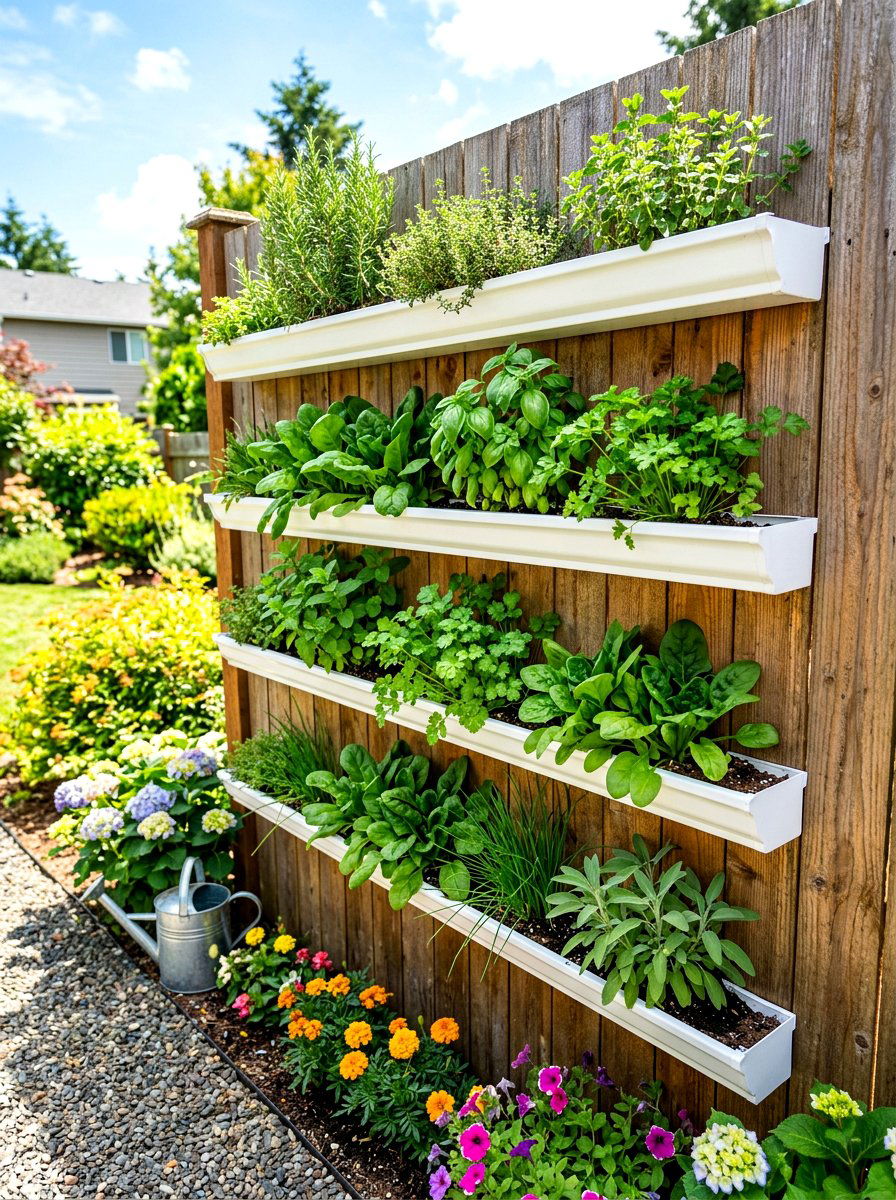
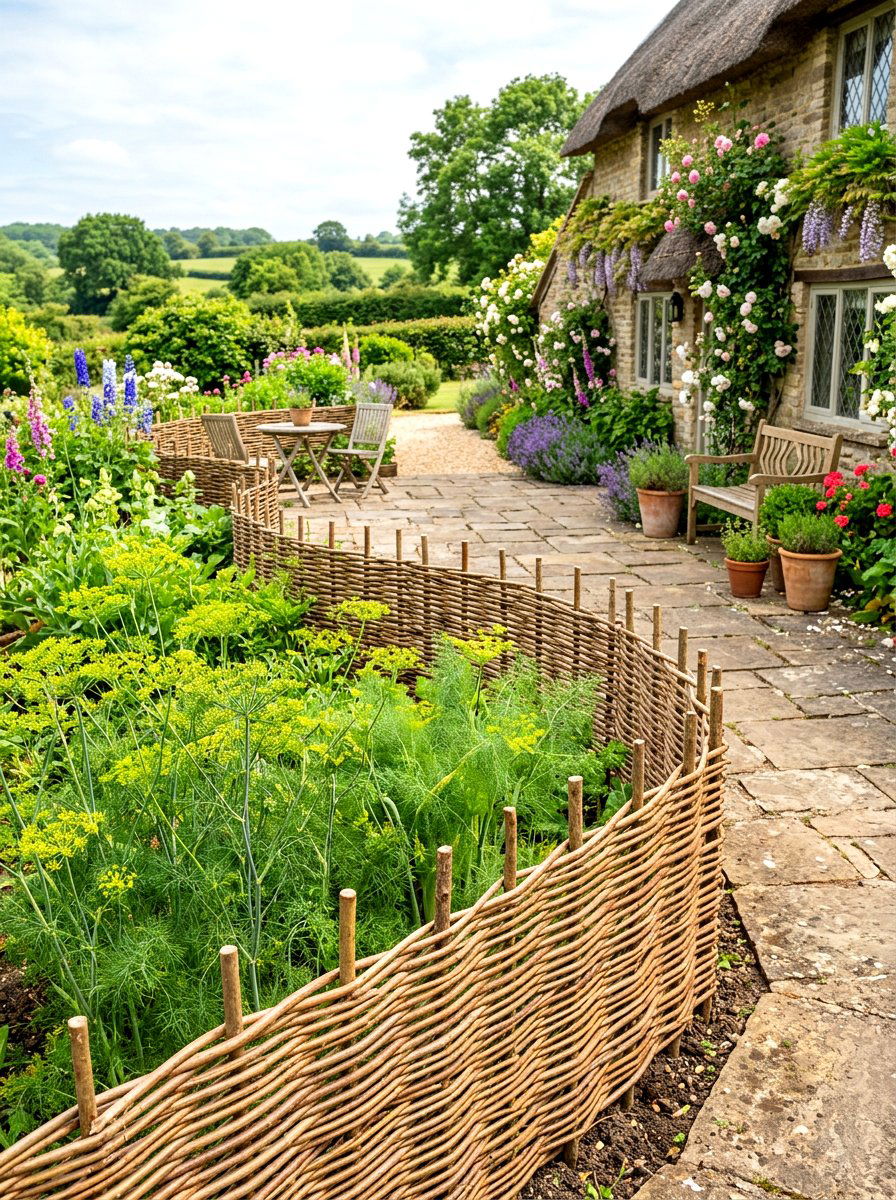
A gutter garden wall is an ingenious and budget-friendly way to grow a massive amount of small vegetables vertically. By mounting sections of standard house gutters to a patio wall or fence, you create long, narrow planting troughs. This design is ideal for shallow-rooted crops like strawberries, herbs, radishes, and various lettuces. The linear rows provide a clean and modern look that can span an entire wall if desired. You can paint the gutters to match your patio 's color scheme, making them blend seamlessly with your home' s exterior. This high-density planting method is incredibly efficient and turns a blank vertical surface into a highly productive food source.
25. Tiered ladder planter
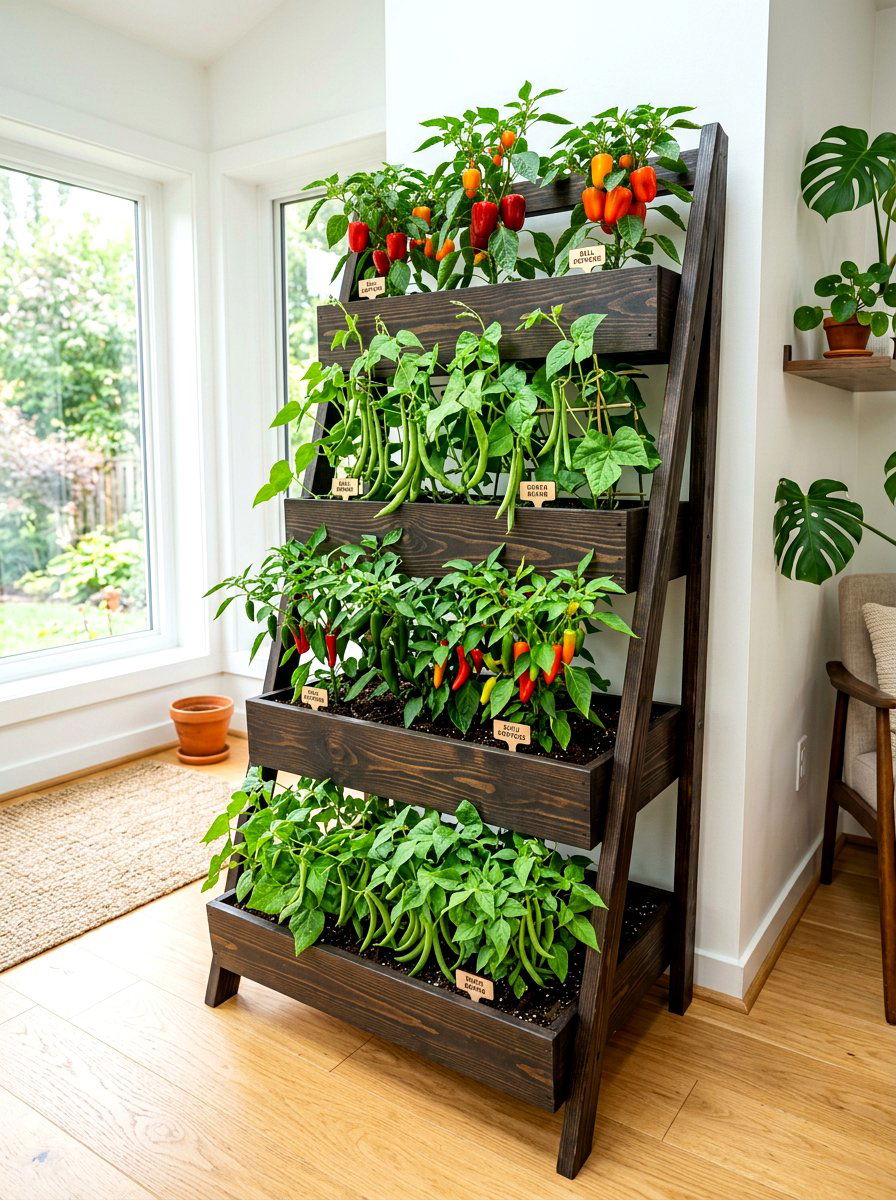
The tiered ladder planter is a more formal version of the rustic ladder garden, often featuring wide box-style shelves. This design provides significant planting depth on every level, making it suitable for larger vegetables like peppers, beans, and small eggplants. The solid shelves prevent water from dripping directly onto the plants below, allowing for better moisture control. Its upright structure provides a bold architectural statement on the patio while taking up very little ground space. You can use the different levels to organize your plants by their specific watering or sunlight needs. This sturdy and stylish unit is a perfect blend of high-end furniture and functional garden design.
26. Stackable garden pots
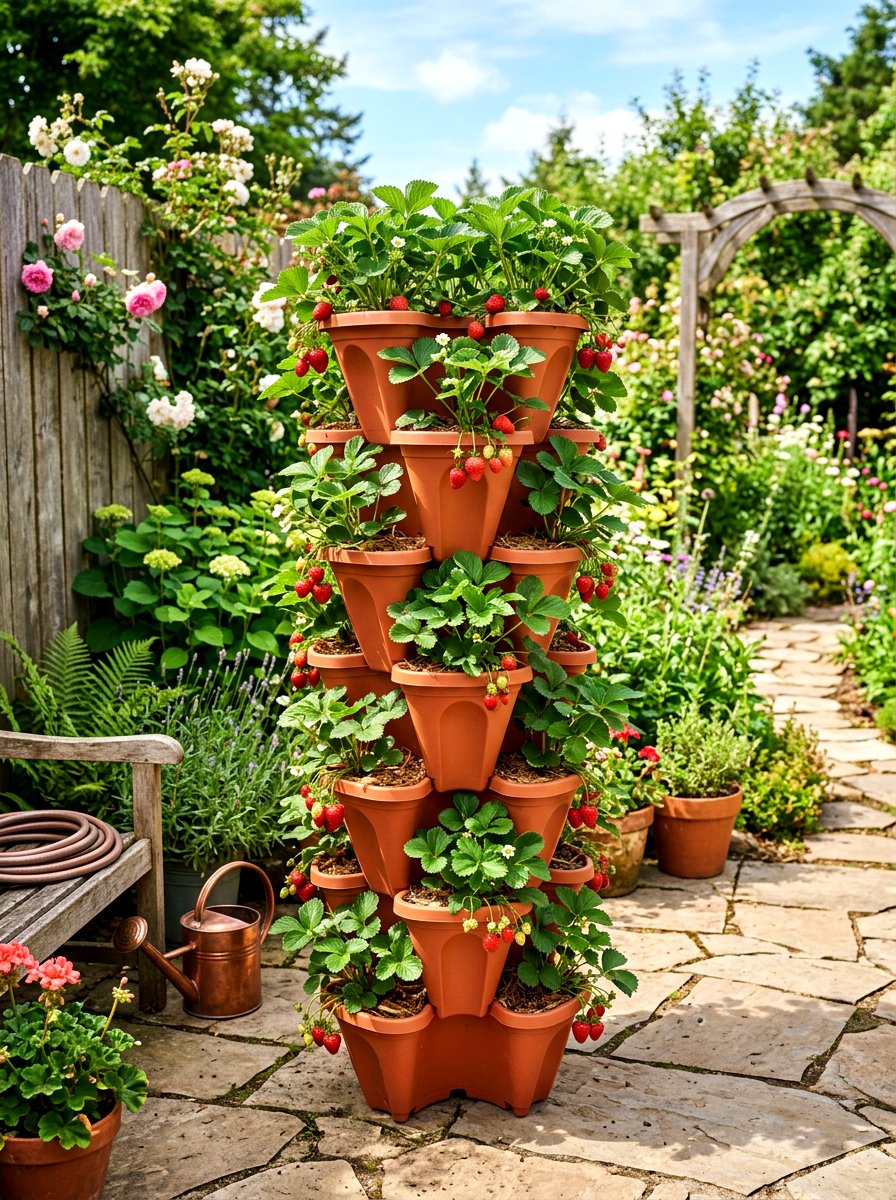
Stackable garden pots are a modular solution that allows you to build a vertical tower of greenery as high as you like. These specialized pots feature "clover" shapes that allow the upper layers to sit securely on the lower ones while leaving space for plants in the gaps. This design is incredibly popular for growing strawberries and herbs, as it creates a lush, cascading pillar of foliage. The central drainage system ensures that water flows through all levels, making maintenance simple and efficient. Because the footprint is so small, you can easily tuck these towers into small corners or place them on either side of a patio door.
27. Woven basket garden
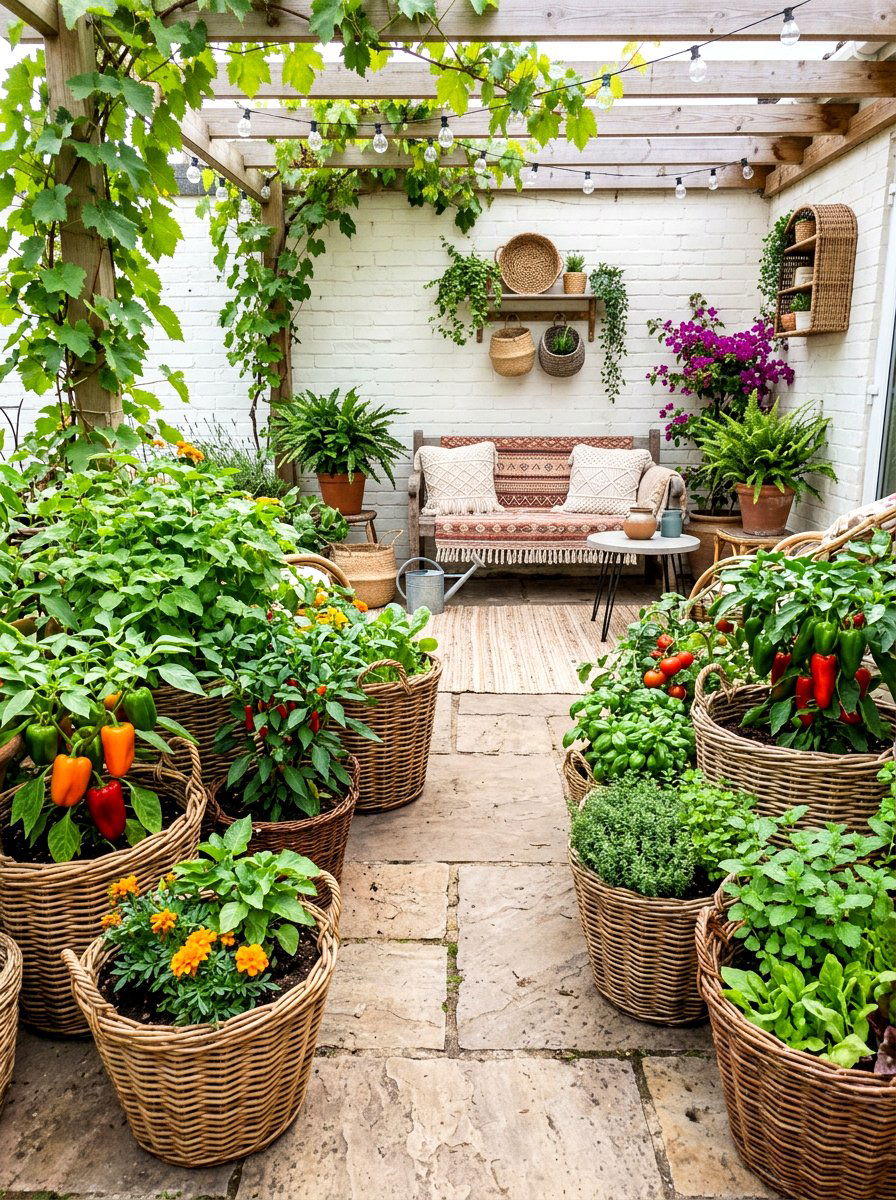
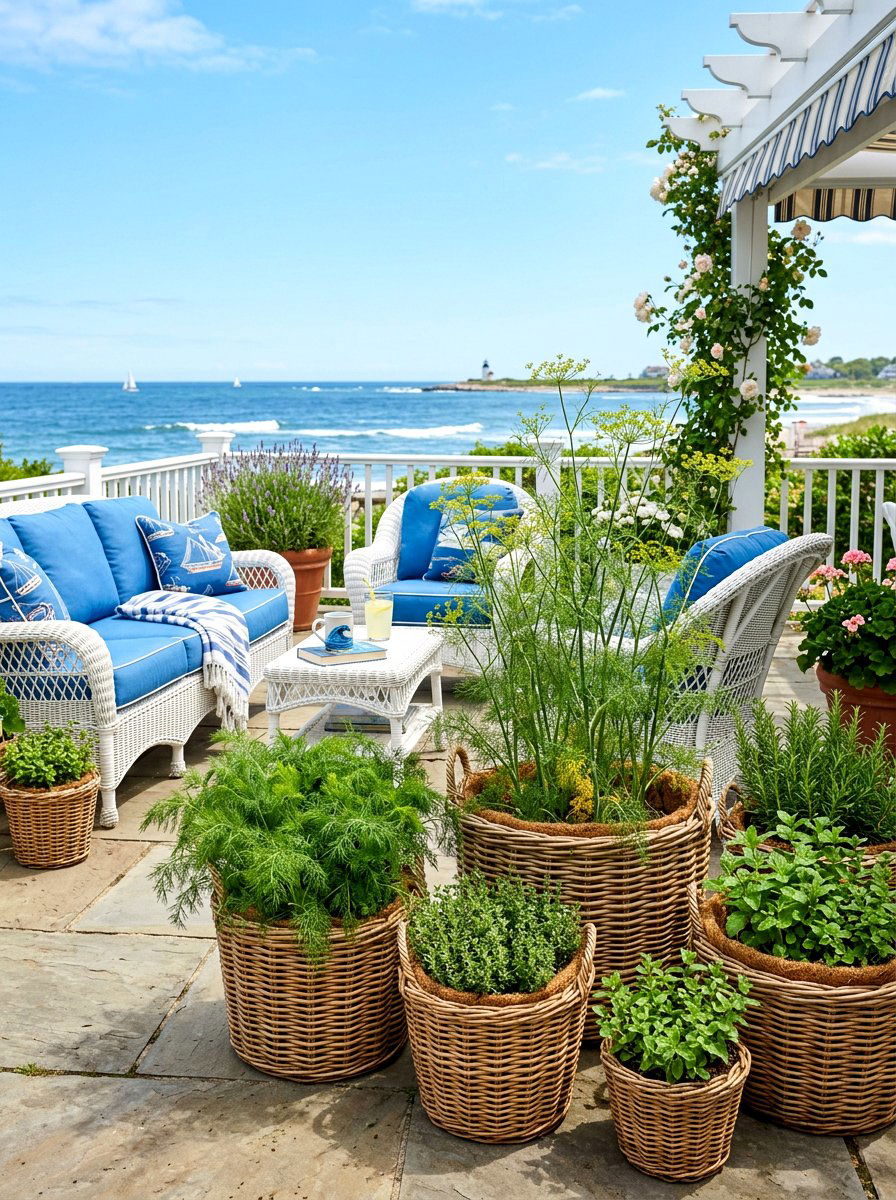
A woven basket garden brings a soft, organic, and textured look to your patio vegetable garden. Using large wicker or seagrass baskets lined with heavy-duty plastic provides a beautiful alternative to standard plastic or ceramic pots. This design is perfect for a cottage-style or boho-themed patio, where natural materials are a priority. You can grow a variety of bushy vegetables like peppers or compact tomatoes that complement the rustic aesthetic of the baskets. The lightweight nature of the woven material makes these containers easy to move when necessary. This approach creates a cozy and inviting atmosphere while providing a productive space for your favorite edible plants to thrive.
28. Concrete planter garden
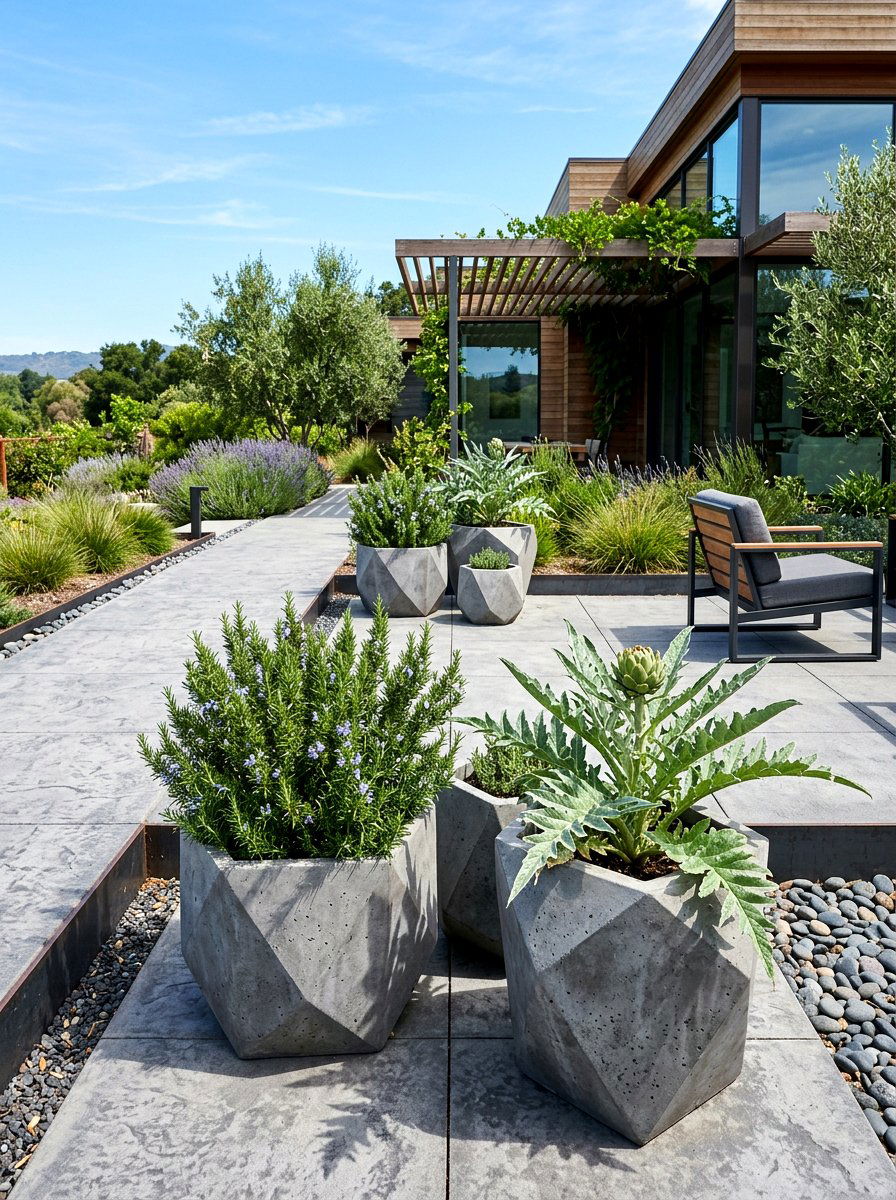
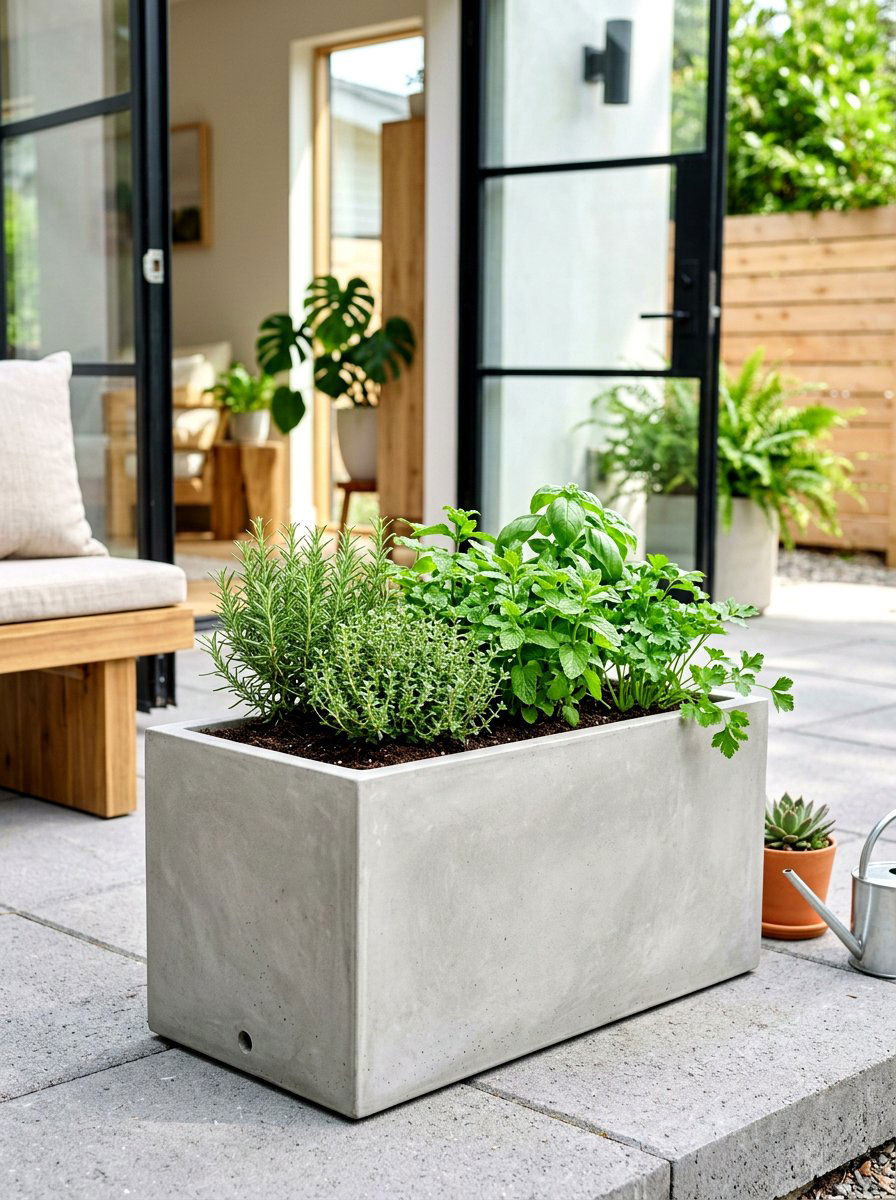
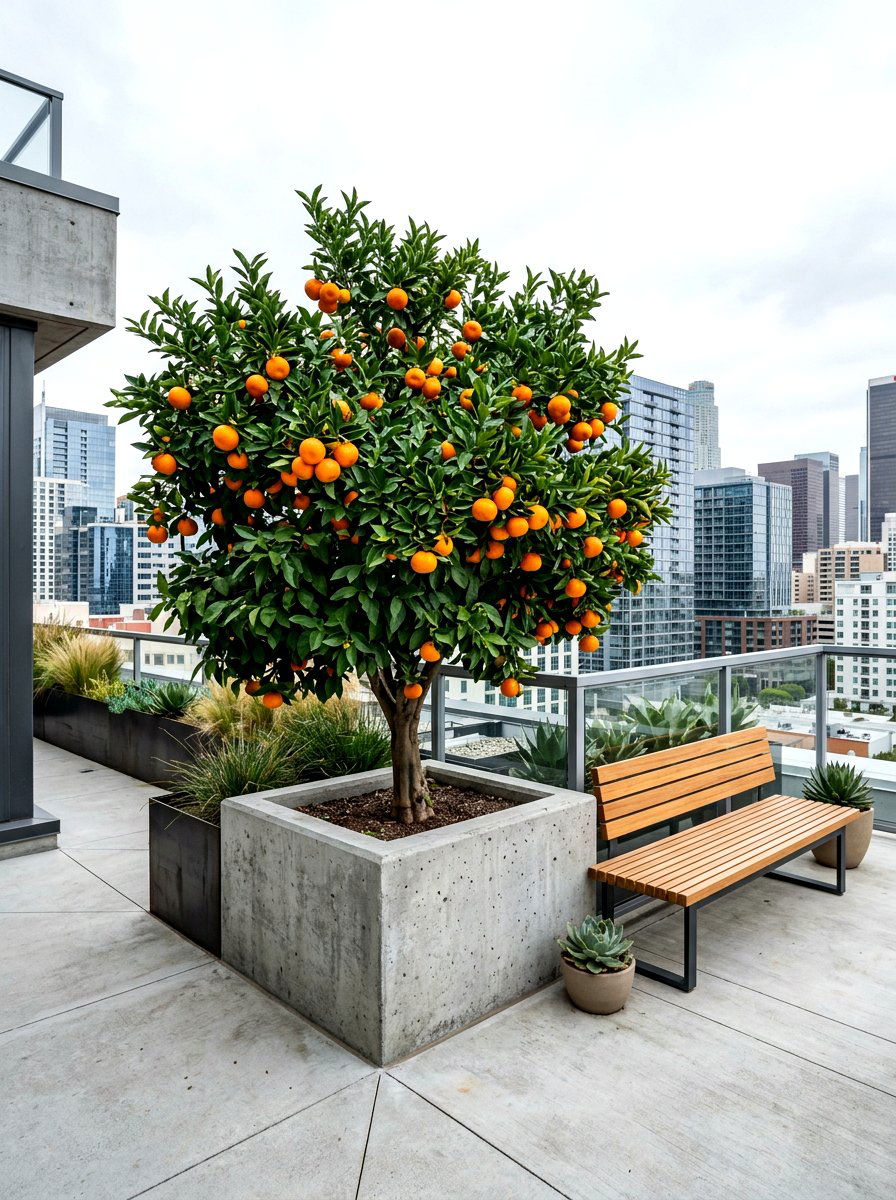
A concrete planter garden offers a minimalist and industrial aesthetic that is perfect for modern patio designs. The heavy, durable nature of concrete provides excellent insulation for plant roots, protecting them from extreme temperature fluctuations. These planters come in various geometric shapes, such as cubes and cylinders, which can be arranged in sleek groupings for a sophisticated look. They are ideal for growing perennial vegetables like artichokes or large herbs like rosemary that can live in the same container for years. The neutral gray tones of the concrete provide a stunning contrast against the vibrant greens and reds of your garden. This design is both timeless and extremely low-maintenance.
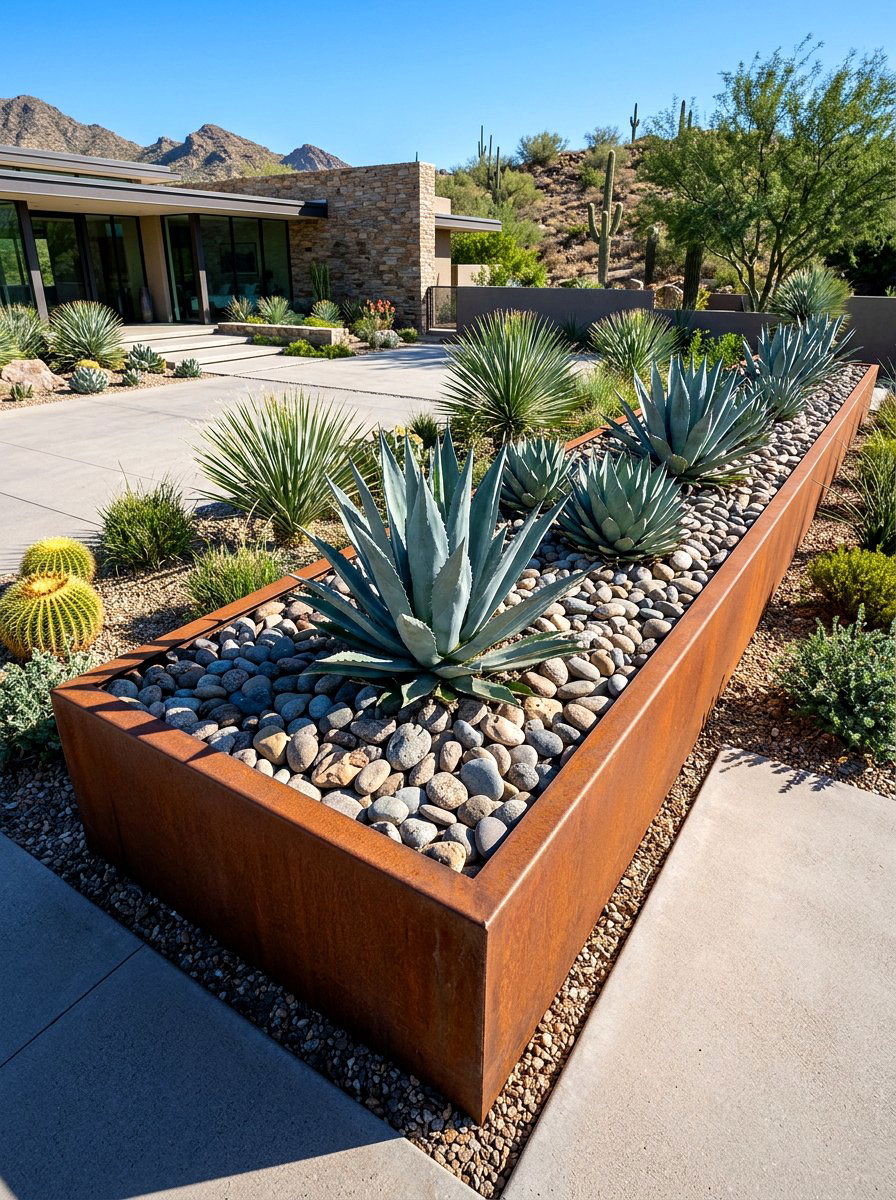
29. Raised trough planter
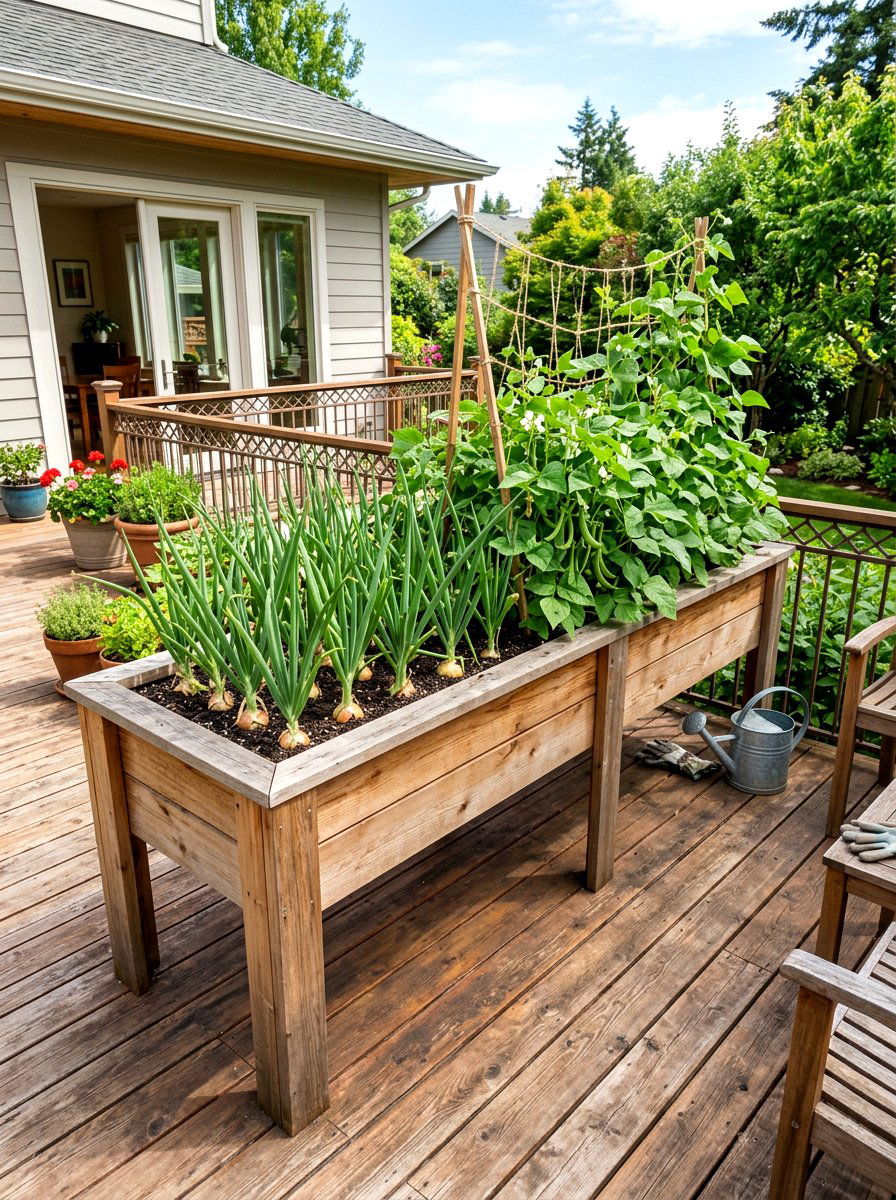
A raised trough planter combines the benefits of a raised bed with the mobility and style of a freestanding furniture piece. These long, elevated containers are usually waist-high, allowing you to garden without any bending or kneeling. This design is perfect for senior gardeners or anyone with back issues who still wants to enjoy a productive patio garden. The trough shape is ideal for growing rows of different vegetables, such as onions, beets, and bush beans. Many models also include a shelf below for storing watering cans and gardening tools. This all-in-one gardening station is a practical and attractive addition to any large patio or deck area.
30. Vertical pocket planter
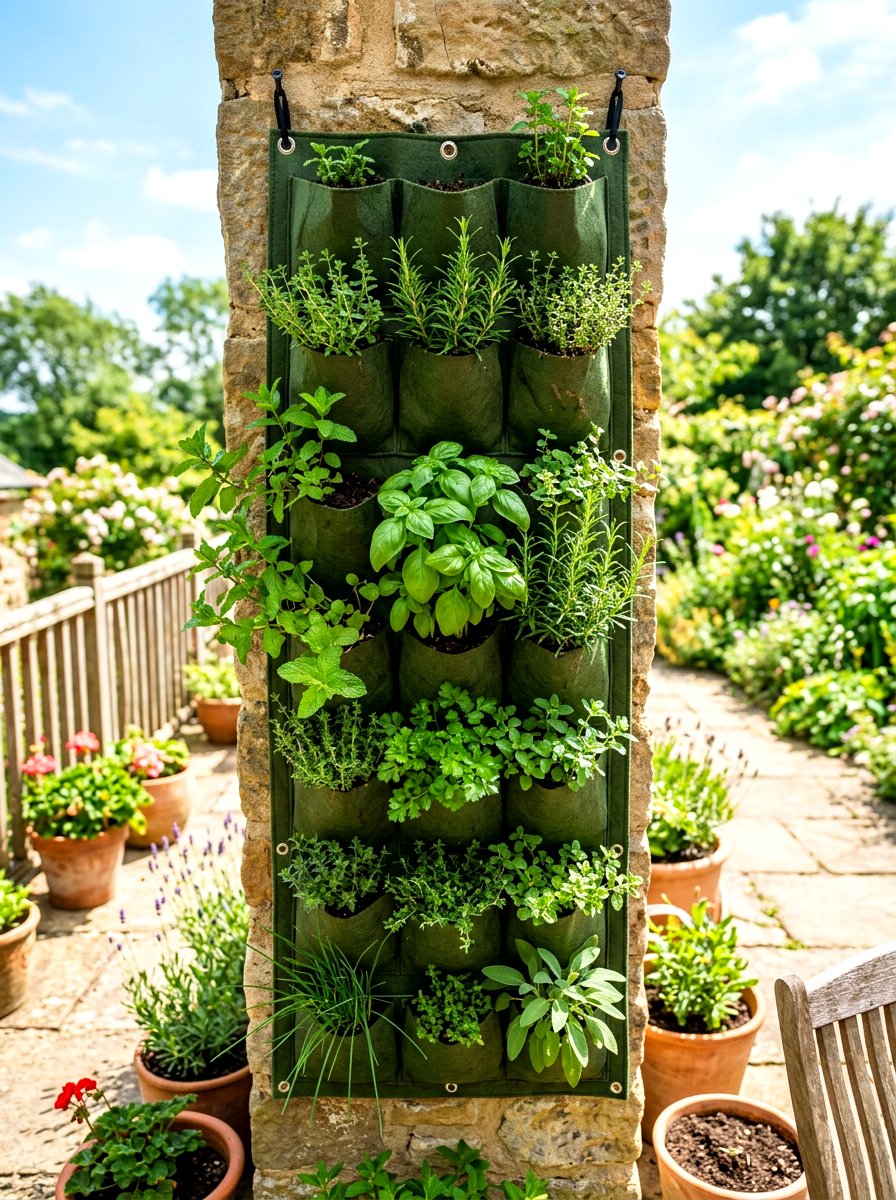
A vertical pocket planter is a fabric-based system that turns any wall or railing into a flexible gardening surface. These planters are made from breathable felt or heavy-duty canvas with multiple individual pockets for soil and plants. This design is exceptionally lightweight and can be easily hung with hooks or screws, making it ideal for renters or those with weight-restricted balconies. The breathable fabric provides excellent aeration for roots, leading to healthy and vigorous growth for herbs and leafy greens. When the season is over, these planters can be emptied, washed, and folded away for easy storage. It is a highly versatile and space-saving gardening solution.
Conclusion:
Creating a patio vegetable garden is one of the most fulfilling ways to enhance your outdoor living experience while promoting a healthy lifestyle. From the modern efficiency of hydroponic systems to the rustic charm of repurposed wooden pallets, there is a design solution for every style and space. By moving your garden onto the patio, you make the act of growing food a central part of your daily life, ensuring you never miss a harvest. These thirty ideas demonstrate that productivity and beauty can coexist perfectly in even the smallest urban environment. We hope these concepts inspire you to dig in and enjoy the rewarding process of harvesting your very own patio-grown vegetables.

Related posts: